
Temirzhan Nurpeisov
Furniture assembly carpenter11 years
★ 4.81 · 47 ratings
Wooden shelving · Home and business
We make wooden shelving to the dimensions of your wall, niche or opening: we select the wood species, shelf thickness and finish for what will go on them. Measurement and 3D design are free, the price is fixed in the contract before we start, warranty 24 months.
Measurement and 3D design are free and carry no obligation · price fixed in the contract · Kaspi Instalments up to 24 months
01Types
 01
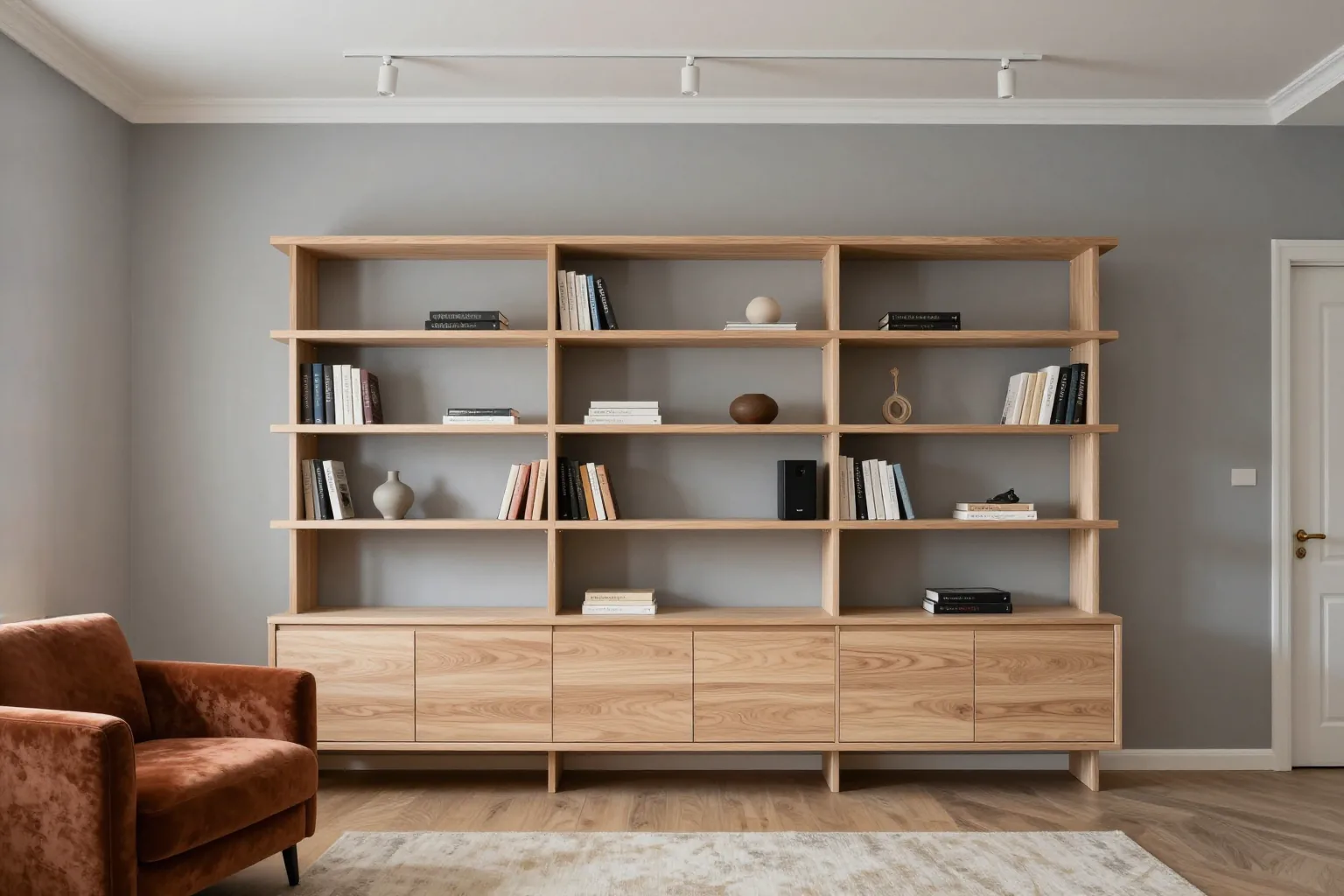
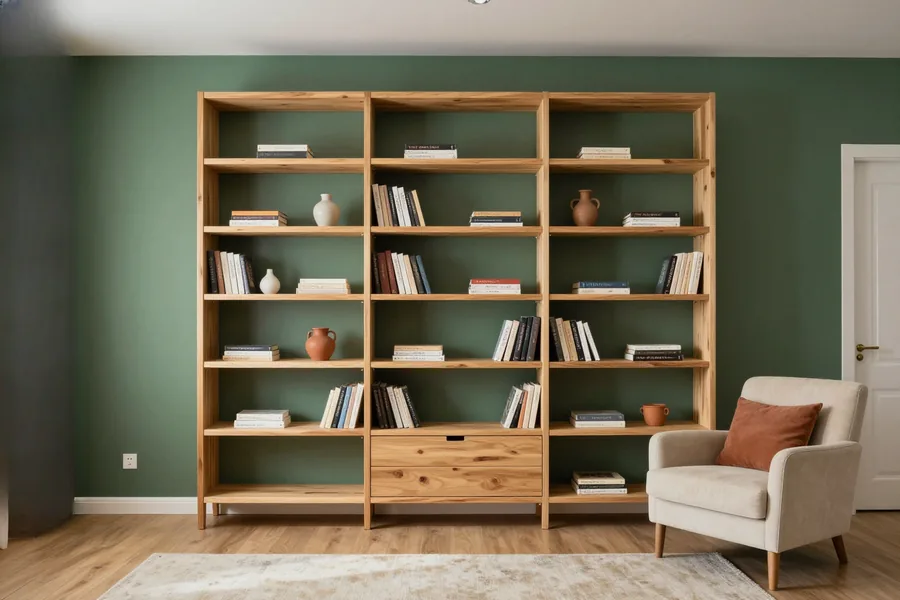
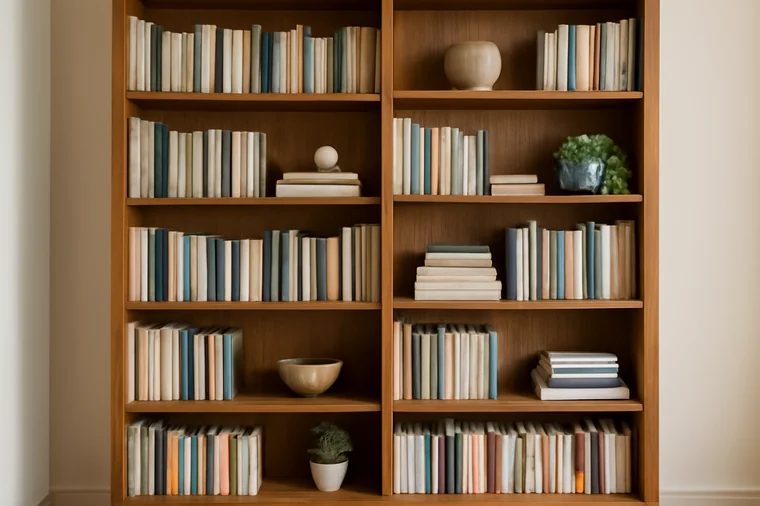
Open solid pine shelves under lacquer or oil: warm wood tone, light weight and the most affordable species for home and country house.
from 45 000 ₸
 02
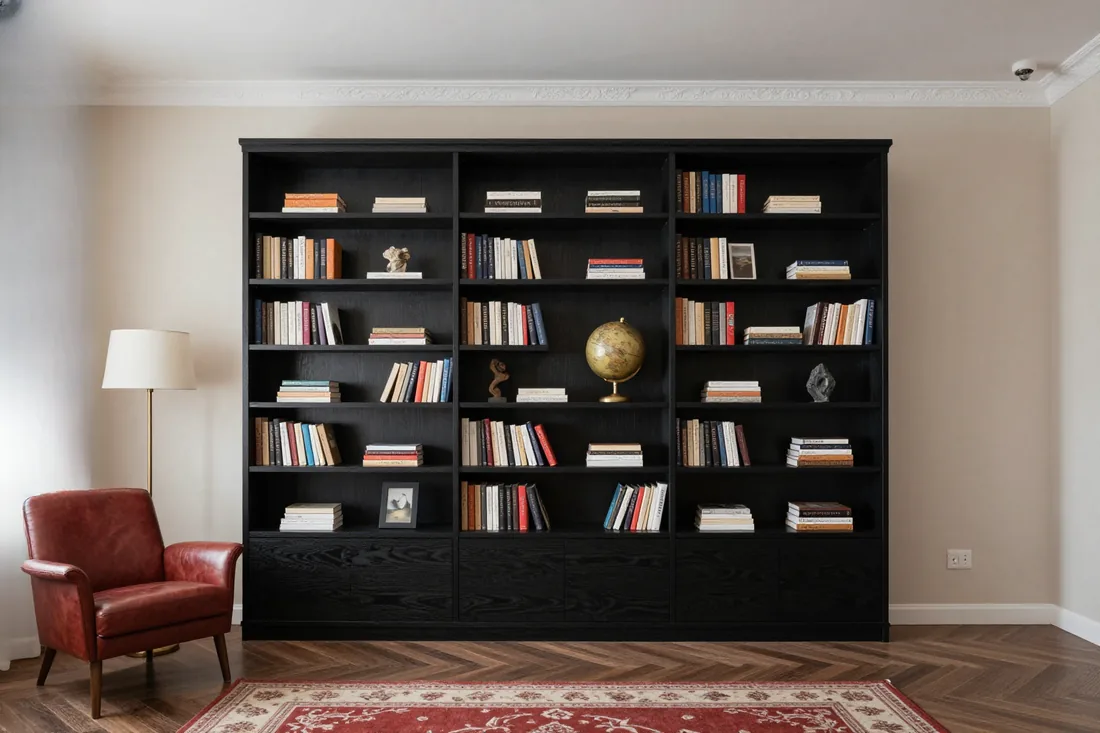
Hard oak spans long distances and holds heavy books without sagging; the expressive grain under oil suits living rooms and studies.
from 90 000 ₸
 03
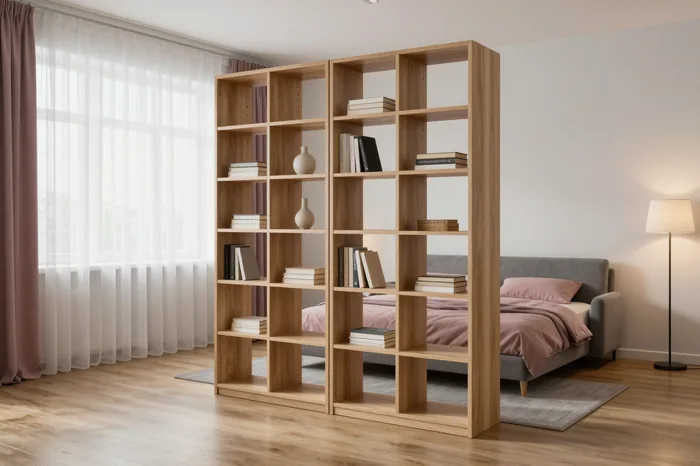
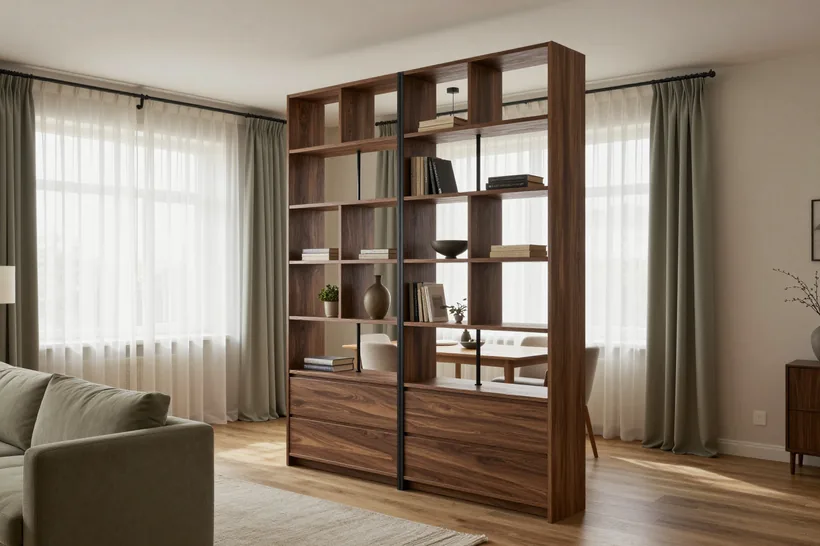
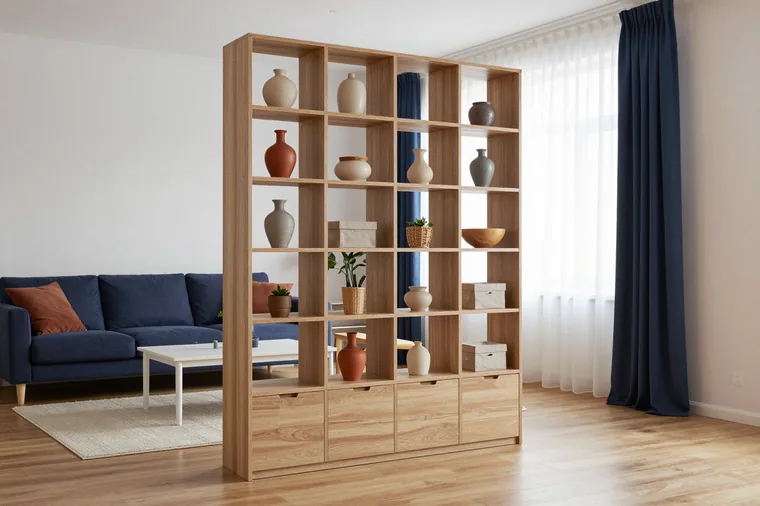
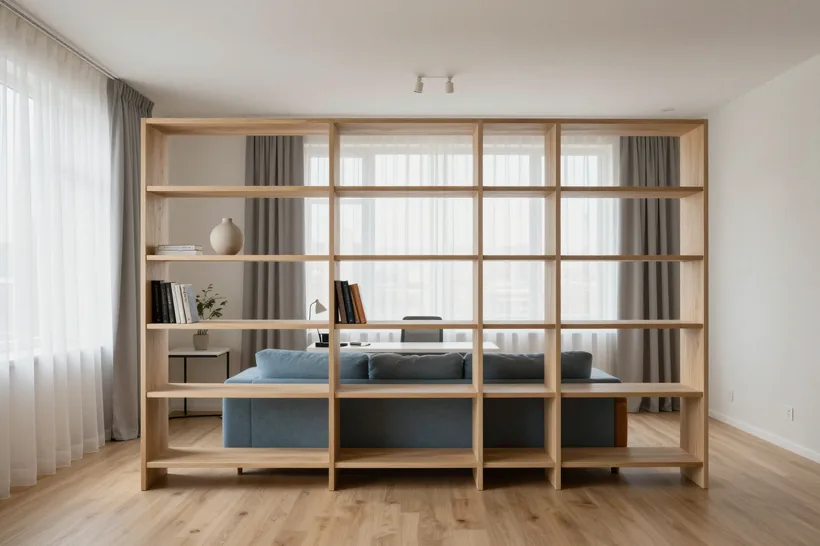
A see-through ash shelving unit divides a studio into zones without blocking light; shelves and back rails are visible from both sides.
from 110 000 ₸
 04
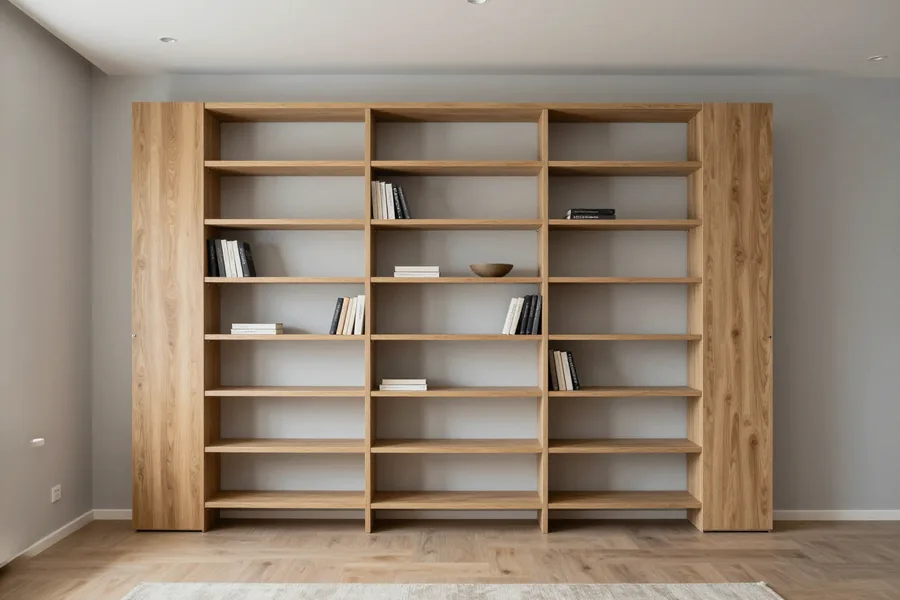
Built-in oak veneer shelving measured to the opening: covers the niche from floor to ceiling and weighs less than solid wood.
from 60 000 ₸
 05
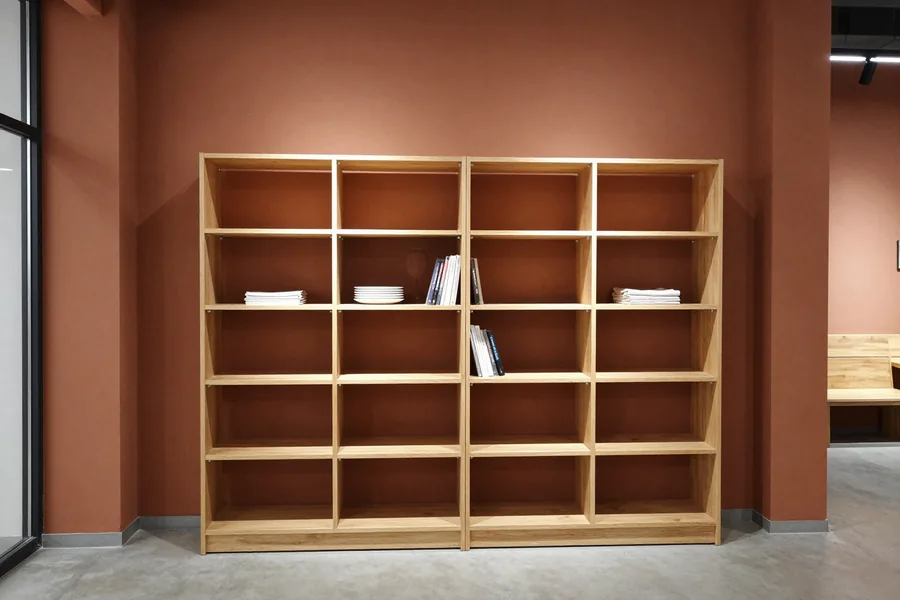
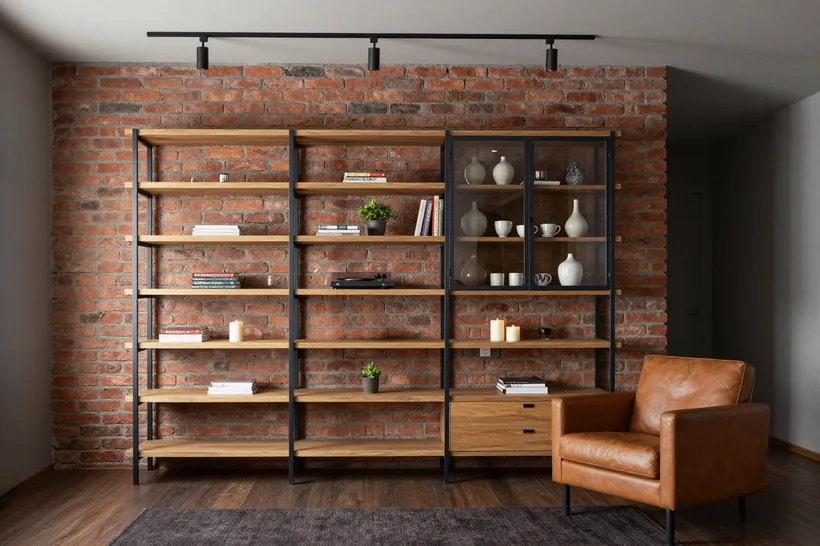
Solid wood shelves on a black profile-tube frame, with glass in the upper sections — for a loft apartment and workshop.
from 130 000 ₸
 06
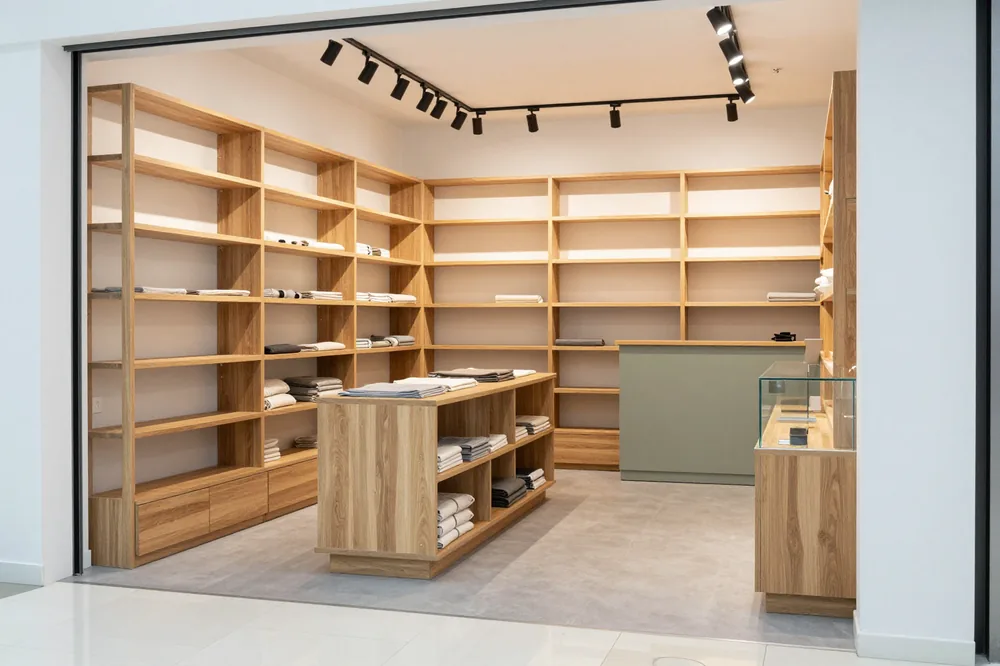
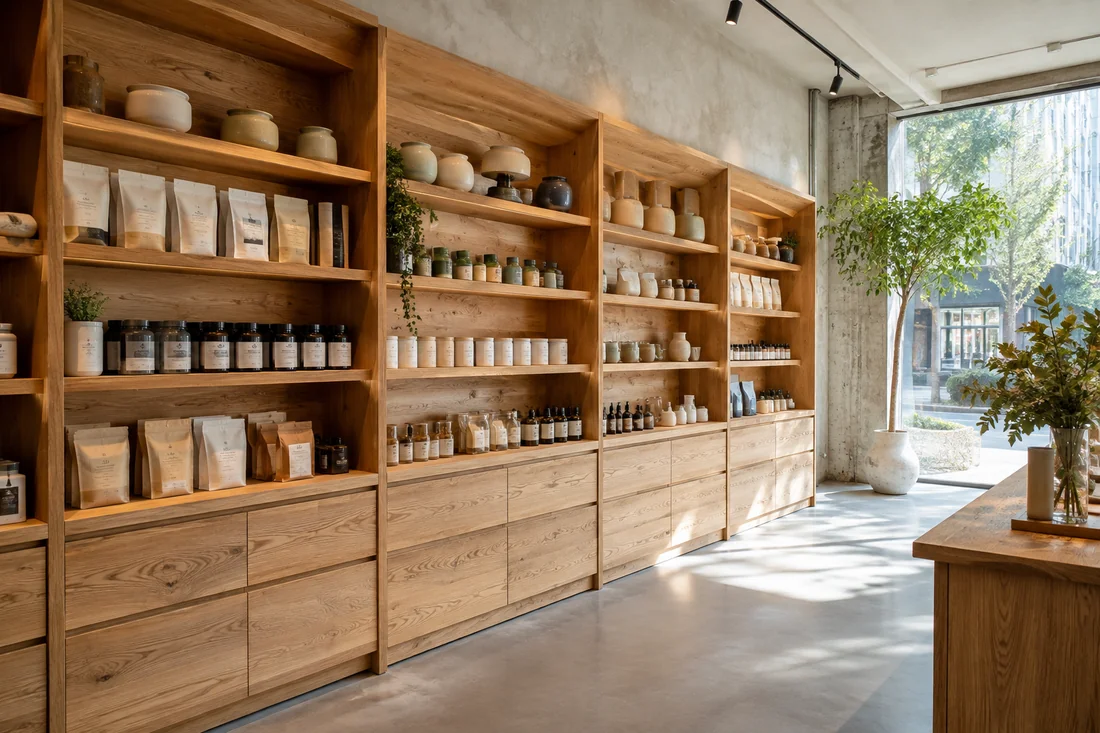
A shelving unit in solid wood or veneer for display in the sales floor and showroom; more on this kind of fixture is on a separate page.
from 55 000 ₸
02Projects
Site, scope, materials and lead time — per project.
 Store
Nova City residential complex, Bostandyk district
Wooden shelves on a welded black frame, some sections under tempered glass — a display case for a collection. The metal takes the load, the wood brings warmth.
 Store
Abu Dhabi Plaza residential complex, Medeu district
A see-through ash shelving unit divided the studio into a living room and an office. Open on both sides, reinforced uprights and bottom fixing to the floor, light passes right through.
 Store
Samal-2 microdistrict, Medeu district
An open solid pine shelving unit for the living room for books and decor. Exact floor-to-ceiling height, warm natural texture under oil, a light airy look.
 Store
Koktem microdistrict, Bostandyk district
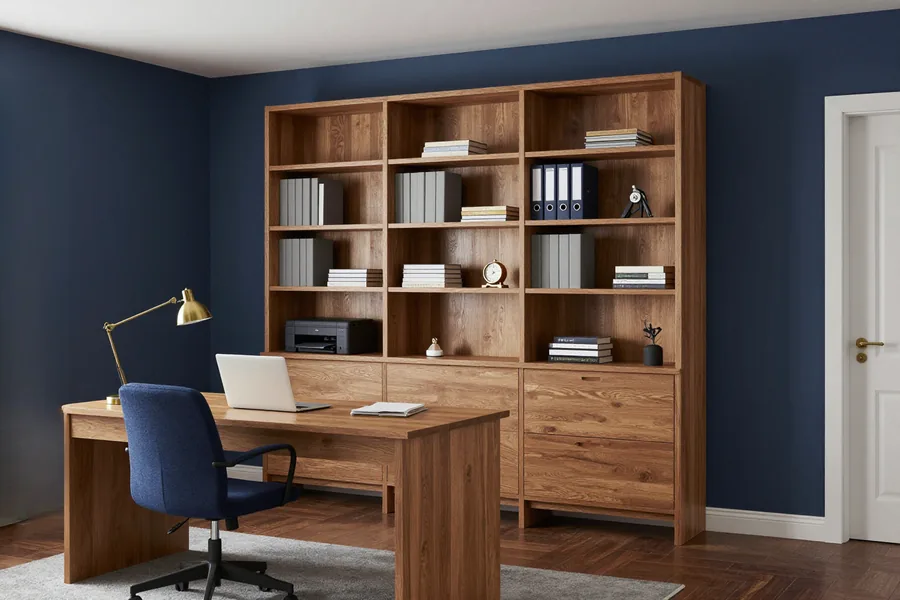
A working shelving unit for the office for books, folders and equipment. The shelves are calculated for the weight of documents, the long ones reinforced with a hidden profile, the frame fixed to the wall.
 Store
Orbita microdistrict, Bostandyk district
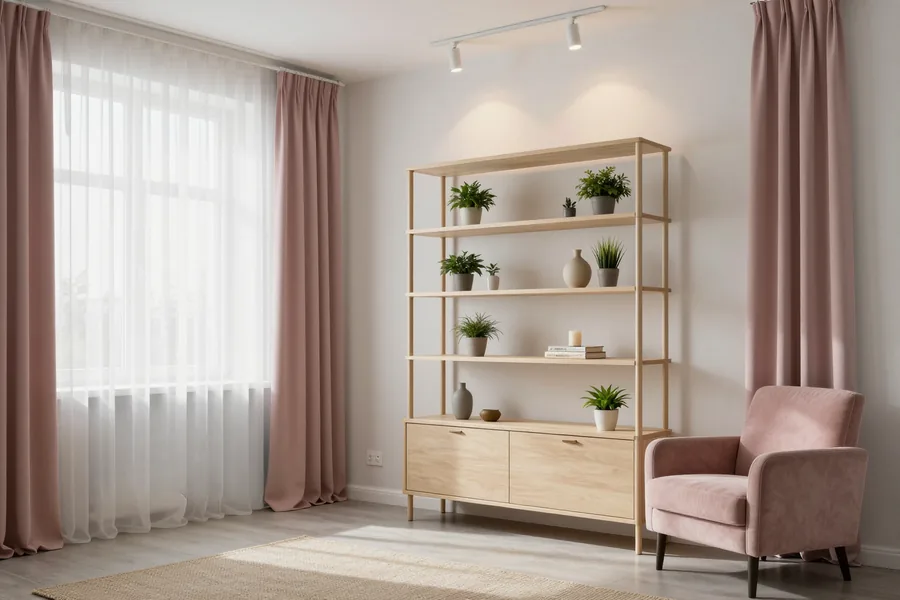
A light shelving unit for decor and plants in the living room. Ash shelves on slim uprights, an airy look, it doesn't clutter the room and keeps the natural texture.
03How we work with stores
04Prices
The "from" price is for a shelving unit of a basic size in the chosen wood species; the final figure depends on height, number of shelves, finish and back panel. We fix the estimate in the contract after the free measurement, and it doesn't change during the work.
05For businesses
We work with LLPs and sole traders on bank transfer. Price, materials and lead times are in the contract before production starts.
Request a contract and invoice06Principles

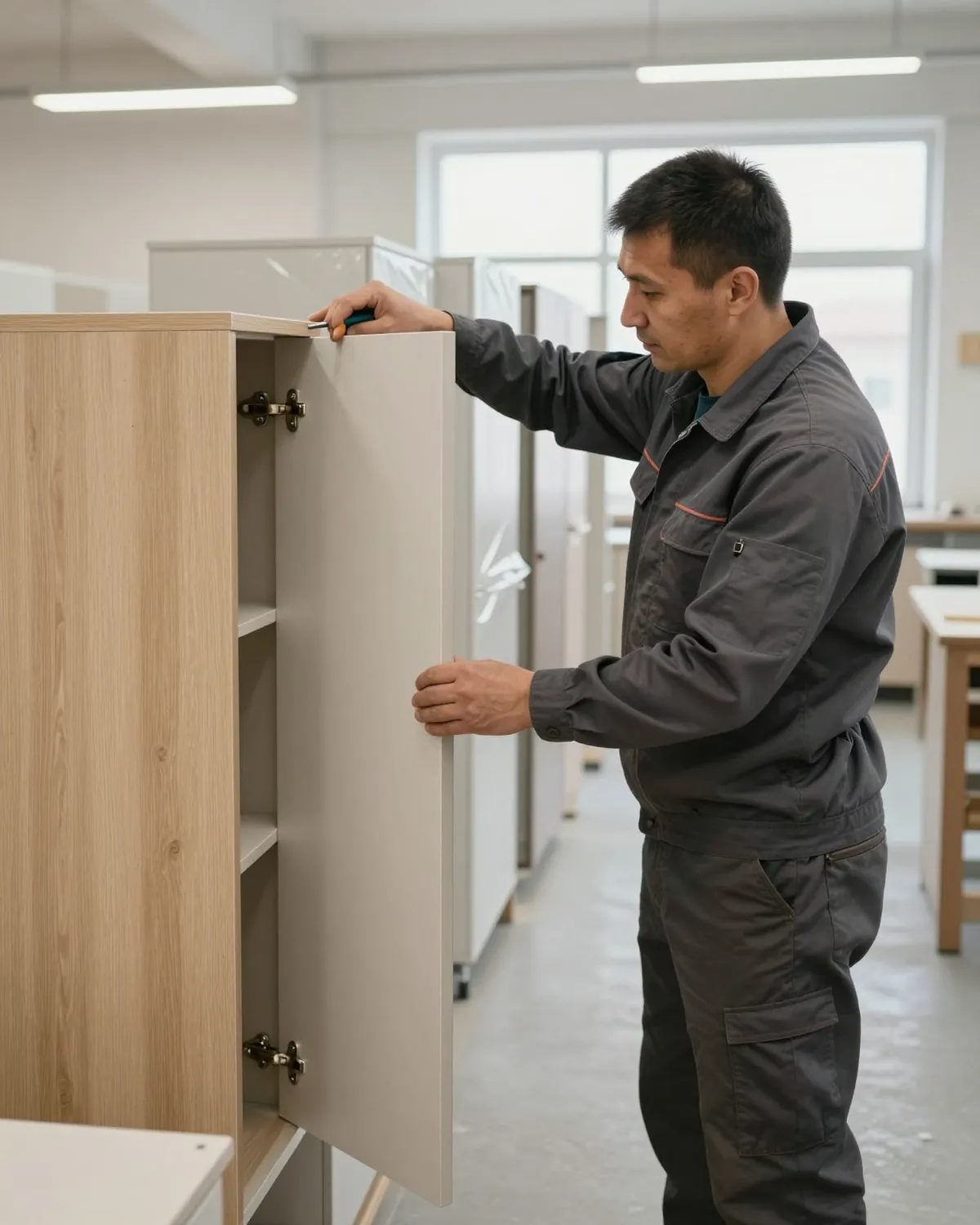
01 / 06
07Production
Six steps in our 600 m² workshop. You can see each of them with your own eyes: the showroom and production are under one roof.
Egger · Kronospan · E1
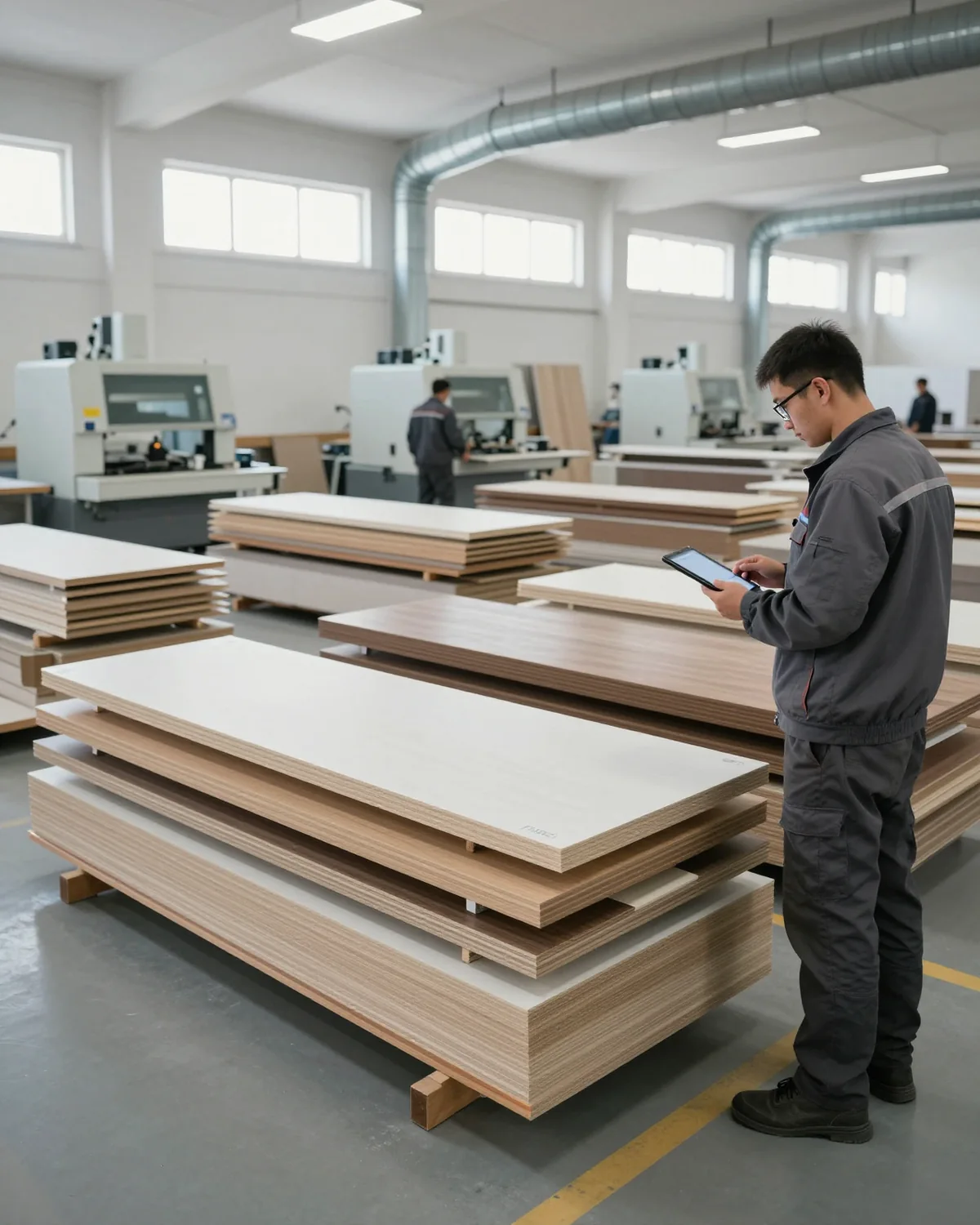
Egger and Kronospan boards of emission class E1 arrive at the workshop warehouse. 40+ laminated chipboard decors, thickness 16–18 mm. Class E1 — for sales floors and display cases.
Laser measuring to 1 mm
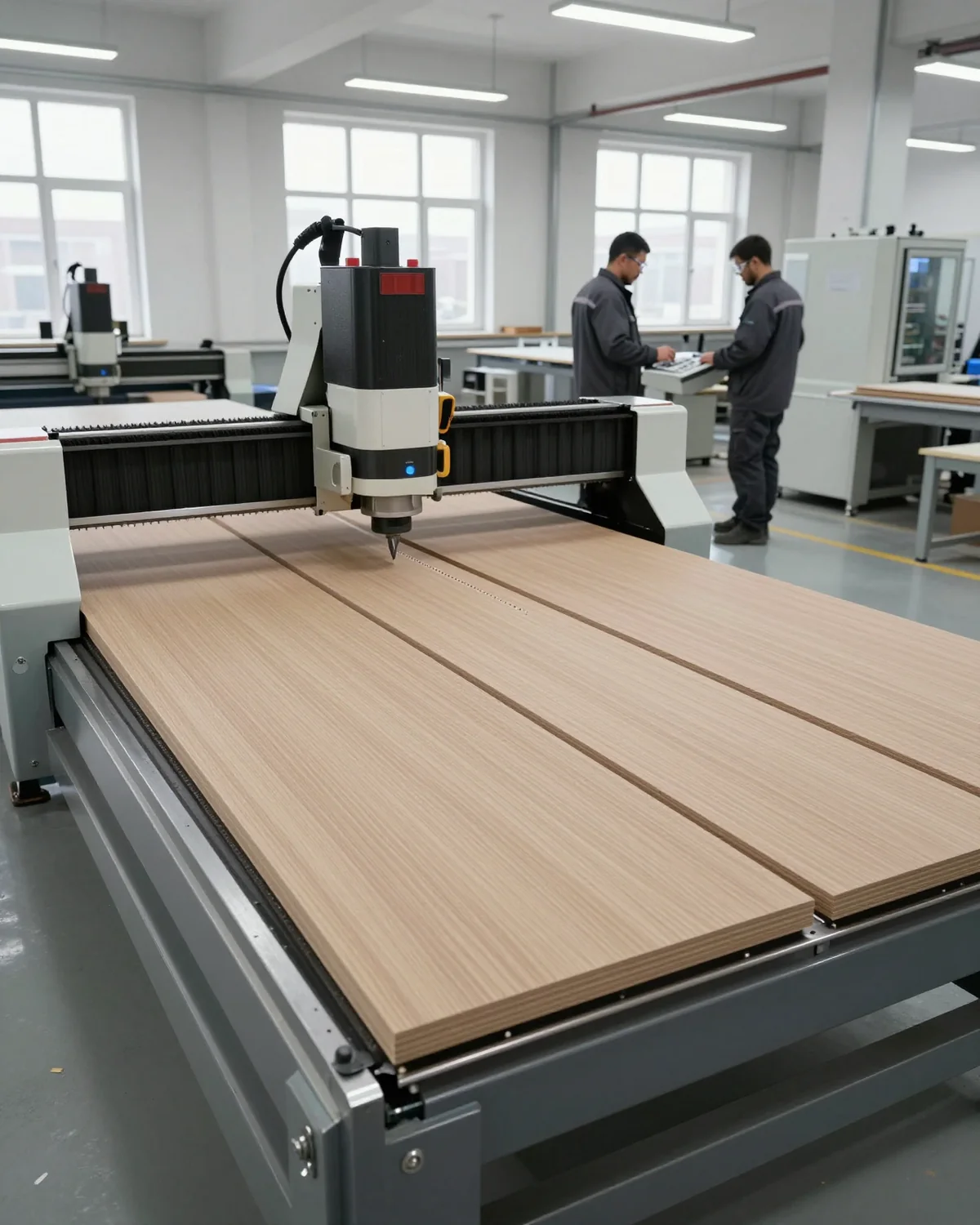
A design engineer prepares the drawings, and the machine cuts the board to them. Dimensions come from a laser measurement accurate to 1 mm.
Blum · Hettich · Boyard
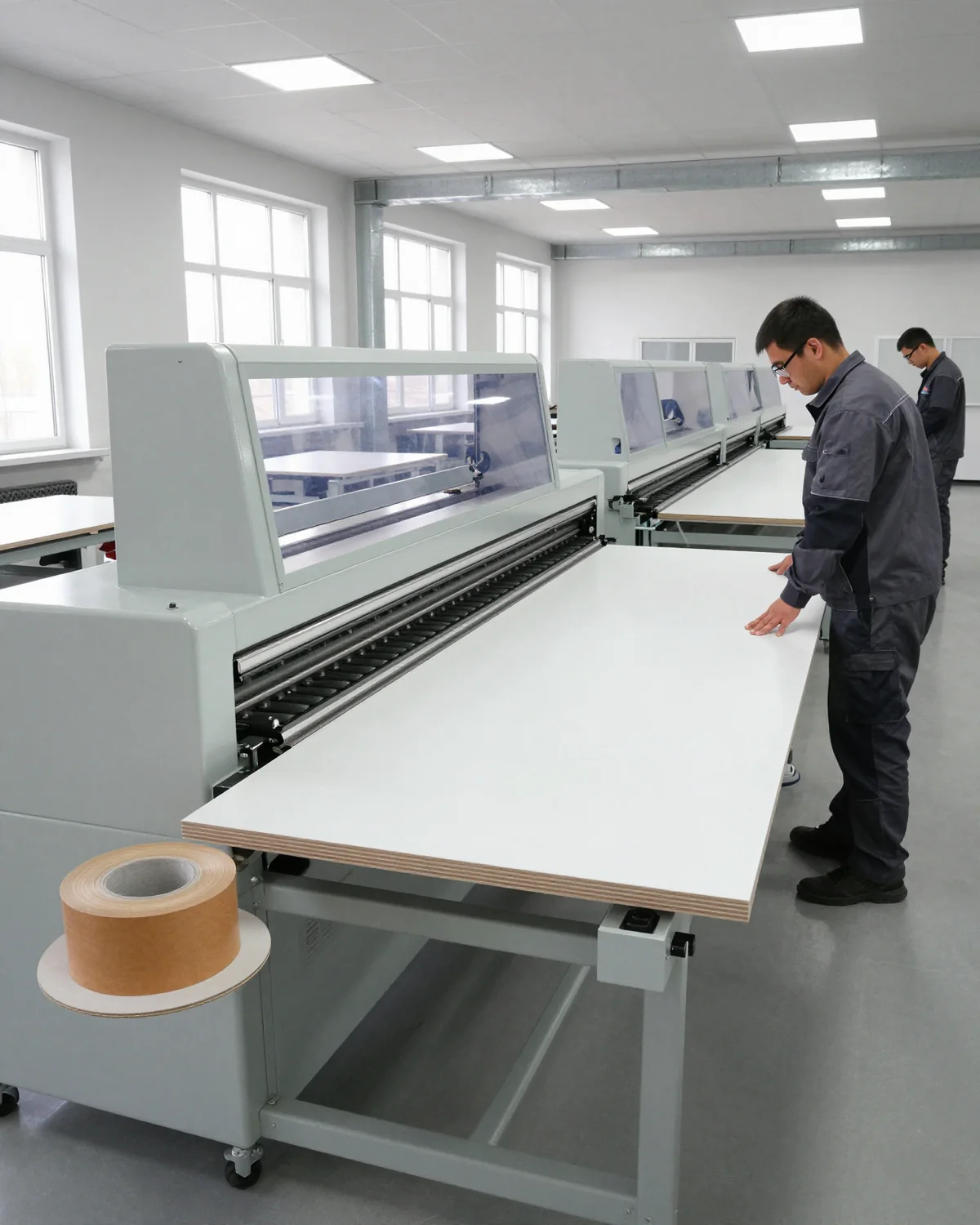
The edge-banding machine seals the edges, then we drill holes for Blum hinges and Hettich runners.
Any RAL colour
A finishing specialist paints fronts to RAL — matte and gloss. Before cutting, we check solid wood with a moisture meter at the joinery area so the shelving shelves don't warp after installation in the apartment.
Pre-assembly in the workshop
We assemble the modules in the workshop before dispatch, checking front gaps and drawer travel. The quality control department signs the item off for shipping.
Night installation according to mall regulations
We deliver, bring in, assemble in 1 day, adjust the furniture and clean up after ourselves. Warranty of 24 months from signing the acceptance certificate.
08Team
MEBLIX workshop craftsmen who make and assemble furniture to order.
01 / 07Furniture assembly carpenter11 years
★ 4.81 · 47 ratings

Cabinet furniture repair craftsman20 years
★ 4.99 · 73 ratings
Furniture and kitchen unit assembler23 years
★ 4.97 · 300 ratings

Made-to-order furniture maker7 years
★ 4.26 · 32 ratings

Furniture maker5 years
★ 4.23 · 30 ratings

Joiner and carpenter20 years
★ 5.0 · 113 ratings
Furniture front and hardware fitter17 years
★ 4.61 · 92 ratings
09FAQ
Didn’t find the answer? Message us — a manager replies, not a bot.
Ask on WhatsAppYes, for shelves or vertical uprights we install LED strip in an aluminium profile. We mill the groove for the profile in the solid wood already in the workshop, hide the wire in the upright, and the power supply in the lower closed section.
No, if the wood is properly dried: we use kiln-dried solid wood with 8–10 % moisture content and check it before cutting. An oil or lacquer finish additionally slows moisture exchange with the air.
Oil preserves the wood grain and is easy to refresh on a single shelf; lacquer is denser and better withstands frequent wet cleaning. For a children's room, oil with wax is usually chosen.
Yes, we measure the opening at several points along the height and width, and the shelving follows the actual dimensions of the niche. Small wall unevenness is covered with a fitting strip of the same species.
The lead time depends on the species and construction; for each option it is stated in the price list on this page. For a move or renovation with a fixed date, you can place a rush order — tell the manager the date.
The most affordable line in the price list on this page is pine solid wood shelving. The total depends on height, number of shelves and finish; the exact amount is written into the contract after a free measurement.
Wipe with a dry or slightly damp cloth without abrasives and do not place right next to a radiator. Shelves under oil are refreshed with the same product once every year or two; lacquer does not need renewing.
Yes, for LLPs and sole proprietors we sign a contract and issue an invoice; payment is by transfer in two stages: half when production starts, the second part after signing the acceptance certificate. After installation we hand over the certificate and the invoice.
24-month warranty under the contract: if a shelf sags, a joint loosens or the finish peels, we come and fix it. Blum hinges and runners in closed sections are separately covered by the manufacturer's 25-year warranty.
Yes, we deliver in our own vehicle and assemble the shelving on site with our own team. Delivery in Almaty and up to 30 km is free for a large order, beyond that — for an extra charge; the threshold is stated on the Delivery and payment page.
10Reviews
4,9
average rating
on Google and Zoon
Everyone can see a review on the platform: this is how other people check whom to trust with an order. If something went wrong, write to us and we will reply within 1–2 business days.
Message us on WhatsApp11Article
We make wooden shelving to the dimensions of the wall, niche or opening from solid pine, oak, ash and oak veneer. We use kiln-dried solid wood at 8–10% moisture, finish it with oil or lacquer, prepare the measurement and 3D design free of charge in 1–2 days, and give a 24-month warranty on the finished item under the contract.
The species determines what span a shelf can carry, how the item will look after a few years and how much it weighs. That is why choosing the wood starts with what will go on the shelves.
Pine is softer and lighter than oak and ash, so at the same thickness its shelf sags sooner and dents more easily from knocks. On the other hand, pine board is noticeably cheaper, holds oil well and gives a warm honey tone that darkens over time. Oak is dense and heavy: a long oak shelf does not sag under a row of books, and its large grain pattern looks striking even without staining. Ash is close to oak in hardness but lighter with a softer pattern, so it is chosen for Scandinavian and light interiors. Beech is even in color and strong, yet reacts more strongly to humidity changes. Walnut and cherry are less common and prized for their deep tone that needs no staining. The practical takeaway is simple: for heavy books, use thicker pine or place the uprights closer together.
| Species | Character of the wood | Where it fits |
|---|---|---|
| Pine | soft, light, warm tone | country house, kids' room, open shelves |
| Oak | hard, striking grain | library, living room, partition |
| Ash | hard, light | Scandinavian interior, studio |
| Beech | dense, even color | classic study |
| Walnut | dark noble tone | living room, study |
| Cherry | reddish tone, darkens in light | classic, étagère |
We choose the species based on what will go on the shelves and on the tone of the other furniture in the room. First we ask about the load: rows of books, dishes and records call for hard wood or short spans, while decor and flowers sit happily on pine. Then we look at the floor, doors and furniture so the shelving does not clash with them in color. We make custom wooden shelving from solid pine, oak, ash, beech, walnut and cherry, and walnut and cherry give a dark tone without stain. We bring wood samples to the measurement, and they are easy to compare in your daylight and evening light rather than in a catalog. If you are torn between two species, our technician will show both in the 3D design against your walls.
Wood keeps exchanging moisture with the air even after it is made. Whether the shelves stay flat through a couple of winters depends on how dry the wood was when it reached the workshop.
In the dry air of the heating season, wood gives up moisture and shrinks, and when drying is uneven the shelf warps into an arc or a propeller twist. In summer the process reverses: the board takes on moisture and expands slightly across the grain. If solid wood goes into production still damp, it keeps drying right there in the room, and that is when gaps appear between the staves of the panel, cracks open on the ends and doors go out of alignment. This is especially noticeable on wide shelves and on shelving units standing right next to a radiator. Indoor humidity in a living space keeps the wood itself at roughly 8–10 % moisture content, so the closer the original board is to that level, the less it moves after installation. An oil or lacquer finish slows the exchange of moisture but does not stop it.
We work only with kiln-dried solid wood and measure the moisture content of every batch with a moisture meter before cutting. A board that reads above the norm does not go into shelves and is left to dry further until it is within spec. We build custom wooden shelving from panels glued up from staves with the annual rings running in different directions: that way internal stresses cancel each other out and a wide shelf holds its flatness. After planing, the panel rests, and only then is it milled and sanded. At the test assembly in the workshop we check that the shelves sit level and the uprights have not twisted. All of this happens at our own joinery shop, with no middlemen, so we are answerable for every batch of solid wood ourselves. We record the batch moisture content in the order card, so any question after installation can be traced back to the board we worked with.
Natural veneer looks like wood but behaves differently from a solid board. For some jobs it is more practical than solid wood, for others it falls short.
Veneer is a thin slice of natural oak glued onto an MDF board, while a furniture panel is glued up from solid staves through its full thickness. On the outside both materials show a real grain pattern and take oil or lacquer equally well. The difference is inside: an MDF board barely changes size with humidity, so a large veneered panel does not warp and does not open gaps at the joints. Solid wood, by contrast, "breathes", but it can be sanded down again after a deep scratch, and the edge of the shelf looks like solid wood with no edging. A veneered part is noticeably easier to lift and fix in place, which matters for wall-hung sections and built-in structures up to the ceiling. Veneer uses less of the precious wood, so rare species are more affordable in it. The choice between them depends on the size of the part and on how much the shelf will be on show.
| Property | Solid wood | Oak veneer on MDF |
|---|---|---|
| Part weight | heavier | lighter |
| Reaction to humidity | moves seasonally | almost stable |
| Repairing a deep scratch | sanding and oil | difficult, the layer is thin |
| Shelf edge | solid wood | closed with a veneer edge band |
| Large surfaces | shrinkage must be calculated | hold their shape |
We offer veneer for built-in shelving in a niche, tall side panels and back panels, and solid wood for open shelves, partitions and anything visible from all sides. In a floor-to-ceiling niche, dimensional stability matters: a veneered carcass won't shift after the first winter and won't leave a gap at the wall. The shelves themselves we often make from solid wood of the same species so the edge and the grain match the carcass. A custom wooden shelving unit in this combination is lighter than solid wood throughout and handles the change of seasons more calmly. At the measurement, the technician will show both samples side by side, and the difference in texture is immediately visible. If you want solid wood everywhere, we account for shrinkage in the drawing and leave gaps at the wall.
A tall open shelving unit is loaded unevenly: books stand densely on some shelves and rarely on others. That is why rigidity is built into the drawing rather than added after assembly.
A back panel and diagonal battens keep an open shelving unit from skewing into a parallelogram when it is pushed from the side and loaded unevenly. Even sturdy side panels and thick shelves gradually loosen at the joints without such bracing, especially if the unit is tall and narrow. A solid back panel in veneer or plywood adds the most rigidity and keeps the wallpaper free of dust. If you want lightness and a visible wall, two or three horizontal rails and thin diagonal ties at the back are used. A see-through partition has no back panel by design, so closed boxes, crossbars between uprights and rigid fixing to the floor and ceiling take on that role. Without these elements the partition starts to wobble within a few months.
We anchor sections taller than a person to the wall, and we place a full-height partition on a wide base and secure it to the floor and ceiling. We choose the anchor type during the measurement based on the wall material: concrete, brick and drywall each need different fasteners, and there is no universal solution. We always anchor wooden shelving in a child's room to the wall, even if it is low, because a child may lean on it or even climb it. In a drywall wall we install a backing board in advance or secure the section to the metal frame profile. We hide the fasteners behind the back rail or under the top shelf so they don't spoil the look. Our team handles the installation: we level the item, adjust it to an uneven floor and check that the section doesn't wobble. After that we sign the acceptance report.
The finish protects the shelves from moisture and dirt. It determines how the wood will look, how easy it is to clean and how to refresh the surface after a few years.
| Criterion | Oil | Lacquer |
|---|---|---|
| Surface look | matte, grain visible | smooth film, matte or gloss |
| Water protection | moderate | high |
| Scratch repair | local, without sanding the whole shelf | the shelf is sanded entirely |
| Care | refresh once every year or two | no refreshing needed |
| Feel to the touch | warm wood | smooth coating |
For the living room, study and library we more often recommend oil, for the hallway and studio kitchen — lacquer, for the child's room — oil with wax. Oil soaks into the fibers and preserves the grain: your palm feels the wood, and a small scuff is easy to cover by refreshing a single shelf. Lacquer forms a film and better withstands frequent damp cleaning, splashes and greasy hands, so it is more practical where furniture is touched constantly. We match the color with tinted oil or lacquer, but we usually keep the warm tone of walnut and cherry natural. For shelves holding flowers and dishes, where water is possible, we recommend lacquer even in the living room. We apply the finish in the spray booth of our workshop in several coats with intermediate sanding, so the surface is even and not rough. We bring color samples on pieces of the same wood species to the measurement.
Accurate dimensions decide whether the shelving fits into a niche without gaps and whether nearby doors will open. That is why the measurement and design are done before the solid wood goes to cutting.
We do the measurement and 3D design free of charge within 1–2 days: the measurement specialist takes the dimensions of the wall or niche, and the technician shows the future shelving unit in your room. We design custom wooden shelving to the actual dimensions, not to the layout in the documents, so we allow for uneven walls and floor differences in advance. The design shows the wood species, the shade of the finish, the shelf spacing and the position of the closed sections, and any of these details can be changed before cutting. It is easier to make edits in the design than to redo finished furniture later. If the shelving unit divides a studio into zones, the 3D design immediately shows how much light it will let through from the window. Lead times and prices for each option are in the price list above on this page.
In the contract we set out the dimensions, wood species, finish, price and installation date, and we give a 24-month warranty on the finished shelving unit. After the contract is signed, the price does not change until the work is complete. Payment is made in two stages: half when production starts, the second part after the acceptance certificate is signed. For companies we issue an invoice, accept bank transfer, and provide an acceptance certificate and a delivery note. If a shelf sags, a joint works loose or the finish peels within the warranty period, we come and fix it: we agree the visit for a day that suits you, and the technician brings finish from the same batch for touch-ups. We have been working in Almaty for 13 years and have completed more than 3 500 projects in that time, so we cover the typical risks of wooden furniture in the contract in advance, not after a complaint.
A wooden shelving unit lasts a long time when the species, drying, construction and finish are chosen together, not separately. A short list of what to look at before ordering.
12Calculation
Choose the type of shelving unit, the number of identical sections, the shelf material and the finish, and the calculation will go to the manager on WhatsApp, who will check the dimensions and send you a quote.
13Retail furniture
We make shelving, display cases, counters and checkout zones for your goods and floor layout, and install at night so your store never closes.
We make shelving for your goods, stockroom or niche: shelf spacing, depth and frame are calculated from the weight and size of what will go on them.
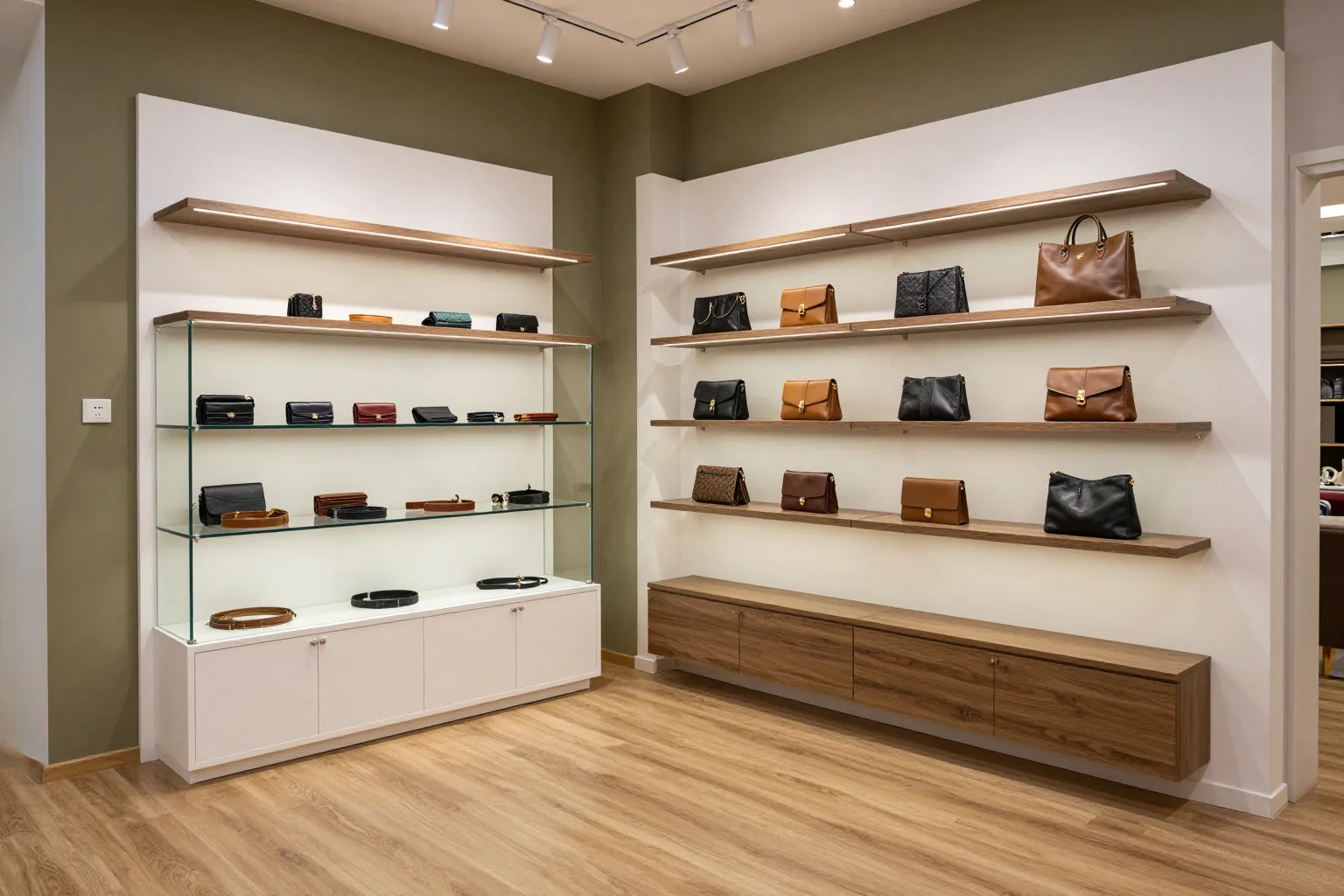
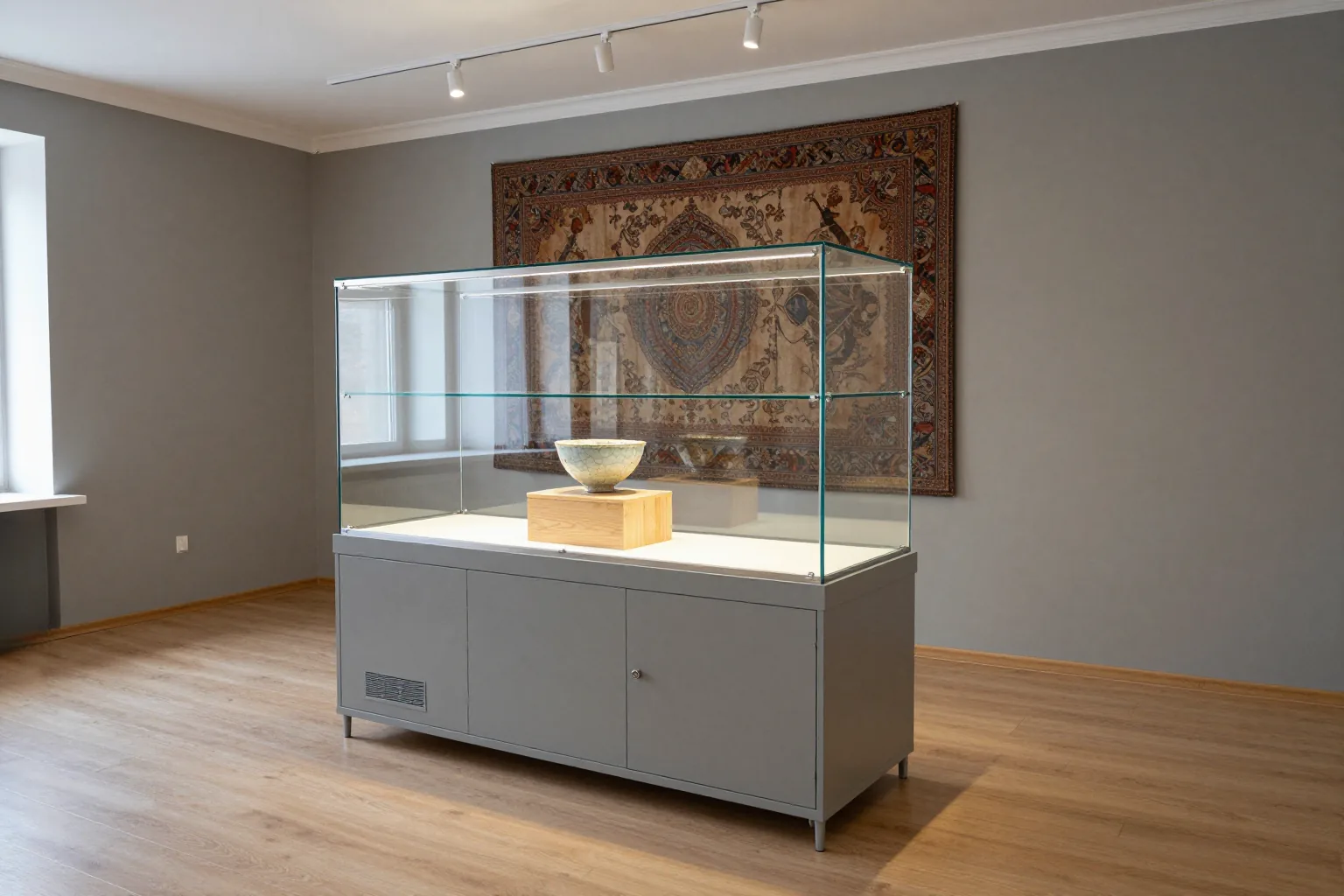
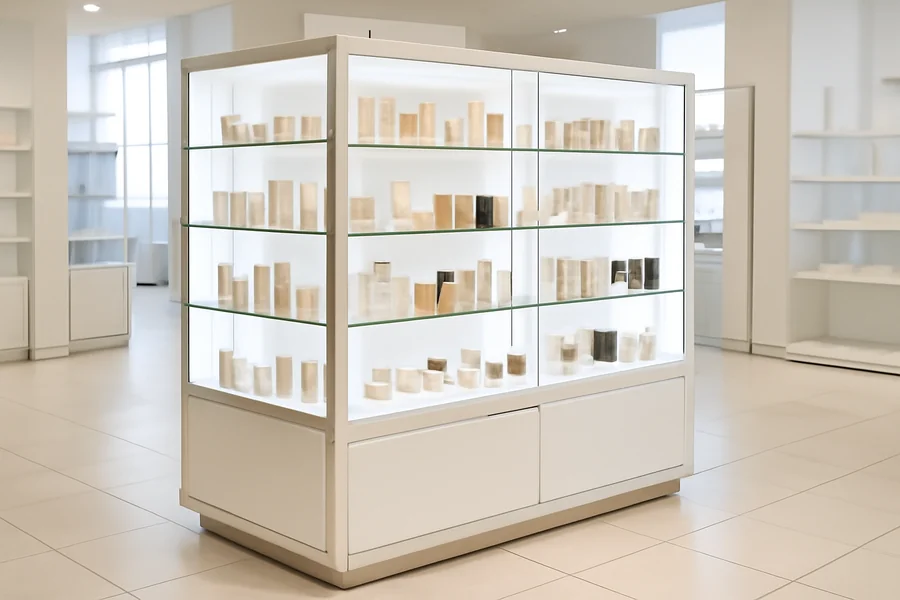
We make wall-mounted, island and tall display cases for your goods: tempered glass, locks and lighting that doesn't dazzle the customer.
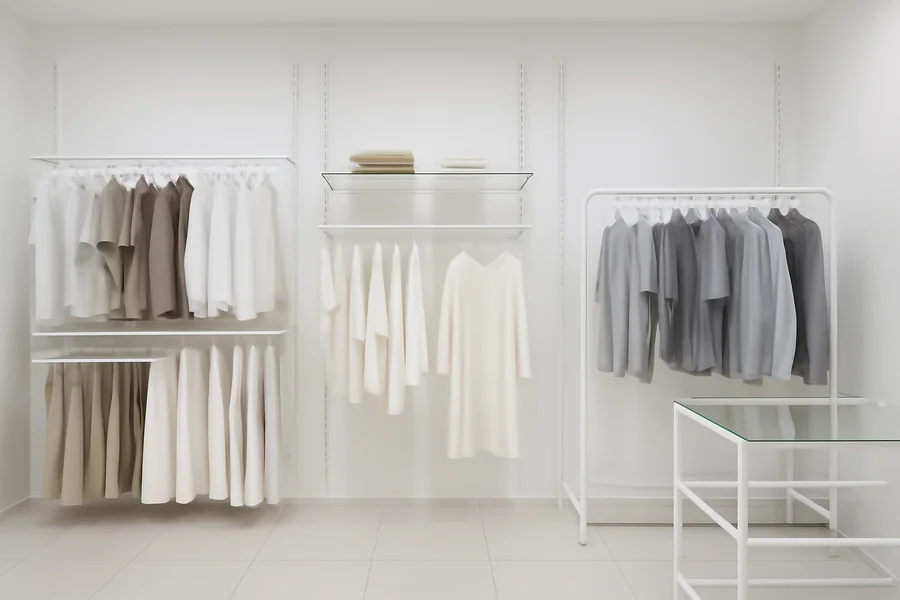
We make rails, gondolas, knitwear shelving, fitting rooms and checkout for your assortment and boutique layout, and install at night so your store never closes.
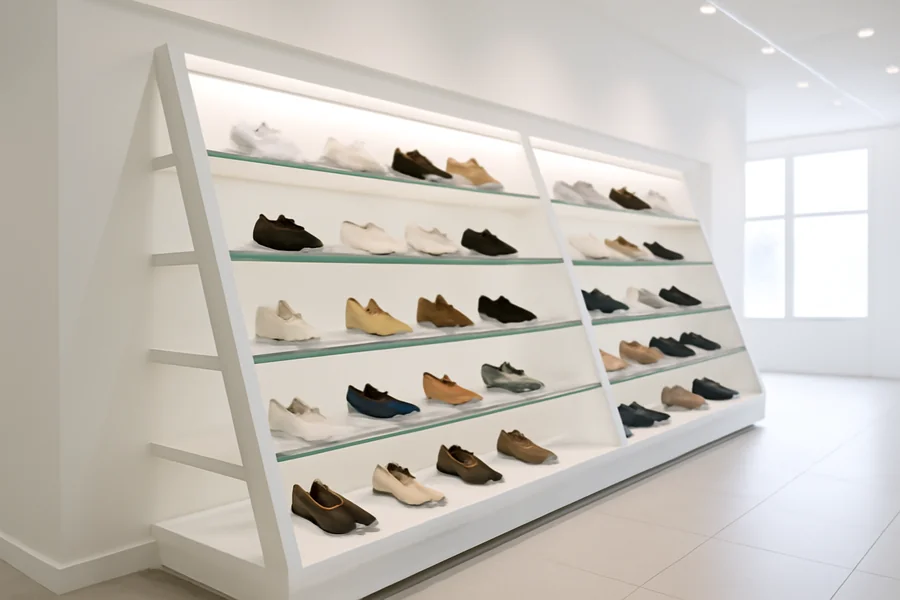
We make slanted shelving, island displays and fitting benches for your footwear assortment and floor layout, and in malls we install at night.
We make wall shelving with lighting, gondolas, perfume display cases and tester tables for your assortment and floor layout, and install at night according to mall rules.
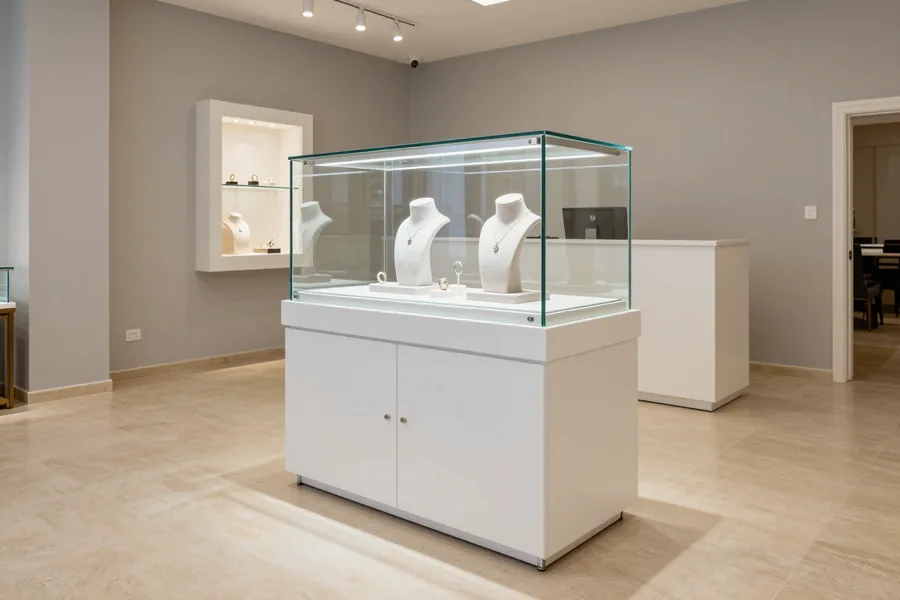
We make counters, island and wall display cases for jewellery: tempered glass, a lock on every door and spot lighting that makes the stones sparkle.
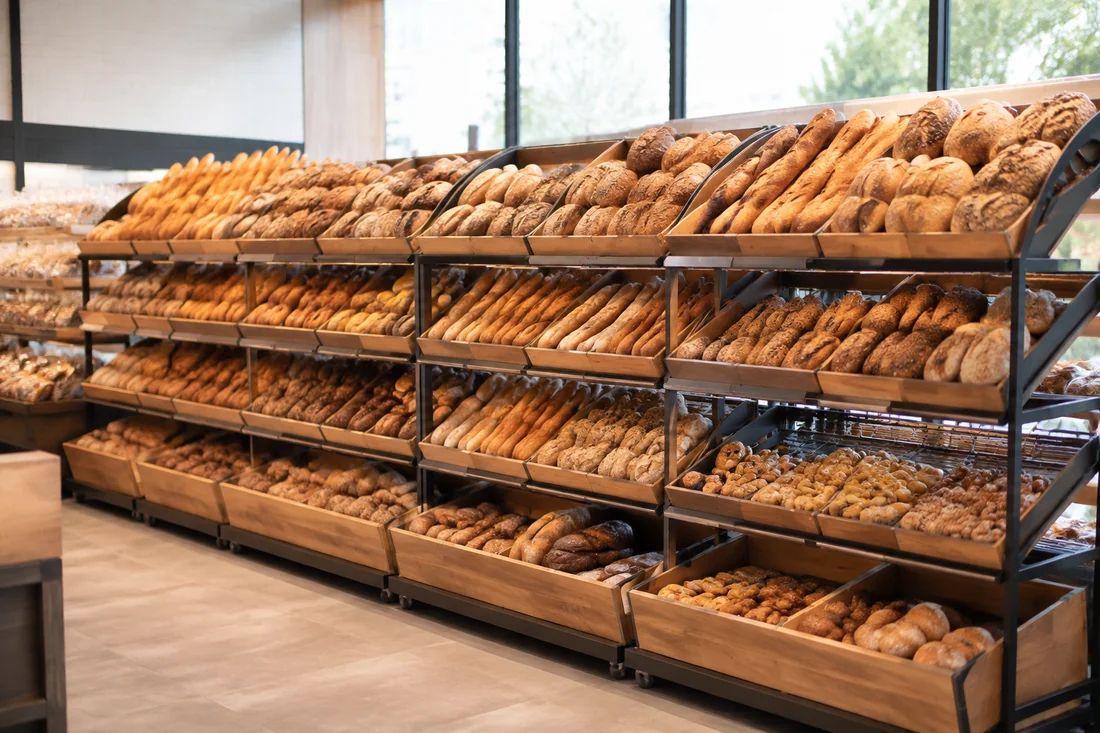
We make slanted shelving, shelves with trays and island display cabinets for a bakery or bread department assortment, with a coating safe for contact with bread.
We make wooden shelving for the sales floor: pine, oak and ash solid wood holds displays for years, and we calculate shelves for the weight of your goods.