MEBLIX makes daybed sofas in its own 600 m² workshop in Almaty: the frame is 18 mm birch plywood and kiln-dried timber, the filling is PU foam at 25–40 kg/m³ with an independent spring unit, and the upholstery comes from 120+ fabrics in our showroom. The measuring visit and 3D design are free, our own crews handle installation, and every piece carries a 24-month contractual warranty.
A daybed is not just a smaller sofa. It is a type of upholstered furniture in its own right, with a low seat and its own set of uses. Here is how it compares with its neighbours and where it works best.
Daybed, couch and regular sofa
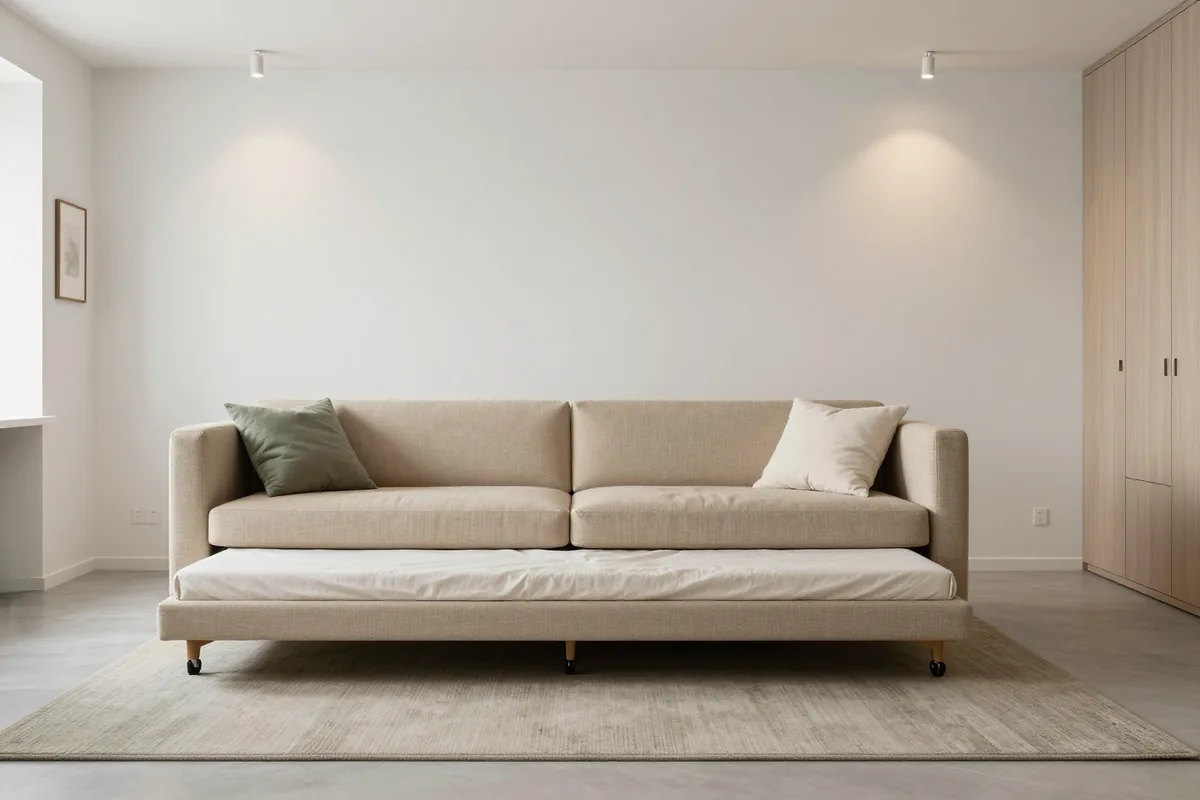
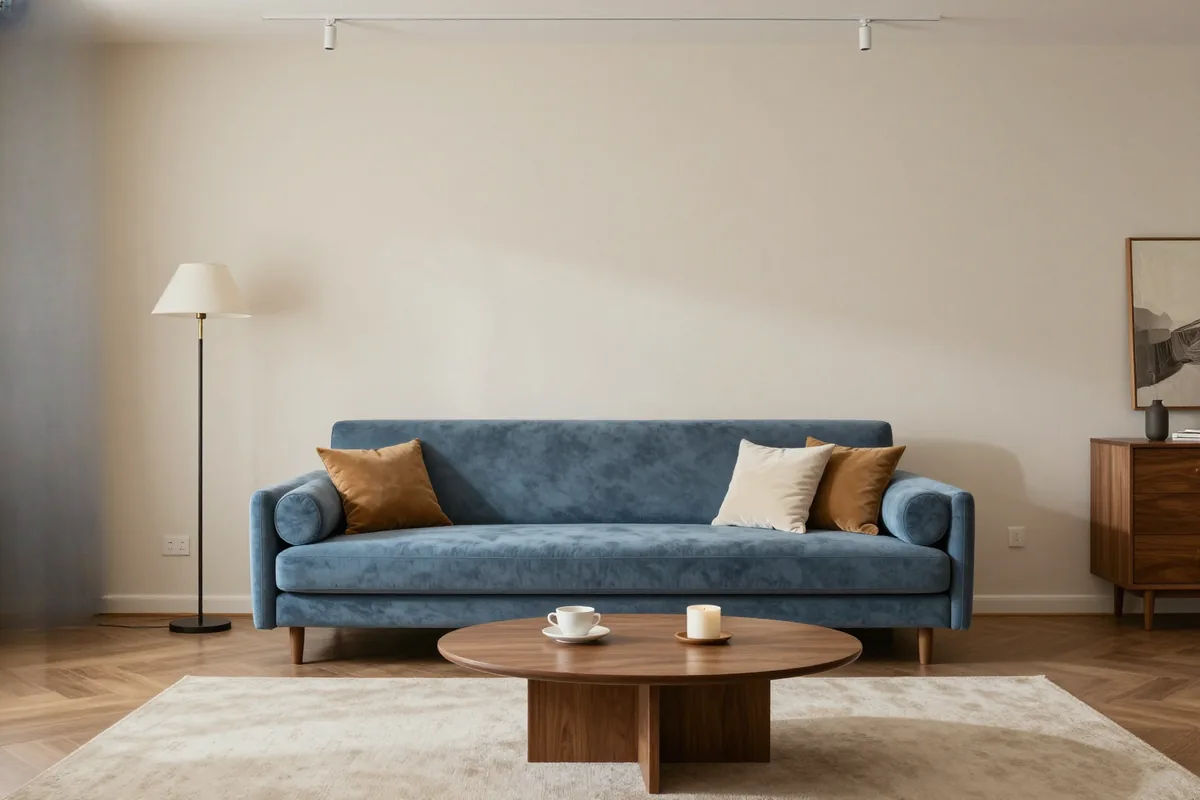
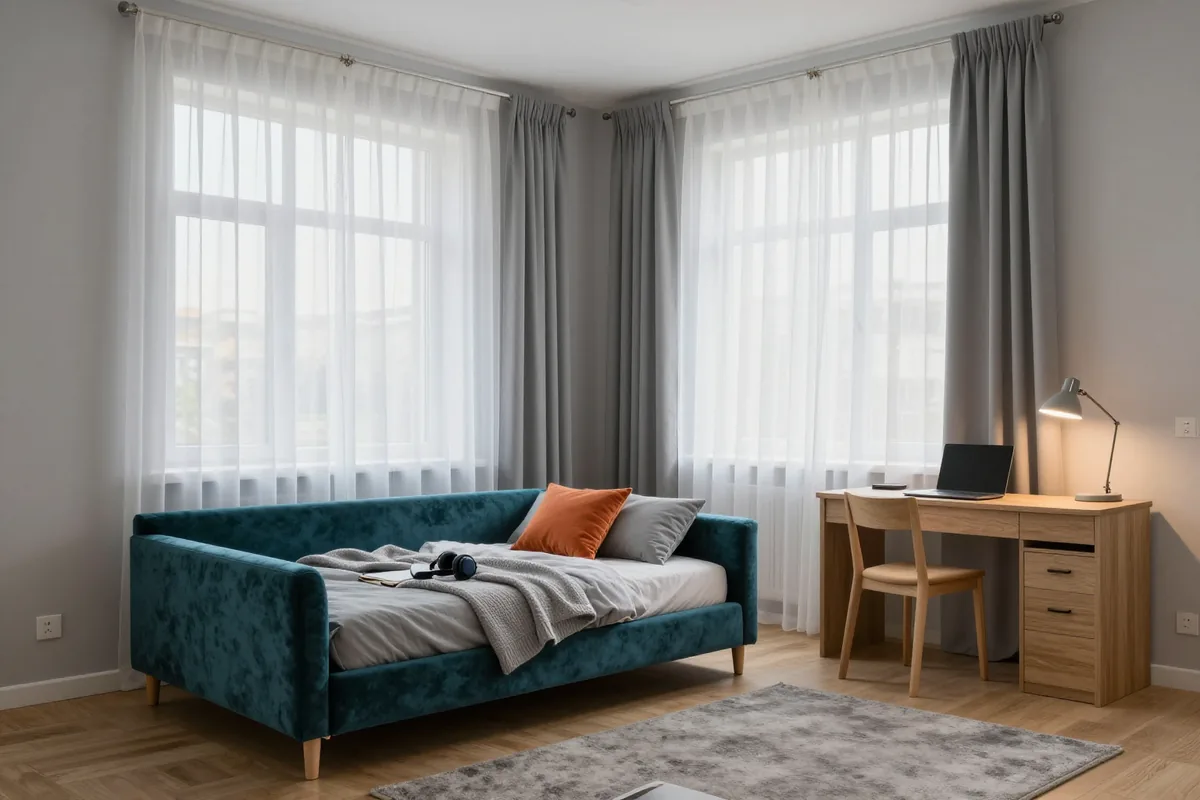
A daybed has a low seat with a short back or no back at all. A couch in the chaise sense is lower still and built for one person, while a regular sofa is designed around a high seat and deep cushions. On a daybed the arms often act as side supports, and the back is either absent or rises 40–50 cm from the floor. A couch is closer to a lounger: people buy it for a single resting spot by the wall, not for four friends. In a living room where people gather in the evening, seat depth and firmness matter more than back height, because they decide how easy it is to sit down and get up several times a night.
In a small living room and by the window
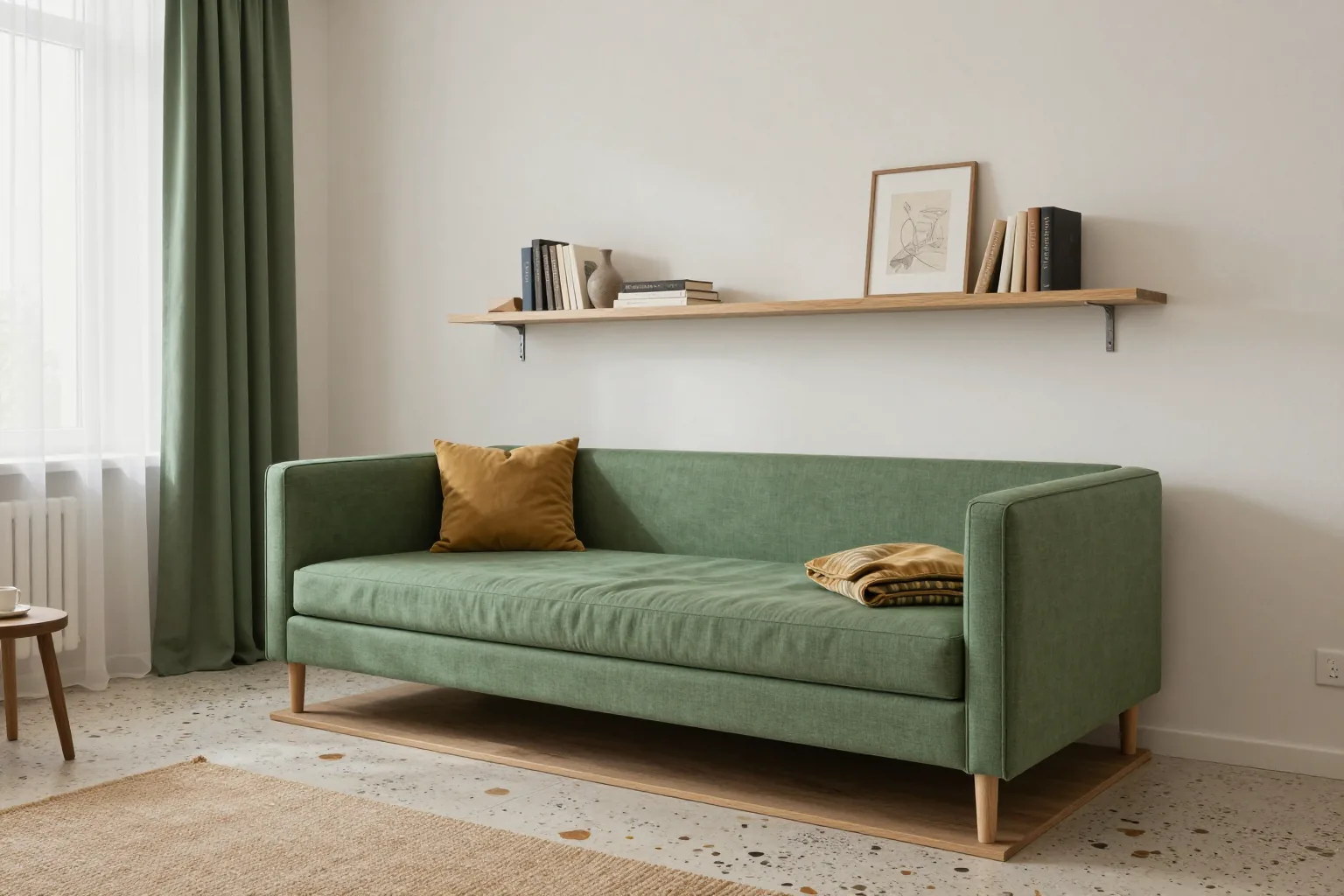
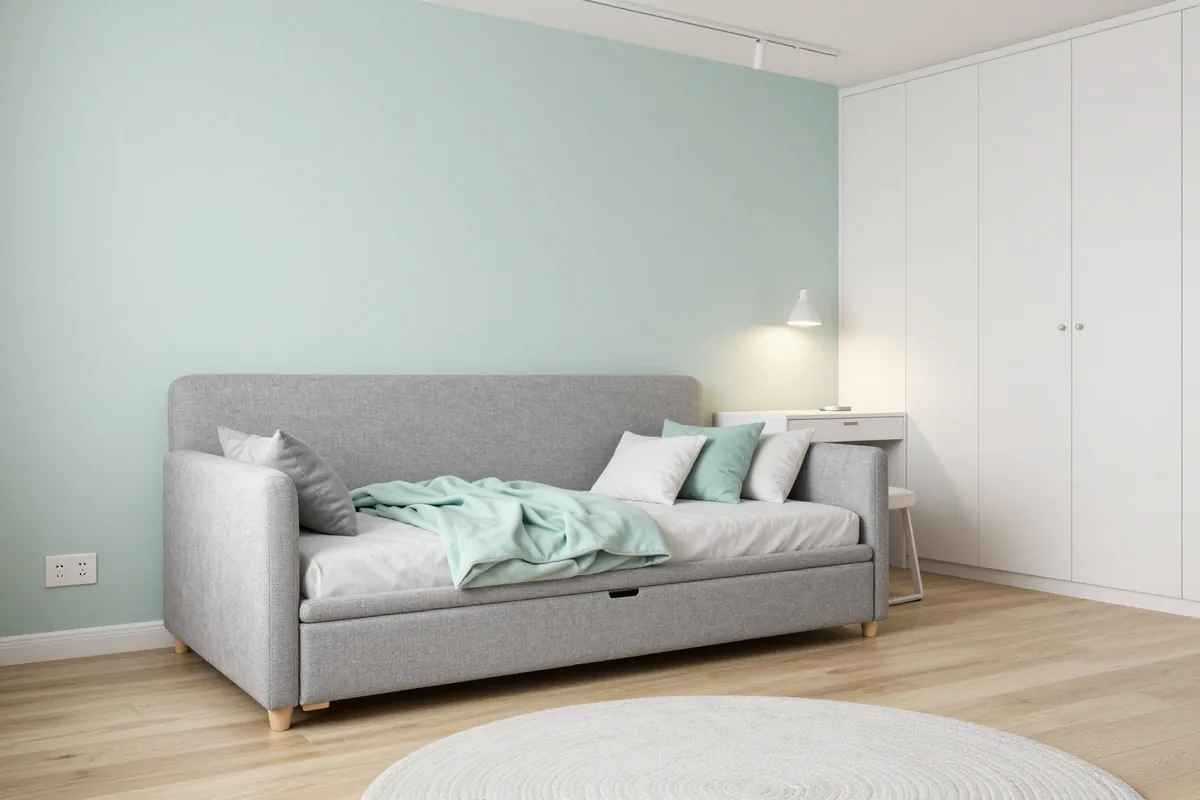
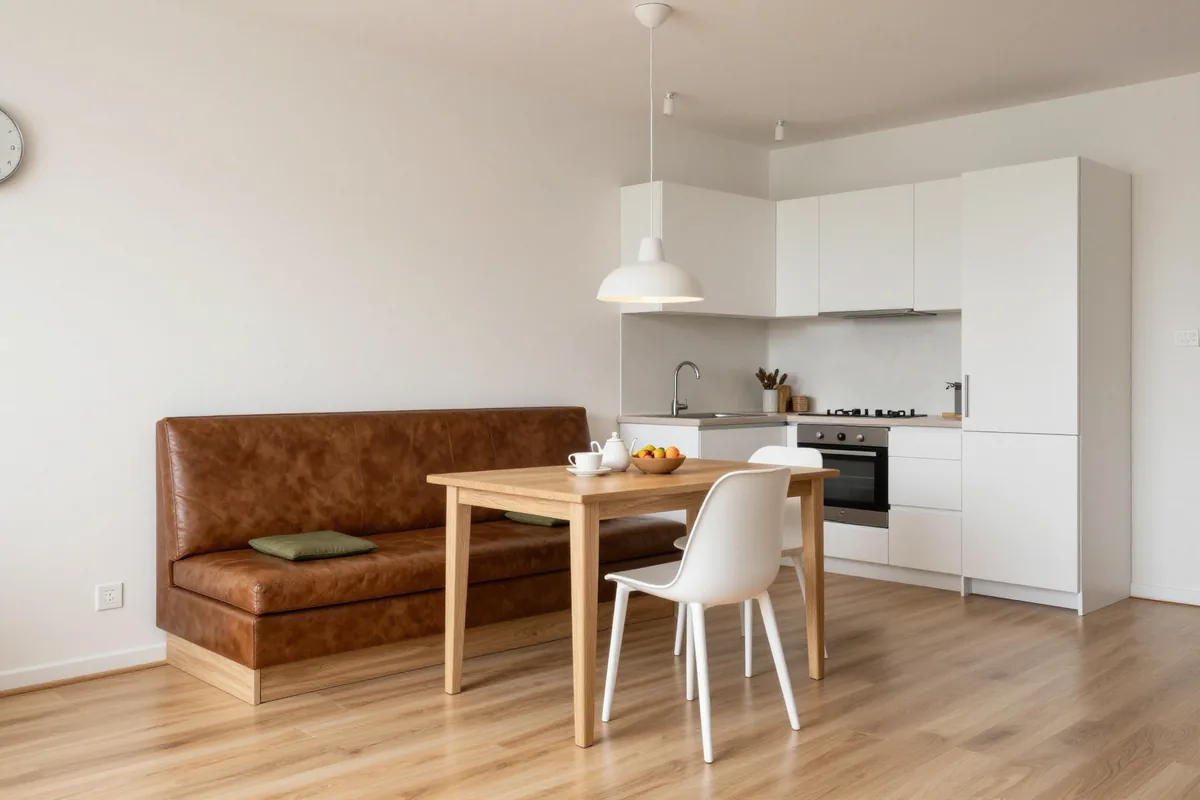
A daybed suits a small living room, a window bay or an alcove. Its low seat doesn't make the room feel heavy, and the wall above stays free. In an alcove we build it to the full width of the opening, so no gap is left by the wall. We take alcove and under-window measurements to the centimetre at the measuring visit, because a ready-made piece from a store rarely fits such a space without a gap. Almaty flats often have uneven walls and radiators under the windowsill, and we allow for these in the design so the daybed doesn't run into a projection.
Configuration options
| Configuration | Where it works | What we take into account |
|---|
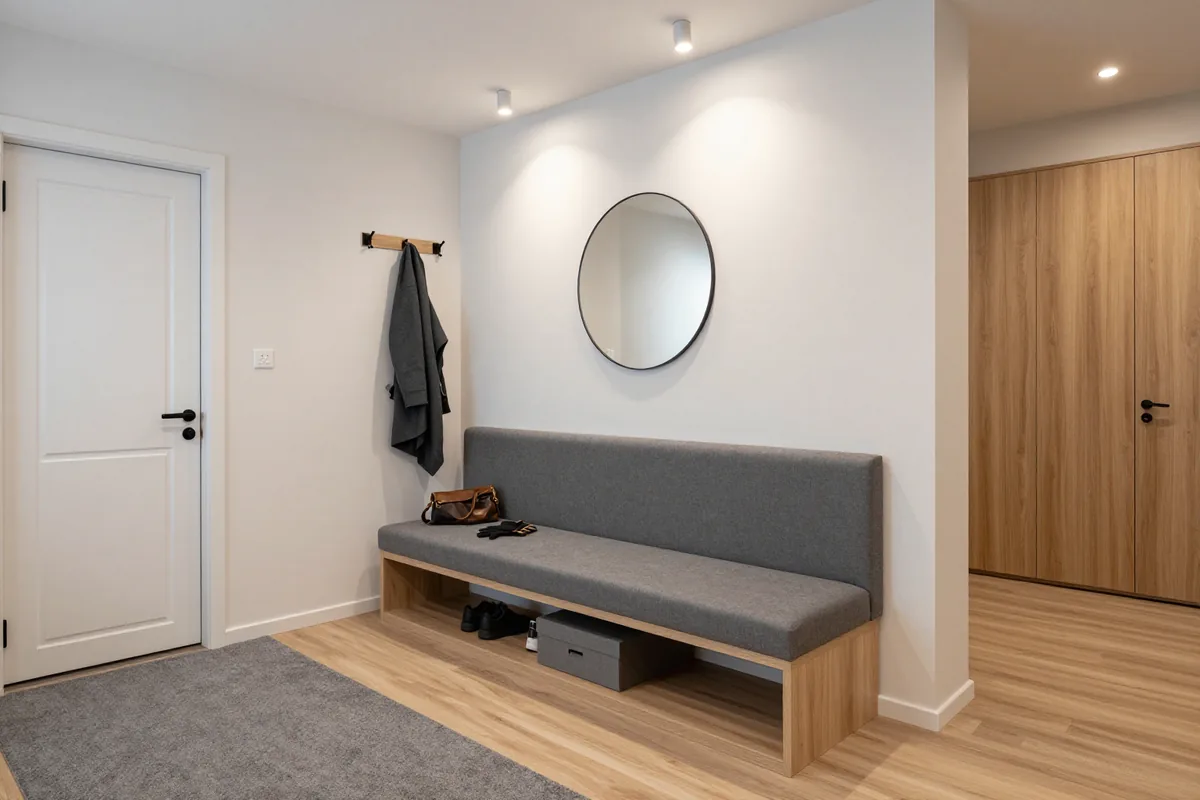
| Armless | small living room, alcove | compact seat, clear walkway |
|---|
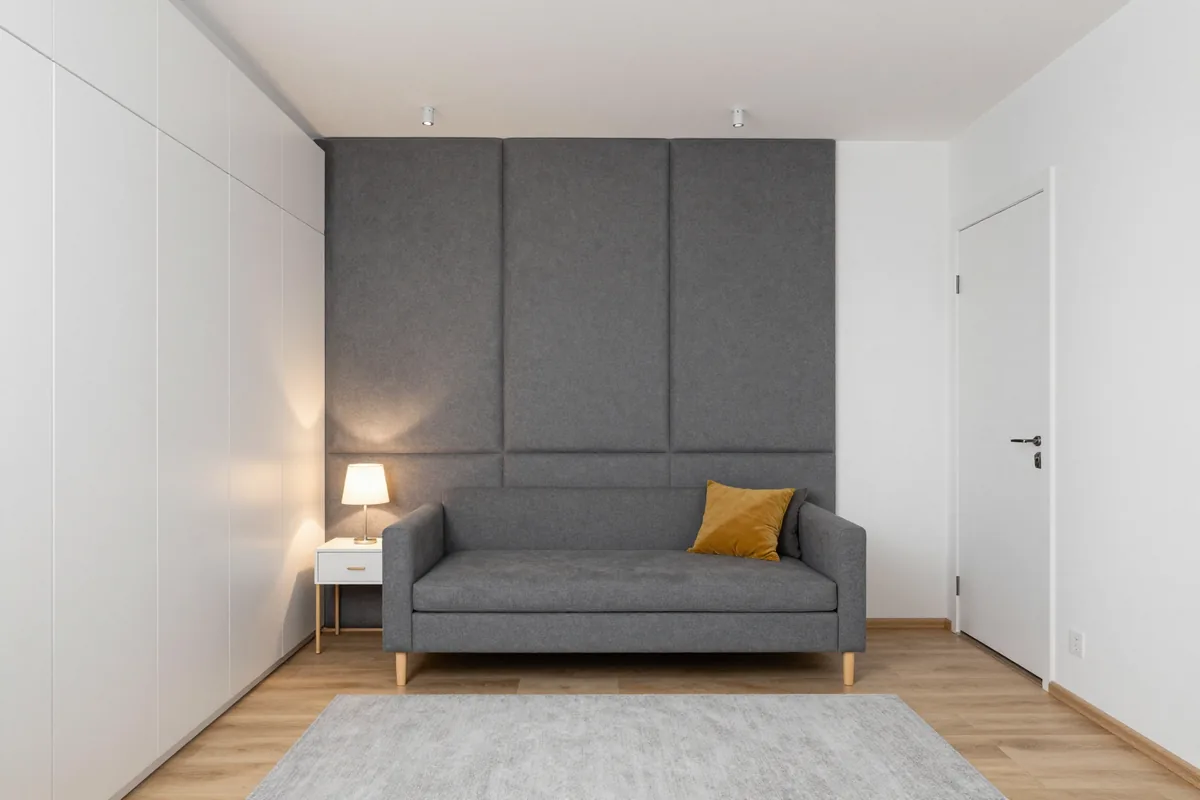
| With arms | relaxing corner by the window | arm support, seat depth |
|---|
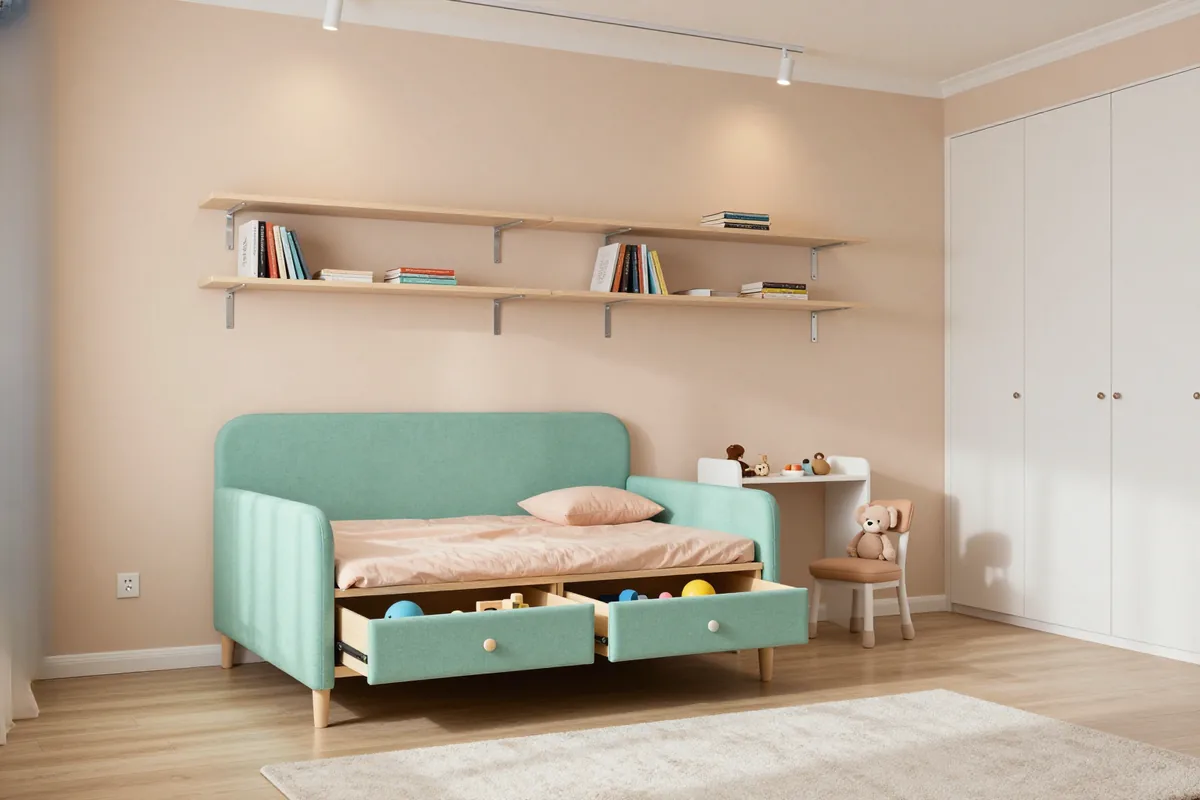
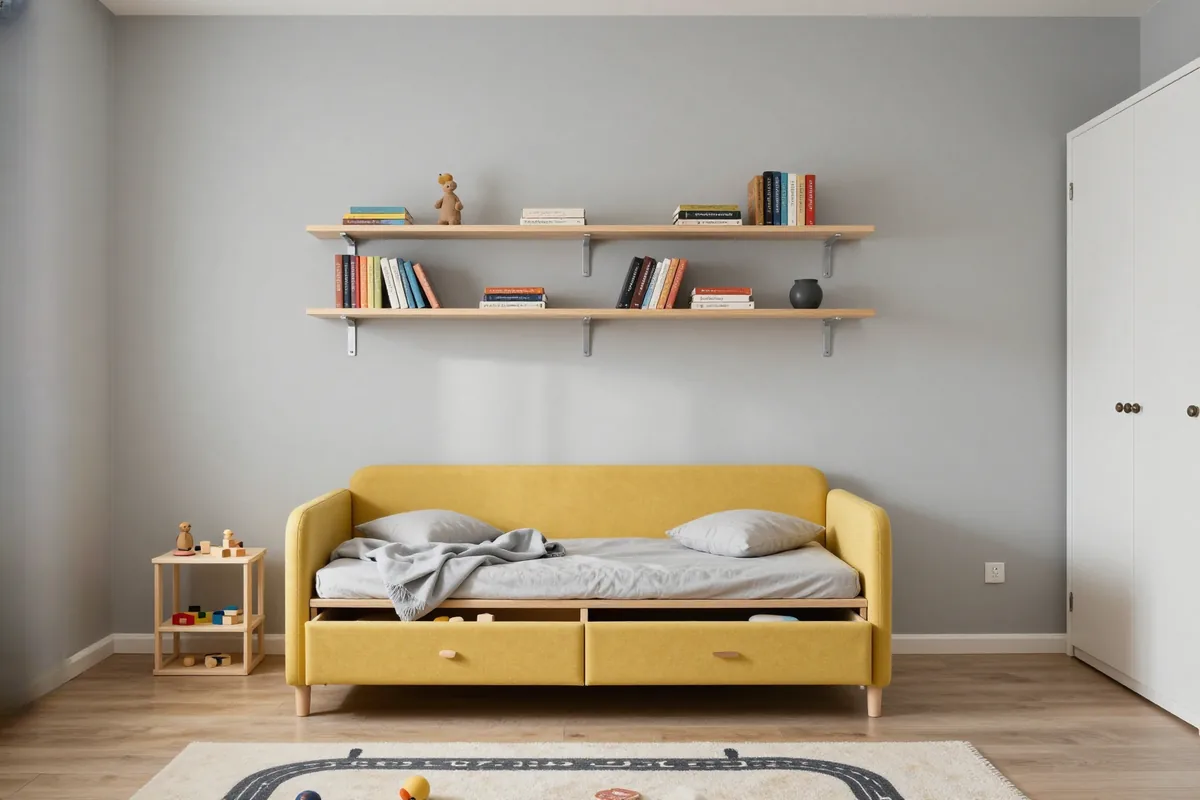
| With a drawer | bedroom, kids' room | seat height is not reduced |
|---|
| With a conversion mechanism | everyday sleeping | mechanism action, filling |
|---|
| Modular | large room, rearranging | sections join without gaps |
|---|
Frame and filling built for daily use
How long a daybed lasts depends on the frame and filling, not the upholstery. This is what we build it from so that it doesn't sag under nightly sleep and keeps its shape for years.
What the frame is made of
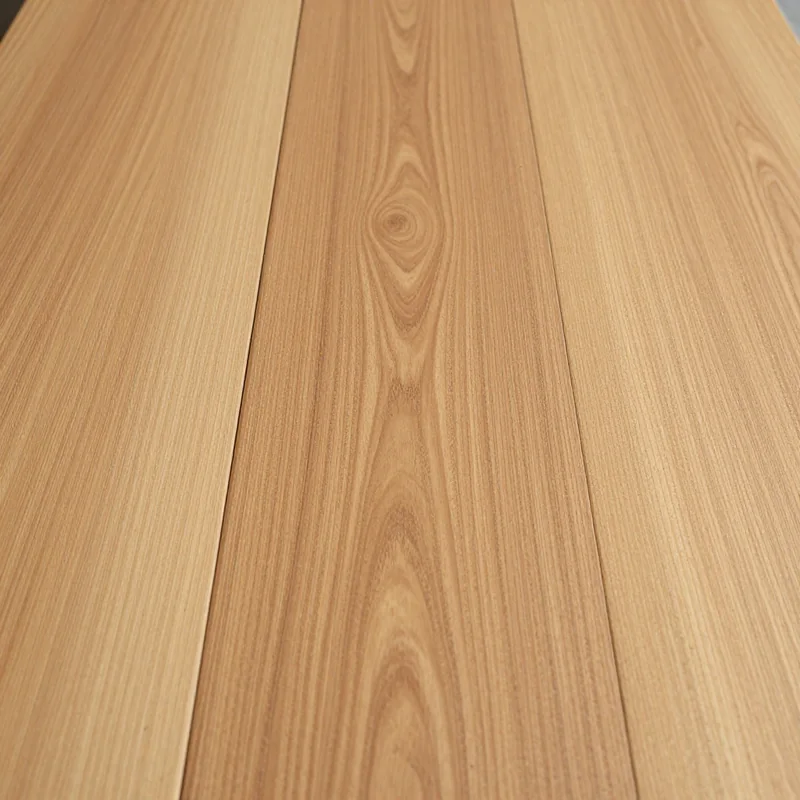
We assemble the frame from 18 mm birch plywood and kiln-dried timber. The plywood holds its shape without bending, and the timber reinforces the frame where the load is greatest. Dry timber matters as much as the plywood: green wood shrinks and causes gaps and creaks, so the material is checked for moisture before assembly. We inspect every frame before upholstering, while all the joints and the geometry are still visible. If you plan to sleep on the daybed every night, ask to see the frame before the covers go on. That is the moment you can tell whether the sleeping area is reinforced and how the corners are fixed.
PU foam or an independent spring unit
For everyday sleeping we fit an independent spring unit and PU foam at 25–40 kg/m³. The springs spread the load point by point, while the foam keeps a soft top layer from sagging. We choose the density to suit how you'll use it: for long hours lying down we go to the top of the range, and for short sitting sessions the lower end is enough. If the daybed is mostly for sitting, dense foam without springs behaves more predictably. At the measuring visit, ask what foam density goes into your option, because it affects firmness more than the fabric does.
A mechanism or a storage drawer
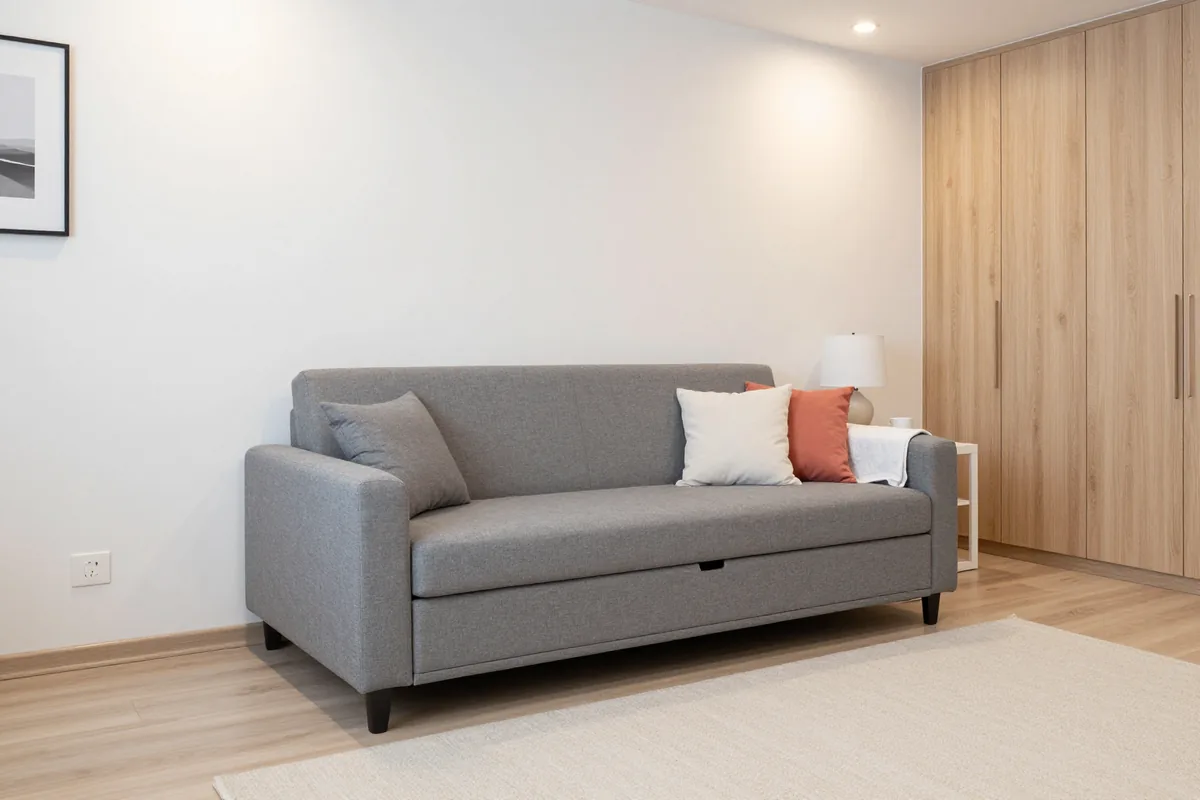
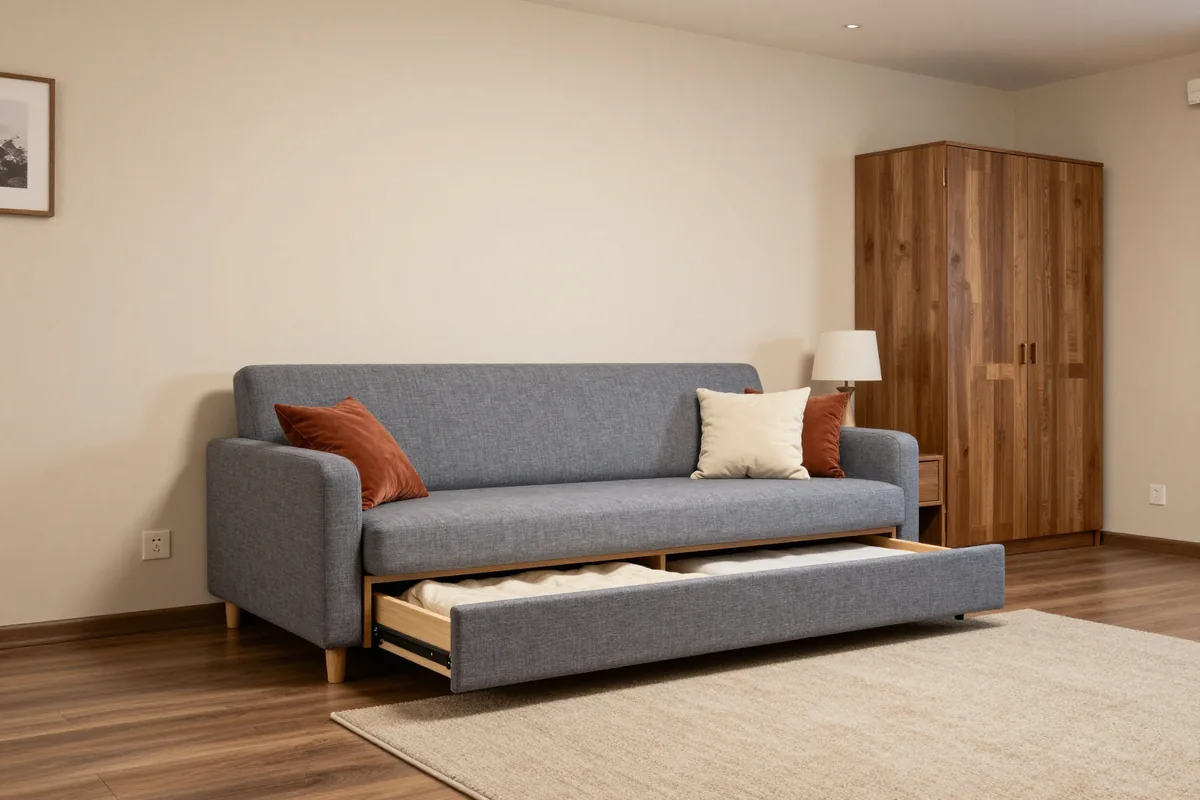
We fit metal conversion mechanisms such as book, Eurobook, dolphin and accordion, and offer a bedding drawer instead when you don't need the daybed to unfold. A mechanism and a drawer compete for the same space in the base, so in the 3D design we pick one based on how you'll really use it. In a living room where the bed is unfolded every night, the action and repairability of the mechanism matter most; in a room where the daybed stays closed, a drawer is more useful.
Fabrics and caring for the upholstery
Daybed upholstery wears faster than that of a tall sofa, because the low seat is in constant contact with clothing and close to the floor. Below we match fabrics to room conditions and explain how to look after them.
If you have a cat
For a home with a cat we recommend anti-scratch microfibre. Its dense weave doesn't catch claws and sheds pet hair easily, unlike loose textures such as bouclé. Matting also resists claws thanks to its tight weave, but hair shows more on it and is harder to remove than from smooth microfibre. Bouclé and chenille with a pronounced pile trap hair in their texture, so you need a brush rather than a cloth. The corners of a low daybed are closest to the floor and to your pet, so check those areas on a fabric sample before ordering.
Fabric comparison
| Fabric | Best for | Care |
|---|
| Matting | busy living room, children | tight weave, easy to clean |
|---|
| Velour | bedroom, relaxing area | needs gentle cleaning of the pile |
|---|
| Chenille | everyday use | keeps its shape, prone to snags |
|---|
| Bouclé | decorative, light use | texture collects hair |
|---|
| Anti-scratch microfibre | home with a cat | resists claws, easy to wash |
|---|
| Faux leather | kitchen-living room, children | wipes clean, doesn't absorb |
|---|
| Genuine leather | long service life | needs surface care |
|---|
How to look after the upholstery
- Dry cleaning: vacuum with a soft nozzle once a week so dust doesn't work its way into the filling.
- Stains: deal with them straight away, blotting with a cloth from the edge to the centre without rubbing.
- Sunlight: don't place the daybed in direct sun by a window, or the fabric will fade unevenly.
- Covers: remove and clean them following the fabric maker's instructions rather than machine-washing them whole.
- Pile: on velour and chenille, use a soft brush to lift the pile after cleaning.
Ordering to size, for an alcove or from a photo
Ordering a daybed to your size or from a photo is a path from measuring to installation. Here is how it works and what you see before production starts.
Measuring visit and 3D design
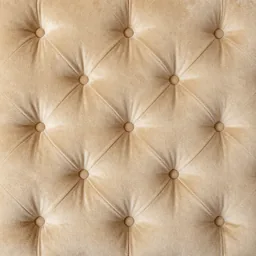
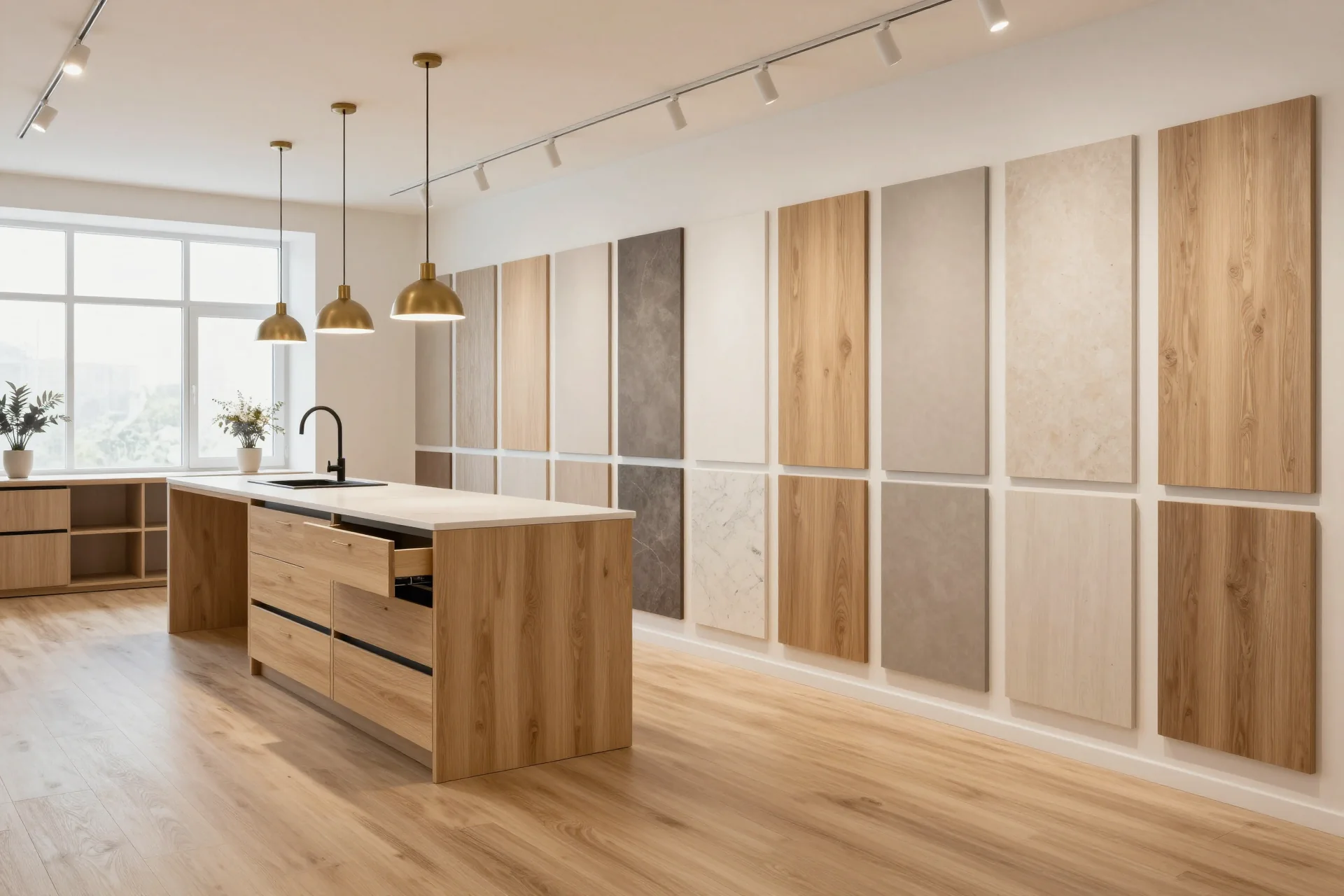
The measuring visit and 3D design are free, the sketch is ready in 1–2 days, and we bring fabric samples so you can choose the upholstery on the spot. The measurer records the room dimensions, checks the walls and the angle between them, and notes skirting boards, sockets and radiators. During the visit you look through 120+ showroom fabrics, including matting, velour, chenille, bouclé, anti-scratch microfibre and faux leather, and see how each sample behaves when stretched. The model shows how the daybed will sit in the alcove and whether it blocks the walkway, and changes are cheaper before cutting than after.
From a photo or a sketch
We also work from photos found online or your own drawings, but we don't copy them literally. We recalculate the construction for your room and a suitable fabric. You send a picture or a rough sketch, and the designer works out the proportions, back height, filling type and mechanism, then suggests what can really be built in 18 mm birch plywood and kiln-dried timber.
Ordering from a maker or buying ready-made
We are a direct manufacturer, not a reseller: measuring, design, production in our own workshop and installation by our own crews involve no resale of ready-made furniture. The covers are cut and sewn on site, and before packing we check the seams, the fit of the upholstery and how the mechanism runs. With a ready-made model from a classifieds site you can't check the frame before it is upholstered, and that is exactly where cost-cutting usually hides, only to show up after a year of use.
Lead times, warranty and handover
Lead times, the warranty and handover are the questions that most often make people put off ordering. Here is how these three stages work with us, from the approved design to the signed certificate.
How long you will wait
Lead times depend on the model and materials; for each option they are listed in the price list on this page, and rush orders are possible. The clock starts not from your enquiry but from the approved 3D design: changes at the design stage don't delay production, while changes after cutting do affect the ready date. To keep the date you want, sign off the configuration before work begins.
What the warranty covers
The warranty is 24 months under the contract and covers the frame, the conversion mechanism and the seams. The warranty applies when the operating conditions in the contract are followed; overloading the mechanism or reupholstering the daybed yourself voids the obligations for the seams and mechanism. Make sure the contract states the exact mechanism agreed in the design, because swapping it for another type counts as a change to the product.
What to check before signing the certificate
- Seams: even stitching at corners and joins, with no skipped stitches or loose threads.
- Fit: the cover sits on the seat without skewing or creases.
- Mechanism: open and close the daybed several times and check that it runs smoothly.
- Gaps: inspect the joins between sections and where the daybed meets the wall or alcove.
- Legs: make sure they stand firmly with no wobble.
- Frame: press on the seat and back to check for creaking or flexing.
The bottom line on daybeds
Here is a short summary: how a daybed differs from a sofa, what makes it durable, how to choose the upholstery and what to look for when you accept the finished piece.
- Type: a daybed differs from a sofa by its low seat and range of configurations, not just its size.
- Construction: a frame of 18 mm plywood and kiln-dried timber with PU foam and a spring unit handles daily use.
- Upholstery: choose fabric for the room's conditions; anti-scratch microfibre suits a home with a cat.
- Ordering: the measuring visit and 3D design show how the daybed fits the alcove before any cutting.
- Handover: check the seams, the fit and the mechanism on site before signing the certificate.