MEBLIX makes custom oak furniture in Almaty: our own 600 m² workshop, kiln-dried solid oak at 8–10 % moisture, a measuring visit and 3D design in 1–2 days, and installation by our own crews. We have been working for 13 years and have 3 500+ projects behind us. Every piece carries a 24-month warranty under the contract, and Blum hardware comes with a 25-year manufacturer's warranty.
Oak is a dense, hard species, but it is demanding when it comes to drying. Here is why the moisture content of the timber and proper conditioning decide how a piece will behave years from now.
What moisture level is normal for oak
We work with kiln-dried solid oak at 8–10 % moisture and measure it before cutting: at that level the wood does not warp once it is installed in a flat. We check moisture on every batch. A pin moisture meter reads the value inside the board, not just on the surface, which dries faster after the kiln. Timber with higher moisture is left to condition in the workshop until it reaches the working value. Only then does the blank go on to cutting and planing, and after milling, to sanding. This sequence keeps the geometry of the parts stable through the whole cycle. If the timber is poorly dried, the piece starts to crack and open at the joints in its very first heating season, which is why moisture control before cutting matters more than any finishing touch.
Why oak moves and how we allow for it
Oak is a living material. It reacts to changes in indoor humidity, and we build that into the design: we leave expansion gaps and never fix large solid panels rigidly. In the heating season the air in a flat is drier, in summer more humid, so the boards shrink and swell in turn. To absorb this movement, we mount fronts and tops on floating fixings and do not pull the edging tight against the carcass. The wider an oak part, the more it moves, so large tops and fronts are glued up from lamellas rather than cut from a single panel. That way the piece rides out seasonal swings without cracking. Before dispatch we do a test assembly in the workshop and check how the gaps behave once everything is put together.
Which species pair well with oak in one piece
- Ash: close to oak in hardness with a bolder grain, good for contrasting inserts in fronts and tops.
- Beech: dense and uniform, well suited to frames and internal parts where stable geometry matters.
- Alder: softer and darker, it gives a calm backdrop to oak fronts without competing with their texture.
- Walnut: dark and expressive, it works as an accent species in a composition, for example in a top or shelves.
- Samples at the visit: we bring offcuts of wood and veneer so you choose a pairing from a real cut, not a catalogue photo.
Solid oak, veneer or plywood
We compare the three materials we work with — solid timber, natural veneer on MDF and birch plywood — and show how to combine them in a single piece.
How solid oak differs from veneered furniture
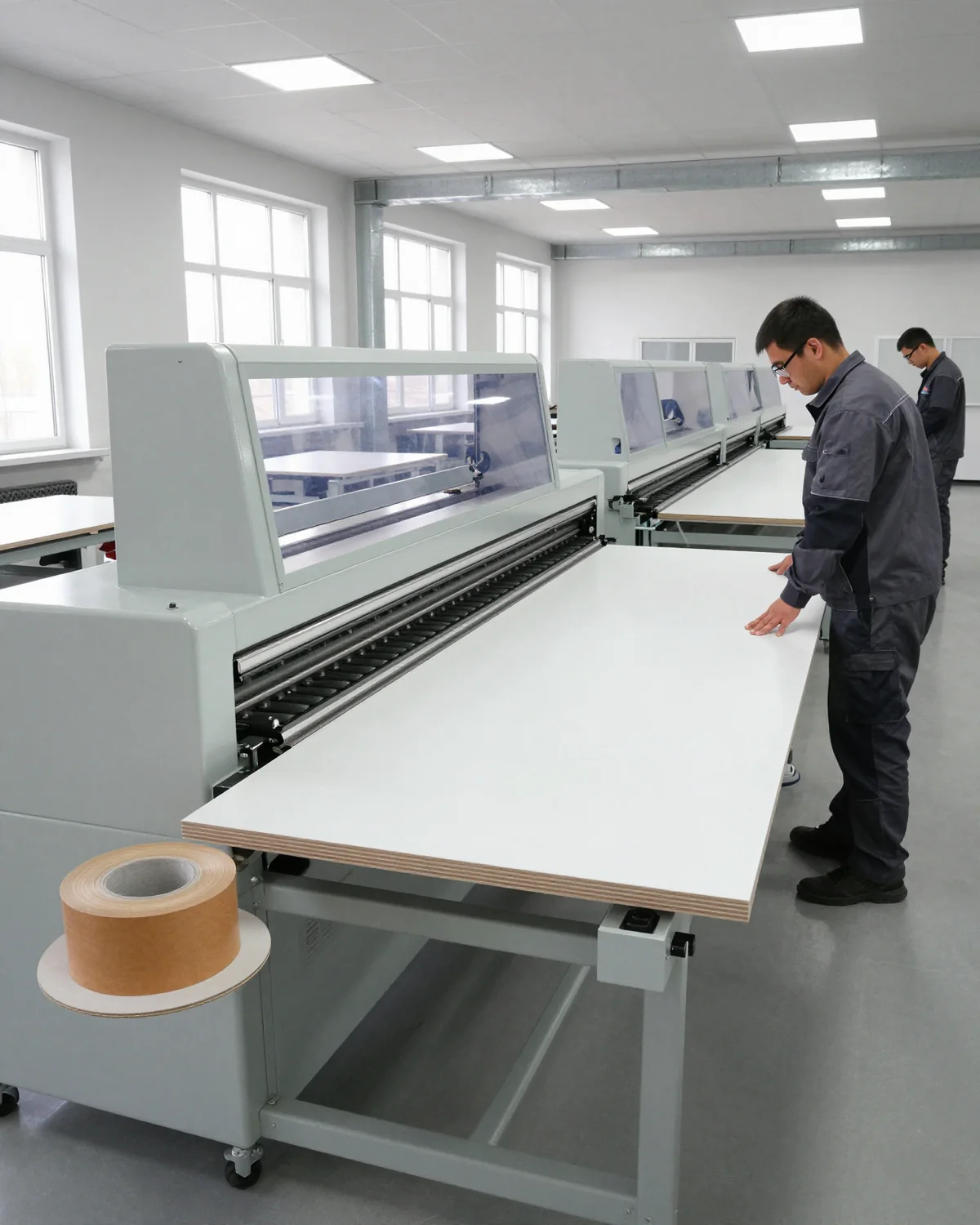
Solid timber means oak through the full thickness of the part, while veneer is a thin slice of natural oak on an MDF core. We make both, depending on what the client needs. In the joinery section of our workshop, kiln-dried boards at 8–10 % moisture are cut and planed, while veneering runs on a separate line: the slice is glued to the board and pressed across the whole surface. A solid oak panel is heavy and its grain is unique in every part, but it can be sanded many times and refinished for decades. A veneered panel needs more careful handling, since a chip on the edge cannot simply be polished out. On the other hand, it keeps large fronts flat with no risk of warping. For a heavily used tabletop, solid panel is the safer choice; for tall wardrobe doors, veneer makes more sense.
Where birch plywood belongs in a piece
We use FK-grade E1 birch plywood wherever a strong, stable base is needed: carcasses, drawer bottoms and bases that stay out of sight but carry the load. Over a wide span a sheet holds its geometry better than solid board and does not delaminate as indoor humidity changes. Pairing an oak front with a plywood carcass is an honest way to keep the natural look on the outside without paying for solid panel in hidden parts. Before cutting, we check the moisture of every batch, and a test assembly in the workshop confirms the carcass goes together without distortion before it ships. This approach is most common in kitchens and wardrobes: oak on the visible surfaces, plywood for the internal structure. Savings on hidden parts must never come at the expense of load-bearing joints.
Materials compared by use and load
| Material | Where we use it | What it gives | Care notes |
|---|
| Solid oak | Fronts, tops, bed frames | Solid timber, a finish that can be renewed | Reacts to humidity, needs gaps |
|---|
| Natural veneer on MDF | Large fronts, panels, doors | Stable geometry, even grain | Protect from chips and deep scratches |
|---|
| E1 FK birch plywood | Carcasses, drawer bottoms, bases | Strength and stability in hidden parts | Hidden inside, no care needed |
|---|
What oak furniture we make to order
We make custom oak furniture well beyond tables and beds: our range also covers kitchens, wardrobes and worktops. Below are the main lines, plus how to fit a piece into a room with non-standard dimensions or into a niche.
Oak beds, kitchens, wardrobes and tables
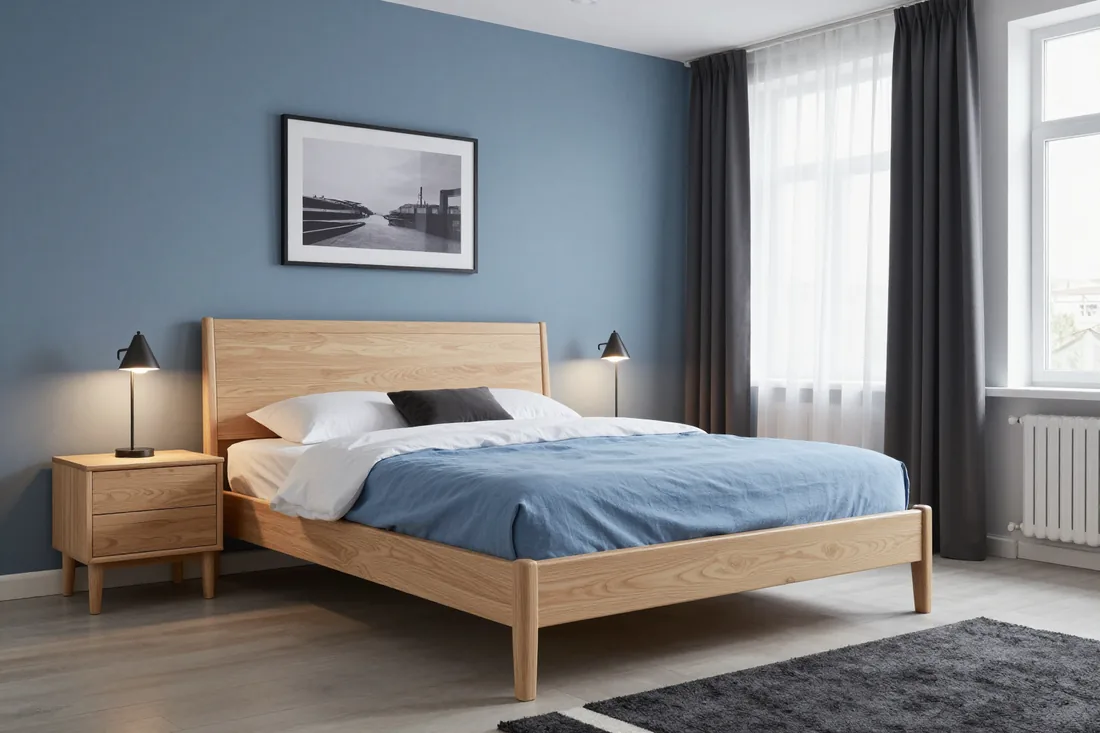
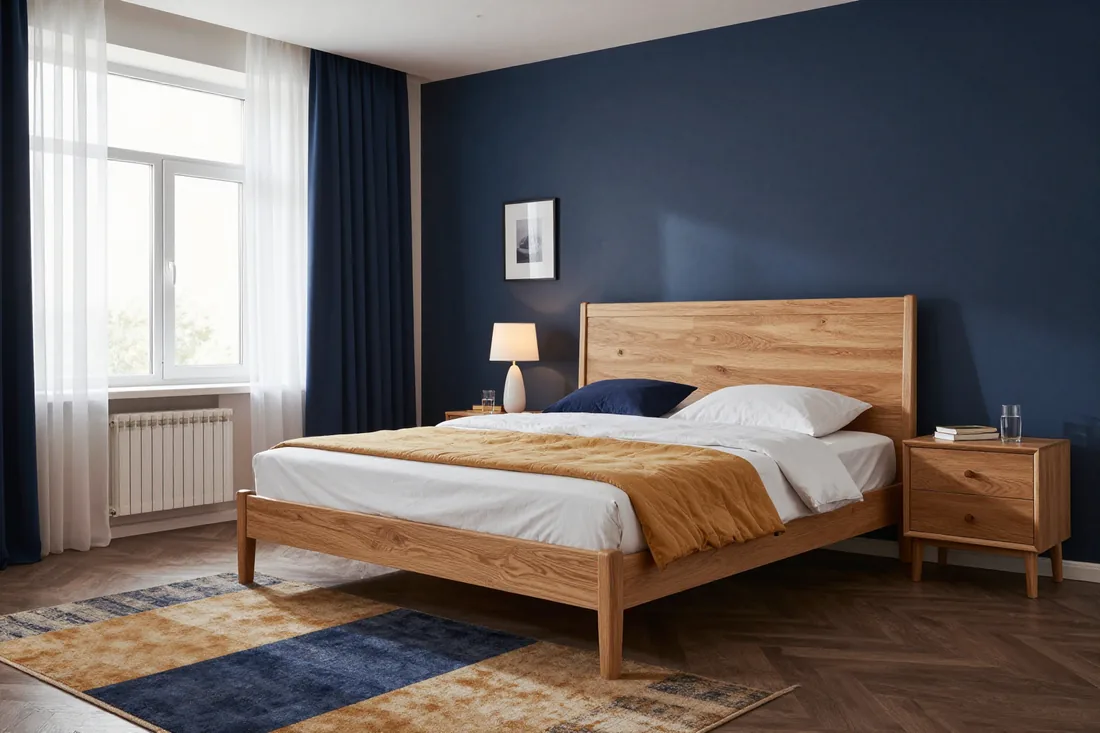
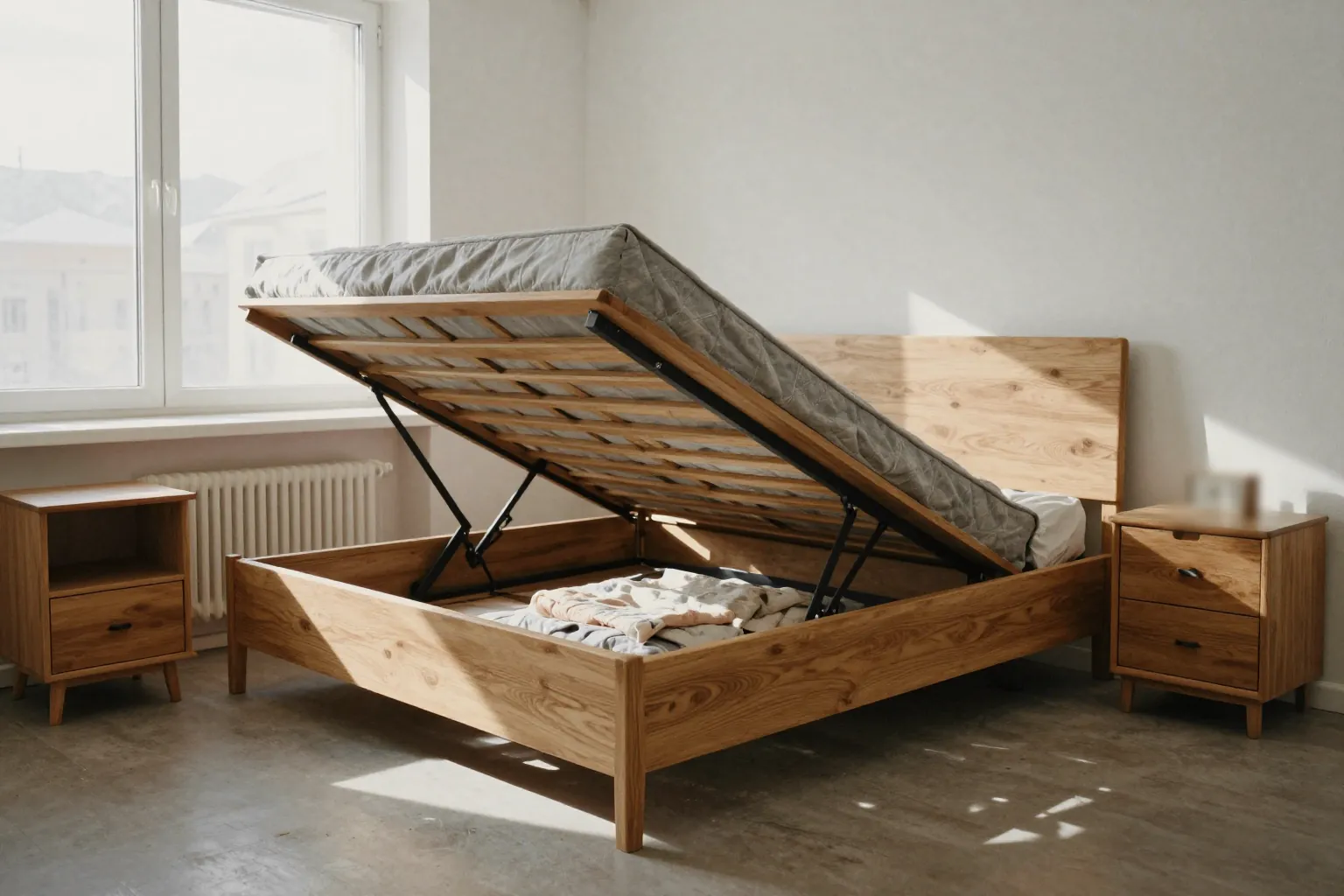
- Oak beds: frame and headboard sized to your sleeping area, with a base for the mattress, so the bed sits in the bedroom with no gaps at the wall.
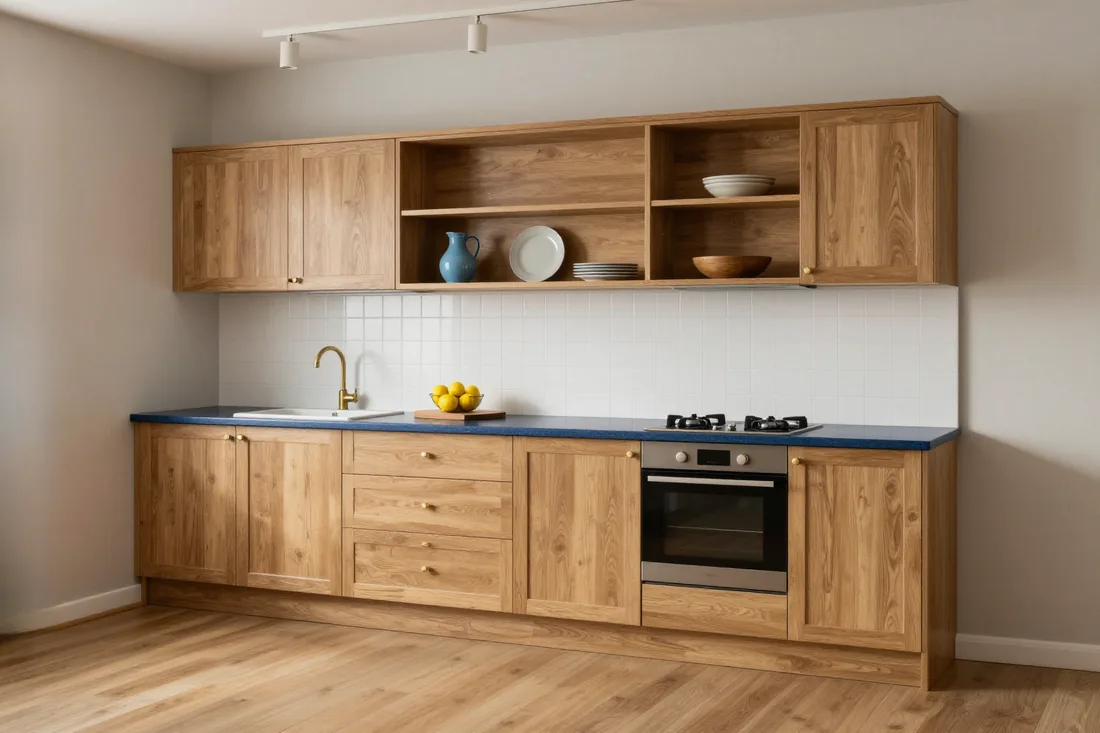
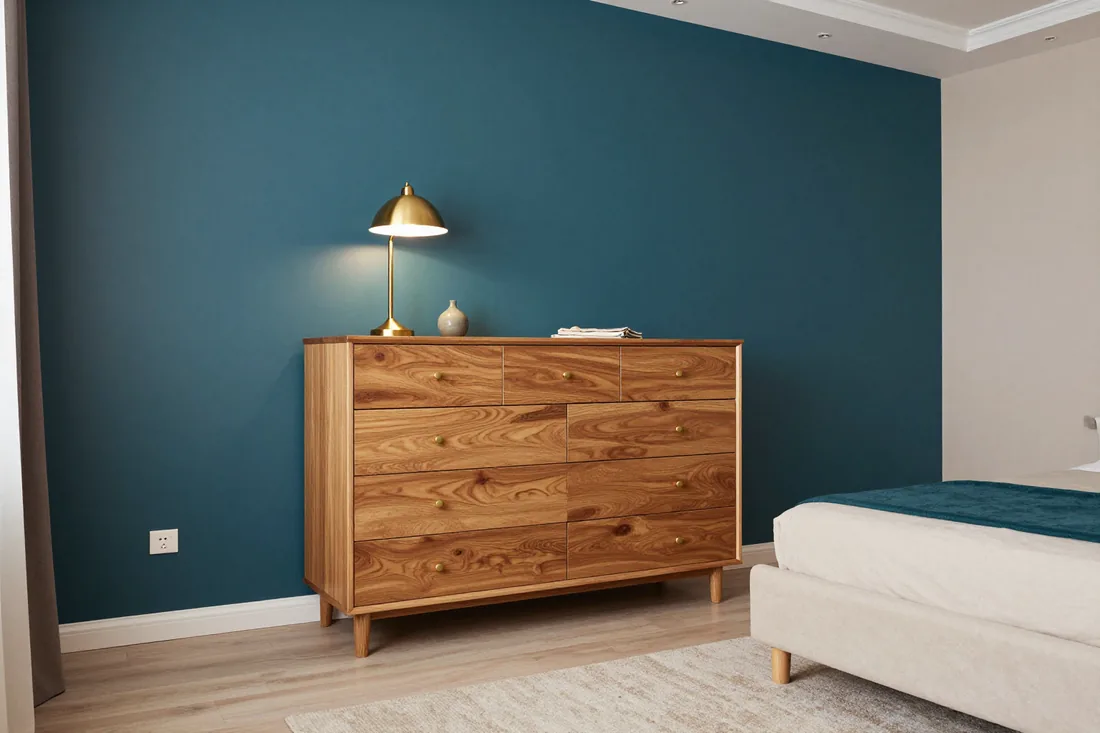
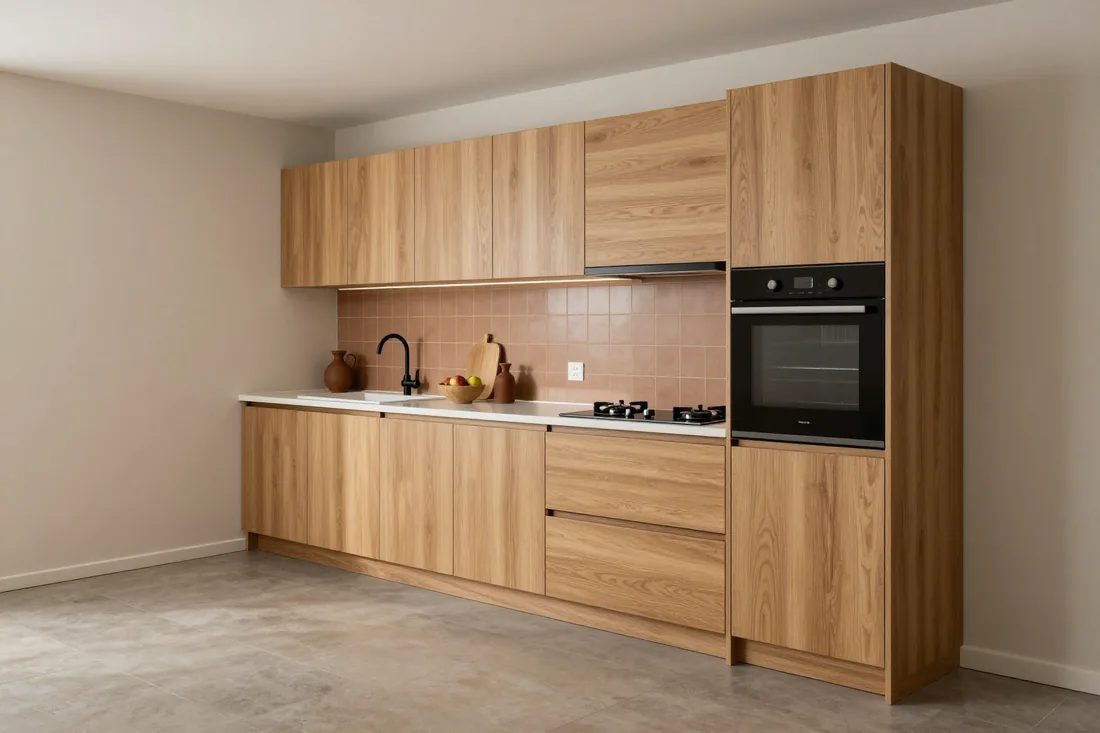
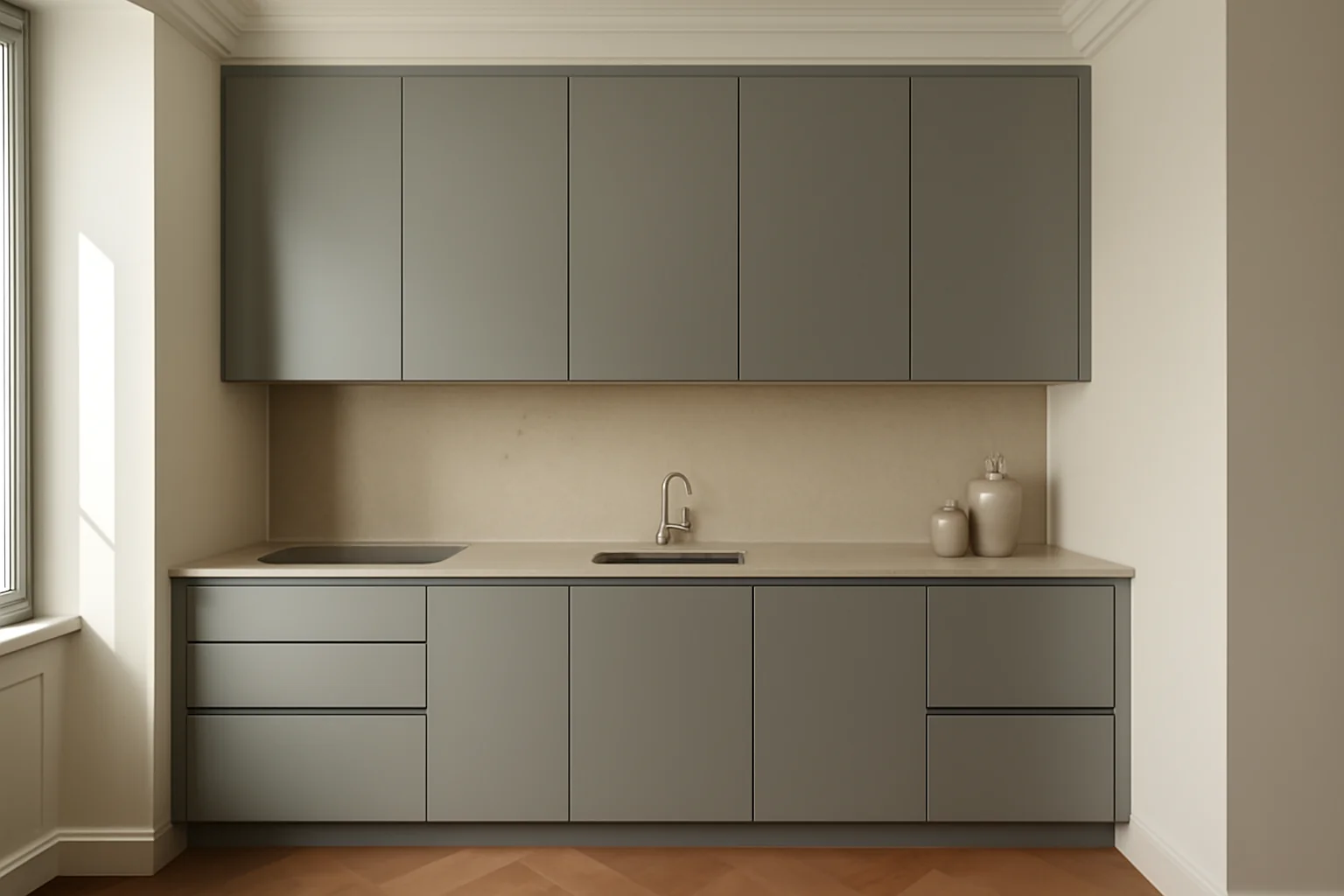
- Oak kitchens: solid wood fronts and worktops, birch plywood carcasses, Blum and Hettich hardware for heavy doors.
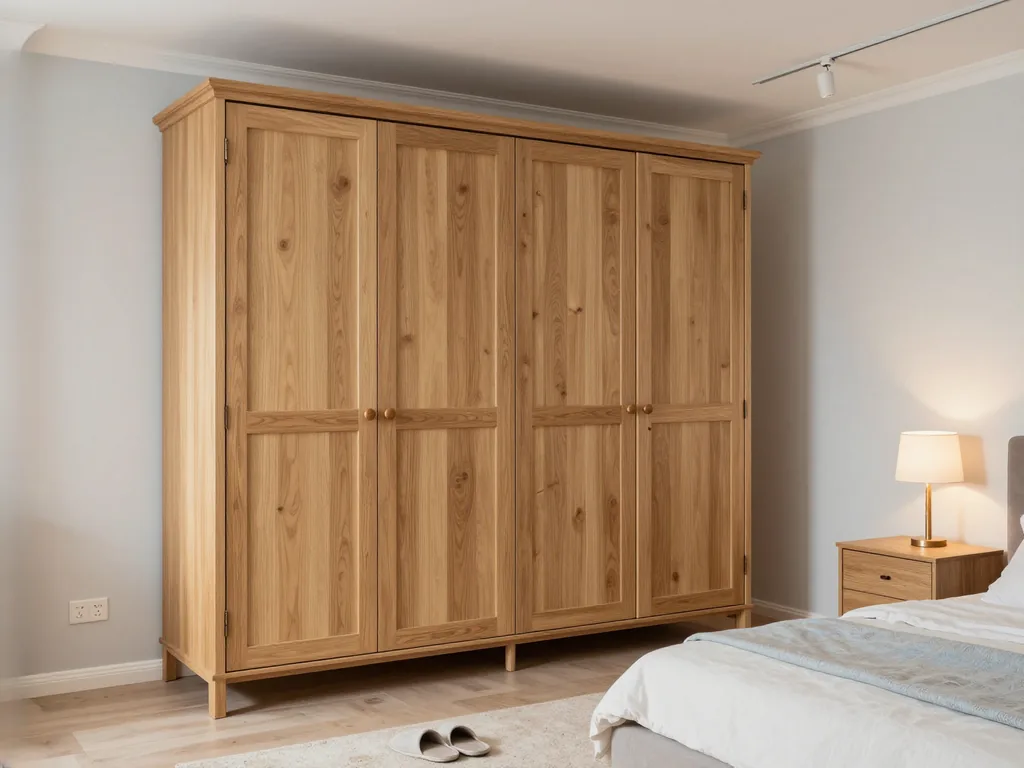
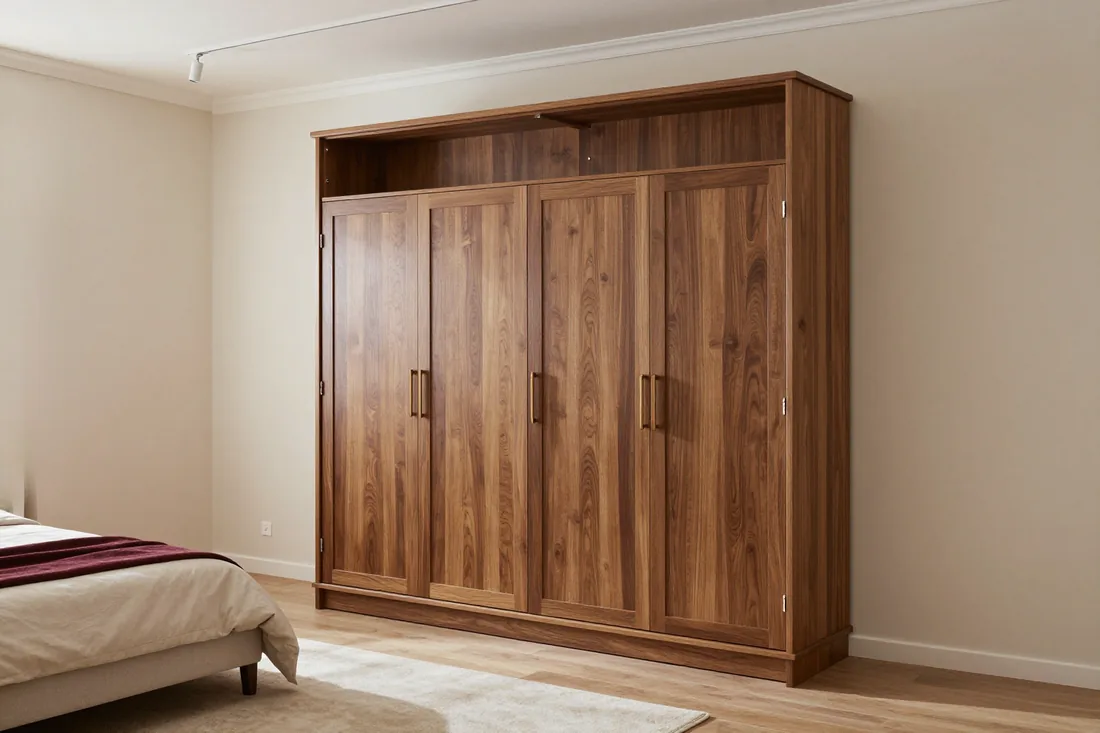
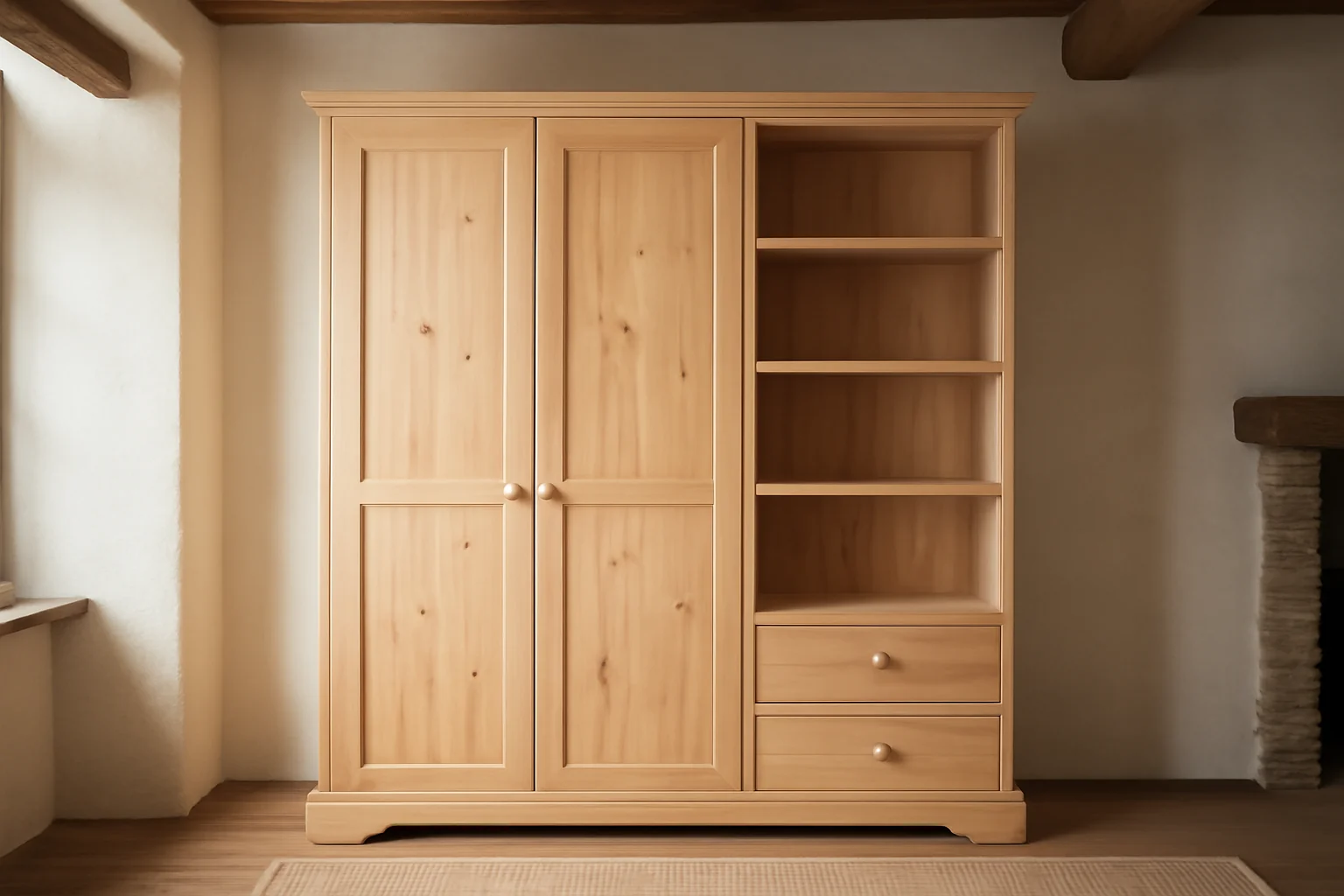
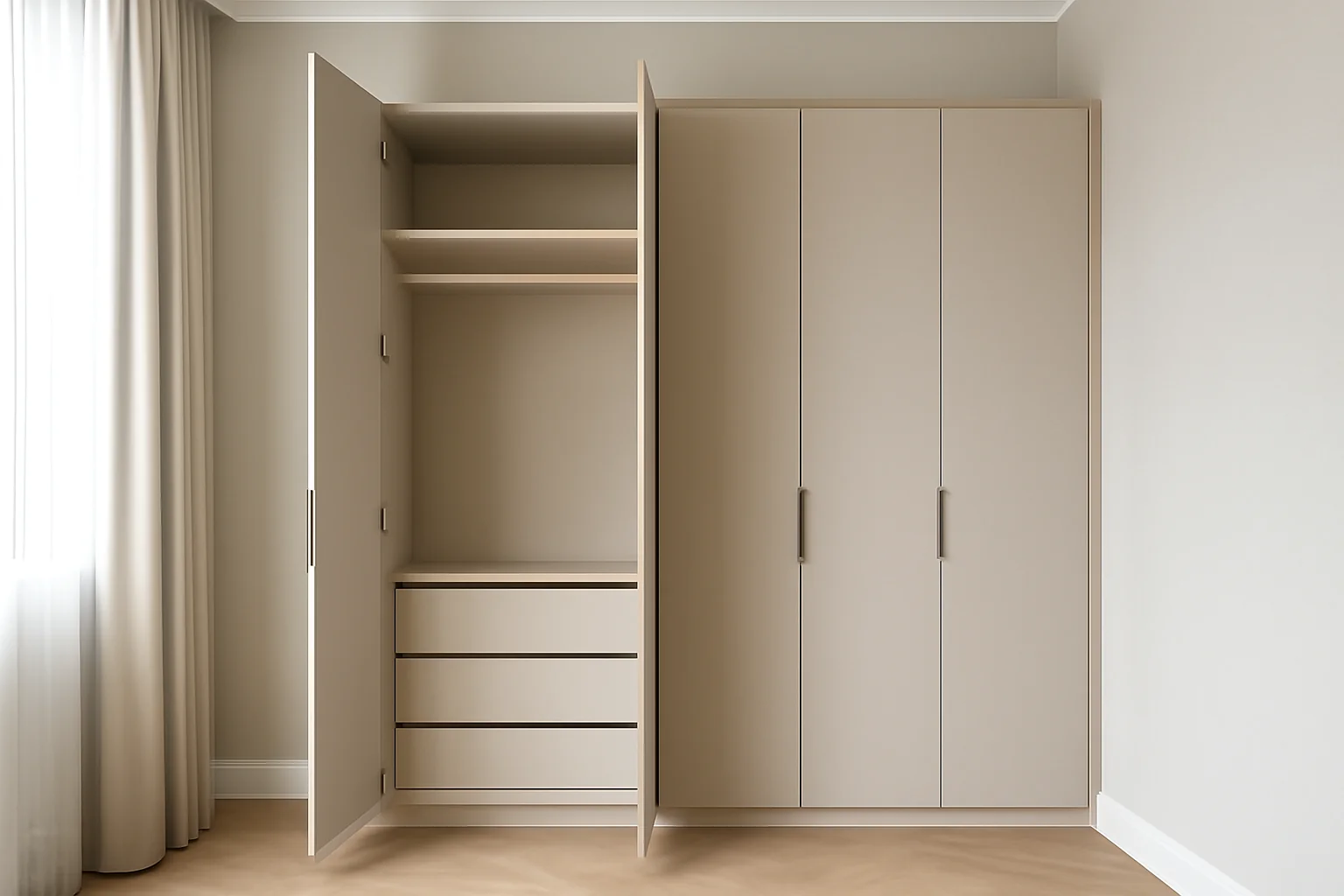
- Oak wardrobes: freestanding and built-in, with interiors planned around your belongings, including niches of awkward shape.
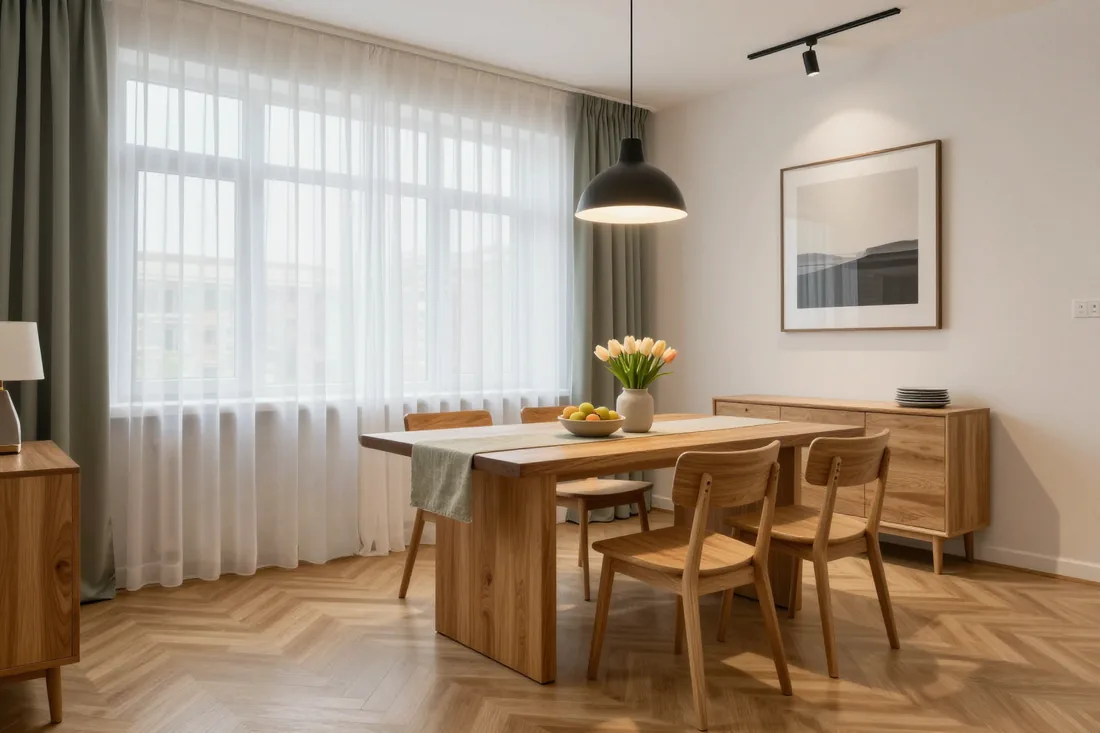
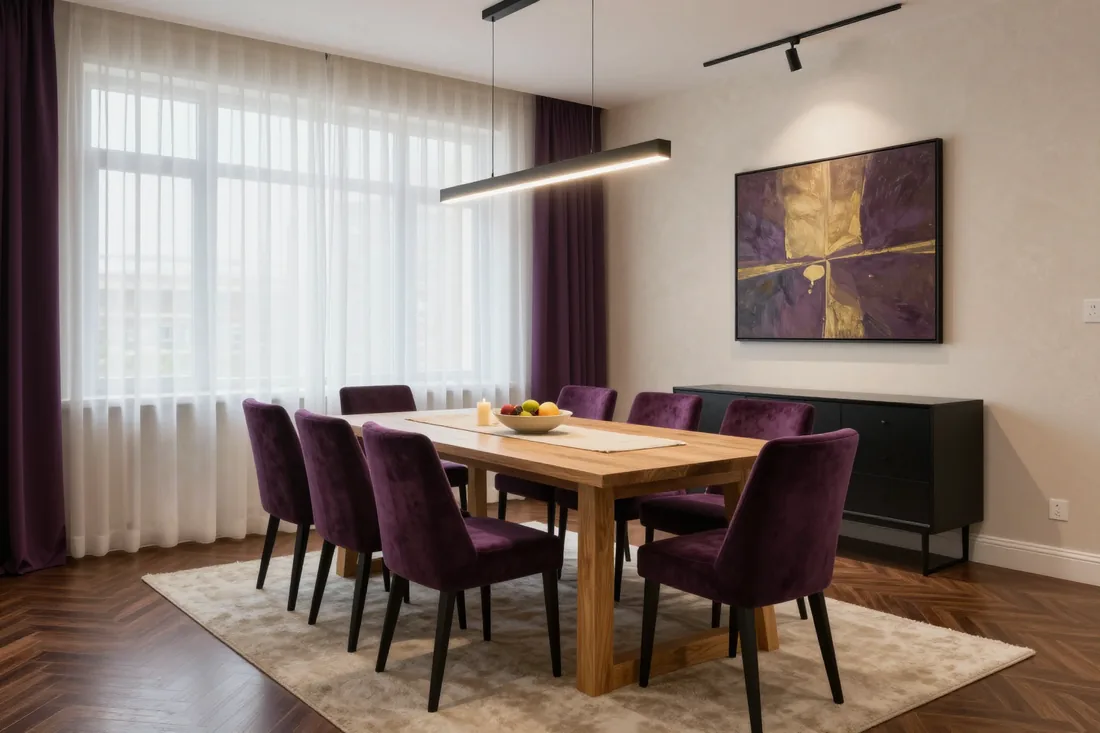
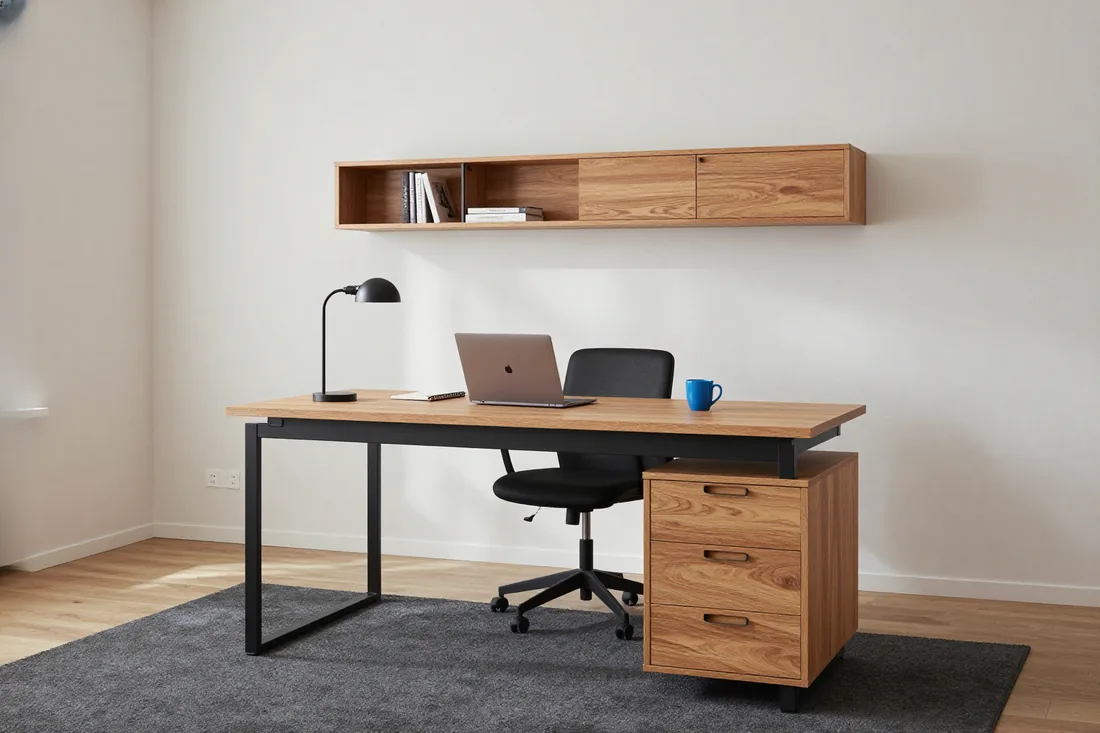
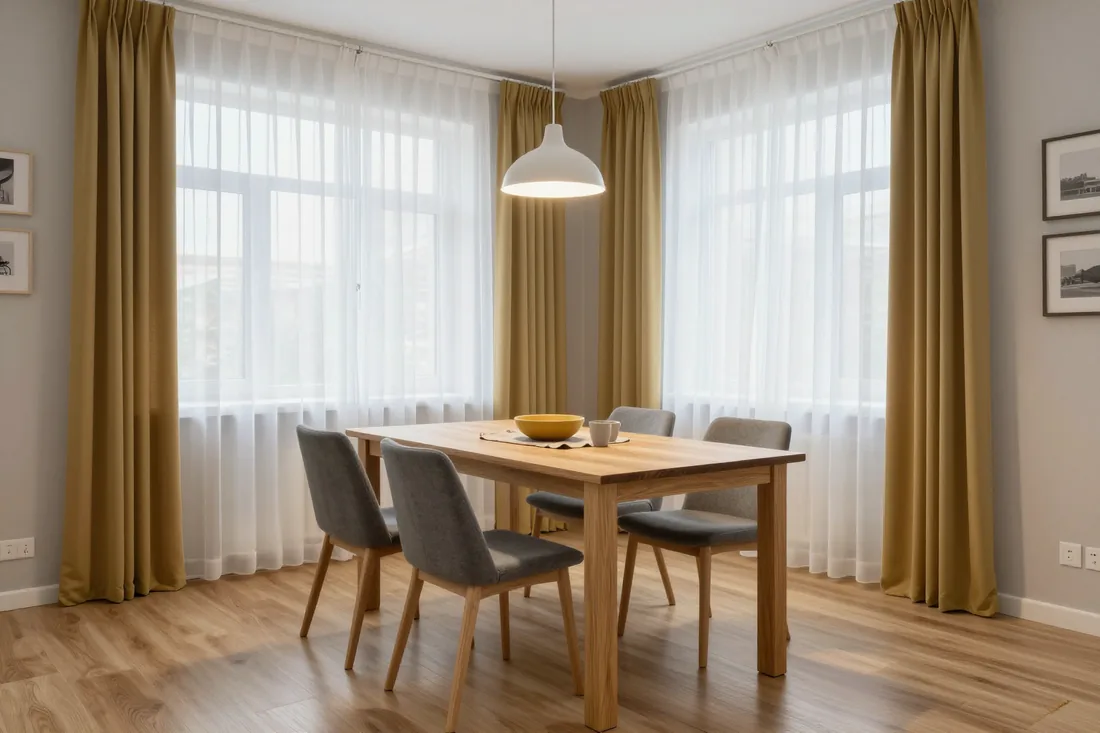
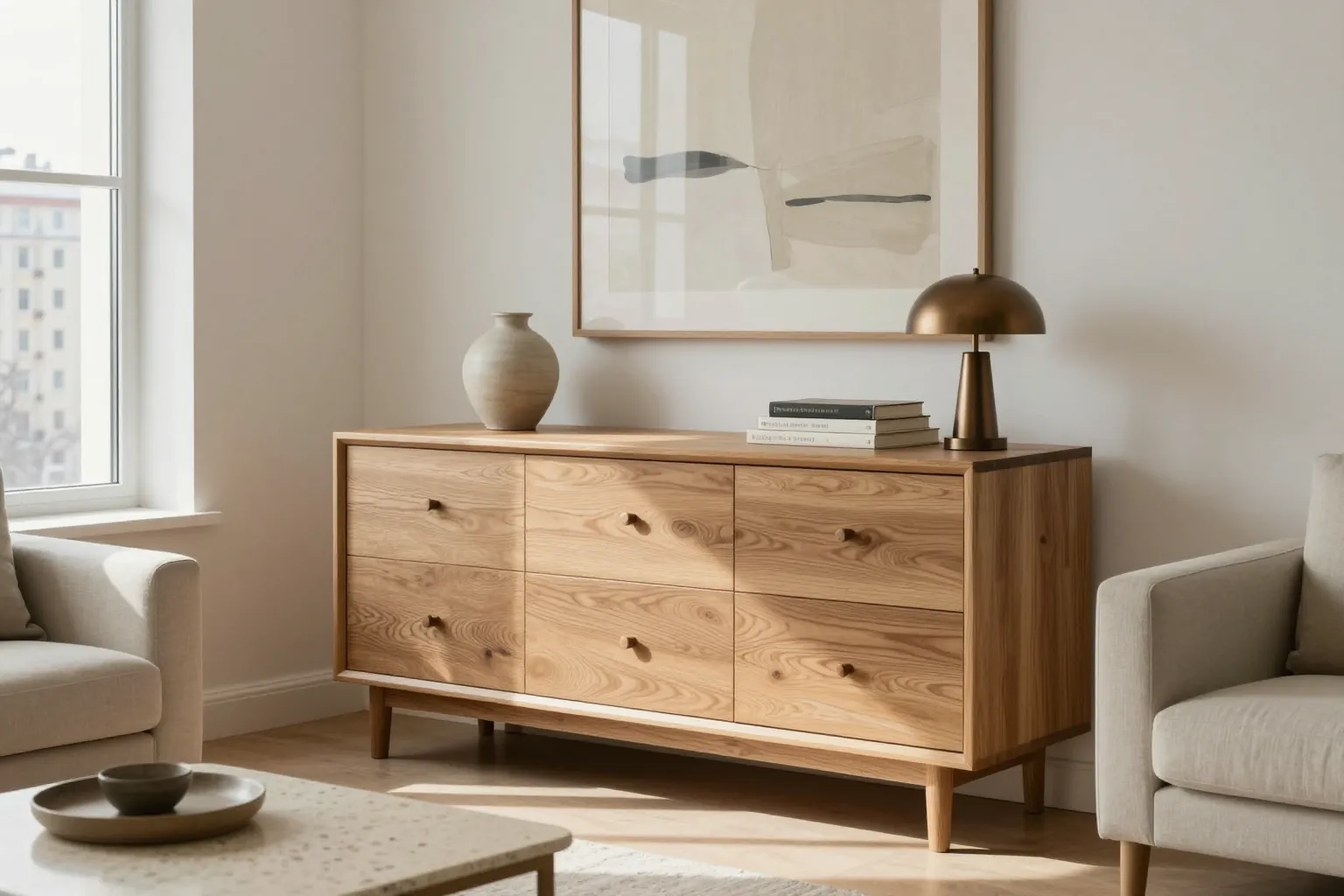
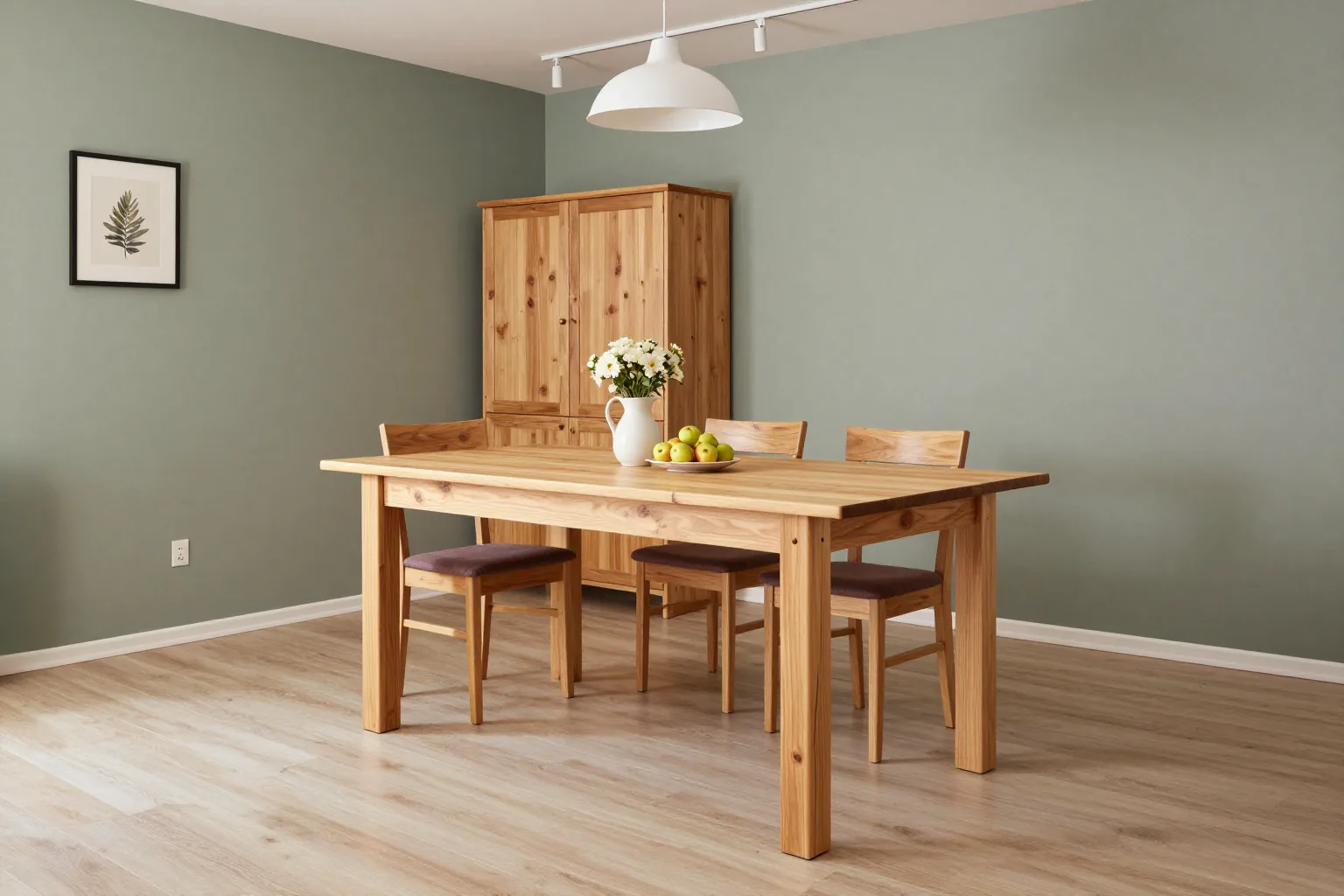
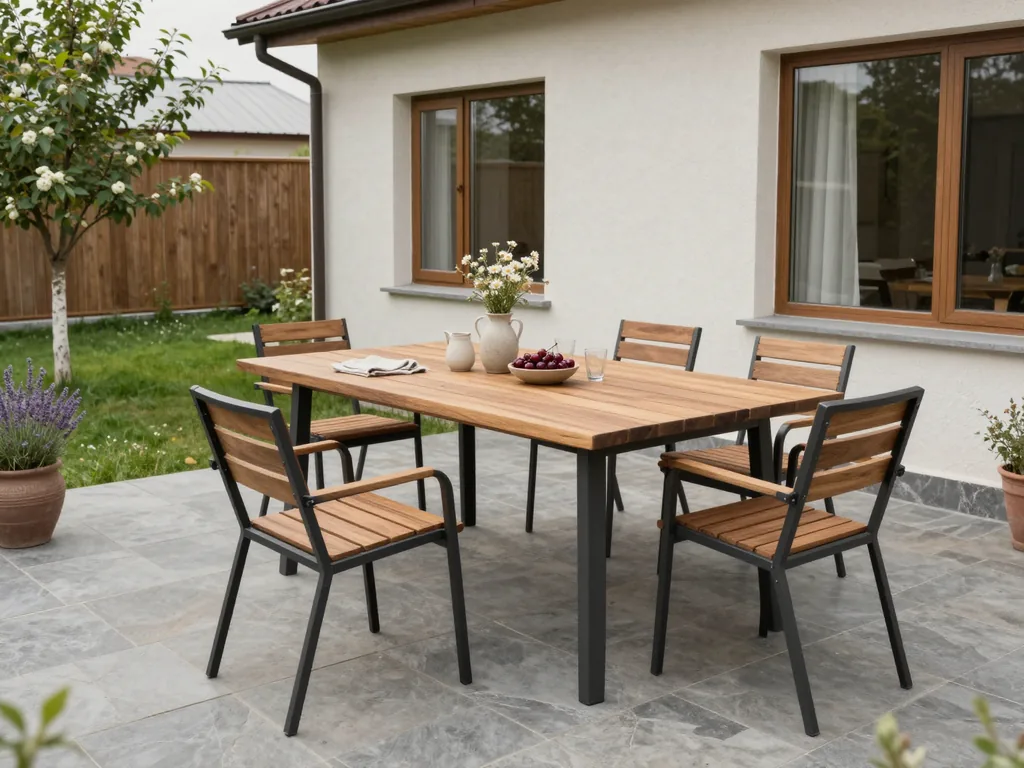
- Tables and tops: dining, work and kitchen tables made from lamellas of kiln-dried oak at 8–10 % moisture.
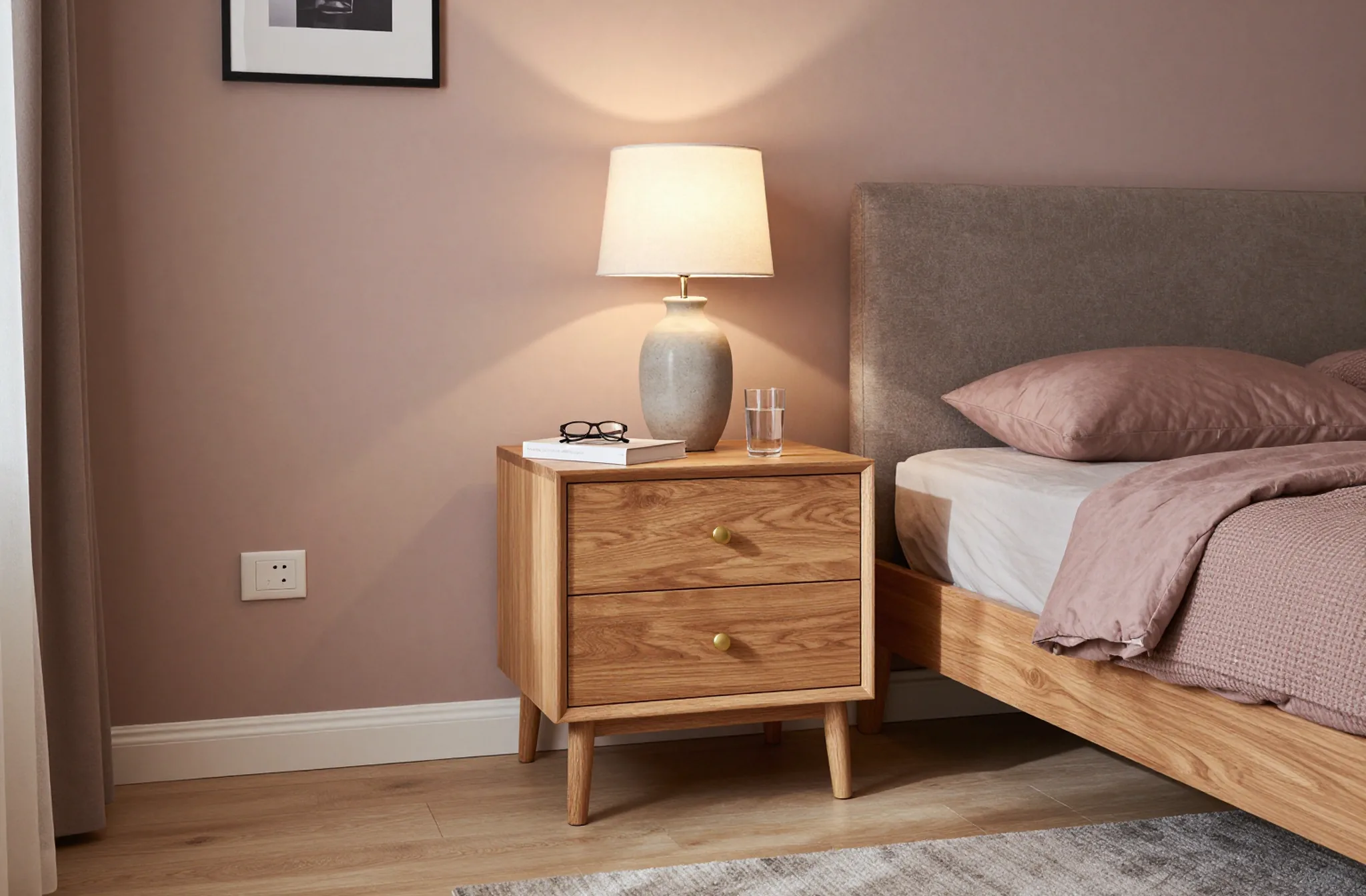
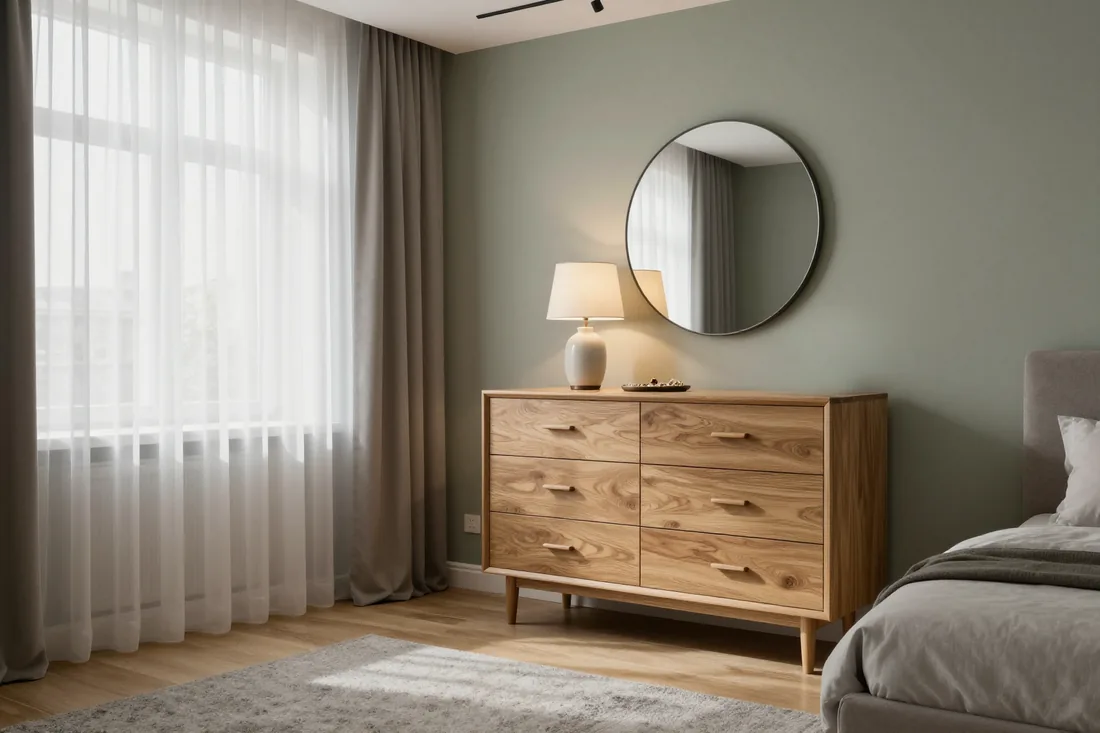
- Oak throughout a room: we make pieces in one species and one finish so the table and wardrobe match in tone.
A built-in wardrobe for an awkward niche
We design a built-in oak wardrobe around the actual geometry of the niche. At the measuring visit we record every angle and deviation so the piece fits with no gaps and no trimming on site. The visit is free: our technicians come with samples of wood, veneer and weaving and note every step in the wall. From these measurements, the carcass and solid wood fronts are made in our 600 m² workshop, and the piece goes through a test assembly before dispatch. Niches in panel buildings are rarely straight, so we build the wardrobe to the real walls, not the perfect rectangle on the floor plan; otherwise gaps appear at installation that nothing can hide. If the same bedroom needs a custom oak bed, its size and position relative to the wardrobe are agreed in one design. Depth and height are confirmed in the 3D design, which is ready in 1–2 days, before any work begins.
Fitting an oak set into a room with non-standard dimensions
For a non-standard room we set the size of every piece in the 3D design, so each one takes exactly the space it needs instead of fitting "more or less". The design shows how an oak kitchen runs along the wall, where the radiator sits and how much room is left before the window. Clear walkways and door swings matter more than linear metres: in the design we check clearances so the wardrobe does not hit the bed and drawers open all the way. Oak fronts are heavier than veneered ones, so we choose hinges and runners with a load margin. Blum hardware carries a 25-year manufacturer's warranty. We fit furniture into narrow hallways and bedrooms with bay windows alike. The measuring visit and the design are free, so any sizing mistake shows up before the timber is cut.
How an oak furniture order works, from measuring to installation
Here is the order step by step: how the measuring visit goes, what the 3D design is for, how the piece is made and how you accept the finished furniture on site.
What the free measuring visit and 3D design include
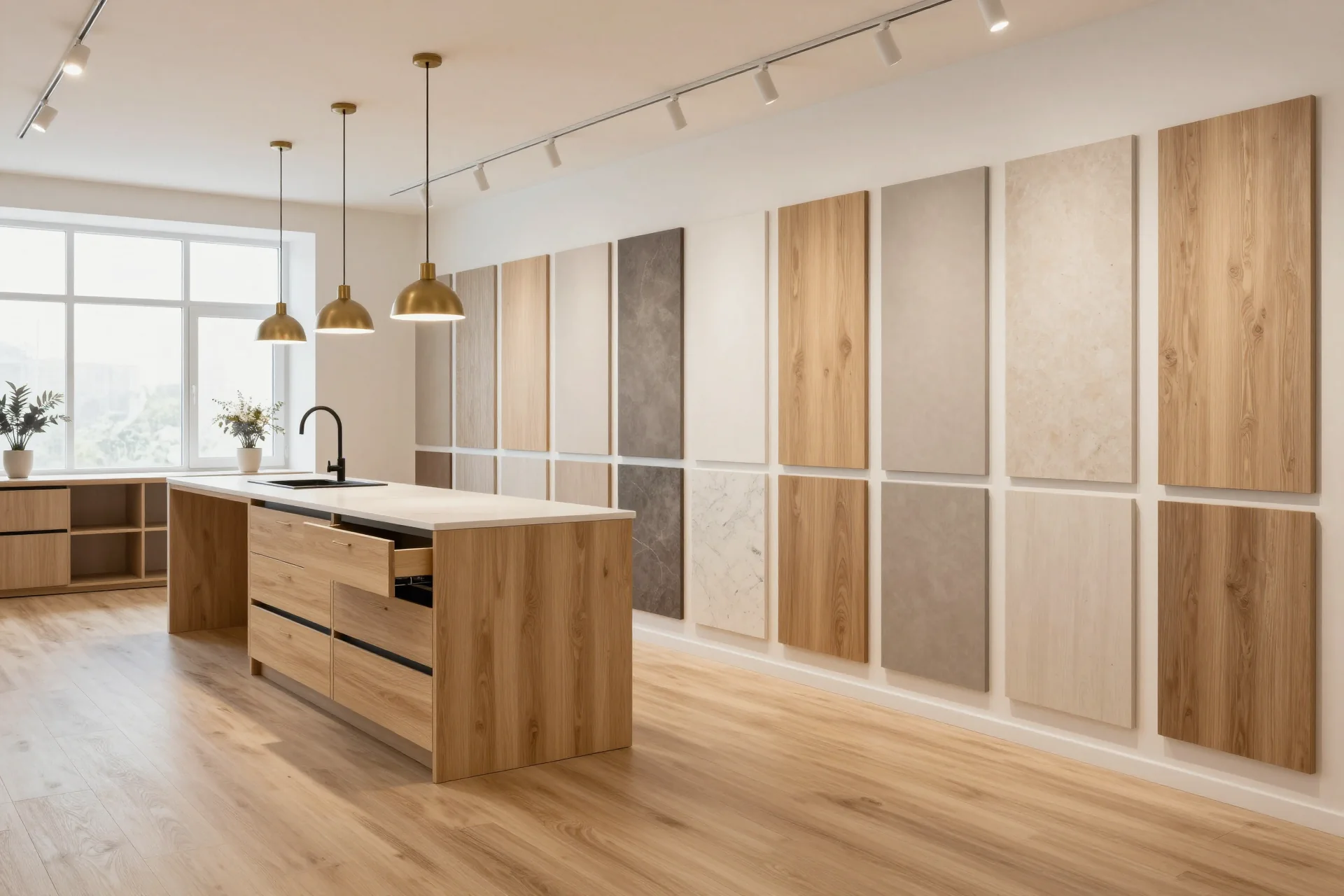
We come to the free measuring visit with samples of wood, veneer and weaving, take the room measurements and then prepare a 3D design of the piece in 1–2 days. On site our technicians record more than wall lengths and heights. They also capture the details that usually surface later: corner angles, pipe and vent projections, uneven floors, the direction doors open and where the sockets are. The design shows the piece in your interior at its real proportions, so an awkward niche or a sloping ceiling is visible before the timber is cut. Samples at the visit matter more than any catalogue: oiled and lacquered oak look different, and it is better to decide by looking at a real cut than a photo online.
How the piece is made in the workshop
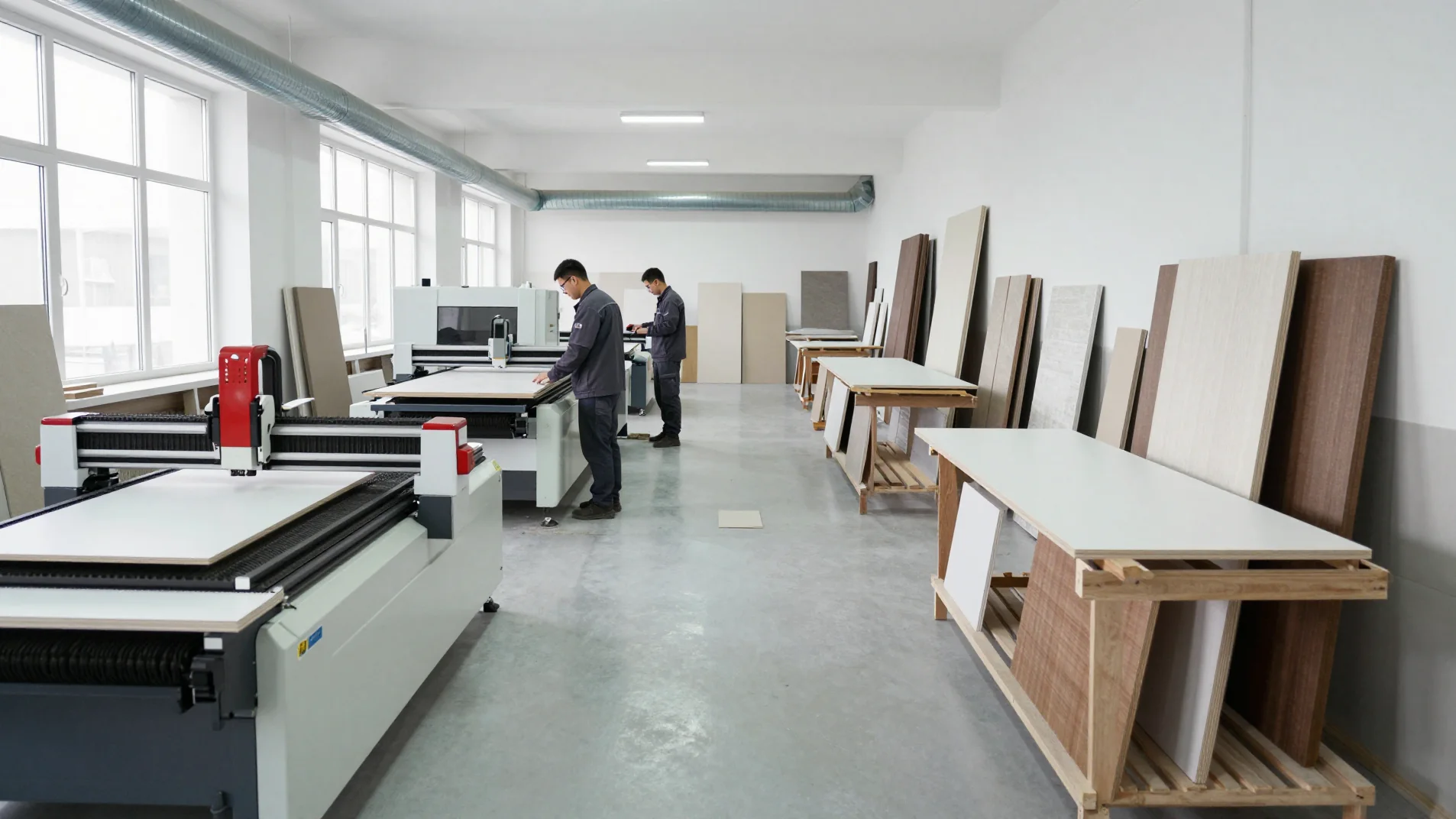
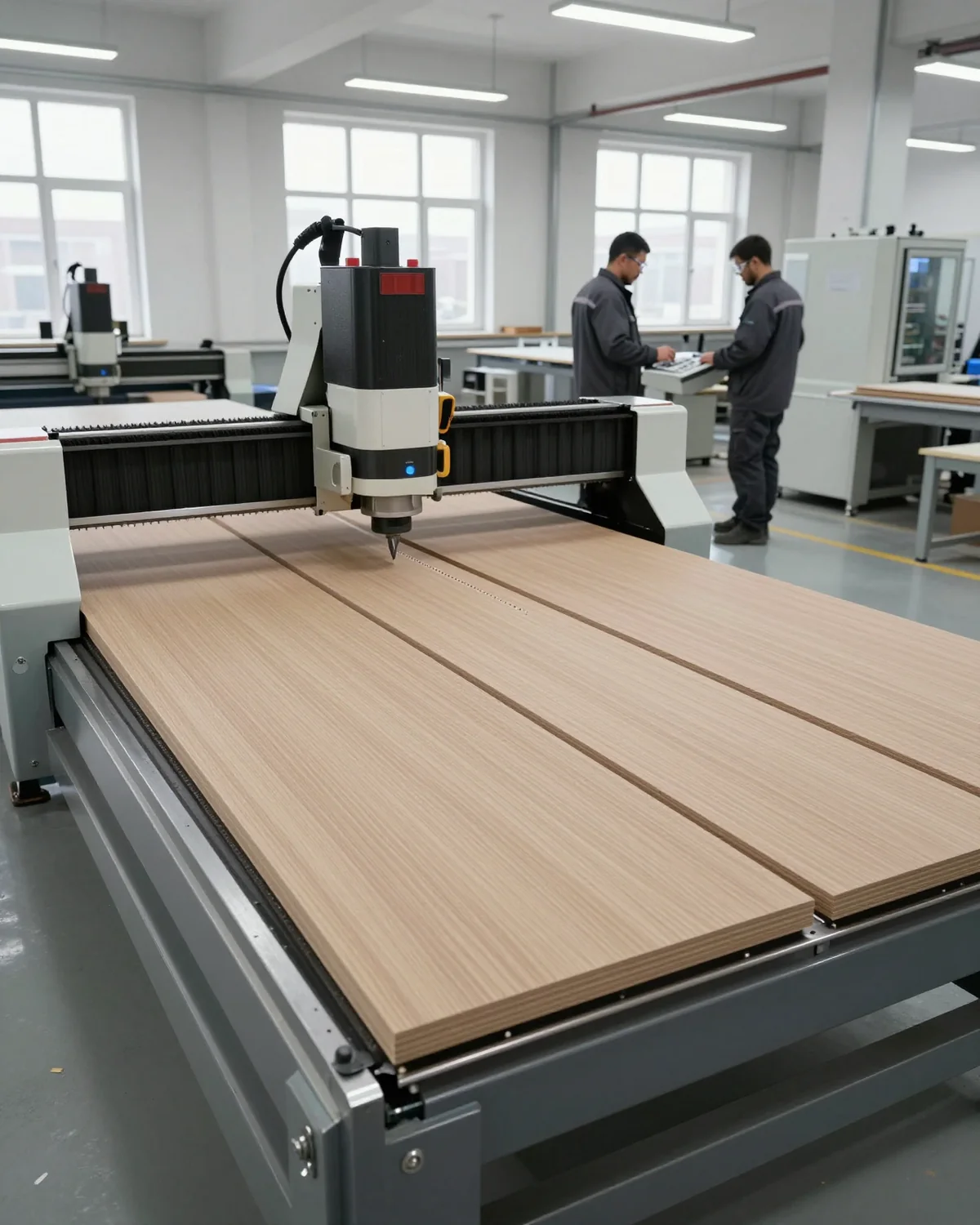
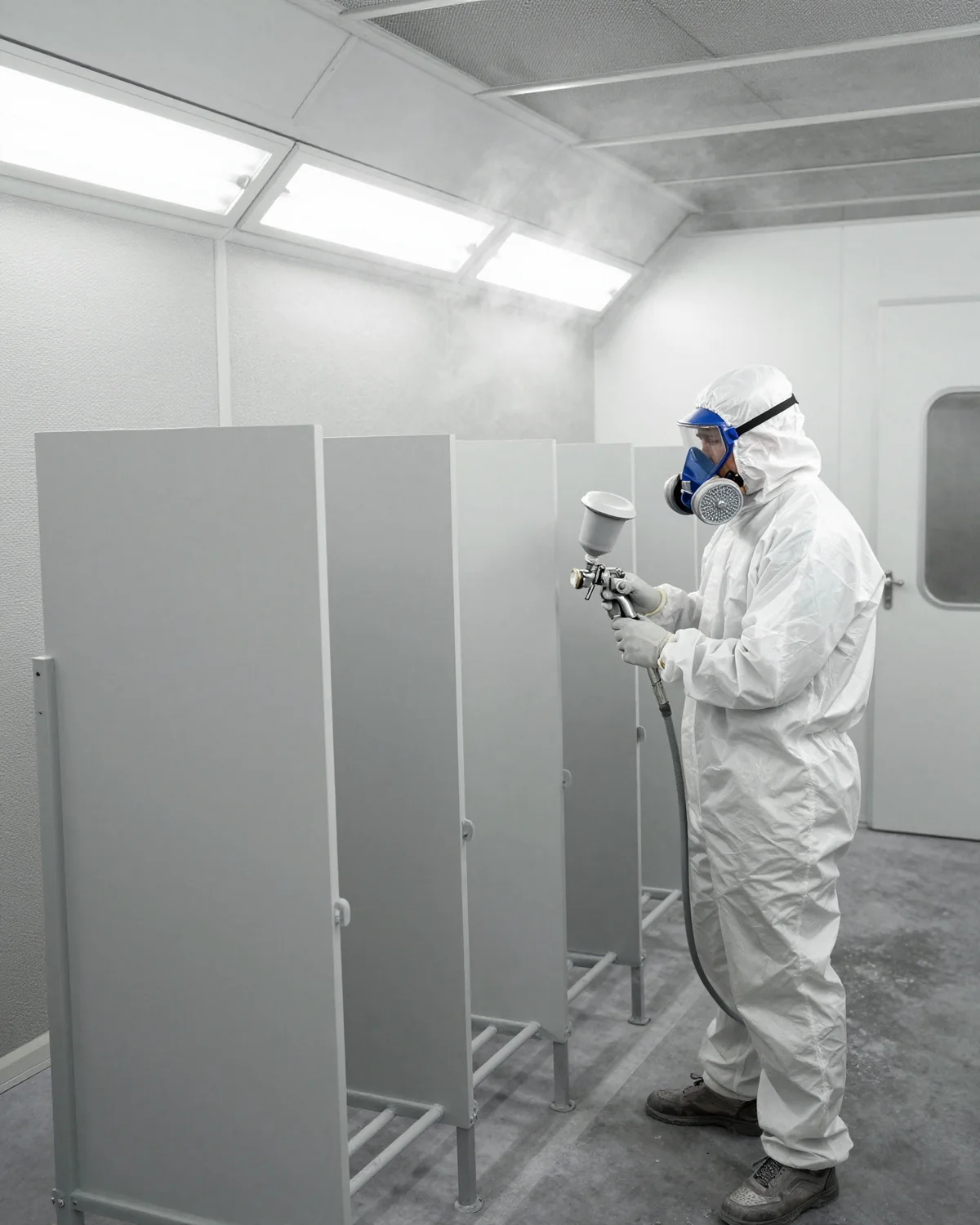
The piece moves through the sections of our 600 m² workshop — joinery, veneer and plywood, finishing — and gets a test assembly before dispatch. In joinery the timber is cut and planed, edges are milled and parts are sanded; we measure the moisture of the oak before cutting so a finished front does not warp after installation. Next, the parts go to veneering or the plywood section and then to finishing, where oil or lacquer is applied. The test assembly catches what you cannot see in individual parts: distortion, gaps, the way drawers run. That is why the piece arrives on site already checked. Production follows the approved 3D design in strict stages, and lead times for each option are in the price list on this page.
Installation and acceptance
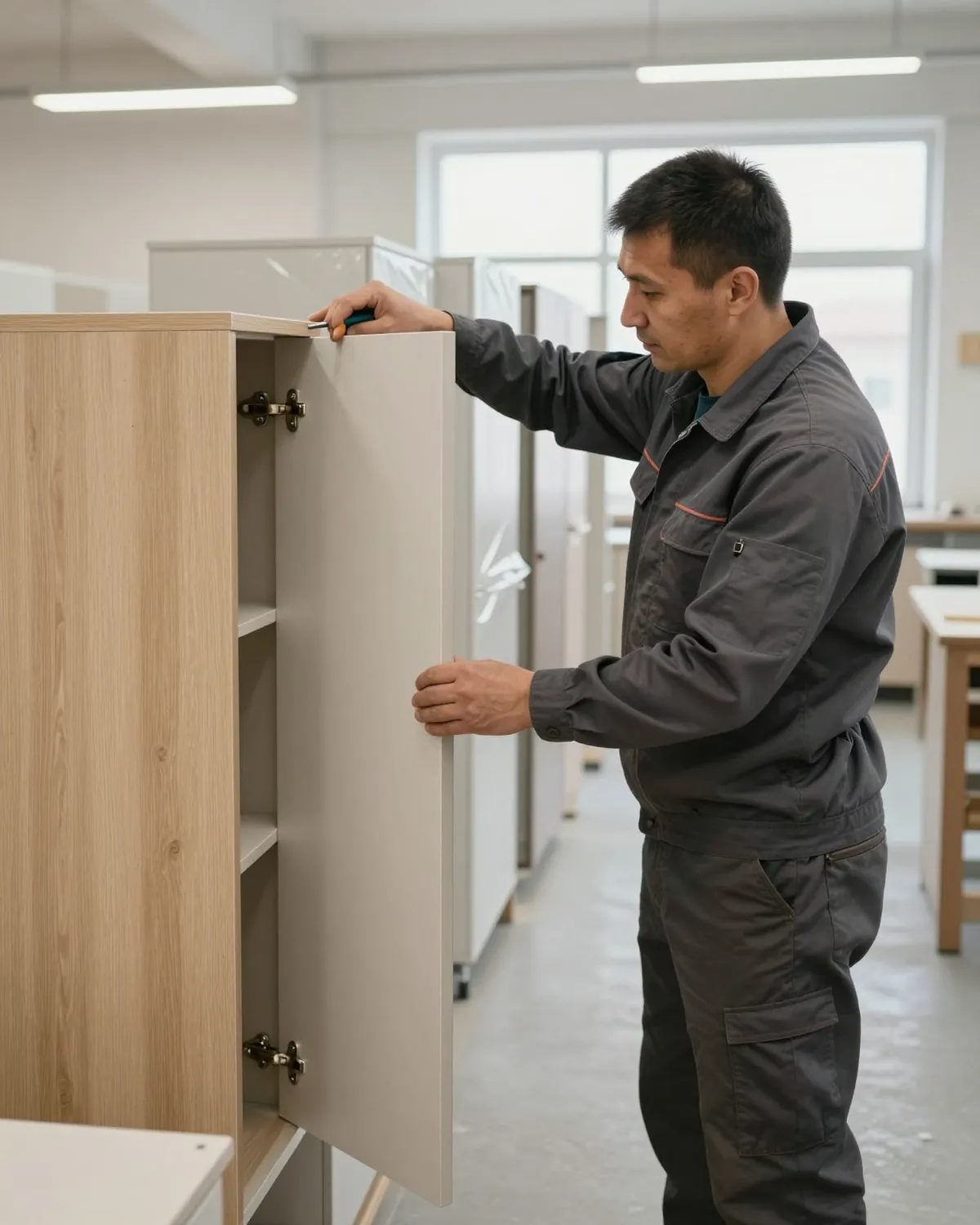
Our own crews do the installation, and the acceptance certificate is signed afterwards, once you have seen that everything is in place and works as intended. The crew levels the carcass, joins the modules, hangs the fronts and adjusts the Blum and Hettich hardware on site. Delivery within the city and up to 30 km is free for large orders; the threshold is on the "Delivery and payment" page, and beyond 30 km there is a surcharge. At acceptance we check how doors and drawers run, the joints and gaps, not just the appearance: small adjustments are easiest while the crew is still there. You pay the balance after signing the certificate, and the piece carries a 24-month warranty under the contract.
Finishing and caring for oak furniture
We compare oil and lacquer, explain which is more practical in the kitchen and in the bedroom, and how to look after oak so it does not crack.
Oil or lacquer: what works in the kitchen and the bedroom
Kitchens usually get oil, because it is easier to repair locally, while in bedrooms and dining rooms lacquer gives a smoother, more stain-resistant surface. In the finishing section of our workshop we use both: oil penetrates deeper into the fibres and keeps the tactile texture of the wood, while lacquer forms a dense film that resists moisture and household cleaners. A kitchen worktop suffers from knife marks and drips by the sink, so the oiled layer there is sanded and renewed in spots. A dining table or bedroom set rarely meets water but often meets dishes and jewellery, and here lacquer wins. An oiled finish can be refreshed without resanding the whole piece, whereas a deep scratch in lacquer needs a local repair, which is worth keeping in mind for how the piece will be used.
How to care for an oak table or worktop
- Wipe straight away: mop up water and spills, and do not let liquid soak into the joints and end grain.
- Keep heat off: use mats under hot pans and the kettle so the surface does not cloud.
- Renew the protection: refresh oil as it soaks in, and lacquer when wear shows on visible areas.
- Avoid abrasives: harsh cleaners strip the protective layer faster than the wood itself wears.
- Keep humidity even: do not put the table next to a radiator or dry laundry over it, as the swing dries out the timber.
Why order from a direct manufacturer
How to tell a real workshop from a reseller, and why we fit heavy oak fronts with hardware that has a load margin.
How to tell that a workshop makes its own furniture
A direct manufacturer shows you its workshop and machinery, not just a catalogue. For us that is a 600 m² workshop in Almaty with joinery, plywood and finishing sections. In joinery the timber is cut and planed and parts are milled and sanded; next door are veneering, oil and lacquer finishing, rattan weaving and the test assembly before dispatch. Installation is done by our own crews, not outside contractors, so gaps and fixings on site are checked by the same people who assembled the piece in the workshop. Ask where exactly the oak furniture is made and who installs it. If the answer is vague, your order will probably be passed on, and you will end up with a middleman who adds a margin and has no control over quality.
What hardware suits heavy oak fronts
For heavy oak fronts and drawers we fit Blum and Hettich hardware, which is rated for the weight of solid timber, and Blum carries a 25-year manufacturer's warranty. We choose hinges and runners by the weight of the door: an oak front is noticeably heavier than a veneered one, and ordinary hinges quickly lose their adjustment. Soft-close and push-to-open systems come from the same ranges, so every door runs smoothly, not just one of them. The denser the species, the more the fixing point has to cope with, because load on the hinge of a solid front is distributed differently than on a thin board. Saving on hardware for solid wood costs more in the end: hinges without a load margin sag under the weight of oak, and the door starts catching the carcass.
The bottom line on oak furniture
We have gathered the factors that most often decide how an oak furniture order turns out: the quality of the timber, the right material for each part, accurate geometry and checking the maker before work starts.
- Moisture decides: kiln-dried timber at 8–10 % behaves predictably, while poorly dried oak cracks in its first heating season.
- The right material for the job: solid wood and natural veneer go on visible parts, FK-grade E1 birch plywood on hidden carcasses and internal shelves.
- Geometry from the measuring visit: an awkward niche or room is solved by a design based on real measurements, not a catalogue floor plan.
- A real workshop: ask where the piece is made and who comes to install it, since that is what separates a manufacturer from a middleman.
- Contract and acceptance: the warranty and paying the balance after the certificate is signed protect the client at the final stage.