
Temirzhan Nurpeisov
Furniture assembly carpenter11 years
★ 4.81 · 47 ratings
For business · Retail
We make shelving, display cases, counters and checkout areas for your products and floor layout, and install at night so your store stays open. Measurement and 3D design are free, the price is fixed in the contract, warranty 24 months.
Measurement and 3D design are free and carry no obligation · price fixed in the contract · Kaspi Instalments up to 24 months
01Types
 01
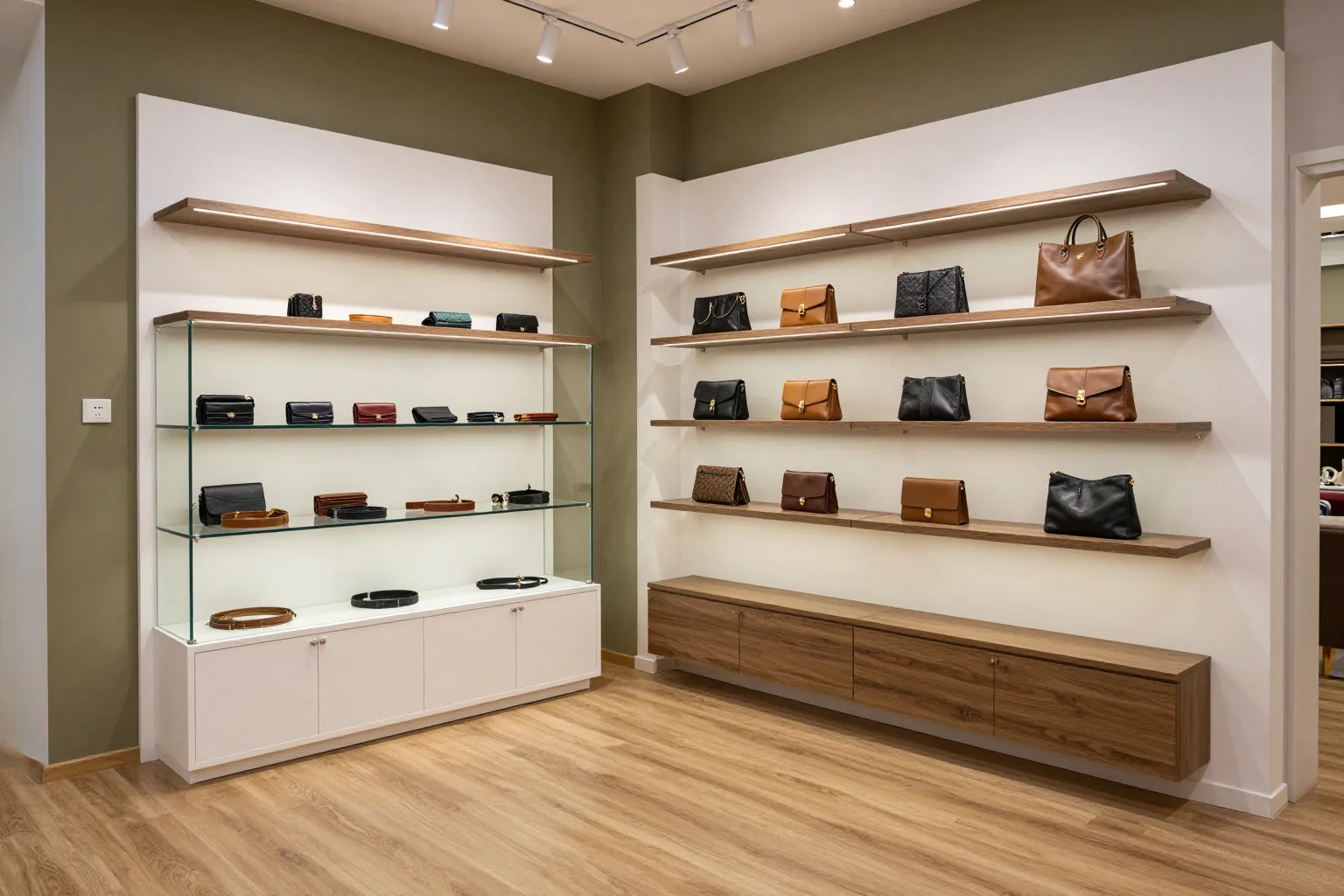
Wall-mounted and island shelving on a metal frame with laminated chipboard shelves: they handle dense displays, and we adjust shelf height to suit your products.
from 22 000 ₸
 02
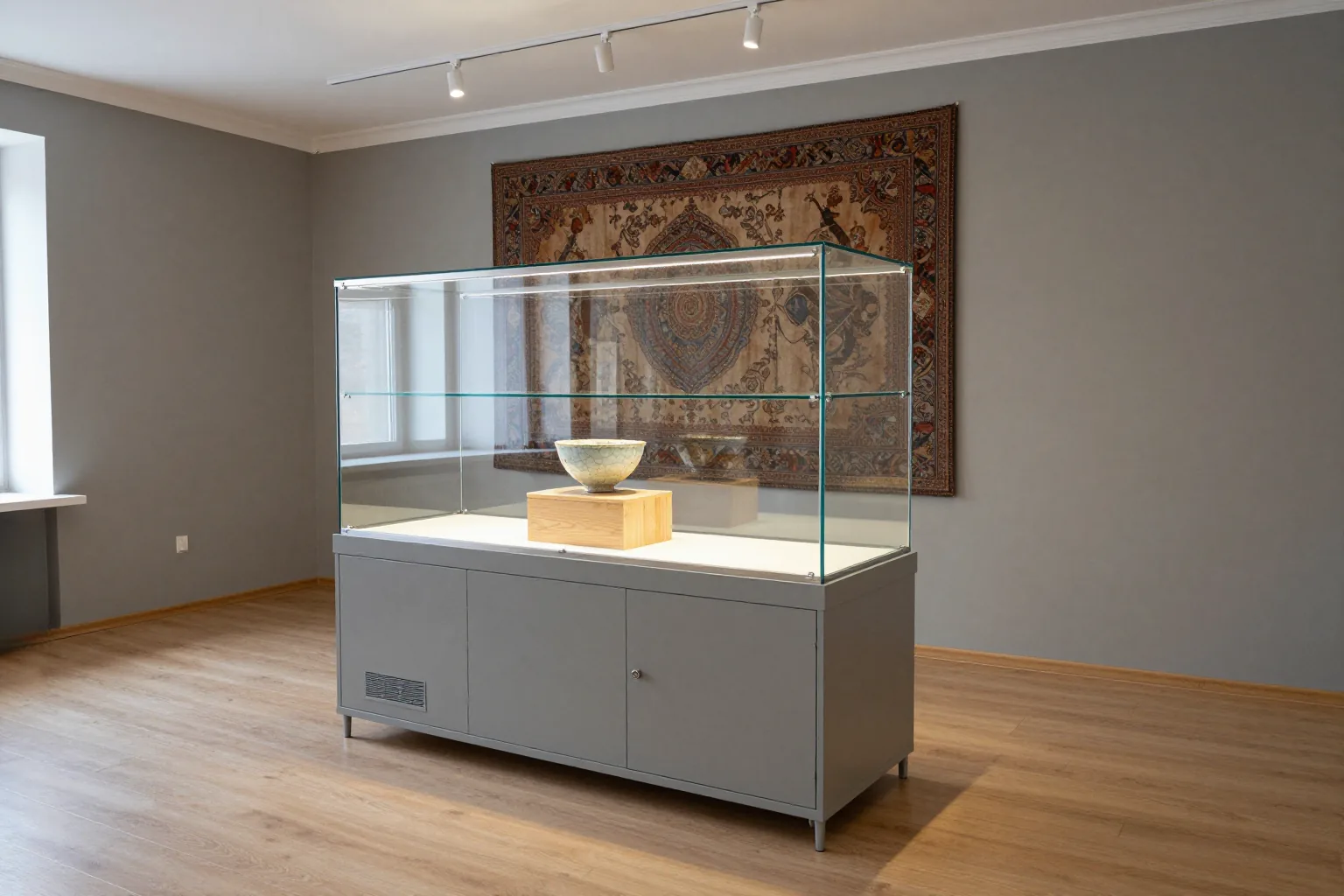
Countertop, wall-mounted and island display cases made of tempered glass with lighting and locks — for products that need to be on show.
from 55 000 ₸
 03
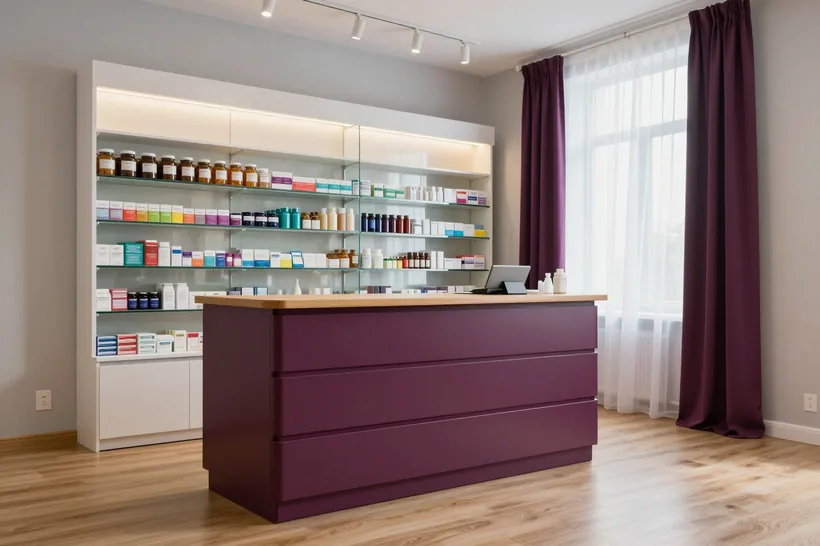
A counter separates the salesperson from the customer and stores stock underneath the worktop: we design drawers, shelves and closed sections to suit your product range.
from 70 000 ₸
 04
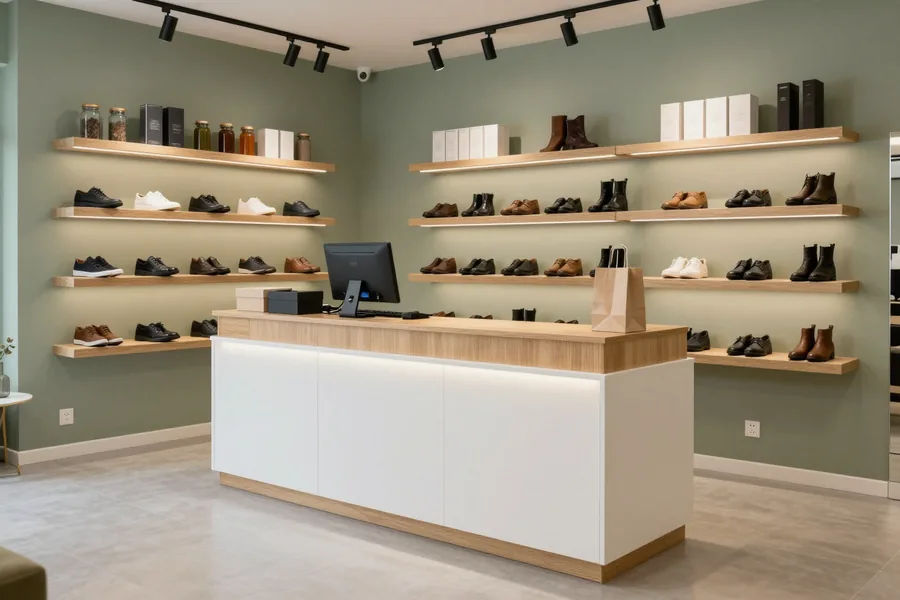
A checkout counter with space for a terminal, receipt printer and cash drawer; cables run into a cable duct instead of lying on the countertop.
from 120 000 ₸
 05
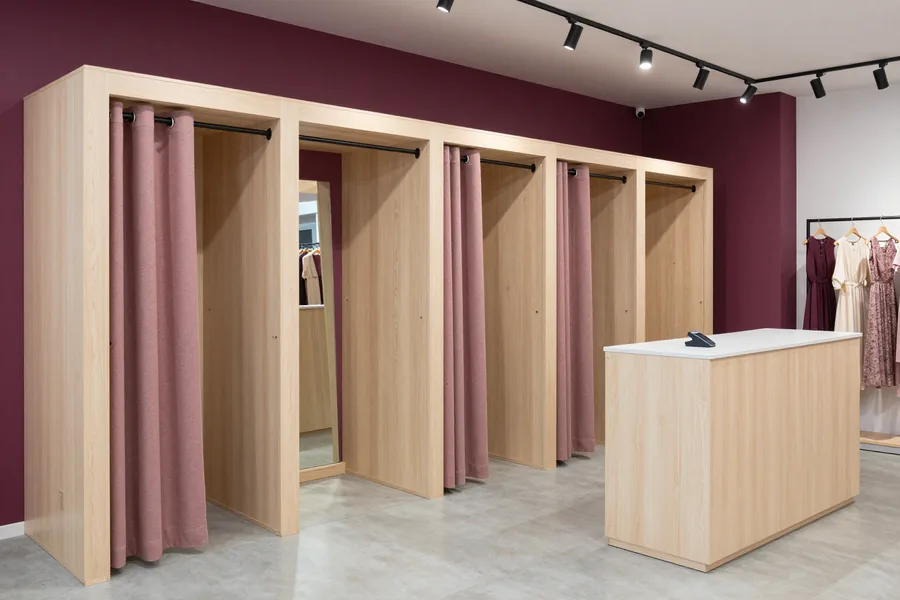
Cabins with a full-length mirror, rail and hooks; we calculate the width so a customer can change comfortably while a row of cabins takes up a minimum of the sales floor.
from 95 000 ₸
 06
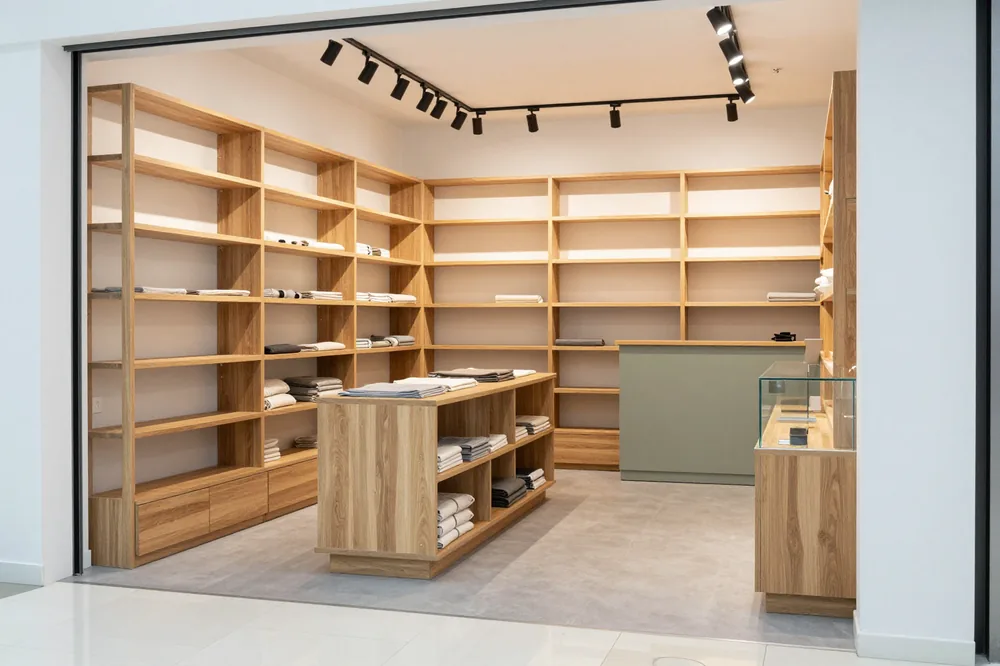
The whole sales floor in one style: shelving, display cases, checkout and fitting rooms under one estimate and one contract, installed by our own crew.
from 400 000 ₸
02Projects
Site, scope, materials and lead time — per project.
 Store
Dostyk Plaza shopping center, Medeu district
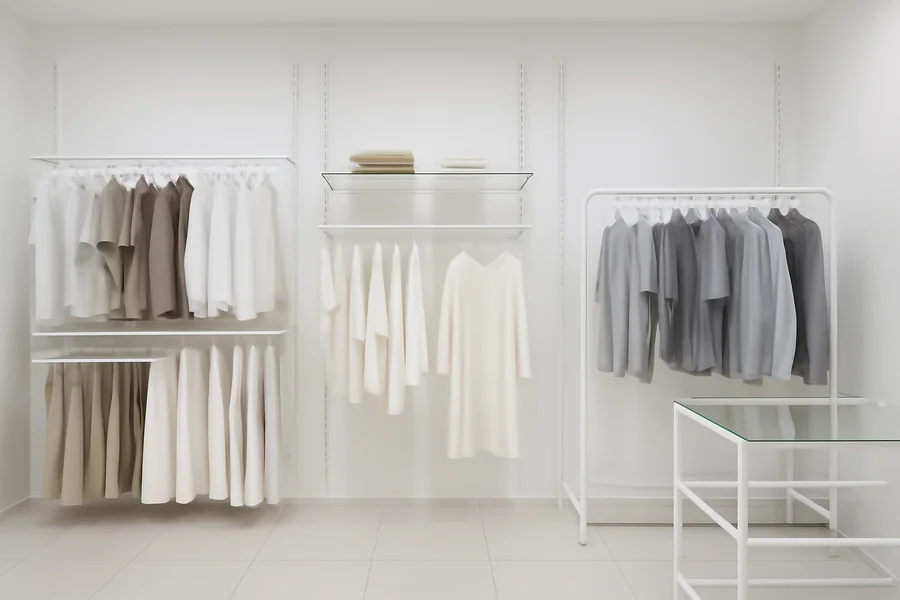
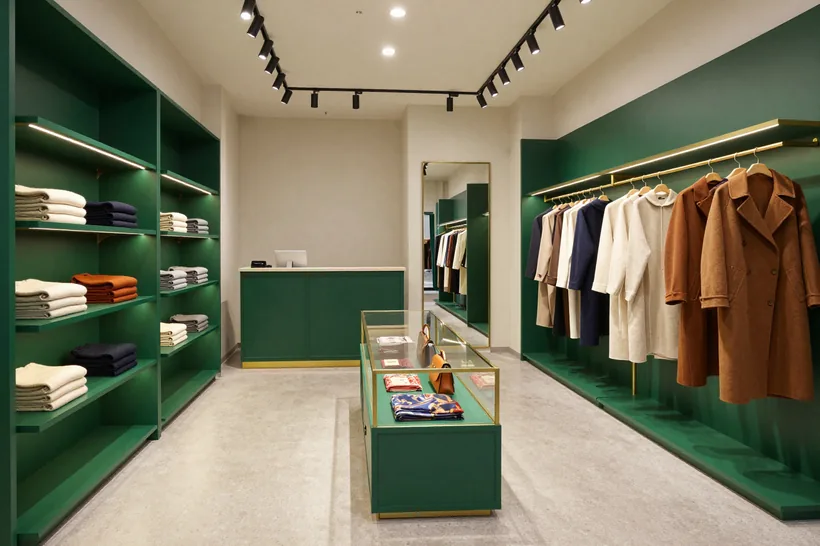
Clothing boutique: rails and wall-mounted shelving for garments, a central island display, a full-length mirror and a checkout counter. All in one brand color.
 Store
Aksai microdistrict, Auezov district
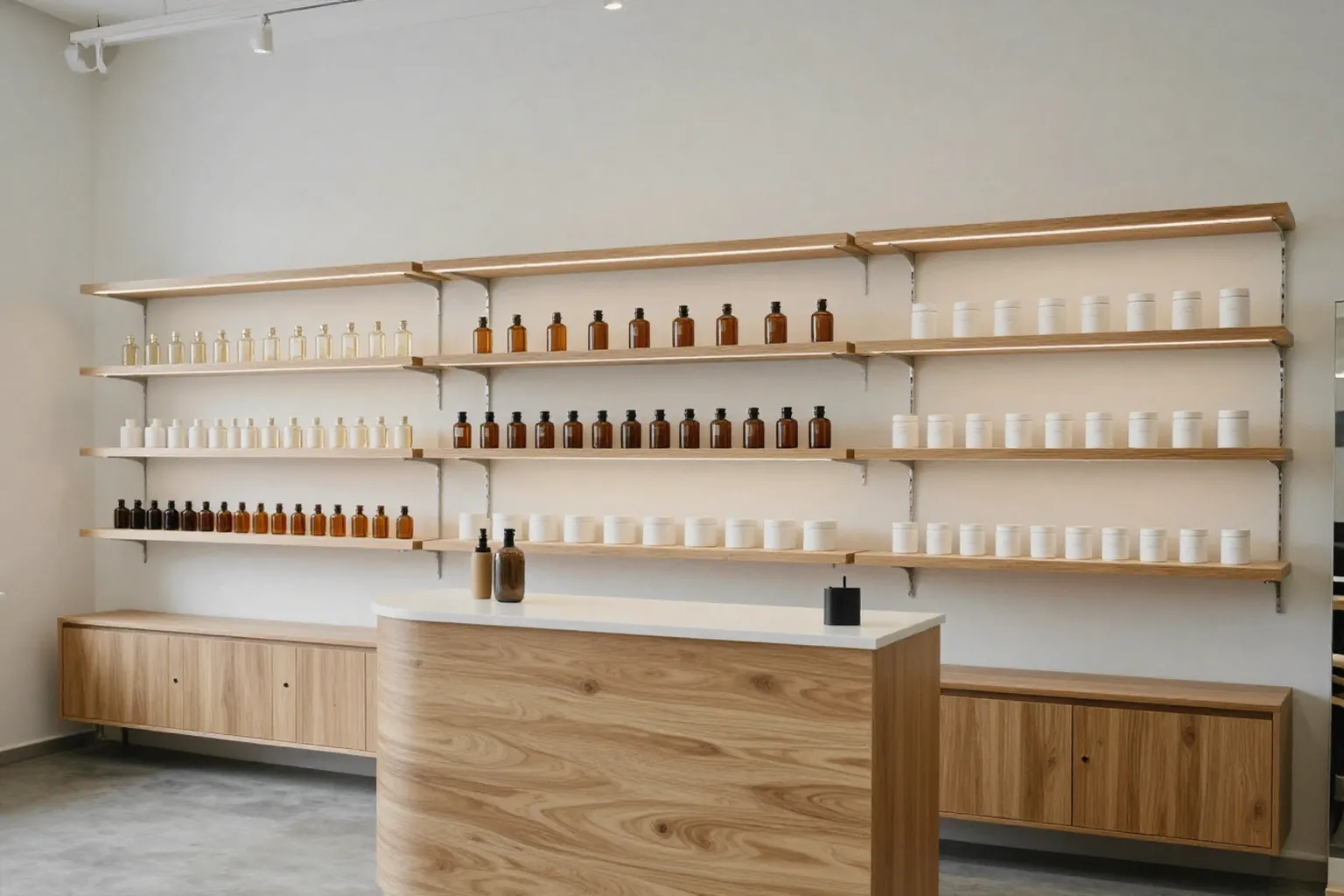
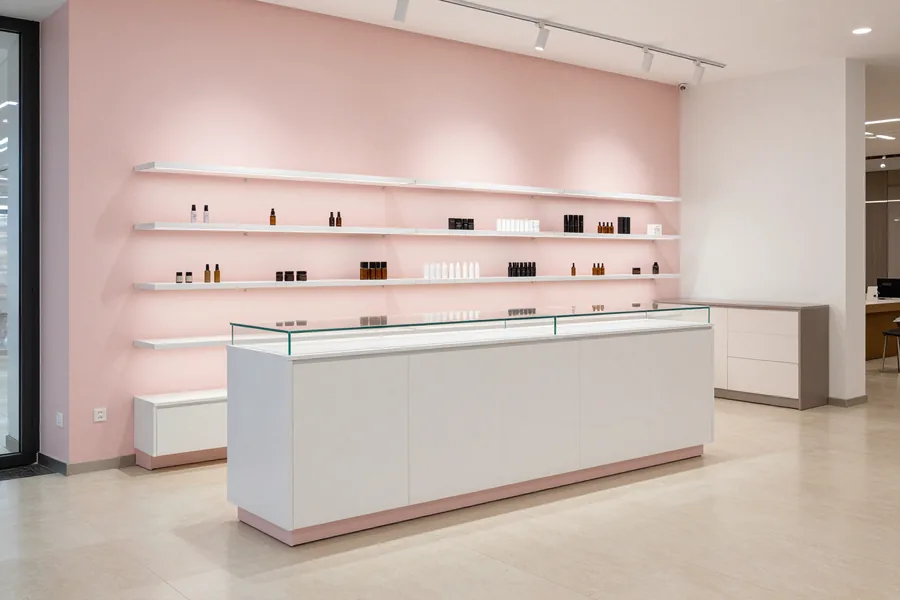
Wall-mounted shelving for cosmetics and perfume with high-CRI LED lighting and a curved checkout counter. Shades stay true, products sit at eye level.
 Store
Forum shopping center, Bostandyk district
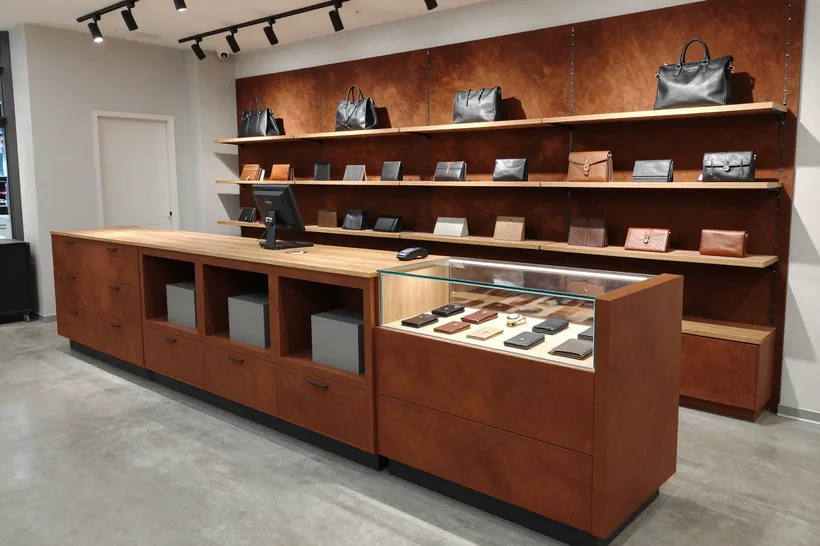
A long island counter with space for a terminal, drawers and open niches for stock. The countertop was sized for the cashier, cables hidden in a niche.
 Store
Esentai Mall shopping center, Bostandyk district
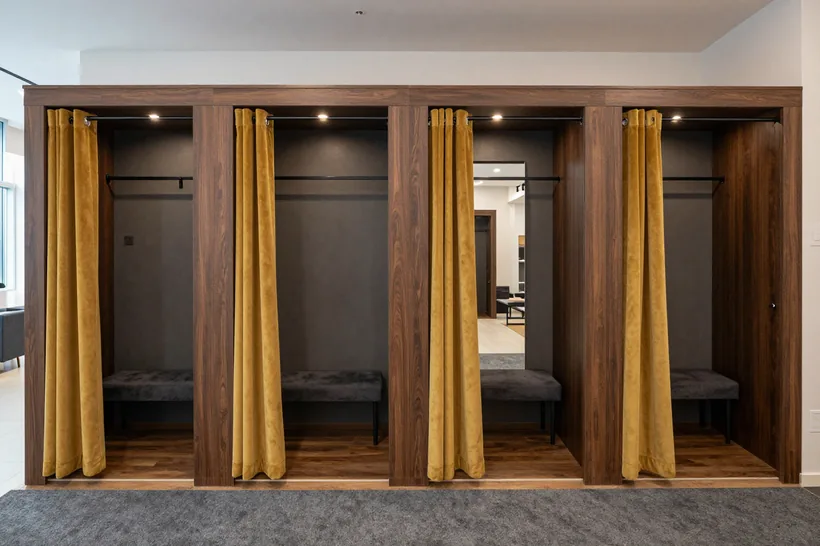
A block of four fitting rooms with full-length mirrors, hooks, benches and heavy curtains. We made them roomier than standard — the more comfortable the fitting room, the longer a person stays in it and the higher the conversion.
 Store
Samal microdistrict, Medeu district
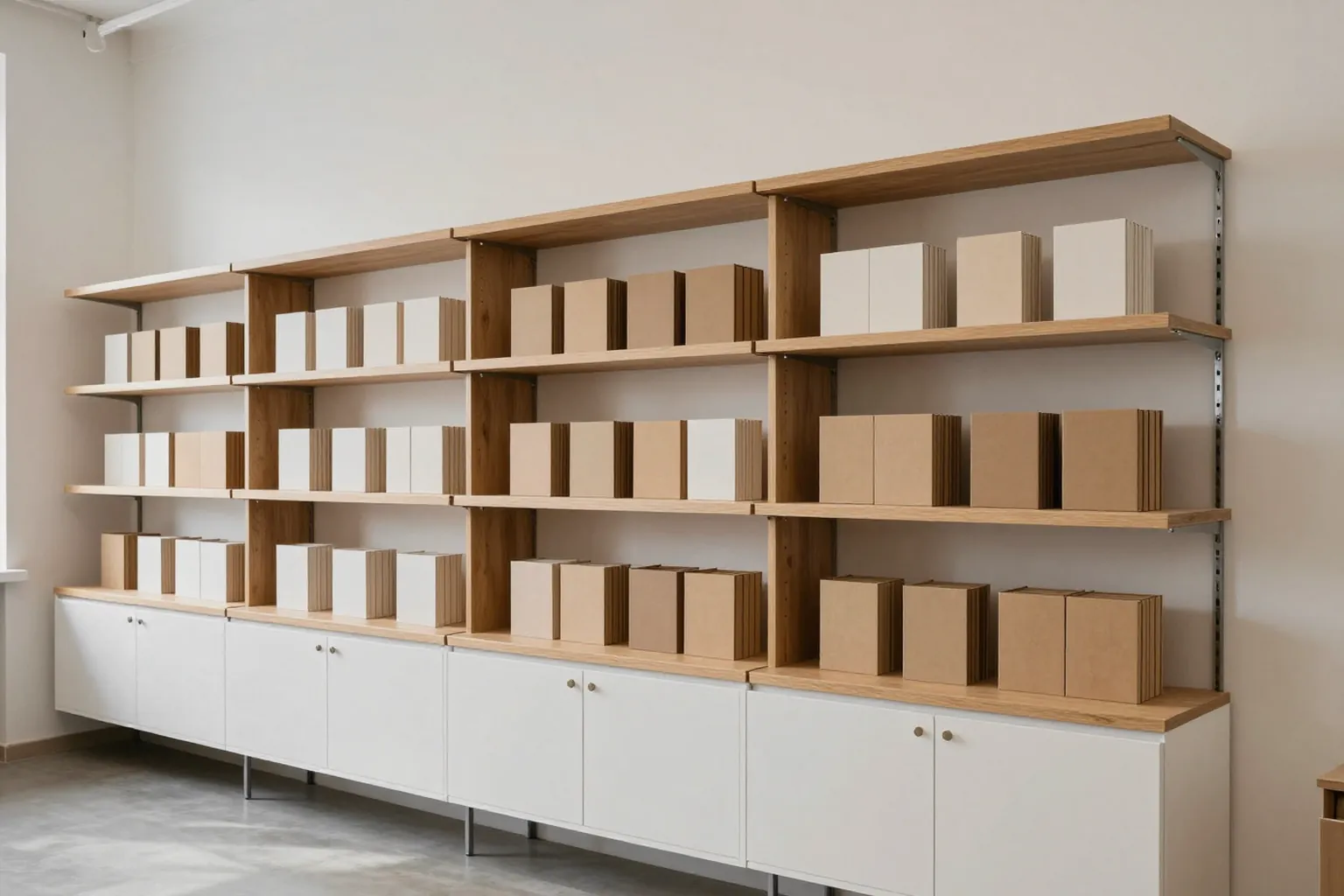
A line of wall-mounted retail shelving as a single module: shelves of different depths for product display, shelf lighting, closed cabinets below for stock.
 Store
Almaty Mall shopping center, Almaly district
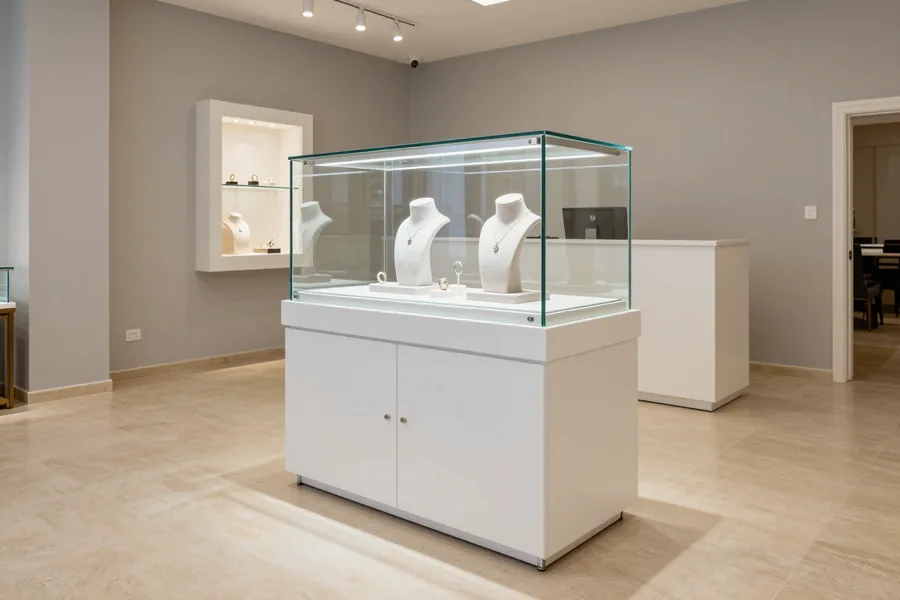
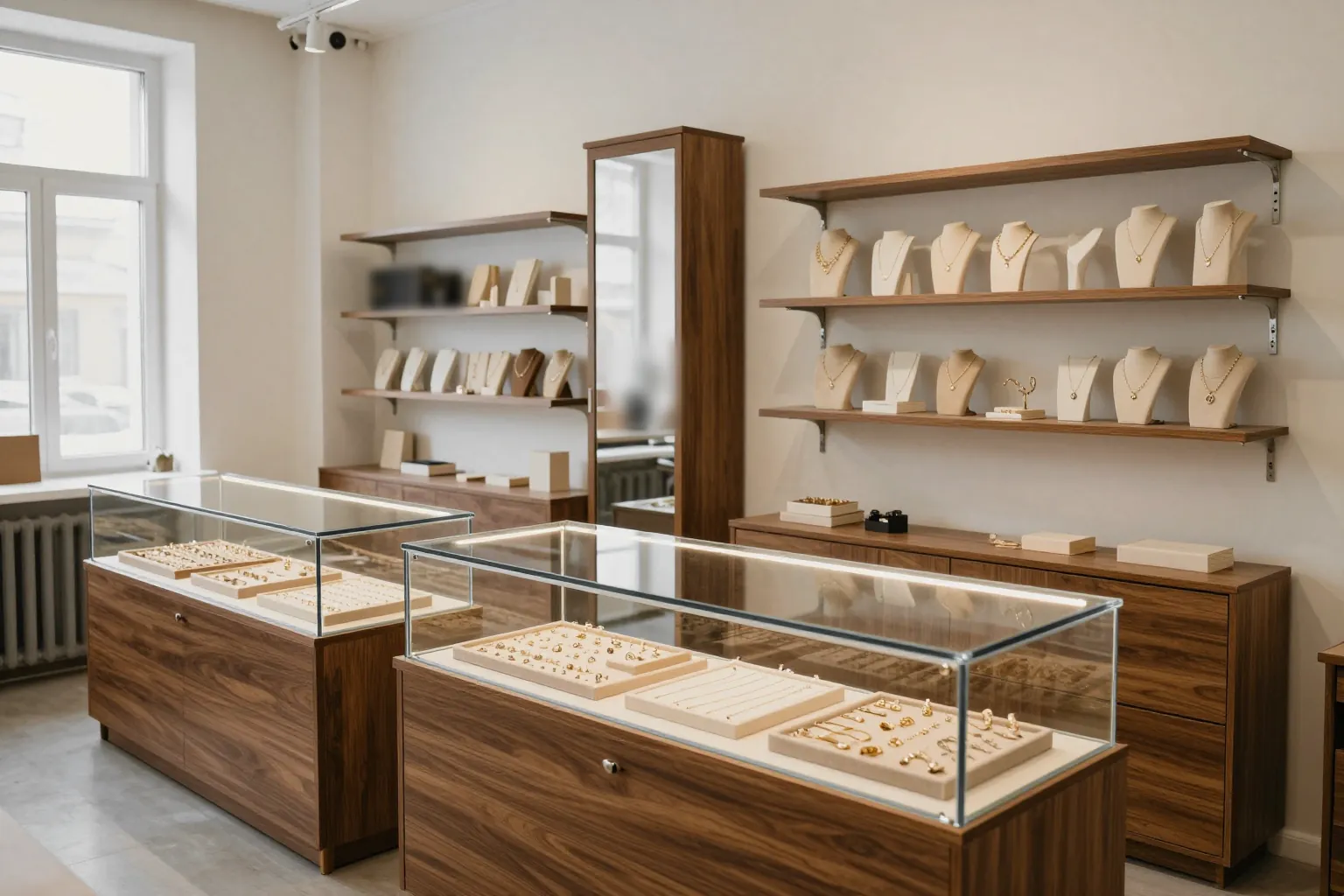
Display cases for jewelry: shelves of low-iron glass, a lock on each section and contour LED lighting. Products under glass, and light decides — in warm lighting pieces look more expensive.
 Store
Orbita microdistrict, Bostandyk district
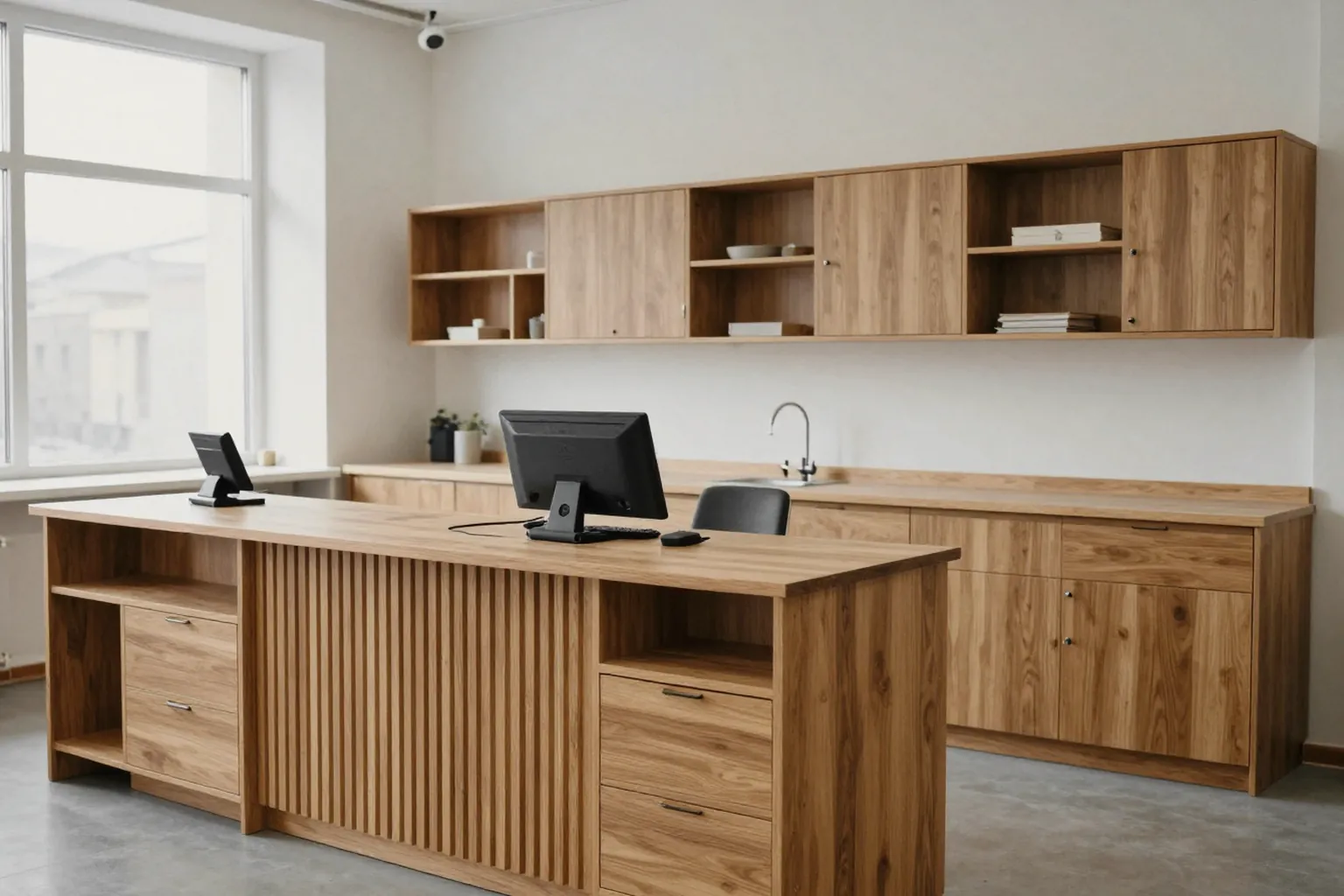
A checkout island counter with a slatted facade to match the brand style. The countertop height was sized for the cashier on shift, cables go into a service niche.
03How we work with stores
04Prices
The "from" price is per item in the basic configuration. We confirm sizes, materials, lighting and locks at a free on-site measurement and fix the final amount in the contract before production starts.
05For legal entities
We work with LLPs and sole proprietors on bank transfer. Price, materials and lead times are in the contract before production starts.
Request a contract and invoice06Principles
01 / 06
07Production
Six steps in our 600 m² workshop. You can see each of them with your own eyes: the showroom and production are under one roof.
Egger · Kronospan · E1
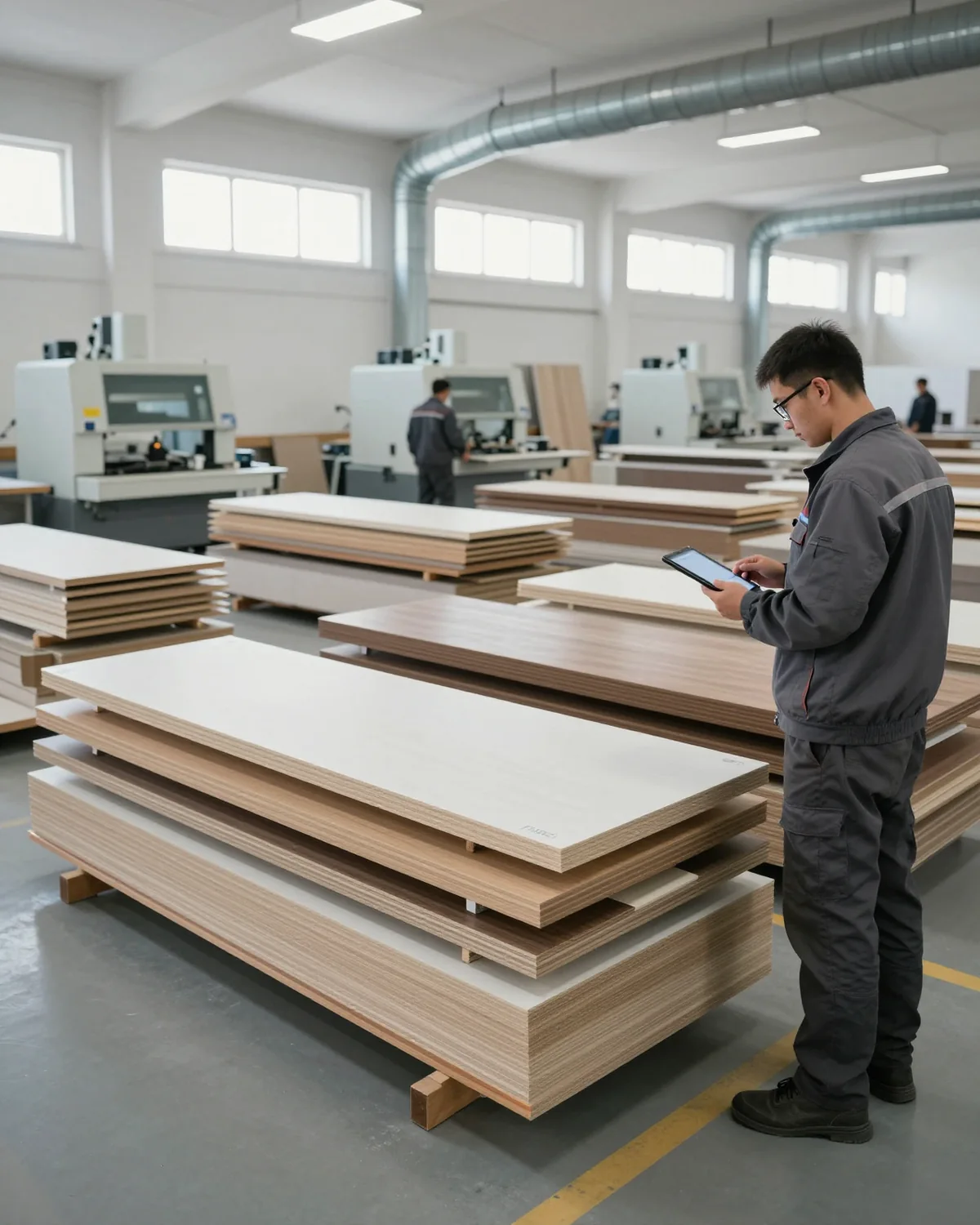
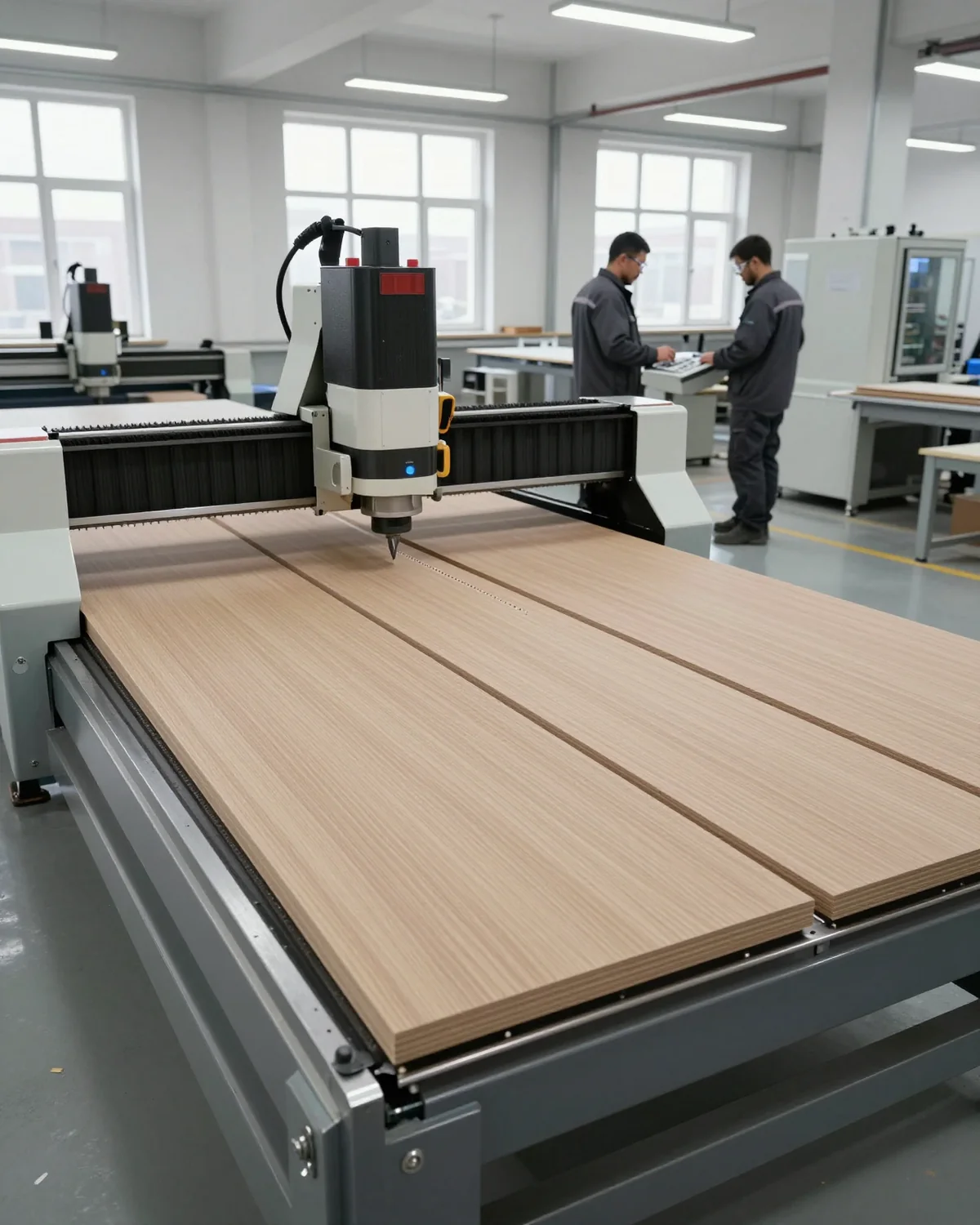
Egger and Kronospan boards of emission class E1 arrive at the workshop warehouse. There are 40+ laminated chipboard decors, 16–18 mm thick. Class E1 — for sales floors and display cases.
Laser measuring to 1 mm
A design engineer prepares the drawings, and the machine cuts the board to them. Dimensions come from a laser measurement accurate to 1 mm.
Blum · Hettich · Boyard
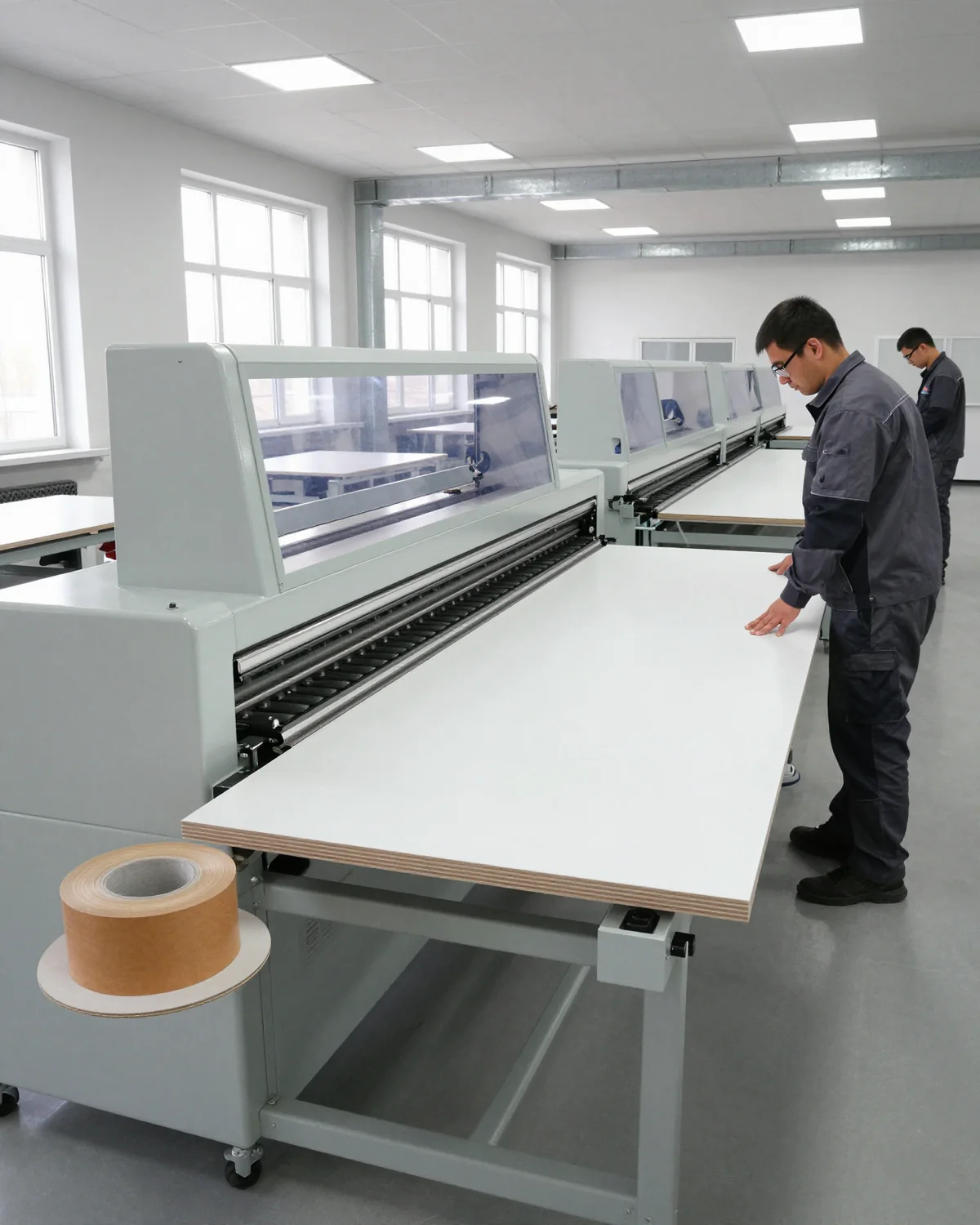
The edge-banding machine seals the edges, then we drill holes for Blum hinges and Hettich runners.
Any RAL colour
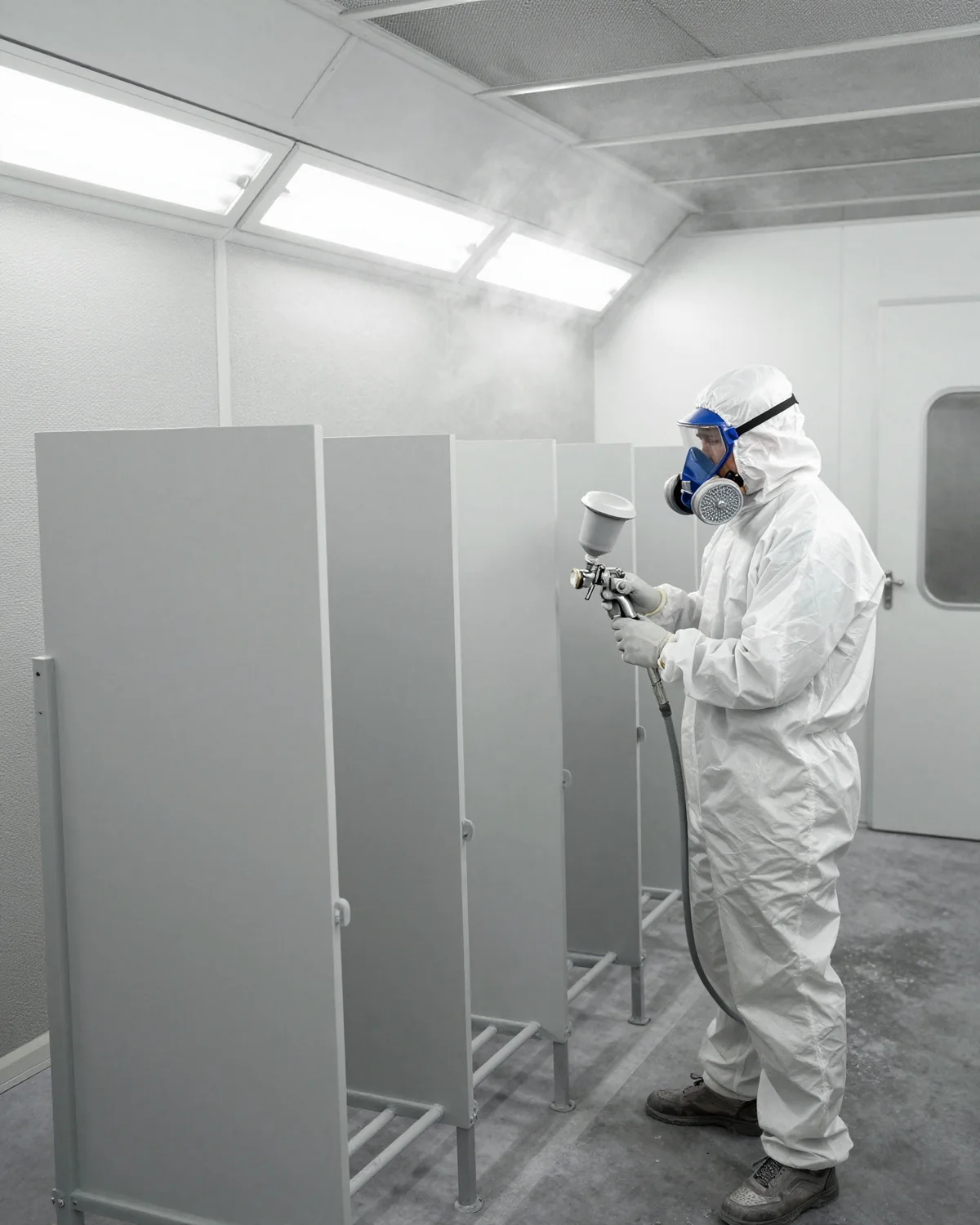
A finishing specialist paints the fronts to RAL — matt and gloss. Before dispatch we test the shelving shelves under load, and we switch on the lighting and close the display case locks during the control assembly.
Pre-assembly in the workshop
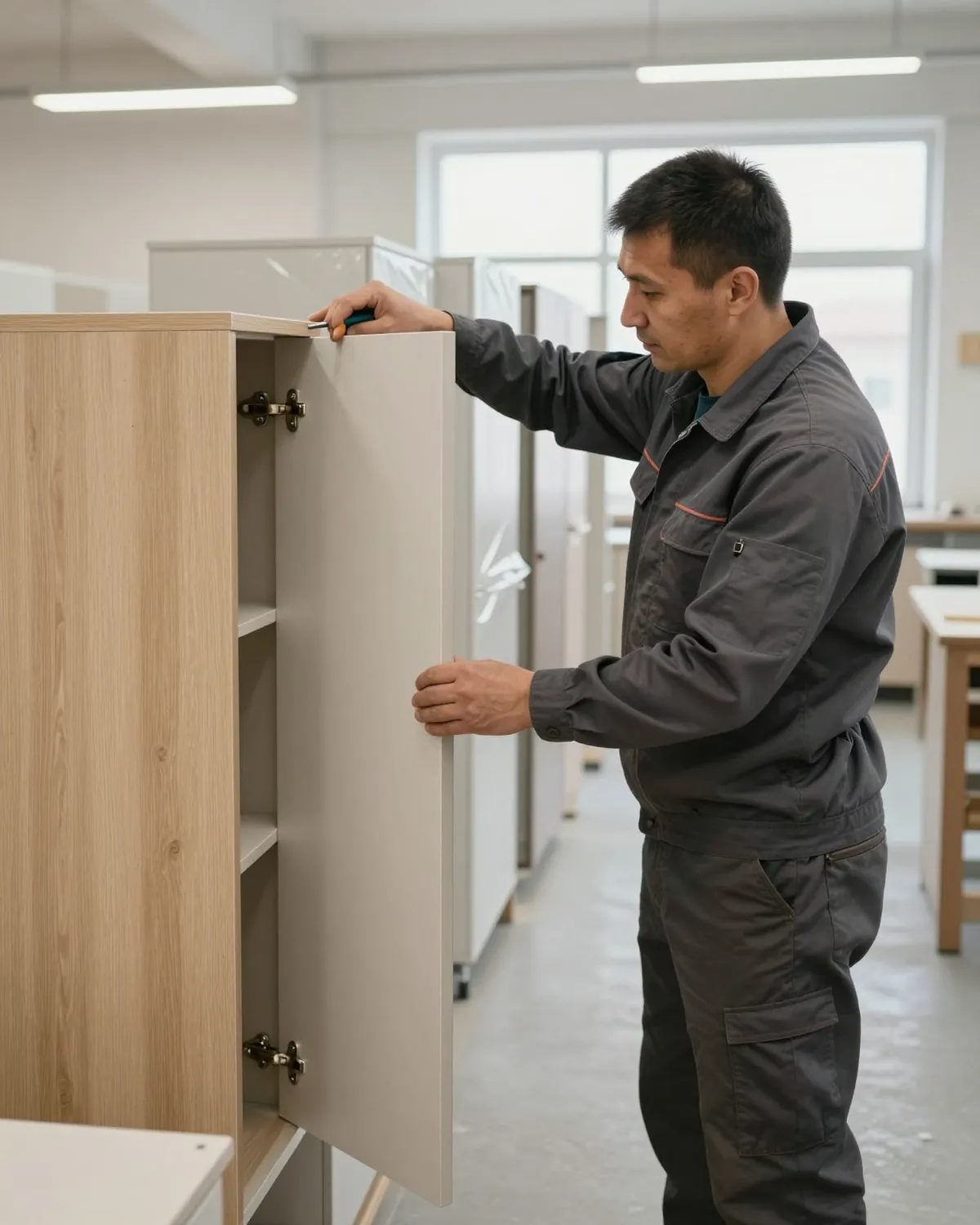
We assemble the modules in the workshop before dispatch, checking front gaps and drawer travel. The quality control department signs the item off for shipping.
Night installation under the mall's rules
We deliver, bring in, assemble in 1 day, adjust the furniture and clean up after ourselves. The 24-month warranty starts from signing the acceptance certificate.
08Team
MEBLIX workshop craftsmen who make and assemble furniture to order.
01 / 07Furniture assembly carpenter11 years
★ 4.81 · 47 ratings

Cabinet furniture repair craftsman20 years
★ 4.99 · 73 ratings

Furniture and kitchen unit assembler23 years
★ 4.97 · 300 ratings

Made-to-order furniture maker7 years
★ 4.26 · 32 ratings

Furniture maker5 years
★ 4.23 · 30 ratings

Joiner and carpenter20 years
★ 5.0 · 113 ratings

Furniture front and hardware fitter17 years
★ 4.61 · 92 ratings
09FAQ
Didn’t find the answer? Message us — a manager replies, not a bot.
Ask on WhatsAppWe issue an invoice under the contract, and the company or sole trader pays by bank transfer in two instalments: 50 % before the workshop starts and 50 % after the acceptance certificate. We attach a delivery note to the certificate — that is enough for accounting to close the expenses.
The lead time depends on the item and material, so for each option it is stated in the price list on this page. If the store opening is already scheduled, tell the manager the date: a rush order is possible.
Yes, in shopping centres we install at night or at weekends — under the mall's rules and the store's schedule. We agree passes and entry times with the administration in advance so the location does not have to close.
Yes, measuring the sales floor and a 3D layout of the equipment are free and take 1–2 days. The design shows the aisles, the till and the fitting rooms before the items even go to the workshop.
Yes, we handle both single and chain orders: from one shelving unit to a chain of locations in one style under one estimate and one contract. We keep the drawings and decors, so modules for new locations can be reordered later.
The 24-month warranty under the contract covers the frames, carcasses, edging and coatings that we manufactured and installed, and it counts from the acceptance certificate. Blum hinges and runners additionally carry a 25-year manufacturer's warranty.
A retail shelving unit on a metal frame with laminated chipboard shelves is the simplest option, and its price is in the price list on this page. The final price is calculated after measurement: it depends on the height, the number of shelves and the lighting.
We deliver with our own vehicle and install with our own team. Within Almaty and the nearest 30 km, delivery is free for a large order, the threshold is stated on the Delivery and payment page; a more distant address is calculated separately.
Yes, we fit the LED strip into an aluminium profile on shelves, in display cases and in the checkout counter. We choose the light so that the goods look natural and the strip does not dazzle customers.
A turnkey store package includes shelving, display cases, a till and fitting rooms in one style. For a guide to the cost, see the price list on this page; we give the exact amount after measurement and a 3D design of the sales floor.
10Reviews
4,9
average rating
on Google and Zoon
Everyone can see a review on the platform: this is how other people check whom to trust with an order. If something went wrong, write to us and we will reply within 1–2 business days.
Message us on WhatsApp11Article
We make custom retail furniture to fit your goods and the layout of the sales floor: shelving, display cases, counters, checkout desks and fitting rooms from laminated chipboard, MDF, metal and tempered glass. Measuring the floor and a 3D design are free and take 1–2 days, in shopping centers we install at night, and the warranty on the item is 24 months under the contract.
The floor of any store is divided into zones with different tasks, and each needs its own type of equipment. First we'll go through the zones, then the types of items and calculating quantities.
Almost any sales floor has four zones — the entrance, the main display, the salesperson's spot and the checkout. The entrance zone greets the customer with a low island counter or a display case with new arrivals: a tall shelving unit by the door blocks the view and puts people off. The main display takes up the walls and the center, where wall-mounted shelving and double-sided gondolas do the work. The salesperson's spot is a counter with stock under the worktop, and in a clothing store fitting rooms with mirrors are added to it. The checkout stands closer to the exit so the queue doesn't block the aisles. Retail furniture for each zone differs in height, depth and shelf load, so it's easier to build the overall list of items from the zones rather than browsing a catalog. This approach immediately shows what's missing and what would be superfluous and only take floor space away from customers.
| Type of equipment | Where it stands | Which goods |
|---|---|---|
| Wall-mounted shelving | along the walls of the floor | main assortment, stock |
| Island gondola | in the center, double-sided | fast-moving goods, promotions |
| Glass display case | by the counter or in the entrance zone | expensive and small goods |
| Counter | the edge of the salesperson's zone | goods sold with advice |
| Island counter | at the entrance | new arrivals, seasonal display |
| Checkout desk | by the exit | small items for impulse buying |
We calculate the number of shelves and their spacing from the goods, not from a standard catalog module. To do this we ask for a list of the assortment with packaging sizes and the approximate stock at the location: shoe boxes, cosmetics bottles and folded knitwear need different shelf depth and height. Then at the free measurement we check the walls, columns, windows and sockets, and within 1–2 days we prepare a 3D layout design. If the furniture for the retail location is needed for a rented space with non-standard geometry, the design immediately shows how many linear meters of display fit without losing aisles. The more accurate the list of goods, the fewer reworks at the design stage, so it's best to prepare the assortment table before meeting the measurement specialist and to mark the heaviest items in it.
The material determines how many years the shelves will stay level and whether the edges remain intact after carts, boxes and daily damp cleaning. Below is what is used where.
A metal frame is needed where shelves carry heavy loads or the structure stands as an island and is open on all sides. We weld frames from steel profile tubing and coat them with powder paint: this coating does not wear off from constant touching and withstands cleaning. For light merchandise — cosmetics, accessories, folded clothing — a carcass made of Egger or Kronospan E1-class laminated chipboard 16–18 mm thick is sufficient. A shelf longer than one meter without intermediate support is better made on a metal base or from 18 mm board, otherwise it will sag under weight over time. A combination also works: a load-bearing frame made of tubing and shelves made of laminated chipboard look lighter and cost less than an all-metal structure. If you order custom retail furniture for a mixed assortment, heavy items are placed on the lower shelves with a metal base.
| Material | Where used | Weak spot |
|---|---|---|
| Laminated chipboard with PVC edge | carcasses, shelves, counters | exposed end without edge |
| MDF in enamel | fronts, checkout counters, gondolas | chips on corners |
| Profile tubing with powder coating | frames, rails, hangers | scratches down to metal |
| Tempered glass | display cases, display case shelves | exposed edges without profile |
| Solid pine or oak | wooden shelving | dents from heavy loads |
| Mirror | fitting rooms, display case backs | chips during installation |
Good layout sells better than an extra meter of shelves. Aisles, checkout area, fitting rooms, and lighting are included in the design before items go into production.
The main aisle should let two shoppers with baskets pass freely, while a side aisle should fit one person carrying purchases. In a narrow aisle, visitors do not linger or look at the display, while in one that is too wide the sales floor looks empty. Shopper paths serve as a guide: from the entrance the eye usually goes to the right, so it pays to place fast-moving stock along the right wall. Island gondolas should not block the view from the checkout to the far corners, otherwise it is hard for the salesperson to keep an eye on the floor. If the space has columns, it is convenient to build shelves around them, turning an obstacle into extra display space. Tight spots are easier to find on a 3D design than after installation, when moving heavy items is already difficult. The route to the emergency exit deserves a separate check: it must stay clear whatever the display.
We install LED strip in an aluminium profile under the shelf or at the end of the display case so the light falls on the goods, not into the customer's eyes. The profile dissipates heat, so the strip does not overheat and keeps an even colour longer. Warm light emphasises wood, leather and baked goods, neutral light suits cosmetics, jewellery and electronics where accurate colour rendering matters. We mount the lighting in the workshop and check it during a trial assembly together with the shelves, so on site only the power connection remains. The power supply is hidden in the plinth or behind the back panel, with access left for servicing. Lighting is best agreed together with the 3D design, because it noticeably changes how the decor and display colours are perceived, especially in halls without windows.
Making to measure is justified when the space or the assortment does not fit standard modules. Let us break down what a design gives you, where a serial item will do, and how ordering works.
Measurement and a 3D design show the space with the equipment before the items are made. We come for a free measurement, record the walls, niches, columns, windows and sockets, and 1–2 days later show the layout in 3D. The design shows how retail furniture for a store will sit between the columns, where shoppers will walk and whether there is enough room for the checkout. Decor, metal colour and lighting can be changed at this stage with no cost of rework. The design is convenient to send to the landlord or the shopping centre's management company for approval: many malls require a floor plan before installation begins. Lead times for each item are shown in the price list on this page, and after measurement we fix the price in the contract so the estimate does not change during the work.
A standard shelving unit suits a stockroom, back room or temporary point where appearance does not matter and the room dimensions are standard. Prefabricated metal shelving with perforated uprights goes up and gets moved quickly, but its depth and shelf spacing are set at the factory. In a sales floor, ready-made items have two problems: they do not fit the wall size, leaving empty gaps, and they do not match each other in finish if bought from different suppliers. Mixing standard and made-to-measure equipment in one hall is not worth it — the customer notices the mismatch. A sensible option on a modest budget is to order items for the sales floor and equip the back room with ready-made shelving. That way the money goes where the customer sees it.
The shopping centre sets the working hours, the delivery procedure and the safety rules itself. If you allow for them in advance, the point opens on schedule and customers never see the installation.
In shopping centres we install at night or at weekends — according to the mall's rules and the store's schedule, so the point does not close. The items arrive on site after test assembly in the workshop, so all that remains on site is to level them, join them and connect the lighting. Our own crew knows the construction of every module, so the night shift does not waste time reading drawings. We deliver retail furniture in several parts — gondolas, the checkout, display cases — in the order of installation so the boxes do not clutter the sales floor. In the morning the staff receive assembled equipment and can start laying out the goods. If the opening date is already set, it is best to mention it at the measurement: a rush order is possible, and the lead times for each option are shown in the price list on this page.
Chains care about identical sales floors at every location, a clear estimate and documents for accounting. Below is how module repetition, documents and warranty work.
We replicate modules for a new location using the saved drawings and decor numbers, so the second and third shops look the same as the first. When deciding to buy retail furniture for several addresses at once, it helps to set a standard kit: a wall module, a gondola, a checkout and a fitting room of the same size. Then for each new space only the layout changes, not the design of the items. We handle a chain's fit-out in one style under a single estimate and a single contract, and identical modules for the next locations can be reordered later. Before launching a chain, it is useful to approve a reference sales floor and photos of the display so that managers of new locations arrange the goods the same way. Each new location still needs its own measurement: walls and columns differ from space to space.
| Document | When we issue it | Why it is needed |
|---|---|---|
| Contract | before production starts | fixes the price, materials and lead time |
| Invoice for payment | after the contract is signed | cashless payment for LLPs and sole proprietors |
| Acceptance certificate | after installation | confirms acceptance and starts the warranty |
| Delivery note | together with the certificate | closing document for accounting |
The item carries a 24-month warranty under contract, counted from the signing of the acceptance certificate. Payment is just as transparent: 50 % prepayment when the contract is concluded, the remaining 50 % after the certificate. The warranty covers the construction, fastenings and coatings that we manufactured and installed. Blum hardware — hinges, lift mechanisms and drawer runners — additionally carries the manufacturer's 25-year warranty; Hettich and Boyard have their own terms. Over 13 years of work and 3 500+ projects, we see that most breakdowns on the sales floor are caused by overloading shelves beyond the calculated load, so it is best to discuss the permissible load at the measurement stage. Keep the contract and the certificate: they make it easier to request warranty repairs if a shelf or lock stops working as before.
Store fit-out is made up of several decisions that are best made before production. Here are the key takeaways an owner of a new or existing location should keep in mind.
12Calculation
In the calculator, choose the item type, quantity, carcass and front material — the calculation goes to the manager on WhatsApp, who will check it against the floor plan and send you an estimate.
13Retail furniture
We make shelving for your goods, stockroom or niche: shelf spacing, depth and frame are calculated from the weight and size of what goes on them.
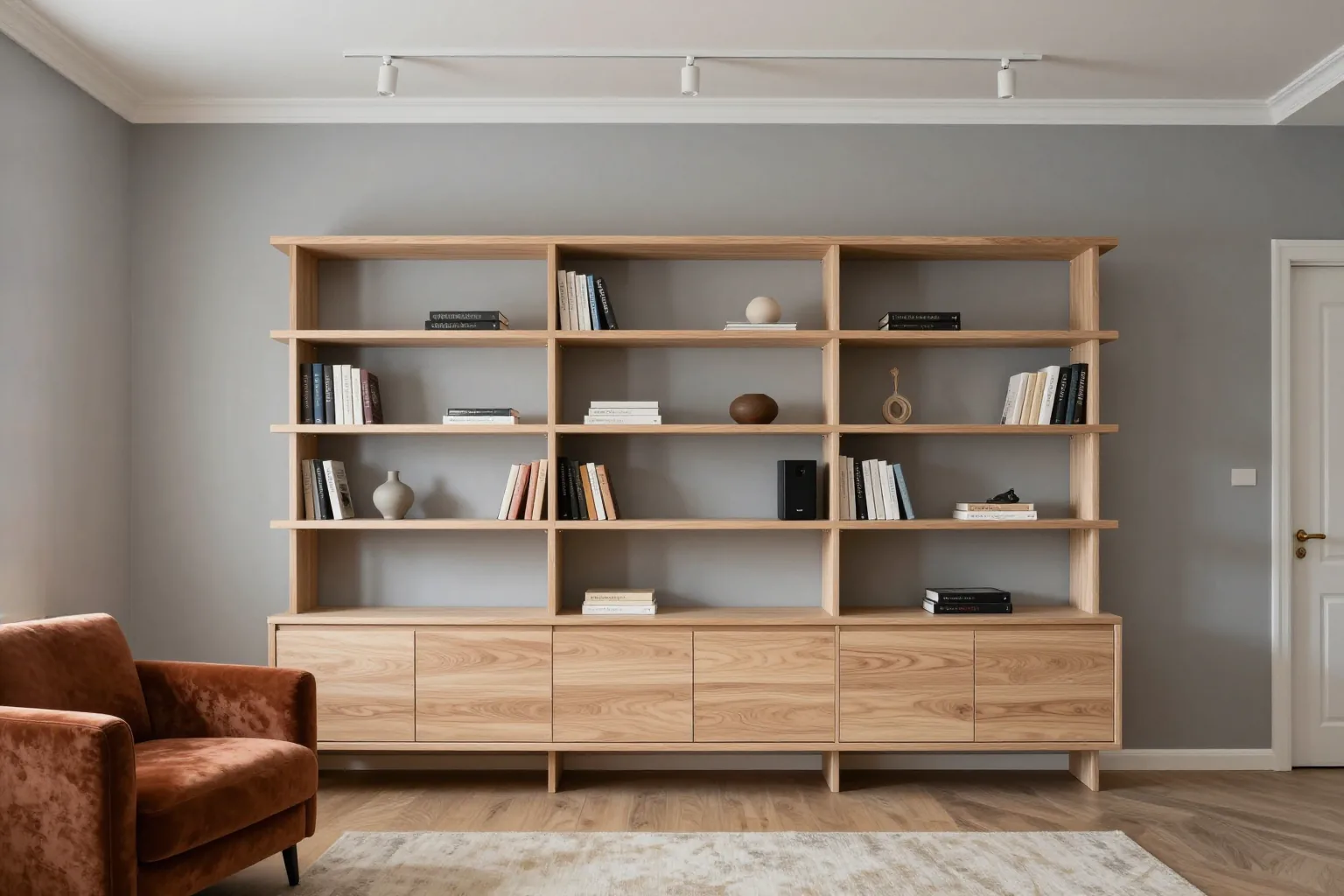
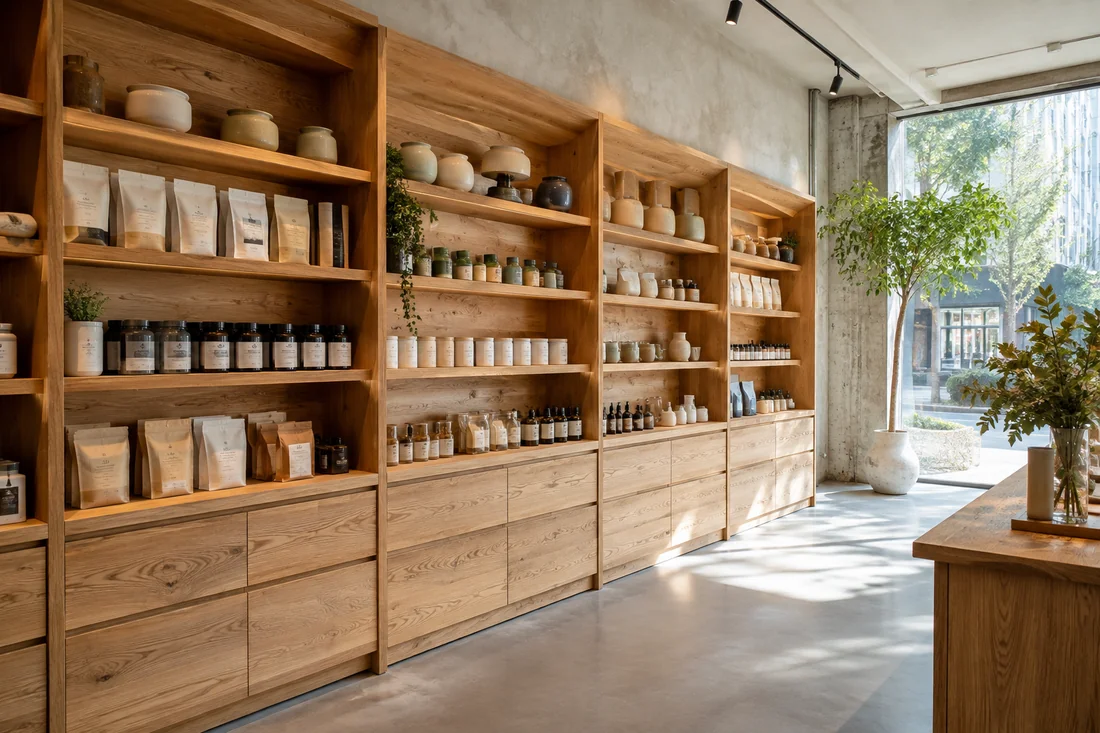
We make wooden shelving to the size of the wall, niche or opening: we select the wood species, shelf thickness and finish for whatever will go on them.
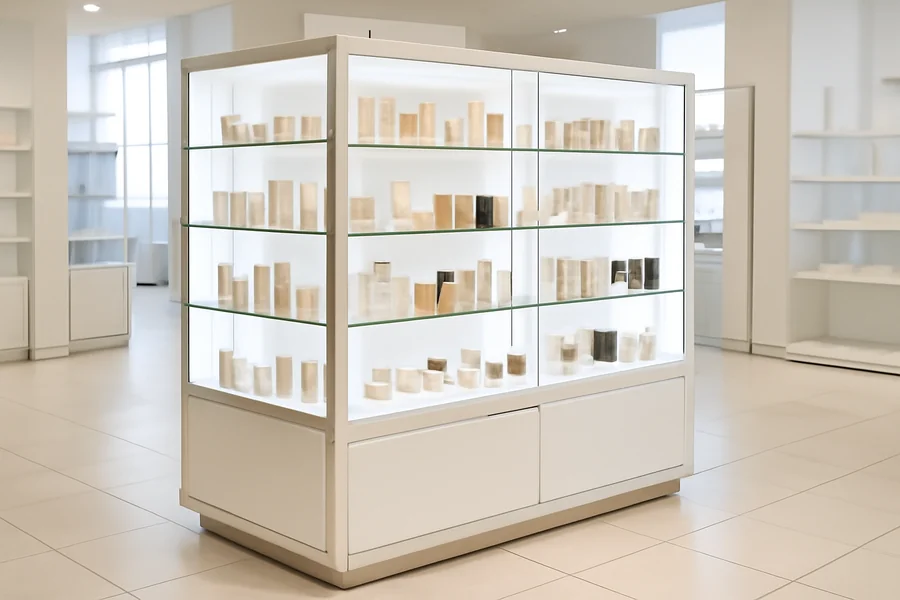
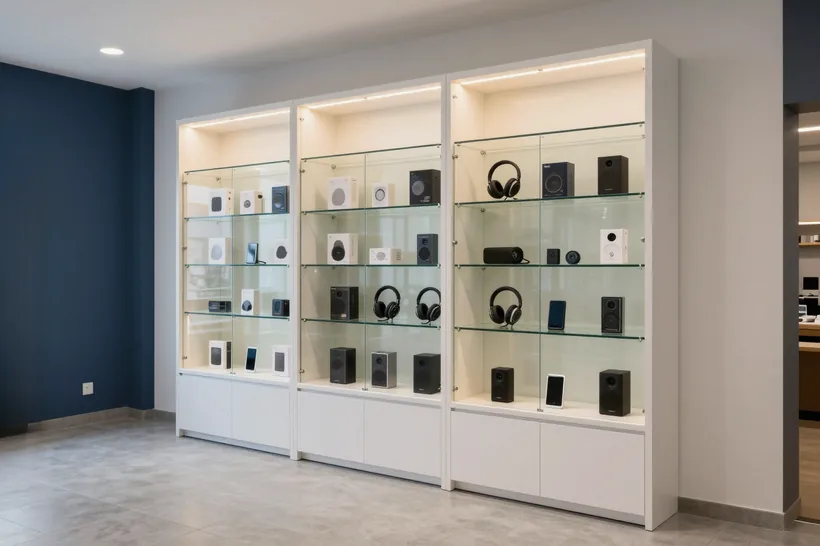
We make wall-mounted, island and tall display cases for your goods: tempered glass, locks and lighting that doesn't dazzle the customer.
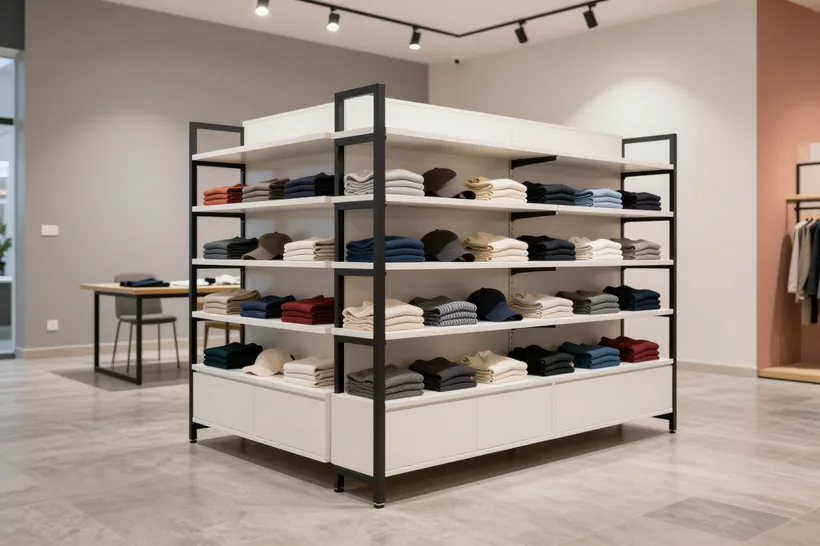
We make rails, gondolas, knitwear shelving, fitting rooms and a checkout to suit your range and boutique layout, and install at night so the store never closes.
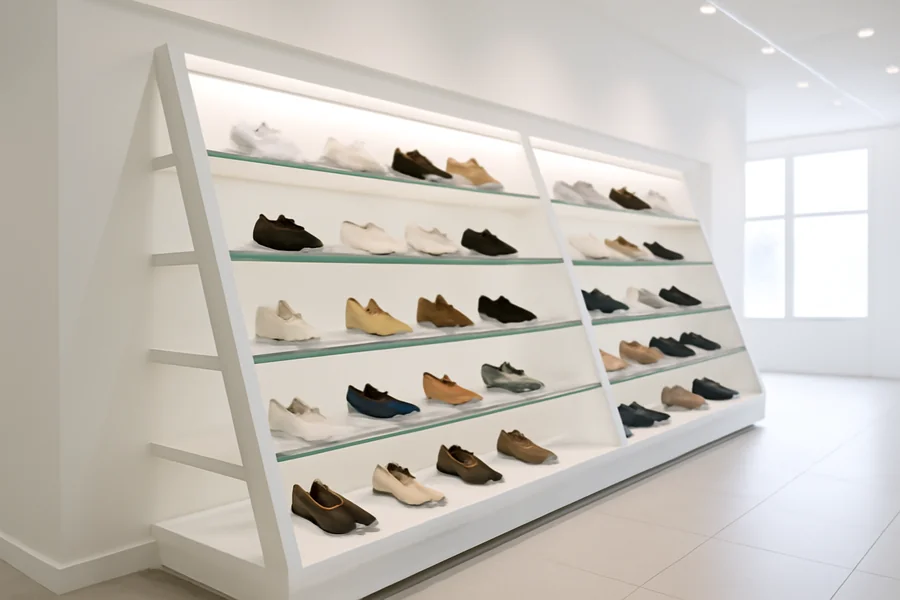
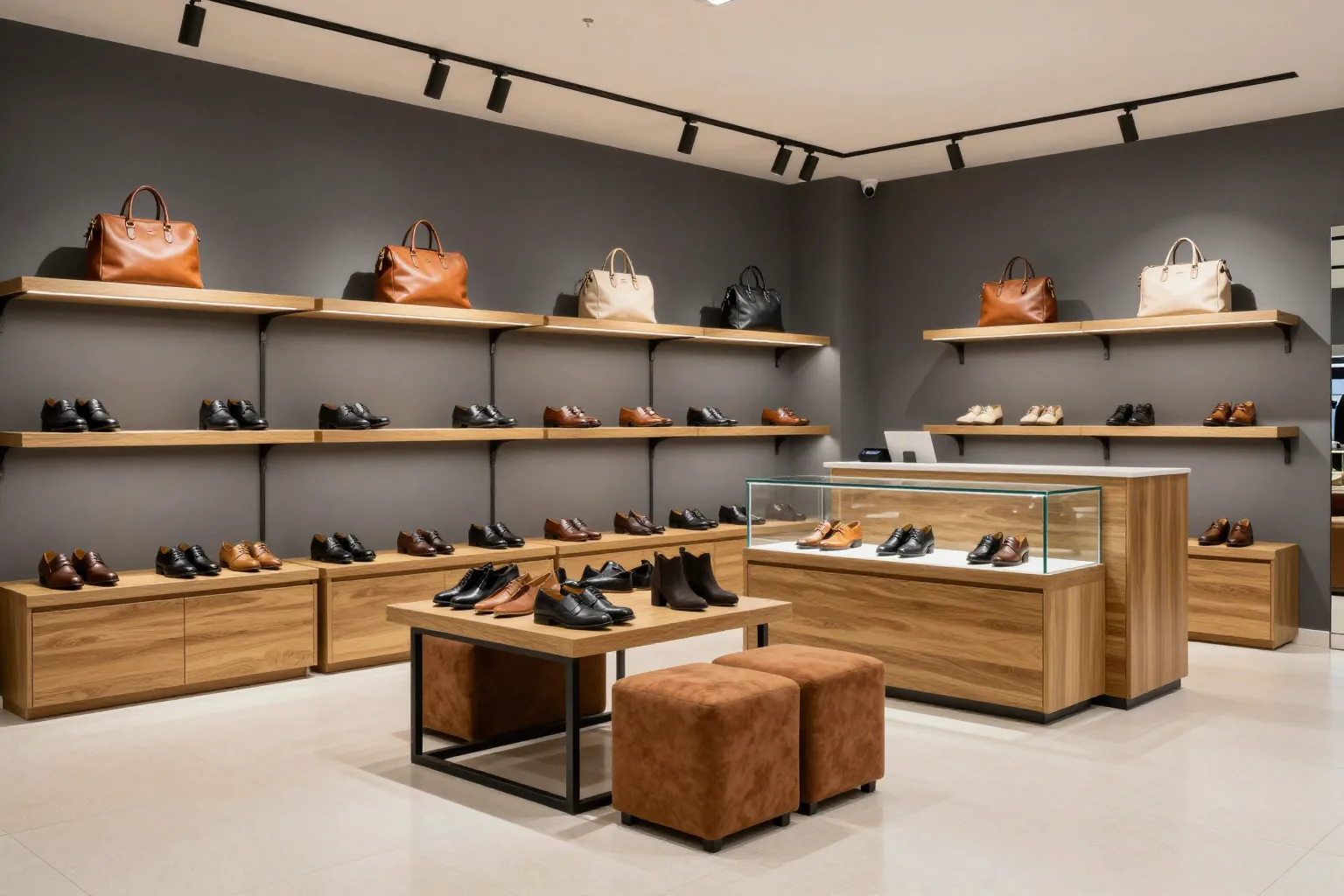
We make slanted shelving, island displays and fitting-room benches to suit your footwear range and sales floor layout, and in malls we install at night.
We make wall shelving with lighting, gondolas, perfume display cases and tester tables to suit your range and sales floor layout, and install at night per mall rules.
We make counters, island and wall display cases for jewellery: tempered glass, a lock on every door and spot lighting that makes the stones sparkle.
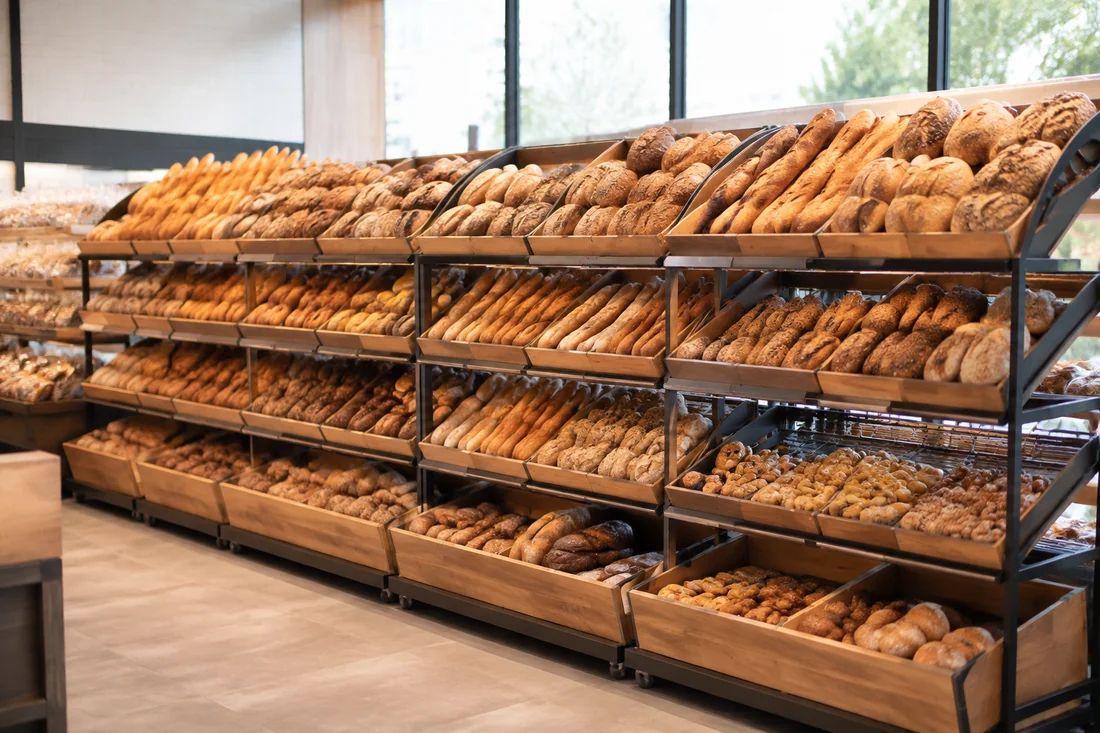
We make slanted shelving, shelves with trays and island display cabinets for a bakery or bread department range, with a finish suitable for contact with bread.
We make wooden shelving for the sales floor: pine, oak and ash hold displays for years, and we calculate the shelves for the weight of your goods.