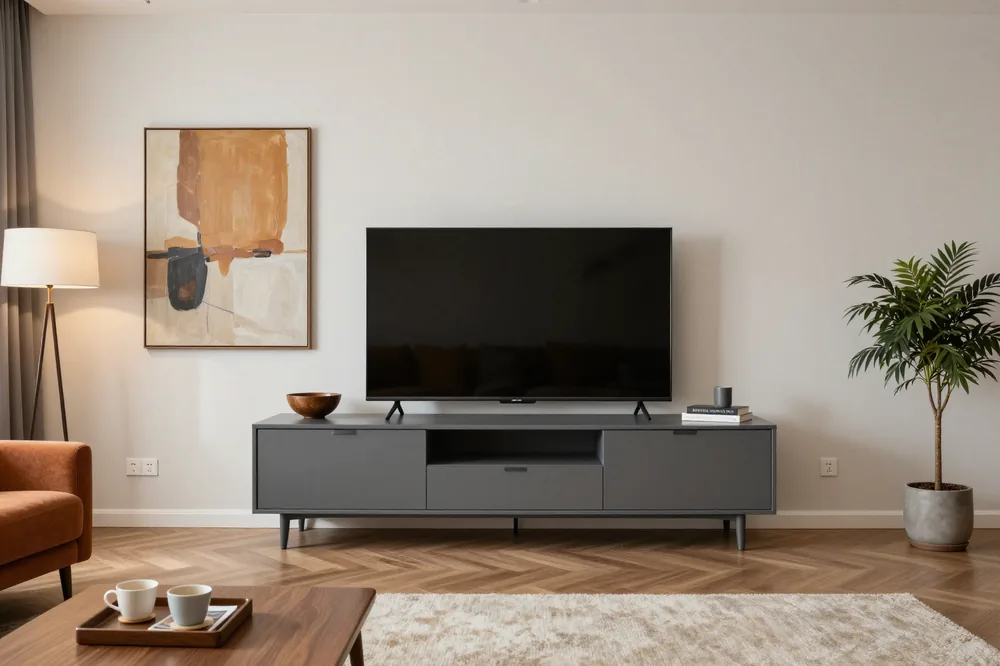
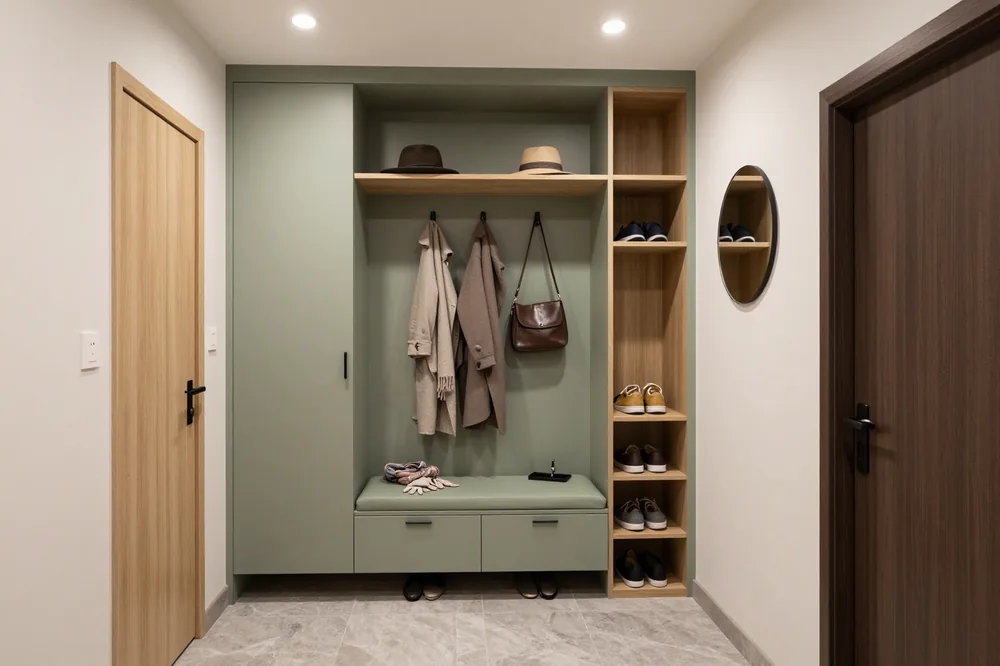
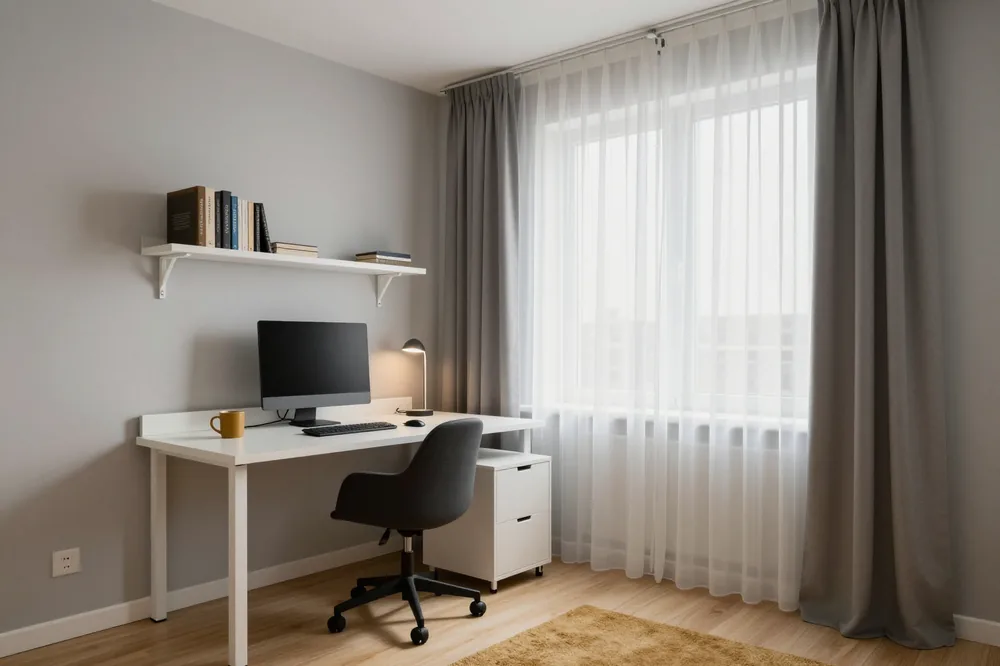
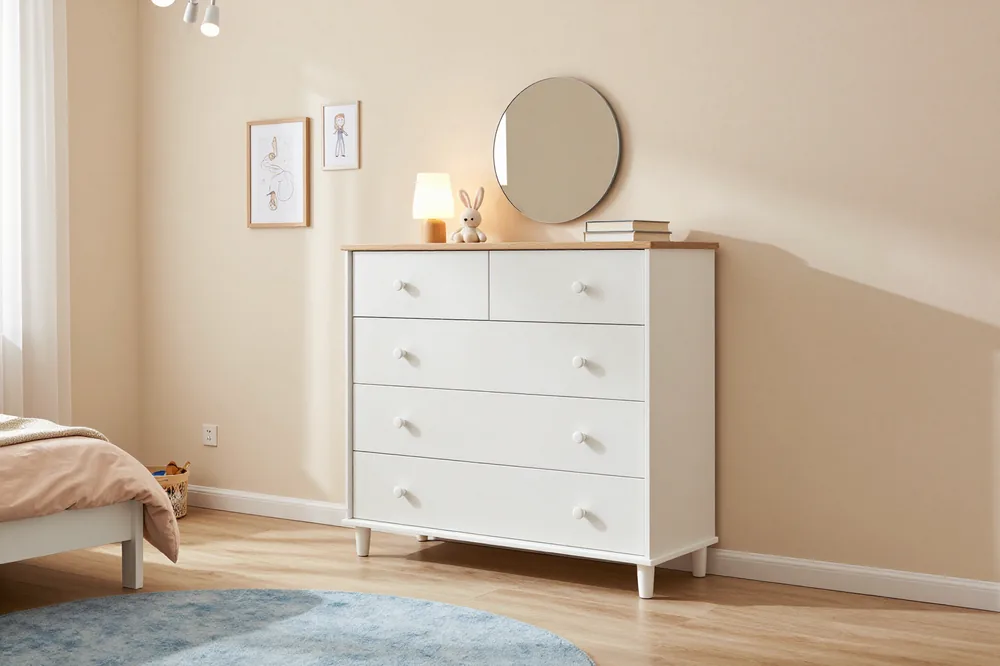
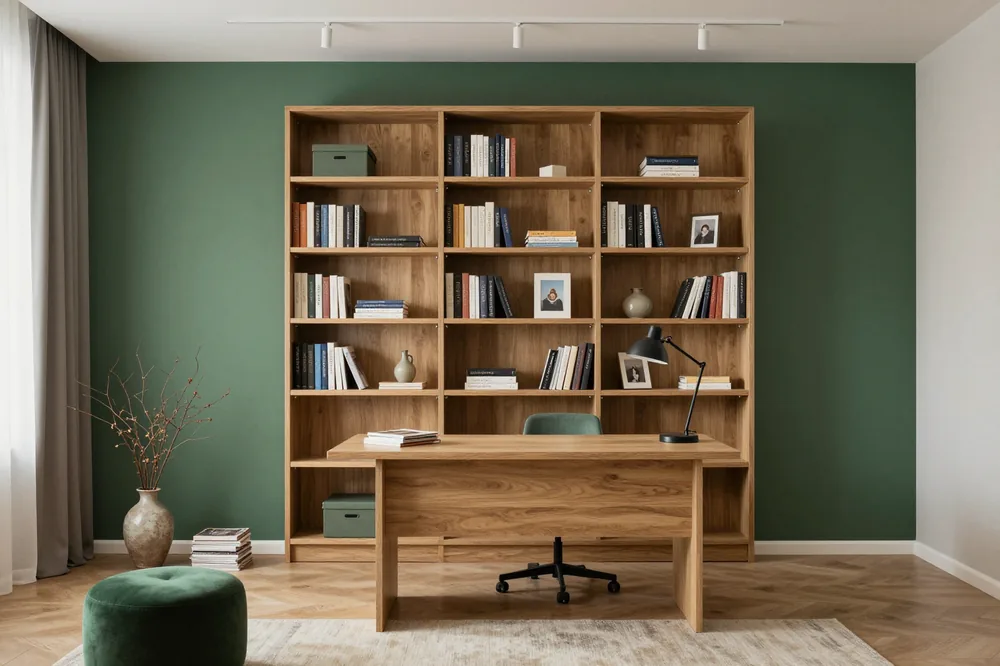
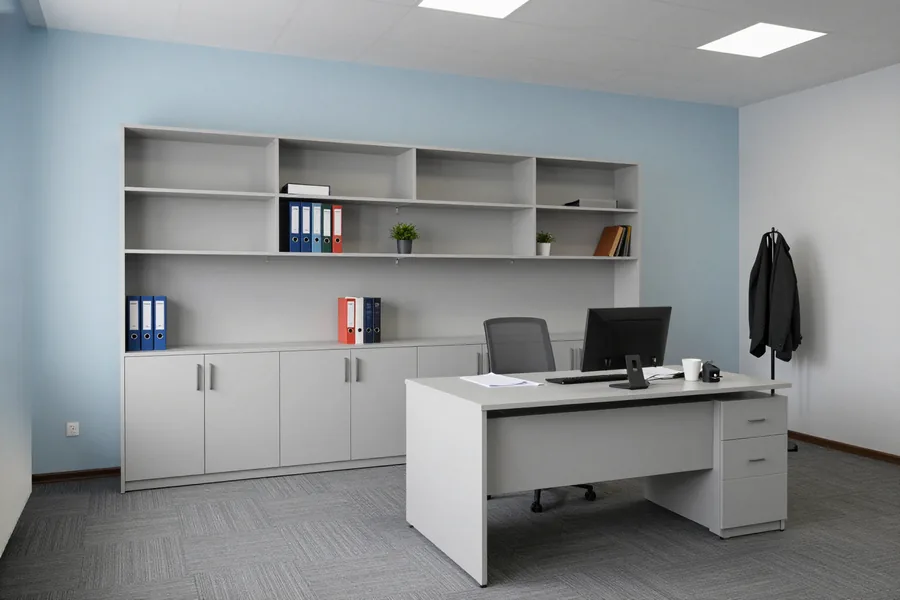
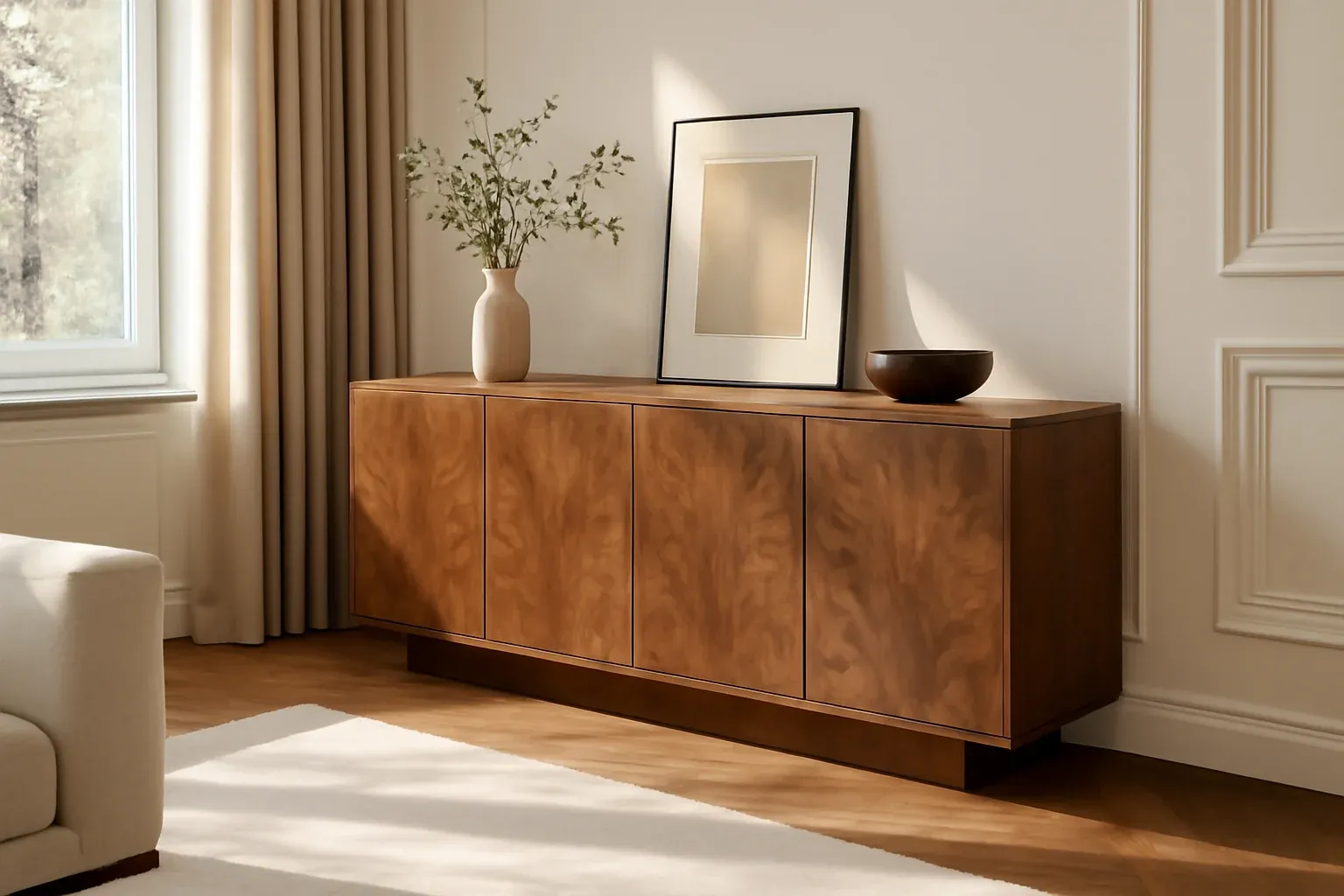
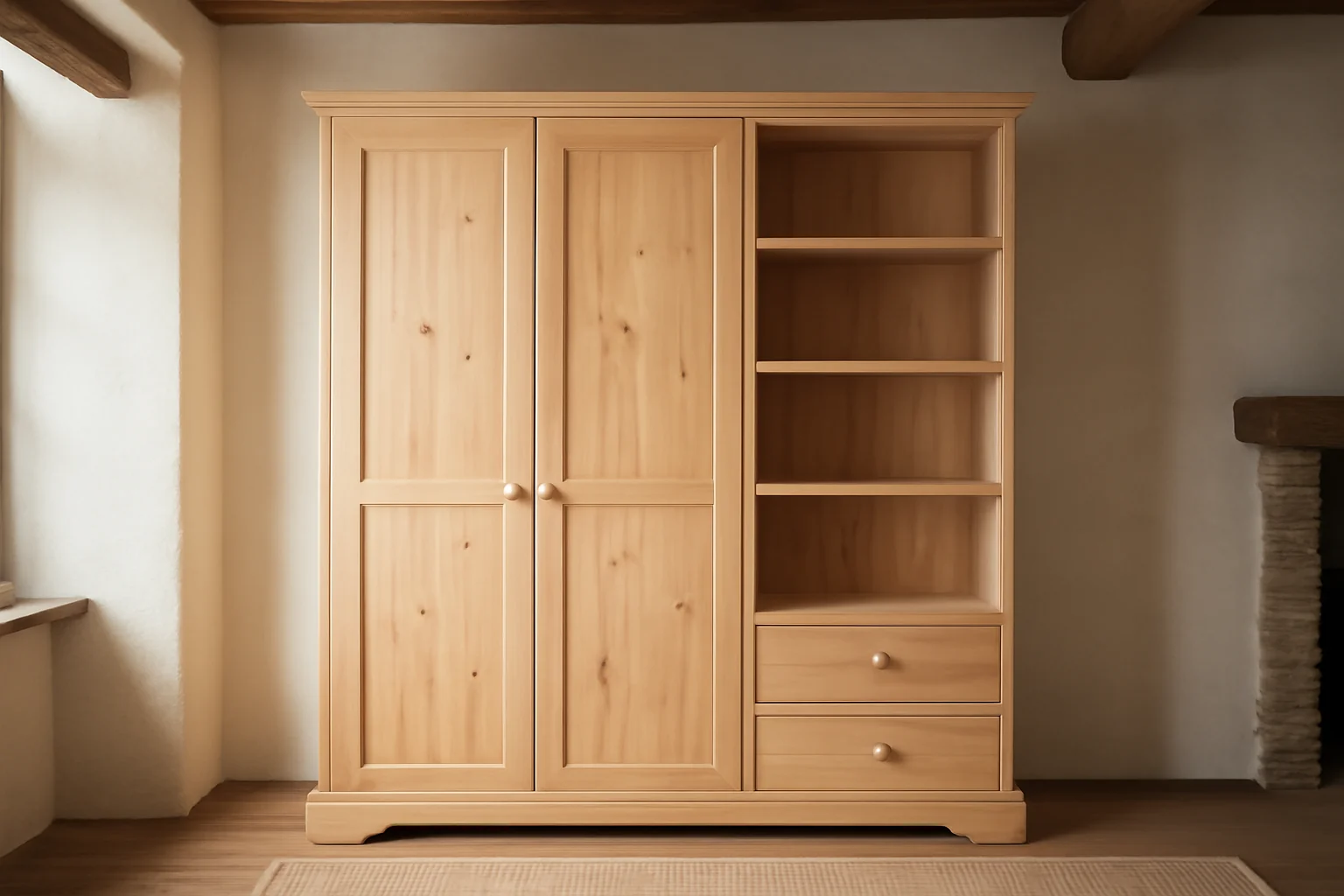
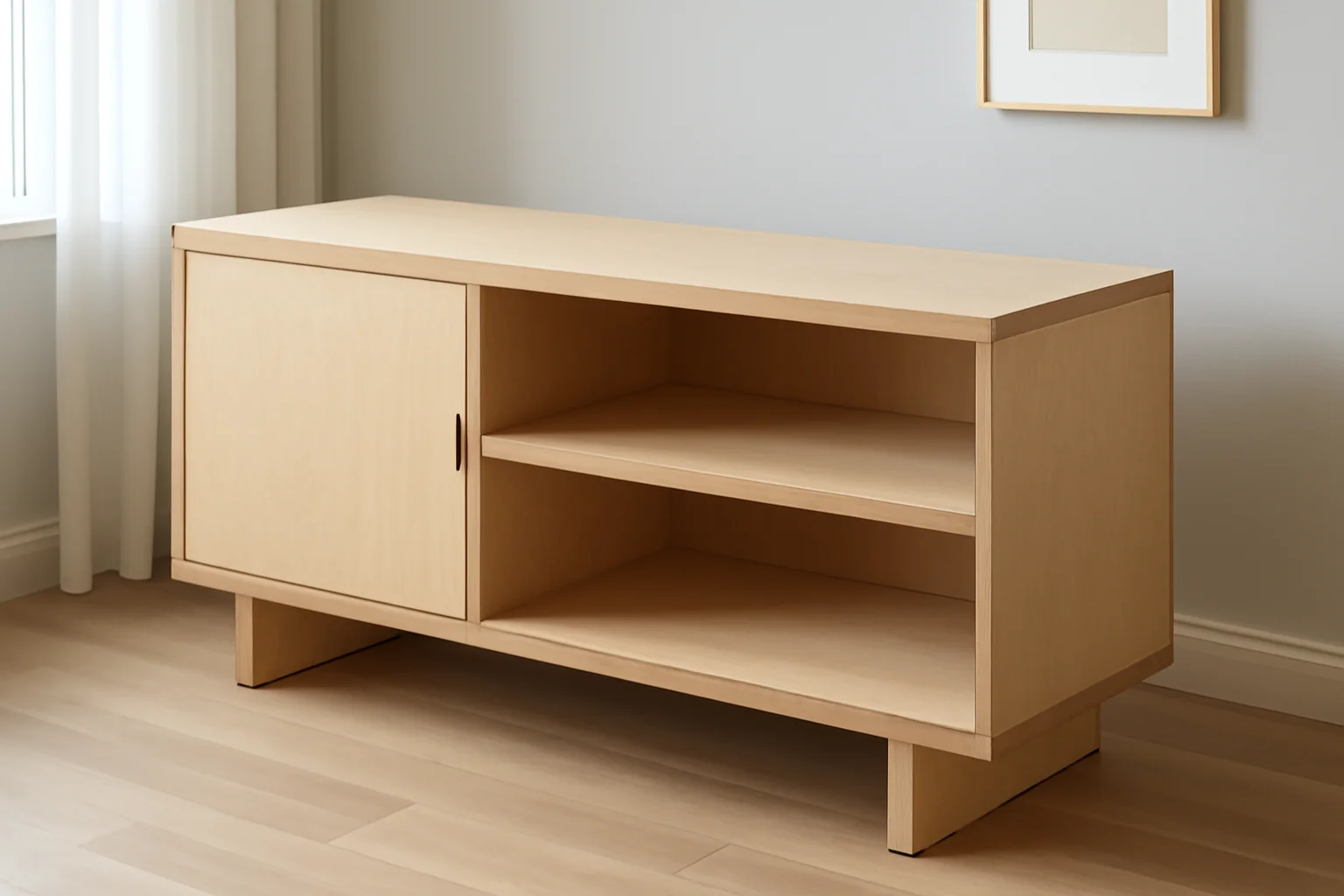
MEBLIX makes custom chipboard furniture in Almaty: our own workshop, Egger and Kronospan boards, Blum, Hettich and Boyard hardware. Free measurement and 3D design in 1–2 days, installation by our own crews, a 24-month warranty on the item under the contract. Lead times and prices for each option are in the price list on this page.
Chipboard is pressed wood particles with a binder, and laminated chipboard is the same core with a laminated coating. We explain how these materials behave in cabinet items and what their service life depends on.
How chipboard differs from laminated chipboard
Chipboard is a board made of pressed wood particles, and laminated chipboard is the same board with a laminated coating that gives color, texture and surface protection. Inside they share one core: wood chips impregnated with a binder and pressed under pressure. The laminate is applied to the face on both sides, so laminated chipboard needs no finishing and goes straight to cutting. Uncoated chipboard is used where the surface is covered anyway: in the countertop base, in hidden shelves, in technical parts. The difference is obvious to the touch — the laminated surface has a smooth pattern in wood, stone or solid enamel. The laminate protects only the face, not the cut edge, which means in a finished item it is not the coating that decides but the quality of the edge banding. That is exactly why chipboard furniture is so often chosen for kitchens and wardrobes: the material is predictable to work with and holds its shape when the ends are properly protected.
Why chipboard items are cheaper and how strong they are
- Raw material: wood chips and woodworking waste cost less than solid timber, so the material comes out more economical than solid wood.
- Technology: cutting, edge banding and drilling on machines are well established, so the item is assembled quickly and without hand-fitting every part.
- Strength: pressed chips hold their shape and weight, but are vulnerable to point loads on an open cut edge and to overloaded hinges.
- Weak spot: solid wood and MDF win at fine milling and restoration, while chipboard falls short where complex relief is needed.
- Service life: an item lasts long with a sealed end and hardware in good order, not because of the thickness of the core.
Is chipboard afraid of moisture
Ordinary chipboard is vulnerable to moisture at an open cut edge, which is why we use moisture-resistant board and airtight edge banding in the areas around the sink and in the bathroom. The laminated face hardly absorbs water — drops are simply wiped off it. The other matter is the end: an unsealed cut edge absorbs moisture like a sponge, the material swells and loses its shape, and it can no longer be restored. In our workshop all visible ends are edge-banded, and we make the parts of the wet zone from a moisture-resistant core. Water destroys the material not through the laminate but through the end — for this reason, when designing a kitchen we separate the wet zone from the carcass rather than relying on the core alone. Our technicians at the measurement specifically check where the countertop meets the sink — that is exactly where a mistake in end protection shows up first.
Which board and edge to choose for chipboard furniture
The choice of material and edge depends on the item: a countertop, a wardrobe carcass and a kitchen by the sink work under different loads and humidity, so the same solution for all parts is not the best option.
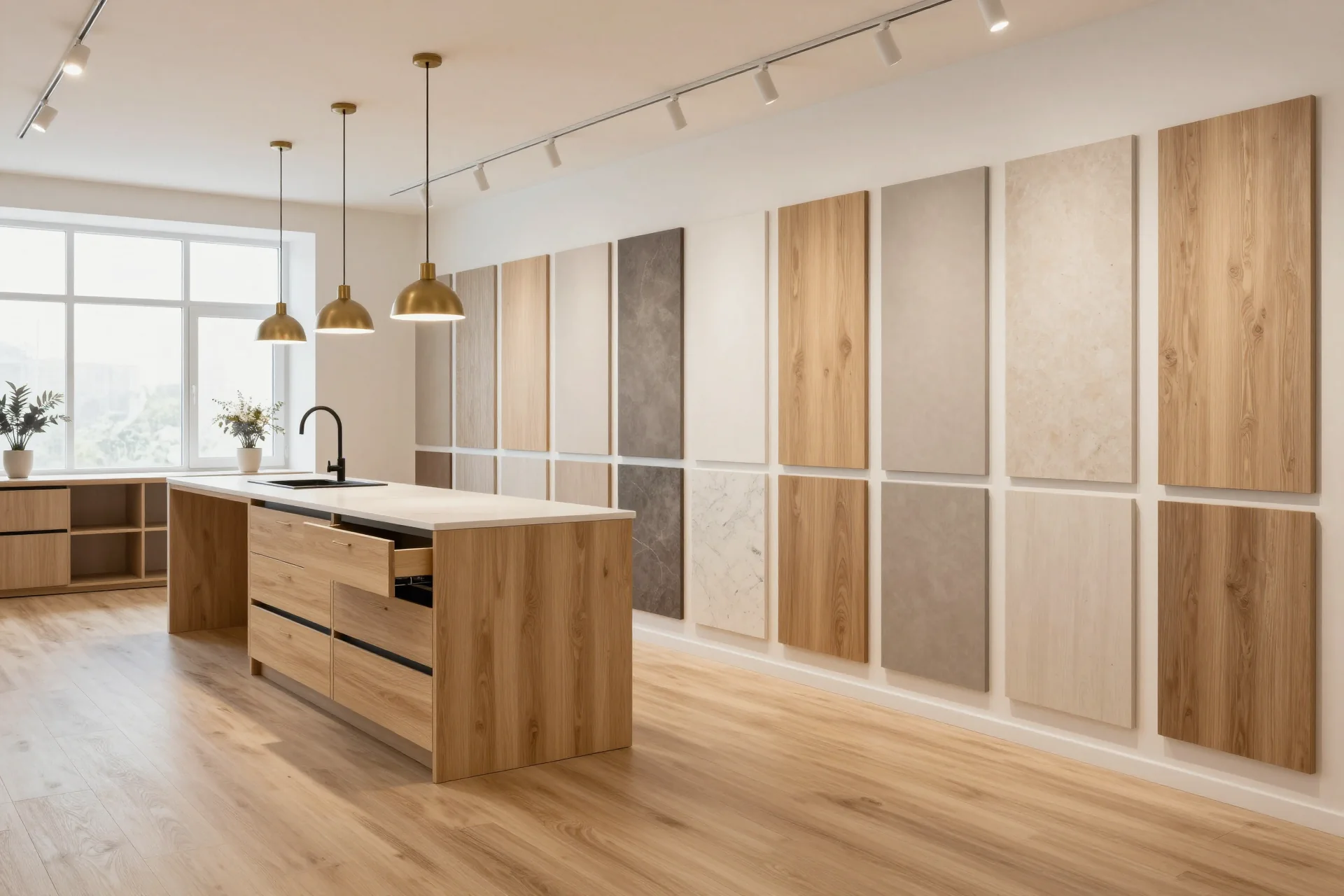
Egger or Kronospan and what thickness for the countertop and carcass
Comparison of boards by purpose and load| Material | Where we use it | Why |
|---|
| Egger | Countertops, fronts, visible surfaces | Stable geometry, even decor |
|---|
| Kronospan | Carcass, side panels, shelves, internal parts | Dense structure, holds fasteners |
|---|
| Thicker board | Countertop, shelves for heavy items | Less sagging under load |
|---|
| Standard board | Side panels, partitions, bottom | Sufficient for vertical parts |
|---|
PVC and ABS edge banding and why an open cut is risky
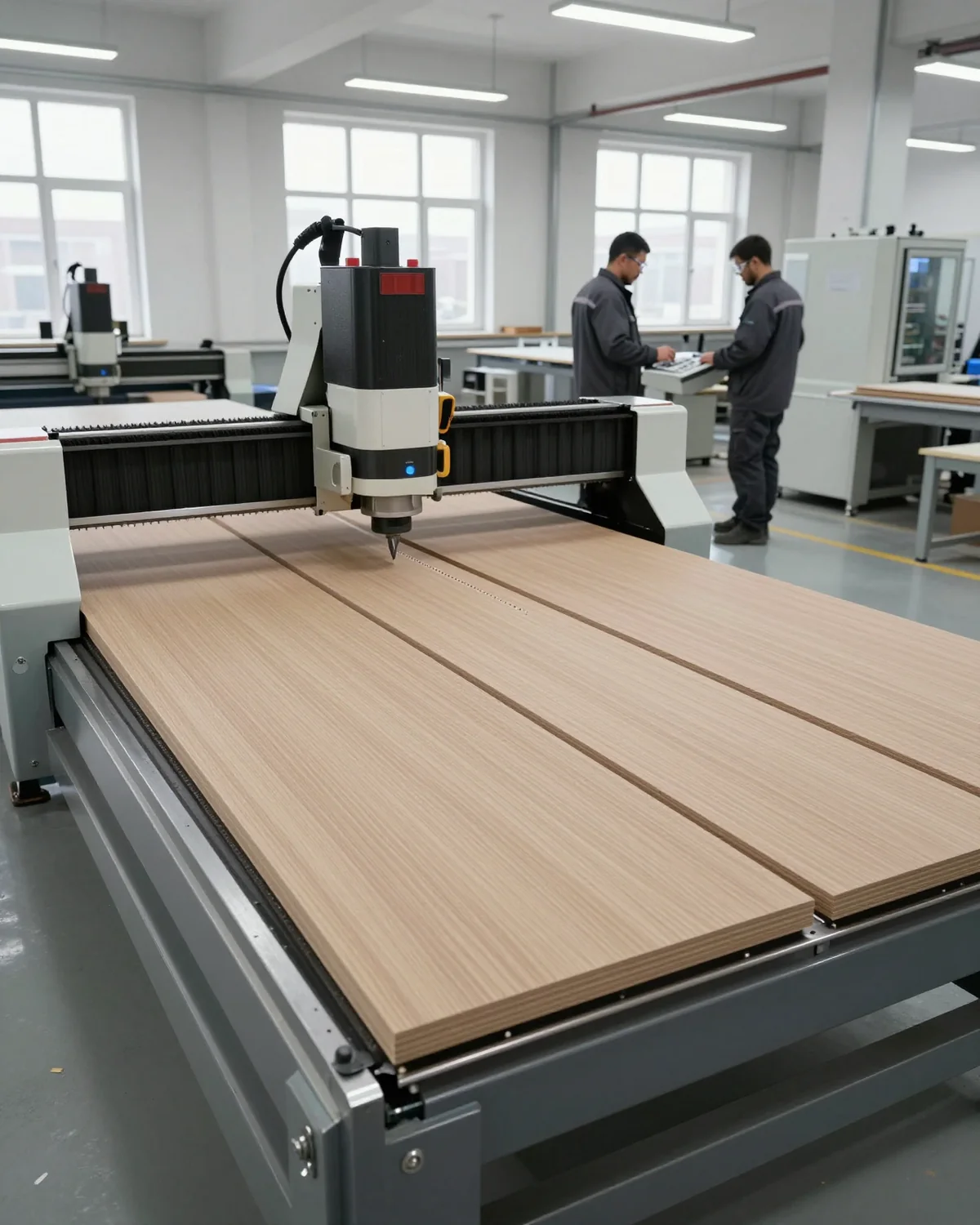
Edge banding protects the cut of the board from moisture and chipping, and an open end is the main reason chipboard swells and loses its look. We apply edge banding in our own workshop at the cutting stage: we use PVC for internal parts and shelves, and ABS for fronts and countertops, where impact resistance and a neat radius on the corner matter. PVC is cheaper and easier to process, while ABS is denser and holds its shape better through temperature changes near the stove. For custom chipboard furniture we choose the edge banding to suit the specific item and the conditions it will work in. On a finished item the contour is checked by hand: a protruding edge or a gap says more about the machine setup than the type of material. In our workshop the control assembly happens before shipping, so we check the edge banding on every item, not just on a sample.
Can chipboard be combined with solid wood and moisture-resistant board
- Solid wood countertop: the top carries the visual load and feels pleasant to the touch, while the chipboard carcass holds its geometry and does not warp from humidity.
- Solid wood front: the wood grain stays on show, while internal shelves and drawers remain board and do not make the whole item more expensive.
- Moisture-resistant board by the sink: in the wet zone of the kitchen we use moisture-resistant board so that cuts and joints do not swell from constant splashes.
- Combination in the bathroom: we make the carcass under the sink from moisture-resistant board, and the shelves and partitions from standard board if they do not come into contact with water.
Hardware and the durability of chipboard furniture
The board sets the look, while the hardware sets the life of the item. It is the opening mechanisms that determine whether the doors will sag in a year and whether the drawers will stay in place.
What hardware is fitted on chipboard items
- Blum: hinges, lift mechanisms and drawer runners; this hardware carries a 25-year manufacturer's warranty.
- Hettich: opening mechanisms and pull-out systems for carcasses with intensive daily use.
- Boyard: the basic package for items with moderate load and standard fronts.
- Matching to weight: a heavy door needs a different load class than a light one — this is built into the design, not bought after installation.
What matters more for durability — the board or the hardware
For durability, what matters more is the combination: the board holds its shape, while the hardware is responsible for movement, and the weak link breaks first. An Egger or Kronospan board 16–18 mm thick will last for years on its own — the carcass doesn't fall apart until warped doors start pulling on it. Sagging fronts and wobbly drawers are usually not a defect of the board but the result of hardware chosen incorrectly for the weight of the front: a mechanism with a low load rating can't hold a heavy door, and the fasteners gradually loosen the holes in the laminated chipboard. The opposite also happens: expensive hinges on a low-density board don't help — a screw won't hold in loose material. Blum hardware comes with a 25-year manufacturer's warranty, but it covers the mechanism, not the mounting holes in the board. So when you order, ask for a design with a load calculation for every joint — that's cheaper than replacing fronts two years later. We build chipboard furniture with a control assembly in the workshop, so every joint is tested under real load before shipping.
How to care for chipboard items so the edge banding doesn't come off
- Water protection: wipe the countertop edge by the sink right after splashes hit it — standing moisture at the cut softens the board.
- Overheating: don't put hot dishes directly on the surface, use a trivet — the glue under the edge banding softens with heat.
- Steam: turn on the extractor hood above the hob and in the cooking area so the edge banding doesn't absorb moisture from the air.
- Mechanical load: don't pull the door by the corner — open it by the handle so the fasteners don't loosen the hole.
- Checks: tighten the screws with a screwdriver every six months — a loose joint speeds up loosening.
Which chipboard items chipboard furniture is suitable for
We look at three typical items — a table, a wardrobe and a kitchen — and see where chipboard works and where it's wiser to consider MDF: the difference is mainly in the front and the wet zone.
The strength of a chipboard table and the support layout
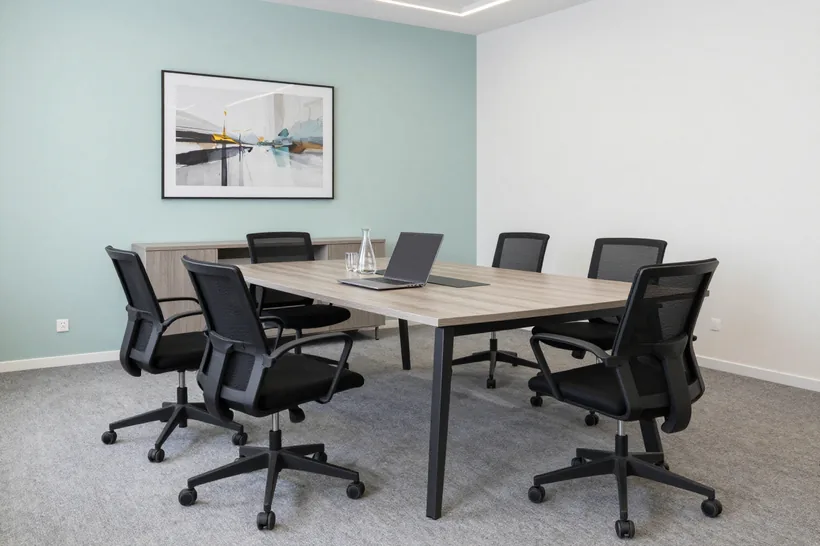
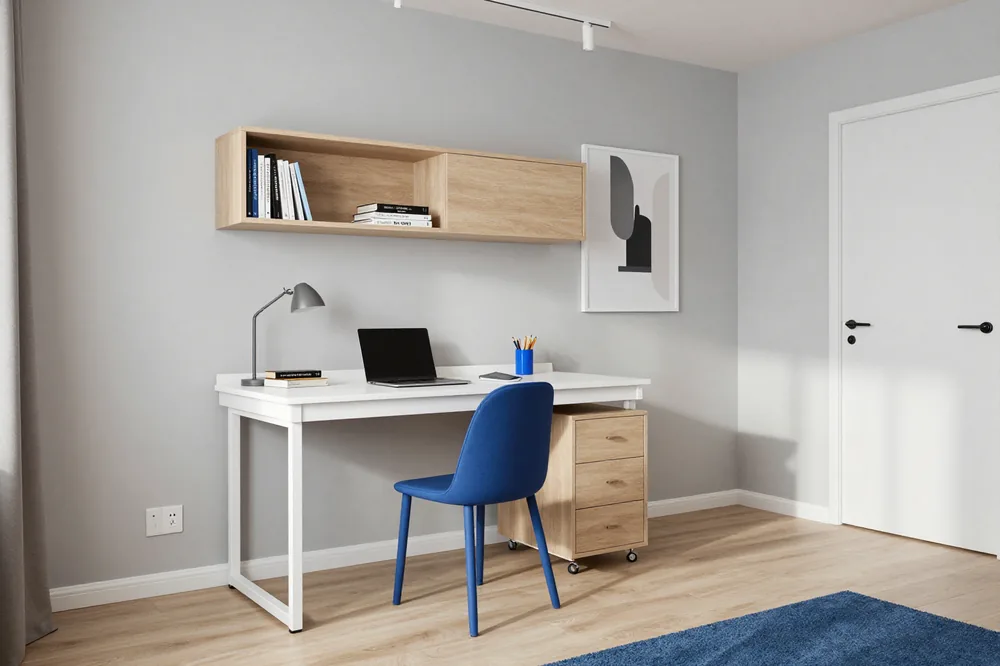
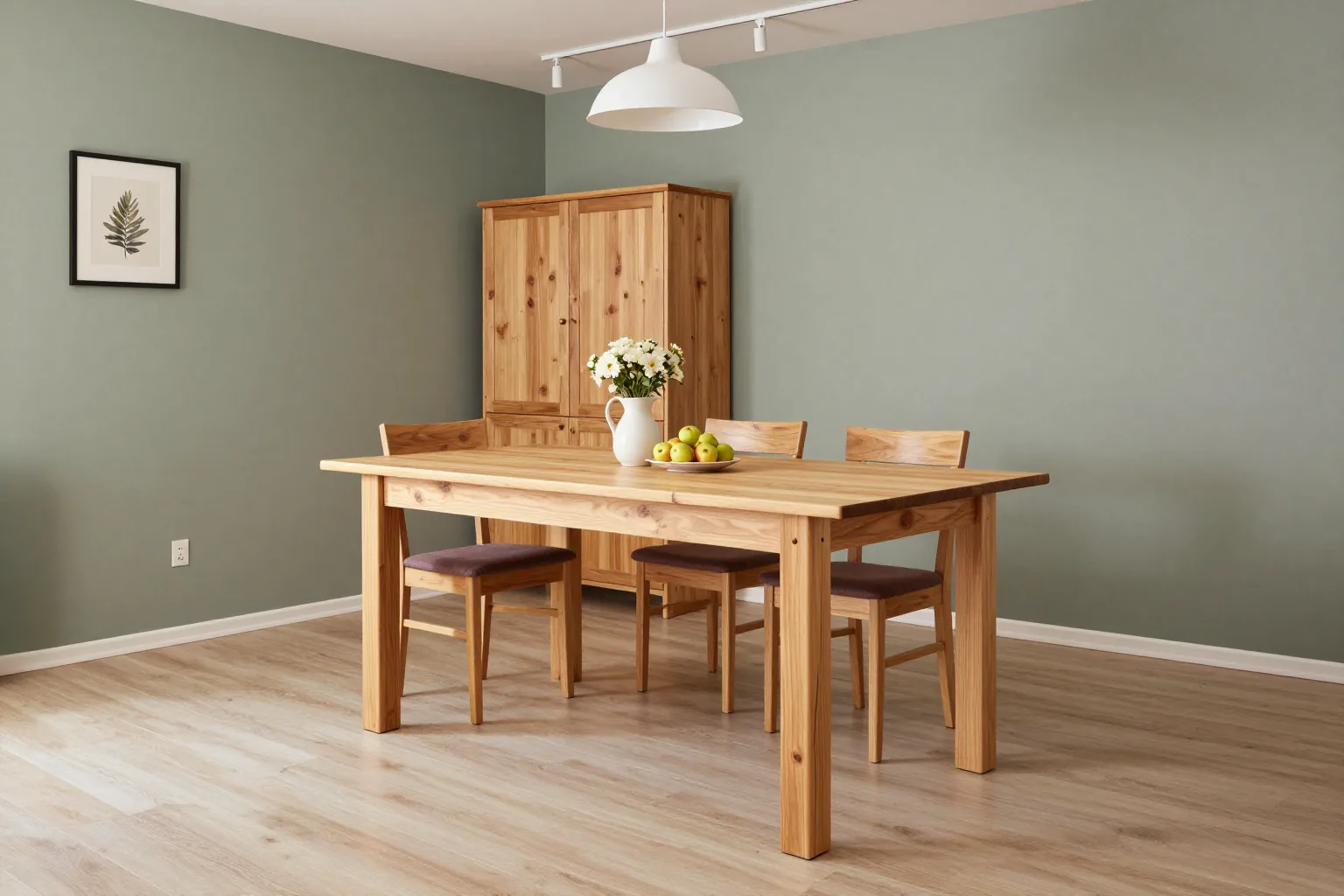
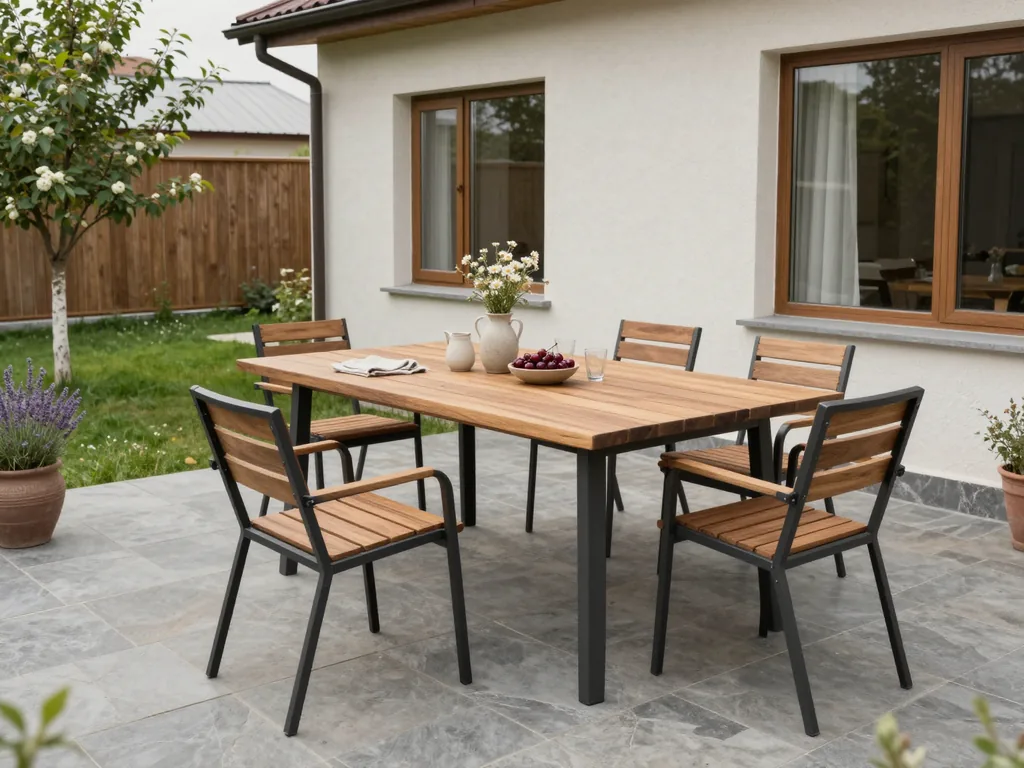
We make custom chipboard tables to the required size and depth, and strength comes from the countertop thickness and the support layout. This approach lets us build an item for a specific alcove rather than adapting a ready-made option. We use Egger or Kronospan board: 25–38 mm for the countertop and 16 mm for the carcass, with PVC or ABS edge banding around the entire perimeter. The geometry is set by the design, not by a warehouse standard: a dining version for six people and a desk for a laptop are built to the same scheme but with different shapes. Support matters more than the board brand — a span without support sags under elbows faster than the material itself wears out. That's why in the design we add an extra leg or rail in advance if the countertop length goes over one and a half metres.
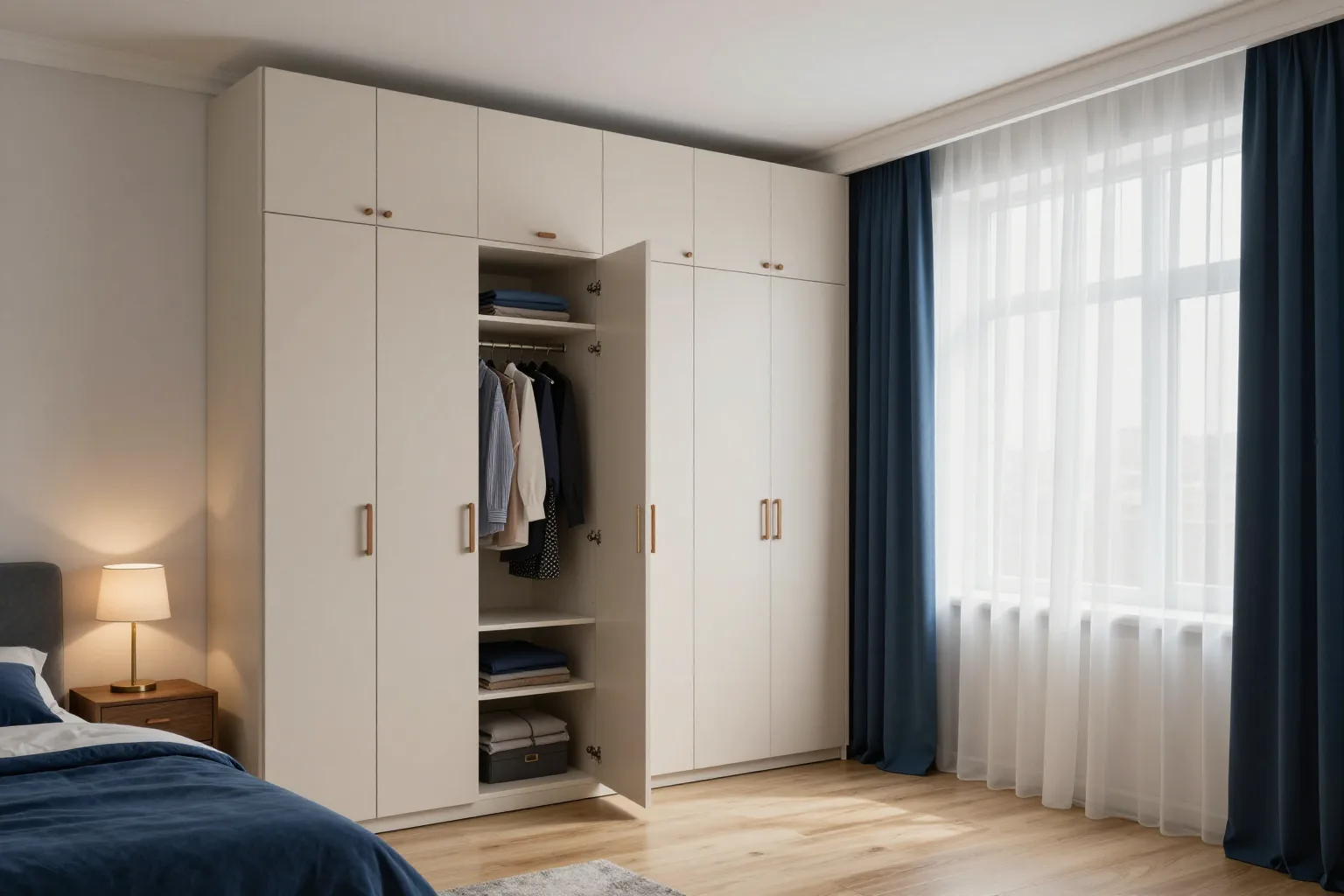
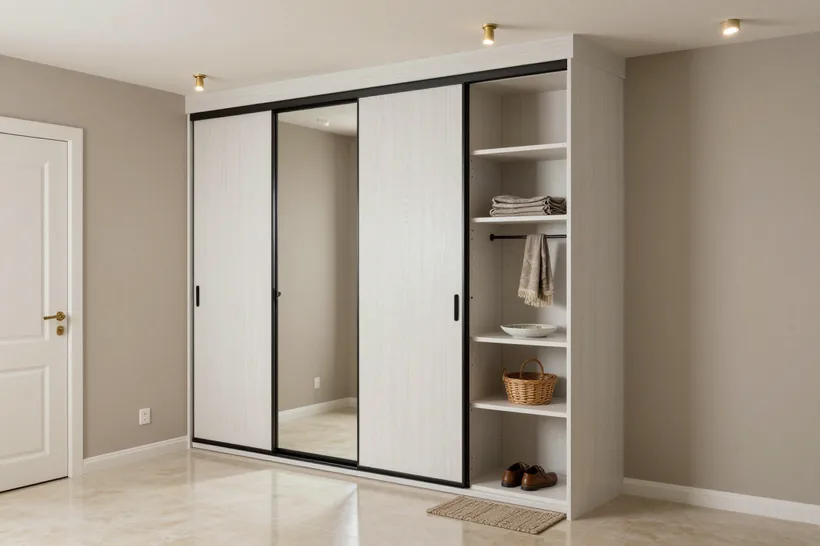
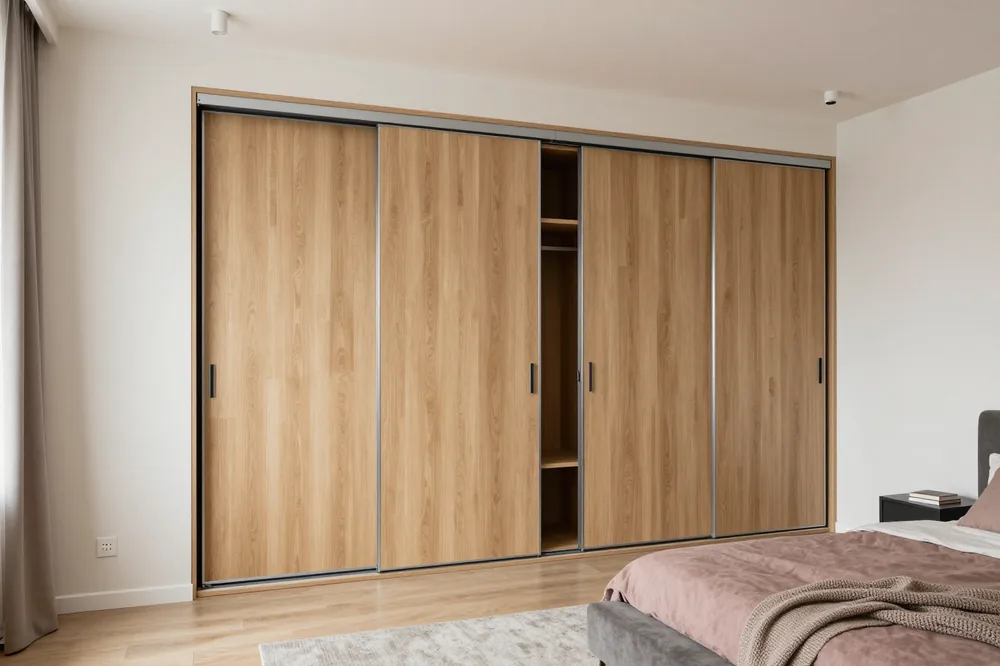
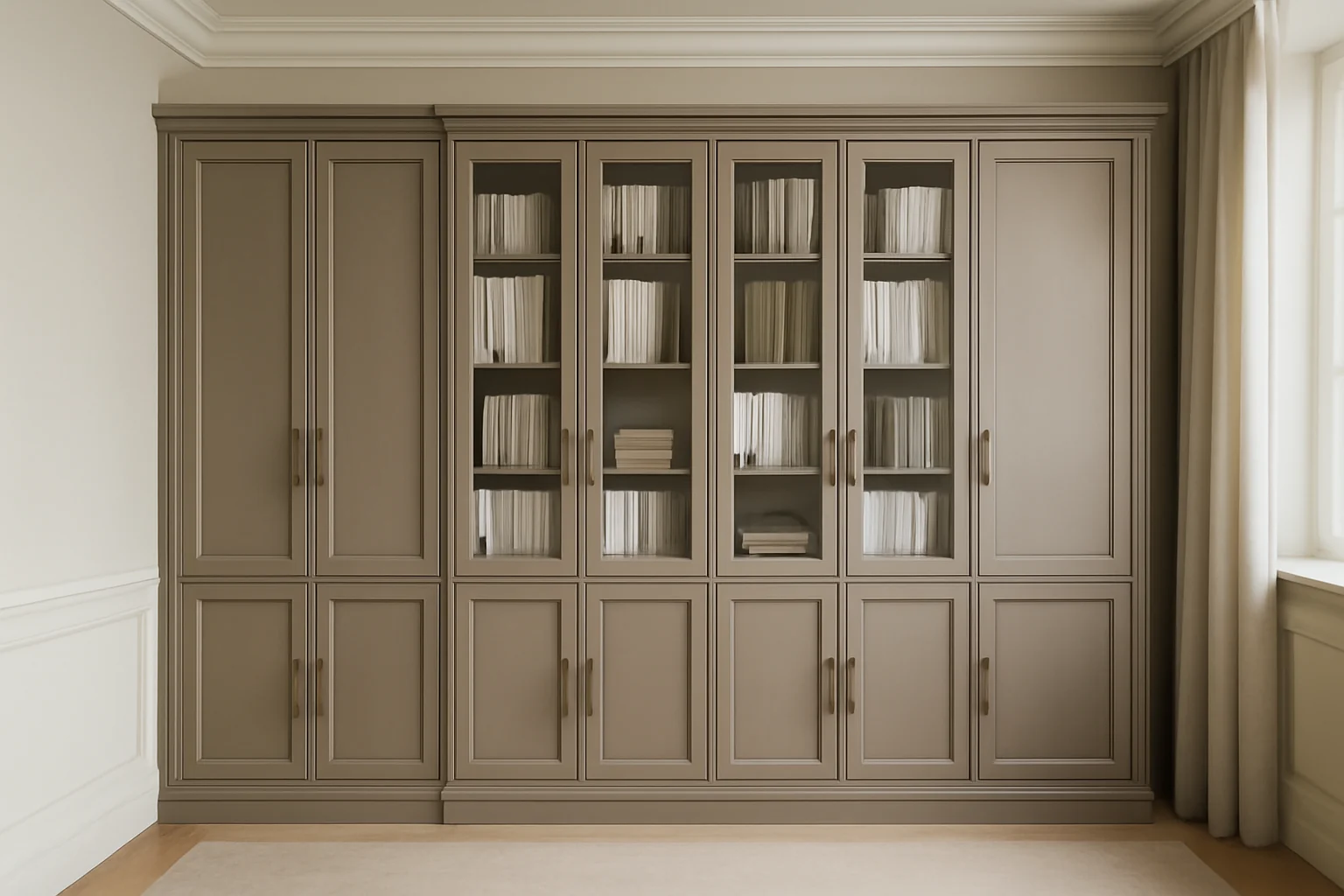
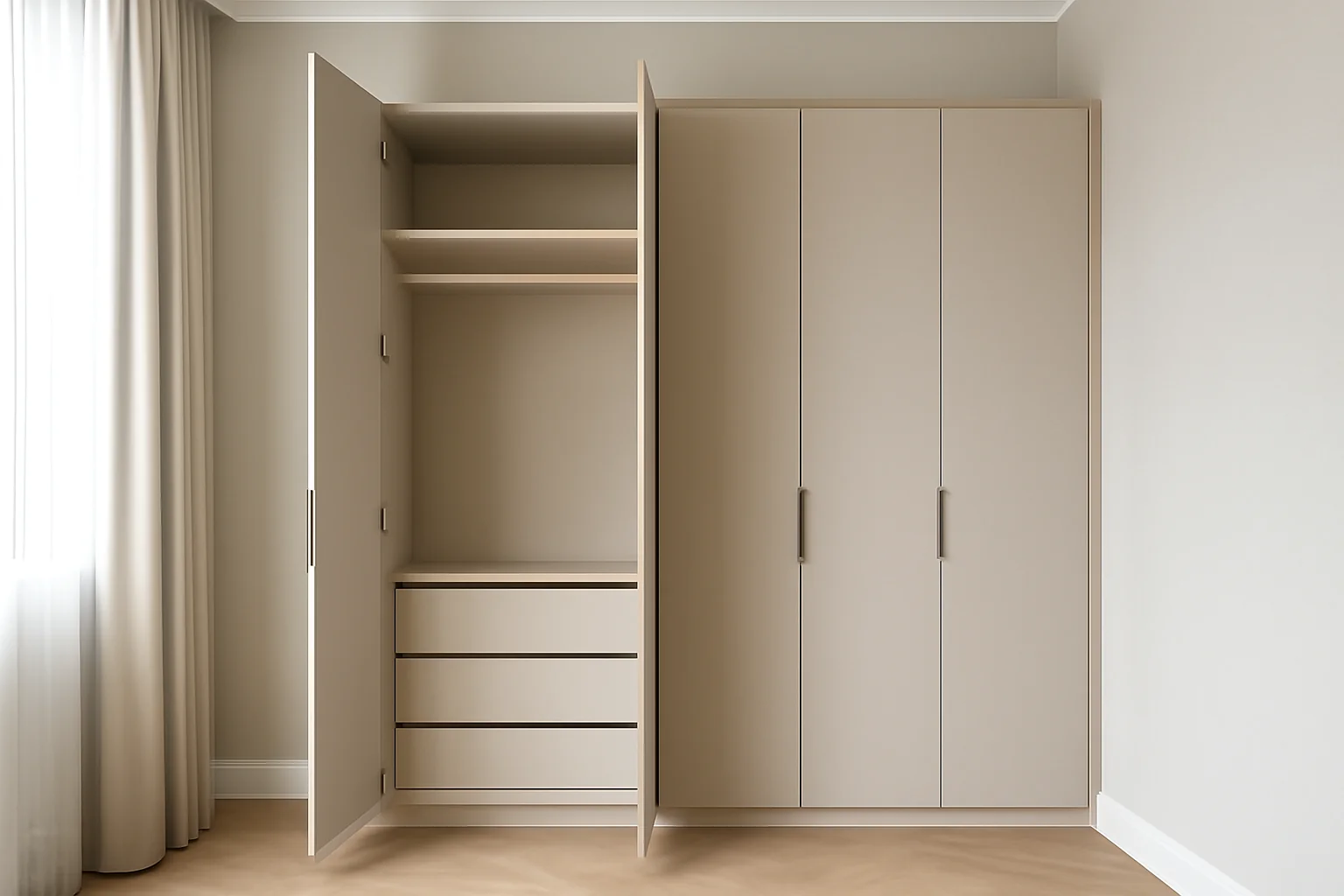
Chipboard or MDF wardrobe
wardrobe elements by material and purpose| Element | Material | Why |
|---|
| Carcass | Chipboard | holds its shape with flat parts |
|---|
| Flat front | Chipboard | even surface without milling |
|---|
| Textured front | MDF | the board holds milling and a raised panel |
|---|
| Back panel | HDF, chipboard | a light part with no load |
|---|
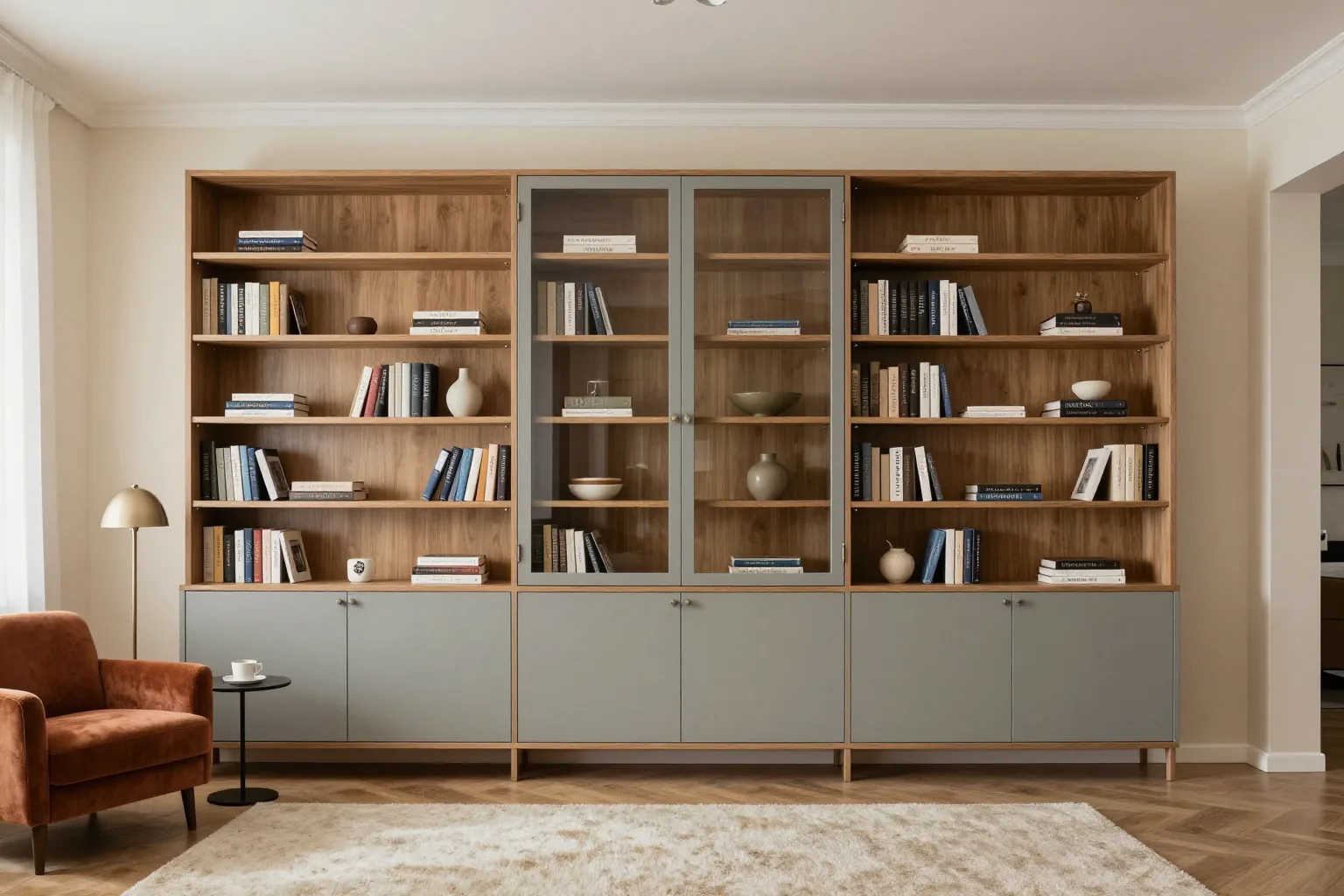
| Book shelves | Chipboard 16–25 mm | thickness calculated for the weight |
|---|
Custom chipboard kitchen and wet zone protection
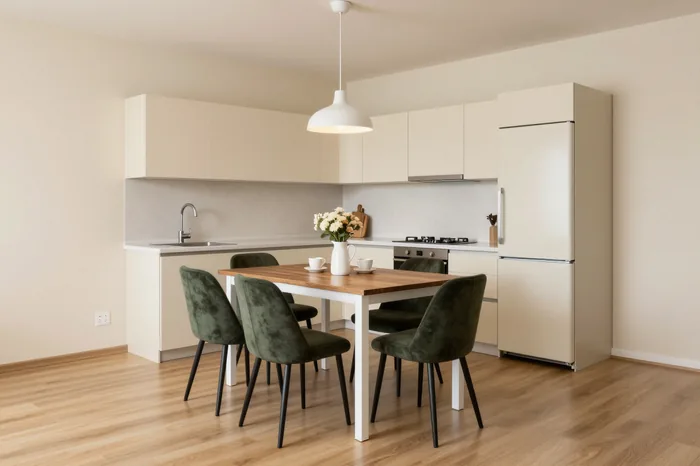
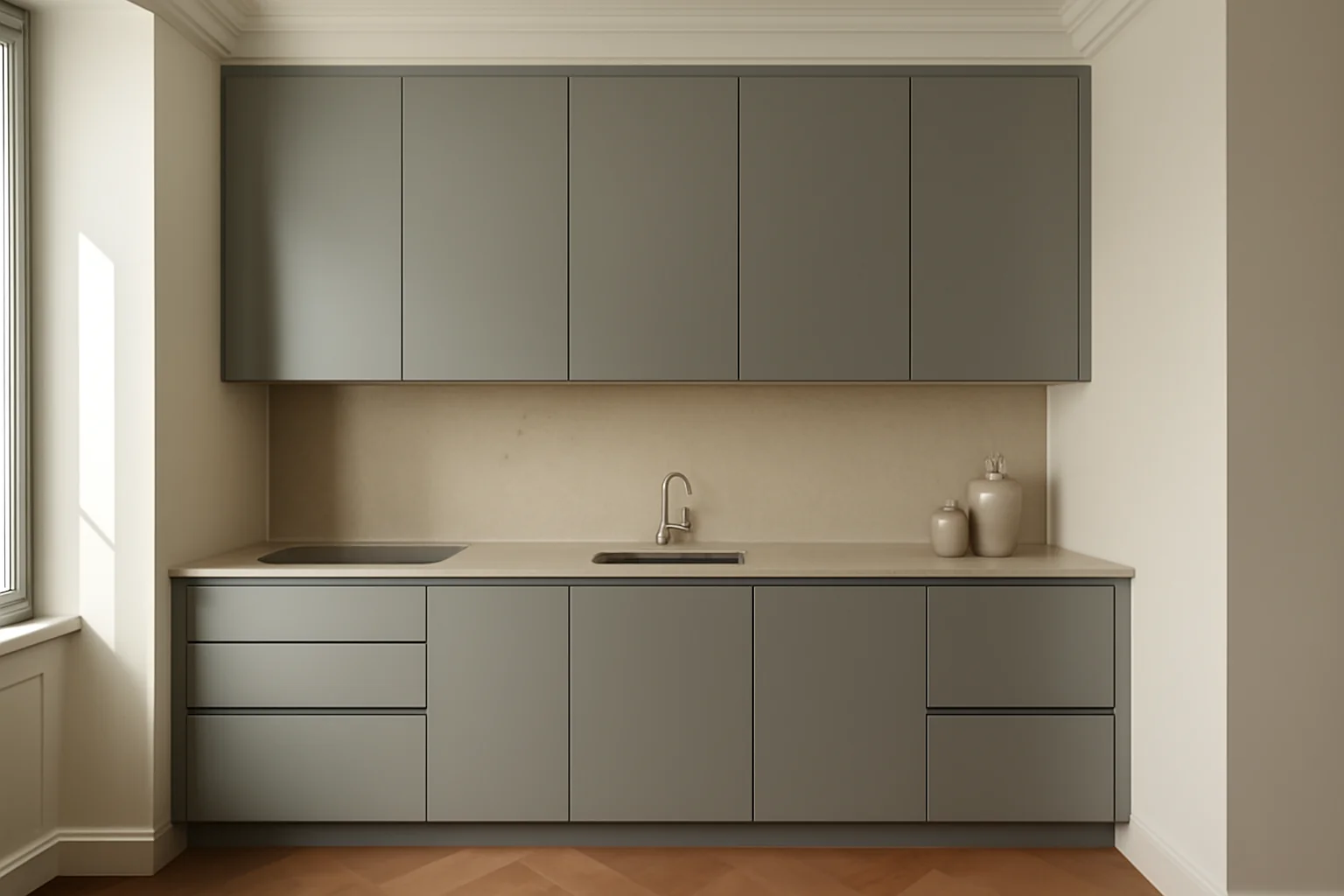
We make custom chipboard kitchens with moisture-resistant board and sealed edge banding in the sink area so the carcass doesn't swell. Over the years we've built 900+ kitchens and 800+ wardrobes, and in every one we design the wet zone separately: we reinforce the carcass under the sink, glue the joints, and seal the cut with edge banding along the entire perimeter. A moisture-resistant board is not just green chips in the cut, but also a well-thought-out scheme: plinth, sink screen, end protection. A kitchen lasts longer when the wet zone is separated from the carcass and built into the design, not when the board is simply called moisture-resistant. Before signing off on the design, check that there is reinforcement and a screen under the sink — that's cheaper than redoing it, and cheaper than replacing a swollen upright.
Ordering to your own dimensions and how the work with the workshop goes
We show the chain from measurement to installation by our own crews and explain which links tell a direct workshop from a middleman. We go through each stage in order so it's clear exactly where the decision on dimensions and material is made.
Can items be ordered to your own dimensions
We make custom chipboard items to individual dimensions, including non-standard depth for a niche and non-standard height. Every project starts with precise measurements, not a warehouse standard. Production begins with measuring: a technician records the opening's dimensions, protruding pipes and sockets, wall unevenness and gaps at the skirting. Then, based on this data, a 3D visualization is built that shows how the structure will fit into the niche and which way the doors will open. Measurement and the 3D design are free with us and take 1–2 days. It's easier to account for non-standard features at the measurement stage than to redo them during installation: the niche size and gaps at the skirting are recorded before the design, not after installation. Our approach is to first check whether the item will fit into the opening, and only then cut the board.
How to tell that a workshop makes furniture itself rather than reselling it
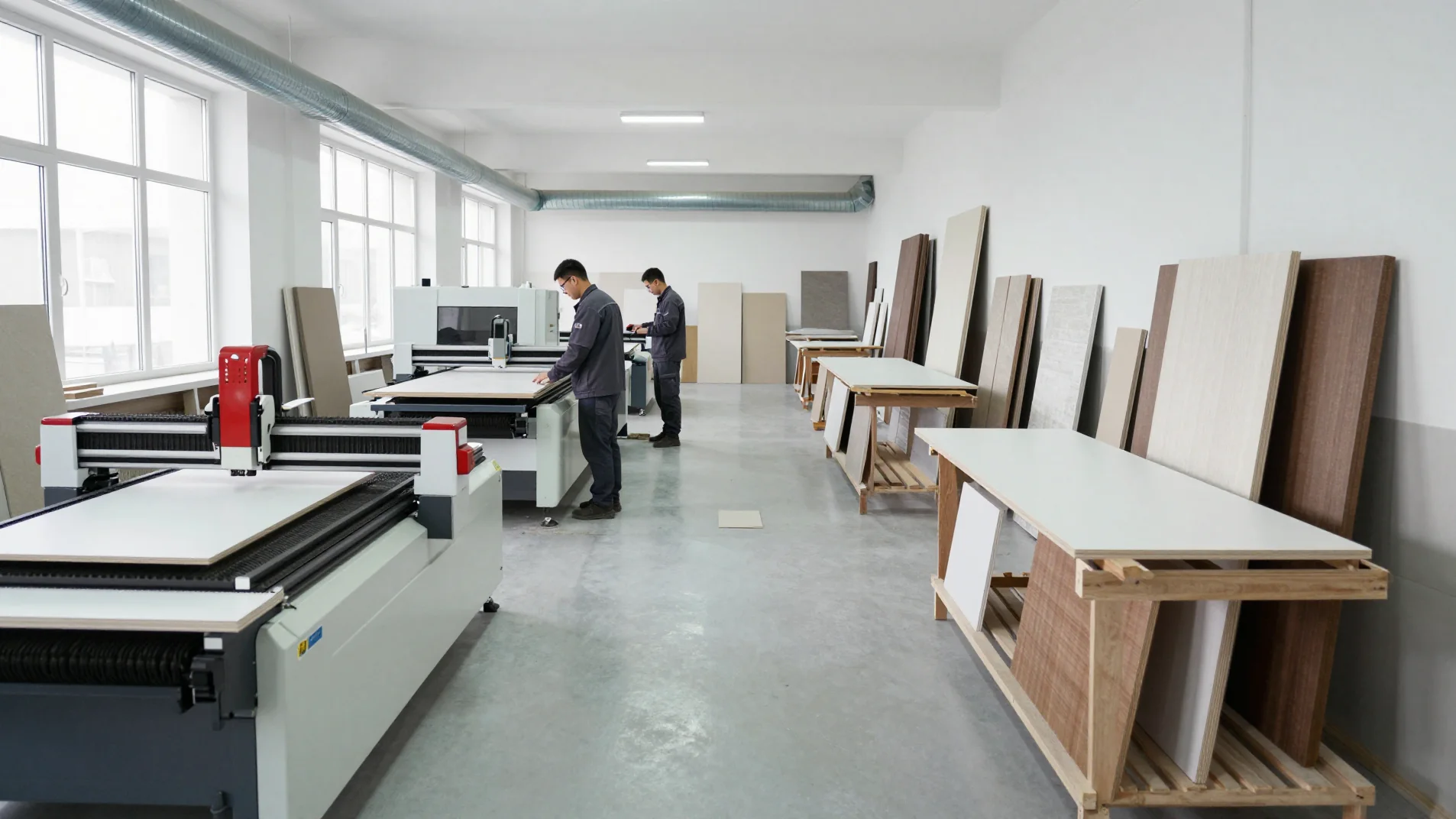
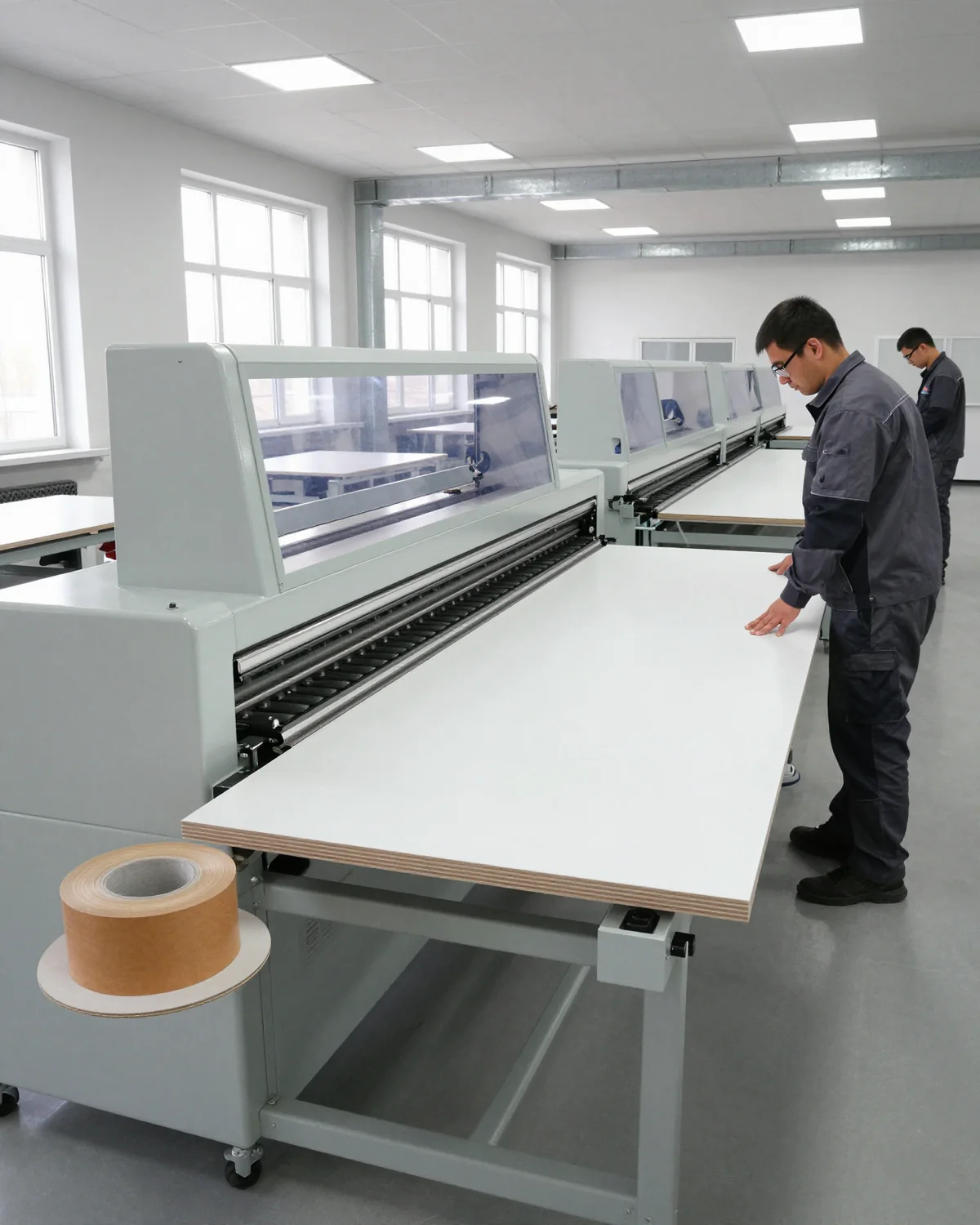
- Own facility: a 600 m² production site where cutting, edge banding, painting and control assembly are done, not an office with board samples.
- Showing the production: the customer can see how the board is cut and the edge is banded, not just the finished item in the showroom.
- Installation by own crews: installation is done by staff installers, not an outside team on a one-off contract.
- Acceptance act on site: the manufacturer takes responsibility for signing the acceptance act with the customer, rather than shifting acceptance onto the carrier.
- No reselling: MEBLIX does not resell finished items but produces them itself for a specific project.
What measurement and the 3D design include and how quality is checked before delivery
Measurement and the 3D design are free with us and take 1–2 days, and before dispatch the item goes through control assembly at the production site. On the visit, the technician records the opening's dimensions, checks the wall geometry and notes the connection points, after which a visualization is built from the measurements with dimensions, section layout and door opening direction. Approval happens before work starts: changes are made on the drawing, not after cutting. Control assembly reveals what isn't visible on the drawing — gaps, door movement, the edge joint. Fixing such a defect in the workshop is cheaper than on site, where the part is already installed and adjusted in place. Before acceptance, check that the doors move smoothly and the edge fits tightly — these parameters are visible right away, without tools.
Order terms, warranty and acceptance
Payment, sign-off and warranty at our workshop are set out in the contract: the deposit is paid when you place the order, the balance after installation and signing of the acceptance certificate, and the item and the hardware carry different warranty periods. Below is how this works in practice.
How payment and sign-off work
- 50% deposit: paid when you place the order; it is what lets us start cutting Egger or Kronospan board and purchasing hardware.
- 50% balance: paid after signing the acceptance certificate, which we draw up after installation, not after dispatch from the warehouse.
- Bank transfer: we work by bank transfer, so the payment goes through an invoice and there is a document for every part of the sum.
- Checking on site: at sign-off, look at the edge banding, the gaps and how the Blum drawers run — all of this is only visible on the assembled item.
What warranty applies to the item and to the hardware
We give a 24-month warranty on the item under the contract, and Blum hardware carries the manufacturer's 25-year warranty. These are two separate commitments: the first period covers the carcass, edge banding and assembly, the second covers hinges, lift mechanisms and drawer runners, which Blum makes itself. We get Egger and Kronospan boards from suppliers, and we fit Hettich and Boyard hardware on those positions where it suits the load, but the 25-year period applies to Blum only. That is why what matters in the contract is not a general word like "warranty" but a line-by-line breakdown: what the 24 months cover and what runs on a separate manufacturer's period. In our workshop experience, it is the mechanisms rather than the board that last longest — a laminated chipboard carcass, used with care, comfortably outlives the warranty period, while cheap hinges fail sooner. The contract states who replaces hardware under the manufacturer's warranty — the workshop or the supplier.
What to do if an edge defect is found after installation
- Record the defect: photograph the area and note it in the acceptance certificate before signing — that way the defect goes into the document.
- Don't touch the cut: don't glue the edge banding back yourself or paint over the end, otherwise a warranty case is harder to prove.
- Contact the workshop: describe the item and the area, and we will arrange a team visit and fix the defect under warranty.
- Wait for the fix: an open end absorbs moisture and the board swells faster than you would think, so don't put off getting in touch.
The bottom line on particle board furniture
We have gathered the essentials that determine the result when ordering cabinet furniture from particle boards — from choosing the material to signing off the finished item.
- Material: chipboard and laminated chipboard are a workable option for cabinet items, and the difference between them is the laminate layer that protects the board from moisture and mechanical damage.
- Durability: service life is determined by the edge banding and hardware, not just the board itself, so saving on these two elements shortens the life of the item fastest.
- Thickness: board for the worktop and carcass is chosen by load, not by habit — load-bearing parts need a bigger strength margin than shelves and fronts.
- Size: non-standard dimensions are set at the measurement stage, because once the board is cut you can no longer correct the geometry without redoing the parts.
- The chain: a direct workshop shows the whole path from sketch to installation and takes responsibility for signing the acceptance certificate after fitting.