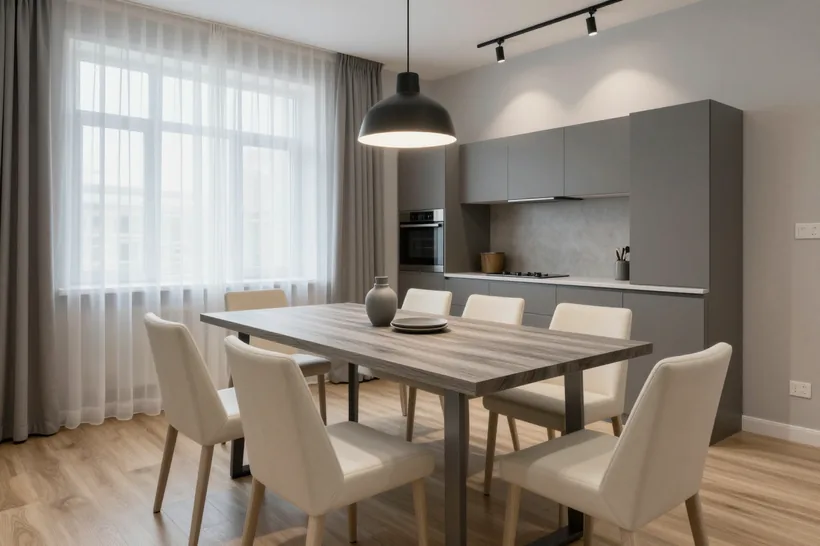
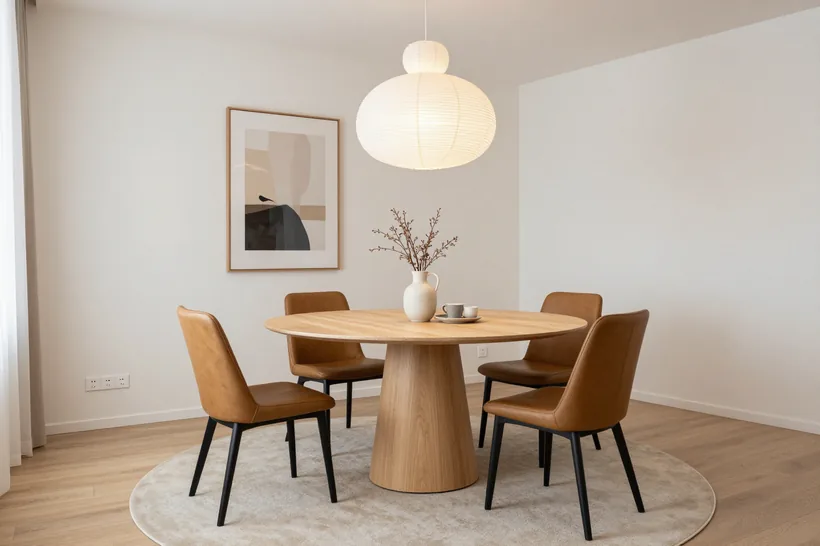
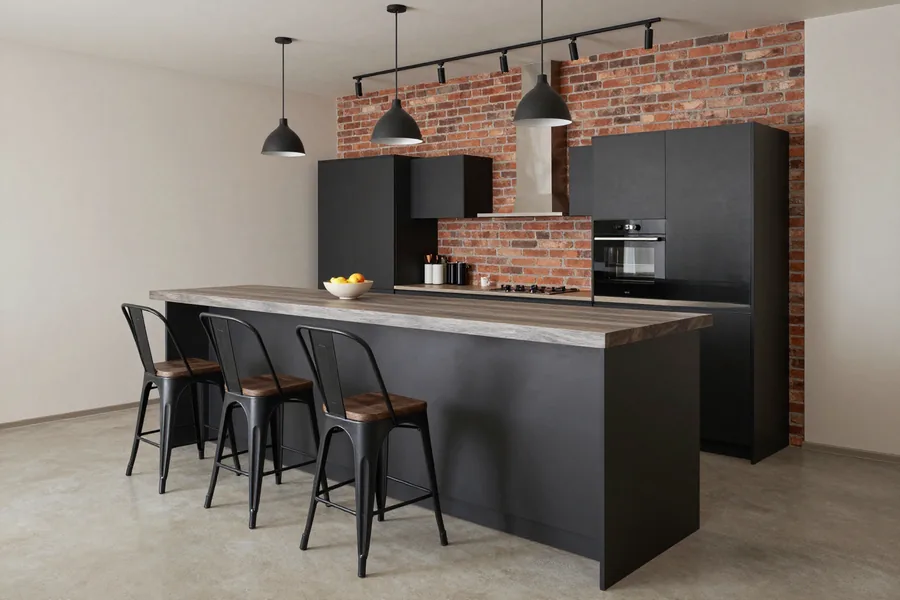
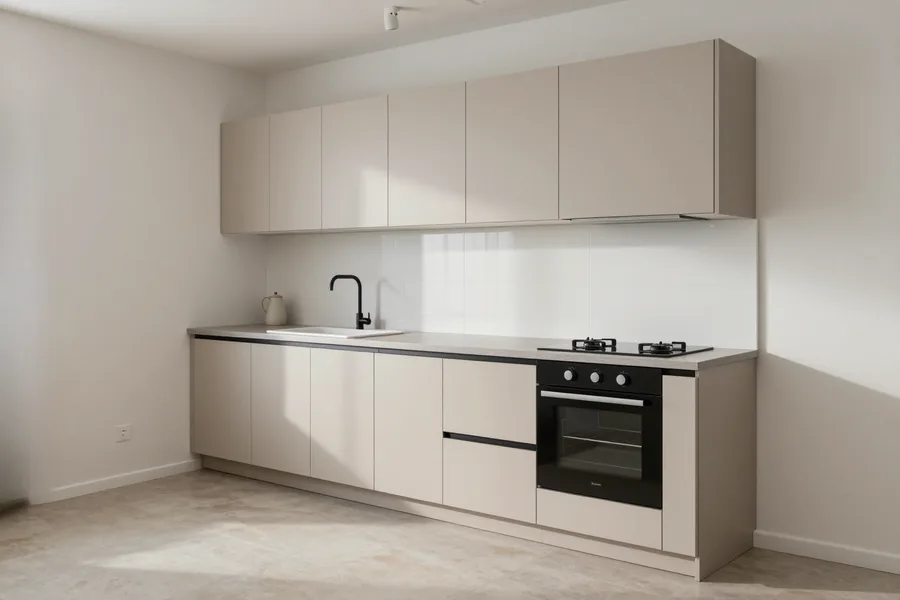
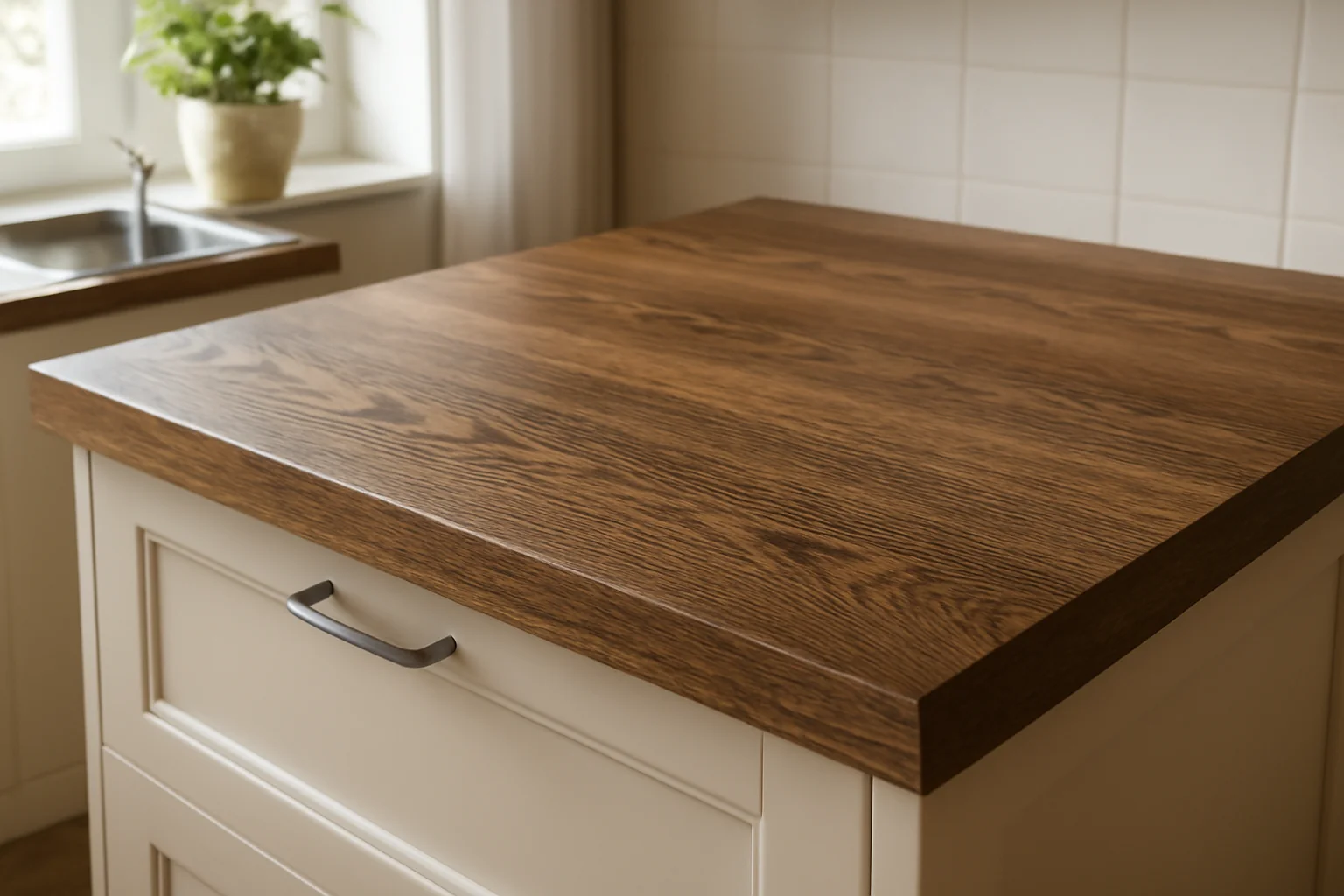
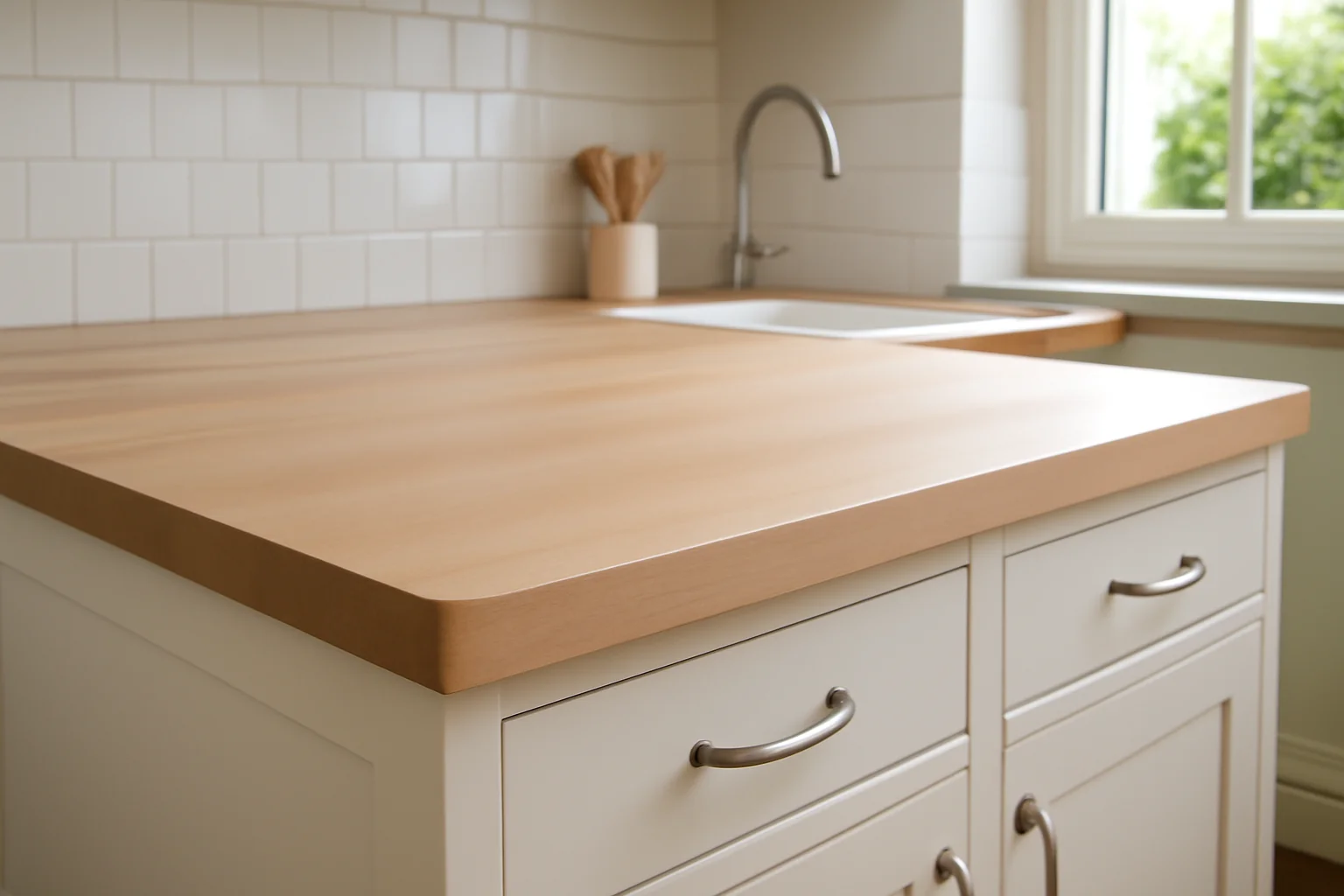
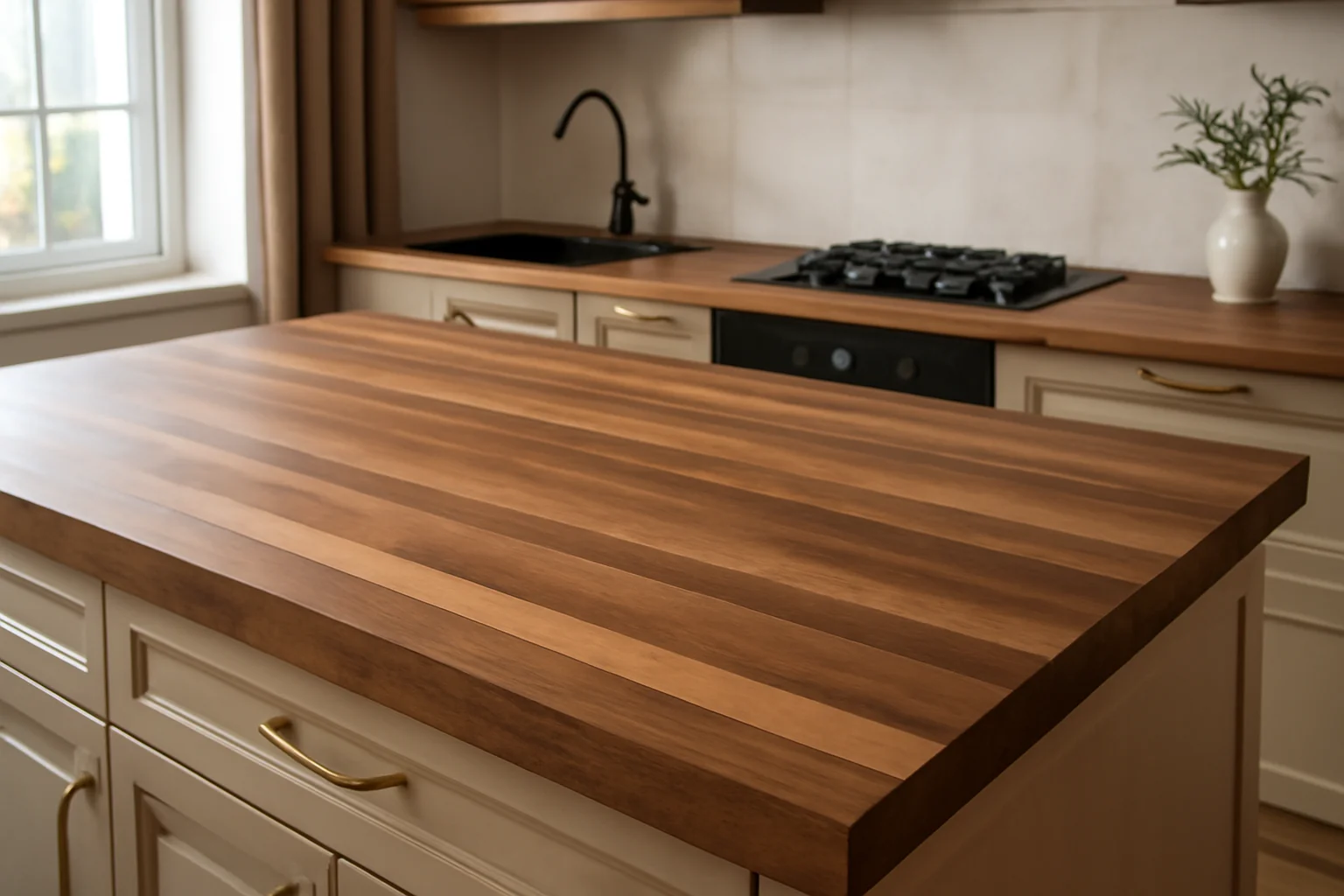
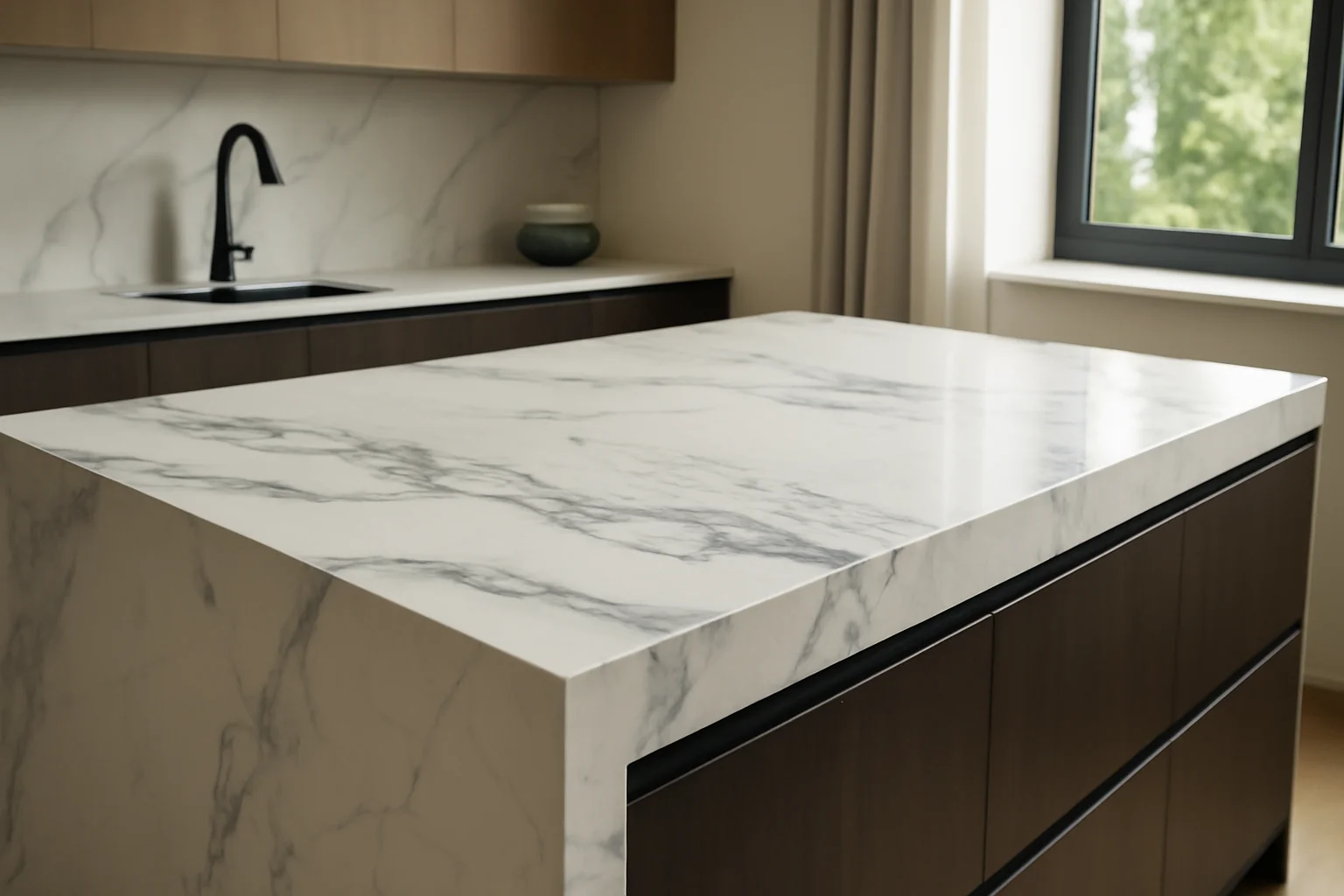
MEBLIX makes ash countertops to the size of your kitchen: measurement, 3D design in 1–2 days, production in our own 600 m² workshop in Almaty, and installation by our own crews. We work with solid ash, make cutouts for the sink and hob, and reinforce long spans against sagging. The item comes with a 24-month warranty under the contract.
A buyer reads “ash” in the listing and expects wood, but gets a board with a film. For a kitchen these are fundamentally different things: one surface can be sanded and lasts for decades, the other is replaced entirely after a chip.
How solid ash differs from “ash anchor” laminated chipboard
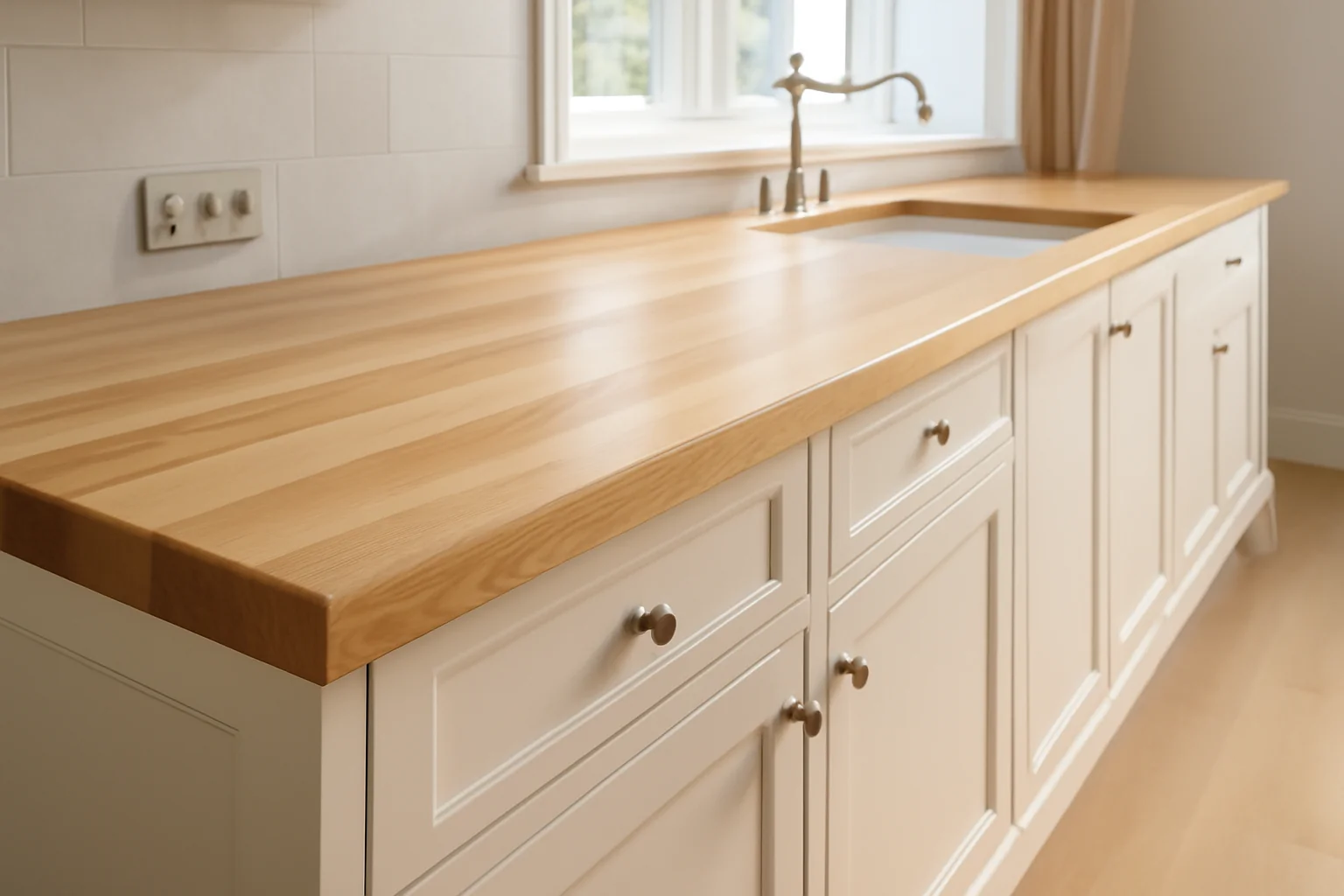
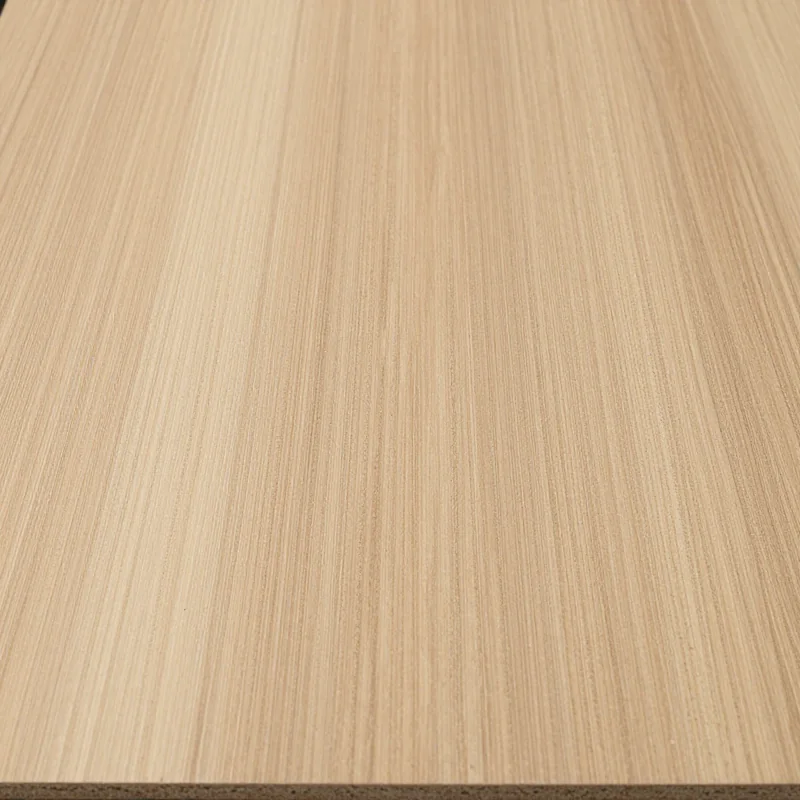
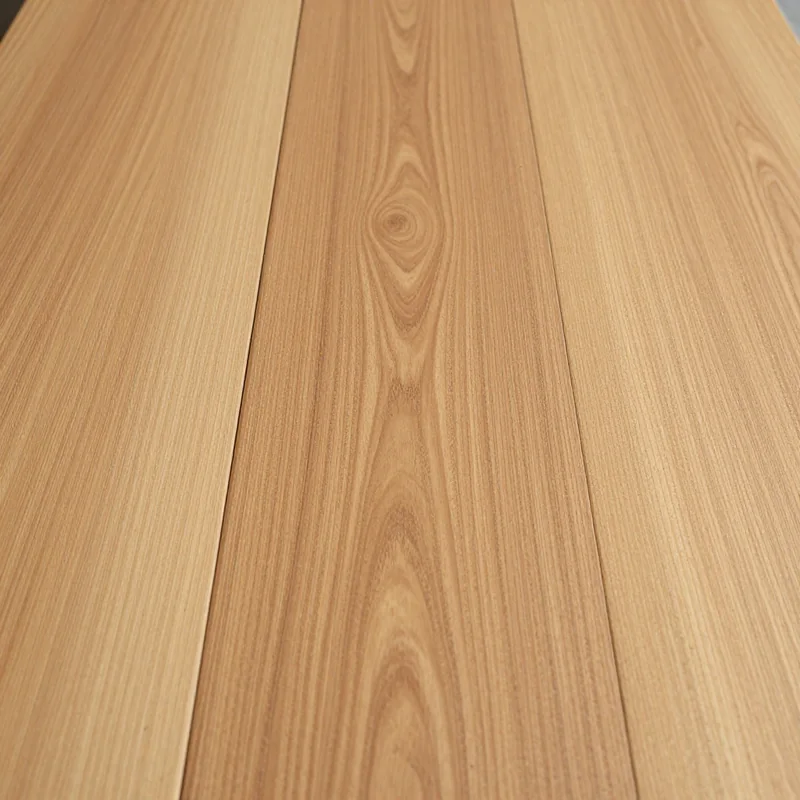
Solid ash is whole wood, while “ash anchor” on a marketplace is a decorative laminate on a board that only imitates the grain. A real panel is assembled from lamellas glued lengthwise, and the grain pattern of each blank is unique — no two are alike. The decorative layer repeats the same print on hundreds of sheets, and on the edge you see a thin film over chipboard rather than a cut of wood. To the touch, an ash board is cooler and rougher than laminate, and when touched with a fingernail it gives a dull response instead of a ringing one. The edge of solid wood shows real fibers, and it can be sanded and re-oiled years later. On the cut and on the edge, solid wood shows real fibers and can be sanded and refreshed, while laminate cannot be restored after a chip.
Ash or oak for a countertop
Ash is lighter and its pattern is larger and more contrasting; oak is darker and feels denser, but for a work surface under oil both behave predictably with the right construction. An ash lamella gives a wide range of grain — from almost white to smoky — and under clear oil this variation reads as a living pattern. Oak shows a more even, calm texture with fine pores, and dark pigment goes on it more evenly, without contrasting bursts. In hardness both species are similar, so the choice is more about the aesthetics of the fronts and the overall tone of the kitchen than about wear. If the interior is light and you want an expressive pattern, choose ash; if you need a calm dark tone, look toward oak.
What to combine an ash countertop with in the kitchen
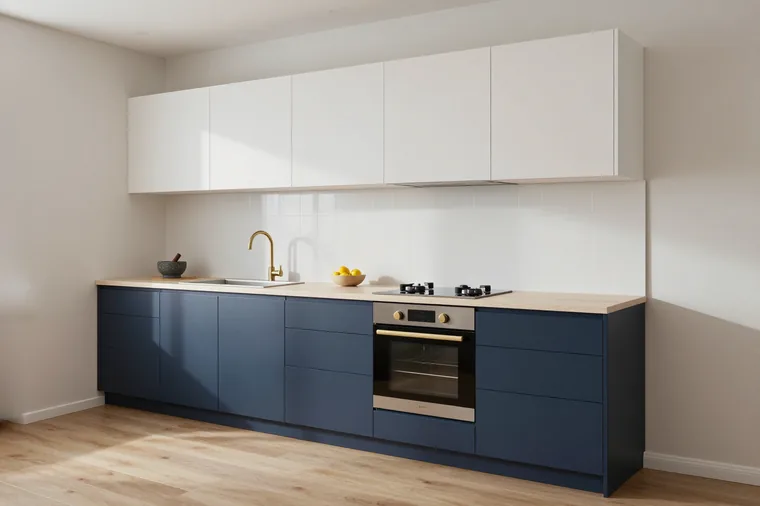
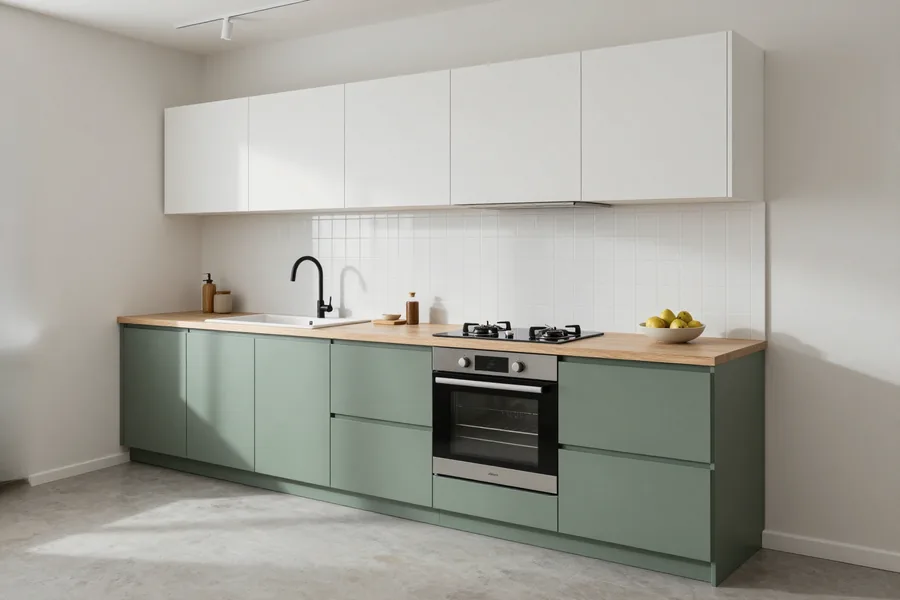
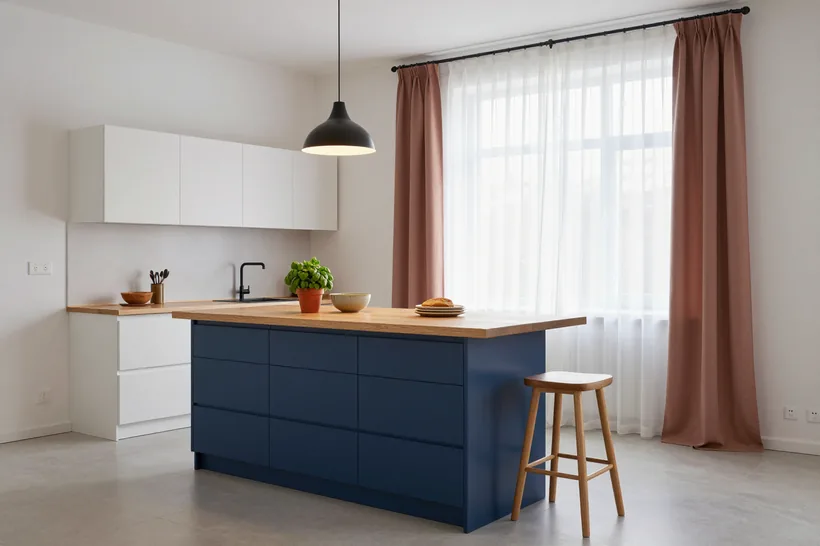
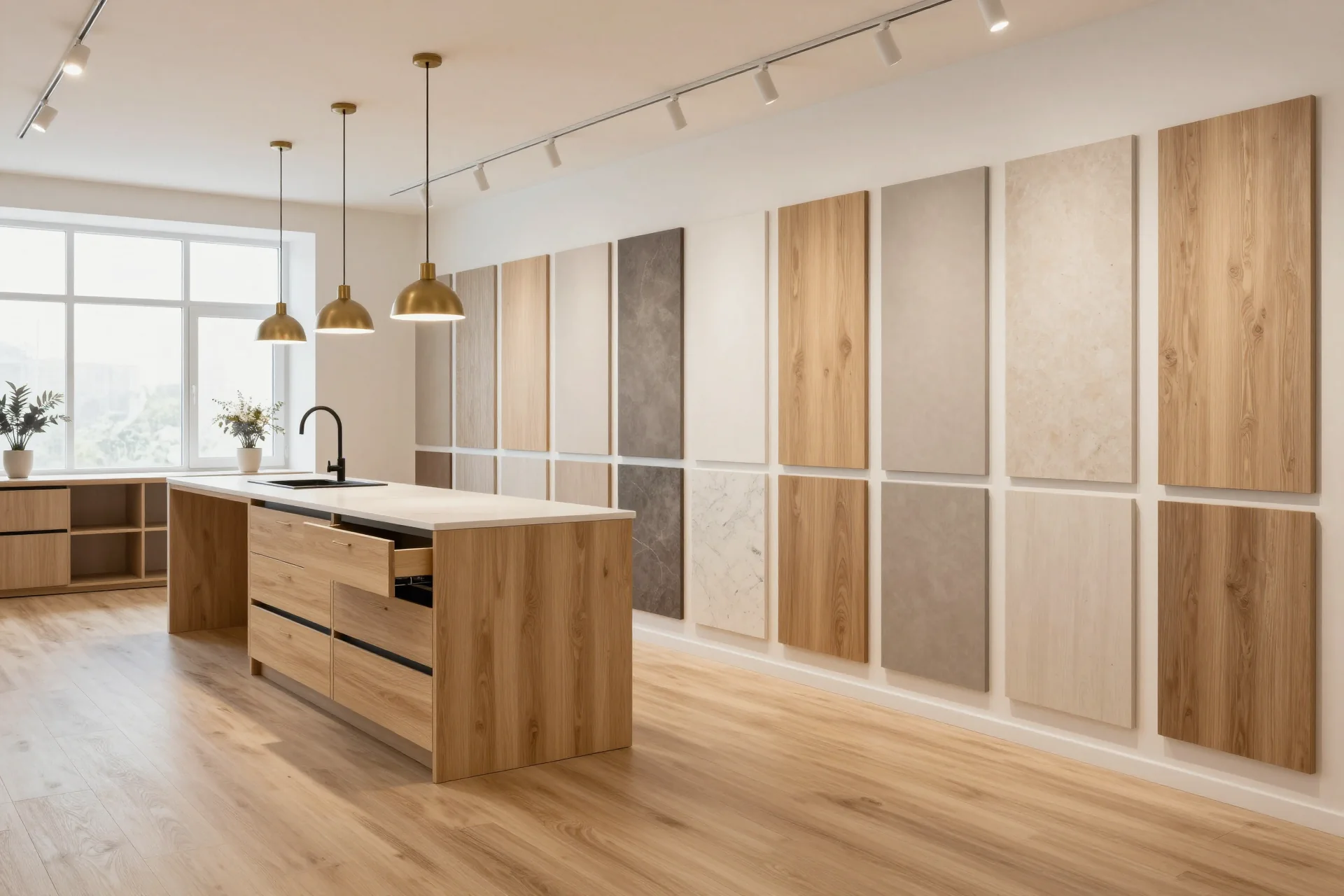
We often pair an ash work surface with fronts made of Egger or Kronospan laminated chipboard — warm wood next to a matte board looks cohesive if the tone is matched. Egger collections include cool grays and warm beiges, Kronospan has deep graphite and walnut; warm neutral shades are closest to ash under clear oil, while graphite and mocha suit ash under dark pigment. Light oil visually expands a small kitchen, dark oil accents the work area; it is best to choose the shade from a sample during measurement, not from a photo. We agree on the oil shade and the combination with the board during measurement and in the 3D design so you see the solid wood next to the fronts before cutting.
What construction keeps an ash countertop from sagging and swelling
The main fears of a buyer are sagging on a long work surface and swelling near the sink. We explain how both risks are eliminated at the manufacturing stage, before cutting and gluing.
Finger-jointed panel or solid wood
For the worktop we use glued ash panels — the lamellas are matched by grain and glued so that the internal stress of the wood is distributed evenly. We alternate the grain direction in adjacent lamellas: this dampens movement when humidity changes in the apartment. Solid wood gives a wide board without joints, but it is precisely on large surfaces that it reacts more strongly to seasonal fluctuations. We assemble the panel from lamellas of the same species and the same moisture content, so after installation the surface behaves predictably. Solid wood looks better in photos but "moves" more when humidity changes; the glued panel is more stable and less prone to warping over its length. An item made of solid ash requires selecting lamellas by grain — this affects not only the appearance but also how the surface will survive the heating season. The price depends on the species and thickness of the panel, as well as on the method of gluing the lamellas.
Thickness and reinforcement against sagging
On spans over two meters we reinforce the worktop with a hidden profile and plan the attachment points to the cabinets so that it does not flex under load. We glue the profile into the body of the panel from the underside — it is invisible and does not interfere with cutouts for the sink. We distribute the support points along the length so that the middle of the span is not left unsupported. Thickness alone does not prevent sagging — the rigidity of the base and how the item is secured matter more; fastening with compensation for movement prevents the solid wood from cracking when the season changes. That is why in the project we specify both the spacing of supports and the type of fasteners, not just the board cross-section. Sagging occurs where a long board is placed on two end supports and the middle is left hanging.
End-grain protection at the sink and a gap at the wall
We treat the end grain at the sink with oil or lacquer in several coats, and leave an expansion gap between the ash surface and the wall — this way the solid wood does not swell from steam and does not press against the wall when it moves. We impregnate the open cut at the sink cutout especially thoroughly: that is where moisture finds its way in fastest. We cover the gap at the wall with a decorative plinth that does not fasten the board tightly and leaves it room to move. Water destroys wood not through the surface but through the open end grain; if the end grain is sealed and there is a gap, the item withstands the wet zone of the kitchen calmly. Items suffer most often where the end grain at the sink was left without impregnation and the board was screwed to the wall without a gap.
How we make an ash worktop for your kitchen
Measurement, appliance template and cutting in the workshop turn a standard panel into a finished worktop that fits your kitchen without on-site trimming, with all cutouts and clearances.
Cutouts for the sink and hob without gaps
We make the cutout for the sink and hob using a template of the actual appliance, and we seal the edge of the cutout so that water does not seep under the solid wood. We make the cutout according to the actual dimensions of your sink and hob, not the nominal ones: the same model often has a rim several millimeters wider than stated, and that is enough for a gap to appear around the perimeter. We glue and impregnate the edge of the cutout with the same protective compound as the end grain — this is the most vulnerable spot in solid ash, where water stands most often. We drill the hole for the faucet after the project is approved so as not to hit the reinforcement and weaken the span above the sink. A gap around the sink appears not from poor workmanship but from a cutout made "by eye"; a template based on the actual appliance and edge treatment remove this risk.
Clearances for pipes, uneven walls and non-standard depth
We fit ash items on site — we work around pipes, follow the line of a curved wall, and make a non-standard depth if the standard 60 cm does not fit your kitchen. During the measurement we record the variation along the wall: over two metres the line can shift by a centimetre or more, and a wall strip does not cover such a wedge. We take these sections into the cutting plan — the cut-out for pipes is made along the contour with an allowance for the sleeve, and the depth is calculated from the actual niche, not from a standard size. It is easier to account for wall curvature during the measurement and build it into the cutting plan than to trim a finished item during installation — trimming exposes the end grain and damages the protection. If the wall runs in waves, we measure it along its length during the measurement and build the junction line from the actual shape. This way the fit follows the real wall contour rather than an average size, and the wall strip then sits without wedges.
Ash countertop options
solid ash countertop options by construction and finish| Parameter | Finger-jointed panel | Solid wood | Reinforced panel |
|---|
| Construction | Lengthwise lamellas | Single solid piece | Lamellas plus insert |
|---|
| Edge | Straight | Bevel | Profile |
|---|
| Coating | Oil | Lacquer | Oil with refresh |
|---|
| Sink cut-out | Yes | Yes | Yes |
|---|
| Long span | Basic | Limited | Recommended |
|---|
Coating and care for an ash countertop
The finish determines how ash behaves a year later: oil gives a warm matte texture, lacquer gives a dense film. Below we cover both options and how to maintain the wood tone.
How we coat an ash work surface
We coat ash items with oil or lacquer — an oil composition gives a natural matte texture and is easy to refresh, while lacquer holds moisture more tightly and needs less frequent care. The impregnation soaks into the fibres and does not form a film, so small scratches are less noticeable on it and the tone stays even. A lacquer finish sits on top as a protective layer and holds water better near the sink, where wood gets wet most often. Impregnation can be sanded and re-oiled locally, while with a deep chip in a lacquer coating the area is recoated. Near the sink people more often choose lacquer, while on the island and dining area — oil: it is easier to refresh the wood without dismantling the kitchen. If the surface is the same along its whole length, we suggest a compromise — oil with a reinforced top layer at the work area and standard impregnation on the rest of the surface. The final price of an ash countertop depends on the area and the chosen finish — see the figures in the price list on this page.
How to care for ash so it does not darken
- Wipe dry: after washing dishes, remove moisture from the surface and do not leave puddles overnight.
- Do not place hot items: use a trivet under hot dishes so the impregnation does not scorch in a spot.
- Refresh the oil: a thin layer every few months restores an even tone and seals micro-pores.
- Sand locally: small scratches are removed with fine sanding and re-oiling; the whole surface does not need recoating.
- Protect from sun: direct rays speed up darkening; curtains or blinds help preserve the shade.
- Wash with a soft sponge: a neutral product and warm water preserve the protective layer, while abrasives wear it away.
Refinishing the surface over the years
An ash solid wood top can be sanded and refinished with oil or lacquer years later — wood allows you to remove the old finish and bring back a fresh look. The thickness of the panel can take it: sanding removes a thin layer of wood rather than wearing down to a thin layer as with veneer. With an oil finish, refinishing is done right in the kitchen — a thin coat is applied to a clean, dry surface and rubbed in, while lacquer requires sanding and recoating a section or the entire surface. Refinishing is not done "when things get really bad" but as wear occurs — the sooner the coating is refreshed, the less sanding is needed and the longer the surface itself lasts. At MEBLIX we recommend inspecting the wood near the sink and hob once a season — that is where the coating wears out first.
How to order an ash countertop in Almaty
Ordering directly from the manufacturer runs from the measurement request to signing the acceptance certificate after installation. Below is what happens at each step and which decisions are made before cutting.
Measurement, 3D design and approval
We come for a free measurement, take the kitchen dimensions taking pipes and uneven walls into account, and prepare a 3D design in 1–2 days so you can see the future item before it is made. On site, the technician records not only the length and depth but also how the wall runs, where the utilities come out, and at what height the windowsill sits. This data is built into the cutting plan right away: the sink cutout and pipe cutout are designed to actual coordinates, not a standard drawing. The 3D design shows the alignment with the fronts, the overhang above the carcass and the joint with the backsplash — approval is based on the volume, not a sketch on paper. A measurement reveals what a photo cannot — where the pipe runs, how far the wall has shifted; this data is built into the cutting plan rather than corrected during installation.
Manufacturing in the workshop and installation by our own crews
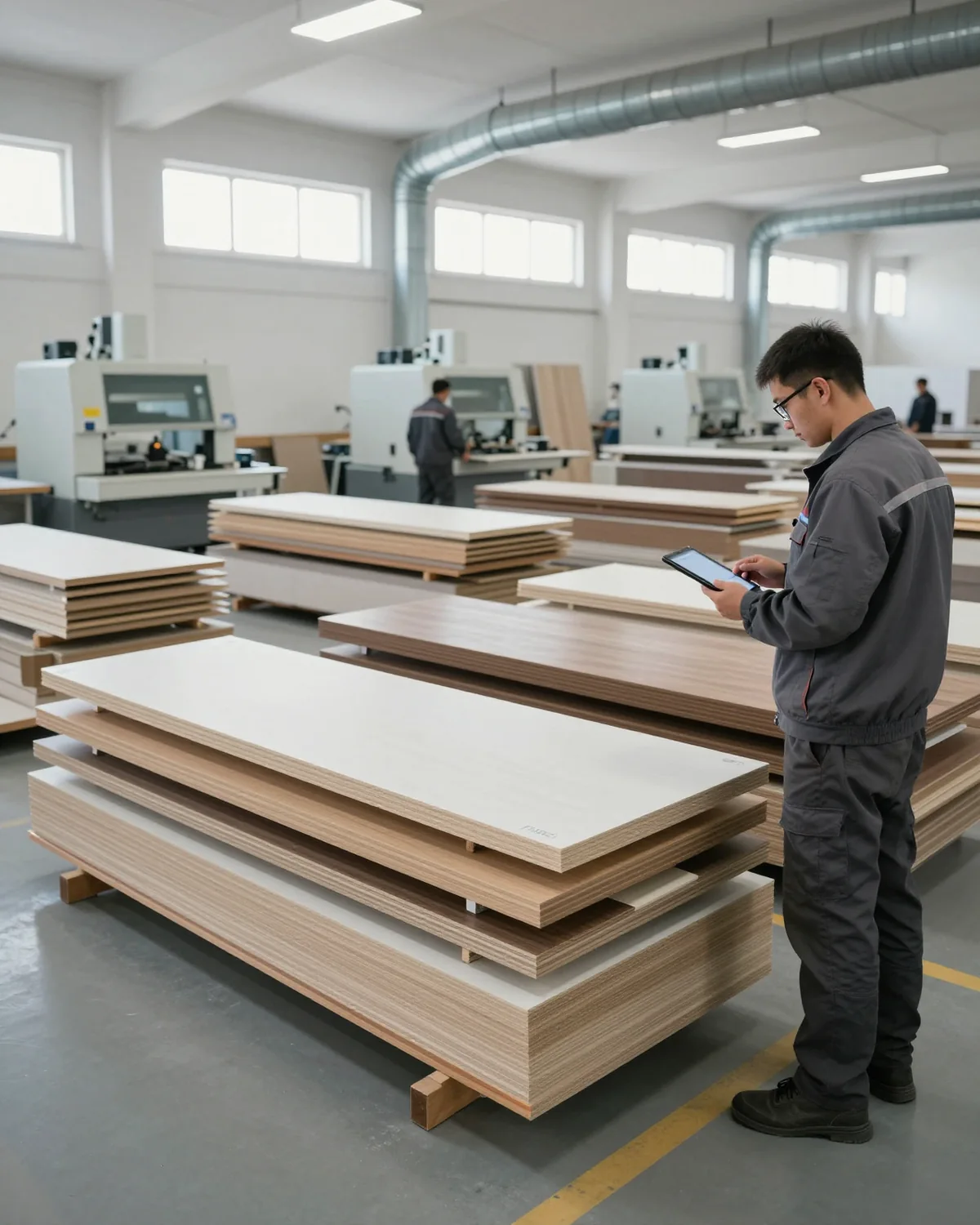
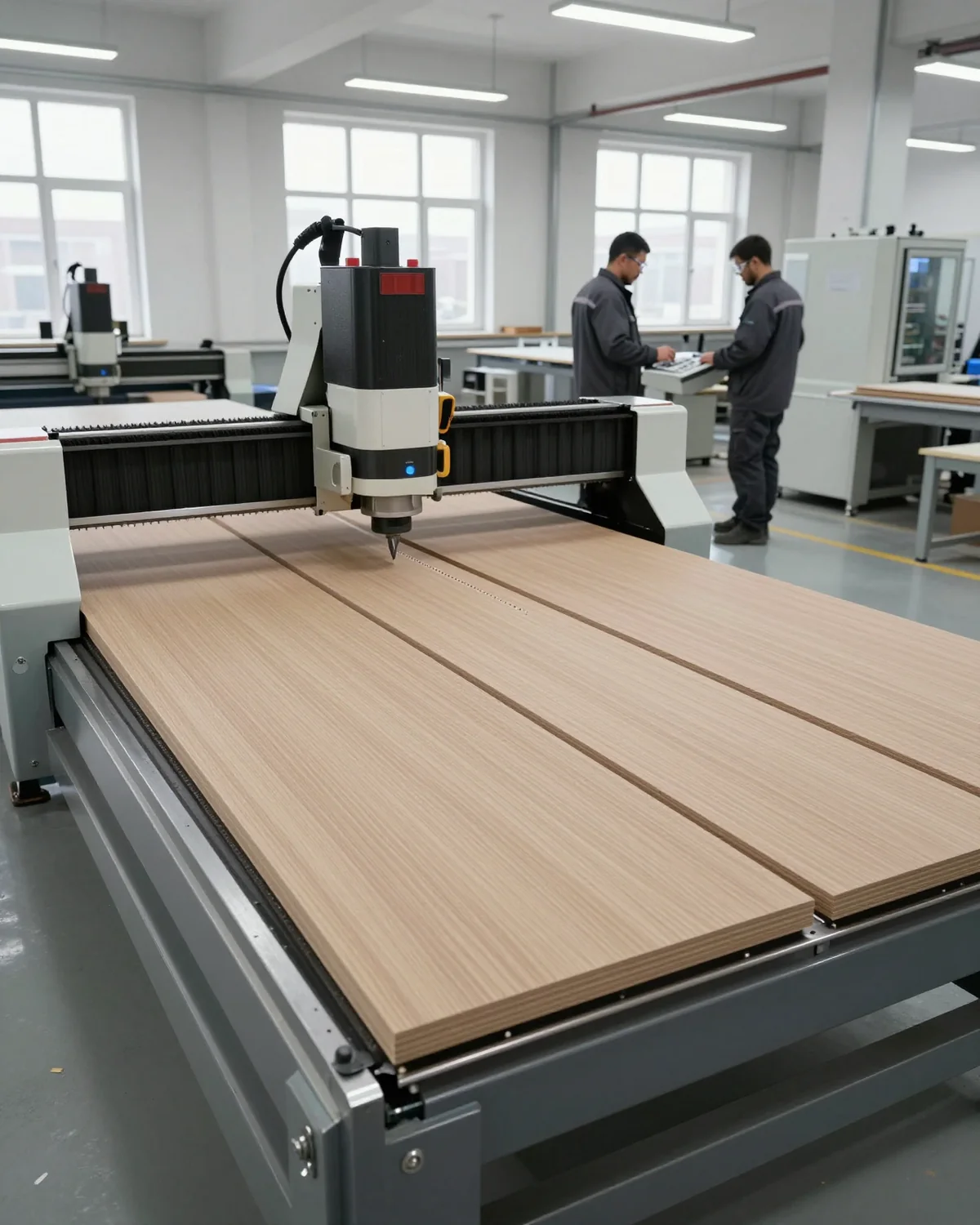
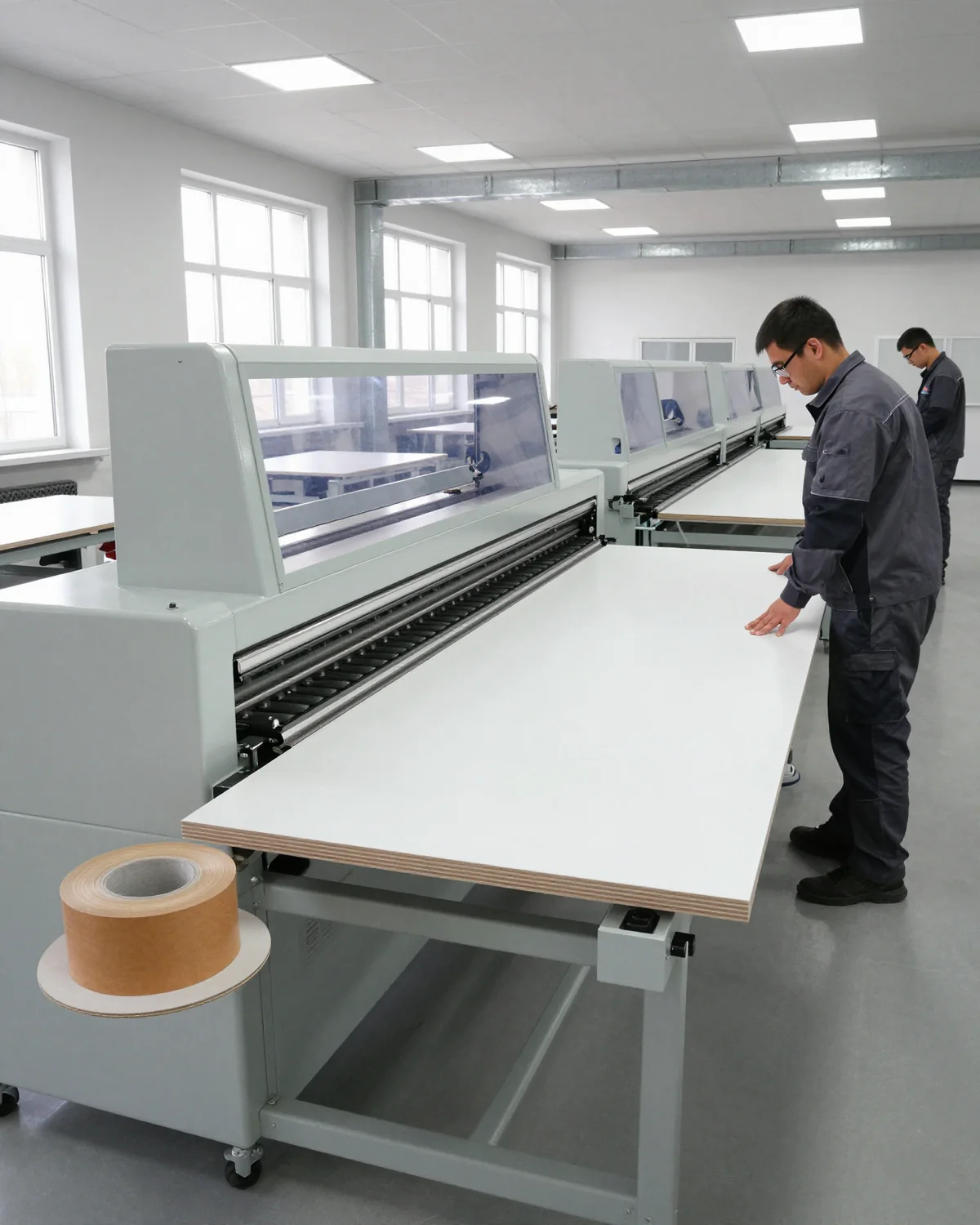
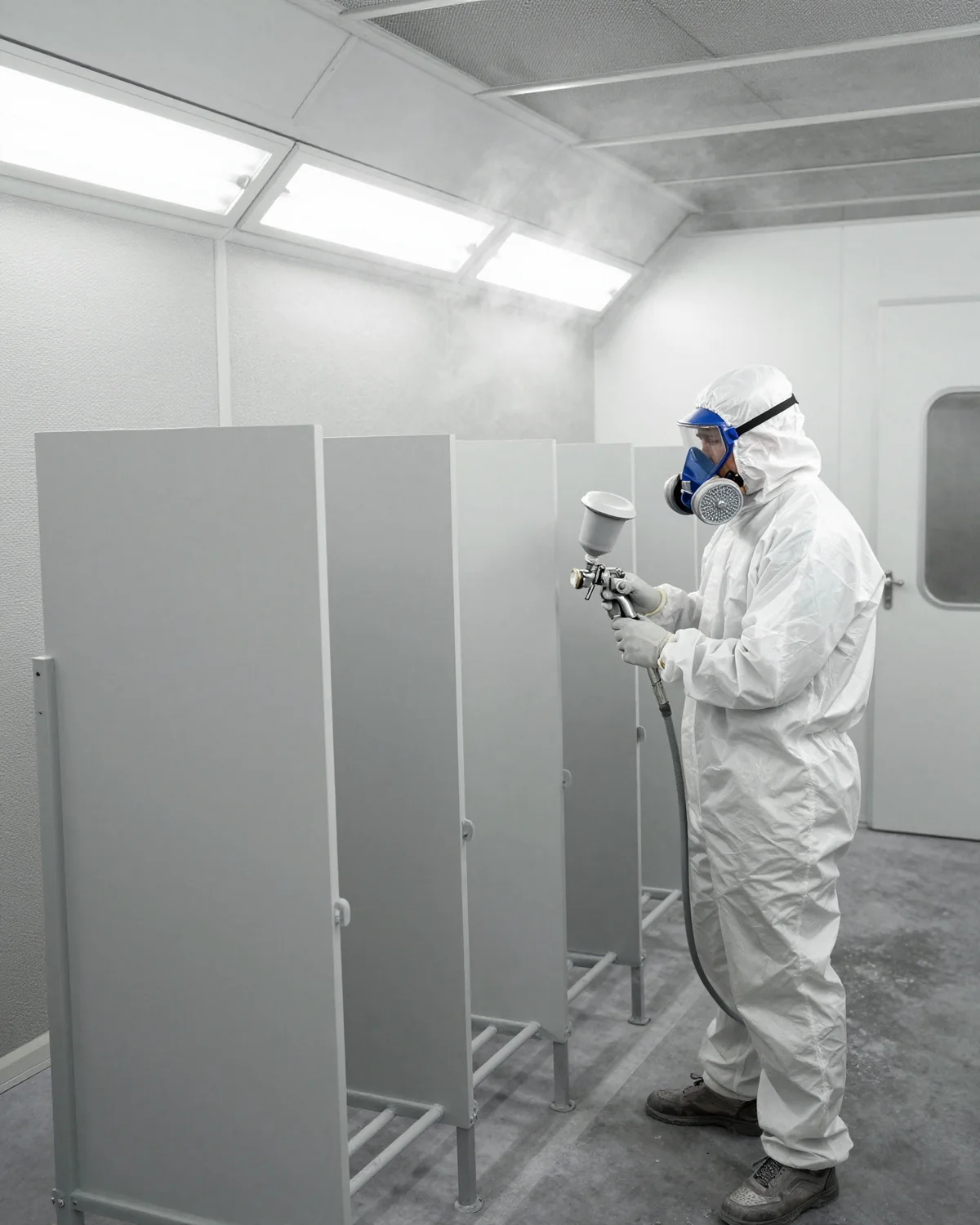
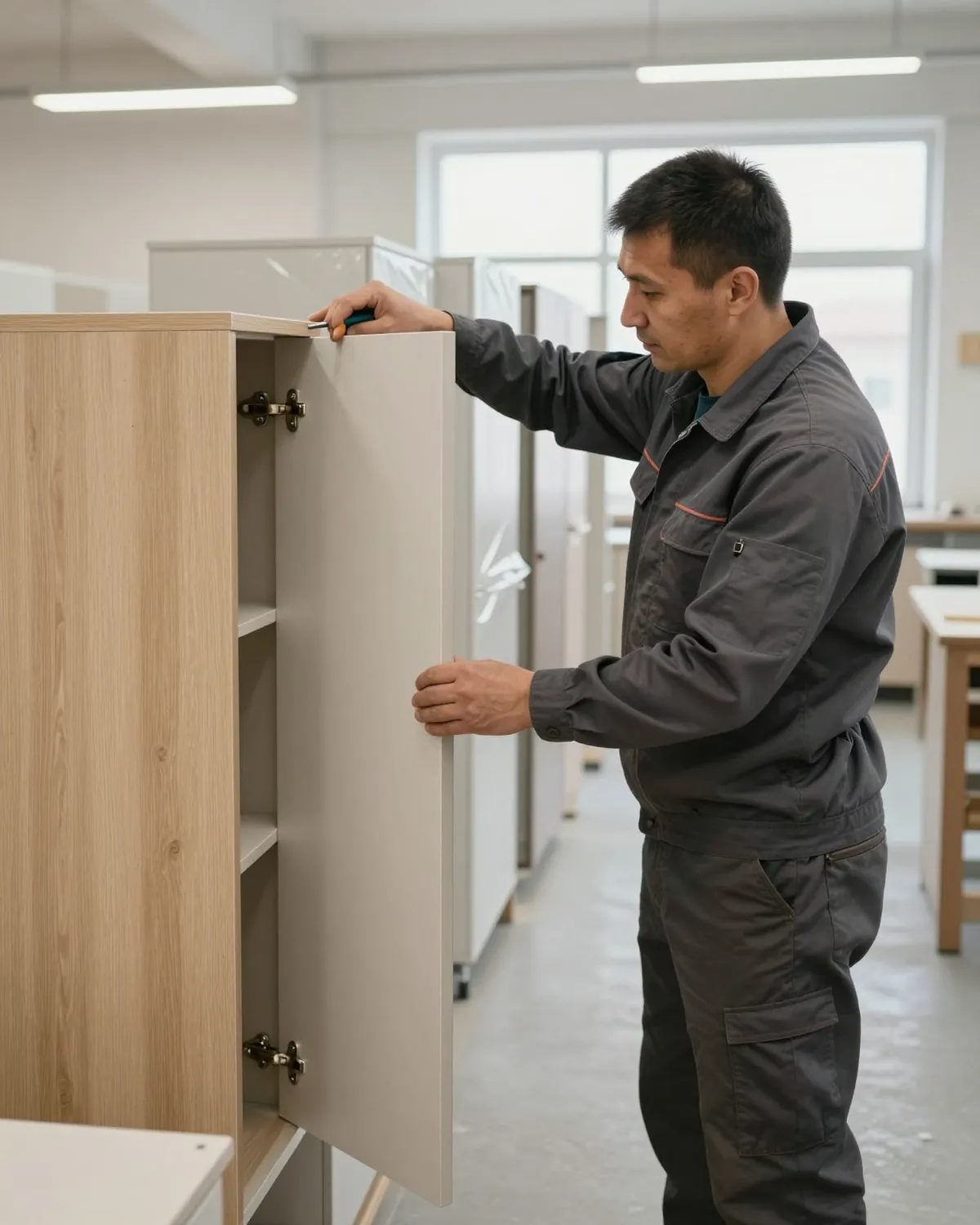
We make ash countertops in our own 600 m² workshop in Almaty — with cutting, edgebanding, painting and trial assembly areas — and install them with our own crews. The ash panel is cut according to maps taken from the design, the ends are finished before painting, and the coating is applied in the workshop, where the painting area is separated from cutting. Before dispatch, the item undergoes trial assembly in the workshop: we check the geometry, the fit against the walls, and that the cutouts match the sink and hob. The installation crew arrives with a ready kit and fasteners, so on site the item is set in place, fitted locally and the seams are sealed. Trial assembly in the workshop before dispatch catches discrepancies before the crew goes on site — installation is then about setting and fitting in place, not redoing.
Lead times, payment, delivery and warranty
Lead times and prices for each option are shown in the price list on this page; payment is a 50 % deposit, the balance after signing the acceptance certificate, and we work by bank transfer. Rush orders are possible — we discuss them at the measurement, because the sequence of workshop areas depends on the workload. Delivery in Almaty and up to 30 km is free for a large order, beyond 30 km — for an extra charge; the terms are on the "Delivery and payment" page. The item carries a 24-month warranty under the contract, and Blum hardware carries a 25-year manufacturer's warranty. We sign the acceptance certificate after installation — you accept the work as it is, not from a workshop photo, and until that moment you see the result in your own kitchen.
The bottom line on ash countertops
An ash worktop keeps its shape and appearance for years if three things come together: honest material, thoughtful construction and care. Below is what matters most to keep in mind before ordering.
- Solid wood ≠ decor. The "ash anchor" film imitates wood, while solid wood is sanded and refreshed as it wears.
- Construction matters more than thickness. A glued-up panel with hidden reinforcement and proper fastening holds its length without sagging.
- Ends and the gap decide. A treated end near the sink and an expansion gap at the wall protect against swelling.
- Made to size, not to standard. Cutouts to the appliance template, pipe clearances and uneven walls are planned at the measurement.
- Care extends life. Oil or lacquer plus regular renewal keep the even tone of ash for years.