
Temirzhan Nurpeisov
Furniture assembly carpenter11 years
★ 4.81 · 47 ratings
For business · Retail
We make counters, island and wall display cases for jewellery: tempered glass, a lock on every door and spot lighting that makes the stones sparkle. Measurement and 3D design are free, the price is fixed in the contract, warranty 24 months.
Measurement and 3D design are free and carry no obligation · price fixed in the contract · Kaspi Instalments up to 24 months
01Types
 01
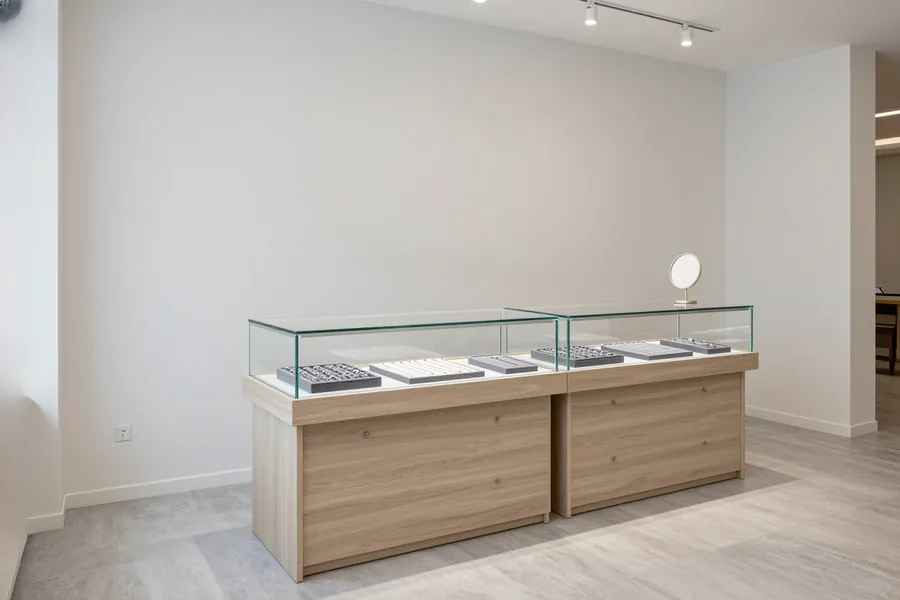
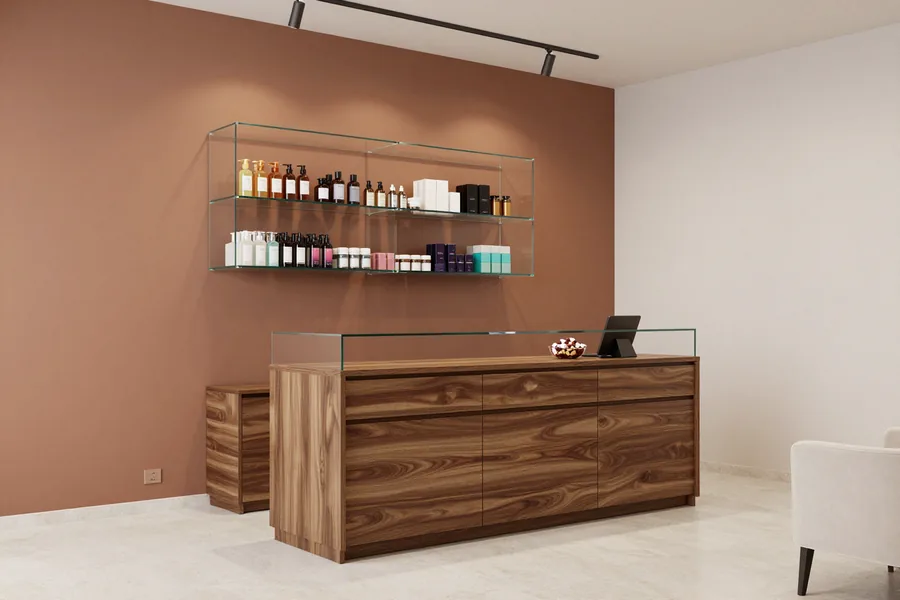
Glass top, inserts for rings and chains, drawers and a lock on the seller's side — the backbone of the showroom where sales happen.
from 130 000 ₸
 02
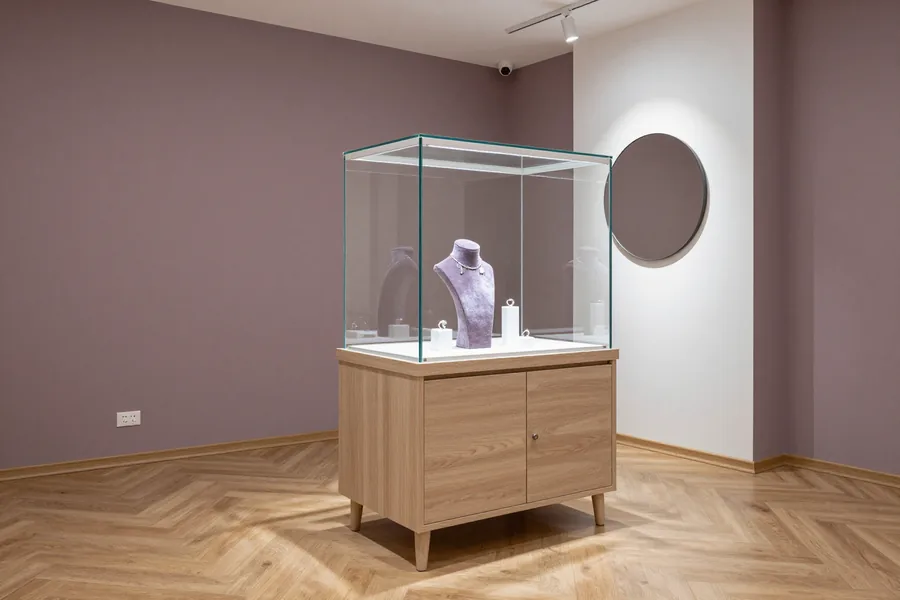
A low glass cube with a mirrored back and lighting: small jewellery is visible from all sides and doesn't get lost on the shelf.
from 110 000 ₸
 03
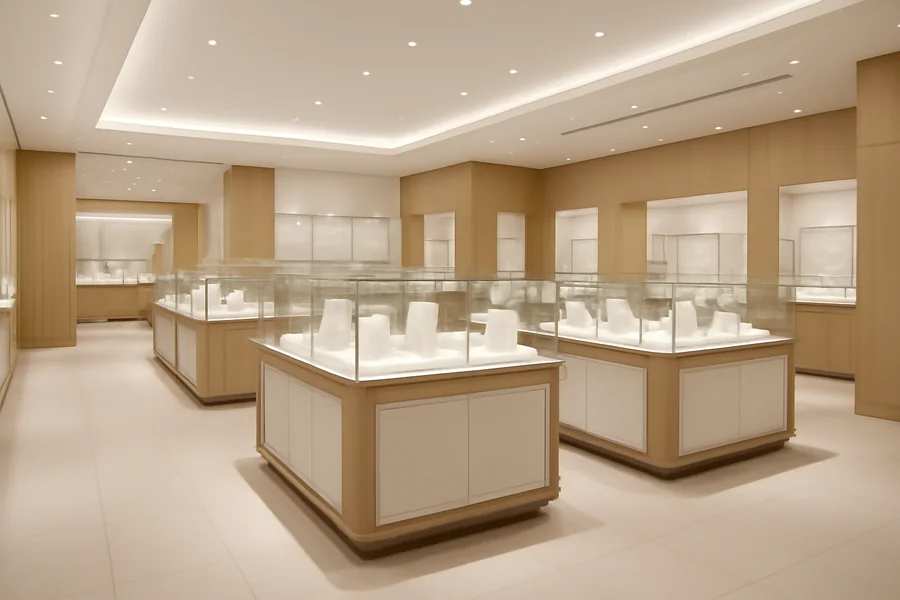
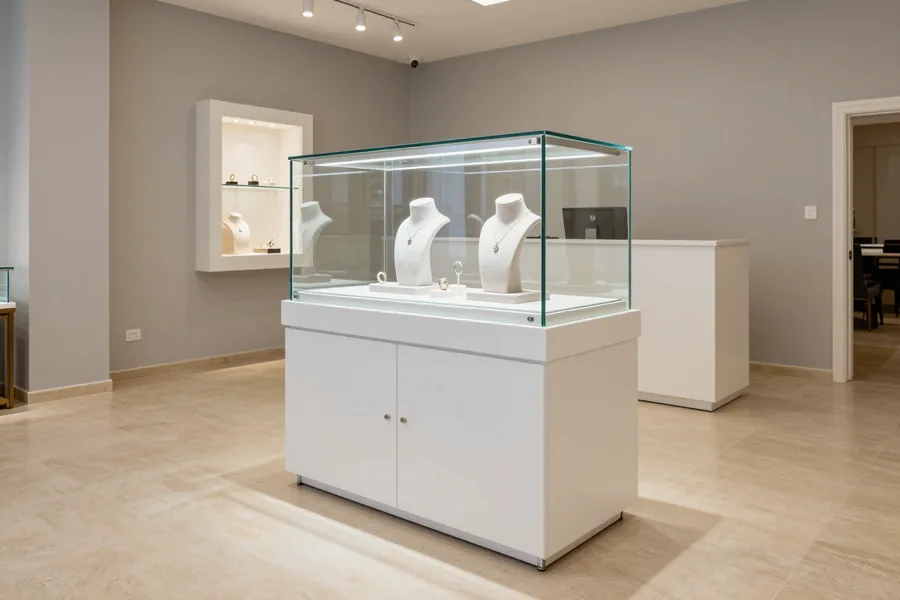
Stands in the centre of the showroom and is open on four sides: gathers customers around a new collection and divides the salon into zones.
from 180 000 ₸
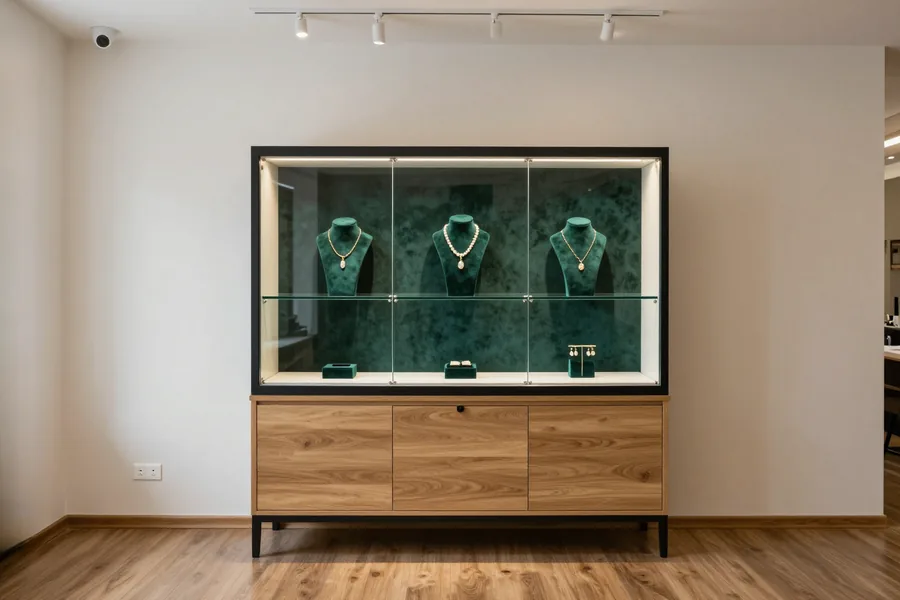 04
A shallow wall-mounted case with perimeter lighting: it fits a narrow wall section and keeps necklaces and earrings at eye level.
from 90 000 ₸
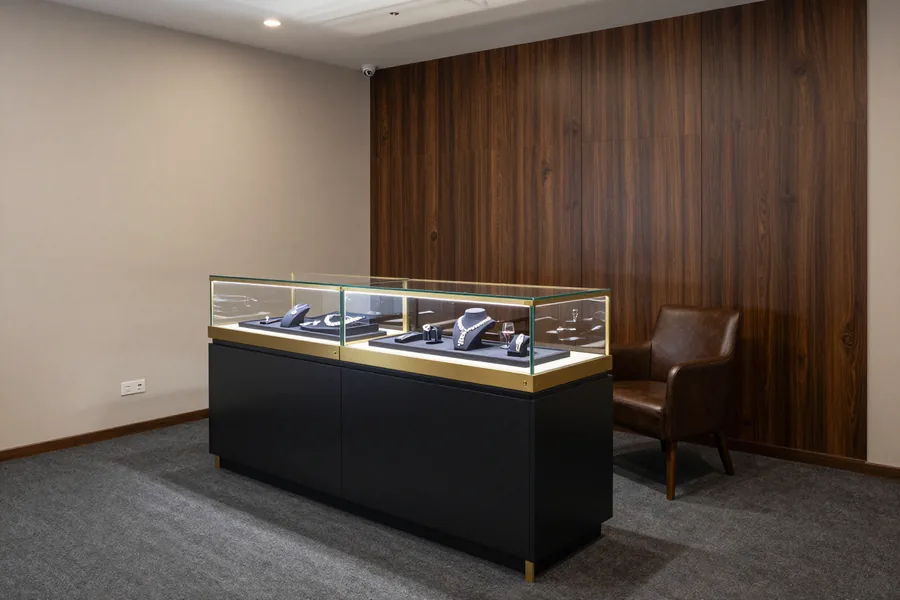 05
8 mm glass and a safe lock for an expensive collection: the case is placed by the till or in the VIP area where jewellery is shown in person.
from 210 000 ₸
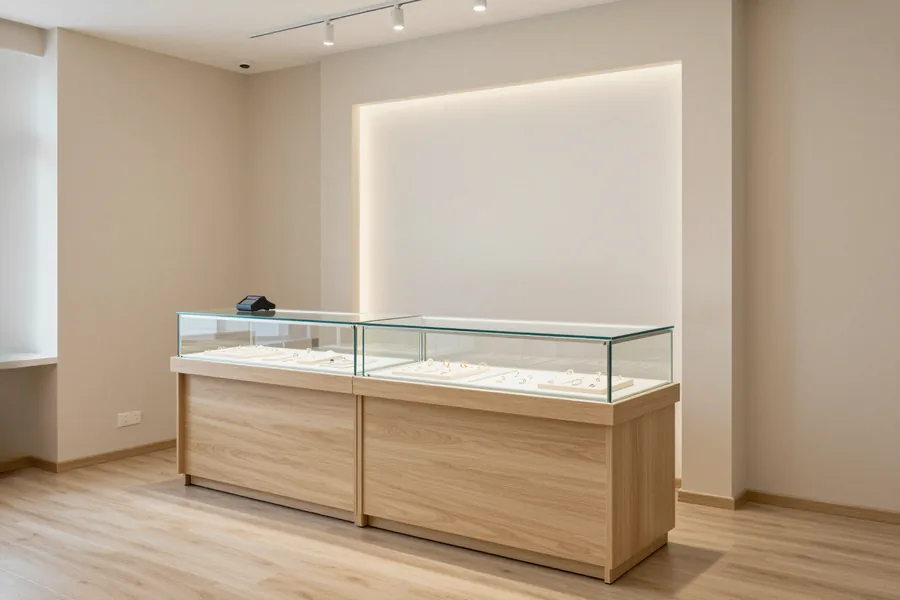 06
A salesperson's counter with a glass section and a lock: at the till the customer sees lower-priced jewellery and adds it to the purchase.
from 150 000 ₸
02Projects
Item, scope, materials and lead time — per each project.
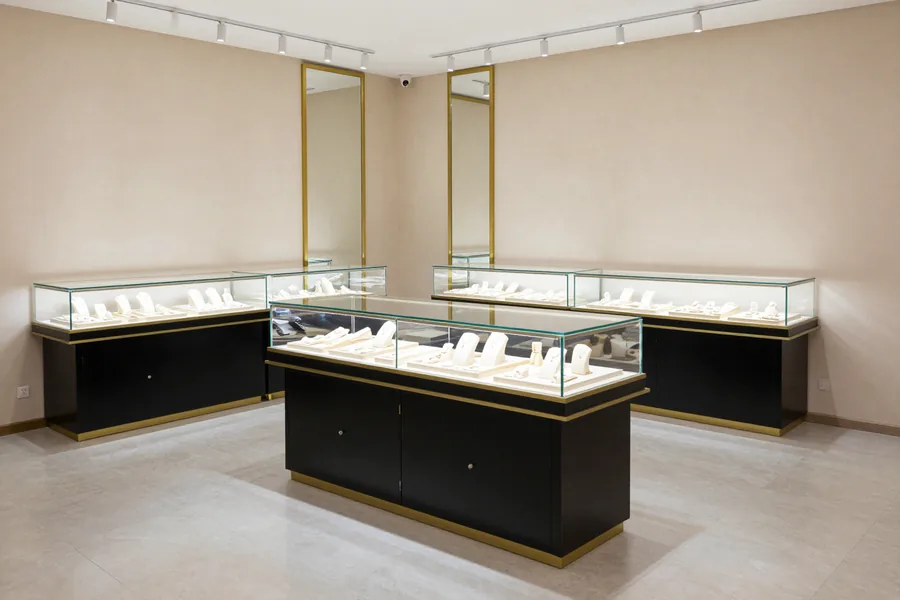 Store
Almaty
Jewellery boutique in a shopping mall: we produced a full set of retail equipment — island display cases, counters with a lock, wall display cases, a till. All in the store's unified style and colour, suited to the display and customer flow.
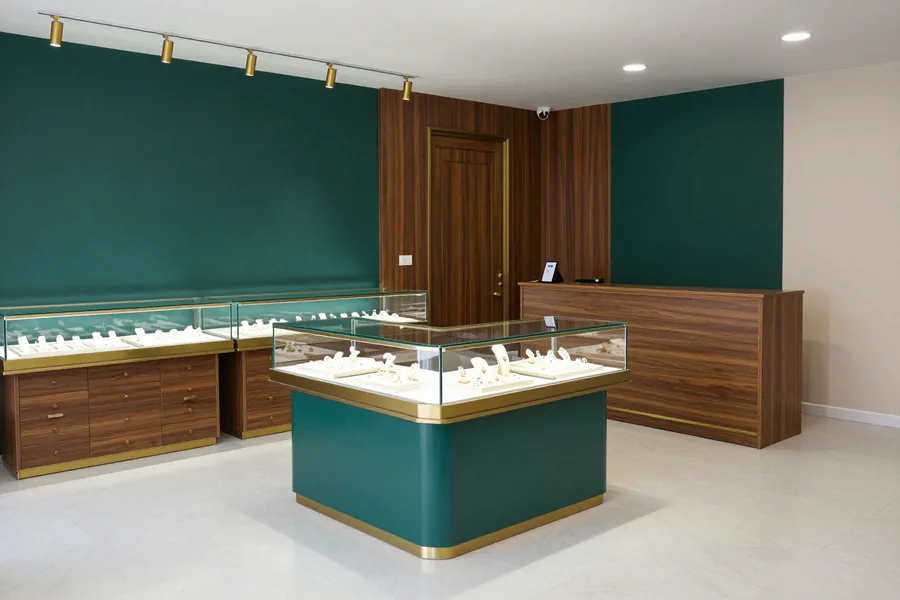 Store
Almaty
Gold salon chain: we produced a full set of retail equipment — island display cases, counters with a lock, wall display cases, a till. All in the store's unified style and colour, suited to the display and customer flow.
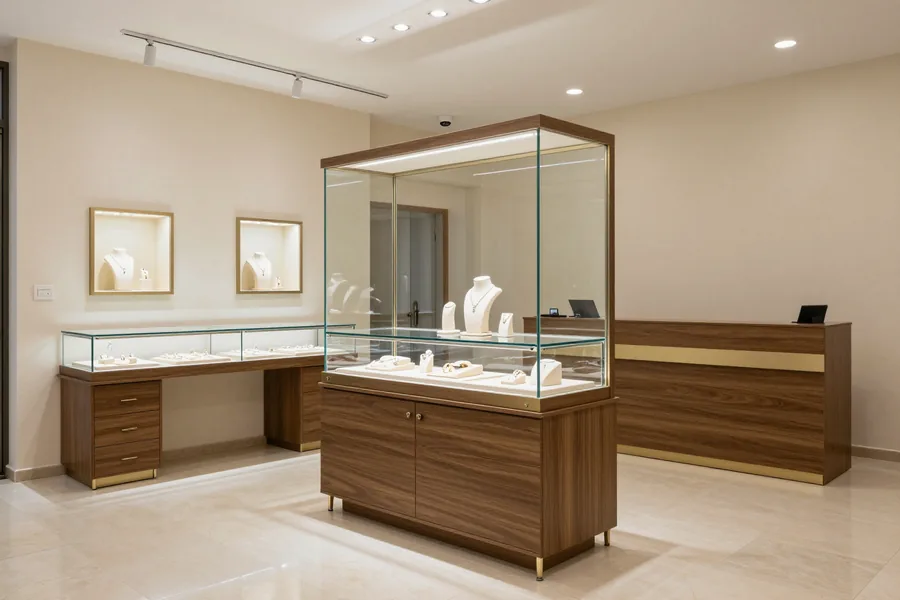 Store
Almaty
Premium salon: we produced a full set of retail equipment — island display cases, counters with a lock, wall display cases, a till. All in the store's unified style and colour, suited to the display and customer flow.
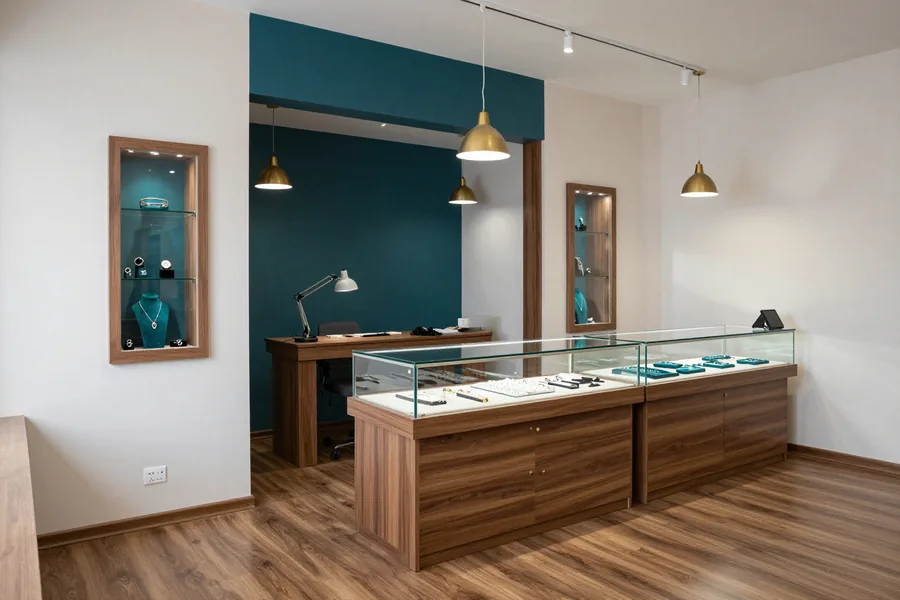 Store
Almaty
Jewellery workshop and store: we produced a full set of retail equipment — island display cases, counters with a lock, wall display cases, a till. All in the store's unified style and colour, suited to the display and customer flow.
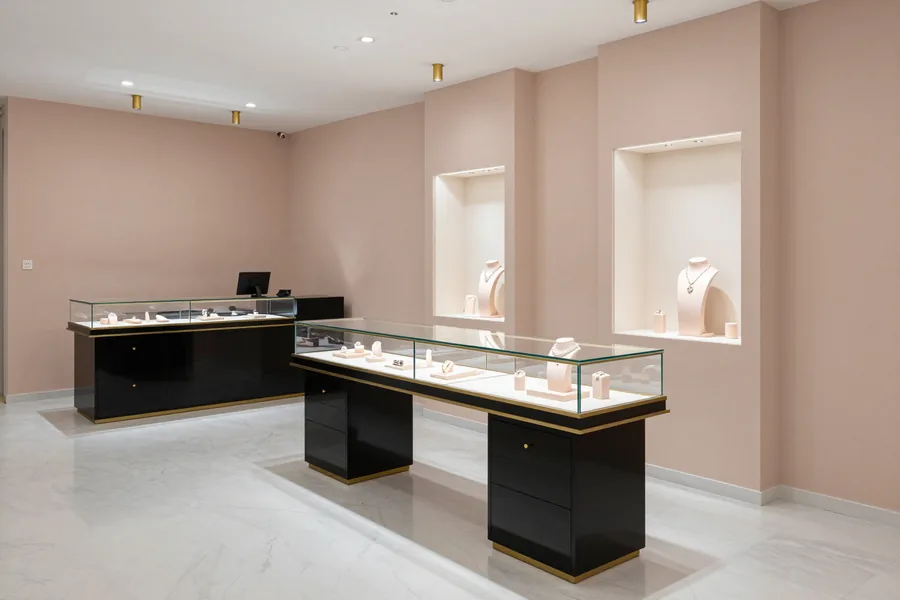 Store
Almaty
Brilliant salon: we produced a full set of retail equipment — island display cases, counters with a lock, wall display cases, a till. All in the store's unified style and colour, suited to the display and customer flow.
03How we work with stores
04Prices
The "from" price is for one item in the basic configuration with glass and a lock. Lighting, inserts and the lock type are chosen at a free measurement, and the final price is fixed in the contract.
05For legal entities
We work with LLPs and sole traders on bank transfer. Price, materials and lead times are in the contract before production starts.
Request a contract and invoice06Principles


01 / 06
07Production
Six steps in our 600 m² workshop. You can see each of them with your own eyes: the showroom and production are under one roof.
Egger · Kronospan · E1
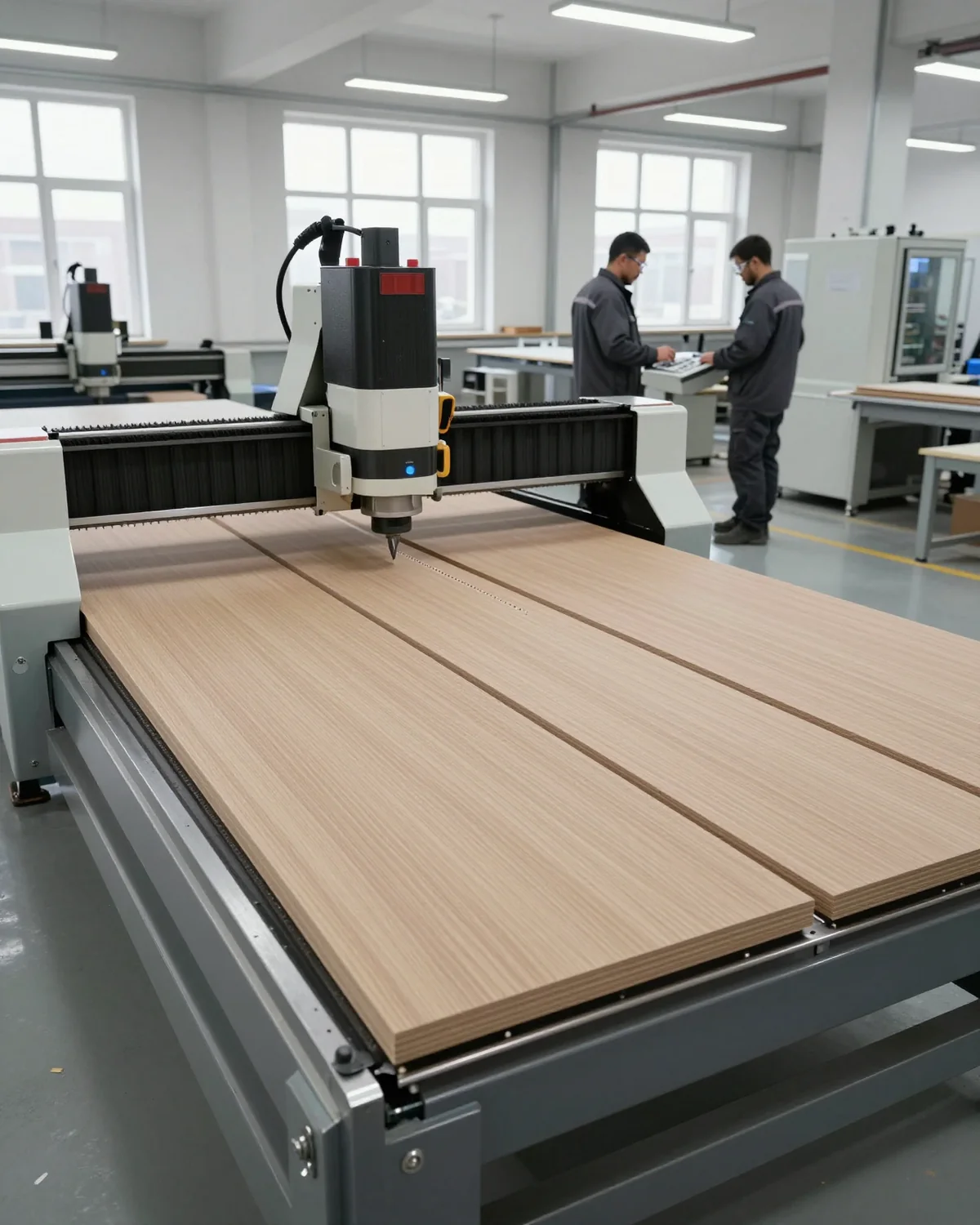
Egger and Kronospan boards of emission class E1 arrive at the workshop warehouse. There are 40+ laminated chipboard decors, 16–18 mm thick. Class E1 is for sales floors and display cases.
Laser measuring to 1 mm
A design engineer prepares the drawings, and the machine cuts the board to them. Dimensions come from a laser measurement accurate to 1 mm.
Blum · Hettich · Boyard
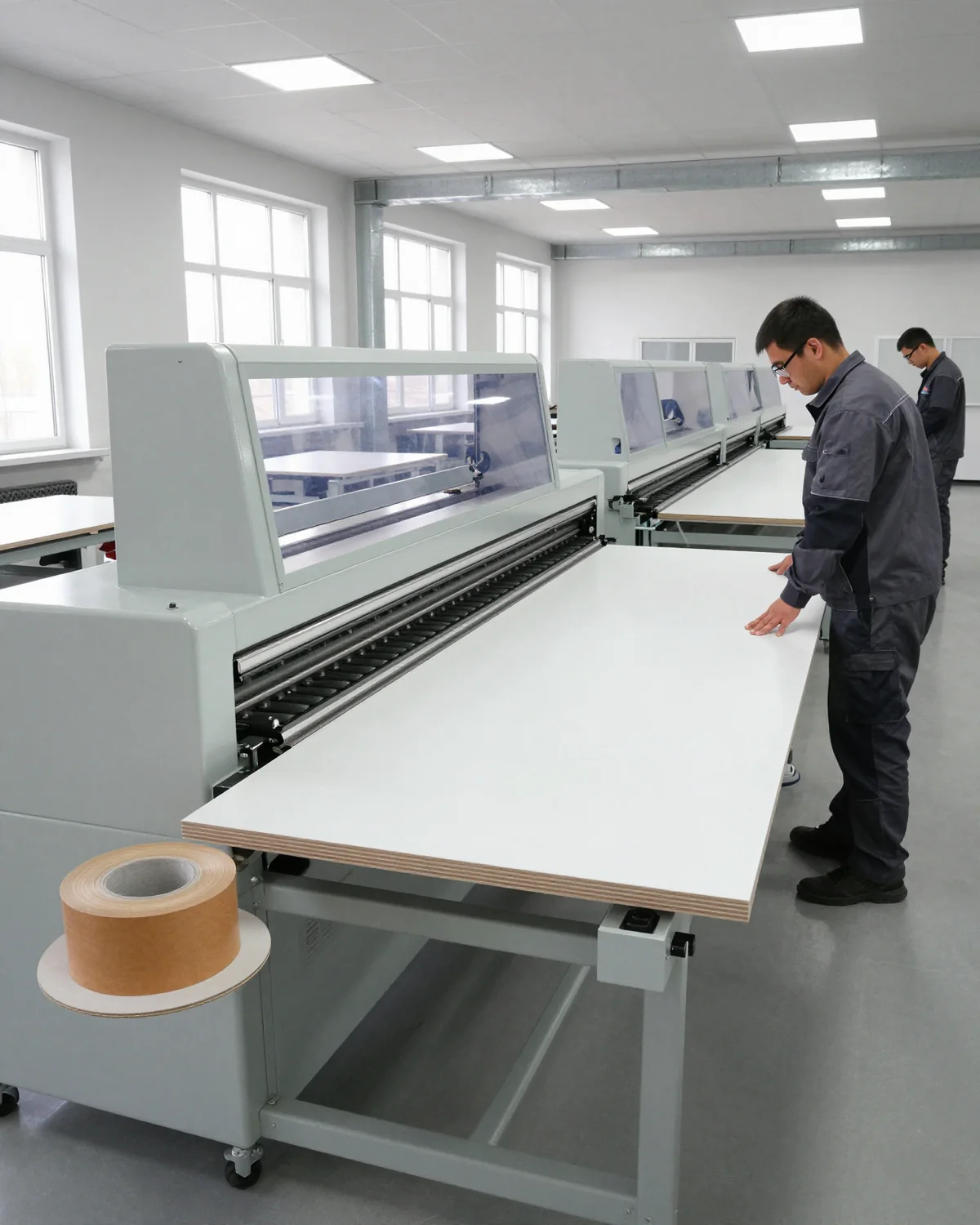
The edge-banding machine seals the edges, then we drill holes for Blum hinges and Hettich runners.
Any RAL colour
A finishing specialist paints the fronts to RAL — matt and gloss. We assemble every jewellery display case in the workshop with inserts and lighting and check the locks before it goes to the showroom.
Pre-assembly in the workshop
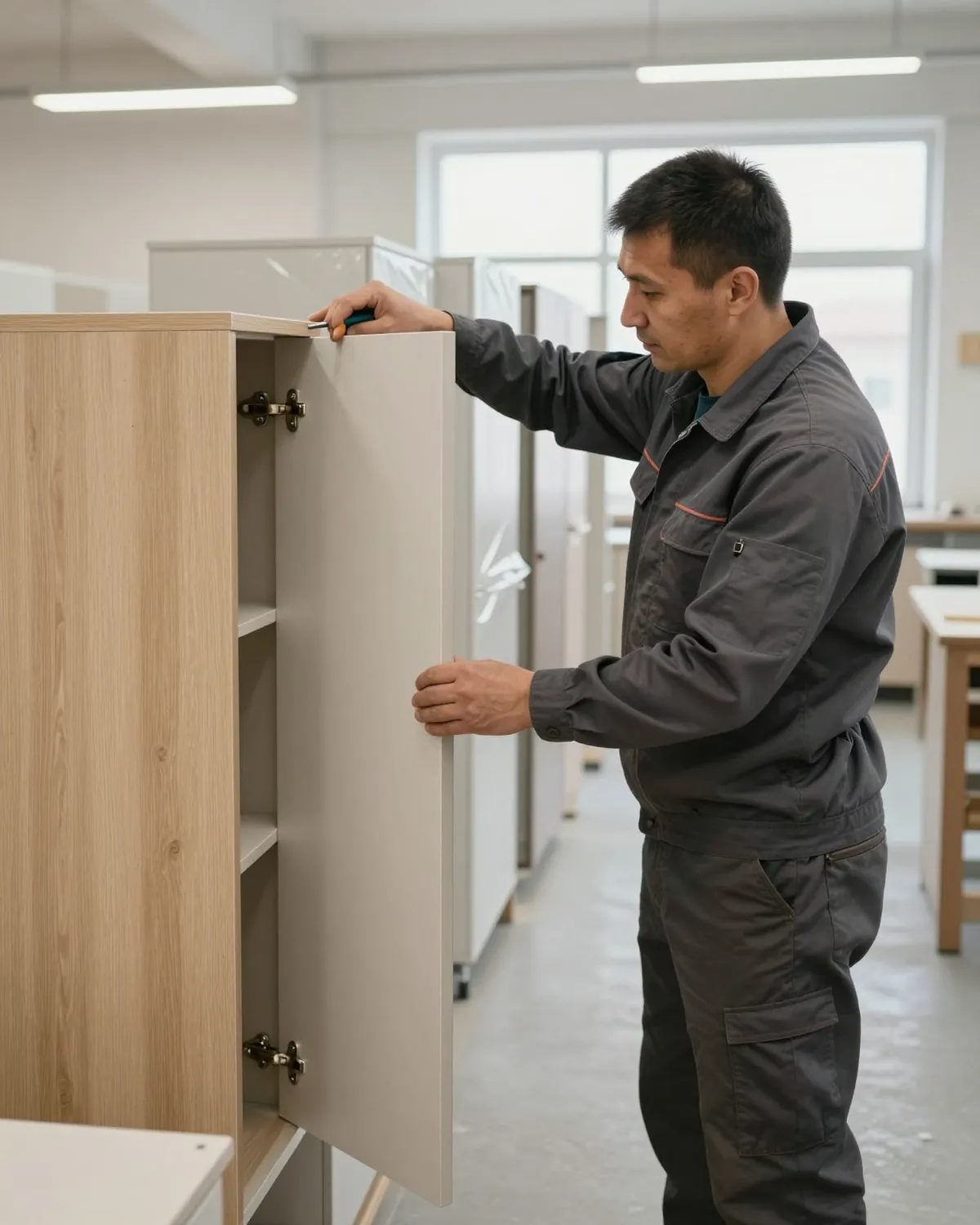
We assemble the modules in the workshop before dispatch, checking front gaps and drawer travel. The quality control department signs the item off for shipping.
Night installation according to the mall's rules
We deliver, bring in, assemble in 1 day, adjust the furniture and clean up after ourselves. Warranty 24 months from signing the acceptance certificate.
08Team
MEBLIX workshop craftsmen who make and assemble furniture to order.
01 / 07Furniture assembly carpenter11 years
★ 4.81 · 47 ratings

Cabinet furniture repair craftsman20 years
★ 4.99 · 73 ratings

Furniture and kitchen unit assembler23 years
★ 4.97 · 300 ratings

Made-to-order furniture maker7 years
★ 4.26 · 32 ratings

Furniture maker5 years
★ 4.23 · 30 ratings

Joiner and carpenter20 years
★ 5.0 · 113 ratings

Furniture front and hardware fitter17 years
★ 4.61 · 92 ratings
09FAQ
Didn’t find the answer? Message us — a manager replies, not a bot.
Ask on WhatsApp8 mm tempered glass on the top, doors and shelves. It withstands hand pressure and impact, and when broken shatters into small blunt fragments, so it suits counters with constant footfall.
We fit furniture locks on sliding doors and pull-out trays, and a safe lock for an expensive collection. The set can be made to one key for all the display cases in the hall; the keys are handed over together with the acceptance certificate.
You need light with good colour rendering and spot accents above the inserts. We conceal the LED strip in an aluminium profile and add spotlights, matching the light tone to gold, silver or stones.
Yes, we make trays, busts and stands for rings, earrings, bracelets and necklaces with the required number of cells. We match the colour of the velvet or faux leather to the display case carcass and the overall style of the showroom.
A wall display case for jewellery and a jewellery counter with a lock are in the price list above on this page, so you can see where each option starts. The final price depends on size, glass, lighting and locks. We fix it in the contract after measurement.
The lead time depends on the type of display case and its configuration; for each option it is stated in the price list on this page. If the opening date is already set, tell it to the manager — a rush order is possible.
Yes, in shopping centres the team installs display cases at night or at the weekend according to the mall's rules. In the morning the department opens with the furniture already assembled and connected.
Yes, we sign a contract and issue an invoice for bank transfer. You pay half before the workshop starts, the second half after signing the acceptance certificate, and we hand over the certificate and the delivery note for your accounting.
You can: we make display cases for one location or for the whole chain in the same carcass, glass and light under a single estimate. For new showrooms the same modules can be reordered later.
For the jewellery display case as a whole — carcass, glass, locks and assembly — we give a 24-month warranty under the contract. Blum hinges and runners carry the manufacturer's 25-year warranty; the rest of the hardware has its own manufacturer's warranty.
10Reviews
4,9
average rating
on Google and Zoon
Everyone can see a review on the platform: this is how other people check whom to trust with an order. If something went wrong, write to us and we will reply within 1–2 business days.
Message us on WhatsApp11Article
We make display cases for jewelry stores to match the assortment and the salon layout: counters, island, wall-mounted and safe display cases made of 8 mm tempered glass with a lock on every door and lighting in an aluminum profile. Measurement and 3D design are free and ready in 1–2 days, we install in shopping malls at night, warranty 24 months under the contract.
The set of display cases in a salon depends on what items are sold there and how the salesperson shows them to the customer. Let's go through the main types, matching to items and calculating the quantity.
| Type of display case | Place in the hall | Access to merchandise | What is shown |
|---|---|---|---|
| Counter with glass top | border of the salesperson's area | only from the salesperson's side | rings, chains, fitting |
| Island display case | center of the hall | locks on all sides | new collections |
| Wall-mounted display case | piers and walls | door with lock | necklaces, sets |
| Safe display case | near the cash desk or in a separate area | safe lock | expensive items |
| Cash desk with display case | near the exit | from the cashier's side | inexpensive jewelry |
We calculate the quantity and type of display cases from the assortment and the hall layout, not from a standard set. During the free measurement we check walls, columns, windows and sockets, mark the cash desk location and the salesperson's area, and then within 1–2 days prepare a 3D layout design. In the design, display cases for a jewelry store immediately come with inserts, so you can see how many rings, earrings and necklaces will fit in each. If there are many collections, some items go into tall display cabinets along the walls, while counters remain for fitting. It's best to prepare a list of collections with an approximate number of items in each before meeting the measurement specialist: it speeds up the calculation and saves you from extra display cases that would take up the aisle and block the salesperson's view. It's also better to allow for assortment growth right away.
Jewelry protection consists of three things: durable glass, reliable locks, and who opens the display case and when during the working day.
8 mm tempered glass withstands hands pressing on it, a knock from an elbow or a bag, and does not sag under the display pads. That is why we use exactly this glass in jewelry display cases — for the top, doors and shelves. Ordinary glass of the same thickness, when chipped, produces long sharp edges, while tempered glass shatters into small blunt fragments and does not injure the customer. We polish the edges of the panes and assemble the top joints into an aluminum profile so that the corner does not open from an accidental push. For a counter that people lean on with their hands all day while trying on pieces, glass thickness matters especially: a thin pane over time starts to ring and pull away from the frame, while a thick one holds its shape.
A safe display case is needed for a collection that is shown in person and not kept in the general counter: diamonds, large stones, designer pieces. Such a display case differs not only in its lock: it has thick glass, a rigid carcass and a closed box with no gaps between the glass and the base. It is placed next to the cash desk or in a separate zone where the customer sits at a table opposite the salesperson, and the item is taken out only on request. In a small salon one safe display case is enough, while the rest of the assortment stays in ordinary counters and wall cabinets. If the collection is expensive, it is better to allow space for such a display case already in the showroom plan, so that there is a socket for lighting nearby and a clear view from the salesperson's post.
Light decides whether the customer sees the play of a stone, the depth of the gold color and the purity of silver, so the lighting is planned together with the display case carcass rather than added at the end.
| What we show | Light shade | Lighting type |
|---|---|---|
| Yellow and red gold | warm | strip in a profile above the shelf |
| White gold and silver | neutral | strip plus diffuser |
| Diamonds and transparent stones | neutral, bright | spotlights above the display pad |
| Colored stones | neutral | side spotlight |
| Pearls | soft warm | diffused light without glare |
We install LED strip in an aluminium profile inside the carcass rather than gluing it to the glass or the edge of a shelf. The profile dissipates heat, keeps the strip straight and hides it from the customer's view, so only the lit item is visible. Above the stone pads we add spotlights: a narrow beam gives a diamond the sparkle that a single strip cannot create. We route the wires inside the carcass and bring them to a single power point, hiding the power supplies in the base cabinet under the dome. At the control assembly in the workshop we switch the light on and check for glare on the glass and dark corners. If the showroom carries a mixed range, different display cases get a different shade, and this is planned at the 3D design stage. To replace the strip we leave access to the profile from the salesperson's side so the glass does not have to be removed.
The pad holds a piece in place, sets the arrangement order in each display case and helps the salesperson find the right item in seconds when a customer asks to try it on.
Gold wins on a dark and warm background, silver and diamonds on light grey, beige or white. Dark blue, graphite or chocolate velvet emphasises yellow metal and makes it deeper, while a light background next to gold dulls its colour. White gold, silver and clear stones sometimes get lost on a dark background, yet on light grey they become cleaner and brighter. Faux leather holds its shape longer than velvet and is easier to clean, while velvet looks softer and more expensive. The pad colour is coordinated with the carcass and the light: warm light on beige velvet makes the arrangement cosy, neutral light on grey makes it strict. If the range is mixed, the hall is divided into zones with different pads rather than everything painted one colour.
We calculate the height of the counter from how the salesperson works with the item and from the angle at which the customer looks at it. A fitting counter is made at a height that makes it convenient for the salesperson to reach the trays, while the customer sees the rings from above through the glass without bending over. Island display cases in the center of the hall are placed lower so they don't block the view, and wall-mounted cases are raised so that a necklace hangs at eye level. During the measurement we clarify the height of the salespeople and whether there are chairs for customers at the counter, and in the 3D design we show the heights of all display cases next to each other. It is better to make the height difference between neighboring display cases noticeable: a flat line of identical cases looks like a warehouse, not a salon.
The arrangement of display cases affects two things at once: the security of the jewelry and the path the customer takes around the salon from the entrance to the till.
Display cases are placed so that the salesperson from their spot can see all the glass and the approaches to it. Tall display cabinets and wall-mounted cases go against the walls, low counters and island display cases occupy the center: this way no carcass blocks the view. Between the islands a passage is left through which two people can freely pass each other, otherwise the customer catches the glass with a bag. The fitting area with counters is kept closer to the salesperson, and display cases with inexpensive items are placed at the entrance, where the customer lingers on their own. In corners that are not visible from the post, it is convenient to place mirrors or display cases without valuable items. Such a layout reduces the risk of theft and at the same time does not make the hall look like a warehouse with rows of identical cases.
A display case in the checkout counter sells inexpensive items while the customer waits to pay: stud earrings, chains, gift pendants. We make the till with a glass section and a lock on the cashier's side, so the items are visible but accessible only to the salesperson. A display case for a jewelry store at the exit gives a last chance to add a gift to the purchase, and it is better to light it separately from the main hall. Next to it in the counter a closed area is needed for the terminal, printer and documents, and we route the wires from it inside the carcass together with the lighting wires. We make the till countertop from a durable material, because bags and packages are placed on it all day, and ordinary decor quickly gets scratched. We choose the height of the counter so that the cashier sees the customer, and the customer sees the illuminated display case under the glass.
In a shopping mall we install display cases at night or on weekends according to the mall's rules, so that neighboring departments and the salon itself don't close during the day. In advance we agree with the administration on the time of entry, passes for the crew and the route along which we will carry large glass and carcasses. We check the dimensions of the display cases against the openings of service entrances and elevators already in the 3D design: a glass hood does not always fit through a standard door, and then it is assembled on site. After installation we turn on the lighting, check the locks and the movement of the trays, and in the morning the department opens with the equipment ready. The rules of different centers differ, so it is better to request their requirements from the management company before signing the contract for the display cases.
The order follows clear steps from the first message to installation, and each step with the price, materials and date is fixed in the contract.
We assemble every display case completely in the workshop before it goes to the showroom. During the test assembly we fit the glass into the profile, close all the locks and check that the doors move without skewing and the trays slide out all the way. We switch on the lighting and look for glare on the top and dark corners in the inserts. We cut the carcasses from E1-class Egger or Kronospan laminated chipboard and edge them with 2 mm PVC; the fronts of the cash desk and islands are painted with enamel on MDF in a spray booth. After the check we disassemble the display cases into units and pack the glass separately so the panes don't touch each other in transit. That way, on site the team only assembles and connects an item that has already been checked.
The showroom receives a contract, an invoice for bank transfer, and after installation an acceptance certificate and a delivery note for the accounting department of the LLP or sole proprietor. Half of the amount is paid before the workshop starts, the second half after the certificate is signed. We make retail fixtures for jewellery stores both for a single location and for a chain in a unified style under one quote, and for new locations the same modules can be reordered later from the saved drawings. The item carries a 24-month warranty under the contract; Blum hinges and runners carry a 25-year manufacturer's warranty. We have been working for 13 years and have completed more than 3 500 projects, including jewellery showrooms, so we know the typical requirements for glass, lighting and locks in advance.
A well-designed display case in a jewellery showroom protects the items, lights them properly and helps the salesperson work with the customer calmly, without unnecessary movements and long searches.
12Calculation
Select the display case type, quantity, carcass and fronts in the calculator — the calculation will be sent to the manager on WhatsApp, who will check it against the salon plan and send you an estimate.
13Retail furniture
We make shelving, display cases, counters and cash areas for your goods and floor layout, and install at night so the store doesn't have to close.
We make shelving for your goods, stockroom or niche: shelf spacing, depth and frame are calculated from the weight and dimensions of what will go on them.
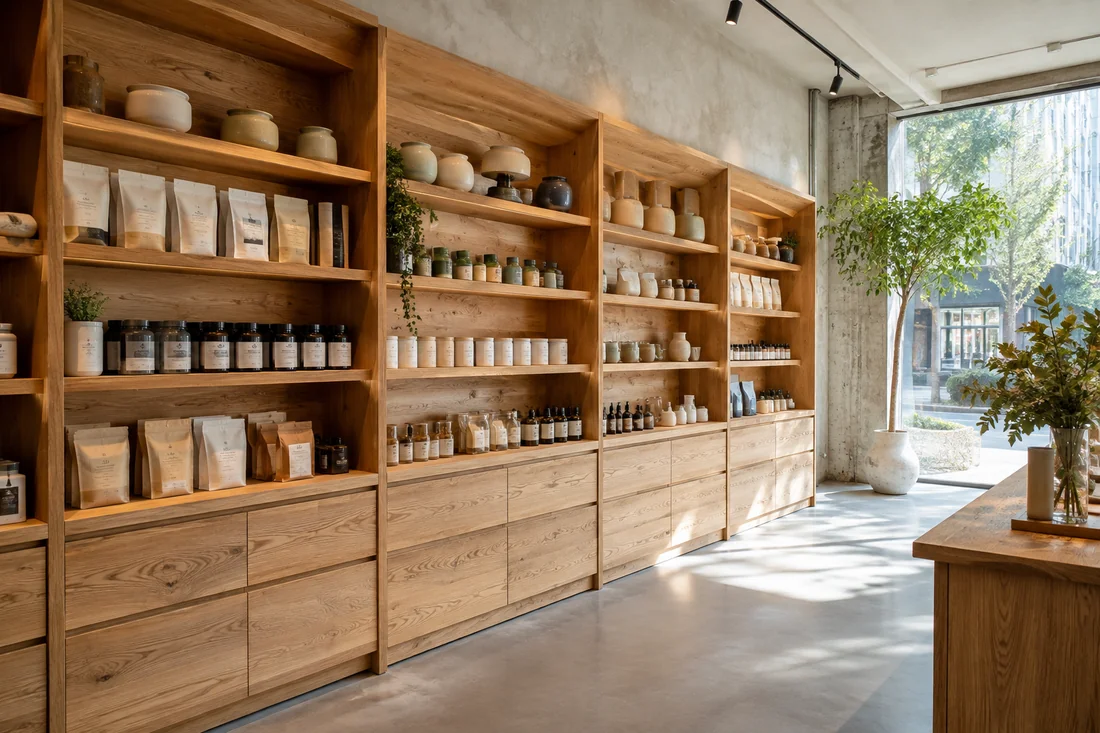
We make wooden shelving to the dimensions of the wall, niche or opening: we select the wood species, shelf thickness and finish for what will go on them.
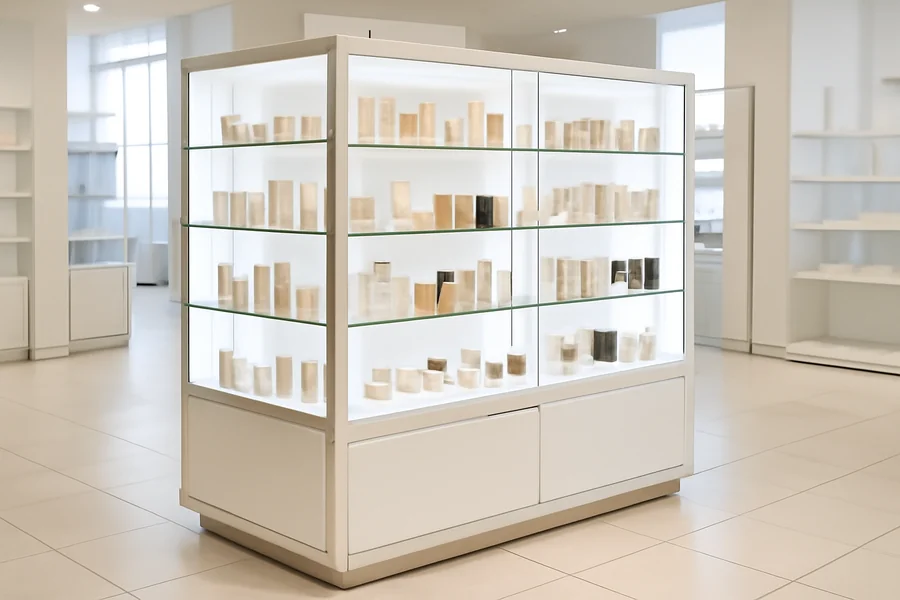
We make wall-mounted, island and tall display cases for your goods: tempered glass, locks and lighting that doesn't dazzle the customer.
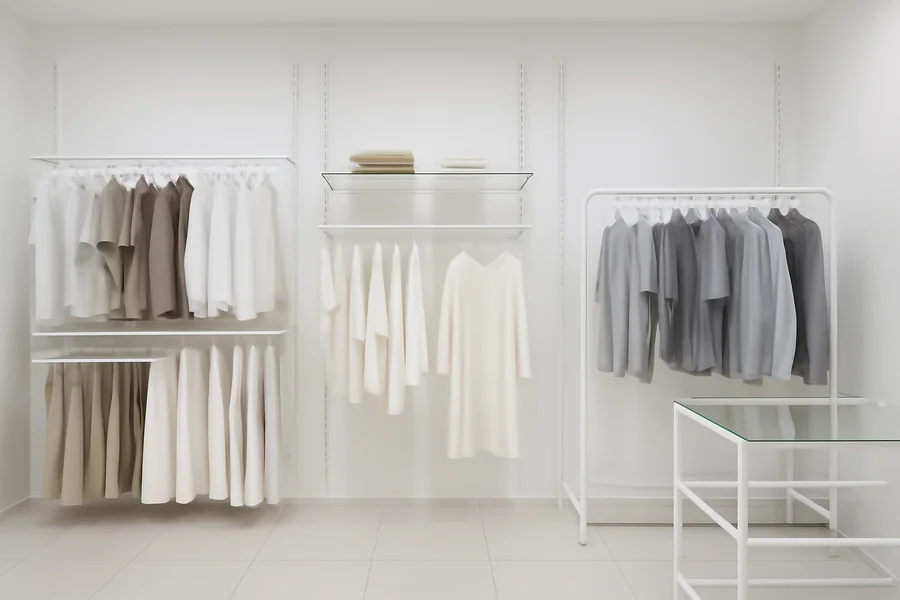
We make rails, gondolas, shelving for knitwear, fitting rooms and cash desks for your assortment and boutique layout, and install at night so the store doesn't have to close.
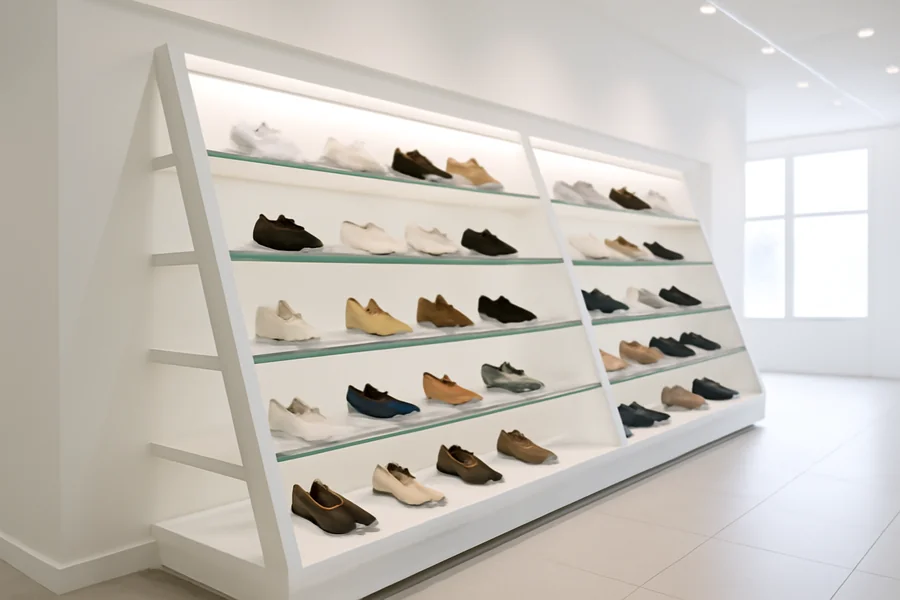
We make slanted shelving, island displays and fitting benches for your footwear assortment and floor layout, and in malls we install at night.
We make wall-mounted shelving with lighting, gondolas, display cases for perfume and tester tables for your assortment and floor layout, and install at night according to mall rules.
We make slanted shelving, shelves with trays and island display cabinets for a bakery or bread department assortment, with a finish suitable for contact with bread.
We make wooden shelving for the sales floor: pine, oak and ash solid wood holds displays for years, and we calculate the shelves for the weight of your goods.