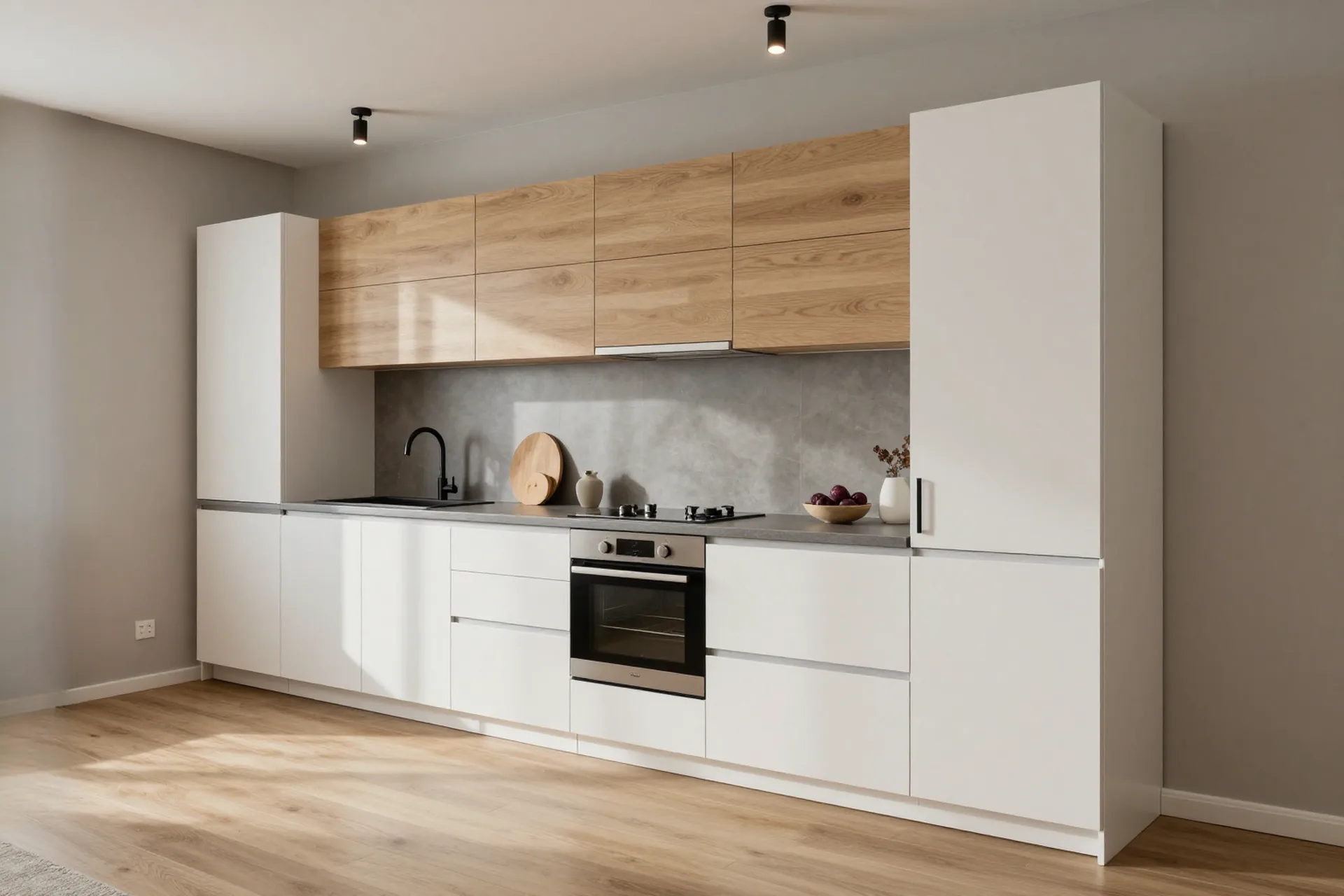
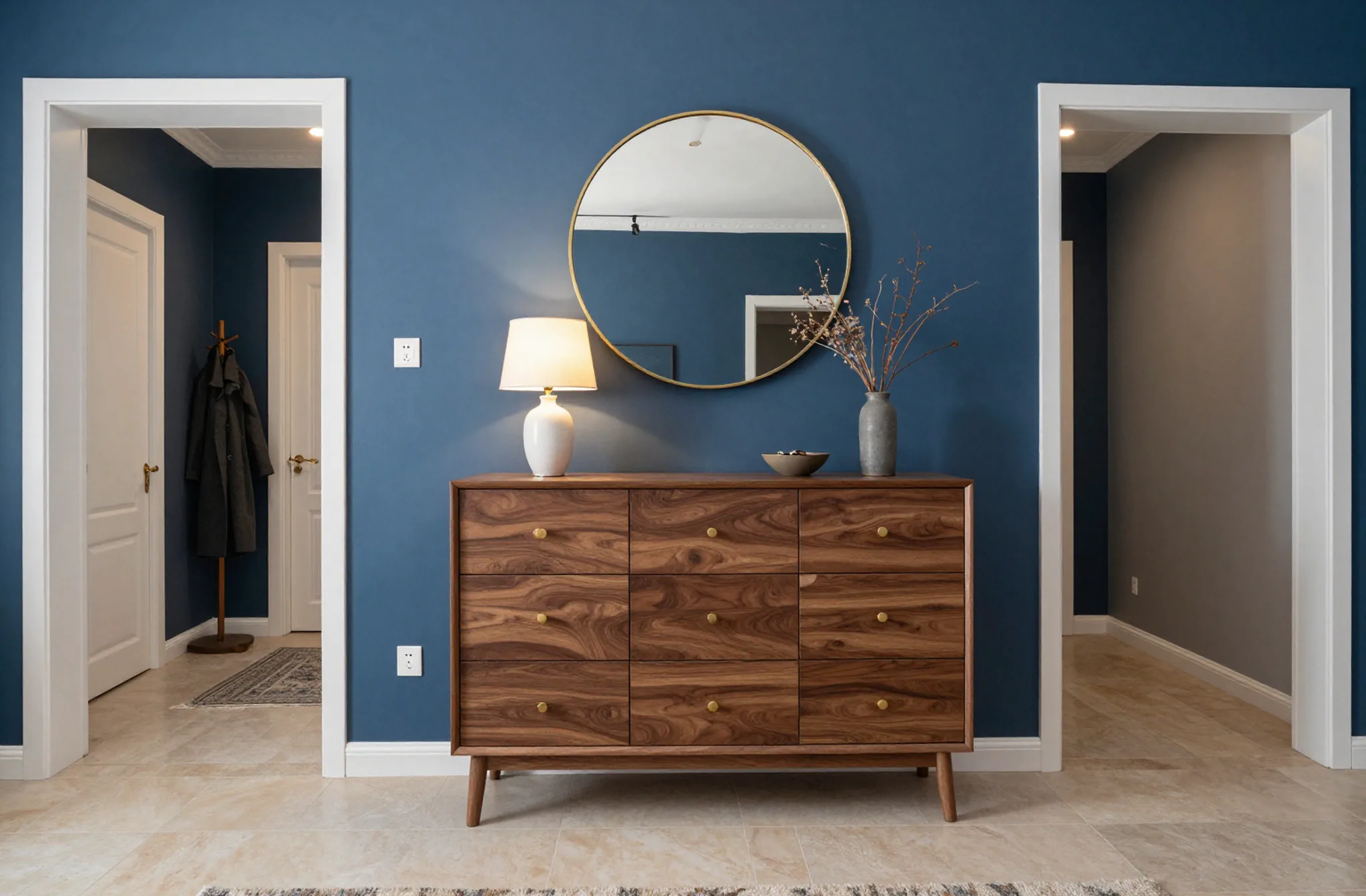
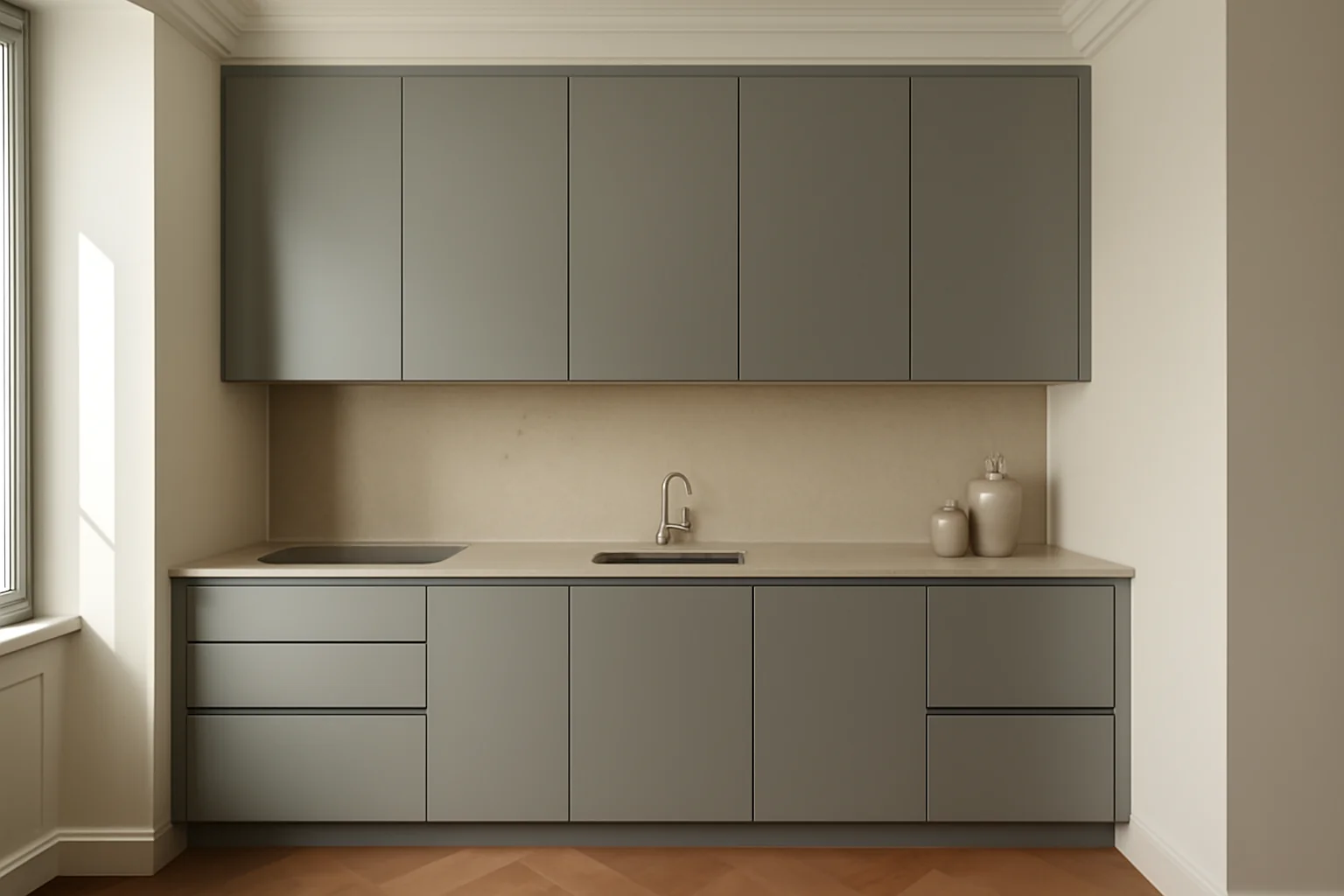
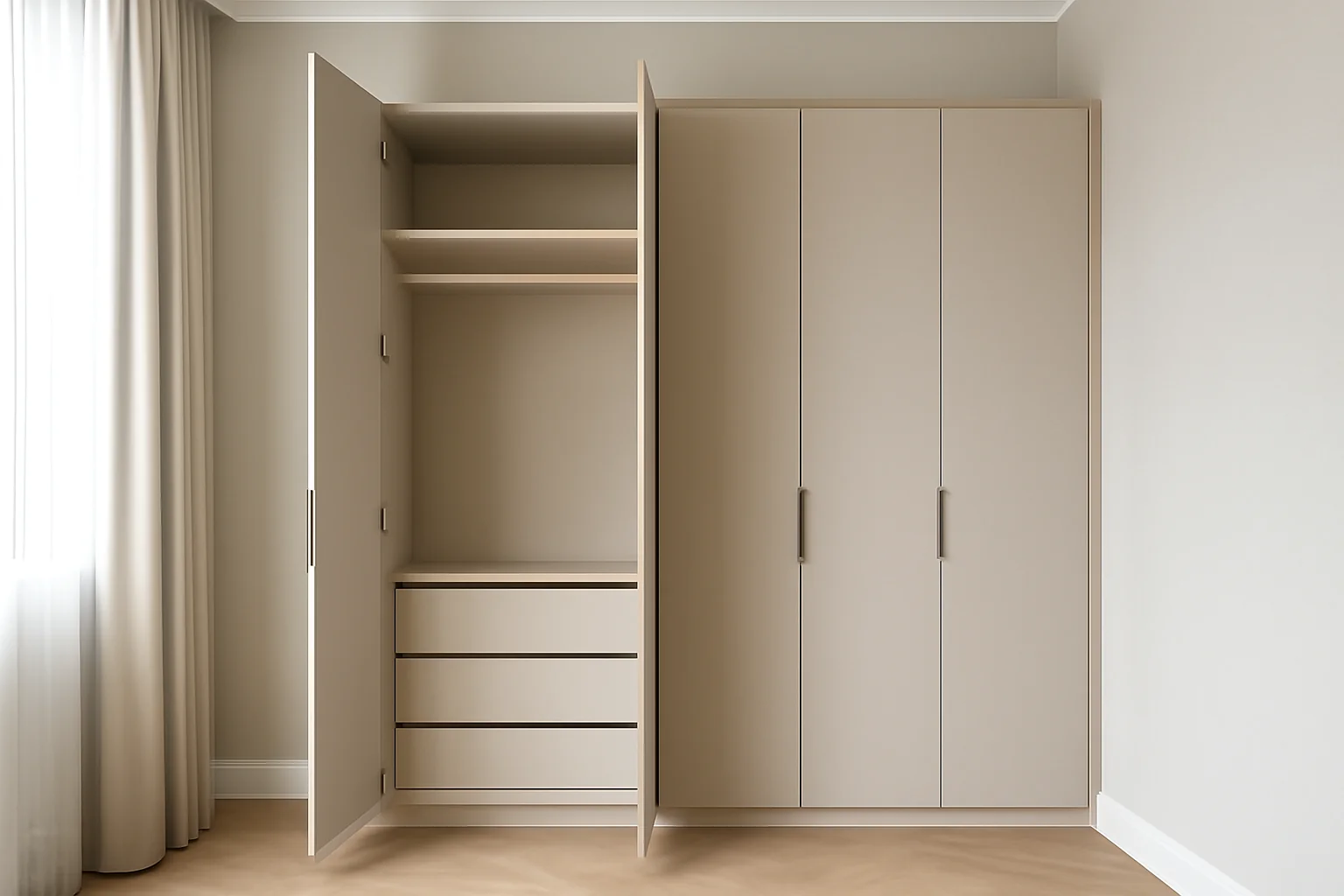
MEBLIX makes custom cabinet furniture in Almaty as a direct manufacturer, not a reseller. We run our own 600 m² workshop, handle free measurement and a 3D project in 1–2 days, build kitchens, wardrobes and built-in storage from Egger and Kronospan boards, and install everything with our own crews. Every order carries a 24-month contract warranty.
Ready-made modules rarely match real walls and niches, so gaps and dead corners become normal. Below we explain what made-to-measure work changes in a room and where an order begins.
What made-to-measure actually changes in your room
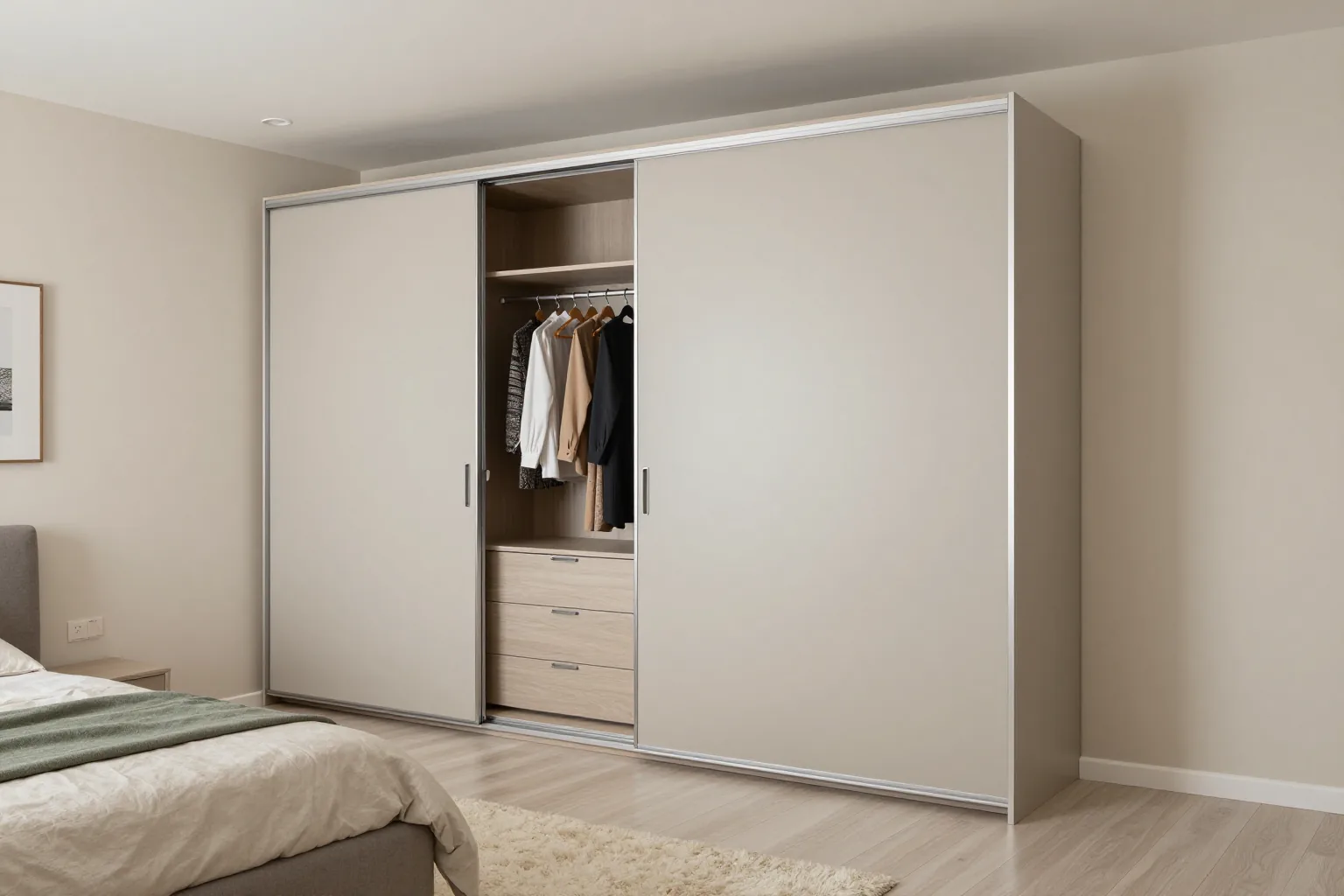
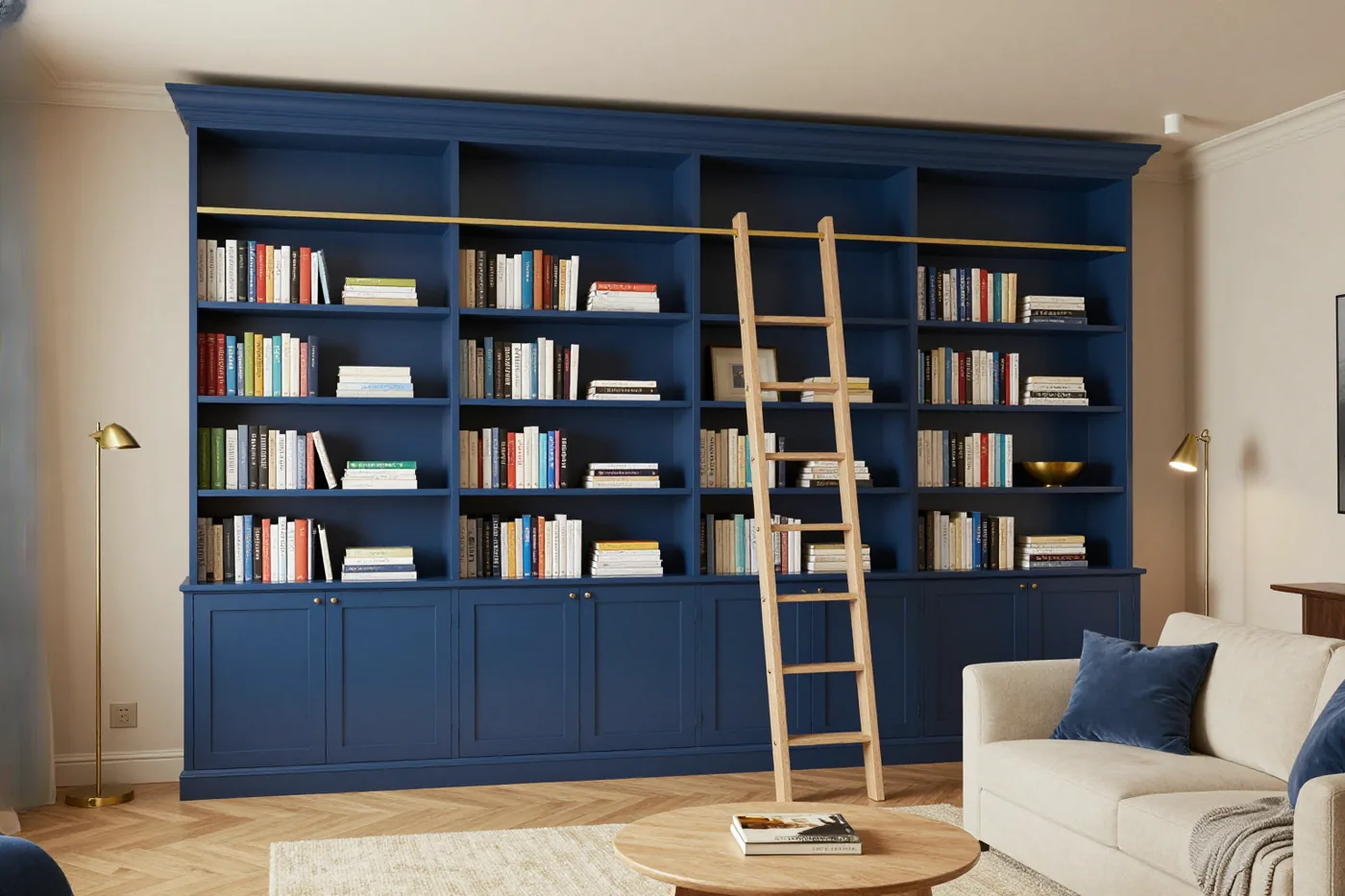
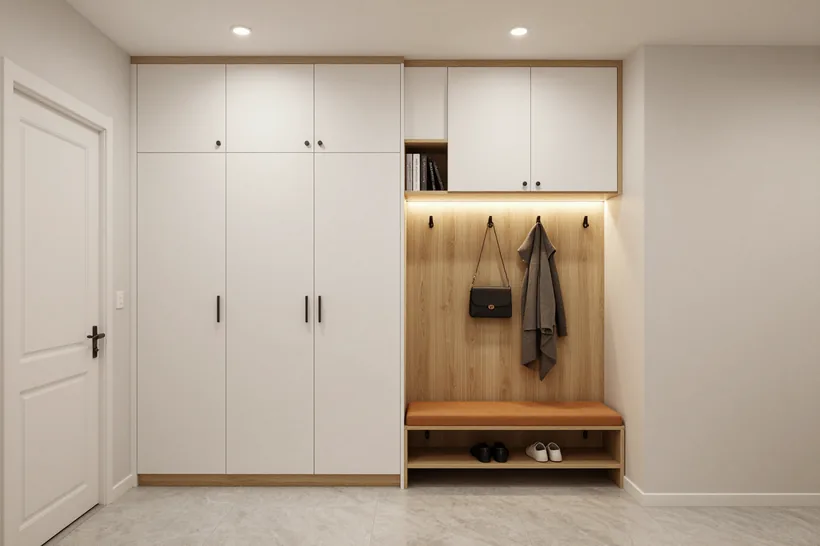
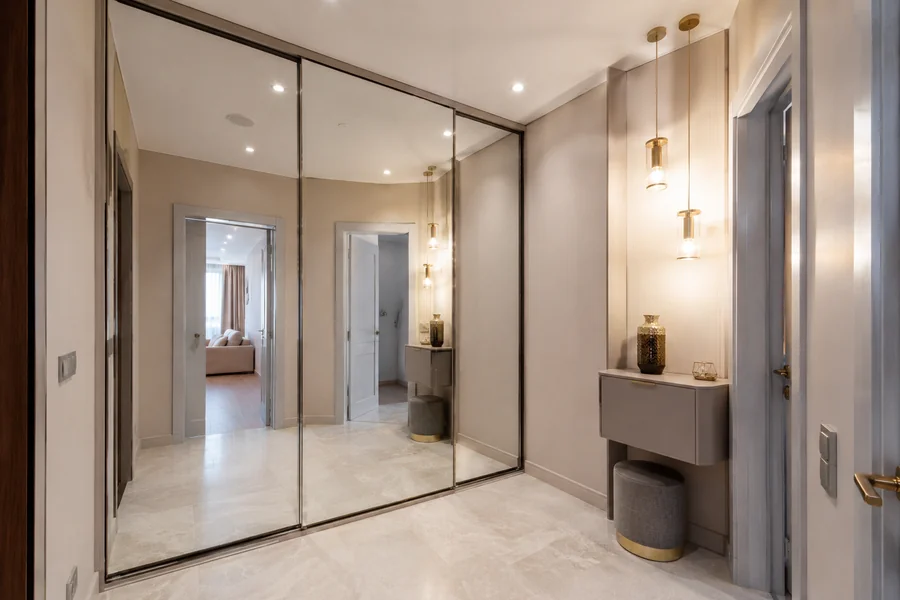
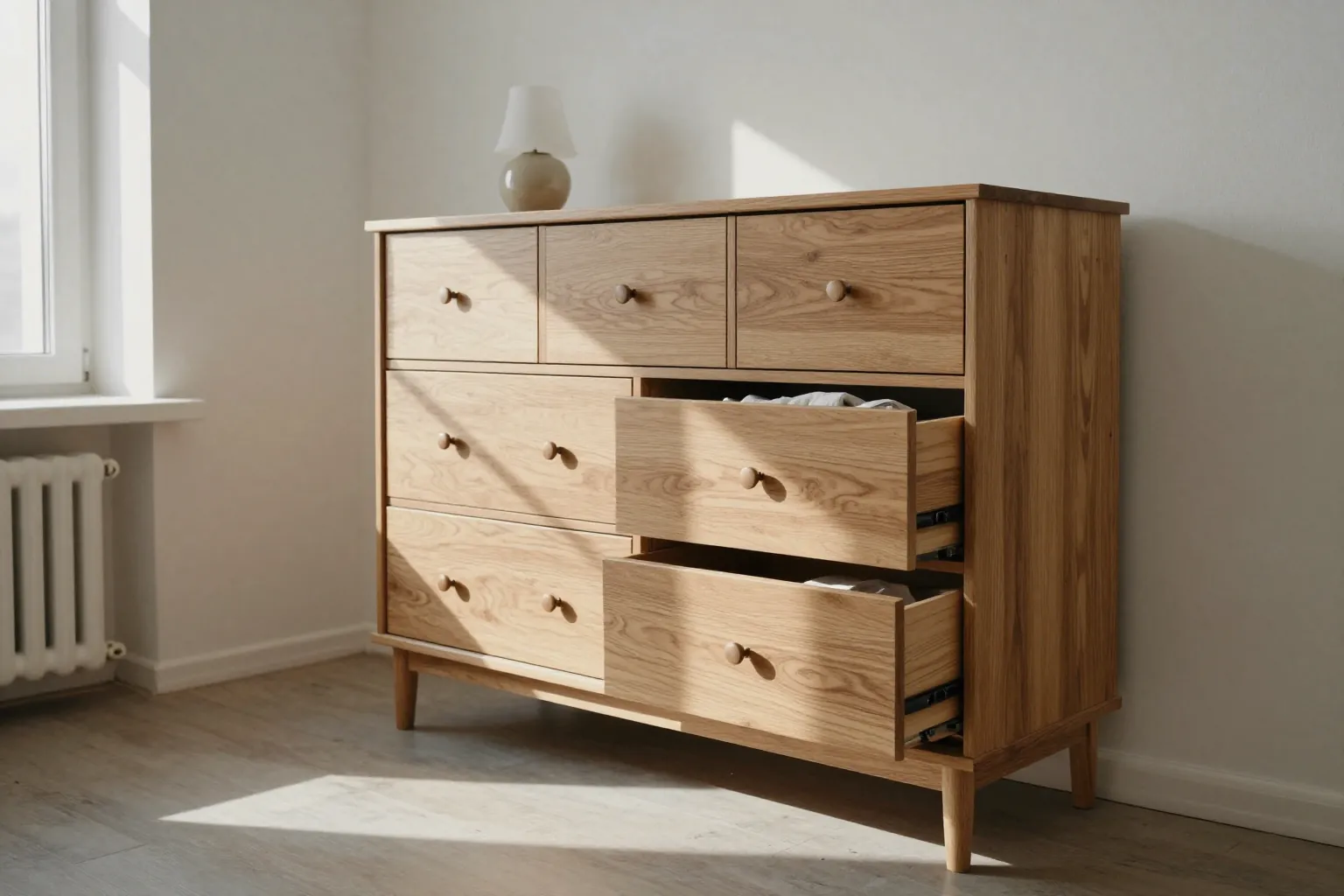
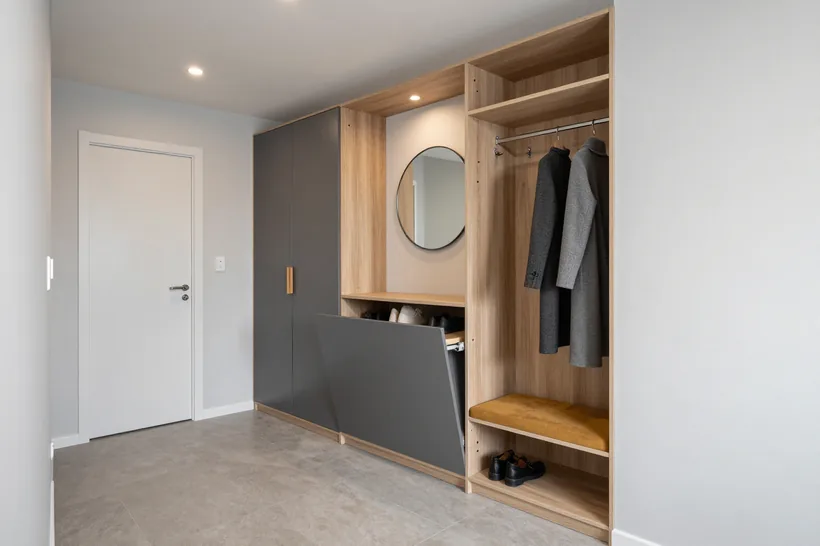
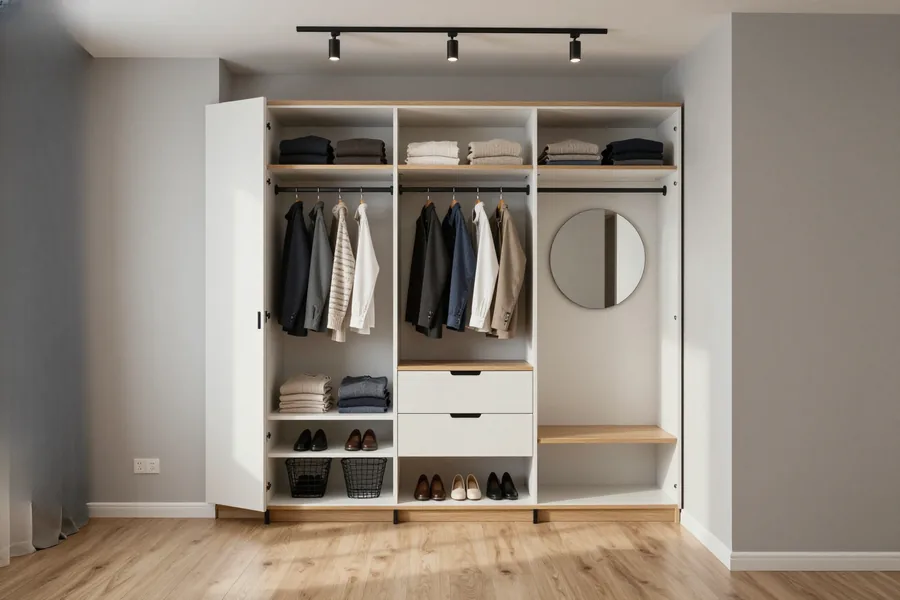
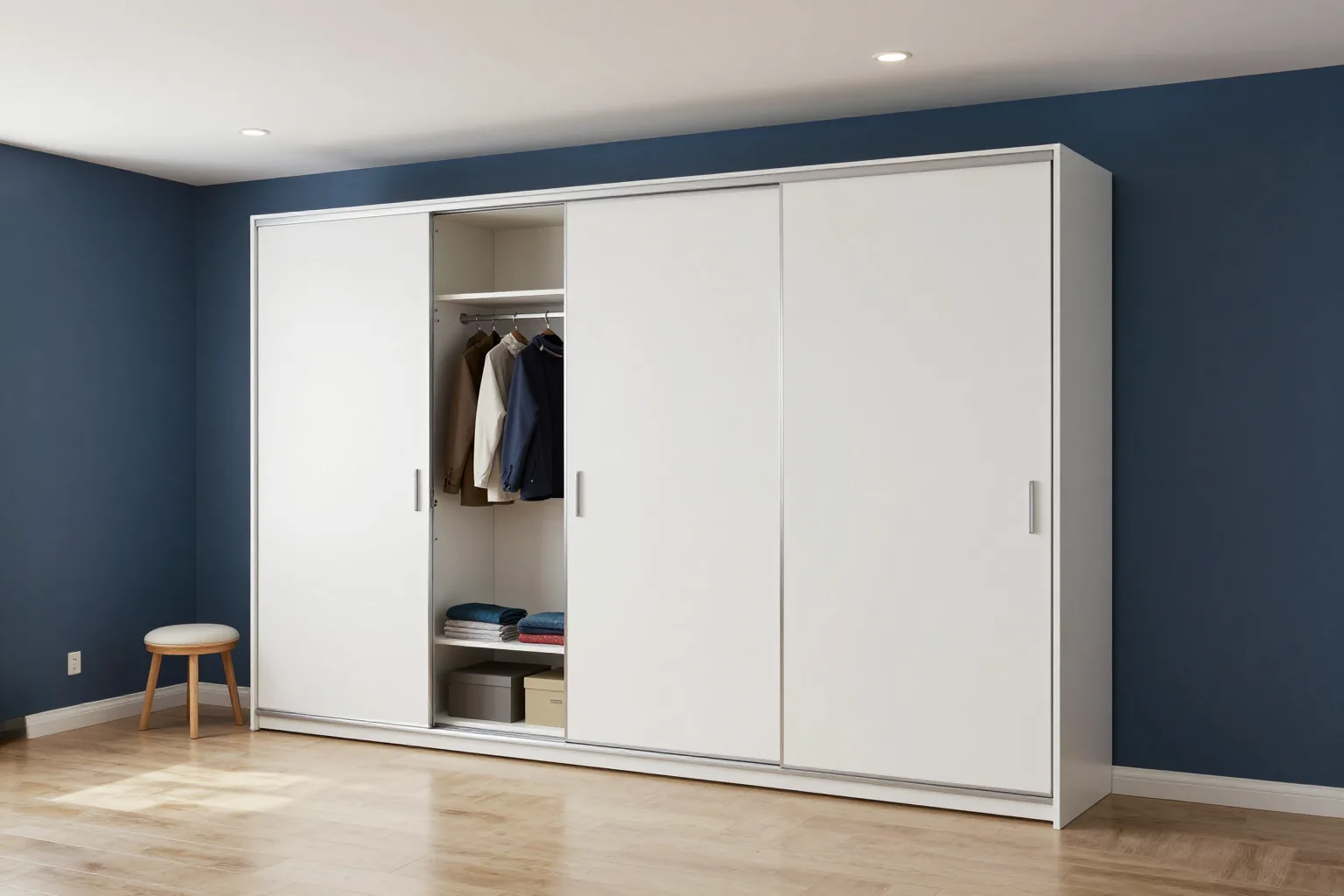
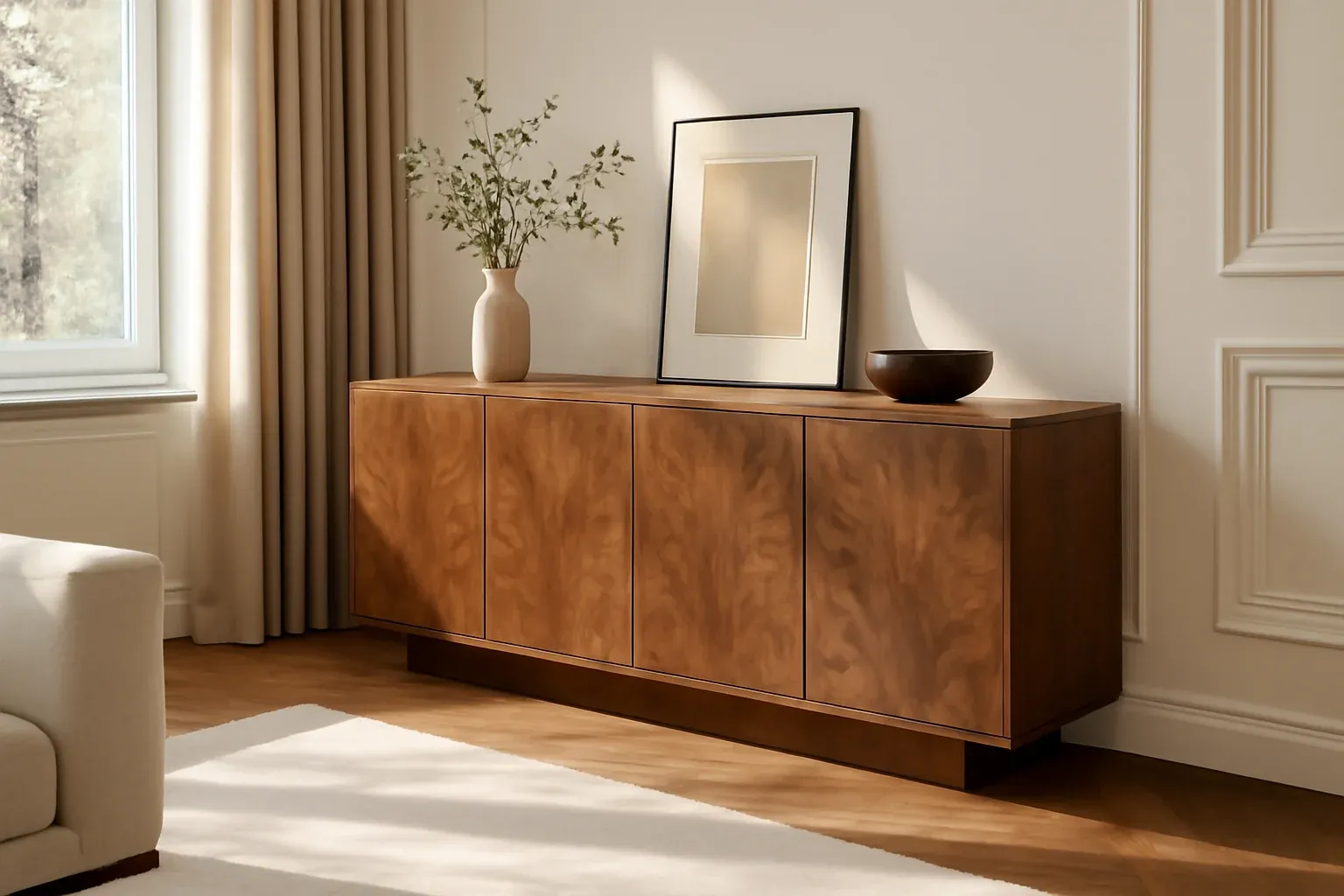
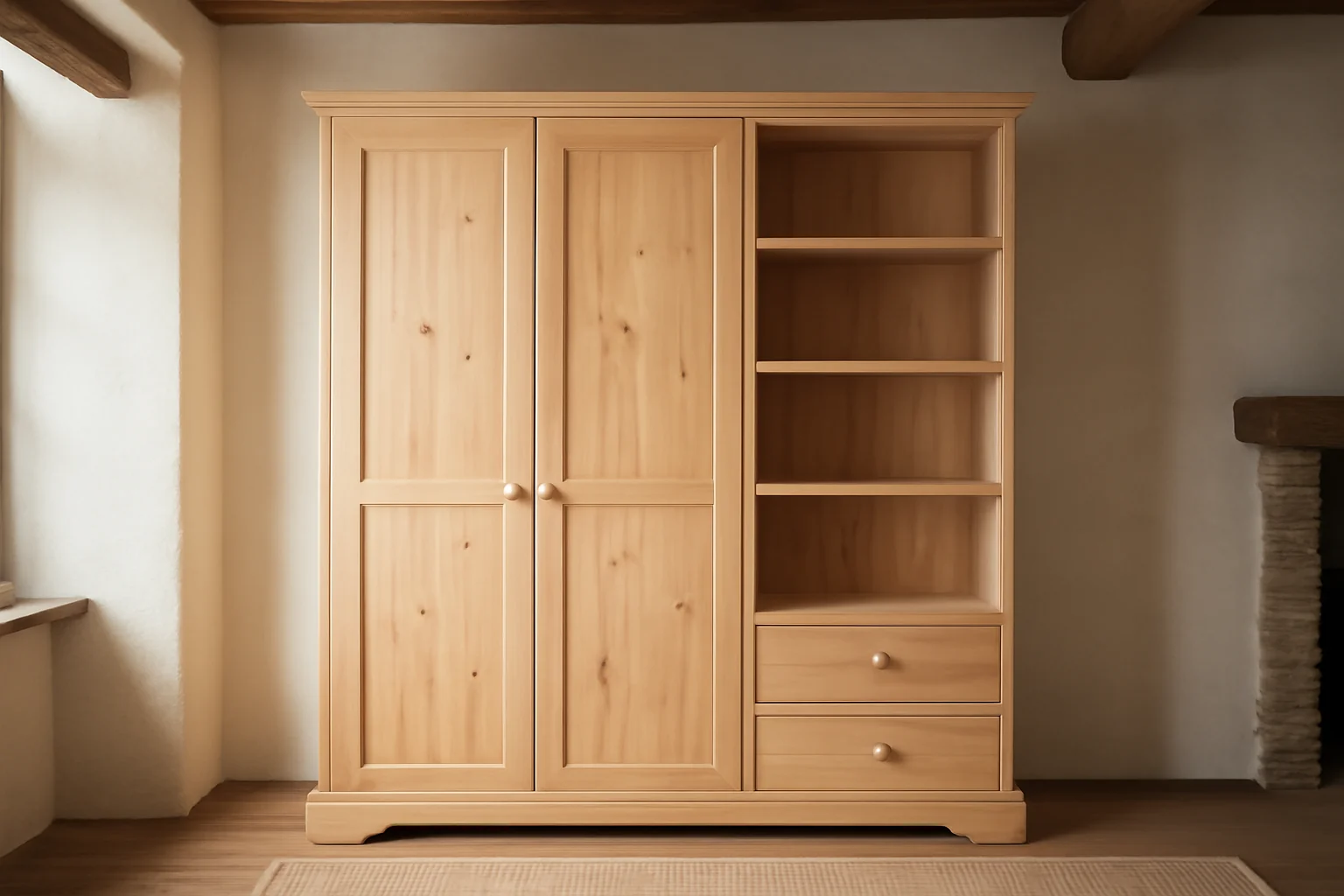
Ready-made cabinets come in fixed widths, so gaps, filler panels and dead corners are normal; made-to-measure units are cut to the actual millimetre of your opening. A full-height built-in storage run closes the gap to the ceiling and turns a sloped niche into drawers and shelves instead of a dust trap. Wardrobe systems work the same way: the carcass follows the room line, and fronts are sized to the opening you actually have. The gain is not the look but the usable volume — a run to the ceiling and a fitted niche usually recover storage that a standard module wastes. Before you compare options, measure the deepest point of the surface and the highest point of the ceiling, because those two numbers decide which built-in solutions are even possible.
How to tell a real workshop from a middleman
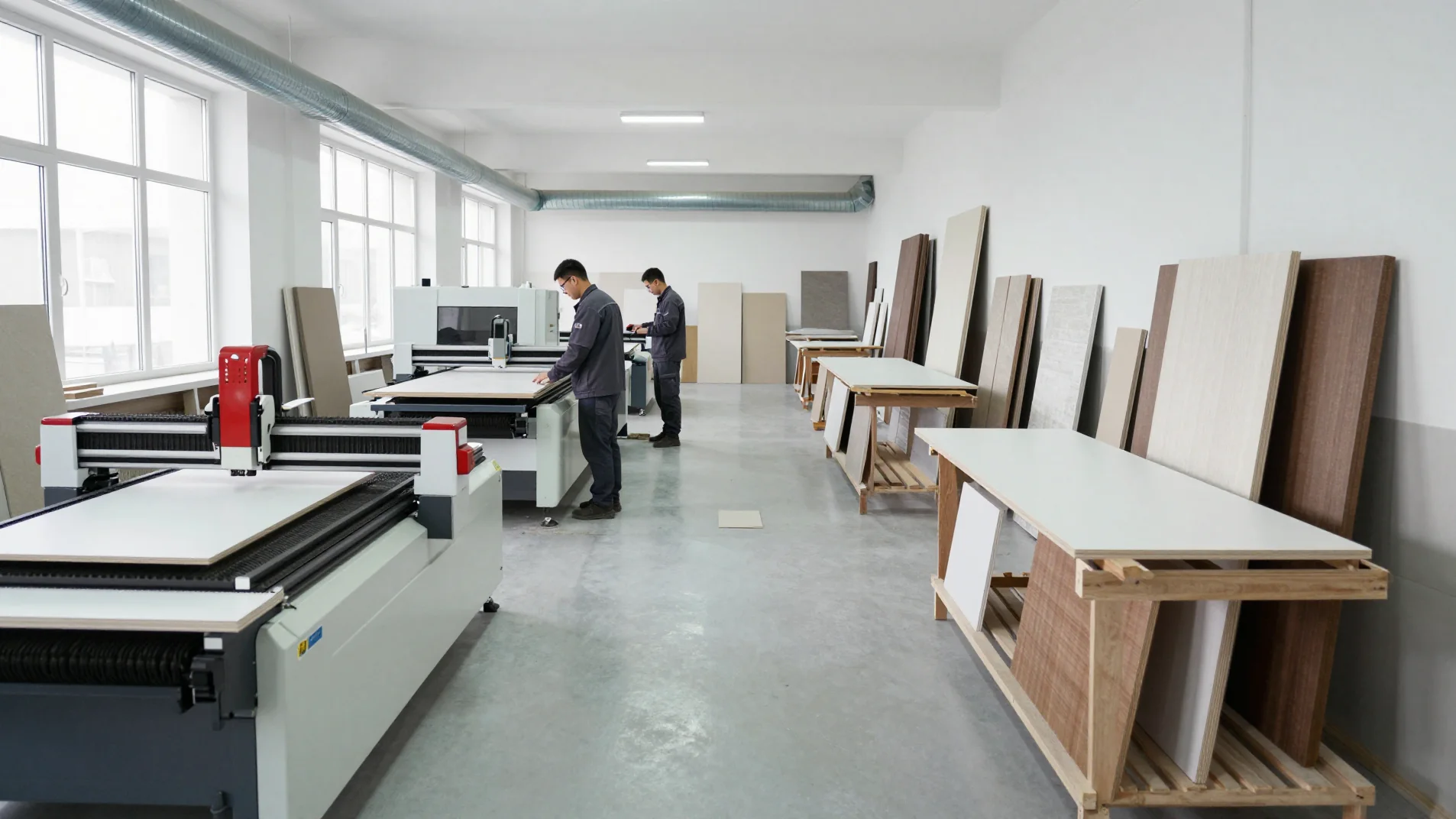
We are a direct manufacturer — measurement, 3D project, cutting, edging, painting and assembly all happen in our own 600 m² workshop in Almaty, and we do not resell finished furniture. The cutting and edging floor, the paint booth and the trial assembly area sit on one site, so a technologist can trace any panel back to the board it came from. A middleman cannot show you that floor or explain who signs the acceptance act: ask to see the workshop and who installs, because that answer separates a producer from a reseller. Our own crews mount what our own shop cuts, so no third party stands between the drawing and the finished unit.
Where to start when you already have a layout
Start with a free measurement — we send a measurer to your address, take the real dimensions and prepare a 3D project within 1–2 days. Bring your own sketch or inspiration photos; the measurer checks services, skirting and ceiling slope on site, and those details decide which built-in solutions are even possible. The 3D project shows the bespoke unit in your room at true scale, so you can move a shelf or a drawer block before anything is cut. From there the designers turn the approved drawing into cutting lists for the shop. A layout you already have is a good starting point, but the site check keeps the finished piece from fighting the surface.
Boards and hardware we build every cabinet furniture piece from
A carcass stands on its board, but its service life rests on the fittings and the sealed edge. Here is what we actually put into custom cabinet furniture and what each choice means in daily use.
Egger and Kronospan boards and what the difference means for you
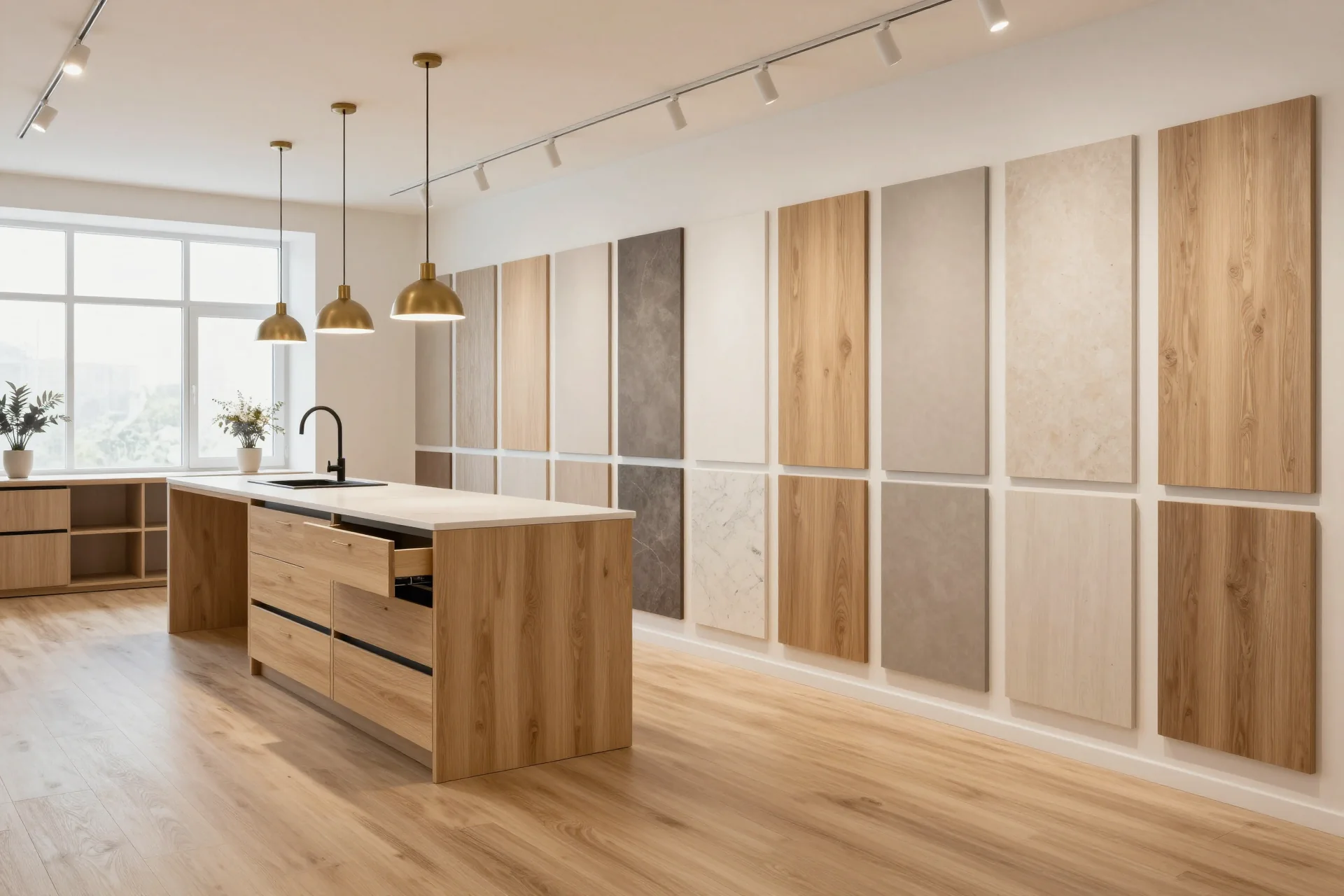
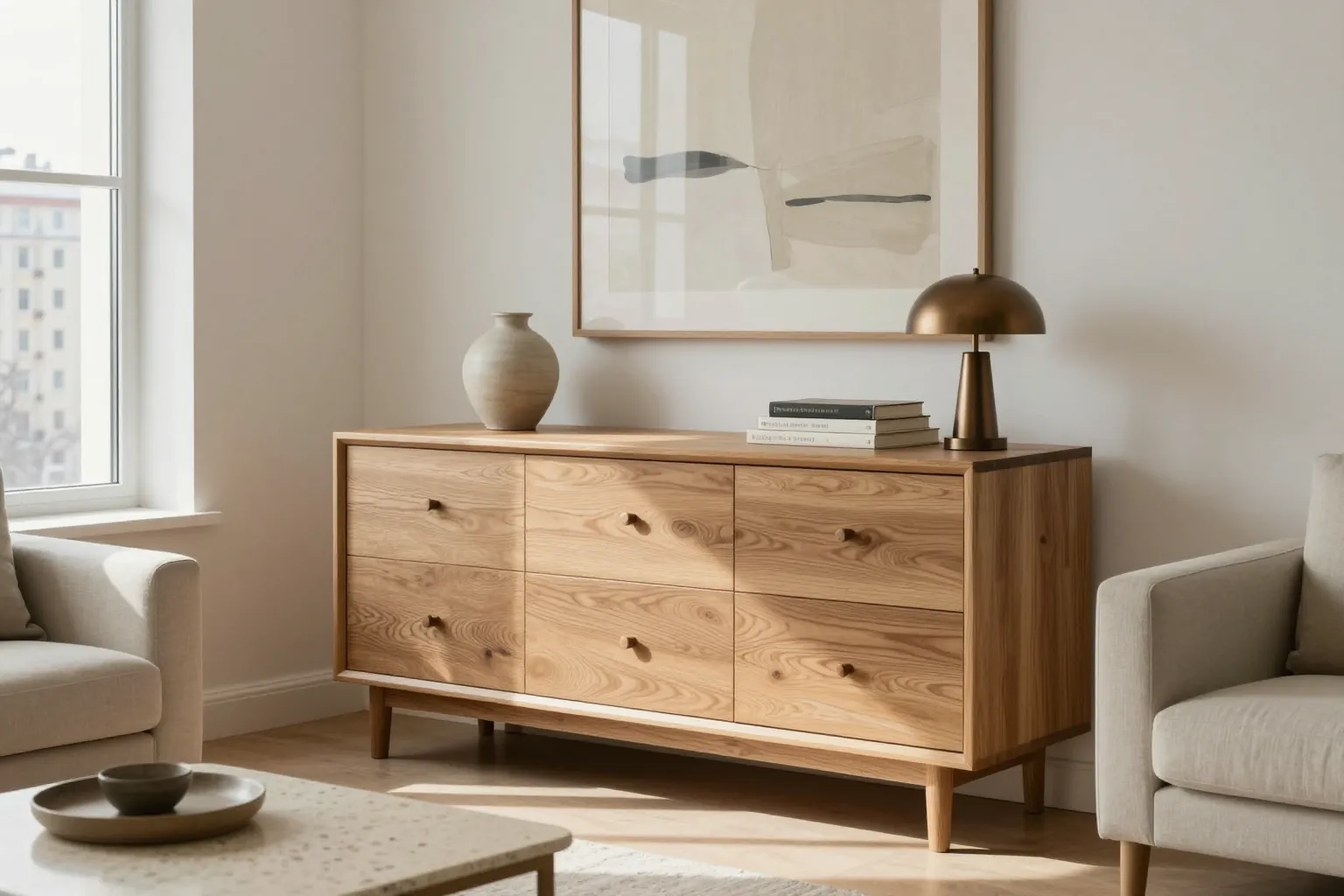
We build carcasses from Egger and Kronospan boards, and both are proven European decors — the practical difference is in the surface finish and the decor range you pick for your project. Egger covers a wider palette of textured and matte finishes, while Kronospan gives you solid classics and dependable colour matching across a large order. Both are uniform in thickness, so doors and drawer fronts line up without shimming on site. What we do not do is swap the supplier mid-project: mixing brands inside one run changes the shade under daylight. Material choice matters less than the banding and the calibration around it; a premium board with a poor seal fails sooner than a mid-range one finished properly on a calibrated line.
Blum, Hettich and Boyard hardware compared
Fitting lines we install, side by side| Hardware brand | What we fit | Warranty |
|---|
| Blum | Hinges, lift systems, drawer runners | 25 years, manufacturer |
|---|
| Hettich | Hinges and drawer systems | Per manufacturer terms |
|---|
| Boyard | Hinges and runners | Per manufacturer terms |
|---|
Why edge banding decides how long a board lasts
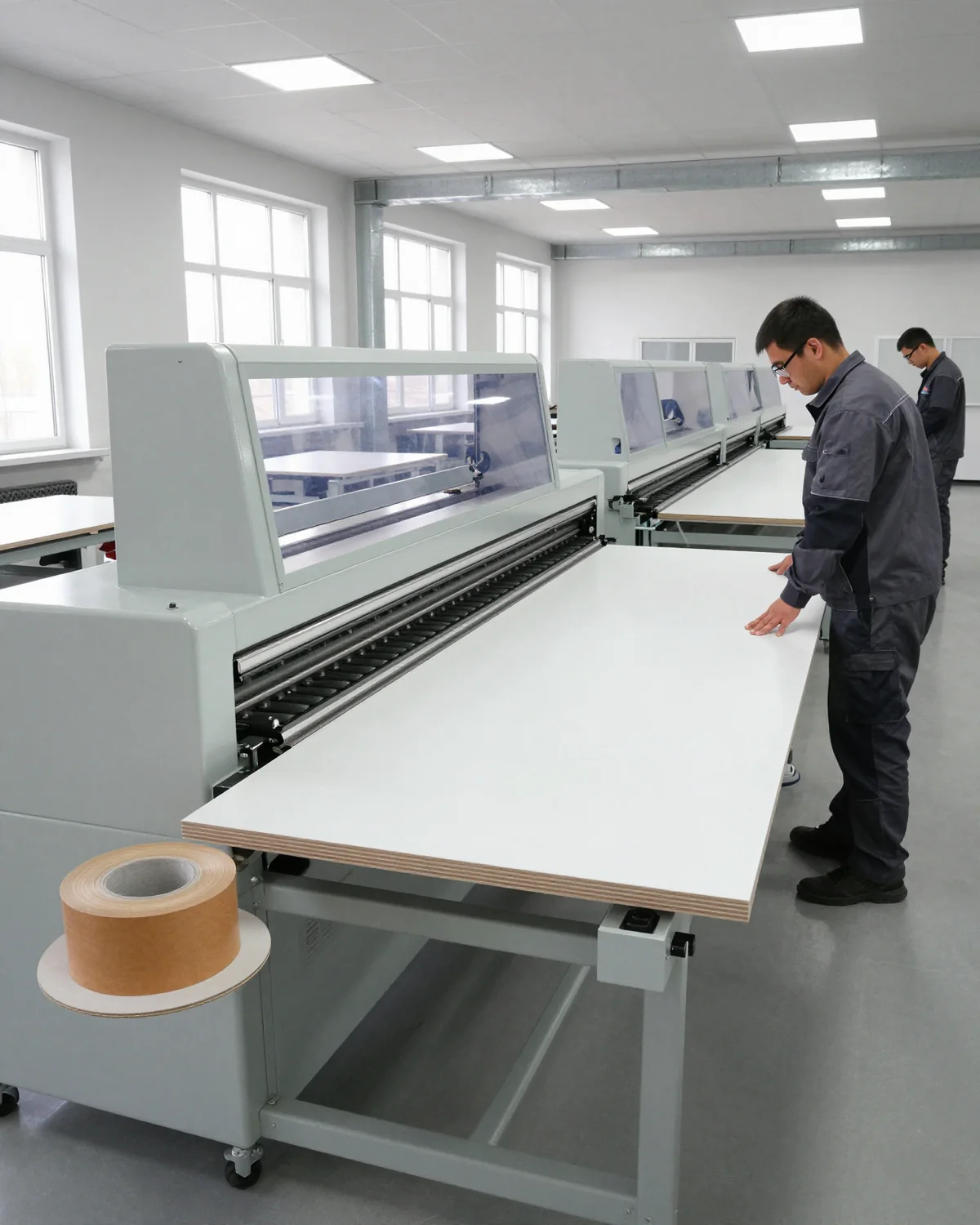
We band every board on our own workshop line, which seals the exposed core and keeps moisture out. The 600 m² workshop runs cutting, edging, painting and trial assembly in one sequence, so a piece is trimmed and glued within hours of being sawn rather than sitting open in a warehouse. Edge quality depends on three things we control directly: a sharp tool, the right glue temperature and a clean trim after bonding. A dull blade leaves micro-chips that open a path for water, and an open seam is where a panel swells first, especially near a sink or a floor. A properly glued and trimmed finish is the cheapest insurance against a cabinet that bulges within a couple of seasons.
The order journey from free measurement to installation
Every custom cabinet furniture order passes through six stages inside one workshop, from the first visit to the finished piece. Below is what happens at each stage and which decisions are settled there.
What the free measurement and 3D project include
The measurement is free, and the 3D project is ready in 1–2 days so you can see the piece in your room before anything is cut. Our measurers record wall lengths, ceiling height, corner angles and the position of sockets, pipes and radiators, then the designers turn those numbers into a drawing with door fronts, internal fillers and shelf heights. You receive a visual of the cabinet inside your actual layout, not a generic catalogue image. Use the 3D project to test door swing, drawer clearance and how the piece meets a window or radiator; changes at this stage cost nothing, while edits after the saw starts mean a new panel.
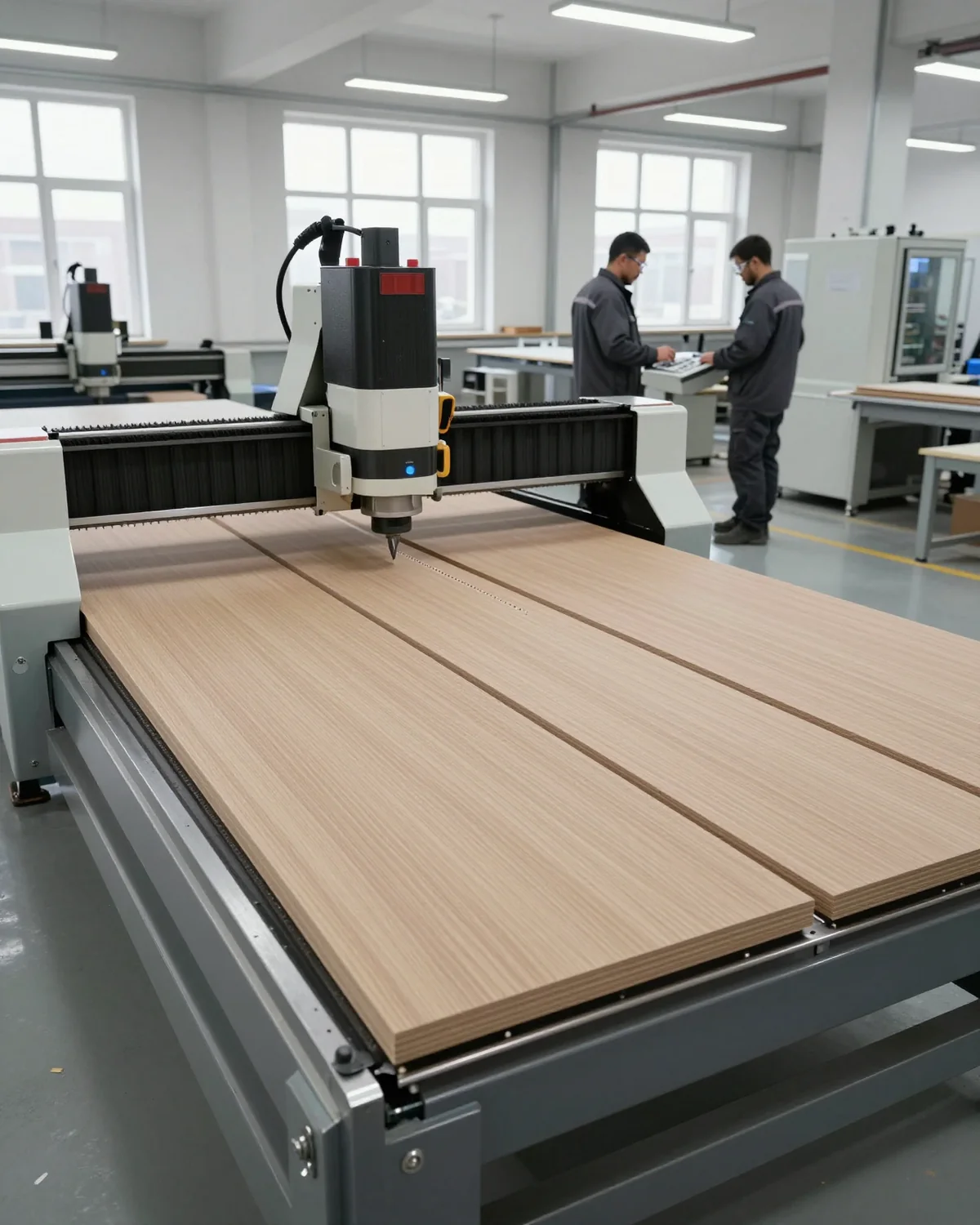
Cutting, edging and painting inside the workshop
Once the project is approved, the boards are sawn, edged and painted on our own floor, so the whole chain stays under one roof. The 600 m² facility in Almaty holds separate zones for panel work, edge banding, painting and trial assembly, and each board carries its own card tied to your drawing. Egger and Kronospan panels are stored flat and matched by batch before the saw starts. Keeping every operation in the same shop is what lets us match grain across doors and hold tolerances tight; a split supply chain is where mismatched panels and late parts usually come from.
Who installs the furniture and how the day runs
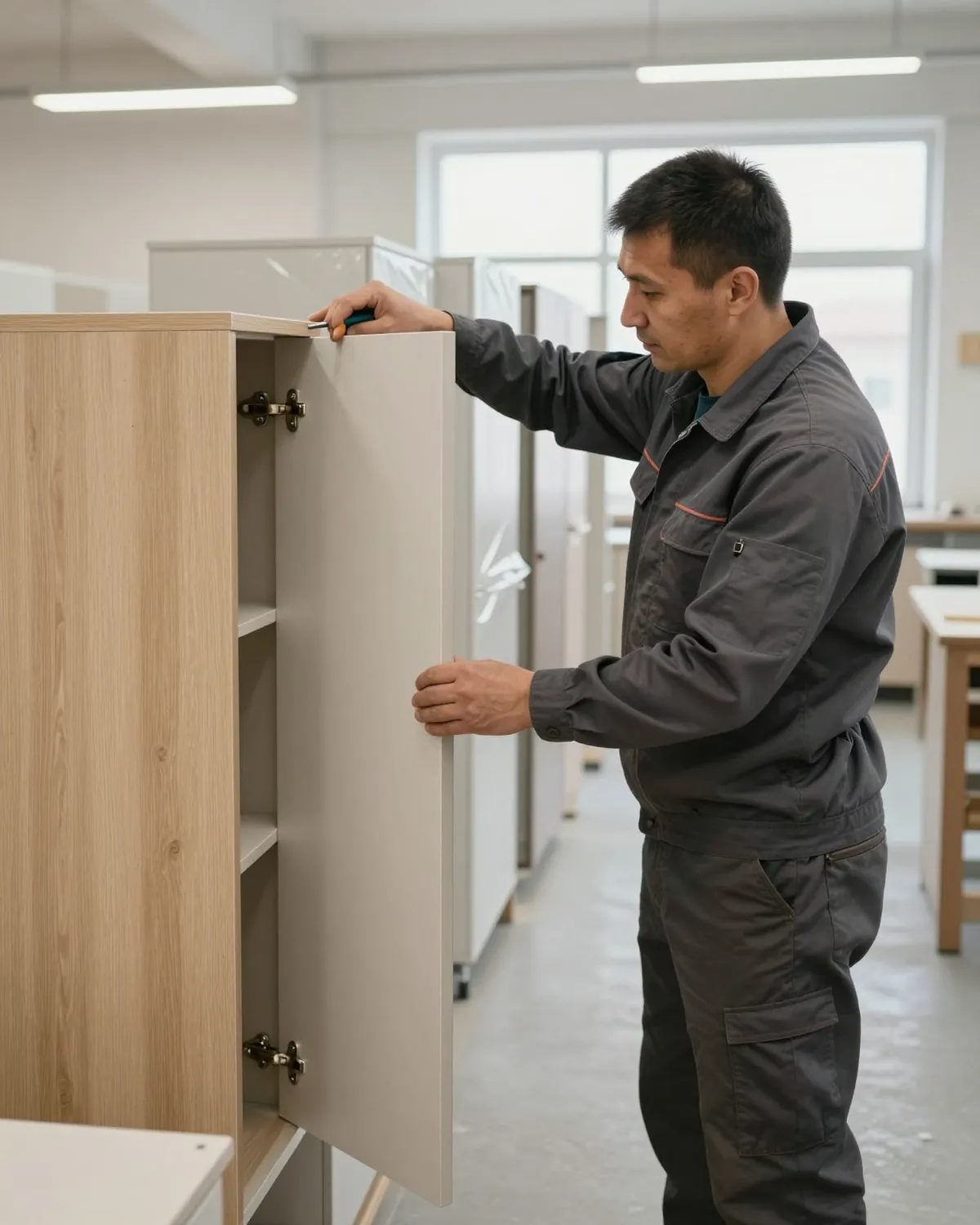
Our own installation crews fit the furniture on site — the same workshop that built it sends the fitters, not a third-party team. The crew arrives with the piece already trial-assembled and labelled by room, so most of the day goes into levelling, fixing and aligning rather than sorting parts. On installation day, clear the floor, and check that power and water are live where the cabinet needs them; fitters can adjust doors and drawers on the spot, but a missing socket means a return visit. Ask the crew to walk you through the soft-close settings before they leave — those hinges are easier to tune while the tools are still out.
Quality control, warranty and payment terms
Quality gets checked before anything leaves the floor, and the terms are written into the contract. Here is what we inspect, what the warranty actually covers, and how payment and handover are structured.
What the pre-delivery trial assembly catches
We run a control trial assembly on the workshop floor to check that every panel, hinge and runner lines up as designed. The trial build is a full dry fit of the piece: carcass panels are joined, Blum hinges and drawer runners are fitted, and doors are hung to confirm the gaps and the drilling pattern. A mis-drilled hinge or a wrong panel shows up while it is still in our hands, where correcting it takes minutes on the bench. On site, the same fault turns into a second visit, a rescheduled day and a client waiting on a half-finished room. That is why the control build is a fixed step in our process, not an optional check, and it happens with the same crew that will later mount the unit.
What the 24-month warranty covers and what it does not
The assembled piece carries a 24-month warranty under the contract, and Blum hardware carries its own 25-year manufacturer warranty. That document defines a defect, so read it carefully at signing: it separates a manufacturing fault, such as a delaminating edge or a hinge that fails under normal use, from normal wear and from damage caused by moving the furniture, a flooded floor or an overloaded shelf. Hettich and Boyard components follow their own manufacturer terms rather than the Blum coverage. Keep the signed paperwork and the hardware labels — they are what a claim is checked against, and without them the conversation starts from scratch.
Payment split and the acceptance act after installation
You pay 50 % upfront and the remaining 50 % after signing the acceptance act, which we sign only once installation is finished. The split keeps the second half tied to a completed job rather than to a promise: the balance moves after the furniture stands in your room and the crew has cleaned up. Walk the piece before you sign — open every door, pull every drawer to its stop, check the edge banding and the alignment of the fronts. The act is the moment to note anything you are not happy with, and both payments run by bank transfer, so there is no cash handling on site.
Fitting awkward rooms, tight deadlines and delivery
Real flats are rarely square, and a run of cabinets has to meet whatever the building gives it. We look at awkward junctions, urgent orders and delivery past the city edge.
Niches, sloped ceilings and uneven walls
We build into niches, under sloped ceilings and against uneven walls by cutting each panel to the measured site, not to a standard module. The free measurement records every deviation that matters: a chimney breast that juts into the run, a ceiling that drops along the wall, a corner out of square by a few degrees. Storage systems are then drawn around those numbers, so a wardrobe fills an alcove edge to edge and a low run tucks under the slope without a dead gap above it. The measurement is what makes this work — a wall off by a couple of centimetres is absorbed by a scribed filler panel, so the unit looks built-in rather than pushed into a gap.
Urgent orders and how lead times are set
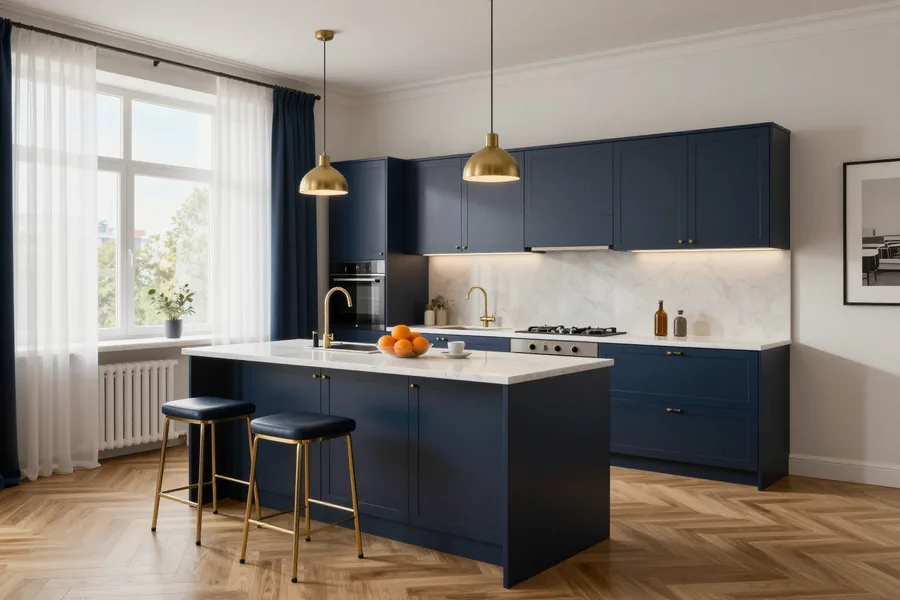
Urgent orders are possible, and the lead time for each option is listed in the price sheet on this page rather than in a single blanket figure. A kitchen with painted fronts does not move at the same pace as a plain wardrobe in Egger board, so one number for everything would mislead you. What we control is the sequence: the free measurement and 3D project take one to two days, and the workshop schedule starts once you approve the drawing. An urgent order moves faster when the project is signed off quickly and the boards are in stock; the earlier the drawing is approved, the more of the schedule we can compress. Tell us the date you need before the drawing stage.
Delivery across the city and beyond 30 km
Delivery across Almaty and up to 30 km is free on a large order, and anything beyond 30 km is charged as a supplement. The threshold that counts as a large order sits on the Delivery and Payment page, so check it against your project before you plan the day. Further out, the supplement is agreed in advance and shown in the paperwork rather than added on arrival. Confirm the address and access before the install date — a lift too small or a courtyard with no truck access changes how the unit is carried in, and that is worth flagging early. A doorway measured at the survey saves a return trip.
The bottom line on cabinet furniture
Choosing cabinet furniture comes down to a handful of practical points: how the unit meets the actual walls, who actually builds it, what the boards and hardware are, and what the contract says before you sign.
- Walls as they are: made-to-measure units are cut to the actual surface, so niches, sloped ceilings and uneven corners turn into usable storage instead of filler panels.
- Workshop or middleman: a direct producer can show its cutting, edging and trial-assembly floor, while a reseller has only a catalogue to offer.
- Board and hardware: the board brand matters, but the edge banding and the hinges and runners decide how long the unit truly lasts.
- One clear sequence: the order moves through measurement, 3D project, workshop production, trial assembly, installation and a signed acceptance act.
- Contract first: warranty, the payment split and delivery terms belong in the agreement, so read them before signing.