
Temirzhan Nurpeisov
Furniture assembly carpenter11 years
★ 4.81 · 47 ratings
For business · Kindergartens
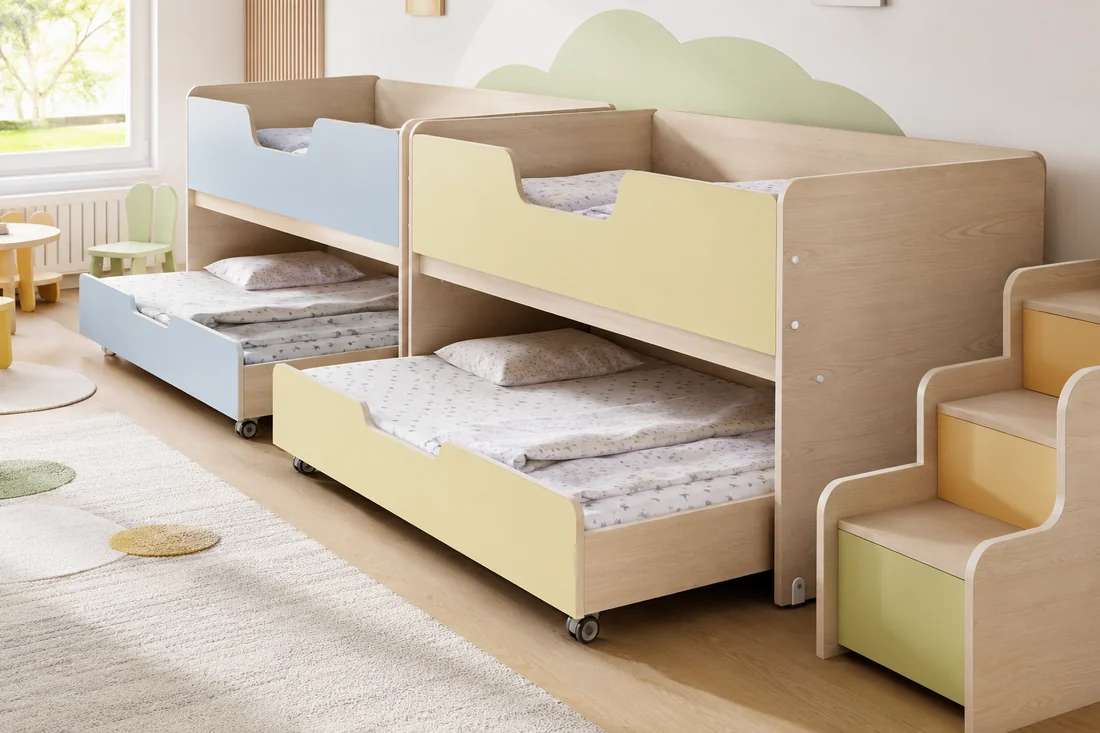
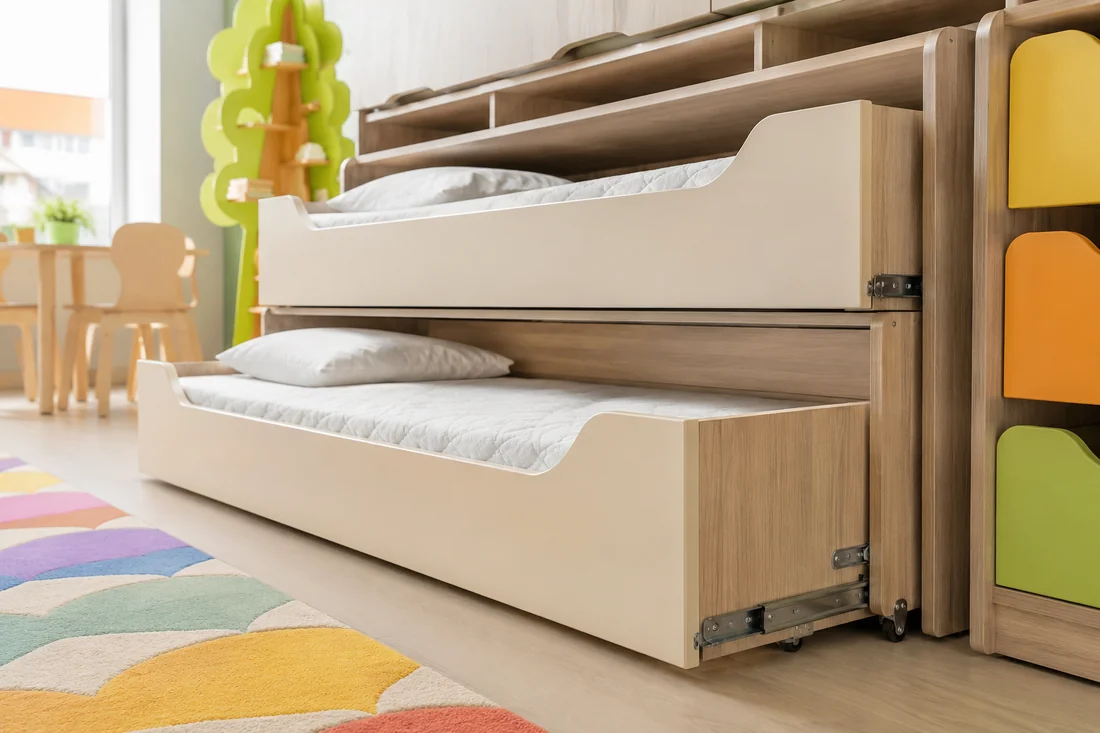
Two or three sleeping places slide under each other and during the day free up the bedroom floor for play and activities. Casters with a stopper and travel limiters, E1 laminated chipboard with rounded corners; measurement and 3D design free, 24-month warranty.
Measurement and 3D design are free and carry no obligation · price fixed in the contract · Kaspi Instalments up to 24 months
01Types
 01
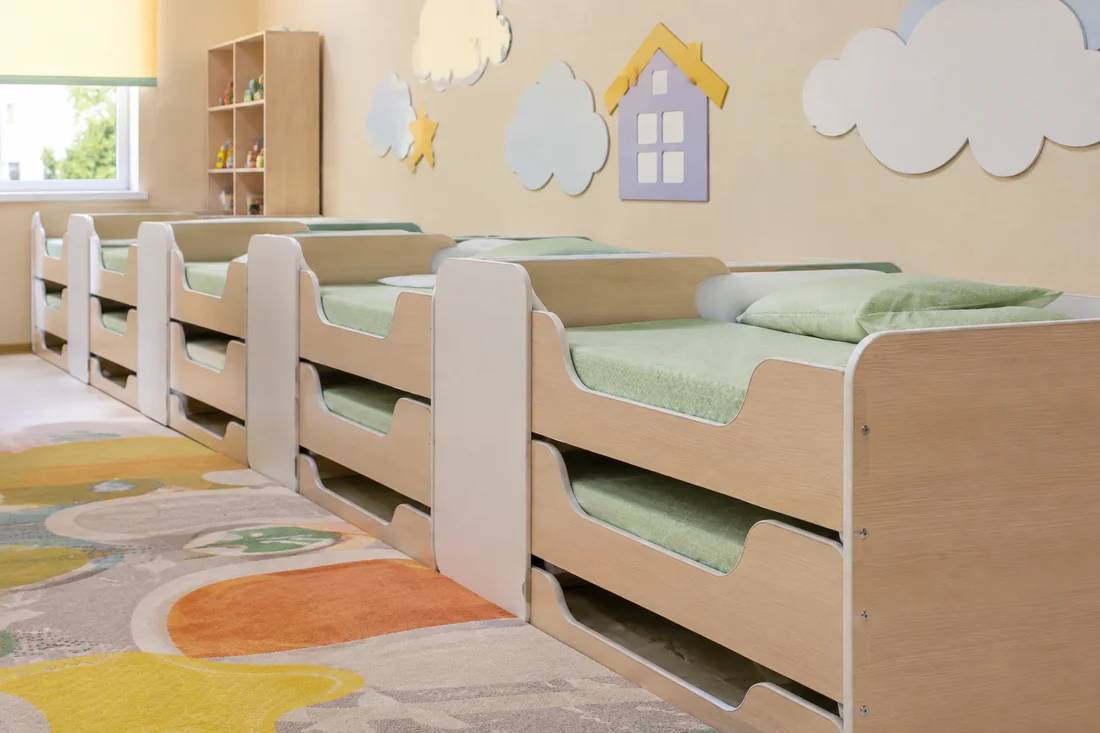
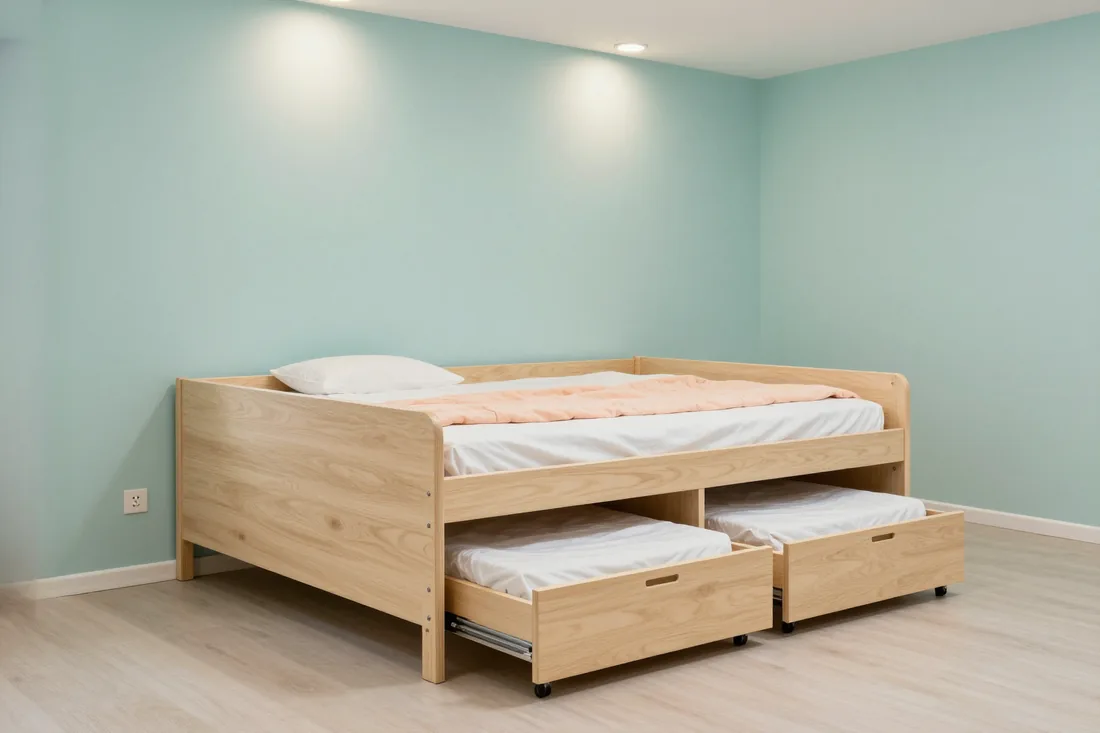
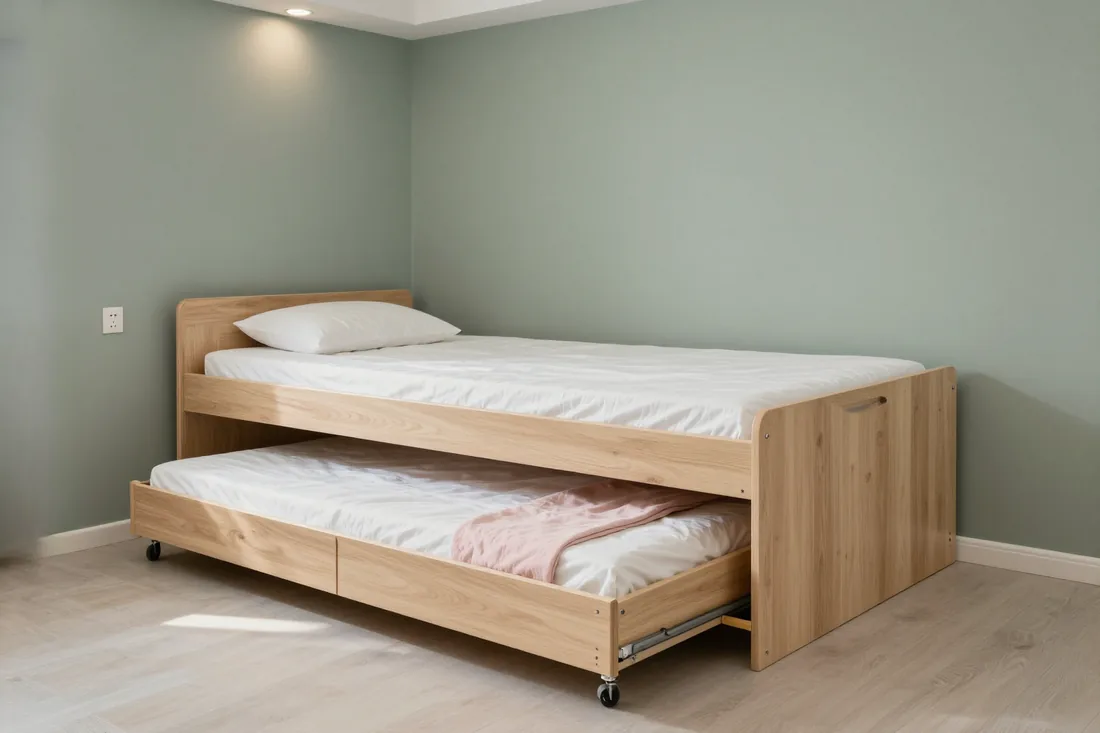
Two sleeping places on casters: the lower one rolls out from under the upper one at nap time. Suitable for medium-sized bedrooms and junior groups.
from 38 000 ₸
 02
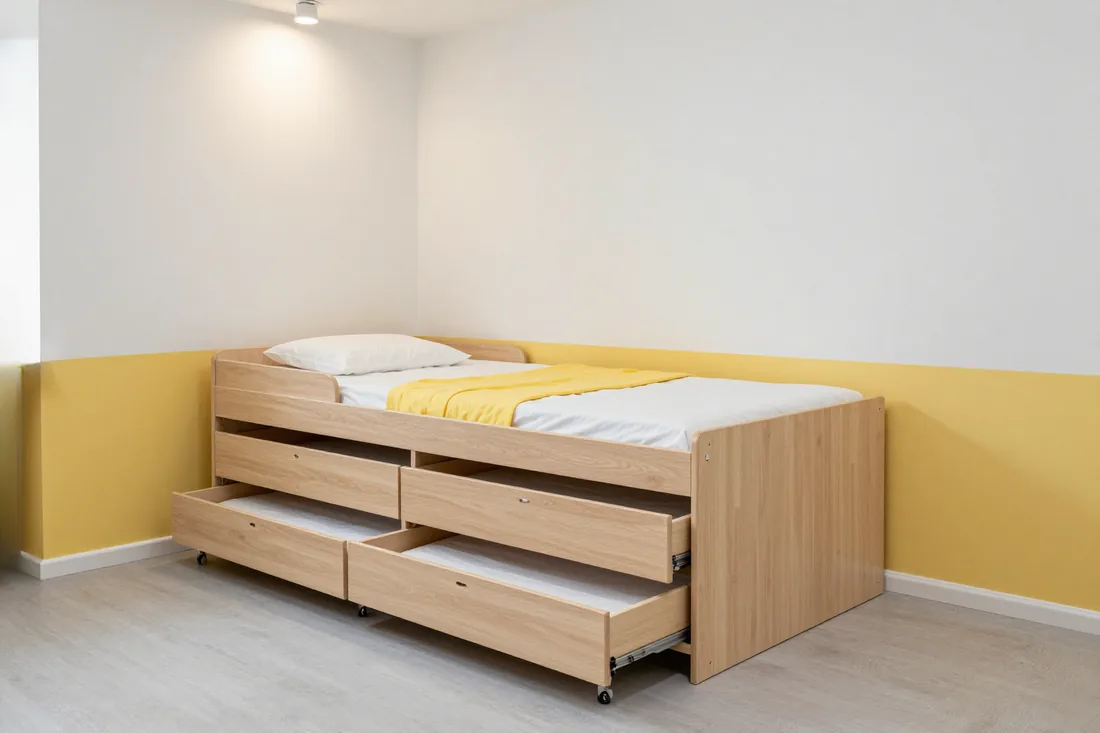
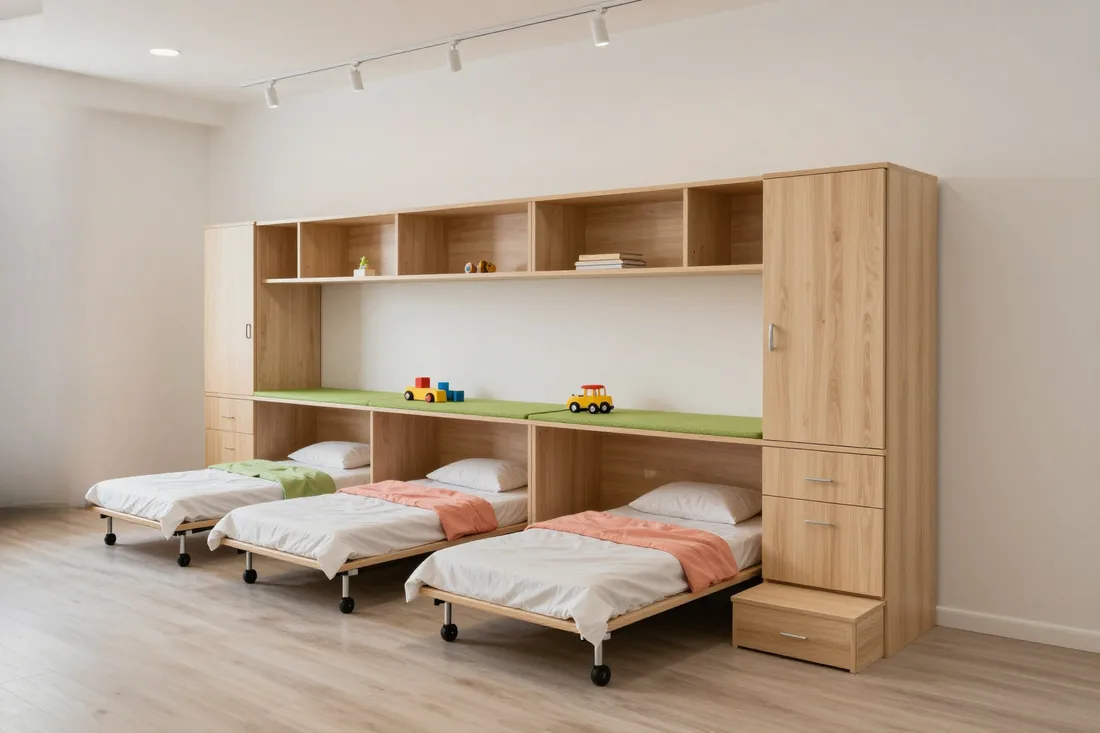
Three sleeping places in one unit for a tight bedroom and a large group: by day the block takes up no more wall space than a dresser.
from 54 000 ₸
 03
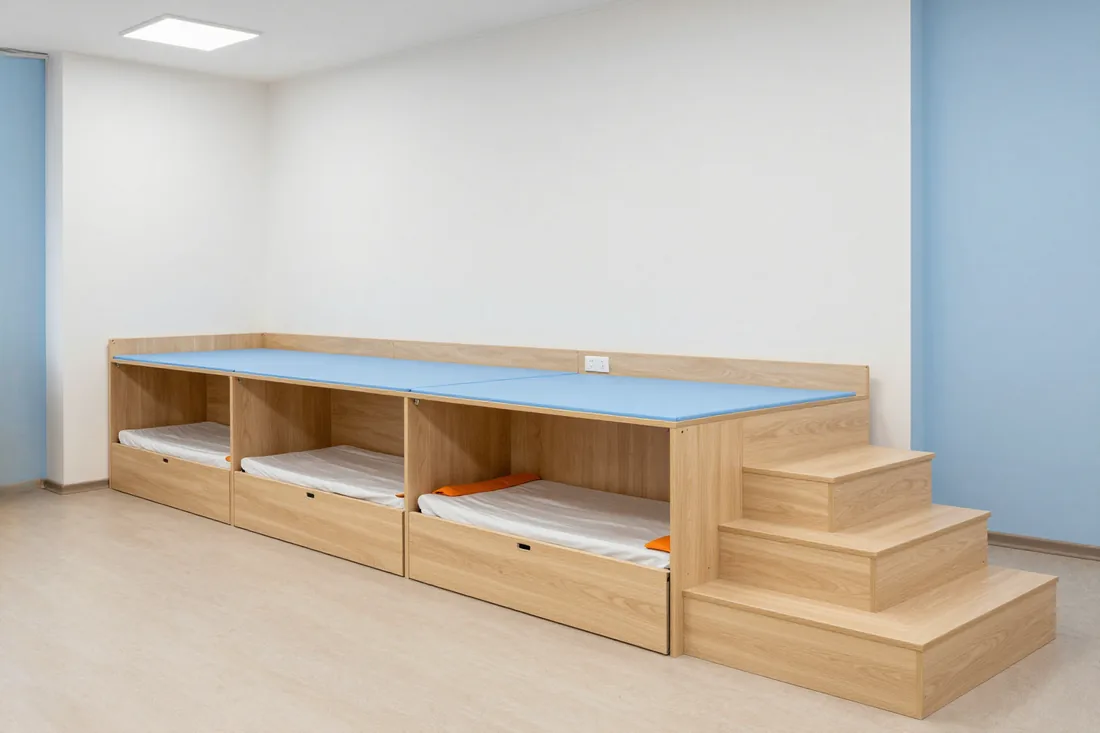
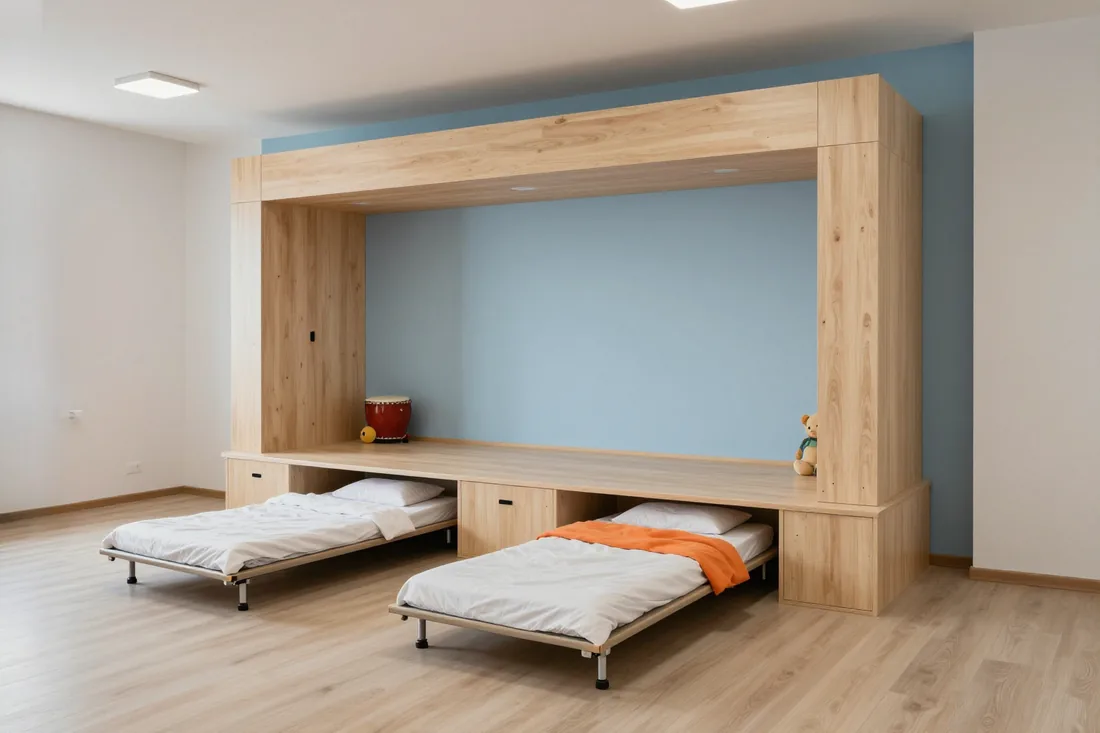
The sleeping places roll out of the podium on runners, while the top stays a play area or a stage for morning performances.
from 62 000 ₸
 04
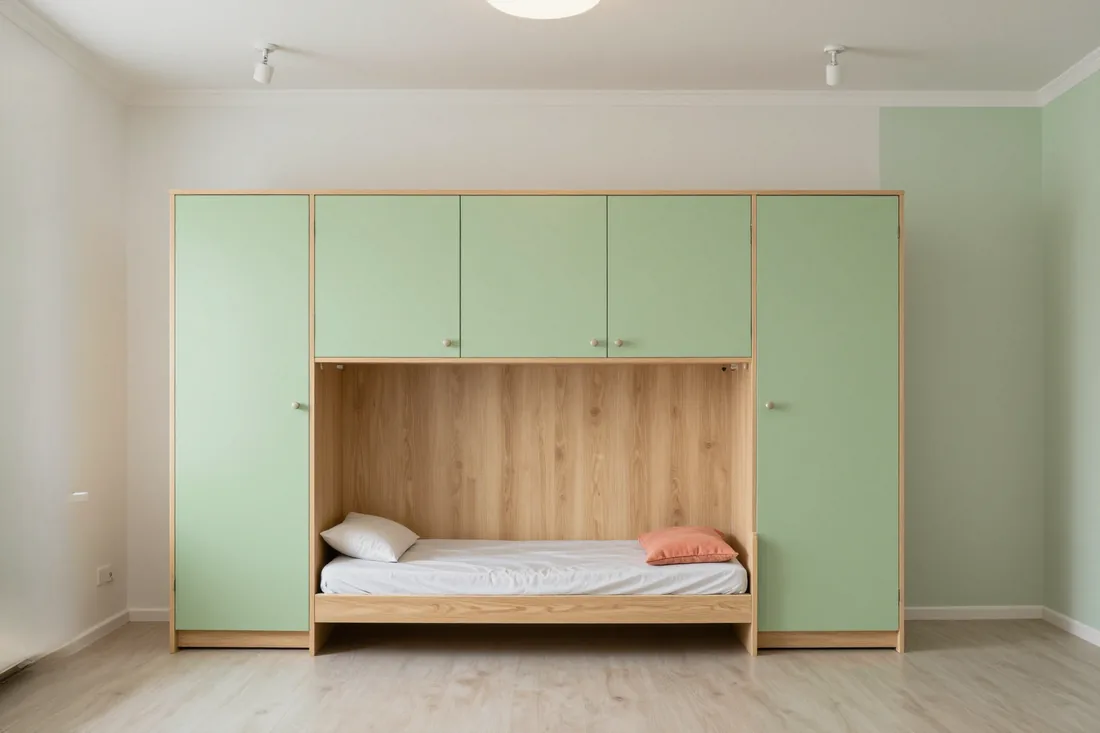
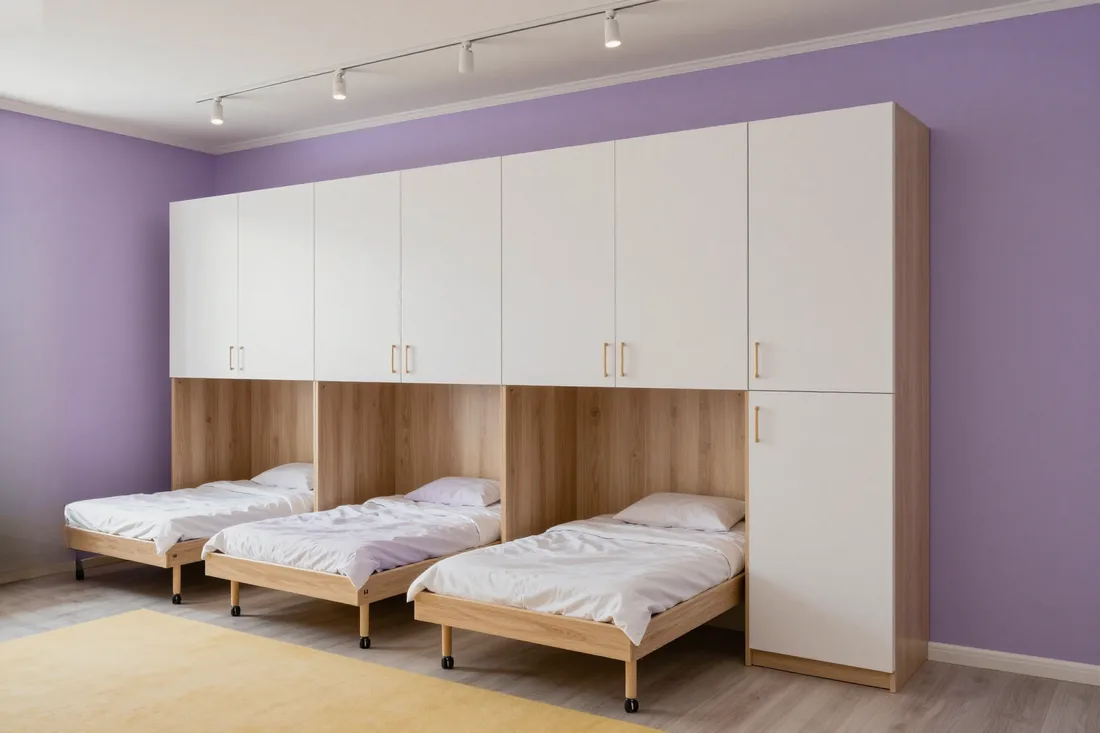
The bed hides behind the front panel of the cabinet wall unit: by day it is a wardrobe in the group's colour, at quiet hour it becomes a sleeping place.
from 48 000 ₸
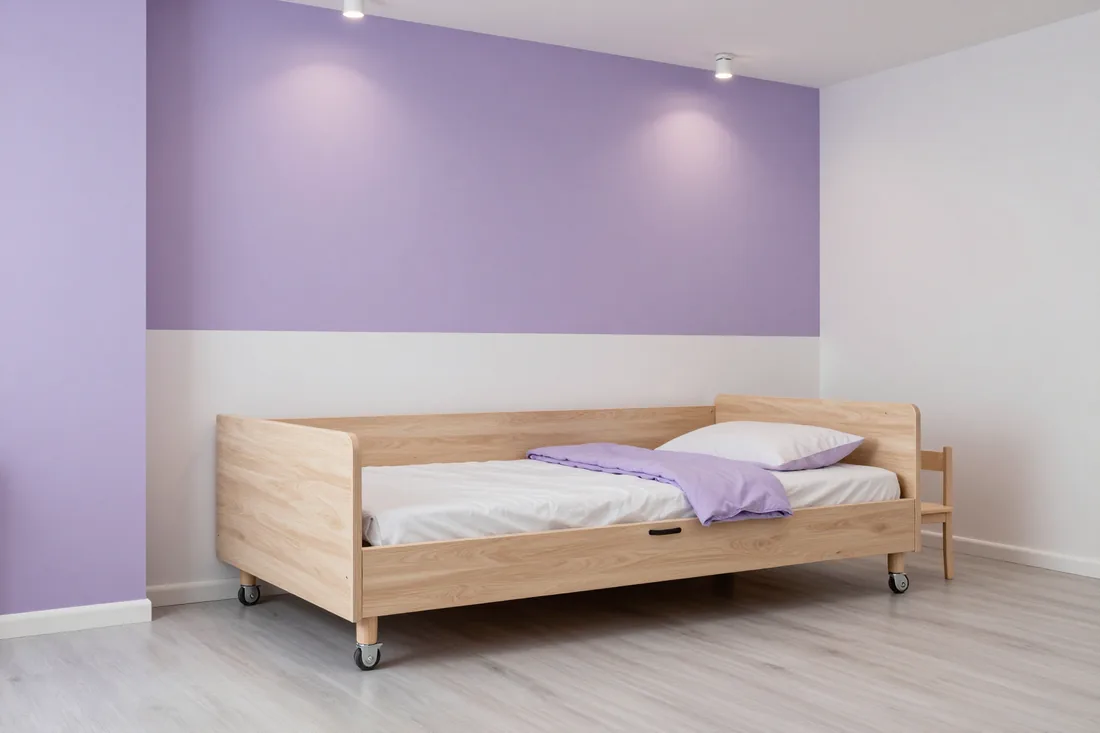 05
Locking castors secure the pulled-out level so it does not roll away when a child lies down or gets up from the mattress.
from 46 000 ₸
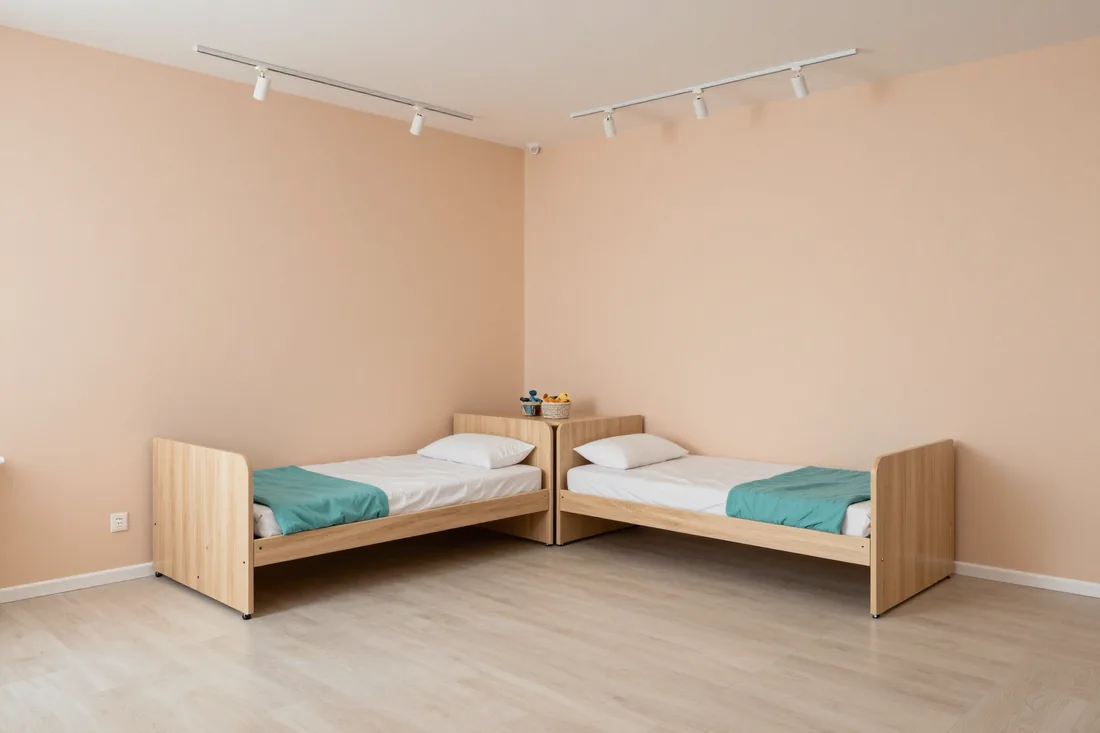 06
The block fits into a free corner of the bedroom and rolls out places in two directions, covering an awkward corner without a radiator.
from 47 000 ₸
02Projects
Site, volume, materials and lead time — per each project.
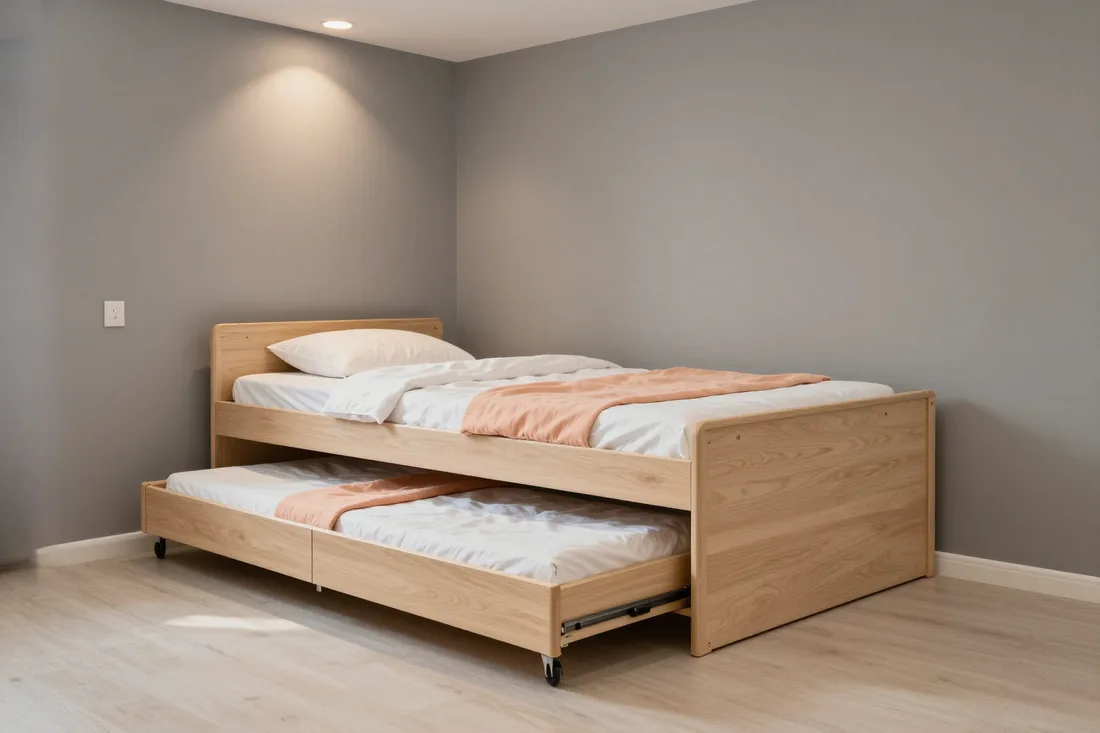 Kindergarten
 No. 112, Bostandyk district
The full-day group's bedroom was fitted with 22 pull-out 2-tier beds: by day they are pushed in and free up the floor for activities, at quiet hour the lower places roll out on quiet castors. Certificates were handed over at acceptance.
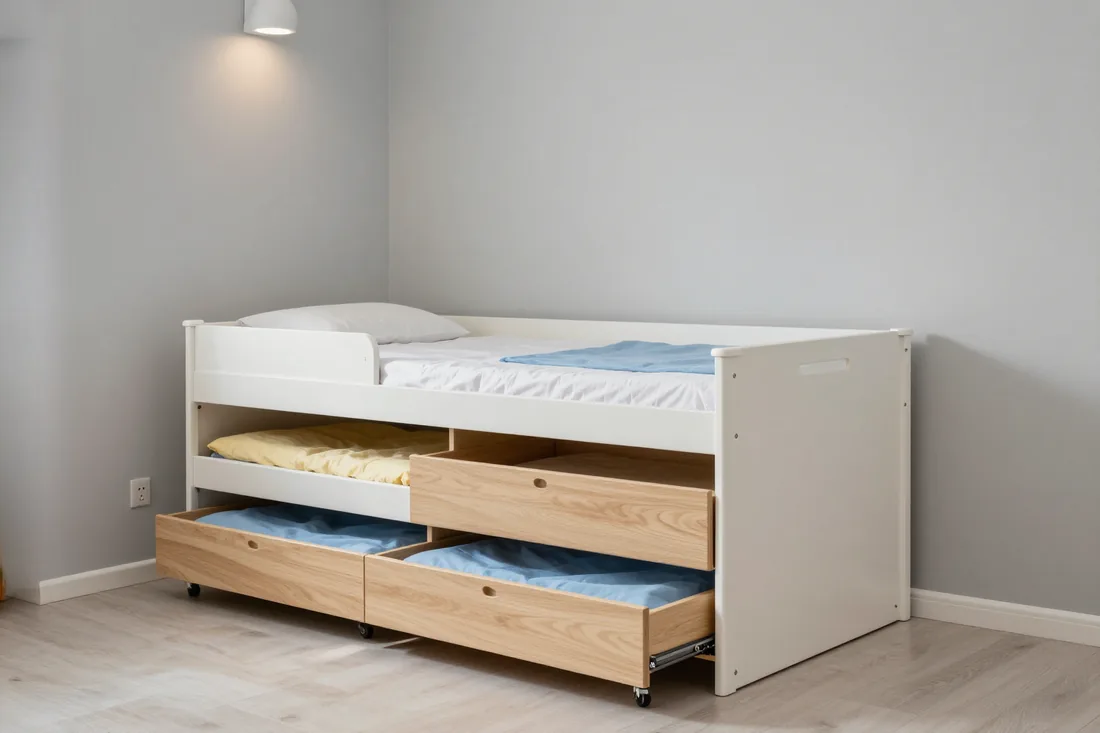 Kindergarten
Private kindergarten Balapan, Medeu district
In the small bedroom of a private kindergarten, 12 pull-out 3-tier beds were installed — 36 places in a small area. By day each is folded into a single footprint, at quiet hour the two lower places slide out like nesting dolls.
 Kindergarten
 No. 58, Auezov district
The combined bedroom and playroom was solved with a podium: by day there is a play area on top, at quiet hour eight sleeping places slide out from under the podium on runners. One room covered both sleep and the group's activities.
 Kindergarten
 Aigolek, Nauryzbay district
The sleeping places were built into the group's cabinet wall unit: by day the beds are tucked into niches flush with the wardrobes, at quiet hour they slide out. The group's floor was fully freed up, and the fronts neatly concealed the sleeping block.
 Kindergarten
 No. 203, Almaly district
Two bedrooms were fitted out turnkey: 20 pull-out 2-tier beds with soft-close and PU foam mattresses. The places slide out and in smoothly, without banging — teachers set up quiet hour without waking the children who have fallen asleep.
 Kindergarten
 No. 167, Turksib district
The group hall was turned into a podium stage: by day morning performances and classes take place on the steps, at quiet hour ten sleeping places slide out from under the stage. The pull-out mechanism was adjusted on site, and all corners were covered with caps.
03How we work with kindergartens
04Prices
The "from" price is for a block in the basic configuration made of E1 laminated chipboard with castors or runners and travel stops. The final price for the bedroom is fixed in the contract after a free measurement.
05For legal entities and public-sector clients
We work with private and state kindergartens under a contract and by bank transfer. The items, height groups, decor and installation date are set in the contract before production begins.
Request a contract and invoice06Principles

01 / 06
07Production
Six steps in our 600 m² workshop. You can see each of them with your own eyes: the showroom and production are under one roof.
Egger · Kronospan · E1
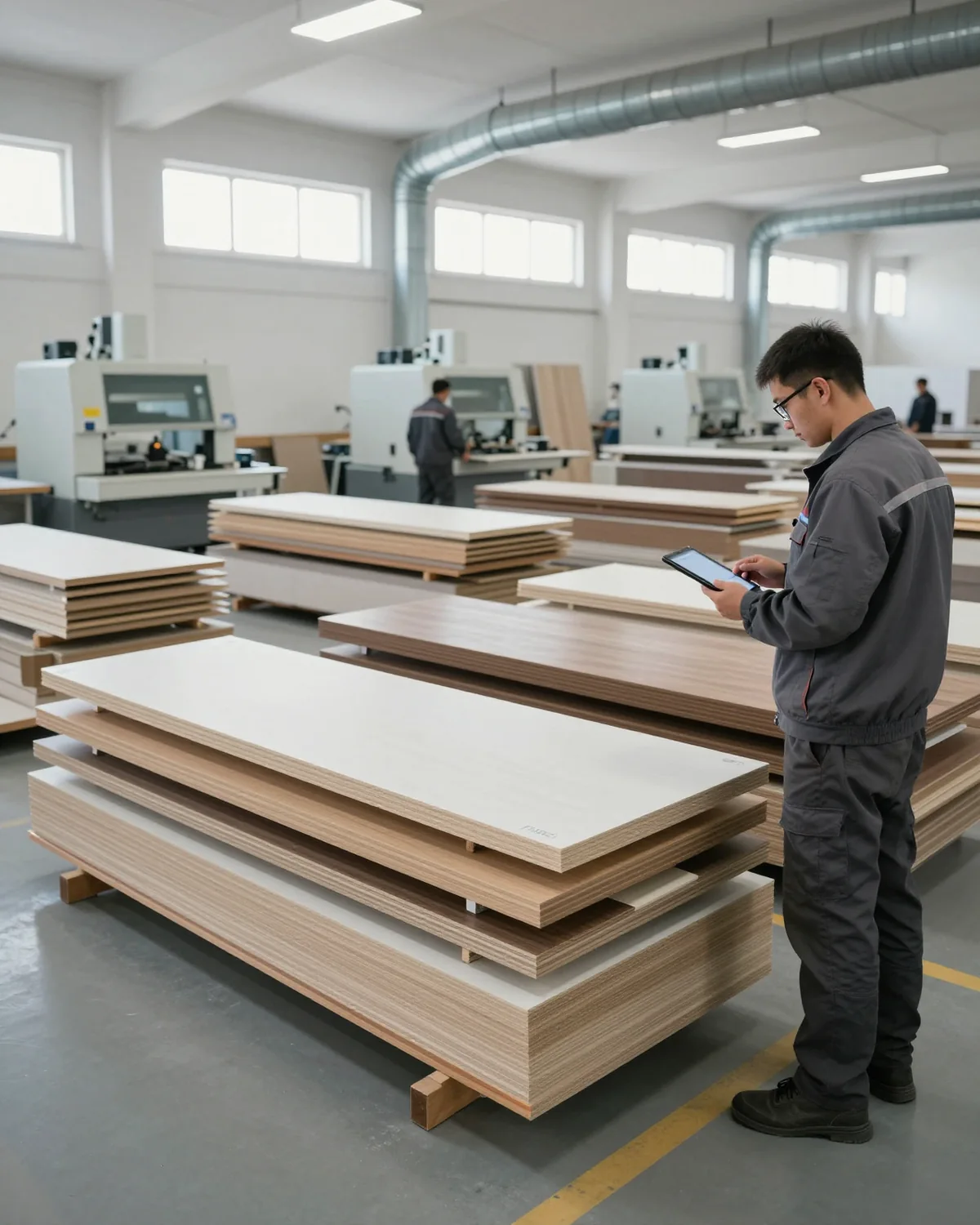
Egger and Kronospan boards of emission class E1 arrive at the workshop warehouse. 40+ laminated chipboard decors, thickness 16–18 mm. Class E1 — for kindergarten groups and bedrooms.
Laser measuring to 1 mm
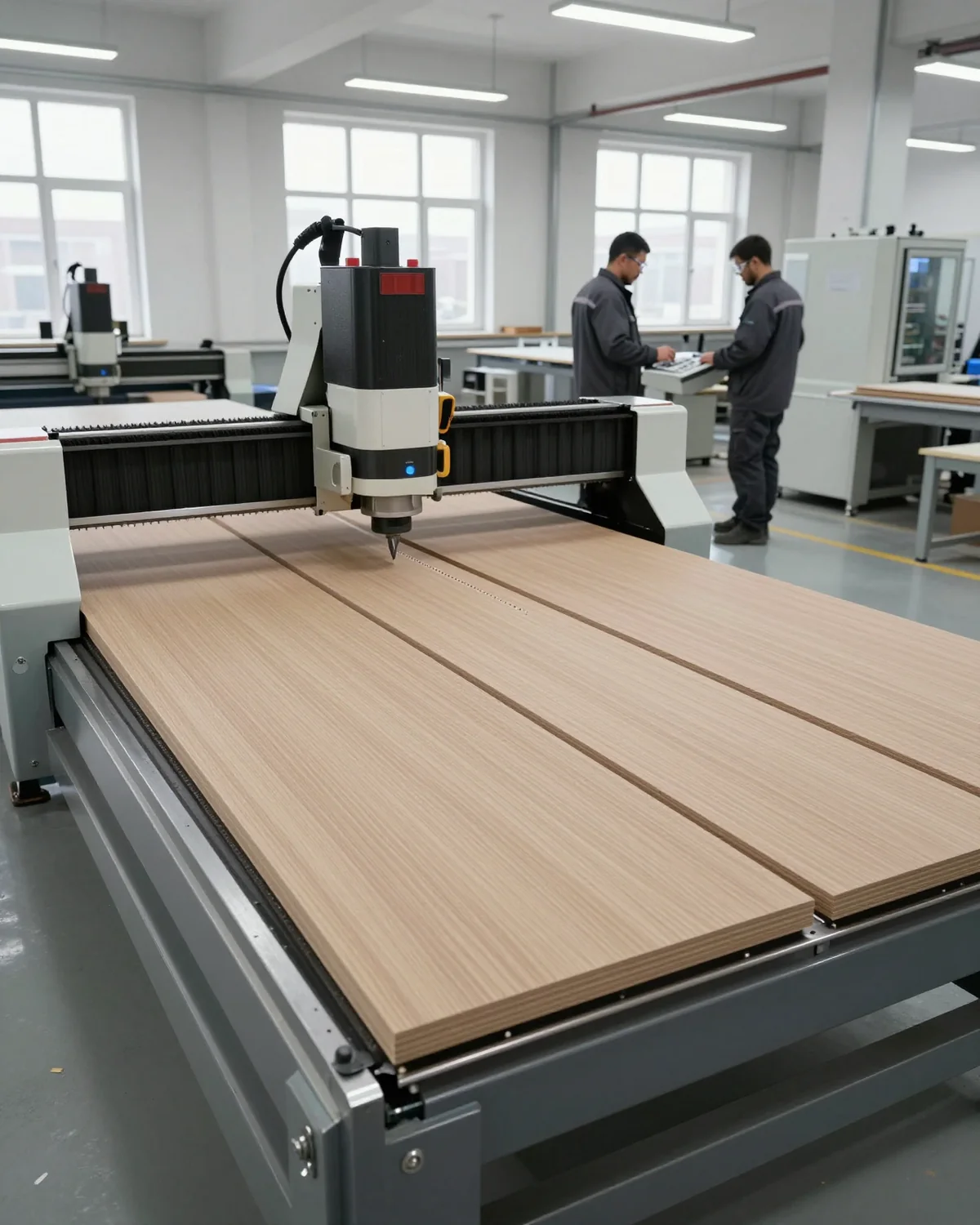
A design engineer prepares the drawings, and the machine cuts the board to them. Dimensions come from a laser measurement accurate to 1 mm.
Blum · Hettich · Boyard
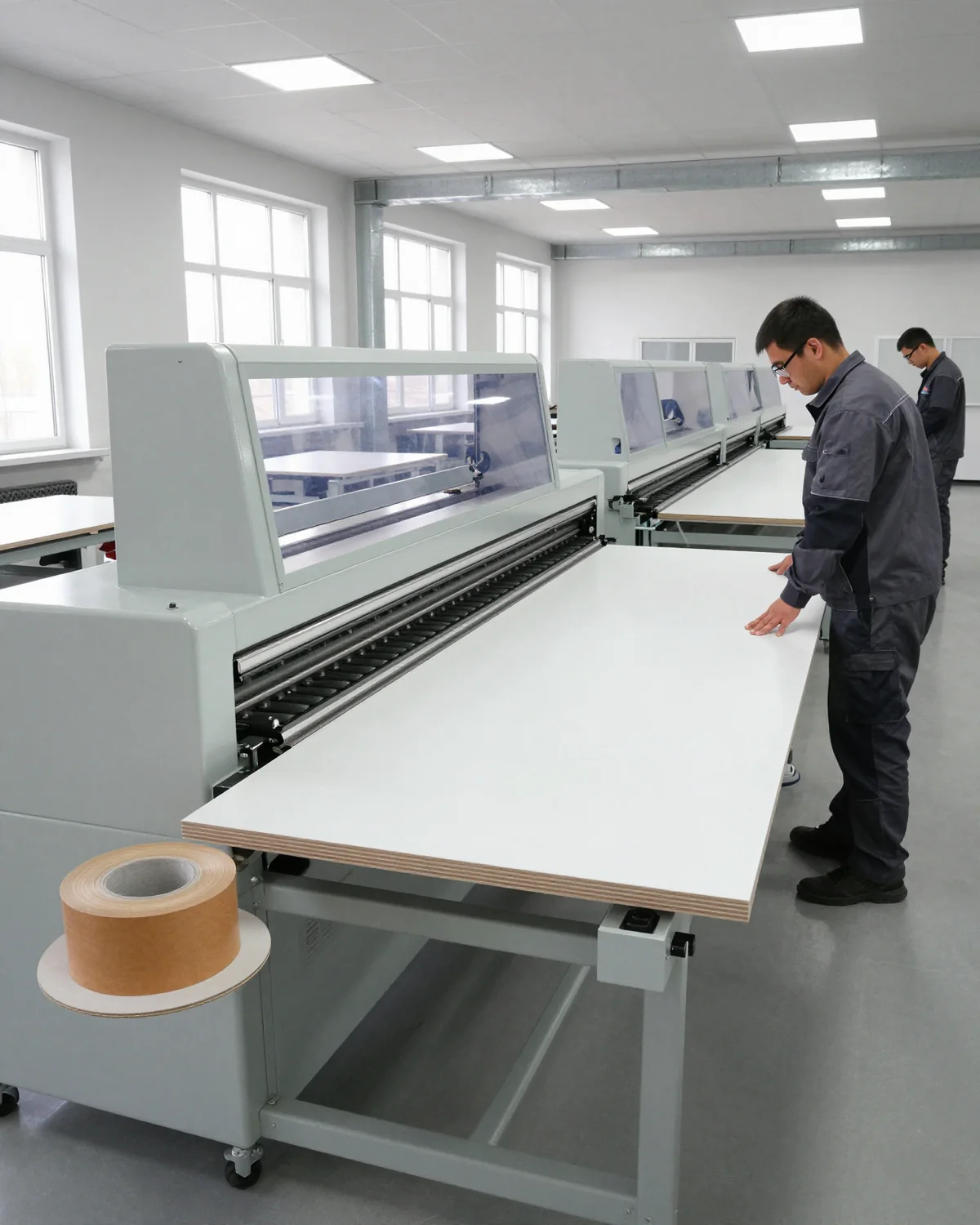
The edge-banding machine seals the edges, then we drill holes for Blum hinges and Hettich runners.
Any RAL colour
A finishing specialist paints the fronts to RAL — matte and gloss. At the control assembly we pull each level out to the stop and check the limiter, the stopper and the stability of the carcass.
Pre-assembly in the workshop
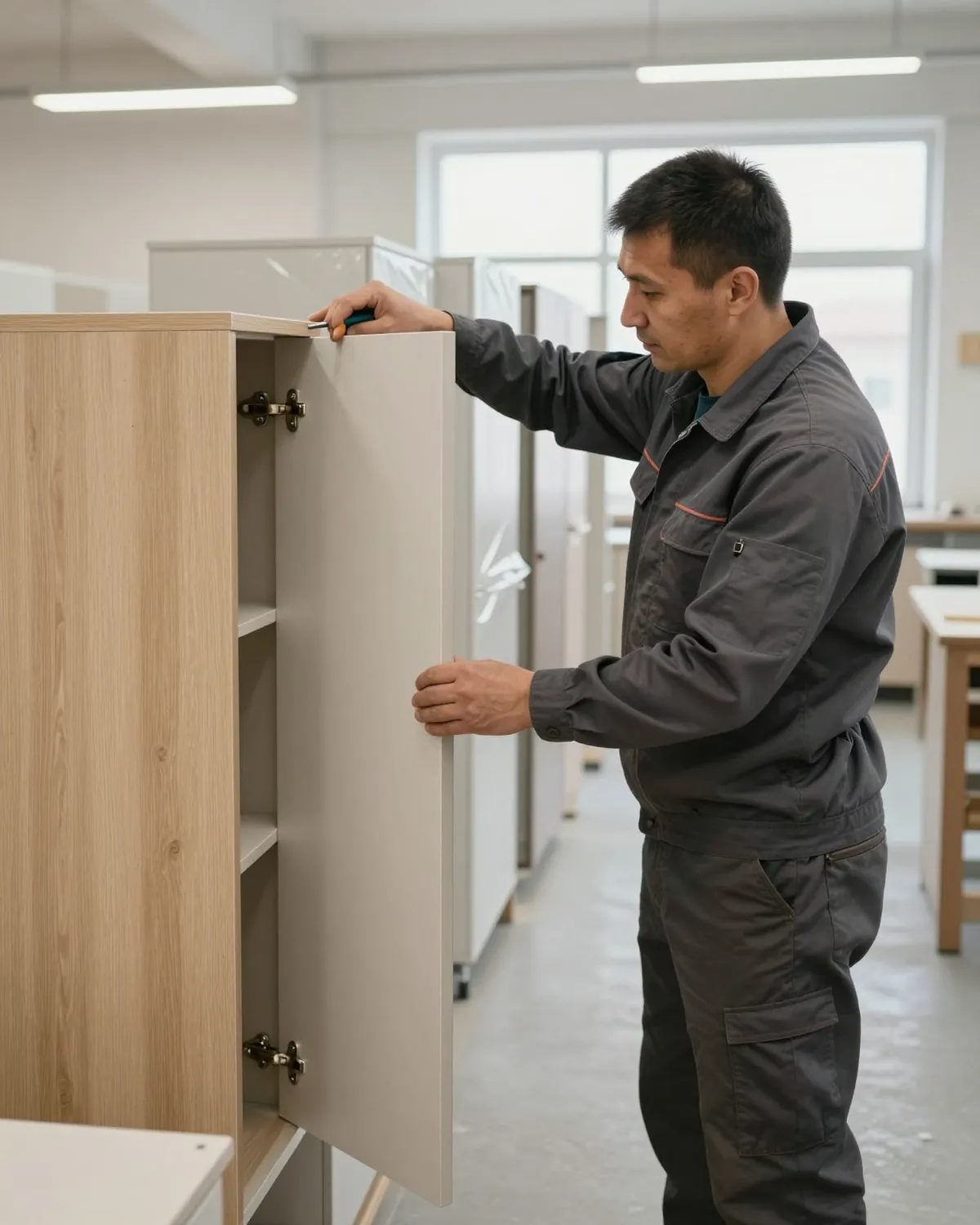
We assemble the modules in the workshop before dispatch, checking front gaps and drawer travel. The quality control department signs the item off for shipping.
Installation to fit the kindergarten schedule
We deliver, bring in, assemble in 1 day, adjust the furniture and clean up after ourselves. From signing the act — 24-month warranty.
08Team
MEBLIX workshop craftsmen who make and assemble furniture to order.
01 / 07Furniture assembly carpenter11 years
★ 4.81 · 47 ratings

Cabinet furniture repair craftsman20 years
★ 4.99 · 73 ratings

Furniture and kitchen unit assembler23 years
★ 4.97 · 300 ratings

Made-to-order furniture maker7 years
★ 4.26 · 32 ratings

Furniture maker5 years
★ 4.23 · 30 ratings

Joiner and carpenter20 years
★ 5.0 · 113 ratings

Furniture front and hardware fitter17 years
★ 4.61 · 92 ratings
09FAQ
Didn’t find the answer? Message us — a manager replies, not a bot.
Ask on WhatsAppA two-level unit gives two sleeping spots, a three-level one — three. A podium and a built-in wall hold as many spots as the wall length allows, we calculate this at the measurement.
We recommend that an adult pulls the levels out and pushes them in. The mechanism is light and has a travel limiter, but it is better to assign the laying-out routine to the teacher and the assistant.
Yes, for nursery groups we make models with protective side rails on every level and at the ends. The lowest level is almost at floor level, so it is easy for a little one to lie down and get up.
No, we use soft-rimmed rollers that do not scratch linoleum or laminate. If the floor is uneven, it is better to choose a model on rail runners with a brake lock.
Yes, there are models complete with PU foam mattresses sized to each level. For example, the 2-level pull-out bed with mattresses “Set” is priced in the price list on this page.
In front of the carcass you need a strip of floor the length of the pulled-out spot plus a passage for the teacher. We show the exact layout in the 3D design after a free measurement of the bedroom.
The 24-month warranty under the contract covers the carcass, the levels and the pull-out mechanism. If a roller or runner fails, the unit is replaced under the terms of the contract.
Yes, for materials and items we provide certificates of conformity and sanitary-hygienic reports. They are suitable for the sanitary service acceptance of the bedroom and for licensing the kindergarten.
The simplest is the 2-level pull-out bed “Malysh” with protective side rails, and its price is shown in the price list on this page. We calculate the cost of the whole bedroom in the estimate after the measurement and fix it in the contract.
We schedule installation to fit the kindergarten schedule: at weekends, in the evening after the children leave, or during summer renovations. Lead times for each option are in the price list on this page.
10Reviews
4,9
average rating
on Google and Zoon
Everyone can see a review on the platform: this is how other people check whom to trust with an order. If something went wrong, write to us and we will reply within 1–2 business days.
Message us on WhatsApp11Article
We make pull-out beds for kindergartens in our own workshop in Almaty from E1 class laminated chipboard: two or three sleeping places slide one under another and free up the bedroom floor during the day. The beds run on rollers with a stopper or on guides, travel is limited, corners are rounded, and the lower tiers are closed with side rails.
A pull-out unit is not always more advantageous than a row of regular beds. It all depends on how the room works during the day and how much free floor the group needs between nap time and evening.
Pull-out beds for kindergartens are needed primarily where the bedroom serves as a playroom, a music hall, or a gymnastics area during the day. Two or three sleeping places slide one under another, and instead of a row of beds along the wall, a compact unit the height of a low chest of drawers remains. We design such units for a specific room: during the measurement, we look at where the windows, radiators, and doors are, in which direction it is convenient to pull out the beds, and how much space remains for the teacher to pass. The decision is made based on the room plan, not just the number of children: in a wide bedroom with a separate playroom, the pull-out mechanism may be unnecessary, while in a narrow room with one door, it frees up half the floor. The conclusion is simple — first the layout and daily routine, then the model and travel mechanism.
| Unit type | Sleeping places | Where suitable |
|---|---|---|
| Pull-out 2-tier | 2 | medium-sized bedroom, younger groups |
| Pull-out 3-tier | 3 | cramped bedroom, large group |
| Corner pull-out | 2–3 | free corner of the room |
| Podium with beds | along the podium length | bedroom-playroom, hall with a stage |
| Built into the wall unit | 1–2 per section | group room with a cabinet wall |
The lower pull-out beds are suitable for children who already lie down and get up confidently on their own, without adult help. The lowest tier is located almost at floor level, and it is convenient for a child in the senior or preparatory group to climb onto it without a step. For nursery and younger groups, units with protective side rails on each tier are chosen so that the child does not roll into the aisle during sleep. The middle tier of a three-tier unit is higher than the lower one, so larger children of the group are usually placed there. It is useful for the teacher to assign places by tier in advance and assign them to the children: a child falls asleep faster in their own place, and in the morning there is no argument about who will sleep on the lower bed. Such distribution is recorded in the group list along with labeling, and new children are placed in the vacated places of the same tier.
The pull-out tier consists of a box, a travel support, and a latch. The ease of pulling out, noise, and how evenly it returns to place depend on what it moves on.
Most pull-out models are fitted with castors that have a stopper: the sleeping place rolls out along the floor and is then locked so it does not slide away when a child lies down on it. We choose castors with a soft rim that does not scratch linoleum or laminate and does not rattle at the joints between floor coverings. On metal-frame models we fit metal castors with locks rated for continuous load. The lower-level box is assembled from E1-class 16 mm laminated chipboard with rounded corners, and the edges are finished with 2 mm anti-vandal PVC edging, because the edge of the box is what people most often catch with a foot. The main rule for the teacher is to press the stopper right after pulling the bed out, before the child lies down: an unlocked level can roll away from the main carcass together with the child. That is why, at acceptance, it is worth checking separately that every stopper holds without slipping.
On runners the sleeping place moves in a strict straight line and does not drift sideways, even if it is pulled by a corner. We choose this kind of travel for built-in models and platforms, where the pull-out tier hides inside the carcass and has to fit into the opening without gaps at the sides. Telescopic runners extend in stages and hold the level suspended, while rail runners run along the floor and take the load along their full length. Pull-out beds for kindergartens on rails with a brake lock are convenient where the floor is uneven: the box does not roll off on its own towards the slope. We mount and adjust the runners during a control assembly in the workshop, then check the travel again after installation in the bedroom, because the floor in a group room is almost never perfectly level.
The pull-out mechanism is the moving part of the furniture that children play next to. The design must prevent the level from falling out, a hand from being pinched and the carcass from tipping over.
We equip every pull-out bed with a travel limiter: at the end position the box stops and does not fall out of the carcass, even if a child pulls it towards themselves. Without a limiter, a pull-out bed for kindergartens turns into a heavy drawer that can slide off the runners and fall on someone's feet. We fit the limiter so that the level comes out just far enough to lie down on and get up from, but no further. We check the stability of the block carcass that the beds slide into during a test assembly: the pulled-out levels must not tip it forward. When accepting the furniture, it is worth pulling each bed out to the stop yourself and tugging harder — the limiter should hold without clicks or play, and the carcass should stay in place. It is useful to repeat the same check after every rearrangement of the block.
Between the levels of the block we leave a gap that a child's hand cannot get into, and we round the edges of the boxes so there is no sharp edge at finger level. The dangerous spot in a pull-out model is the gap between the upper level and the box of the lower one at the moment it is pushed in: so we make the gap either noticeably narrower than a finger or wide enough for a hand to pass freely. We fit side rails along the length of each level, and on nursery models also at the ends, so a child does not roll out into the aisle. The height of the side rail is chosen so that a child can sit down on the mattress themselves and stays inside when lying down. All side rail parts are finished with vandal-resistant edging and rounded; they cannot be bent back or broken off during play.
Sometimes sleeping places are hidden not one under another but in a podium or a cabinet wall. This is a solution for rooms where during the day you need a stage, a play area or a full group space.
We build pull-out beds into the podium, and on top there remains a play area, a stage for matinees or a zone for activities on the rug. During the day the podium looks like a low platform along the wall, and by nap time the sleeping places roll out of it on castors or runners. We assemble the podium frame from E1 class laminated chipboard with reinforced partitions, because several children play on top at the same time. We fit steps sized to the children's height and a handrail on the podium, and we round all outer corners and finish them with vandal-resistant edging. The model with a stage is convenient for a music hall, where you need both a place for performances and a bedroom for a full-day group. Such a podium is designed only after a measurement: the length and number of sleeping places depend on the walls, windows and doors of the room, and the height depends on the height of the children in the group.
A built-in model hides the bed behind the front panel of the wall unit: by day it is an ordinary wardrobe or shelving unit in the group's colour, and at quiet time the panel becomes the headboard of the pulled-out sleeping place. We make sliding beds for kindergartens of this type for group rooms that have no separate bedroom but need sleeping places every day. The beds run on guides, and we fix the carcass of the wall unit to the wall so that pulling out does not tilt the structure. The upper sections of the wall unit are used for linen and teaching materials, while the lower ones hold the sleeping places. We match the front panel to the same decor as the rest of the group's furniture, so the wall unit does not look like a bedroom set. When planning, it is important to leave a clear strip of floor in front of the wall unit equal to the length of the bed plus a passage for the teacher, otherwise the pulled-out place will run into the group's tables.
| Option | How it frees up the floor | What to check |
|---|---|---|
| Pull-out unit | beds slide under the carcass | passage width for pulling out |
| Podium | beds slide into the raised platform | steps, handrail, strength of the top |
| Built-in wall unit | bed behind the front panel | wall fixing, floor strip |
| Corner model | beds slide into the corner | a free corner without a radiator |
The main benefit of a pull-out model shows in daytime mode. It is important to plan in advance where the sleeping places are pulled out, where the bedding is stored and how quickly the room returns to lessons.
We place the units along the walls so that the levels pull out into a common passage rather than towards each other. Pull-out beds for kindergartens are arranged with the length of the pulled-out level in mind: in front of the carcass there must be a clear strip of floor plus a passage for the teacher to reach each child. In the 3D layout we show both states of the bedroom — by day with the beds pushed in and at quiet time with them pulled out — so that the head of the kindergarten can see whether there is enough space for play and for sleep. Corner models close off awkward corners, while linear units line up along a solid wall. Before pulling out, the passage is cleared of toys and rugs: the rollers must not run over small objects, otherwise the box will jam at an angle and the stopper will not secure it evenly.
We can equip pull-out models with PU foam mattresses sized to each bed, so the kindergarten gets ready-made sleeping places without having to select them separately. A mattress that fits the box exactly does not slide off when the level is pulled out and does not get stuck in the carcass when the level is pushed back in. Thickness is chosen taking into account the gap between the levels: a mattress that is too high will hit the upper box, and the level will stop sliding in all the way. It is best to choose a removable, washable cover so it can be laundered together with the group's bed linen. A set with mattresses is convenient for a new kindergarten: the specification immediately shows the number of sleeping places, their sizes and the mechanism model, and the whole bedroom is accepted under a single act. Later, mattresses can be reordered in the same sizes without measuring each place again.
The pull-out level moves every day, sometimes several times. Simple regular care keeps movement smooth and extends the life of the rollers and runners.
Rollers and runners are cleaned of dust, lint and small debris during deep cleaning of the bedroom, because debris is most often what makes movement stiff. Pull the level out fully, wipe the floor under the carcass with a damp cloth, and clean the roller rims of wound threads and hair. Wipe the runners with a dry cloth without detergents that wash away the factory lubricant. Do not apply lubricant to the rollers and runners unless the hardware manufacturer specifies it: excess oil collects dust and soils the floor. Wash the box and side rails the same way as the rest of the group's furniture — with a damp cloth and a mild product, without abrasives. If movement is still stiff after cleaning, call a technician rather than trying to straighten the runner by force.
The item carries a 24-month warranty under the contract, covering the carcass, beds and pull-out mechanism. We assemble pull-out beds for kindergartens in our own workshop and check the movement of every level during a test assembly, so most issues are resolved before shipping. If a roller or runner fails during the warranty period, the assembly is replaced under the terms of the contract, and the date of the crew's visit is agreed around the kindergarten's schedule. For reorders we keep the mechanism model and finish so that new units pull out just like the first ones. Lead times for each option are in the price list on this page, and the exact list of items and mechanisms is recorded in the contract specification together with the installation date.
A pull-out model saves floor space only when the mechanism, layout and group routine are planned together. Below is a short checklist of what to verify before ordering.
12Calculation
Choose a model, the number of blocks and the material in the calculator — the calculation will go to the manager on WhatsApp, and we will send the estimate for the bedroom after the measurement.
13Furniture for kindergartens
We equip groups, bedrooms and changing rooms with beds, lockers, tables and chairs by GOST height groups, made of E1 laminated chipboard with rounded corners.
We make single-tier, stackable, nursery and pull-out beds to suit the bedroom area and the height of the children in the group: E1 laminated chipboard or birch solid wood, rounded corners, mattress to fit the berth.
Beds for kindergarten group bedrooms, made to the number of children in the group: two- and three-tier, rails around the top tier, solid wood ladder, E1 laminated chipboard, wall fixing.
Lockers with personal cubbies, hooks at a child's hand height and a bench for the changing room, plus cabinets for supplies, toys and linen made of E1 laminated chipboard.
We make rectangular, trapezoidal, round and dining tables by GOST height groups from E1 laminated chipboard with rounded corners and a washable tabletop.
We make tables on screw supports and a steel frame that adjust to the next GOST height group — from E1 laminated chipboard with rounded corners.
We make height-graded, adjustable and stackable chairs by GOST groups from E1 laminated chipboard, birch plywood and solid wood, with rounded corners and colour coding.