
Temirzhan Nurpeisov
Furniture assembly carpenter11 years
★ 4.81 · 47 ratings
For business · Kindergartens
We equip groups, bedrooms and dressing rooms with beds, lockers, tables and chairs by GOST height groups from E1 laminated chipboard with rounded corners. Measurement and 3D design are free, the price is fixed in the contract, warranty 24 months.
Measurement and 3D design are free and carry no obligation · price fixed in the contract · Kaspi Instalments up to 24 months
01Types
 01
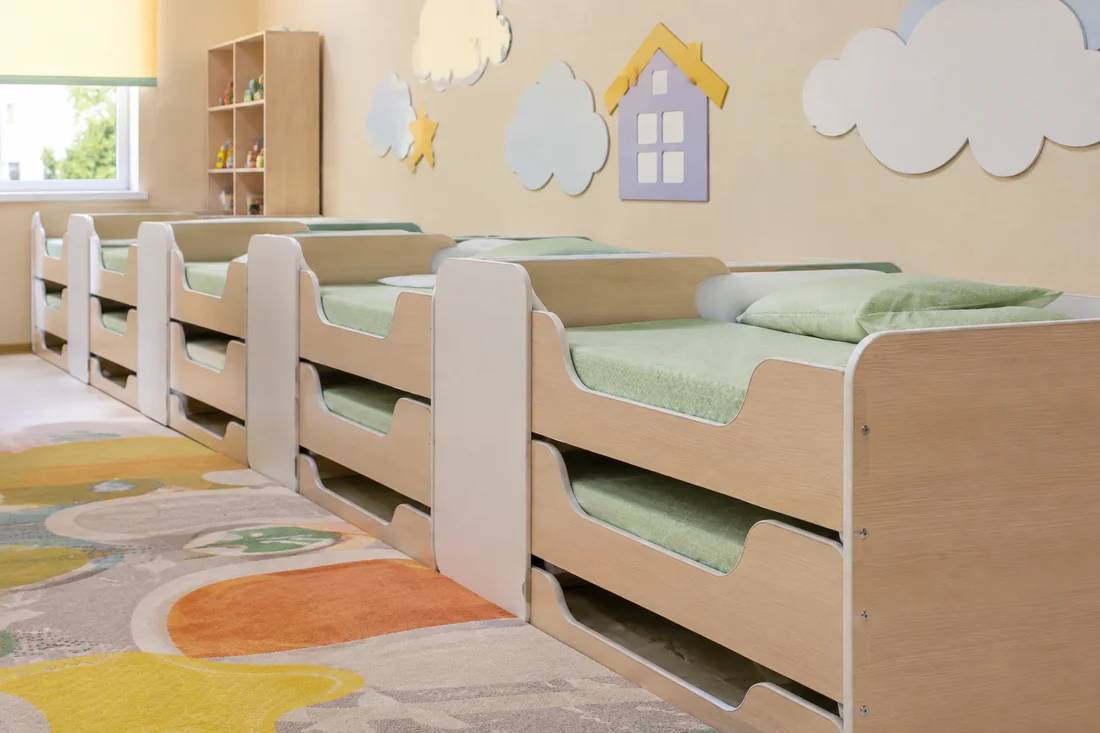
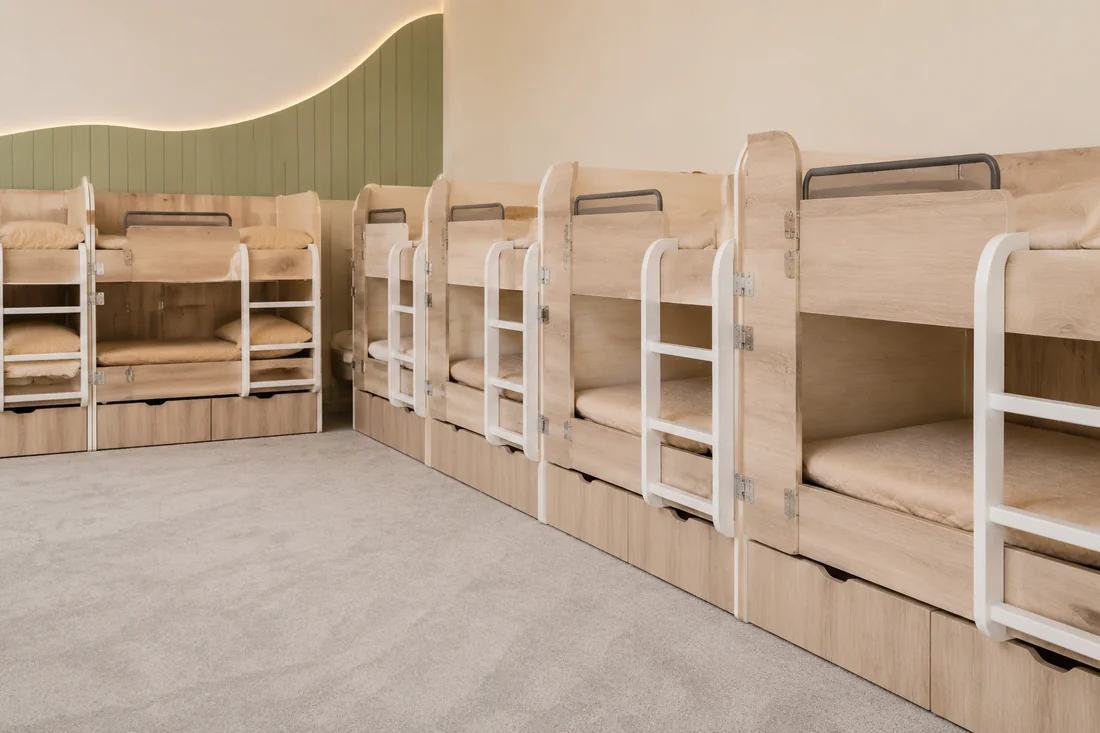
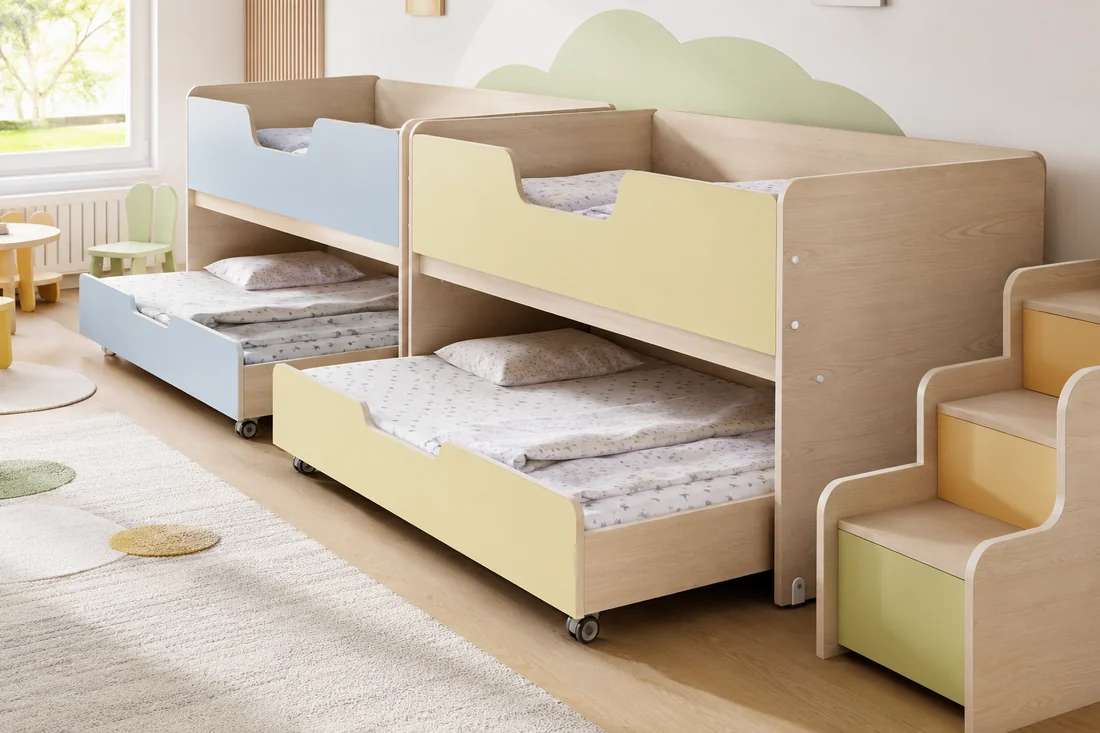
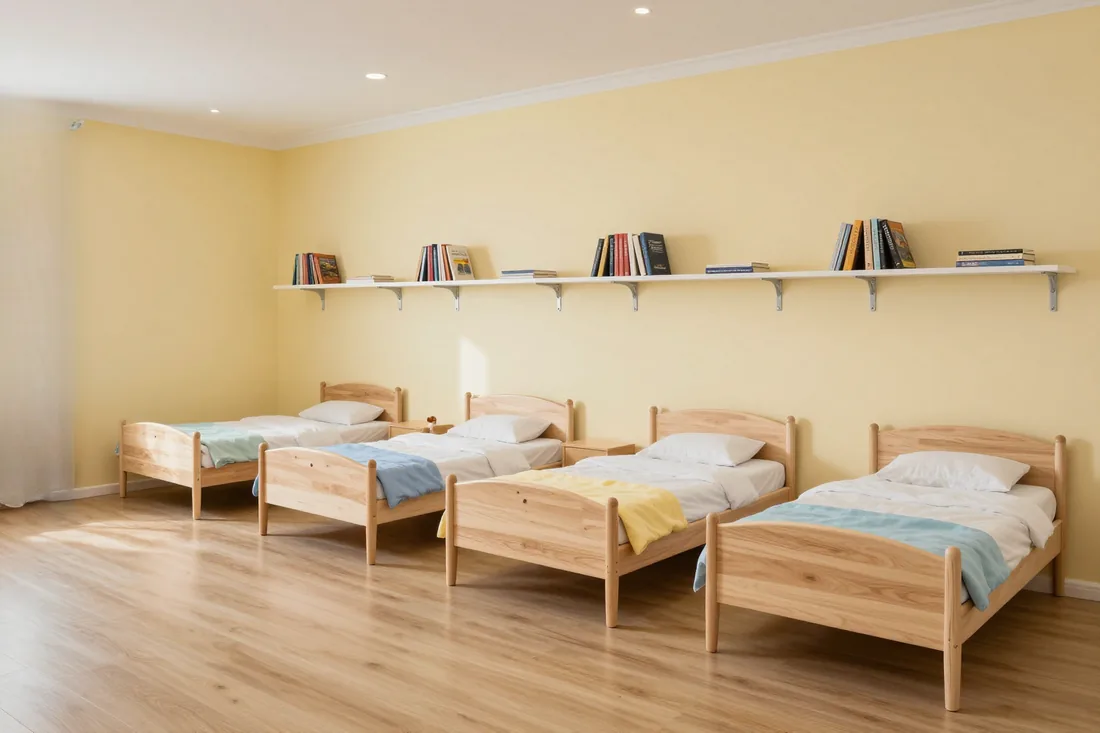
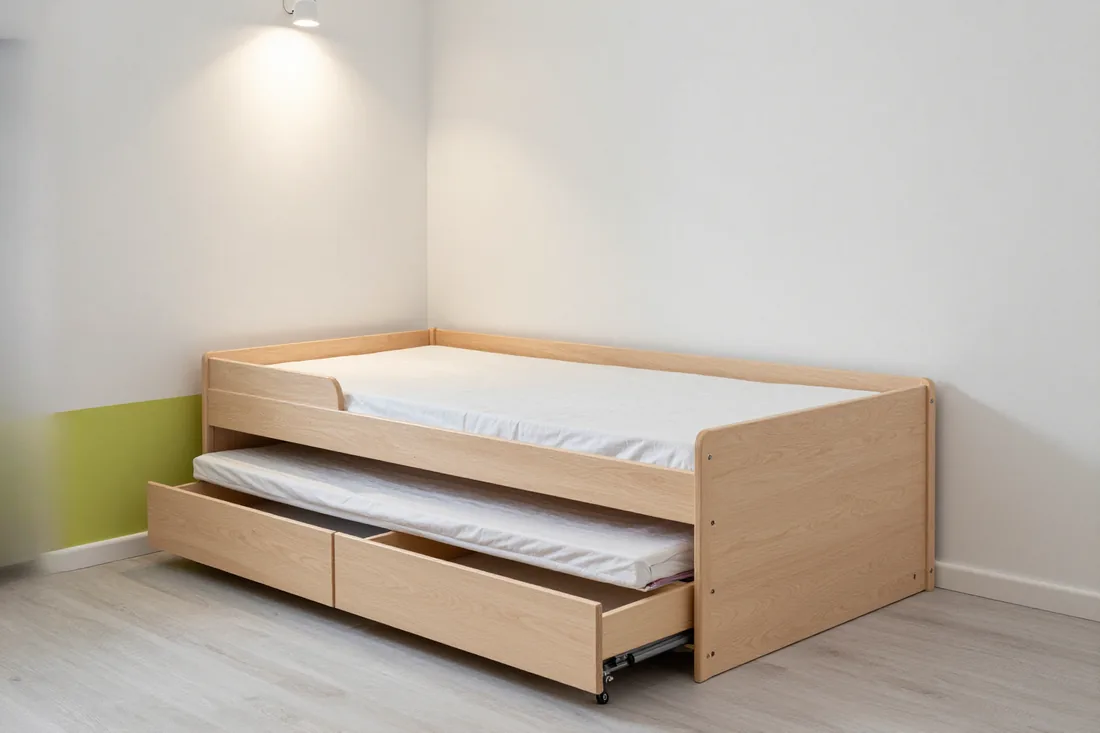
Single-tier cots with side rails and rounded corners for the group bedroom; stackable, bunk and pull-out models are available for tight bedrooms.
from 22 000 ₸
 02
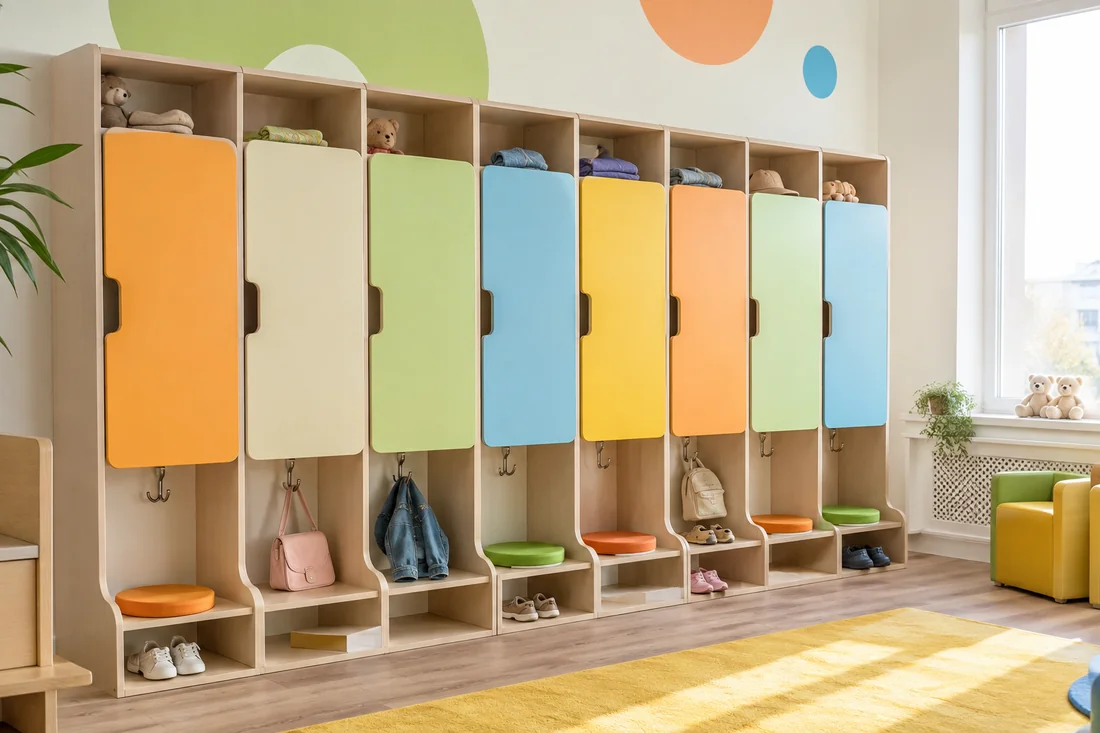
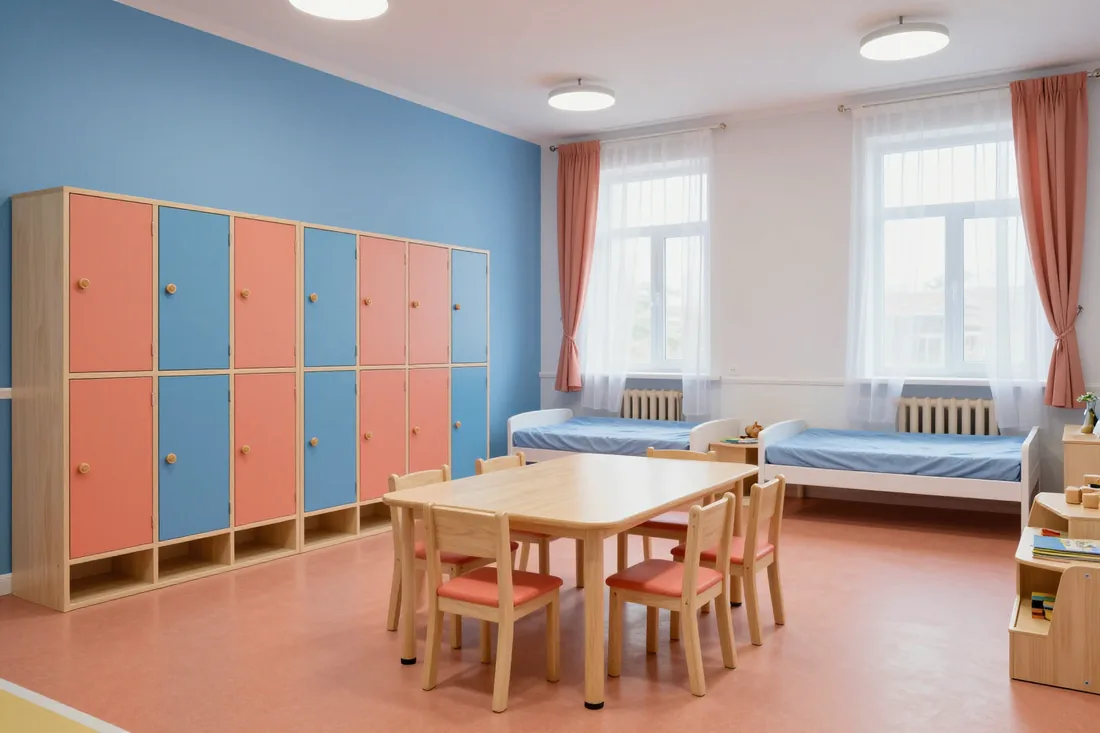
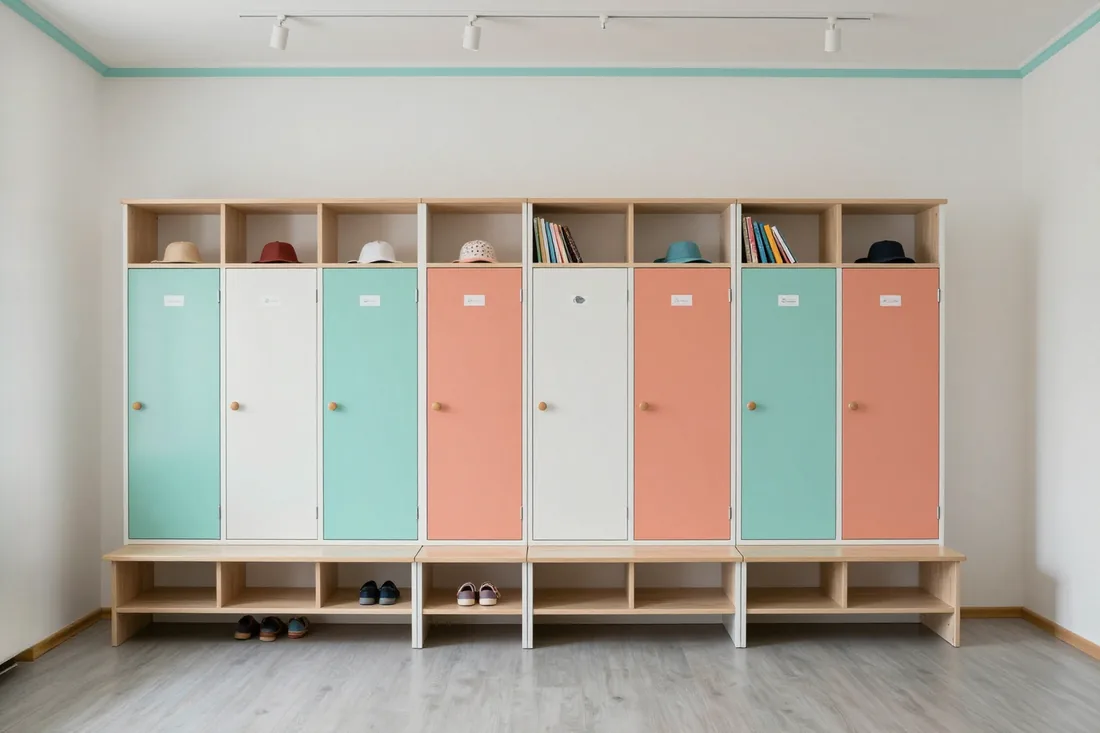
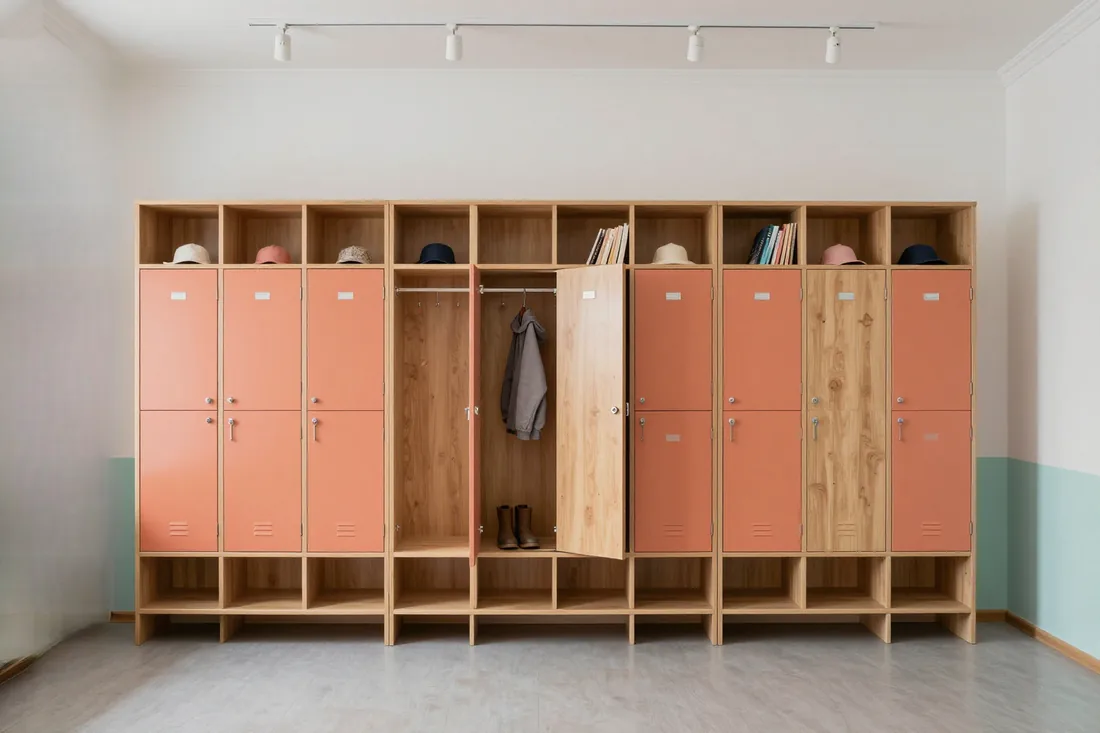
Sectional lockers with personal cubbies, hooks and a shelf for hats, with a bench and a compartment for spare shoes below.
from 62 000 ₸
 03
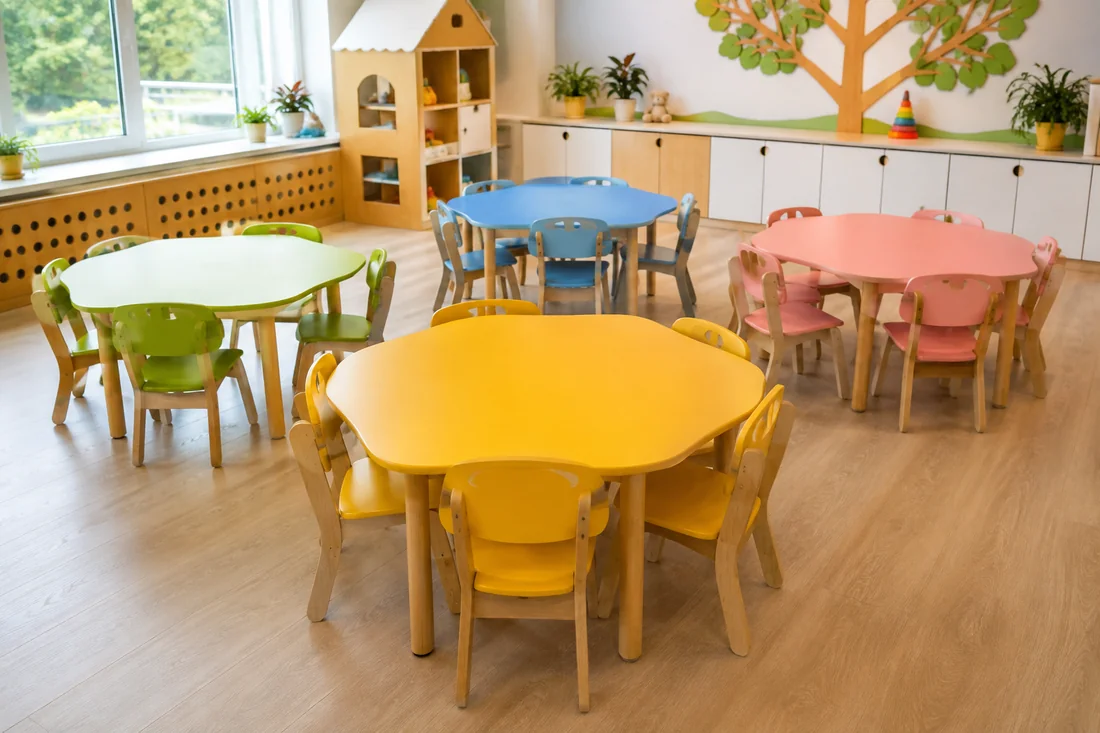
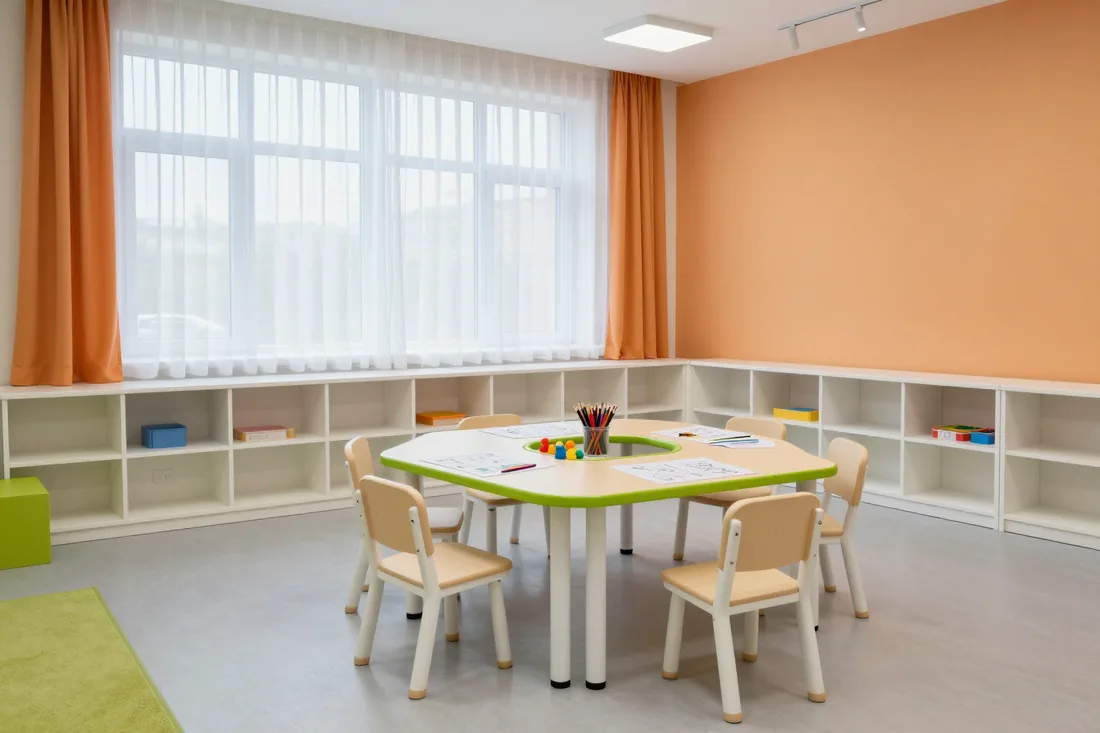
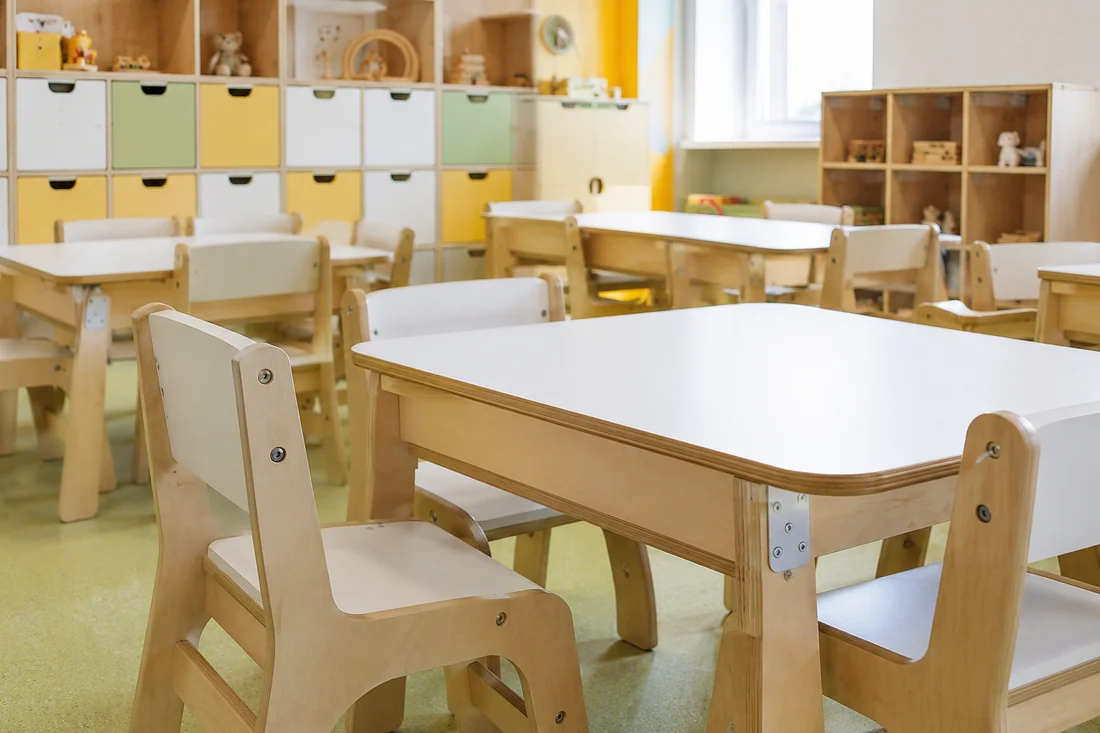
Modular trapezoids assemble into a circle, a row or a hexagon for classes, meals and creative work; the tabletop wipes clean after paints.
from 19 900 ₸
 04
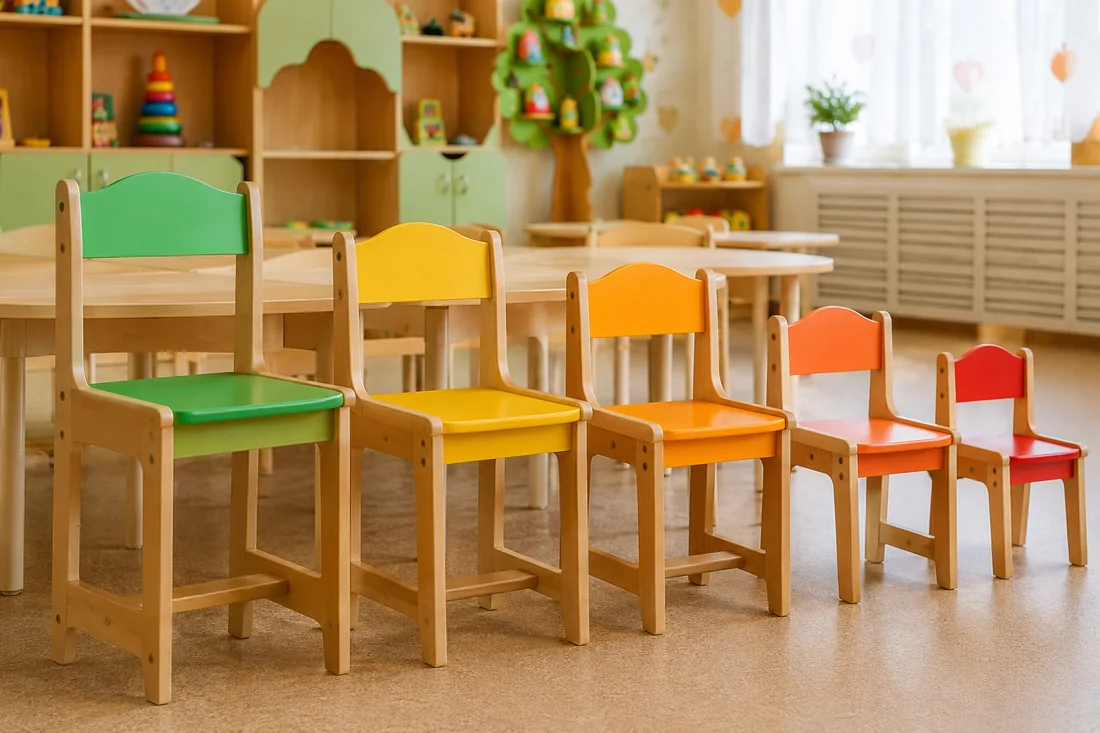
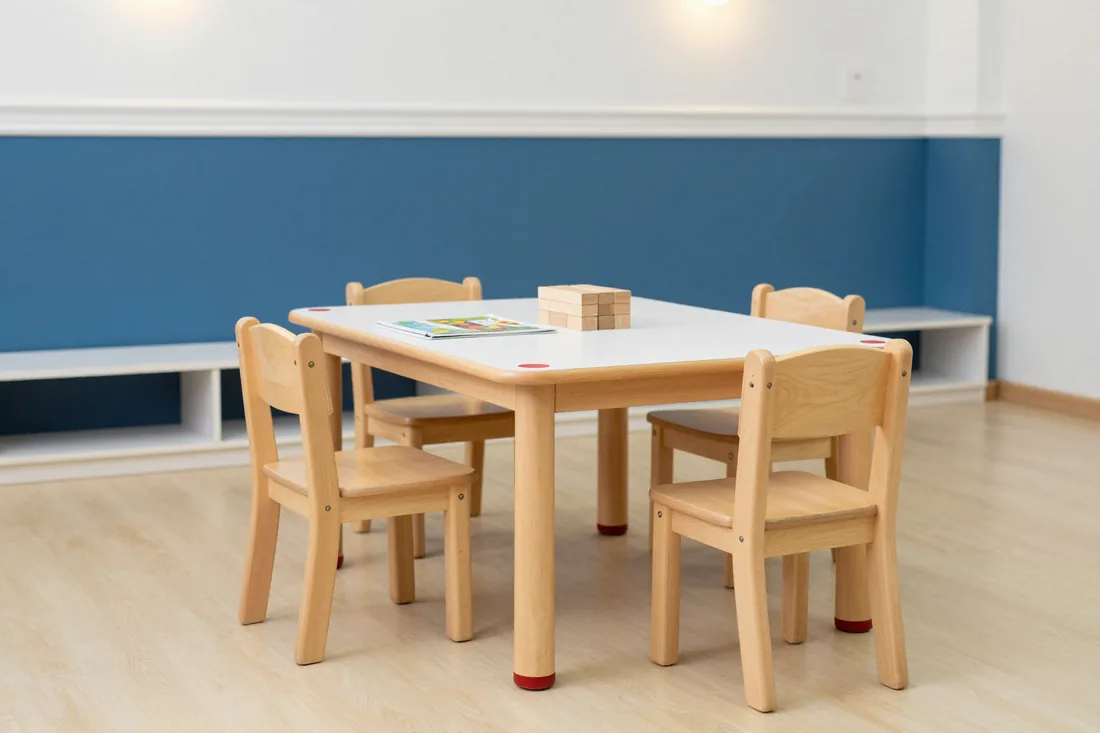
Sturdy chairs by GOST height groups with colour coding to match the tables; edges are rounded, the frame does not tip over.
from 7 400 ₸
 05
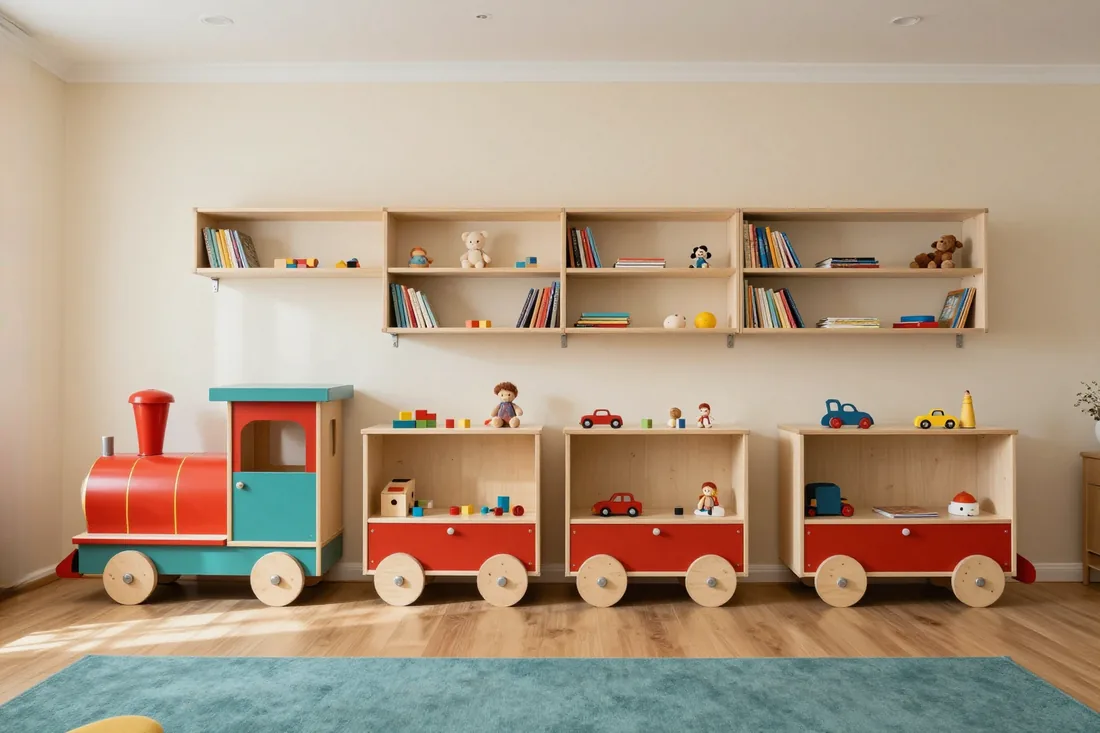
A wall unit with open shelves and toy niches zones the group room and keeps all play inventory in the teacher's sight.
from 74 000 ₸
 06
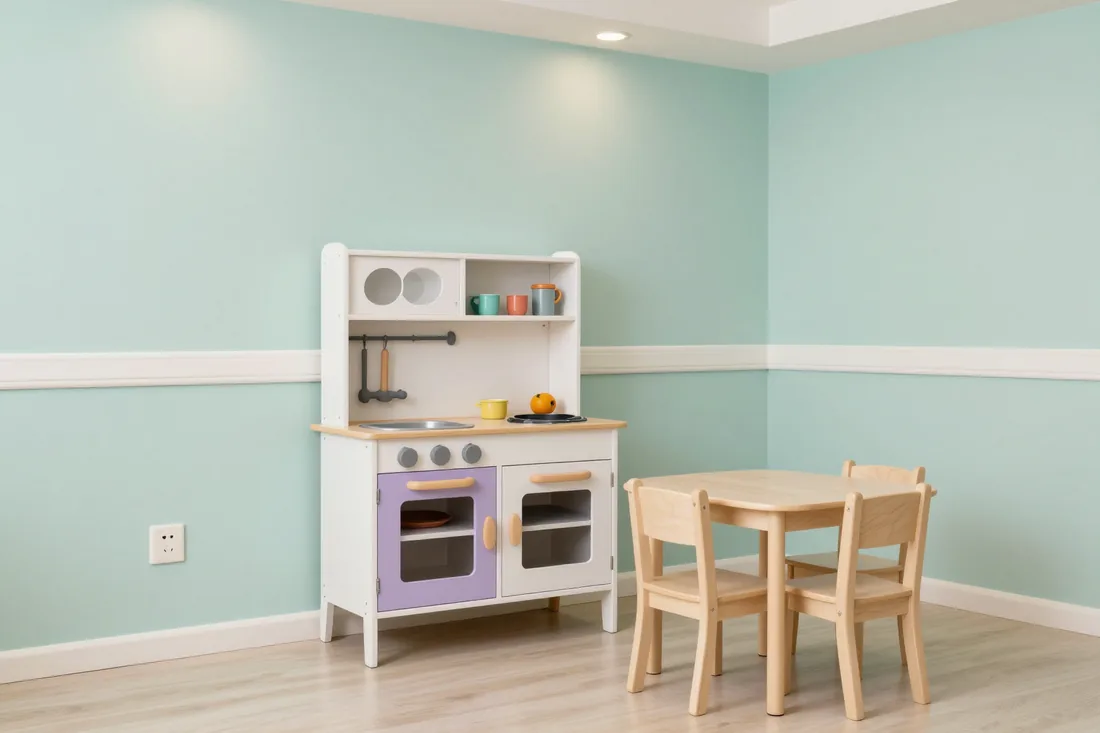
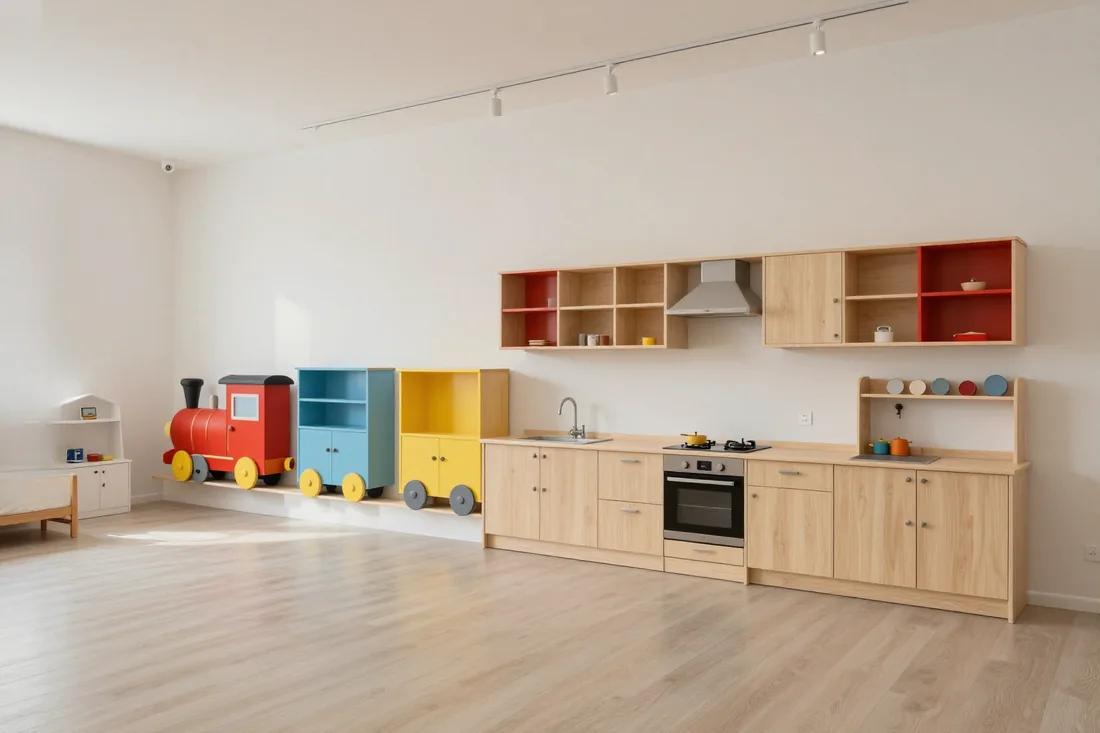
Story-based role-play corners sized to the preschooler: a play stove, a sink and shelves for dishes, doors on safety hinges.
from 46 000 ₸
02Projects
Scope, volume, materials and lead time — per each project.
 Kindergarten
, Samal microdistrict, Medeu district
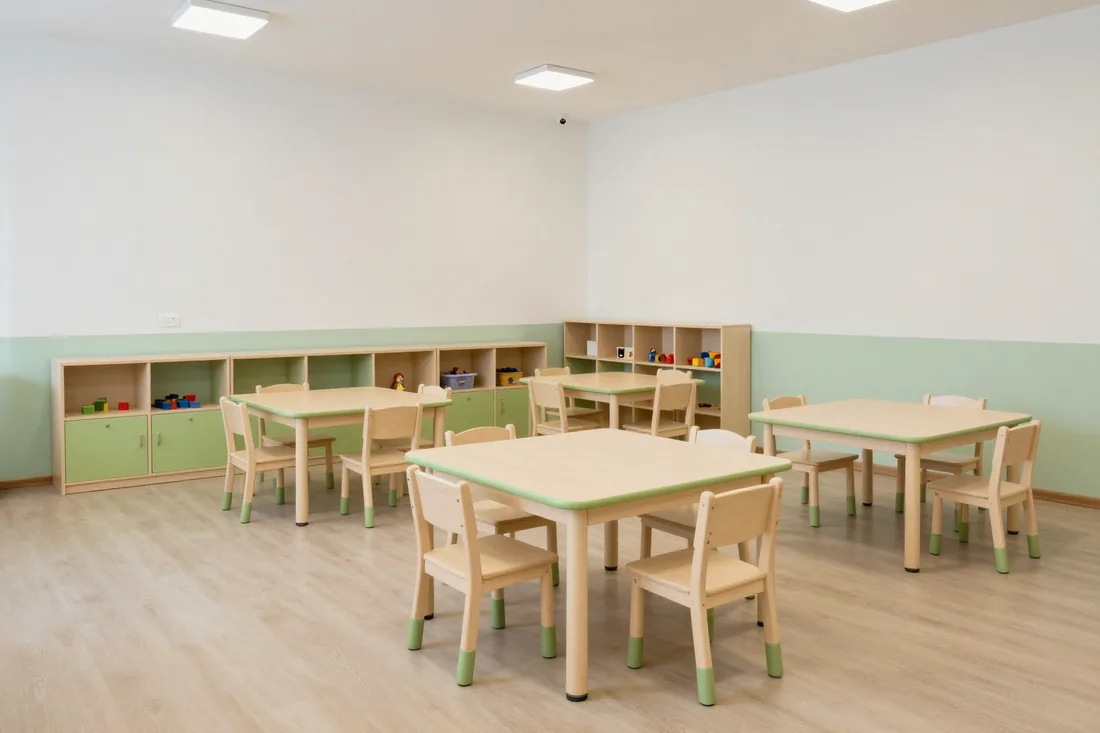
Fully furnished a group room for 20 children: tables and chairs by height, sectional lockers and toy shelving in a single decor. Full package of certificates for the sanitary service.
 Kindergarten
Nursery kindergarten, Asyl Arman residential complex, Auezov district
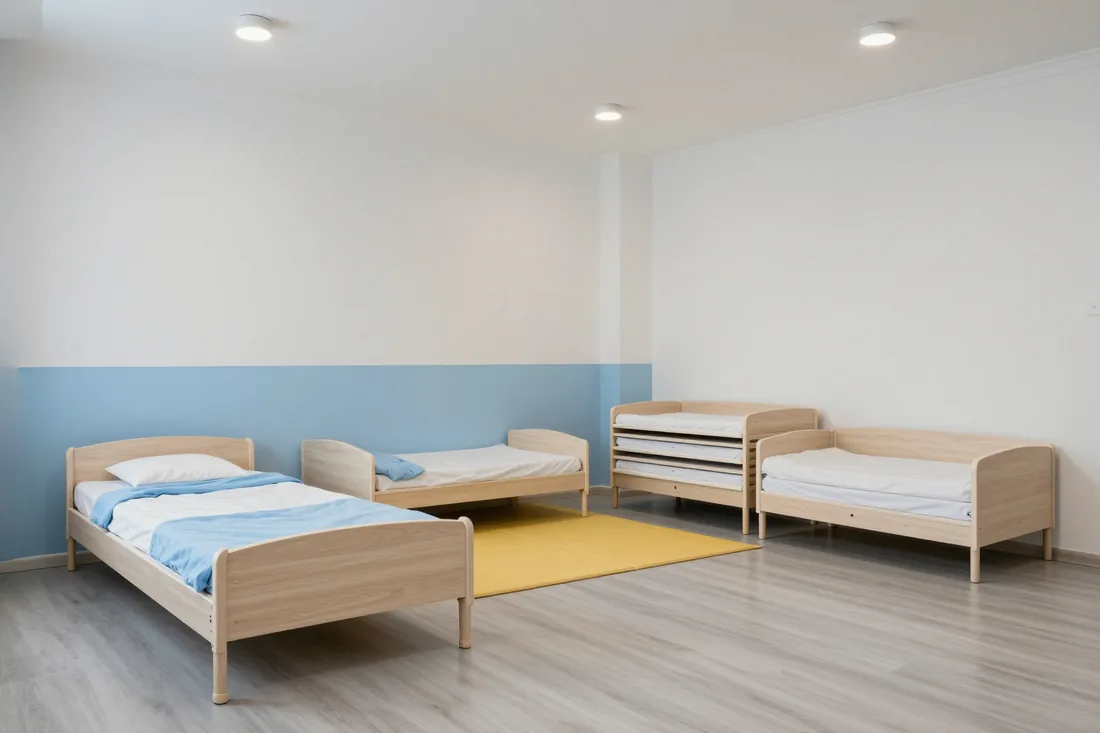
The nursery group bedroom was furnished with 24 stackable cots — during the day they fold into stacks and free up the room for classes. Uniform height and decor across the whole batch.
 Kindergarten
, Aksai microdistrict, Auezov district
In the changing room we assembled three sectional lockers with 21 cubbies with built-in benches and dryers. Each child has their own cubby with a picture label at child height.
 Kindergarten
Private kindergarten, Nurly Tau residential complex, Bostandyk district
For the group we made a play area: a themed train wall unit and story-based role-play corners for children's games. Everything sized to the preschooler, doors on safety hinges.
 Kindergarten
Nursery kindergarten, Zhetysu microdistrict, Auezov district
In a small bedroom we placed 8 three-tier pull-out cots — the whole group fits in a limited area. The beds slide under one another and free up the floor during the day.
 Kindergarten
State kindergarten, Algabas microdistrict, Alatau district
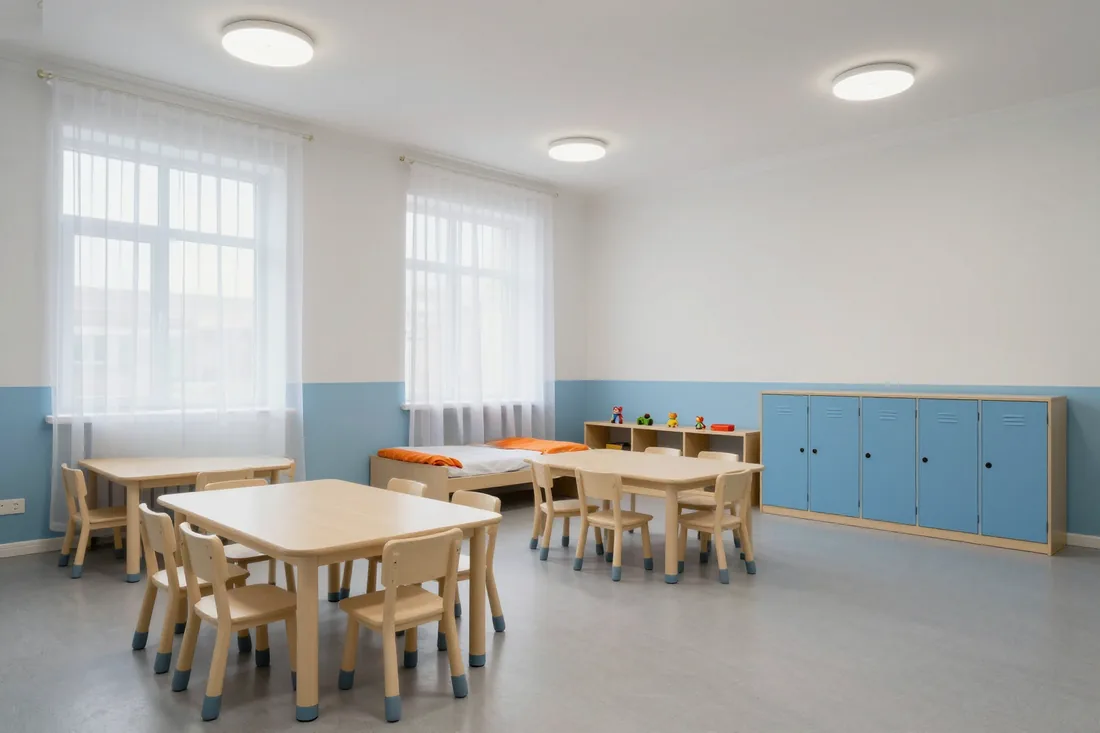
Under public procurement we furnished two groups: cots, tables, chairs and lockers as a single set. We prepared the specification, a full package of certificates and closing documents for the tender.
03How we work with kindergartens
04Prices
The "from" price is per item in the basic configuration made of E1 laminated chipboard with anti-vandal edge banding and rounded corners. The final price for a set per group is fixed in the contract after a free measurement.
05For legal entities and government customers
We work with private and public kindergartens under a contract with non-cash payment. Items, height groups, decor and installation date are set out in the contract before production begins.
Request the contract and invoice06Principles

01 / 06
07Production
Six steps in our 600 m² workshop. You can see each of them with your own eyes: the showroom and production are under one roof.
Egger · Kronospan · E1
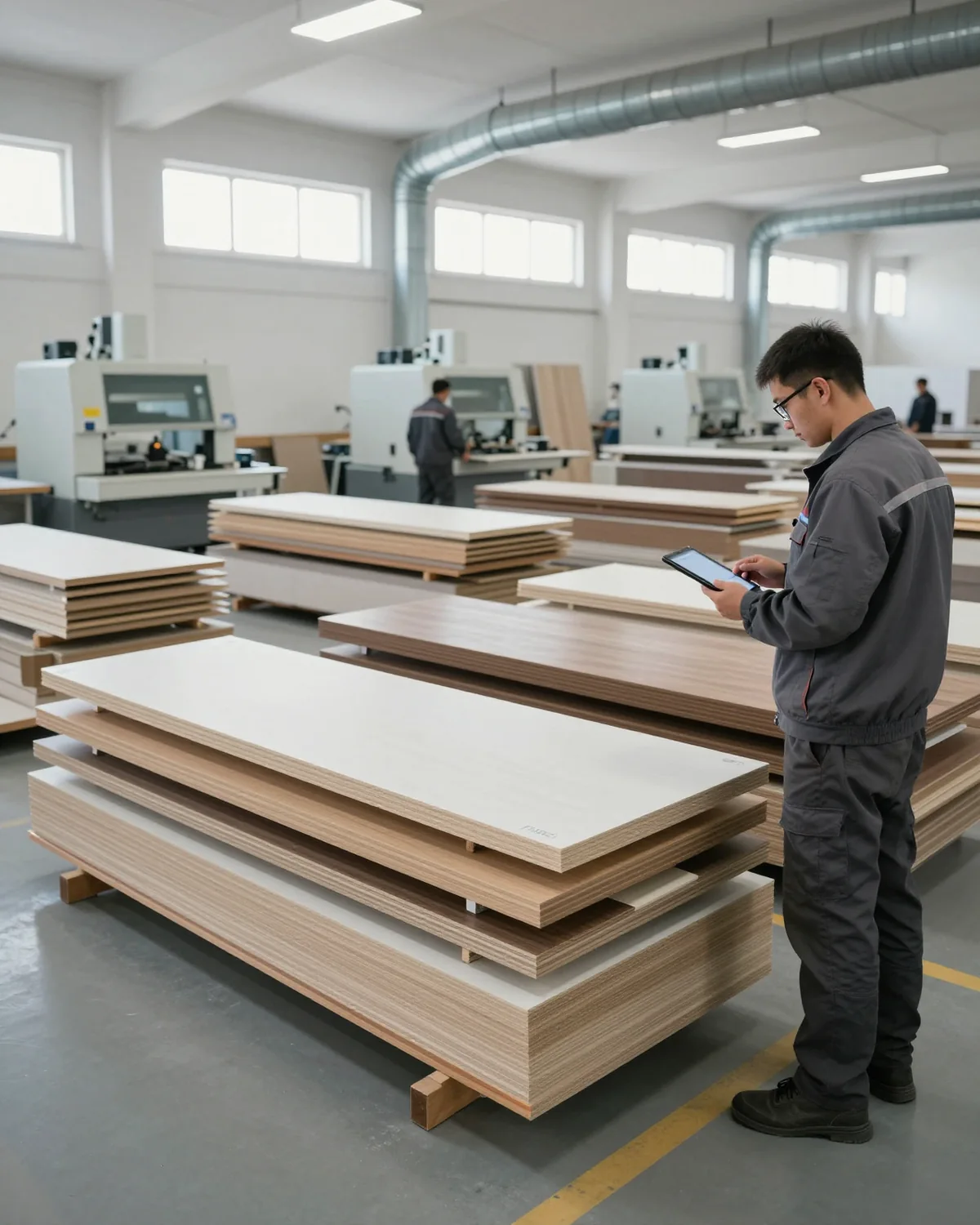
E1 emission class Egger and Kronospan boards arrive at the workshop warehouse. 40+ laminated chipboard decors, 16–18 mm thick. E1 class — for kindergarten groups and bedrooms.
Laser measuring to 1 mm
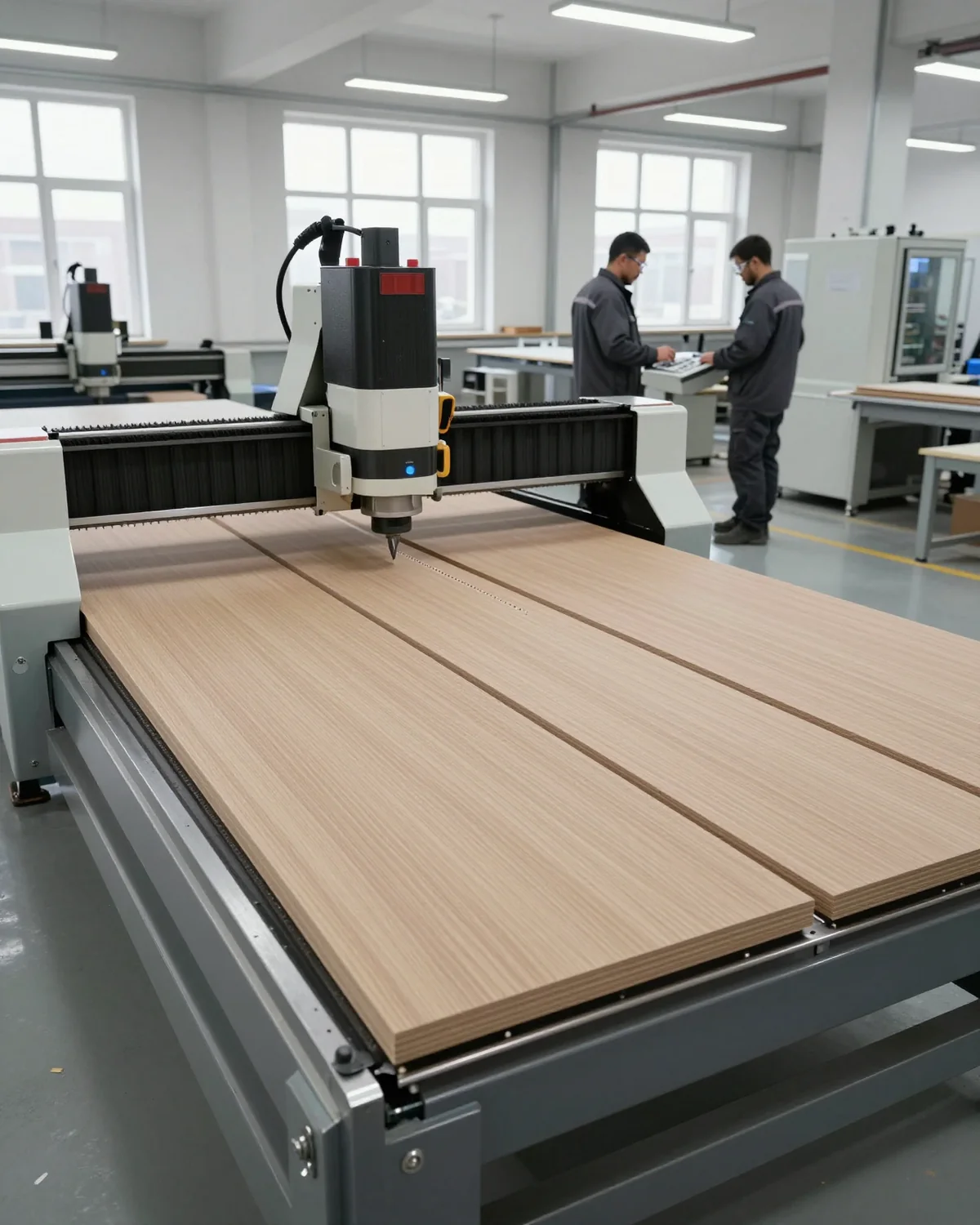
A design engineer prepares the drawings, and the machine cuts the board to them. Dimensions come from a laser measurement accurate to 1 mm.
Blum · Hettich · Boyard
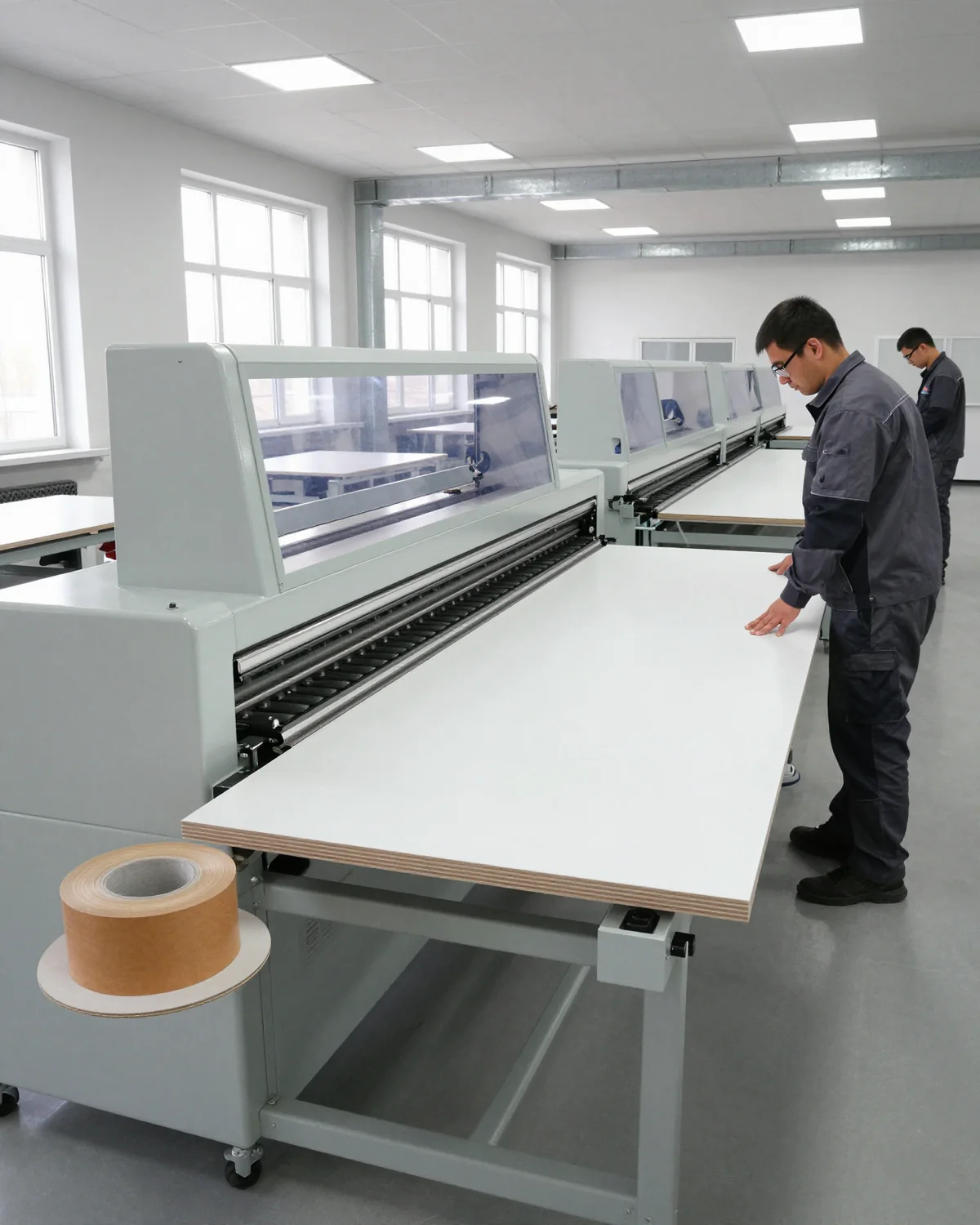
The edge-banding machine seals the edges, then we drill holes for Blum hinges and Hettich runners.
Any RAL colour
A finishing specialist paints fronts to RAL — matt and gloss. After edging we separately round corners and edges, and at the control assembly we check the stability of wardrobes and beds.
Pre-assembly in the workshop
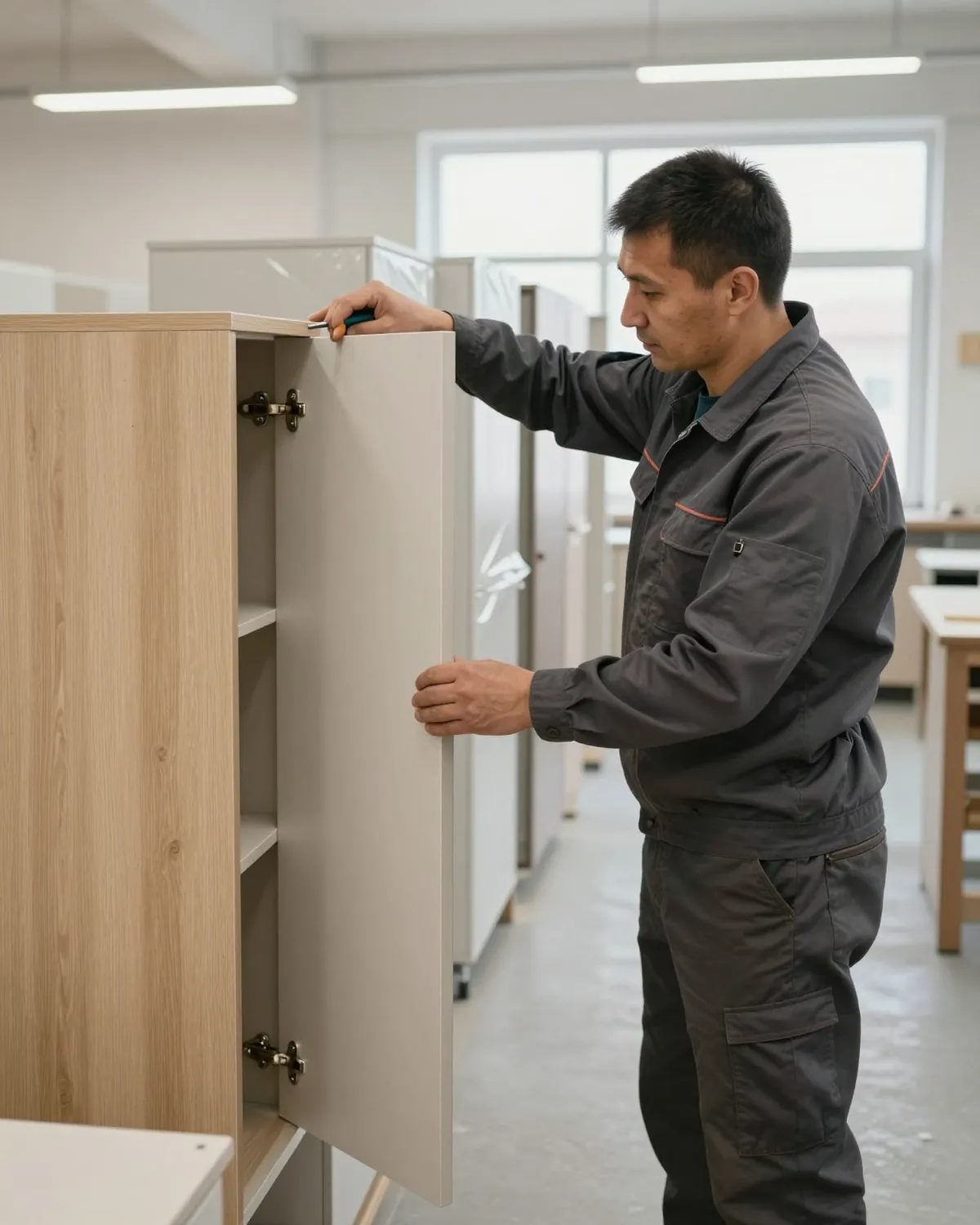
We assemble the modules in the workshop before dispatch, checking front gaps and drawer travel. The quality control department signs the item off for shipping.
Installation around the kindergarten schedule
We deliver, bring in and assemble in 1 day, adjust the furniture and clean up after ourselves. Warranty of 24 months from signing the acceptance certificate.
08Team
MEBLIX workshop craftsmen who make and assemble furniture to order.
01 / 07Furniture assembly carpenter11 years
★ 4.81 · 47 ratings

Cabinet furniture repair craftsman20 years
★ 4.99 · 73 ratings

Furniture and kitchen unit assembler23 years
★ 4.97 · 300 ratings

Made-to-order furniture maker7 years
★ 4.26 · 32 ratings

Furniture maker5 years
★ 4.23 · 30 ratings

Joiner and carpenter20 years
★ 5.0 · 113 ratings

Furniture front and hardware fitter17 years
★ 4.61 · 92 ratings
09FAQ
Didn’t find the answer? Message us — a manager replies, not a bot.
Ask on WhatsAppYes, we work under a contract and invoice with non-cash payment. For private kindergartens — a 50 % deposit, the rest after signing the acceptance certificate. Closing documents — the acceptance certificate and the delivery note.
Yes, for public procurement we prepare a commercial quotation and a specification to the technical brief. Payment — under the terms of the procurement contract, by bank transfer.
We provide conformity certificates and sanitary-hygienic reports for materials and items. This package is enough for SES acceptance and kindergarten licensing.
By GOST 19301 height groups — from nursery to preparatory. Before ordering, teachers measure the children's height, and we draw up the specification and mark the items with the group colour.
The lead time depends on the item and material; lead times for each option are in the price list on this page. If the kindergarten opens on a specific date, a rush order is possible.
Yes, we schedule installation around the kindergarten schedule: at weekends, in the evening after the children leave or during the summer renovation. We assemble one room at a time so the other groups can keep working.
Yes, measurement of groups and bedrooms is free. Based on it, within 1–2 days we prepare a 3D furniture layout with a specification for each group.
Yes, we supply both small private kindergartens and children's centres: from a single group to a kindergarten with several groups in one decor. One estimate and one contract for the whole set; later you can reorder furniture in the same decor.
Yes, we accept repeat orders in the same decor so the new group doesn't differ from the others. Keep the specification with the decor name — we'll use it to match the board and marking.
The height-adjustable 'Krokha' chair and the 'Malysh' baby cot are in the price list on this page, along with their prices. We calculate the total for a group set in the estimate after measuring and fix it in the contract.
10Reviews
4,9
average rating
on Google and Zoon
Everyone can see a review on the platform: this is how other people check whom to trust with an order. If something went wrong, write to us and we will reply within 1–2 business days.
Message us on WhatsApp11Article
We make kindergarten furniture in our own workshop in Almaty, measuring the group rooms and bedrooms: beds, cubbies, tables and chairs are selected by GOST 19301 height groups from E1-class laminated chipboard with rounded corners. Each set comes with certificates and hygiene reports for SES acceptance, and we work under a contract and by bank transfer.
A kindergarten has several rooms with different purposes: in one children study and eat, in another they sleep, in a third they change clothes. That is why the equipment is calculated for each zone separately.
The group room holds tables and chairs for activities and meals, shelving for toys, a book corner and a role-play corner, and a teacher's desk. This is where kids furniture for preschools takes the heaviest load: it gets moved, washed several times a day, and climbed on. We design the group room as one set: countertops, shelf boards and corners share the same laminated chipboard decor and the same height range, so the rows line up without steps. We make toy shelving low and open, so a child can take out a container and put it back, while the teacher can see the order on the shelves. The teacher's desk is matched to the kids furniture, with drawers for supplies and a locked compartment for personal items. One decor, one estimate and one contract for the set make both acceptance and future reorders easier.
The bedroom is equipped with beds for the number of children in the group, and the changing room with cubbies with personal compartments and low benches for changing. We choose the bed type by the bedroom area: single-tier beds where there is enough space, stackable and bunk beds in tight rooms, and pull-out beds where the bedroom turns into a playroom during the day. In the changing room we count compartments by the group roster and allow a margin for new children. Each compartment gets hooks for outerwear, a shelf for hats and a section for spare shoes, with space for a picture label on top. We describe bed and cubby construction in detail in the catalog sections; what matters here is that the bedroom and changing room should be designed together with the group room, so that passages and doors do not block each other.
| Room | Items | How quantity is calculated |
|---|---|---|
| Group room | tables, chairs, shelving, corners | by number of children and height groups |
| Bedroom | single-tier, bunk or pull-out beds | by number of children and area |
| Changing room | cubbies with compartments, benches | one compartment per child with a margin |
| Washroom | towel racks, drying shelving | by the group roster |
| Play area | role-play corners, play wall units | by the teacher's activity plan |
| Method room | cabinets for supplies | by the volume of supplies and folders |
The height of a table, chair and bed is set by the child's height, not by the group name. Within one group the spread of heights can be noticeable, so furniture sizes are selected for it in advance.
We make tables, chairs and beds by height groups according to GOST 19301 — from nursery to preparatory group. The standard sets the tabletop height, seat height and depth, and bed length for each height group, so furniture for preschoolers cannot be selected "by eye" based on age. Before ordering, teachers measure the children's height, and we draw up the specification based on the actual spread: how many sets of one height group and how many of the adjacent one. A table and chair of the same group work only as a pair — the child sits with feet supported on the floor and elbows resting on the tabletop without raising the shoulders. If children noticeably taller or shorter than the majority join the group, it is better to include several sets of a different size right away than to seat everyone at unsuitable tables.
We mark each item with the color of its height group: a label of the same color on the table and chair shows they form a pair. Color marking according to GOST 19301 helps the teacher quickly seat the children and check that no child has sat down at the wrong size. In a mixed-age group, furniture of two adjacent height groups is ordered for one room, and the marking becomes the fastest way to tell them apart. We place the label so it is visible from the side even when children are sitting at the table, and on beds — from the aisle side. When the group moves to the next age, the marked sets can be passed on to the younger group of the kindergarten instead of being written off: the item's size is read immediately, without a tape measure or data sheet. Thus one set serves several groups of children in a row.
Children run, lean on cabinets, climb on beds and pull out drawers. The construction must withstand this without sharp edges, tipping over or pinching fingers.
We round all corners and ends of parts in the workshop and install a 2 mm thick anti-vandal PVC edge. A thin paper edge on the ends of children's furniture peels off quickly: a child picks at it with a fingernail, and the board is exposed underneath. A thick PVC edge with a rounded edge withstands chair impacts on the tabletop and toy wheels against the sides of a shelving unit, and the rounding leaves no sharp edge at a child's face height. Edge banding is done immediately after cutting, then corners and ends are rounded and checked at a trial assembly for burrs at the joint of the edge and the board. At acceptance, run your hand along the ends of tables and shelves: chips and gaps appear exactly here, and they are easier to notice before the group starts using the furniture.
We anchor tall wardrobes and shelving units to the wall, and we check the stability of every model in the workshop during a test assembly. A child may hang on an open door or climb onto the bottom shelf, so furniture for kindergartens without anchoring is the main cause of tip-overs in a group room. We choose the fasteners to suit the wall material: concrete, brick and drywall need different dowels, and this is decided during the measurement. Low items — toy shelving, role-play corners, cabinets — are made with a wide base so the centre of gravity stays low even with the drawers pulled out. If the kindergarten decides to move a wardrobe to another room, the anchors move with it: a wardrobe without a wall anchor cannot be put back into use.
The material determines how long an item will last under daily wet cleaning and how it behaves under paints, modelling clay and water in the washroom.
We cut carcasses, countertops and bed frames from E1-class Egger and Kronospan laminated chipboard 16 mm thick. Class E1 means a low level of formaldehyde emission, so such furniture for preschool institutions is suitable for bedrooms and group rooms where children spend the whole day. Where a part is sat on or heavily leaned on — reinforced countertops and cloakroom benches — we use 25 mm board: it does not sag under the weight of several children at once. The laminated chipboard surface is smooth and washable, and gouache and felt-tip marks do not stay on it. We choose light, calm décors and add colour with fronts and inserts so that brightness does not tire the children. For the washroom — towel racks and drying shelving — we fit moisture-resistant edging that does not let water into the board.
| Material | Where it is used | What to look out for |
|---|---|---|
| E1 laminated chipboard 16 mm | carcasses, cupboards, beds | edging on all edges |
| E1 laminated chipboard 25 mm | countertops, benches | thickness where children sit |
| Birch plywood | chair seats and backs | water-based lacquer |
| Solid birch | chairs, some beds | smooth sanding without fuzz |
| Steel frame | table and chair legs | powder coating without chips |
A kindergarten accepts furniture not only through the teacher's eyes but also by the documents. Private and state kindergartens handle purchases differently, and this should be considered before ordering.
We attach certificates of conformity and sanitary-hygienic conclusions for materials and items to the set. This package is needed for SES acceptance and for kindergarten licensing: inspectors check what the furniture in which children sleep and study is made of. Documents should be requested at the project stage and verified against the item list in the specification so that at acceptance it does not turn out that some items lack papers. After installation, the kindergarten receives an acceptance certificate and a waybill — they are signed together with the inspection of the assembled furniture. The warranty on items is 24 months under the contract, and its terms are also included in the paperwork. For a new kindergarten, it is more convenient to collect everything in one folder: project, specification, certificates, certificate of acceptance and waybill.
With a private kindergarten we conclude a contract, issue an invoice and work by bank transfer: 50% prepayment, the remaining 50% after signing the acceptance certificate. The contract specifies the list of items, decor, height groups and installation date, so the founder receives furniture for a kindergarten in Almaty according to a pre-fixed specification. Prices for each option are in the price list above on this page, and we state the total amount for the set in the estimate after measurement. We draw up the contract and invoice for a LLP or sole proprietor, and the closing documents — the certificate of acceptance and waybill — are received by the kindergarten's accounting department. If the kindergarten opens in stages, groups can be equipped one by one, and later additional furniture can be ordered in the same decor so that the rooms do not differ.
An order goes through several steps, from measurement to signing the acceptance certificate. It helps to map them onto the kindergarten calendar so that the groups' activities never stop for a single day.
We schedule installation around the kindergarten's routine — at weekends, in the evening after the children have left, or during the summer renovation period. Assembly is handled by our own team, so the schedule does not depend on third-party contractors: the installation date is written into the contract together with the specification. It is easier to fit out a working kindergarten one room at a time: while the team assembles the bedroom, the children use the group room, and the next day it is the other way round. Before installation the room is cleared of old furniture, and after assembly the fitters secure tall wardrobes to the wall and check stability. Delivery within Almaty and up to 30 km is free for a large order; the threshold is shown on the Delivery and payment page. Summer renovation is the most convenient window for a complete furniture replacement, and it is worth arranging in advance.
A new group can be fitted out later in the same finish, and it will not differ from the groups already in use. To make this possible, the kindergarten should keep the specification on file with the laminated chipboard finish name, height groups and markings. Board manufacturers update their collections over time, so for a reorder the finish is matched against a sample, not just the name. Individual items — a cubby for a new child, one more table or a few chairs in a different height group — are reordered from the same specification. If the kindergarten plans to open additional groups, it is worth building the layout into the first 3D design: the new rooms will then get items from the same height range, and children moving from group to group will not end up at furniture of a different size.
Fitting out a kindergarten comes down to a few decisions that are best made before the order rather than during installation. Below is a short checklist of what to verify.
12Calculation
Select an item, quantity and material in the calculator — the calculation will go to the manager on WhatsApp, and we will send an exact estimate for the group after measurement.
13Furniture for kindergartens
We make single-tier, stackable, nursery and pull-out beds to fit the bedroom area and the children's height in the group: E1 laminated chipboard or birch solid wood, rounded corners, mattress to fit the bed.
Beds for kindergarten group bedrooms, made to the number of children in the group: two- and three-tier, rails around the top tier, solid wood ladder, E1 laminated chipboard, wall fixing.
Two or three sleeping places slide under each other and free up the bedroom floor during the day for play and activities.
Cabinets with personal cubbies, hooks at a child's hand height and a bench for the cloakroom, plus cabinets for supplies, toys and linen made of E1 laminated chipboard.
We make rectangular, trapezoid, round and dining tables by GOST height groups from E1 laminated chipboard with rounded corners and a washable tabletop.
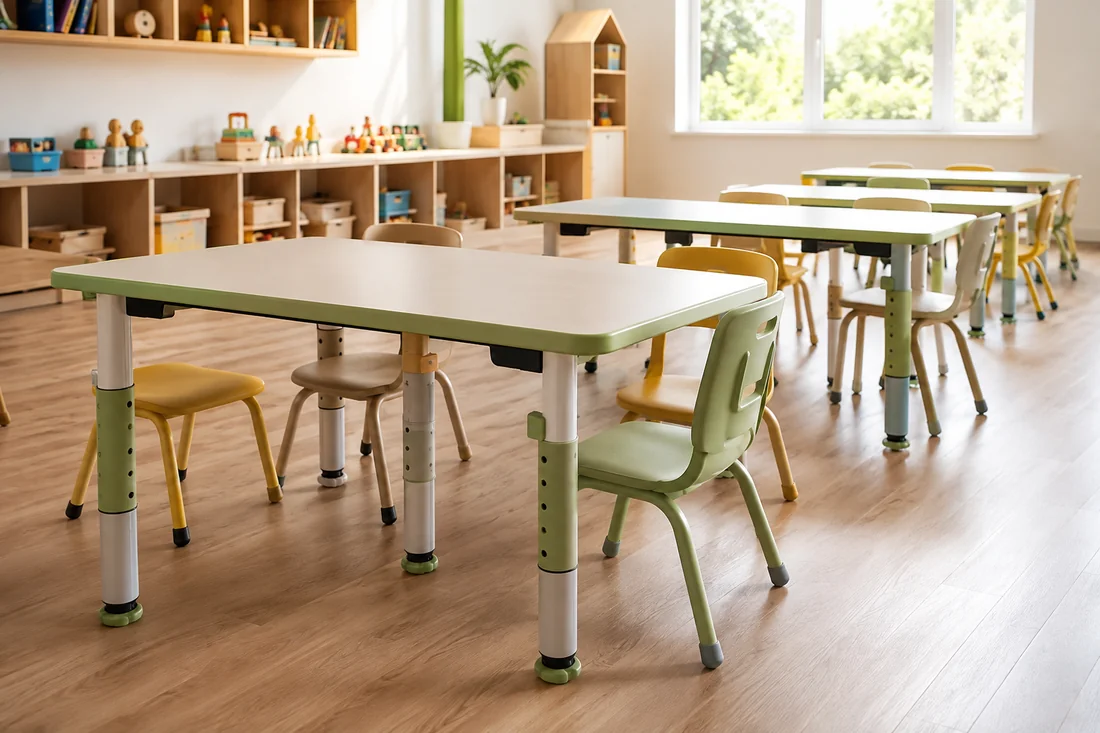
We make tables on screw supports and a steel frame that adjust to the next GOST height group — from E1 laminated chipboard with rounded corners.
We make height-graded, adjustable and stackable chairs by GOST groups from E1 laminated chipboard, birch plywood and solid wood, with rounded corners and color coding.