
Temirzhan Nurpeisov
Furniture assembly carpenter11 years
★ 4.81 · 47 ratings
For business · Pharmacies
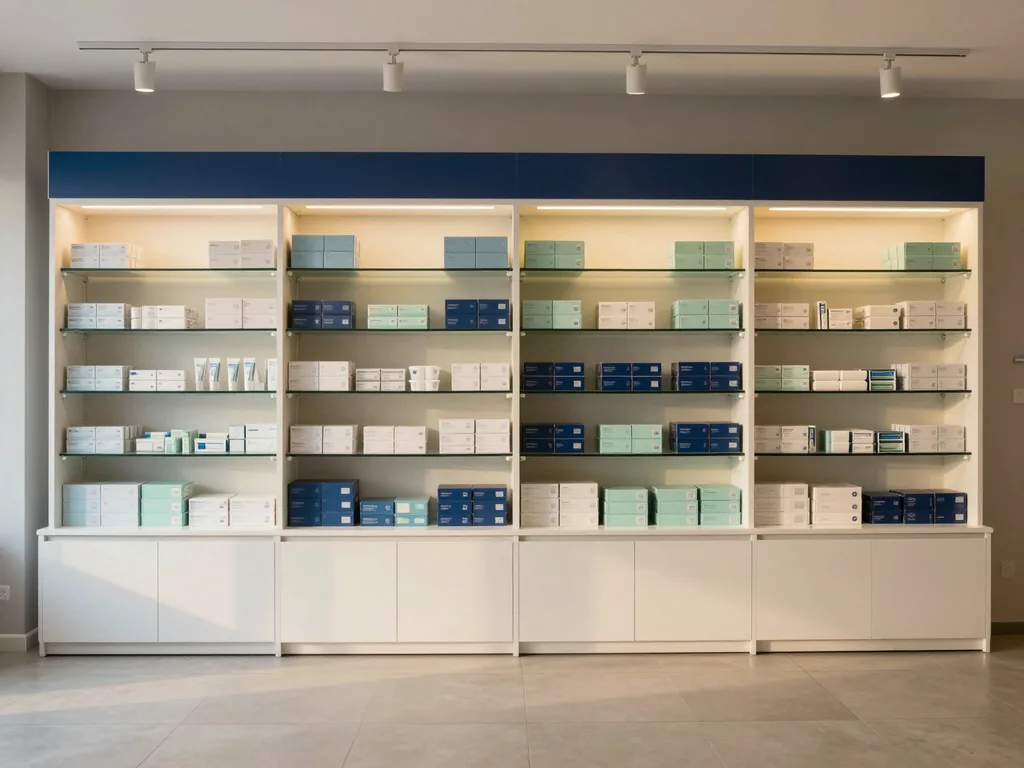
We make display cases to fit the sales floor: wall-mounted up to the ceiling, island, corner with curved glass, and counter display cases with lighting and locks. Measurement and 3D design are free within 1–2 days, the price is fixed in the contract, and the warranty on the item is 24 months.
Measurement and 3D design are free and carry no obligation · price fixed in the contract · Kaspi Instalments up to 24 months
01Types
 01
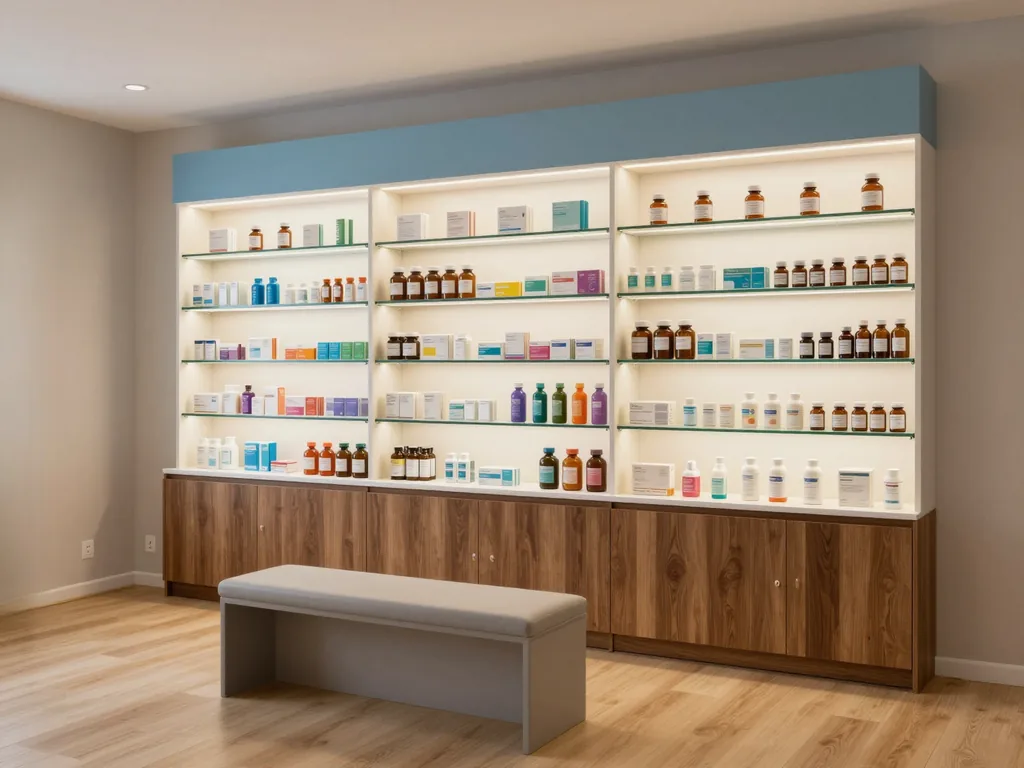
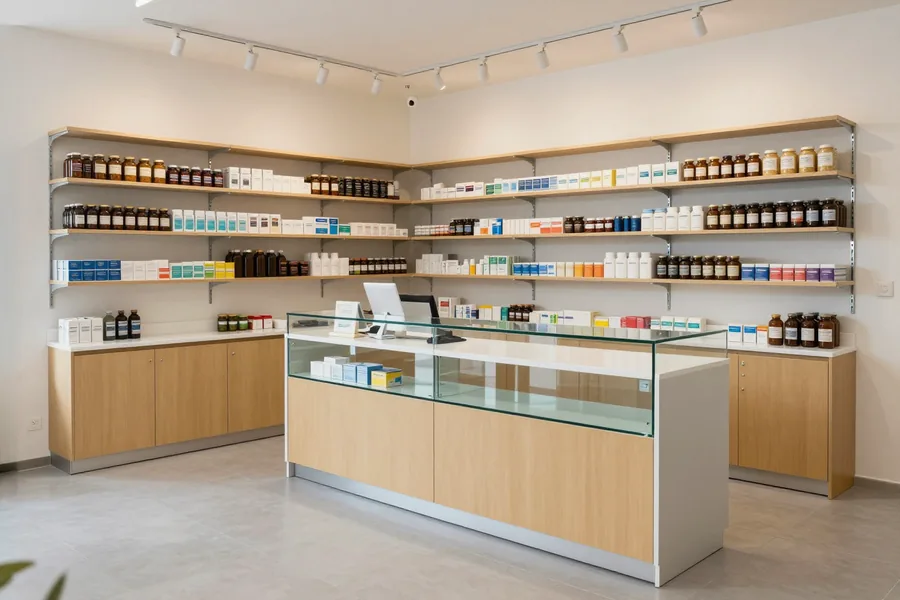
Glazed shelves over the full wall height and a solid plinth with extra space: the main display volume along the perimeter of the sales floor.
from 95 000 ₸
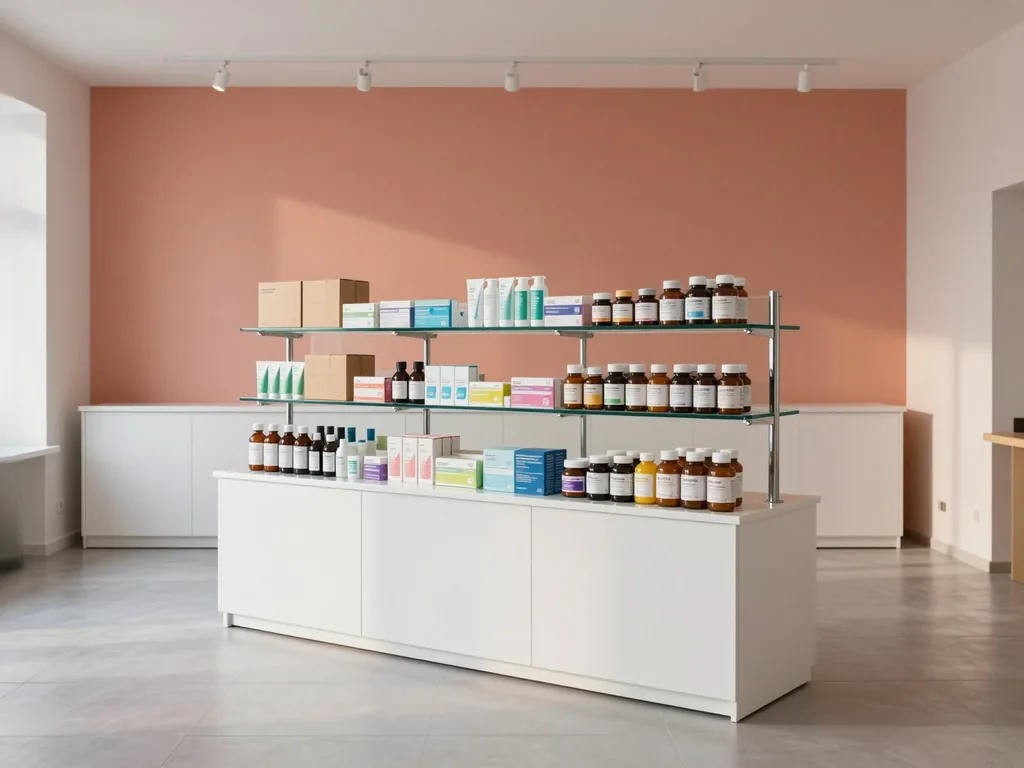 02
Glass shelves on chrome posts in the centre of the sales floor: the customer walks around the section and picks products from both sides.
from 395 000 ₸
 03
Curved tempered glass on an aluminium profile covers the corner without sharp edges and links two walls of the sales floor.
from 285 000 ₸
 04
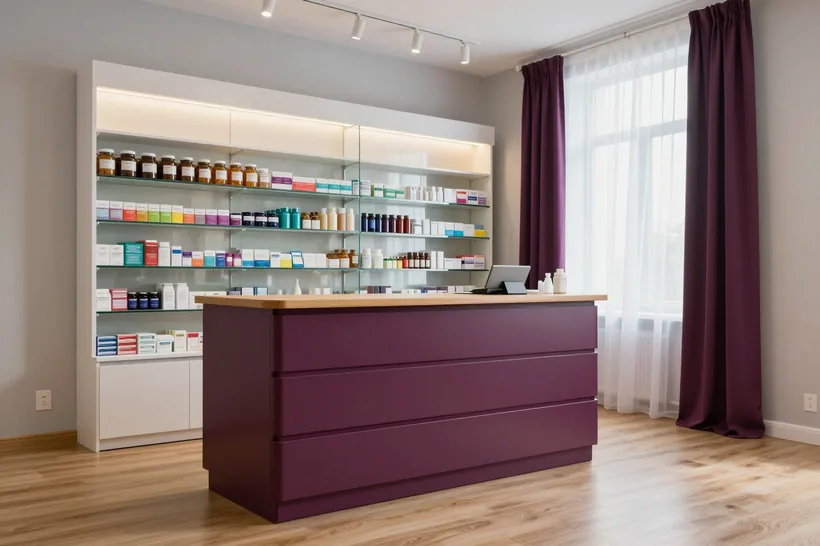
MDF in enamel, glass lit from the customer side and three drawers at the pharmacist's station — an accent display by the checkout.
from 365 000 ₸
 05
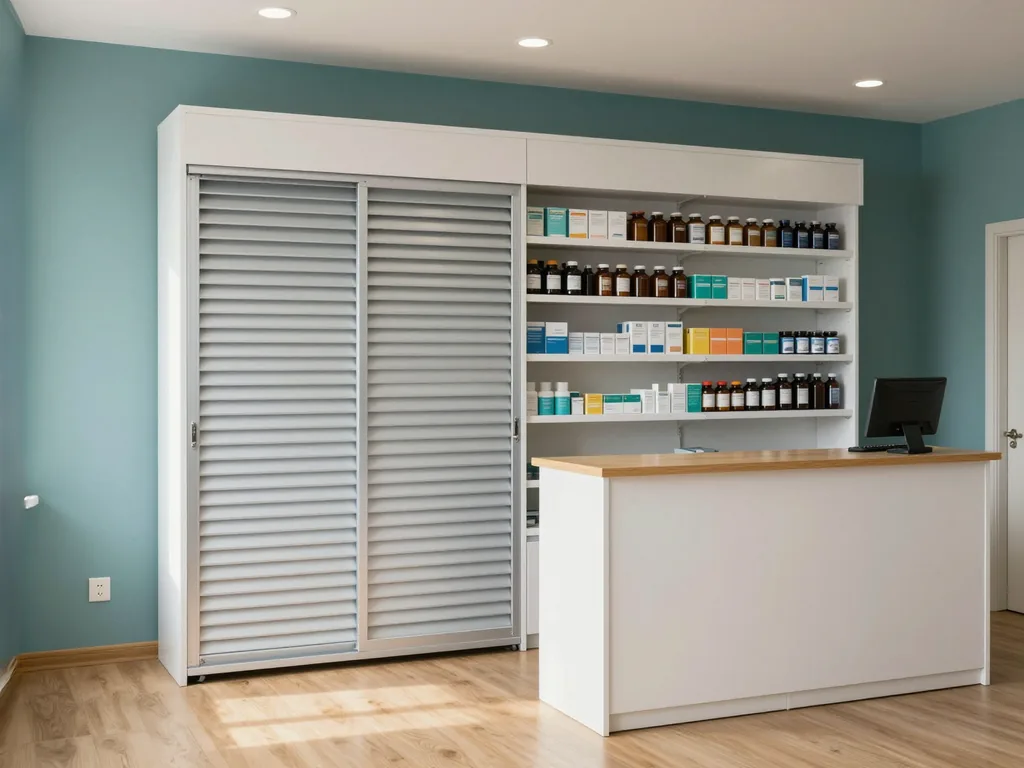
Plastic slats on steel guides close the section behind the checkout in one motion and don't take up the aisle.
from 430 000 ₸
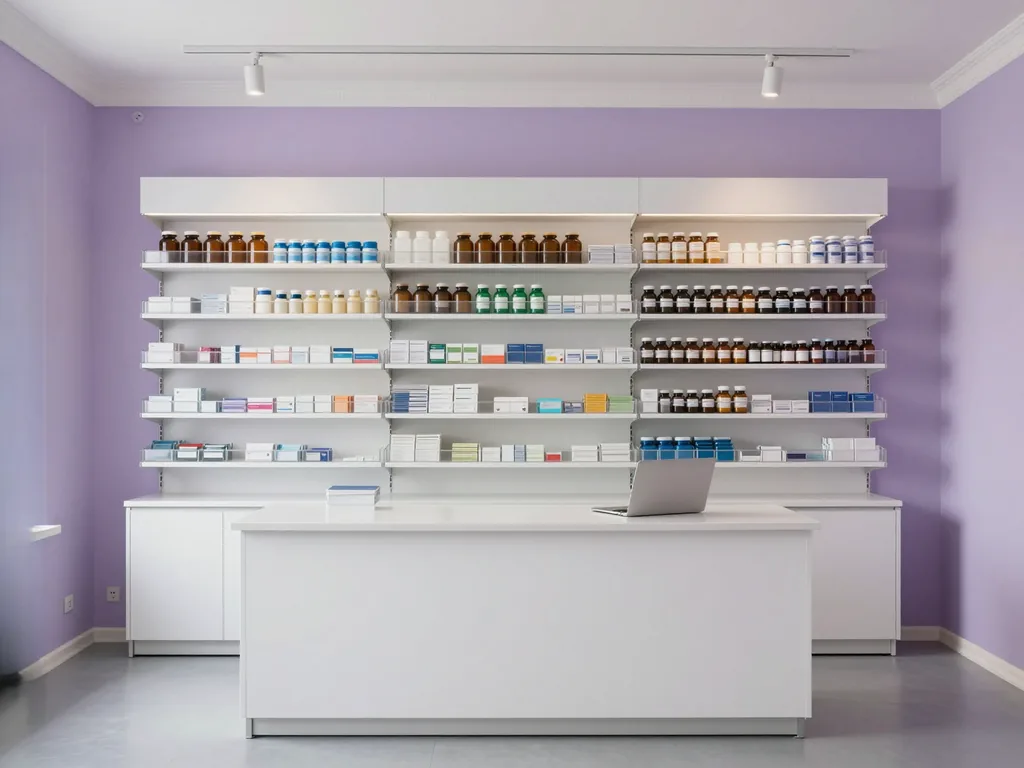 06
Acrylic trays and lights above each row: the pharmacist sees the packs right away, the customer sees a neat display.
from 495 000 ₸
02Projects
Site, scope, materials and lead time — for each project.
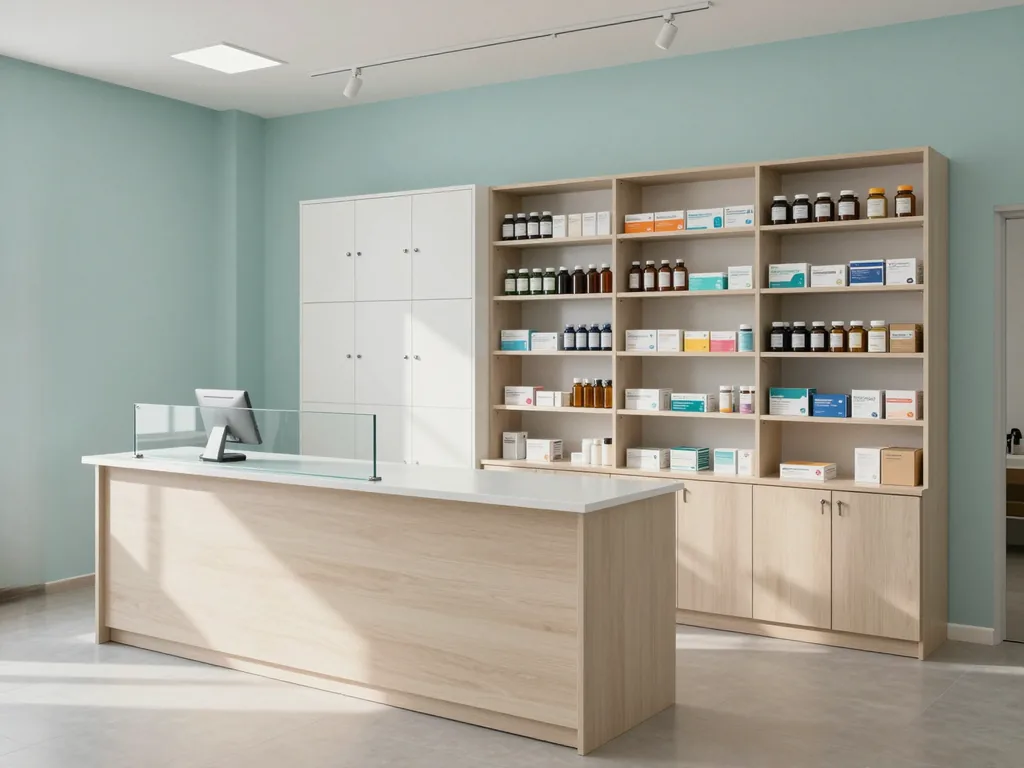 Pharmacy
Koktem microdistrict, Bostandyk district
Pharmacy in a residential complex: we made the first-counter line counter with glass, a medicine cabinet with a lock on each compartment and open shelving for display. All in a single light decor.
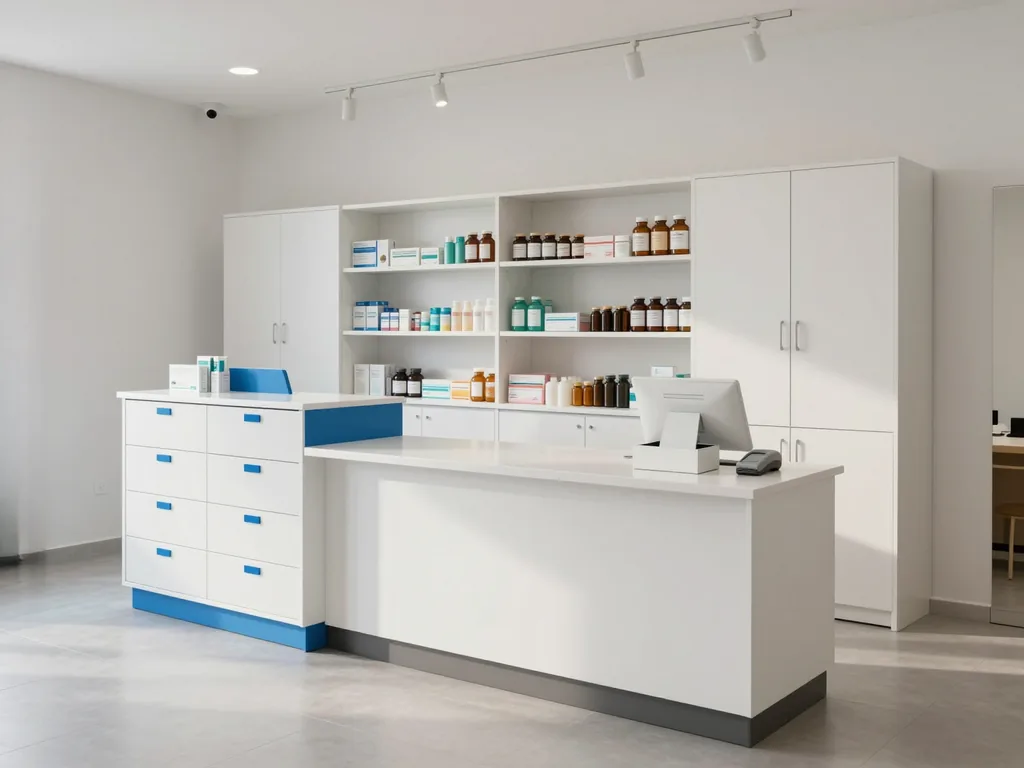 Pharmacy
Samal microdistrict, Medeu district
Pharmacy chain: a single white decor for replication across several locations — counter, closed storage cabinets and labeled prescription drawers. Quoted on the chain's overall estimate.
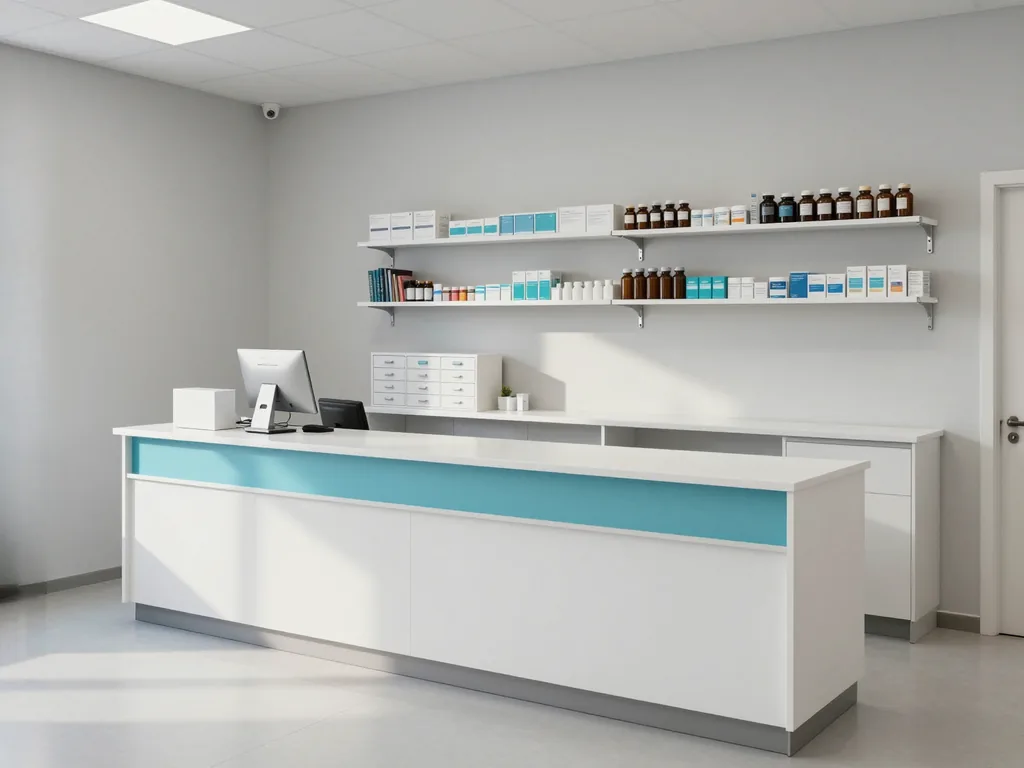 Pharmacy
Tastak microdistrict, Almaly district
Pharmacy by a clinic: first-counter line counter, labeled prescription drawers and a checkout area in a white-and-blue clinical decor.
 Pharmacy
Orbita microdistrict, Bostandyk district
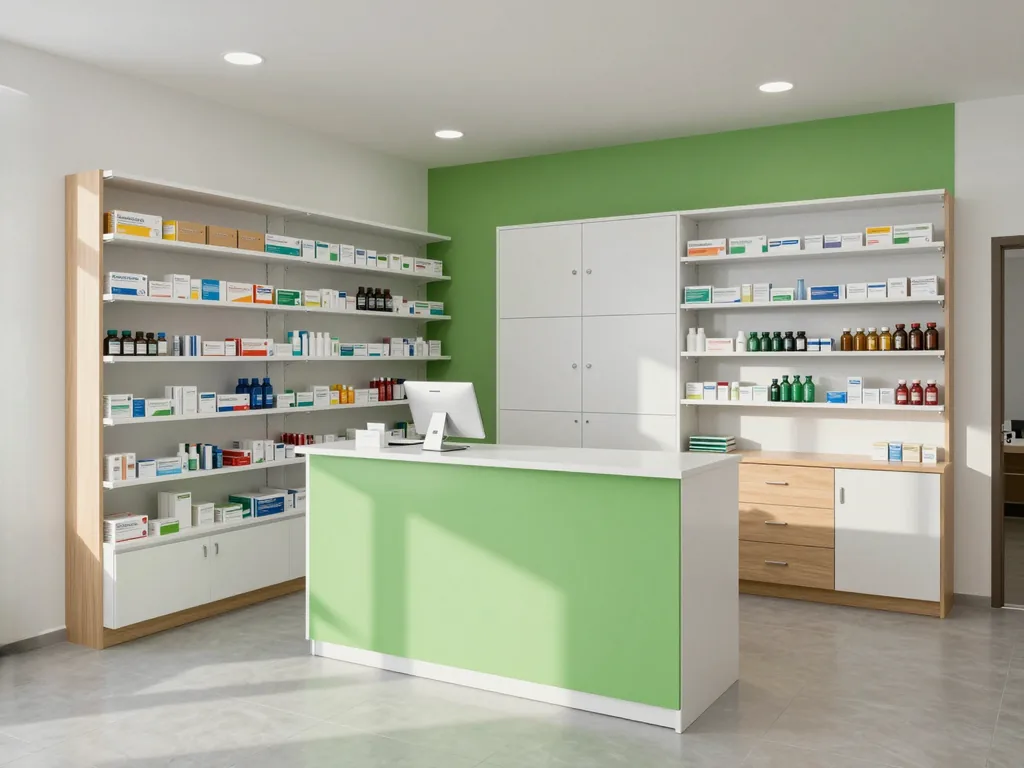
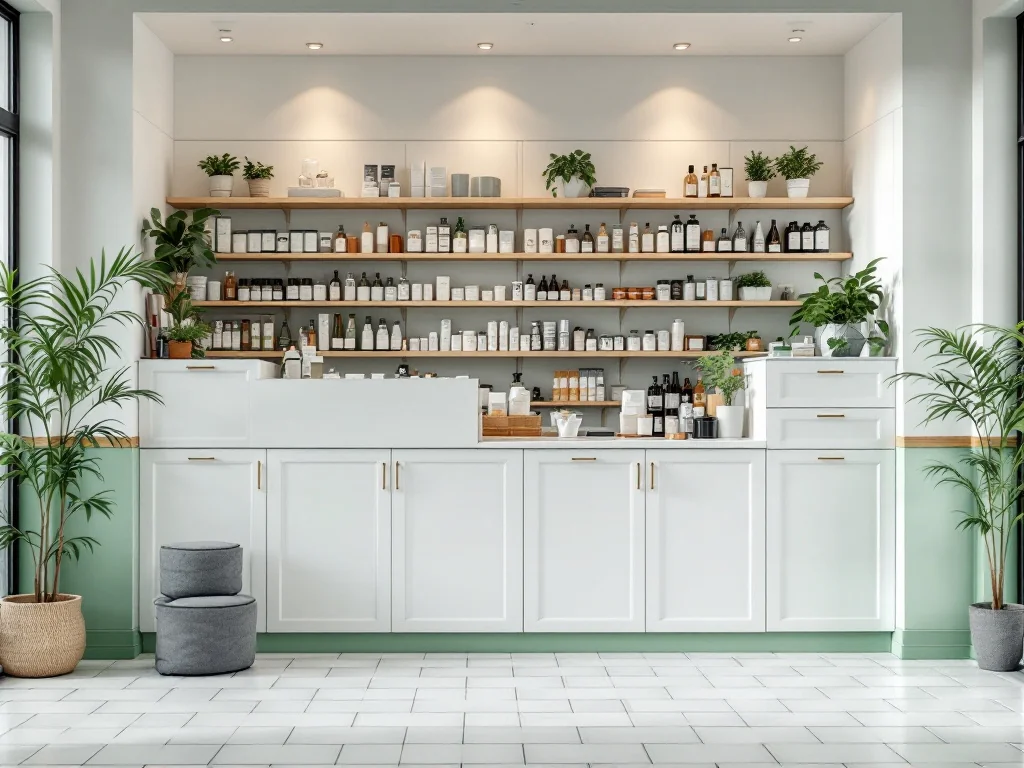
Pharmacy with a prescription department: a medicine cabinet with a lock on each compartment, prescription drawers, open shelving for OTC goods and a checkout in a light white-and-green decor — all in one order.
 Pharmacy
Aksai microdistrict, Nauryzbai district
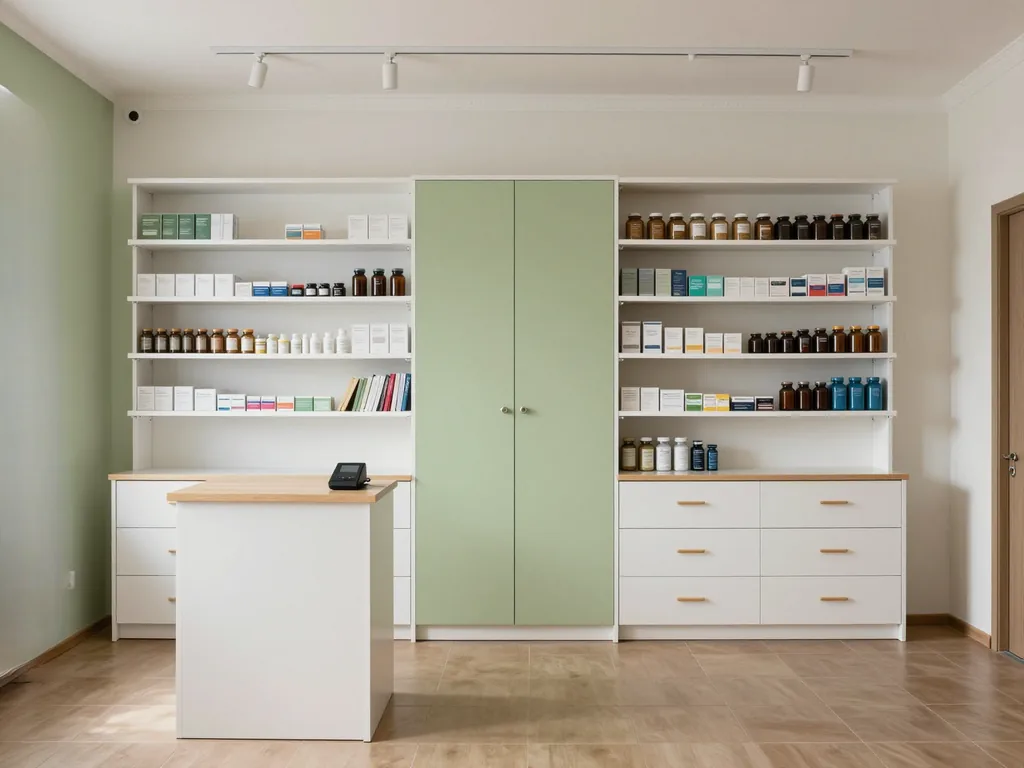
Neighborhood pharmacy: a compact set for a small hall in light white-and-green tones — a medicine cabinet, pull-out prescription drawers and open shelving. Fitted exactly to the measurement, with no wasted space.
 Pharmacy
Aport shopping center, Alatau district
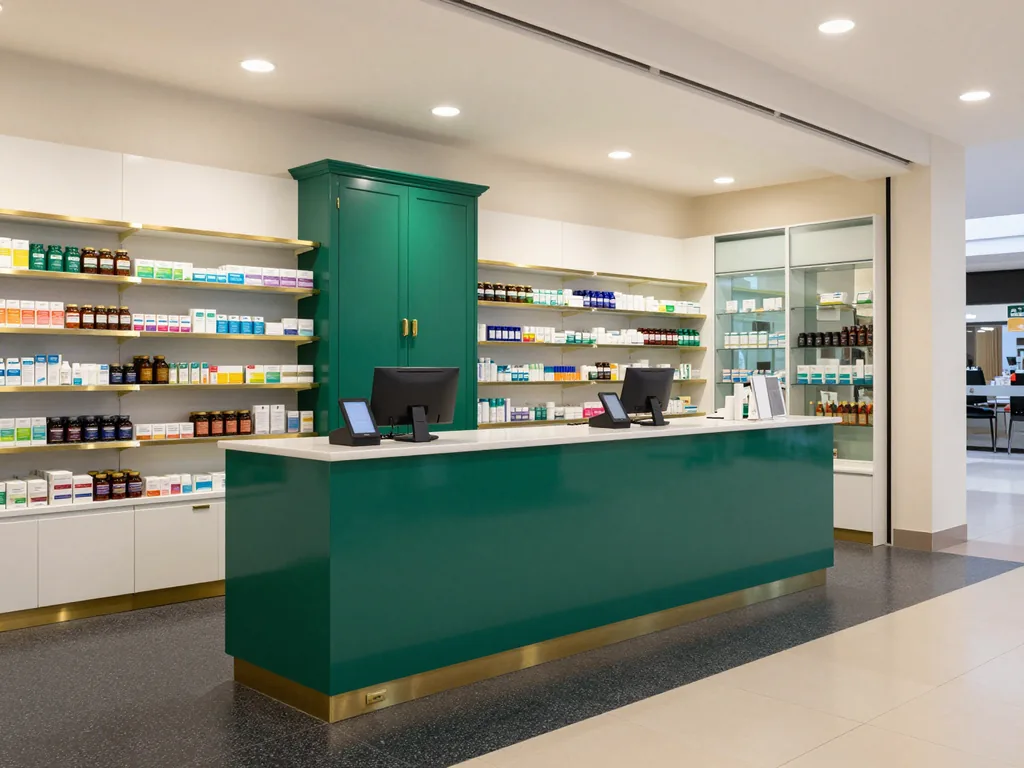
Pharmacy in the Aport shopping center: a counter for heavy customer traffic in a rich green decor with brass hardware, a medicine cabinet with a lock, a checkout and open shelving. Bright light and display cases suited to the shopping center format.
03How we work with pharmacies
04Prices
The "from" price is per section in the basic configuration; the final total depends on sizes, glass, lighting and locks. We fix the cost in the contract after a free measurement of the sales floor.
05For legal entities
We work with LLPs and sole proprietors on bank transfer. Price, materials and lead times — in the contract before production starts.
Request a contract and invoice06Principles
01 / 06
07Production
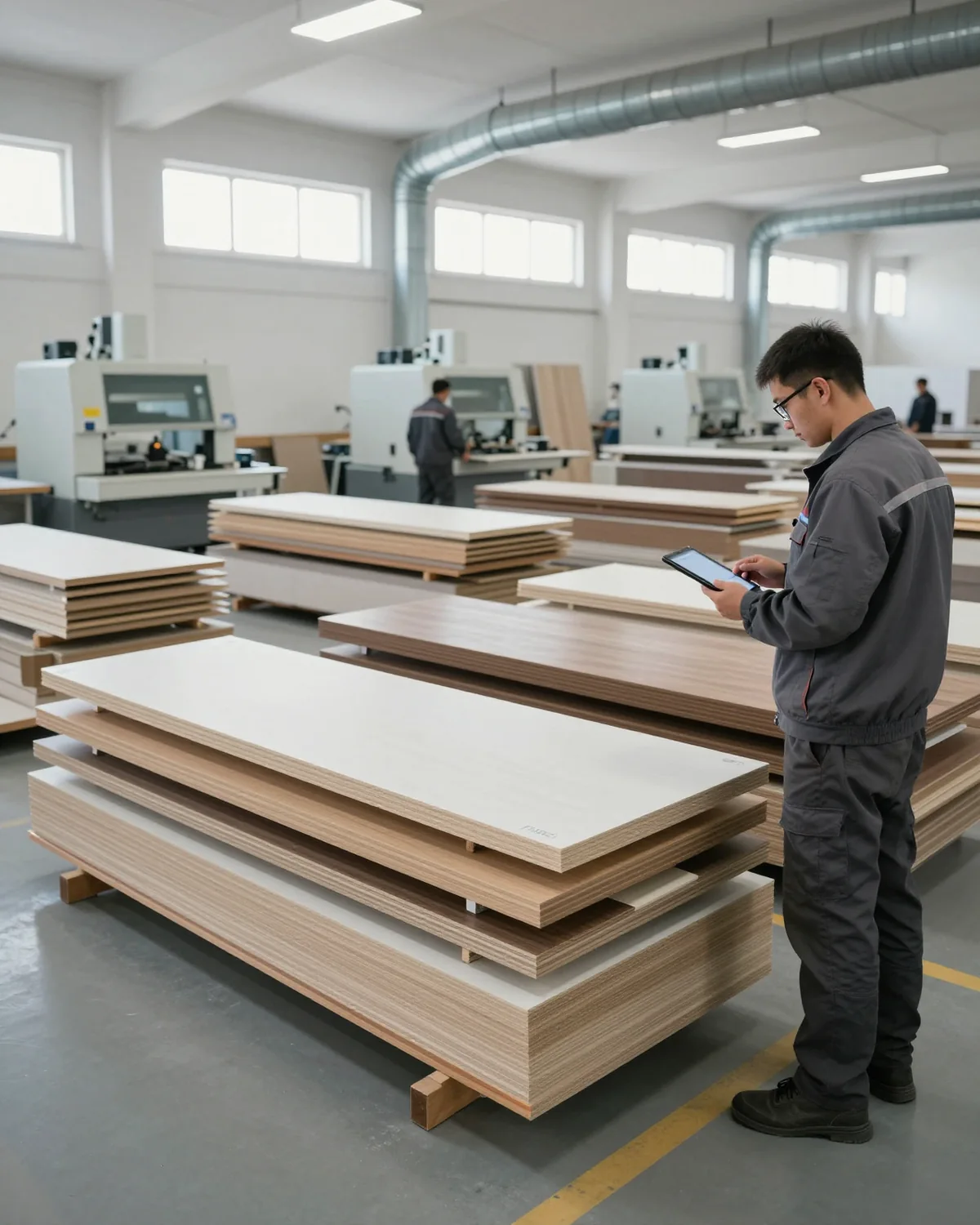
Six steps in our 600 m² workshop. You can see each of them with your own eyes: the showroom and production are under one roof.
Egger · Kronospan · E1
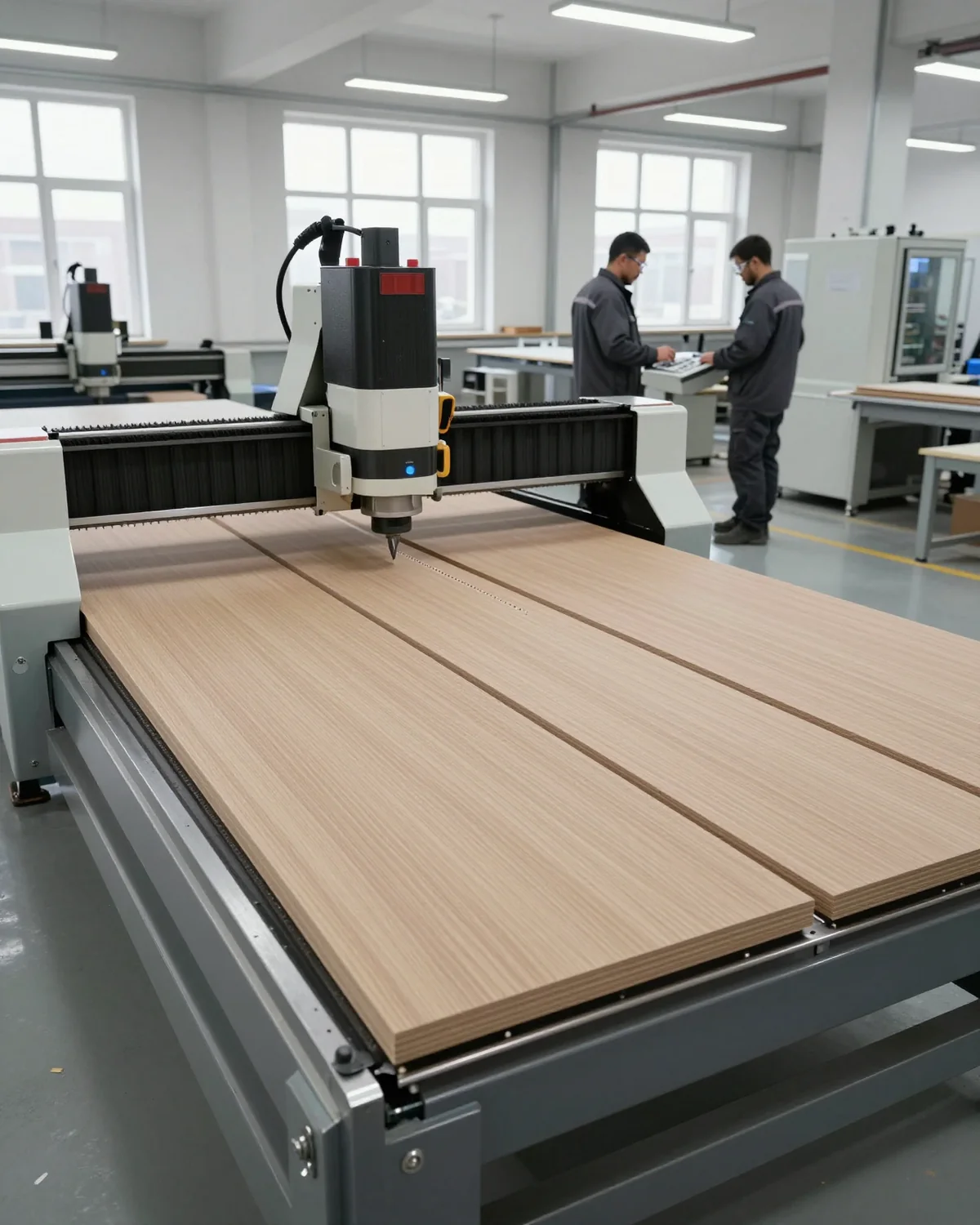
Egger and Kronospan boards of emission class E1 arrive at the workshop warehouse. 40+ laminated chipboard decors, 16–18 mm thick. Class E1 — for pharmacies and retail floors.
Laser measuring to 1 mm
A design engineer prepares the drawings, and the machine cuts the board to them. Dimensions come from a laser measurement accurate to 1 mm.
Blum · Hettich · Boyard
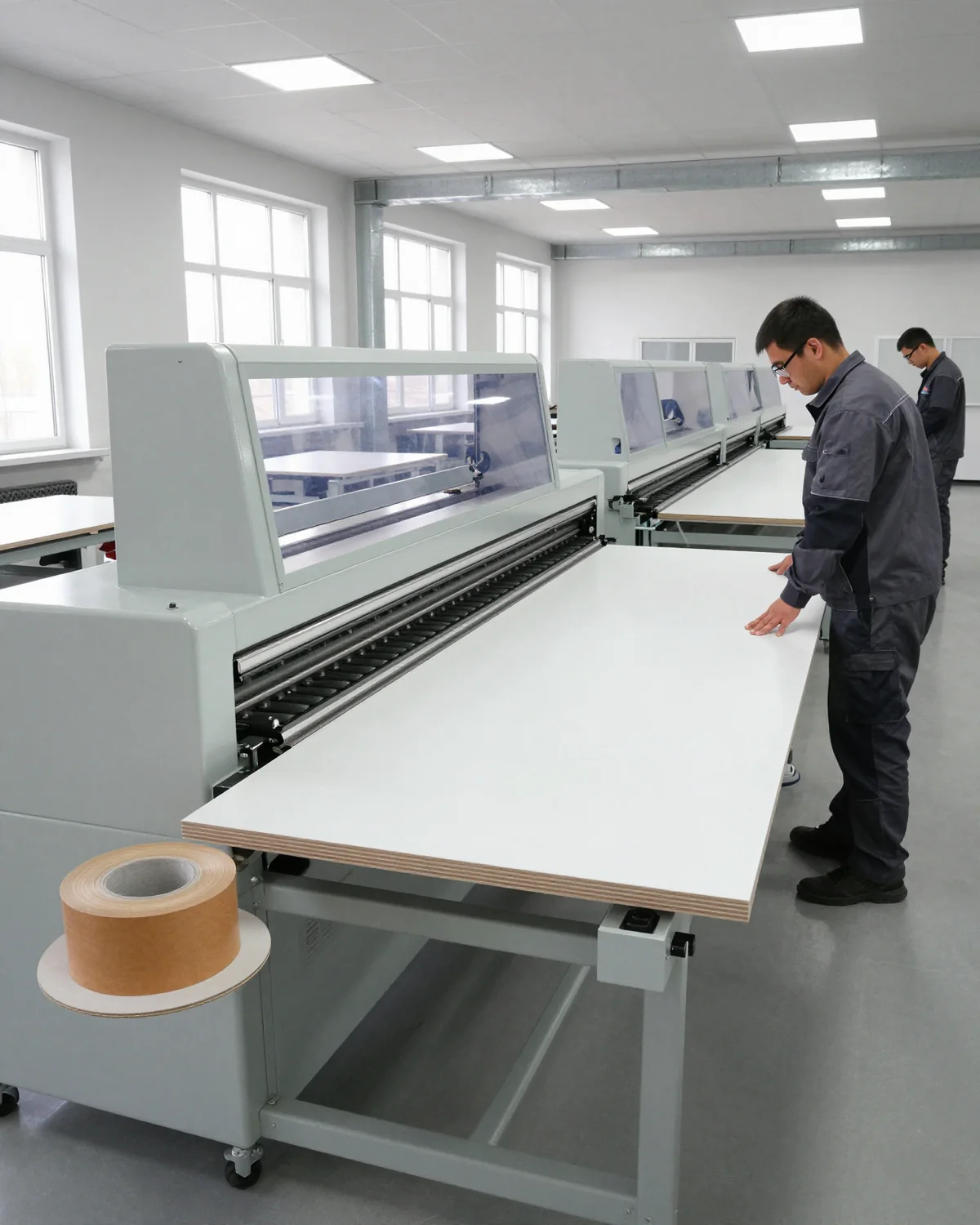
The edge-banding machine seals the edges, then we drill holes for Blum hinges and Hettich runners.
Any RAL colour
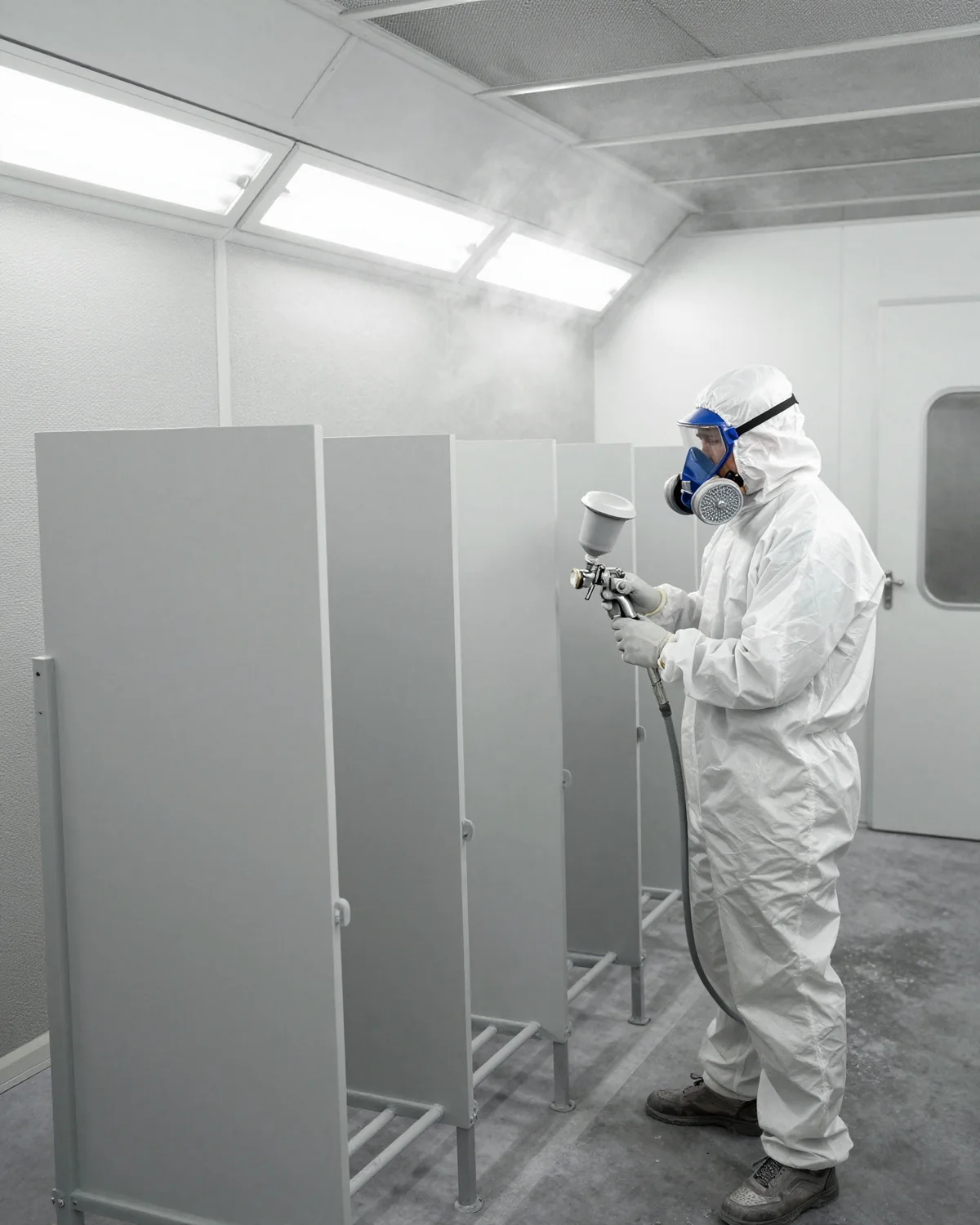
A finishing specialist paints fronts to RAL — matte and gloss. For display cases the main thing is glass cut to exact sizes: it is cut and polished in our workshop, so the sashes fit without gaps.
Pre-assembly in the workshop
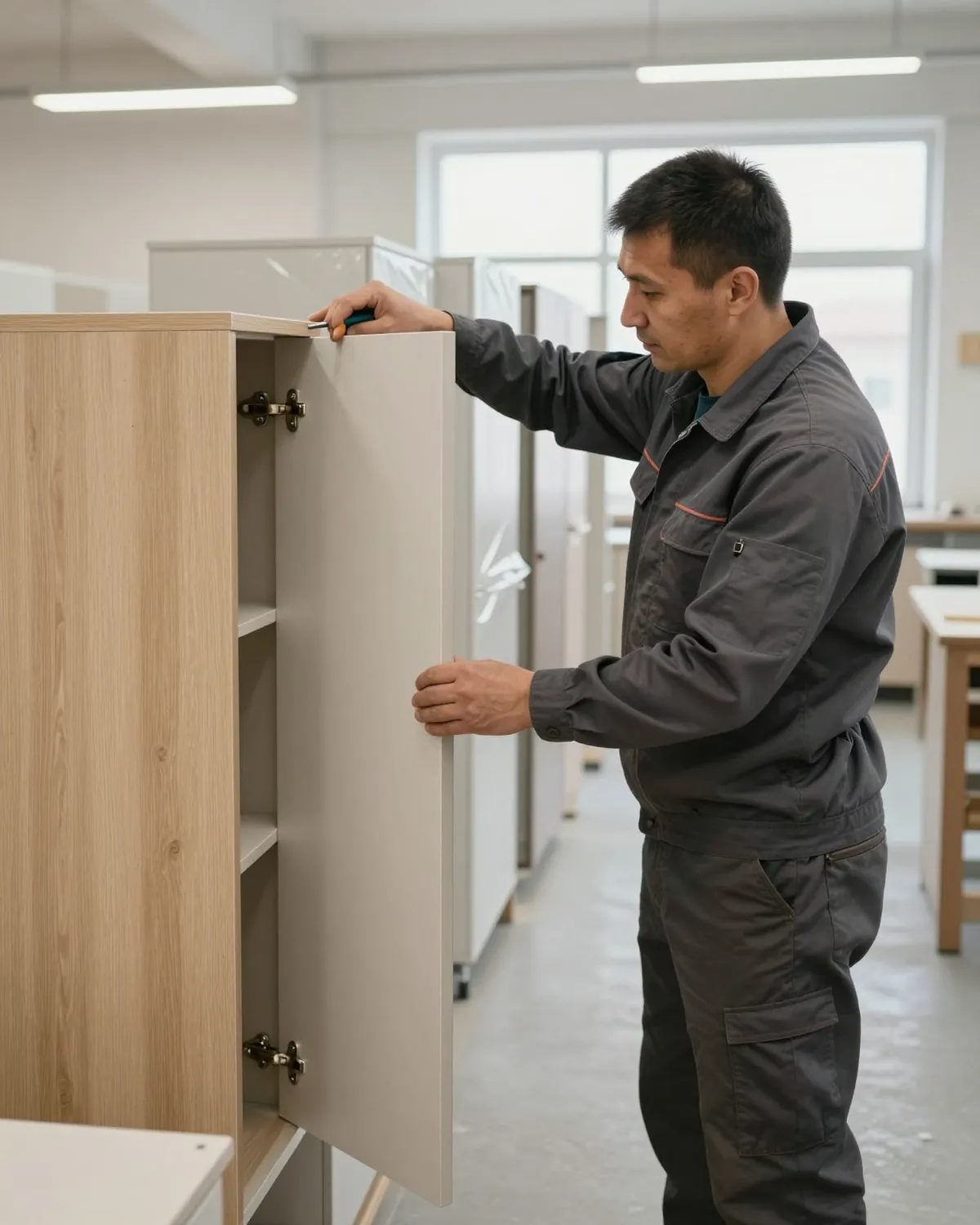
We assemble the modules in the workshop before dispatch, checking front gaps and drawer travel. The quality control department signs the item off for shipping.
Installation to fit the venue's schedule
We deliver, bring in and assemble in 1 day, adjust the furniture and clean up after ourselves. Warranty of 24 months from signing the acceptance certificate.
08Team
MEBLIX workshop craftsmen who make and assemble furniture to order.
01 / 07Furniture assembly carpenter11 years
★ 4.81 · 47 ratings

Cabinet furniture repair craftsman20 years
★ 4.99 · 73 ratings

Furniture and kitchen unit assembler23 years
★ 4.97 · 300 ratings

Made-to-order furniture maker7 years
★ 4.26 · 32 ratings

Furniture maker5 years
★ 4.23 · 30 ratings

Joiner and carpenter20 years
★ 5.0 · 113 ratings

Furniture front and hardware fitter17 years
★ 4.61 · 92 ratings
09FAQ
Didn’t find the answer? Message us — a manager replies, not a bot.
Ask on WhatsAppA counter display case with smooth glass is the basic option, while the MDF version in enamel with LED lighting and three drawers costs noticeably more. Prices by type are in the price list above. We calculate the exact amount after measuring, based on the dimensions and the chosen glass.
Yes, we design every section from a measurement, so the width and height match the niche. We cover uneven walls and columns with filler strips, and cut the glass once the carcass is ready.
Yes, we work with glass in our own workshop to order dimensions, so a shelf, door or side panel can be made again. Just send a photo and the section dimensions, and our team will make the replacement.
Yes, we match the profile color, laminated chipboard decor and enamel MDF color to the chain's brand style. We keep order data, so display cases for a new location will come in the same colors.
The 24-month warranty under the contract covers the entire item, including glass, profile and lighting, provided the section was used as intended. The manufacturer gives 25 years on Blum hinges and runners.
An island section makes sense only if two customers can freely walk around it. In a small sales floor a floor-to-ceiling wall display case or a corner one is often more worthwhile — you can see this on the 3D design after measurement.
Yes, the price list includes a tall safe cabinet made of reinforced sheet steel with a code lock and anchor fixing to the floor or wall. Its price is shown there, and we choose the size to fit the installation site.
Lead times for each option are shown in the price list on this page; the countdown starts after the project is approved and the deposit is paid. If your opening date is already set, tell us when you enquire — a rush order is possible.
A counter display case is a single glazed section with display space and drawers. A pharmacy checkout area is the cashier's workstation with glass and a lock, and a first-counter line is several such workstations as one set.
Yes, a rounded edge doesn't stick out as a corner into the aisle, so customers don't catch it with a shoulder. We make the corner counter display case on an aluminum profile with tempered glass to the corner dimensions.
10Reviews
4,9
average rating
on Google and Zoon
Everyone can see a review on the platform: this is how other people check whom to trust with an order. If something went wrong, write to us and we will reply within 1–2 business days.
Message us on WhatsApp11Article
We build pharmacy display cases based on a measurement of the sales floor: wall-mounted units up to the ceiling, island units with two-sided access, corner units with curved glass, and counter display cases. We cut glass to size in our own workshop, fit aluminium profile, LED lighting and locks. Measurement and 3D design are free, and the item comes with a 24-month warranty.
The type of display case is determined by its place on the floor and by how the customer approaches the goods: along a wall, around a circle or across a counter. This dictates the height, the glazing and the access.
We build a wall-mounted display case up to the ceiling across the full height of the wall: the upper part is glazed with smooth glass, the lower part is a solid plinth made of laminated chipboard with hinged doors or drawers. Such a section carries the bulk of the merchandising and visually levels the floor, even if the walls in the space are uneven — we close the gaps with filler strips cut on site. The middle shelves, at eye and hand level, are given over to fast-moving stock, while the plinth holds the reserve that does not fit on the open shelves. We assemble several sections in a row on a shared plinth so the joint between them is invisible. The upper shelves, which the customer cannot reach, are used for image displays and large packs, not for goods that are bought every hour.
An OTC island display case with two-sided access stands in the centre of the floor, while a corner counter display case with curved glass closes off a corner without sharp edges. We assemble pharmacy display cases of these two types on chrome-plated posts and supports: the frame looks light, and the glass shelves are visible from every side. An island is convenient for OTC cosmetics, vitamins and seasonal offers — the customer walks around it and looks at the goods without a consultation. A corner section with bent glass removes the dead zone in the corner and makes the transition between two walls smooth. Curved glass is also safer in a narrow spot: you do not catch your shoulder on a rounded edge. An island section is only installed if a passage remains around it where two people with shopping can comfortably pass each other.
| Type | Place on the floor | What is displayed | Access |
|---|---|---|---|
| Wall-mounted up to the ceiling | Along the wall | Main OTC range | Open and closed shelves |
| OTC island | Centre of the floor | Cosmetics, vitamins, seasonal | From two sides |
| Corner with curved glass | Corner of the floor, by the till | Accent goods | Through the glass or over the counter |
| Counter display case | Pharmacist's area | Impulse goods | Customer sees, pharmacist retrieves |
| Counter with lighting and drawers | Till | New arrivals and special offers | From the pharmacist's side |
| Cabinet with roller shutters | Behind the till | Fast-moving medicines | Staff only |
The glass, the frame and the locking method determine how long a display case will last, how safe it is on the sales floor and how long it takes to clean.
We cut glass to order sizes in our own workshop: we use tempered glass where something rests on it or heavy items are placed, and smooth display glass for glazing side panels and doors. Tempered glass is stronger than regular glass and, when struck hard, shatters into small blunt fragments rather than long sharp shards. That is why we use it for shelves, countertop surfaces, and radius elements of corner sections. Smooth glass without patterns or frosting lets through more light, and the products behind it look the same as on an open shelf. Glass shelves work well with lighting: light passes through them, and the lower tier does not stay in shadow. We polish the glass edges so you cannot cut yourself on the edge while cleaning.
The glass part is held by an aluminium profile, and the lower part by a carcass made of 16–18 mm laminated chipboard or enamel-painted MDF. The profile gives the whole structure rigidity: it has grooves for glass, shelf mounts, and a channel for lighting wires. The profile colour is matched to the interior — silver, white, or dark. Custom pharmacy display cases made of Egger or Kronospan laminated chipboard with PVC edging are well suited for wall-mounted sections where the carcass is almost hidden behind the products. Enamel-painted MDF is used for counter display cases and islands that are visible from all sides: a smooth painted front is easier to clean and has no seams. In lightweight islands, chrome end posts are used instead of a solid carcass — the display case looks transparent and does not clutter the sales floor.
Light makes products noticeable, but a poorly placed strip blinds the customer and reflects in the glass. That is why lighting is designed together with the shelves, not added later.
We recess the LED strip into an aluminium profile with a matte diffuser on the front edge of the shelf or into the top bar of the section. The light source is hidden from view: the customer sees the illuminated products, not bright LED dots. LEDs generate almost no heat, so packaging on the shelf does not heat up, and the strip lasts a long time. For counter display cases we use strip lighting around the perimeter of the glazing; for tall wall-mounted sections we use fixtures on each tier so the lower shelves do not stay in shadow. We route wires in the profile channel and in the posts, with no exposed loops. We place the power supply in the plinth with access through a door or removable panel — so it can be replaced without disassembling the entire structure and without calling a technician to remove the glass.
For the sales floor, neutral white light works best: it doesn't yellow packaging or make it look bluish, so the customer sees the true color of the box and label. Light that's too warm is appropriate in the cosmetics area, but next to medicines it creates a feeling of semi-darkness. Glare appears when the light source is aimed at glass or reflects in it at the customer's viewing angle. To avoid this, the strip is placed at the front edge of the shelf and directed backward onto the product, not at the door. It's best to keep the brightness of lighting in adjacent sections the same, otherwise one display case in the pharmacy looks dim next to another. Before ordering, it's worth checking where daylight enters the room and where the ceiling lamps are hung — this determines which shelves need stronger lighting.
Shelf construction dictates the layout: if the spacing and depth don't match the packaging, space is wasted and products fall. That's why shelves are calculated based on the assortment.
The shelves in our display cases can be repositioned in height on brackets or dowels without tools: staff can change the layout themselves when cold season or sun protection season arrives. We make OTC pharmacy shelving from laminated chipboard with adjustable shelves and the same edge banding as the display cases, so open and glazed displays look like one line. We choose a fine perforation pitch on the uprights so the shelf can be set exactly to the package height. We calculate shelf depth based on the largest boxes that will sit in that section. It's best to include a price tag holder in the shelf edge from the start: strips glued on later peel off during cleaning, while pre-cut grooves stay neat. We raise the bottom shelf above the floor to plinth height so water doesn't reach the packaging when the floor is washed.
| Category | Shelf | Section |
|---|---|---|
| Vitamins and supplements | Glass with lighting | Wall-mounted or island |
| Cosmetics | Glass, fine pitch | Island with two-way access |
| Baby food | Laminated chipboard, deep | OTC shelving unit, lower tier |
| Medical products | Laminated chipboard with raised edge | Wall-mounted, closed plinth |
| Hygiene products | Laminated chipboard, adjustable | OTC shelving unit |
| Impulse items | Counter glass | Display counter by the till |
At the till the display case works two ways: the customer sees the goods through the glass, while the pharmacist takes them from the drawers and closed sections behind.
A display counter is a glazed top with a product display and a cabinet with drawers on the pharmacist's side. We make it from laminated chipboard with smooth glass or from enameled MDF with LED lighting and three drawers on runners. Under the glass sits the goods the customer picks up at the last moment: plasters, lozenges, small packs of vitamins. We make the counter top from tempered glass so it can be leaned on and a purchase set down on it. The drawers on the staff side pull out fully, so small packs don't get lost in the depth. We agree the counter height with the staff's height at the measurement: the pharmacist works standing all day, and an awkward height quickly takes its toll on the back. On the customer side we set the plinth slightly recessed so shoe toes don't hit the front and leave marks on it.
We place the closed cabinet with roller shutters behind the first-table pharmacist: by day the fabric is raised and the medicines are at hand, in the evening it is lowered and locked. We assemble the carcass from laminated chipboard, the shutters from plastic slats on steel guides. The slats roll up into a box at the top and need no room when opening, so the cabinet fits even in a narrow passage between the counter and the wall. In a neighborhood pharmacy such a display case often replaces two hinged-door cabinets at once, and it locks with a single lock in the bottom rail. The shelves inside are height-adjustable, and if desired we fit lighting into the top rail. The fabric slides smoothly, without jerking, and with one hand — this matters when the pharmacist is talking to a customer at the same time.
We make the prescription department open to the eye but closed to the hands: with integrated lighting and pull-out trays made of acrylic. The carcass is from 18 mm laminated chipboard or plastic-coated MDF, the profile is aluminum, the light is LED fixtures above each row. The trays pull out, and the pharmacist sees all the packs in a row at once without sorting through them by hand. For the corner behind the till, a prescription department with radius shelves on chrome supports works well: it fills the free corner and turns all its tiers toward the staff member. The customer sees a neat, lit display, while access to the medicines stays with the pharmacist only. The acrylic trays are washed with a mild agent without alcohol, otherwise a web of fine cracks appears on the clear surface.
Glass and moving parts need simple but regular care. Then the section still looks the same after several years as it did on the day of installation.
Sliding doors are adjusted in height with rollers, and if a door starts catching, it can be set right in a few minutes without removing the glass. We show the pharmacy staff how to do this when we hand over the display cases. Over time the locks only need a drop of lubricant in the cylinder if the key starts turning stiffly. If a door sticks, do not push harder: most often debris has got into the track or the roller adjustment has shifted. The item carries a 24-month warranty under the contract, and Blum hinges and slides carry a 25-year manufacturer's warranty. Lighting can be replaced or added later too: if the cable channel is built into the profile in advance, the work does not require dismantling the section or removing the glass.
We do the measurement and 3D design free of charge within 1–2 days: the measurement specialist takes the dimensions of the sales floor, walls, windows and columns, and the technician shows how the new sections will fit next to the checkout and the existing shelving. If the pharmacy updates its display cases gradually, we also measure the old furniture so the new sections match in height and depth. The design immediately shows the glass, profile colour, lighting and locks, so approval is based on the picture, not on words. We fix the cost in the contract, and the prices for each option and the lead times are in the price list on this page. Installation is done by our team, and we agree the time with the pharmacy's working hours so the sales floor does not have to close. Before dispatch, the display cases undergo a test assembly in the workshop, so on site all that remains is to position the sections and connect the lighting.
A good display case comes down to its place in the sales floor, the glass, the light and shelves designed for the real product range. Briefly, the key points when choosing.
12Calculation
In the calculator, choose the section type, wall length and whether lighting is needed — the calculation will go to the manager on WhatsApp, and they will clarify the glass, profile and locks.
13For business
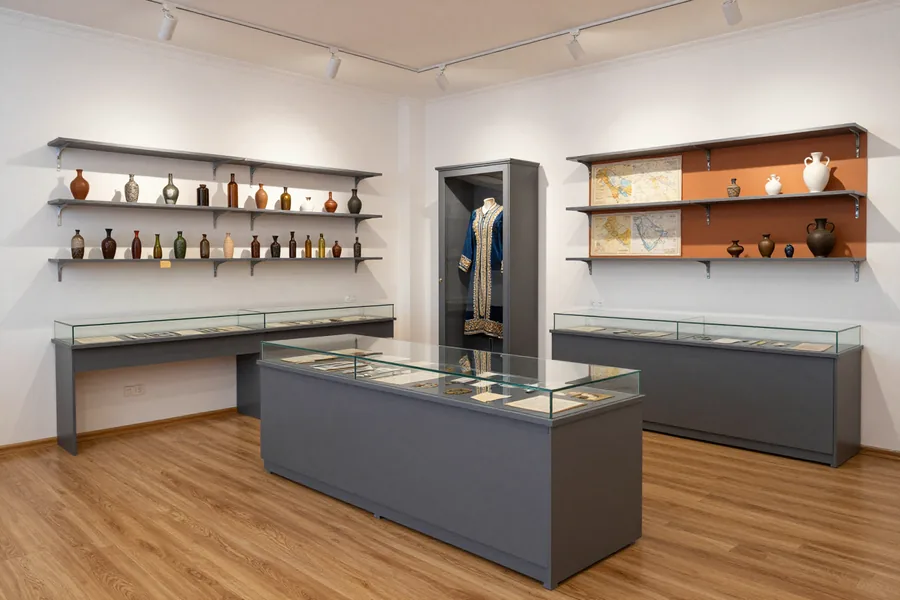
We equip the museum hall and storage room with a matching set in one finish: display cases for exhibits, display tables, and open and sliding shelving for the collections.
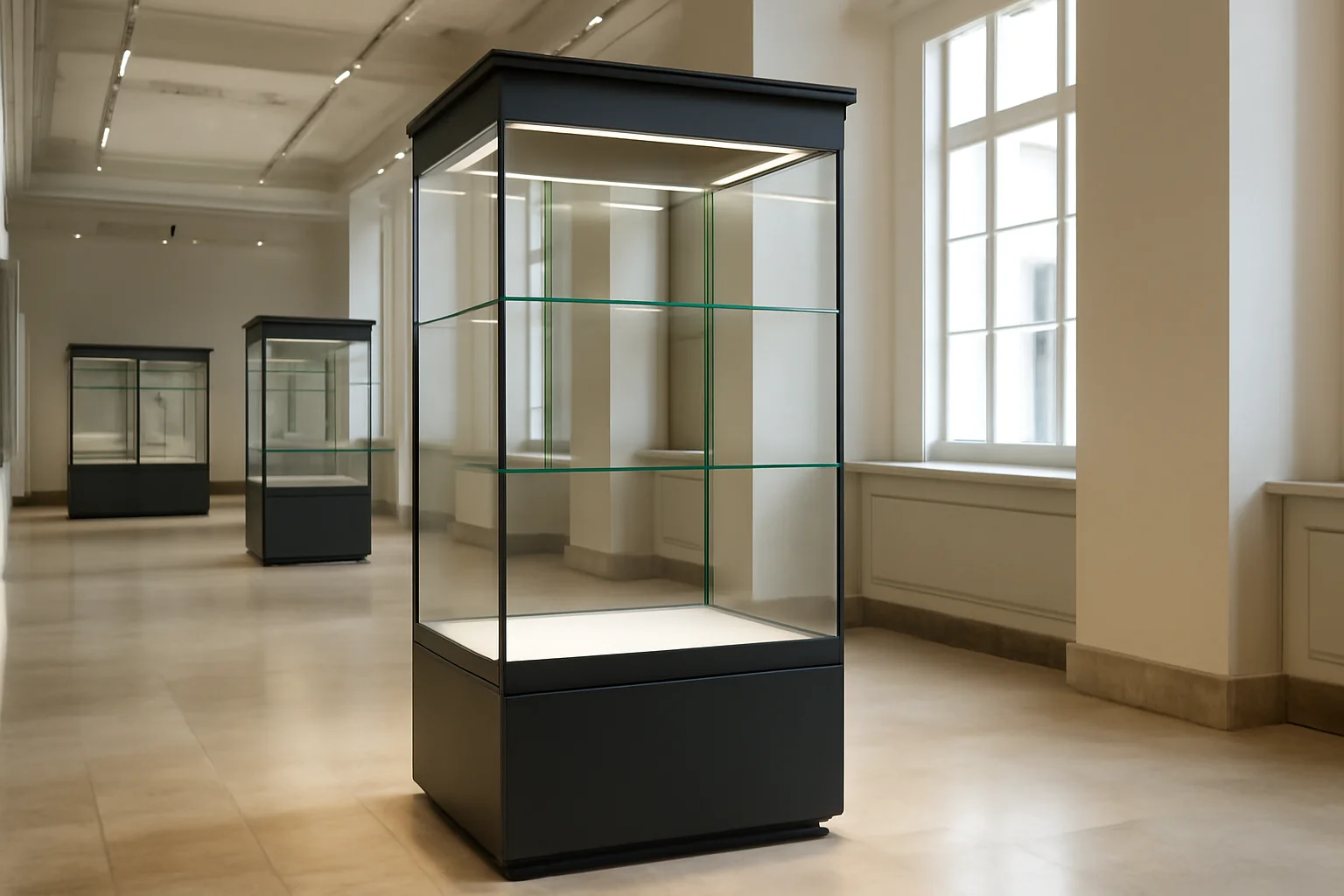
We make display cases to fit the shape and size of the exhibit: horizontal, vertical, wall-mounted boxes and island cases, with anti-reflective glass, hidden lighting and a lock.
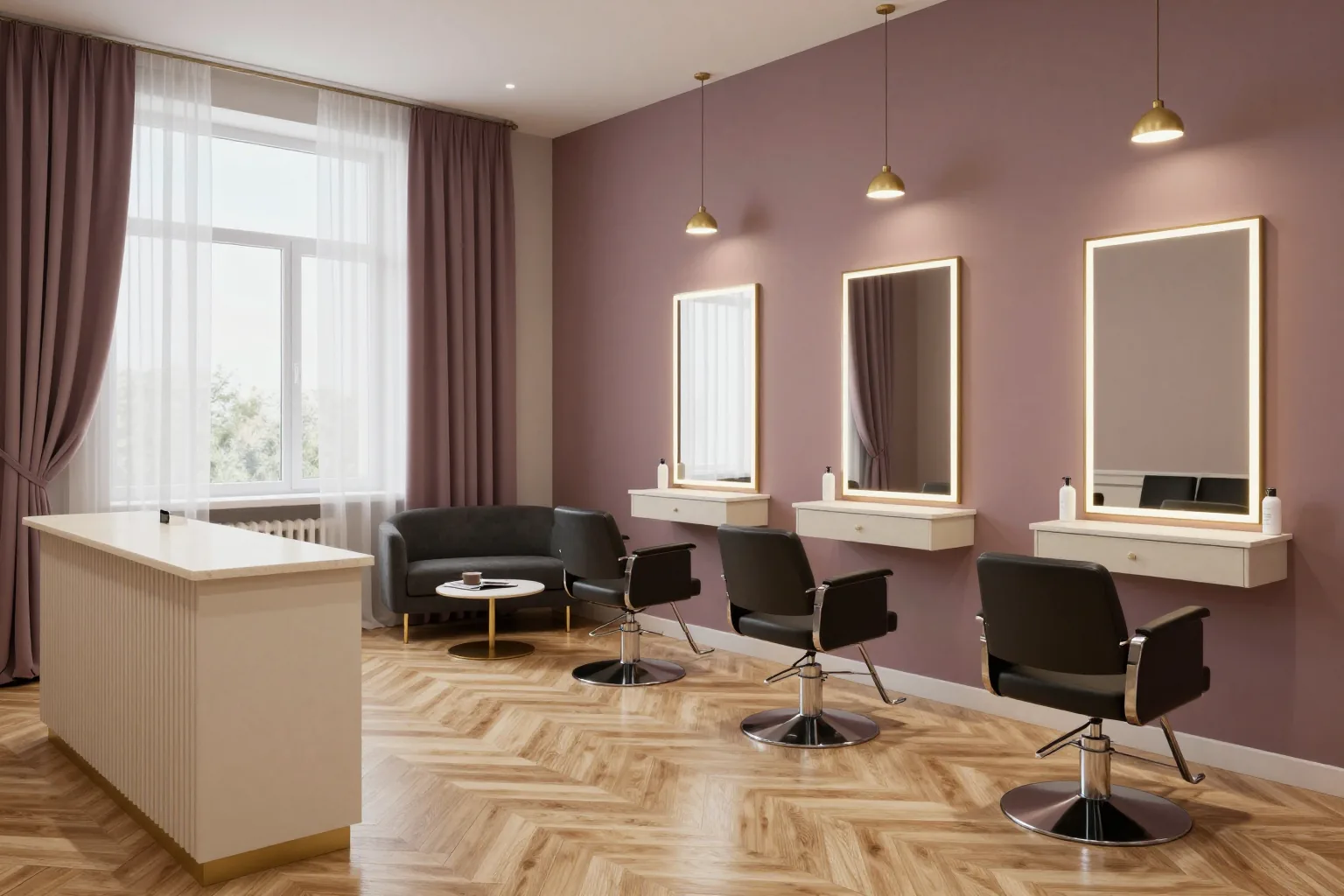
We equip the salon in full: reception, stylist workstations, mirror stations, manicure area, shelving and waiting area in one finish, made from materials that withstand water and daily cleaning.
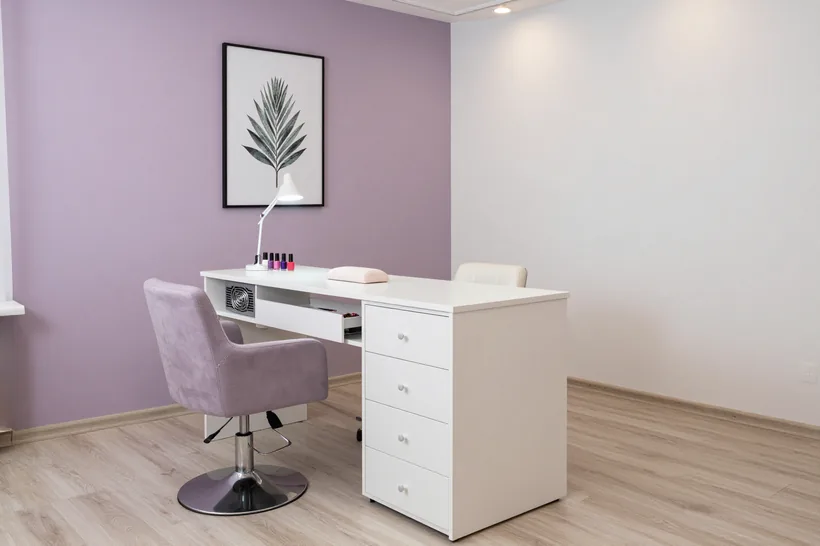
We make stylist workstations to match the stylist's height and the room size: simple, with lighting, with a built-in extractor, folding for home, double and with stone.
We make height-adjustable desks, chairs, teacher's desks and cabinets for classrooms and kindergartens with rounded corners and edge banding on every end.
We design and make cabinet furniture for offices with precise fit into the space and a single finish across the floor.