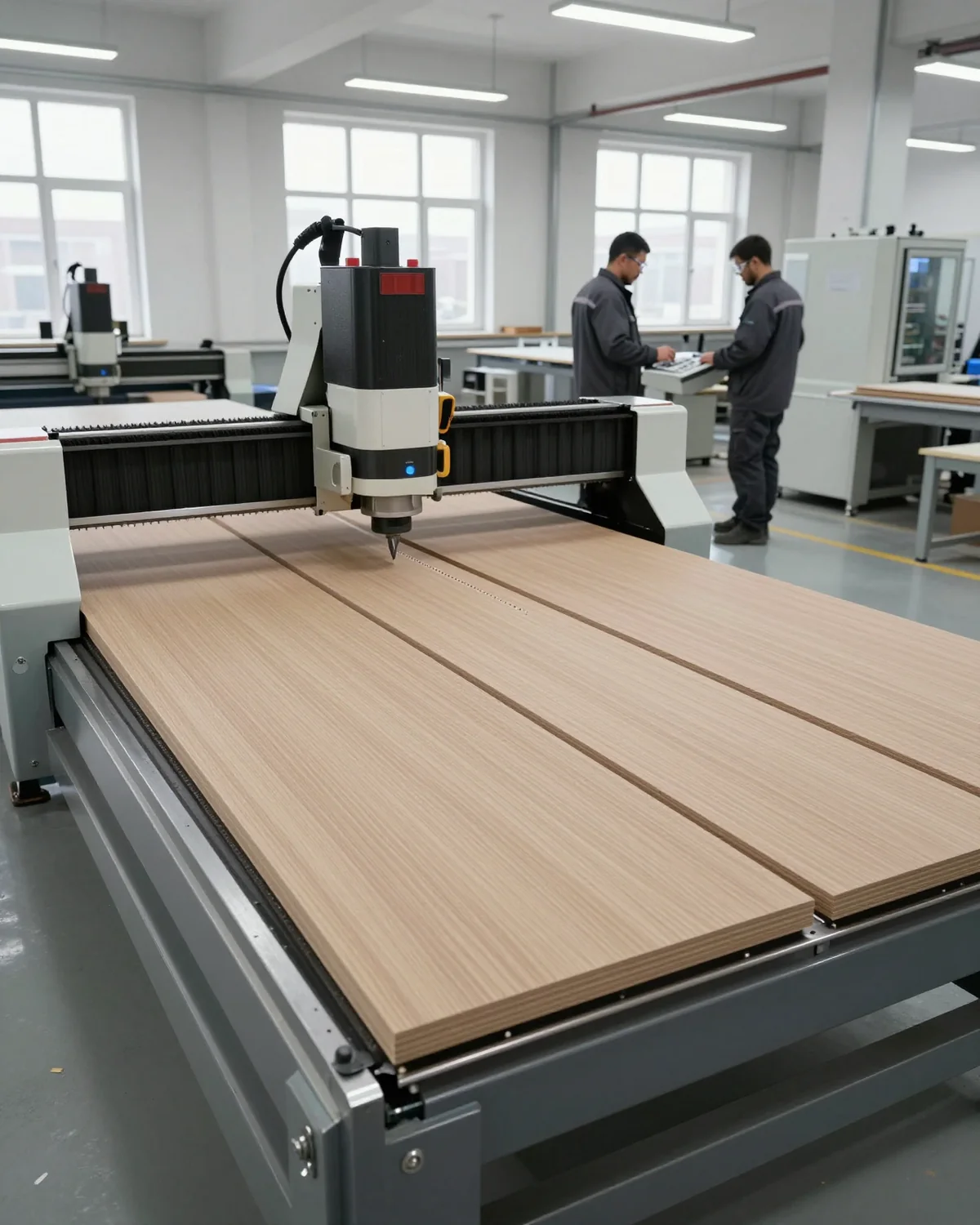
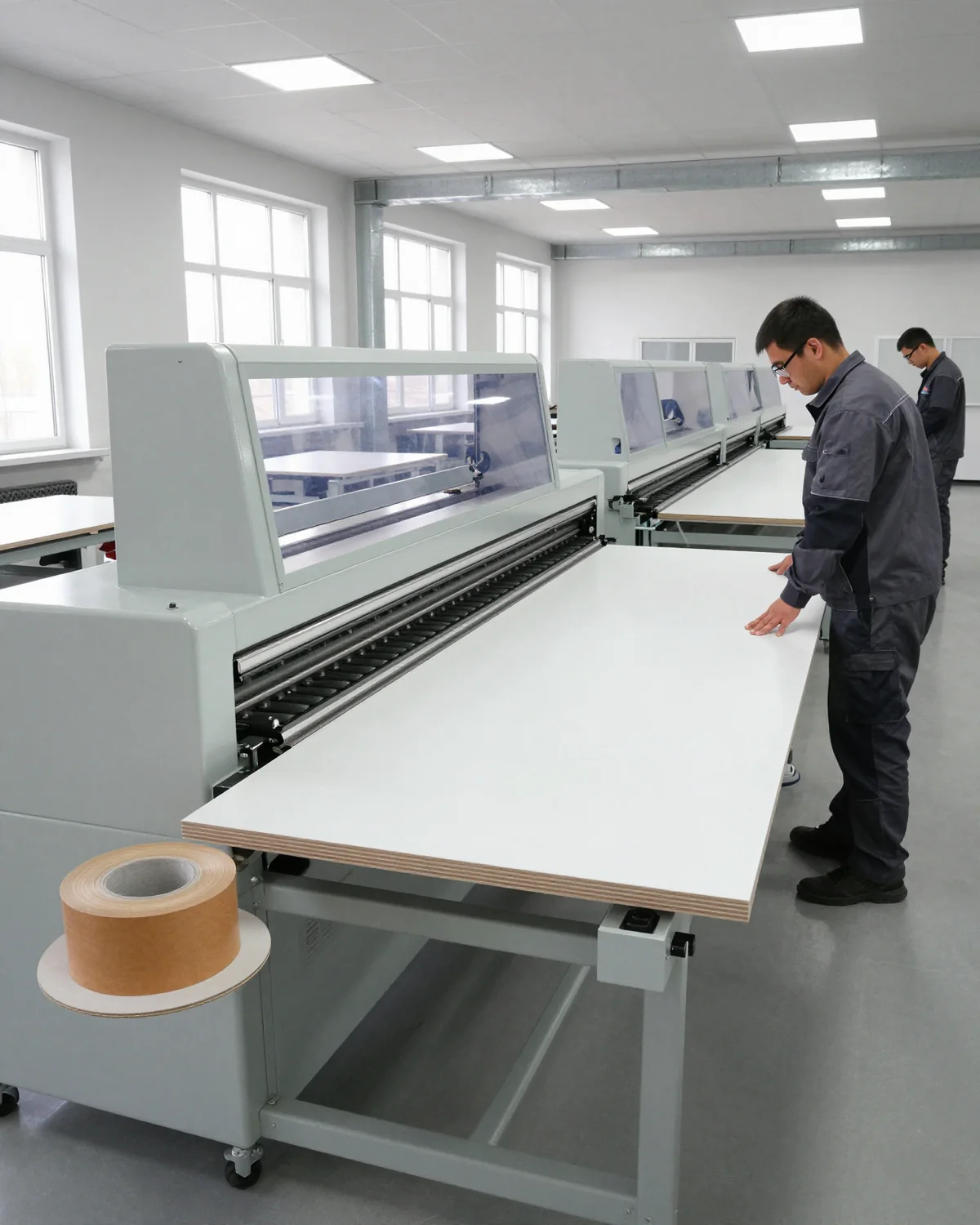
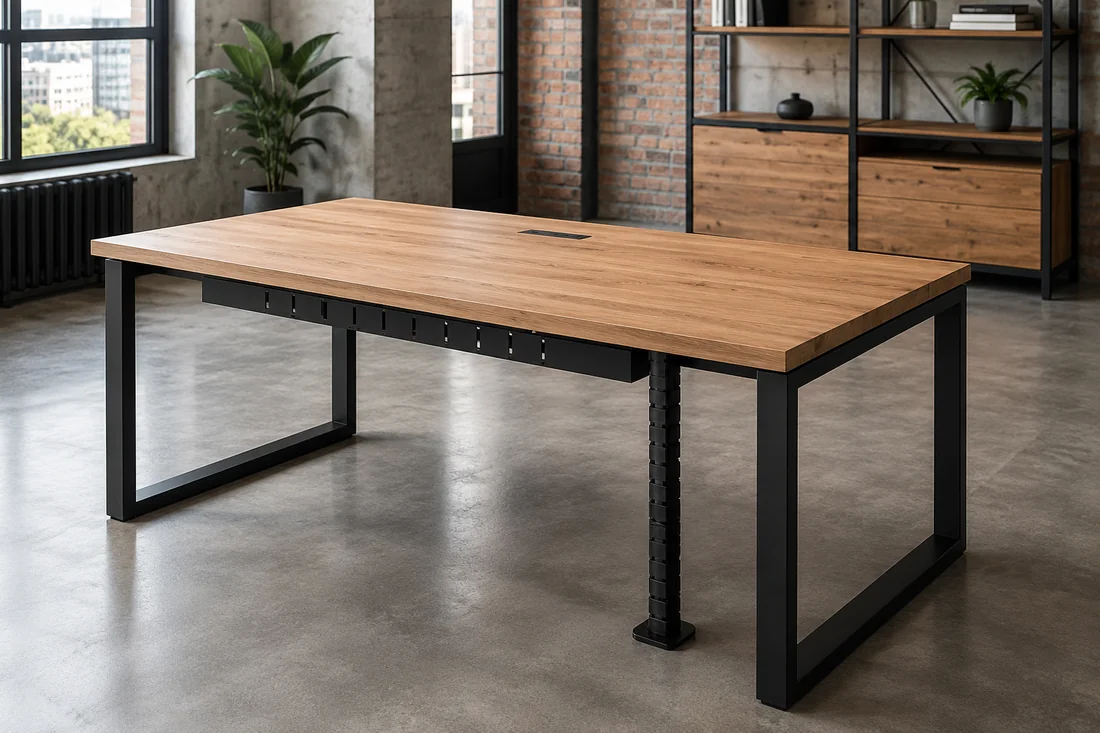
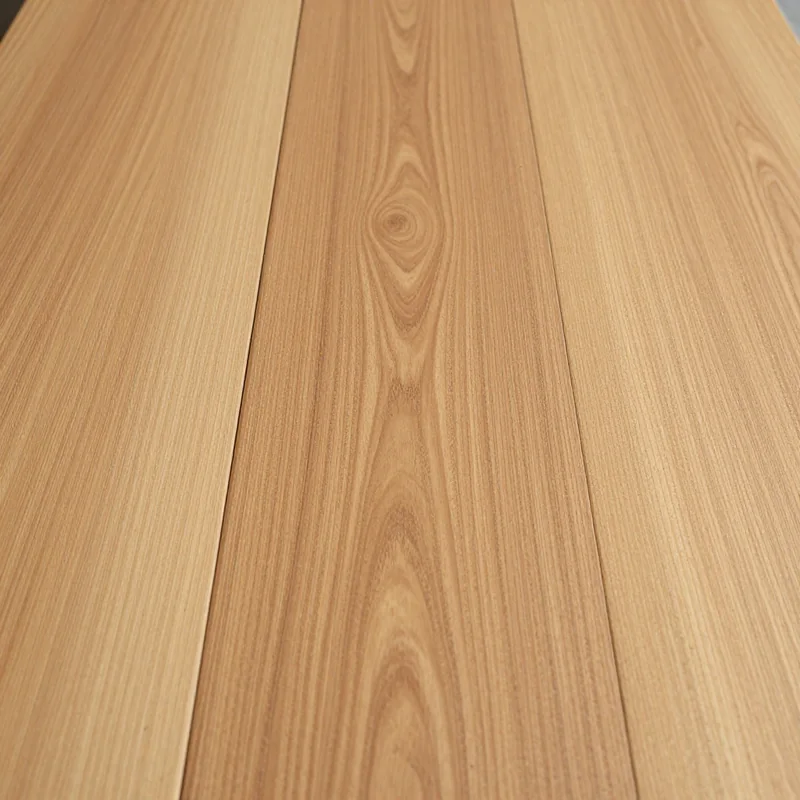
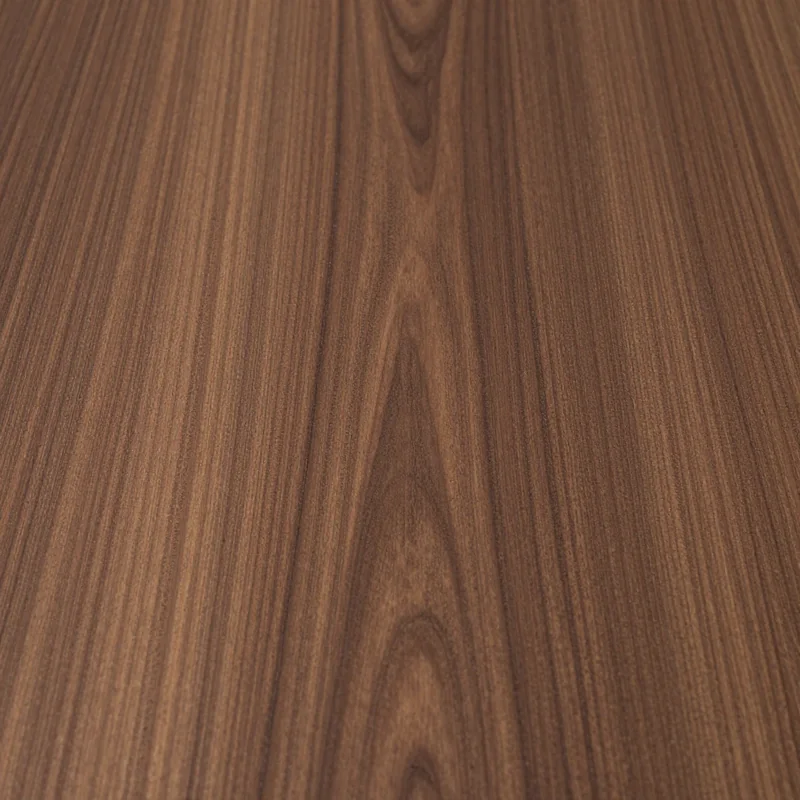
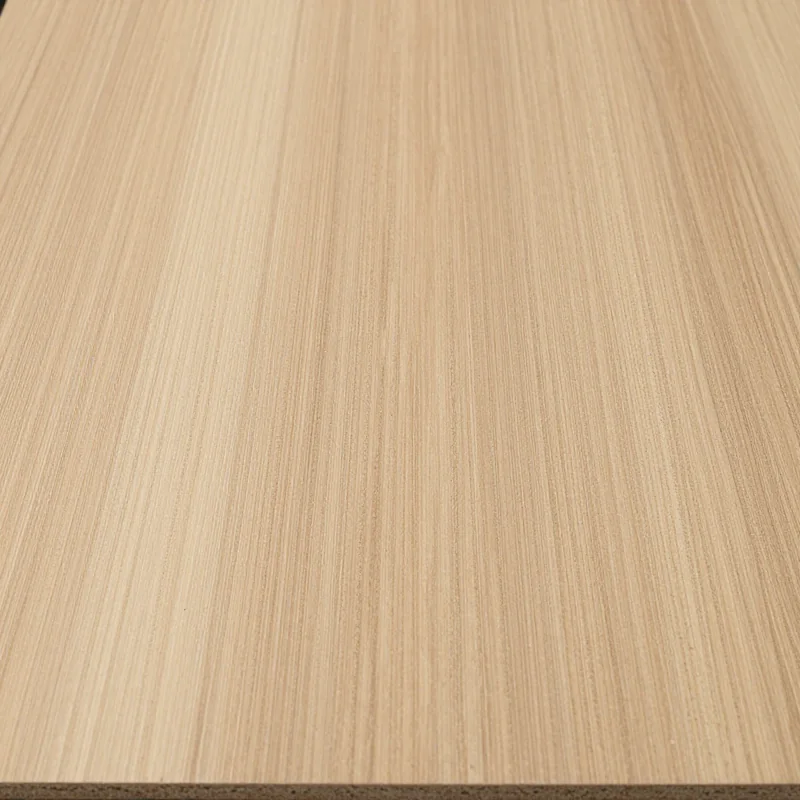
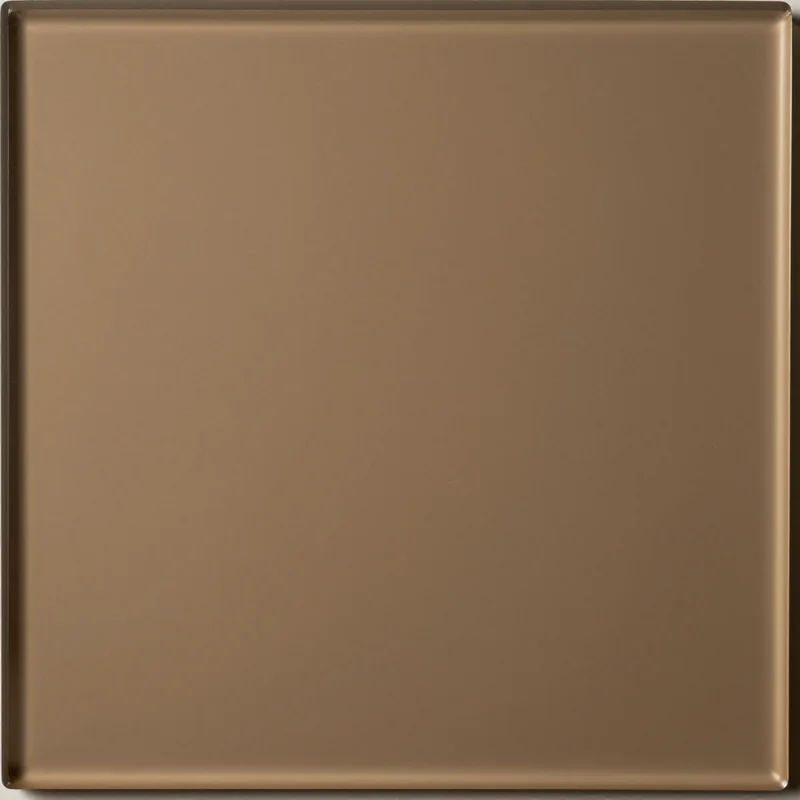
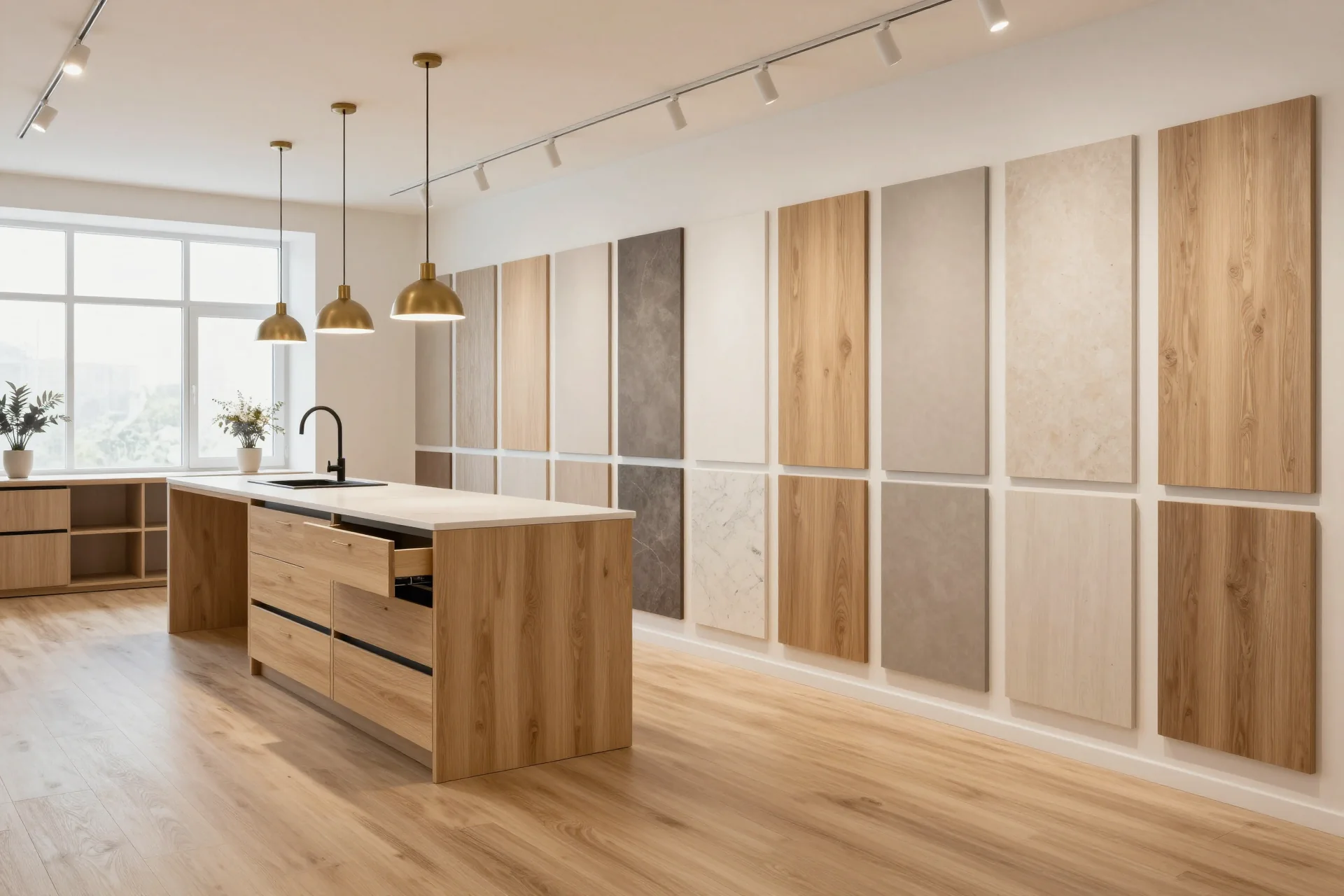
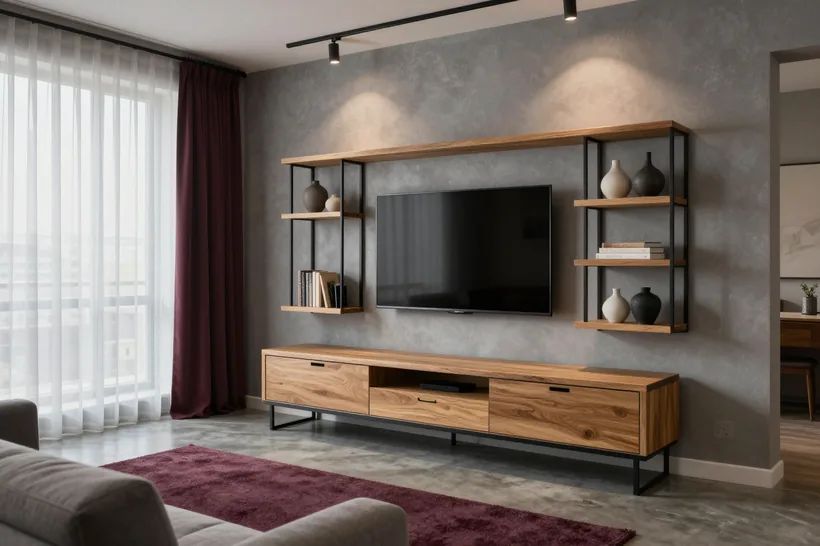
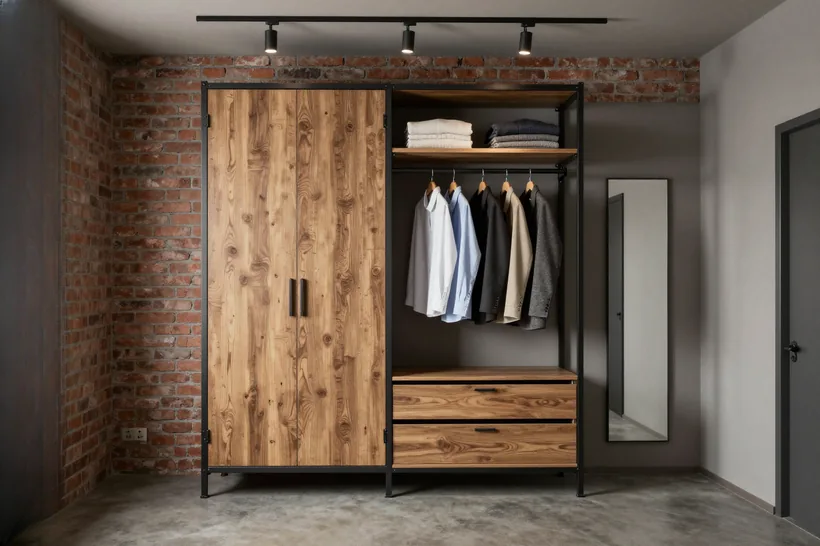
We make loft style tables in our own 600 m² workshop in Almaty: a countertop of solid oak, ash or kiln-dried pine, a live-edge slab or laminated chipboard with a decor finish, and a frame of powder-coated steel profile tube. Free measurement and 3D design within 1–2 days, installation by our own crews, 24-month warranty on the item.
The main worry when ordering is that a wide countertop will sag over time and the structure itself will end up skewed. Let's break down which components make up a proper structure and how we check it before shipping.
How the frame is built and why it holds a wide countertop
We weld the frame from steel profile tube, so a rigid frame rather than thin legs supports the wide countertop. The metal frame is assembled at the joinery section of our 600 m² workshop: we cut the profile to size, weld it around the perimeter and add cross ribs — these are what take the load from the solid oak or ash and keep the board from moving. We weld with a continuous seam on load-bearing joints, not spot welds, because a spot weld loosens over time from the weight of the countertop and dishes. Before painting, we put every frame through a test assembly in the workshop. Sag comes not from the thickness of the wood but from a lack of intermediate supports — when ordering, ask to see the frame diagram with the ribs under the countertop.
How we check that the item stands level
Before shipping, we assemble it in the workshop and check whether the item wobbles on a level floor. The check runs at two points: we place the frame on a calibrated plate and load the corners one by one — if one support is even a couple of millimeters shorter than the others, the structure will wobble noticeably. Then we inspect the weld seams after grinding and painting: bumps under the paint mean the grinding step was skipped, and that means the frame geometry may not have been trued up either. Wobbling almost always means supports of different lengths or a skewed frame — this defect only shows up during assembly, so the test assembly is mandatory. On an uneven apartment floor, the item will still stand on adjustable feet rather than on pieces of cardboard.
What to check in the metal frame when ordering
- Smooth ground seams: the weld should feel smooth, without ridges or pores, otherwise the paint will go on unevenly and start to chip.
- Even powder coating: a color without bare patches or orange peel across the whole tube, especially in corners and at frame joints.
- Equal support length: measure all the legs — a difference of more than a couple of millimeters will cause wobbling on a level floor.
- Intermediate ribs: under a wide countertop you need a cross support, not just the outer perimeter of the frame.
- Profile tube thickness: thin-walled profile flexes under load, so confirm the section before signing off on the design.
- Grinding before painting: seams are sanded beforehand — paint on weld bumps means the step was skipped.
Countertop material for a loft table to suit the task
The countertop sets both the look and the durability of a loft table. Let's break down solid wood, epoxy-filled slab and laminated chipboard with a decor finish — how they differ in behavior, repairability and care.
Solid oak, ash and pine — what's the difference
We make countertops from solid oak, ash and kiln-dried pine with a moisture content of 8–10 %. Oak is the densest of the three species, it takes a hit and picks up scratches more slowly in the dining area. Ash is close to oak in hardness, but its grain is more pronounced and the panel weighs less, so a wide countertop is easier to carry up to the floor. Pine is softer: a fork and knife leave dents, but it is lighter and takes oil more readily. Moisture content matters more than species — under-dried wood behaves unpredictably, and the panel warps into a trough within a season. That is why we check every lamella with a moisture meter before cutting, not after gluing: redoing a finished board costs more than rejecting a plank at the intake.
Live-edge slab with cracks filled with epoxy resin
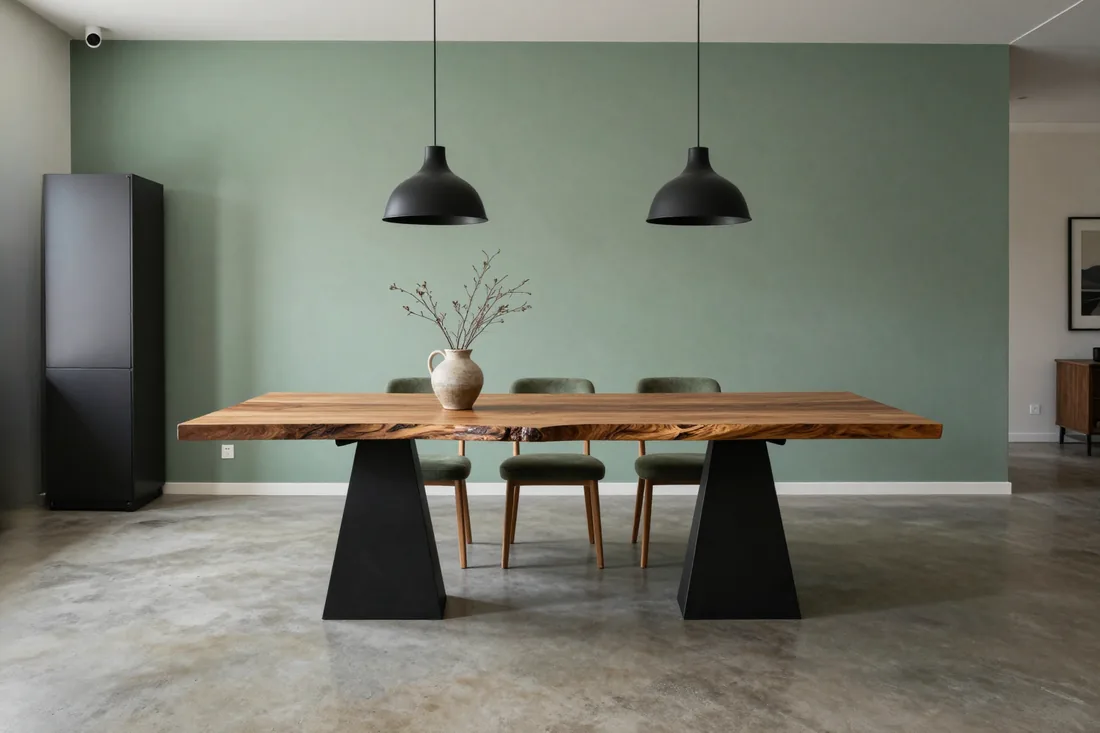
We finish the live-edge slab and fill the cracks with epoxy resin so that the edge stays uneven but strong. First we remove the bark and stabilize the cracks, then sand the surface in several passes, and only then pour the resin — if you pour earlier, the wood will shrink and the fill will peel off. Over time the resin may yellow under direct sun, so for an item by a window it is better to choose a slab with less fill or to shade the countertop from the south side. Under oil the live edge darkens by a shade, under lacquer it stays more contrasty. We do not pour cracks wider than a palm in a single layer — the resin heats up during polymerization and can foam. We fill large voids in layers, with a pause to cool, otherwise bubbles remain inside and the edge around the crack darkens in patches.
Countertop material comparison
how the materials differ in look and care| Material | Look and texture | Care |
|---|
| Solid oak | dense texture, natural grain | oil or lacquer, refresh as it wears |
|---|
| Solid ash | pronounced grain, a little lighter than oak | oil or lacquer |
|---|
| Live-edge slab | uneven edge, cracks filled | keep out of direct sun, refresh the finish |
|---|
| Laminated chipboard with decor | smooth surface in concrete, metal, wood looks | wipe with a damp cloth, no abrasives |
|---|
Ordering a loft table to size and to a real apartment
A ready-made table from the catalog does not account for curved walls or a non-standard opening size. We show how an on-site measurement and a 3D visualization remove that risk before work even starts.
What the free measurement includes
For the measurement we bring samples of solid wood, laminated chipboard decors and metal color swatches so that the material is chosen on site, not on a screen. The technician measures the room, checks the geometry of the floor and walls, notes where the sockets are and how the doors of neighboring cabinets open. Samples of kiln-dried oak, ash and pine let you feel the texture and compare the tone under the room's lighting, and the profile tube swatches show how matte black will sit next to the wallpaper and floor. The measurement is not only about dimensions — on site you can see how the item will sit relative to the walkway and sockets, and this changes the drawing: sometimes the countertop is shifted by ten centimeters so that it is comfortable to sit at it with your back to the window.
How a 3D project protects against "it didn't fit"
We prepare the 3D design in 1–2 days, and the item is manufactured exactly to it, not to a picture from a catalog. The model shows the dimensions, the thickness of a solid wood or slab countertop, the cross-section of the metal frame and the powder-coating color — all the things that read differently in a photo of someone else's item. We approve the mock-up before cutting, so changes are made on screen, not in the workshop once the board has already been cut. The mock-up fixes not only the dimensions but also the countertop overhangs and the position of the supports — these are exactly the details that most often fall short of expectations: the item seems wider than on the plan, or a support runs into the skirting board. In the mock-up we check the overhang on the seated side and the gap from the wall — these two numbers are what installation is later signed off against.
Non-standard size and uneven walls
Non-standard sizes are made to actual measurements, not to a standard drawing. A narrow windowsill, a slanted corner or a niche between a column and a wall is no reason to give up a wide countertop: a technician takes the outline of the room and transfers it to the drawing, and cutting follows those numbers. If the wall is uneven, the item is still set level to the floor — the gap to the wall is allowed for in advance rather than adjusted during installation, otherwise it starts to wobble or runs into a protrusion. Installation is done by our own crews, and they also set the supports level and check that the structure does not wobble on a flat floor. We measure not only length and width but also the floor level difference — in older Almaty apartments it reaches a couple of centimeters and changes the height of the base.
Ordering loft-style tables from measurement to installation
The customer fears missed deadlines and an unclear handover, when it is not obvious who is responsible for each stage. We show the item's journey step by step and what our workshop's accountability rests on.
Order stages and lead times
- Measurement and design: technicians arrive with solid wood samples, laminated chipboard decors and metal color swatches; we prepare the 3D design in 1–2 days.
- Deposit: we take 50 %, the balance after signing the acceptance certificate; we work by bank transfer.
- Manufacturing: we make custom loft tables in our own 600 m² workshop — a joinery area, frame welding, powder coating.
- Test assembly: before shipping we assemble the item in the workshop and check that it does not wobble on a flat floor.
- Installation and acceptance: we deliver and install the item with our own crews, and sign the certificate after installation.
- Lead times: they depend on the item and material, so we do not give a single number for all options — lead times for each are listed in the price list on this page; rush orders are possible.
What to check at acceptance after installation
We sign the acceptance certificate after installation, once the item is in place and checked for stability. Installation is carried out by our own crews, so you can see on site how it sits relative to the wall and floor. At acceptance we check not only the appearance but also that the structure does not wobble and the countertop does not flex under pressure — these parameters are recorded before signing. It is also worth pressing on the edge of the countertop and on the shelf, if the design has one, and making sure there are no gaps at the joints between frame and wood. If anything raises questions, it is better to voice them before signing — that way changes go into the work, not into a dispute. Delivery within the city and up to 30 km is free for a large order; the threshold is stated on the Delivery and payment page.
Warranty on the item and hardware
We give a 24-month warranty on the item under the contract, and Blum hardware carries the manufacturer's 25-year warranty. A loft table has few hardware components — hinges, lift mechanisms and drawer runners, if the design includes pull-out modules. The hardware warranty is the manufacturer's responsibility, not the workshop's, so the contract should separate these terms: 24 months cover the item itself, 25 years cover the Blum mechanisms. For the carcass and the solid wood countertop, the workshop warranty is the same — 24 months, regardless of the wood species. If the specification lists Hettich or Boyard hardware, its manufacturer's term is different and is stated separately. Before signing the contract, we clarify exactly what the 24 months cover — assembly only, or also the coating and painting of the metal.
A loft table in an ordinary apartment, not a loft studio
Loft doesn't have to mean a concrete wall and brickwork. This furniture also lives in an ordinary apartment: we show how to fit it into a living space and what changes in the design to make that work.
How a loft table differs from an ordinary dining table
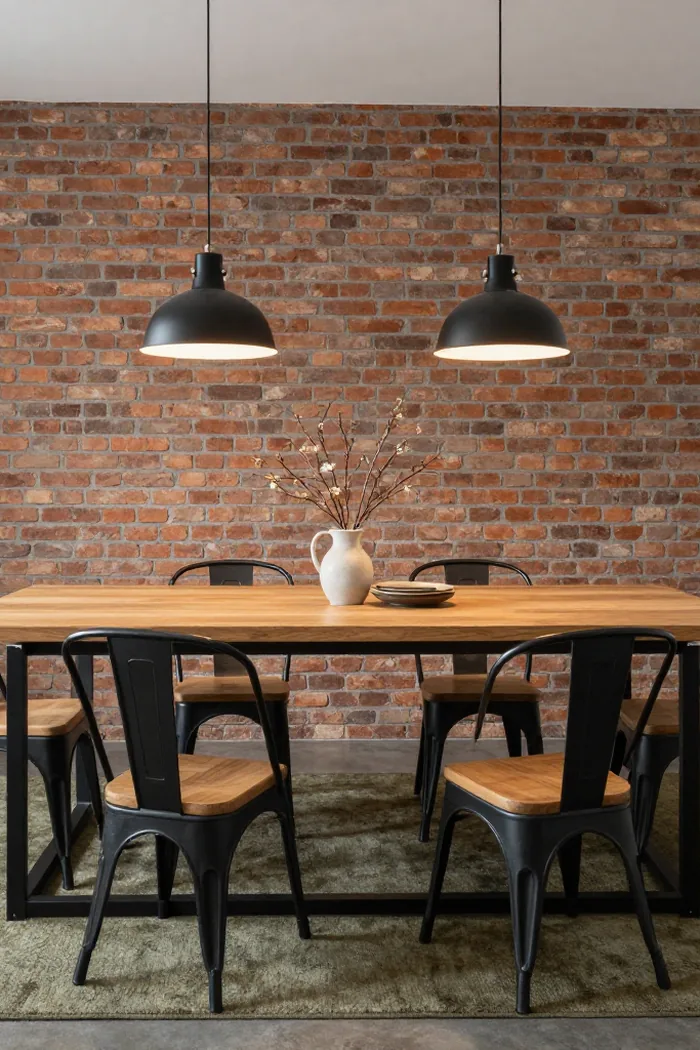
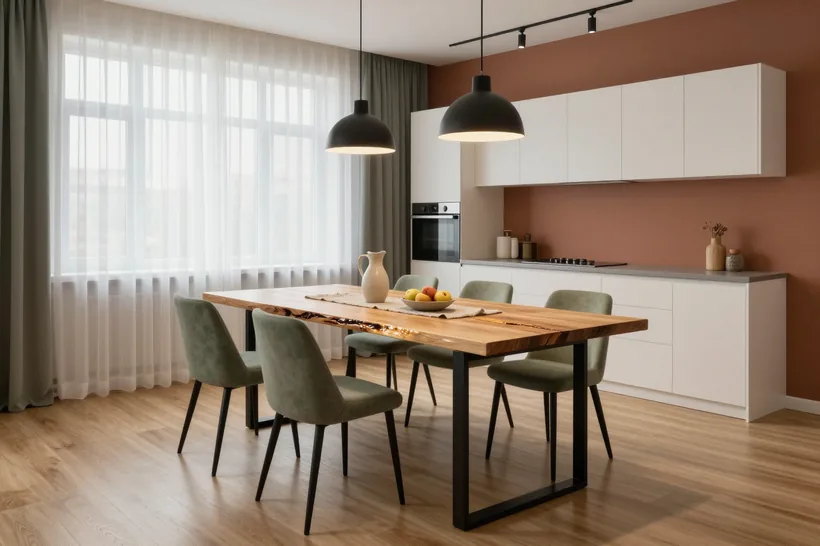
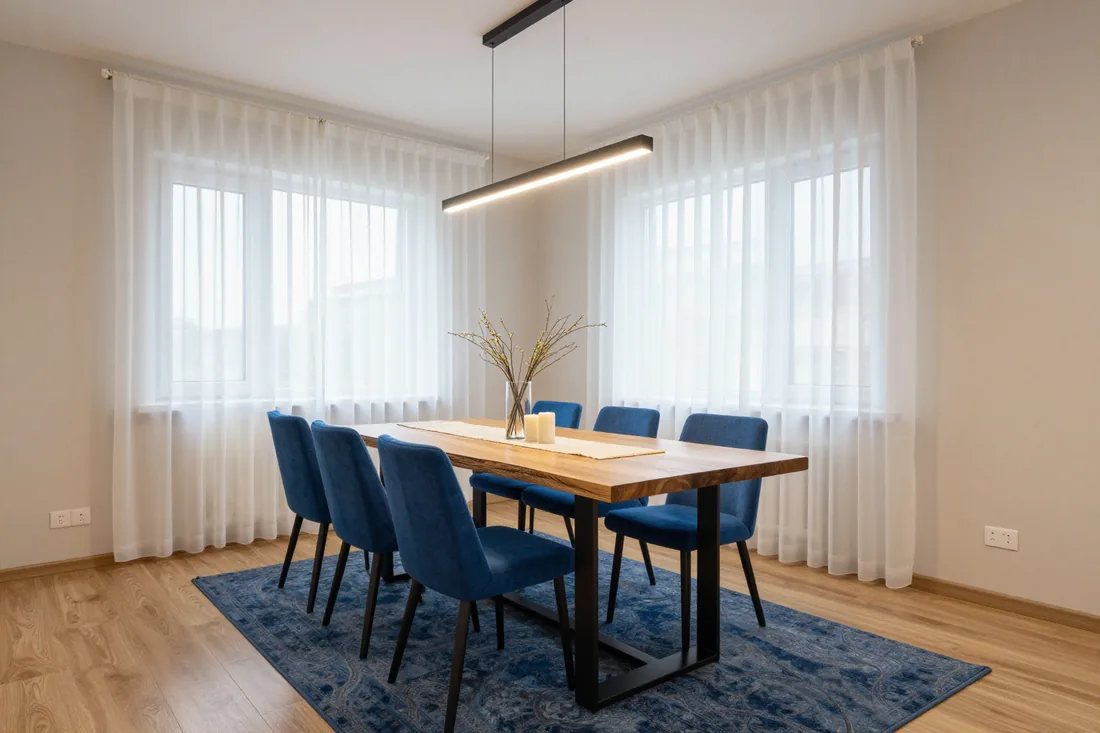
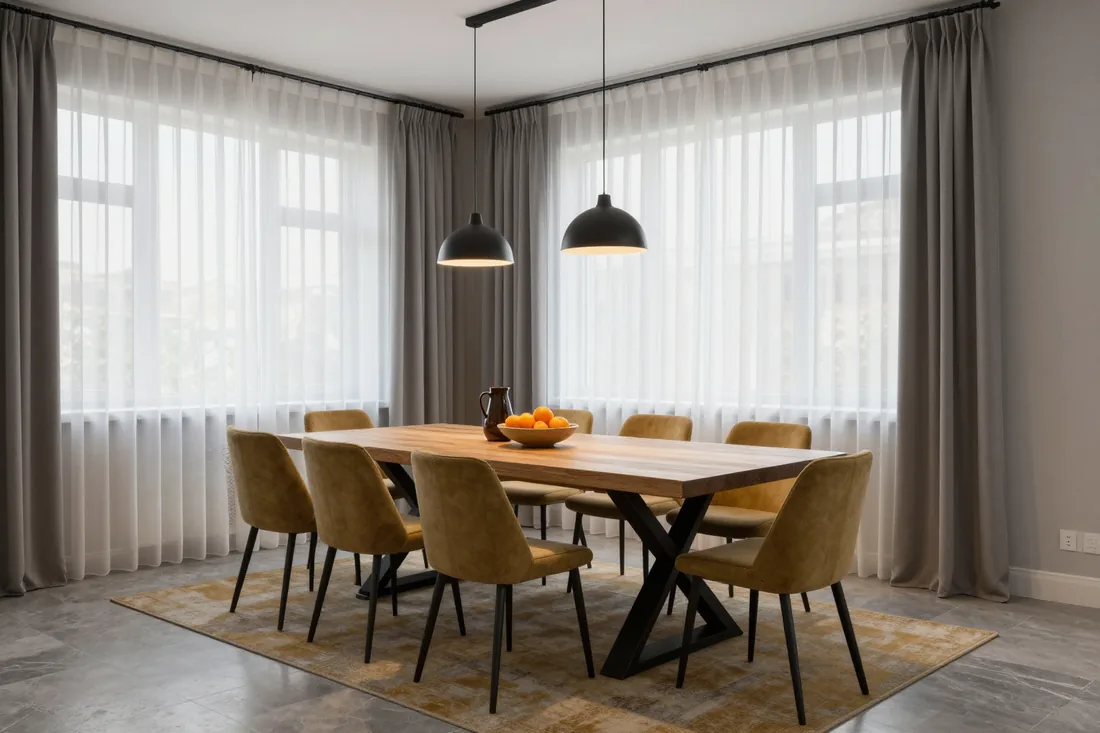
A loft table is recognised by the combination of heavy metal and natural wood, not by the decor around it. The metal frame here is exposed: it isn't hidden behind fronts or a plinth, so the weld seams and the section of the profile tube are visible and work as part of the look. The countertop is made from kiln-dried solid oak, ash or pine, or from a slab with a live edge — an uneven edge that is kept deliberately and, if needed, has its cracks filled with epoxy resin. An ordinary dining table follows the opposite logic: the frame is hidden, the edge is straight, and the surface is more often veneered or made of laminated chipboard. The difference isn't in the shape but in honest materials — an exposed frame and solid wood instead of veneer create that very look; when you order, we show you a cross-section of the countertop and solid wood samples so you can see it isn't a wood-effect film.
How to fit the table into the interior of an ordinary apartment
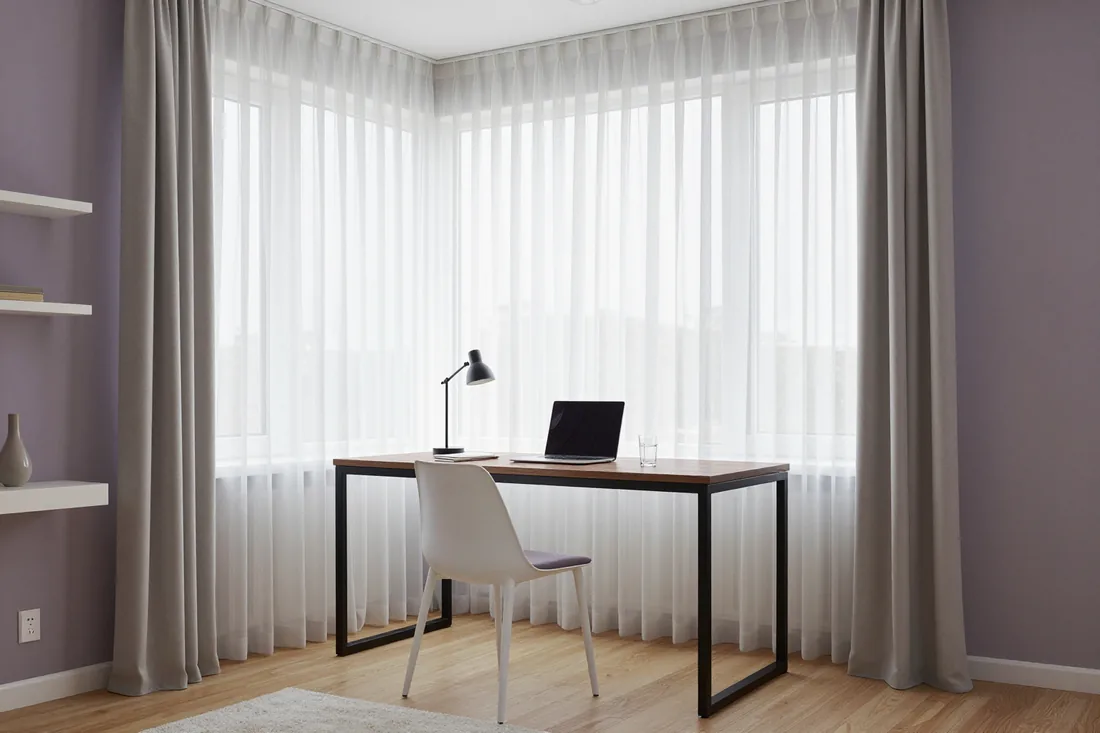
An item in loft style fits into an ordinary apartment if you balance it with the colour of the frame and calm neighbouring materials. A black matte frame looks heavier in a small room — light RAL colours visually lighten the item and don't clash with white walls or a light floor. At our workshop we apply powder coating to the frame in black matte or any RAL colour, so the shade is matched to the floor, kitchen fronts or door handles — you can see this on the metal colour samples we bring to the measurement. Neighbouring furniture is best kept neutral: plain curtains, matte walls, minimal textures. If the countertop is dark and textured, it's better to choose a lighter frame — otherwise a massive model in a small dining area swallows the light.
Bar, coffee and desk tables in the same style
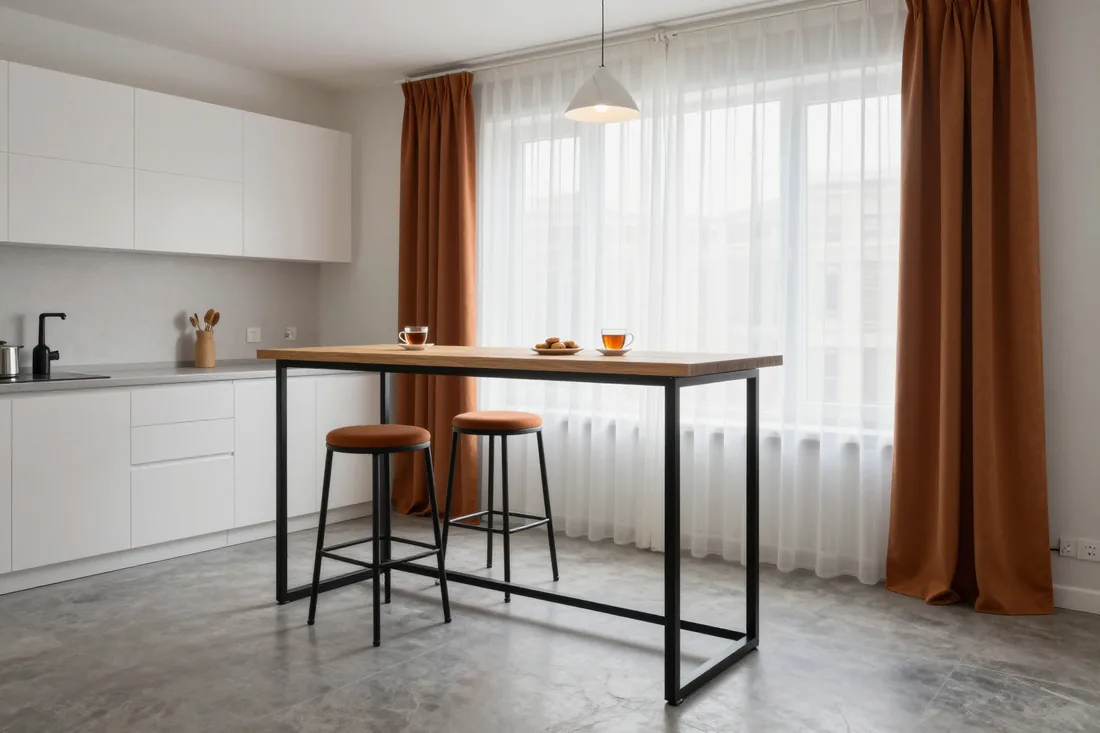
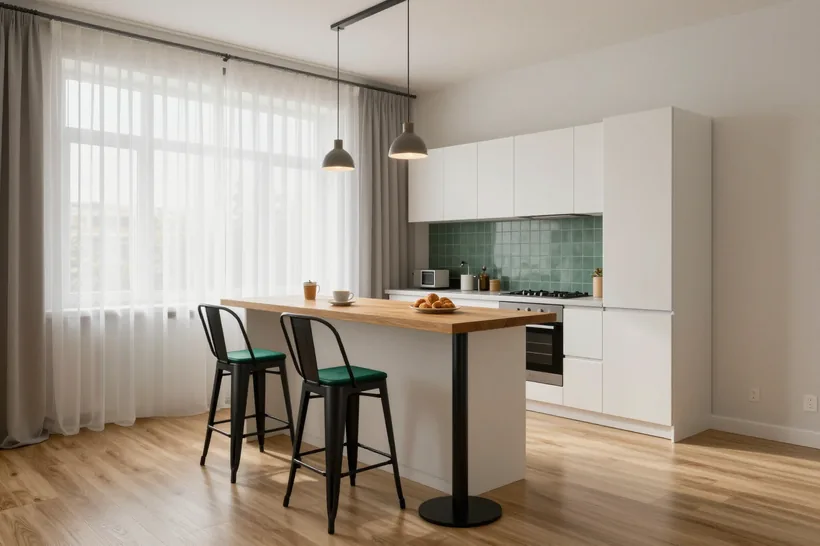
- Loft bar table: a tall counter with a metal frame and a narrow solid wood countertop — for a kitchen island or a window area.
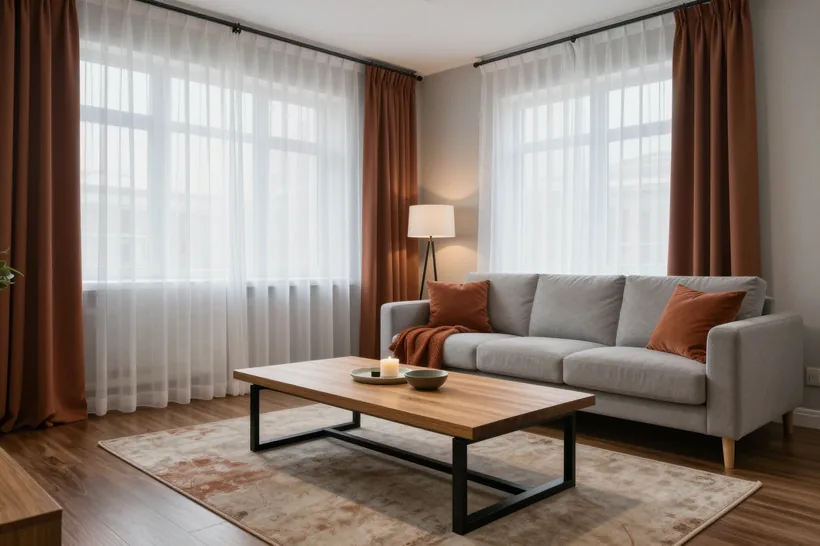
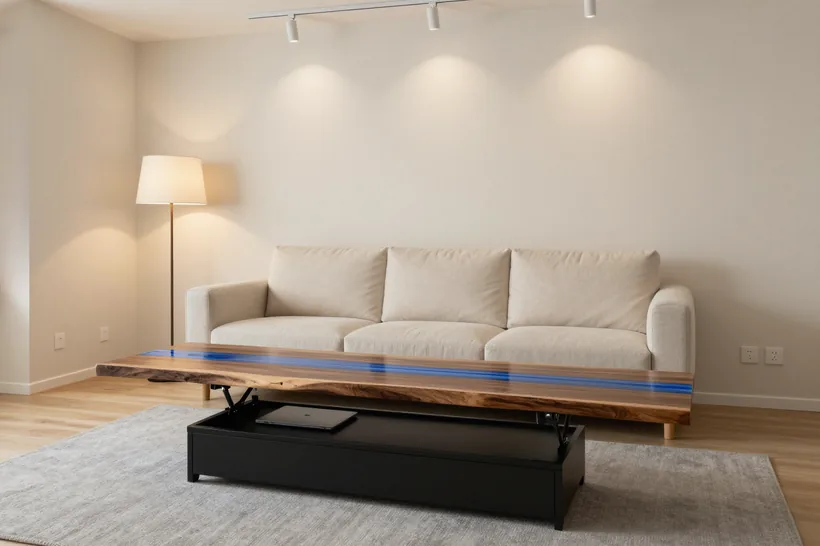
- Loft coffee table: a low model on a profile tube with a slab or solid wood, it looks good in front of the sofa in the living room.
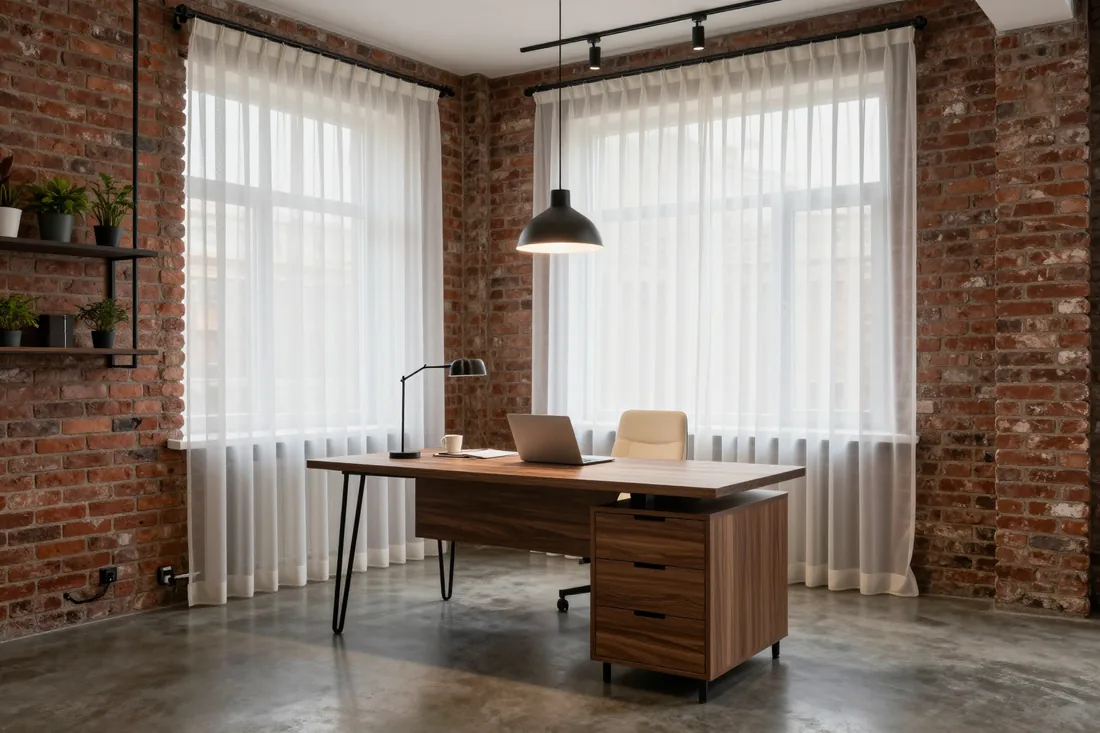
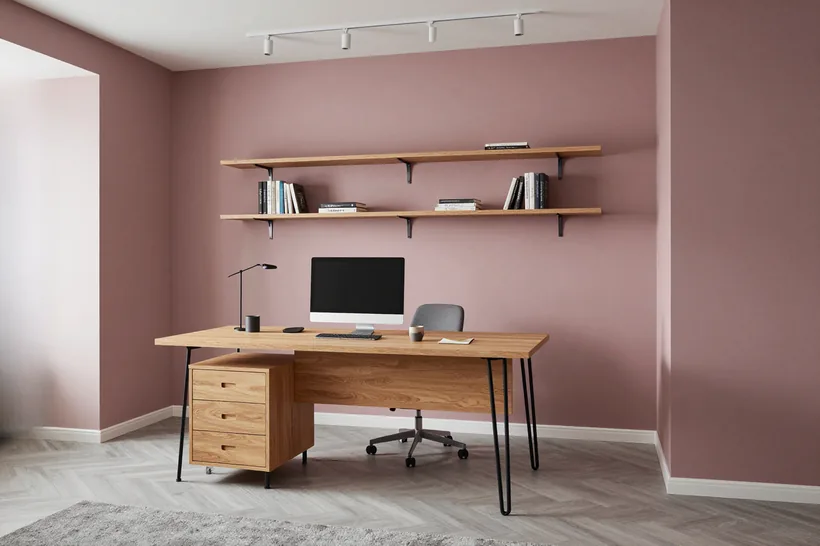
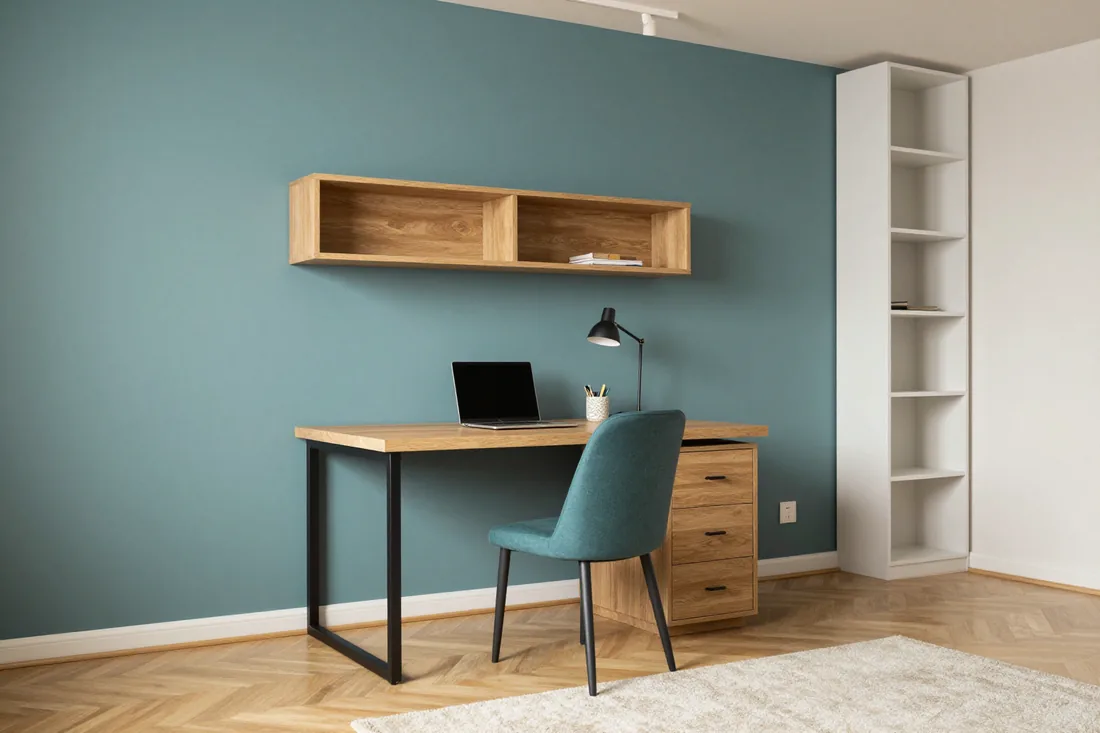
- Loft desk: a work surface with an exposed frame and a shelf for equipment, without closed cabinets or unnecessary details.
- A set in one room: the frame of all items in the same colour and profile section — then models of different sizes read as a single set.
- A check before ordering: we compare heights — a bar counter is taller than a dining table, and this is immediately visible if you place them side by side in the showroom.
The bottom line on loft-style tables
A loft table is judged not by a photo but by its components: how well the frame holds up, how dry the wood is, and how precisely the item matches the room. Below is a short summary of what to look at before ordering.
- Frame: a profile tube with intermediate supports holds a wide tabletop without sagging — ask about the support spacing, not the color.
- Solid wood: kiln-dried to 8–10 % is more stable than under-dried wood, and a slab under epoxy needs protection from direct sunlight.
- Measurement and 3D design: they remove the risk that the finished item won't match the room in dimensions and wall angles.
- Sign-off and warranty: signing the acceptance certificate after installation fixes responsibility for the result, not just for shipment.
- Questions matter more than pictures: when ordering, ask about the fastening components and the sign-off procedure — that's exactly where future problems with stability and gaps are hidden.