Almaty Daily 10:00–20:00 +7 705 625 00 03 Book via WhatsApp
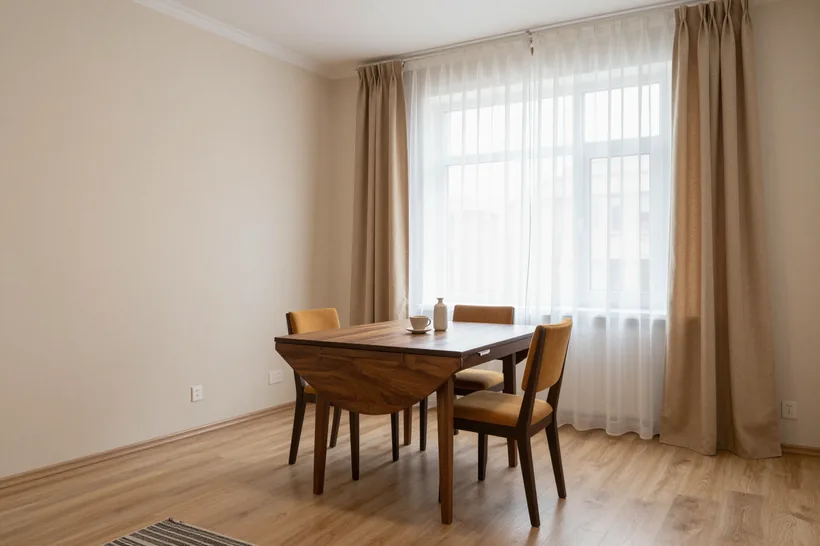
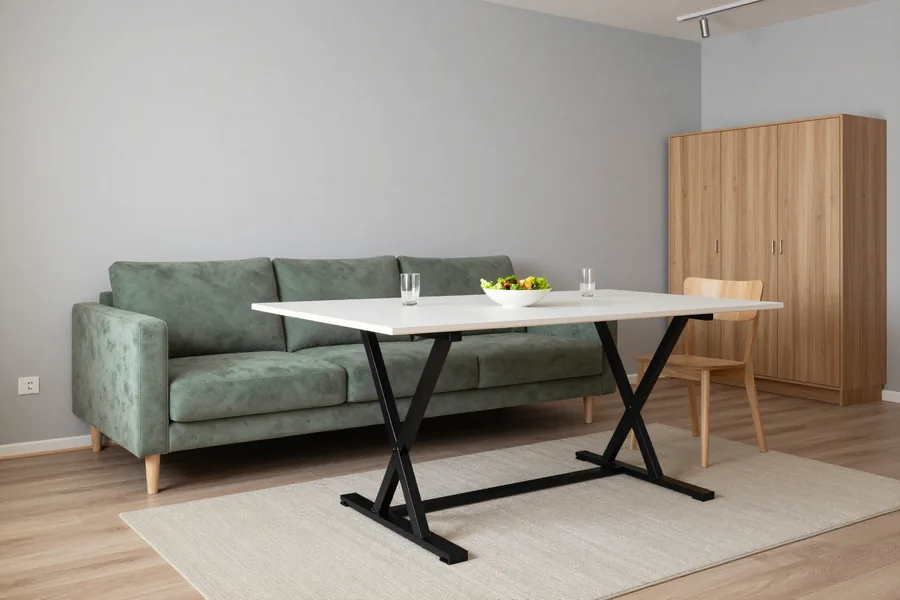
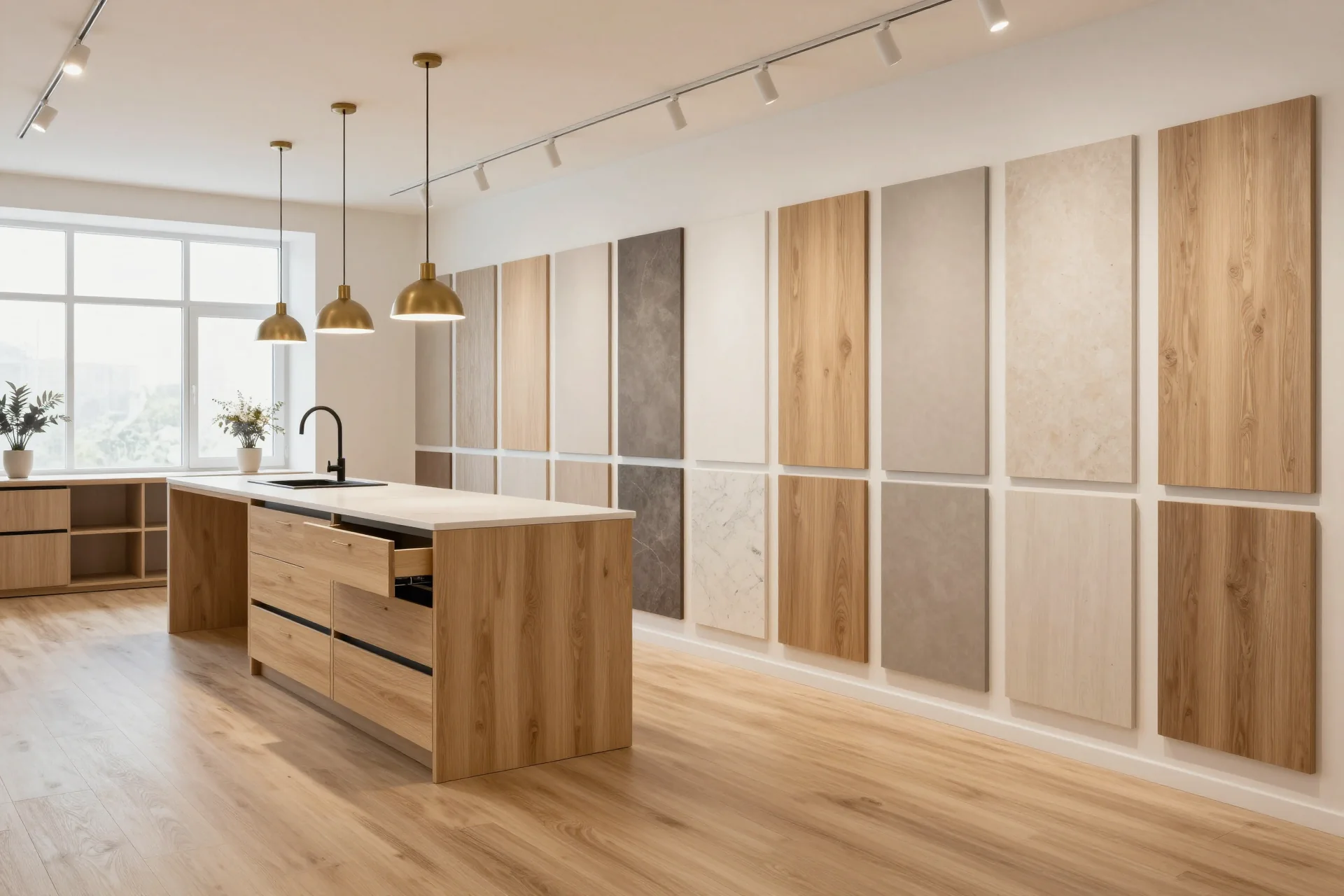
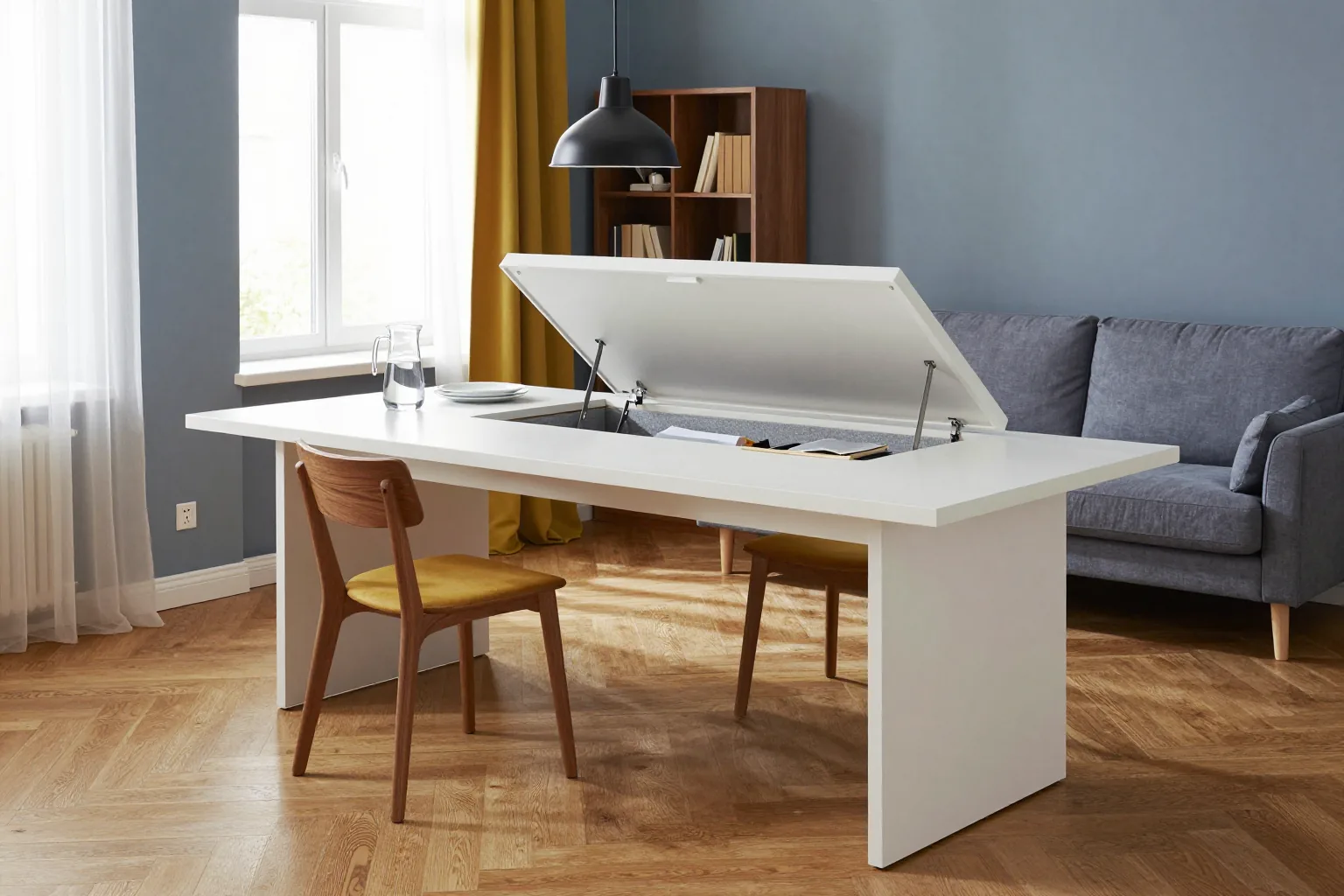
Convertible kitchen table with a raised countertop section and wooden chairs by the window

Custom transformable tables in Almaty

We design and make a table that extends to seat your guests and folds into a slim console. Free measurement and 3D design within 1–2 days, the price is fixed in the contract, 24-month warranty on the item.

Measurement and 3D design are free and carry no obligation · price fixed in the contract · Kaspi Instalments up to 24 months

★ 4,9
Google rating
from 7 days
lead time
24 mo.
warranty on the item

02Prices

How much it costs to order a transformer table

The "from" price is for the item in its basic configuration; the final cost depends on size, material and mechanism. After the free measurement we fix the amount in the contract.

  • 50% prepayment, the rest after installation and sign-off
  • Bank transfer for legal entities, price is fixed in the contract
  • 1–2 days for a 3D design, revisions free
  • Kaspi Instalments over 3–24 months with no down payment
Get an exact quote
ItemMaterialLead timePrice
  • Imported premium mechanism (optional)hardwarewith the itemfrom 30 000 ₸
  • Extendable drop-leaf tableLaminated chipboard, 100x​60 cm7–10 daysfrom 72 000 ₸
  • Extendable diningLaminated chipboard14 daysfrom 85 000 ₸
  • Folding book table on wheelsLaminated chipboard with plastic, 120x​80 cm7–10 daysfrom 89 000 ₸
  • Folding (book)Laminated chipboard14 daysfrom 95 000 ₸
  • Extendable dining (laminated chipboard)Egger laminated chipboard, 140x​90 cm7–10 daysfrom 95 000 ₸
  • Folding console tableLaminated chipboard16 daysfrom 110 000 ₸
  • Coffee-to-diningLaminated chipboard/​MDF18 daysfrom 120 000 ₸
  • Transformer console 120x​40 cmMDF with enamel7–10 daysfrom 120 000 ₸
  • Coffee-dining with gas liftLaminated chipboard/​MDF, 90x​60 cm7–10 daysfrom 135 000 ₸
  • Solid wood with mechanismsolid oak20 daysfrom 165 000 ₸
  • Transformer console with drawers (walnut veneer)walnut veneer, 100x​35 cm7–10 daysfrom 165 000 ₸
  • Coffee-dining with ceramicLaminated chipboard, porcelain stoneware, 110x​70 cm7–10 daysfrom 180 000 ₸
  • Extendable table with synchronous extensionMDF with enamel, 160x​90 cm7–10 daysfrom 210 000 ₸
  • Extendable solid oak tablesolid oak, 180x​90 cm7–10 daysfrom 250 000 ₸

03Calculator

How to calculate furniture dimensions for a small space

Choose the table type, size, material and mechanism in the calculator — the estimate goes to the manager on WhatsApp, and they will clarify the details.

01Item

02Quantity of identical tables

1 pcs
1 pc6 pcs

03Finish

04Projects

Completed transformer table projects

01 / 05
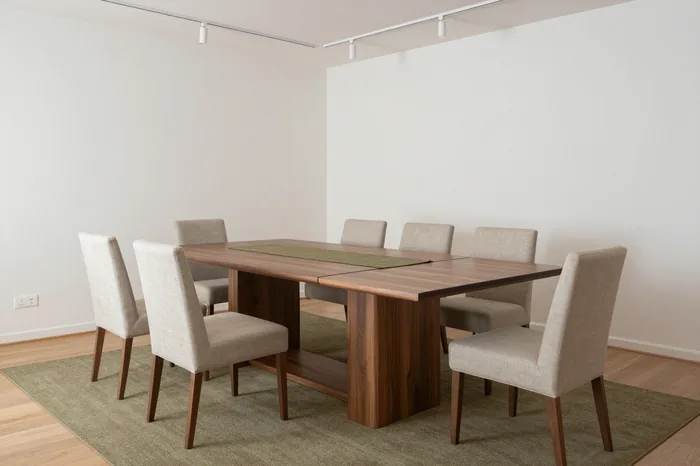
Extending dining table with the countertop halves pulled out on a single support

01 / 05

Extendable dining

Esentai City residential complex, Bostandyk district

On weekdays a table for 4, for guests it extends with an insert to 8. The halves move synchronously, center themselves, no skewing.

Items
insert, for 4→8 seats
Materials
Laminated chipboard
Lead time
14 days
I want the same
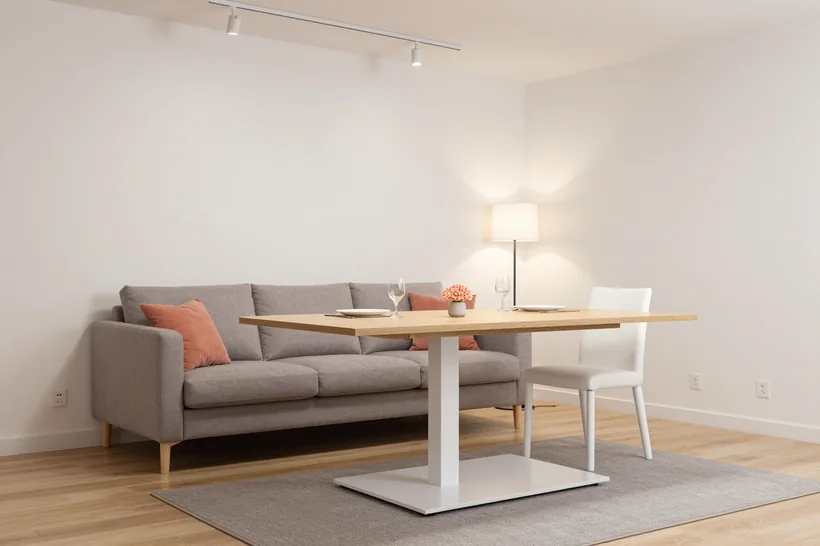
Coffee-dining table with a raised countertop and a table setting for two by the sofa

02 / 05

Coffee-to-dining

Abu Dhabi Plaza residential complex, Medeu district

In front of the sofa — a low coffee table, at lunch it rises to dining height and increases the area. Two tables in one with a gas lift.

Items
changes height and area
Materials
Laminated chipboard/MDF
Lead time
18 days
I want the same
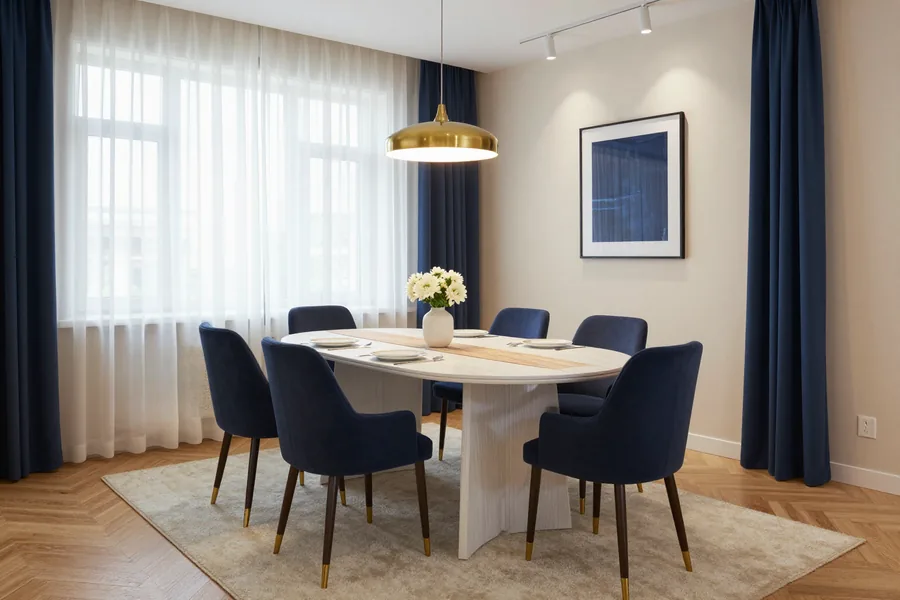
Extending table opened from a circle into an oval with an insert in the middle

03 / 05

Round extendable to oval

Almaty Arena residential complex, Alatau district

On weekdays a round table for 4, for guests it extends with an insert to an oval for 8. A transformer for a small kitchen without sharp corners.

Items
round → oval
Materials
Laminated chipboard/MDF
Lead time
16 days
I want the same
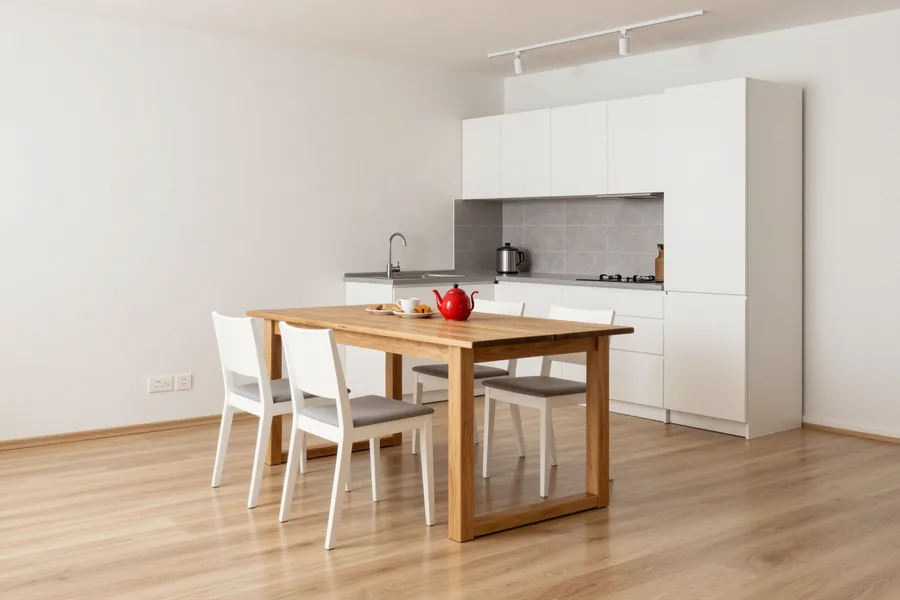
Light wood extending table with an insert in a small kitchen

04 / 05

Compact for a small flat

khrushchyovka, Almaly district

An extendable table for a small kitchen: compact on weekdays, doesn't eat up the walkway, extends for occasional guests. Every meter counts.

Items
extendable, saves space
Materials
Laminated chipboard
Lead time
14 days
I want the same
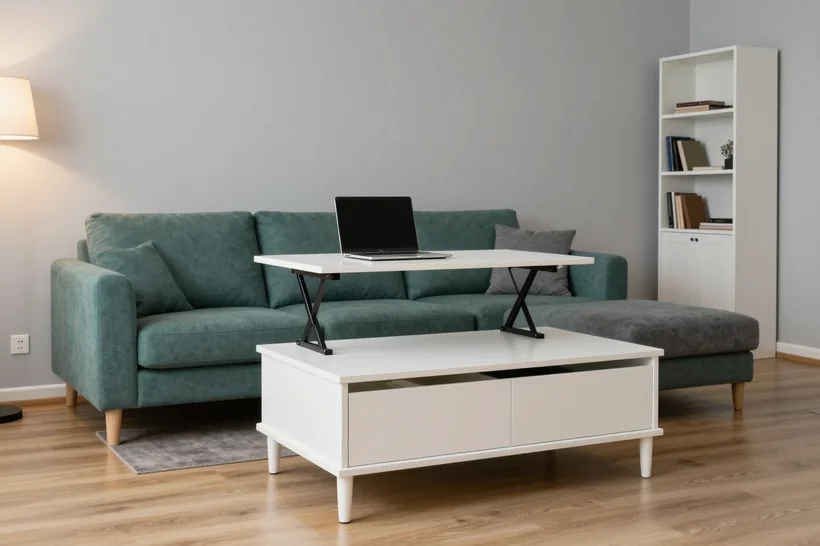
Coffee-dining table on folding metal supports in front of the sofa

05 / 05

Coffee-to-dining for the living room

Izumrudny Kvartal residential complex, Bostandyk district

In a living-dining room there's usually a low coffee table in front of the sofa, and on holidays a dining table for guests. One area works as two.

Items
two tables in one
Materials
MDF
Lead time
18 days
I want the same

3 500+

MEBLIX projects since 2013 — we'll show you convertible tables similar to yours on WhatsApp or in the showroom.

Show similar

05Principles

How a custom project beats mass-produced furniture

  1. 01

    Construction to fit the room

    We design the table around the seating space and walkways rather than adapting a ready-made model. Non-standard width and depth are a routine task for our workshop.

  2. 02

    Reliable mechanism

    For daily unfolding we fit Blum, Hettich or Boyard hardware. We select the mechanism for the weight of the countertop and the number of inserts.

  3. 03

    Stability when opened

    We position the supports so the table doesn't wobble when extended. We check stability at a control assembly in the workshop.

  4. 04

    Convenient insert storage

    The inserts for an extending table are hidden inside the countertop. In the console we provide drawers for small items so the countertop stays clear.

  5. 05

    Installation without rework

    We assemble the table on site, taking walls and skirting boards into account. After installation we sign an acceptance certificate so you can check the mechanism right away.

  6. 06

    Edge protection for moving inserts

    We choose a moisture-resistant edge that resists chipping so the ends don't swell with daily unfolding. The specialist will show you edge samples at the measurement.

06How ordering works

What the furniture making process to order includes

Book a free measurement
  1. 01

    5 minutes

    Consultation

    Message us on WhatsApp or call. We discuss the task, style and budget, show similar projects and give a price estimate.

  2. 02

    within 24 hours

    Measurement

    The measurer comes free of charge anywhere in Almaty, takes laser measurements accurate to 1 mm, and marks sockets, pipes and uneven walls. Brings samples.

  3. 03

    1–2 days

    3D design and estimate

    We show the furniture in its colours and materials and make changes free of charge until you approve. Price, lead time and installation date are fixed in the contract.

  4. 04

    from 7 days

    Production

    In the workshop we cut the boards, edge the parts, paint and assemble the whole table, checking how the mechanism runs. Lead times for each option are in the price list on this page.

  5. 05

    1 day

    Delivery and installation

    We deliver, bring it in, assemble and check how the mechanism runs. After installation we clean up.

  6. 06

    24 months

    Sign-off and warranty

    You check every mechanism, sign the certificate and pay the balance. The warranty starts that day, with service response within 1–2 business days.

A stack of Egger and Kronospan laminated chipboard panels in our workshop warehouse before cuttingA CNC machine cuts the panel into a tabletop and parts for the future tableAn edgebanding machine seals the tabletop edges with edgebanding in the MEBLIX workshopA craftsman applies lacquer and enamel to the table parts in the spray booth of our workshopA craftsman checks the test assembly of the table in the workshop before shipping to the customerA finished convertible coffee table with the tabletop raised in front of the sofa in the living room

01 / 06

07Production

How we build convertible tables in our workshop

Six steps in our 600 m² workshop. You can see each one for yourself — showroom and production under one roof. Parts travel through the sections of the 600 m² workshop: cutting, edging, painting. At each section the project gets its own status.

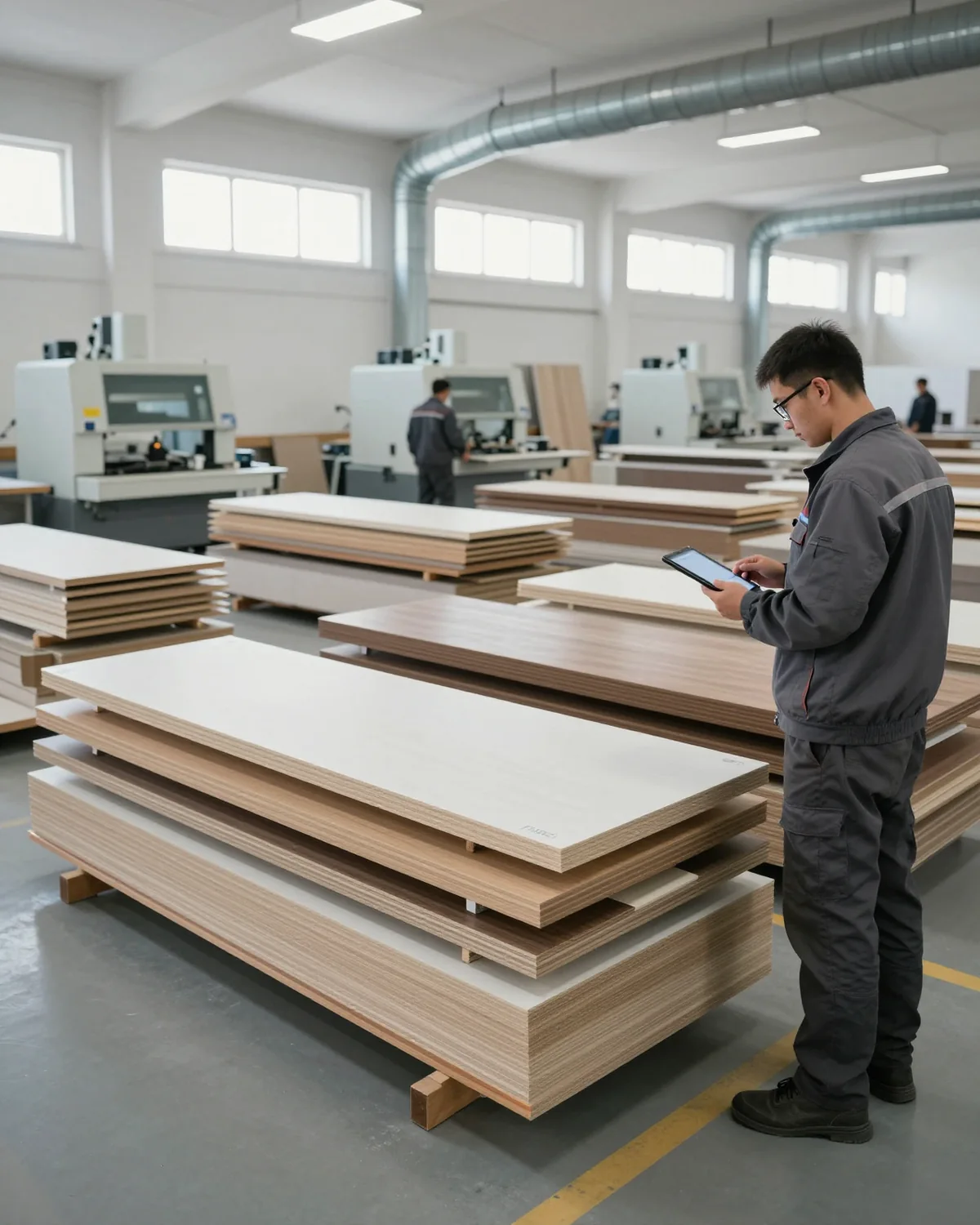
  1. A stack of Egger and Kronospan laminated chipboard panels in our workshop warehouse before cutting
    01

    Egger · Kronospan

    Board

    Egger and Kronospan boards arrive at the workshop warehouse. For countertops we use 25–38 mm board, and we dry solid oak and ash to furniture moisture content.

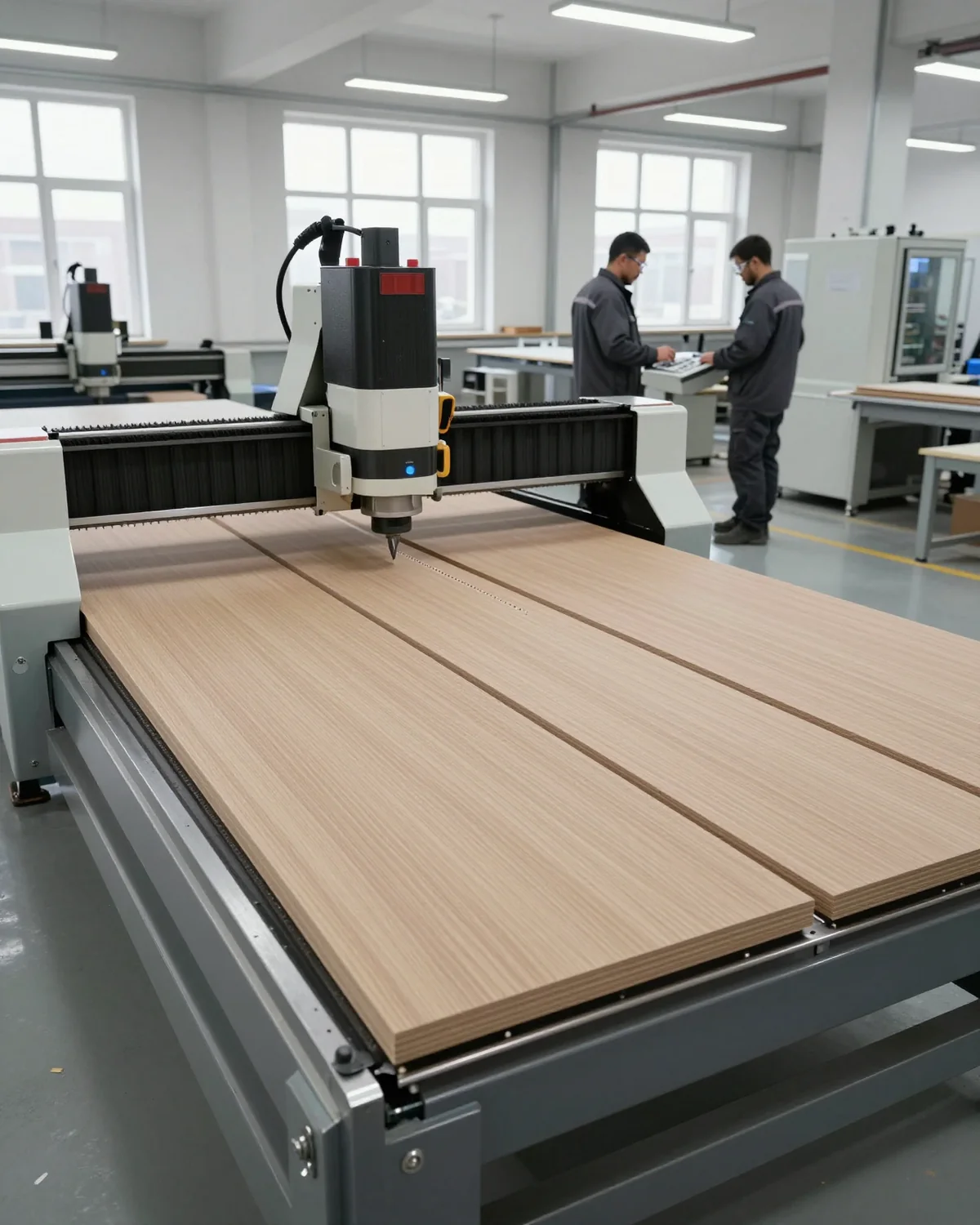
  2. A CNC machine cuts the panel into a tabletop and parts for the future table
    02

    Laser measuring to 1 mm

    CNC cutting

    A design engineer prepares the table drawing, and the machine cuts the board to it. We take dimensions from a laser measurement — 1 mm accuracy.

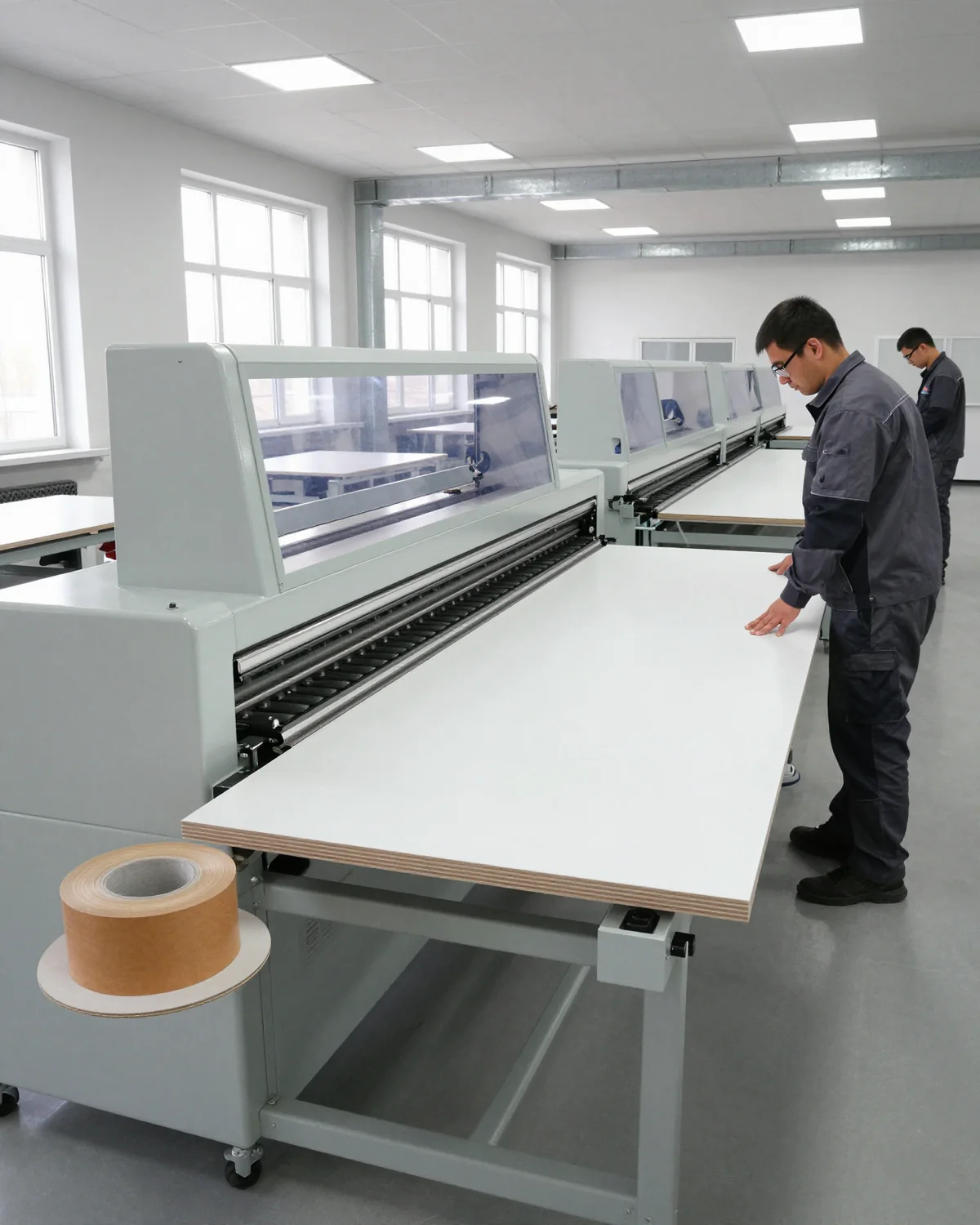
  3. An edgebanding machine seals the tabletop edges with edgebanding in the MEBLIX workshop
    03

    Edging · drilling

    Edging and drilling

    The edgebanding machine seals the ends of the countertop, then we drill holes for the supports, drawer runners and mechanisms.

  4. A craftsman applies lacquer and enamel to the table parts in the spray booth of our workshop
    04

    Any RAL colour

    Lacquer and enamel

    A finishing specialist paints the parts to RAL in the spray booth, and we coat solid wood with oil or lacquer in several layers.

  5. A craftsman checks the test assembly of the table in the workshop before shipping to the customer
    05

    Pre-assembly in the workshop

    Assembly and inspection

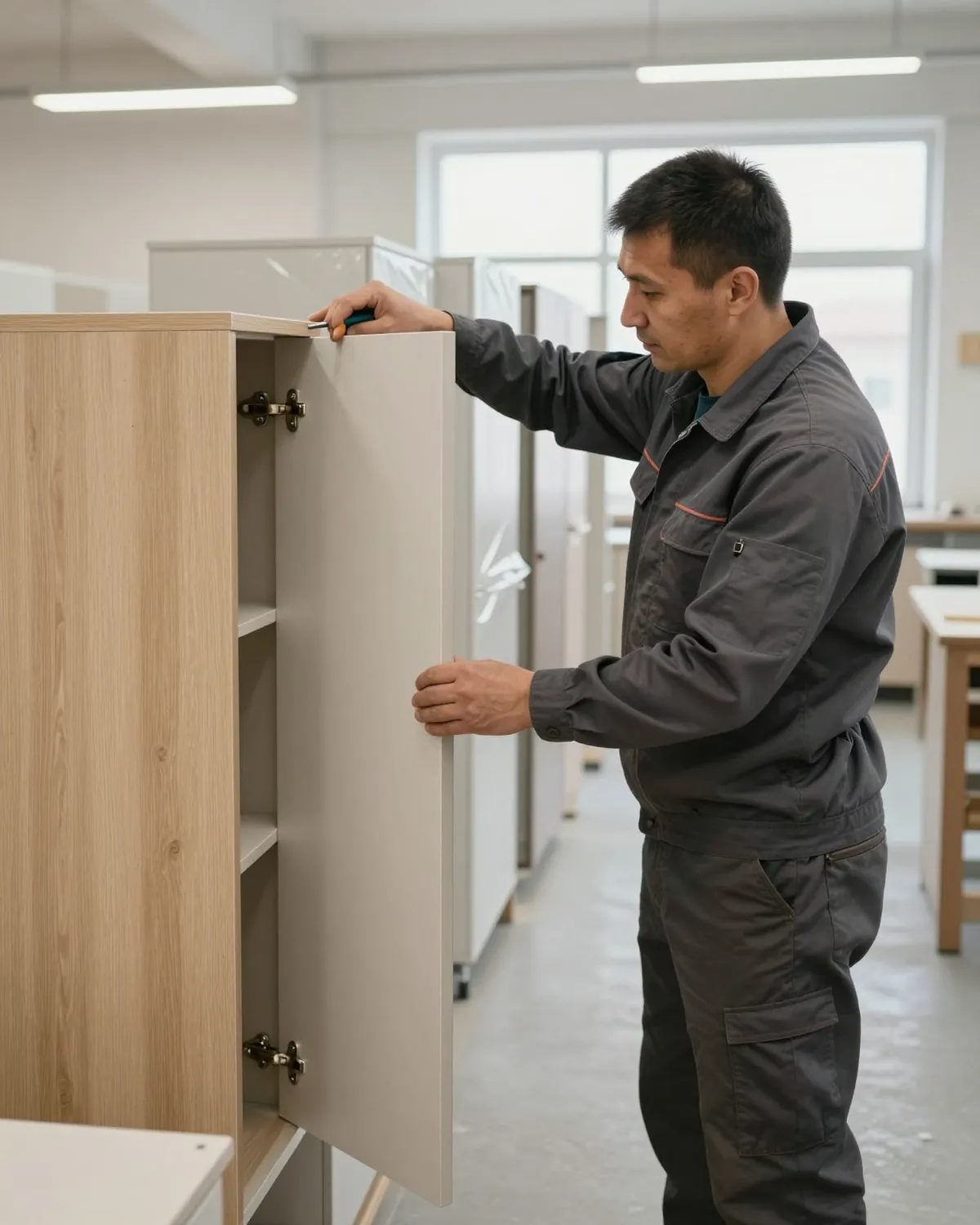
    We assemble the table in the workshop before dispatch: we check that it doesn't wobble and how the drawers and mechanisms run. The quality control department signs the item off for shipment.

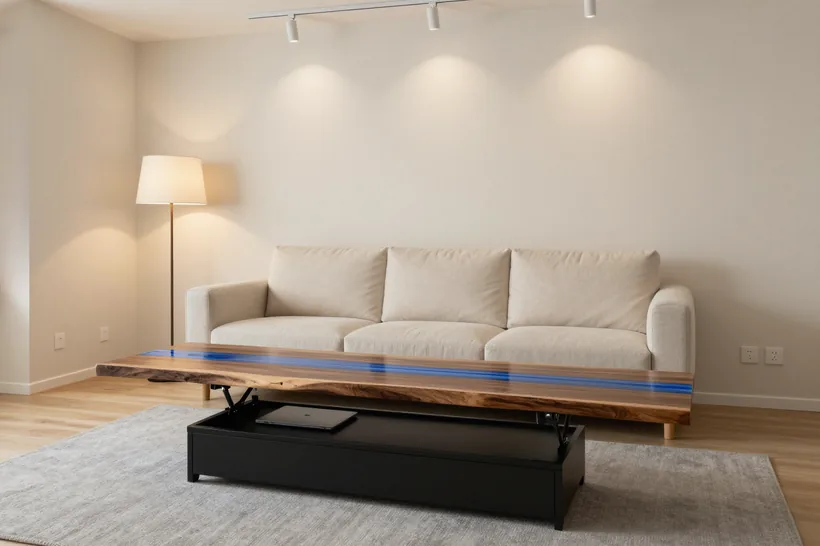
  6. A finished convertible coffee table with the tabletop raised in front of the sofa in the living room
    06

    Assembly in 1 day

    Your table

    We deliver, assemble and check how the mechanism runs in 1 day, and clean up. Warranty is 24 months from signing the certificate.

08Team

Which specialists work on the order

MEBLIX workshop craftsmen who make and assemble furniture to order.

01 / 07
Aidyn Bolenov, Cabinet furniture repair craftsman

Aidyn Bolenov

Cabinet furniture repair craftsman20 years

★ 4.99 · 73 ratings

Aleksandr Martynenko, Furniture and kitchen unit assembler

Aleksandr Martynenko

Furniture and kitchen unit assembler23 years

★ 4.97 · 300 ratings

Andrei D., Made-to-order furniture maker

Andrei D.

Made-to-order furniture maker7 years

★ 4.26 · 32 ratings

Akzholtai U., Furniture maker

Akzholtai U.

Furniture maker5 years

★ 4.23 · 30 ratings

Vasilii Krasnov, Joiner and carpenter

Vasilii Krasnov

Joiner and carpenter20 years

★ 5.0 · 113 ratings

Viktor Gurov, Furniture front and hardware fitter

Viktor Gurov

Furniture front and hardware fitter17 years

★ 4.61 · 92 ratings

09Materials

Which boards and finishes we use in our work

For the moving parts of a table, flexural strength matters, so we select boards and hardware for the load.

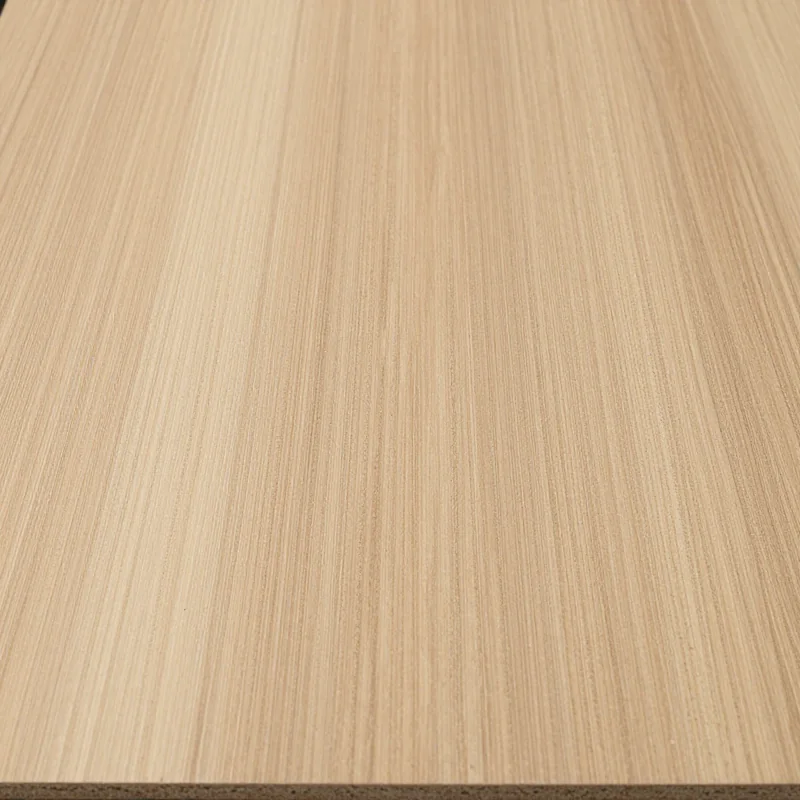
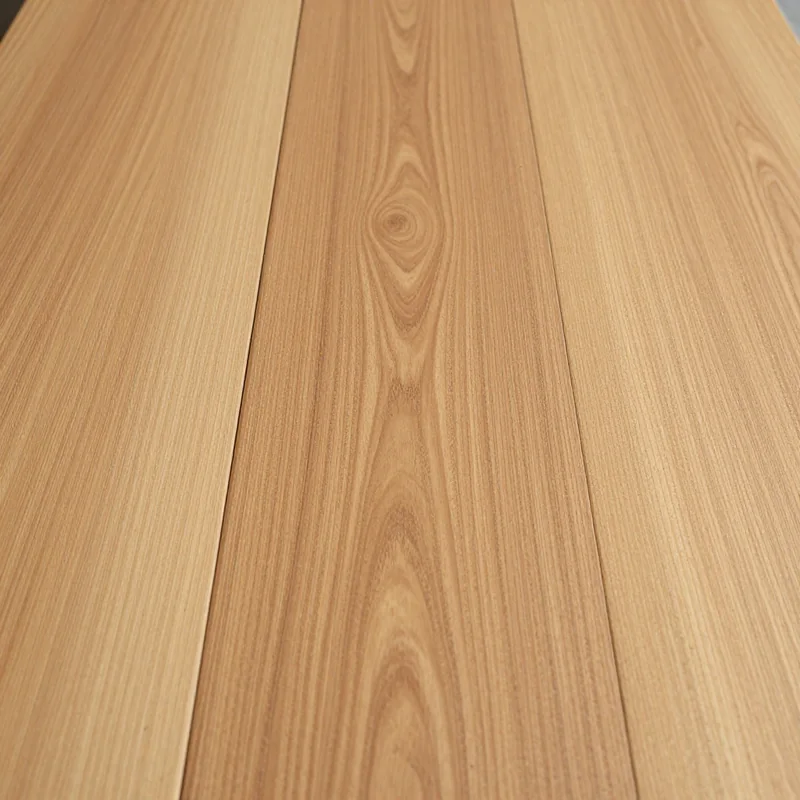
  • Laminated chipboard sample with a wood decor for a custom table countertop and cabinetLaminated chipboardclass E1, 16–18 mm, 40+ decors
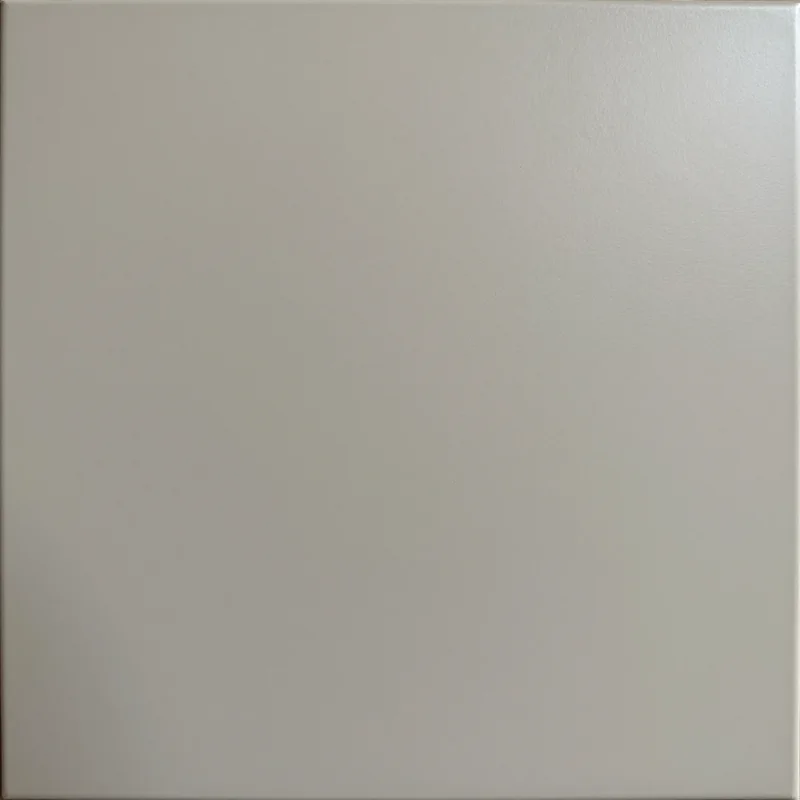
  • Smooth MDF sample in matte enamel for table fronts and baseEnamelled MDFany RAL colour, matte or gloss
  • Solid oak sample under oil for the countertop of a custom wooden tableSolid oakoil or lacquer
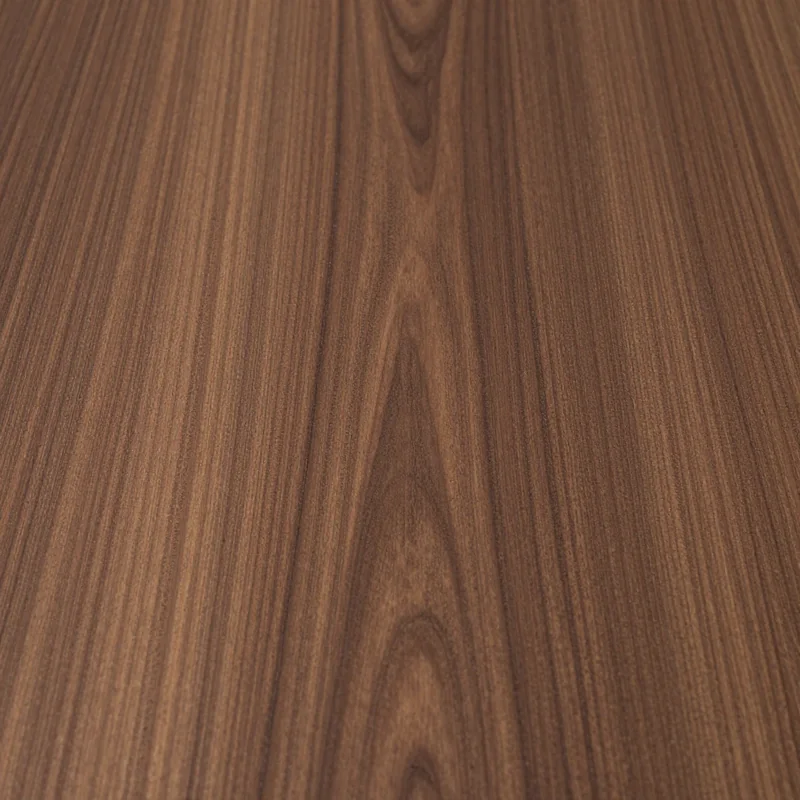
  • Natural veneer sample with a wood grain pattern for the tabletop and table cabinetsVeneeroak, walnut, ash
  • HPL plastic sample, resistant to water and scratches, for the table topHPL laminatewear-resistant
  • Sample of tempered glass and lacquer enamel for the tabletop and table shelvesGlass and lacobeltempered

10Article

Custom convertible table in Almaty from MEBLIX manufacturer

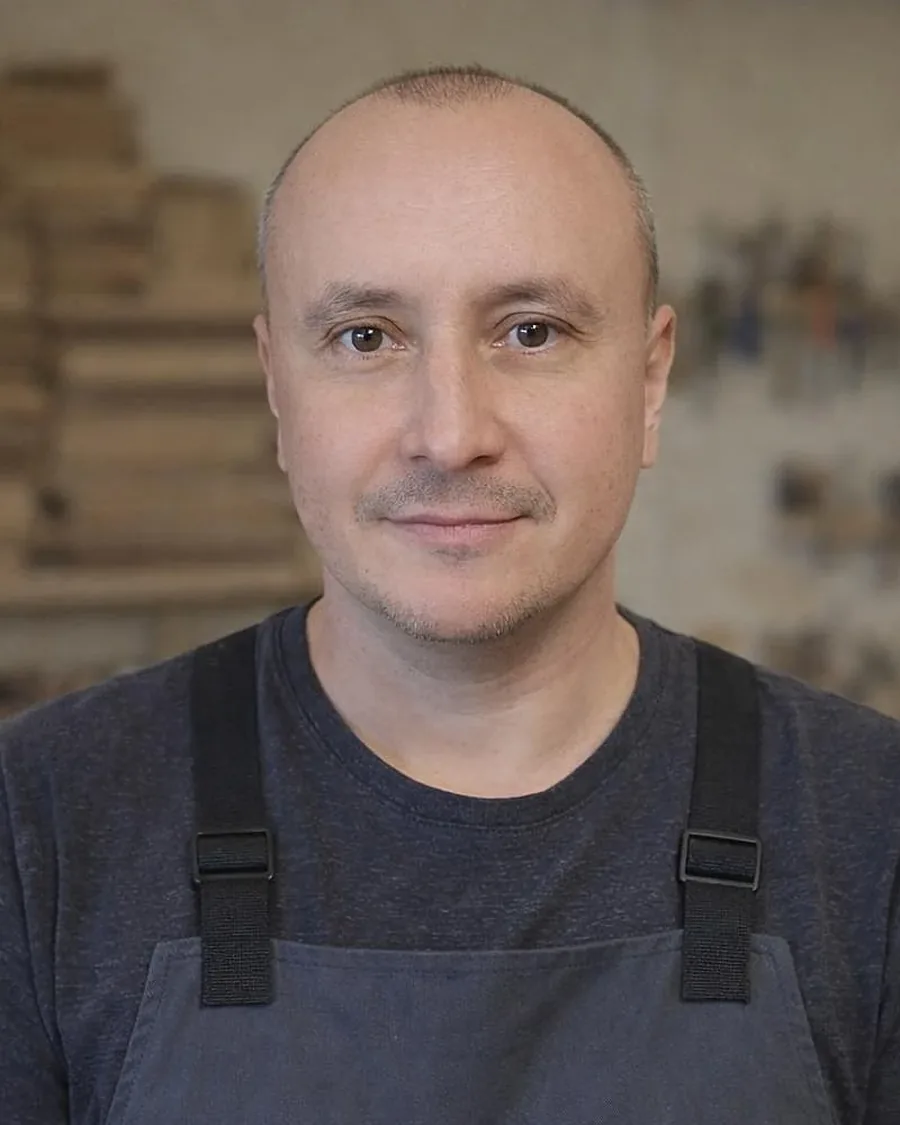
Temirzhan Nurpeisov, Furniture assembly carpenter
Author
Temirzhan NurpeisovFurniture assembly carpenter
Published
Updated

MEBLIX makes custom convertible tables in Almaty: our own 600 m² workshop, free measurement and a 3D design in 1–2 days, installation by our own crews. We work with Egger and Kronospan boards and Blum, Hettich and Boyard hardware. The item comes with a 24-month warranty under the contract, and Blum hardware carries a 25-year manufacturer's warranty.

How convertible tables differ from extendable ones and which mechanism to choose

Convertible is an umbrella term for tables that change size or shape. Extendable is just one of its types. Let's break down the transformation schemes and what actually determines reliability in everyday use.

Extendable, folding and drop-leaf — what's the difference

An extendable table increases its length with insert sections, a folding one with drop-down leaves, and a drop-leaf one by raising one or both halves of the tabletop. In the first scheme the tabletop stays a single plane and isn't split into moving parts, so the inserts go into a dedicated compartment or are stored separately. In the second and third, the moving elements are part of the structure: the leaves are mounted on hinges, and the drop-leaf halves are raised by a lift mechanism. For daily use, what matters more than the type is the quality of the runners and the thickness of the tabletop — they are what determine whether a gap between sections appears a year from now. A thin board sags around the fasteners noticeably before the travel itself wears out, so our workshop technicians first check the thickness margin and only then look at the layout scheme.

Synchronized, lift and drop-leaf

We build three main schemes — a synchronized extendable mechanism, a lift mechanism and drop-leaf sections; for daily unfolding, the synchronized one is more reliable, with both halves of the tabletop moving at once. In this scheme the runners and transformation mechanisms take a symmetrical load, so skewing is less likely and the insert sections seat into the groove evenly from the first movement. The lift scheme saves space against a wall but needs clearance for the leaf to rise — if there's a shelf or cabinet above the table, it won't work. Drop-leaf sections win in narrow openings: the leaf rises vertically and needs no length allowance in the room. The choice between these schemes is almost always decided not by aesthetics but by the geometry of the space and how many times a day the table is unfolded.

Will the mechanism handle daily unfolding

It will, if the mechanism is rated for repeated unfolding and the mounting points are matched to the weight of the tabletop. We fit Blum, Hettich and Boyard hardware on hinges, lifters and drawer runners, and we select transformation mechanisms separately for each specific design. For hinges, lifters and drawer runners, Blum offers a 25-year manufacturer's warranty, and we give 24 months on the item itself under the contract. The weak point in such tables isn't the mechanism but the attachment of the runners to the tabletop: if the board is thin or the edge isn't protected, the fasteners wear out the mounting seat before the hardware itself wears out. That's why we design such a model for non-standard sizes with a reinforced edge and fasteners seated into the body of the board rather than into the end. A test assembly in the workshop before shipping shows how the mechanism behaves under load.

Making a convertible table to fit the room and the niche

A ready-made item rarely matches a niche, windowsill or wall section. Let's break down how to order a table exactly to the size of the room and what's needed at each step.

How to order a custom extendable table to fit a niche or windowsill

We start with a free measurement: the measurement specialist takes the dimensions of the niche, windowsill and wall pier, taking into account skirting boards and wall slope, and a 3D design in 1–2 days shows how the sliding model will fit into the opening and how far it will extend when unfolded. The measurement specialist records not only the width and depth, but also the height of the windowsill, the protrusion of the radiator, the sockets and the thickness of the reveals — these parameters determine where the countertop will run and whether it will hit an obstacle. Walls in apartments are rarely perfectly flat: if you design by the nominal dimensions from the apartment plan, when unfolded the structure will run into the wall by a few centimetres. That is why we take measurements on site, not from documents. The 3D design shows both the travel path and the clearances — approve them before cutting, because the geometry cannot be corrected after assembly.

Transformable table for a small kitchen and a studio

For a small kitchen and a studio, we most often design a custom folding model with drop-leaf sections or a book table: folded, it takes up minimal space against the wall; unfolded, the whole family can sit down. The leaves are mounted on hinges and lift mechanisms, not on a sliding mechanism, so the carcass does not need free space at the side. In a studio, it matters where the countertop goes when unfolded: if the sofa stands right up against it, the drop leaf will hit the armrest. On the 3D design we show the unfolding path, not just the final look — so you can see that the armchair or the rug will need to be moved. The second point is height: you cannot have lunch at a low coffee table, so for a studio we set a working height and check that it matches sitting on the sofa or on chairs.

A table built into the kitchen unit and a rattan table

We make such furniture to order both as part of a kitchen unit — with a pull-out or drop-leaf countertop flush with the fronts — and in a version with rattan elements if you need a warmer, more textured look. The built-in option saves space but requires the countertop height to match the worktop of the kitchen unit: a difference of even a couple of centimetres is noticeable at the joint. If the kitchen is already installed, we measure on site, not from its manufacturer's catalog. We use rattan as a decorative element of the front or side panels, while keeping the load-bearing parts in board: the weave holds its shape but not the weight of the countertop. Check on the design how the built-in section joins the neighbouring cabinets — a 2–3 mm gap at the joint between fronts is immediately visible.

Countertop materials for a transformable table

Whether it sags under the weight of the dishes and whether the sections will open up into a gap depends on the material. We break down the options we work with for the task of frequent transformation.

Laminated chipboard, HPL, acrylic, quartz, solid wood and ceramic

We work with Egger and Kronospan boards, HPL, acrylic, quartz, solid wood and ceramic — each material solves its own task: laminated chipboard and HPL are chosen for everyday tables, quartz and ceramic — where the table is often unfolded and hot dishes are placed on it. Acrylic gives a smooth surface with no visible joint at the edge, but requires careful handling with abrasives. Solid wood looks and feels good, yet is sensitive to humidity changes in the apartment. Ceramic withstands boiling water and a knife, quartz — scratches and wine stains. With a sliding model, not only strength but also weight matters: solid wood with ceramic is heavier than laminated chipboard and HPL of the same area, so we select the runners and fasteners individually for each pair of "countertop + mechanism", not from a catalog.

Comparison of materials for the task of frequent transformation

materials by weight and resistance to the environment
MaterialWeightResistance to moisture and heatFor frequent transformation
Egger / Kronospan laminated chipboardlightmedium, depends on the edge bandingyes, with protected edge banding
HPLmediumhighyes
Acrylicmediummedium, sensitive to abrasivesyes, with careful handling
Quartzheavyhighyes, with reinforced fasteners
Solid woodheavymedium, requires careyes, with stable humidity
Ceramicheavyhighyes, with reinforced fasteners

What matters more, the hardware or the countertop thickness

For such a design, the hardware matters more: it is the runners and fasteners that bear the load during unfolding, while the countertop thickness affects rigidity and weight but does not replace the mechanism. We install Blum, Hettich and Boyard hardware — Blum hinges, lift mechanisms and drawer runners come with a 25-year manufacturer's warranty, and we select transformation mechanisms separately based on the weight of the specific countertop. A thin board with good hardware lasts longer than a thick one with cheap runners: during unfolding, the load goes not on the countertop itself but on the mounting points. Our 600 m² workshop in Almaty performs a test assembly before shipping — it shows how the countertop + mechanism pair behaves under load. We build a custom folding table for non-standard sizes using the same approach: first we calculate the weight and travel of the sections, then we choose the board.

Capacity and seating ergonomics at a transformer table

How many people can actually sit at a 140×80 countertop when folded and unfolded, where to put the insert sections and how to avoid elbowing each other — we break it down with specific seating scenarios.

How many people fit at 140×80 when folded and unfolded

A 140×80 countertop when folded comfortably seats 4 people, when unfolded to 180–200 cm — 6, at 220–240 cm — 8; we allow 60–70 cm of width per guest. The sliding mechanism increases the length through insert sections: each section adds its own extension, and we factor the final length into the project for your room. Chairs 45–50 cm wide fit along the long side without overlapping, and the 80 cm ends take one person each. If you seat people at a tight 60 cm per person, neighbors' elbows meet over the plates — so when ordering, tell us right away how many guests you usually have at the table, and we will choose a length with a margin for your room.

Where to put the inserts and how to fit the table into the interior

We design insert sections with storage inside the carcass or in the underframe — so when the model is folded they don't sit separately in a cupboard and don't get lost. This solution removes the main complaint about such models: the sections are hard to carry and there's nowhere to keep them. So that the structure doesn't look bulky in a small room, we match the countertop colour to the walls or the fronts of the furniture set, and keep the legs open — visually the table floats and doesn't clutter the space. At the measurement stage the measurement specialist takes the dimensions of the passage and checks how much room is left for chairs against the wall. Specific lead times are shown next to each price list item. Tell us in advance where the model will stand and how often you unfold it — the storage scheme for the sections depends on this.

Safety for a family with children and when a transformer isn't needed

For a family with children, rounded countertop corners and a mechanism without open gaps where fingers can get caught matter; if guests are rare, an ordinary table of the right size is simpler and cheaper to use. A book table unfolds by lifting one or two leaves — that's convenient, but a child can set a gas-lift lifting mechanism in motion on their own. If there are small children in the house, it's better to choose a sliding scheme with section locking: it requires deliberate effort and won't open from a bump. Such an option makes sense when the room really can't accommodate a permanent length. For occasional feasts it's more sensible to take a model of your everyday size without extra moving parts. Such an option is justified when the room can't be reconfigured for a permanent dining table.

Acceptance, care and ordering from a direct manufacturer in Almaty

Ordering from a direct manufacturer means that measurement, production, installation and acceptance are all handled by one team. We explain what to check after installation and how to care for the mechanism.

What to check on acceptance after installation

We sign the acceptance report only after installation and checks: we unfold the item several times, check the smoothness of the runners, the absence of gaps between sections and the evenness of the countertop joint. The insert sections should go in without effort and come out just as easily — jamming at this stage points to a skew that will show up a month later. We also check separately whether the countertop catches the wall or furniture while unfolding: this is only visible on site, and if it isn't allowed for, the item will have to be redone. A test assembly before dispatch removes most of these issues, but we do the final check already in the apartment, together with the owner. We sign the report after installation — until then we fix any remarks about how the mechanism runs on site or in the workshop. If you ordered a custom transformer table to your own sizes, at acceptance it's worth checking the dimensions and configuration against the project once more.

How to care for the sliding mechanism

The sliding mechanism doesn't need complicated care: just wipe the runners with a dry or slightly damp cloth and check once every six months that the fasteners and screws haven't loosened. Runners and transformation mechanisms run cleaner if once a season you brush dust and crumbs off them with a soft brush — they are the first to get packed into the grooves. Abrasive products and plenty of water on the runners do more harm than infrequent cleaning: moisture washes out the lubricant and speeds up wear of the hardware. Hinges, lifters and drawer runners from Blum last a long time — the manufacturer gives them a 25-year warranty, but only with careful handling and no chemicals. The countertop unfolding mechanism is a separate unit, and its service life depends on how the runners are matched to the weight of the panel.

Why order from a direct manufacturer

MEBLIX is a direct manufacturer: measurement, 3D design, production in our own 600 m² workshop in Almaty and installation by our own crews are all handled in-house, with no middleman and no reselling of ready-made furniture. Measurement and design take 1–2 days, and a test assembly is carried out before shipping — so any mismatches are caught before the item reaches the apartment. With a direct manufacturer, it is easier to fix non-standard cases: a part is reworked at the production site rather than returned to the supplier under warranty. A made-to-measure folding model for non-standard sizes is routine work in this setup, not an exception: we take the parameters on site and build them straight into the design. If during production it turns out that the countertop does not fit through the opening or hits the windowsill, the part is reworked in the workshop rather than the finished item being redone on site. Installation is carried out by the same crews that assembled the structure during the test assembly, so they know the specifics of each mechanism and set the gaps right away.

The bottom line on convertible tables

We have gathered the essentials that determine the outcome of an order: choosing the right transformation type for the family's habits, measuring on site instead of relying on the apartment plan, and checking everything on installation day.

  • Transformation type: a sliding structure is chosen for daily unfolding, while a book style and drop-down sections are for when wall space is what saves room.
  • Measuring on site: a model for a niche or windowsill needs the real dimensions of the room, not the apartment plan — walls in older buildings are often out of plumb.
  • Material paired with the mechanism: quartz, ceramic and solid wood are heavier than laminated chipboard, so they require reinforced fasteners and runners.
  • Seating: allow 60–70 cm of countertop width per guest, otherwise the table feels cramped even with correct geometry.
  • Acceptance: check how the runners move, that there are no gaps at the joints, and the clearance to the wall when unfolding.

11FAQ

Frequently asked questions about ordering a convertible table

Didn’t find the answer? Message us — a manager replies, not a bot.

Ask on WhatsApp
01Which transformation mechanism to choose for a convertible table?

The mechanism is chosen to suit the scenario: for everyday meals, an extending table with inserts is convenient; to save space, a drop-leaf or console table; for a living-dining room, a coffee-to-dining table on a gas lift. The price list on this page includes options with synchronous extension and with a premium imported mechanism as a surcharge. During the measurement, the craftsman will show you how each type works and suggest the one that suits the size of your room.

02How many seats does an insert add to an extendable table?

One extension leaf widens the tabletop by about 40–60 cm, adding 2–4 seats. Two leaves add up to 80–120 cm. The final length is calculated for the room and the mechanism: it's important that the table, when open, doesn't hit walls or block walkways. Exact dimensions are fixed in the 3D design after the measurement.

03How much weight does the countertop of an extendable table hold?

The load depends on the tabletop material and the mechanism class: laminated chipboard is thinner and lighter, solid oak is heavier and requires reinforced hardware. For daily use we select a mechanism with a load reserve. For the specific permissible values for the chosen model, check with the craftsman when ordering.

04Can a convertible table be built into a niche or an existing furniture set?

Yes, if the exact dimensions of the opening and the location of utilities are known. During the measurement, the craftsman takes the dimensions of the niche and checks how the mechanism will open when extended. The built-in option is agreed with the designer so the table doesn't block the drawers and doors of the kitchen unit.

05How to match the countertop board color with the kitchen fronts?

Color and texture are chosen from Egger and Kronospan board samples in our showroom in Almaty, by prior appointment via WhatsApp. You can bring a facade sample or a photo to the measurement so the craftsman matches the shade more precisely. For a non-standard tone, veneer or enamel from the catalog will be offered.

06Do you make convertible tables to custom sizes?

Yes, we make items to the customer's dimensions. Free measurement and 3D design take 1–2 days. Non-standard geometry and unusual mechanisms are discussed with the designer before production starts.

07Where can I see samples of convertible tables in person?

In our showroom in Almaty, by prior appointment via WhatsApp. Here you can touch the boards, feel how the mechanisms move and compare the shades of laminated chipboard, MDF and veneer.

08Can I order a convertible table made of solid oak with a mechanism?

Yes, the price list on this page includes a sliding table made of solid oak and a solid wood model with a mechanism. Solid wood is heavier than laminated chipboard, so reinforced hardware is selected for it and the load on the mechanism is checked. Lead times for each option are in the price list on this page.

09What care does a convertible table with an extendable mechanism need?

The mechanism requires periodic cleaning of dust and small debris, as well as lubrication of the friction parts as recommended by the hardware manufacturer. The laminated chipboard tabletop is wiped with a soft damp cloth without abrasives, and solid oak is treated with protective oil or lacquer as needed. With careful use, the mechanism lasts longer, and the warranty on the item is 24 months under the contract.

10What is the difference between a console table and a drop-leaf table?

Folded, a console takes up minimal space against the wall and opens into a dining table, while a book table folds in half and usually has two leaves. A console is convenient for narrow hallways and small kitchens, a book table — for rooms where a table is needed occasionally. The price list on this page presents both types, including a 120x40 cm transformer console and a sliding book table.

12Reviews

Reviews of MEBLIX convertible tables

4,9

average rating
on Google and Zoon

See all reviews
MEBLIX showroom on Abylai Khan Ave

13Showroom and workshop

Touch the samples for convertible tables in our showroom

200+ fronts and materials, Blum and Hettich hardware to try in person. The workshop is in the same building.
Address
115/60 Abylai Khan Ave, Almaty
Hours
Daily 10:00–20:00
Phone
+7 705 625 00 03

14Other types

What else we make besides convertible tables