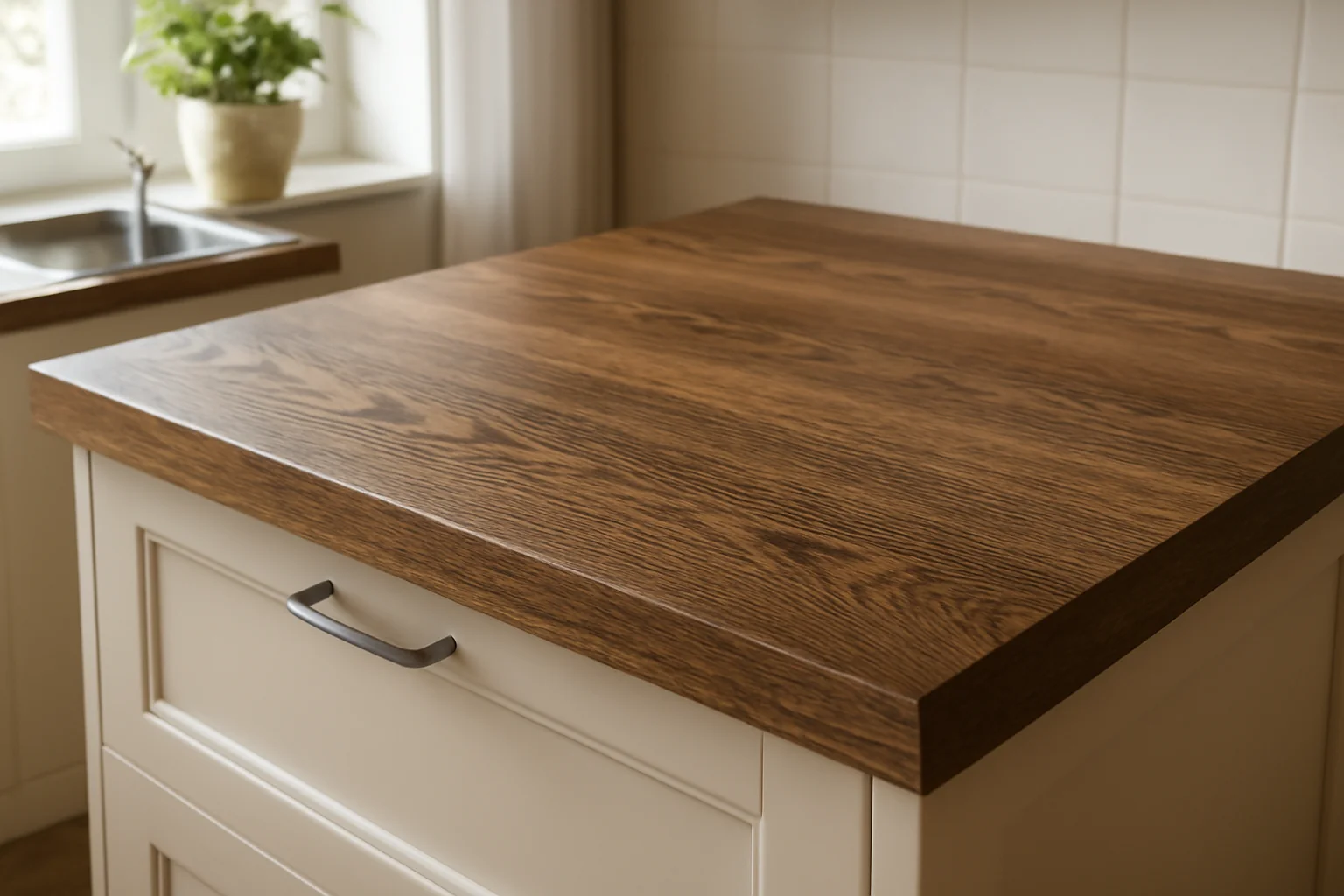
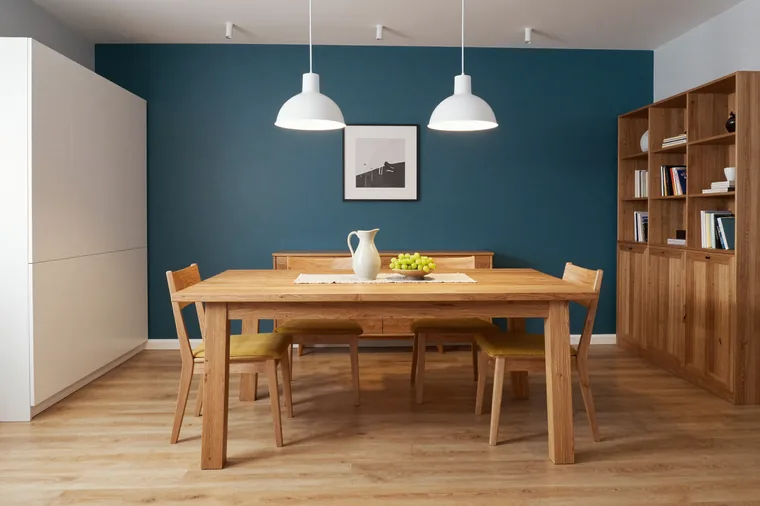
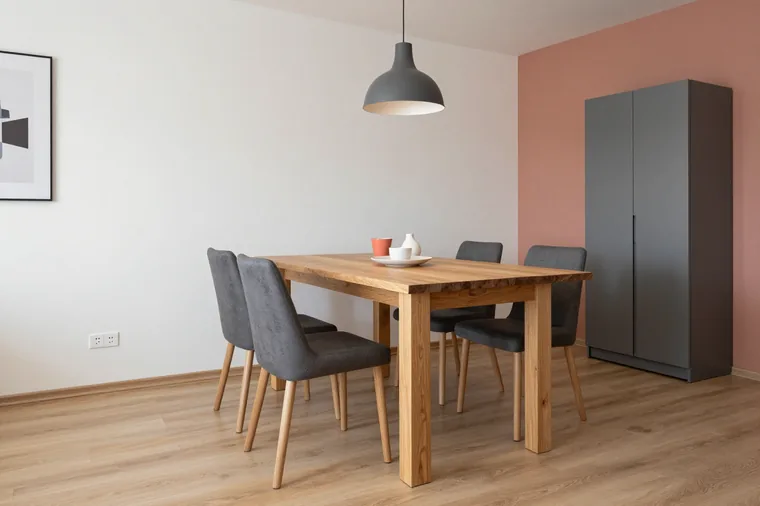
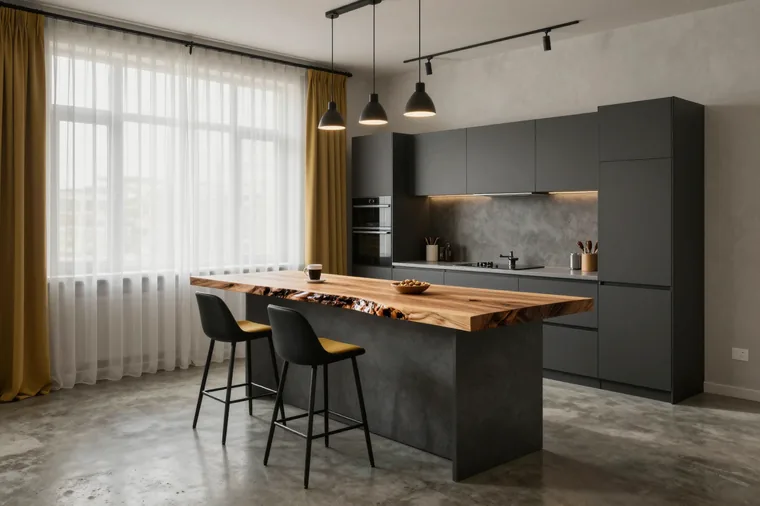
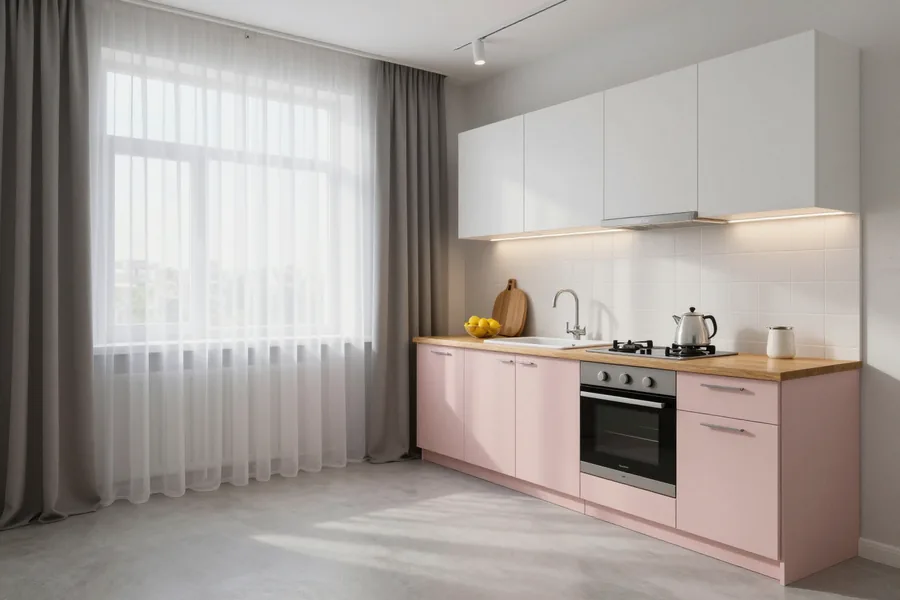
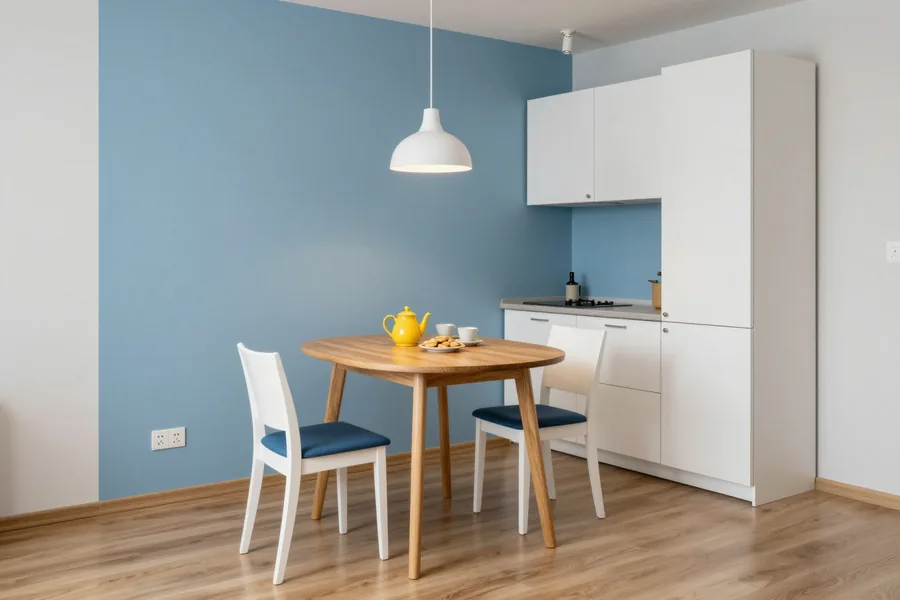
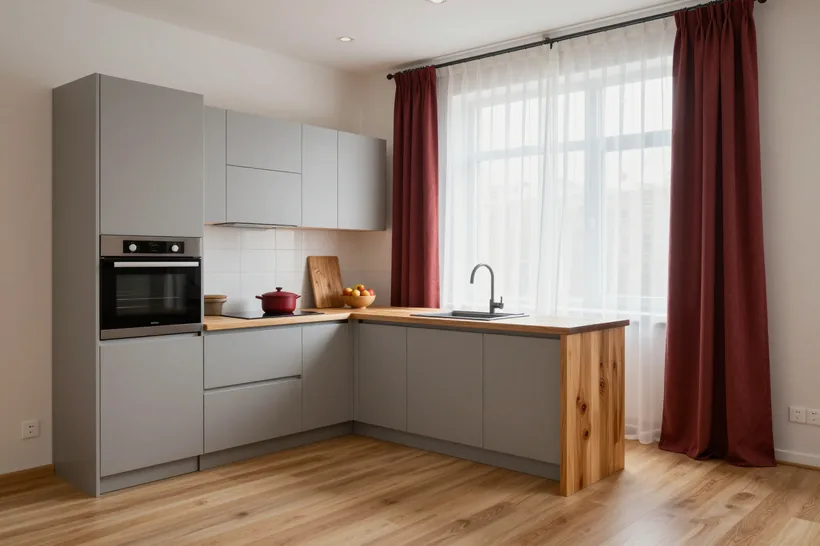
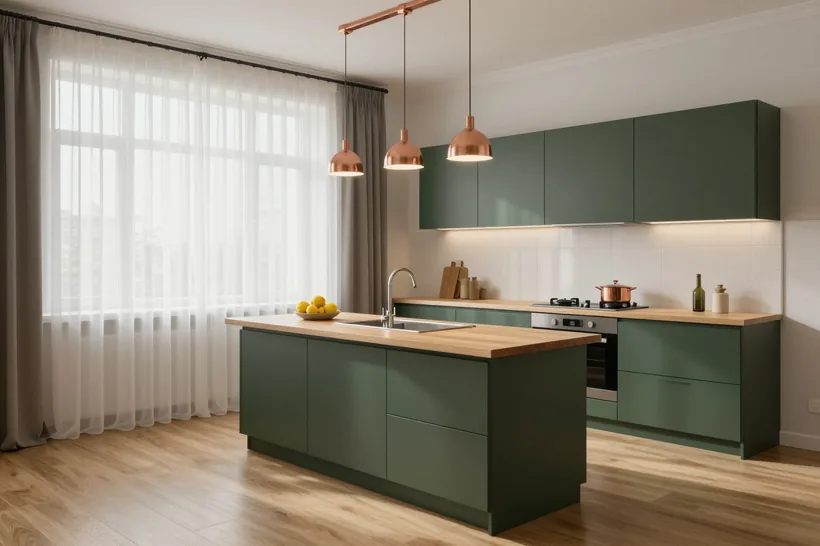
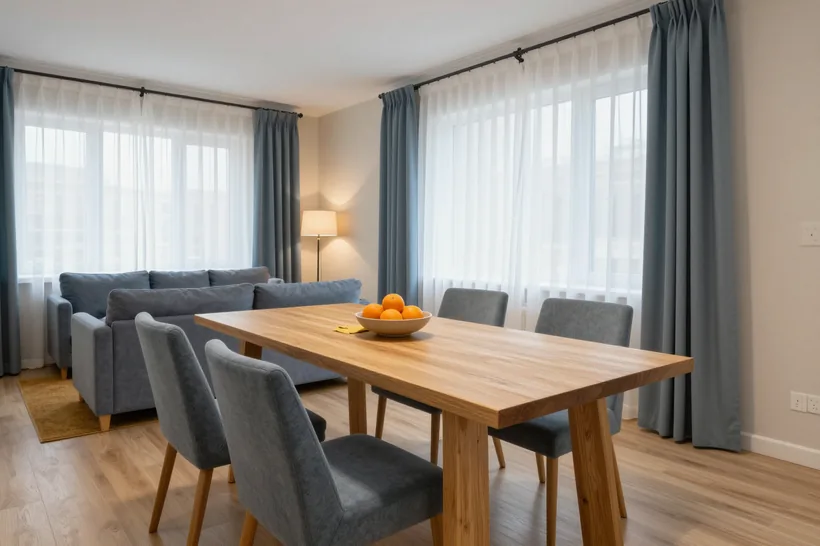
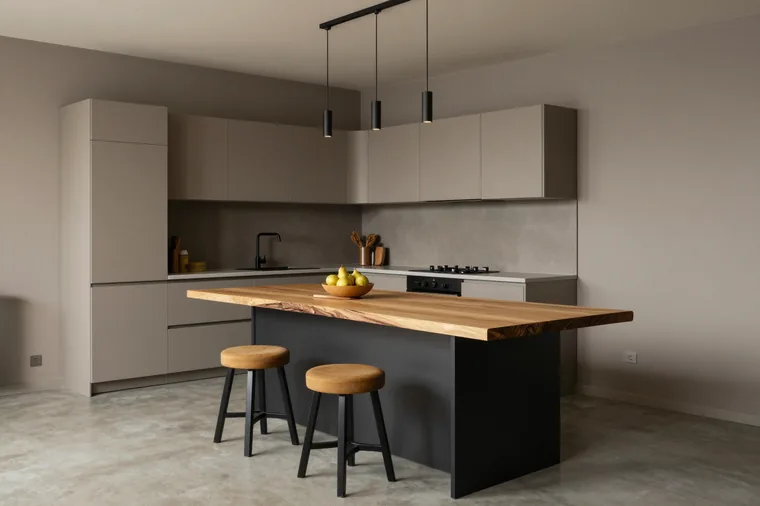
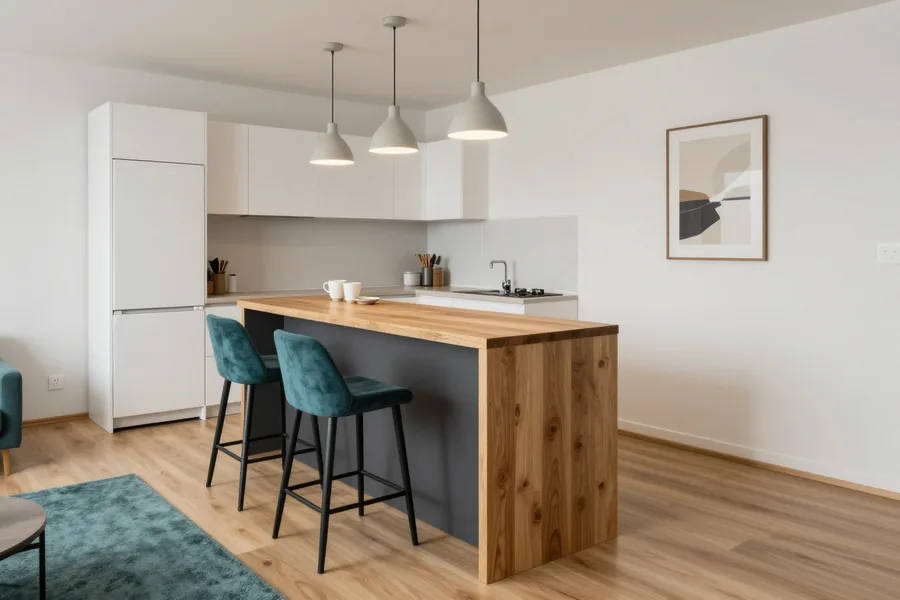
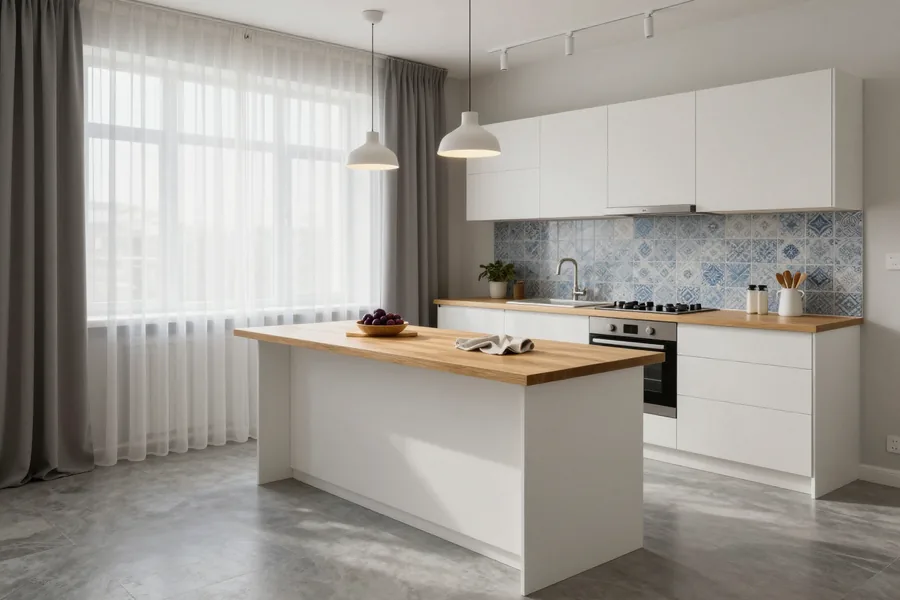
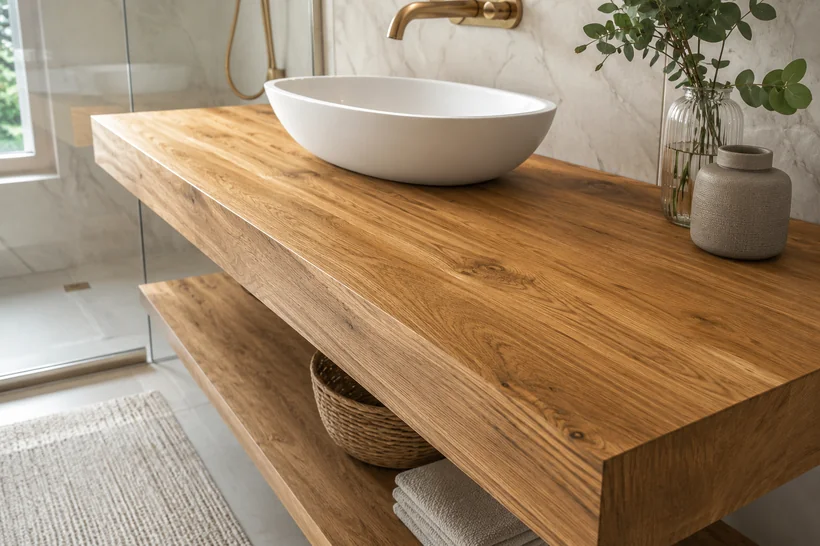
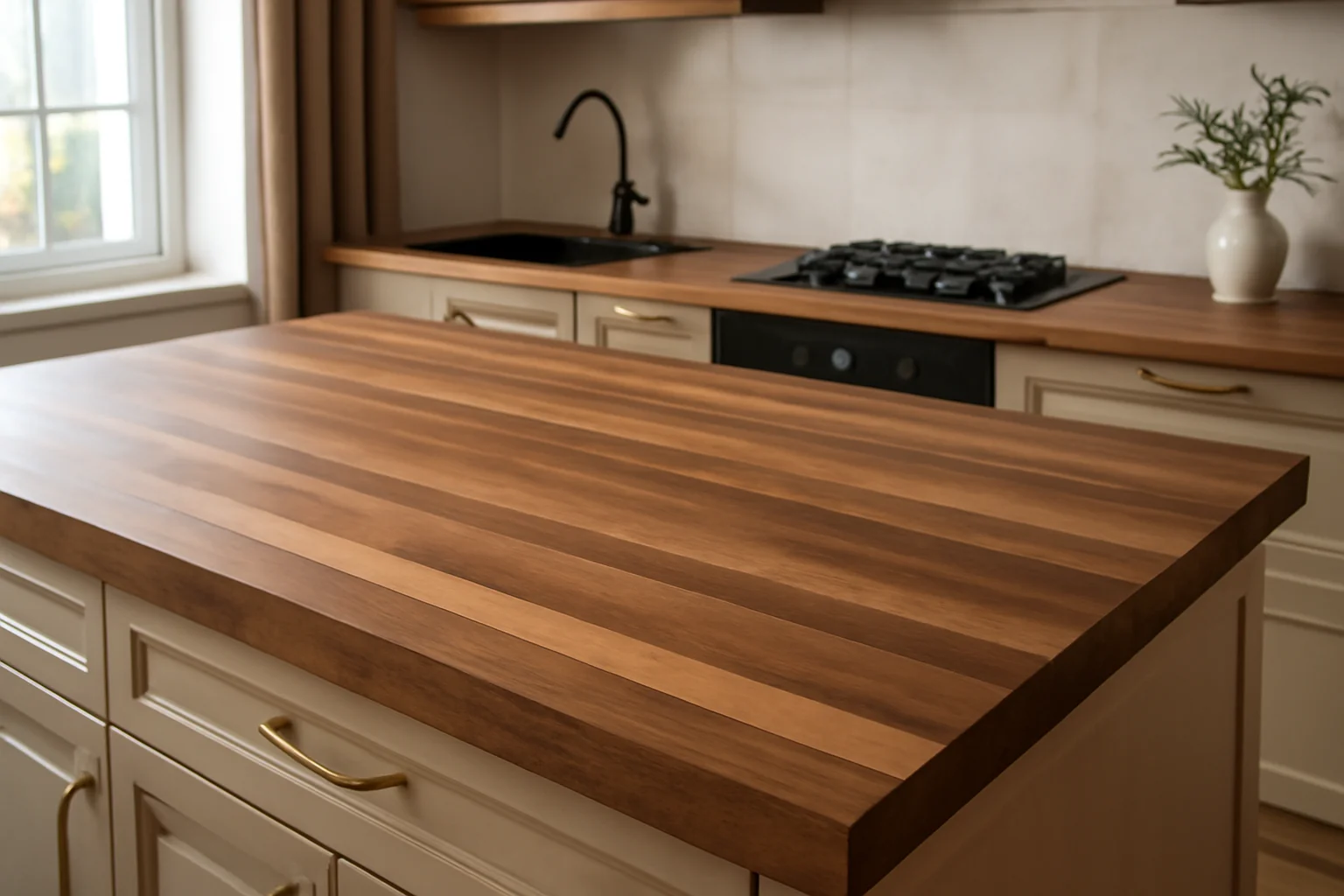
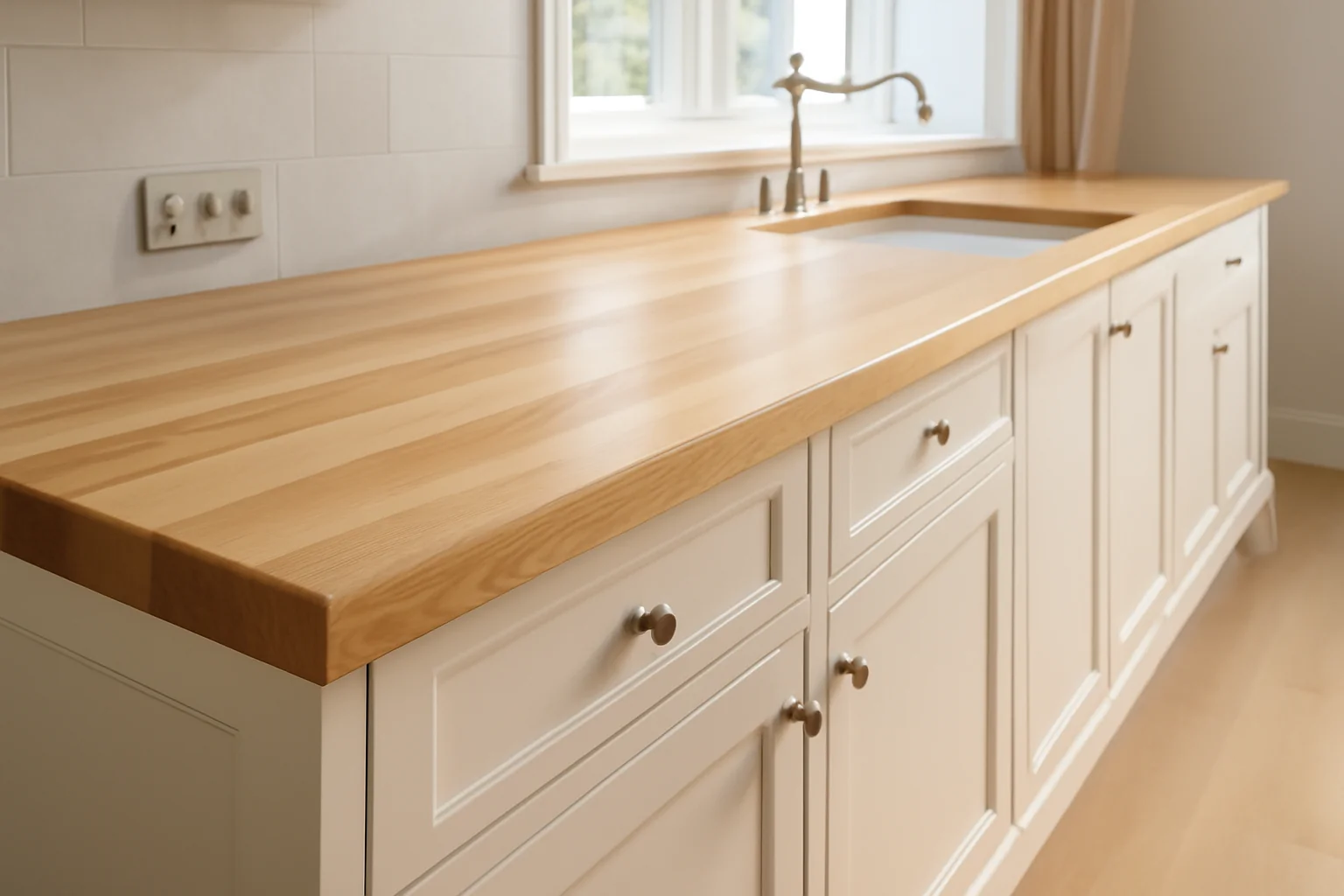
A custom oak countertop from MEBLIX is an item made to the exact size of your table or kitchen: we select the panel type and thickness to resist sagging, mill the edge, and apply oil with hard wax. Measurement and 3D design in 1–2 days free of charge, installation by our own crews, 24-month warranty on the item under the contract.
Sagging and warping are the main worry when choosing an oak countertop. Let us break down what stiffness is made of: panel type, thickness, support spacing, reinforcement and fastening to the base.
Glued panel or solid wood to the width of the item
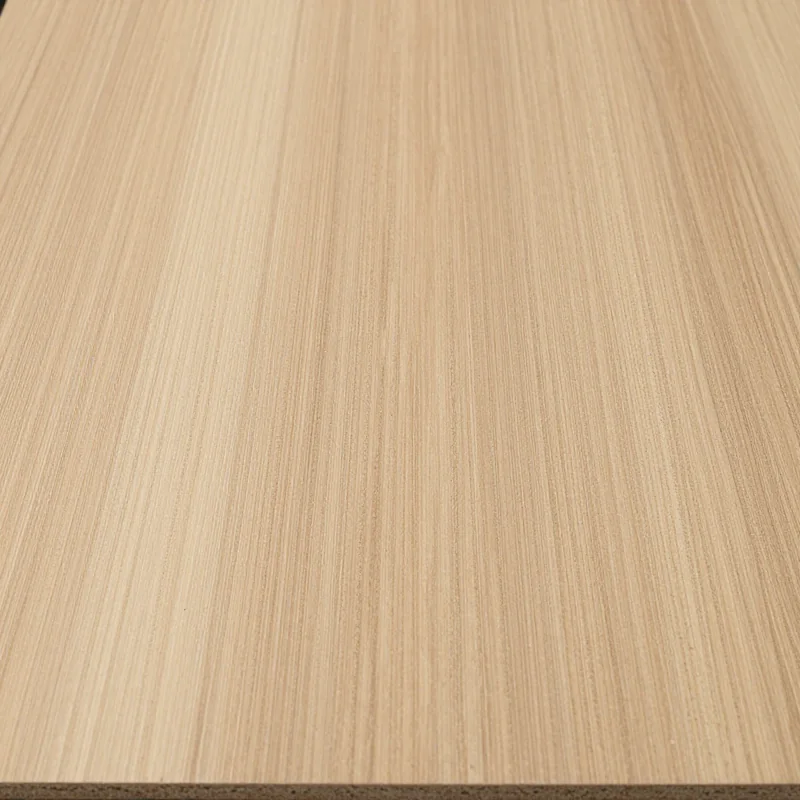
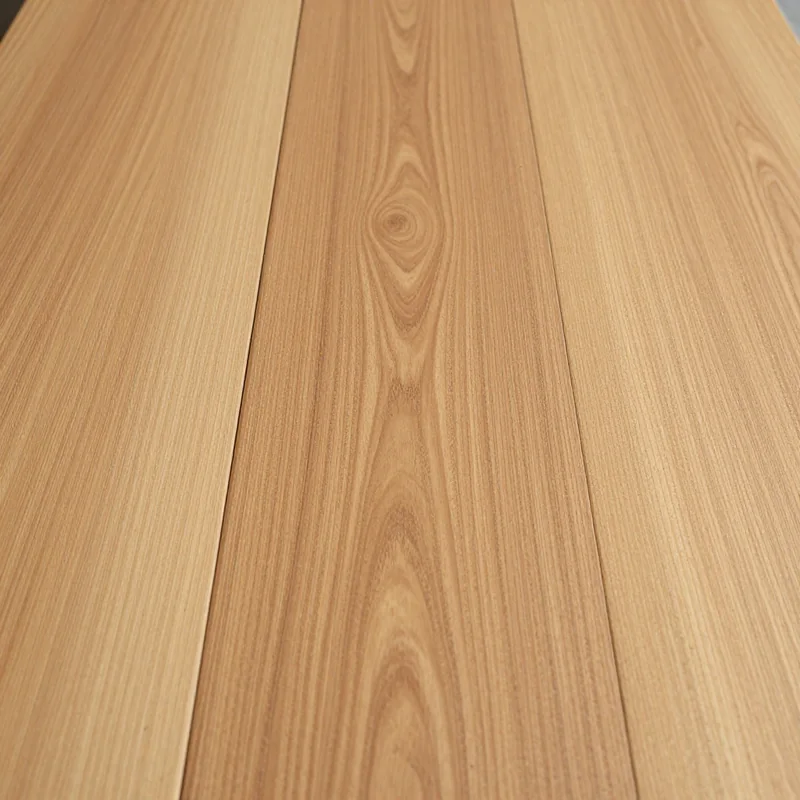
We select the panel type to match the width: a glued oak furniture panel keeps wide surfaces more stable, while solid panels and slabs are used for narrow and premium solutions. A glued oak furniture panel is assembled from re-glued lamellas: on a wide piece this gluing distributes internal stress across the whole plane rather than concentrating it in one zone. Solid panels and slabs are valued for their grain pattern — it is continuous along the entire length, but on a wide piece seasonal movement is stronger. With the span between supports, the grain direction and gluing pattern matter more than thickness: in a glued panel the lamellas are re-glued, so seasonal movement is distributed more evenly and the surface warps less. For a narrow console or a windowsill strip, solid wood performs without complaints — there the load and movement are small.
Thickness, support spacing and reinforcement against sagging
Stiffness is not set by thickness alone: we calculate it together with support spacing and, for wide spans, add metal reinforcement profiles against warping. Metal profiles prevent sagging between supports — a profile glued in or hidden under the frame takes on the bending moment. If supports are spaced far apart, the fix is not "thicker" but a combination of thickness and hidden reinforcement — the profile absorbs the bending and the surface does not "give" under elbows. We tie support spacing to the width and weight of the item: the wider the span, the denser the frame grid and the more likely reinforcement is needed. For an island and a bar counter with a console, we calculate reinforcement separately — an unsupported overhang under elbows acts as a lever. That is why in the design thickness, support spacing and profile go together as one set, not separately.
Fastening to supports and drying of solid wood
We fasten the item to supports through flanges and ties that leave the oak free for seasonal movement, and we use kiln-dried solid wood — so the piece does not warp or tear along the glue seam. Rigid fixing at every point is a common cause of cracks: wood breathes, and the fastening must compensate for that rather than fight it. Flanges fix the plane, while ties hold position without pushing apart; rigid clamping along the entire length is exactly what causes warping and rupture of the glue seam. We check the drying of solid wood before cutting: an under-dried board shrinks unevenly after installation and warps the surface. That is why in our workshop we first assemble the item and check it at a trial assembly, and only then send it for installation.
How an oak countertop behaves in the Almaty climate and next to a sink
The dry heating season and wet zones are two different tests for oak. We show how we prepare the item for each and why stability is built in advance.
Dry air in winter and humidity swings
For the Almaty heating season, we build a shrinkage allowance into the construction: kiln-dried solid wood, floating fasteners and a finish that does not crack in dry conditions. Oak is a living material, and its fibers contract when the air in the apartment becomes drier. A properly dried panel with the correct residual moisture behaves predictably, and floating fasteners give the board room to move without splits or gaps. Humidity fluctuations between a room with a radiator and the kitchen area increase the load on the joints, so we check the panel geometry and drying before cutting. A custom oak countertop is calculated for a specific kitchen, and we include the shrinkage allowance at the design stage. We pay separate attention to the finger-jointed panel: lamellas of different density dry unevenly, and with poor drying the first hairline cracks appear exactly at their boundaries. In winter, indoor humidity drops more than it seems, and that is when drying errors show up — so stability is built in at the panel stage, not rescued by care later.
Adjacency to the sink and stove
At the sink and stove, we protect the ends and seams with a reinforced finish, and we seal the joint with the sink — so drops and heat do not reach the open grain. Oil with hard wax closes the surface pores and withstands accidental splashes, while the end edge gets an extra layer of protection. Oak near the stove experiences local heating and dryness, so we design the joint with the cooktop separately from the rest of the surface. If the sink is by the window, sun adds to the moisture: UV dries the top layer faster than the shaded side, and without oil protection the surface darkens unevenly. Kiln-dried solid wood handles this adjacency more evenly than a finger-jointed panel, and the glue line between lamellas requires special attention when sealing. It is not the water itself that is more dangerous, but its retention at the end and seam: if moisture drains away immediately, oak calmly survives next to a sink, while stagnation in an unglued joint is the main cause of dark spots.
Ordering a custom-size oak countertop instead of a ready-made one
A ready-made item rarely matches the niche and the plane of the dining table. Let's look at what making it exactly to size gives, where it is justified, and how oak combines with other materials in one kitchen.
Why size to the niche matters more than ready-made dimensions
We manufacture the item exactly to your opening and table, so there is no need to adjust furniture to random dimensions and cover gaps with strips. A technician takes the measurement on site: records the niche width at three points, the overhang past the backsplash, the alignment to the sink and stove — these numbers guide the cutting. Then the edge is milled and chamfered on a machine, not on site, so the junction line comes out even along the entire length. In our 600 m² workshop, the part undergoes a trial assembly before shipping — the joint with the carcass is checked on the frame, not in the apartment. A non-standard niche is not a problem but input data: when the size is taken on site, the edge and joint fit precisely, not "approximately", and gaps do not have to be masked.
Ready-made item or custom-size order
comparison of a ready-made item and made-to-measure production| Parameter | Ready-made countertop | Made to size |
|---|
| Dimensions | fixed | exactly to the opening and the table |
|---|
| Edge | standard | straight, 45° bevel, shaped |
|---|
| Fit into the niche | often with gaps | no gaps |
|---|
| Consideration of climate and the sink area | general | for your kitchen |
|---|
| On-site adjustment | likely | not required |
|---|
Combining oak with another material
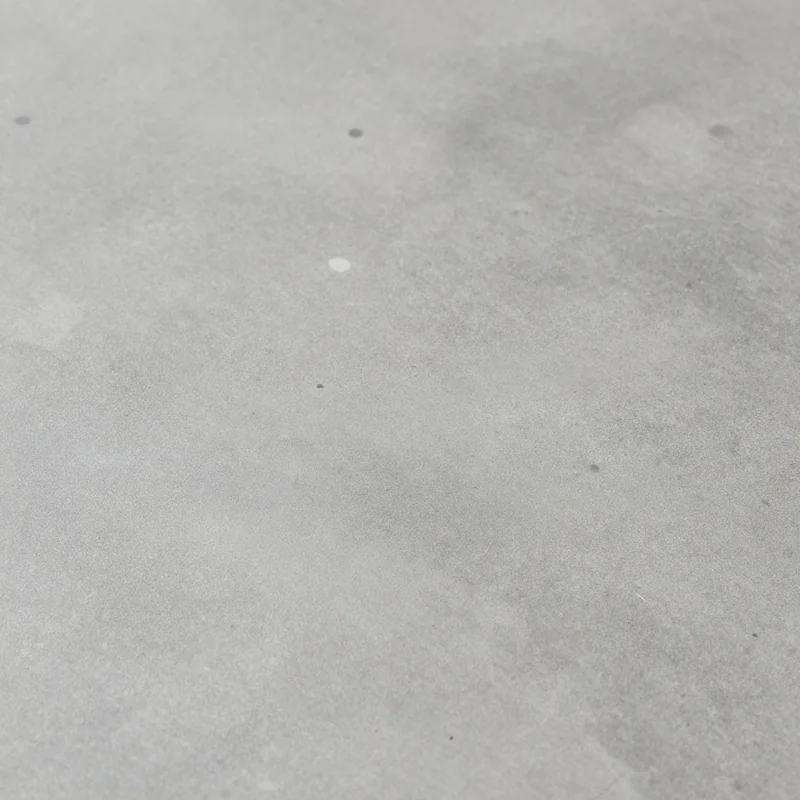
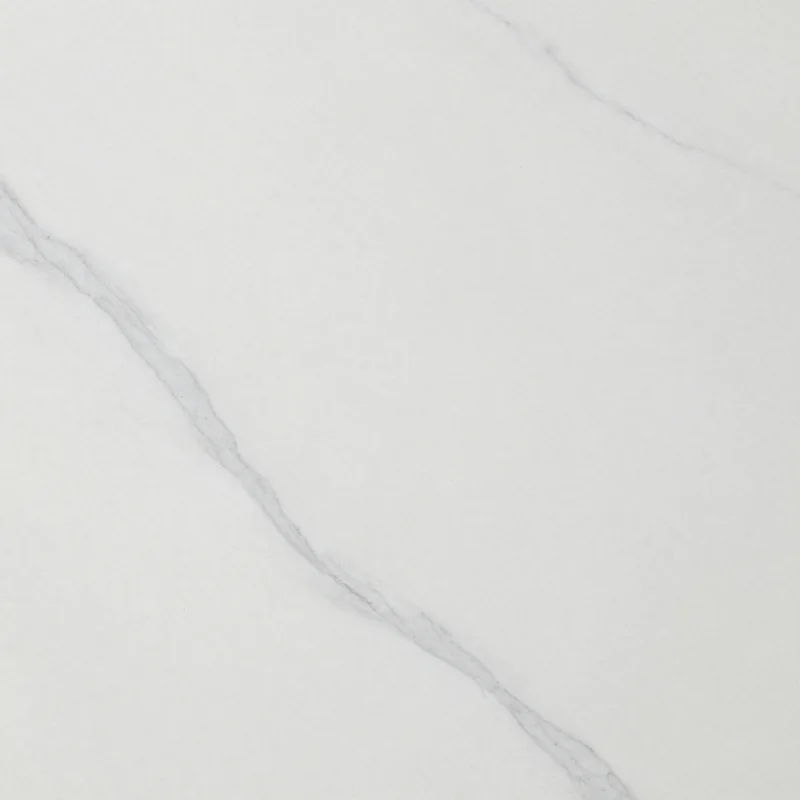
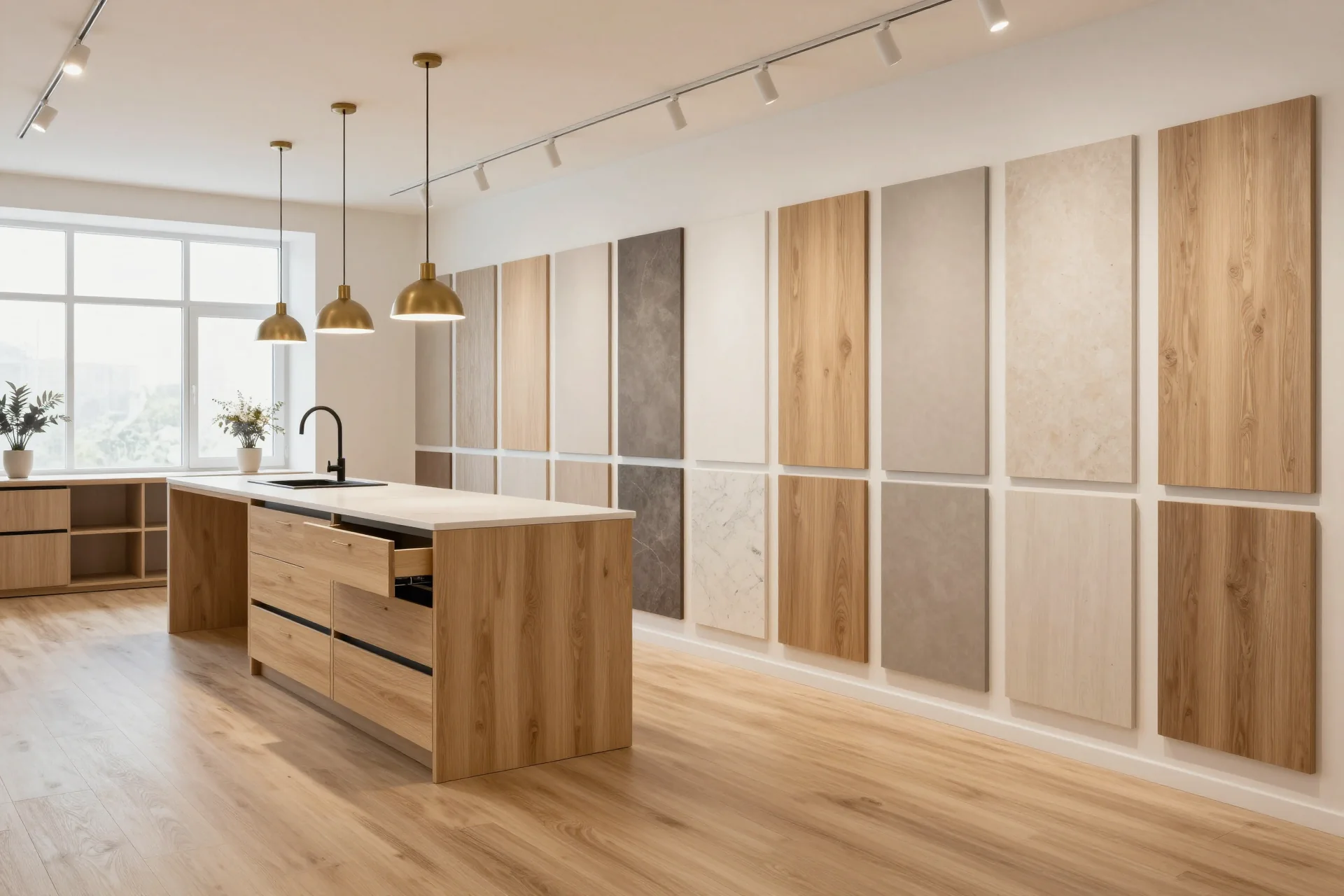
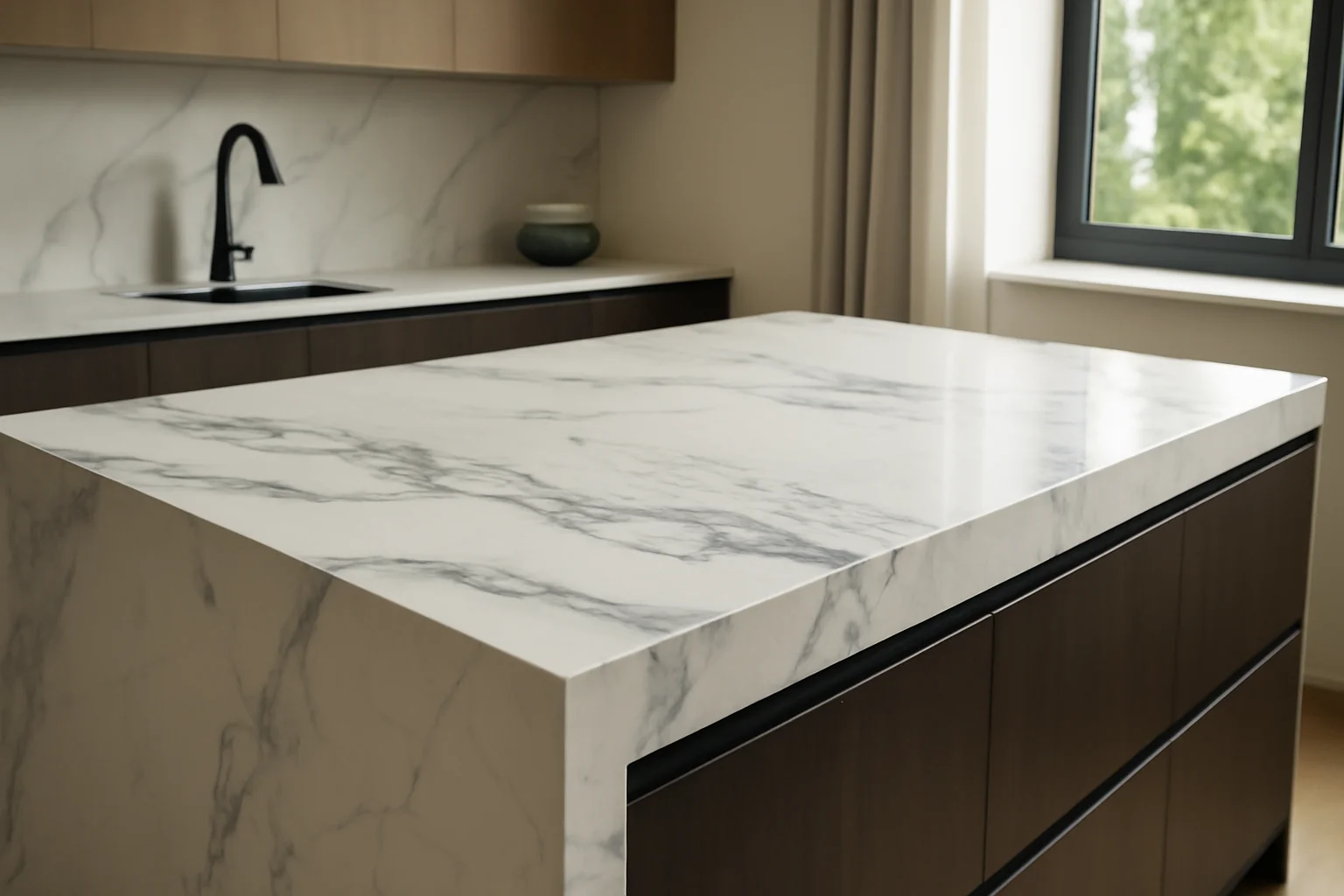
We combine oak with Egger and Kronospan boards: we use solid wood in the dining area and on visible surfaces, while wet and working areas are covered with a more durable material. An oak tabletop keeps its warm texture where people sit at it and where it is seen; by the sink and the hob, a board with a moisture-resistant coating makes more sense — it handles splashes and hot dishes with ease. You can buy a solid oak countertop for the whole kitchen, but then it is the working area that needs its coating refreshed more often. Neighbouring countertop types — acrylic, quartz, ceramic, HPL — we select to the same geometry so that the joint between materials runs in a single line and does not read as a patch. The combination removes the main compromise: you do not have to choose between warm wood and practicality — each area gets a material suited to its load.
Coating and care for a solid oak countertop
The coating determines how oak survives drops, a hot mug and daily cleaning: it decides whether the surface stays flat and even in tone. Let us explain what we protect the solid wood with and how to maintain it in everyday life.
What we coat it with and how we protect it from moisture and stains
We apply oil or oil with hard wax at the production stage: the wax creates a protective layer on the surface that holds drops and withstands hot dishes. We impregnate in the workshop after final sanding — first a primer layer, then the working one, with drying between layers so that the composition sinks into the fibres rather than staying as a film on top. At the control assembly we check that there are no missed spots or drips on the surface, and that the edge is impregnated as thoroughly as the face: it is the end grain that draws moisture from the air first. A solid oak countertop with such a coating handles daily cooking, wiping with a damp cloth and occasional splashes by the sink with ease. The value of an oil coating is that it can be renewed locally — a damaged area is sanded and re-impregnated, while the whole surface does not have to be redone.
Why oak darkens and what to do about it
Oak darkens from light and moisture naturally, and this is not a defect but a property of solid wood. A freshly sanded surface is light at first, and after a few months under daylight it gains a warm honey tone — the process happens across the whole area and therefore stays even, without streaks. On solid wood, the areas by the sink and the hob show it most: there light and water act at the same time, and splashes linger longest. Another cause of unevenness is exposed end grain and edge zones, which absorb moisture faster than the face. Even darkening over time looks noble, whereas local dark spots are a signal that moisture has lingered in the fibres; they are removed with light fine-grit sanding and a refresh of the oil, without touching the rest of the surface.
Daily care and coating renewal
- Wipe down: with a damp, well-wrung cloth; harsh products and chlorine strip the protective layer.
- Clean up right away: don't leave spilled water and juice for long, or the moisture will soak into the fibers.
- Use coasters: under hot dishes and wet glasses — this makes it easier to keep the solid wood tone even.
- Refresh the oil: as it soaks in, apply a thin layer to a dry surface, avoiding puddles and excess.
- Sand locally: a small stain is removed with fine sanding and a fresh coat of oil, no need to touch the whole surface.
- Don't put it off: regular oil refreshing extends protection better than intensive cleaning after a stain.
How an order at MEBLIX works from measurement to installation
We'll walk you through the journey of your item — from measurement and 3D design to installation and the sign-off report, so you understand every stage and exactly what to check at each step.
Measurement, 3D design and choosing a solution
Measurement and 3D design are free with us and take 1–2 days: you see the future item and approve the panel type, edge banding and finish before work begins. A technician visits the site, measures the geometry of the niche and checks how the wall and supports will take the panel — the level difference here decides whether fitting is needed. In the design we fix the width and thickness of the panel, the direction of the lamella joints, the overhang beyond the supports and the space for a sink or hob. We choose the species and panel type to suit the load and the pattern: a jointed panel is more even in tone, solid wood is more expressive in texture. If you need a worktop for an oak table, at this same stage we agree its dimensions and how it attaches to the supports. Designing before manufacture removes the main risk — a mismatch between expectations and the result: disputed details are discussed on screen, not on the finished item.
Manufacturing in our own workshop and trial assembly
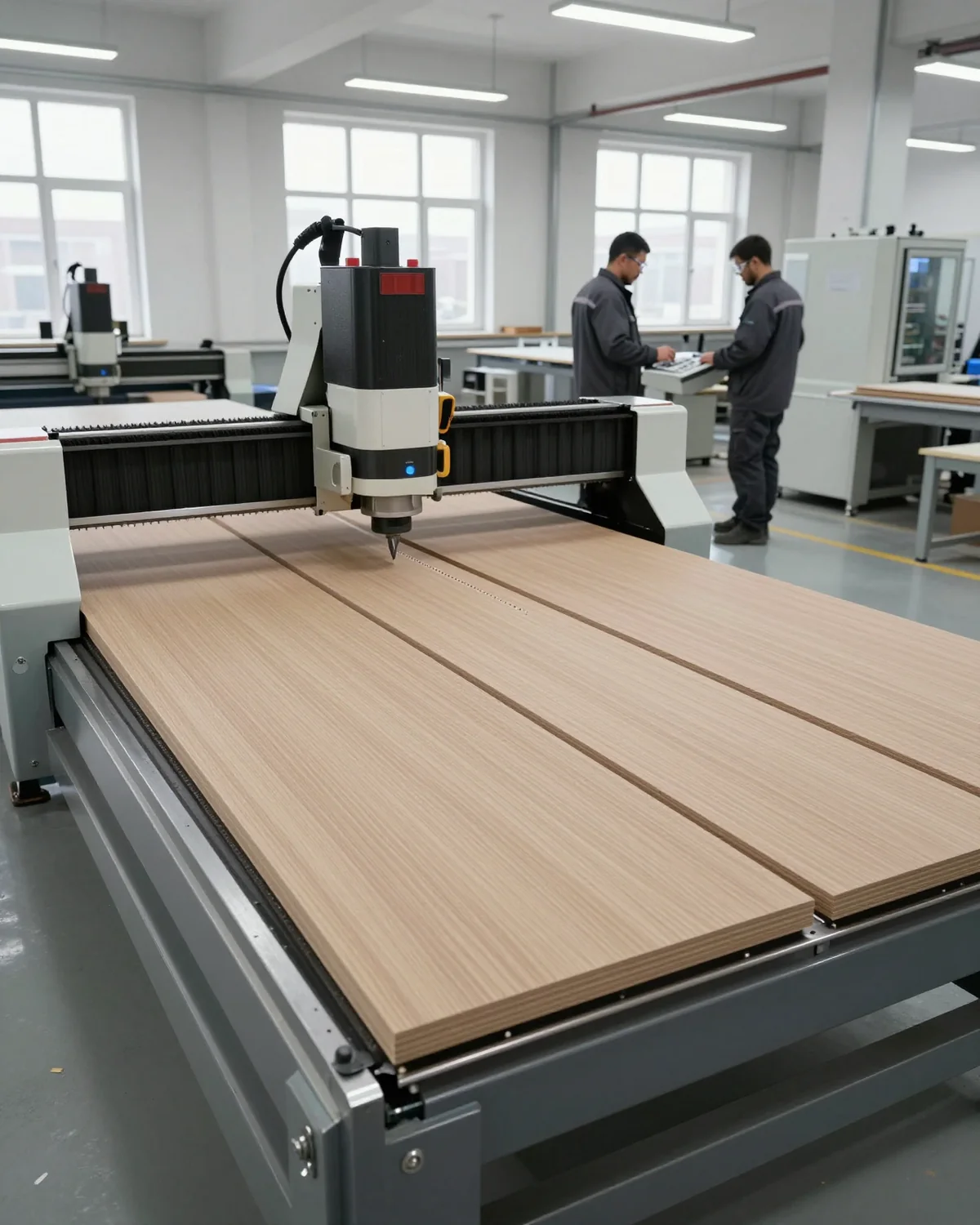
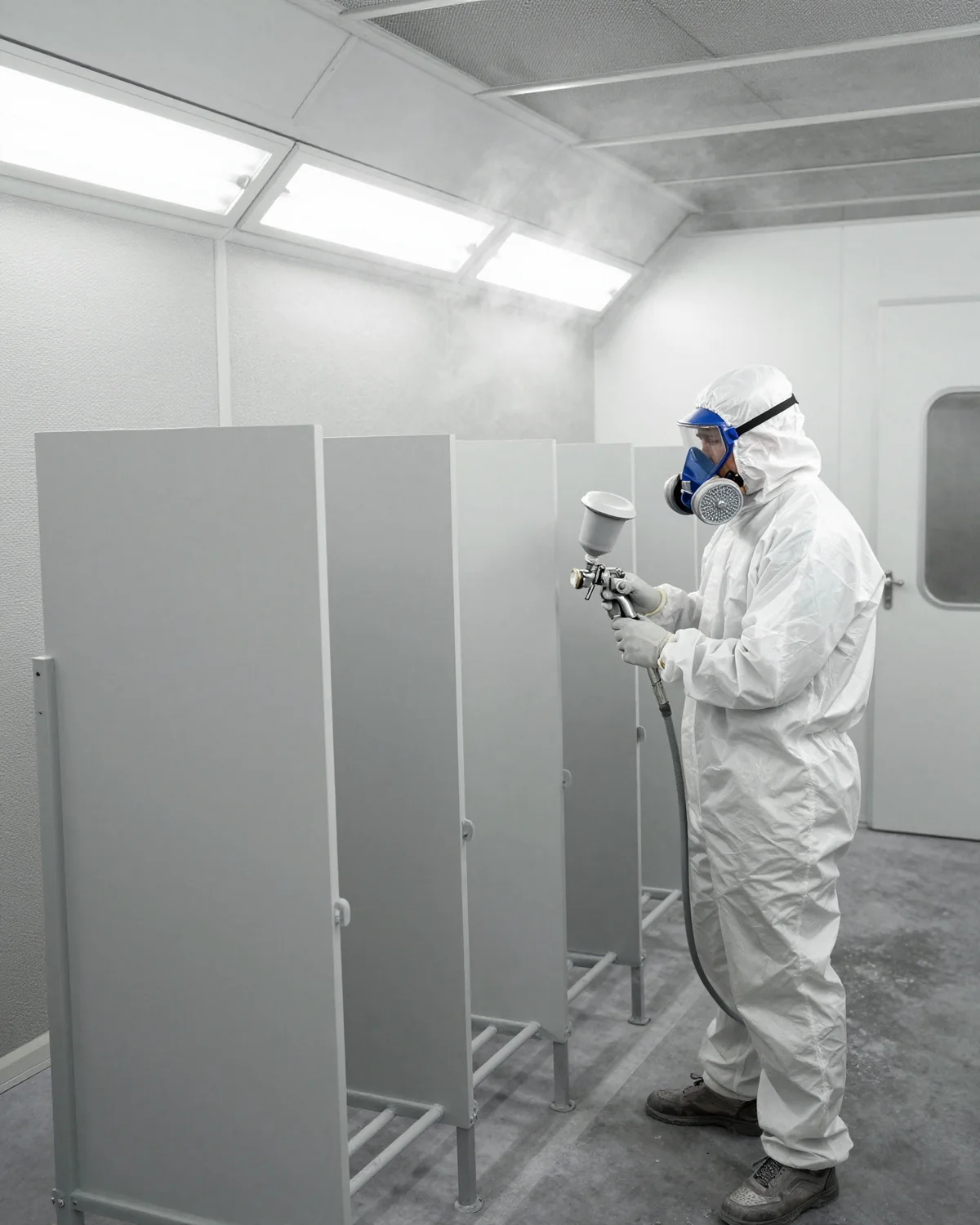
The item goes through cutting, edge banding, painting and trial assembly in our 600 m² workshop in Almaty, so quality is checked before shipping, not on site. Solid oak is cut according to the project maps, chamfered and sanded in several passes, then the finish is applied in the spray booth — so the layer lies more evenly than when working on site. Trial assembly is done on trestles according to the drawing: craftsmen join the panel to the supports and check how the components fit and whether the edge lines up. Trial assembly in the workshop catches what isn't visible on the drawing — edge misalignment, fasteners, how the components fit; a checked item arrives on site. Rush orders are possible; lead times for each option are in the price list on this page.
Installation, sign-off and warranty
Installation is carried out by our crews, we sign the sign-off report after installation, and the item is covered by a 24-month warranty under the contract. The crew levels the panel, fastens it to the supports allowing for the movement of solid wood and adjusts the junction to the wall on site — on site there are no longer drawing tolerances, only the real geometry of the room. Delivery within the city and up to 30 km is free for a large order; the threshold is stated on the delivery page. At sign-off, check the joints, the edge, the fasteners and the evenness of the finish — these are the details where a mistake shows up last and costs the most to fix. Payment: 50 % deposit, the remaining 50 % after signing the report; we work by bank transfer. We sign the report only after you have made sure of how the components fit and the quality of the finish.
The bottom line on oak countertops
We have gathered the essentials that determine the result: construction, how the material behaves in the local climate, precise size, the protective layer, and checking the finished item on acceptance.
- Rigidity: the type of board, its thickness, the spacing of supports and reinforcement all decide whether the worktop will sag under load and across the span.
- Climate: the dry season and the sink area are taken into account at the construction stage, not fixed after the first humidity swings.
- Size: making to the opening saves you from gaps at the wall and on-site fitting when a ready-made board does not match the niche.
- Protective layer: oil with hard wax resists drops and stains and is refreshed locally on a worn area without a full cycle.
- Acceptance: check the joints between the staves, the edge and the fastening to the supports right after installation, while the item is under warranty.