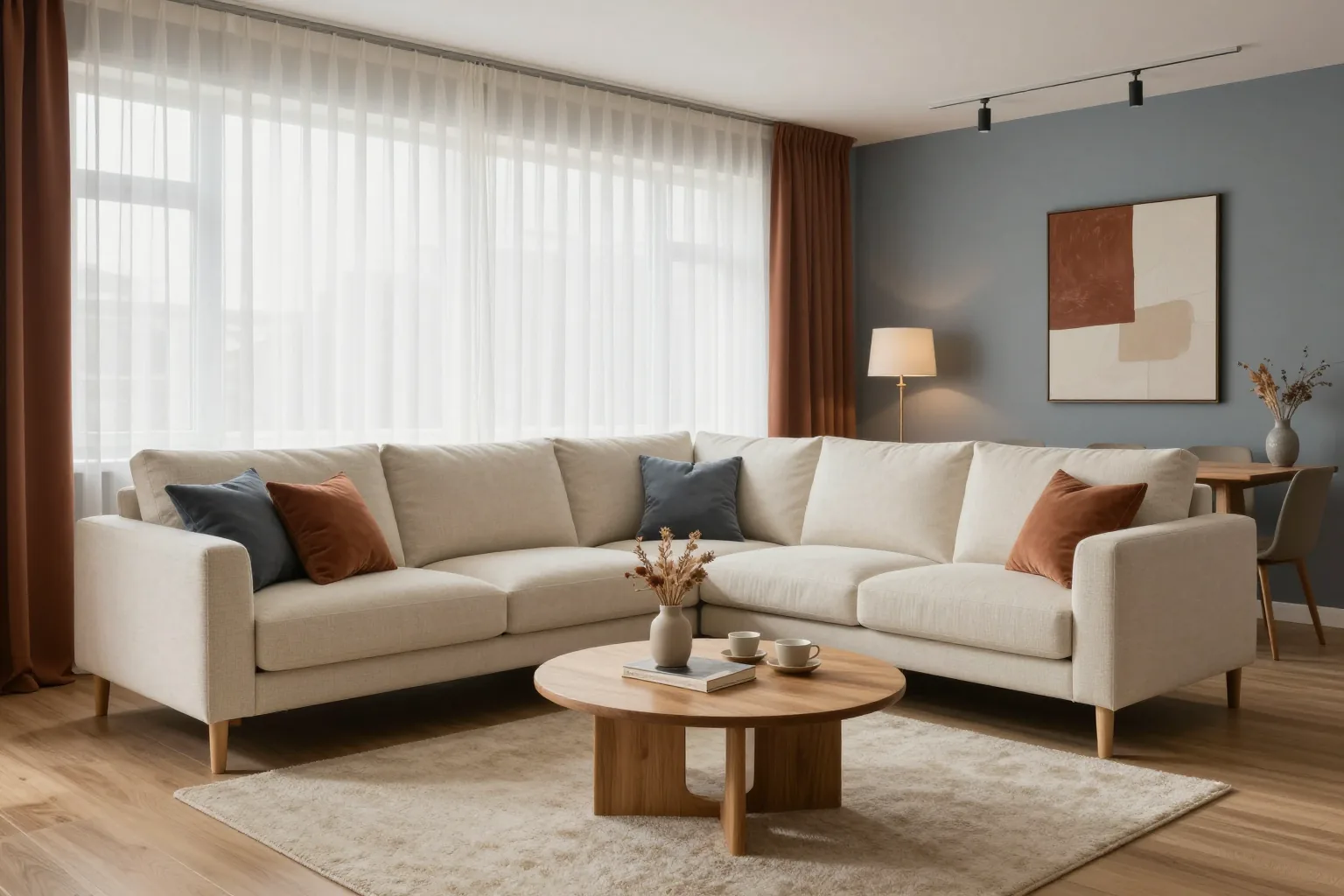
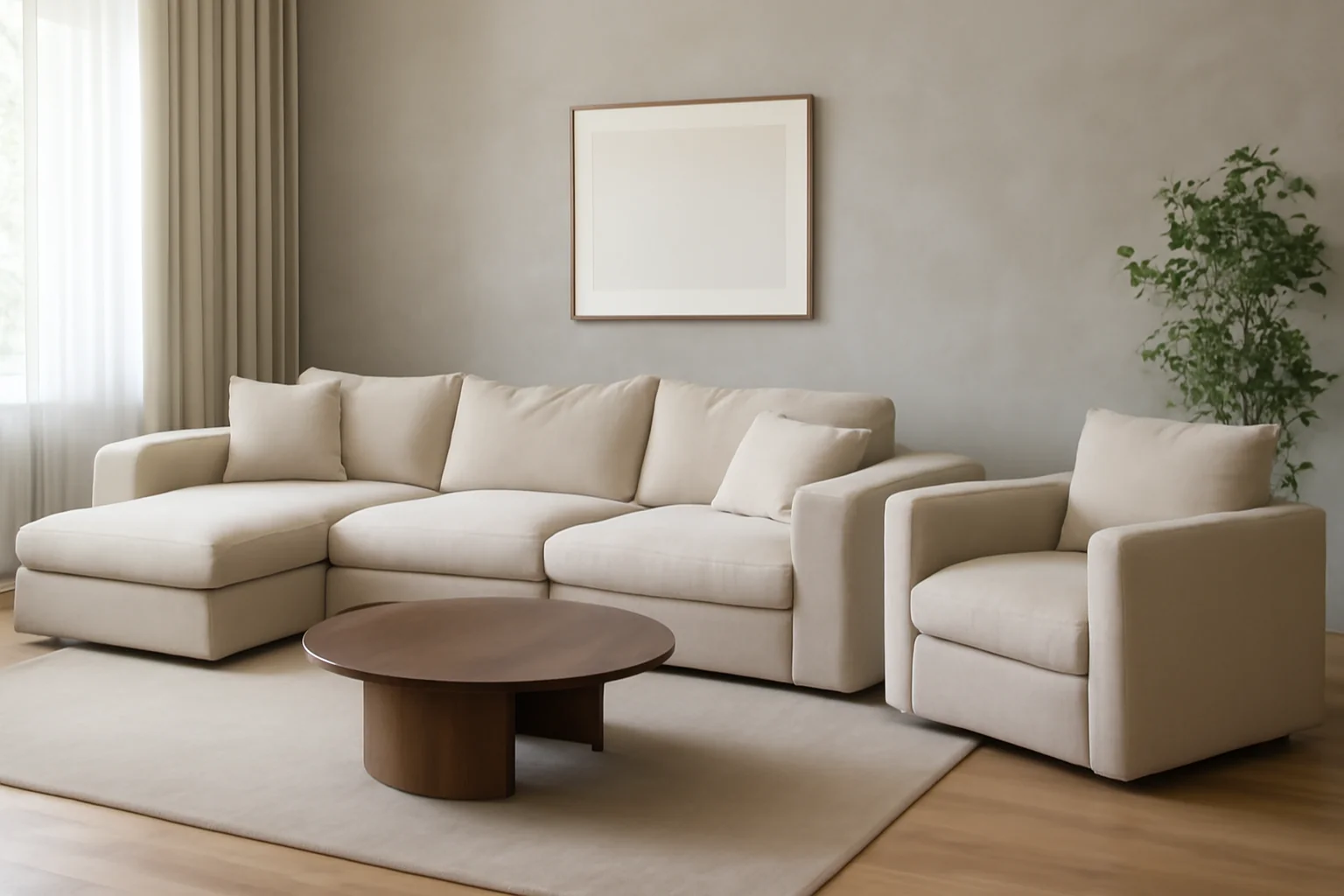
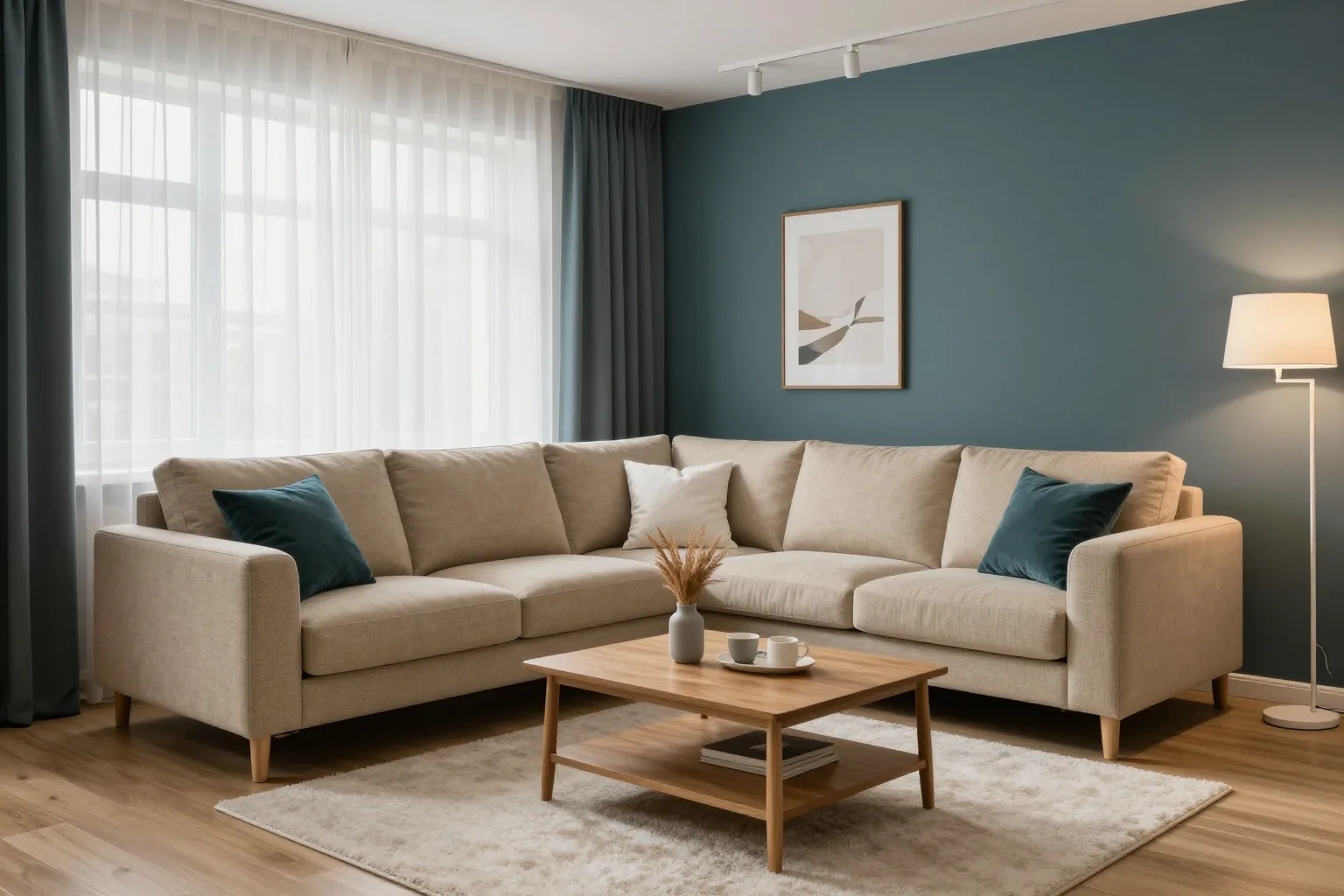
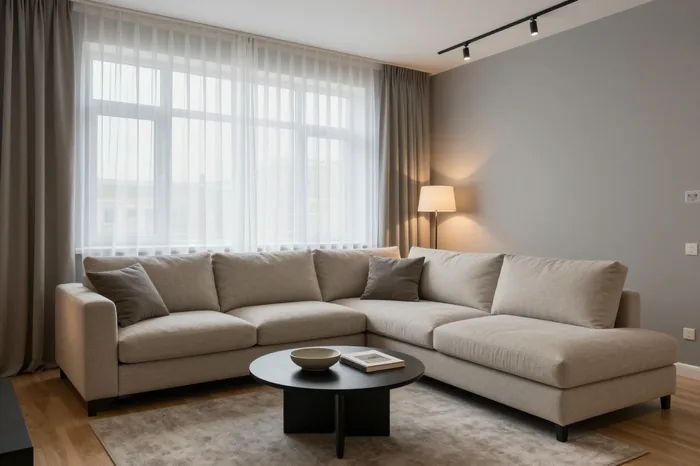
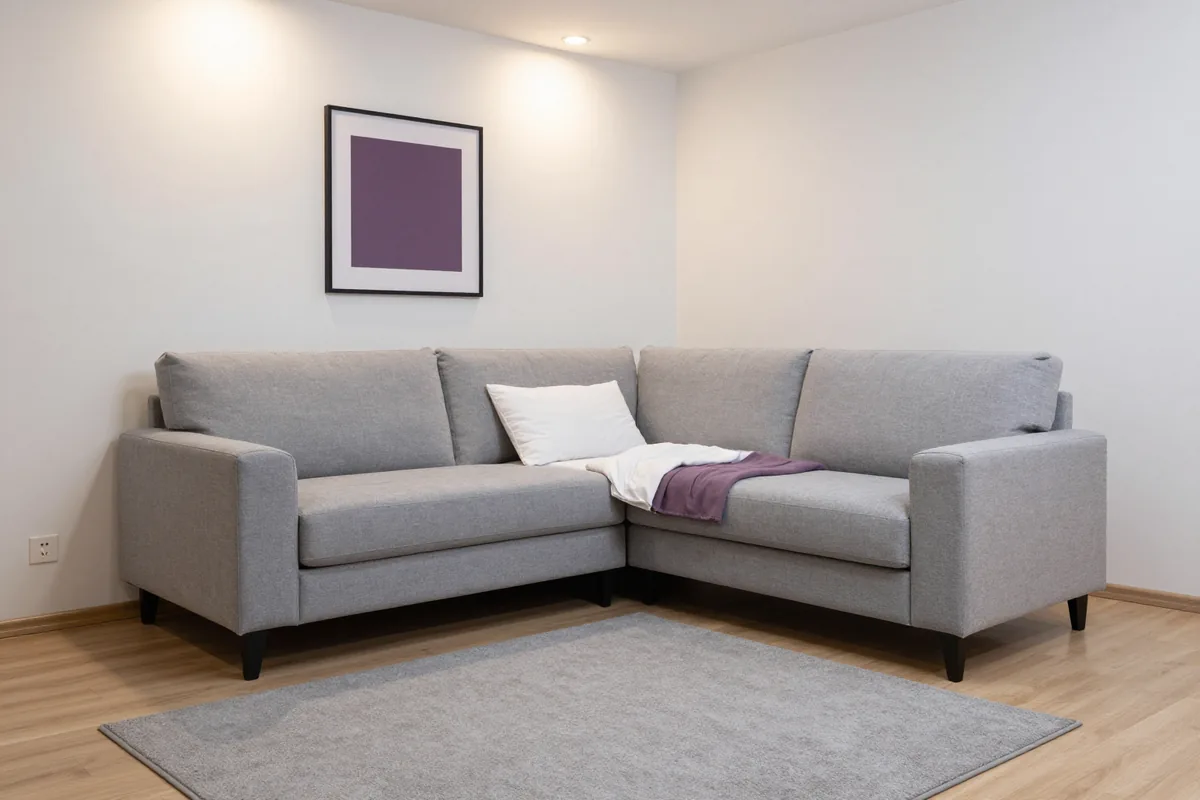
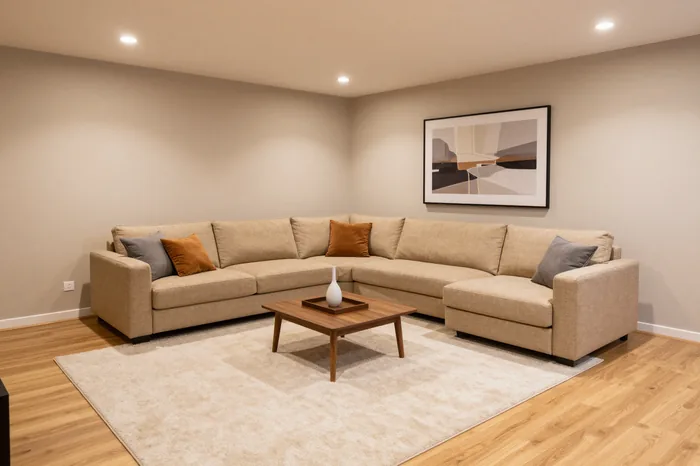
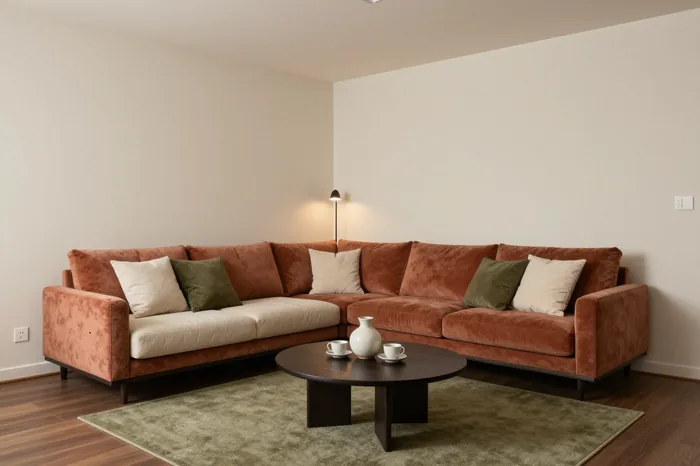
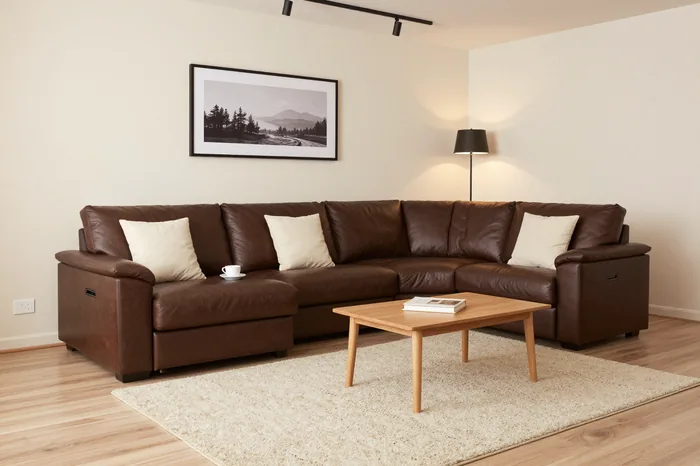
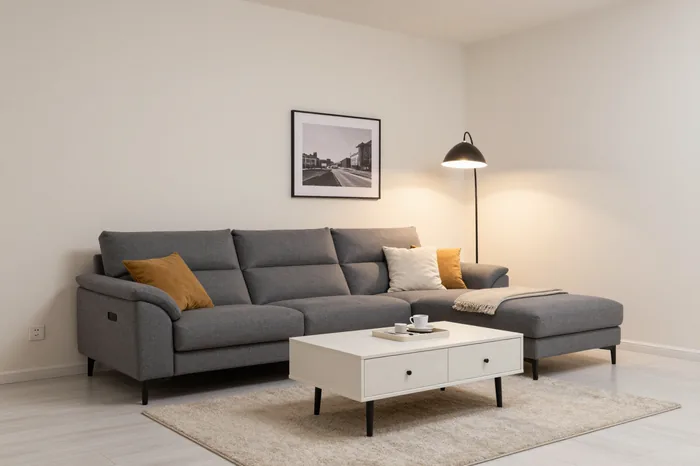
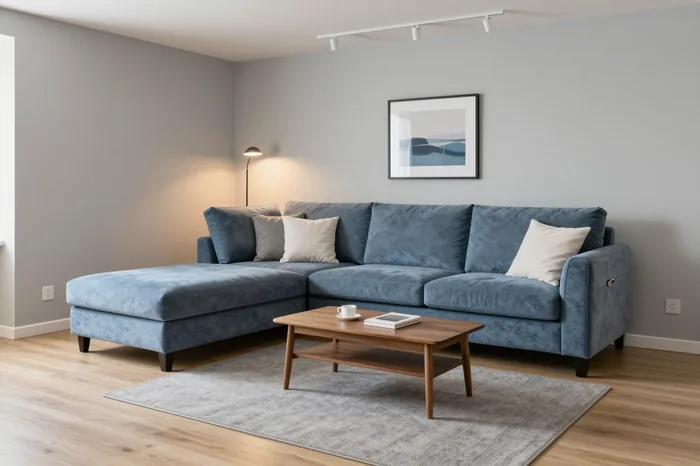
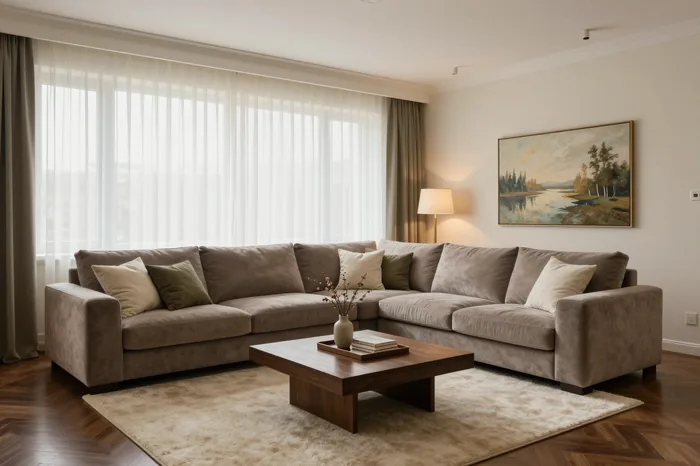
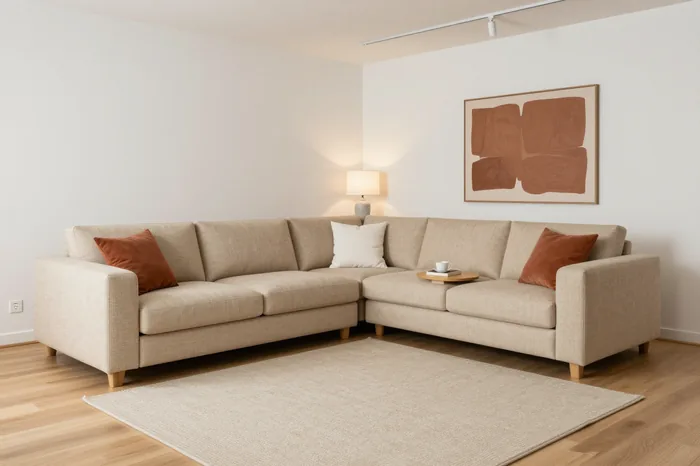
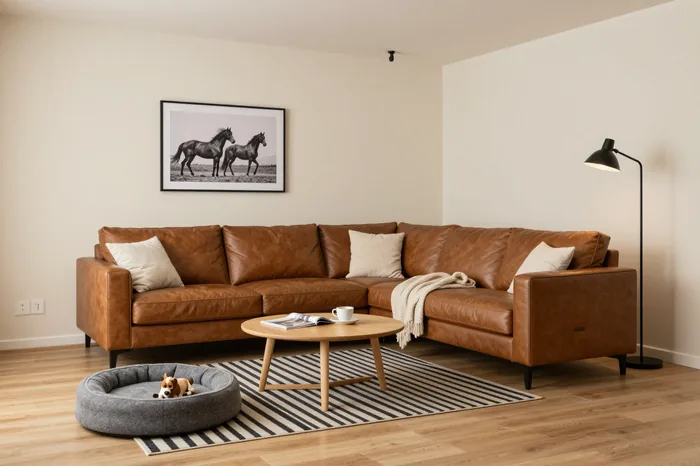
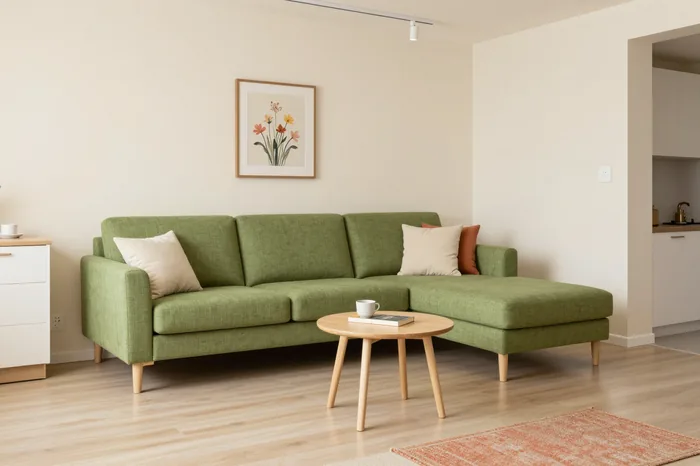
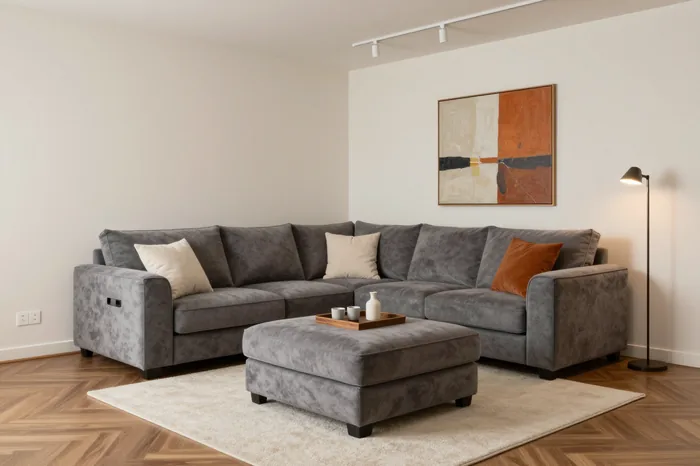
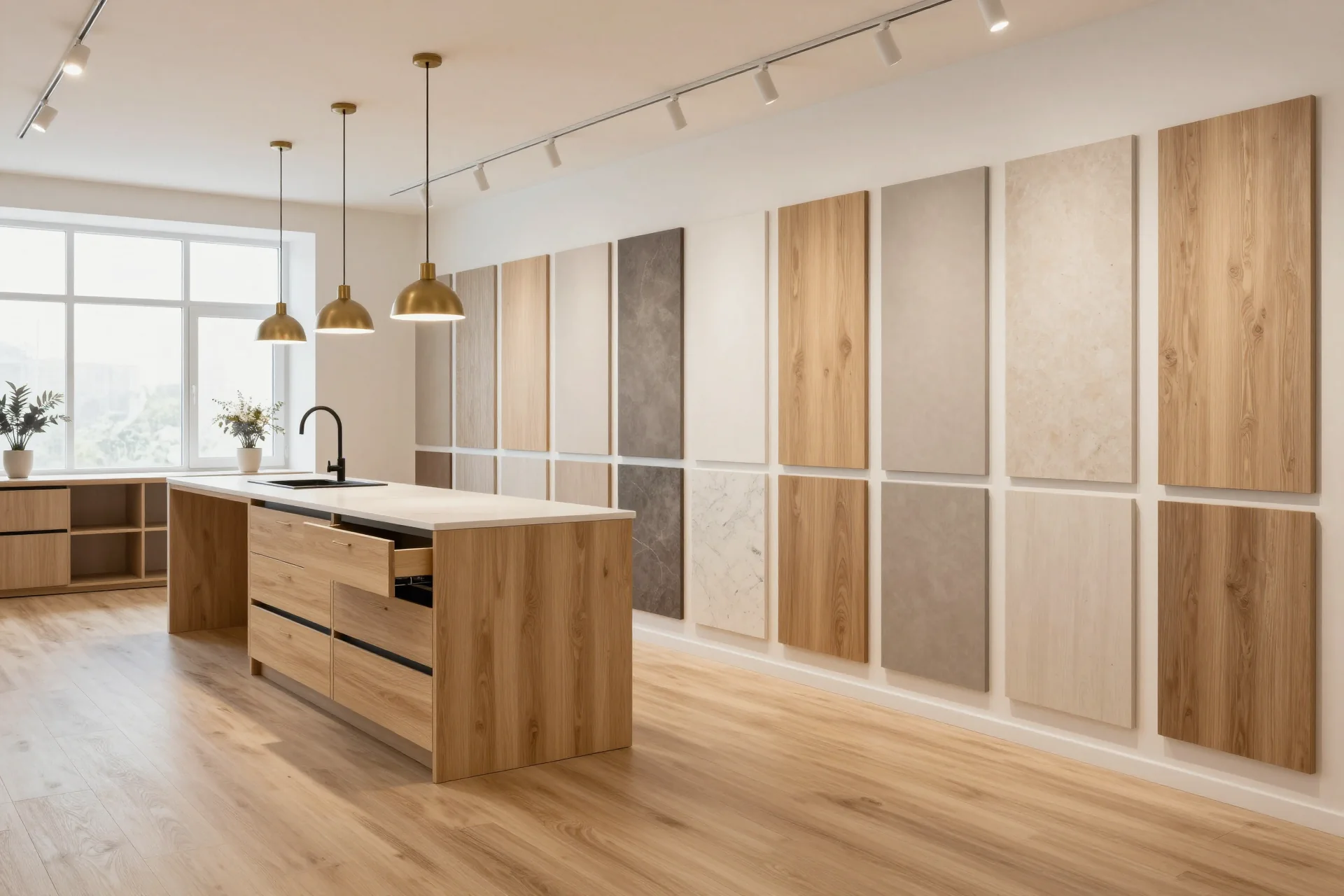
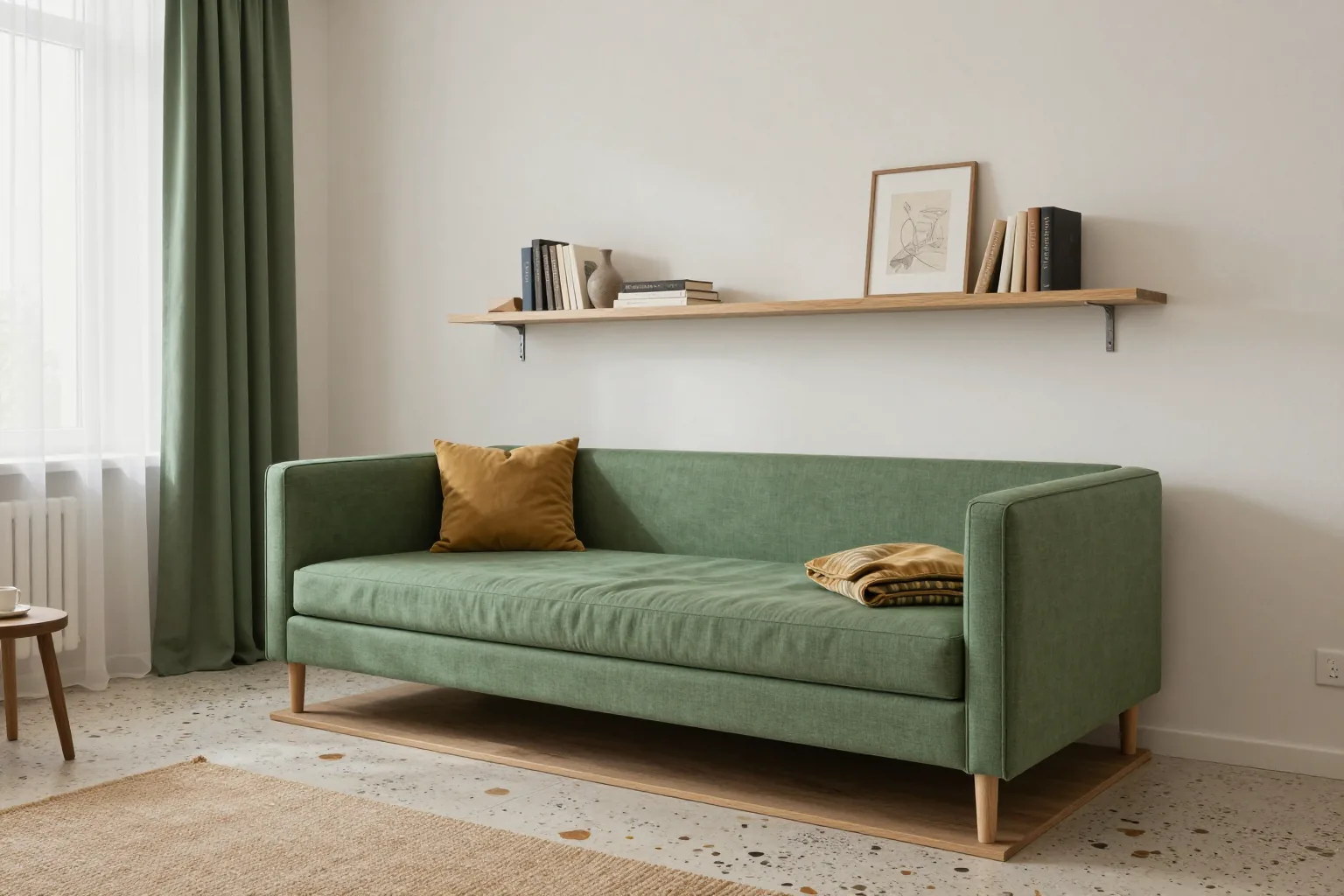
MEBLIX builds each custom corner sofa for a specific room: a free measuring visit, a 3D design in 1–2 days, production in our own 600 m² workshop and installation by our own teams. The frame is 18 mm birch plywood and kiln-dried timber, the PU foam is 25–40 kg/m³, and there are over 120 fabrics in the showroom. Every sofa comes with a 24-month warranty under the contract.
A ready-made sofa imposes its own dimensions on the room, while a made-to-measure one starts from your wall, your niche and the way you live. Here is what that difference looks like in practice.
What building to your room size gives you
- Designed around the room: we design the model to the actual dimensions of the space rather than adjusting a standard showroom piece.
- A precise fit: length and depth are calculated from the real walls after measuring, so the sofa sits against the skirting board without gaps.
- Non-standard depth: going 5–10 cm shallower than standard keeps the walkway clear in a small living room, where a typical model would eat into it.
- Our own workshop: frames, fabric cutting, cover sewing and upholstery are all done in sections of the 600 m² workshop and handed to installation with no middlemen.
- Meeting the wall: if the walls don't meet at 90°, the shape of the joint goes into the design instead of being hidden behind a cushion.
Which rooms these sofas suit
A corner layout pays off most in living rooms of 16–22 square metres and in studio flats, where the sofa also divides the space into zones. In a small room it runs along two walls and frees up the middle; in a studio it takes the place of a partition between the sleeping area and the kitchen. For a narrow living room we calculate the depth to leave a walkway of at least 60 cm, otherwise getting to the shelves becomes awkward.
Ready-made or custom: which suits you
- Ready-made: you take it home straight away and can try the seat in the showroom, but the sizes and upholstery are limited to what is in stock.
- Custom to your wall: wins when exact length, depth and the fit against a niche matter, because the sofa sits without gaps.
- Uneven walls: if the corner isn't 90° or there is a projection, a ready-made model almost always leaves a gap, and only a proper design solves that.
How measuring and 3D design deal with crooked walls and odd angles
The biggest worry for buyers is a gap between the sofa and the wall, or a crooked corner that makes the sofa sit unevenly. This is how the measuring visit and 3D design remove that risk before any work starts in the workshop.
What happens at the free measuring visit
We come to the free measuring visit with fabric samples and take measurements along the walls, not the floor, so the real geometry of the corner is visible. The specialist records how far each wall leans off vertical and the angle between the walls: even 2–3° turns into a gap along a long armrest.
What the 3D design includes and whether it can be changed
We prepare the 3D design in 1–2 days, and until production starts you can change the depth, module widths and how the sofa sits against the wall. The visualisation includes the real geometry of the corner, the seat height and depth, the position of the bed and access to the mechanism, so the sofa doesn't run into a radiator or window sill. Changes at the visualisation stage are easy, while reworking a frame that is already built costs more in both time and materials.
What if the corner isn't 90 degrees
- Measure the real angle: we measure the angle between the walls and carry it into the drawing instead of forcing the sofa into a standard 90°.
- Design to the facts: the model is built to the room's real dimensions, so it follows the geometry of the corner without gaps.
- Add a filler module: a bevelled or obtuse corner is handled with an insert, leaving no gap along either wall.
Construction and materials that stop a corner sofa from sagging
A sunken seat isn't upholstered furniture getting tired; it comes down to the frame and filling. Here is what keeps the shape for years and how we check it.
What the frame is made of and why it doesn't bend
We build the frame from 18 mm birch plywood and kiln-dried timber, a combination that holds its shape under daily loads without bending. The plywood takes the bending loads in the base and sides, while the timber makes the joints rigid and stops the modules from shifting where they meet. We check the moisture content of timber as it comes into the workshop: over-dried wood cracks during assembly, while wood that isn't dry enough shrinks once it is in your flat and pulls the fixings with it.
Seat filling that doesn't sag
- Density for the purpose: we choose PU foam at 25–40 kg/m³ for how the sofa will be used — closer to the top of the range for a bed, the lower end for a guest sofa.
- Independent spring unit: each spring works separately, so the seat doesn't dip under one person or pull the neighbouring areas down.
- Seat comfort: height and firmness are agreed at the measuring visit, based on your height and the way you like to sit.
What we check before upholstery and before packing
| Stage | What we check | When |
|---|
| Frame section | geometry, joints, timber dryness | before upholstery |
|---|
| Cover sewing | straight stitching, tension | before upholstery |
|---|
| Upholstery | cover fit, symmetry of modules | after upholstery |
|---|
| Before packing | seams, fit, mechanism travel | before dispatch |
|---|
The right mechanism and storage for sleeping and guests
The mechanism decides how often the sofa will be slept on and how easily it unfolds. We compare the four options we fit in corner models and show how the type of mechanism affects the bedding compartment.
Eurobook, dolphin, accordion or book
| Mechanism | Use | In a corner model |
|---|
| Eurobook | sleeping every night | rolls forward, flat surface |
|---|
| Dolphin | sleeping every night | compact, needs space in front of the sofa |
|---|
| Accordion | frequent guests | unfolds forwards in folds |
|---|
| Book | occasional guests | simple, shorter sleeping area |
|---|
Which mechanism is most reliable for nightly sleeping
For sleeping every night, metal roll-out mechanisms are the most reliable — the Eurobook and the dolphin — because they put less strain on the hinges when unfolding. With a Eurobook the sleeping surface rolls forward and lies flat, with no step between sections, so it is comfortable every night. The dolphin works in a similar way but rolls out more compactly and needs 60–70 cm of free space in front of the sofa. We give a 24-month warranty under the contract on the frame, mechanism and seams, and fix any fault in the mechanism ourselves during that time.
How the mechanism affects storage
Eurobook and dolphin sofas keep a bedding compartment under the seat, while book and accordion models have a smaller recess or none at all. In corner models the compartment takes up almost the whole area under the seat without getting in the way of the mechanism, with room for bedding and seasonal things. If storage matters more than sleeping, go for a Eurobook: its drawer is the most spacious.
Fabric, payment and warranty in real life
Fabric should be chosen for real conditions — a cat, children, sleeping every night — rather than from a picture. Here is which upholstery takes the wear, how to compare samples, and how payment and handover work.
Which fabric stands up to cats and children
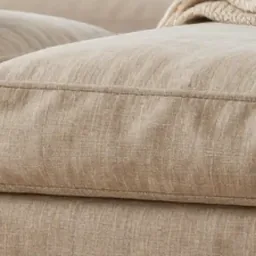
For homes with cats and children we most often recommend claw-resistant microfibre and dense matting fabric: they don't stretch and don't collect hair the way velour or bouclé do. Velour and bouclé feel softer, but the pile catches claws and holds hair, so in homes with pets we suggest them mainly for living-room sofas that aren't lounged on every day. The showroom has over 120 fabrics — matting fabric, velour, chenille, bouclé, claw-resistant microfibre, faux leather and genuine leather — and you can pull each one by hand to feel how dense it is. We bring samples to the measuring visit as well: the same chenille looks different in daylight and under an evening lamp, so choose the shade by the window where the sofa will stand.
How payment works
- Lead times: depend on the model and material; the exact figure for each option is in the price list on this page.
- Prepayment: 50 % of the order total, after which the workshop starts cutting and sewing the covers.
- Balance: the second 50 % is paid only when you sign the acceptance certificate, not before installation.
What the warranty covers and how handover works
- Warranty: 24 months under the contract, covering the frame, the fold-out mechanism and the cover seams.
- Handover: the certificate is signed during installation, once the sofa is assembled and in place.
- Check it with the installer: run the mechanism and inspect the seams before signing, so any defect is recorded straight away.
- Getting it in: before ordering, check the sofa will pass through the doorway and the landing — the sizes in the 3D design match the finished sofa.
The bottom line on corner sofas
Here is what to keep in mind before ordering: what decides how well the sofa sits against the walls, how to avoid a sagging seat, and where not to cut corners on the mechanism.
- Built to the room: measuring along the walls and a 3D design remove the risk of gaps and a crooked corner, which a ready-made model can't offer.
- Frame and filling: 18 mm birch plywood, kiln-dried timber, PU foam at 25–40 kg/m³ and an independent spring unit hold their shape for years.
- A mechanism for the way you live: a Eurobook or dolphin for sleeping every night, a book for occasional guests.
- Fabric for the conditions: claw-resistant microfibre and matting fabric cope with cats and children, and samples are easiest to compare at the measuring visit.
- A transparent deal: lead times for each option are in the price list, 50 % prepayment, the acceptance certificate after installation and a 24-month warranty.