
Temirzhan Nurpeisov
Furniture assembly carpenter11 years
★ 4.81 · 47 ratings
For business · Kindergartens
We make rectangular, trapezoid, round and dining tables by GOST height groups from E1 laminated chipboard with rounded corners and a washable tabletop. Measurement and 3D layout are free, the price is in the contract, warranty 24 months.
Measurement and 3D design are free and carry no obligation · price fixed in the contract · Kaspi Instalments up to 24 months
01Types
 01
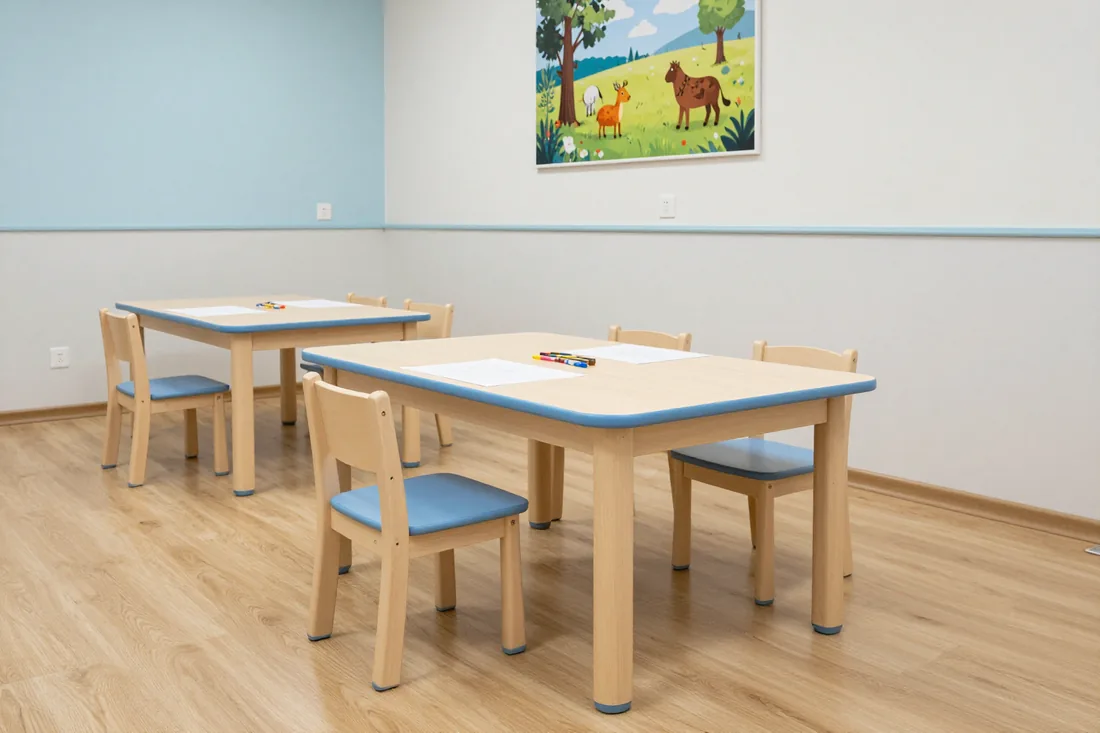
A light table for two for row activities in front of the teacher; one adult can quickly move it to a new layout.
from 15 900 ₸
 02
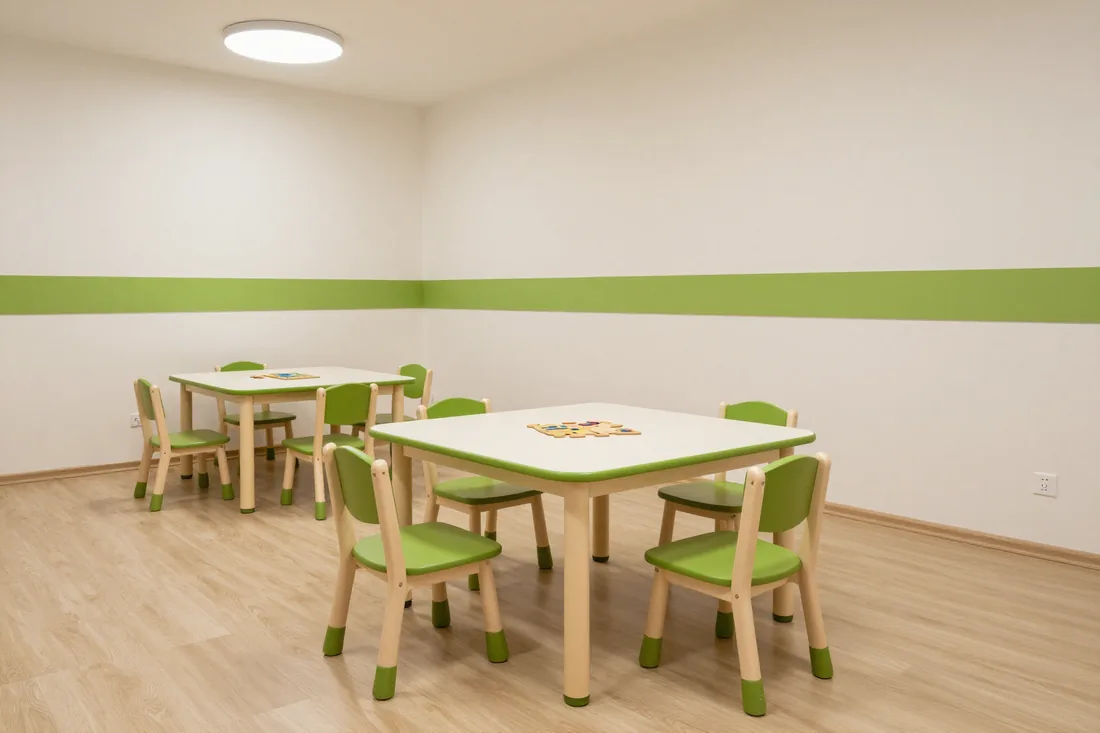
A sturdy island table for four children for lunch and board games, fewer joints and walkways in the group room.
from 22 900 ₸
 03
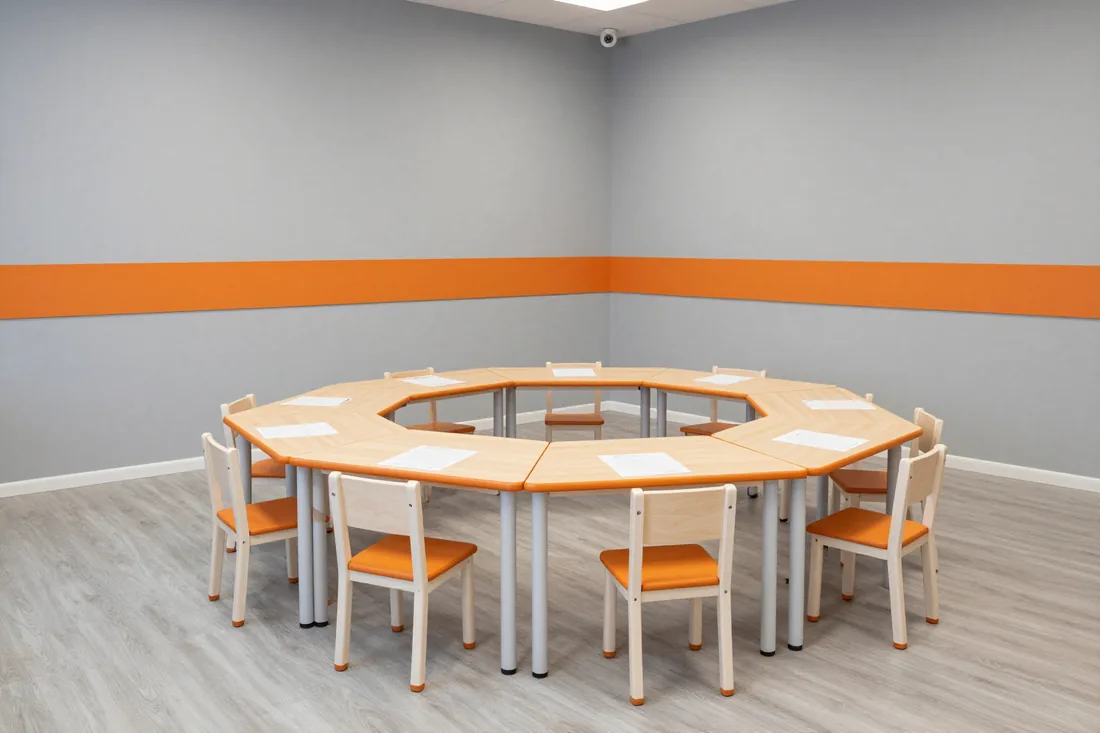
Trapezoids combine into a rectangle, semicircle or hexagon — the layout changes several times a day.
from 19 900 ₸
 04
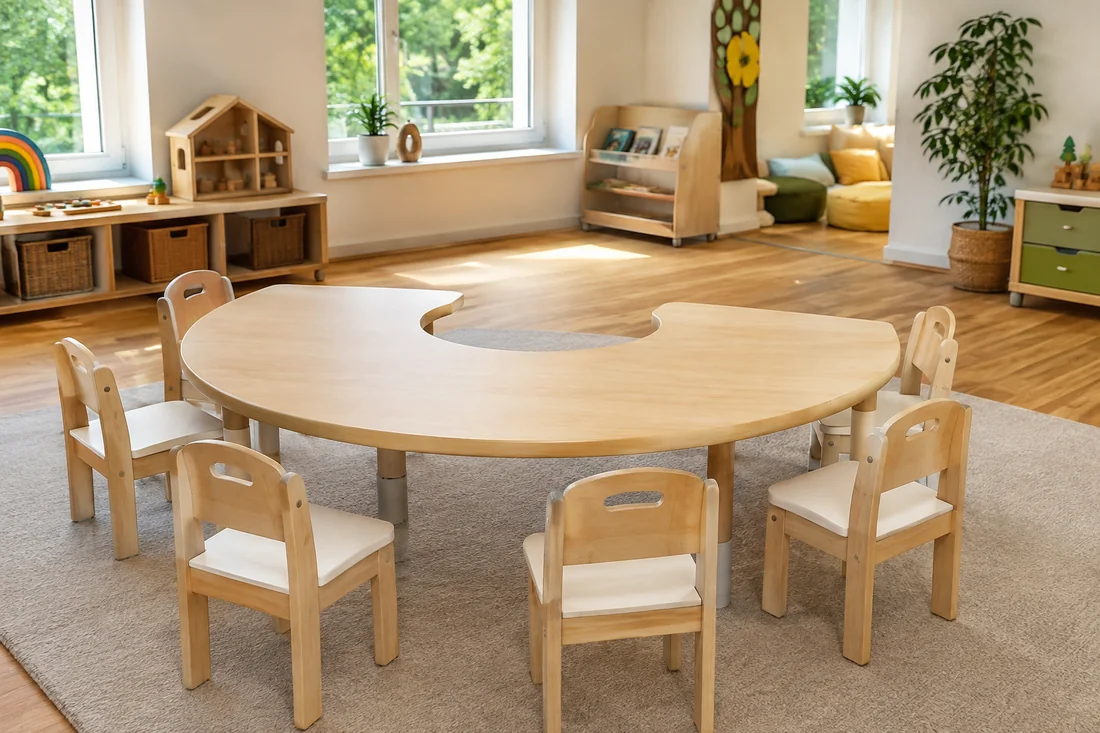
The teacher sits at the center of the arc and can reach every child in the subgroup — convenient for activities with five or six children.
from 20 900 ₸
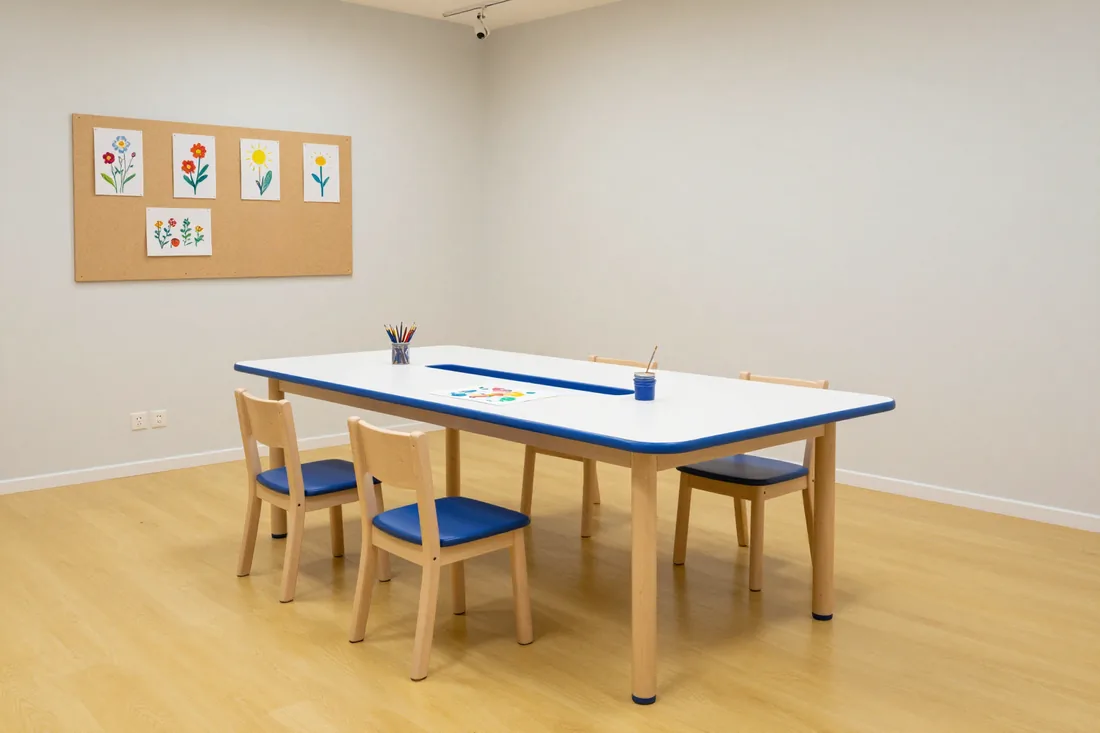 05
A washable countertop that stands up to gouache, glue and modelling clay, plus a spot for pencils — for the art room and group creative sessions.
from 23 900 ₸
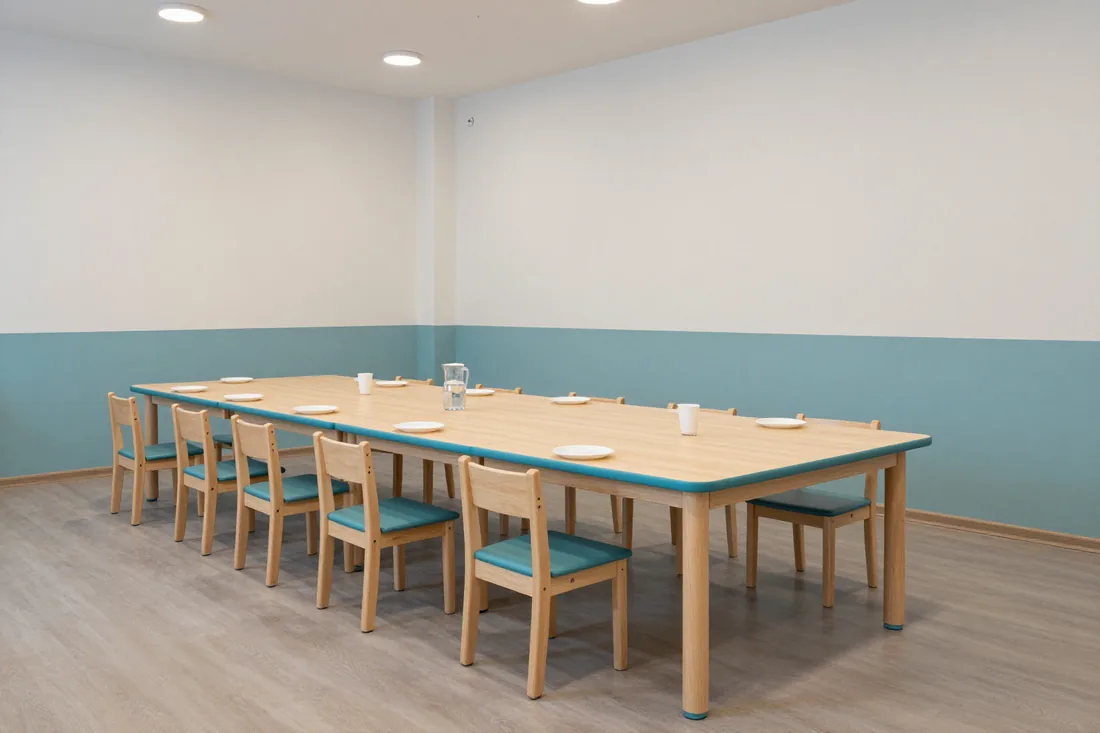 06
A smooth countertop with no grooves and a moisture-resistant edge withstand cleaning after every meal.
from 16 900 ₸
02Projects
Facility, quantity, materials and lead time — for each project.
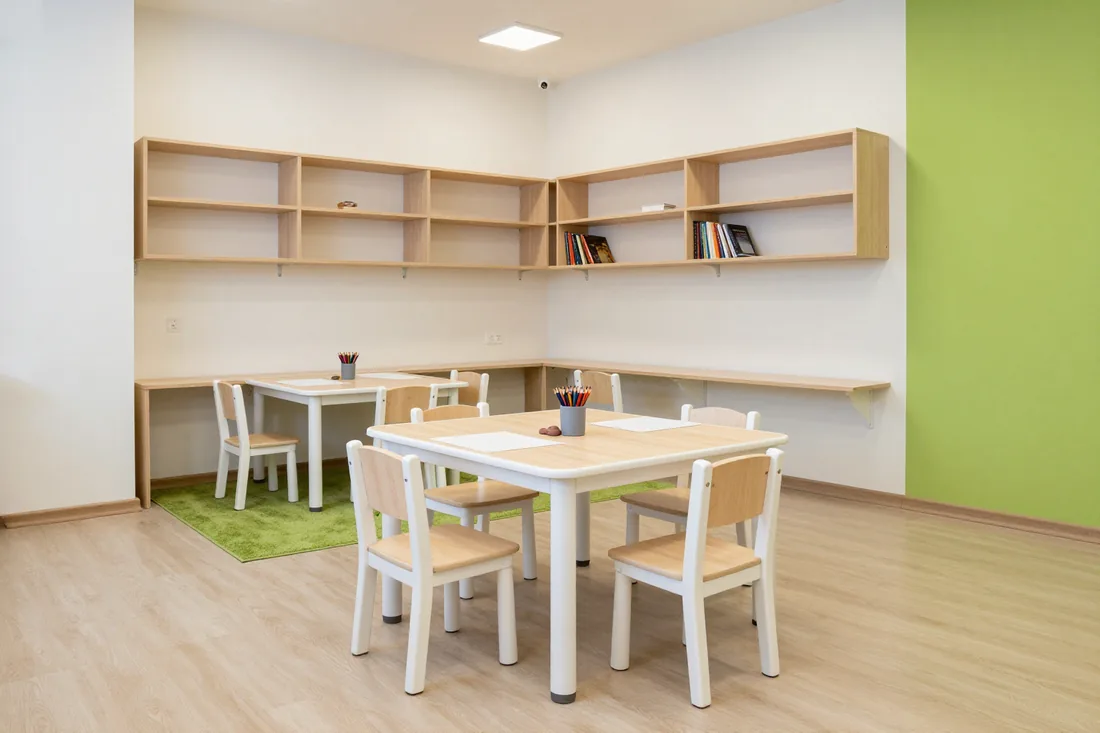 Kindergarten
Asyl Arman residential complex, Alatau district
Equipped a new kindergarten group with square four-seat tables for growth group 2. Uniform light decor, rounded corners, a full set of certificates for the preschool's acceptance.
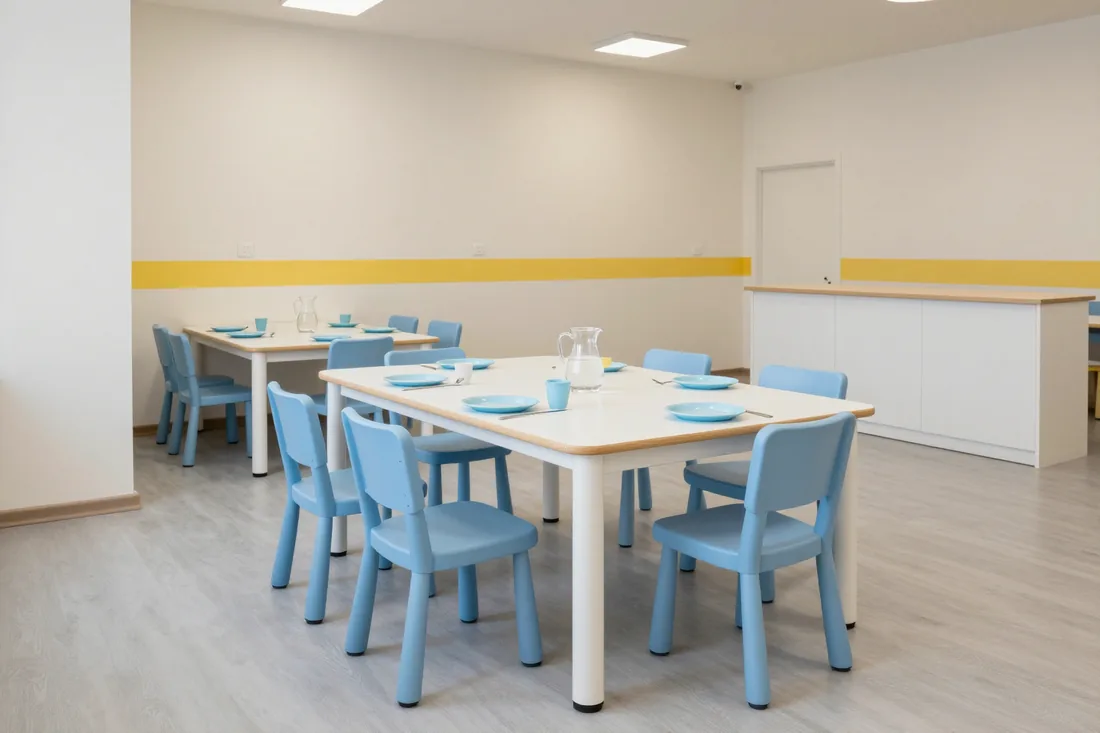 Kindergarten
Samal microdistrict, Medeu district
Dining tables for the kindergarten's dining area: smooth hygienic countertops are easy to clean after meals, and the moisture-resistant edge withstands daily cleaning and disinfection.
 Kindergarten
Nova City residential complex, Bostandyk district
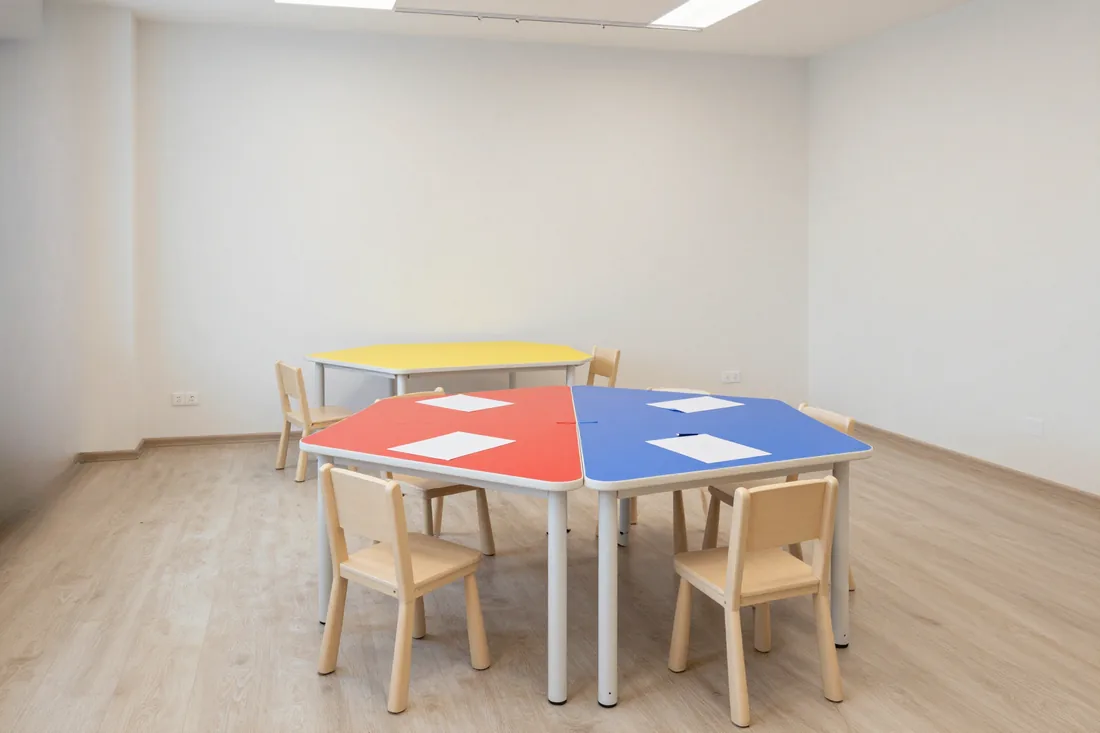
Trapezoid tables for a group: the teacher combines them into hexagons, semicircles and long islands for any activity. Bright countertops divide the children into teams.
 Kindergarten
private kindergarten, Koktem microdistrict, Bostandyk district
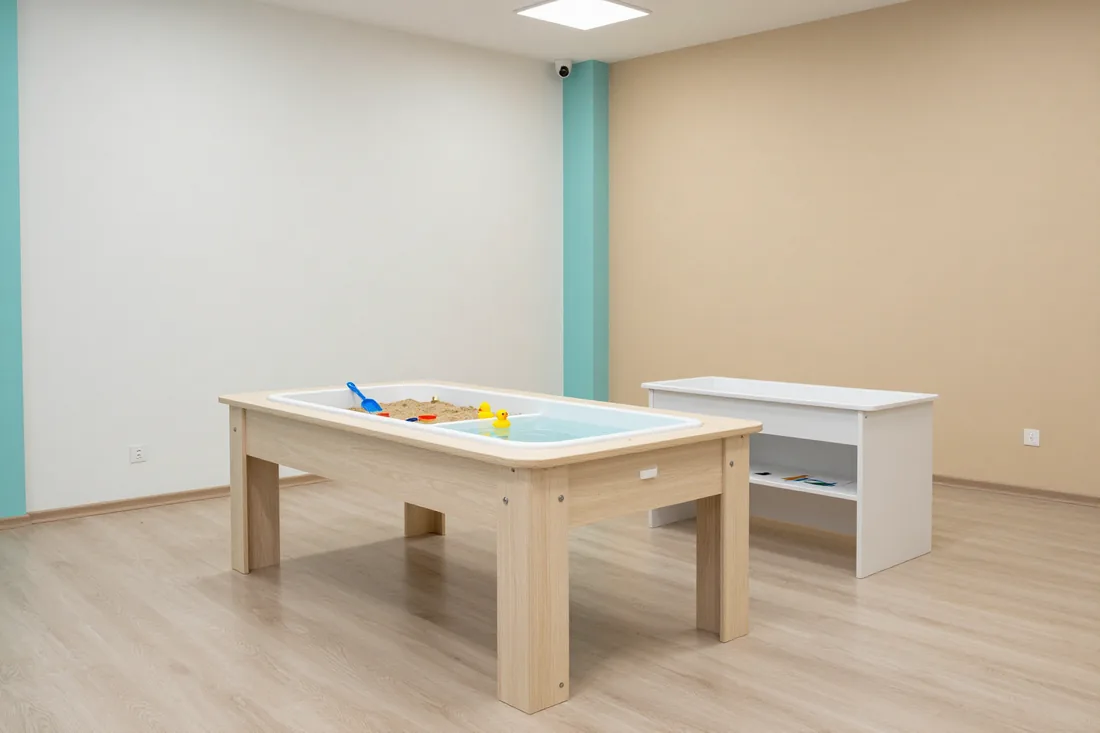
Play and creative area: sand-and-water tables with two basins and a drain, plus drawing tables with a raised edge and niches for materials. Develops sensory skills and motor skills.
 Kindergarten
Esentai City residential complex, Medeu district
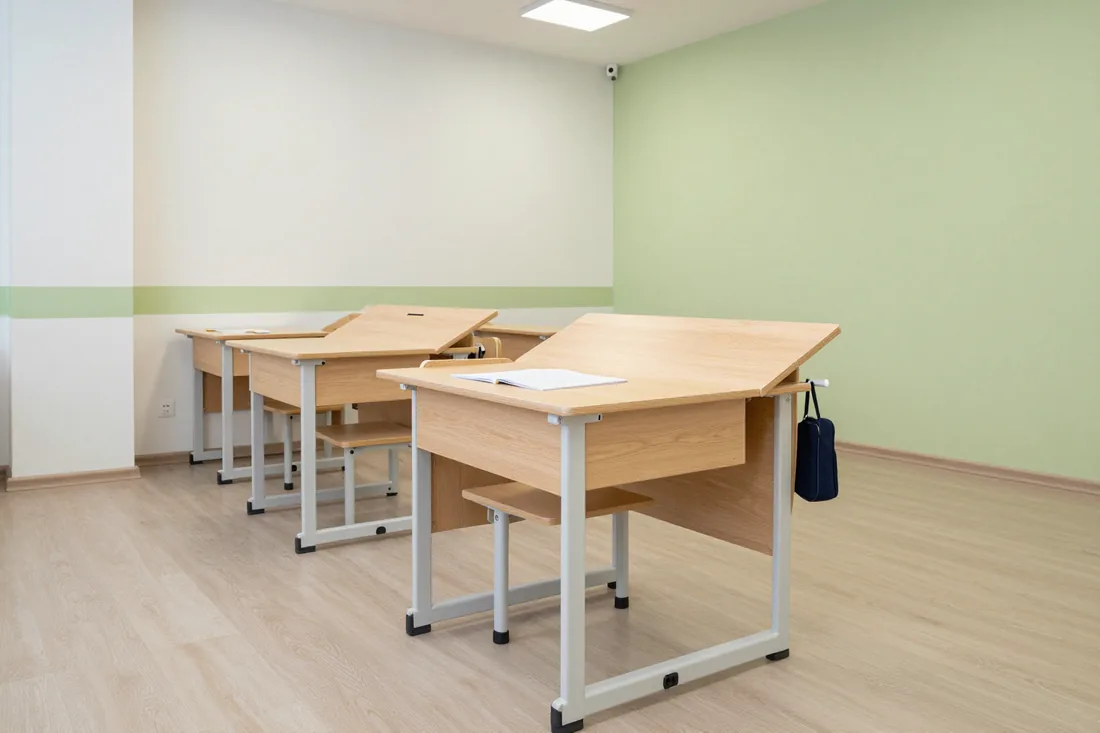
Desk tables for the preparatory group: the tilting countertop and height adjustment encourage correct posture before school. A hook on the side for a bag with indoor shoes.
 Kindergarten
children's centre, Mega Tower residential complex, Bostandyk district
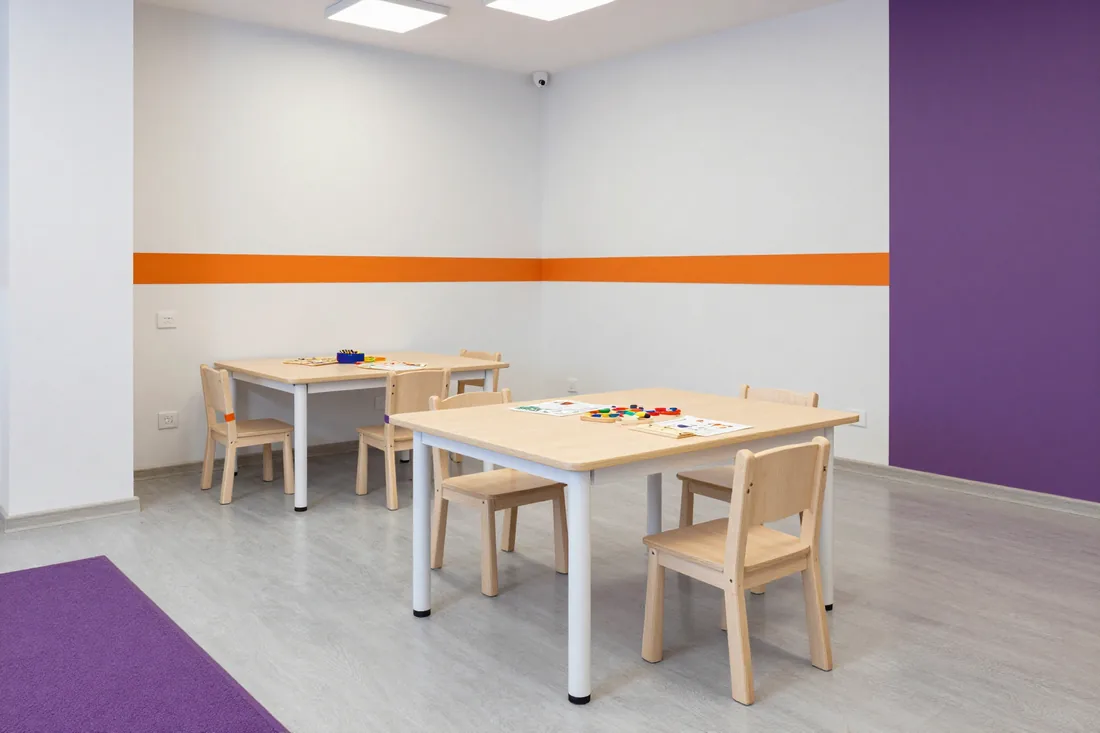
Equipped the children's centre with adjustable tables for growth groups 0–3: one model adapts to the children's height and lasts several years. Group marking in colour on the leg.
03How we work with kindergartens
04Prices
The "from" price is per table in the basic configuration made of E1 laminated chipboard with rounded corners and PVC edge banding. The final price for a set of tables for a group is fixed in the contract after a free measurement.
05For companies and public-sector clients
We work with private and public kindergartens under a contract and by bank transfer. Items, growth groups, decor and the installation date are set out in the contract before production begins.
Request a contract and invoice06Principles
01 / 06
07Production
Six steps in our 600 m² workshop. You can see each of them with your own eyes: the showroom and production are under one roof.
Egger · Kronospan · E1
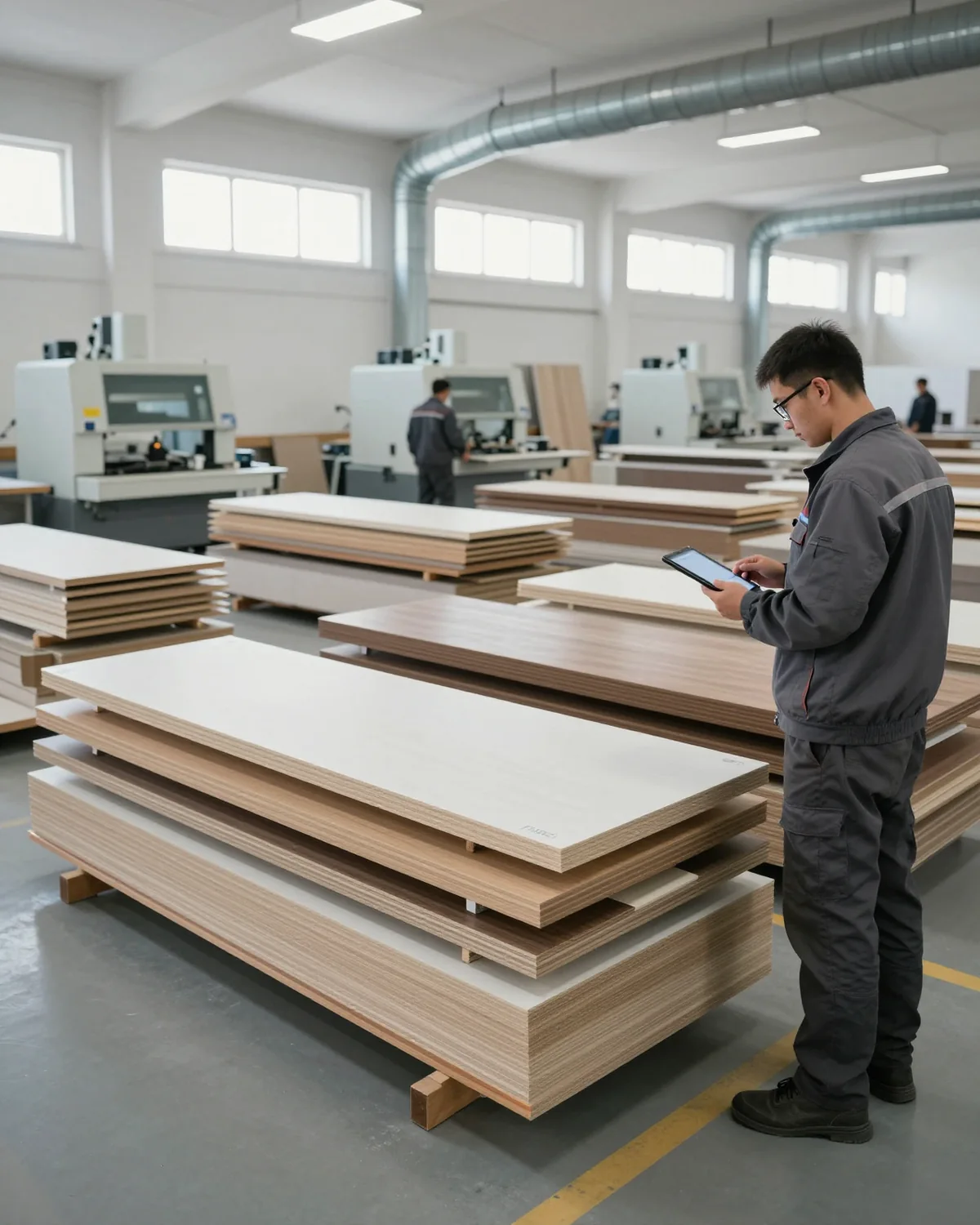
Egger and Kronospan boards of emission class E1 arrive at the workshop warehouse. There are 40+ laminated chipboard decors, 16–18 mm thick. Class E1 — for kindergarten group rooms and bedrooms.
Laser measuring to 1 mm
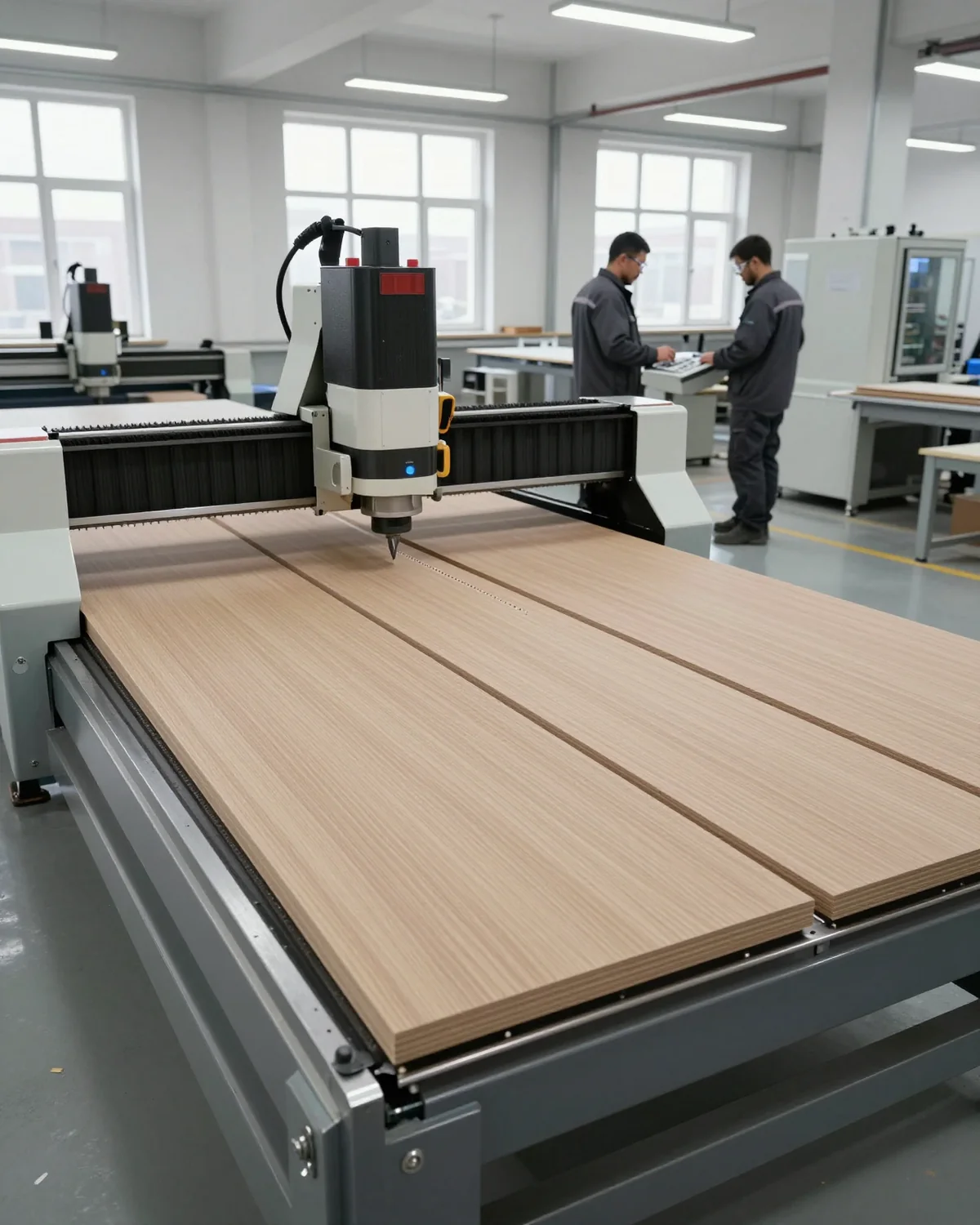
A design engineer prepares the drawings, and the machine cuts the board to them. Dimensions come from a laser measurement accurate to 1 mm.
Blum · Hettich · Boyard
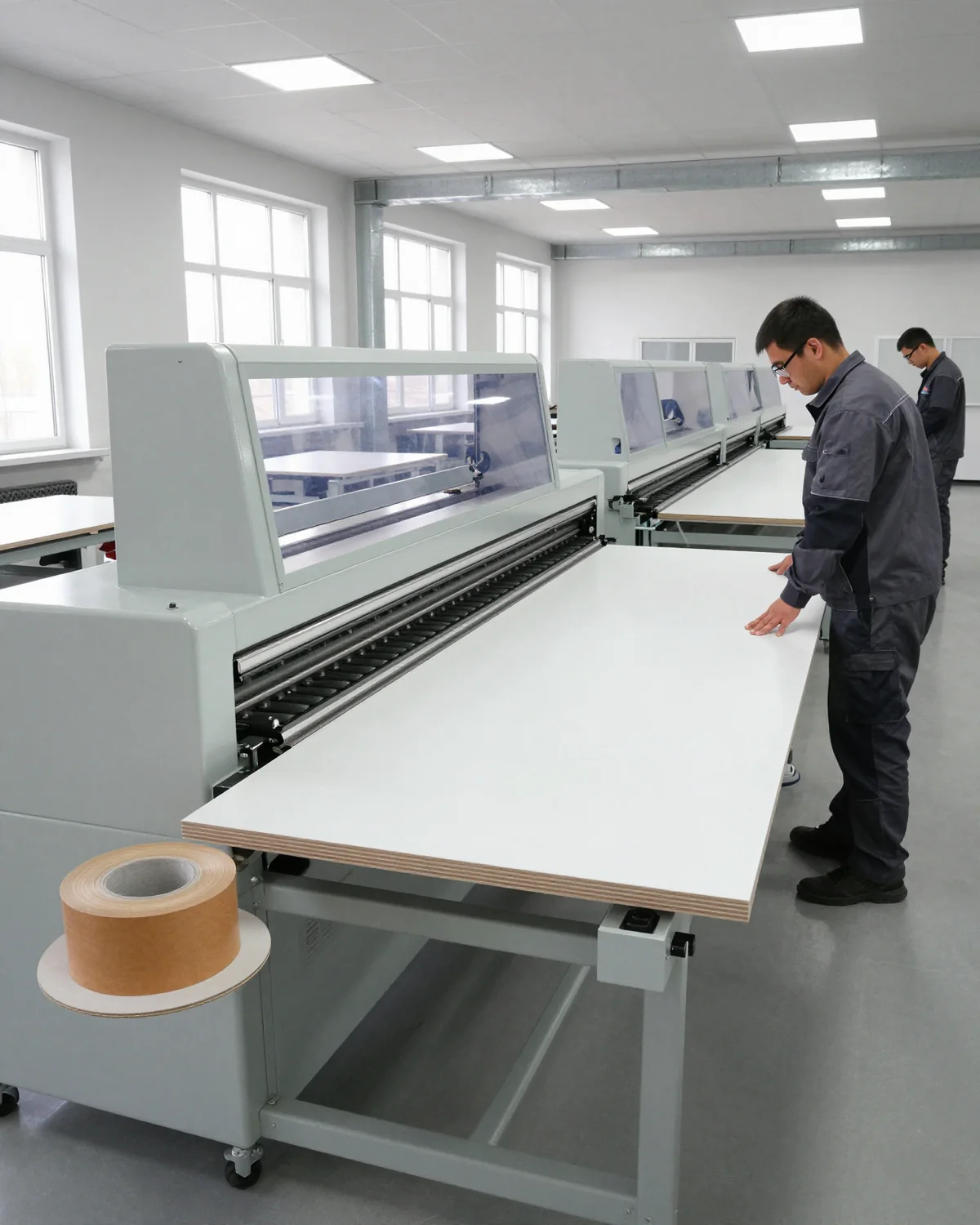
The edge-banding machine seals the edges, then we drill holes for Blum hinges and Hettich runners.
Any RAL colour
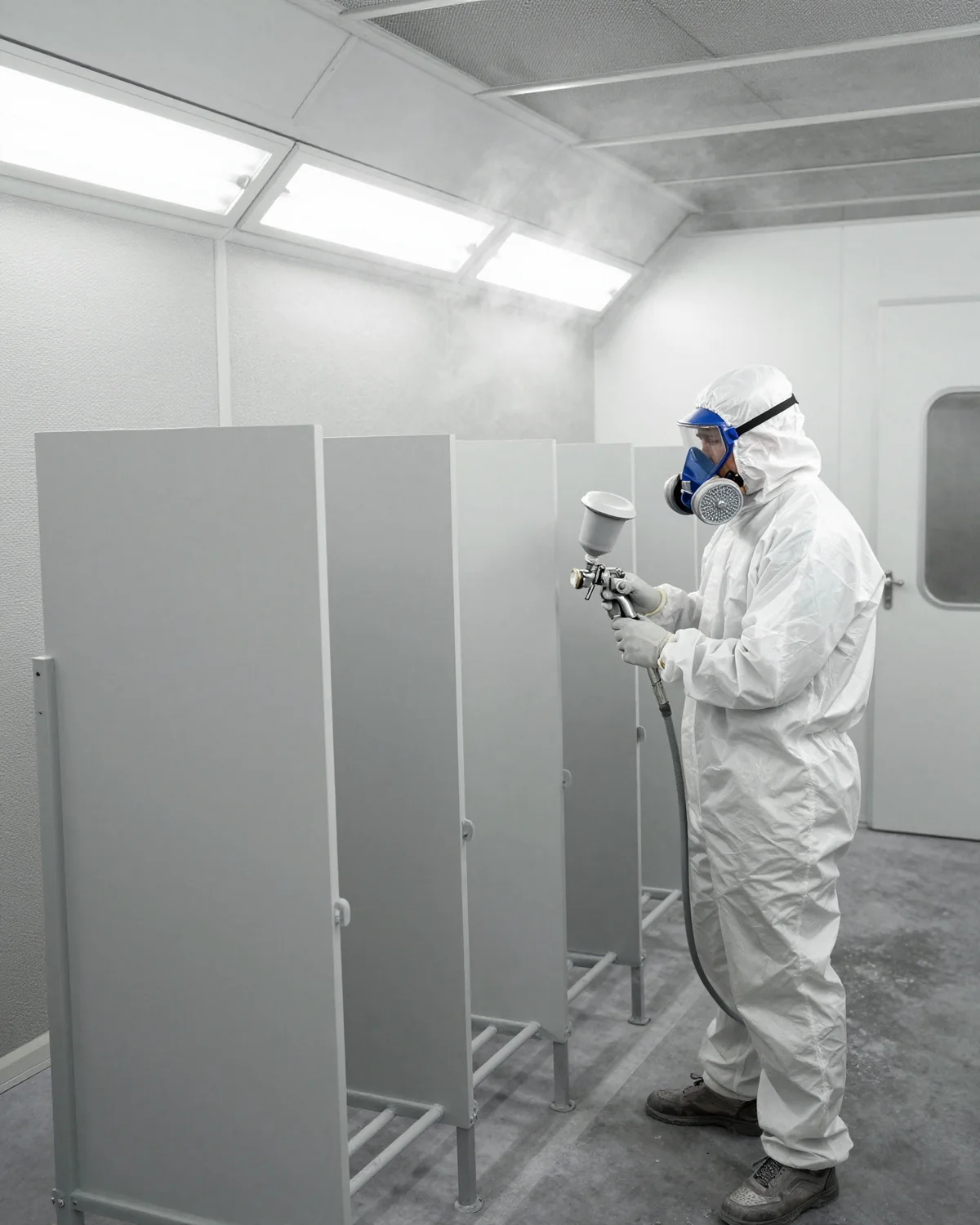
A finishing specialist paints fronts to RAL — matte and gloss. After edging we round the countertop corners and at the control assembly check that the table stands level and doesn't wobble.
Pre-assembly in the workshop
We assemble the modules in the workshop before dispatch, checking front gaps and drawer travel. The quality control department signs the item off for shipping.
Installation around the kindergarten schedule
We deliver, bring in and assemble in 1 day, adjust the furniture and clean up after ourselves. Warranty of 24 months from signing the acceptance certificate.
08Team
MEBLIX workshop craftsmen who make and assemble furniture to order.
01 / 07Furniture assembly carpenter11 years
★ 4.81 · 47 ratings

Cabinet furniture repair craftsman20 years
★ 4.99 · 73 ratings
Furniture and kitchen unit assembler23 years
★ 4.97 · 300 ratings

Made-to-order furniture maker7 years
★ 4.26 · 32 ratings

Furniture maker5 years
★ 4.23 · 30 ratings

Joiner and carpenter20 years
★ 5.0 · 113 ratings

Furniture front and hardware fitter17 years
★ 4.61 · 92 ratings
09FAQ
Didn’t find the answer? Message us — a manager replies, not a bot.
Ask on WhatsAppFor younger children, four-seat and round tables are chosen more often: children sit together around a shared task. For row-based activities, two-seat models are added, and we finalize the shape based on the 3D layout.
Yes, all our models in the same height group are made to the same height range. Trapezoid, rectangular and semicircular tables stand side by side with no steps where the countertops meet.
For a group there is the simple rectangular "Classic" table and the four-seat "Quartet", and their prices are in the price list above on this page. We calculate the total for a group set in the estimate after measurement. It is then fixed in the contract.
Yes, the laminated chipboard surface doesn't absorb paint or glue: marks come off with a damp cloth. Plasticine is removed with a plastic scraper without scratching the countertop.
Yes, for example the Rostik model adjusts to the neighboring height group. More about adjustable tables — in a separate catalog section, along with metal-frame models.
For such activities there is the Aquapesok table with plastic tubs. The tubs are removable for washing, and the table itself is best placed closer to the washroom.
Yes, we make the teacher's workspace in the same decor, with drawers for supplies and a closed compartment for personal items. We include it in one estimate and one contract with the children's tables.
Most often yes: simple rectangular models and trapezoids are faster than complex tables with drawers or tubs. The exact lead time for each model is shown in the price list above, and for a tight schedule we take the order as urgent.
We deliver and assemble with our own team on site, then check every table for wobbling. We schedule installation around your operating hours — on weekends, in the evening or during summer renovations.
Press on the corner of each countertop — the table should not wobble, run your hand along the edges and check the color marking against the specification. We record any remarks in the acceptance report before signing.
10Reviews
4,9
average rating
on Google and Zoon
Everyone can see a review on the platform: this is how other people check whom to trust with an order. If something went wrong, write to us and we will reply within 1–2 business days.
Message us on WhatsApp11Article
We make kindergarten tables in our own workshop in Almaty: rectangular, trapezoid, semicircular, round and modular, with countertop height matched to the height groups of GOST 19301. Countertops are made of E1-class laminated chipboard with a washable coating, rounded corners and vandal-resistant edging, and we choose the shape to suit classes, meals and creativity.
The shape of the table determines how children sit and work together: in rows facing the teacher, in islands of four, or in a circle where everyone can see each other. That is why it is chosen for the activity, not from a catalog.
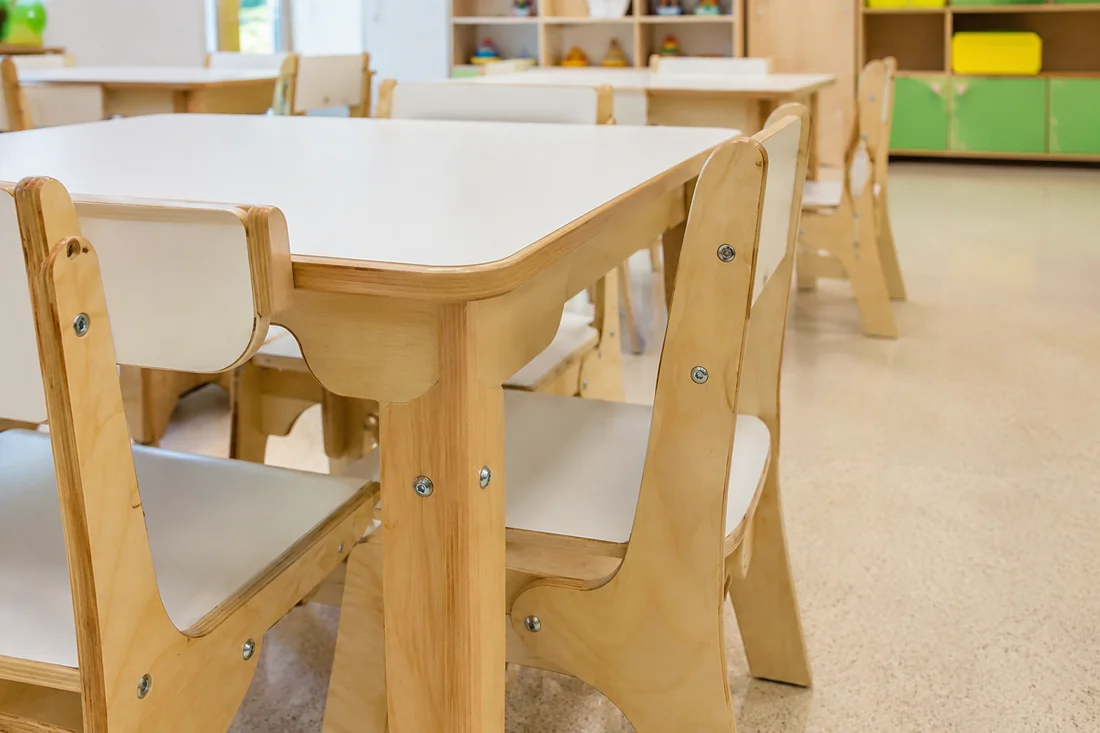
The rectangular table is the basic shape for a group room: the two-seat version is placed in rows, the four-seat version is grouped into islands. We make these kindergarten tables from E1-class laminated chipboard with rounded corners, and in one group room we usually combine both versions. The two-seat table is convenient for classes where the child looks at the teacher or the board: rows are easy to align, and there are only two neighbors at the table. The four-seat table saves on aisles and suits lunch and board games when children need a shared surface. Two-seat models are easier for one adult to move, so they are chosen for groups where the layout changes several times a day. Four-seat tables are heavier, but they stand steady and do not slide apart when children lean on the edge of the countertop. Another reason to choose four-seat tables is fewer joints where crumbs and damp collect after washing.
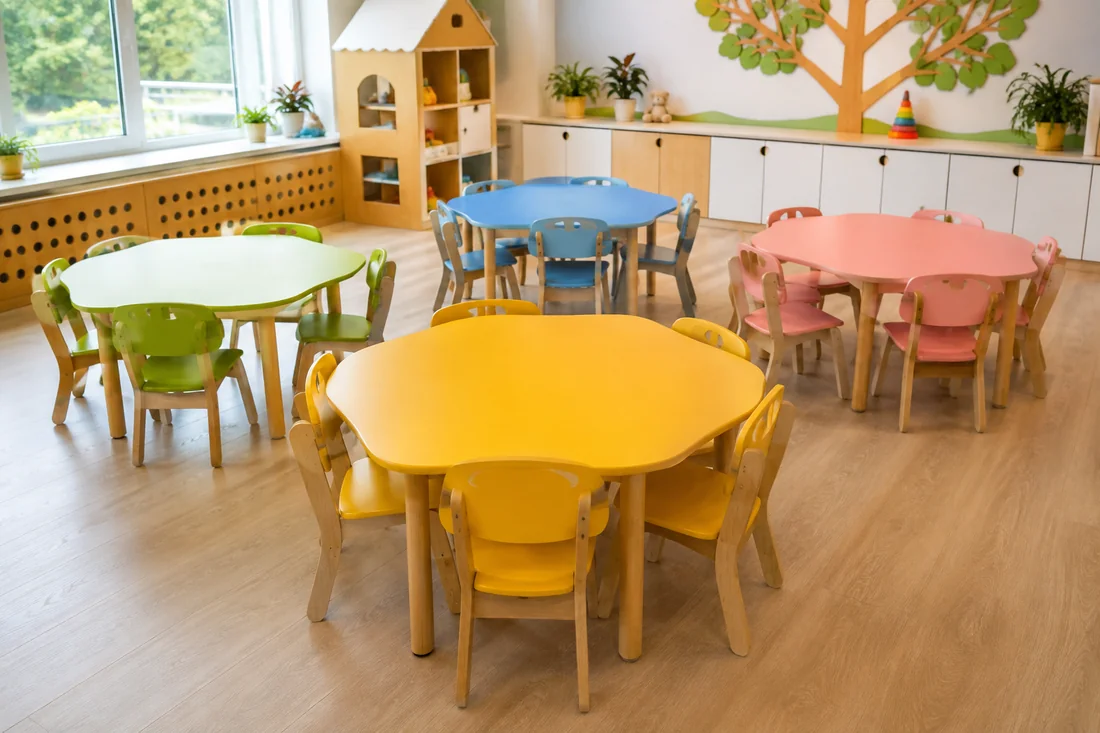
Trapezoid and modular tables can be assembled into a circle, a row or a hexagon, and a semicircular table is convenient for the teacher working with a subgroup of five or six children. We make the Trapezoid, Semicircle, round Romashka and modular Soty models in the same height range, so they can be placed side by side without steps at the joint. A round table gathers children around a shared task — a puzzle, building blocks, modeling — and leaves no corners to bump into while running. The semicircular table is placed with its concave side toward the teacher: they sit in the center of the arc and can reach every child. Modular tables are an advantage where the layout changes during the day: in the morning they are assembled into a circle for a class, by lunchtime into a row, and after nap time they are moved apart to the corners for free play. Each module still remains a separate place for two or three children.
| Table shape | What it suits | Number of children |
|---|---|---|
| Rectangular two-seat | classes in rows, drawing | 2 |
| Rectangular four-seat | lunch, board games | 4 |
| Trapezoid | assembly into a row or circle | 2–3 |
| Semicircular | teacher working with a subgroup | 5–6 |
| Round Romashka | shared task, modeling | 4–6 |
| Modular Soty | changing the layout during the day | by number of modules |
Different activities put different loads on the work surface: gouache and water during drawing, crumbs and wet cleaning after lunch, notebooks and pencils in the preparatory group. Each task calls for its own model.
Desks for kindergartens are needed primarily for the preparatory group: at them children get used to a school posture, lay out their notebooks and learn to keep their backs straight. We make the "Pervoklashka" desk-table with a flat countertop and the "Umniki" activity table for younger groups, where space for handout material is more important. The desk-table is usually placed in rows in front of the board so that the child can see the teacher without turning the body. For activities with cards, counting sticks and building blocks, a countertop without sides is suitable: the pieces are moved to the edge and gathered into the palm, nothing gets stuck at the side. For one preparatory group, it is convenient to order a set of desks and chairs of the same height group with identical marking, so that children come to school with a habit of correct posture and order at the workplace.
Creativity tables get a washable laminated chipboard countertop and a place for pencils and brushes so that a working area remains on the surface. Our models "Raduga" and "Karandash" are designed for gouache, plasticine and glue: the coating does not absorb paint, and marks are removed with a damp cloth. The "Karandash" drawing table has an adjustable countertop tilt — the sheet lies at an angle, and the child does not lean over it with the chest. If the head of the kindergarten needs tables for kindergartens for an art studio, we place models with a tilt in the studio, and flat "Raduga" tables in the group, which after the lesson serve for games again. For sand and water, there is a separate "Akvapesok" table with plastic tubs: it is placed closer to the washroom so that wet material is not carried around the group room, and the tubs are removable for washing and drying.
The same furniture works differently depending on the arrangement. Light, aisles and the teacher's place are planned in advance, on the room plan.
We show the arrangement in a 3D design before production: after a free measurement, in 1–2 days you can see how many tables will fit in the group room and where the aisles will remain. Children's tables for kindergartens rarely stay in one position all day, so in the design we draw two or three modes: class, meal and free play. For a class, tables are lined up in rows or in a semicircle facing the teacher; for a meal, they are pushed into islands of four seats closer to the serving area. In free time, they are moved to the walls, and the middle of the room is freed for a rug and active games. If rearrangement is needed every day, it is better to choose light two-seat or modular models, and leave heavy four-seat ones for the dining area where they stand permanently. We check all modes with the group teachers before approving the design so that nothing has to be moved in practice.
We make modular trapezoids in one height and one finish, so almost any shape can be assembled from them without steps at the joints. Two trapezoids joined along their long sides make a rectangle for four seats, three make a semicircle for working with a subgroup, six make a hexagon where the whole group sits facing each other. The Honeycomb modules join edge to edge, and a row of them takes up less space than the same row of rectangular tables. The rounded corners of the trapezoids leave no sharp protrusions even in shapes where a table stands corner-out. The modules are conveniently stored pushed against the wall in a long row: there they serve as a shelf for crafts, and in the morning they turn back into a circle for a lesson in a couple of minutes.
Tabletop height is set by the standard for preschool furniture, not by the manufacturer's catalog. An error of a few centimetres changes the child's posture and the load on the back.
| Height group | Child's height, mm | Tabletop height, mm |
|---|---|---|
| 00 | up to 850 | 340 |
| 0 | 850–1000 | 400 |
| 1 | 1000–1150 | 460 |
| 2 | 1150–1300 | 520 |
| 3 | 1300–1450 | 580 |
| 4 | 1450–1600 | 640 |
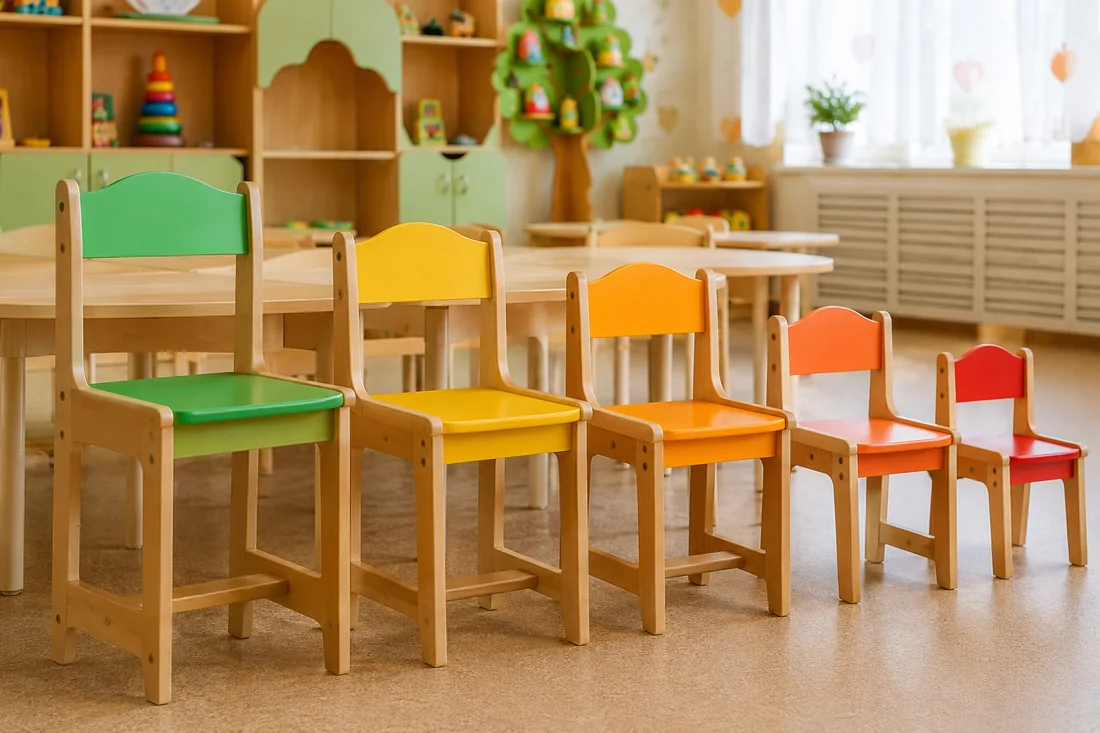
We make the table and chair of the same height group as a pair and mark them with one colour, because in kindergarten furniture tables and chairs don't work separately. Table height only makes sense together with seat height: the child should place their feet on the floor and their forearms on the tabletop without raising their shoulders. If chairs are bought later for the group, they are matched to the markings of the tables already there, not to the children's age. A table from another series or model may be a couple of centimetres taller, and a step will appear where the two tabletops meet. That's why for repeat orders we take the dimensions from the group's original specification and repeat the same height range and the same finish, so the row of tables looks and works as one.
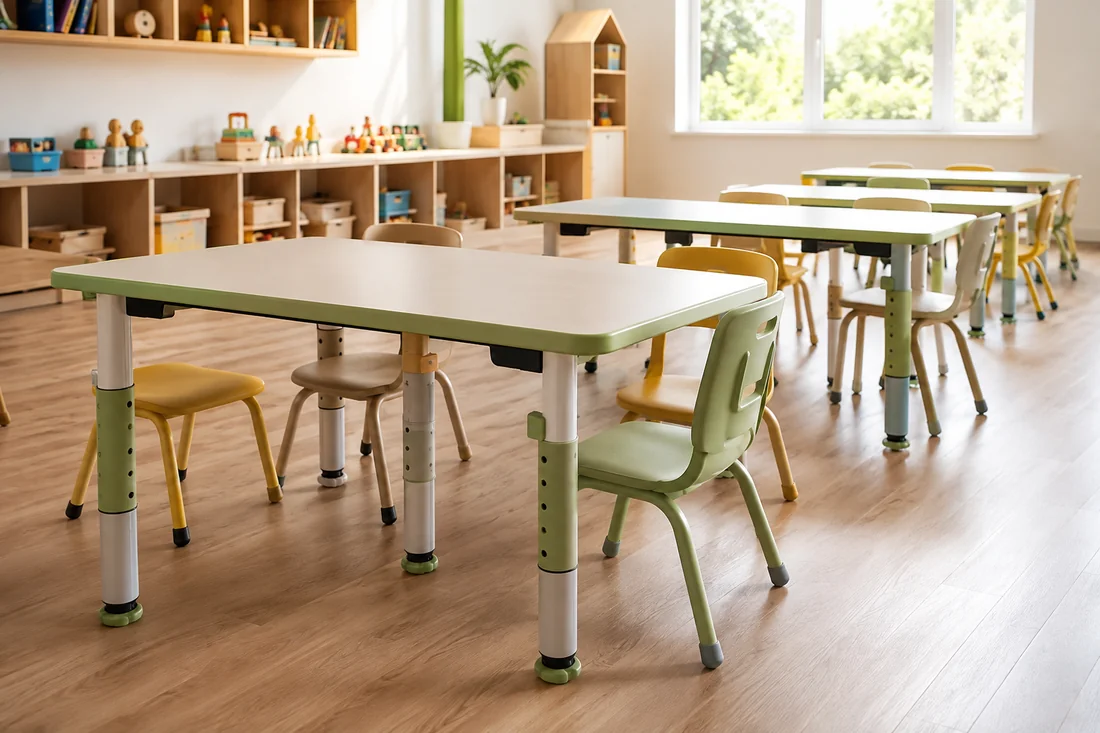
For mixed-age groups we make tables with adjustable legs: the Rostik model adjusts to the adjacent height group, so both younger and older children can sit at the same table. This solution helps when the group composition is unknown in advance or changes during the year, and buying a second set makes no sense. Adjustment does not replace labeling: after changing the height, the mark is updated so the teacher can see which group the table is set for. Standard tables with fixed legs remain more stable and easier to maintain, so they are chosen more often for single-age groups. We describe adjustment mechanisms, screw supports, and tabletop tilt in more detail in a separate catalog section on adjustable models — there you will also find options with a metal frame and a tilting tabletop for drawing.
A children's table consists of a tabletop, edge banding, and supports, and they wear out differently. The first to give way is what gets rubbed, wetted, and bumped with chairs most often.
We cut tabletops from Egger and Kronospan E1 class laminated chipboard 16 mm thick, and for reinforced models we use 25 mm board. The smooth, washable laminated chipboard surface does not absorb gouache, marker, or glue, and modeling clay comes off with a plastic scraper without scratches. For groups where tables are moved and washed several times a day, we choose decor without deep texture: paint gets stuck in the pores of the embossing and later shows up as gray spots. Light solid-color decors show dirt immediately, and cleaning only benefits from this — no stain remains until the next day. For an art studio, you can take a slightly darker tabletop so paint marks are less noticeable, but then cleaning should be checked more carefully under good lighting. We match the decor using board samples at the measurement, not from a picture on a screen where the color always looks different.
We round all corners of the tabletop and cover the ends with 2 mm anti-vandal PVC edge banding that a child cannot pick off with a fingernail. Before buying a table for a kindergarten, it is worth running a hand along the end: the edge banding should lie flat, without a gap or sharp edge at the joint with the board. The round Romashka model has a rounded rim around the entire perimeter instead of a corner, and it serves as a stop for pencils that would otherwise roll onto the floor. Models for toddlers, such as Karapuz, get low rims along the edge of the tabletop: toys and small parts stay on the table. We apply edge banding and rounding in our own workshop right after cutting, and a control assembly shows whether any burrs remain before shipping. At this stage we also check that the tabletop sits evenly on the supports and that the item does not wobble.
A set of tables for a group is assembled from several models, and its specification costs more than mistakes made when ordering. Below is what to prepare and what to check.
We make the teacher's table in the same decor as the children's tables in the group, so the adult's workspace doesn't stand out from the interior. Unlike the children's models, it stands at adult height and gets a pedestal with drawers for supplies, magazines and handouts. A separate closed compartment is needed for the teacher's personal belongings and medicines, which must not be left within the children's reach. Such a table frees up the children's countertops: cards and materials for the lesson lie in the drawers rather than in stacks on the edge of the children's table. The drawers run on Hettich or Boyard slides, and the warranty on the item is 24 months under the contract. It is more convenient to place the workspace by a window or wall from which the whole group room is visible, and we agree the height with the chair the teacher uses.
A good set of tables for a group comes from the shape, height and material chosen for the children's actual activities. Before ordering, it is worth going through a short checklist.
12Calculation
Choose a table model, quantity and material in the calculator — the request will go to the manager on WhatsApp, and we'll send an exact quote after measuring the group.
13Furniture for kindergartens
We equip group rooms, bedrooms and cloakrooms with beds, cubbies, tables and chairs by GOST height groups in E1 laminated chipboard with rounded corners.
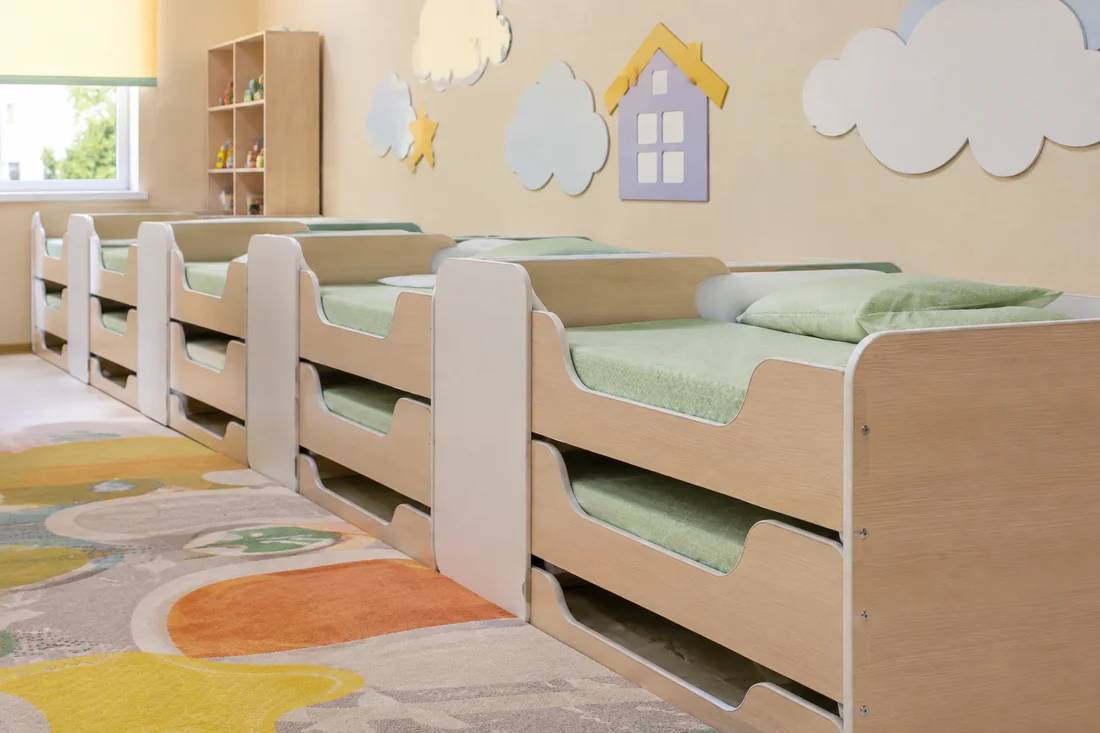
We make single-tier, stackable, nursery and pull-out beds to fit the bedroom area and the height of the group's children: E1 laminated chipboard or birch solid wood, rounded corners, mattress to fit the bed.
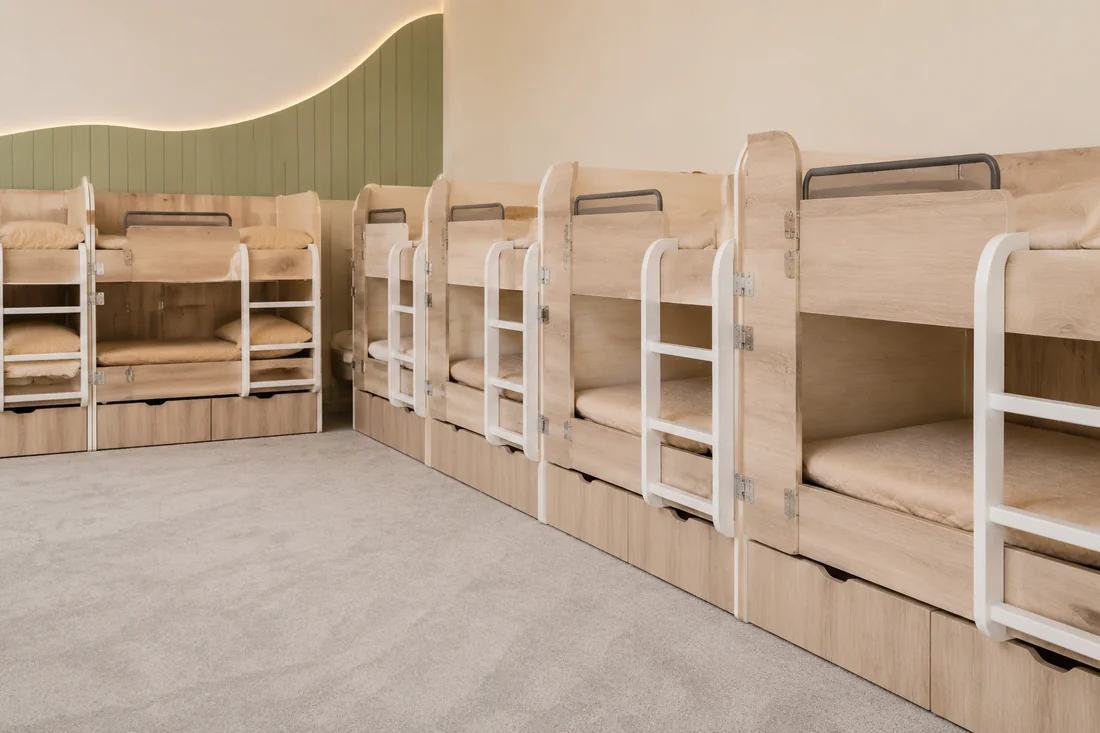
Beds for kindergarten group bedrooms, made to the number of children in the group: two- and three-tier, rails around the top tier, solid wood ladder, E1 laminated chipboard, wall fixing.
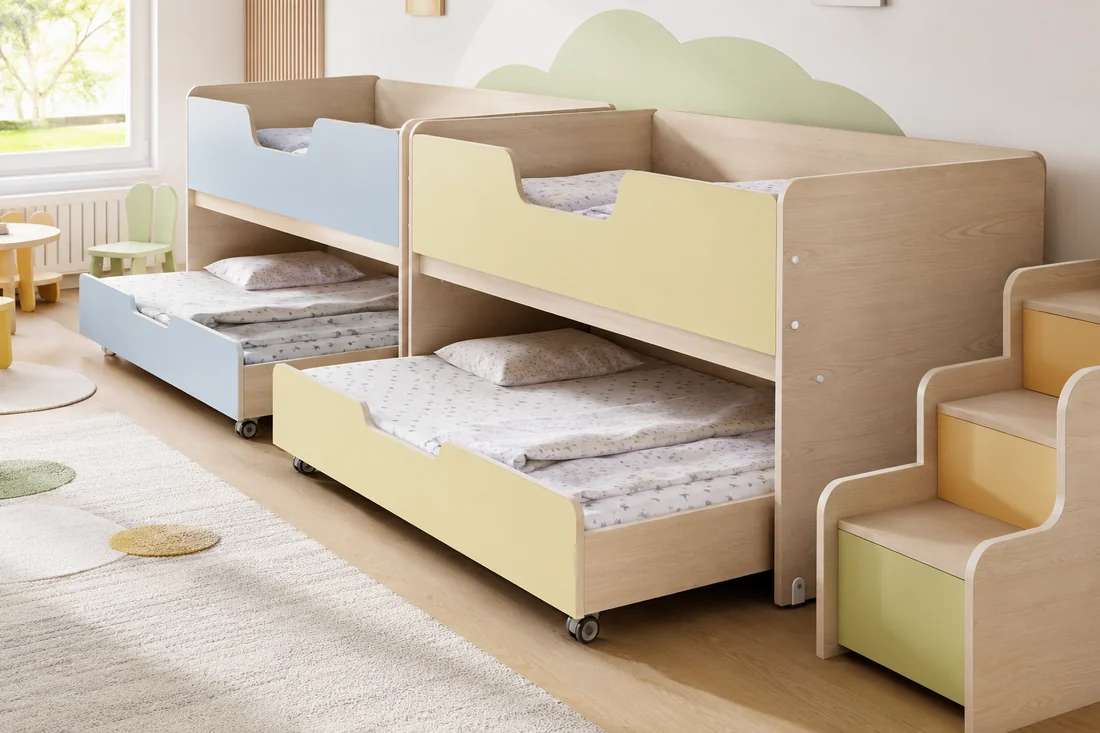
Two or three sleeping places slide under one another and free up the bedroom floor during the day for play and activities.
Cubbies with personal compartments, hooks at a child's hand height and a bench for the cloakroom, plus cabinets for supplies, toys and linen in E1 laminated chipboard.
We make tables on screw supports and a steel frame that adjust to the next GOST height group — in E1 laminated chipboard with rounded corners.
We make height-graded, adjustable and stackable chairs by GOST groups in E1 laminated chipboard, birch plywood and solid wood, with rounded corners and colour coding.