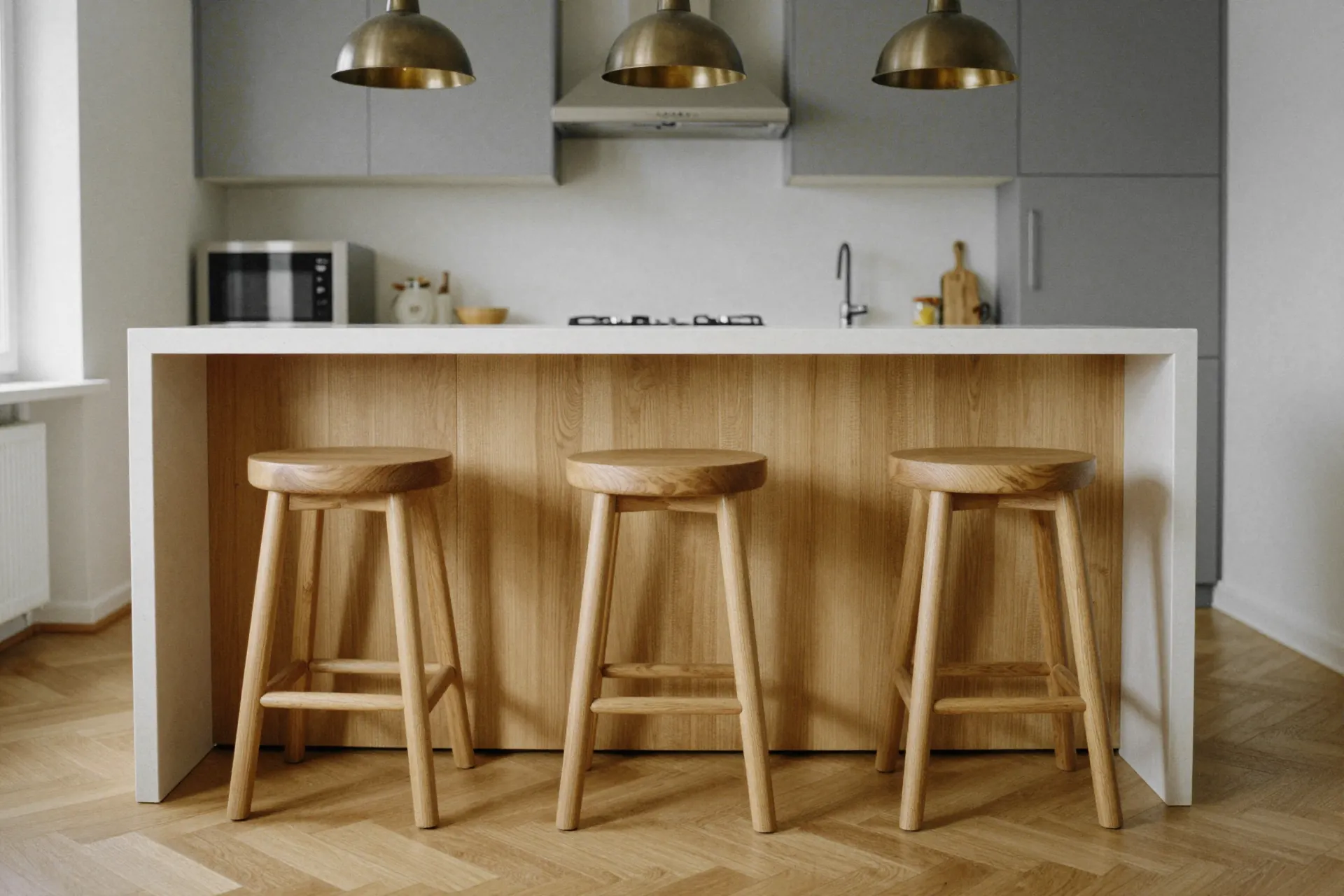
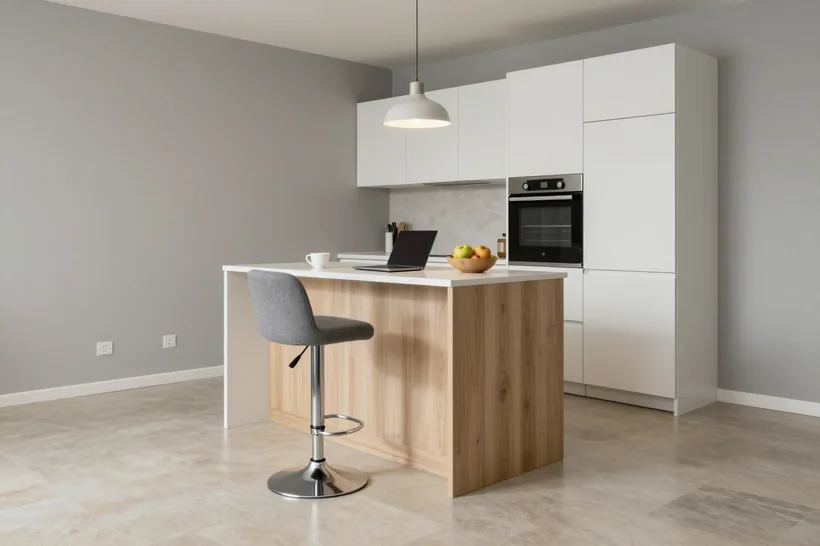
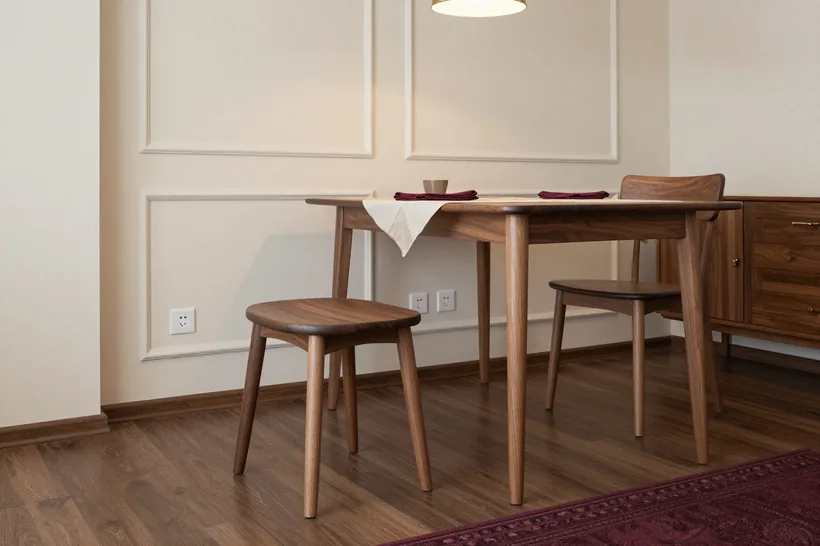
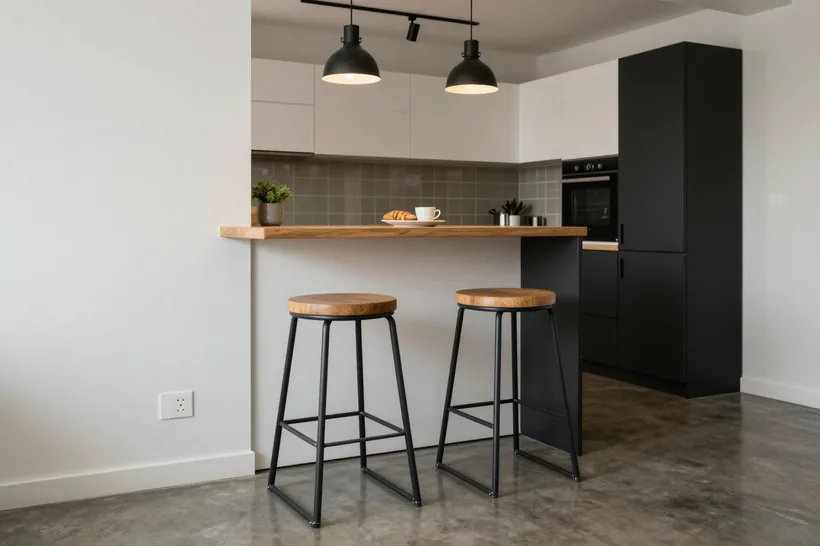
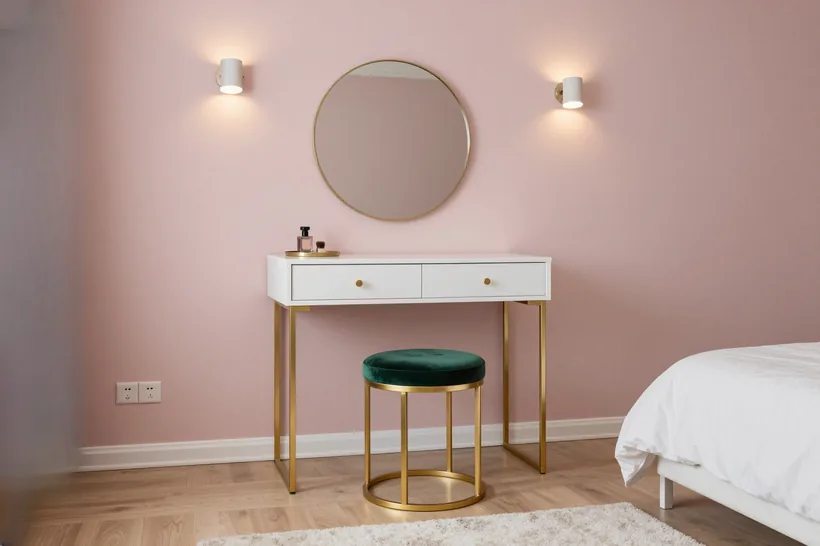
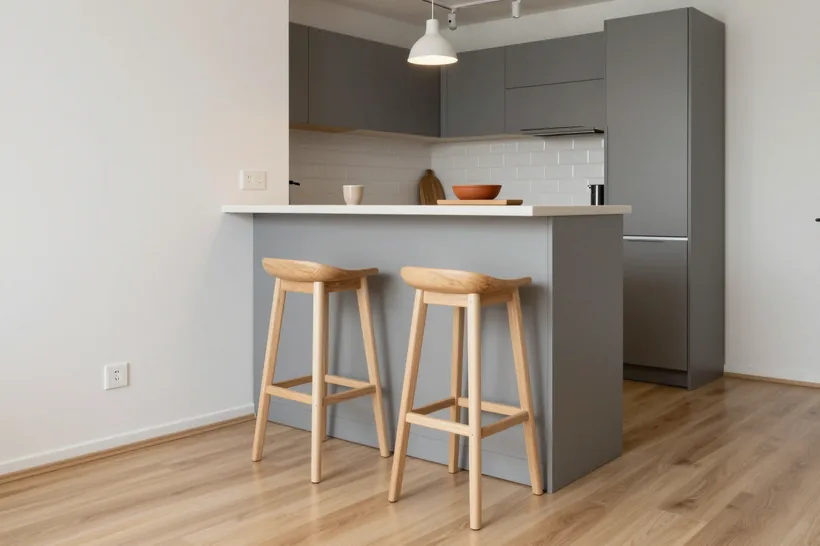
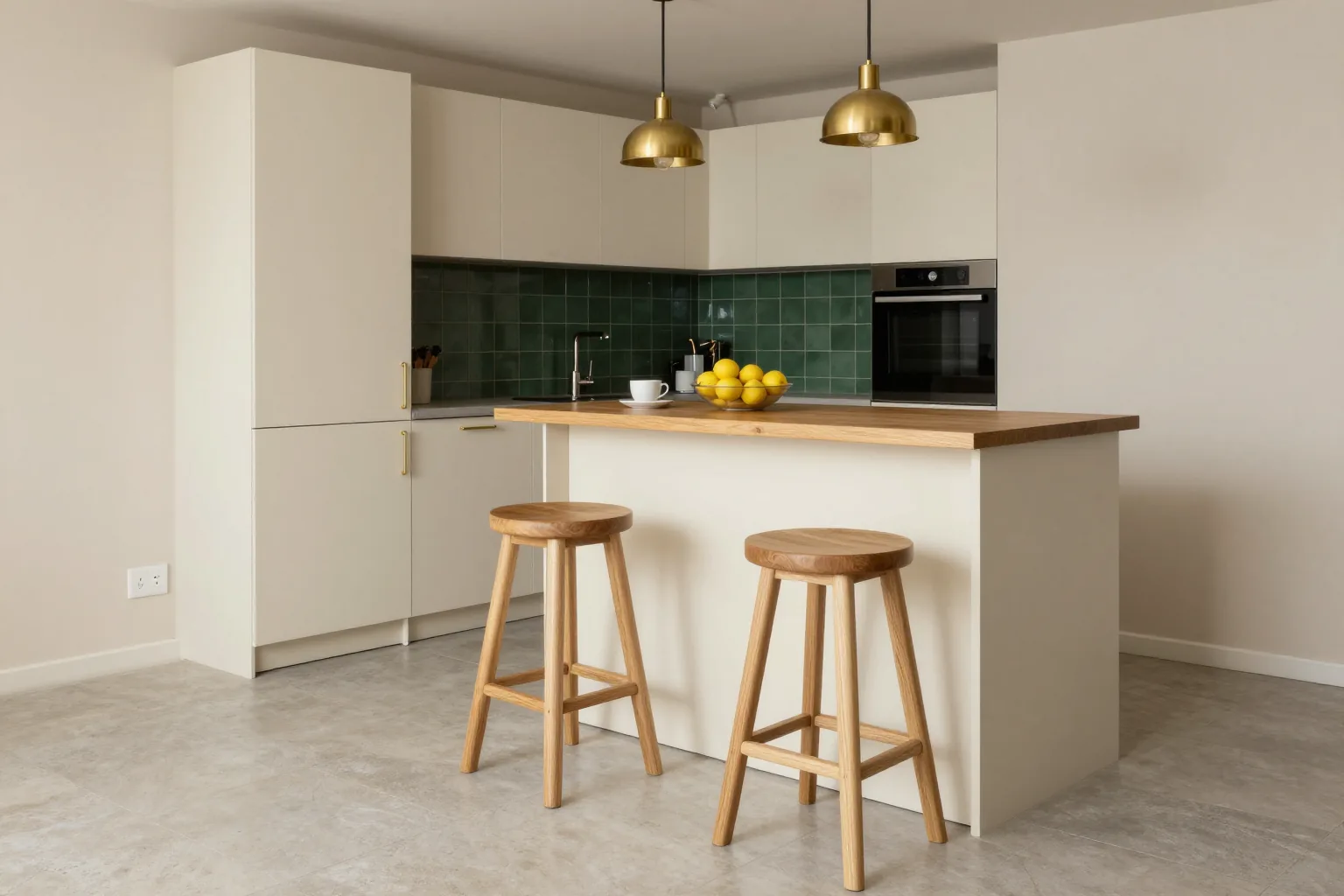
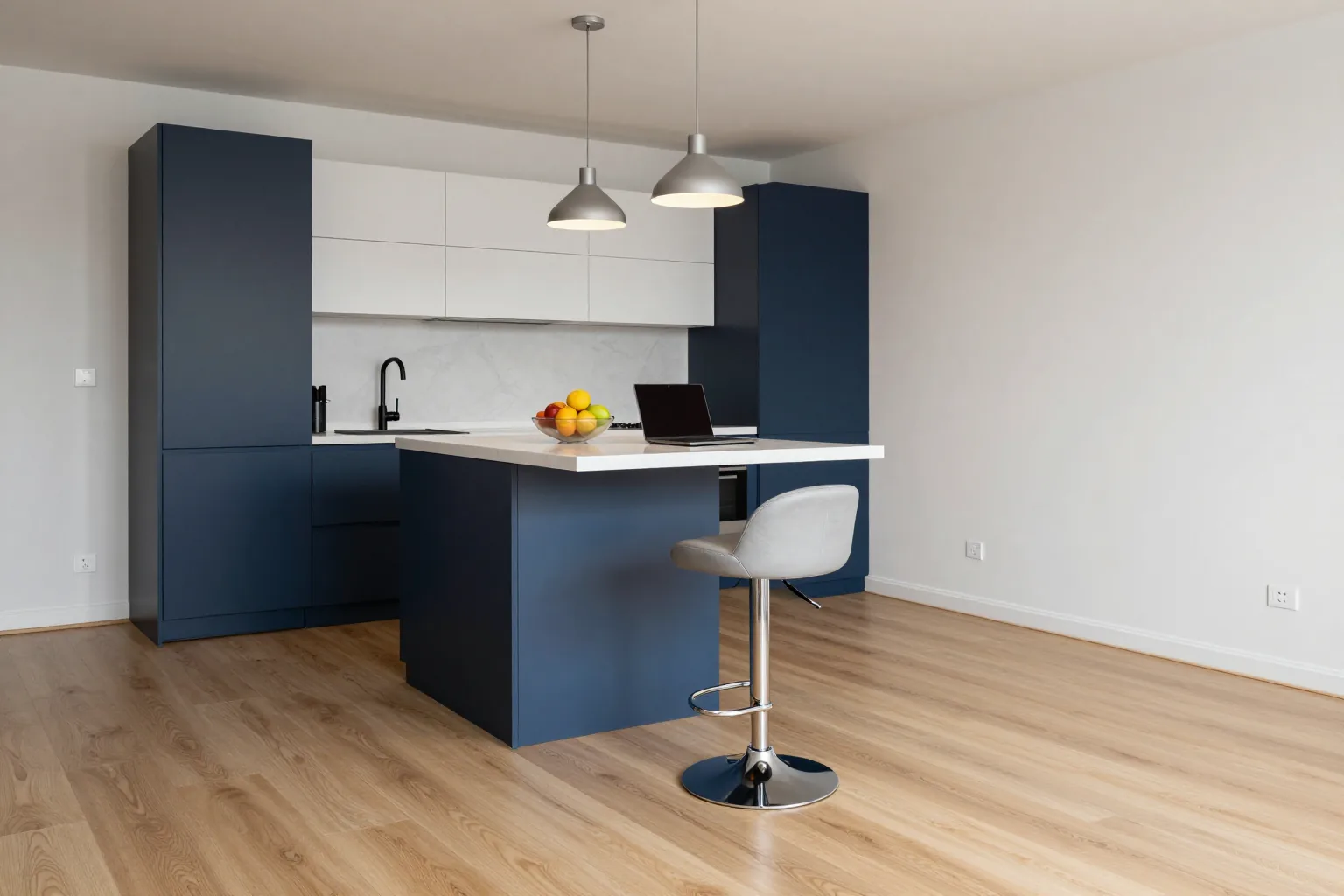
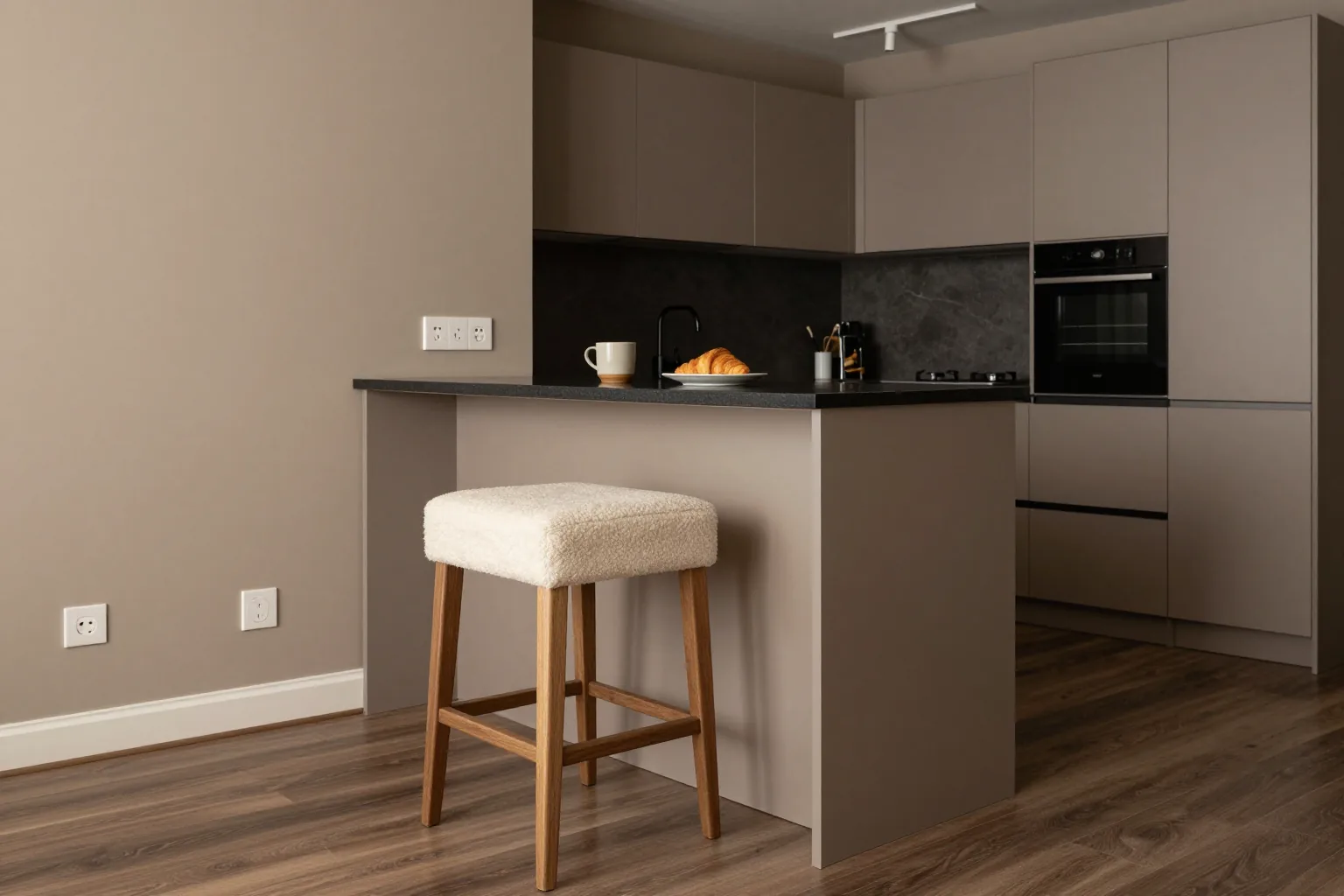
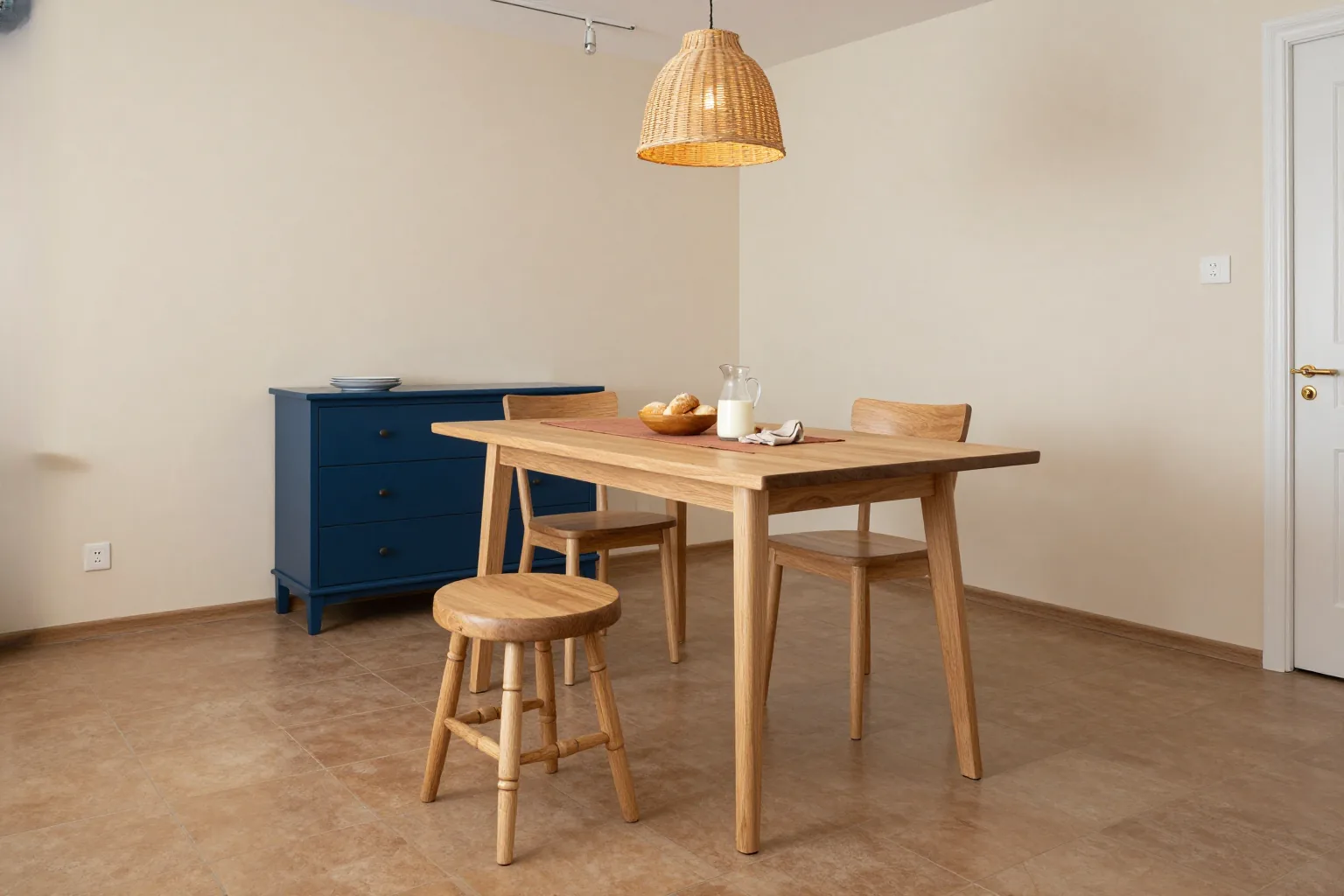
Custom-made stool in Almaty — a backless seat made to the height of your table or counter, the size of your kitchen and the load it needs to bear: in pine, birch, beech, oak or ash, in laminated chipboard or on a metal frame. At MEBLIX measurement is free, the 3D design is ready in 1–2 days, and the warranty under contract is 24 months.
A stool beats a chair where every forty centimetres of passage counts, where furniture is often rearranged and where people sometimes stand on the seat. In other cases it is more honest to take a chair with a backrest.
Small kitchen and narrow passage
A backless stool slides fully under the countertop, while a chair rests its back against the edge of the table and takes another 35–45 cm from the passage. In a kitchen of six to eight square metres this difference decides whether a person can walk behind the seated one. Let's count simply: from the edge of the table to the cabinet or wall you need 70–80 cm if someone sits there, and about a metre if the oven is opened nearby. Doesn't fit? Then we make the top a couple of centimetres narrower than the distance between the table legs, and the stools slide right in. A square seat fits flush against the table apron, a round one leaves gaps in the corners. That is why we design a custom-made stool from the dimensions of your table, not from a catalog (ready-made models often have a seat wider than the clearance between the table legs). A pushed-in stool returns to the passage the width that a chair back would have eaten.
Where you can't do without a backrest
A chair with a backrest is needed by those who sit at the table for a long time: have dinner for an hour, work on a laptop, feed a child. For elderly relatives the backrest also helps them get up — they can lean on it rather than on the edge of the table. That is why many families choose a mixed set. Two or three chairs remain for long get-togethers, while a couple of stools live under the table and come out for guests. A stool suits a child when they can sit confidently without support; for a toddler a children's chair with sides is safer. Models with a backrest are covered on the neighbouring page chairs with backrest, here we talk only about backless seats. A backless model covers short sittings and saves space, while long sitting requires support for the lower back.
A stool as a step and spare seat
- Step in the kitchen: people stand on a sturdy stool to take a box from the top shelf or change a lamp, so the seat is made without a soft layer.
- Spare seat: four stools under the table turn into six seats when guests arrive, and they don't stand in the passage on weekdays.
- Side table by the bed or bath: a low stool made of moisture-resistant wood holds a book, towel or mug and can be carried with one hand.
- Seat in the hallway: people sit on it to put on shoes, and below there is room for a pair of boots.
How a sturdy stool is built and why it wobbles
The strength of a stool is decided not by the thickness of the legs or the wood species, but by the joints. What matters is how the leg is connected to the apron, whether there are stretchers and how the seat is held on the frame.
Leg, apron and stretcher
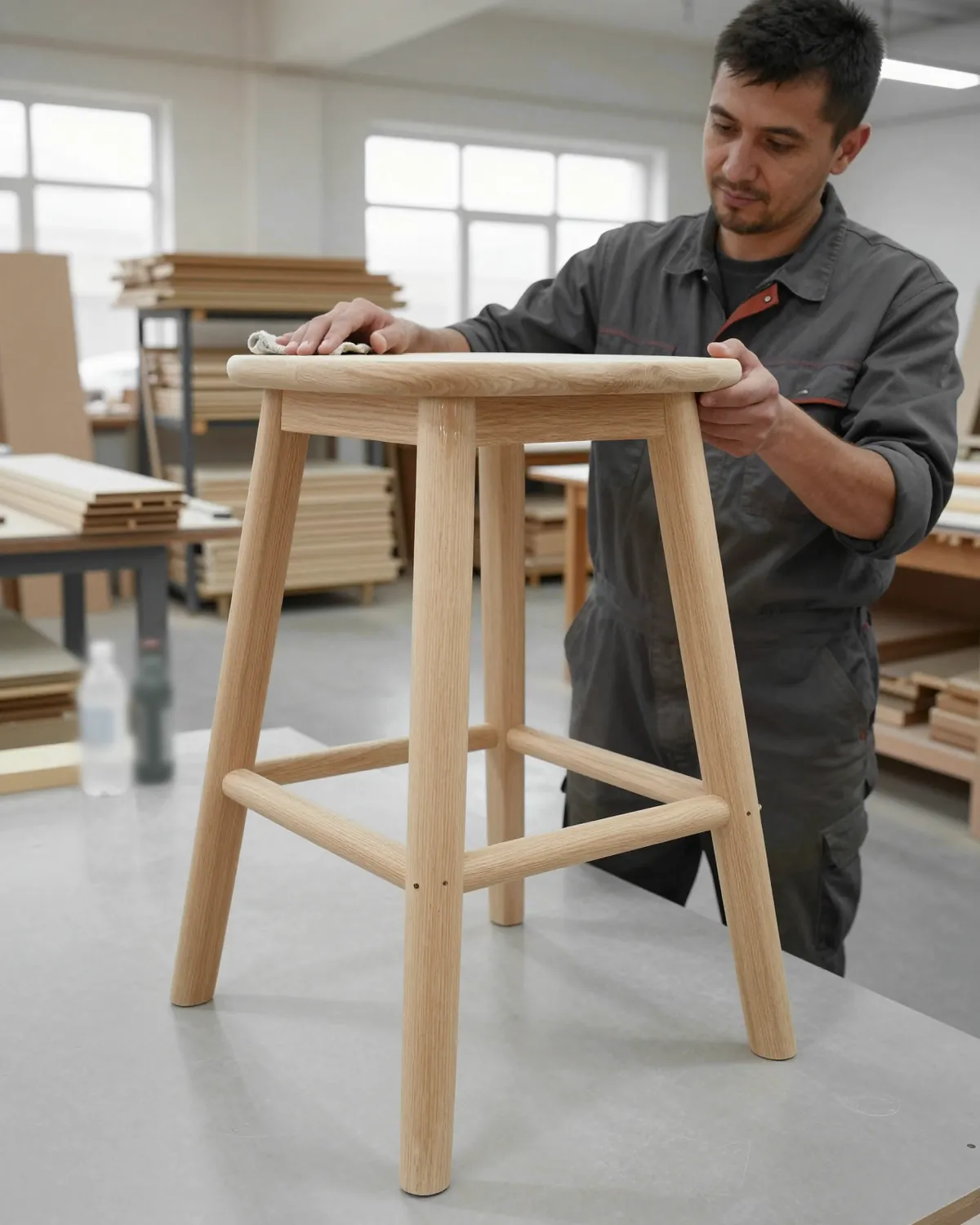
A stool is assembled from four parts: the seat, the legs, the apron and the stretchers. The apron is a bar or board under the seat; it ties the legs together around the perimeter and takes the sitter's weight. The stretcher is the lower crossbar at the floor or at mid-height; it keeps the legs from splaying apart. On a chair the backrest takes part of the load, but a stool has none, so all the work falls on the four corners of the apron. That is why our stool production starts with the apron: it is made no thinner than 20 mm, and on tall models we always fit stretchers at two levels. We fasten the seat to the apron from the inside with corner brackets or connectors, leaving the wood a gap for seasonal movement. The frame holds its shape as long as none of the four corner joints has loosened.
How the leg is joined to the apron
How the leg is joined to the apron| Joint | How it holds | Where we use it |
|---|
| Glued mortise and tenon | The tenon fits into the mortise, glue holds the whole area | Solid wood stools, bar models |
|---|
| Glued dowels | Two or three round dowels, holds well with precise marking | Stools from solid wood and glued panels |
|---|
| Confirmat or cam lock | Fastener without glue, can be taken apart | Laminated chipboard stools |
|---|
| Screw into the end grain | Thread in the end grain of the wood, splits the hole | We do not use it on load-bearing joints |
|---|
Why a stool starts to wobble
- Screw assembly: the thread in the end grain of the leg splits the hole within a few months, and the joint starts to play even after tightening.
- No stretchers: without the lower tie, the legs of a tall stool splay under weight, especially when someone shifts around on it.
- Green wood: a bar with moisture above 10–12 % dries out in a dry apartment, and the tenon works its way out of the mortise.
- Legs of different lengths: on uneven tiles the item knocks unless the legs are fitted to the floor or adjustable supports are fitted.
Which wood to use for custom-made stools
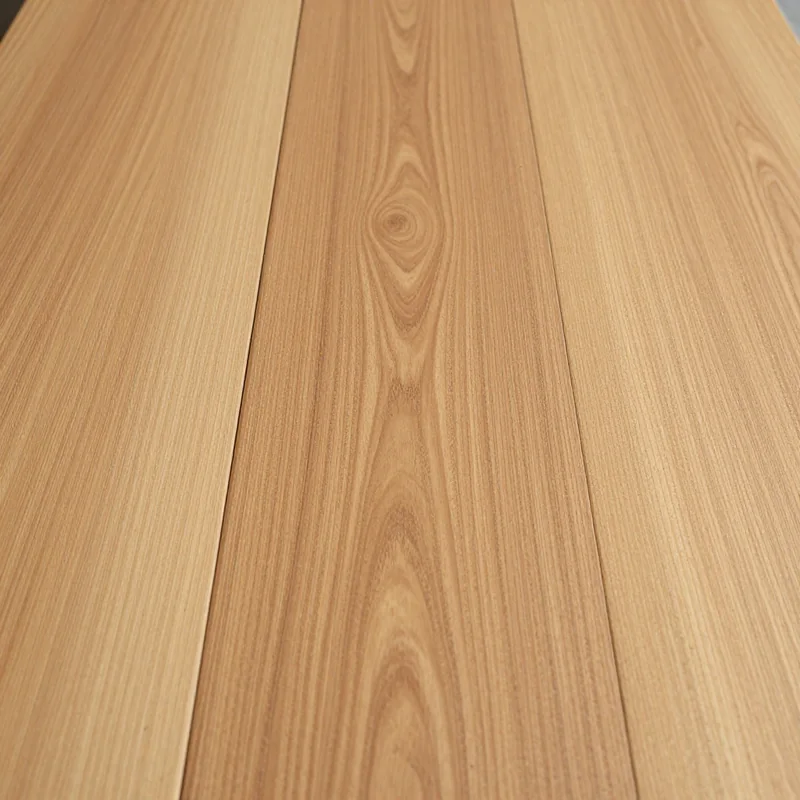
The species sets the stool's weight, its resistance to dents and its shade. For a kitchen, where furniture is moved and washed every day, hardness matters most, while for a country house and a balcony it is resistance to humidity changes.
Six species for a stool
Six species for a stool| Species | Weight and hardness | Character | Where it fits |
|---|
| Pine | Light, soft, dents from a heel | Golden tone, knots | Country house, country style, step stool |
|---|
| Birch | Medium, dense | Light, takes stain evenly | Everyday kitchen stools |
|---|
| Alder | Light, softer than birch | Warm pinkish tone | Turned and shaped legs |
|---|
| Beech | Heavy, hard | Bends well with steam | Bent legs, bar models |
|---|
| Ash | Hard, springy | Bold grain pattern | Scandi, light kitchens |
|---|
| Oak | The heaviest, hard | Large texture, darkens over time | Bar and sturdy models |
|---|
A solid board or a glued panel for the seat
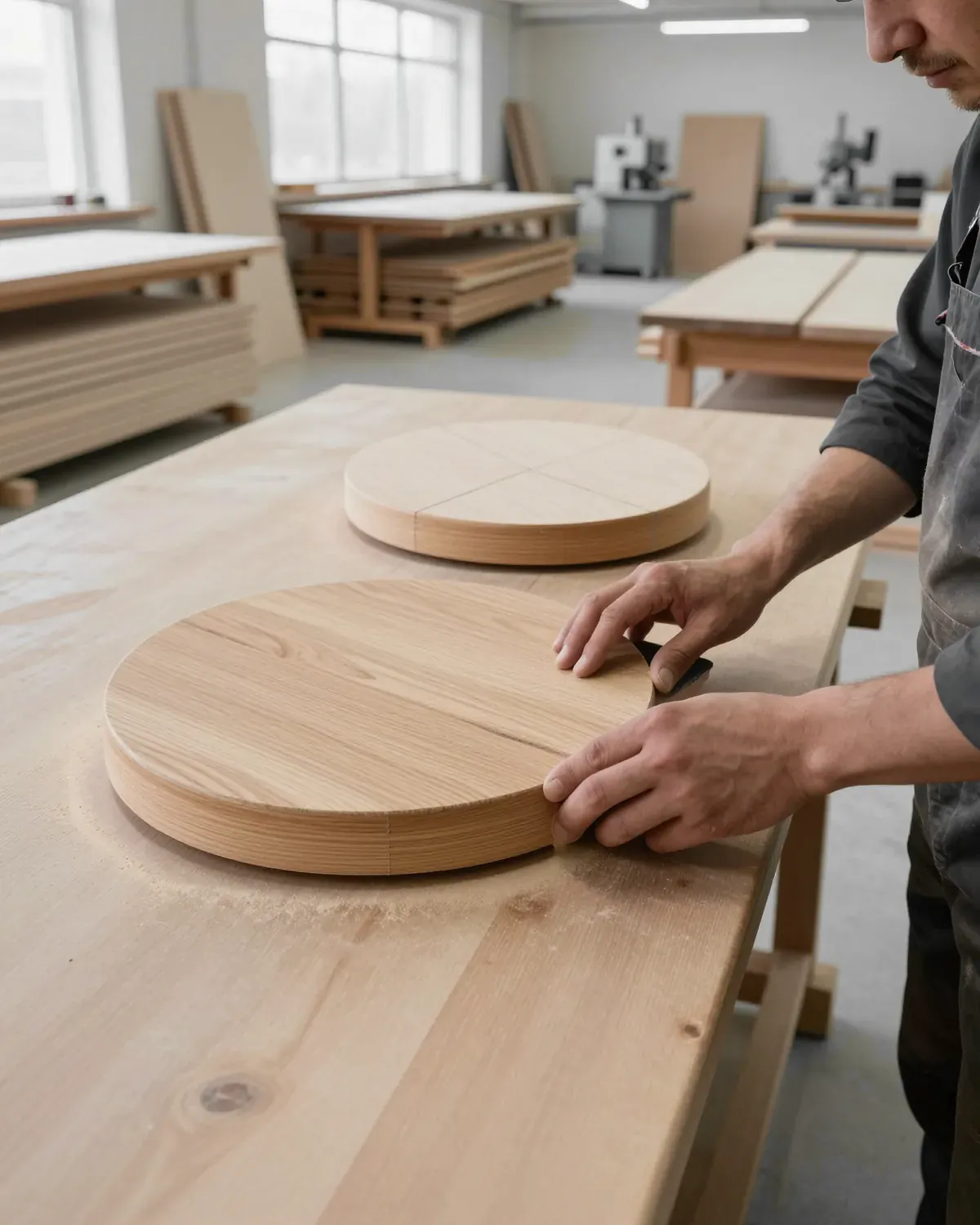
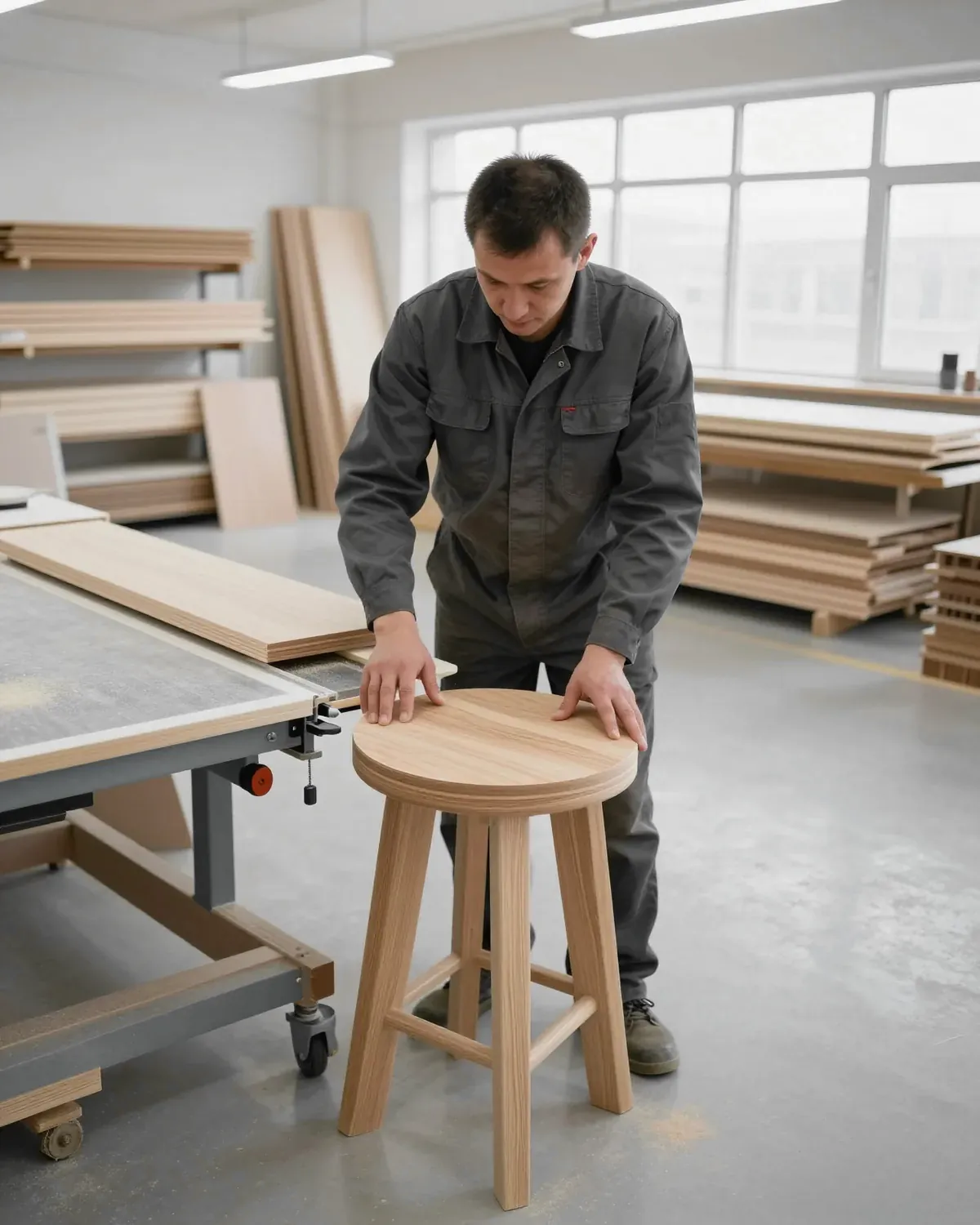
A seat made from a single wide board looks great in photos, but in real life it warps. In winter, radiators in Almaty apartments dry out the air; in summer, the kitchen has steam and water, and a board 30–35 cm wide either shrinks or swells. This leads to cracks along the grain and a "propeller" twist that buyers of ready-made stools complain about. A glued panel made of 40–60 mm wide lamellas absorbs these movements: neighboring lamellas pull in different directions, and the seat stays flat. We glue the panel from a single batch of timber and match the lamellas by pattern so the surface doesn't look striped (on oak the joint is almost invisible). For custom solid wood stools, a panel seat is our default choice; we use a single board only on request and with a caveat.
When laminated chipboard or metal is used instead of solid wood
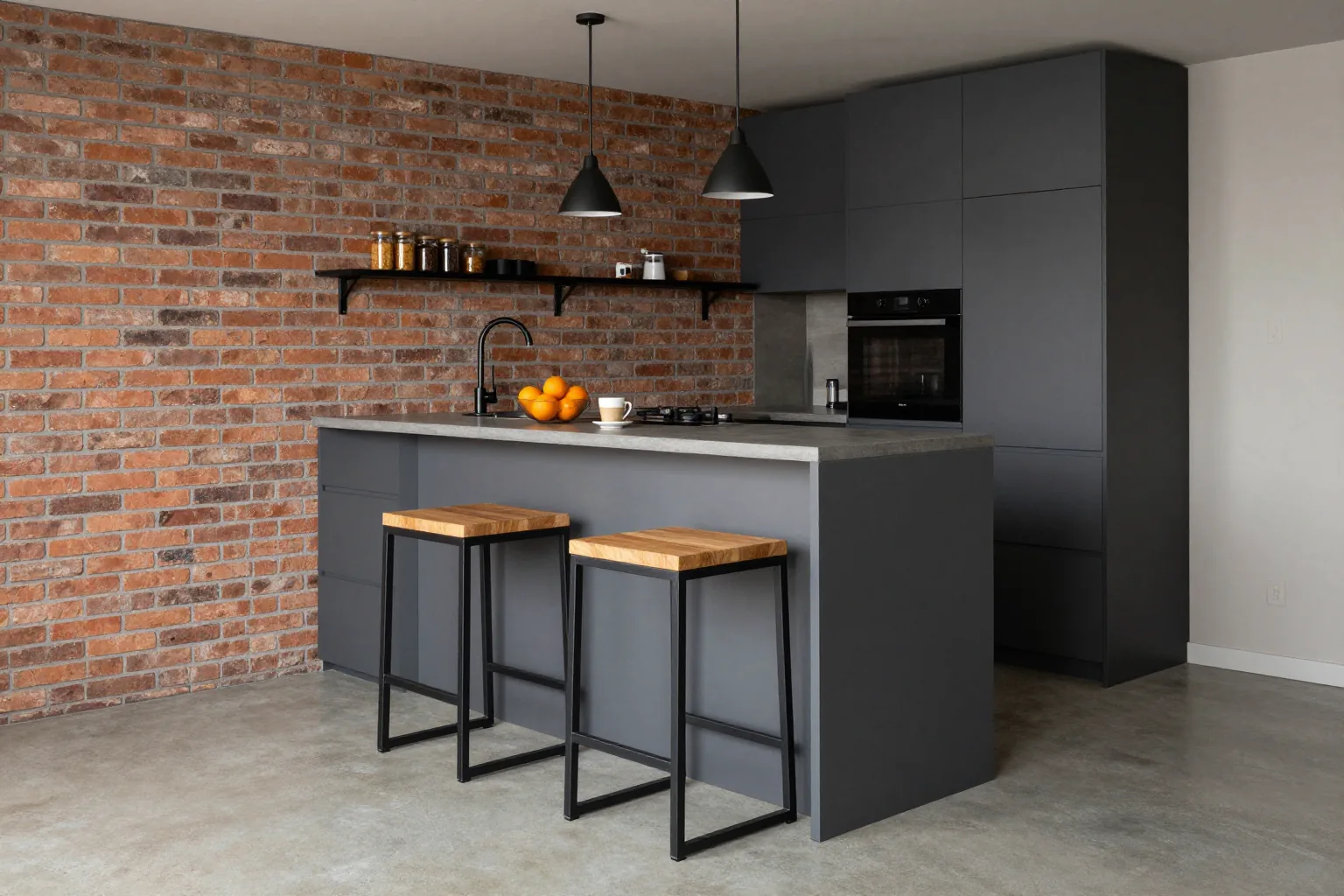
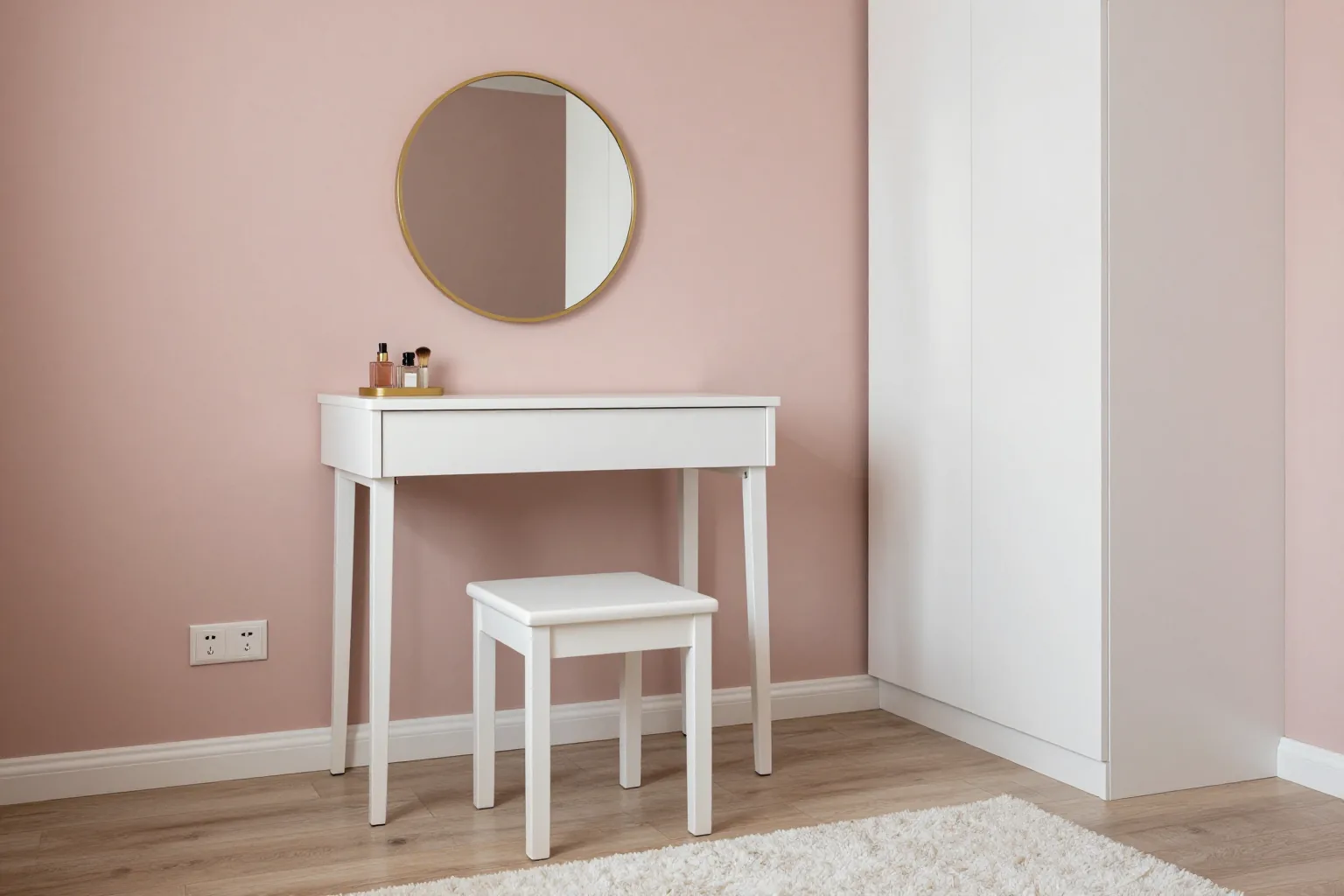
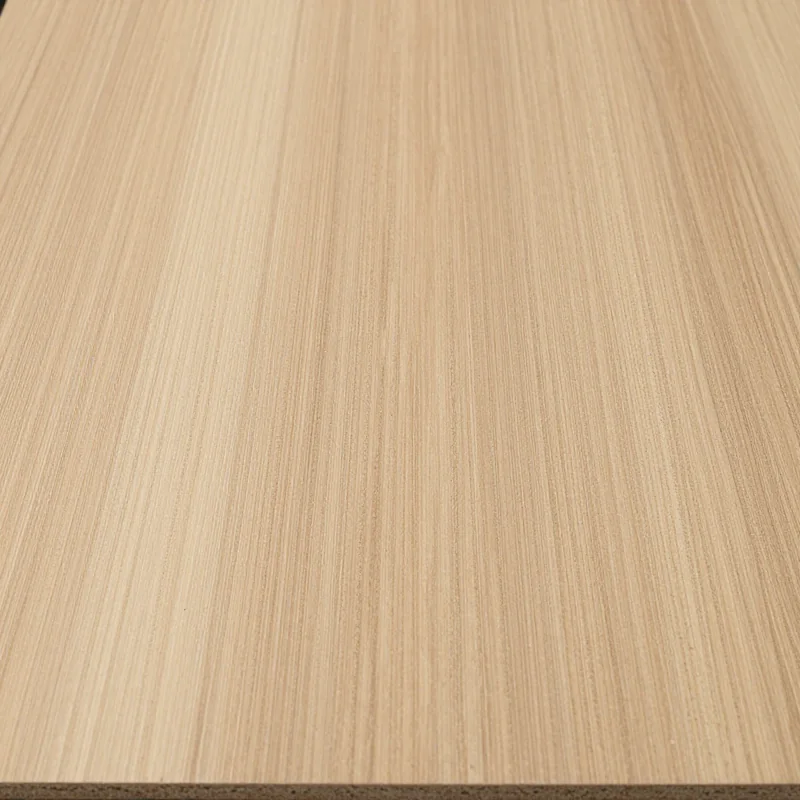
Laminated chipboard suits a simple cube stool that stands by a dressing table, in a bathroom or a kids' room and barely moves. The board holds its shape, wipes clean, matches the decor of the cabinet fronts, and PVC edge banding protects the ends from water. But fasteners in laminated chipboard don't like frequent disassembly and yanking, so we don't make tall and bar stools from board. A metal frame made of square tubing is the opposite case. It's slim in silhouette, withstands heavy weight and suits lofts and a bar counter. We make the seat on metal from solid wood or upholstered, and we put a gasket between wood and metal so the joint doesn't squeak. Board is suitable for light cube stools, metal for tall and heavy-duty models.
What to make the stool seat from
The seat determines whether it's comfortable to sit for more than five minutes, whether the stool slides under the table, and whether the edge digs under your knees. The shape is chosen by the table and the walkway, the thickness by the load.
Round, square or with a recess
- Square seat: fits flush against the table apron and saves space, so it suits a small kitchen and a set of four stools under one table.
- Round seat: doesn't catch clothes and hips with corners in a tight walkway, looks softer and is more comfortable at a bar counter where the sitter turns.
- Seat with a recess: a shallow bowl shaped to the body makes a hard seat noticeably more comfortable; we mill it on a machine using a single template for the whole set.
- Seat with a handle slot: it can be carried with one hand from the kitchen to the room, and the slot also relieves stress on the seat during humidity changes.
Seat thickness and edge rounding
We make a hard solid wood seat 30–40 mm thick. Thinner and the panel sags under an adult; thicker and the whole piece becomes heavy and the edge looks rough. We assemble a laminated chipboard seat from two 16 mm layers or use a 25 mm board, otherwise the fastener in the end won't hold. The seat width of a kitchen stool is usually 30–36 cm; wider than 40 cm it no longer slides under a standard table. We round the front edge with a 10–15 mm radius and sand before finishing. A sharp edge cuts under the knees after just ten minutes, while a rounded one isn't felt at all. A small thing? On a stool that serves for years, it's exactly what separates a comfortable piece from an uncomfortable one. Seat thickness is chosen by load, and edge rounding for the comfort of your legs.
Upholstered seat and removable cover
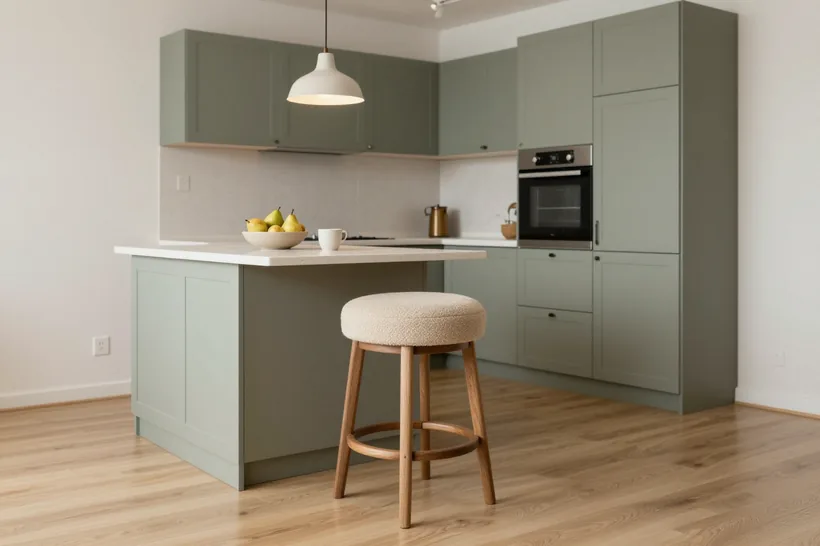
A soft seat is chosen for long breakfasts and for those who find hard wood uncomfortable. The base is plywood or a solid panel, topped with dense foam 30–50 mm thick, then fabric or faux leather. For the kitchen, a removable cover with a zipper or elastic is best: it gets dirty — you take it off and wash it, while the frame stays in place. We stretch non-removable upholstery over the seat and fasten it with staples from below; it is cleaned in place. Keep one limitation in mind — you must not stand on a soft seat. The foam under a heel compresses unevenly, the foot slips, and a dent is left in the upholstery. If people will stand on it, leave it hard or take a couple of stools of different types. The soft layer adds comfort but takes away the stool's role as a step.
How to choose custom stools for a table and a counter
The height of a stool is set by the surface you sit at on it. There is one rule: leave 25–30 cm from the seat to the countertop, then your knees fit freely under the table.
Three countertop heights and three stools
Three countertop heights and three stools| Surface | Surface height | Seat height |
|---|
| Dining table | 72–76 cm | 44–48 cm |
|---|
| Kitchen countertop or peninsula | 85–92 cm | 60–65 cm |
|---|
| Bar counter | 100–110 cm | 72–80 cm |
|---|
What to measure before you call
- Surface height: with a tape measure from the floor to the top plane of the table or counter at two or three points if the floor is uneven.
- Clearance under the countertop: from the floor to the lower edge of the table apron, so the stool along with your knees fits inside.
- Distance between the legs: the width of the free space between the legs determines the seat width and how many stools fit in a row.
- Counter overhang: how far the countertop extends beyond the carcass, since this determines where your knees end up at a bar stool.
- Floor covering: tile, laminate or carpet, for which we select leg pads or adjustable supports.
Footrest and support on tall models
On a stool at a counter your feet do not reach the floor, and without support your feet go numb after a few minutes. That is why on counter-height and bar models we add a footrest 45–50 cm below the seat — a solid wood stretcher, a metal ring or a crossbar. It also works as the lower tie of the frame. We make the support of a tall stool wider than the seat: we splay the legs outward or use a heavy round base if the model is on a single column with a gas lift. Otherwise the model tips over when someone climbs onto it by pushing off with one foot. The footrest and the wide support make a tall stool comfortable and safe at the same time. We check the set for the counter on the workshop floor before shipping: all stools must stand level and be the same height to the millimeter.
How to finish a stool in the kitchen
The finish protects the wood from water, grease and fingers and determines how the piece will age. Oil is refreshed in place, lacquer holds up to water better, enamel matches the color of the fronts.
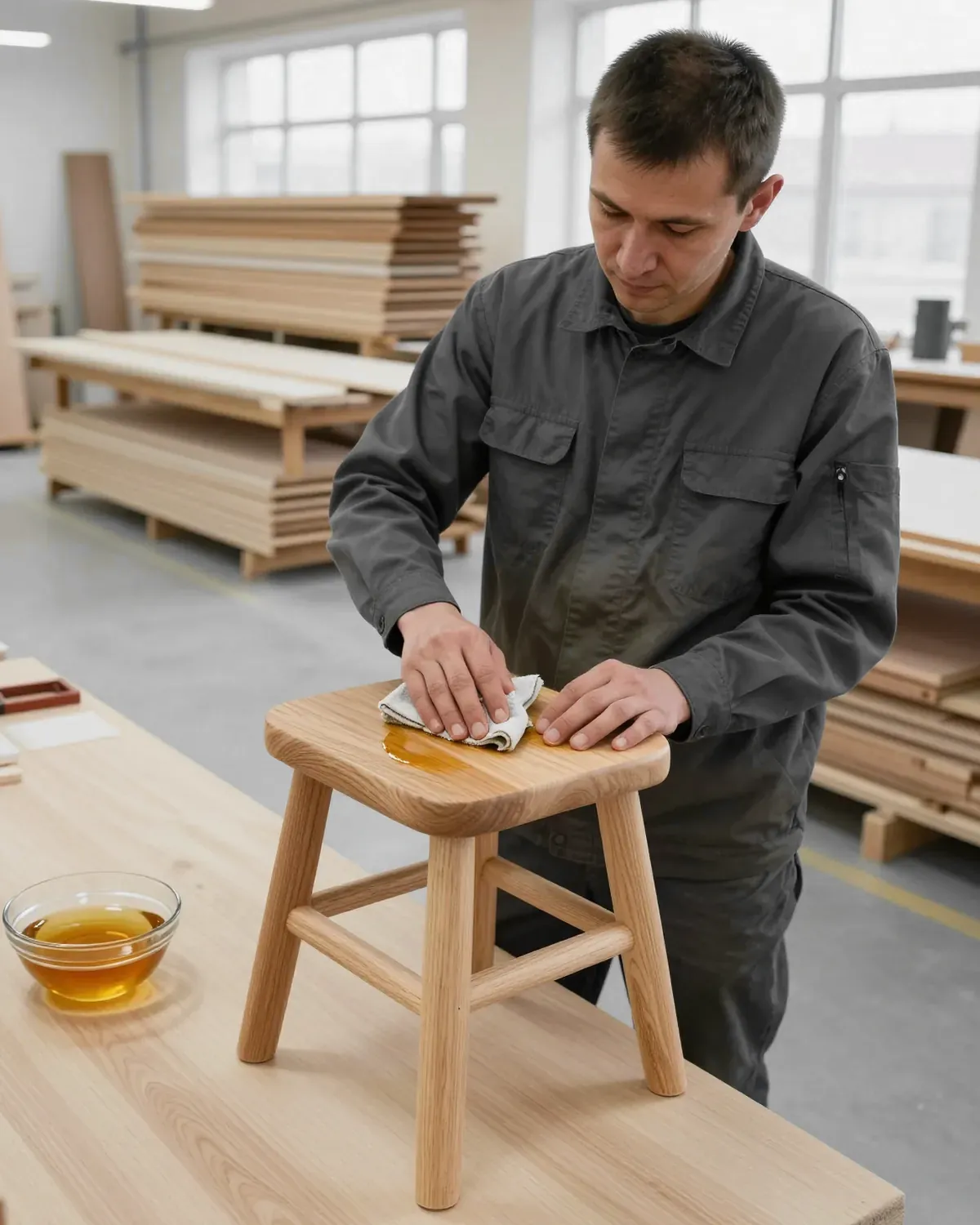
Oil and oil-wax
Oil soaks into the wood and leaves it open: under your hand you feel wood, not a film. Oiled wood looks warm and matte, scratches on it are barely visible because there is no coating to chip off. A water stain or a dent is sanded locally and re-oiled right at home, without stripping the whole finish. Oil-wax adds moisture resistance and a light silky sheen to the surface. There is one downside — such a stool needs care: once every year to a year and a half the seat is wiped with a fresh coat of oil, otherwise it greys from frequent washing. For oak, ash and beech, oil is, in our view, the best option: the grain pattern stays alive. An oil finish is repaired on site and does not fear minor scratches.
Lacquer
Lacquer forms a thin, durable film on the wood. Water, grease and children's juice stay on the surface and wipe off with one cloth, which is why lacquer is chosen for kitchens where furniture is washed every day. Matte lacquer barely changes the look of the wood, semi-matte and gloss give a sheen. Lacquer has one weak spot: from a hit by a chair leg or keys it chips down to the wood, and such a chip cannot be fixed locally — the whole surface has to be recoated. That is why on stools that are moved often we round the edges — lacquer holds longer on a rounded edge than on a sharp one. Pine and birch with lacquer are easy to keep clean, and pine knots do not darken under it. Lacquer protects better against water but withstands impacts worse.
Enamel and tinting to match the suite
Enamel covers the wood fully with colour and lets us make the item to match the kitchen fronts — white, graphite, olive according to the RAL catalog. It is applied in several coats with primer and sanding, so making stools in enamel takes longer than with oil. Tinting is the middle path: the wood changes shade but the grain pattern stays visible, and light birch can be brought to the tone of walnut or oak. We match the colour to a front sample under your lighting, because the same tone looks different in the workshop and in the kitchen. The shade depends on the batch of wood, and buying an exact match a year later is hard — it is better to order the whole set at once. Enamel gives an exact colour, tinting preserves the texture of the wood.
Stools with a special job
Sometimes a stool is needed not only to sit on. A step up to the upper cabinets, a place for guests that hides behind a door, or a drawer for small items in the hallway — we design such models separately.
Step stool
A step stool replaces a ladder in the kitchen. It has two steps: the lower one at about 25 cm and the upper one at about 50 cm, which also serves as the seat. From it, an adult of average height can reach upper cabinets up to the ceiling. The main thing in such a model is stability, so we make the sides solid or with a wide stretcher, and the lower step is mortised into the sides. We finish the steps with lacquer or oil with an anti-slip additive and round the sharp edges. In pine the step stool comes out light, carried with one hand; in beech and oak it is heavier but more stable. This model should not be placed on a carpet — it needs a hard floor. A step stool saves the space a ladder needs and is always where it is needed.
Folding and stackable models
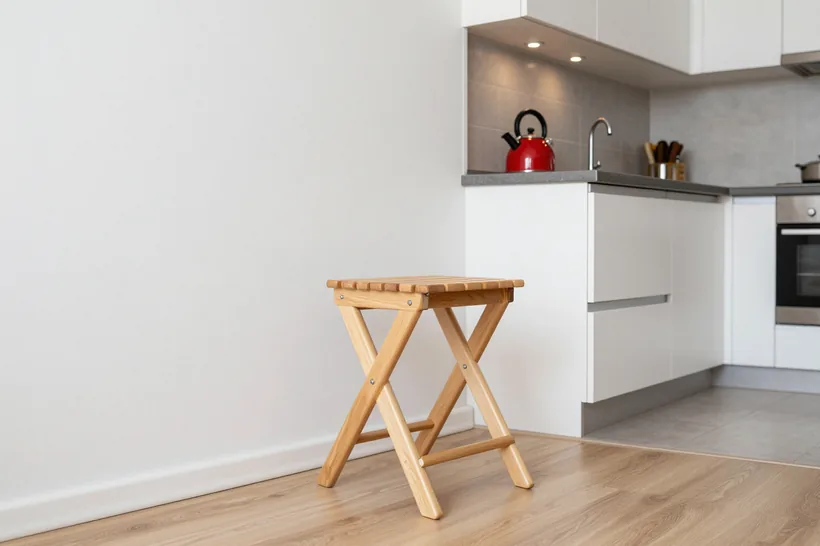
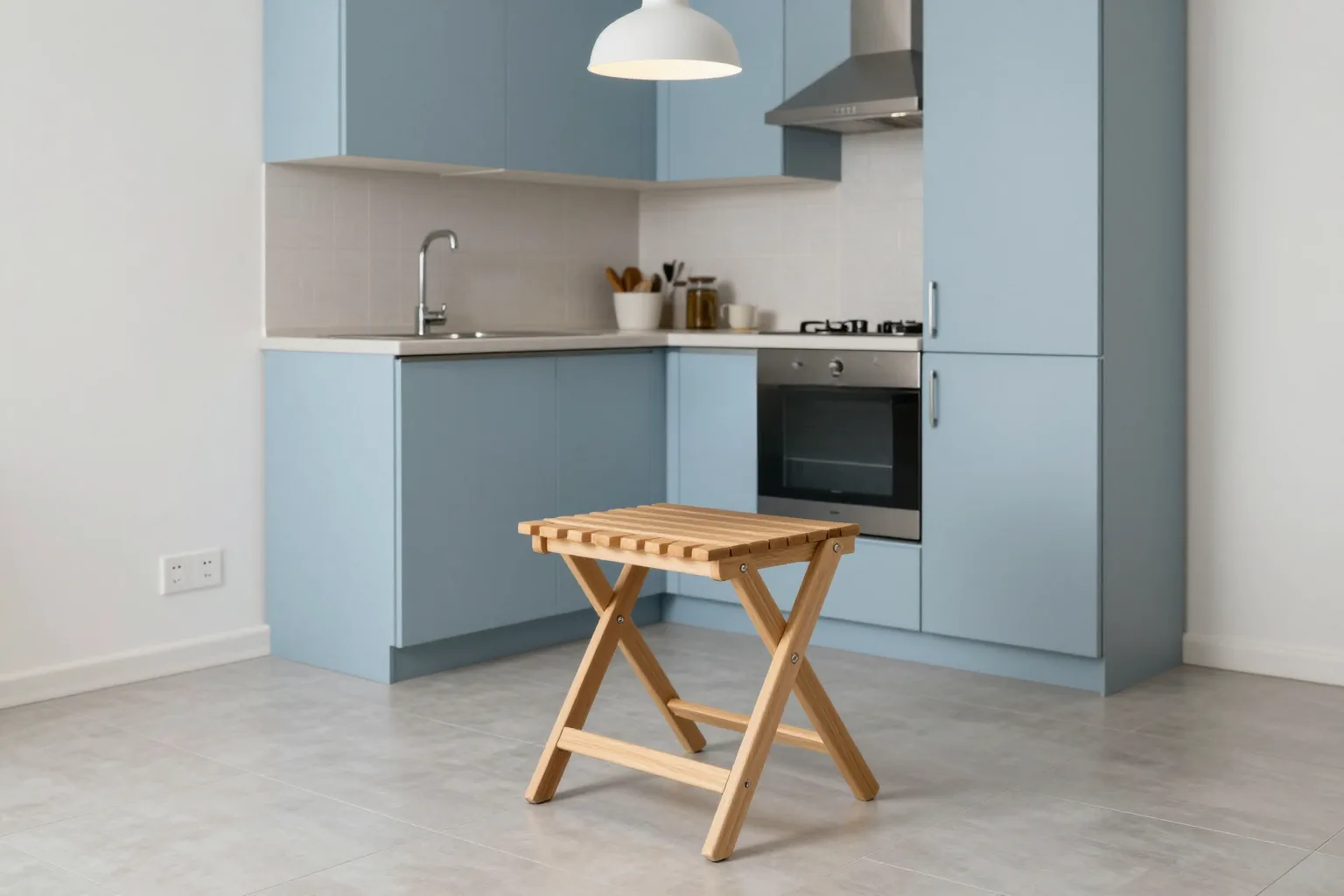
A folding stool is what you need when space is tight: on weekdays it hangs on a hook or stands behind the fridge, and when guests arrive it unfolds in a second. The key component is the axle on a metal bolt with a nut that can be tightened, and a stop that keeps the stool from folding under a person. A slatted seat is lighter than a solid one and dries faster after washing. A stackable stool doesn't fold but stacks: the legs are spaced so the next one sits squarely on the previous one. We glue soft pads on contact points, otherwise the seats will scratch each other. A stack of four stools takes up no more corner space than one. Folding and stackable models provide guest seating without permanently cluttering the kitchen.
Stool with a storage compartment in the seat
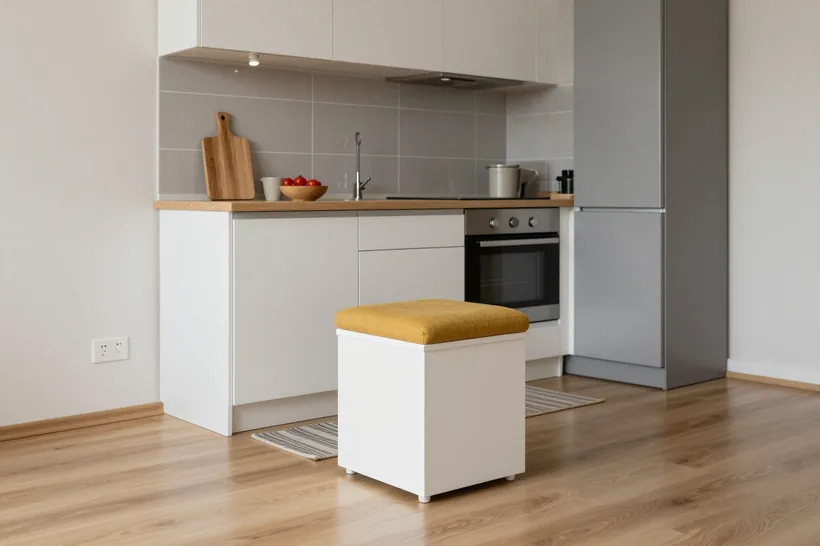
A compartment stool is a small box with a hinged or removable seat lid. Inside there's room for shoe brushes and a shoehorn in the hallway, kitchen towels in the kitchen, or toys in the kids' room. We make the lid on hinges with a restrictor or removable, and leave the seat on top hard or soft as you choose. The box walls are assembled from solid wood or laminated chipboard with a tenon and connectors, the bottom from plywood or fiberboard. It's important not to overload the model: the compartment is for light items, otherwise it becomes heavy and people stop moving it. Custom stools like these in Almaty are most often ordered for the hallway — to sit down and put on shoes and keep small items in one place. This model combines seating and storage where a cabinet doesn't fit.
Stools in brief
What to remember before ordering
- Space: a backless stool tucks entirely under the table and gives back 35–45 cm of passage, while long sitting calls for a chair with a back.
- Strength: it's decided by the leg–apron joints on a tenon or dowels and by stretchers, not by leg thickness; a screw in the end grain eventually loosens the socket.
- Wood: oak, beech and ash are harder and heavier, pine and alder are lighter and softer, and a seat is more reliable from glued panel than from a solid board.
- Height: leave 25–30 cm from seat to countertop; counter-height and bar models must have a footrest and a wide base.
- Finish: oil is refreshed on site, lacquer holds up better to water, and enamel and tinting can match the color of kitchen fronts.