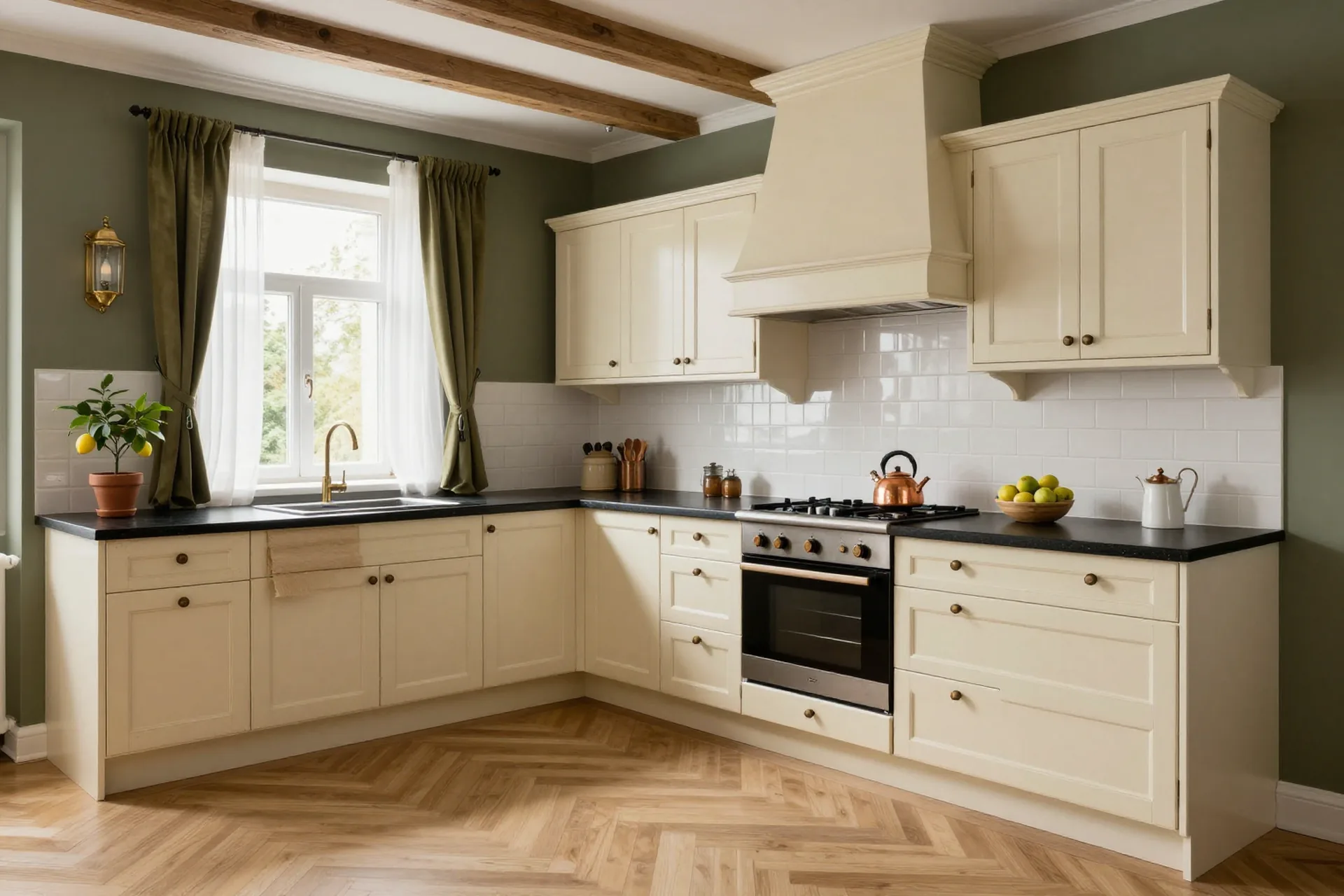
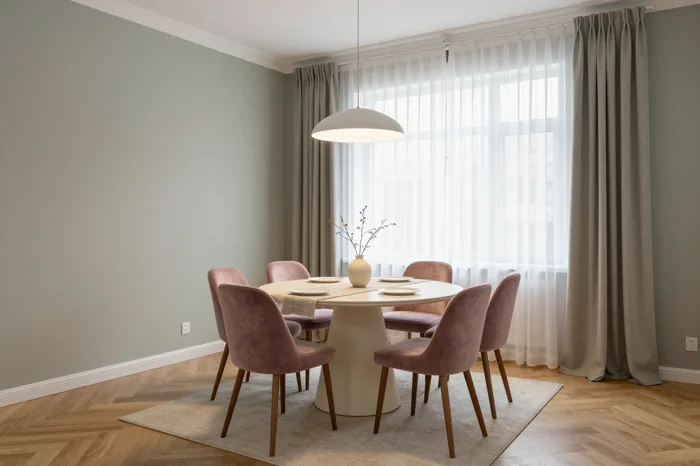
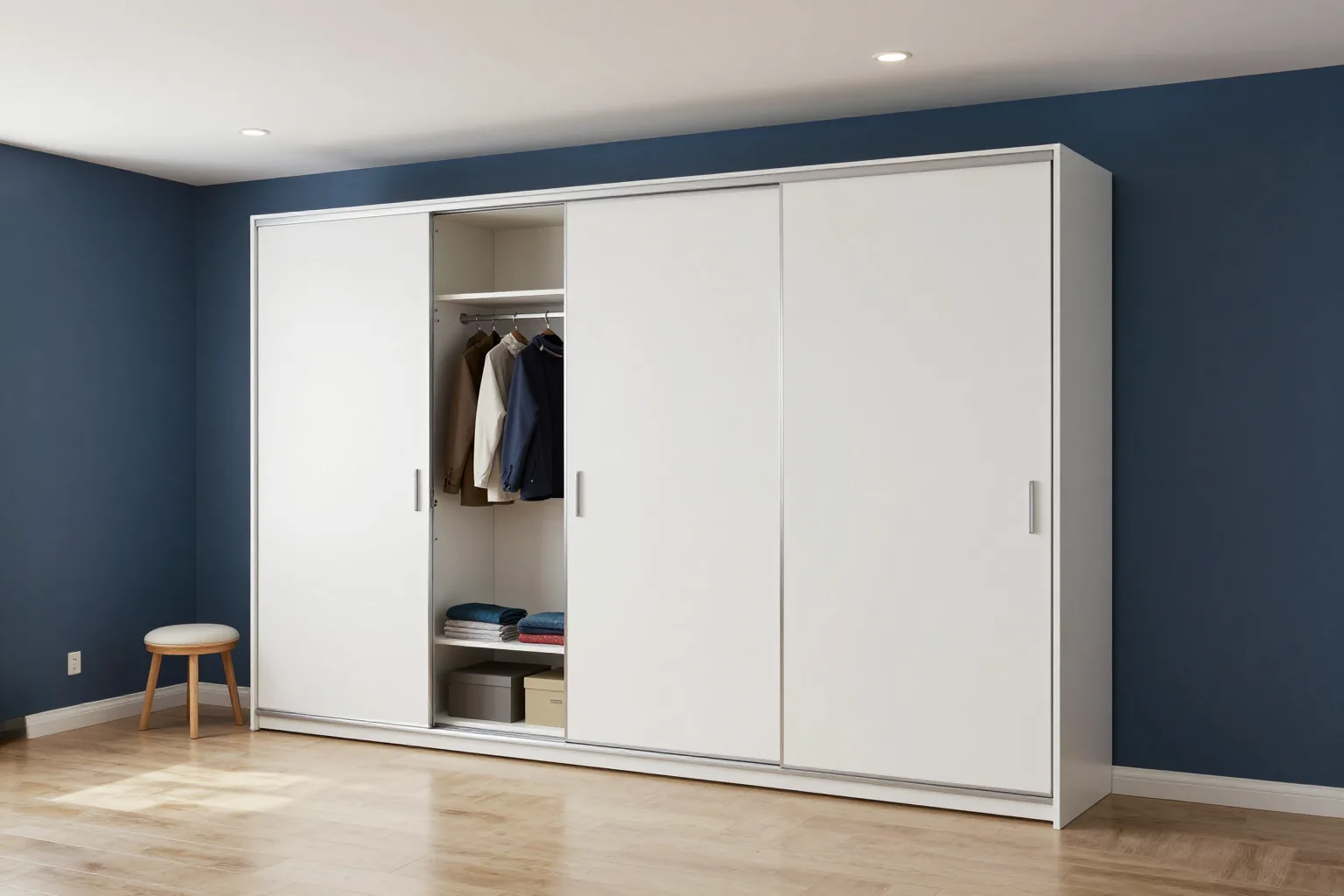
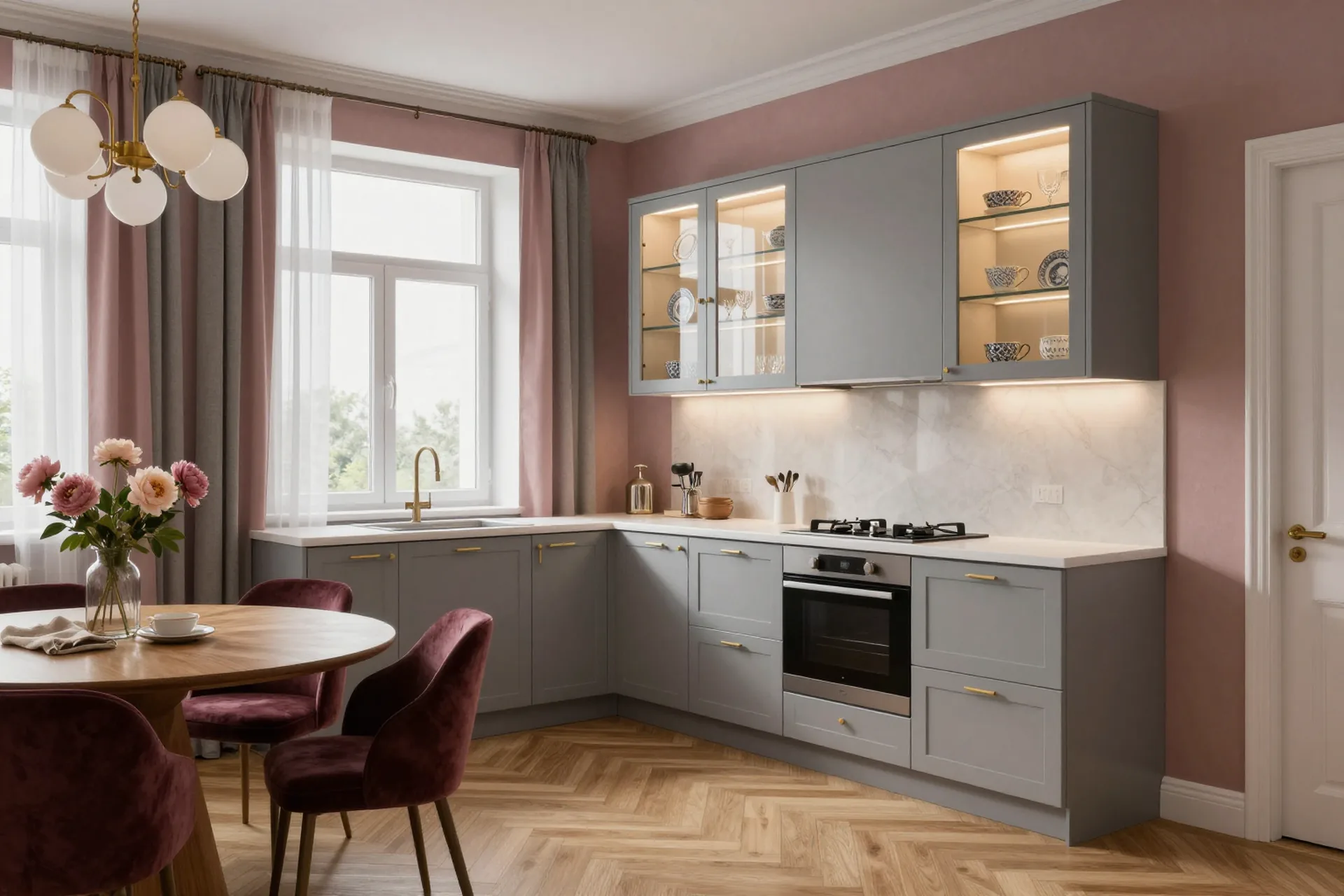
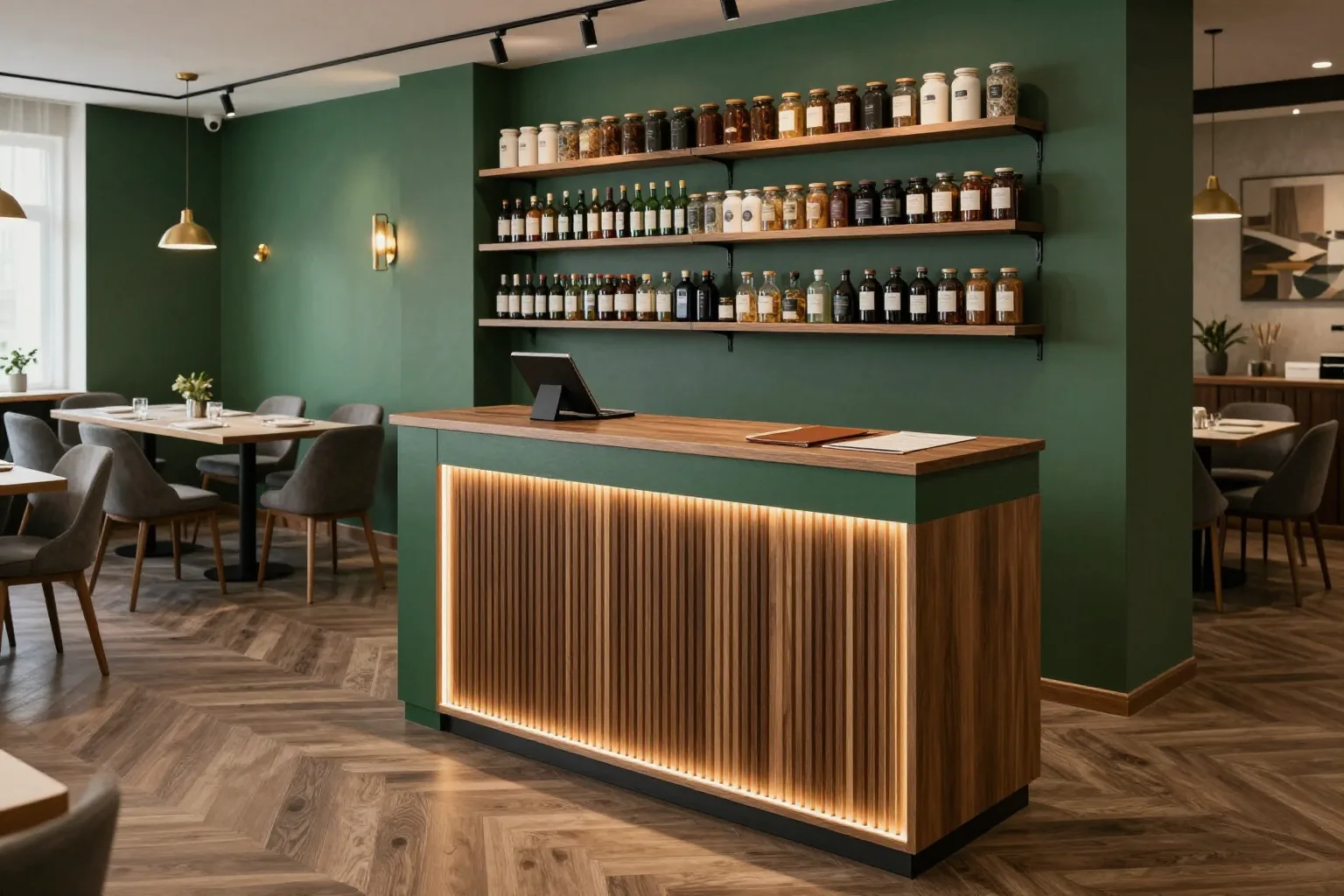
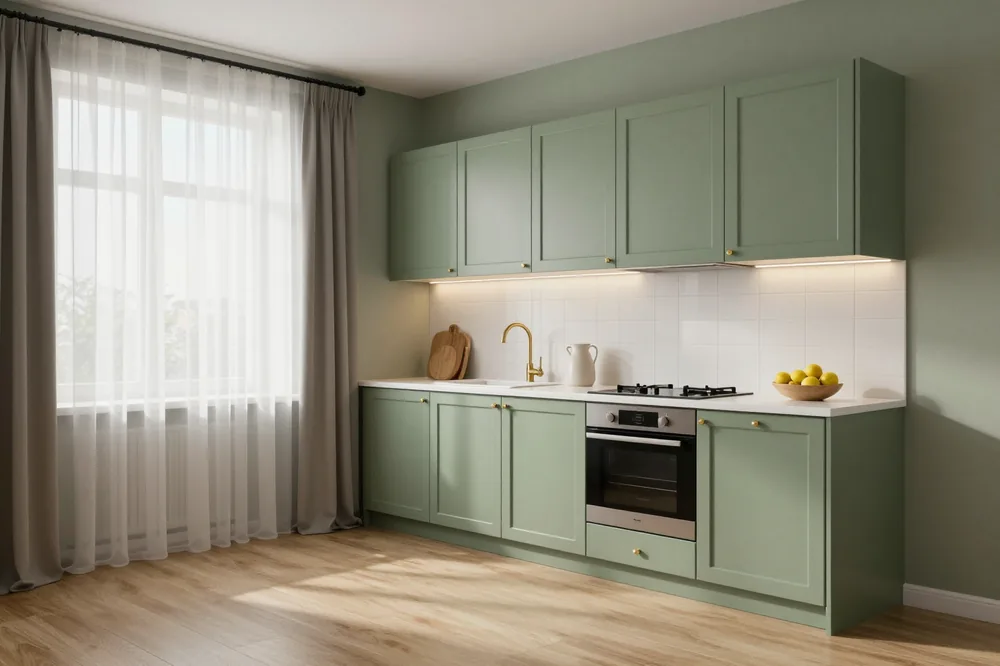
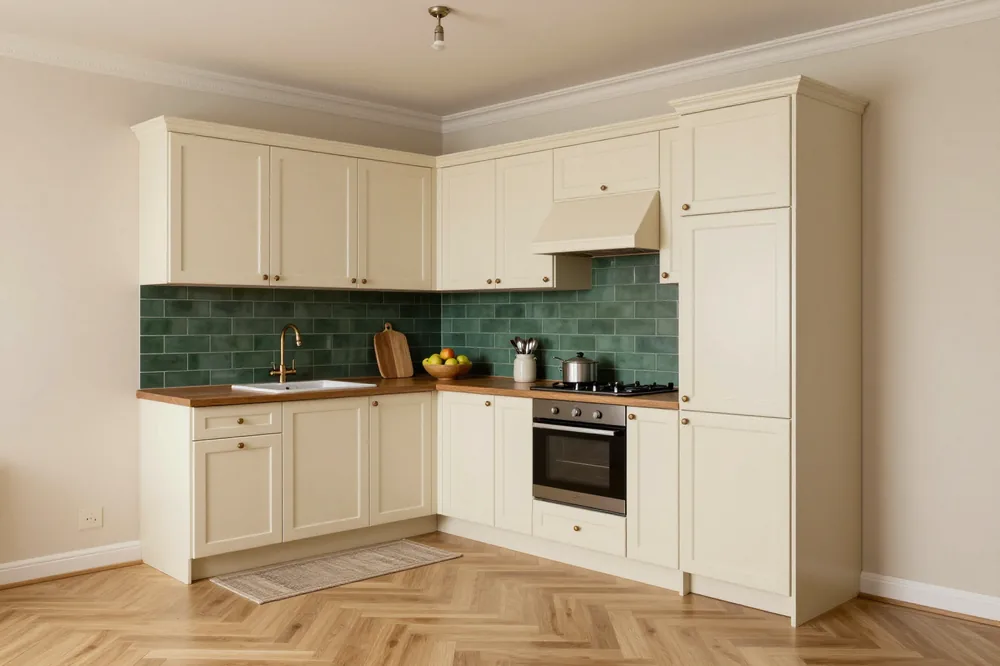
MEBLIX builds custom MDF furniture in Almaty in its own 600 m² workshop, from free measurement and a 3D project in 1–2 days to installation by our own crews. We use Egger and Kronospan boards with Blum, Hettich and Boyard fittings, and back every piece with a 24-month contract warranty.
What a panel is made of decides how long a kitchen or wardrobe holds its shape, finish and alignment. Below we compare MDF with chipboard, explain how thickness is assigned to parts, and show where moisture protection really comes from.
How MDF differs from chipboard for kitchens and wardrobes
MDF is a denser, finer-grained material than chipboard, so it holds edges, curves and paint far better, which matters most on kitchen and wardrobe doors. Both are wood-fibre products, but the cheaper sheet is pressed from larger shavings, while MDF is built from finely refined fibre and pressed evenly through the whole section. That uniform core is why bespoke MDF furniture accepts deep milling, rounded corners and shaped panels that a shaving-based sheet cannot carry without breaking out. A door made of shavings usually needs an added layer to look smooth; an MDF one can be painted or wrapped directly. The real difference shows up at the edge and the hinge point — a denser panel takes screws and milling without crumbling, so doors stay aligned longer.
Board thickness for fronts and carcass
We match thickness to the part — heavier sections for doors that carry fittings, and a stable carcass build so shelves do not sag under load. Our workshop cuts from Egger and Kronospan stock, and the thickness is set in the drawing before cutting starts, not picked off a shelf. A tall wardrobe door and a low drawer face do not carry the same load, so they do not need the same body. Thickness is a design decision, not a default: a leaf that swings on Blum hinges needs enough material for the hinge cup, while a fixed shelf can be lighter without losing strength. When you review the 3D project, check the hinge positions on tall leaves — that is where an undersized section fails first.
Moisture, steam and everyday wear
MDF handles normal kitchen humidity well when edges are properly sealed, but an unsealed cut is where steam and water do the most damage over time. Steam rises from the hob, settles on the underside of wall units and creeps into any raw opening — a sink cut-out, a pipe hole, the back rim of a worktop. Our workshop closes every cut on its own edgebanding line and runs a control assembly before dispatch, so nothing that leaves the shop stays exposed. The protection lives at the seam and the finish, so a well-closed rim and a full-coverage coating matter more than the material label alone. Wipe enamel surfaces with a soft damp cloth rather than an abrasive pad — a scratched layer lets moisture past the film that was doing the work.
Front finishes for MDF furniture and what each one suits
The front sets how a piece looks and how much care it asks for. We compare enamel, PVC film and veneer by the job they do, not by taste alone.
Enamel, PVC film and veneer side by side
Finishes compared by use, appearance and daily upkeep| Finish | Best for | Look | Care |
|---|
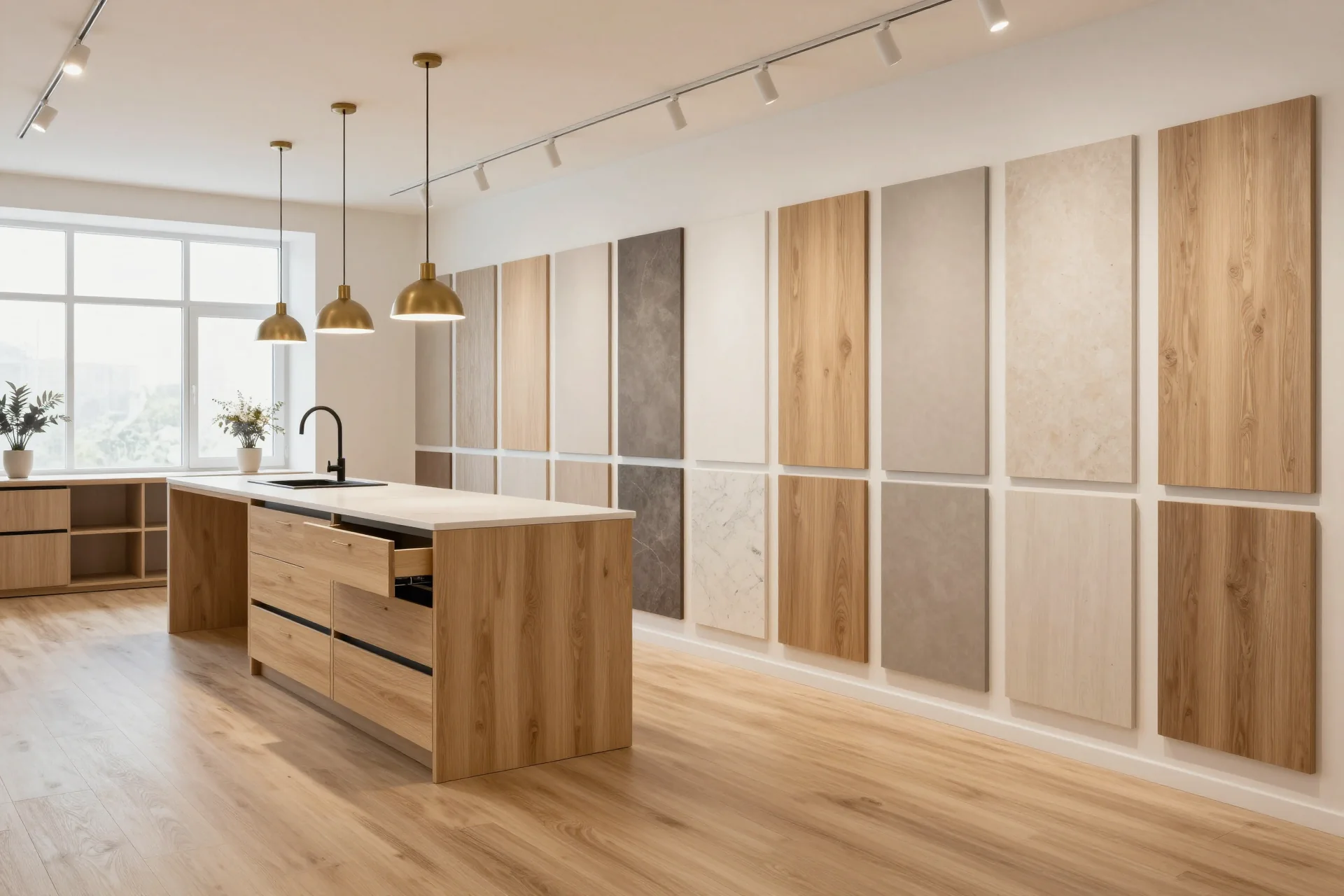
| Enamel | Colour matching, kitchens | Smooth, deep shade | Soft rag, mild soap |
|---|
| PVC film | Family kitchens, wardrobes | Matte, even texture | Damp sponge, no scouring |
|---|
| Veneer | Living rooms, bedrooms | Natural wood grain | Dry wipe, avoid steam |
|---|
| Acrylic | Statement fronts, panels | High gloss, mirror depth | Microfibre, no solvents |
|---|
Painting to a bespoke colour from a sample
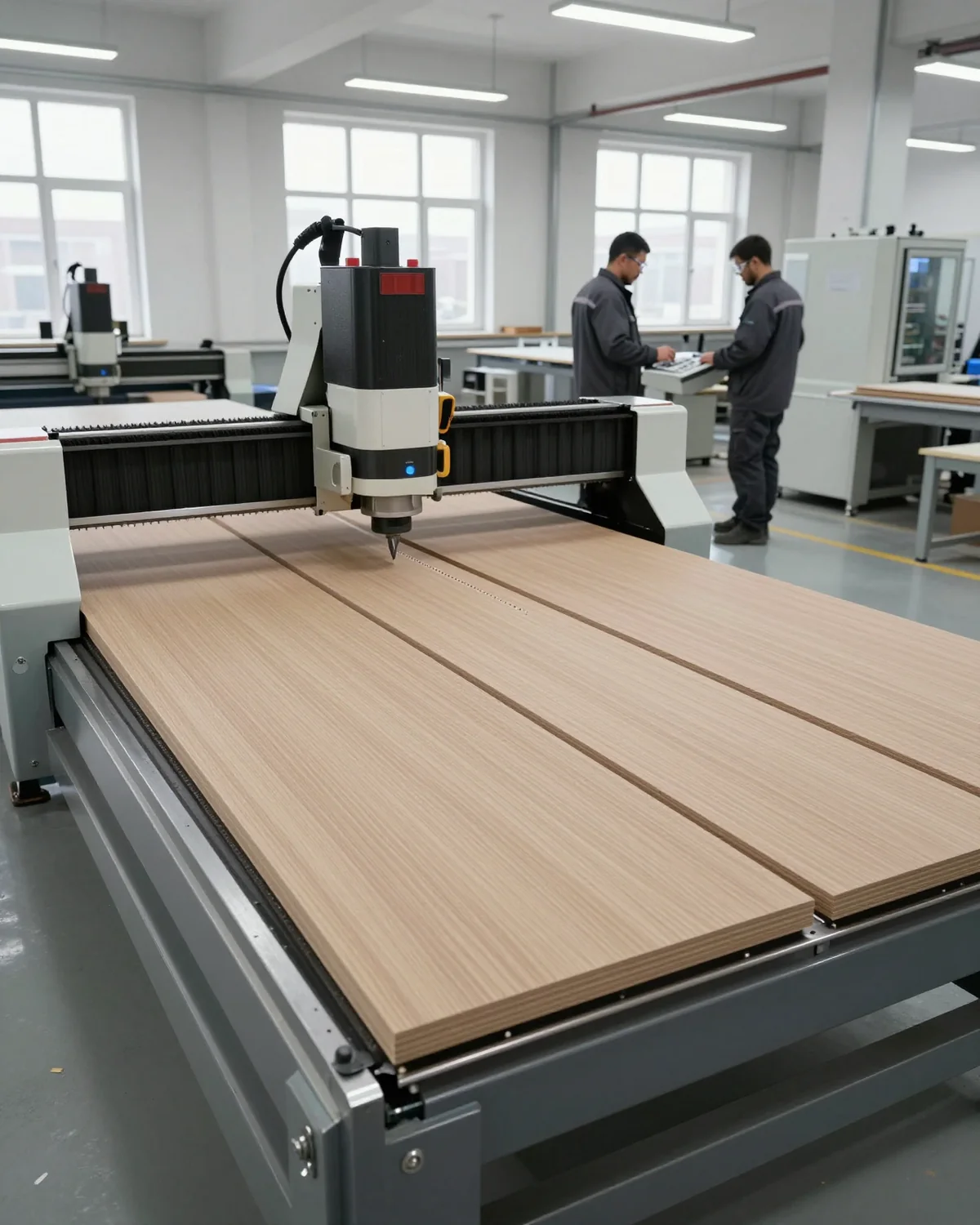
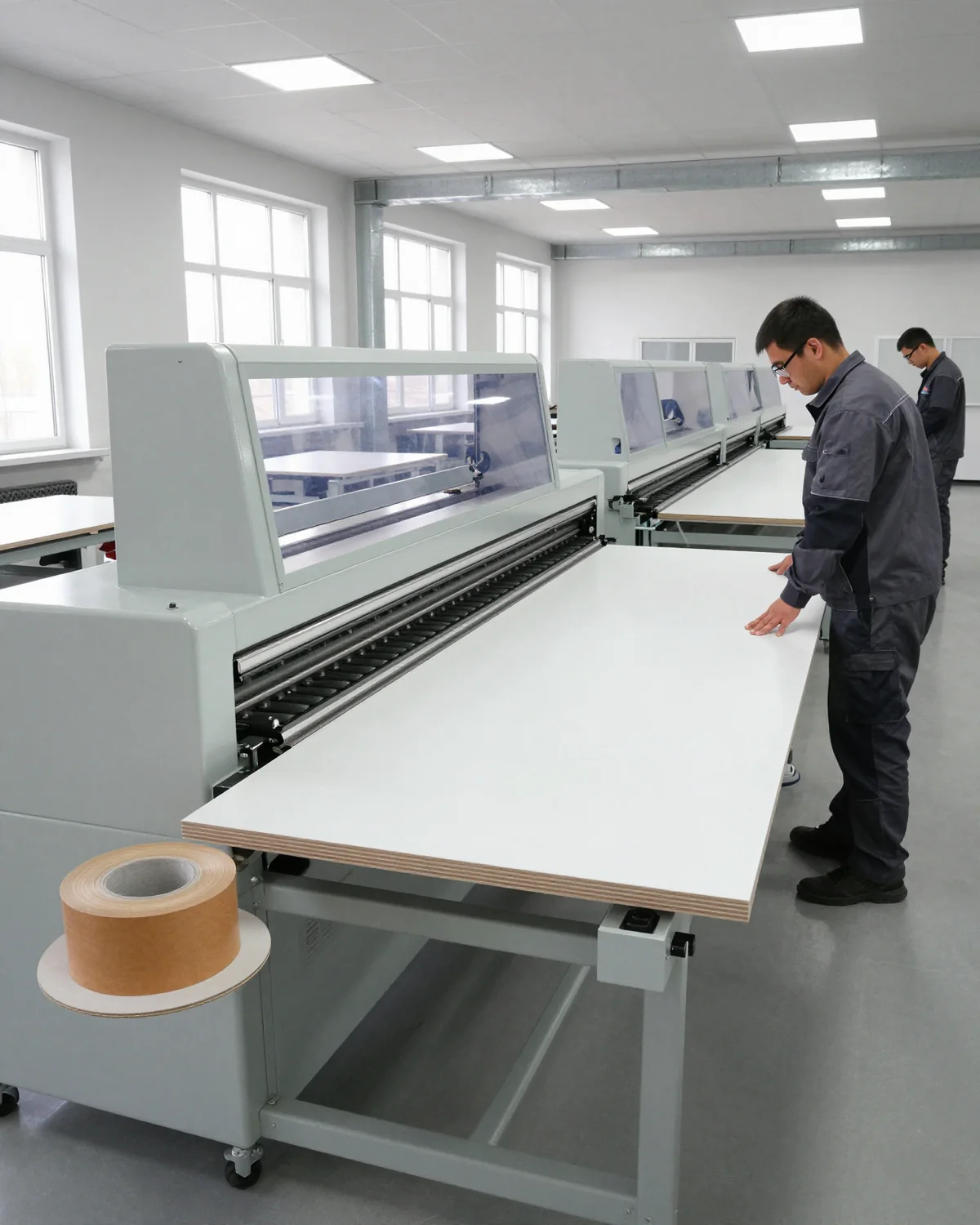
We paint MDF fronts to a shade matched from the swatch you bring, so the piece fits an existing palette instead of the nearest catalogue tone. The workshop handles cutting, edge banding and painting under one roof, which keeps the tint identical across every door and drawer in the set. Matching runs to a physical reference rather than a screen image, because monitors shift hue and daylight in a room shifts it again. Our technologists mix the tint, spray a test panel and show it against your reference before the full set goes into paint. Bring the swatch early — matching before the board is cut avoids re-spraying a finished front and keeps the whole set consistent.
Caring for enamel fronts so they last
- Soft material only: wipe with microfibre or cotton, lukewarm water and a drop of mild soap.
- No scouring pads: abrasive sponges dull the lacquer and leave a matte patch on gloss.
- Dry the edges: standing water softens the seal, so dry the lower rail afterwards.
- Keep heat away: position the hob so steam does not hit the surface directly.
- Fix chips early: a chip touched up in time stops moisture reaching the core.
- Skip harsh solvents: acetone and alcohol sprays attack the lacquer; a damp sponge is enough.
How an MDF furniture order runs from measurement to handover
The path from the first visit to a signed acceptance act follows fixed stages, and each one gives you something concrete: a drawing, a 3D project, an installed unit, a document.
Free measurement and a 3D project in 1–2 days
We measure your space free of charge and prepare a 3D project in 1–2 days, so you see the furniture in your own room before anything is cut. Our measurers record the actual opening, wall deviation, pipe runs and socket positions, and the 3D designers turn those numbers into a layout with board thickness and front arrangement fixed. The drawings show how the carcass meets the wall and where filler strips go, which matters in older apartments where a right angle is rare. A measurement is also where awkward walls and pipes get caught — the earlier that happens, the fewer surprises at installation. Ask for the socket and pipe positions on the drawing itself; shifting a cabinet run at the drawing stage costs nothing, while re-cutting a side panel later does not.
Made-to-measure sizes, built-in niches and non-standard shapes
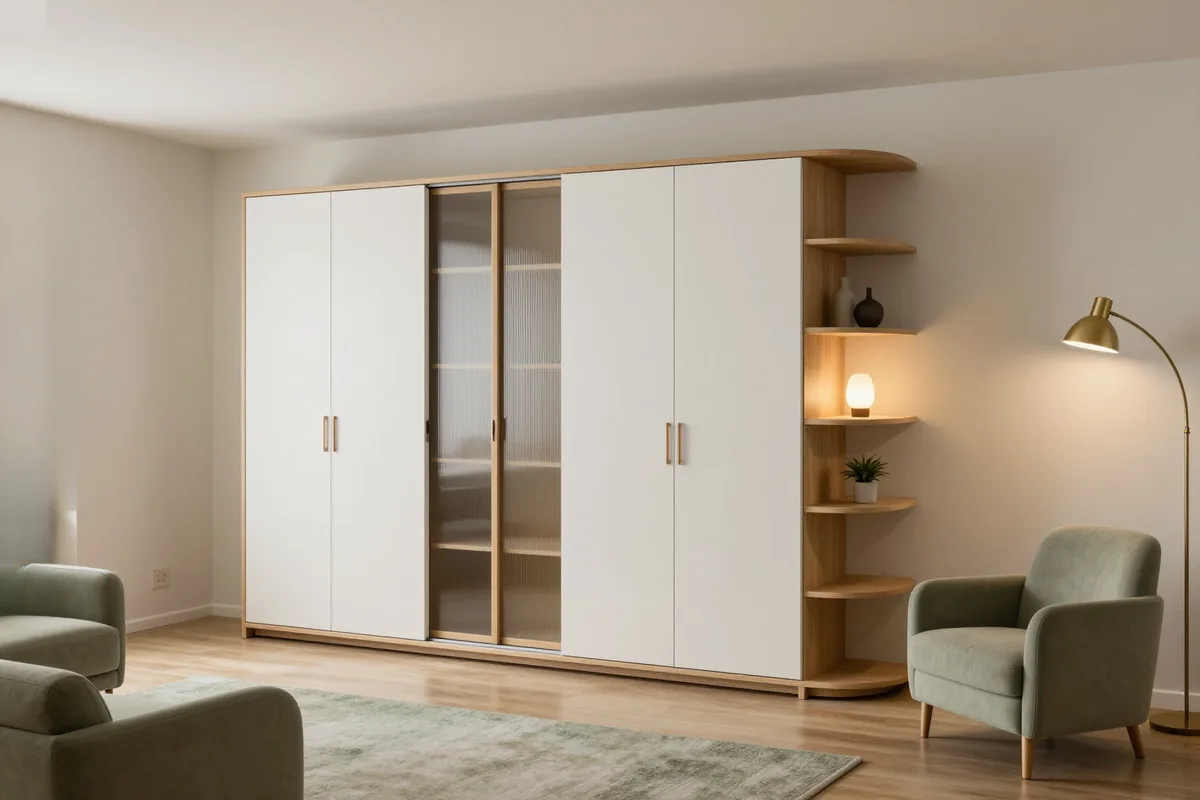
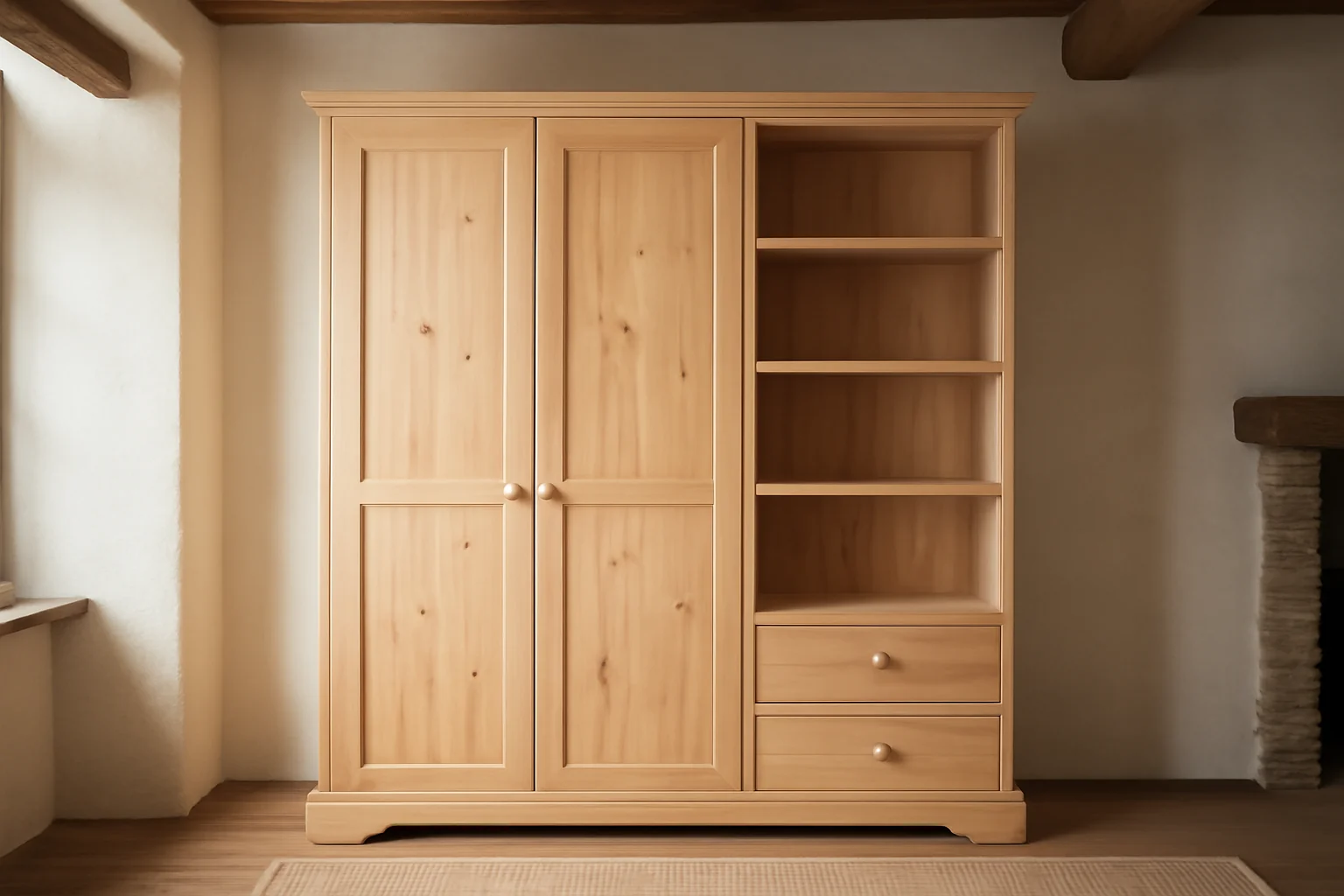
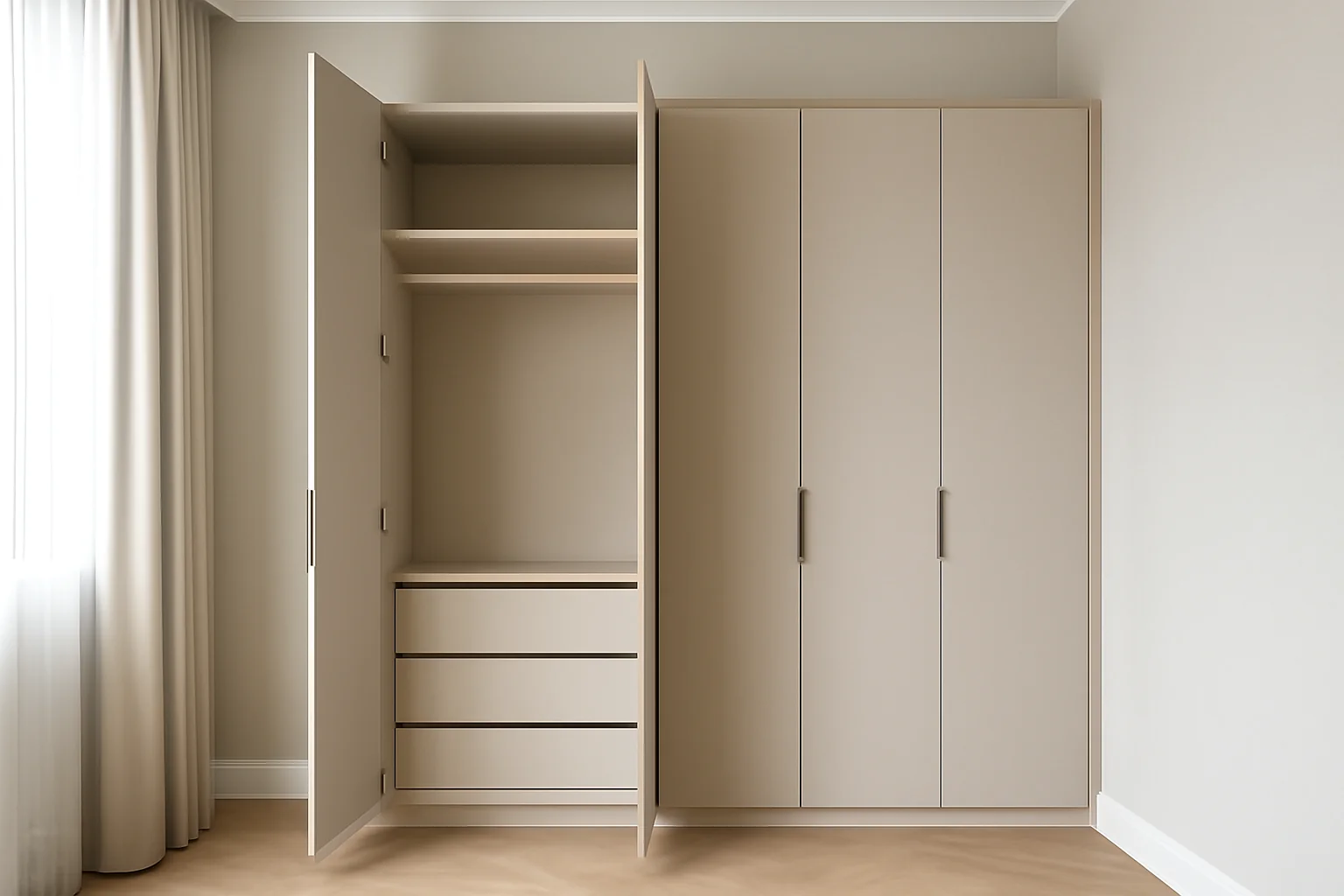
We build to your dimensions, including built-in wardrobes for odd niches and curved or angled fronts that a standard catalogue cannot fit. A sloping attic wall, a column in the middle of a run, a niche that is narrower at the back than at the front — these are drawn as a carcass that follows the real geometry rather than a box forced into it. Curved and radiused fronts are cut and bent in our own workshop, so the shape is set by the drawing, not by what a supplier stocks. The trick with a non-standard niche is designing the carcass around the real opening, so the unit slides in and still leaves room for the door to swing. Check the door swing on the drawing before signing off — a wardrobe that fills a niche perfectly can still block the handle of the next cabinet.
Installation by our own crews and the acceptance act
Our own crews install the furniture, and we sign the acceptance act only after installation, so responsibility for fit stays with us until everything is in place. The same workshop that cut and edged the panels sends its fitters, which means the people on site know how the unit was assembled during the control build. Levelling, fixing to the wall, hanging doors and adjusting hinges are done by the same crew that built the unit. Keeping installation and handover with the same team means a problem found on site is fixed by the people who built the furniture, not passed between contractors. Walk the room with the fitter before signing: open every drawer, check each door for rub, and confirm the filler strips sit flush — the act is your record that the result matches the project.
Ordering MDF furniture from measurement to installation
Fronts and carcass get the attention, but hinges, runners and lift systems carry the daily load. This section covers the mechanisms we fit, what each warranty promises, and how an order is paid and closed.
Why Blum, Hettich and Boyard fittings matter
We fit Blum, Hettich and Boyard components because hinges, lift systems and drawer runners are what keep MDF fronts from sagging as the years add up. The first brand supplies the hinge and lift range, Hettich covers hinge and runner lines, and Boyard fills in the remaining drawer and flap mechanisms. A tall MDF door is real weight on every pivot point, and a drawer loaded with pans tests the runner on every pull. These parts move every day, so they wear before the board does. A heavy front on a weak pivot drops out of alignment fast; quality mechanisms are what let a solid MDF door keep its line over years of use.
What the 24-month and Blum 25-year warranties cover
The finished piece carries a 24-month warranty under the contract, and the Blum set adds a 25-year manufacturer term on hinges, lift systems and drawer runners. The 24-month period covers the build and the installation: board joints, front alignment, edge banding and how the unit sits on the wall after our crews finish. The longer term is narrower — it applies to those mechanisms only, not to Hettich or Boyard parts and not to the carcass. Both promises are written into the contract, so the terms are on paper before production starts. Read them as two separate commitments — one backs the build, the other backs the mechanism.
Payment terms and how the deal is closed
- Deposit: we start with a 50 % prepayment once the drawing and specification are signed, which locks the board and hardware order.
- Balance: the remaining 50 % falls due after the acceptance act is signed, so the last payment follows a finished, installed piece.
- Acceptance act: we sign it after installation, when you have checked fronts, gaps, drawers and doors on site.
- Bank transfer: we work by bank transfer, which suits private clients and companies ordering fit-out for offices or rental units.
- Written terms: deposit, balance and acceptance sit in the contract, so both sides work from the same document.
Direct workshop or middleman and how to tell
In Almaty it is easy to pay a middleman for work a workshop could do directly. We explain how to tell a real production floor from resale, and what that changes for you.
Signs that a workshop really makes the furniture itself
- One roof for every step: a genuine workshop shows cutting, edging and painting on its own floor, not a rented office.
- Board you can trace: it names the panel brand and the fittings supplier, and both appear in the sample room.
- Its own assembly crew: the people who install the piece are on the same payroll as the people who built it.
- The acceptance act comes from them: the document you sign after installation carries the name of the company that cut the board.
- A visit is welcome: you can walk the floor and watch a panel being edged before you commit.
- A reseller redirects you: ask where the board is cut and who signs the act — if the answers point to different companies, you are talking to a middleman.
Made-to-measure versus a ready-made set
A made-to-measure MDF piece fits your walls and storage needs exactly, while a ready-made set forces the room to adapt to standard dimensions. We build custom MDF furniture from bespoke drawings, so a run of units can close a wall end to end without filler strips, and a tall wardrobe can reach the ceiling line instead of stopping short of it. The difference shows in corners, above the fridge and around a window reveal — the places a standard set leaves as dead space. Tailored sizing turns that leftover volume into drawers, a pull-out larder or a closed shelf.
Replacing only the fronts and keeping your carcass
If your carcass is still solid, we can make new MDF fronts to fit it, refreshing the look without rebuilding the whole piece. The old boxes stay in place, the new doors and drawer faces are cut to the existing openings, and the run keeps its original layout. This suits kitchens and wardrobes where the frame is square and the hinges still line up; at measurement we check whether new fronts will sit cleanly or the box has to be adjusted first. It is a practical route when the layout works but the finish has dated — you keep the storage and change only what you see.
The bottom line on MDF furniture
A finished piece of MDF furniture is the sum of small decisions made early — board, surface treatment, fittings and a process that ends with a signed handover.
- Board choice and thickness: MDF holds a crisp edge and a smooth face better than chipboard, so doors stay flat and carcass panels resist sagging under load.
- Surface matched to the room: enamel, PVC film and veneer behave differently around steam, sunlight and cleaning, so the coating should follow where the piece stands.
- Fittings that hold heavy doors: hinges, lift mechanisms and drawer runners carry the weight, and their load rating decides whether panels stay aligned over time.
- A clear process with signed handover: measurement, a 3D project and an acceptance act after installation leave no gap between what was agreed and what was mounted.
- Warranty terms read as separate promises: the product guarantee and the manufacturer's cover for components protect different parts, so check each one on its own.