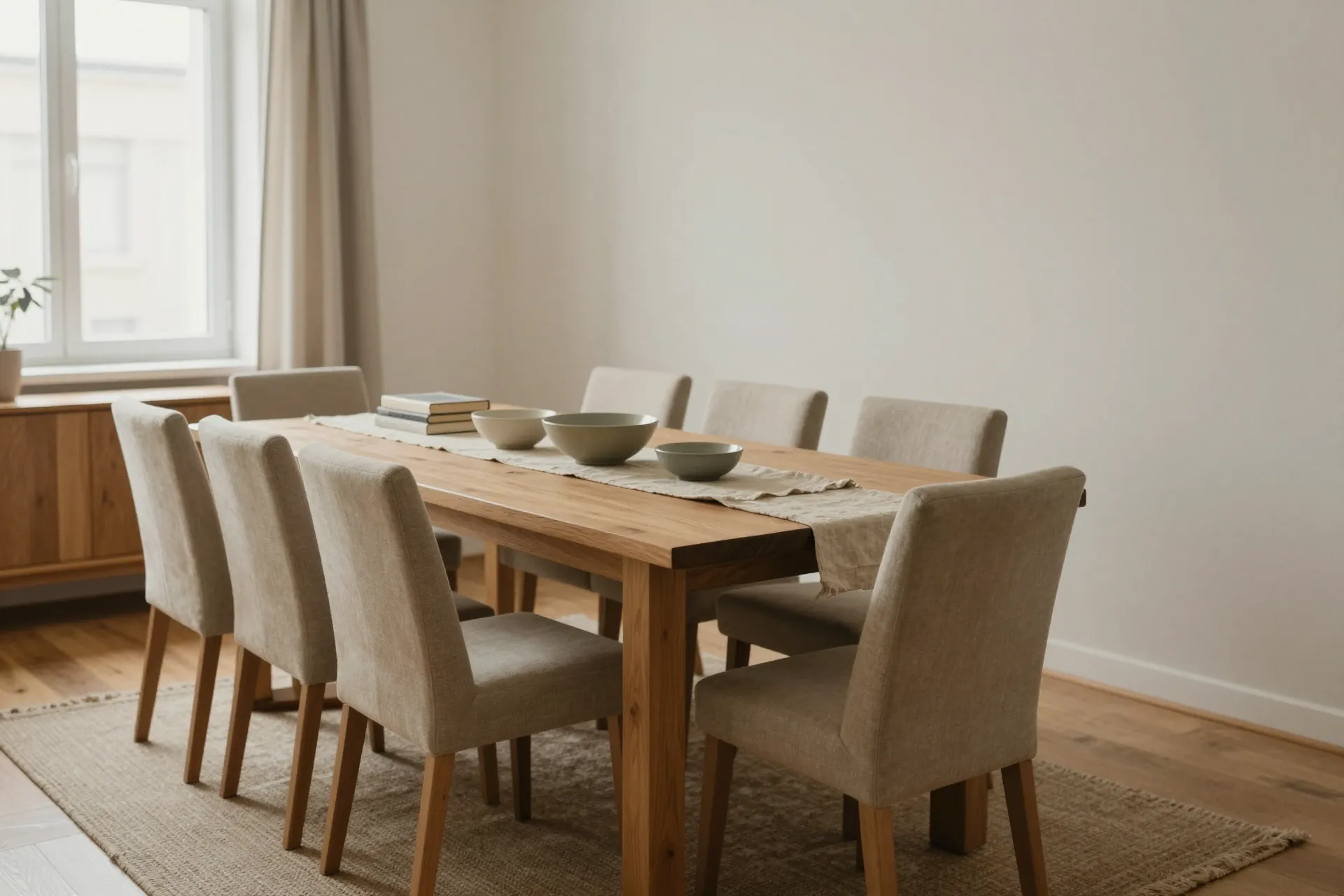
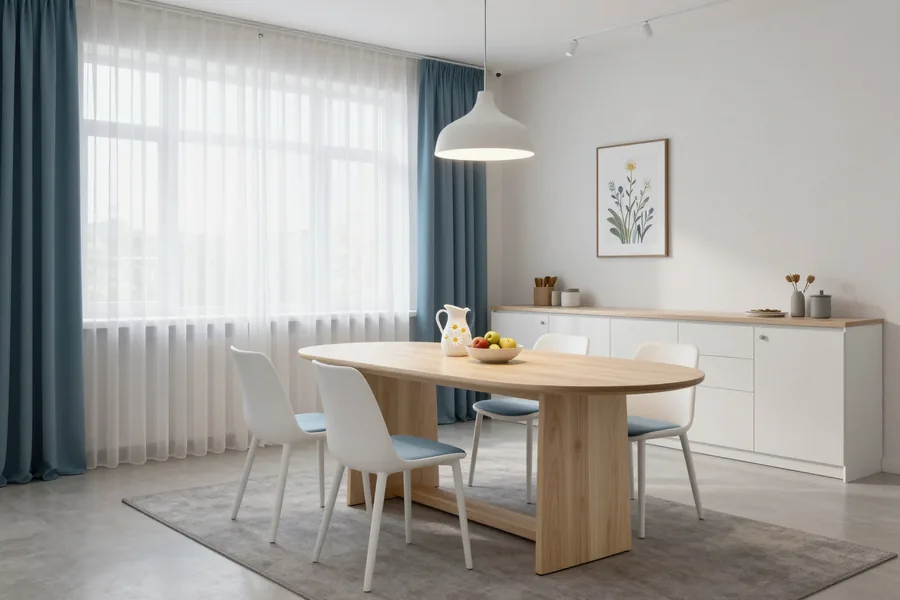
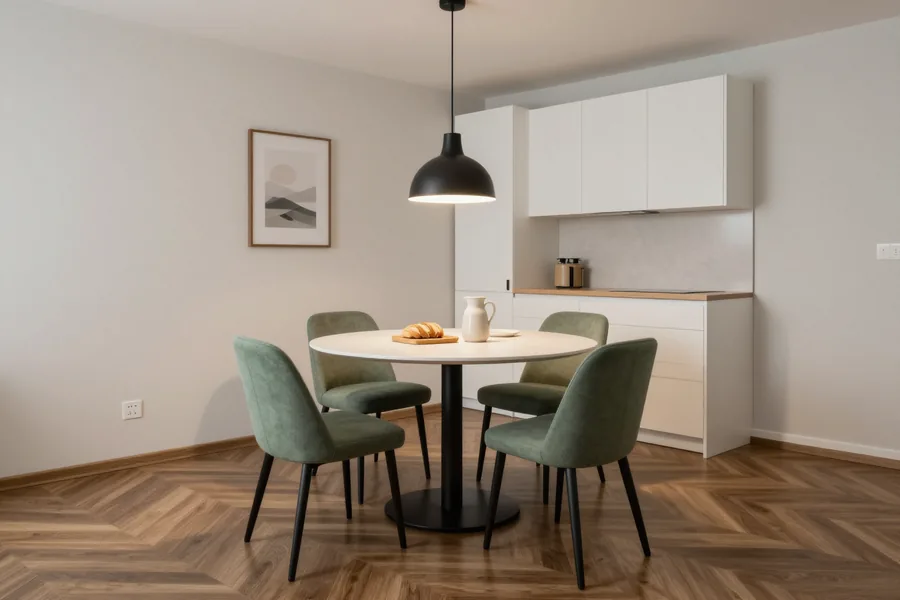
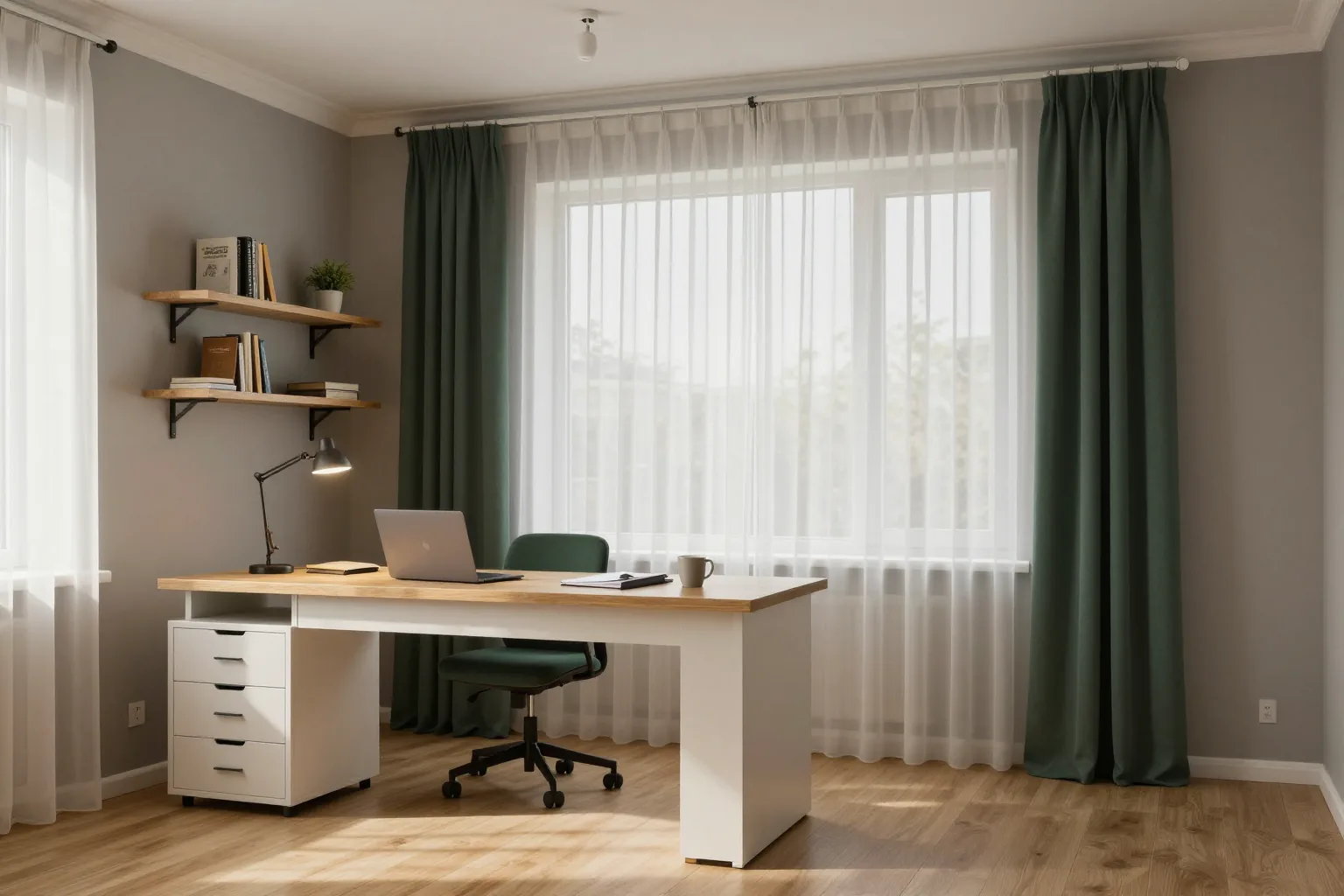
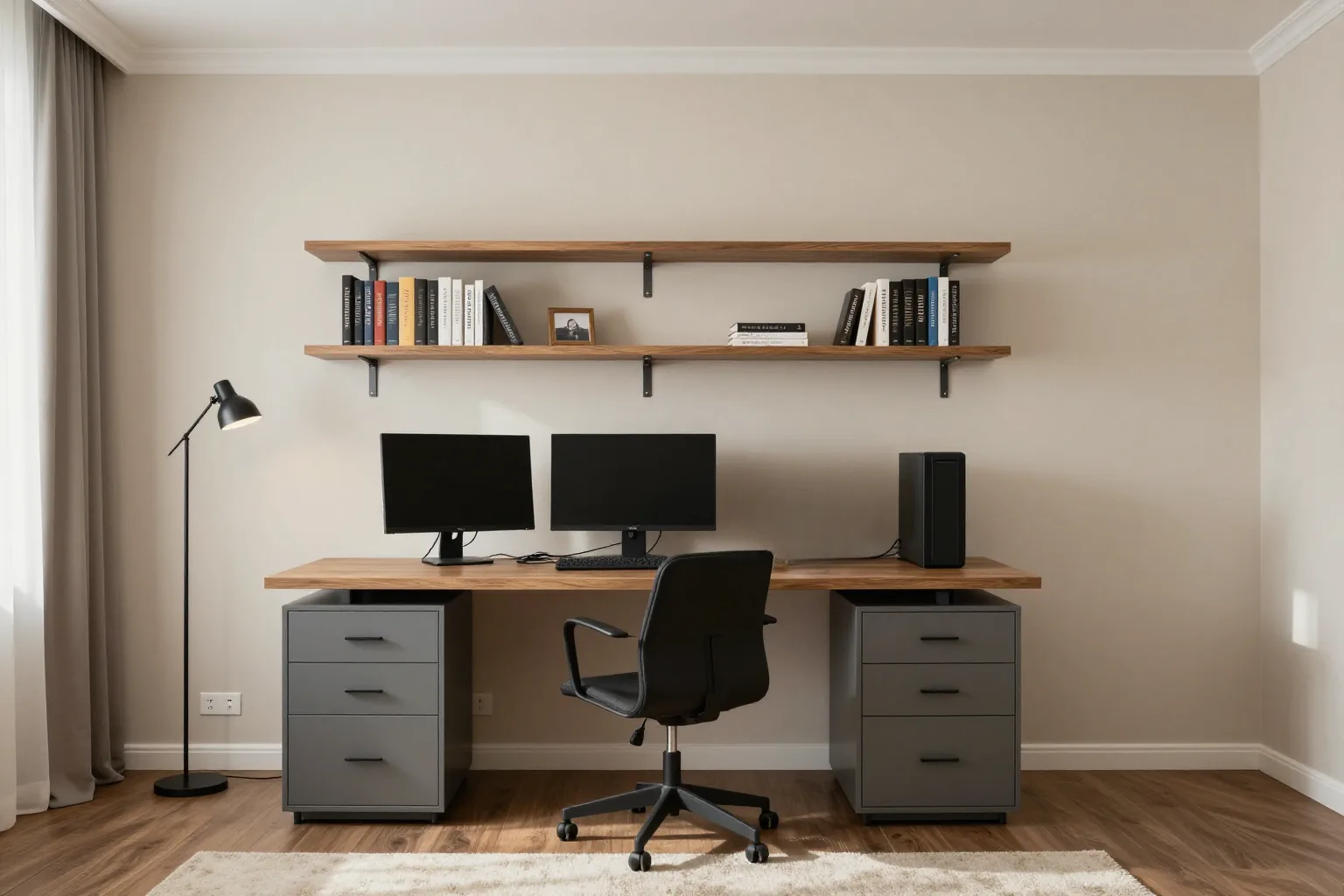
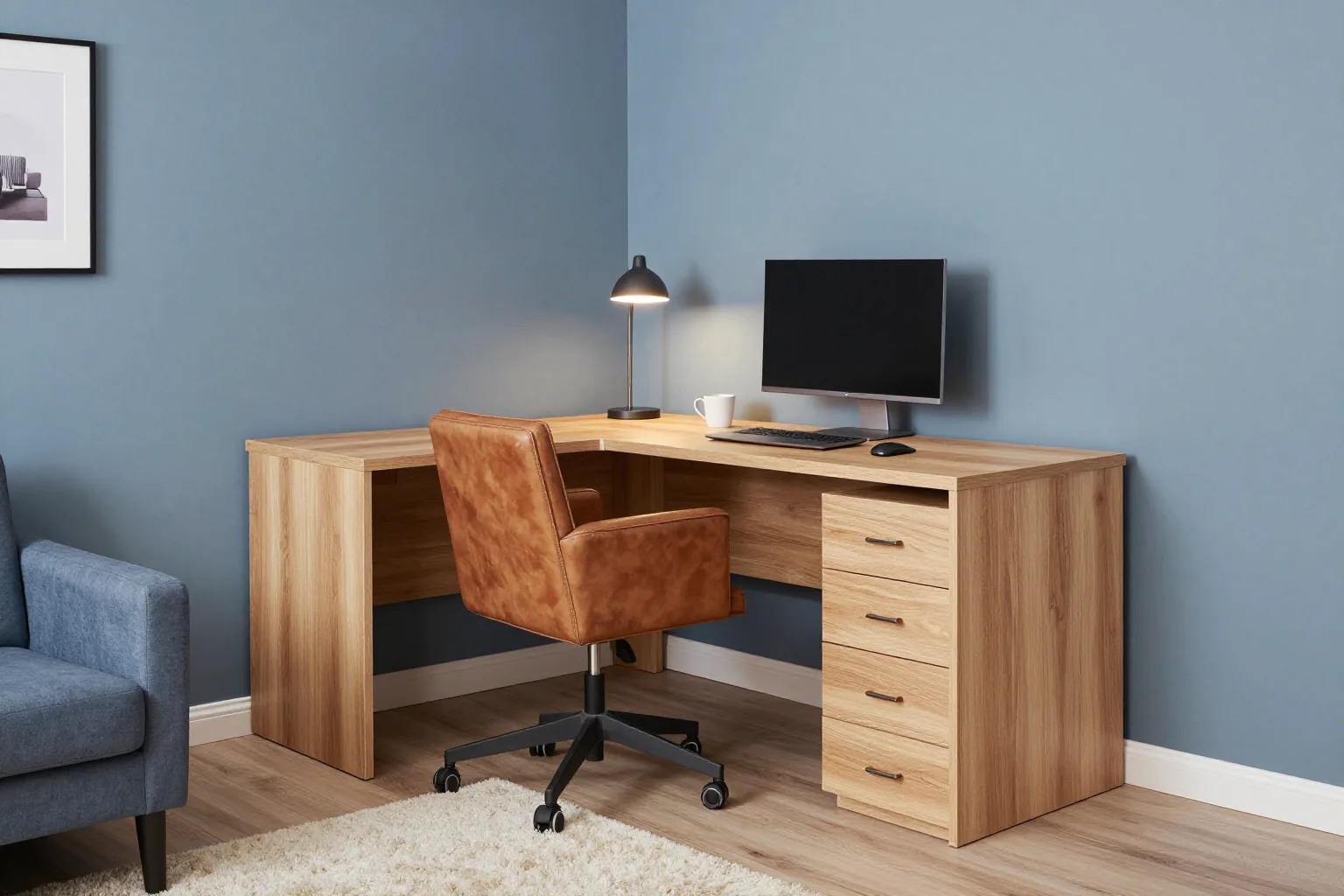
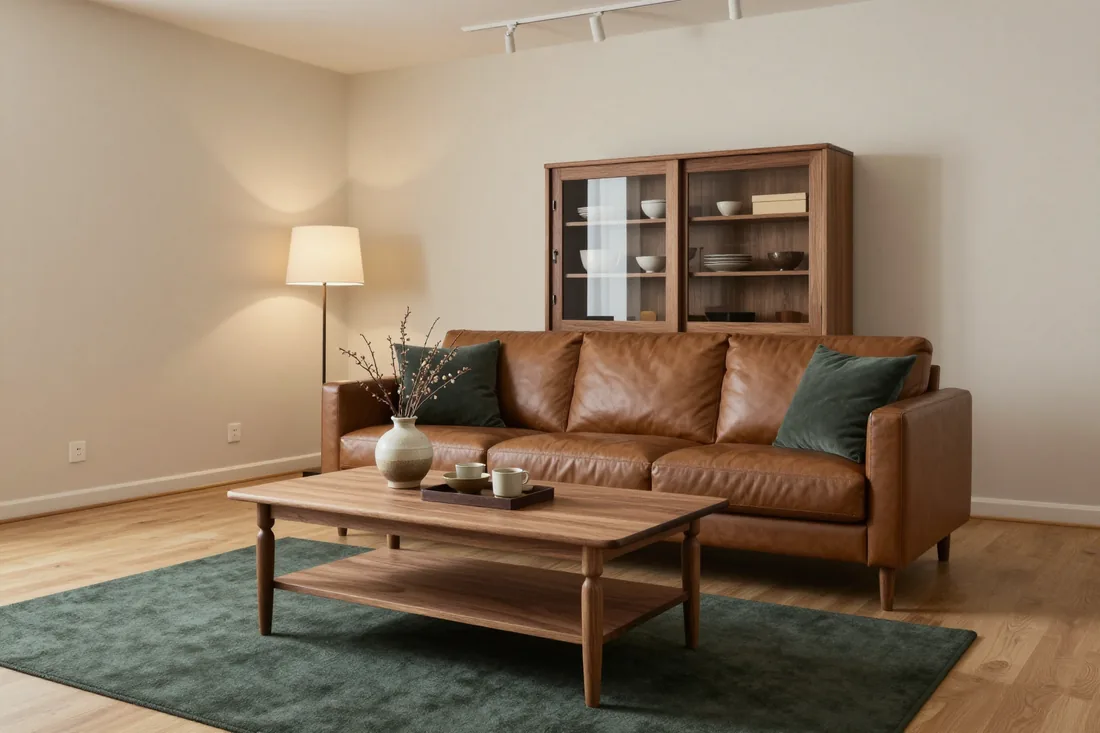
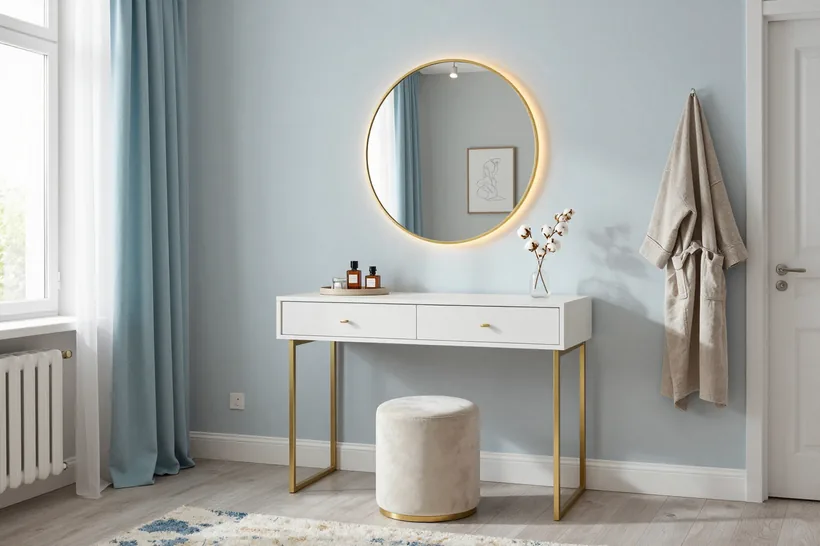
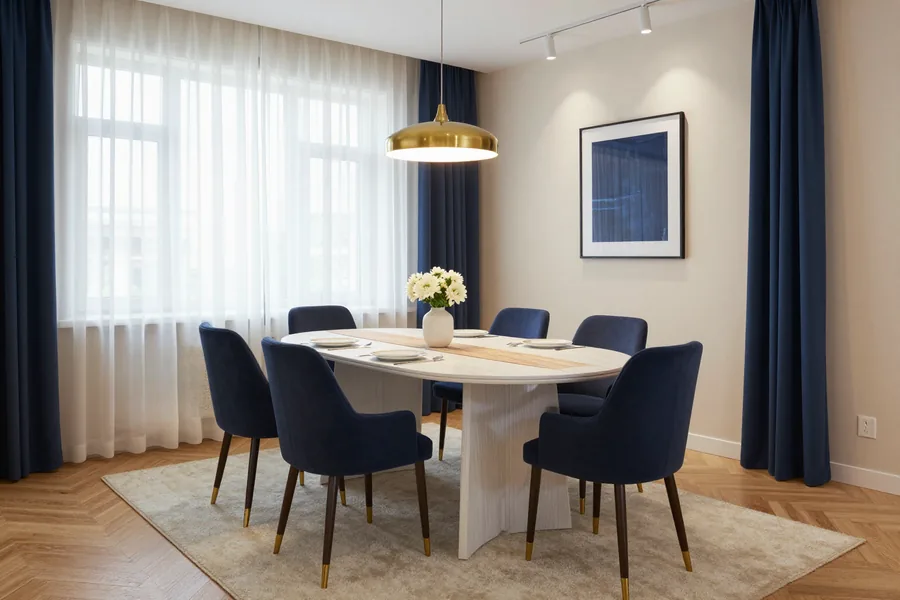
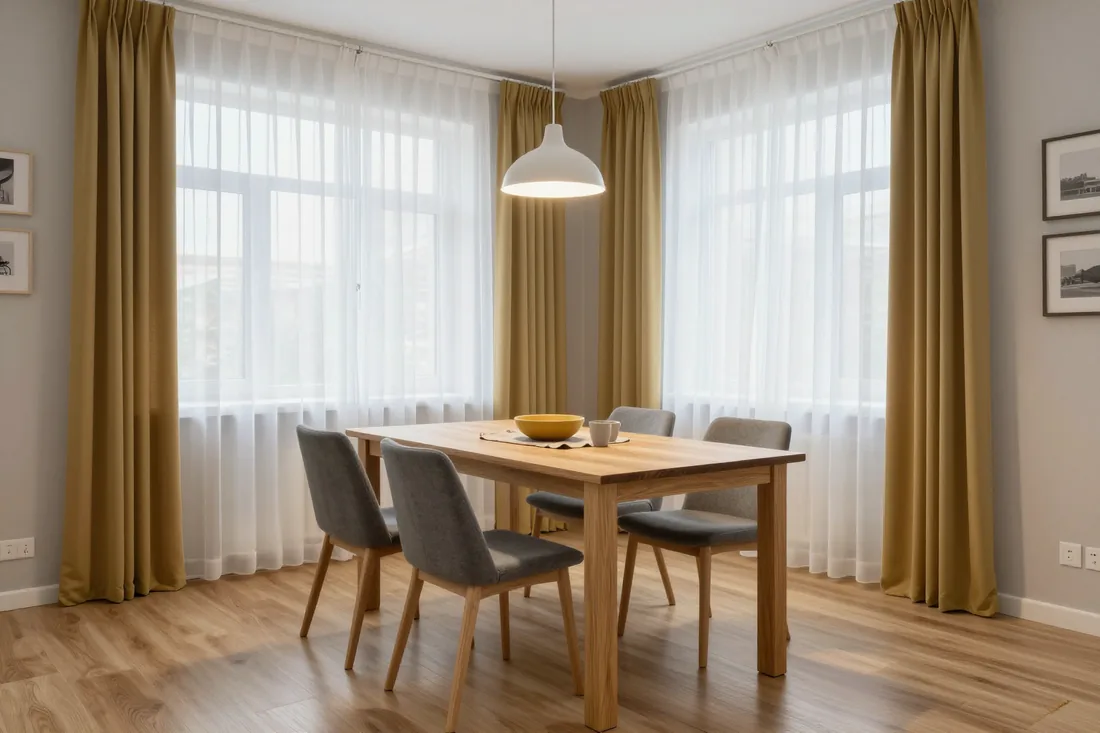
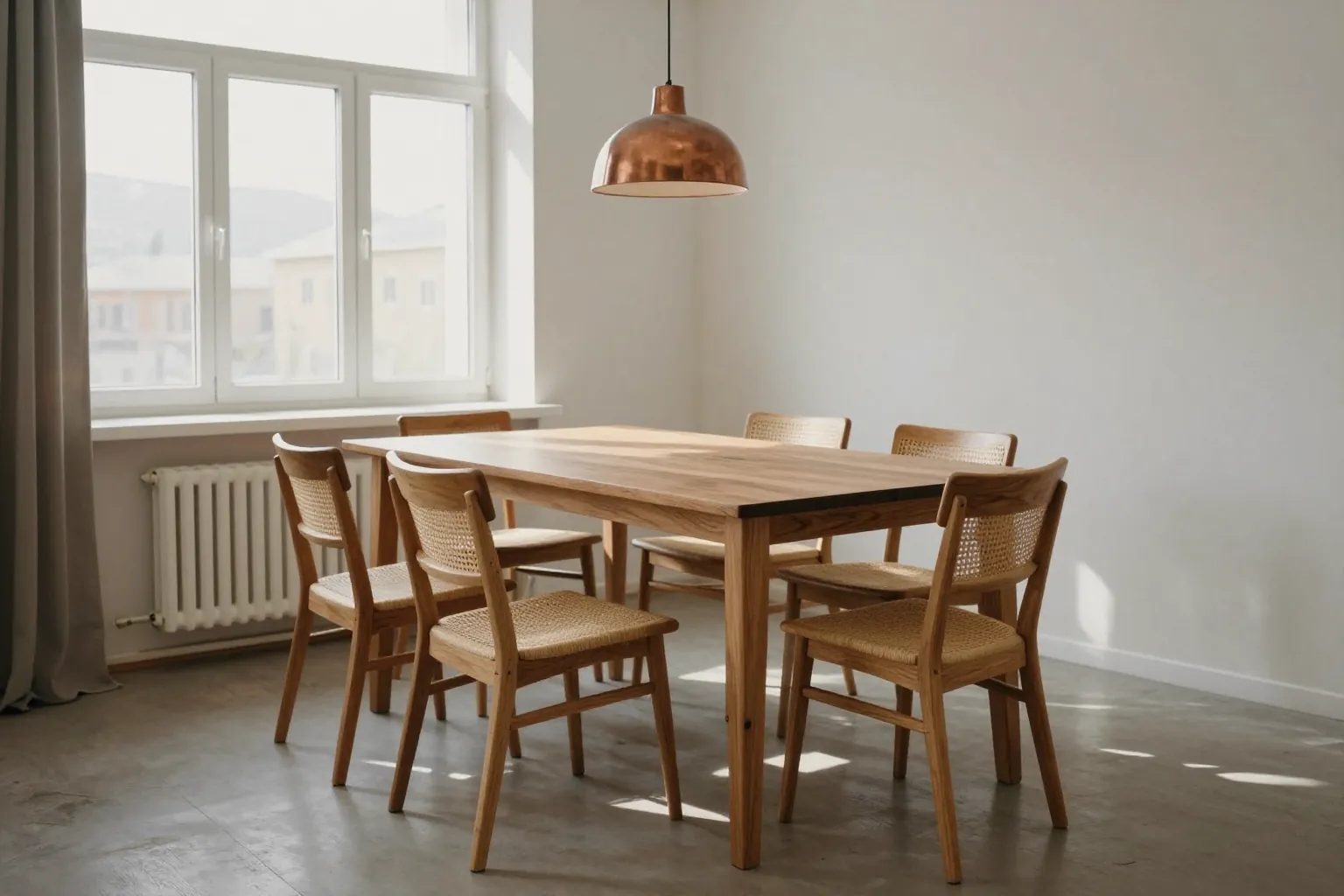
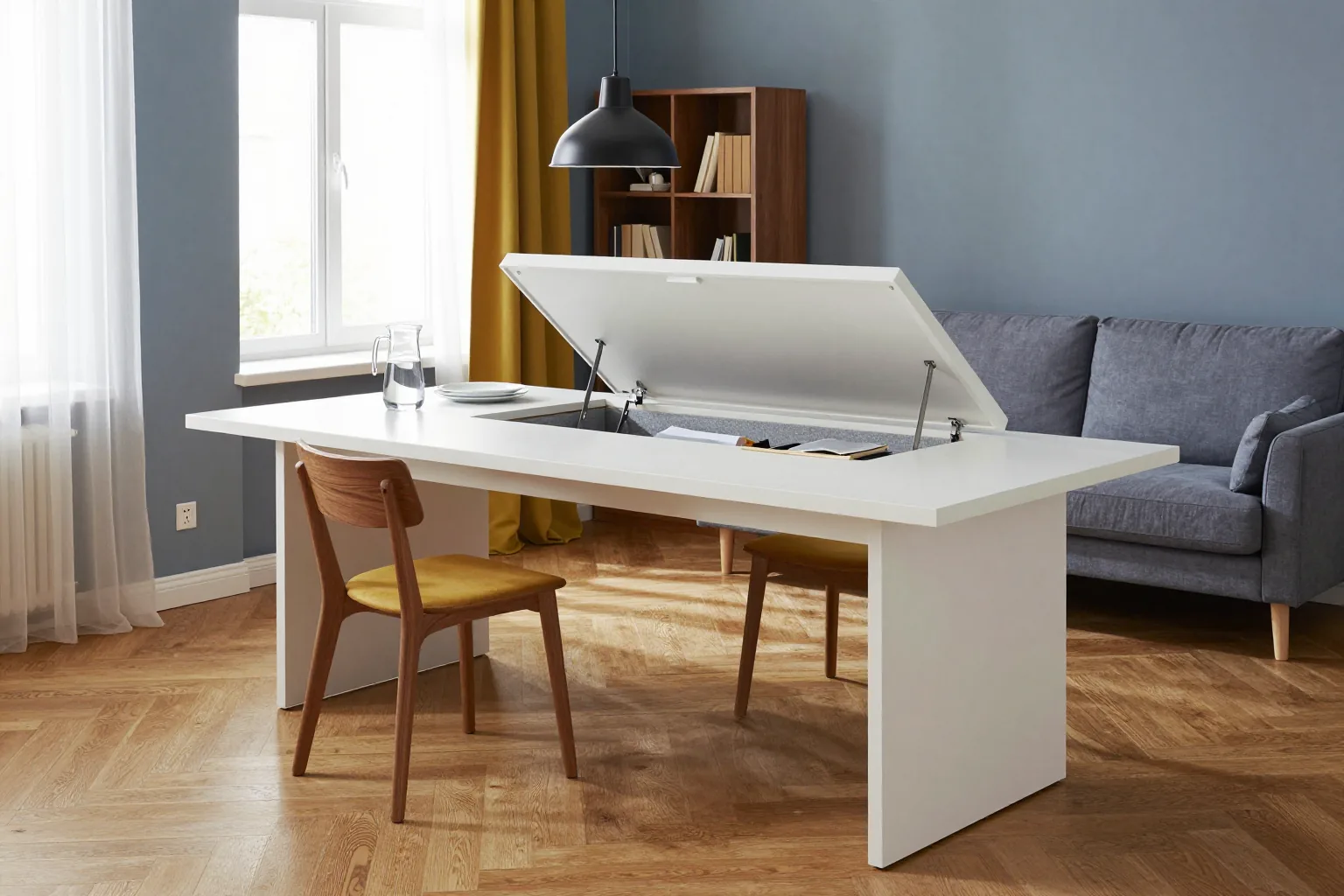
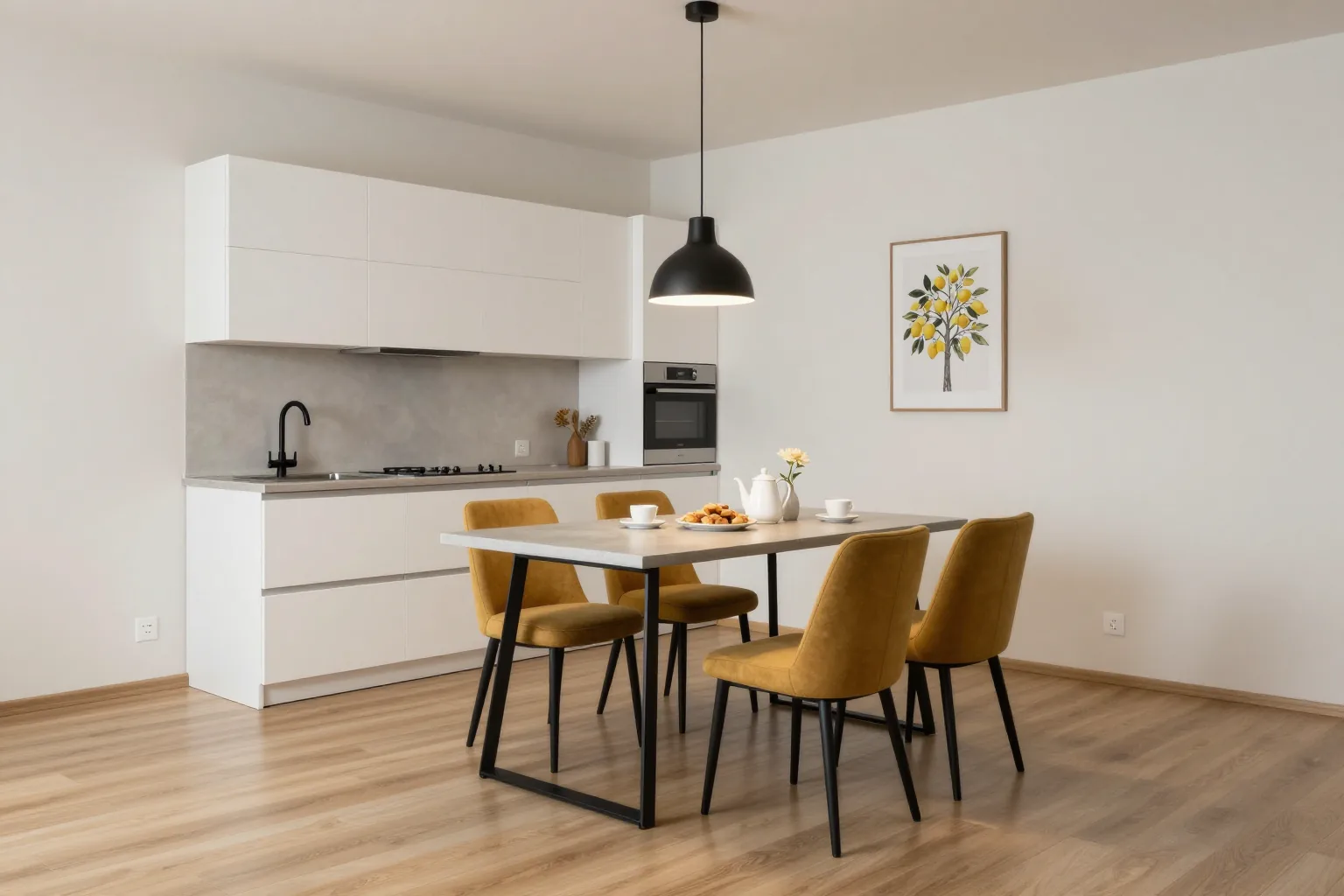
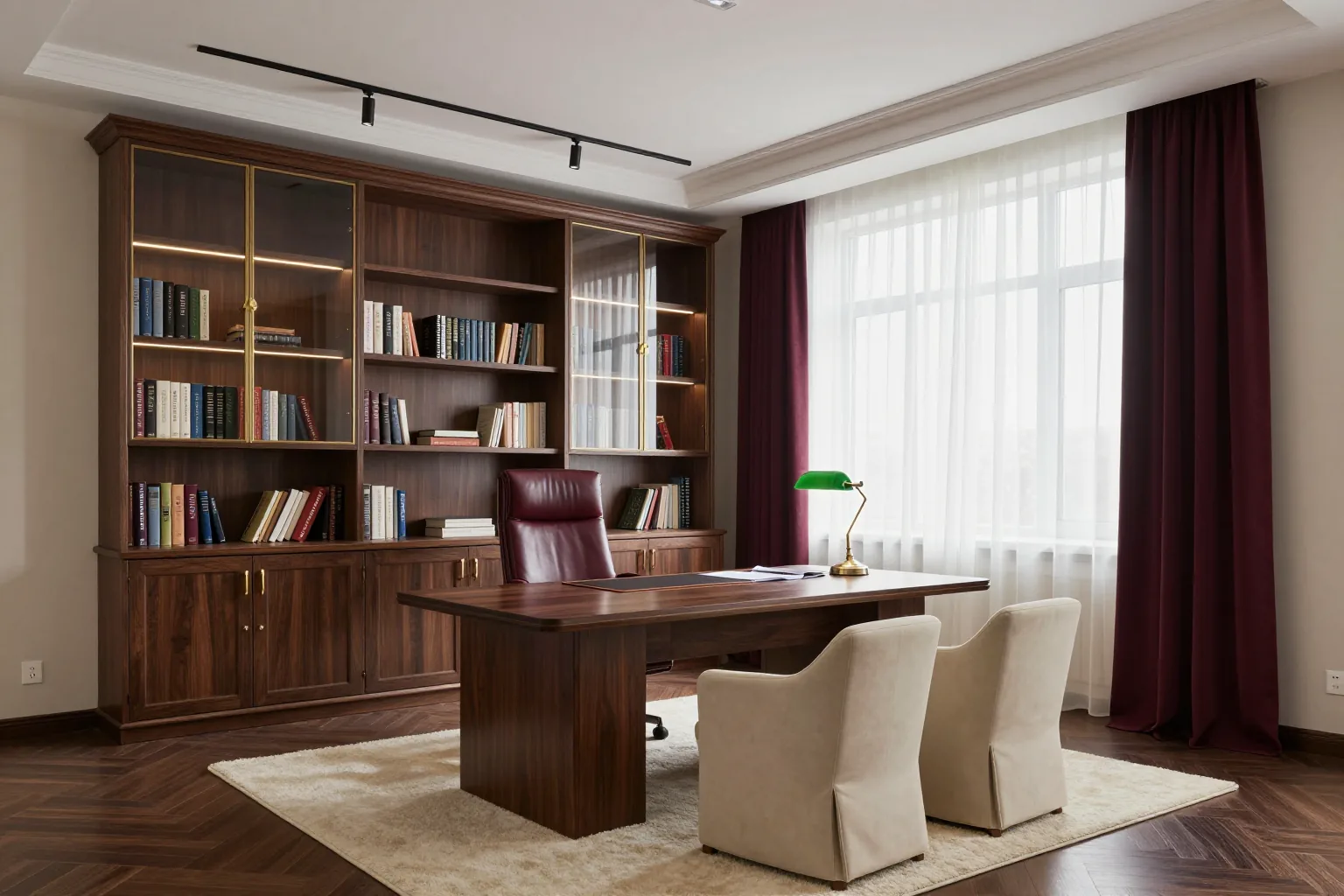
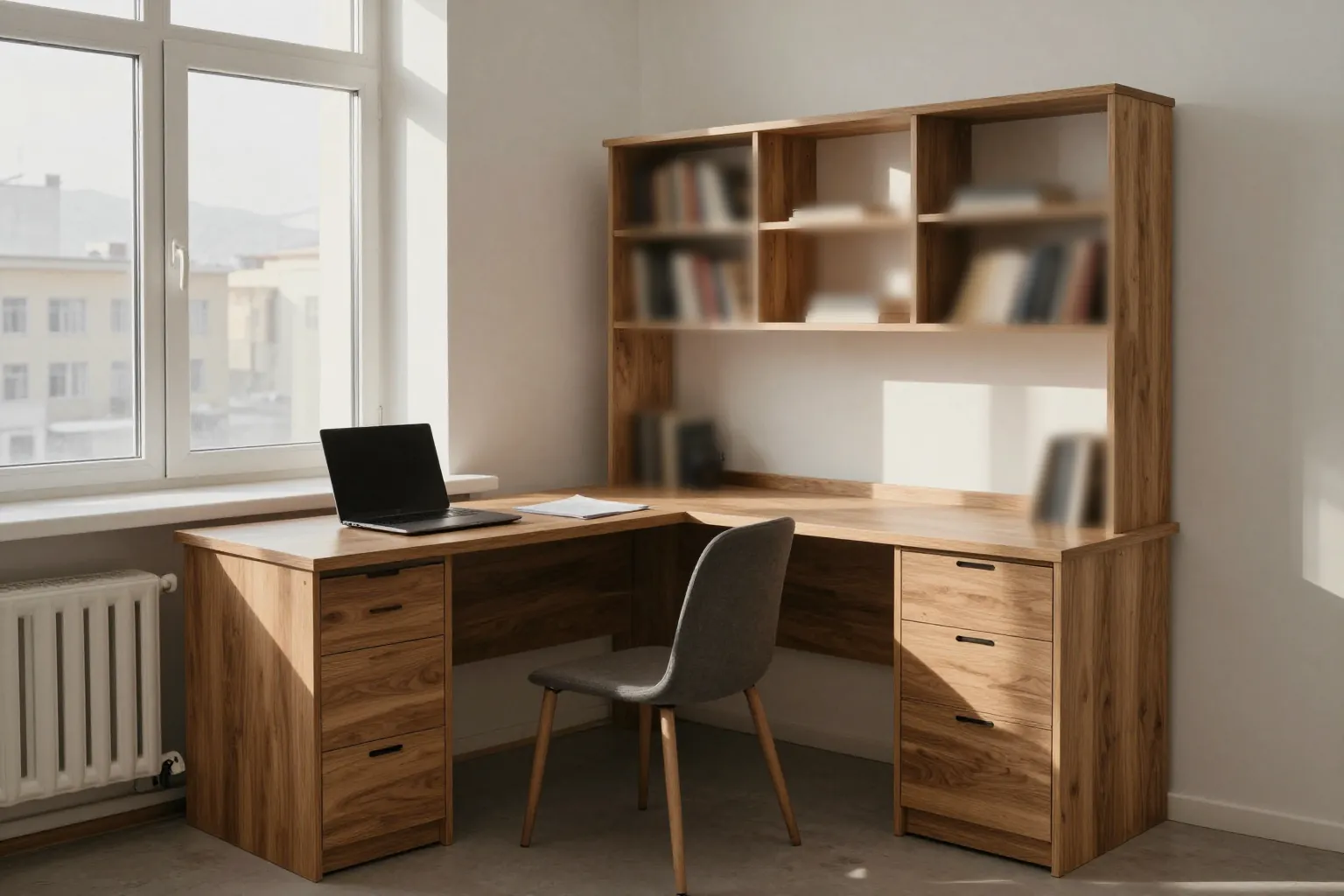
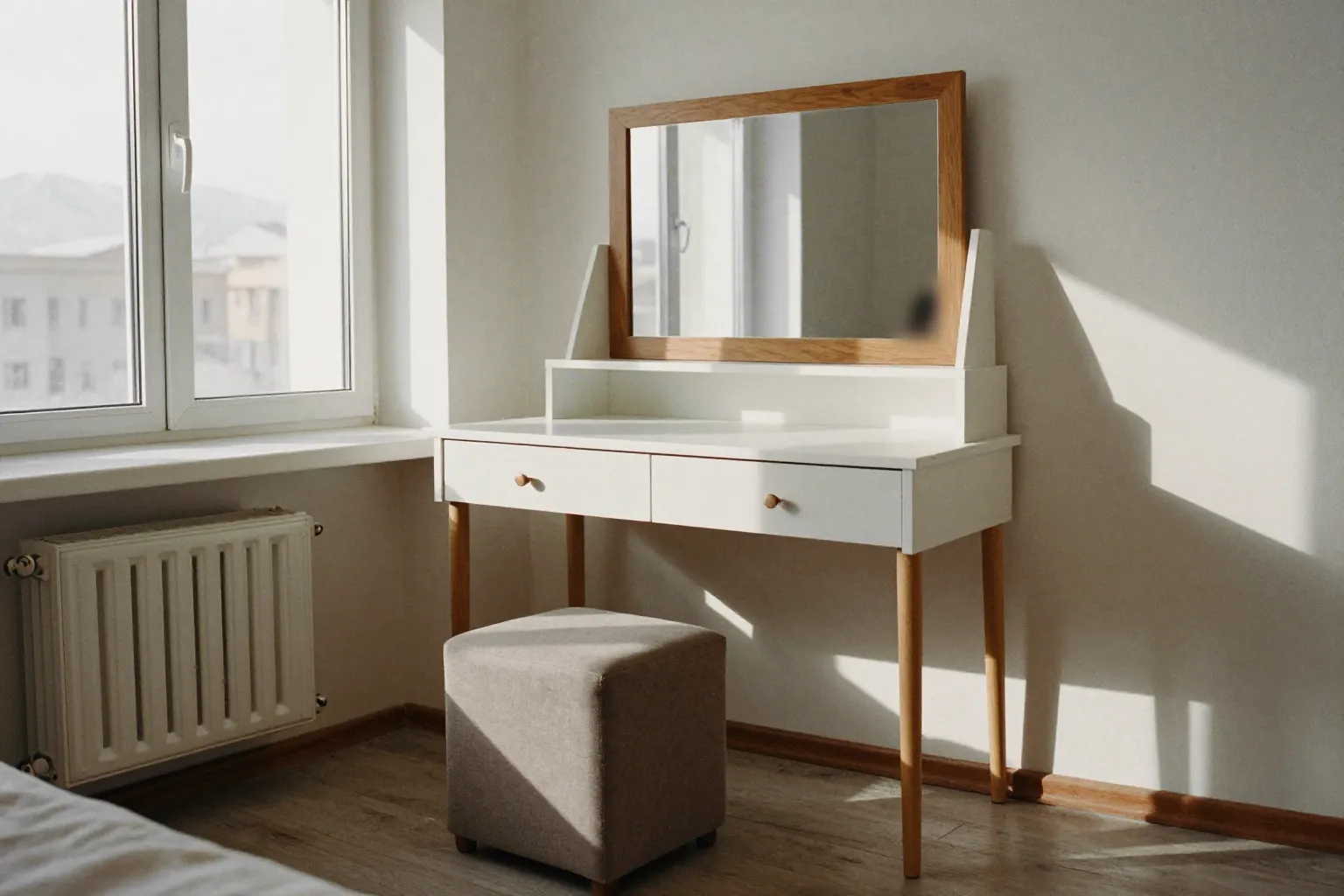
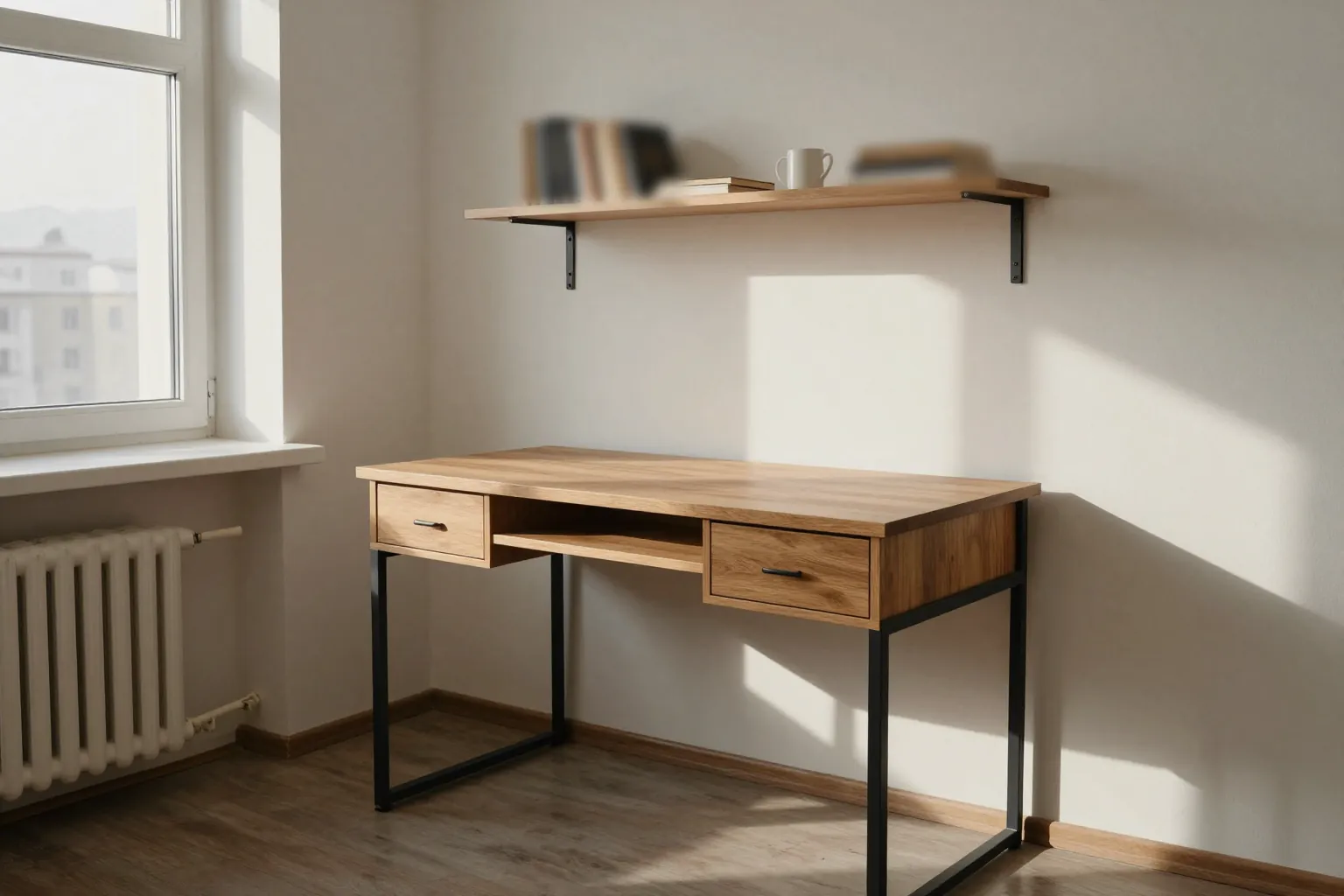
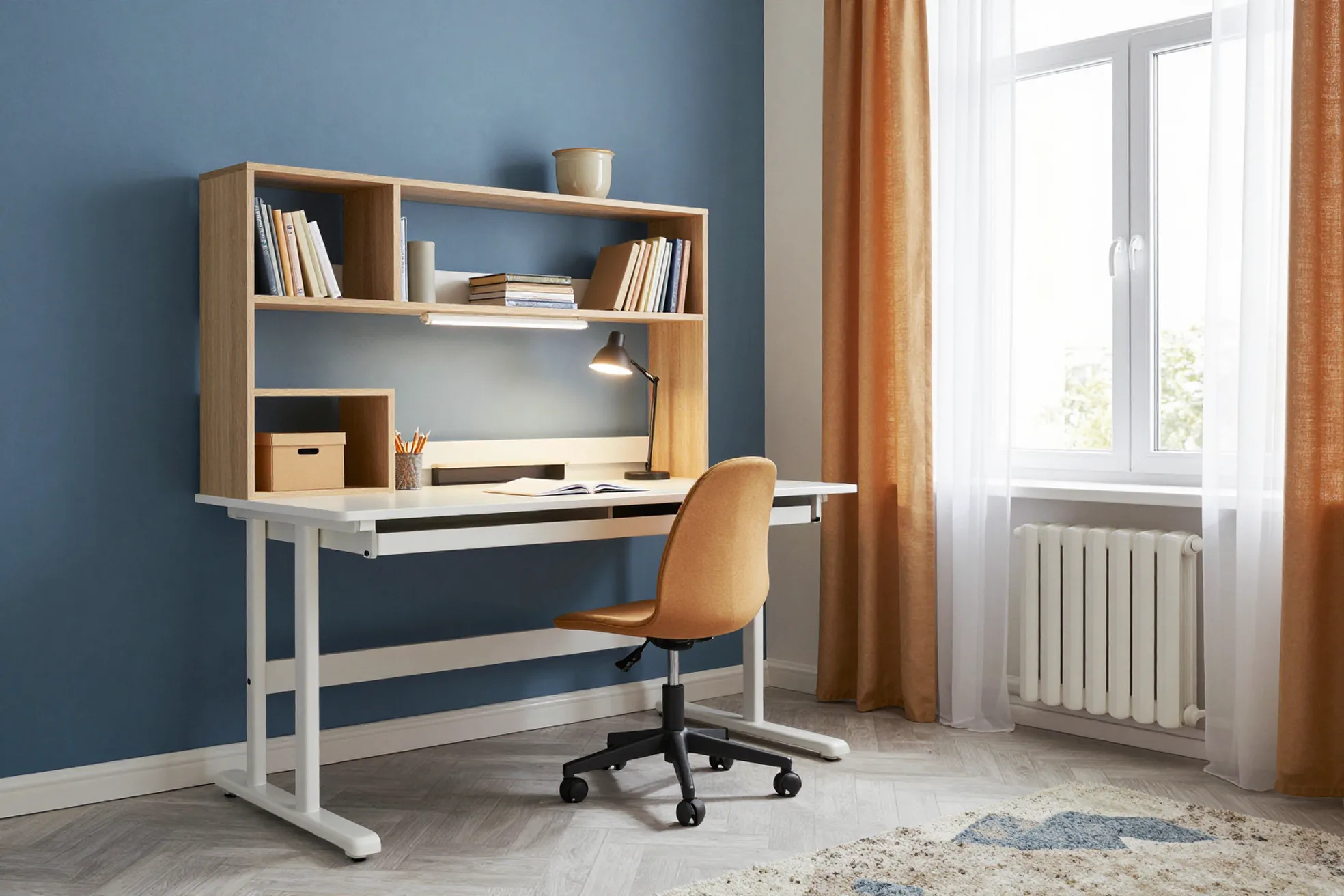
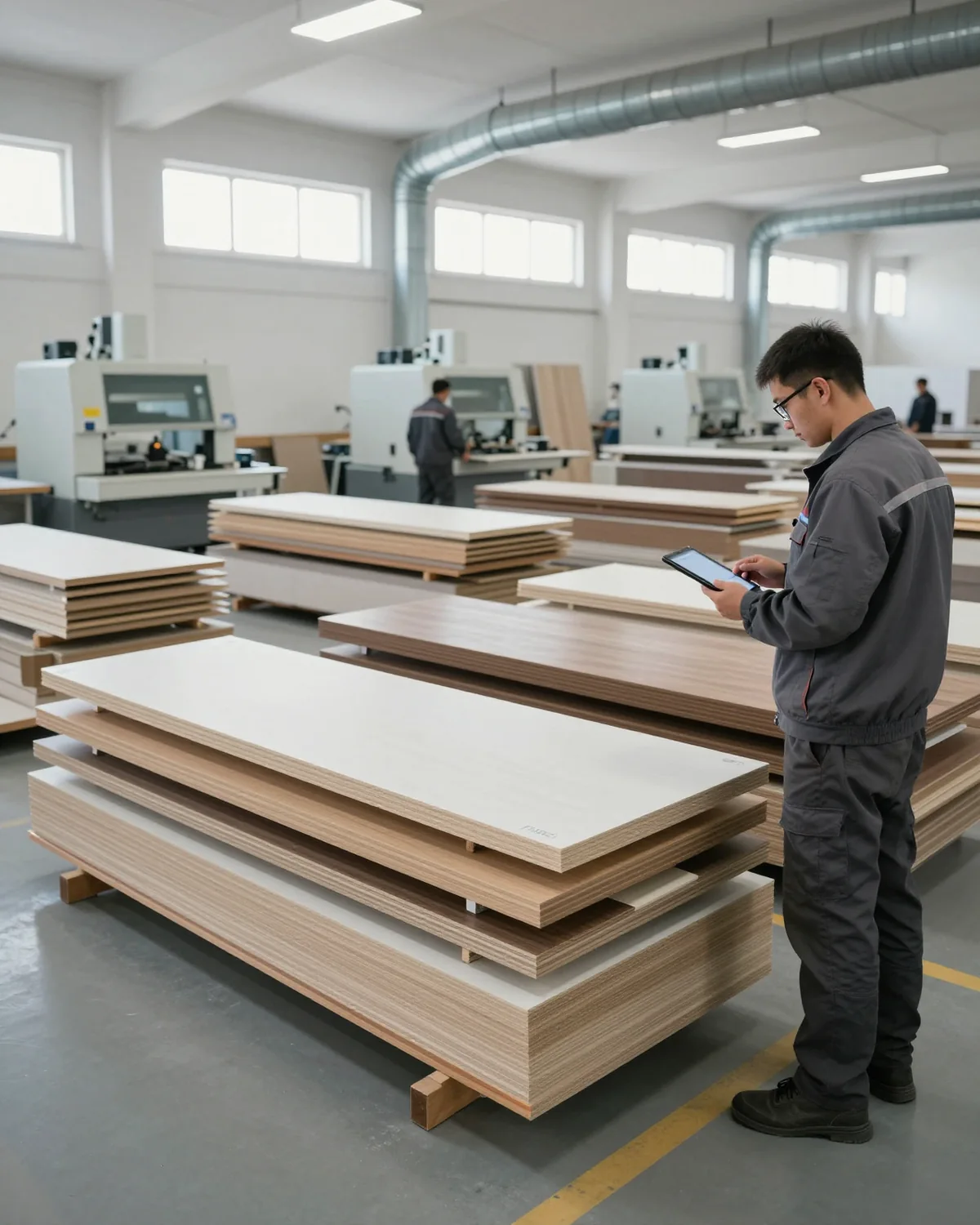
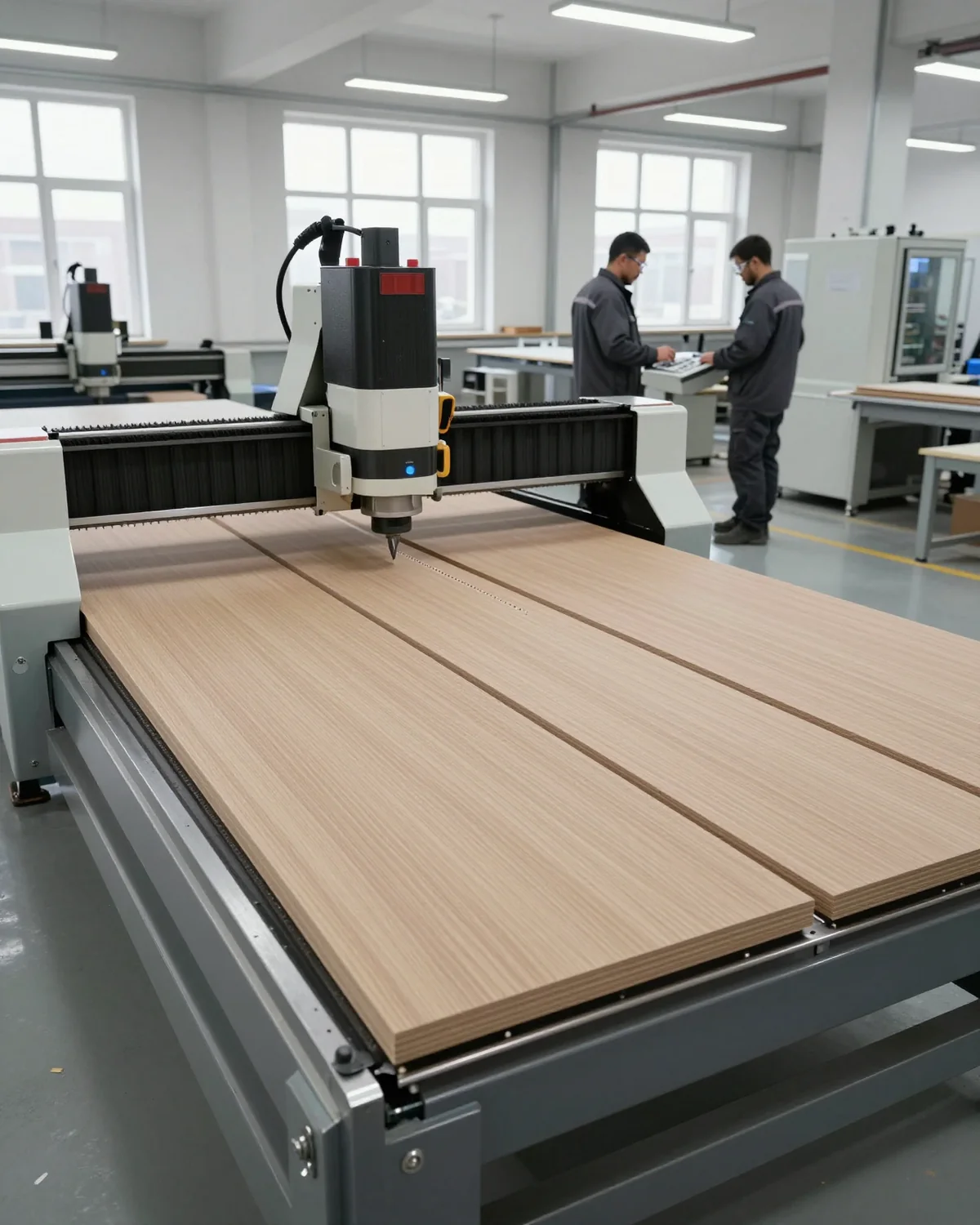
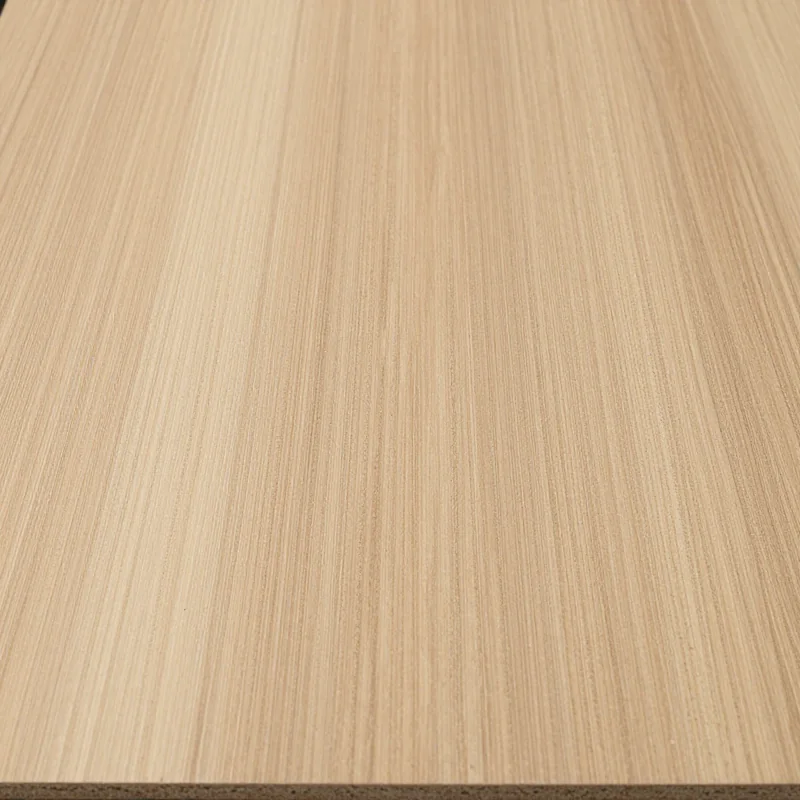
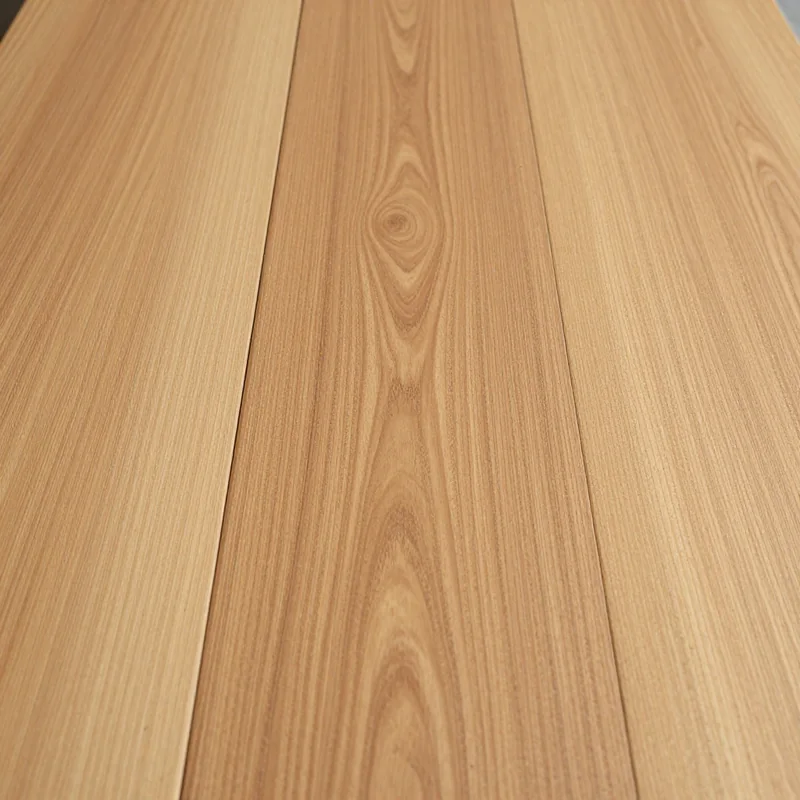
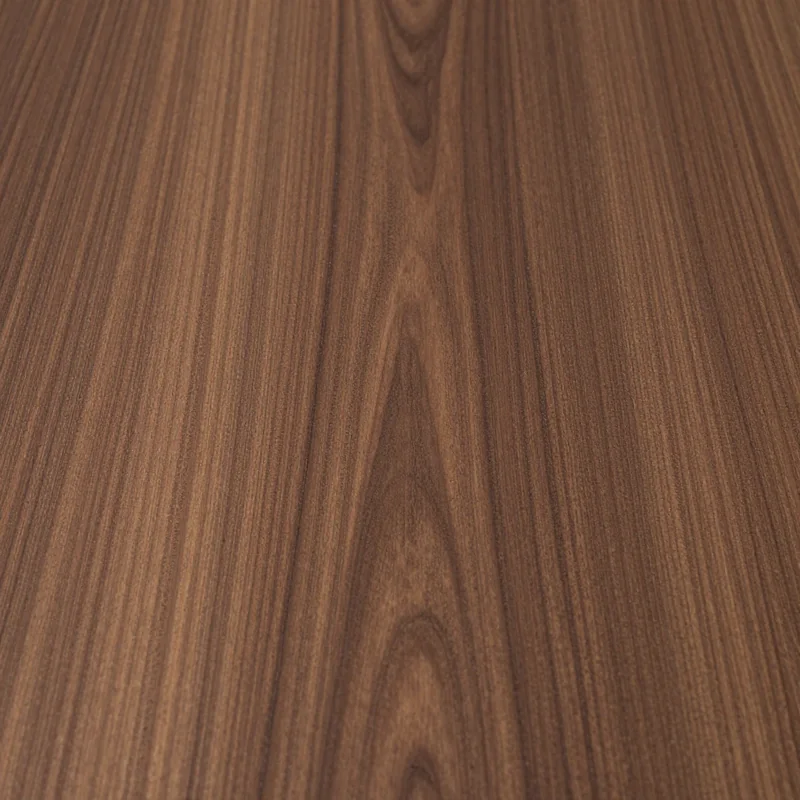
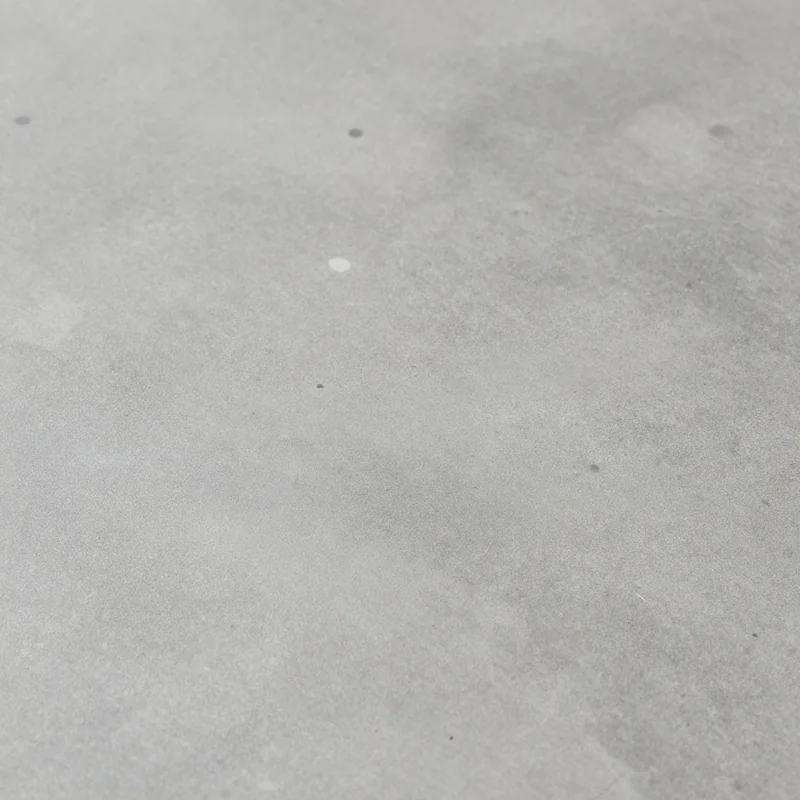
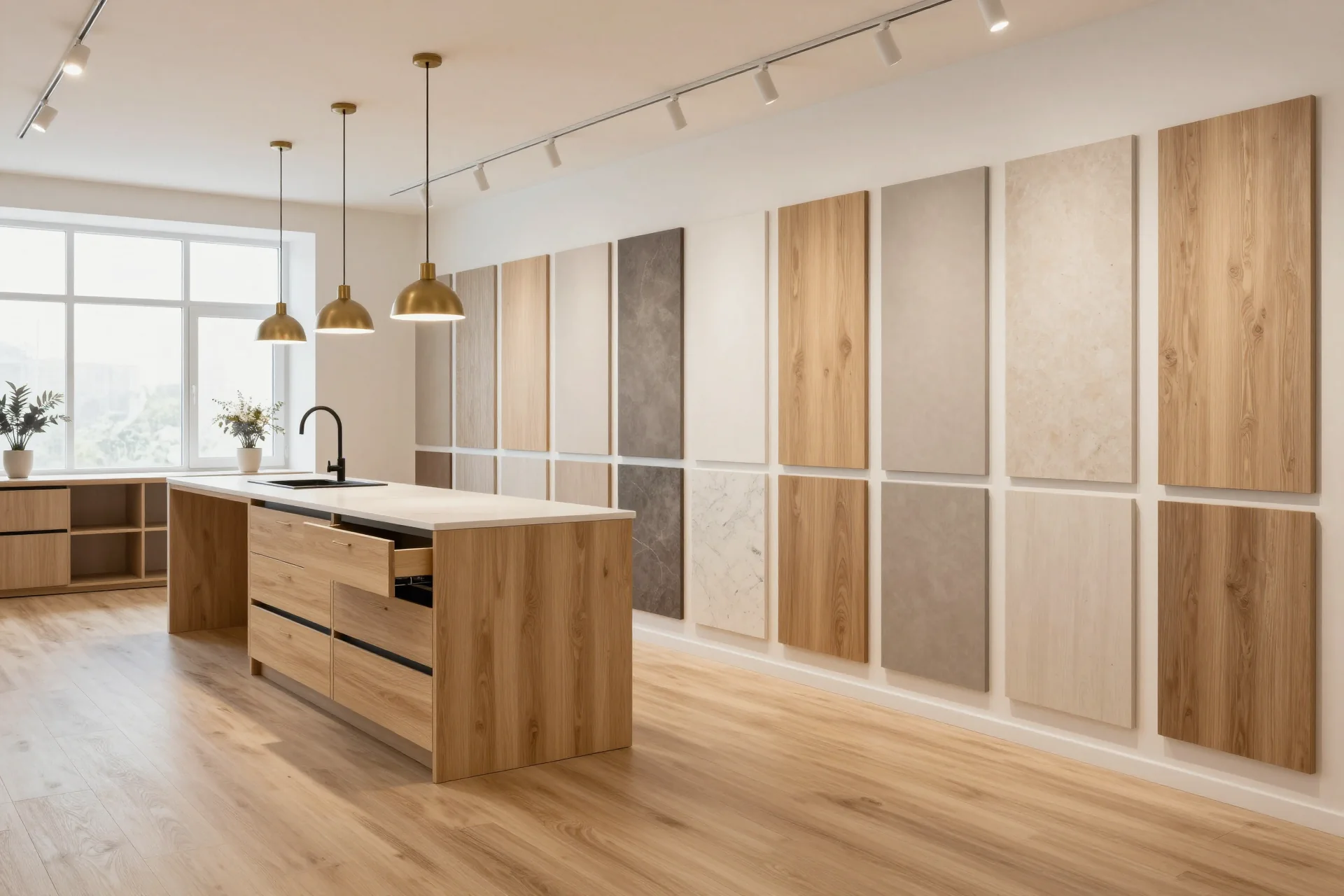
Custom tables in Almaty — dining, work, coffee and dressing tables that we at MEBLIX plan around the room, the number of people at the table and the furniture around it. We choose the size, height, shape, countertop and base at a free measurement, prepare a 3D design in 1–2 days, and the warranty under contract is 24 months.
Table size is calculated from people and from the room. First you work out how many people will sit down every day and how many on holidays, then subtract the walkways from the free floor area.
How much space one person takes at the table
How much space one person takes at the table| Guests | Countertop length, cm | Countertop width, cm |
|---|
| 2 | 70–80 | 70–80 |
|---|
| 4 | 120 | 80 |
|---|
| 6 | 160–180 | 90 |
|---|
| 8 | 200–220 | 100 |
|---|
| 10 | 240–260 | 100–110 |
|---|
How much space to leave around the table
At the table one person needs 60 cm along the countertop length and 35–40 cm of depth for a plate and cutlery. But a table doesn't live on its own. To push back a chair and sit down, you need at least 80 cm from the edge of the countertop to the wall, and if people walk behind the seated person to the stove or to the balcony door, 100–120 cm is better. That's the whole arithmetic: subtract the walkways from the width of the room, and the remainder is the allowable table width. In a 3-metre-wide kitchen-living room, a 90 cm wide table will leave 105 cm on each side — comfortable. The same table at 110 cm wide will already make you squeeze past sideways. A custom table made to individual sizes is cut exactly to that difference, in centimetre steps, not to a catalog row of 80, 90 and 100. We measure in Almaty free of charge. The countertop size equals the free area minus the walkways, not "like everyone else's".
How to check the size before the measurement
- Tape on the floor: mark the outline of the future countertop with masking tape, place the chairs around it and walk past with a plate in your hands.
- Chairs in the room: measure the depth of your own chairs, because a chair with armrests takes 5–10 cm more walkway.
- Doors and appliances: check whether the oven door, dishwasher and balcony door next to the table open fully.
- Light above the table: note where the chandelier hangs so the centre of the table falls under it, not on a corner.
What table height is comfortable for you
Table height is chosen by the chair and your height, not by a familiar number. The standard is designed for a person around 165–170 cm tall, so it suits a tall family and a child less well.
Height of different tables
Height of different tables| Table | Countertop height, cm | What it pairs with |
|---|
| Dining and kitchen | 74–76 | chair with a 45–47 cm seat |
|---|
| Desk and computer | 72–76 | adjustable office chair |
|---|
| Dressing table | 72–75 | pouf or low chair |
|---|
| Coffee table | 40–50 | sofa seat |
|---|
| Bar | 100–110 | bar stool 65–75 cm |
|---|
How to adjust the height to your height and chair
The main rule is simple: 25–30 cm should remain from the chair seat to the lower edge of the countertop. Less — knees hit the apron, more — shoulders rise, and after an hour at the table your neck gets tired. So choose the chair in advance, or at least at the same time. For a tall owner the countertop is raised by 2–4 cm, for a schoolchild the desk is lowered or set on adjustable supports. A height guide comes from the formula "height × 75 ÷ 165": at 182 cm tall that gives about 83 cm (this is the upper limit, usually 78–80 is enough). To order a table to your own sizes means setting not only length and width, but also height and legroom depth. Table height is calculated from the chair seat, not from the floor.
Coffee and dressing table
A coffee table is placed at the level of the sofa seat or 5–10 cm lower: that way it's easy to reach for a cup without bending over, and it doesn't block the view of the TV. The distance from the sofa to the coffee table is 40–45 cm so your knees fit through. A dressing table is made slightly lower than a dining table because you sit at it on a pouf, and the mirror is hung so that its center is at the eye level of a seated person. And one more detail — under the dressing table, leave an empty space for the knees at least 50 cm wide, otherwise drawers on both sides turn it into a chest of drawers. For a children's room, a table with adjustable legs is made, which grows with the child for two or three years. Each type has its own height, and it is adjusted to the specific seat.
Countertop shape and the room
The shape of the countertop determines how many people will sit and how the table fits into the passage. Style is secondary here: the same shape can be both classic and loft.
Which shape for which room
- Rectangle: the most capacious option along a wall or in a narrow dining room, seats the most guests on the same area.
- Square: convenient for four in a small kitchen, but with six guests it becomes too deep and you can't reach the center.
- Round: seats a company without a "head of the table", safe for children, but requires free space on all sides and doesn't stand against a wall.
- Oval: combines the capacity of a rectangle with the soft edges of a circle and fits well in a kitchen-living room with a flow of people.
Corners, radii and countertop edge
Even a rectangle doesn't have to have sharp corners. A radius of 20–50 mm on the corners removes bruises on the hips in a narrow passage and is safer for children, while being almost invisible. The end face of the countertop is also chosen: straight, chamfered at the bottom, or rounded. A bottom chamfer visually makes a thick countertop look thinner — a common technique for 40 mm solid wood. We design custom tables with these details in the drawing, because after cutting, a radius can no longer be added without rework. Another nuance concerns the wall. A countertop that stands with its end against the wall is made with a straight corner on that side and a radius on the open side. The shape of the countertop determines the number of seats and the width of the passage, so it is chosen before the material.
A table in a niche, by the window and in a bay window
A non-standard place is a frequent reason to order a table rather than buy a ready-made one. In a niche between wardrobes, the countertop is cut from wall to wall with a 3–5 mm gap for unevenness, and supports are placed only where they don't interfere with chairs. By the window, the height is chosen so that the countertop doesn't rest against the windowsill, and a gap is left above the radiator for warm air. In the bay window of an old house, the walls almost never go at an even angle, so the shape of the countertop is taken using a cardboard template or laser measurement. In a studio, the table sometimes continues the kitchen island at the same height and in the same decor. A non-standard place dictates the shape of the countertop more precisely than any catalog.
How the countertop handles water, heat and scratches
Every day the table meets cups, children's felt-tip pens and a wet cloth. That's why the surface is chosen based on what will happen on it, not just by color.
Durability of surfaces in everyday life
Durability of surfaces in everyday life| Surface | Water and stains | Hot dishes | Scratches |
|---|
| Laminated chipboard with PVC edge | holds as long as the edge is intact | use a trivet | medium resistance |
|---|
| HPL laminate | unaffected | withstands brief contact | high resistance |
|---|
| Veneer under lacquer | holds if wiped up right away | use a trivet | medium resistance |
|---|
| Solid wood under oil-wax | marks, easy to refresh | use a trivet | minor, can be sanded out |
|---|
| Solid wood under lacquer | holds better than oil | use a trivet | hard to repair |
|---|
| Porcelain stoneware | unaffected | unaffected | very high |
|---|
Why water ruins a table from the end grain
The top of the board almost never gets damaged. Water seeps in through the end, where there is no laminate, so laminated chipboard resists moisture only as long as the edge is intact. We apply a 2 mm PVC edge to every side of the countertop, including the hidden back one, and cover cable cutouts with plastic caps. Custom table production rests on such details: they determine whether the corner by the sink swells up a year later. Porcelain stoneware will survive even a hot frying pan, but it is heavy: its base is calculated separately, otherwise a thin frame will sag. Glass withstands heat, yet fingerprints and crumbs show on it. HPL laminate for the kitchen and kids' room is the calmest choice: marker and tea wipe off without a trace. A table's durability is defined by the coating and the edge, not just the name of the material.
Caring for a solid wood countertop
Solid wood under oil-wax feels pleasant to the touch and breathes. But it needs care. Spilled wine and water should be wiped up right away, hot items placed on a trivet, and once every year to a year and a half the countertop is wiped with fresh oil — in a thin layer, without sanding. If a scratch or a light ring from a cup appears, that spot is sanded with fine sandpaper and re-oiled, and no trace remains. Lacquer needs almost no care, but a deep chip in the lacquer cannot be fixed so easily: the whole countertop will have to be sanded. That is why for a family with small children we more often recommend oil (in our view, its repairability matters more than a perfect shine). Solid wood under oil is refreshed locally, while solid wood under lacquer only as a whole.
Why some tables wobble and others don't
Wobble comes not from the material but from the base and the mounting point. The base is chosen by the weight of the countertop, the shape of the table, and where the knees of those seated will be.
Four base designs
- Legs with an apron: a frame under the countertop adds rigidity and supports a long table, but takes up 8–10 cm of height under the knees.
- Legs without an apron: more room for the legs, suitable for small tables and a thick countertop that does not sag on its own.
- Central base: frees up the entire perimeter of a round or square table, but needs a heavy base so the edge does not tip it over.
- Metal base: U- or X-shaped frames made of square tubing support heavy solid wood and porcelain stoneware over a long span.
What gives stability for years
A ready-made table from a store is often assembled with dowels and cam locks, and after a year or two the joint works loose. Custom-made tables let us choose fasteners for the real load: the tabletop is pulled to the frame with metal brackets and ties, and a long table is reinforced with a longitudinal profile so the middle doesn't sag. An apron rail is added where the tabletop is longer than 140–160 cm, and under porcelain stoneware the frame is welded from thicker tubing, because the slab is noticeably heavier than solid wood of the same area. Another cause of wobbling is the floor. Tiles and laminate in apartments almost always have a difference of a few millimetres, so we put an adjustable foot under each leg and level the table on site (cardboard shims are not our method). A table's stability comes from support matched to the tabletop's weight, a rigid mounting joint and levelling to the floor.
Signs the support was chosen wrong
- Diagonal wobble: the leg-to-apron joint is assembled on dowels without a metal bracket or tie.
- The middle sags: a long tabletop sits without longitudinal reinforcement, and a dip appears under the dishes.
- The edge overhangs: a round table on a central support has too light or too narrow a base.
- Knees hit the frame: the apron is too wide for this chair height, the clearance is less than 25 cm.
Extending or fixed table
A mechanism isn't always needed. A fixed tabletop is simpler, stronger and easier to care for, while an extending table helps when there are noticeably more guests than people living in the apartment.
When a mechanism is justified
- Frequent guests: if once a month twice as many people sit down at the table, an extension leaf adds 2–4 seats without a second table.
- Small kitchen: on weekdays it takes up minimal space, and for a celebration it's pulled into the middle of the room and unfolded.
- Studio: a coffee table on a lift mechanism rises to dining height and replaces a dining set.
What mechanisms there are
- Centre leaf: the tabletop halves slide apart on runners, and one or two leaves are laid between them.
- Butterfly leaf: a folding leaf is stored inside the table and opens as it extends, so you don't need to put it away separately.
- Drop-leaf: folding halves rest on pull-out legs, and when folded the piece stands against the wall as a narrow console.
- Lift mechanism: a coffee table rises to dining height, often together with unfolding the tabletop.
What to check in an extending table
An extending table is tested not in the store but after a year of daily life, when the mechanism has been opened and closed hundreds of times. First, where the leaf is stored: it's more convenient when it lies inside the table rather than on a mezzanine. Second, the runners. Metal runners with synchronous movement slide the tabletop apart evenly on both sides, and the halves don't skew. Third, the joint: after unfolding, the gap between the leaf and the tabletop should be barely noticeable, and the wood grain should continue. And fourth, the legs: a long unfolded table needs extra support in the middle, otherwise the centre sags under the dishes. If you want to buy a custom table with a mechanism, ask to see it in action in the showroom (a mechanism is checked by hand, not by a photo). An extending table is justified where guests come regularly and space is tight.
How to get a table cheaper without losing strength
A table's budget is made up of several clear parts. If you know them, you can remove the extras and leave untouched what determines how long it lasts.
What makes up a table's price
- Countertop area: every extra 20 cm of length adds material, edge banding and weight, so the size is not taken "with a margin".
- Countertop material: laminated chipboard and HPL are more affordable than veneer, veneer is more affordable than solid wood, and a slab with epoxy fill is priced per board.
- Base: straight legs made of timber or profile are simpler than turned supports and cast central bases of complex shape.
- Mechanism: a sliding insert or lift mechanism adds hardware and time for assembly and adjustment.
- Finish: enamel, tinting and brushing of solid wood increase the lead time and cost.
Where you should not cut corners
A cheap custom table is not the thinnest board and not paper edge banding. It is honest calculation: remove the complex shape, extra decor and the mechanism where guests come twice a year. But three things cannot be cut. Countertop thickness: 16 mm laminated chipboard on a 160 cm dining table will sag, you need a 25–38 mm board or a reinforcing profile. Edge banding: thin tape peels off from a damp cloth within a season. Support: a light frame under a heavy countertop starts to wobble, and thin legs without a stretcher under a long countertop loosen over time. To the short question "custom tables price?" we answer like this: first an option in laminated chipboard with a good support, then what changes when switching to veneer or solid wood. All lines with prices and lead times are in the price list on this page. You save on the finish and complex shape, but not on countertop thickness, edge banding and support.
Tables in brief
A good table starts with measuring the room and a conversation about who will sit at it. The rest — material, shape and support — is chosen to fit these two answers.
What to remember before ordering a table
- Size: 60 cm of countertop length per person, at least 80 cm from the table edge to the wall, 100–120 cm behind the seated person.
- Height: 25–30 cm from the chair seat to the underside of the countertop, the 74–76 cm standard is adjusted to the family's height.
- Shape: a rectangle holds more, a circle and oval are softer in the passage, a radius on the corners saves from bruises.
- Surface: durability is determined by the edge banding on all ends and the coating; solid wood under oil is easy to refresh.
- Support: a stretcher or metal underframe matched to the weight of the countertop, fastening on corners and adjustable legs.