
Temirzhan Nurpeisov
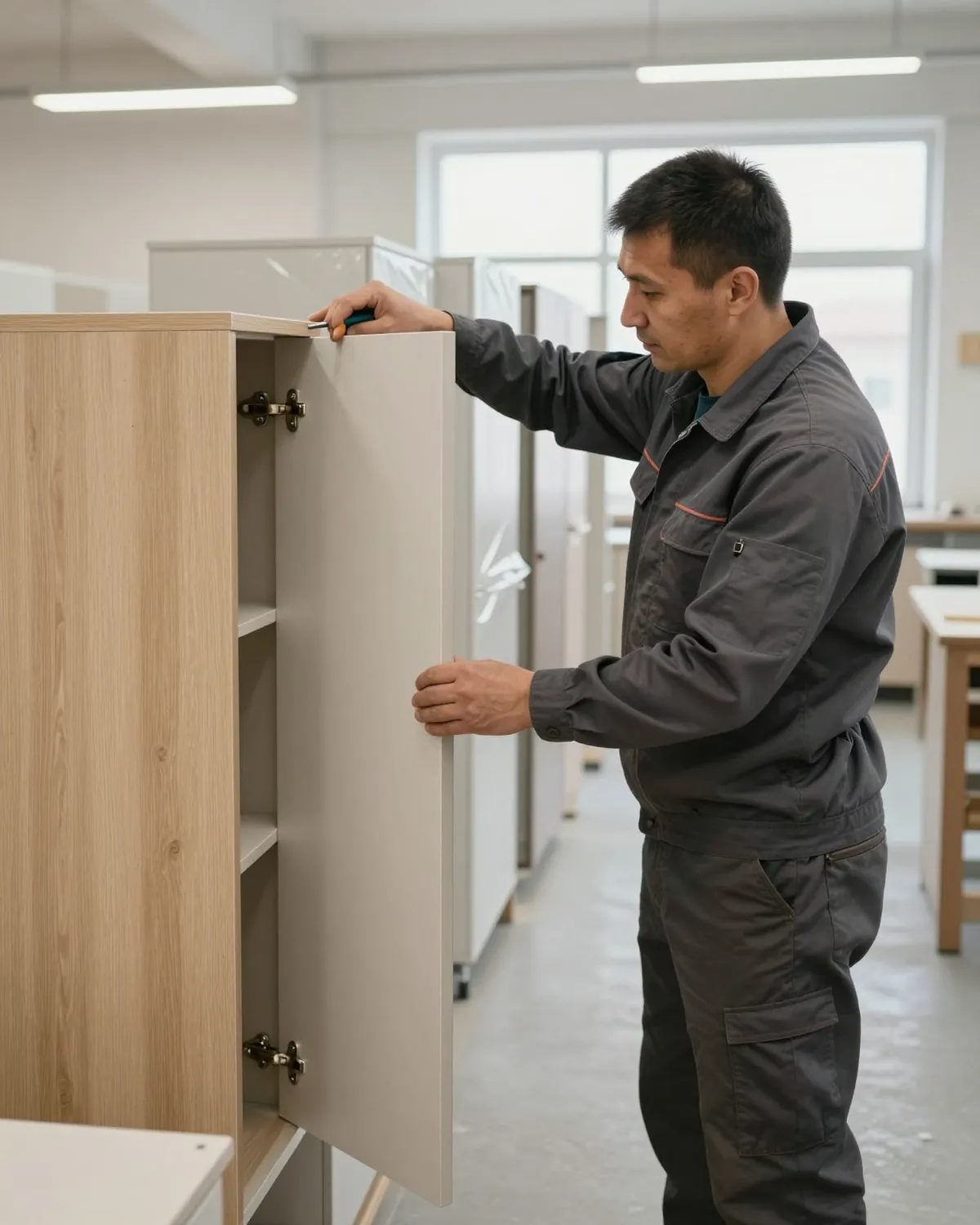
Furniture assembly carpenter11 years
★ 4.81 · 47 ratings
For business · Retail
We make angled shelving, island displays and fitting benches to suit your shoe range and sales floor layout, and in shopping malls we install at night. Measurement and 3D design are free, the price is fixed in the contract, warranty 24 months.
Measurement and 3D design are free and carry no obligation · price fixed in the contract · Kaspi Instalments up to 24 months
01Types
 01
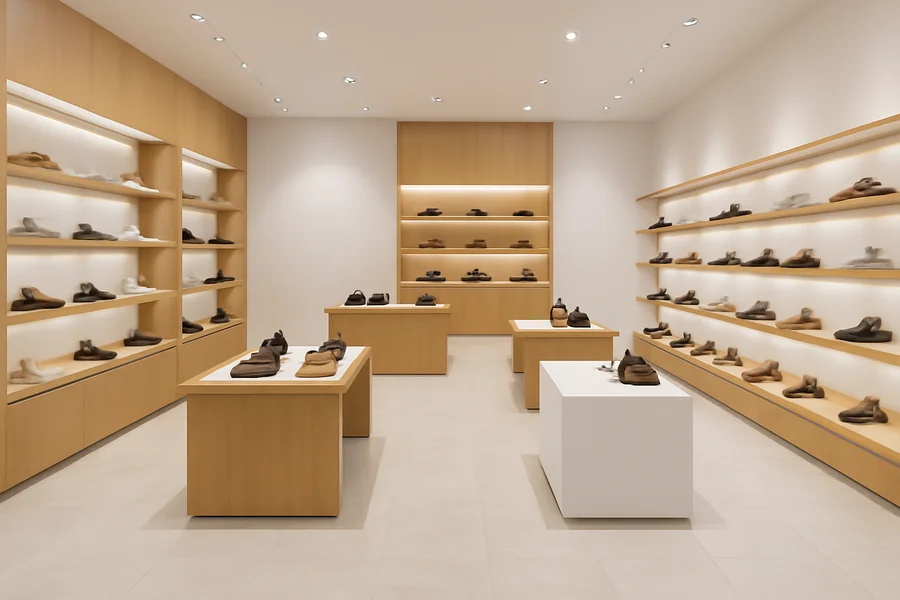
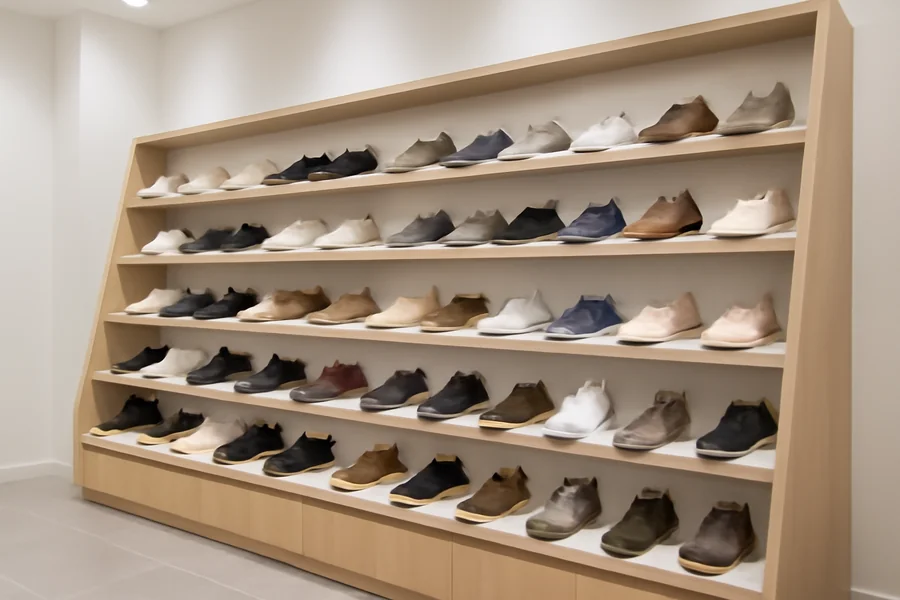
Shelves angled toward the customer with a lip at the edge: pairs are fully visible, the toe doesn't slide off, and the row is easy to keep neat.
from 80 000 ₸
 02
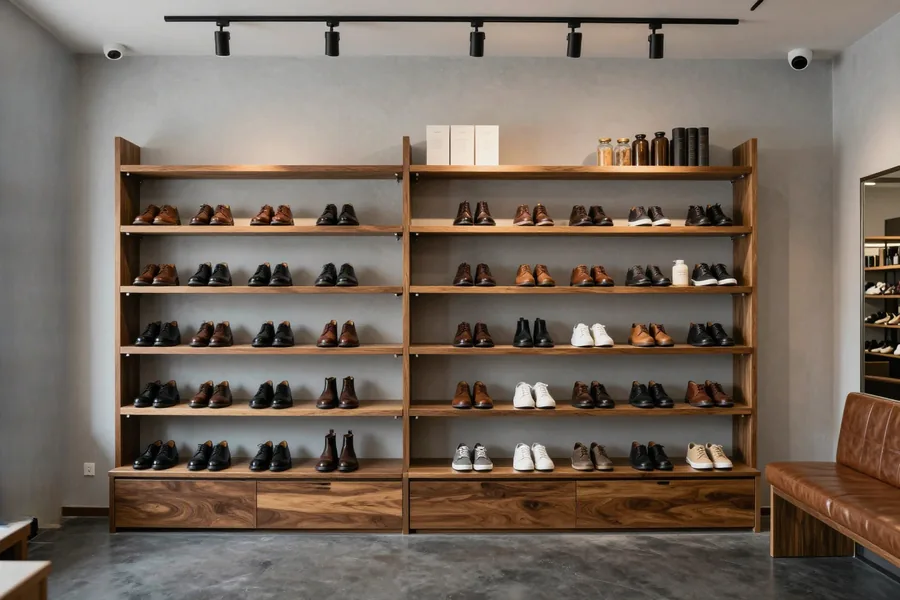
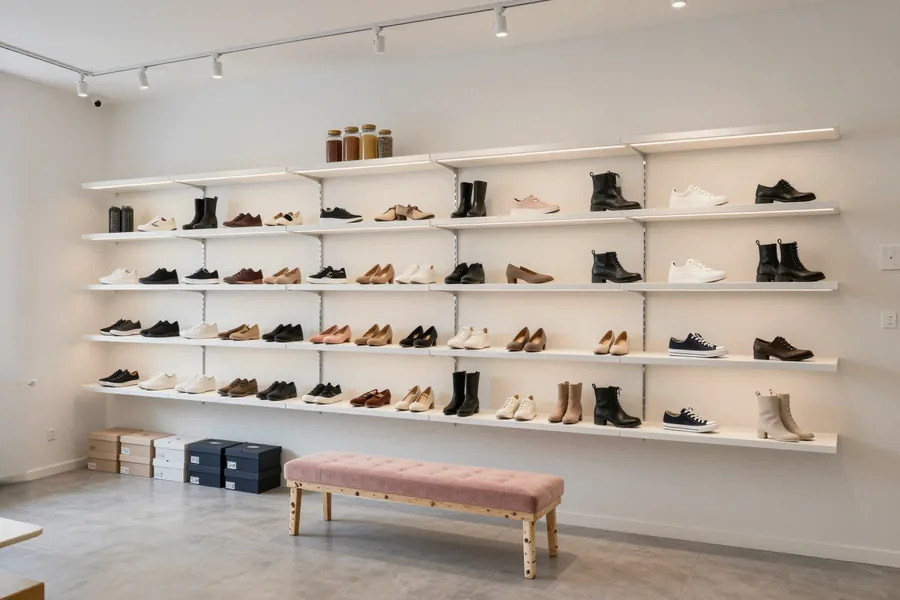
Shelves along the entire wall with adjustable spacing and lighting: for sneakers, shoes and tall boots in one row.
from 95 000 ₸
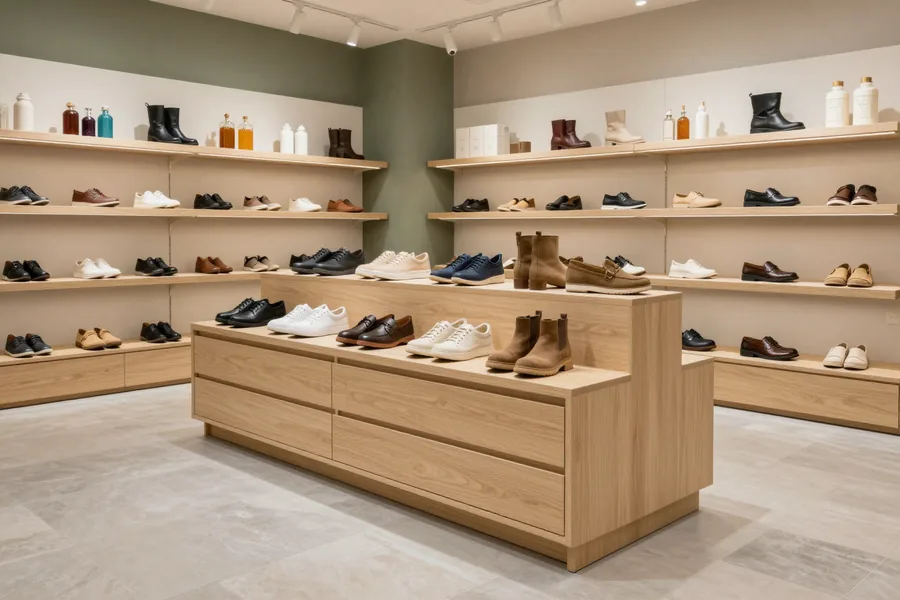 03
A low island in the center of the sales floor for new arrivals and promotions: the product is accessible from all four sides, and stock fits underneath.
from 110 000 ₸
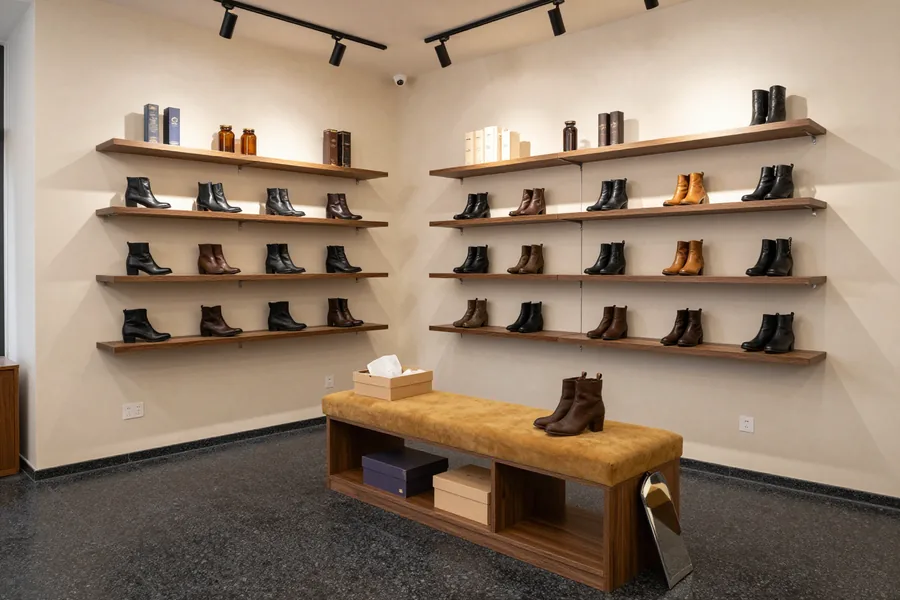 04
A soft seat, a low mirror and a niche for boxes: the customer tries on a pair without leaving the shelving.
from 55 000 ₸
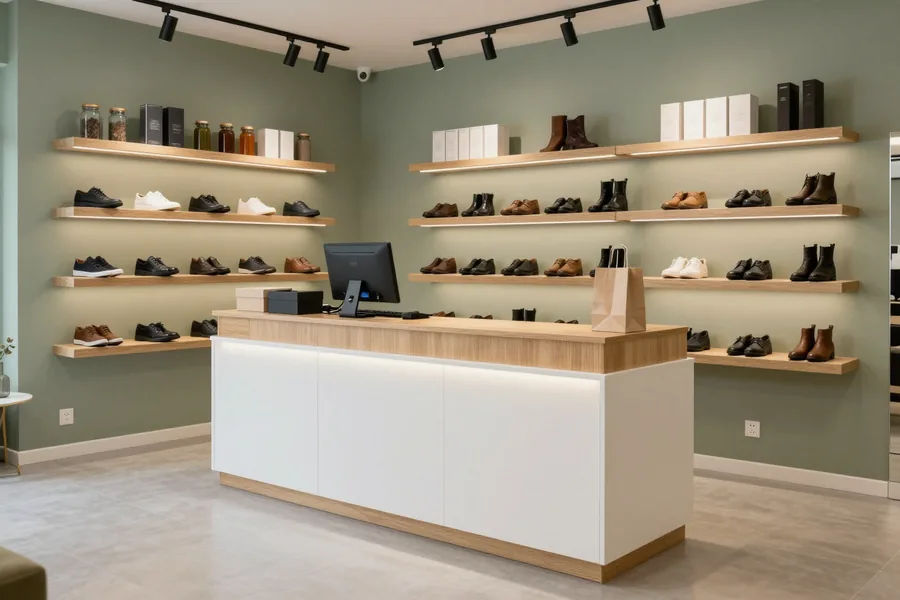 05
A counter with space for a terminal and a closed section for held pairs and returns, in the same finish as the sales floor shelving.
from 120 000 ₸
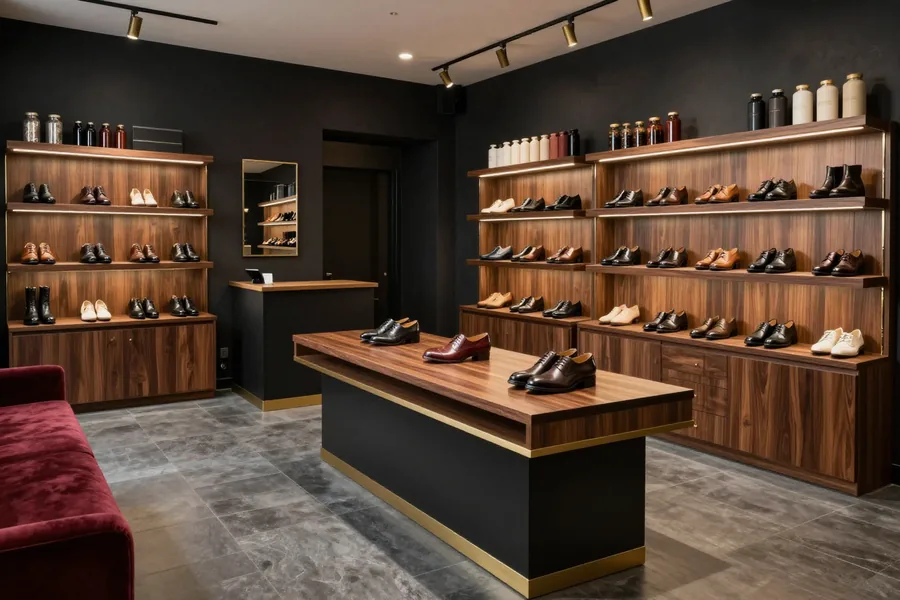 06
Shelving, island, benches and checkout in one finish, under one estimate and one contract, installed by our own team.
from 650 000 ₸
02Projects
Site, scope, materials and lead time — per project.
 Store
Almaty
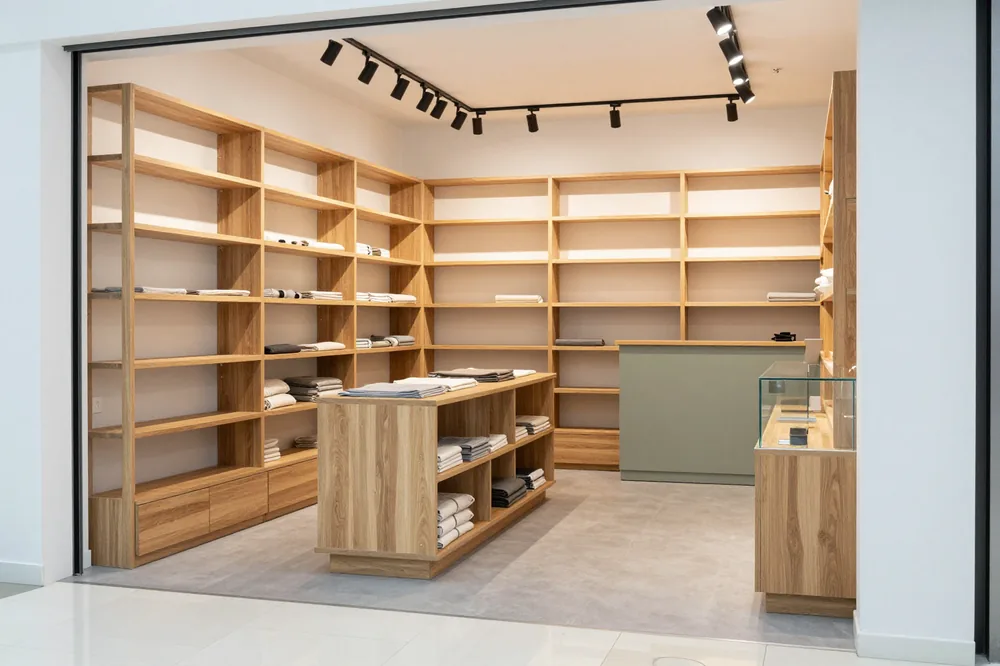
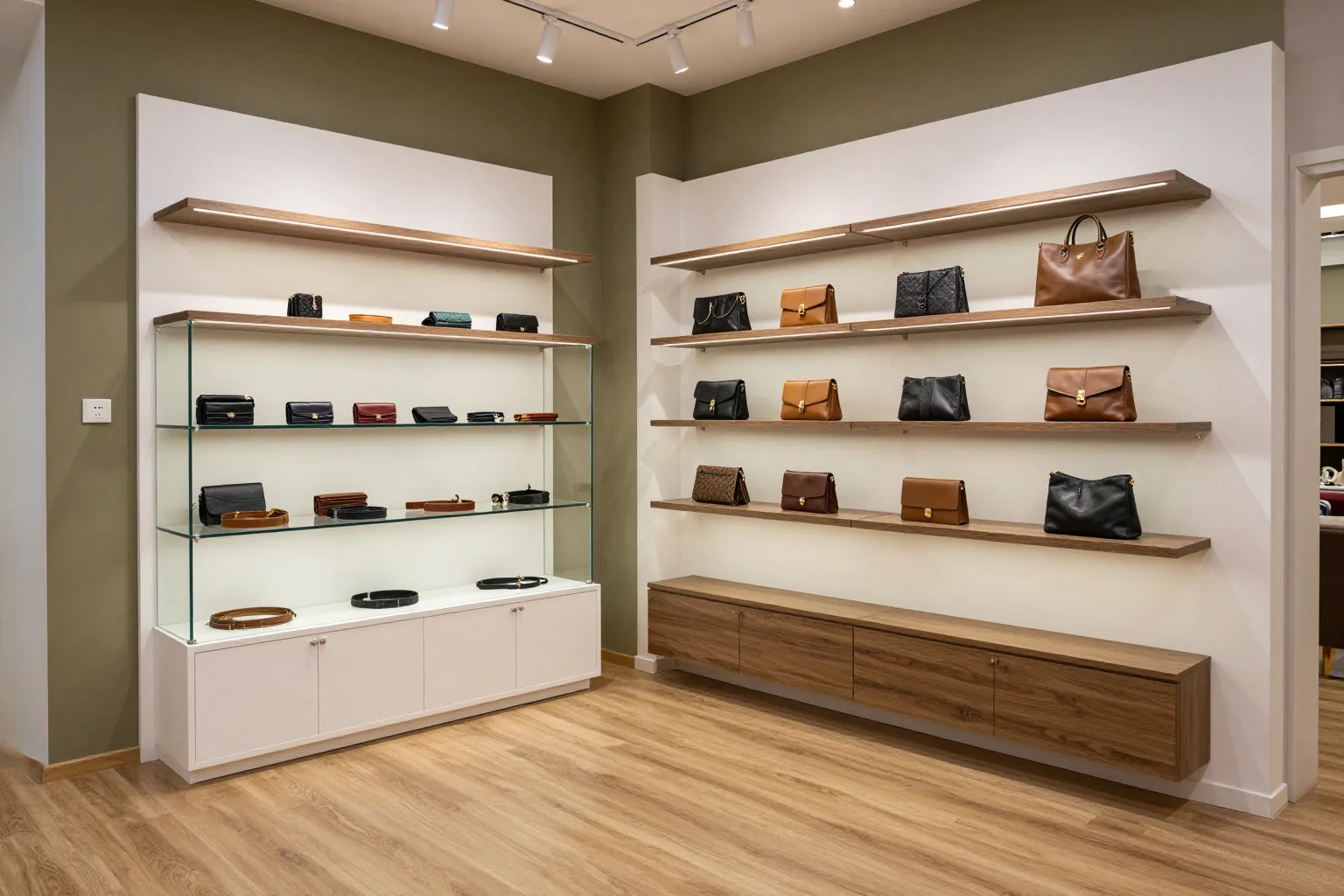
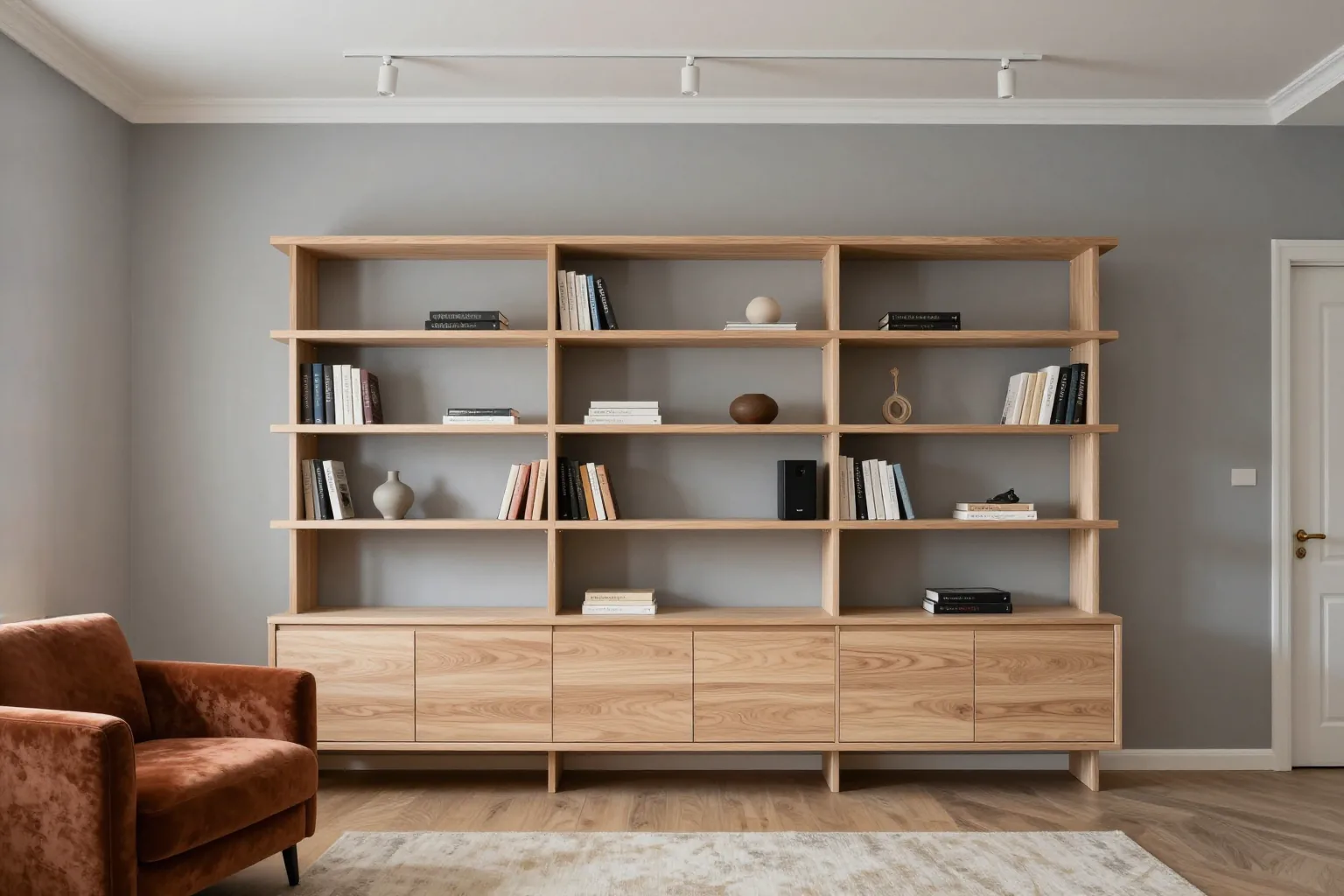
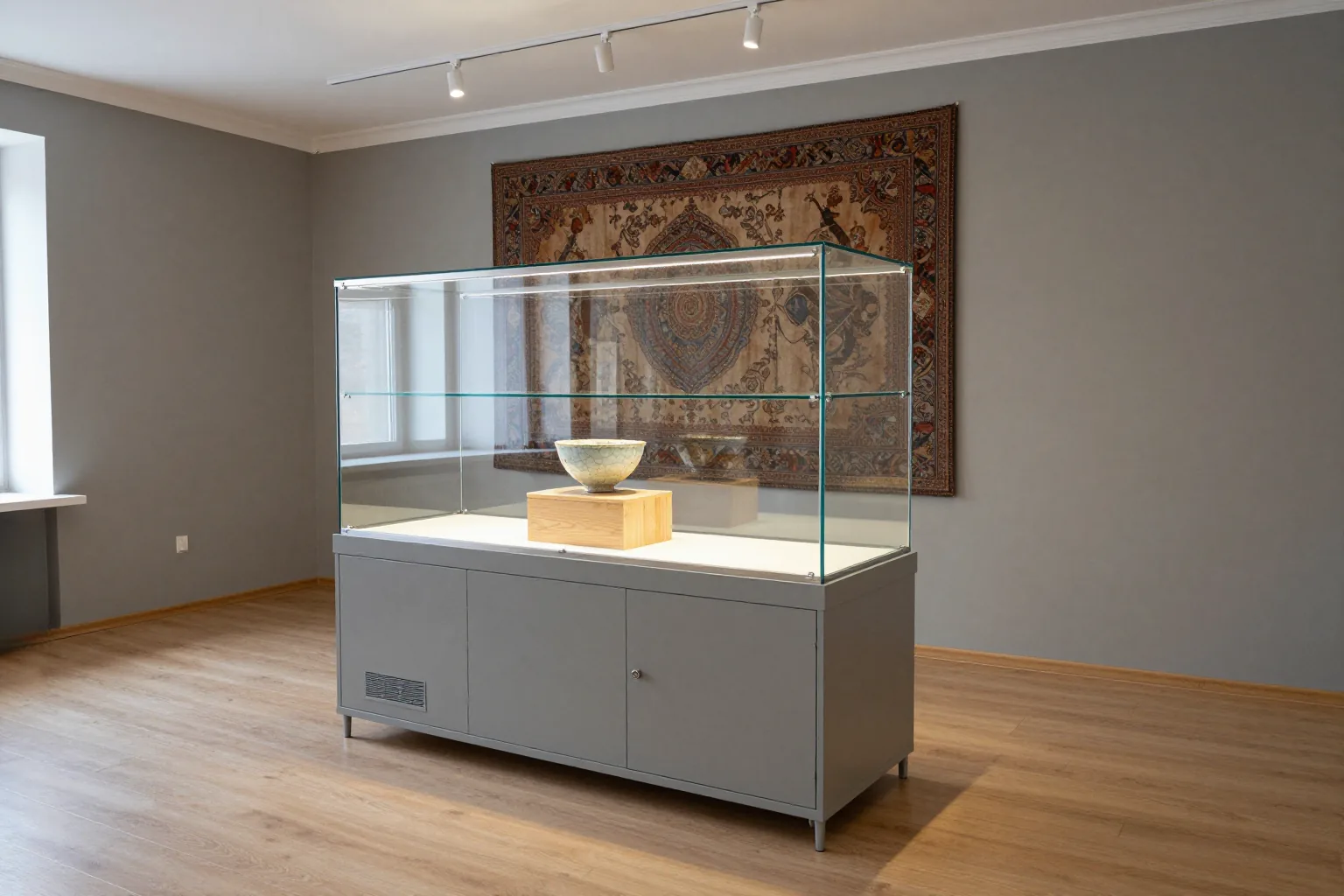
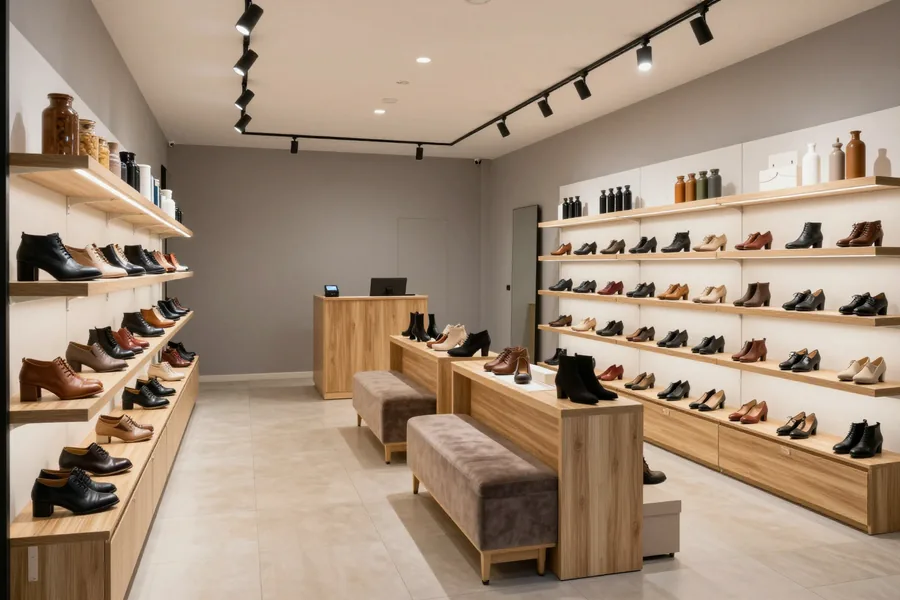
Footwear store in a shopping mall: we produced a full set of retail equipment — slanted shelving, island tables, a fitting bench, a checkout. All in the store's unified style and color, suited to the display and customer flow.
 Store
Almaty
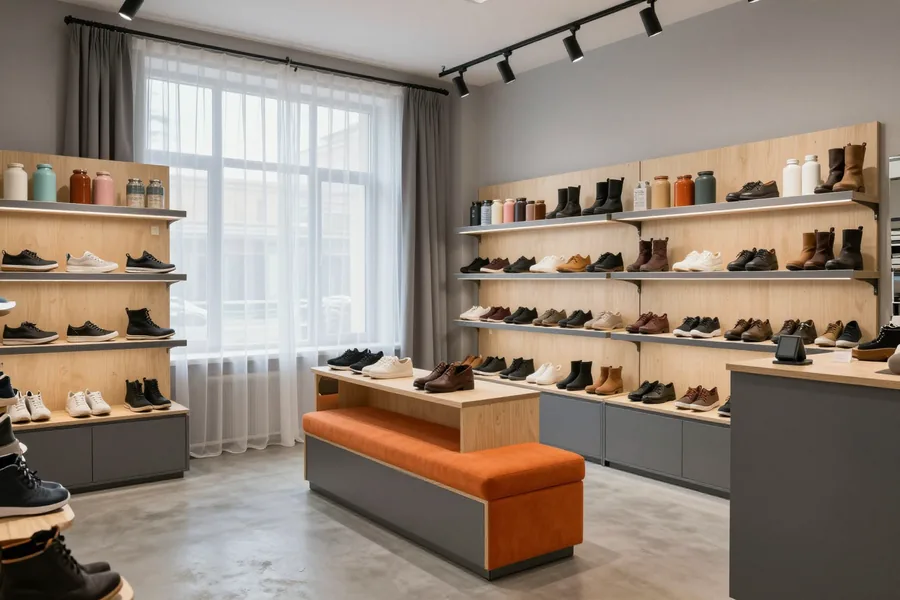
Footwear store chain: we produced a full set of retail equipment — slanted shelving, island tables, a fitting bench, a checkout. All in the store's unified style and color, suited to the display and customer flow.
 Store
Almaty
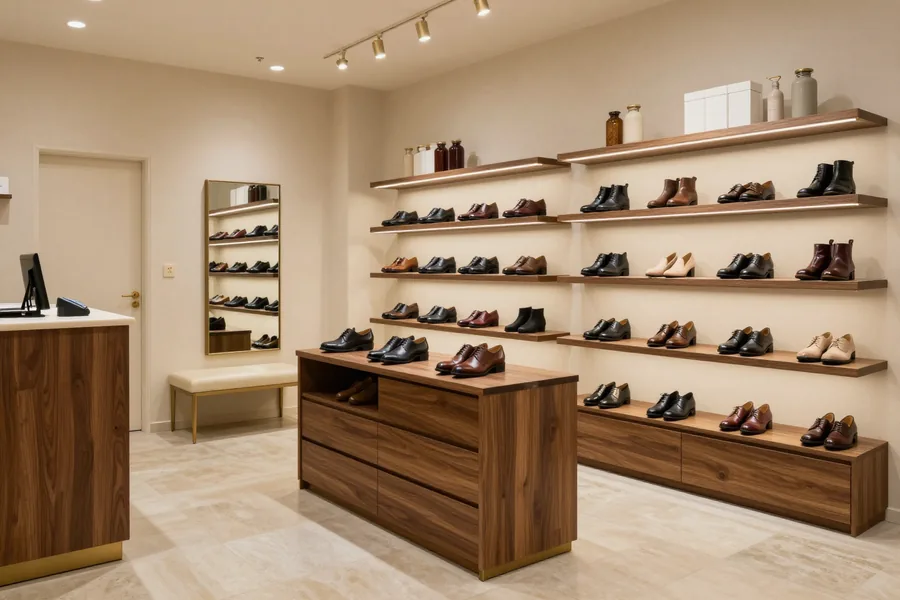
Footwear store in a business center: we produced a full set of retail equipment — slanted shelving, island tables, a fitting bench, a checkout. All in the store's unified style and color, suited to the display and customer flow.
 Store
Almaty
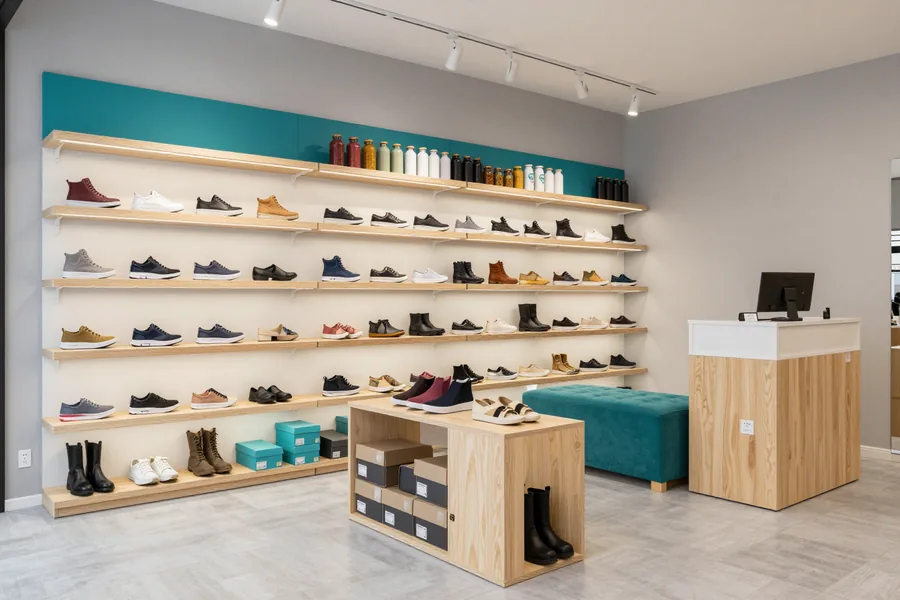
Everyday footwear store: we produced a full set of retail equipment — slanted shelving, island tables, a fitting bench, a checkout. All in the store's unified style and color, suited to the display and customer flow.
 Store
Almaty
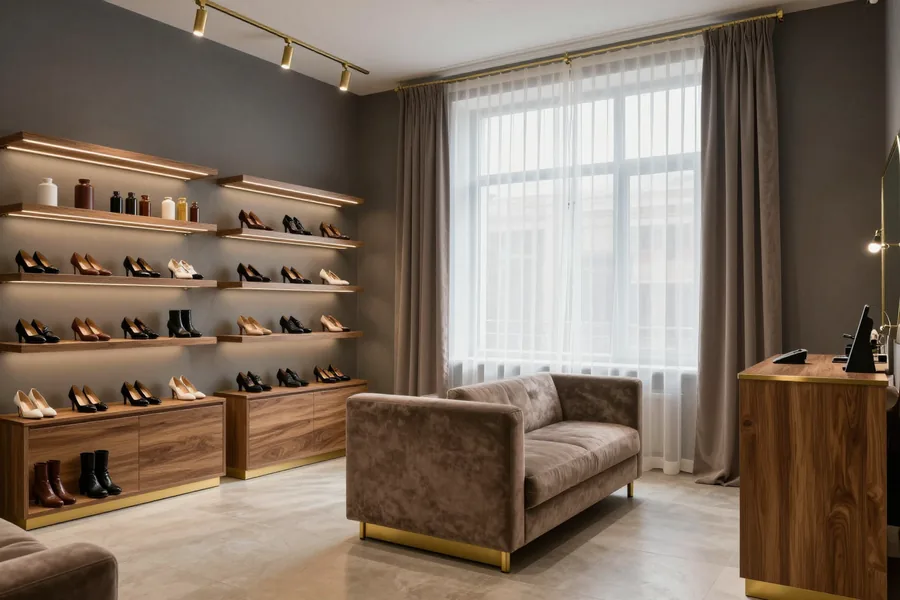
Premium footwear salon: we produced a full set of retail equipment — slanted shelving, island tables, a fitting bench, a checkout. All in the store's unified style and color, suited to the display and customer flow.
03How we work with stores
04Prices
The "from" price is per item in the basic configuration; the wall-mounted display shelf is per linear meter. Sizes, shelf slant and lighting are confirmed at a free measurement, and the amount is fixed in the contract.
05For businesses
We work with LLPs and sole proprietors on bank transfer. Price, materials and lead times are set in the contract before production begins.
Request a contract and invoice06Principles

01 / 06
07Production
Six steps in our 600 m² workshop. You can see each of them with your own eyes: the showroom and production are under one roof.
Egger · Kronospan · E1
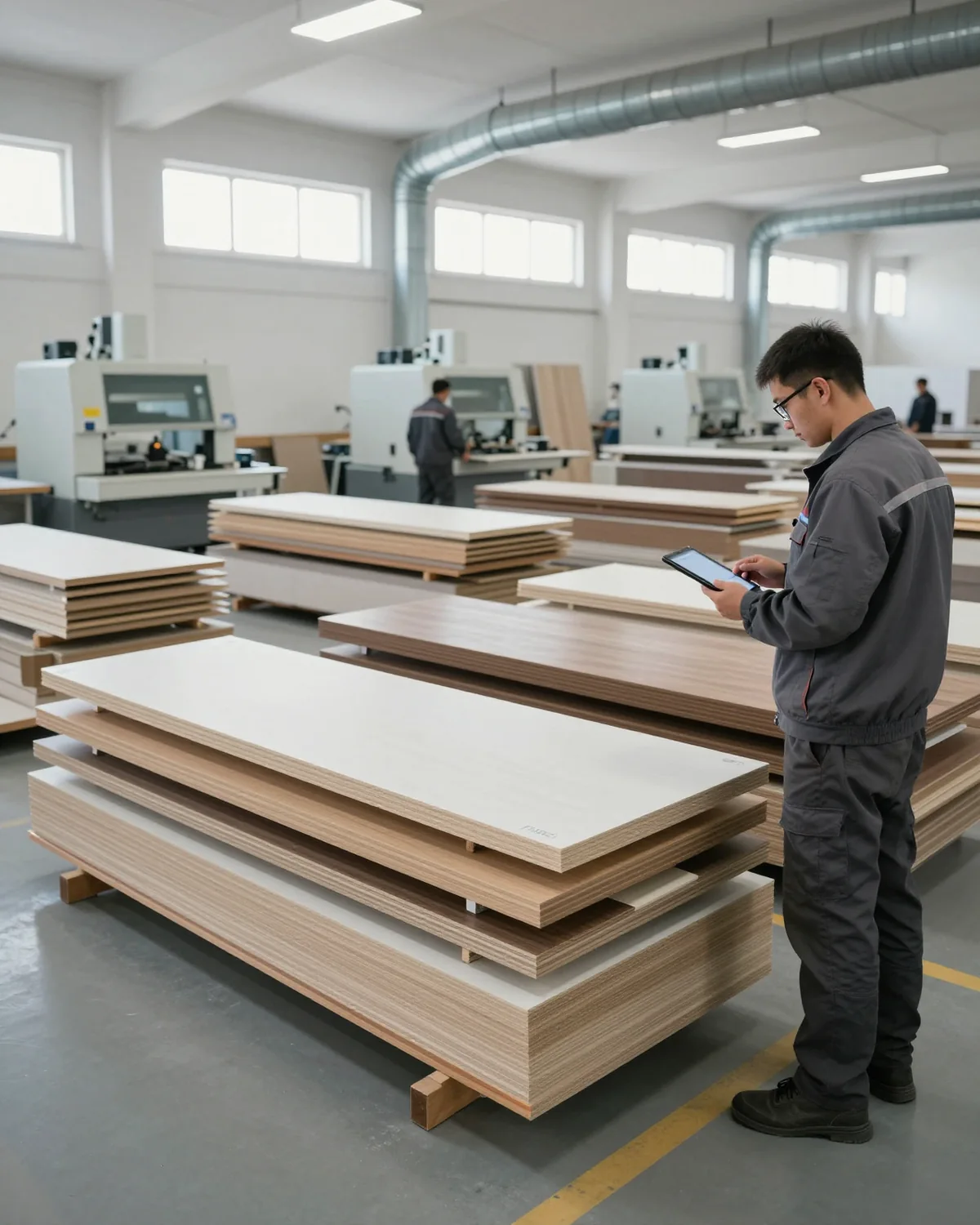
Egger and Kronospan boards of emission class E1 arrive at the workshop warehouse. 40+ laminated chipboard decors, 16–18 mm thick. Class E1 — for sales floors and display windows.
Laser measuring to 1 mm
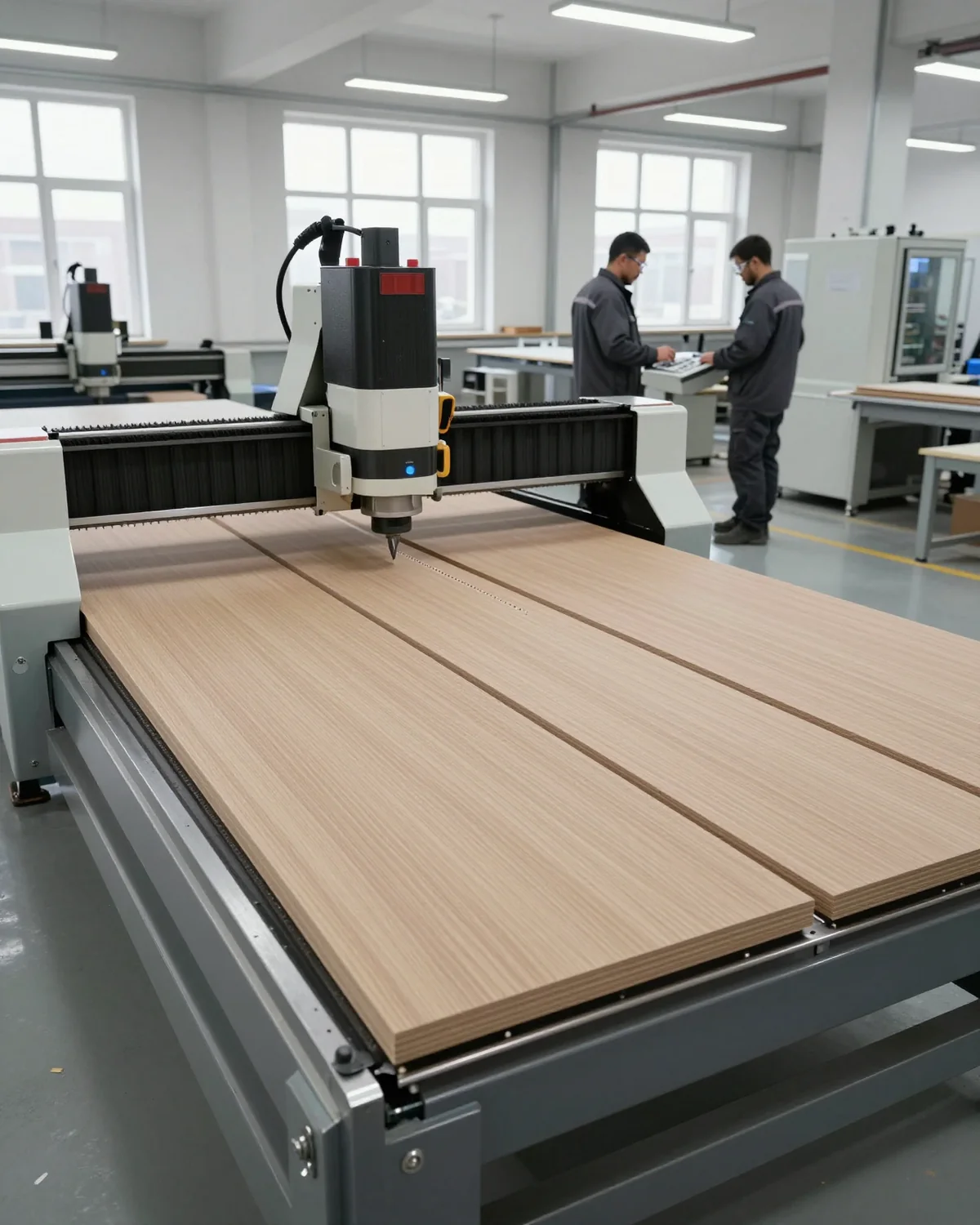
A design engineer prepares the drawings, and the machine cuts the board to them. Dimensions come from a laser measurement accurate to 1 mm.
Blum · Hettich · Boyard
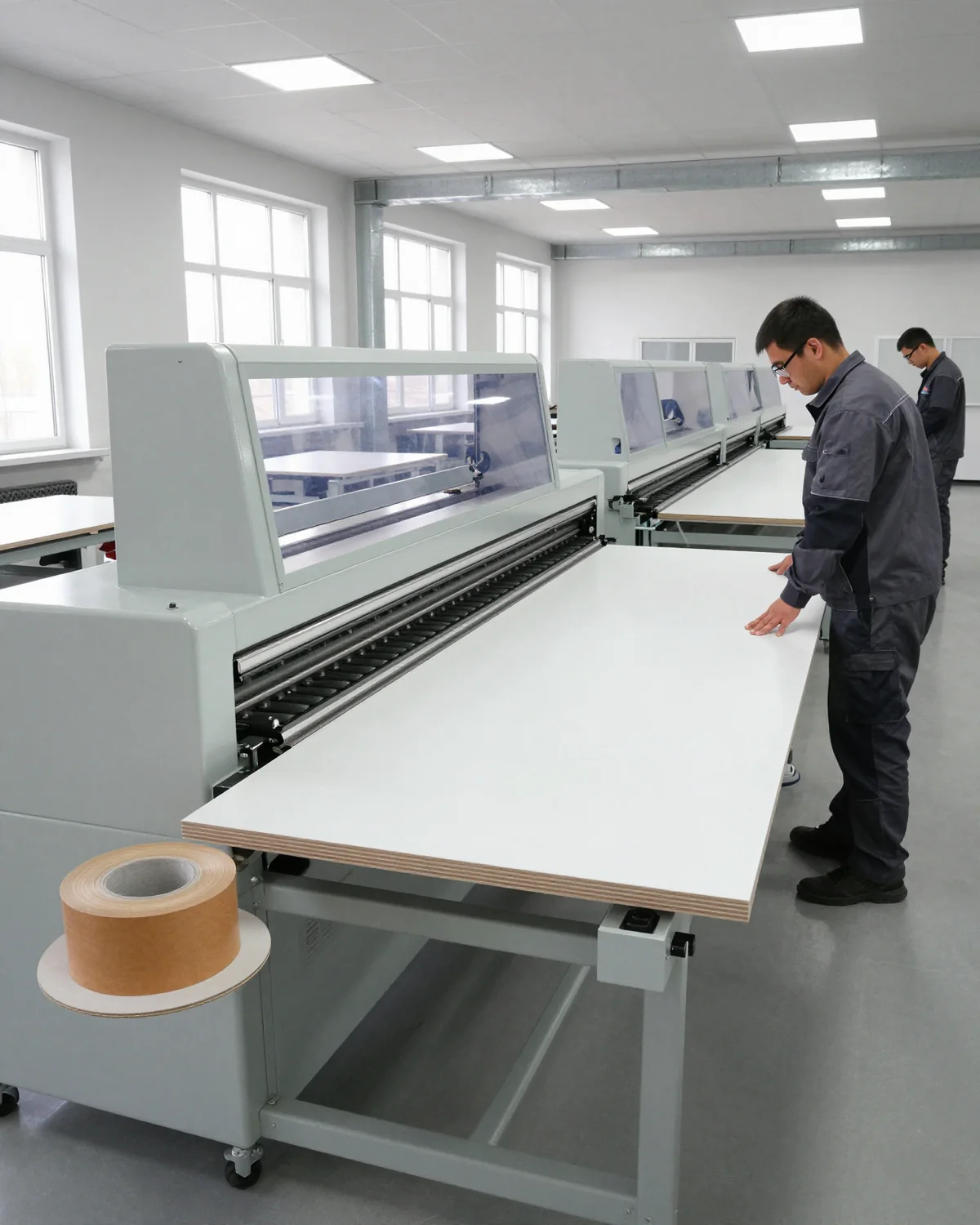
The edge-banding machine seals the edges, then we drill holes for Blum hinges and Hettich runners.
Any RAL colour
A finishing specialist paints the fronts to RAL — matt and gloss. We assemble the sloped shelves at the control build and check that a pair stands level on them and doesn't slide towards the lip.
Pre-assembly in the workshop
We assemble the modules in the workshop before dispatch, checking front gaps and drawer travel. The quality control department signs the item off for shipping.
Night installation under the mall's rules
We deliver, carry in and assemble in 1 day, adjust the furniture and clean up after ourselves. Warranty of 24 months from signing the acceptance certificate.
08Team
MEBLIX workshop craftsmen who make and assemble furniture to order.
01 / 07Furniture assembly carpenter11 years
★ 4.81 · 47 ratings

Cabinet furniture repair craftsman20 years
★ 4.99 · 73 ratings

Furniture and kitchen unit assembler23 years
★ 4.97 · 300 ratings

Made-to-order furniture maker7 years
★ 4.26 · 32 ratings

Furniture maker5 years
★ 4.23 · 30 ratings

Joiner and carpenter20 years
★ 5.0 · 113 ratings

Furniture front and hardware fitter17 years
★ 4.61 · 92 ratings
09FAQ
Didn’t find the answer? Message us — a manager replies, not a bot.
Ask on WhatsAppFor display merchandising we make shelves with a slight tilt towards the customer and a lip at the edge so a pair doesn't slip off. For boxes and stock the shelves stay flat. We show the angle and shelf spacing in the 3D design before production starts.
It depends on the section width, the shelf spacing and whether you display a single shoe or a whole pair. At the measurement we count the assortment by season and choose the number of shelves so that the whole size range stands on the floor or nearby in the niches.
Yes, this is footwear shelving with niches: sloped shelves for samples on top, closed niches for boxes with sizes below. The salesperson doesn't need to go to the stockroom for every pair, and the floor stays tidy.
We work with companies and sole traders under a contract: we issue an invoice, you transfer the first half of the sum before production starts and the second half after signing the acceptance certificate. We hand over the certificate and the delivery note right after installation.
Each shelving unit, island and bench has its own lead time — see the line for the item you need in the price list on this page. Is the opening date already set? Tell us the date at the measurement: we put the order in the workshop queue for it, and rush production is also possible.
Yes, in shopping centres we install equipment at night or at weekends — under the mall's rules and your store's schedule. We agree the arrival time and crew passes with the centre's administration in advance.
They will hold up if the shelf thickness and support spacing are calculated for the weight rather than taking a standard shelving unit. We load every shelf at the control build in the workshop before dispatch, and the warranty on the item is 24 months under the contract.
Yes, we fit the LED strip already in the workshop: we hide it in an aluminium profile above the row, run the wire to the nearest socket and check the light at the control build. The shelving arrives at the store with the lighting already working, and the installers only need to connect it.
The slanted shoe shelving is in the price list in two versions, plain and with LED lighting, and the lit one costs more. We calculate the final cost after measuring the floor, as it depends on the width, the number of shelves and the lighting.
Yes, we keep the drawings and decors of every project, so for a new location in the chain we make the same modules in the same colour. The sales floors look identical, and we calculate the quote for a repeat order at the price list on the order date.
10Reviews
4,9
average rating
on Google and Zoon
Everyone can see a review on the platform: this is how other people check whom to trust with an order. If something went wrong, write to us and we will reply within 1–2 business days.
Message us on WhatsApp11Article
We make footwear store furniture to match your assortment and sales floor layout: slanted shelving with a lip, wall-mounted shelves with lighting, island displays, fitting benches, and shelving with niches for boxes. Measurement and 3D design are free and take 1–2 days; in shopping centers we install at night; 24-month warranty under contract.
Shelf geometry determines how a pair looks from the aisle, whether it is easy to pick up, and whether it ends up on the floor when a shopper with bags walks past.
Tilt turns the pair toe-first toward the shopper, and a lip at the edge keeps it from sliding off. On a flat surface, shoes are only visible from above, and a person has to bend down or pick up the model to examine the vamp and heel. A slanted tier shows footwear almost as it will look on the foot: the silhouette, the leather texture, the sole from the side. A lip a couple of centimeters high acts as a stop — it holds both a light ballet flat and a heavy boot when the neighboring model is taken. Shelves for footwear retail with such a stop let you display a single shoe instead of a pair: the second stays in the box, and almost twice as many models fit in the same linear meter. For a small store, this is the main reserve for display without new shelving.
| Footwear type | Shelf depth and tilt | Spacing between shelves |
|---|---|---|
| Dress shoes and ballet flats | shallow, pronounced tilt | small, more rows |
| Sneakers and trainers | medium, gentle tilt | medium |
| Boots | deeper, weaker tilt | increased |
| Tall boots | deep, almost straight | maximum, sometimes the bottom shelf |
| Children's footwear | shallow, low placement | small |
| Stock boxes | deep, straight | by box height |
We load every tier on a test assembly in the workshop before the shelving is shipped to the store. Winter assortment is heavier than summer: a row of tall boots, boxes of shoes in niches, and a shopper's elbow leaning on the edge create a load that a row of sandals does not. That is why we calculate panel thickness and support spacing from the heaviest item in the row, not from an average pair. We make carcasses and shelves from Egger and Kronospan E1-class laminated chipboard 16–18 mm thick, and place long tiers on a metal base made of square tubing. We finish the edges with 2 mm PVC edge banding so boxes and carts do not knock it off. If you name the heaviest item in the technical brief during measurement, the structure is calculated with a reserve right away.
Layout sets the shopper's route from the entrance to the fitting area and checkout: what they see first, where they stop, and how many models they manage to look at before deciding to buy.
Along the walls we place wall-mounted shelving systems and slanted shelving — they hold the main assortment and set the height of the sales floor. The wall works from floor almost to ceiling: the bottom row holds boxes or heavy boots, the middle row holds best-selling models at eye level, and the top row holds seasonal accents and illuminated displays. We assemble shoe store shelving in sections, so a wall of any length can be covered without filler pieces or gaps. A corner slanted shelving unit turns dead corners into display space, which in standard fixtures stay empty. During the measurement we note windows, stockroom doors, outlets, and ventilation: they determine where a section will be solid and where a niche or mirror will appear, so the wall doesn't look like a continuous warehouse.
We separate the zones along the walls and show them in the 3D design before the products go into production — we prepare the design free of charge within 1–2 days after the measurement. Women's shoes usually take the longest wall and the brightest part of the floor, men's take the opposite side, and children's take a corner with low shelves and a bench. We make children's shelving lower than standard so a child can see their pair and reach for it, while a parent sits nearby. Between the zones we leave aisles wide enough for a stroller to pass and two people with boxes to walk by. The decor color and lighting can vary slightly from zone to zone while keeping the overall style: this way the customer understands where to go without even reading the signs on the walls.
Shoes are sold by size, and a salesperson who leaves for the stockroom for every pair leaves the customer alone at the shelf right at the moment of choice.
Boxes next to the display reduce waiting and turn fitting into a short conversation. The customer names the size, the salesperson takes the box from a niche at the bottom of the shelving, and a minute later the pair is on the foot while a second model for comparison stands nearby. When the entire stock is in the back room, every fitting drags on, and during peak hours a queue of people waiting for a consultant gathers at the shelves. A convenient scheme for a small store is to keep the best-selling sizes of each model on the sales floor, and rare extreme sizes and the reserve for the next week in the stockroom. Then the lower part of the shelving holds exactly what sells most often, and the stockroom replenishes the floor once a day, after closing or before opening.
On top, this type of shelving has slanted shelves for samples, and below are closed or open niches for boxes with sizes. We design shoe store shelving with niches based on the actual box: during the measurement, we measure the tallest and widest packaging in the assortment, for example, a boot box, and calculate the niche height with a small allowance for the hand. We close the niches with hinged doors or leave them open — it depends on whether the store wants to show the order of the boxes. We assemble the carcass from 16–18 mm laminated chipboard, cover the ends with PVC edge banding, and hang the doors on Blum, Hettich, or Boyard hinges. Such shelving replaces both a display and a stockroom, so it is especially helpful in small halls in shopping centers where there is almost no back room.
| Option | Where it stands | Who it suits |
|---|---|---|
| Shelving with niches | against the hall wall | a small store without a back room |
| Island display drawers | in the center of the hall | new arrivals and promotions |
| Stock shelving for boxes | back room or behind the checkout | a large stock of sizes |
| Niche in the base of the bench | fitting area | boxes during fitting |
| Closed section of the checkout counter | near the exit | returns and held pairs |
Shoes are almost always bought after fitting, so the place where a person sits down, changes shoes, and looks at their foot in the mirror needs to be planned together with the shelving.
There should be enough fitting places for the busiest hour, not for an average weekday. On weekends and before holidays, several customers try on shoes at the same time, often with children and bags, and one bench by the checkout turns into a queue. It is more convenient to spread several benches across the display area: by the women's wall, by the men's wall, and in the children's corner, so that a person sits down two steps away from the shelf where they took a pair. The length of the bench is calculated so that a box, a bag, and a second customer can fit next to each other. In a narrow hall, a double-sided backless bench in the center helps — people sit on it from both sides, and it does not block the view of the shelves along the walls.
We place a low mirror by every bench and the checkout counter along the route from fitting to the exit, so the customer doesn't have to walk back across the whole sales floor. A low mirror shows footwear in full, but for shoes to go with a dress or boots to go with trousers you also need a full-length mirror: we position it on a free wall or at the end of a shelving unit. We design the checkout with a closed section for held pairs and returns and a spot for the terminal. If the checkout is next to the fitting area, the salesperson can see the zone and has time to offer a second size or a care product. We make all the elements of the zone in the same finish as the shelving, and the 3D design shows where a person carrying a box will walk.
Footwear is first chosen with the eyes, so the light above the rows and the surface of the shelves sell no less than the model itself and its price.
The light above a row shows the texture of leather and suede the way the customer will see it on the street. General ceiling light casts shadows on the lower shelves and gives a flat picture: light suede looks grey, and patent leather glares. We light footwear shelves for a store with an LED strip hidden in an aluminium profile above each row or on the underside of the top tier. The light falls on the pairs from above and slightly in front, doesn't shine in the eyes and doesn't heat the footwear, while the profile draws heat away from the strip. We check the lighting on a control assembly in the workshop together with the shelves. A warm shade of light suits leather and brown tones, a neutral one suits sports footwear and white sneakers, so the shade is discussed at the measurement.
The assortment changes twice a year while the fixtures stay the same, so the service life of the shelving depends on how easily it can be reconfigured.
Shelves with adjustable supports can be reconfigured for a new season without buying new equipment. In summer, sandals and ballet flats take up a row, and the tiers are set close together with a small gap. For winter, some tiers are removed or raised to fit tall boots and bulky shoes, while the freed-up tiers go to the stockroom until spring. It is best to order shoe shelving for a store right away with extra holes for supports along the full height of the section: then rearranging takes one evening after closing and does not require a technician. Angled shelves with a lip are repositioned in exactly the same way. Before rearranging, it is worth drawing up a display plan for the new season so that heavy footwear ends up at the bottom and light and promotional items are at eye level.
We keep the drawings and decors of every project, so the second and third locations receive the same modules, and the chain's sales floors are recognizable from the doorway. We price furniture for a shoe store across a chain in a single estimate and formalize it in a single contract: from one shelving unit to outfitting several sales floors in one style. For LLPs and sole proprietors we issue an invoice, and payment is by bank transfer — 50% before the job enters production and 50% after signing the acceptance certificate, with the delivery note attached to the certificate. In shopping centers we install at night or on weekends according to the mall's rules, so the location opens in the morning with the new display already in place. Over 13 years of work in Almaty we have completed 3 500+ projects, including clothing and footwear boutiques.
A comfortable shoe sales floor comes together from several decisions that are worth making before the measurement, not after the shelving has been installed along the walls of the sales floor.
12Calculation
Choose the type of shelving or display, quantity and material in the calculator — the calculation will go to the manager on WhatsApp, who will check it against the floor plan and send you a quote.
13Retail furniture
We make shelving, display cases, counters and cash desk areas for your goods and floor layout, and install at night so the store doesn't have to close.
We make shelving for your goods, stockroom or niche: shelf spacing, depth and frame are calculated from the weight and dimensions of what will go on them.
We make wooden shelving to the dimensions of the wall, niche or opening: we select the wood species, shelf thickness and finish for what will go on them.
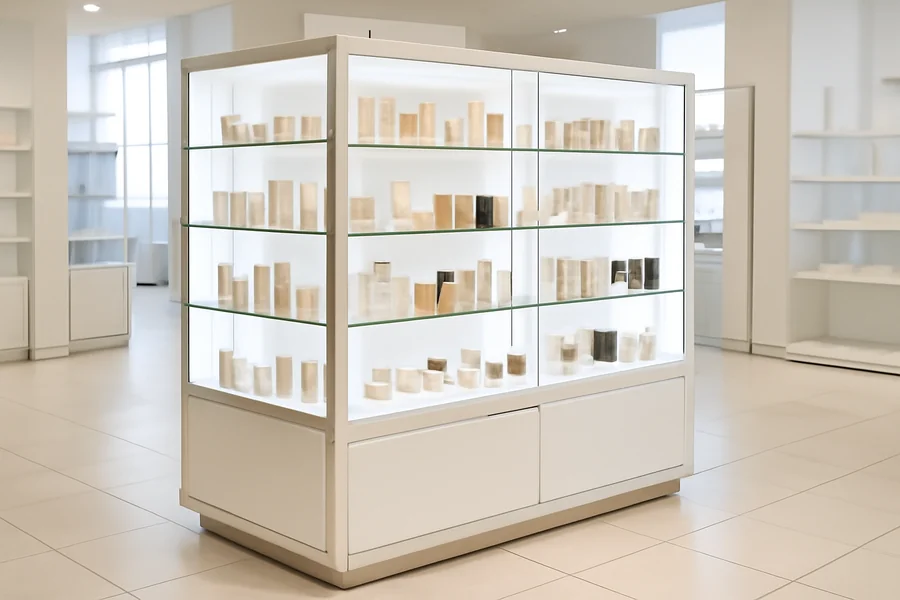
We make wall-mounted, island and tall display cases for your goods: tempered glass, locks and lighting that doesn't dazzle the customer.
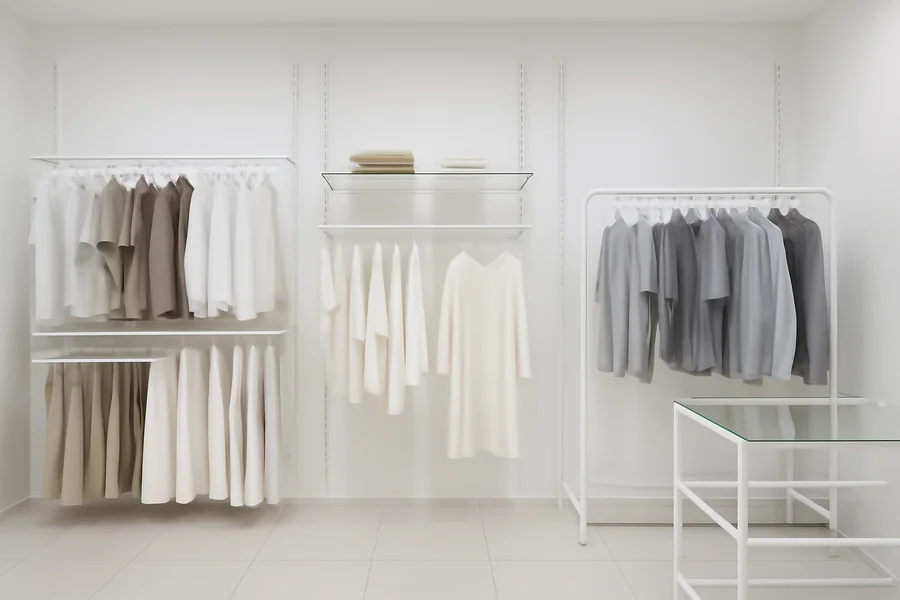
We make rails, gondolas, knitwear shelving, fitting rooms and cash desks for your assortment and boutique layout, and install at night so the store doesn't have to close.
We make wall-mounted shelving with lighting, gondolas, perfume display cases and tester tables for your assortment and floor layout, and install at night according to mall regulations.
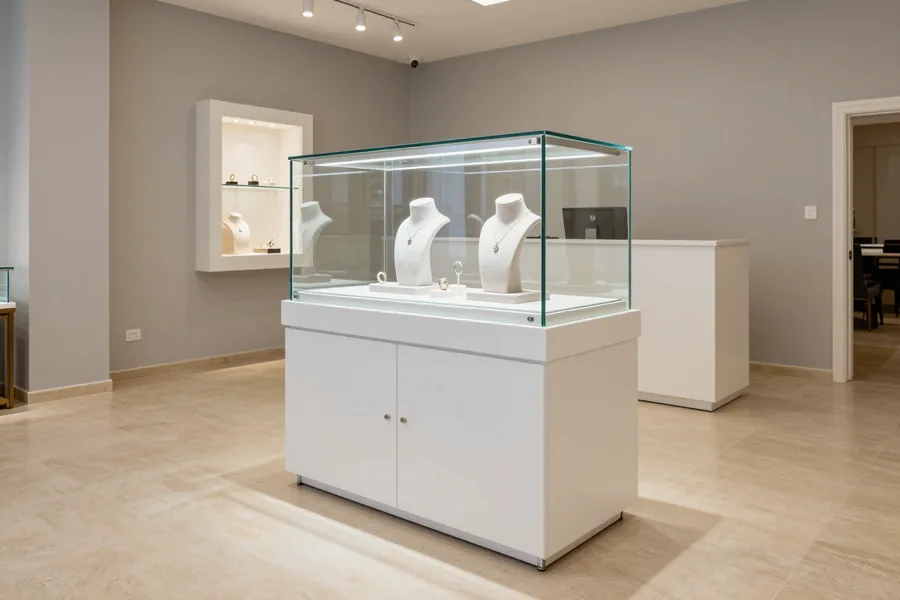
We make counters, island and wall-mounted display cases for jewellery: tempered glass, a lock on every door and spot lighting that makes the stones sparkle.
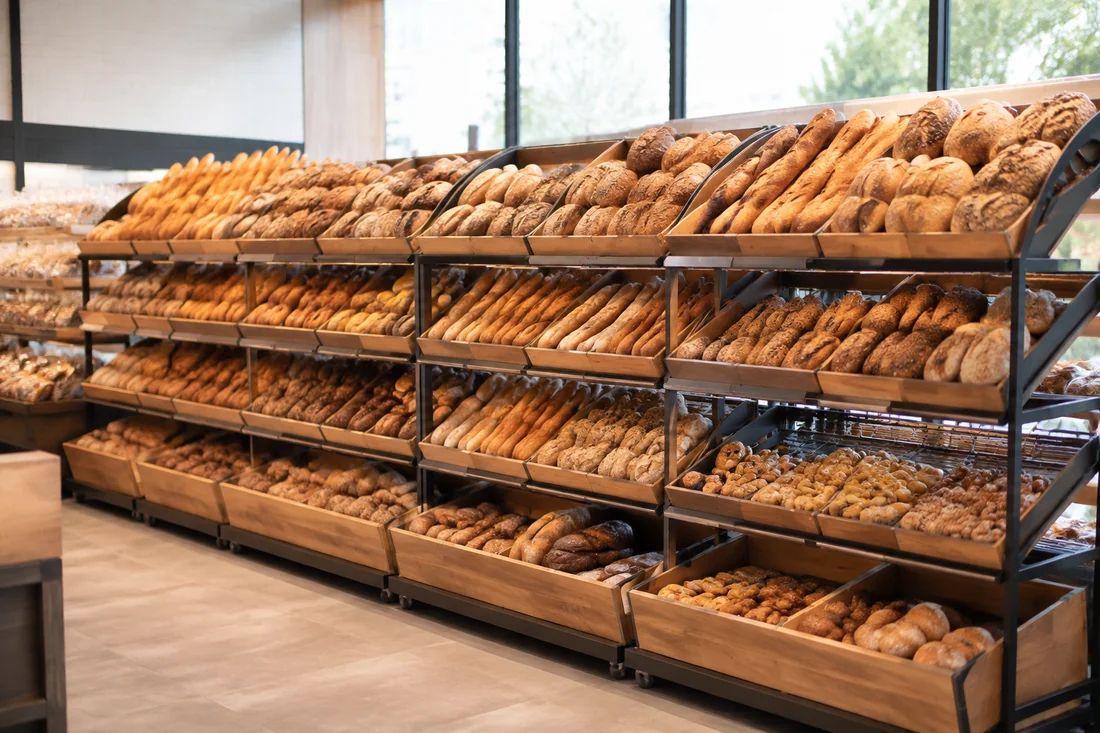
We make slanted shelving, shelves with trays and island display cabinets for a bakery or bread section assortment, with a finish suitable for contact with bread.
We make wooden shelving for the sales floor: pine, oak and ash solid wood holds displays for years, and we calculate the shelves for the weight of your goods.