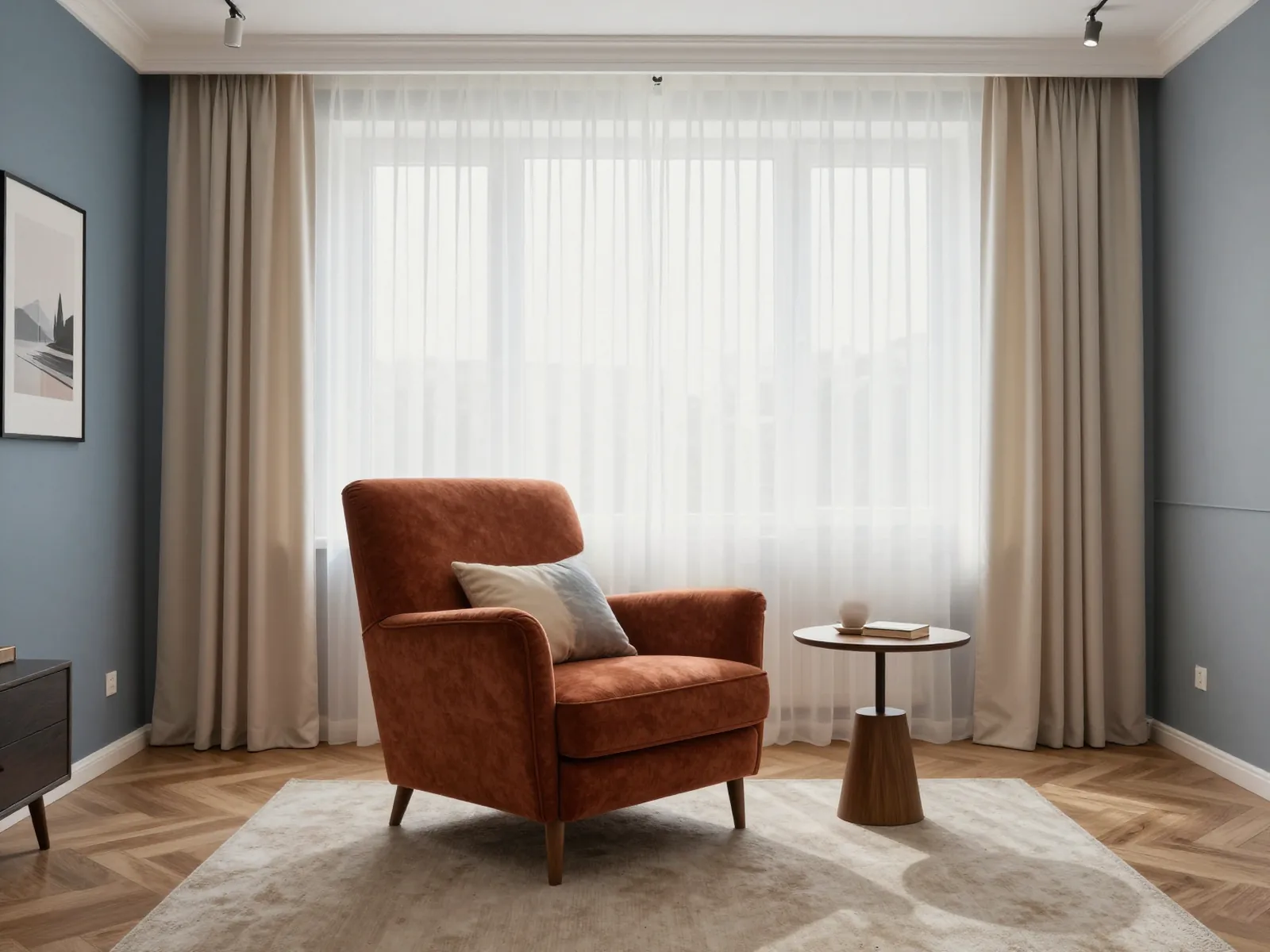
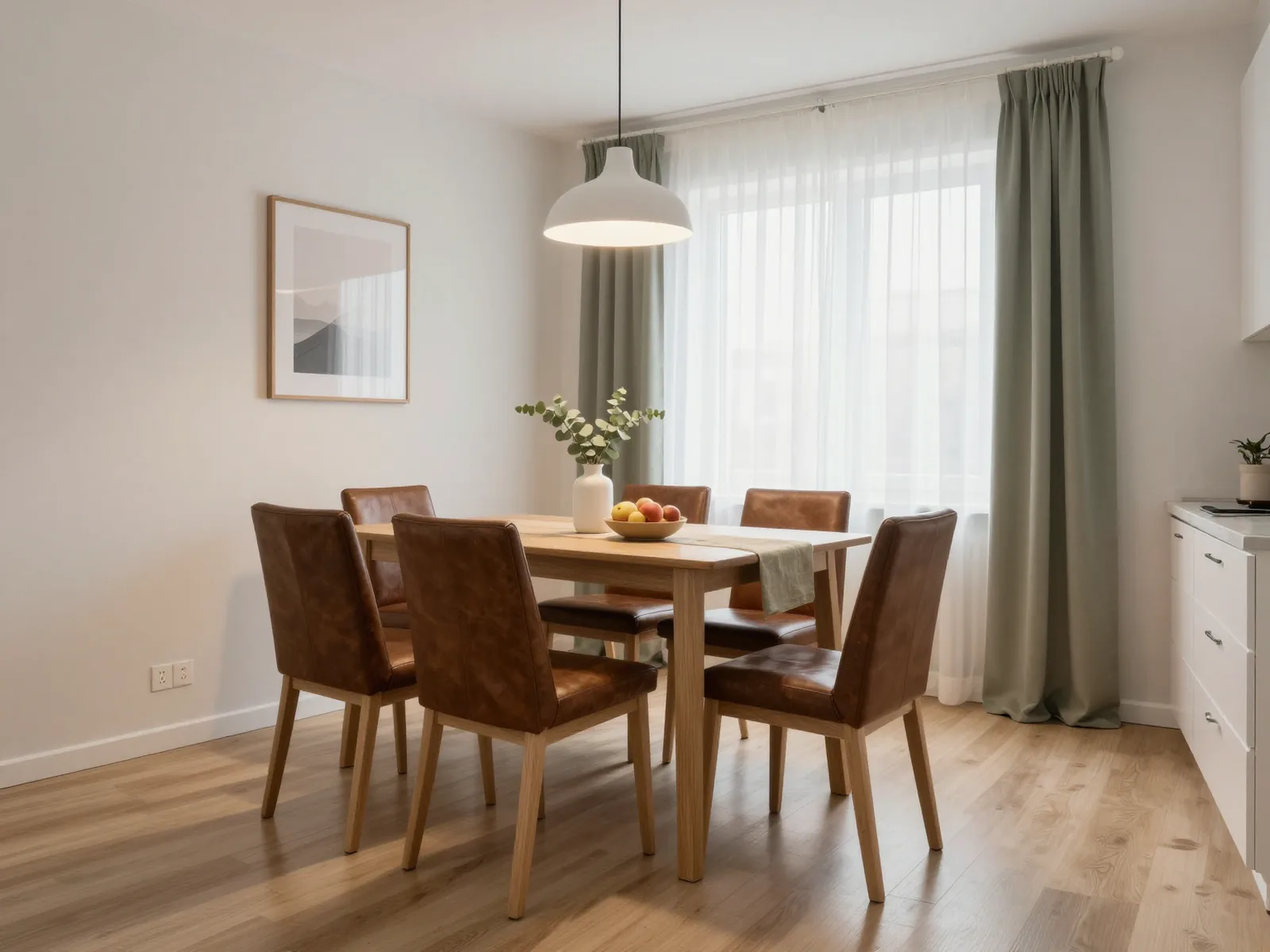
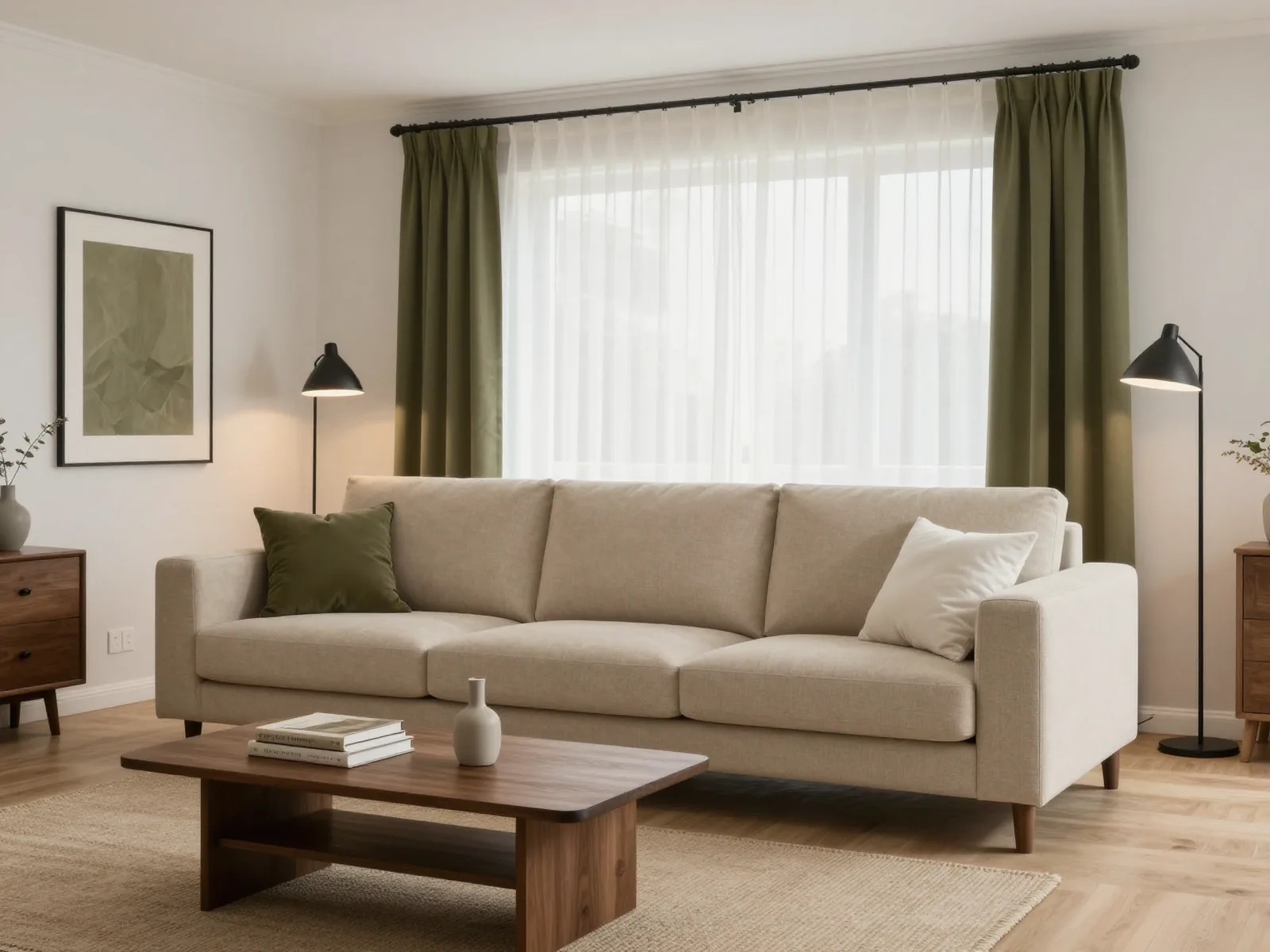
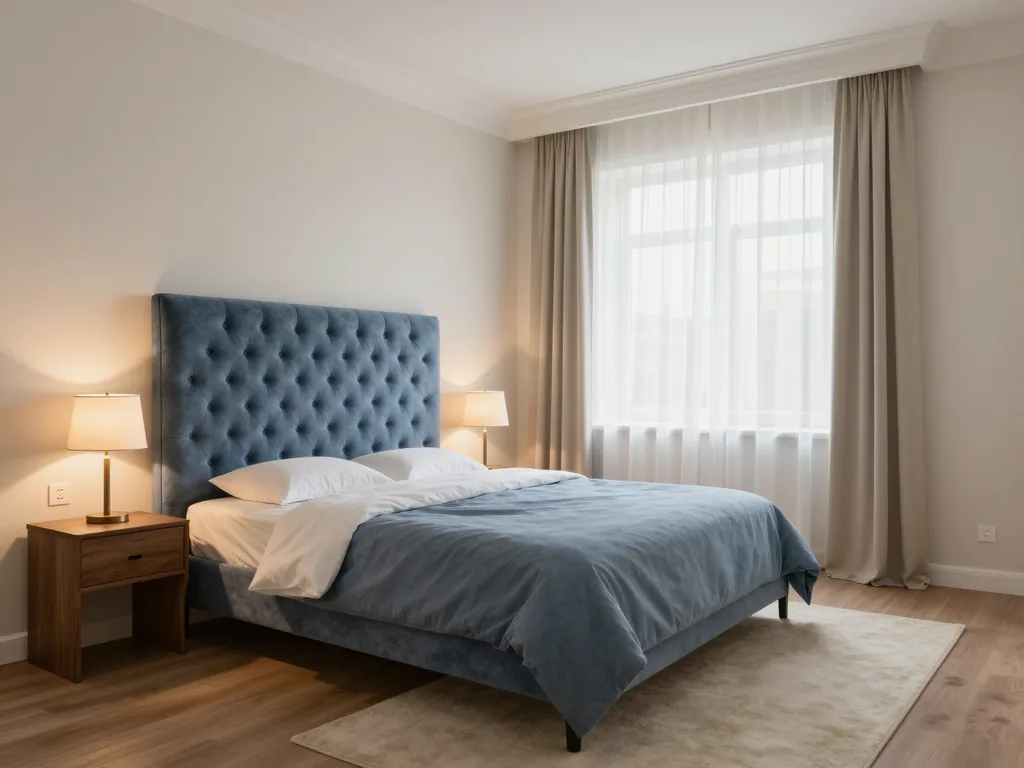
Furniture reupholstery with us is not just new fabric: we open up the sofa, armchair or chair, replace sagging foam, springs and webbing, and keep the sturdy frame. You choose the upholstery from samples in a catalog of over 120 options, each withstanding 30 000 abrasion cycles, and we give a 12-month warranty on the work.
Signs that it's time to refresh your sofa
Only the fabric is visible on the outside, but the scope of work depends on what's hidden underneath. We break down the external signs you can spot at home, the condition of the frame, and typical combinations of symptoms.
How fabric wear differs from filling wear
Fabric wear is visible to the eye — shiny armrests, pilling, a faded back edge, a seam coming apart — while filling wear is felt by the body: a dip in the usual spot, a hard frame edge under your thigh, creaking with every movement. The first is fixed by changing the upholstery, the second requires opening up and replacing the foam, springs or webbing. Often both go together: fabric wears through fastest where the filling has already sagged and the material rubs against the frame. That's why sofa reupholstery almost always starts with the question of what's under the old cover, not with choosing a color. The age of the item alone says little: a sofa sat on every evening sags sooner than a guest-room one, even if bought later. There's a simple check that needs no tools: sit in each seat one by one with your eyes closed. If one seat sinks noticeably more than its neighbors, you'll need to replace the filling too, not just the top layer.
When the frame allows reupholstery
We take an item for reupholstery when its frame of timber and plywood is intact, and before work we always open it up: we inspect the frame, joints, filling and reclining mechanism. Old sofas are often built on solid timber that's stronger than the frame of many budget new pieces, and such a base only needs new filling and upholstery. A loose corner will be glued and tightened by our workshop craftsmen along the way, but a cracked load-bearing timber or delaminated plywood under the seat changes the scope of work: such a part is replaced with a new one at the carpentry area, and this is discussed separately. We test the mechanism under load: if it moves with a skew, that's visible right after the upholstery is removed. Over 13 years in the Almaty market we've reupholstered more than 1 500 items and know that a crack in timber can't be seen in a photo. That's why we make the final decision after opening up, and from photos we only give a rough estimate.
Signs of wear and what's behind them
| Sign | What happened inside | What gets replaced |
|---|---|---|
| A dip in your favorite spot | seat foam has sagged | foam block and synthetic down |
| Creaking and spring jolts | springs have broken or shifted | spring block |
| Seat sinks entirely | webbing has stretched or torn | base webbing |
| Fabric worn, seating still fine | only the top layer has worn out | upholstery |
| Skew when reclining | mechanism or frame corner is loose | mechanism, frame tightening |
| Hard edge under the thigh | filling has slid off the frame | filling and padding |
What we replace inside the seat and back
The shape and firmness of a seat depend not on the fabric but on the filling beneath it. Here is what filler we use to replace the old one, what the base rests on, and why changing just the top cover doesn't solve the problem.
What filler we use instead of sagging foam
When reupholstering soft furniture, we remove the sagging foam entirely and install new polyurethane foam with a density of 30–35 kg/m³, topped with a soft layer of synthetic down. The dense block bears the weight and doesn't give way under someone who sits in the same spot every evening, while the synthetic down rounds off the edges and gives a soft touch right after you sit down. For back and armrest cushions, the craftsman chooses a softer build than for the seat: the back rests differently than the hips, and uniform firmness everywhere feels like a board. The new filler is cut using the removed parts of the old one, so the shape of the back, the seat height and the profile of the armrests are preserved. If you want to sit higher or firmer, say so during the inspection: the thickness and order of the layers are easy to change while the item is disassembled. After assembly, such a request means opening it up again.
Spring unit, straps and folding mechanism
The seat base is supported by a spring unit or furniture straps, and when we open the item we check both together with the folding mechanism. A broken spring gives a characteristic jolt and squeak, while stretched straps cause the whole seat to sag, even if the foam is still good. In armchairs without springs, the base rests entirely on straps, and their condition determines how firm the seat will be. A broken spring unit is replaced entirely at our soft furniture section, where the straps are also tensioned at equal spacing so the base springs evenly across the full width. We check eurobook, dolphin or accordion mechanisms under load: jamming, skewing and metal knocking are immediately audible, and worn axles and levers are visible without the upholstery. Fixing the mechanism is cheaper during the same reupholstery, since access to it is open. If the work is postponed, the new upholstery will have to be removed again later, and staples set into old holes a second time hold worse.
Why you can't stretch new fabric over old filling
- Returning dents: new upholstery follows the old foam relief and shows all the pressed-in spots within the first weeks.
- Folds and wrinkles: fabric on a sagging base doesn't hold tension, wrinkles on the seat and slides toward the front edge.
- Wear against the frame: where the filler has shifted, the fabric rubs against the beam and wears through faster than on an even base.
- Repeat work: within a season the filling is replaced anyway, and the just-stretched fabric is removed a second time.
- Check on handover: ask to see the removed foam and straps — that shows what was replaced inside.
How to choose fabric for furniture reupholstery under load
Upholstery is chosen not by a picture in the catalog but by who will sit on the item and how, and how often it gets cleaned. We break down the abrasion resistance rating, the properties of materials and testing samples at home.
What the abrasion test shows
Each of the 120+ fabrics in our catalog withstands at least 30 000 abrasion cycles on the testing rig, which is the lower threshold for everything we offer for upholstery. A cycle is one pass of the abrading head over the sample on the rig: the more cycles a material withstands before scuffing appears, the longer it lasts on the seat and armrests. The 30 000-cycle threshold rules out decorative fabrics that look great on a cushion but quickly give up on a sofa used every day. Within the catalog the difference still shows: dense basketweave and microfiber handle frequent use with ease, while long-pile velvet eventually flattens at the points of contact. For a child's room and a home with pets we have vandal-resistant fabrics and anti-scratch options with a dense weave and no loops for claws to catch on. When choosing a material for the living room, look at the density of the weave and pile no less than at the shade.
Catalog fabrics and where each one fits
| Material | How it feels | Where it fits | Care |
|---|---|---|---|
| Velvet | soft short pile | living room, headboard | dry brushing |
| Chenille | plush, warm | lounge sofa | vacuum, soft brush |
| Basketweave | dense, pronounced weave | everyday use | damp cloth |
| Microfiber | smooth, velvety | family with children | soapy solution |
| Jacquard | pattern woven into the fabric | classic interior | delicate cleaning |
| Faux leather | smooth, cool | kitchen, office | wipe with a damp cloth |
| Genuine leather | warm, supple | study, armchair | leather care products |
| Anti-scratch | dense, no loops | home with a cat | damp cleaning |
Samples to take home and upholstery in your own fabric
Before you order, we give you fabric samples to take home, and if the furniture reupholstery is done in your own fabric, we calculate the required yardage in advance based on the parts of the item. A sample at home shows what you can't see on a screen: the shade under your lighting, how it pairs with the curtains and floor, how it feels under your hand. Put it on the armrest and look at it in daylight and in the evening — velvet and chenille change tone depending on the direction of the pile. For your own fabric, the roll width and the pattern matter: a large check or stripe has to be matched on the back and the cushions, and the consumption goes up. For leather and faux leather we count not meters but area and the number of seamless solid parts. We quote the yardage based on the measurements taken, not on the overall dimensions of the item, so there's no need to buy extra. Take fabric from a single batch and with a small reserve: the shade sometimes differs between rolls.
What we reupholster at your home and what we take to the workshop
Where the work happens depends on the size of the item and on how many components have to be disassembled. We break down the technician's visit, transport to the workshop and the layout by item type so you know the order in advance.
Chairs, poufs and headboards in a single visit
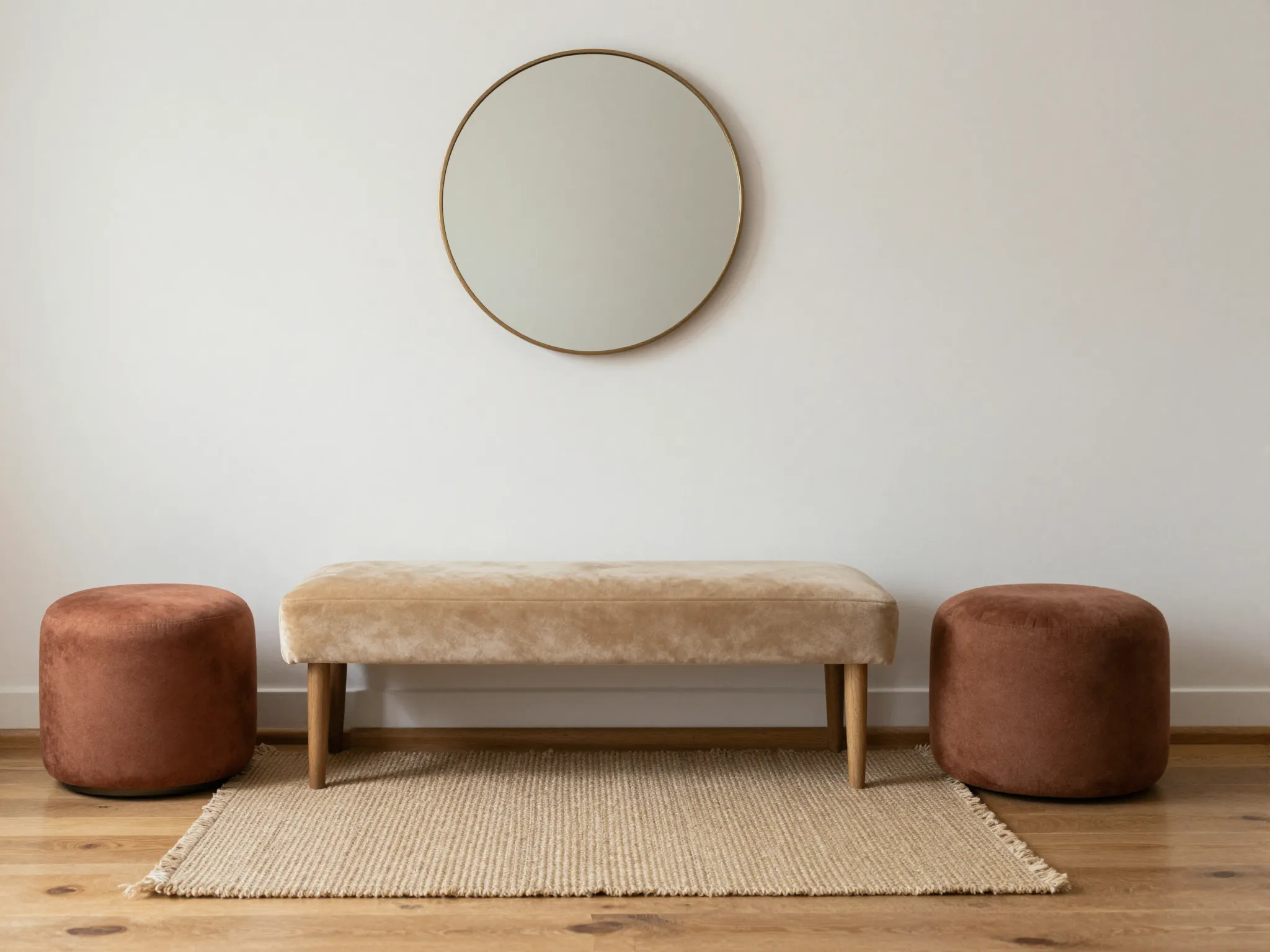
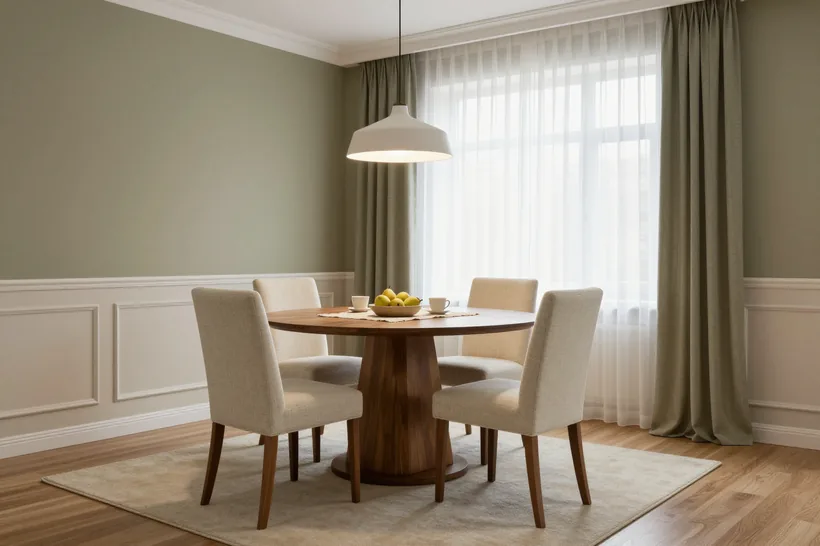
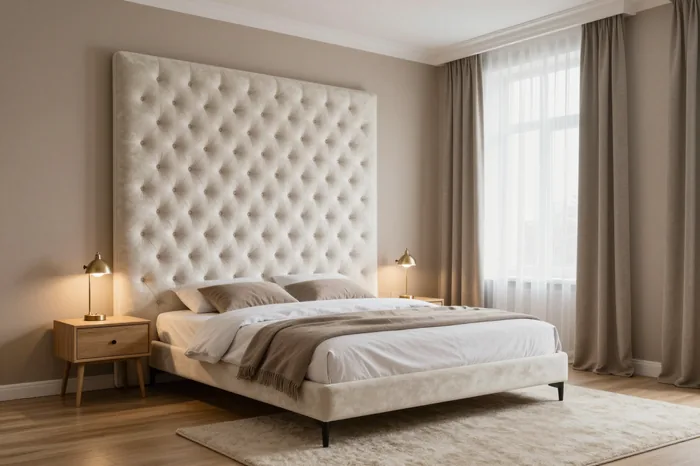
Reupholstering chairs, poufs and soft headboards is done at your home in a single master visit. The seat of a dining chair is removed from the frame, the master strips the old upholstery, replaces the foam, stretches the new upholstery and puts the piece back, so a set in one fabric is refreshed without being taken away. It works the same way with a headboard: the panel is taken off the wall or the bed, reupholstered smooth or with diamond tufting, and returned to its place. Chairs are reupholstered one at a time, so finished ones can go straight back to the table. For this we need a table or a clean floor area and access to a power socket for the tools. Furniture with a wobbly chair frame or a broken leg is assessed by the master on site, who will say whether separate work is needed. To make the visit faster, gather the chairs in one room in advance and remove cushions and covers from the seats.
Why sofas and armchairs go to the workshop
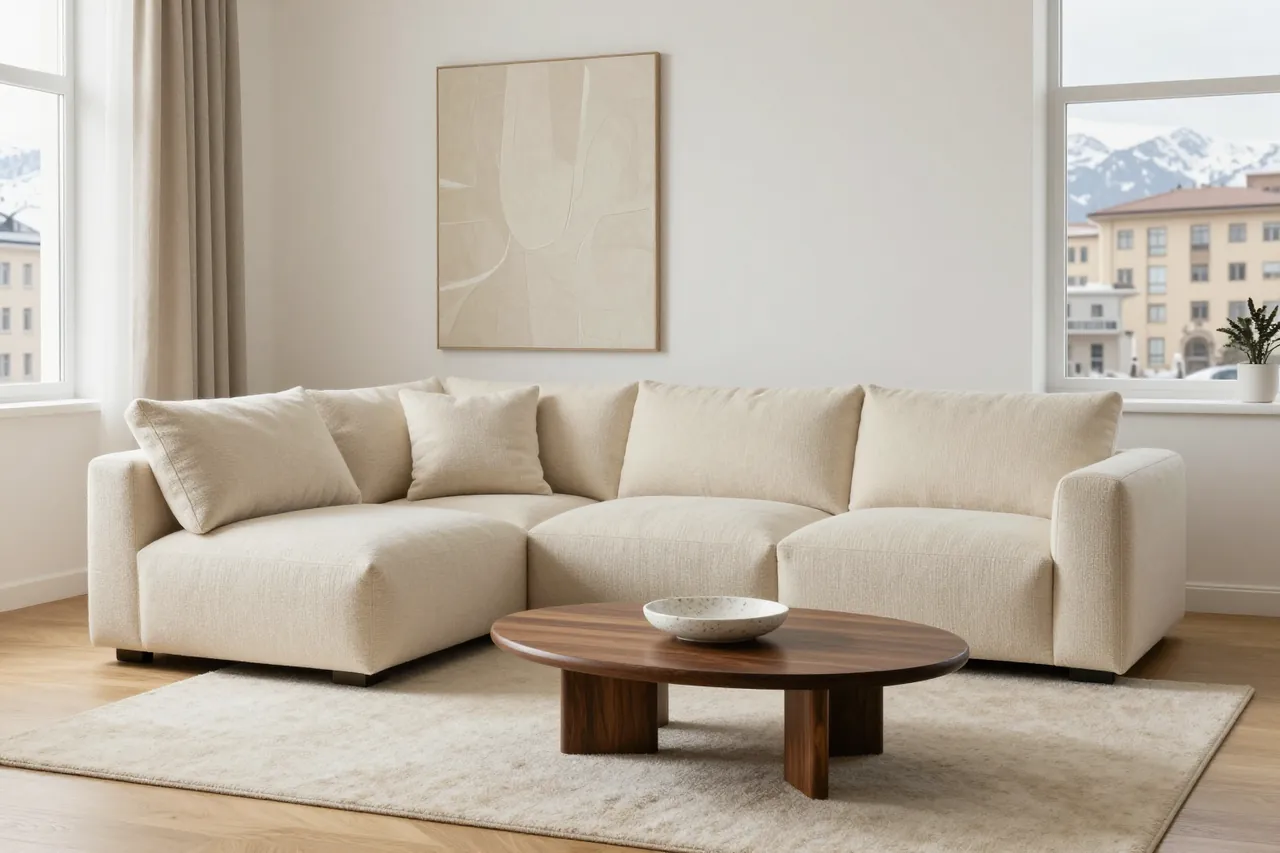
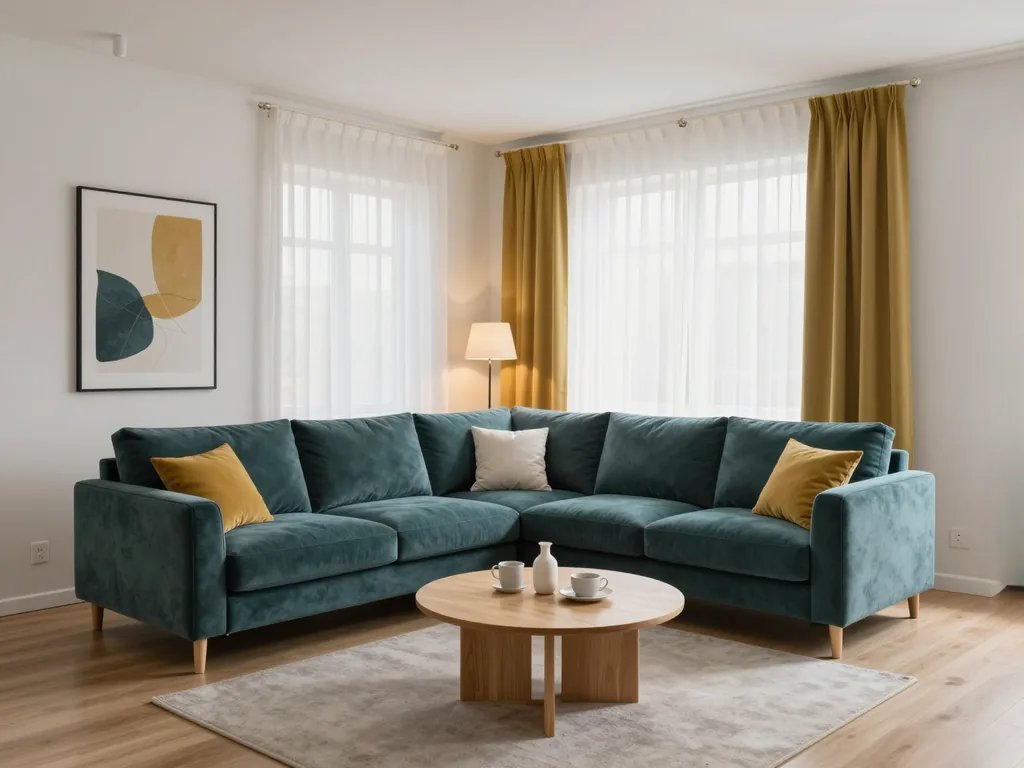
We take sofas and armchairs to the workshop in Almaty and bring them back free of charge, because cutting, sewing the upholstery and replacing spring units require a soft furniture area. The 600 m² workshop has a cutting table for a whole roll, sewing equipment and space where a sofa is stripped down to the frame without haste and without dust in your apartment. A corner sofa travels by modules: each one is reupholstered separately to its own patterns and reassembled at home, so it never has to pass through the doorway as a whole. Cushions and removable covers travel with the item so the whole set gets one fabric. After the work we deliver the item, put it in place and show you the result on handover. If the apartment has a second soft item from the same living room, it is convenient to hand it over together: reupholstering an armchair paired with a sofa in one fabric gives a set with no difference in shade.
Where the work happens for each item
| Item | Where we work | Why |
|---|---|---|
| Dining chair | at your home | the seat is removed from the frame |
| Pouf, bench | at your home | small amount of upholstery |
| Soft headboard | at your home | the panel is removed as a whole |
| Armchair | in the workshop | sewing and replacing straps |
| Straight sofa | in the workshop | cutting, spring unit, mechanism |
| Corner sofa | in the workshop by modules | patterns for each module |
| Office chair | depending on batch size | swivel mechanism, faux leather |
How we agree, hand over and guarantee furniture reupholstery
So the result matches expectations, the scope of work, the fabric and the price are fixed before we start. Below is the approval procedure, the warranty terms and the specifics of orders from organizations that need a series.
From photos to a fixed price
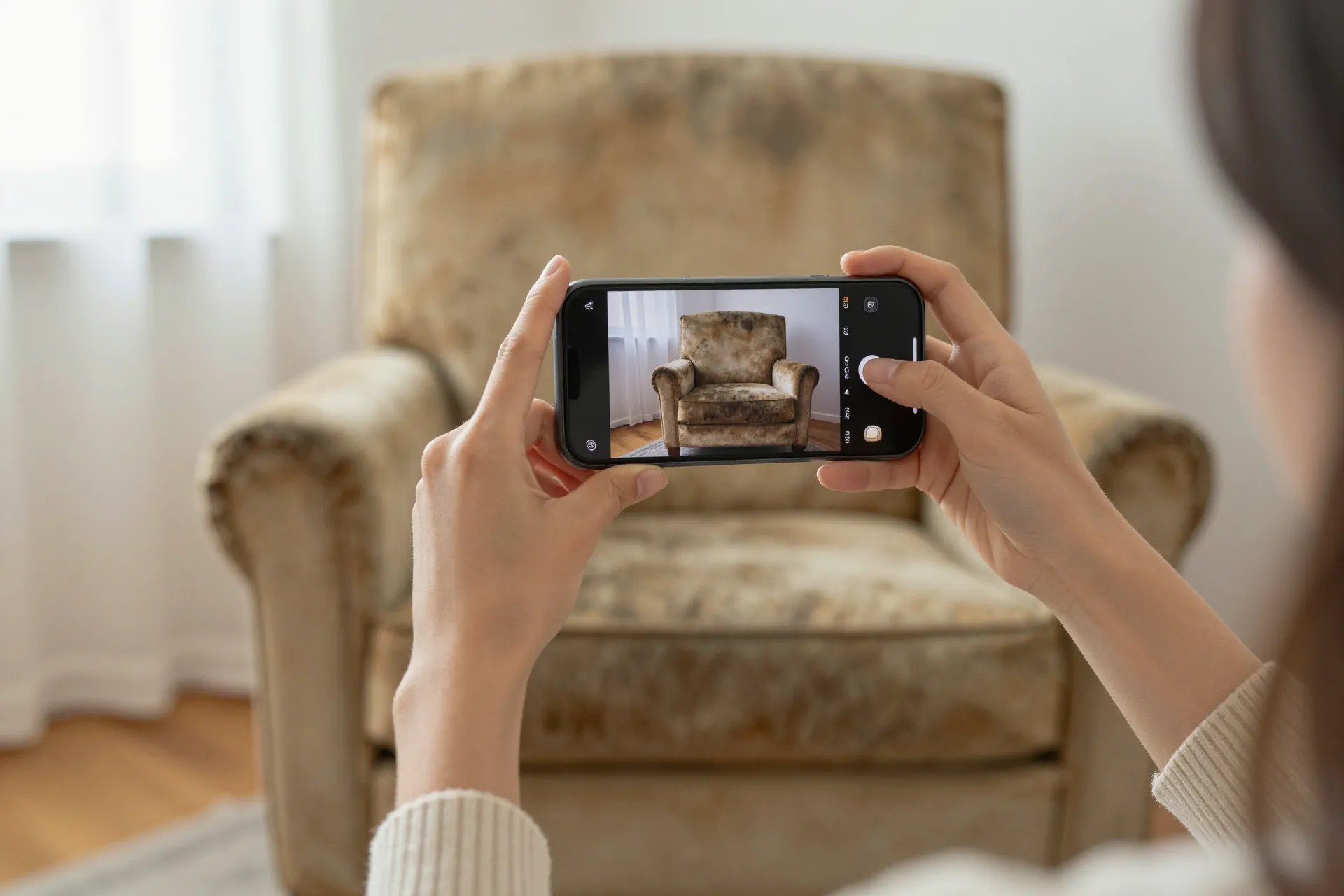
- Photos on WhatsApp: furniture reupholstery in Almaty starts with photos for us; from them we give a price estimate within 5 minutes.
- What to photograph: the item as a whole, worn areas up close, seams, the underside of the seat and the folding mechanism, if there is one.
- Master's inspection: we visit to inspect large furniture within the city free of charge, and after it we give the exact price and lead time.
- Fixing: we agree the price and lead time before work begins; lead times for each job are in the price list on this page.
- Choosing fabric: we give you samples to take home before ordering, so you can check the shade and texture at home rather than from a photo on a screen.
What the reupholstery warranty covers
We give a 12-month warranty on the work performed: it covers seams, fasteners and the new filling. If during this period a seam comes apart, a staple works loose or the foam we installed sags through our fault, we will fix it free of charge. The same period applies to replaced reclining mechanisms when they were repaired together with the upholstery. Before starting, the craftsman opens up the item and inspects the frame, filling and mechanism, and after the work checks the mechanism under load, so hidden defects are found before handover, not after. Care after handover depends on the material: velvet is cleaned with a dry soft brush, and eco-leather is wiped with a damp cloth without solvents. We show the work itself at handover, on site where the item will stand. Use this moment: sit in every seat, unfold the sofa, check how the fabric lies on the corners and armrests, and tell the craftsman about any remarks right away.
A batch for an office, cafe or showroom
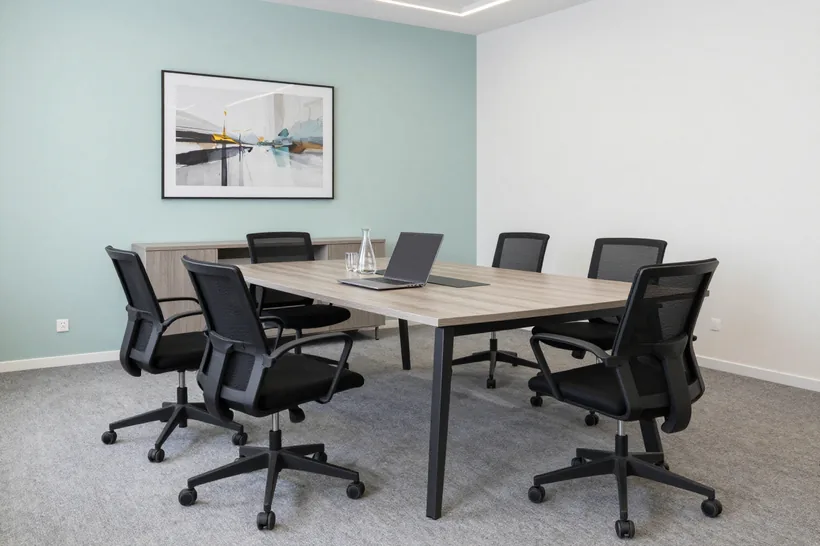
- One fabric for the whole batch: we reupholster office chairs, cafe chairs and showroom sofas as a series so the shade matches throughout the room.
- Documents: for legal entities we work under a contract and invoice with bank transfer, and we fix the price after diagnostics.
- Where the work happens: we reupholster chairs and poufs on site, and take large soft furniture to the workshop and return it.
- Material for heavy use: for visitor traffic, eco-leather and anti-vandal fabrics that are easy to wipe between shifts are suitable.
- Tip: order the whole batch at once from a single roll, then a later reorder won't cause a mismatch in color.
The bottom line on furniture reupholstery
A short guide for those deciding whether to refresh a favorite sofa, armchair or set of dining chairs instead of buying new ones, and where to start.
- Diagnostics: fabric wear is visible to the eye, while sagging filling shows up as dips, creaks and a hard frame edge under the seat.
- Filling: dense PU foam, synthetic down, intact webbing and springs matter more than color, otherwise the new upholstery will repeat the old dips.
- Material: upholstery is chosen by load and care, checking the sample at home in your own light and next to the curtains.
- Place of work: chairs, poufs and headboards are refreshed on site, while sofas and armchairs go to the soft furniture area.
- Handover: the price and scope are fixed before the start, and at acceptance it's worth sitting in every seat and unfolding the mechanism.