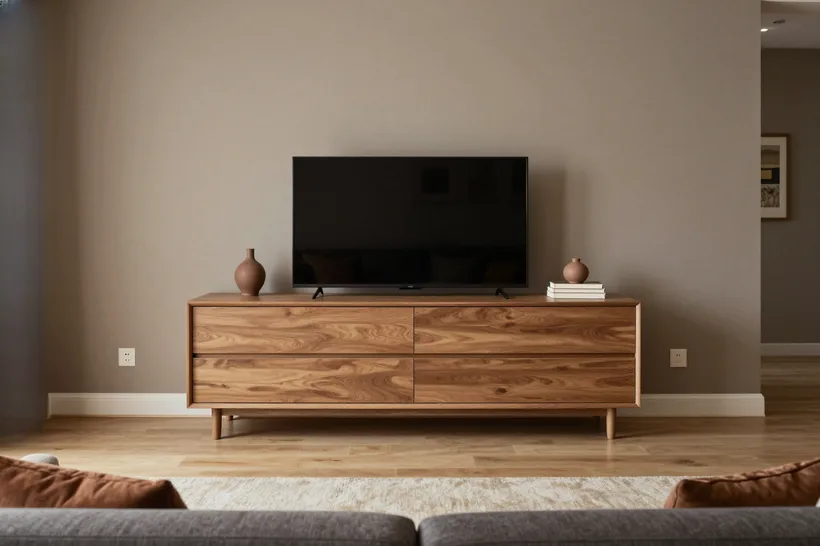
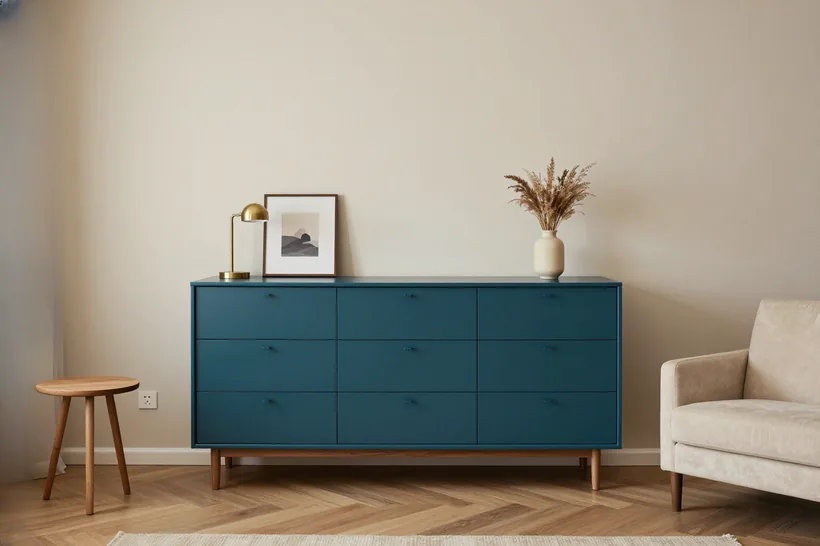
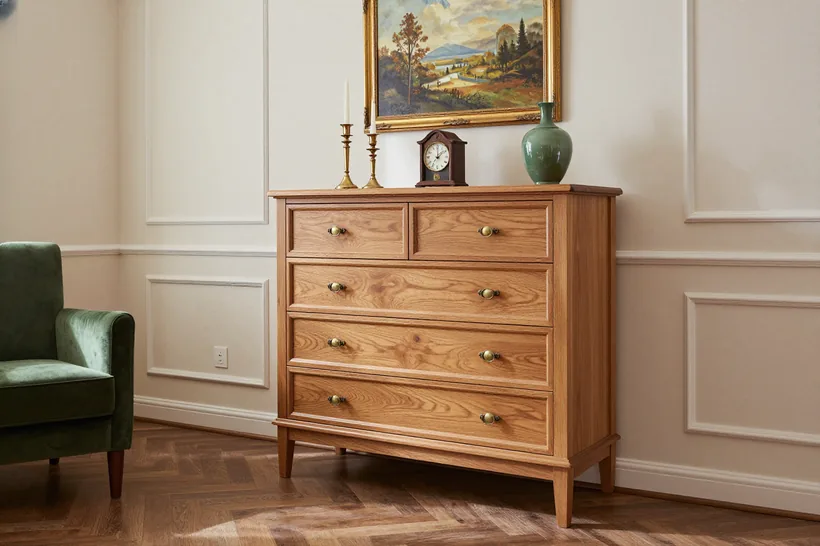
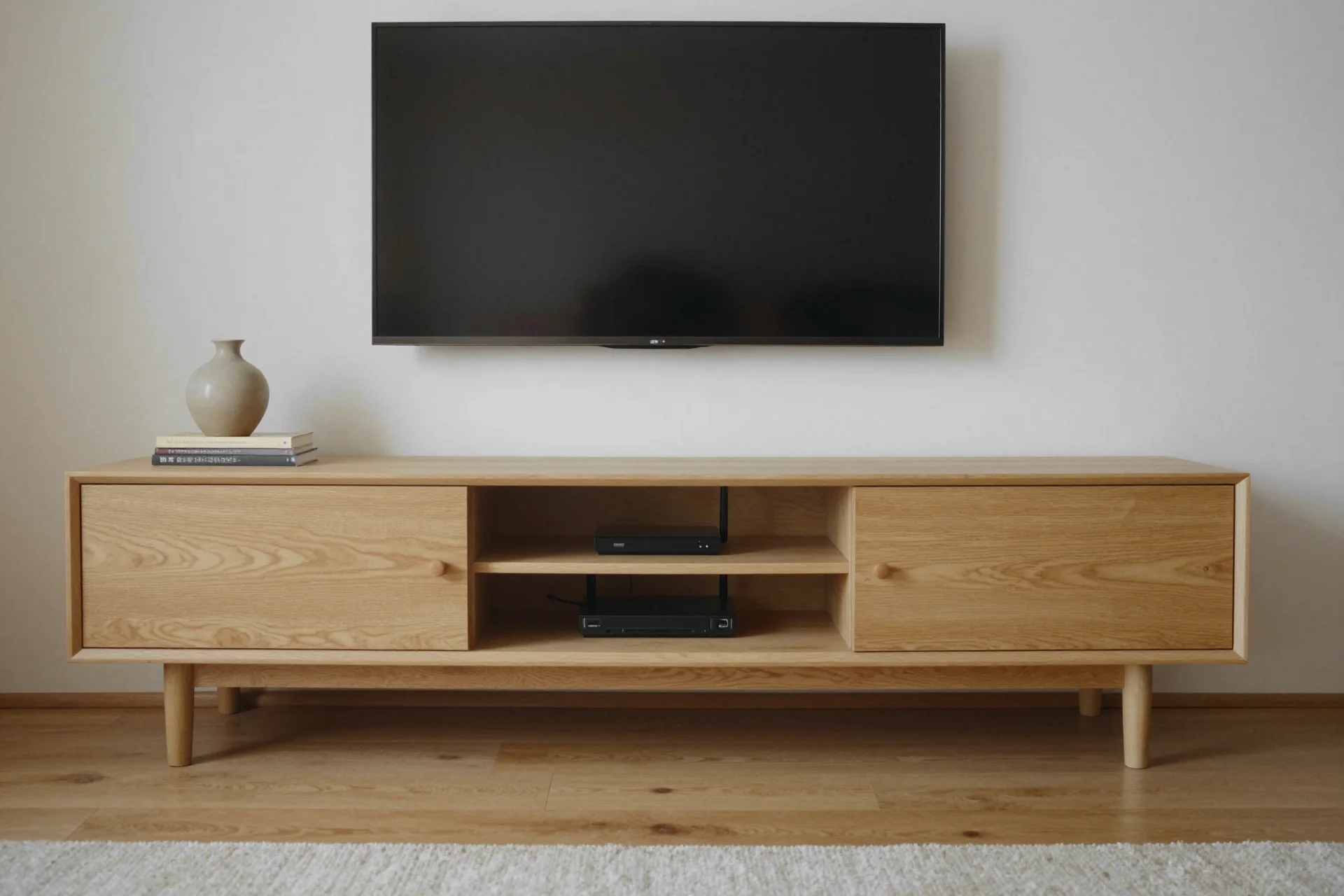
A custom chest of drawers from MEBLIX is made in Almaty, in our own 600 m² workshop. Measurement and a 3D design are free and take 1–2 days, our own crews handle installation, and the contract gives a 24-month warranty on the piece. Carcasses are cut from Egger and Kronospan boards, drawers run on Blum, Hettich or Boyard hardware.
A ready-made chest rarely sits in an alcove or against a wall without gaps. Measurement and design remove those differences before the board is cut.
How to order a chest of drawers to your own size
Everything starts with a free measurement. The measurer records the opening, the height of the skirting board and the position of the sockets, and we prepare the 3D design within 1–2 days. Beyond width and height, the measurer notes how far window sills, door casings and radiators stick out, and all of this goes to the designer. If the chest stands between a wall and a door, the measurer separately records the clearances for the casing and for the door swing. Those millimetres are built into the design before cutting, otherwise a drawer would open straight into the doorway.
Fitting an alcove and an uneven wall without gaps
For an uneven wall we design the carcass with a trimmed back edge and an allowance gap that a decorative strip then covers. A built-in version for an alcove is calculated from the real size of the opening: the side panels rest against the walls, and the front sits flush with the door casings. In panel buildings the walls are often visibly out of true, so we measure at several points rather than along a single line: at the corners, in the middle and near the floor. The difference between readings goes into the cutting map, and the carcass gets a slope of exactly that amount.
A chest of drawers for the hallway
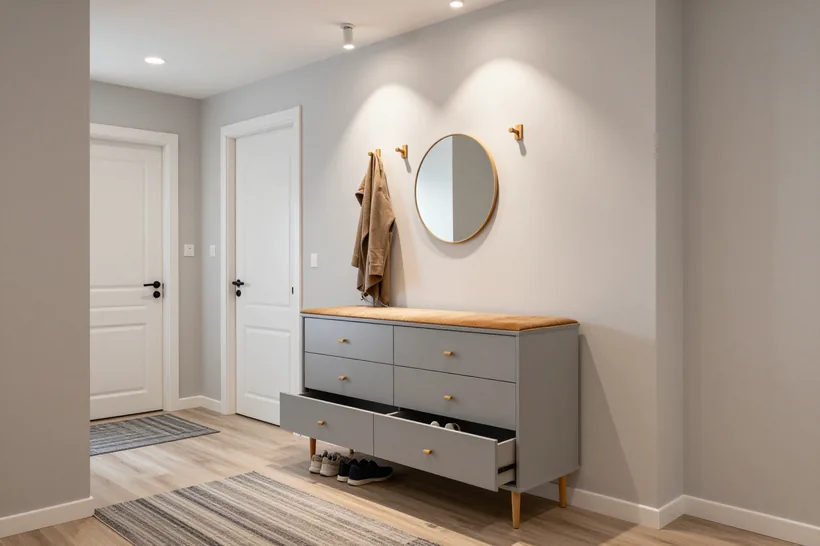
In a hallway a chest of drawers gathers shoes, keys and bags in one place. Depth and a clear passage matter more here than width, so the design starts from the corridor rather than from a catalogue.
A hallway chest with shoe storage
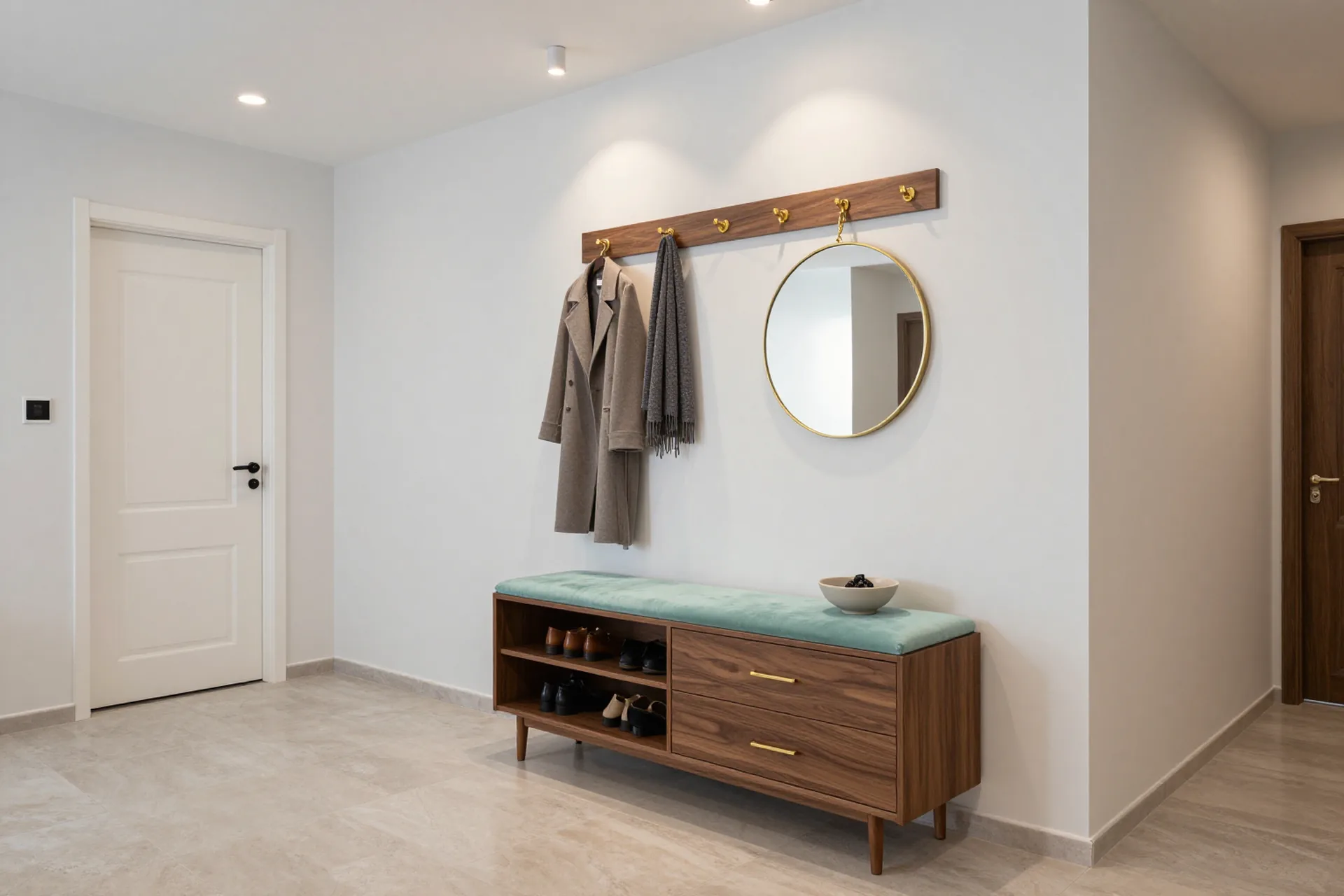
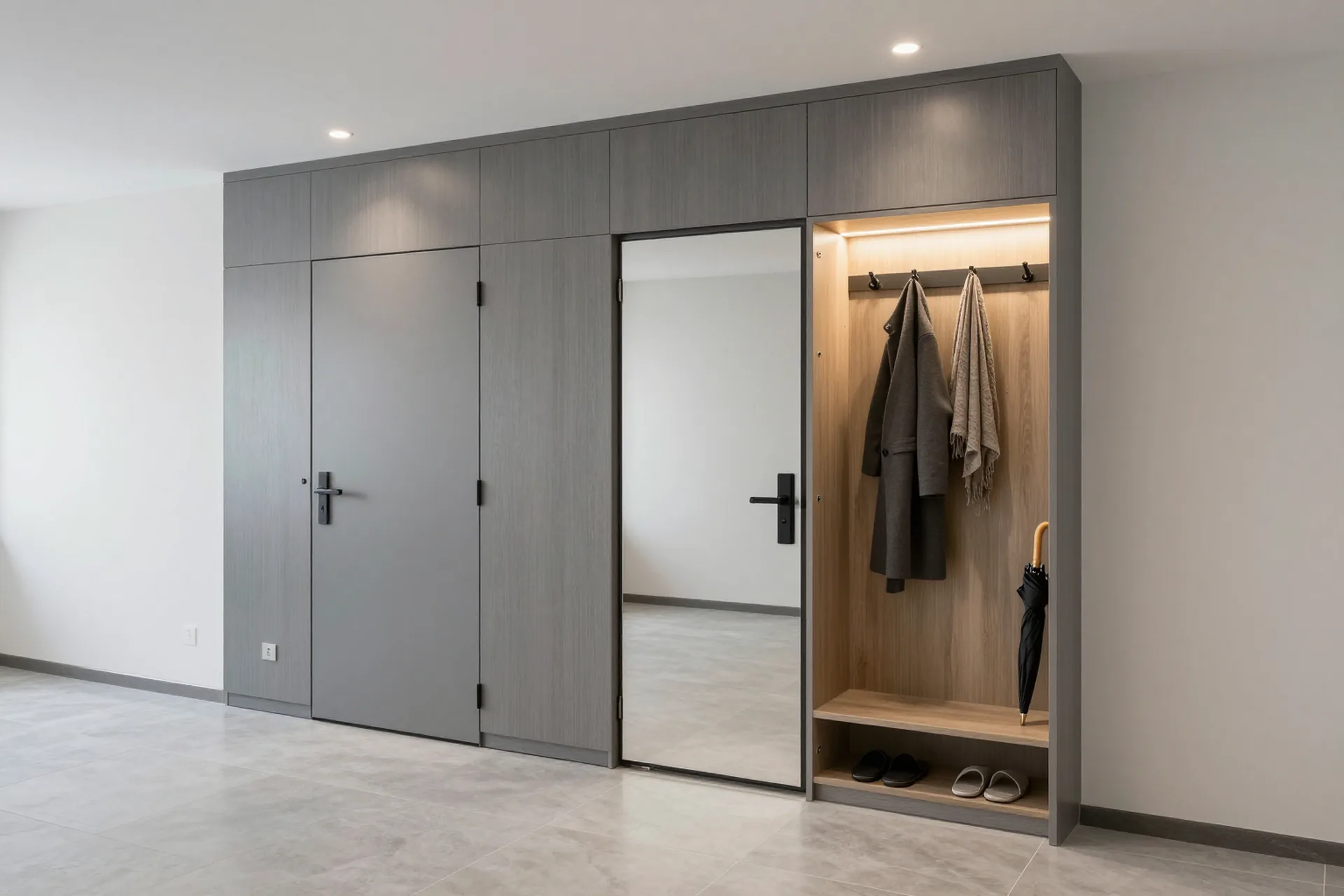
For a hallway we make a model with angled shoe shelves and an upper section of drawers for small things. Angled shelves hold each pair at a tilt, so you can see what is inside and the shoes get air. The upper drawers take keys, gloves and loose change, while an open niche level with the top is a place for a bag. We plan this kind of shoe cabinet around a narrow corridor: the depth of the carcass is set by the free passage, so the doors never block the entrance. A hallway chest with a seat adds a soft lid on top and keeps the shoe compartment underneath, so you can sit down to put your shoes on without a separate pouf.
Fronts and hardware that survive a hallway
Hallway fronts have to take daily knocks and regular wet cleaning. The carcass is made from Egger or Kronospan board that stands up to wiping with a damp cloth. For the fronts, MDF wrapped in film is a practical choice: its edge is covered by one continuous surface, so a stray knock does not peel off an edging strip. Doors and drawers are mounted on Blum hardware, which carries a 25-year manufacturer warranty. In a narrow corridor, push-to-open without handles is convenient, because there is nothing for a sleeve or a bag strap to catch on, and a light press on the front is enough to open it.
Materials and lead times for a chest of drawers
The front material decides both how the piece looks and how long it takes to make. Here is which option suits which job and what the lead time depends on.
Laminated chipboard or film-wrapped MDF
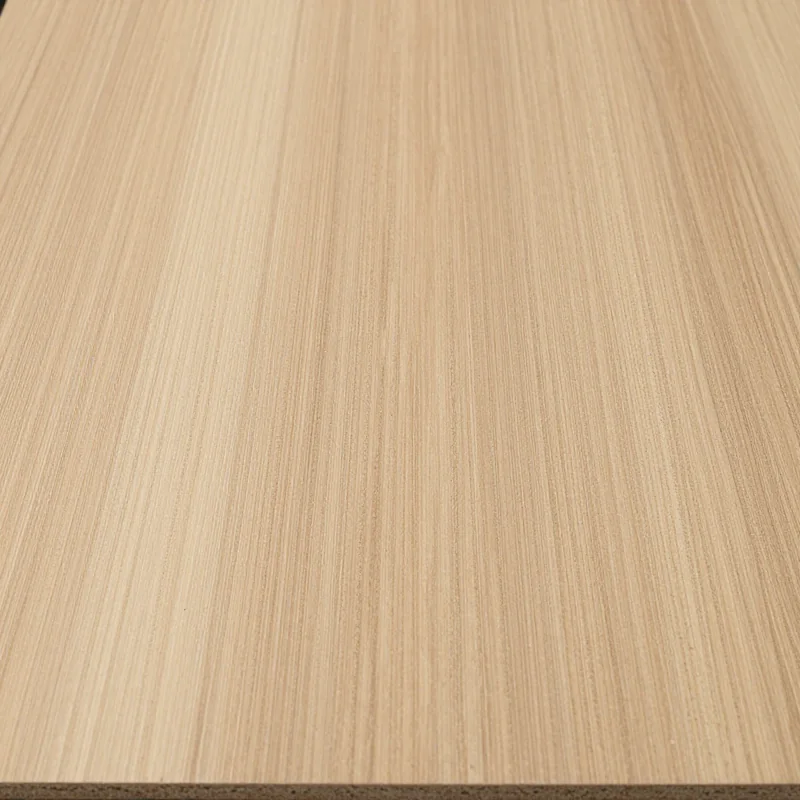
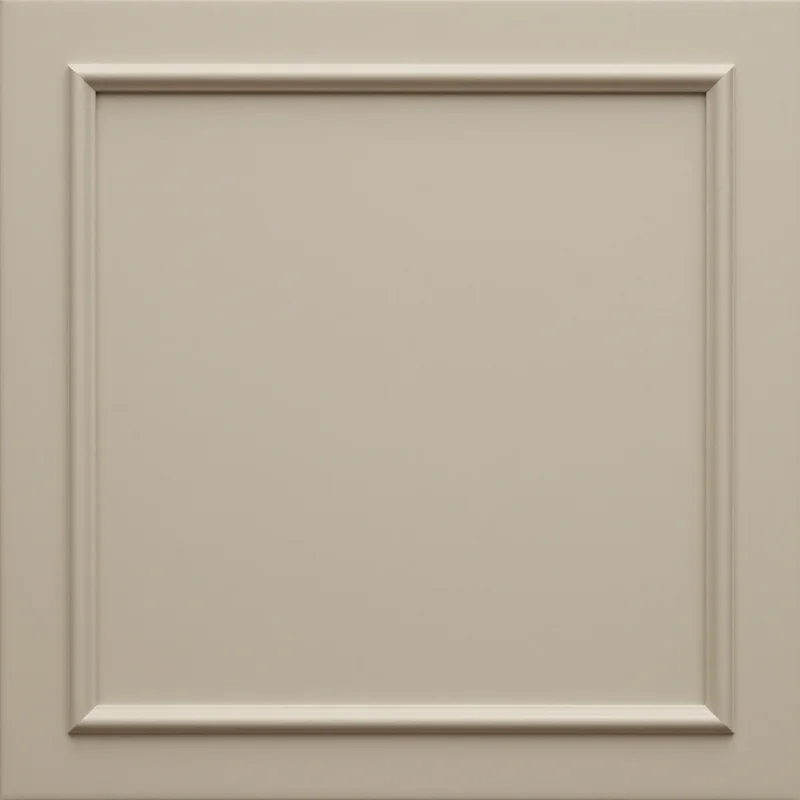
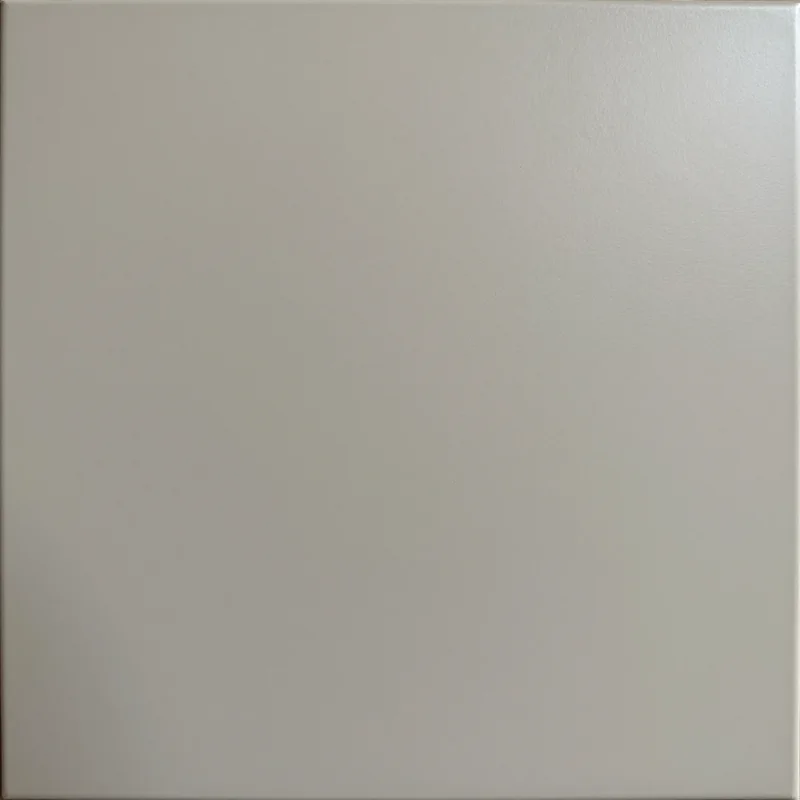
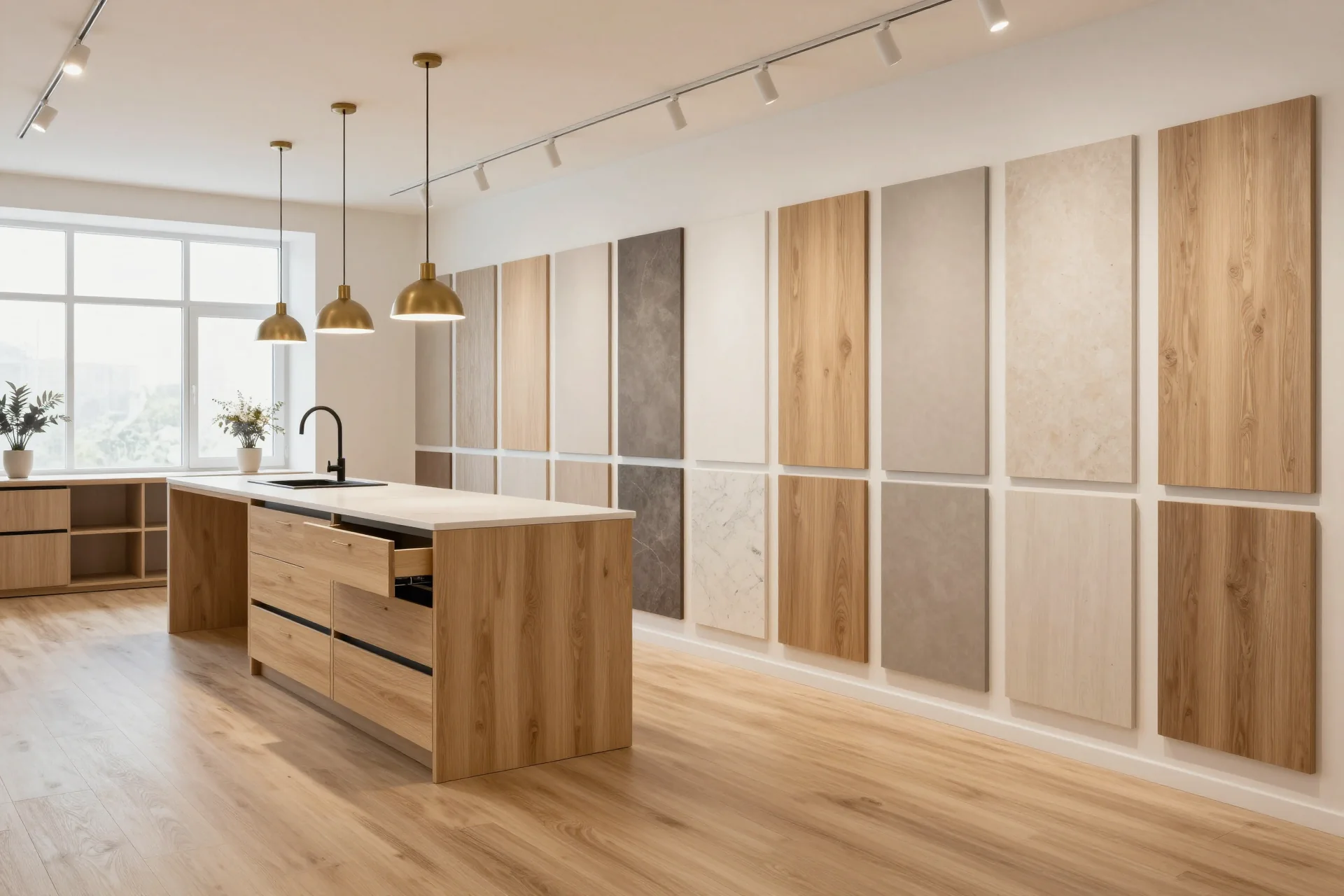
For the carcass we use Egger and Kronospan boards. Film-wrapped MDF fronts are chosen when you want milled details and a matt pattern without painting. Egger laminated chipboard works well for budget projects, because the board comes with a ready decor and only needs cutting and edging, with no finishing stages. Film-wrapped MDF gives a front with milling and rounded edges, and the film reproduces a matt or gloss texture. The PVC edging on a chipboard edge always stays visible as a line, while film-wrapped MDF has its edge closed by one continuous surface.
Front materials and where they fit
Front materials and where they fit| Front material | Where it fits | What sets it apart |
|---|
| Egger / Kronospan laminated chipboard | bedroom, living room, budget option | quick to cut, PVC edging on the edge |
|---|
| Film-wrapped MDF | hallway, nursery, milled fronts | seamless front with no edging joint |
|---|
| MDF for enamel | living room, accent colour | painted in a shade of your choice |
|---|
| Solid wood | bedroom, premium interior | natural texture, needs care |
|---|
| Rattan | living room, open terrace | light woven front |
|---|
Solid wood and rattan chests of drawers
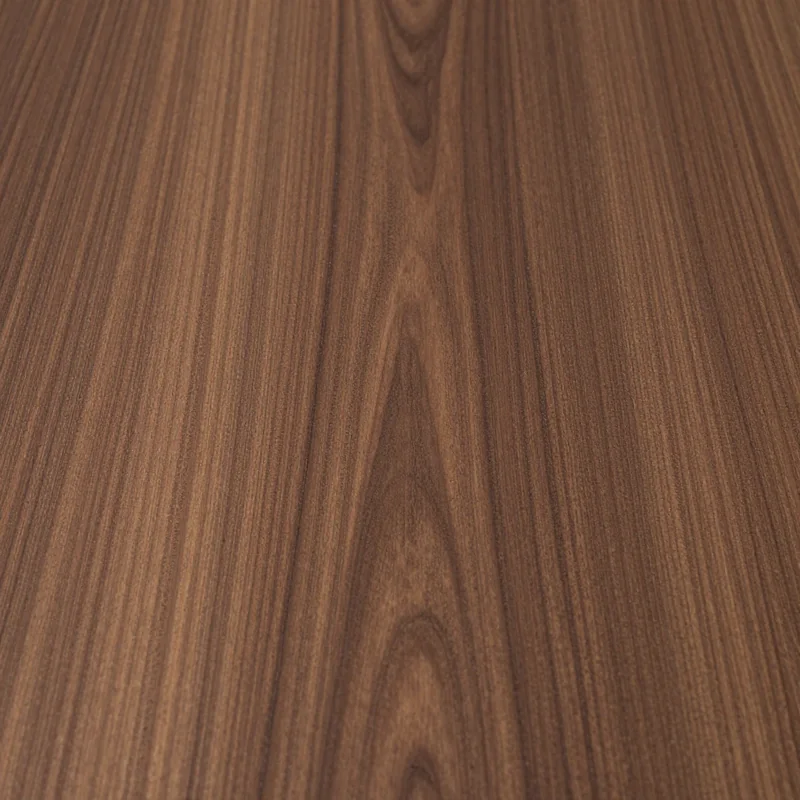
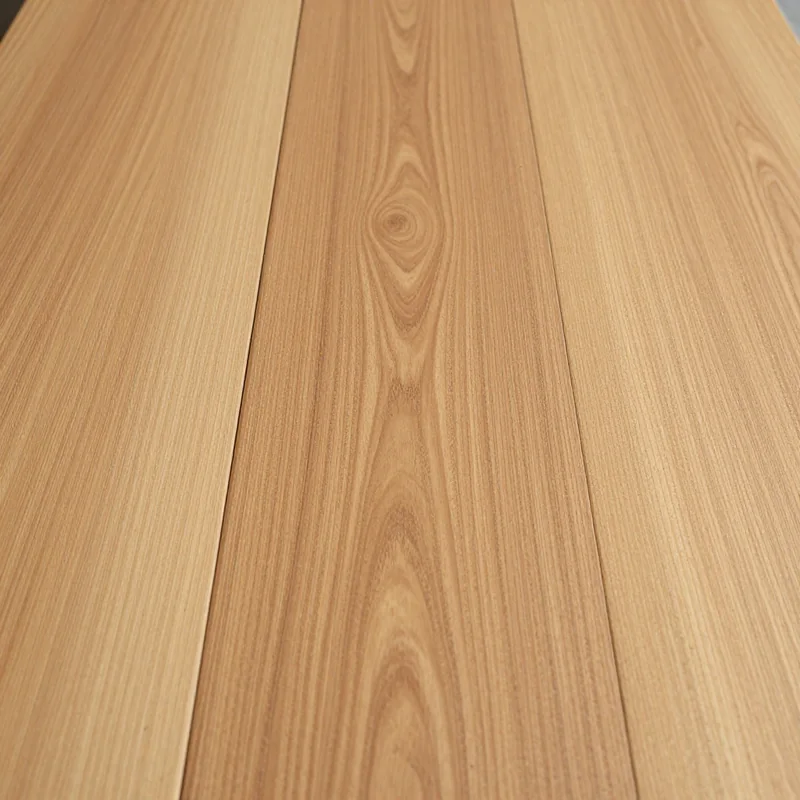
Solid wood pieces are finished in the paint area of the workshop, and rattan is woven into fronts that match the interior. Solid wood is sanded and painted in several coats, so the grain stays readable, and the shade is matched to the other furniture in the room. Solid wood reacts to humidity, which is why the design includes allowance gaps between the boards, otherwise the front would warp as the seasons change. Lead times for each option are in the price table on this page, and urgent orders are possible.
A chest of drawers that keeps its shape, and reliable hardware
A sagging shelf or a squeaking drawer is usually not a matter of how the furniture is used but of how it was built. Here is what we put into the design so that cabinet furniture keeps its shape for years.
Why shelves sag and how we prevent it
A shelf sags when the span is too long for the thickness of the board. In that case we stiffen it with an extra rib or shorten the distance between supports. The span between the uprights is calculated for the specific board, because Egger and Kronospan chipboard of the same thickness carry different loads, so the spacing is chosen separately for each drawer. Reinforced shelves get stiffening ribs made from the same material: they cannot be seen from outside, but they stop the middle from dipping. The load is calculated not from the average weight of the contents but from the heaviest drawer. Books and tools weigh more than you would think, and the spare span is planned for them.
Drawer hardware that does not squeak or sag
We fit Blum, Hettich and Boyard hardware, and the type of runner decides whether a drawer will squeak or sag under load. Roller runners are cheaper, but a heavy drawer on them develops play within a few months of active use. Ball-bearing runners hold the line better, and concealed runners with soft-close guide the drawer along its full length without skewing. Blum hardware carries a 25-year manufacturer warranty, which is why it is the usual choice for drawers that take heavy daily use.
What we check at the trial assembly
- Drawer travel: every runner has to move smoothly and silently, including at the end positions.
- Front gaps: the lines between doors and drawers must be even over the full height of the carcass.
- Shelves under load: we put a weight on each and check that the middle has not started to dip.
- Fixings: all carcass joints are tightened before packing and dispatch.
- Completeness: hardware and parts are checked against the design, so nothing has to be hunted for during installation.
How ordering a chest of drawers works, from measurement to handover
This is the order route step by step, from the first visit to the signed certificate. It shows what happens at each stage, who is responsible for each step and when the balance is paid.
Measurement and 3D design before production
Measurement is free, and the 3D design is ready within 1–2 days, so you see the piece at the real scale of your room before any board is cut. The designer transfers the alcove dimensions, the skirting height and the socket positions into the model, so the drawers open without touching the door casings and the top does not run into the window sill. Besides the overall size, the design fixes the opening side of the doors, the height of the handles and a carcass depth that allows for the skirting board. Changes at this stage are free. Once the board has been cut, any rework changes the structure and the lead time.
Workshop production and installation by our own crews
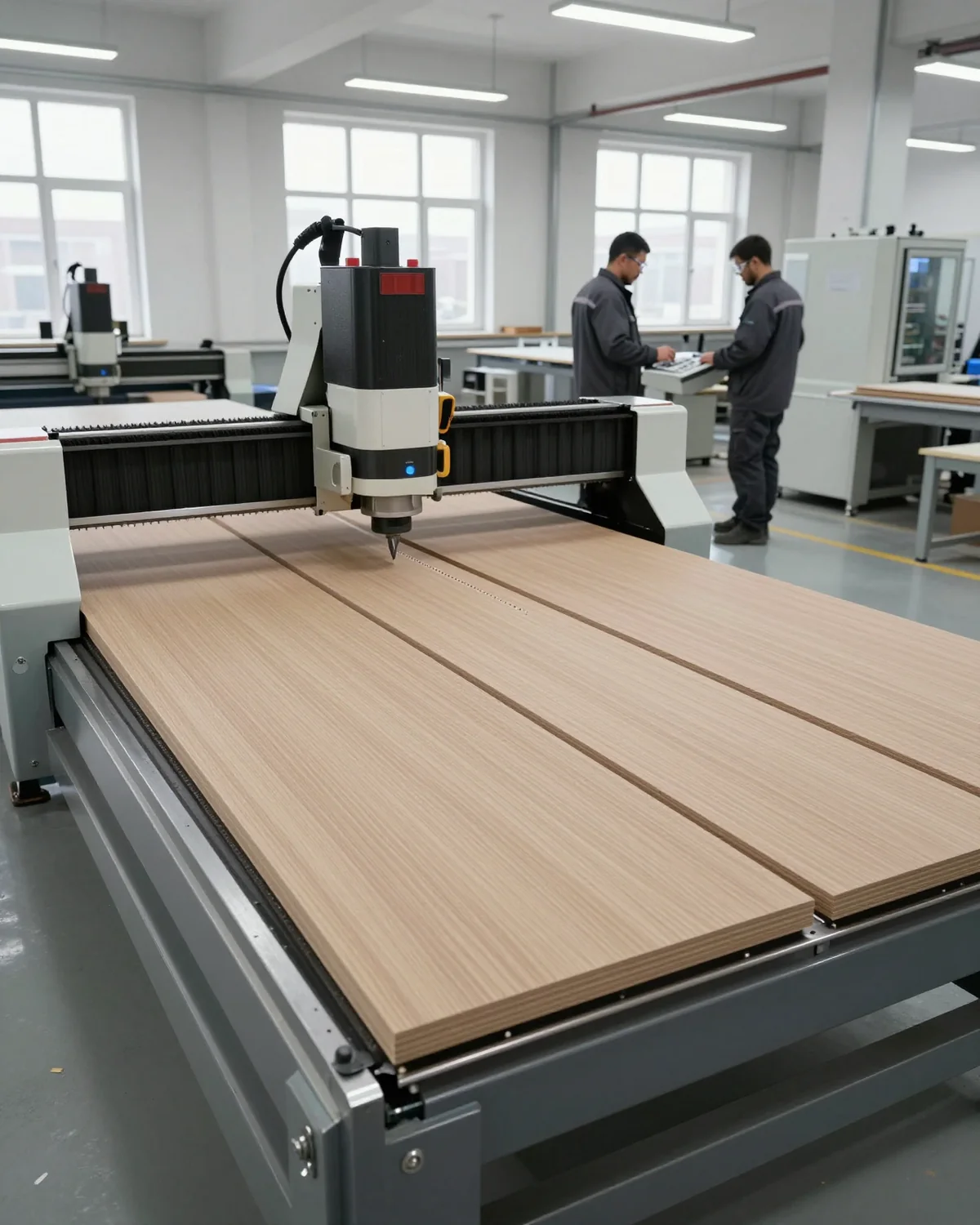
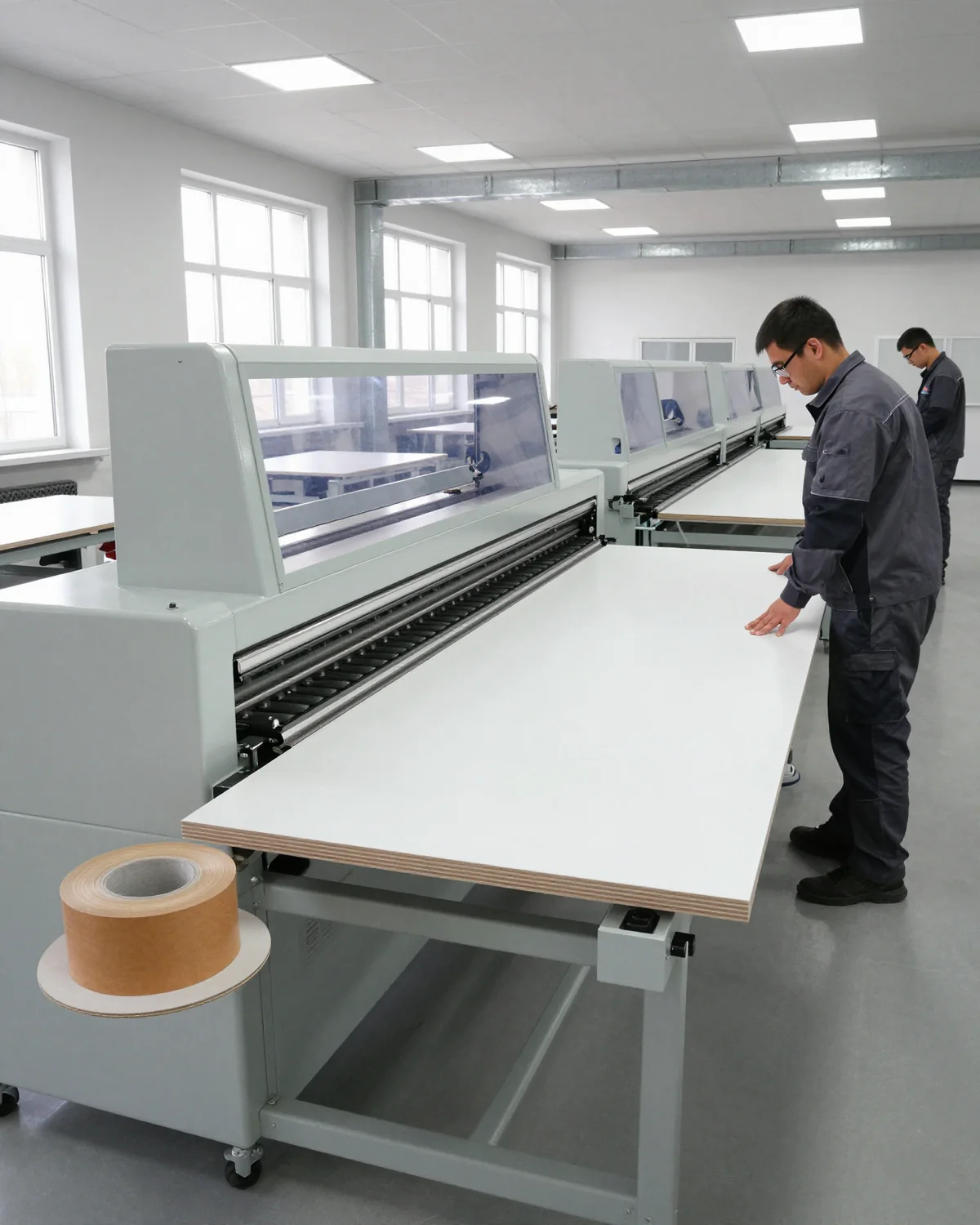
We make the chest of drawers in our own 600 m² workshop, which has cutting, edging, painting and a trial assembly area. On site it is installed by our crews, not by outside fitters. Before dispatch the piece is fully assembled in the workshop to check the geometry, the edging joints and the drawer travel on Blum, Hettich or Boyard hardware. The installation crew arrives with ready parts and fixings. A trial assembly in the workshop and installation by one crew make the same person responsible for the result, from cutting to final installation.
Acceptance certificate, payment and warranty
The acceptance certificate is signed once installation is complete, and the balance is paid at that point. The contract gives a 24-month warranty on the piece, and Blum hardware carries a 25-year manufacturer warranty. Payment is simple: a 50 % advance at the start and the remaining 50 % after installation, and bank transfer is accepted. The certificate records the condition of the piece at handover, so drawer adjustment, gaps and door alignment are done before signing, not later. The 24-month warranty is part of the contract, so the terms are on paper rather than verbal.
How a custom chest of drawers differs from a shop-bought one
A ready-made chest is chosen from whatever is in the warehouse or showroom. Here is what making one for a specific room gives you, and when a shop model still makes sense.
Size, interior and colour to suit your room
Making a piece for your room means setting exact dimensions and the mix of drawers and doors, and matching the fronts to the colour of an existing wardrobe. We run the project from the measurement: our technologists record the alcove dimensions, the skirting height and the clearances at the walls, and the designer lays out a combination of deep drawers on runners, narrow compartments for small things and hinged sections for bulky items. Fronts are matched to your sample: bring a paint swatch or a piece of an old front, and we match the shade against the Egger and Kronospan boards in the range.
What the price of a custom chest of drawers depends on
The price comes from the front material, the type of hardware and how complex the interior is, and the exact figures for each option are in the price table on this page. Laminated chipboard costs less than film-wrapped MDF, while solid wood and rattan cost more because of the manual work involved. Blum hardware with soft-close and Hettich hardware add to the estimate, but they remove squeaking and sagging drawers for years ahead. Reinforced shelves, internal partitions and non-standard geometry are separate items, since they need extra cutting and edging in the workshop. Lead times for each option are listed in the price table on this page, and we also take urgent orders.
A ready-made chest or one made for the job
A ready-made chest can be taken home sooner, but it rarely matches the alcove or the storage you need, while a piece made for the job solves both the size and the structure. Shop models come in standard ranges of width and depth, so in a narrow gap between a wall and a door they either do not fit at all or leave a hand-wide gap. A piece for an alcove is designed from the real dimensions: the carcass follows the geometry of the opening, and the front covers the edge of the wall. In a narrow opening or under a sloping wall, a ready-made model nearly always leaves a gap, and only a design with exact carcass geometry can close it. A shop model is fine when the wall is free and the size is standard.
In short
Everything that shapes the result in one place: size, material, structure and the order of work. Below is the short summary we rely on in every project.
What to remember before ordering
- Size decides everything: a piece for an alcove or an uneven wall is designed from the measurement, not picked from a catalogue.
- Material sets the lead time: laminated chipboard is the quickest, film-wrapped MDF gives a seamless front, solid wood needs more time.
- Structure matters more than decor: a reinforced shelf and reliable runners carry the load for years.
- The process is transparent: measurement, 3D design, trial assembly, installation and the acceptance certificate follow in order.
- The warranty is in the contract: it fixes responsibility for the piece after installation.