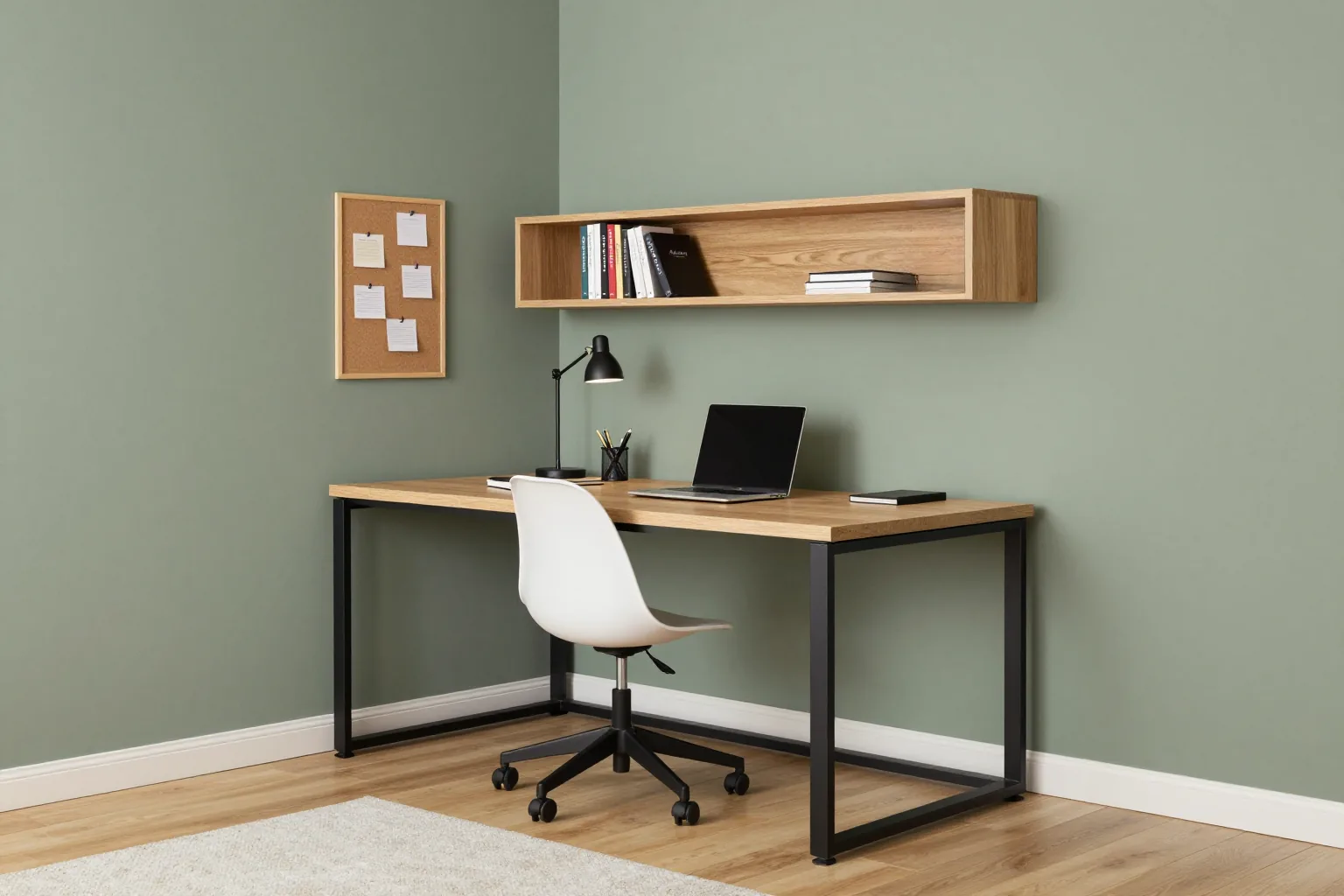
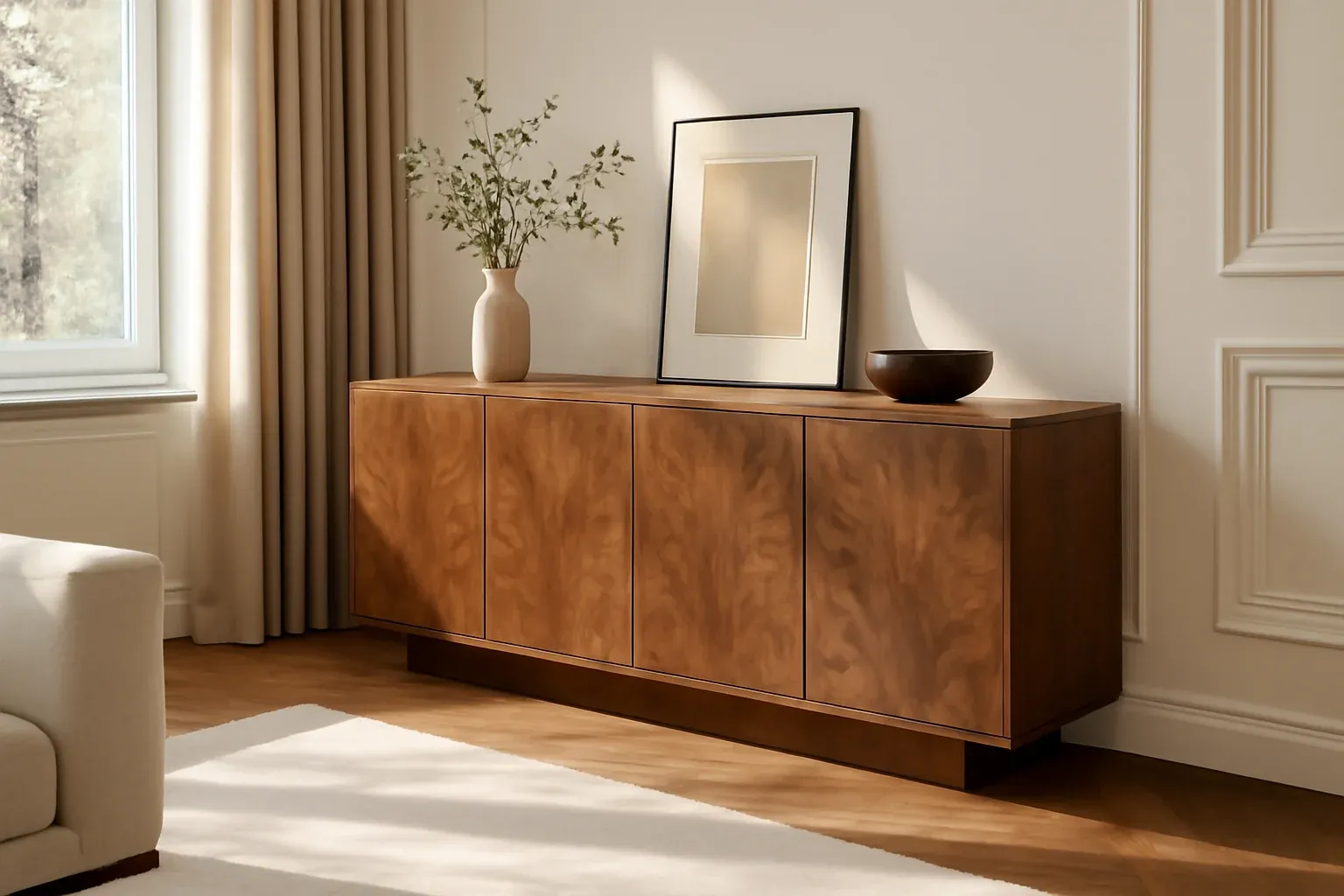
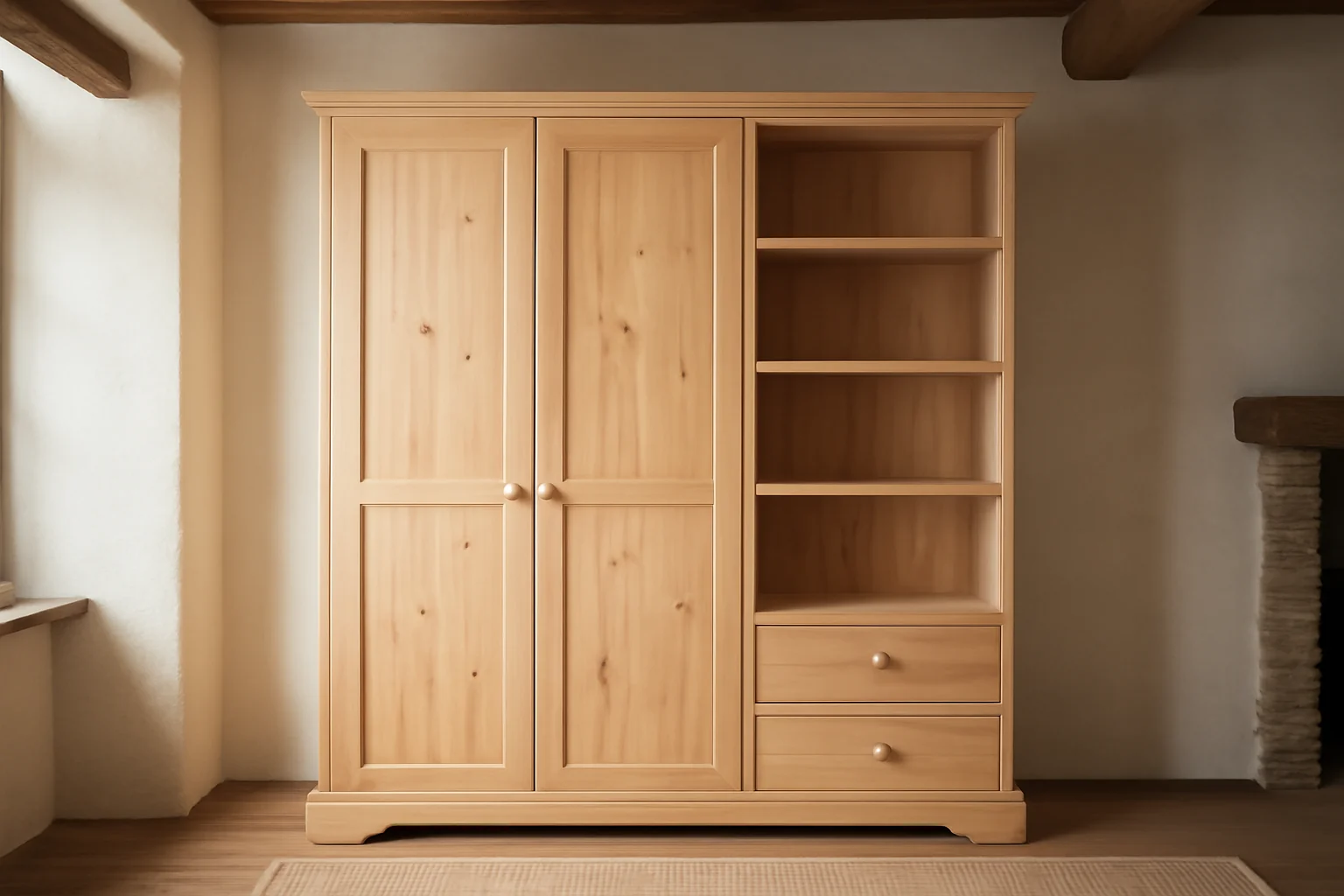
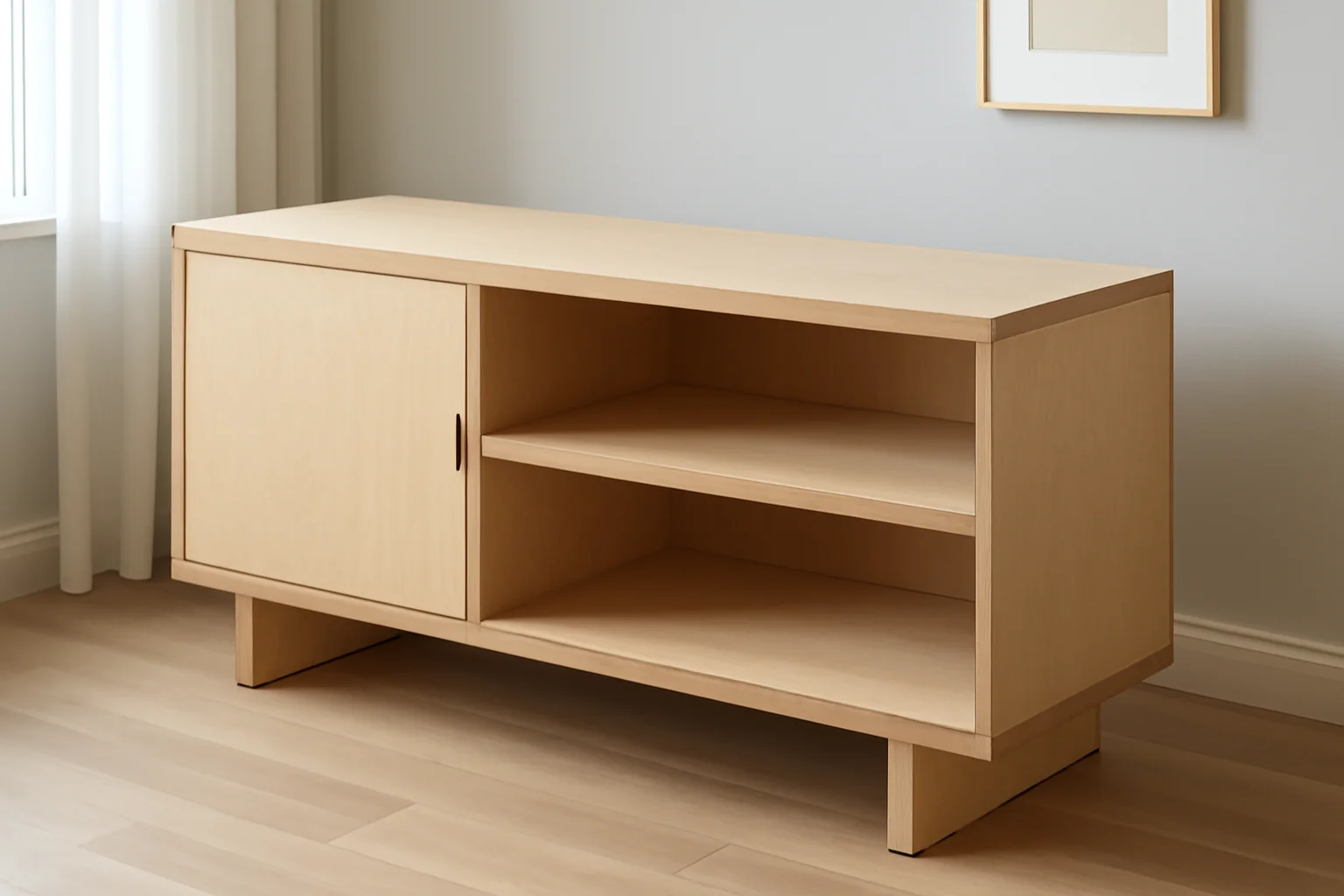
MEBLIX makes custom laminated chipboard furniture in Almaty: our own workshop, Egger and Kronospan boards, Blum, Hettich and Boyard hardware. Measurement and 3D design are free and take 1–2 days, installation is done by our own crews, and the item comes with a 24-month warranty under the contract.
We make laminated chipboard cabinet furniture for a specific task — a kitchen, a wardrobe for an alcove, a carcass for built-in appliances. Below we break down what Almaty residents actually order and which tasks each option solves.
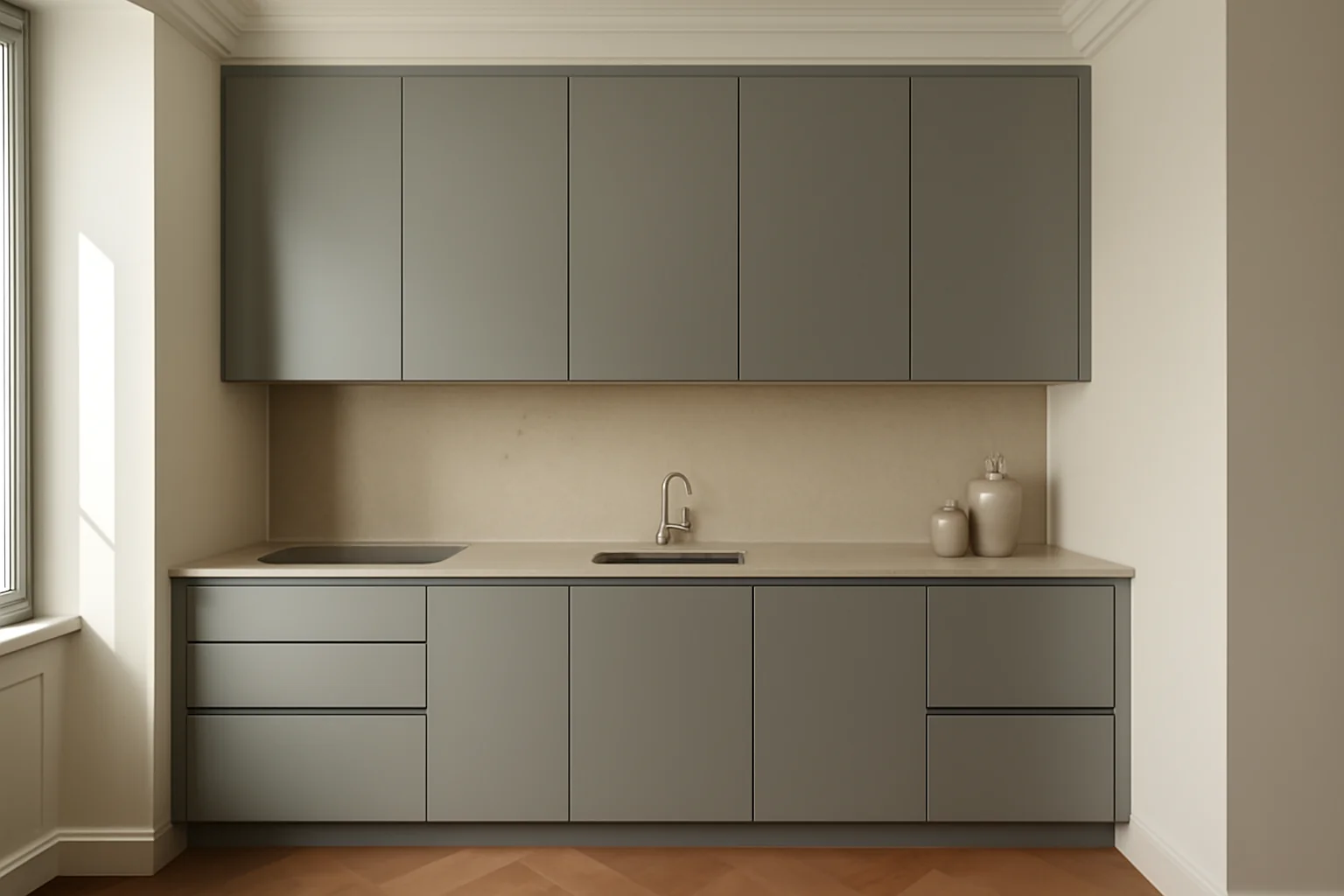
Kitchens and wardrobes made of laminated chipboard to custom sizes
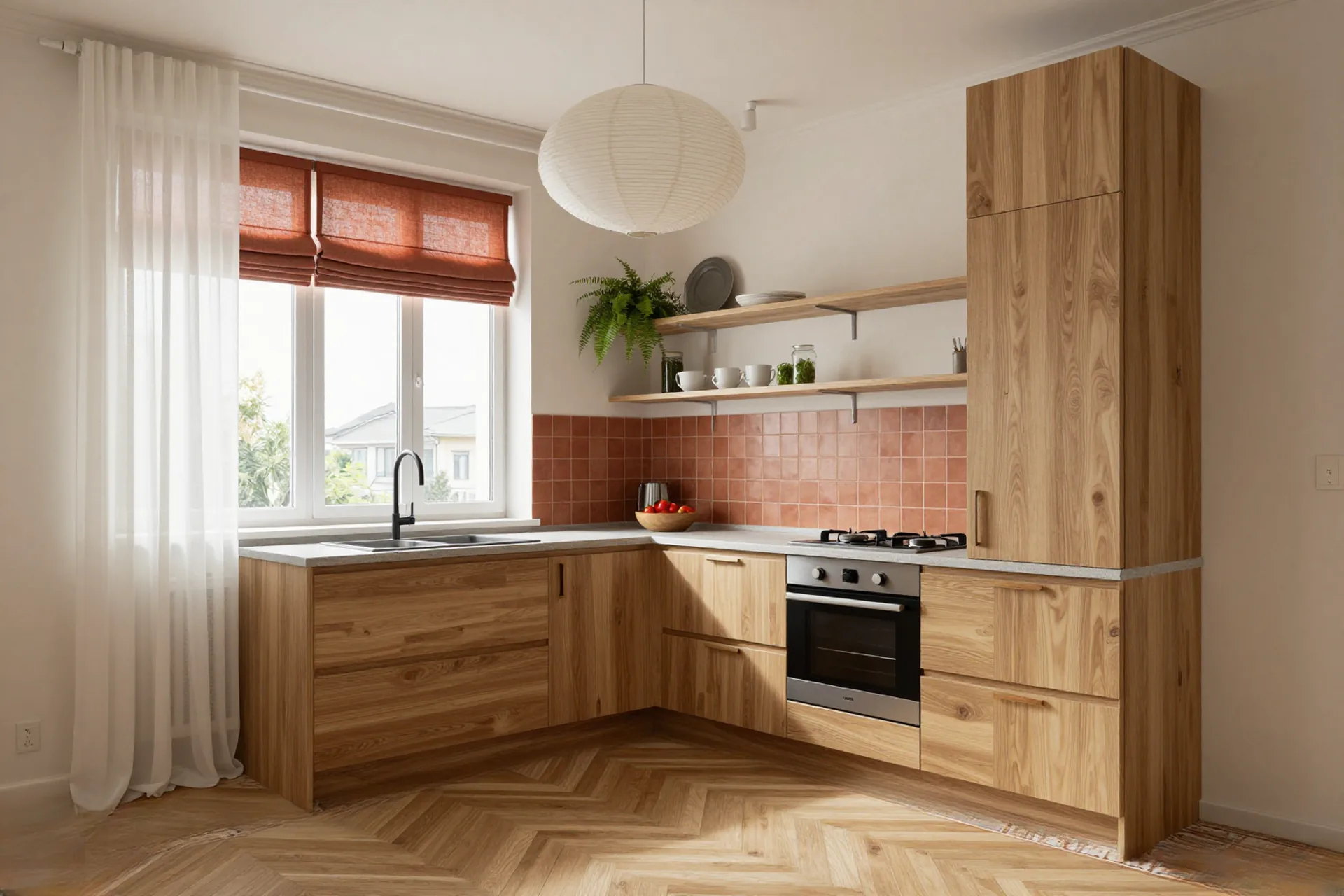
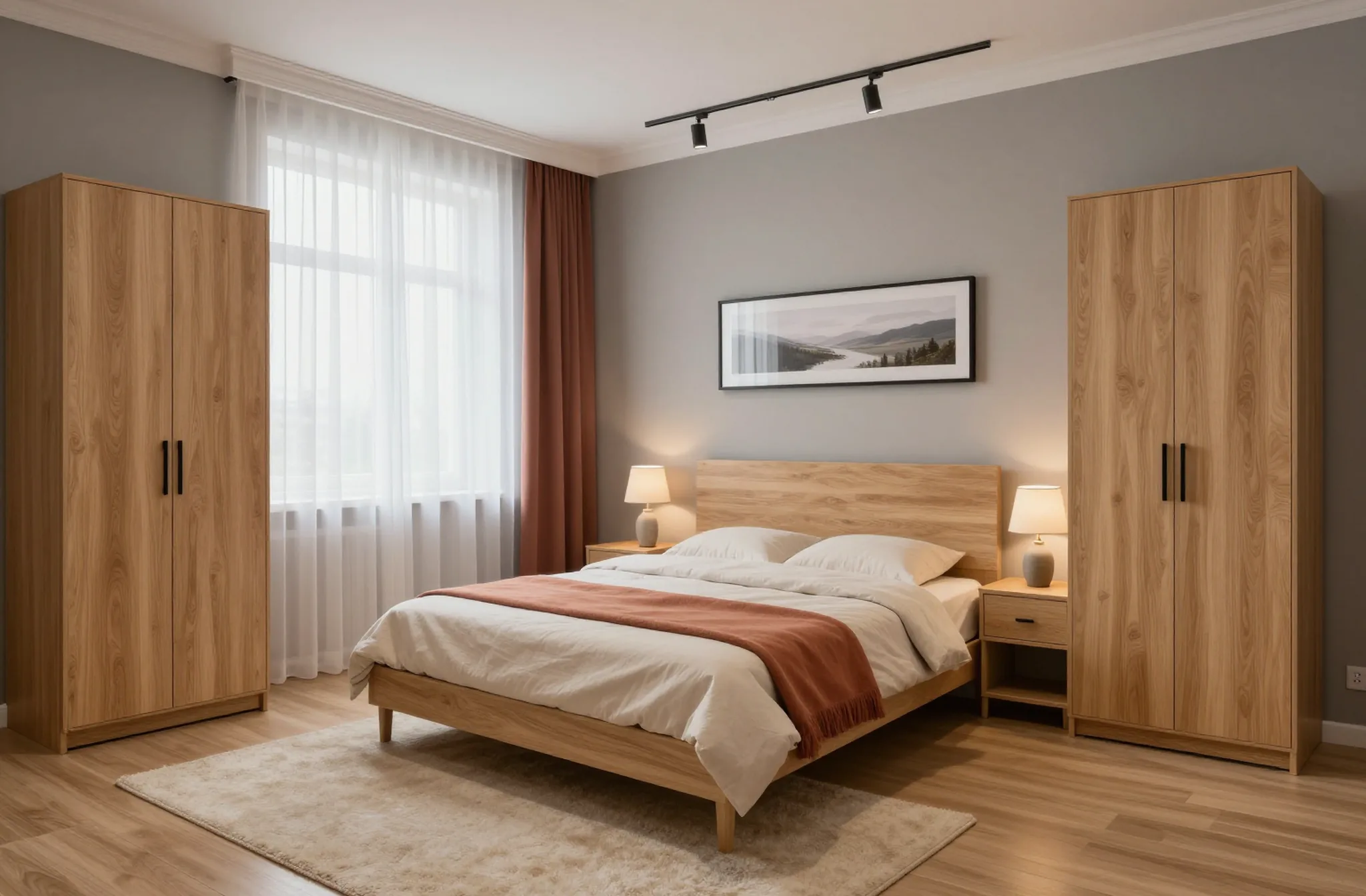
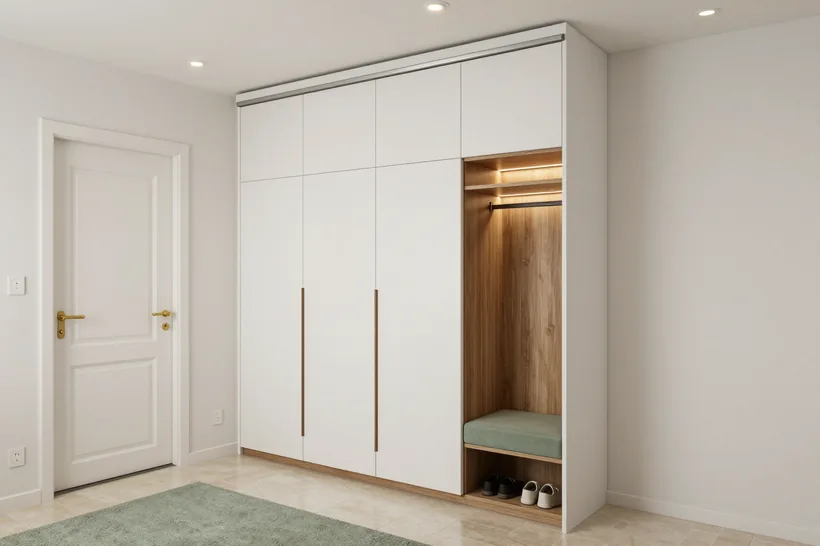
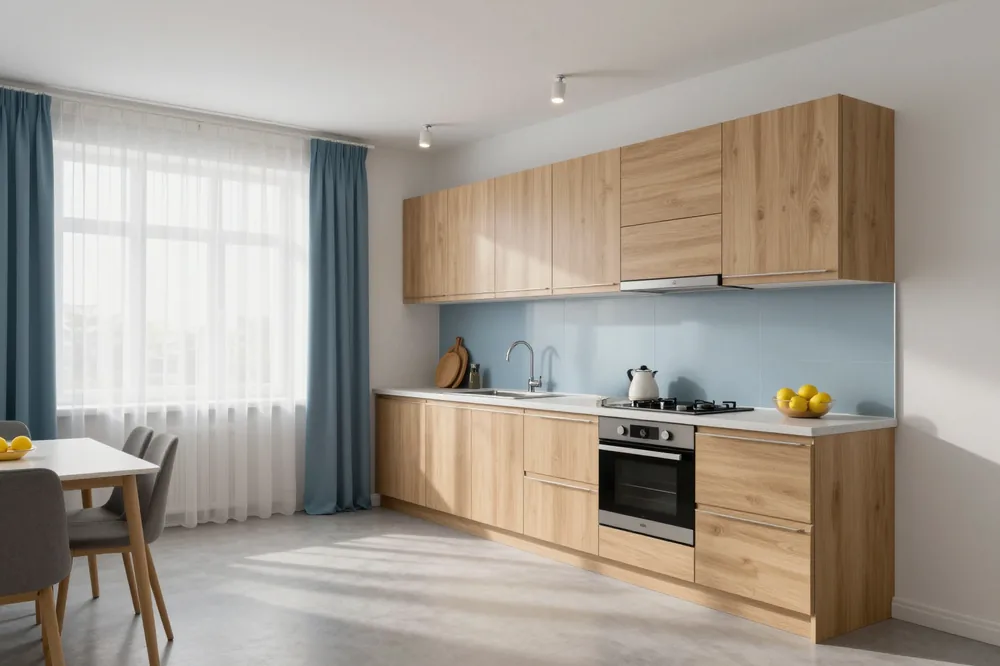
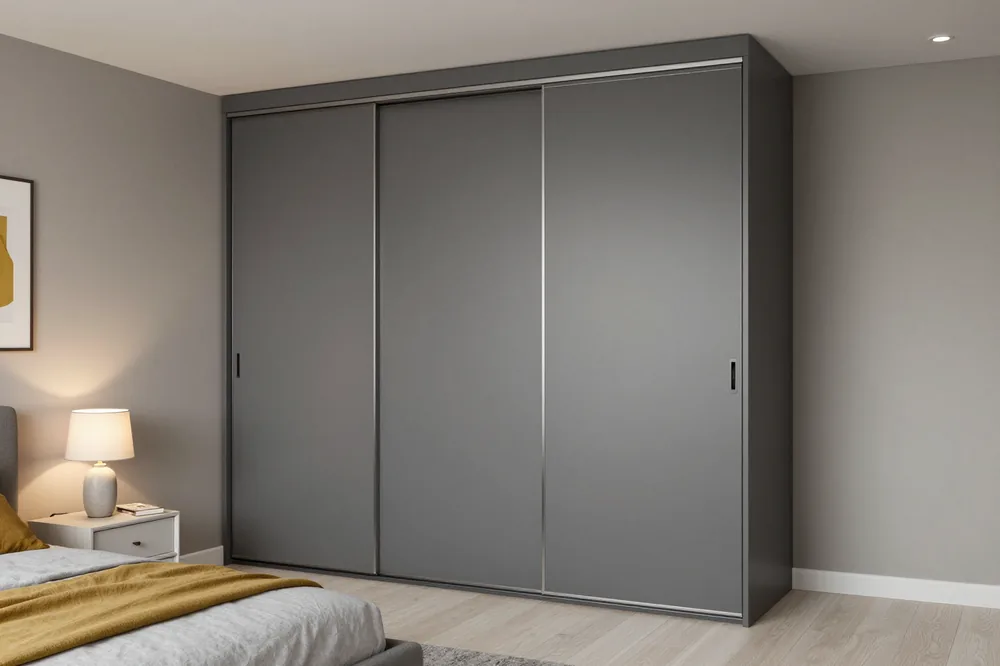
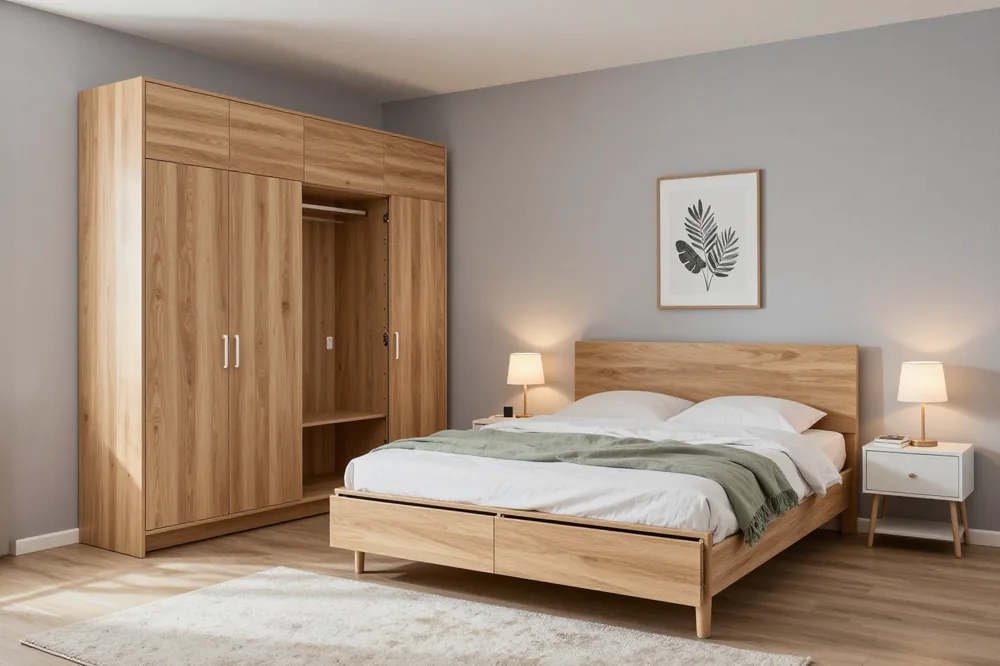
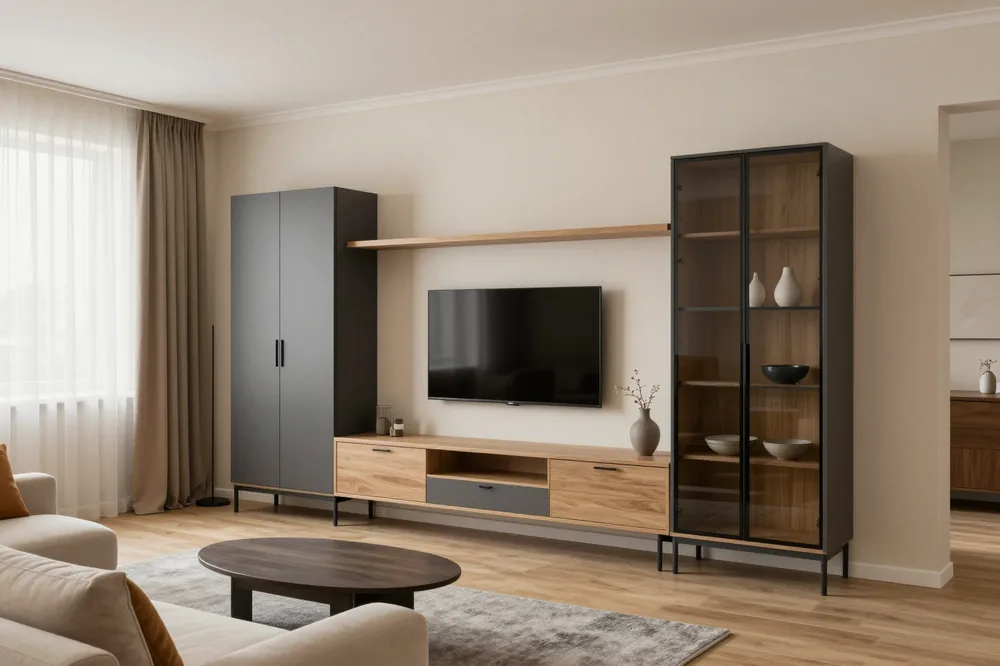
We make kitchens and wardrobes from laminated chipboard strictly to the dimensions of the space, not from standard modules — we have been working in the Almaty market for 13 years and have completed 3 500+ projects, including 900+ kitchens and 800+ wardrobes. Every project is calculated for the specific geometry of the space. A custom kitchen is assembled for the specific geometry: wall length, ceiling height, the position of the sink and the extractor hood. In Almaty, a wardrobe is more often ordered for the hallway or bedroom, where a standard section does not fit because of a doorway or a radiator. A custom project lets you plan the right number of sections, drawers and top cabinets without empty corners or offcuts. Size matters not only in terms of wall width — it lets you route sockets, ventilation and utility connections for appliances to places where they do not conflict with the carcass.
Built-in wardrobes for alcoves and uneven walls
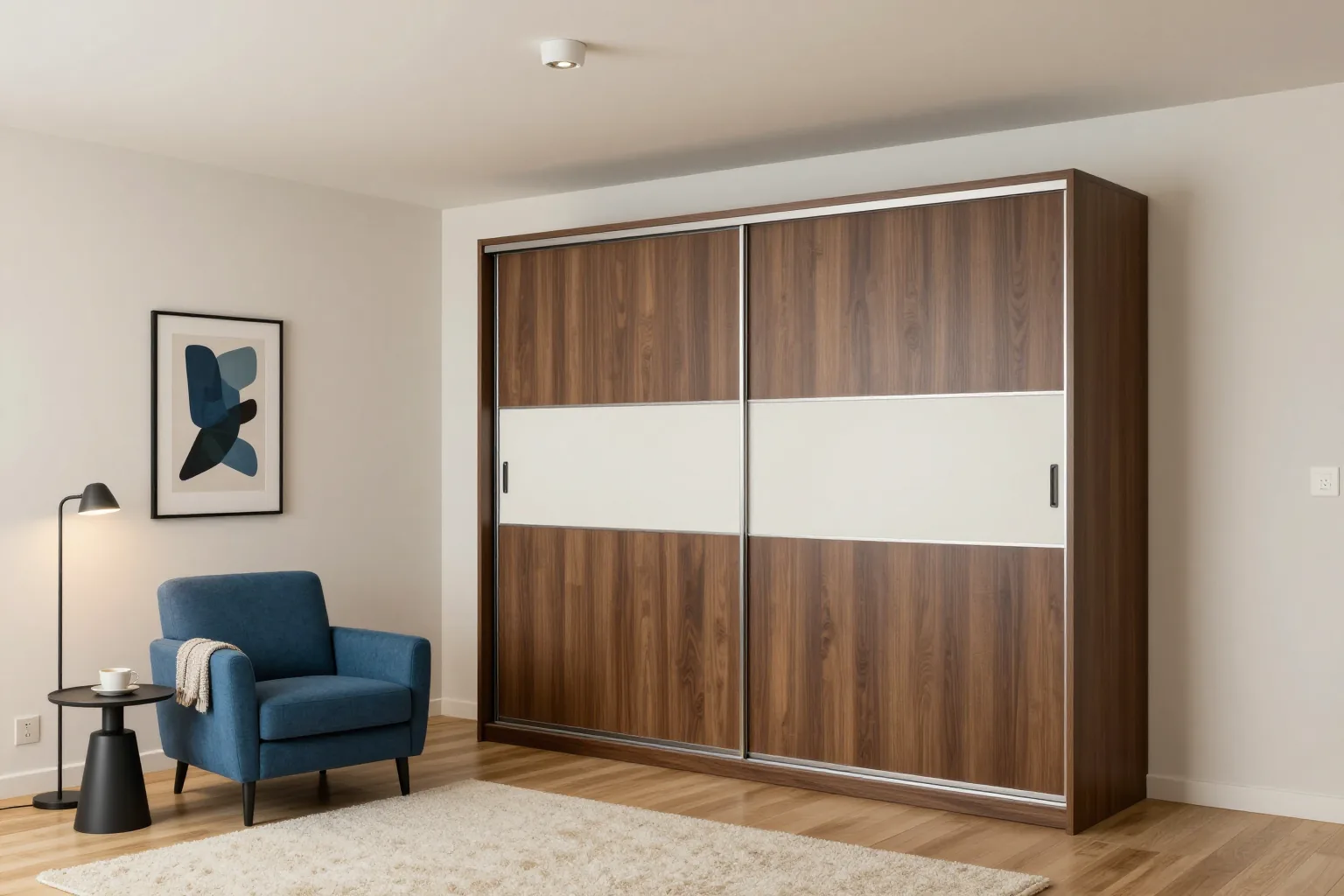
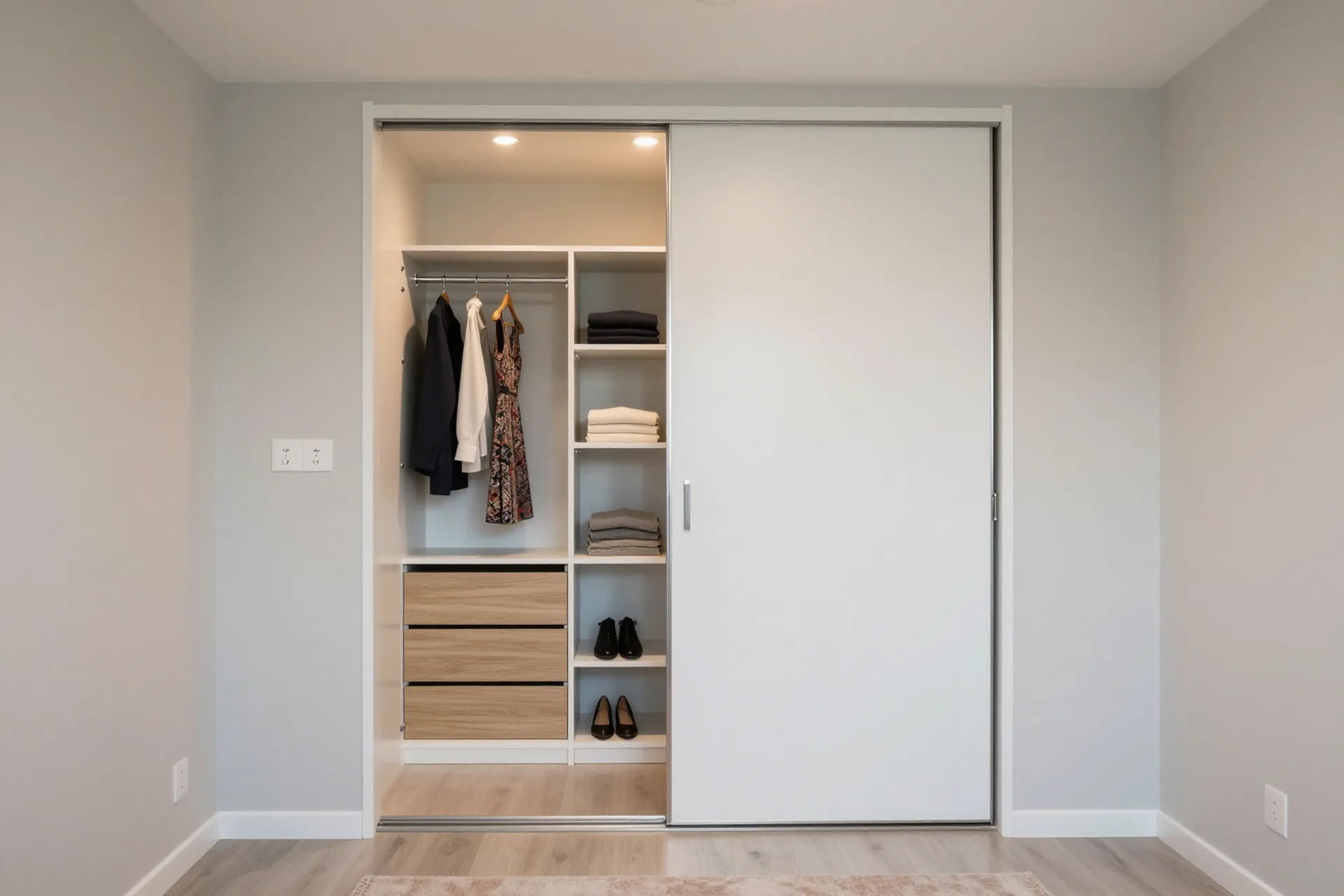
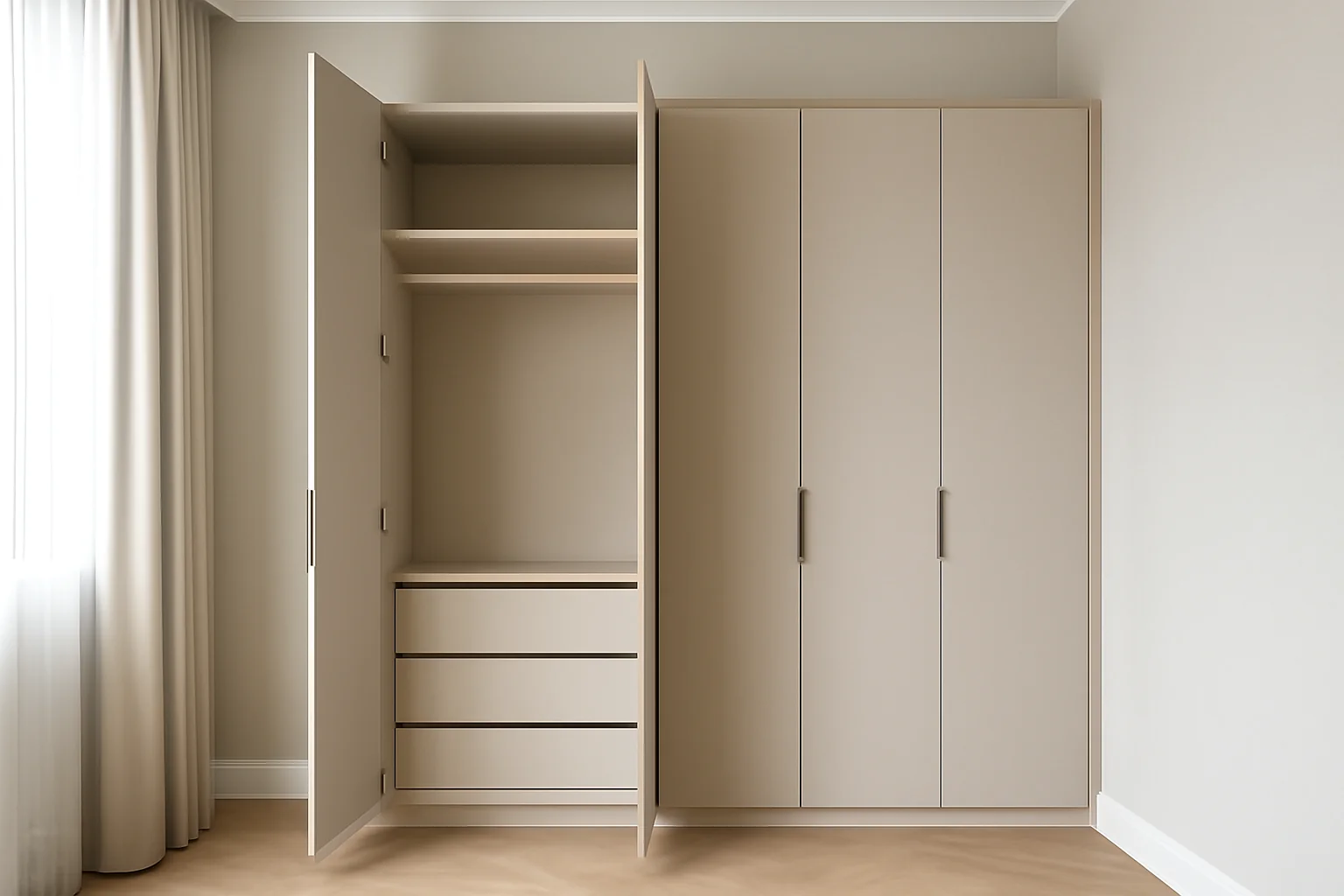
We design a built-in wardrobe for an alcove to the actual dimensions after measurement — we take into account wall skew, the skirting board and the depth of the alcove, so no gaps or slits are left at the sides. Measurement is free, and we prepare the 3D design in 1–2 days: it shows how the carcass sits in the alcove and where the compensation strip runs. In panel buildings, walls are often off by 2–4 cm over the height — a standard carcass either does not fit into such an opening or leaves a gap along the whole side panel. An uneven wall is not leveled for a built-in structure — the carcass is trimmed on site and the joint is closed with a compensation strip so the fronts move evenly without jamming. This approach saves on plastering and does not take extra centimeters away from the room.
Furniture for built-in appliances and non-standard tasks
For built-in appliances we design a carcass with precise fitting dimensions and ventilation gaps — the oven, hob and refrigerator fit into their niches without adjustments during installation. Custom carcass structures also handle non-standard tasks: a slanted corner, a column in the middle of a wall, a windowsill instead of a countertop, a compartment for a washing machine in the bathroom. Gaps for appliances are planned at the 3D design stage: if a niche is made too tight, the unit overheats and the door does not open to its full angle. By the same logic we design items to size where every couple of centimeters matters — in small kitchens and narrow hallways. Such a carcass lasts exactly as long as the appliance itself is designed for, with no rework during installation.
Material and hardware for laminated chipboard furniture, what the item is made of and what holds it together
We break down which boards and hardware we use to assemble laminated chipboard furniture, how this material differs from MDF and solid wood, and why it is the hardware that sets the service life of the finished item.
Egger and Kronospan boards and laminated chipboard thickness
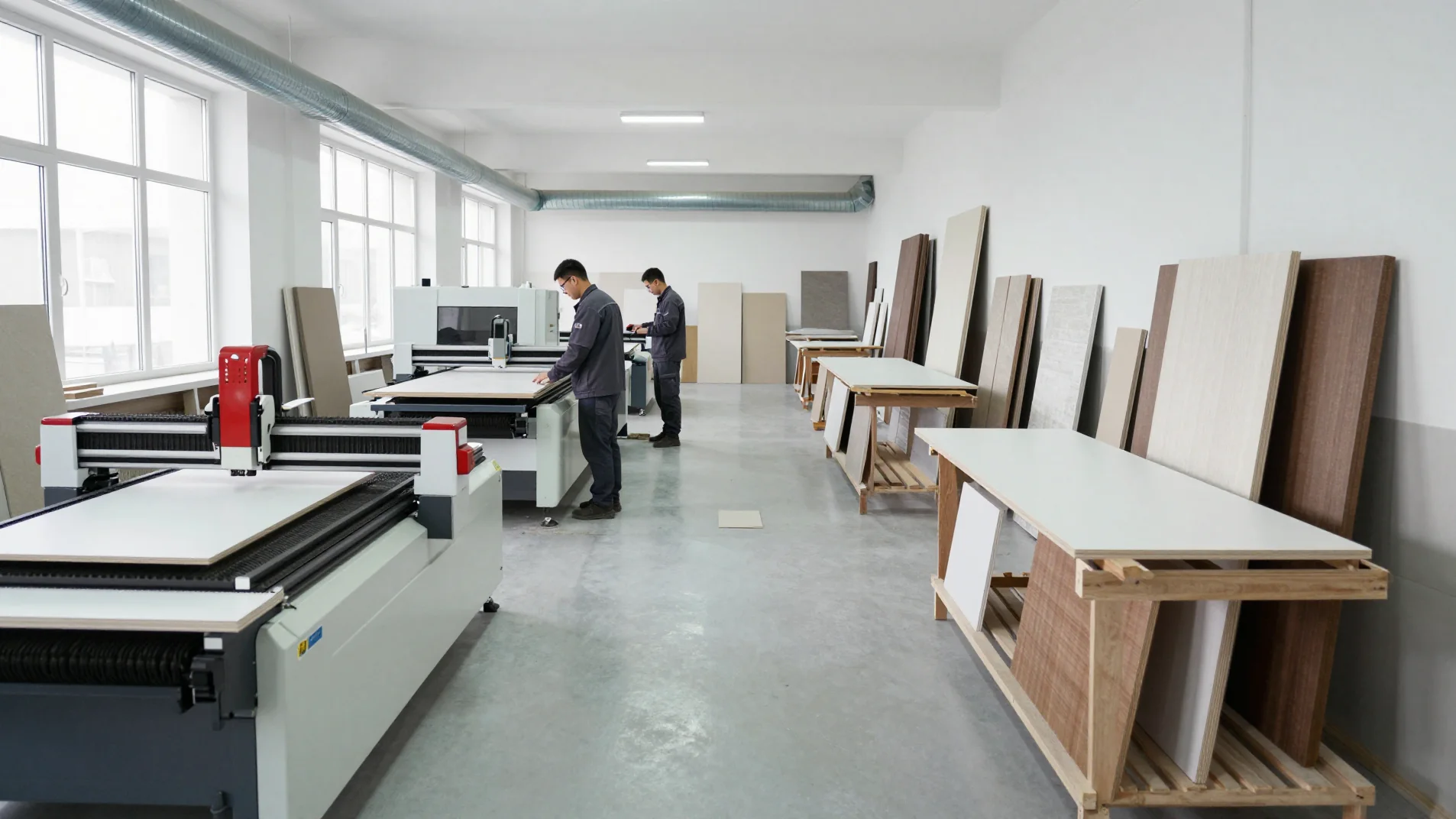
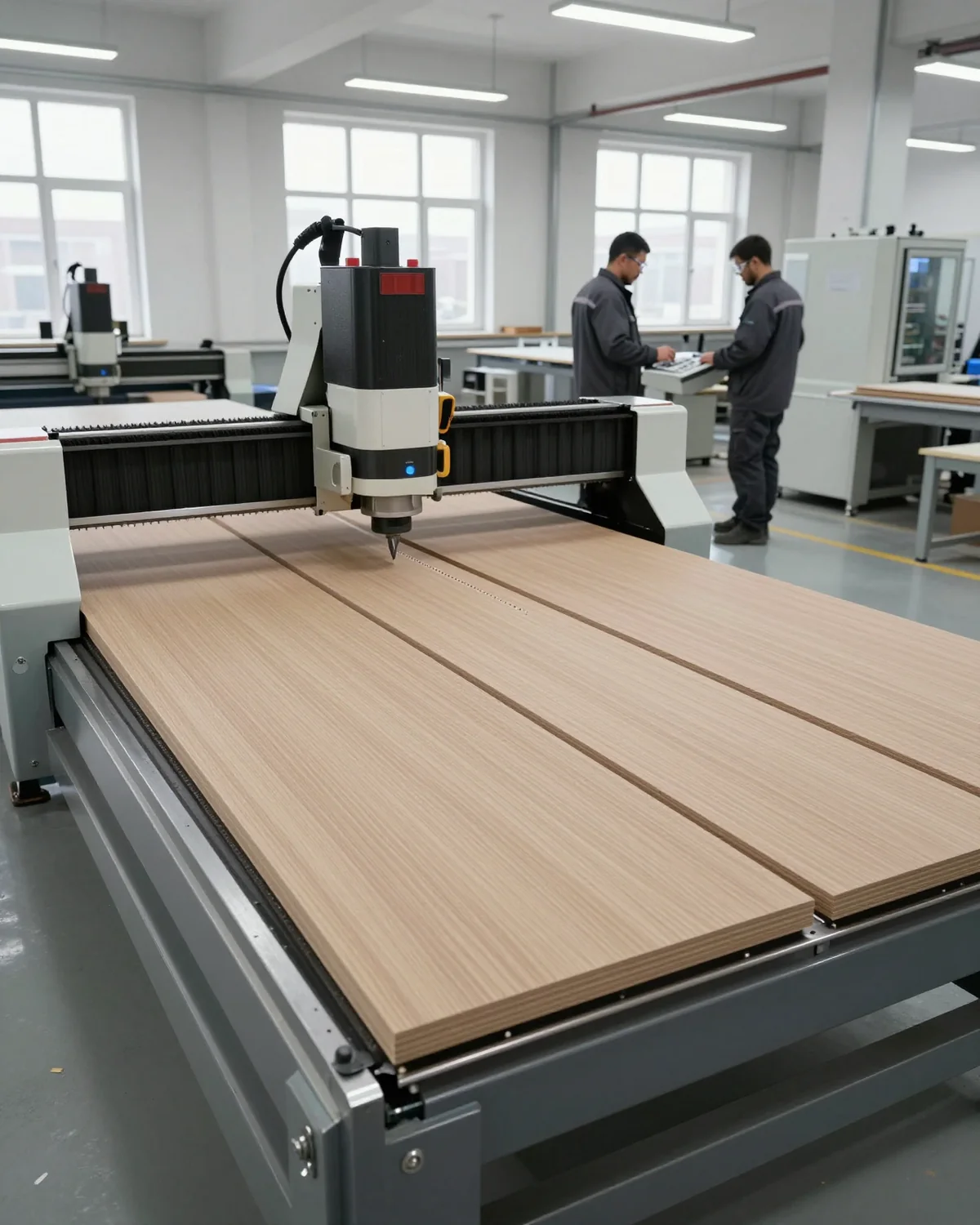
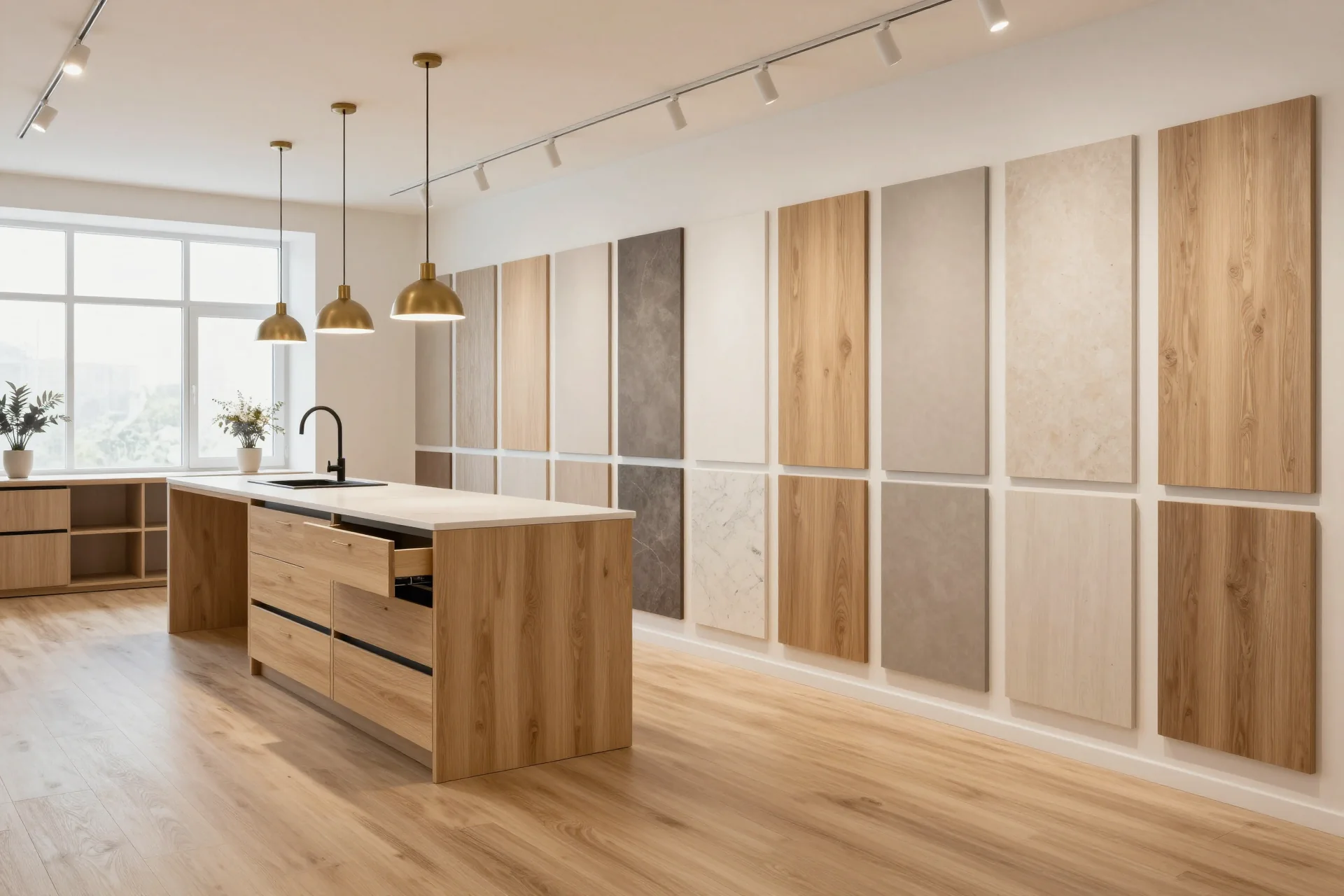
We work with Egger and Kronospan boards — laminated chipboard with a protective coating, which we use for both the carcass and the fronts; we choose the thickness based on the load on each specific part. In our 600 m² workshop, cutting and edge banding run on our own equipment, so we don't buy boards from intermediaries or adjust ready-made parts. For side panels and uprights we use 18 mm, for shelves for books and dishes — the same format, but with the span calculated. For shelves and side panels, not only thickness matters but also rigidity: a long shelf without a middle support sags even at 18 mm, so the span is calculated in advance. At the 3D design stage, technicians add extra uprights or stiffening ribs — redoing a finished wardrobe because of a sagging shelf costs more than reinforcing the joint at the cutting stage.
Blum, Hettich and Boyard hardware and its service life
For drawers, hinges and lift mechanisms we install Blum, Hettich and Boyard hardware; Blum comes with a 25-year manufacturer's warranty — on hinges, lift mechanisms and drawer runners. In our range, Blum is responsible for smooth closing and soft-close, while Hettich and Boyard cover the budget and mid-range series where reliability matters without paying extra for the name. The service life of an item depends not on the board but on the mechanisms: a cheap hinge works loose before the front wears out, so skimping on hardware doesn't pay off. A common reason for warranty claims is not a swollen board but a sagging hinge on a heavy door, and here the difference between series shows within a year of active use. The same carcass with different hardware lasts differently, so the mechanism series is chosen for the weight and frequency of opening.
Laminated chipboard, MDF or solid wood — what to choose for the job
comparison of board materials by job and processing| Material | Where it fits | Feature |
|---|
| Laminated chipboard | carcass, flat fronts, shelves | laminated coating, fast cutting |
|---|
| MDF | milled fronts, relief | holds profile and paint |
|---|
| Solid wood | fronts for premium jobs | requires stable humidity |
|---|
| Moisture-resistant laminated chipboard | kitchen, sink area | protected end and edge |
|---|
How an order works from measurement to acceptance certificate
We show how ordering custom laminated chipboard furniture works in our workshop — from the measurement specialist's visit and 3D design to trial assembly, installation and signing the acceptance certificate.
Free measurement and 3D design in 1–2 days
Measurement and 3D design are free with us and take 1–2 days: the measurement specialist takes the actual dimensions of the room, and from these the technicians build a design with the layout of modules and appliances. The specialist records not only the wall lengths but also vertical deviations, the position of sockets, ventilation ducts and pipes — these millimetres later determine whether the carcass fits into the niche without trimming. Based on the finished measurements, the workshop technicians lay out the modules and select the board thickness and edge type for each joint. The 3D design isn't for the picture — it's used to check how doors and drawers open and whether a front runs into the wall or the neighbouring wardrobe. Ask to see on the design the opening path of corner sections and the full extension of drawers — that's where conflicts with the windowsill or reveal most often come up.
Manufacturing in the workshop and trial assembly
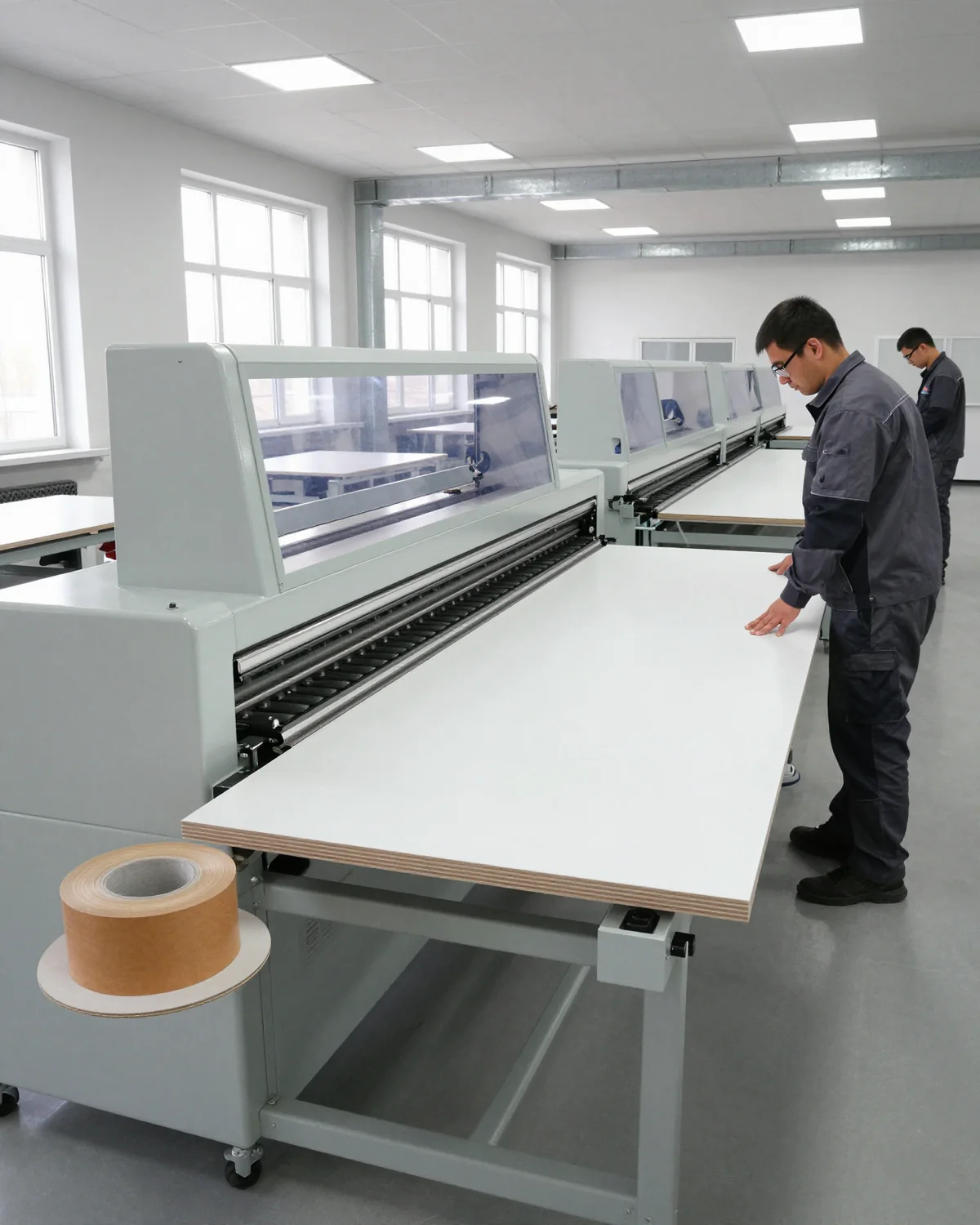
The item is manufactured in our 600 m² workshop in Almaty — cutting, edge banding and painting are done at our own stations, and before shipping we carry out a control assembly. Cutting of Egger and Kronospan boards is done on a CNC machine, edge banding is applied at our own station, and we do not entrust the ends to third-party contractors. Blum, Hettich and Boyard hardware is installed at the control assembly stage, not on site: this way we can see how the hinges hold the front under load and whether the holes for the drawer runners align. Control assembly in the workshop catches what is not visible on the drawing: mismatched holes in the hardware, carcass skew, gaps between fronts — on site these errors cost more. Our production of laminated chipboard furniture ends with this check, not with shipment: the assembled unit is disassembled, marked and only then delivered to you.
Installation by our own crews and acceptance certificate
The item is installed by our own installation crews, and we sign the acceptance certificate after installation — when you have checked the fit, the movement of doors and drawers on site. The crew levels the carcass, connects the modules together, cuts the countertop around pipes and connects built-in appliances according to the project. The certificate is signed after installation, not after manufacturing — this protects the customer: all installation remarks are recorded before signing, rather than turning into separate correspondence. The item carries a 24-month warranty under the contract, and Blum hardware carries a 25-year manufacturer's warranty. Before signing, go through all doors and drawers one by one: note even minor chips on the edge in the certificate — under this document they will be fixed without dispute.
Manufacturer or intermediary, how to tell when ordering
A direct workshop and an intermediary answer the same questions differently: the first shows the stations and the people, the second retells someone else's words. Let's look at the signs that make this visible before signing the contract.
Own workshop, own craftsmen and own crews
MEBLIX is a direct manufacturer: measurement, design, manufacturing in our own workshop and installation by our own crews, without reselling finished items and without passing the order to the side. We have been working in the Almaty market for 13 years, during which we have completed 3 500+ projects, including 900+ kitchens and 800+ wardrobes. In the 600 m² workshop we carry out cutting, edge banding, painting and control assembly, and each operation is assigned to its own station and craftsman. Installation is carried out by the same crews that assembled the item during control assembly — they know the specific carcass, not a standard scheme. A sign of an intermediary is vague answers to the questions "where is the workshop" and "who will install": a direct manufacturer assigns these stages to specific stations and people. Ask which machine is used to edge the parts and who will come for installation — the answer immediately tells you whether this is their own production or a retelling.
What to check before ordering laminated chipboard furniture
- Workshop: ask where the item is physically manufactured and whether you can see the cutting and edge banding stations.
- Materials: specify the board brand — Egger or Kronospan — and the thickness of the carcass parts.
- Hardware: which hinges, runners and lift mechanisms are used and what manufacturer's warranty they carry.
- Contract: whether the warranty on the item and the procedure for signing the acceptance certificate are fixed.
- Payment: the amount of the deposit and when the balance is due — before or after installation.
Lead times, urgent orders and payment terms
Lead times depend on the item and material and are shown in the price list on this page; rush orders are possible, payment is a 50 % deposit, the balance after signing the acceptance certificate, we work by bank transfer. Rush genuinely affects the workshop schedule, not the quality: the order is placed in a priority queue, but the cutting, edge-banding and control assembly stages are not shortened. Delivery within the city and up to 30 km is free for a large order, the threshold is stated on the Delivery and payment page, beyond 30 km — for an extra charge. We sign the acceptance certificate after installation, when the item is in place and you have checked the fronts and hardware. Early rush more often disrupts the schedule for those who save on control assembly: without it, defects surface already on site, and rework eats up the entire time gain.
Warranty, safety and care for laminated chipboard furniture
We explain how the warranty on an item works, what the safety of laminated chipboard in the bedroom and kids' room is about, and how to care for the edge and fronts so the furniture lasts long.
24-month warranty and what to do in case of a defect
We give a 24-month warranty on the item under the contract, and Blum hardware carries the manufacturer's 25-year warranty — in case of a defect after installation, we accept the claim under the contract. Blum hinges, lift mechanisms and drawer runners are a separate line: their service life is calculated by the manufacturer itself, not by our workshop. We sign the acceptance certificate after installation, and it is there that all remarks on the edge, gaps, and the movement of doors and drawers are recorded. We resolve disputed cases by the document, not by the parties' memory: if the defect is noted in the certificate, the investigation goes faster. The warranty works in your favor when, at acceptance, you have gone through all the components and recorded the remarks right away — then the part is replaced based on fact, not on guesswork. Furniture made of laminated chipboard in our workshop goes through control assembly, so all components are checked before dispatch to the customer.
Moisture resistance of laminated chipboard in the kitchen and bathroom
Moisture-resistant laminated chipboard handles humidity better than regular board thanks to a protected end, but the decisive role is played by quality edge banding — it is what seals the board from water. At the sink and the hob, the end is constantly in contact with steam and splashes, and an unprotected cut absorbs water faster than the rest of the carcass. On moisture-resistant boards the cut is treated and sealed, and the joint at the countertop is additionally coated with sealant. The main cause of swelling is not the board itself but the unprotected end at the sink and the hob: that is where the edge and the sealing of the joint are checked first. During measurement we look at where the sink is and where the steam will be, and select the edge for these zones. If the sink is against the wall, we additionally protect the end with a strip and check that the edge fits snugly against the countertop.
Care for the edge and fronts
- Wipe dry: do not leave water on the edge joints or on the shelves by the sink — moisture on the end stays longer than it seems.
- Protect the ends: at the hob and the sink, the edge must be sealed, without chips or peeling.
- No abrasives: for laminated chipboard fronts use a soft cloth and neutral products; powders and hard sponges leave matte scuffs.
- Do not overload the shelves: long shelves without support sag over time, so store heavy items closer to the uprights.
- Check the hardware: tightening the hinges and runners prolongs the smooth movement of doors and drawers and takes extra load off the fasteners.
- Watch the steam: a hood above the hob reduces humidity at the edge and noticeably slows its wear.
The bottom line on laminated chipboard furniture
We've gathered the essentials that determine the outcome when ordering laminated chipboard furniture, from measurement accuracy to the terms of the contract. Below is a short summary of the facts worth relying on before you pay.
- Measurement is key: custom sizes fit niches, uneven walls and spaces for built-in appliances that a ready-made carcass cannot accommodate.
- Material and hardware: Egger and Kronospan boards together with Blum, Hettich and Boyard hardware set the service life of the item for years to come.
- The stages are transparent: free measurement, a 3D design in 1–2 days, production in the workshop, trial assembly, installation and signing of the acceptance certificate.
- Contract and warranty: secure a 24-month warranty on the item and the procedure for signing the acceptance certificate before paying a deposit.
- Care is simple: protect the edge from water and do not overload the shelves — that way cabinet items made of laminated chipboard last noticeably longer.
- Check before you pay: if even one point remains unclear, clarify it in advance — rework at the installation stage costs more.