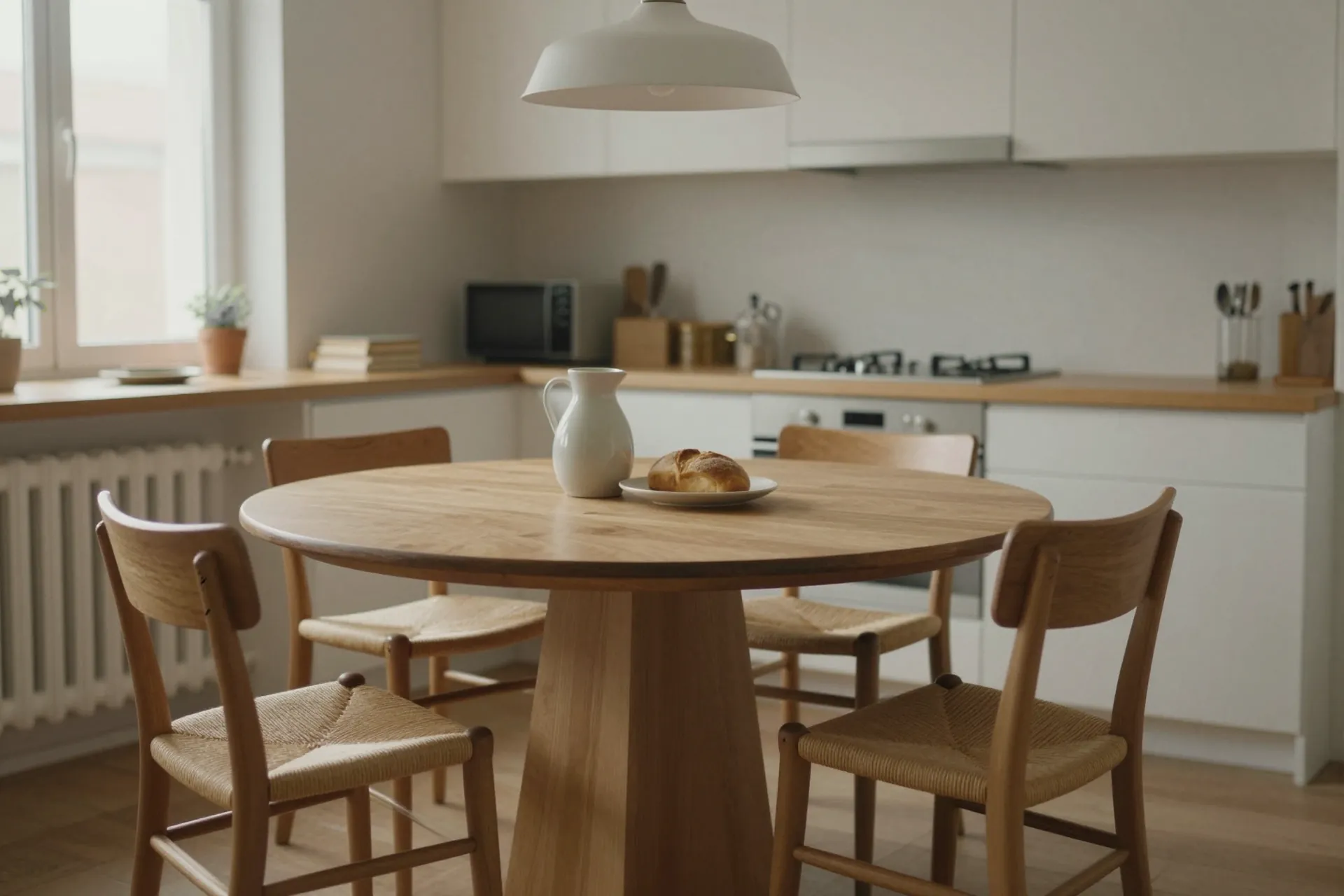
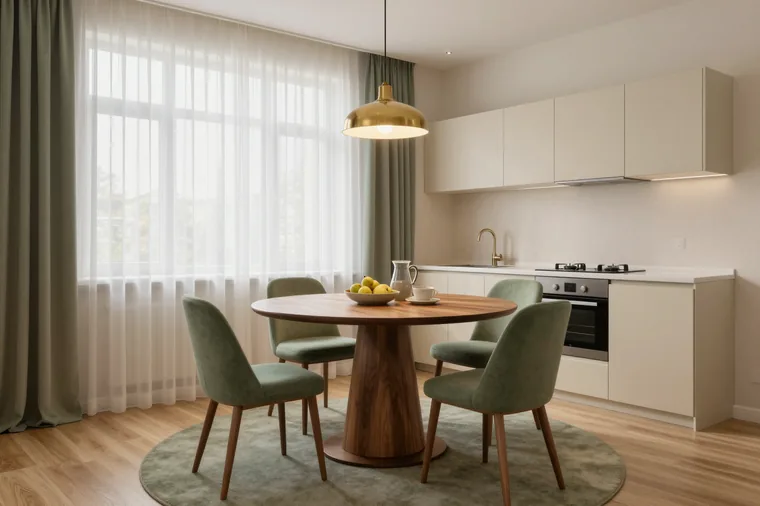
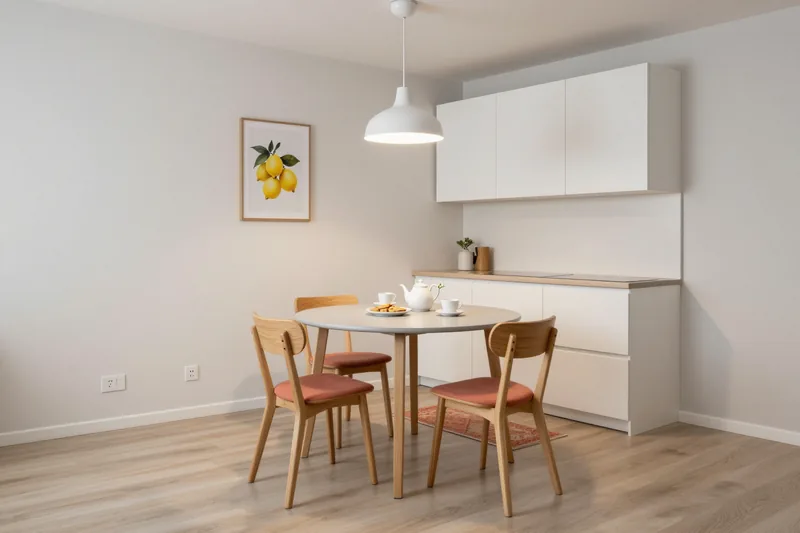
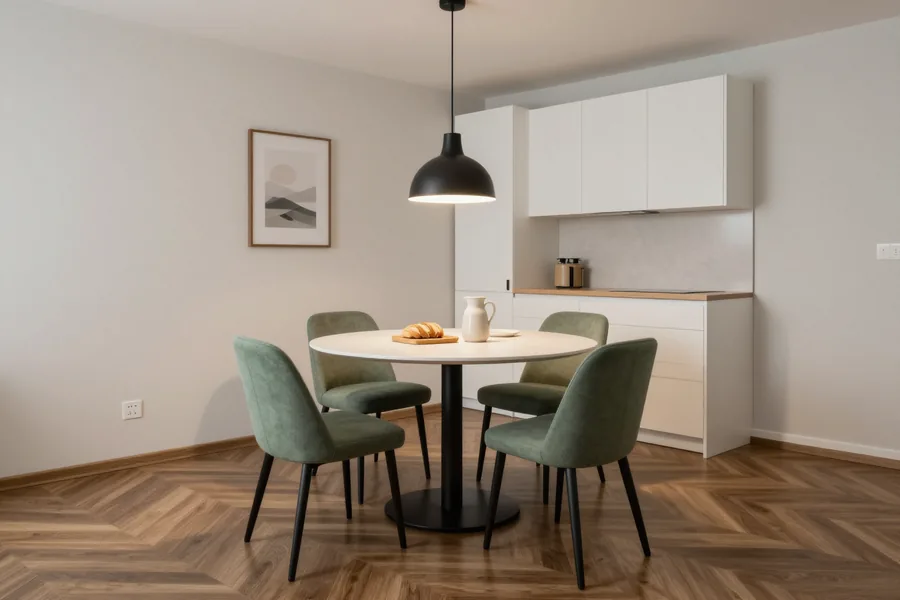
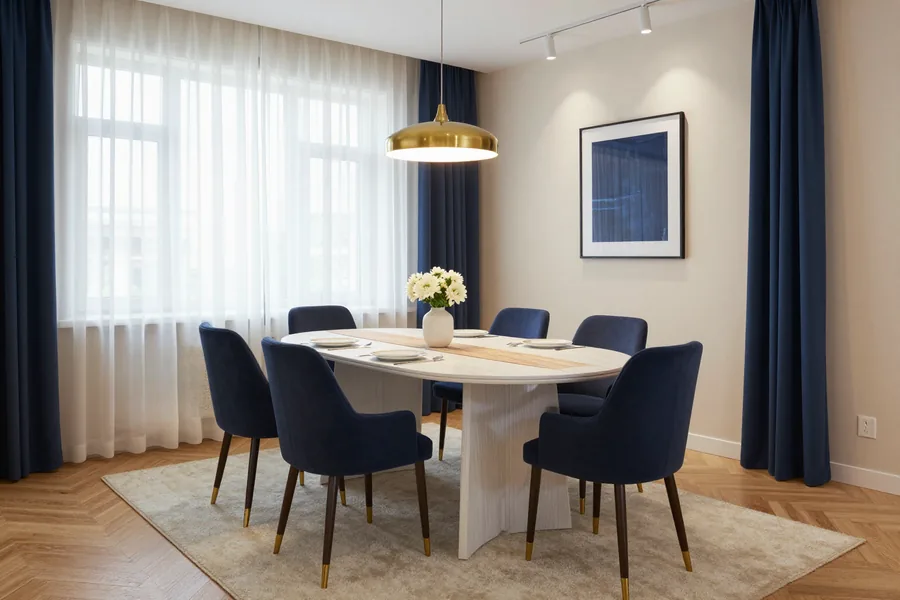
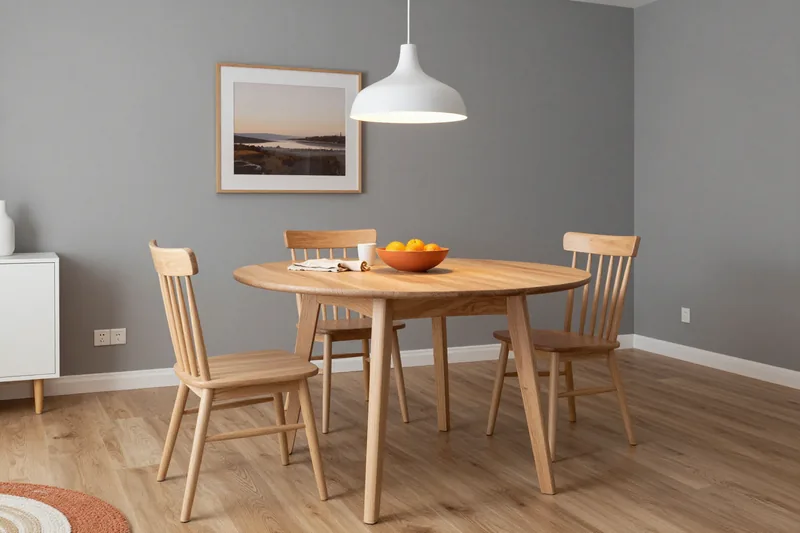
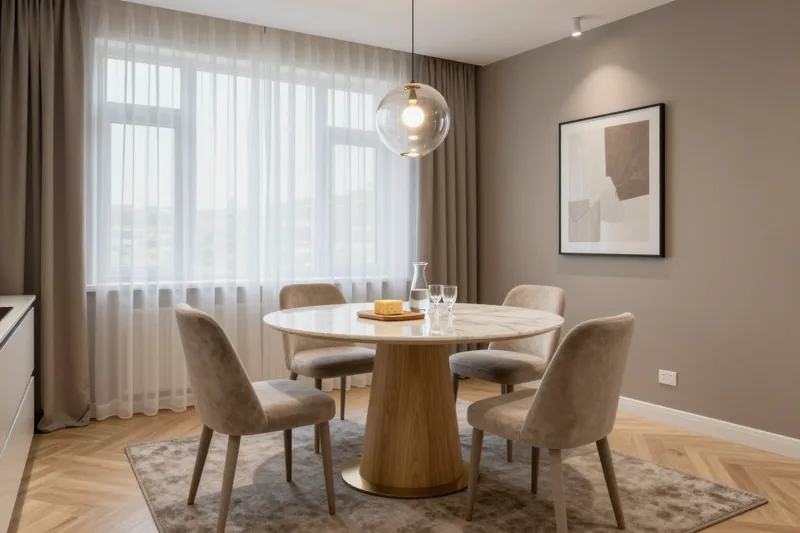
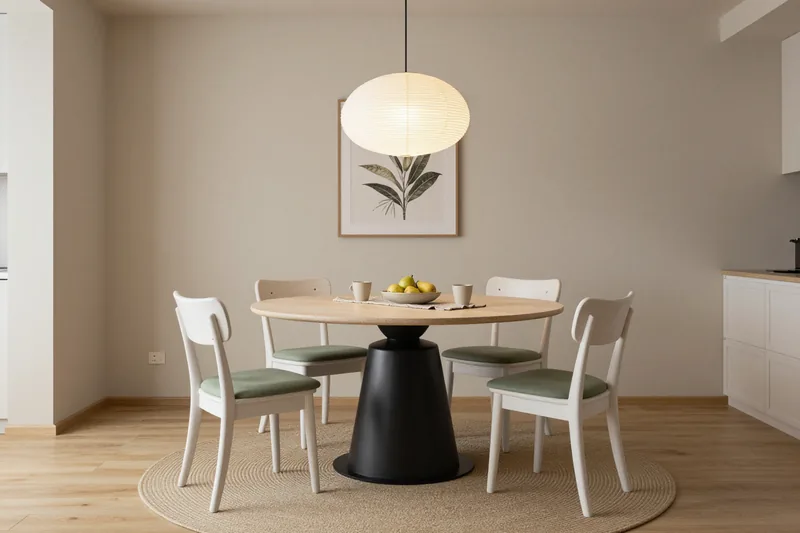
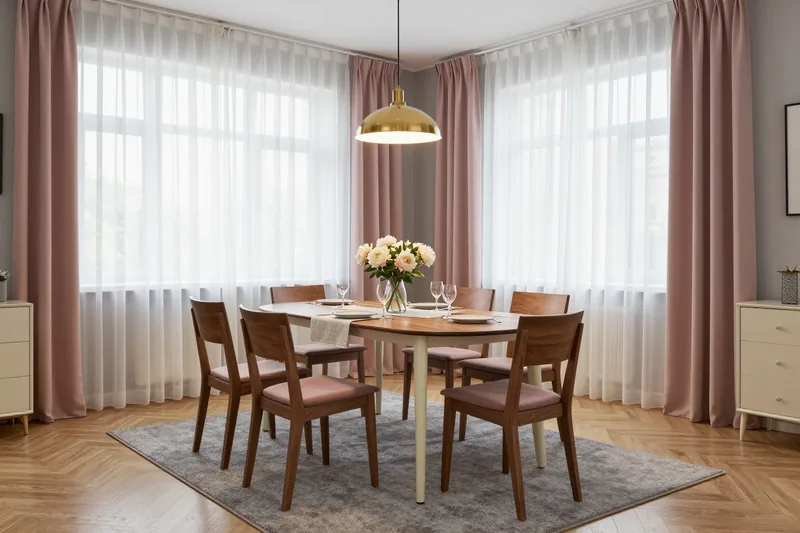
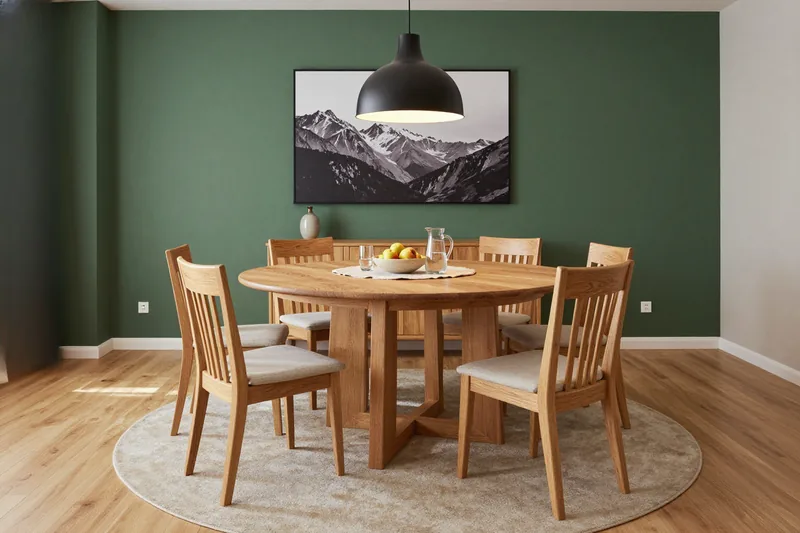
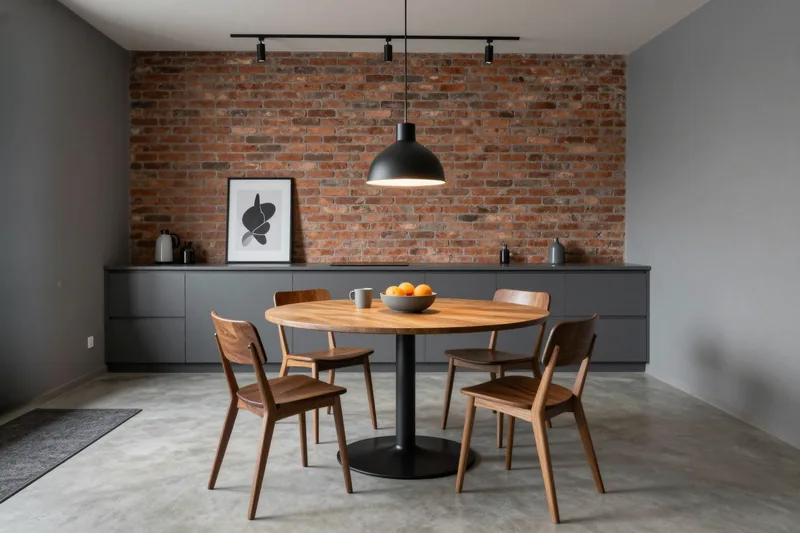
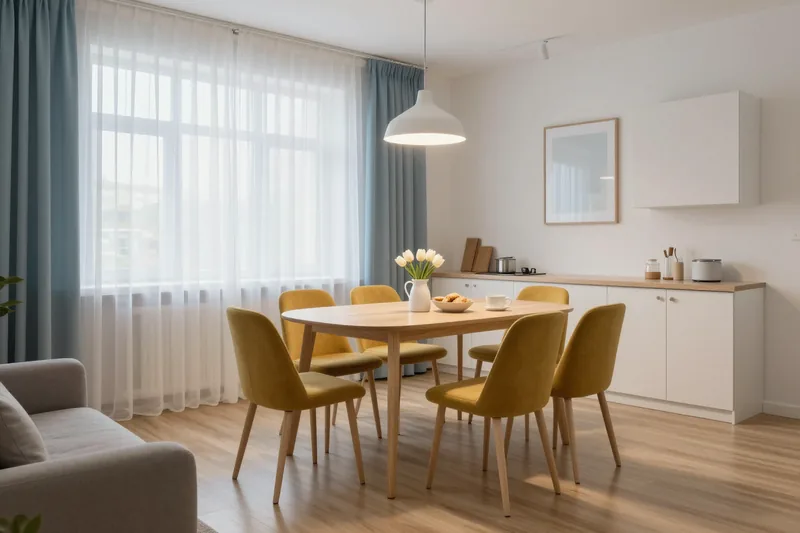
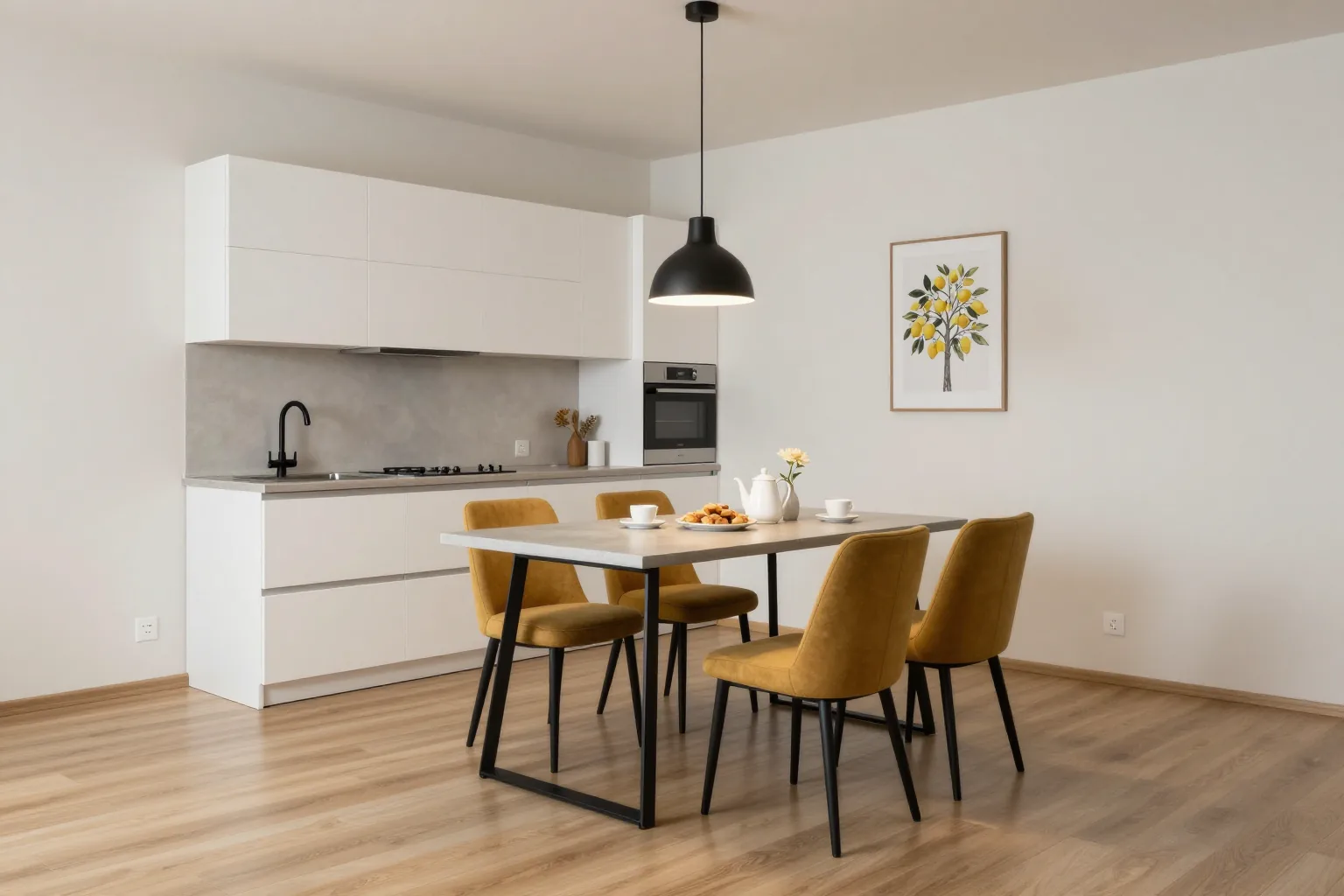
A custom round table from MEBLIX means it is made to your diameter and project: free measurement, a 3D design in 1–2 days, production in our own 600 m² workshop in Almaty, and installation by our own crews. We work under a contract, with a 24-month warranty on the item and Blum hardware backed by the manufacturer's 25-year warranty.
Seating and the free walkways around the table depend on the countertop size. We explain how to work out the number of seats for your family and why a niche or bay window sometimes calls for a non-standard size.
How many people fit at a table 90, 110 and 130 cm in diameter
seat count by countertop size| Countertop size | Comfortable seating | Which room |
|---|
| 90 cm | 4 people | small kitchen, niche |
|---|
| 110 cm | 4–5 people | kitchen-dining room |
|---|
| 130 cm | 6 people | spacious dining area |
|---|
| non-standard to project | calculated | niche, bay window, non-standard room |
|---|
How much space to leave for walkways around the table
Leave at least 75–80 cm from the edge of the countertop to the wall or furniture, otherwise you cannot pull out a chair or walk behind someone seated. Width per person is measured along the circumference: 55–60 cm is enough so elbows do not bump into a neighbour, and 90 cm fits four, 110 cm fits four and a half, 130 cm fits six. Before ordering we measure not only the room but also the route the item will be carried in: in Almaty apartments with a narrow hallway, a one-piece 130 cm countertop sometimes simply will not go through the doorway. In a small kitchen what wins is not a smaller size but shifting the table towards the window or into a niche — that frees up the walkway on one side instead of spreading it around the circle.
How a round shape beats rectangular and oval
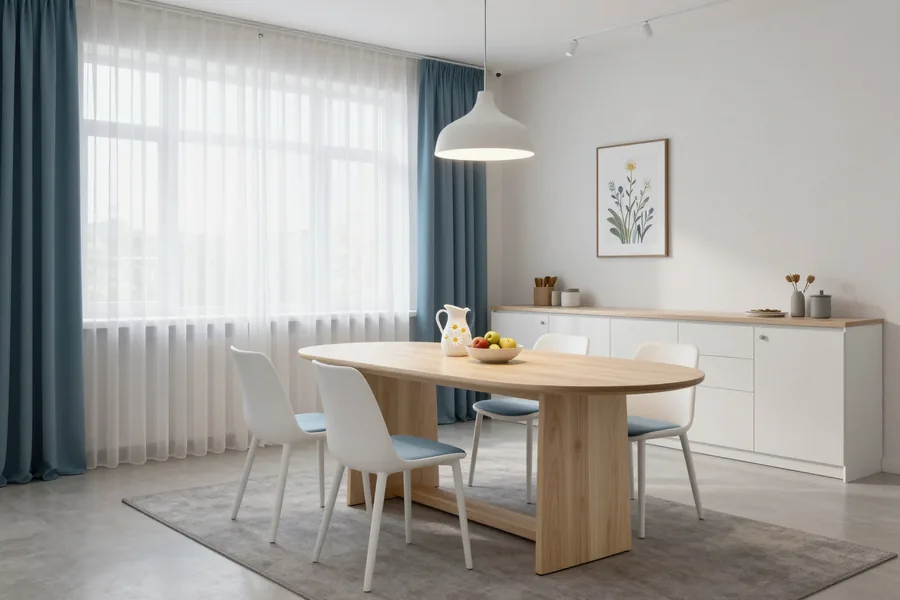
This countertop has no sharp corners, people sit down on all sides, and it saves space in a narrow room where a rectangular table juts a corner into the walkway. An oval option works well along a long wall, but with the same number of seats it needs more free space lengthwise — the extra centimetres go into the rounded ends. A custom round dining table with a radiused countertop fits into a bay window or niche without corner gaps, where a rectangular one leaves dead zones. For a family with children, what matters more than the shape itself is the finished edge — a rounded end is safer than a straight cut even on a round model, so this is worth discussing at the measurement.
Which base keeps a round table steady
Wobble and a countertop that spins are the main worry when ordering this model. We explain the base types for different diameters, how the countertop is fixed to the underframe, and how a test assembly catches any play before dispatch.
A central leg or three legs — what to choose for your diameter
comparison of base types by diameter and stability| Base type | For which diameter | What it gives |
|---|
| Central leg | compact and medium | maximum legroom |
|---|
| Three legs | medium and wide | stability at the edge |
|---|
| Apron and frame | wide, to project | rigidity and protection against play |
|---|
How the countertop is attached to the base and why it doesn't rotate
We attach the countertop to the base with concealed fasteners that lock against rotation, so when the table is slid across the floor the countertop doesn't shift relative to the leg. We select this countertop-to-base fastening to suit the material: in solid wood the fixing point behaves differently than in quartz agglomerate — each material responds differently to load and compression. We design the countertop of the required diameter together with the mounting assembly rather than picking fasteners for a finished slab. Rotation comes not from weak fasteners but from fasteners poorly matched to the countertop material — in solid wood and in quartz the fixing points behave differently. That is why we agree the mounting assembly at the 3D design stage: a mistake there is cheaper to catch on the drawing than on an assembled table.
Why a test assembly in the workshop is needed before shipping
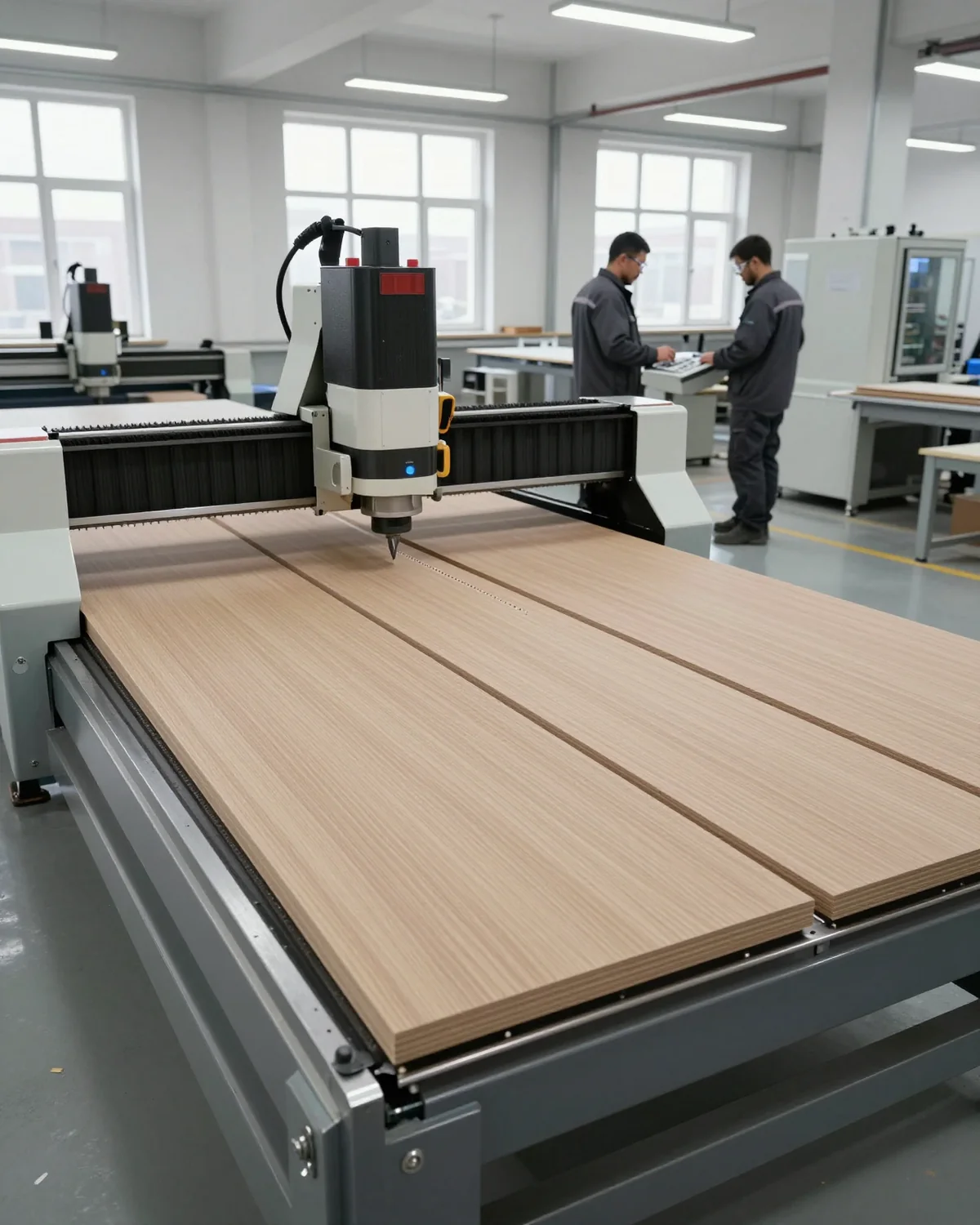
Before shipping we assemble the table completely in the workshop and check for play, gaps and how the countertop sits on the base, so that no surprises come up during installation. The test assembly in the workshop takes place on an area of 600 m², which houses cutting, edge banding, painting and the assembly section — and every unit is checked where it was made. Installation by our own crews starts with an already verified structure, not with sorting out what didn't fit. Play that is caught in a minute during the workshop assembly turns into reworking a unit on site — that is why the test assembly saves not the workshop's time but the client's time. During installation the crew checks how the countertop sits against the project and signs the acceptance report only after the table stands level.
Countertop material for the kitchen and living room
The material determines how the countertop survives stains, scratches and hot items. We break down six options for a round countertop, their suitability in different rooms and the care rules for each.
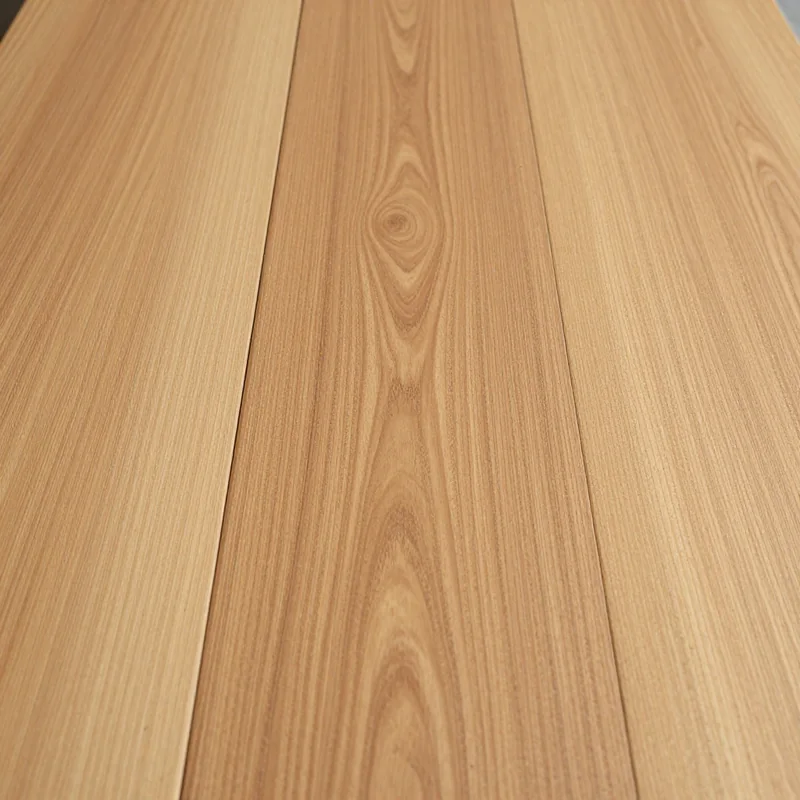
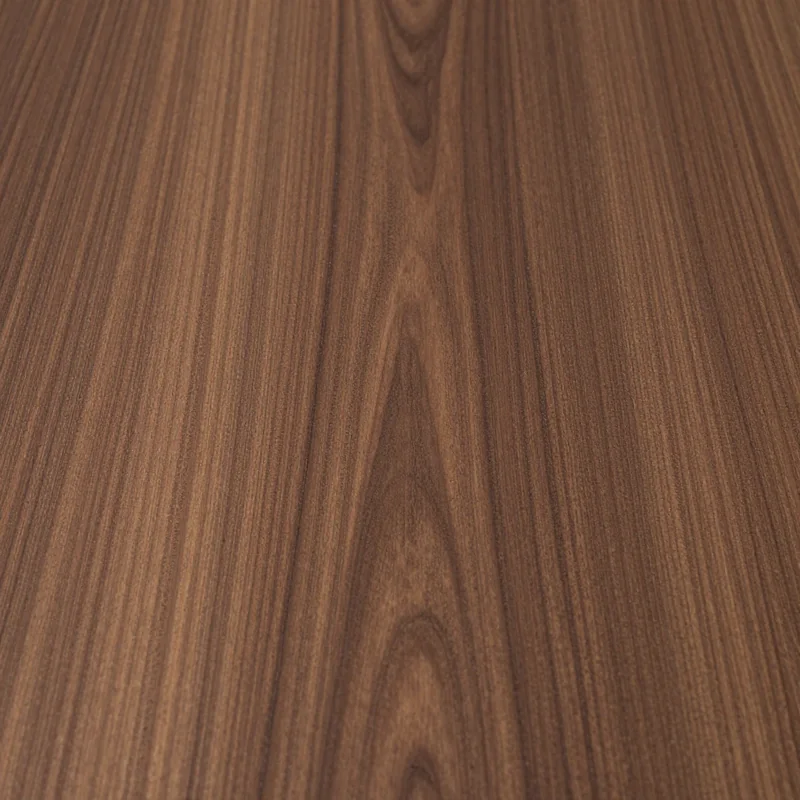
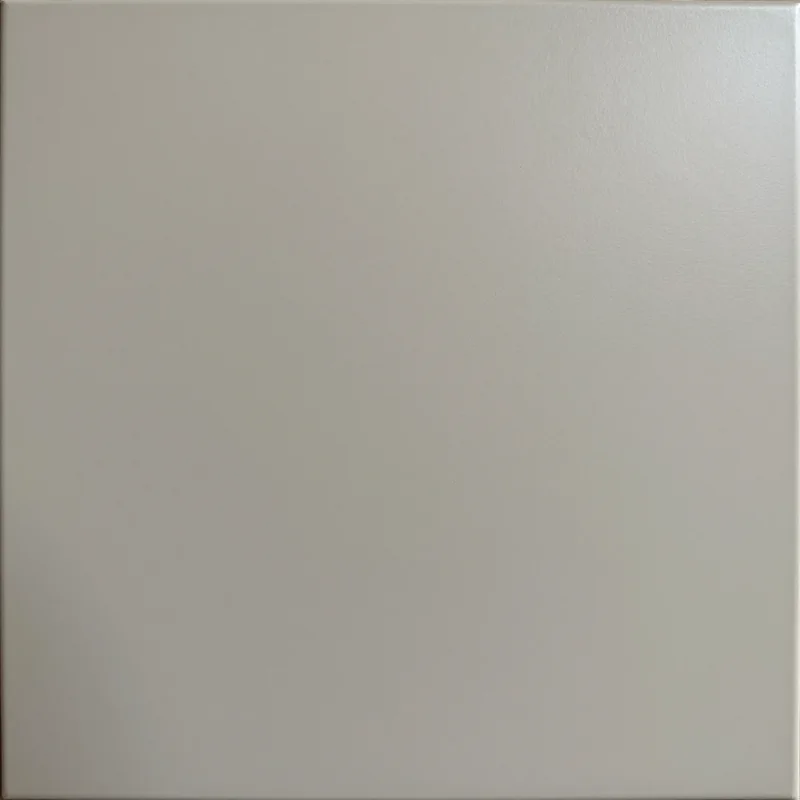
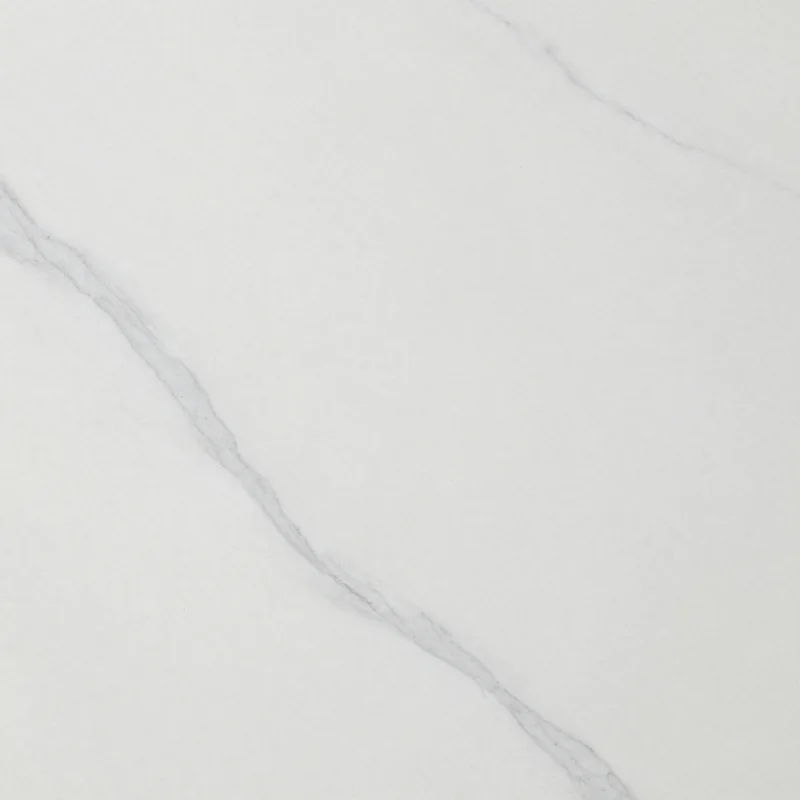
Laminated chipboard, HPL, acrylic, quartz, solid wood or ceramic — what suits your load
comparison of materials by durability and place of use| Material | Everyday durability | Where it fits |
|---|
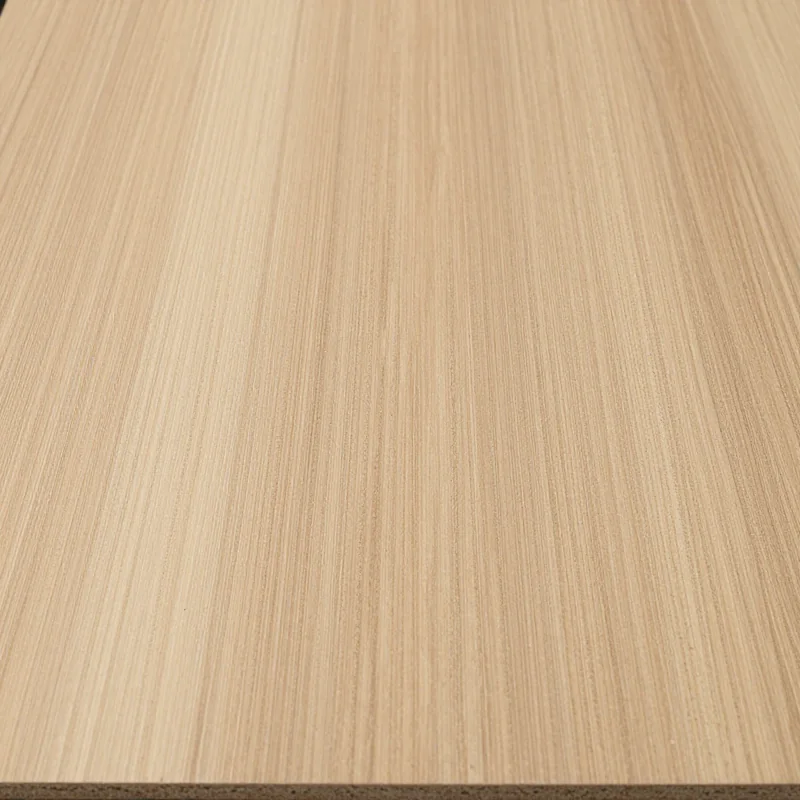
| Egger and Kronospan laminated chipboard | basic, keep away from hot items | kitchen, country house, basic option |
|---|
| HPL | high resistance to scratches and moisture | everyday kitchen |
|---|
| Acrylic | medium, easy to sand | living room, decor |
|---|
| Quartz agglomerate | high resistance to stains and scratches | busy kitchen |
|---|
| Solid wood | requires care | dining room, warm interior |
|---|
| Ceramic | high resistance to heat | dining area |
|---|
How to care for the countertop to avoid scratches and stains
- Hot items: place them only on a trivet — direct contact leaves a mark on laminated chipboard and acrylic, while ceramic withstands heat without consequences.
- Spills: wipe up right away, especially at the edge, where moisture soaks into the end and gradually swells the board.
- Sponges: use a soft cloth instead of an abrasive so as not to leave matte scuffs on the gloss and not to strip the protective layer off the lacquer.
- Edge: wipe dry after every wet cleaning, otherwise the end darkens and the seam comes apart faster.
- Solid wood: renew the protective coating as it wears, before the wood absorbs water and starts to crack.
- Acrylic: minor scratches are sanded in place, but deep chips at the edge require re-gluing the end.
Custom rattan table
We make rattan furniture, including custom tables, and select the weave and frame so the item fits your interior and the size of the room. A woven rattan model differs from solid wood and board in that the tabletop is lighter and lets light through, while the texture stays warm to the touch. We assemble the frame with reinforcement at the mounting point so the tabletop does not sag under dishes and the elbows of those sitting at it. A fine weave looks neater on a small diameter, a large one on a table for six, where the load on the center is higher. Rattan wins on lightness and texture, but a heavy tabletop needs a reinforced frame — this is worth discussing at the measurement, not after manufacturing.
The order journey from measurement to installation
We show the order route step by step: how the measurement goes, what the 3D design gives you, how the future item moves through the workshop, and how installation wraps up.
What happens at the free measurement and why you need a 3D design
At the measurement we take the dimensions of the room and the walkways, clarify the diameter and material, and then prepare a 3D design in 1–2 days so you see the model in your space before production. Measurement specialists record more than the dimensions of the future surface: the width of the walkways between furniture and the wall, the position of sockets and radiators, the direction the doors open, and the path along which the custom item is carried into the apartment all matter. Designers transfer this data into the 3D model and show how the round tabletop will sit in the room, how the board pattern will lie, and where the edge will run relative to the window. The measurement is needed not only for dimensions — it records where the doors open and where the walkway runs, and this changes the diameter more often than the room itself.
How the item moves through the workshop and the test assembly
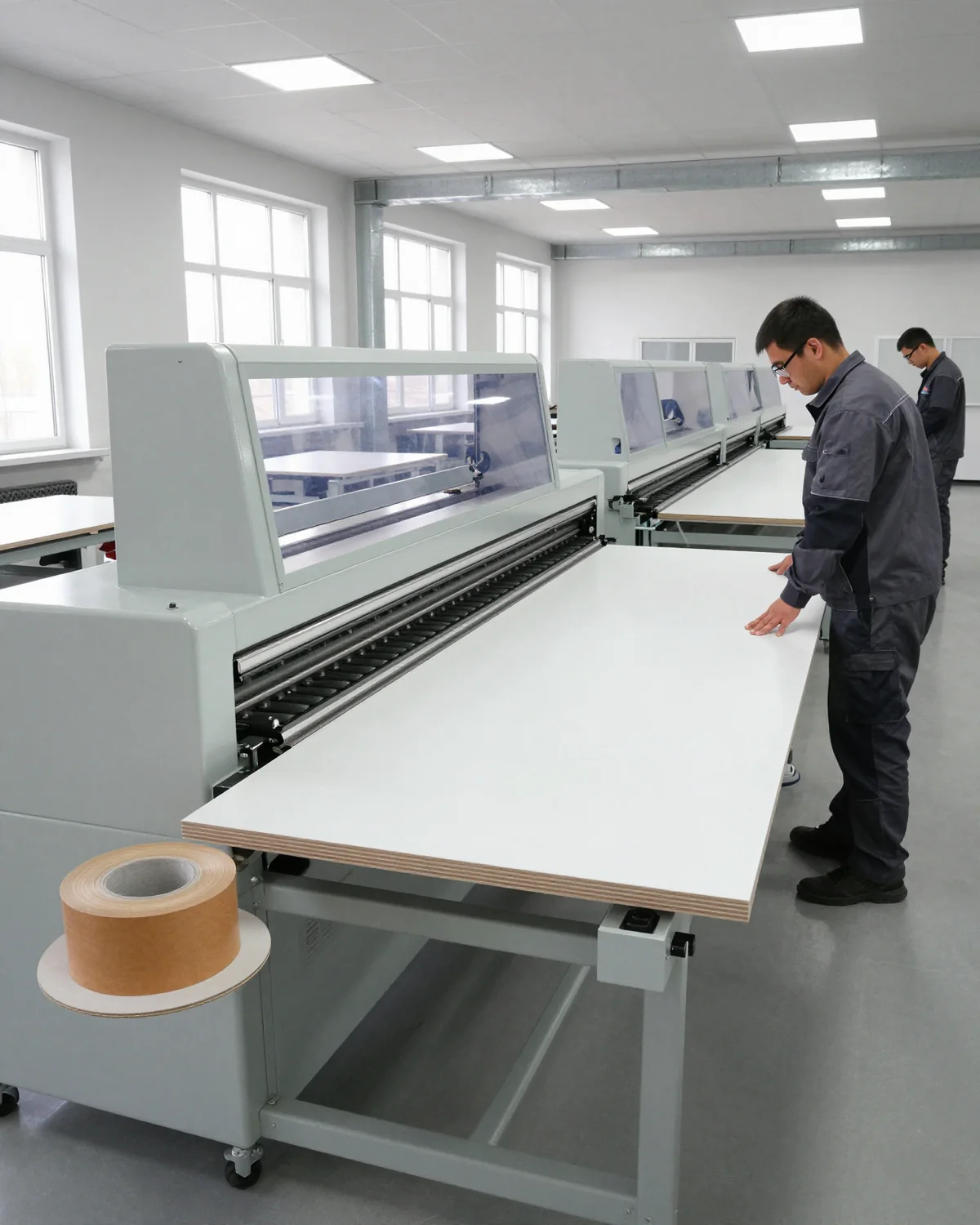
- Cutting: the tabletop and base parts are cut to the design, with an allowance for edge processing.
- Edge banding: the edge is sealed so moisture does not get into the board and the edge does not chip on impact.
- Painting: the coating is applied before assembly, not after, so the finished surfaces are not damaged.
- Test assembly: the table is assembled in full and the base play and tabletop fit are checked.
- Lead time: for each option — in the price list on this page; a rush order is possible.
- Queue: a rush order requires a different order in the workshop, and it is better to discuss it at the measurement, not after the design is approved.
What installation includes and how acceptance goes
Installation is carried out by our crews, and we sign the acceptance report after installation, once you have checked stability, gaps, and the tabletop fit. The crew assembles the table on site, levels the base, checks that the top does not turn or wobble under load, and cleans up the packaging. Acceptance is not a formality: it is where it is recorded that the furniture stands level and does not wobble, and after that the warranty under contract applies. The warranty on the item is 24 months, on Blum hardware — 25 years from the manufacturer. If something needs tightening or adjustment at acceptance, the crew does it right away, before the report is signed. We also check how the tabletop meets the base around the entire perimeter: a gap or skew is only visible on site, after installation. We enter all remarks in the report before signing — that way they become part of the warranty obligations under the contract, rather than remaining a verbal agreement.
Warranty, payment, and working with a direct manufacturer
A direct manufacturer is responsible for the result at every stage, from measurement to installation. Below we break down what this changes for the customer, how the warranty and payment under the contract work, and why such an order removes the fear that the finished furniture won't match the project.
What a direct manufacturer offers instead of an intermediary
We are a direct manufacturer: measurement, design, production in our own workshop and installation by our own crews, with no reselling of ready-made furniture and no intermediaries in the chain. Over 13 years of work in the city we have completed 3 500+ projects, including 900+ kitchens and 800+ wardrobes, and every custom item is assembled at our own 600 m² facility — with cutting, edge banding, painting and test assembly. Materials are Egger and Kronospan boards, hardware by Blum, Hettich, Boyard. We prepare the design and 3D visualization in 1–2 days, and changes to diameter, height or material are made right at the measurement or in the project while the top hasn't gone to cutting yet. We make a custom round table in Almaty entirely in our own workshop, so we are responsible for the dimensions and the quality of assembly ourselves. When an order goes through an intermediary, any such change turns into correspondence between the links and an extra round of approvals.
How the warranty and payment under the contract work
We work under a contract: 50 % prepayment, the balance after signing the acceptance certificate, a 24-month warranty on the item, and Blum hardware carries the manufacturer's 25-year warranty. We sign the acceptance certificate after installation, when the table is already in place and you have checked the joints, stability and operation of the mechanisms; payment can be made by bank transfer. The two-year obligations cover the carcass, countertop and base, while hinges, lift mechanisms and drawer runners follow the terms of the hardware manufacturer. Paying the balance after the acceptance certificate means you pay for a table that is already standing and checked, not for a promise to deliver it. So record all assembly remarks in the certificate before signing — that way they fall under the warranty obligations rather than verbal agreements.
Delivery in Almaty and outside the city
Delivery within the city and up to 30 km is free for a large order, beyond 30 km is for an extra charge, and the threshold for a large order is stated on the "Delivery and payment" page. We discuss out-of-town addresses and difficult entrances in advance, because a large table with a solid countertop requires careful transport and a margin for the dimensions of doorways and stair landings. Installation is carried out by our crews — the same ones who assembled the item during test assembly in the workshop and know how the countertop is attached to the base. For an order, logistics is calculated together with installation: an out-of-town address should be discussed at the measurement so the crew arrives with the right fasteners and tools instead of finding out at a closed door.
The bottom line on round tables
Five parameters decide whether the whole family will fit at the table and whether the order will have to be redone. We've put them into a short list that is convenient for checking any project.
- Diameter: allow 55–60 cm per person and leave 75–80 cm of free space for passage around the countertop.
- Base: a central leg supports compact models up to 110 cm, three legs and a frame support wide countertops from 130 cm.
- Material: for an everyday kitchen choose HPL or quartz, for decor and occasional gatherings — acrylic or solid wood.
- Edge: a finished end is more important than the board itself — it is the first to take moisture and impacts along the edge.
- Order: measurement and a 3D design before cutting remove the main risk — that the finished countertop won't match the room in dimensions and passages.