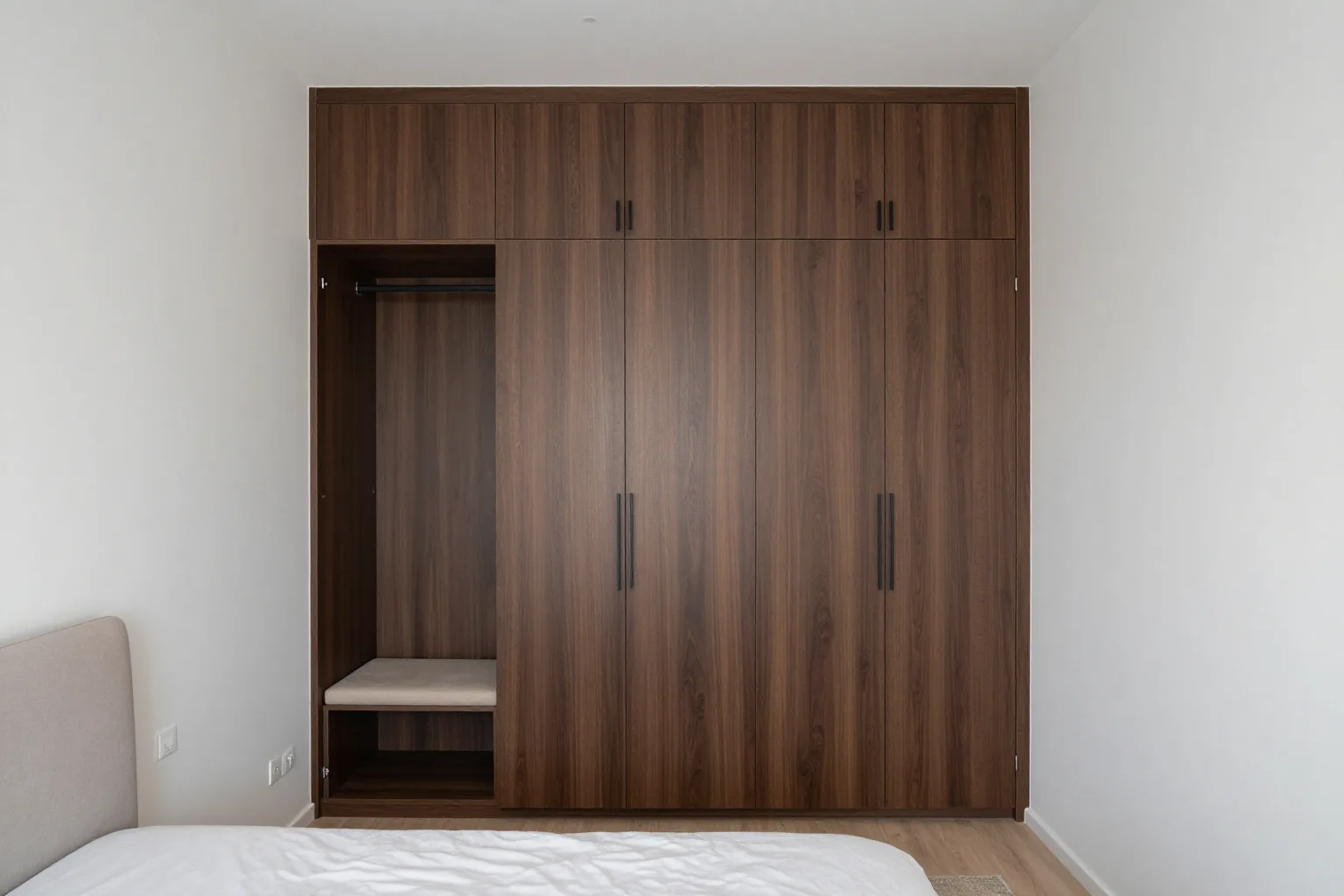
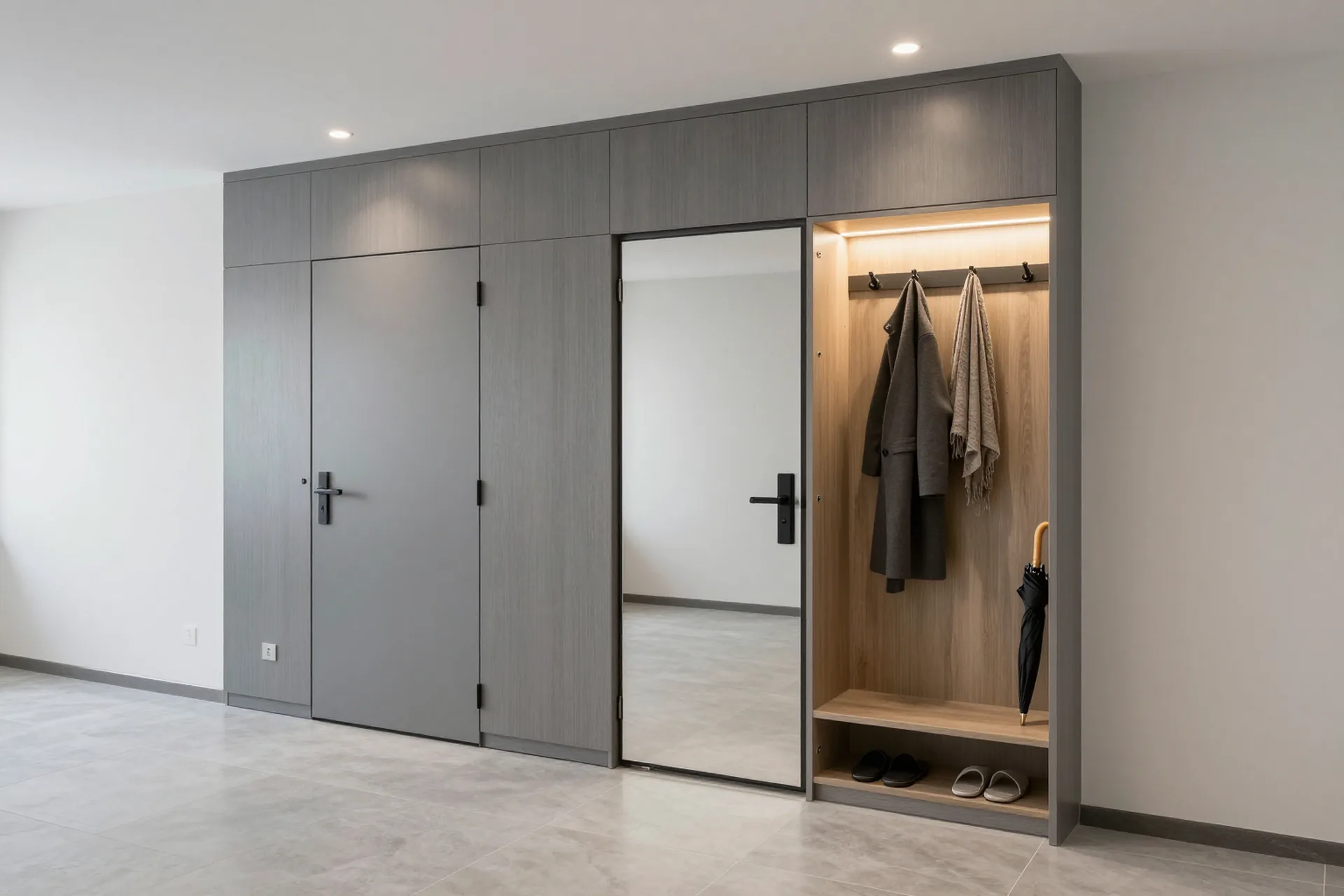
A custom bookcase from MEBLIX is made in our own 600 m² workshop, with a free measurement, a 3D design in 1–2 days and installation by our crews. Every shelf is calculated for the weight of your books, and the carcass is fitted to your alcove or wall. Warranty: 24 months on the product, 25 years on Blum hardware.
A store-bought bookcase almost never matches your alcove or wall. Here is how a made-to-measure order differs and why it removes the main worries buyers have before they commit.
How a made-to-measure piece differs from an off-the-shelf one
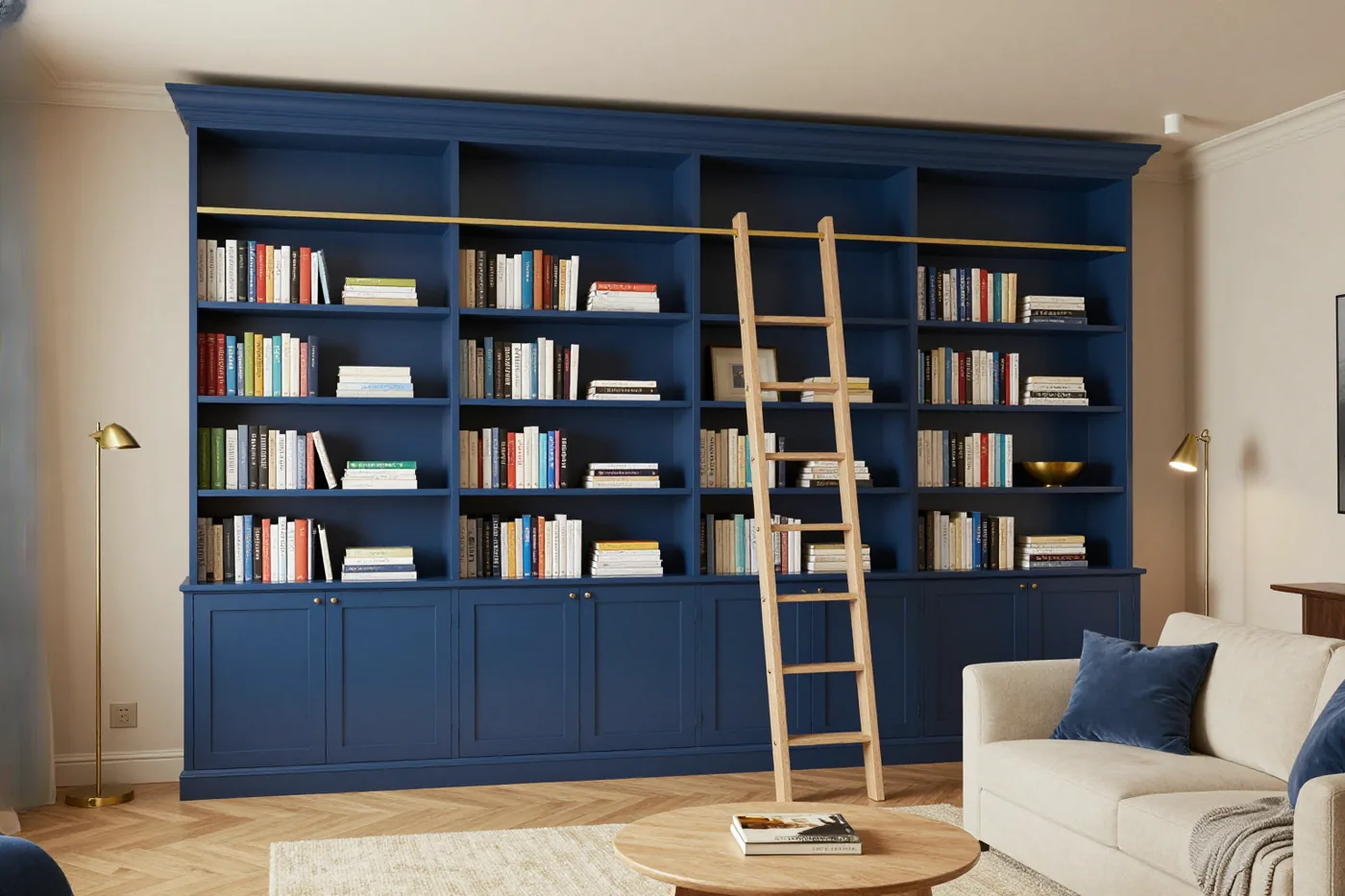
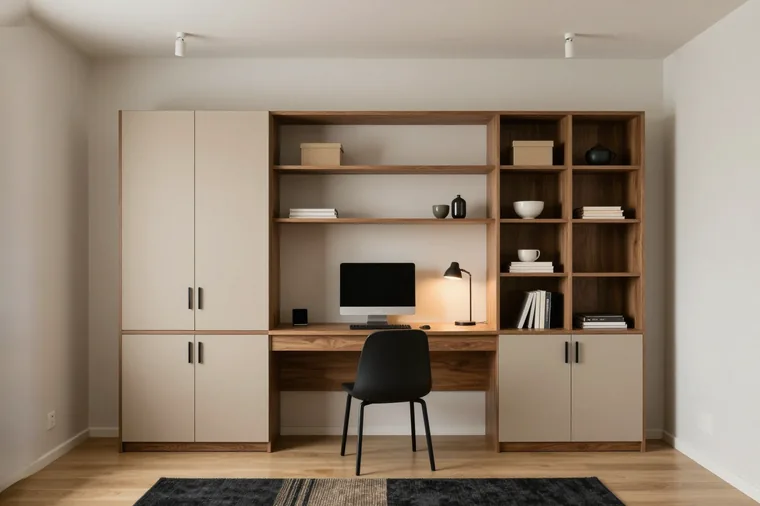
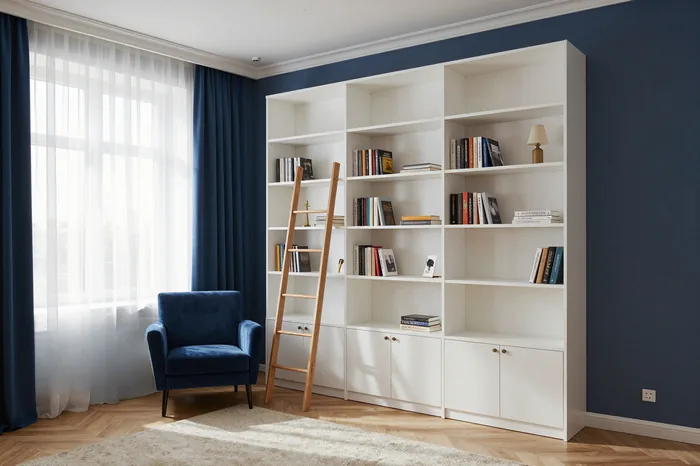
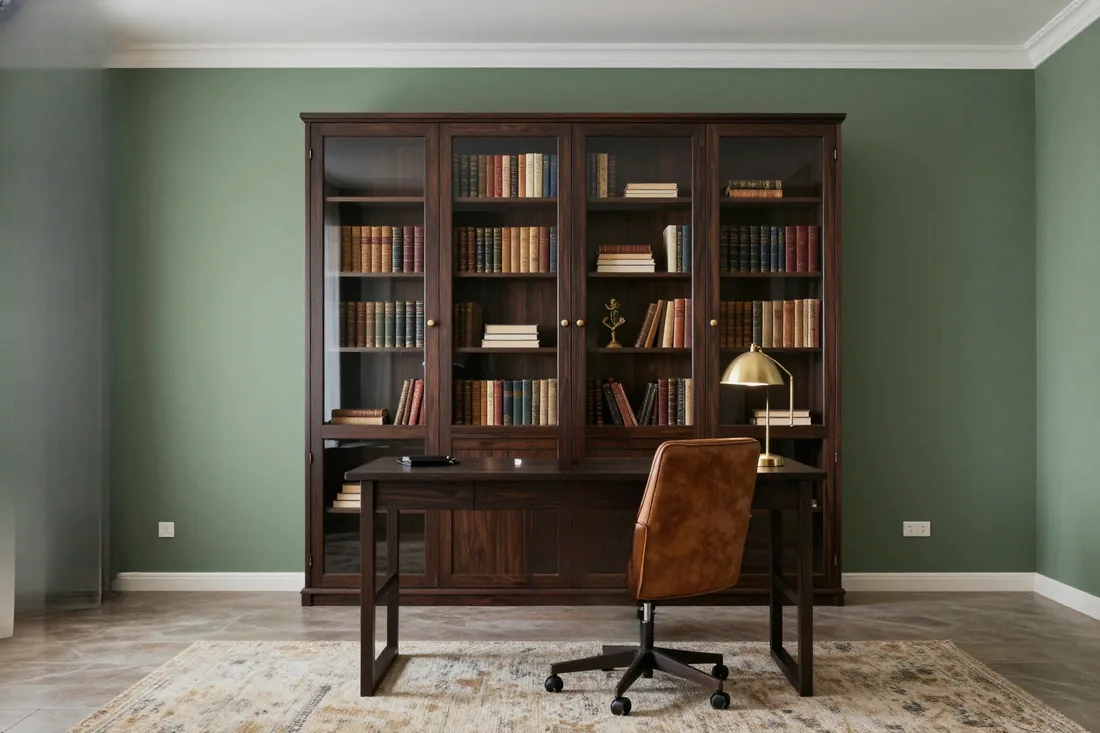
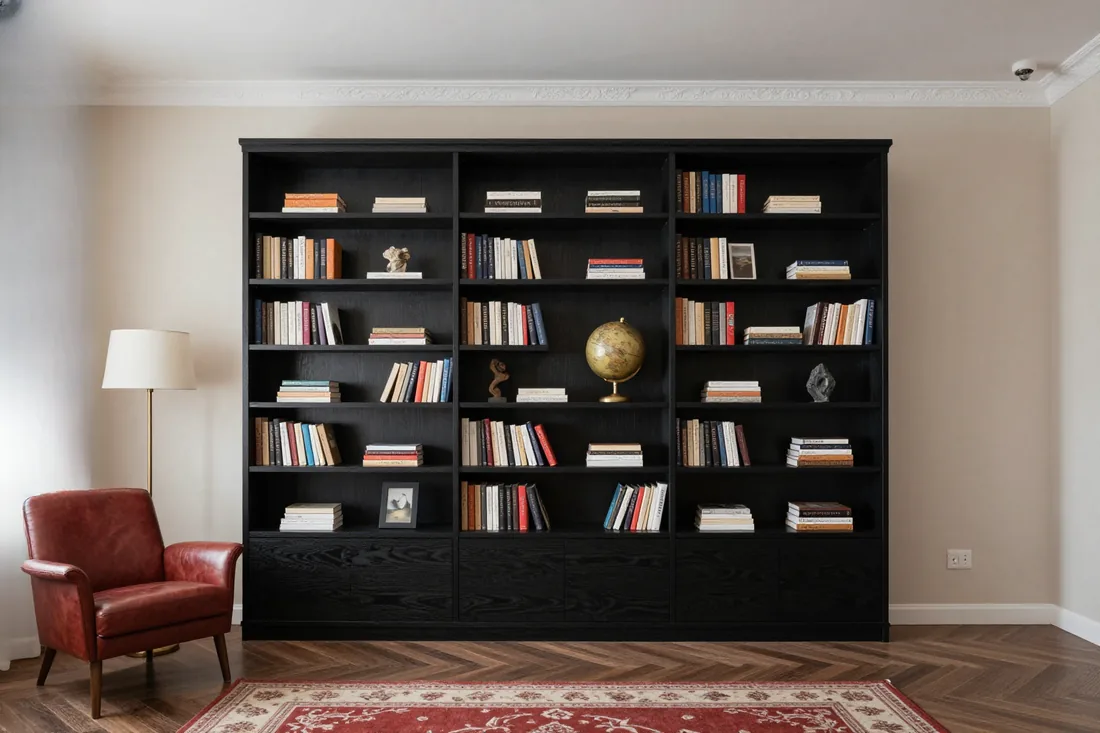
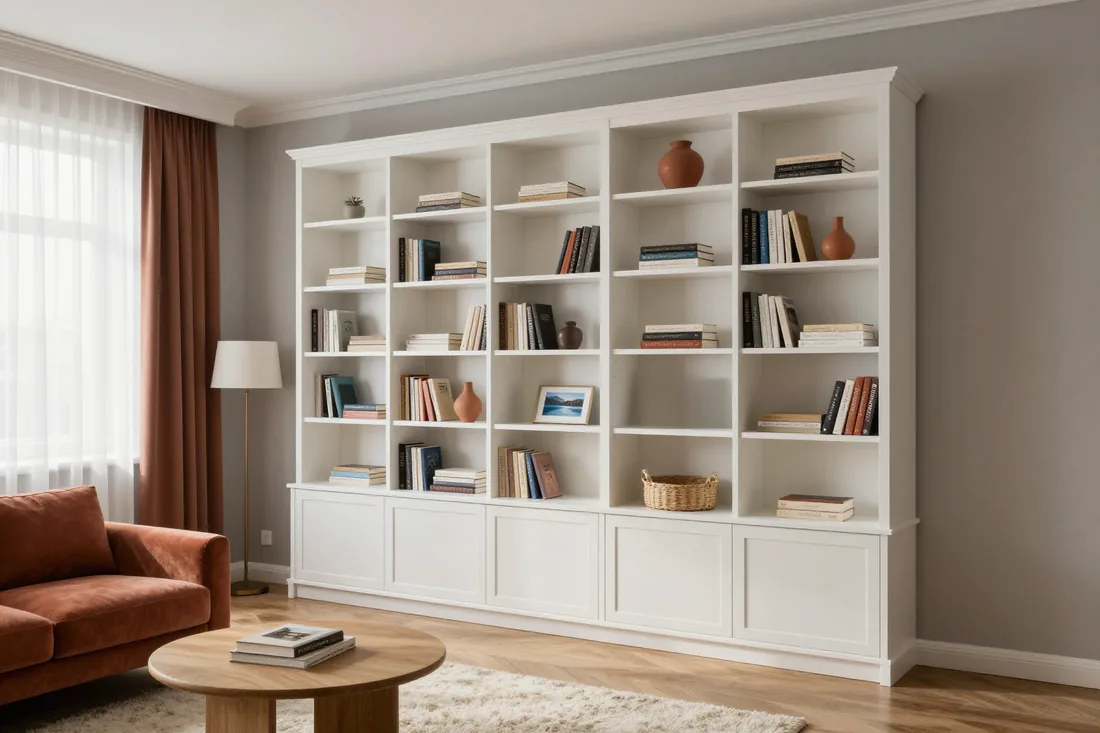
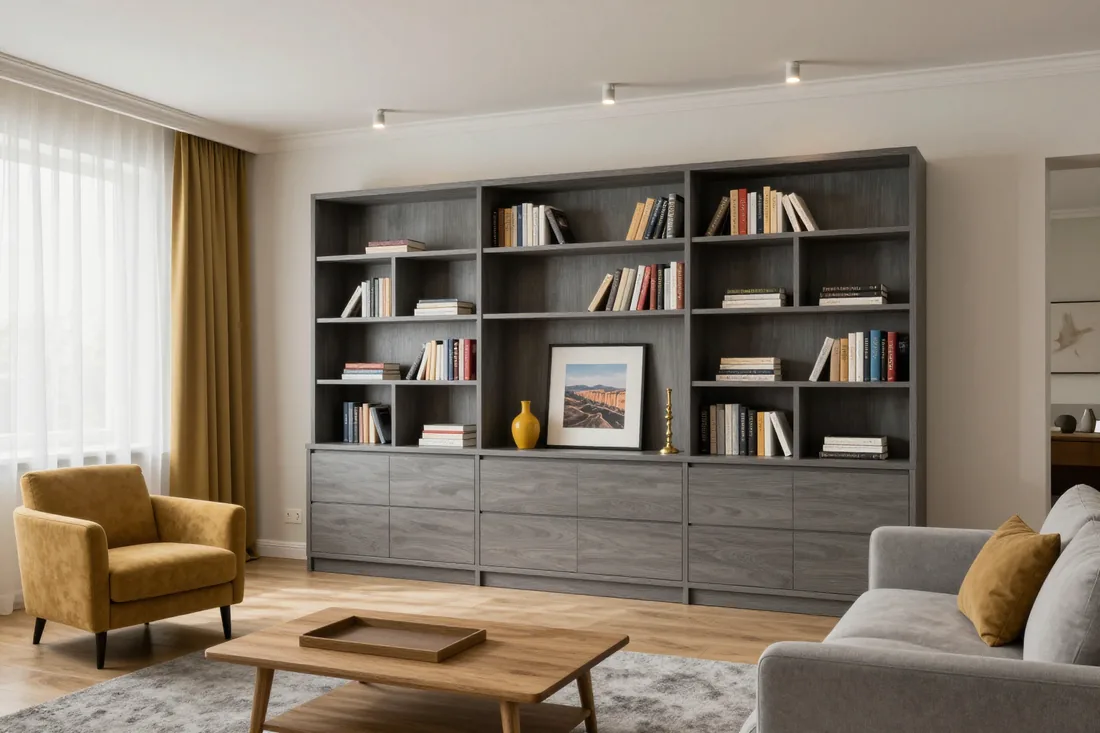
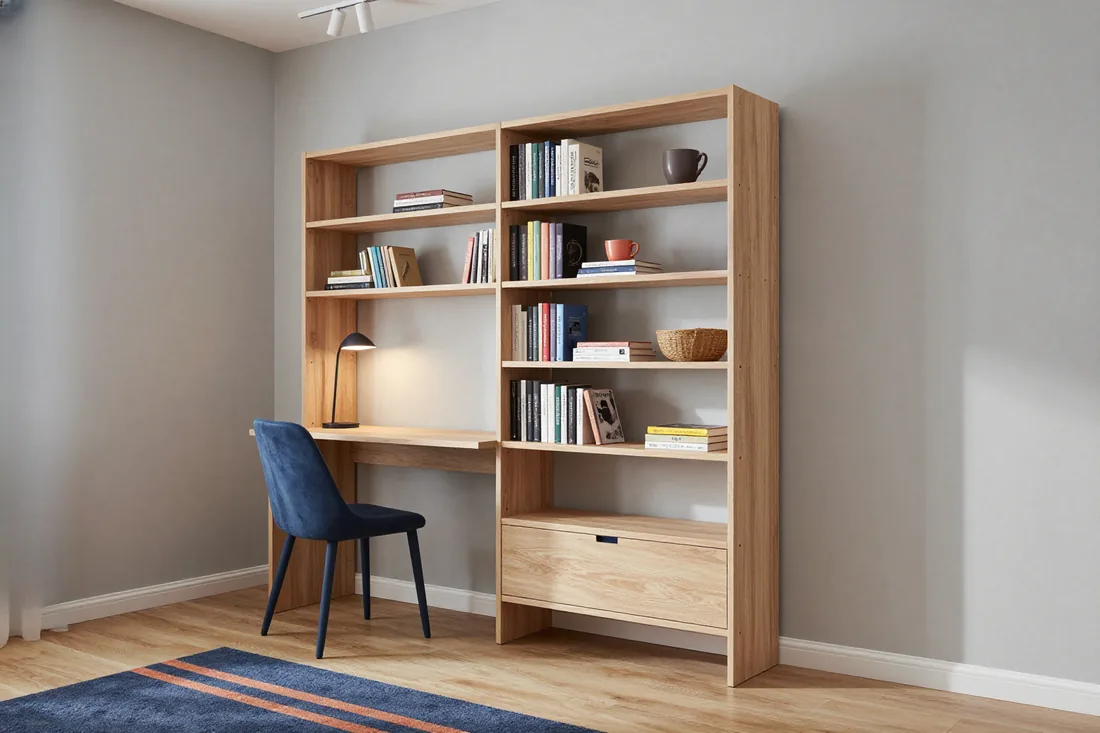
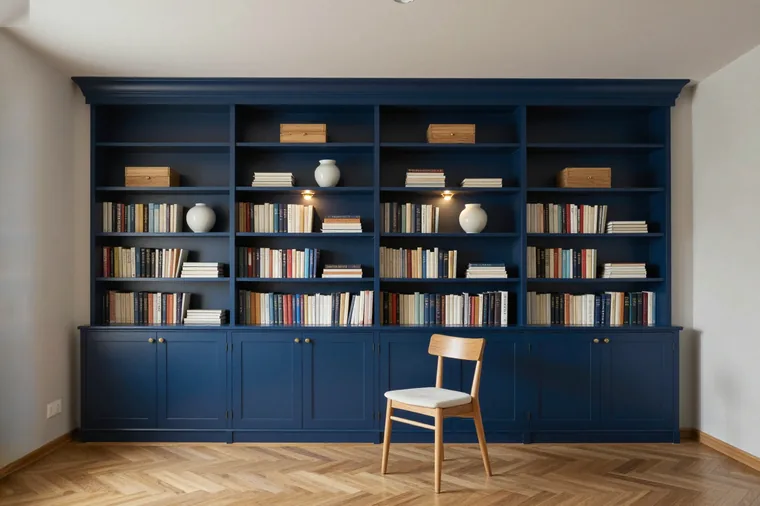
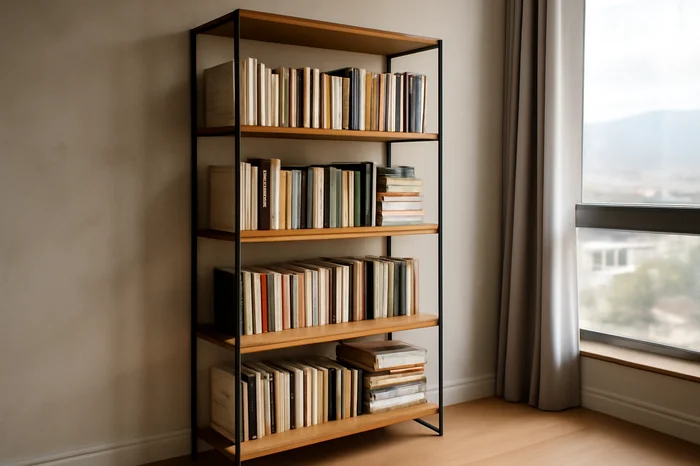
A ready-made bookcase is designed for an average wall and a standard book format, while a made-to-measure piece is planned around a specific alcove, your ceiling height and your own library. A floor-to-ceiling unit uses the volume that a factory carcass simply wastes, and a built-in version closes off a wall recess with no gaps at the sides. Shelf thickness and spacing are calculated from the weight of the volumes: art albums load a shelf several times more than paperbacks do. If your collection will grow, spare depth and adjustable spacing matter more than looks.
What we do ourselves and never subcontract
- Measurement and design: a technologist visits the site, records the geometry of the walls and delivers a 3D design in 1–2 days.
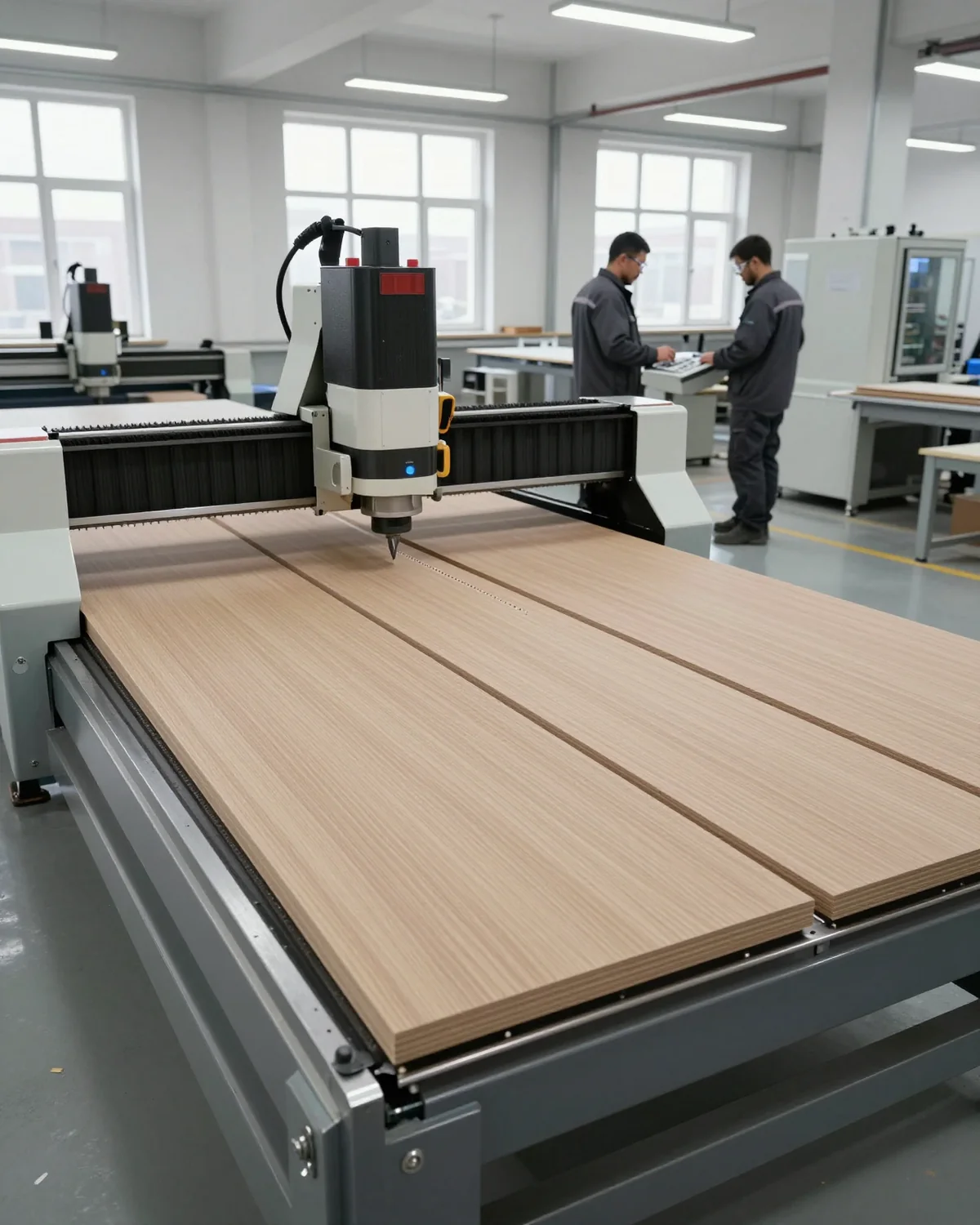
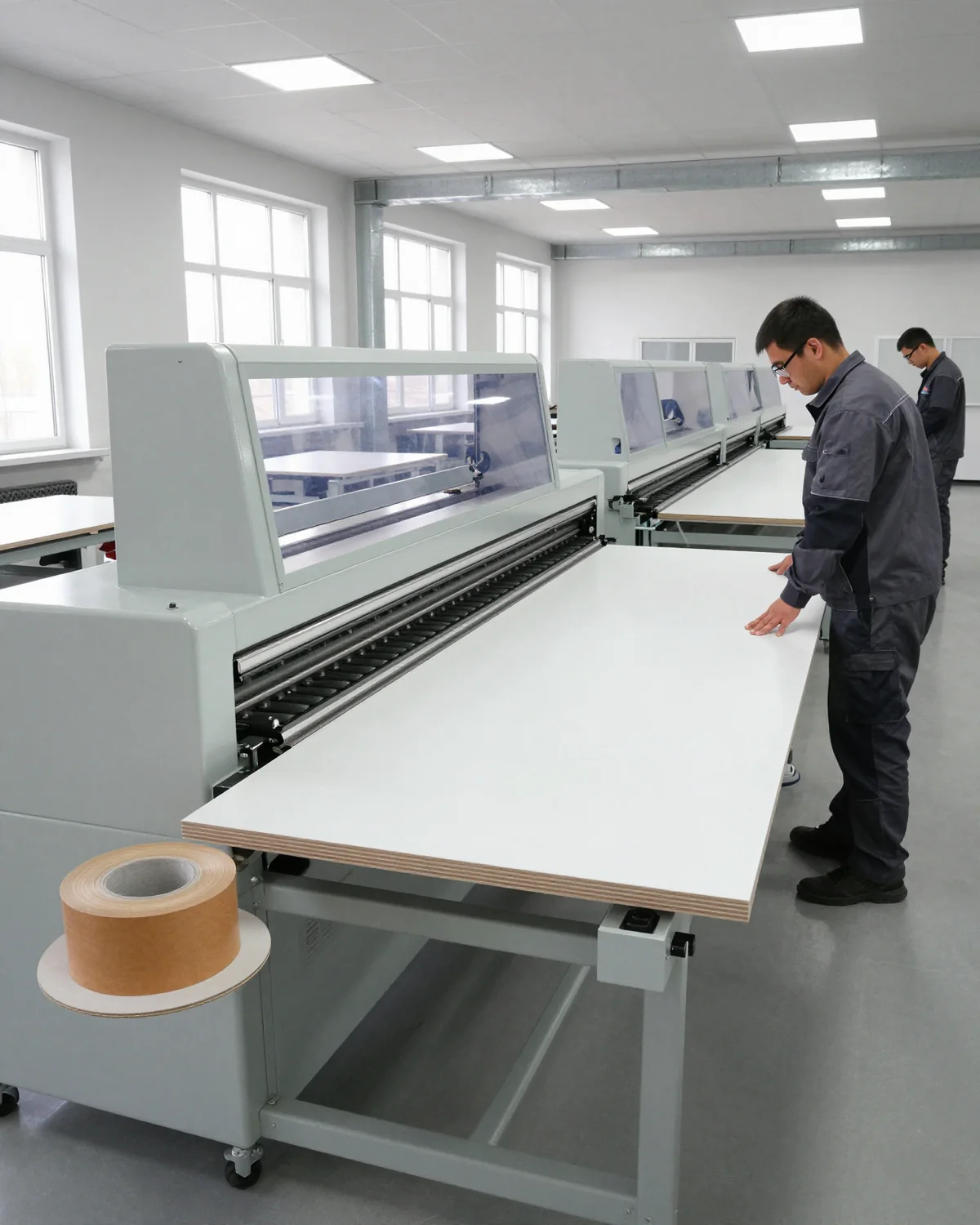
- Cutting and edging: Egger and Kronospan boards are cut and edged in our own 600 m² workshop.
- Painting: fronts for enamel go through the workshop's spray booth, not an outside paint shop.
- Test assembly: the carcass is put together on the workshop floor before dispatch, so any skew or gaps are caught early.
- Installation: our own installation crews come to your home, not random contractors.
Bookcase designs we build
Bookcase designs we build| Design | When people choose it | What to keep in mind |
|---|
| Floor to ceiling | maximum storage, a tall wall | wall fixing, access to the top shelves |
|---|
| Built into an alcove | an alcove, a recess, a box room | fitted to the measurement, no gaps |
|---|
| With glass doors | dust protection, a display look | weight of the glass, Blum hinges |
|---|
| With open shelves | quick access, a light look | shelf spacing and thickness |
|---|
| Modular shelving | rearranging, a growing collection | consistent section spacing |
|---|
| Room divider bookcase | zoning a studio flat | stability, fixing |
|---|
Shelf engineering for the real weight of books
Shelf sag is the biggest fear of anyone buying a bookcase. We look at what it depends on, which depth and spacing suit your formats, and how we calculate each shelf for its real load.
Why shelves sag and how to prevent it
- The cause: a board bends when its thickness and support spacing are not matched to the weight of the books.
- Span length: rows of books spread the load along the whole length, so the middle of a long unsupported board drops first.
- A vertical upright: splitting the span with an upright is cheaper and more reliable than making the board thicker along its whole length.
- An HDF back panel: it holds the geometry of the carcass and stops the side panels from spreading under load.
- Reinforced book shelves: the load goes into the support joint rather than the material, so the safety margin lasts for years.
What depth and spacing your book formats need
Depth is set by the largest format in your library: standard depth is enough for ordinary editions, while albums and art books need more. The spacing between shelves depends on the tallest volume in the row. If you plan for an average format, encyclopedias will only fit lying flat or not at all. Thickness and spacing are directly linked: the wider the span, the thicker the board needs to be, or an intermediate support is required. A floor-to-ceiling unit must be fixed to the wall for stability. For a mixed library, build one deeper section for albums rather than deepening the whole bookcase.
How we reinforce shelves in the workshop
- Span calculation: our technologists work out the board length between supports for the weight of the books before the board is cut.
- A vertical upright: it divides a long board and removes the sag in the middle of the span.
- Perimeter edging: PVC or ABS edging covers the board end around the whole outline and protects it from moisture and chipping.
- An HDF back panel: it keeps the carcass square and the whole unit rigid.
Materials and lead times for a custom bookcase
The carcass and front materials shape both the look of the bookcase and how long it takes to make. Here is how materials and production stages relate; the exact lead time for each option is in the price list.
What the carcass and fronts are made of
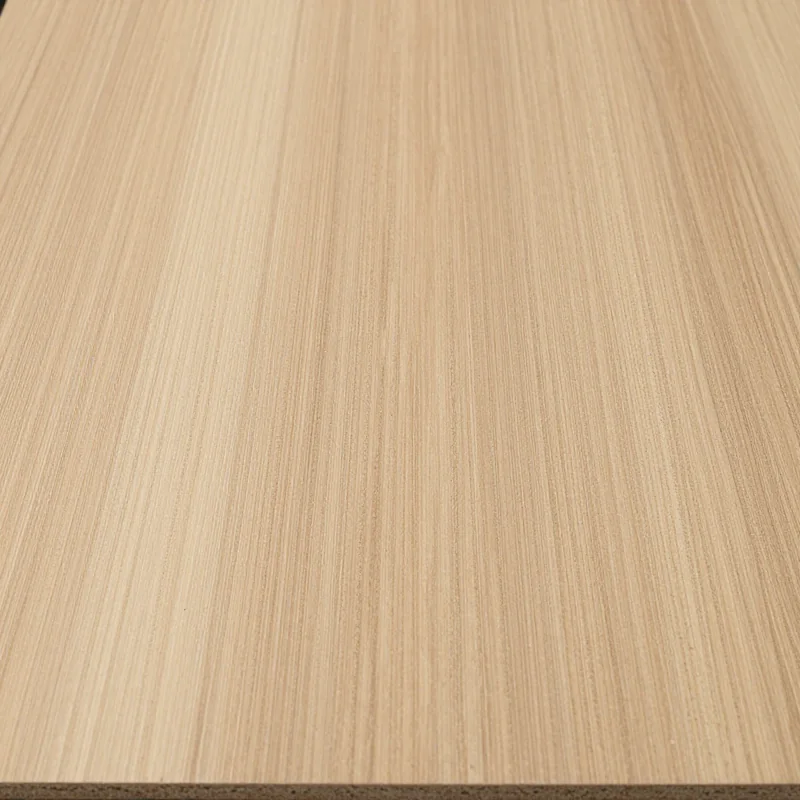
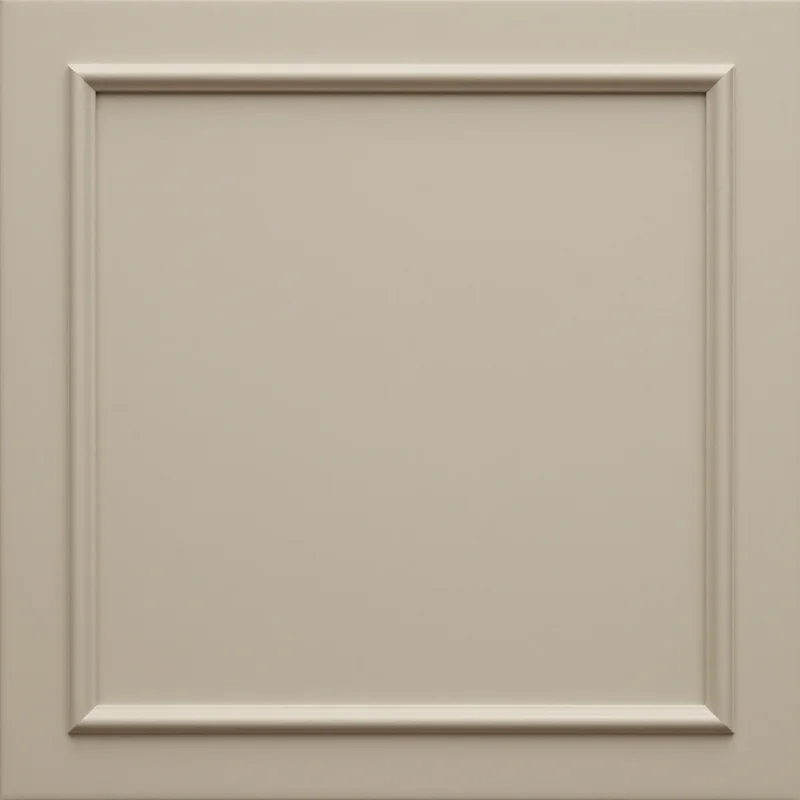
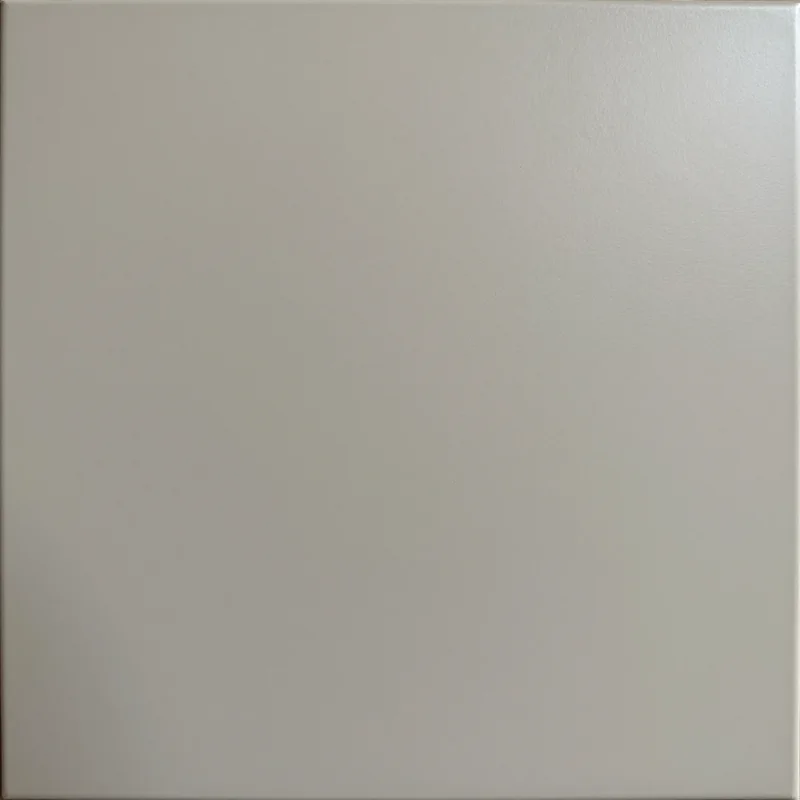
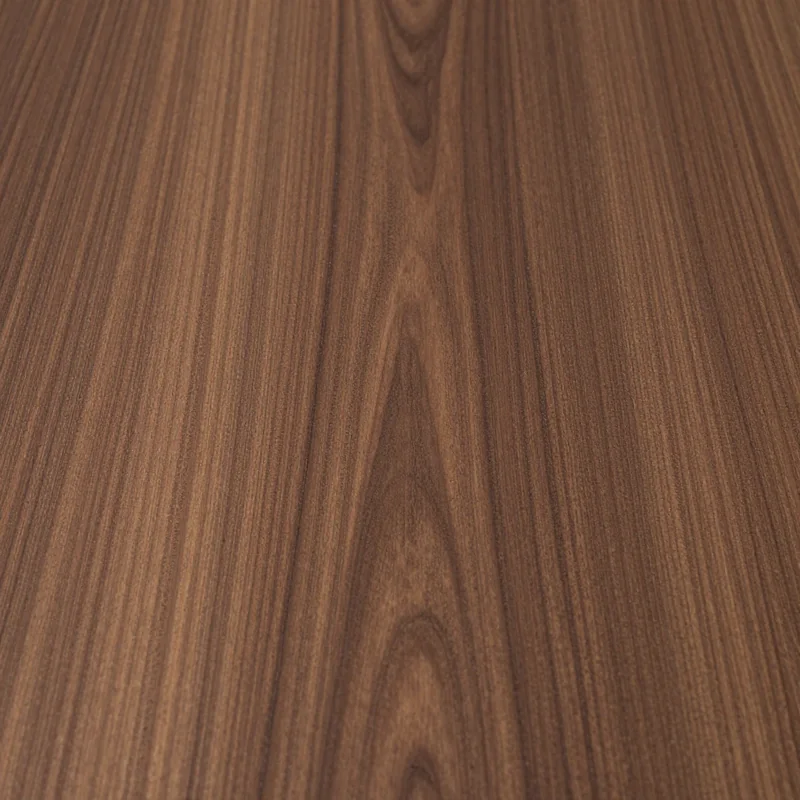
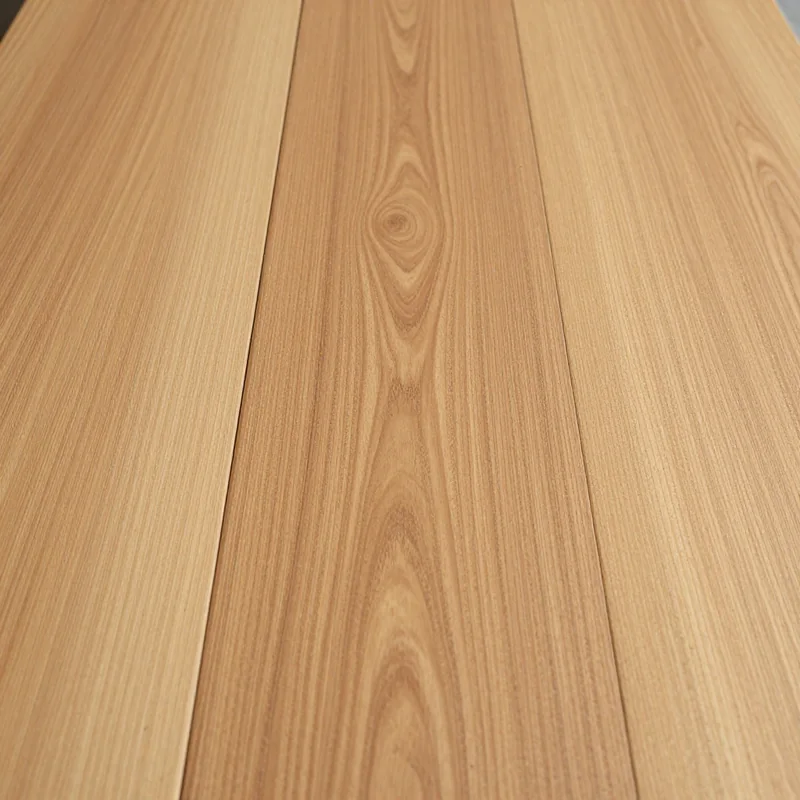
We build the carcass from Egger and Kronospan boards and make the fronts from foil-wrapped MDF, enamel or solid wood to suit your budget and the style of your home. The back panel is HDF: it holds the carcass geometry and closes the gap against the wall. We choose boards with an even density across the whole sheet, because this decides how a shelf will behave under the weight of books after one year and after five. For this kind of furniture the stability of the carcass board matters more than the colour of the fronts: a cheap board with uneven density sags under load much sooner. So we never economise on the carcass, even in basic options.
How the material affects the lead time
How the material affects the lead time| Material | Where we use it | Lead time |
|---|
| Egger / Kronospan laminated chipboard | carcass, open shelves | see the price list |
|---|
| Foil-wrapped MDF | fronts, doors | see the price list |
|---|
| Enamel | painted fronts | see the price list |
|---|
| Solid wood | premium fronts | see the price list |
|---|
Can the order be speeded up
A rush order is possible, but the lead time still depends on the material and the workshop's workload. The production time for each bookcase option is listed in the price list on this page. Only the stages without painting and drying can really be shortened: with enamel and solid wood, rushing gains almost nothing because the spray booth runs on a fixed technological cycle. Rush orders are therefore usually made from laminated chipboard and foil-wrapped MDF. If you know your installation date, mention it at the measurement and we will plan the stages so the painting is not rushed.
Uneven walls, alcoves and built-in bookcases
An uneven wall or an unusual alcove is a common reason for gaps around a ready-made bookcase. Here is how the measurement and the design solve this before any parts go for cutting.
How a bookcase fits an uneven wall without gaps
At the measurement we record the geometry of the wall and build compensation for its irregularities into the design, so the piece is fitted to the real surface rather than to an ideal plane. The 3D design, ready in 1–2 days, shows where the surface drifts out of true. A built-in model is assembled so that its edge follows the line of the base, and the HDF back panel is fitted with an allowance for trimming on site. If the wall is badly out of true, a built-in version with a trim strip over the joint is the honest solution.
Built into an alcove or freestanding
A built-in model fills the whole alcove and leaves no gaps, while a freestanding one is easier to move but needs a level surface and clearance at the sides. A built-in bookcase rests against the sides of the opening and the ceiling, so its depth is calculated from the actual dimensions rather than from a standard module. A floor-to-ceiling model gives the most shelving on the same floor area, but it must be fixed to the wall for stability: a tall freestanding unit should never be left unsecured. On the same footprint, the built-in option almost always holds more.
How to fix a tall bookcase so it cannot fall
- Wall fixing: we secure the carcass at several points up its height, not with a single pair of anchors.
- Checking the wall: at the measurement we see what the fixings will go into, whether concrete, brick or plasterboard.
- Stability under load: shelves are loaded evenly across the sections, with heavy volumes kept low.
- Installation by our crew: the unit is installed by our own crew, not an outside contractor.
- Sign-off after installation: we check the stability of the carcass and sign the acceptance certificate on site.
How a bookcase order works from enquiry to sign-off
After the first enquiry, it helps to know what happens next and at which stage you make decisions. We follow the bookcase from measurement and 3D design through to installation and signing the acceptance certificate.
What the free measurement and 3D design include
- Room geometry: the measurer records the length, height and depth of the alcove, checks that the walls are plumb and notes any deviation from flat.
- Storage plan: we discuss which books and albums will go on the shelves, and whether you need closed sections or top cabinets for rarely used volumes.
- 3D design: the designer builds a visualisation showing the shelf and front layout, ready in 1–2 days.
- Approval: you see how the custom bookcase will sit in your interior and make changes before anything is cut.
- Free of charge: the visit and design are not billed, and you decide after reviewing them.
How production and test assembly work
The approved design goes to the workshop, where the board is cut on a machine, the edges are banded and the parts are sent for painting, all on our own 600 m² site. The piece then goes through test assembly: our craftsmen join the carcass, hang the fronts, and check how the doors move and whether the edges line up. This catches any mismatch before the bookcase leaves for your home. We work with Egger and Kronospan boards and Blum, Hettich and Boyard hardware. Lead times for each option are listed in the price list on this page, and rush orders are possible.
Installation, payment and the acceptance certificate
- Delivery: free within Almaty and up to 30 km for larger orders, with a surcharge beyond that.
- Installation: carried out by our own crew, not by outside fitters.
- Inspection: we check the stability of the carcass, the movement of the doors and that the shelves stay level under load.
- Acceptance certificate: signed once installation is complete and the piece is standing in place.
- Payment: a 50 % deposit, the balance after sign-off, with bank transfer available.
Warranty, care and trust in the manufacturer
Buyers check the warranty terms and care instructions before deciding. Here is what goes into the contract, how to extend the life of your bookcase, and why a single workshop is responsible for the whole result.
What warranty covers the product and the hardware
We give a 24-month contract warranty on the product, and Blum hardware is covered by a 25-year manufacturer warranty. The contract covers the carcass, fronts, assembly and installation, which is everything done in our 600 m² workshop: cutting the Egger and Kronospan board, edging, painting and test assembly before dispatch. Hettich and Boyard hinges, runners and soft-close fittings are listed separately and covered by their manufacturers' terms. Keep your contract with the hardware list: the part numbers in it speed up any claim on a mechanism.
How to care for a laminated chipboard or enamel bookcase
- Cleaning: use a soft cloth without abrasives or alcohol, which strip the protective layer.
- Moisture: wipe up spills straight away, especially near the edging, as standing water makes the board swell.
- Load: spread books along the whole length of the shelf rather than stacking them in one corner.
- Hardware: check the hinges for play every six months and tighten the fixings.
- Sunlight: protect enamel and foil fronts near a window from direct sun, as they fade unevenly.
Why a direct manufacturer is more reliable than a reseller
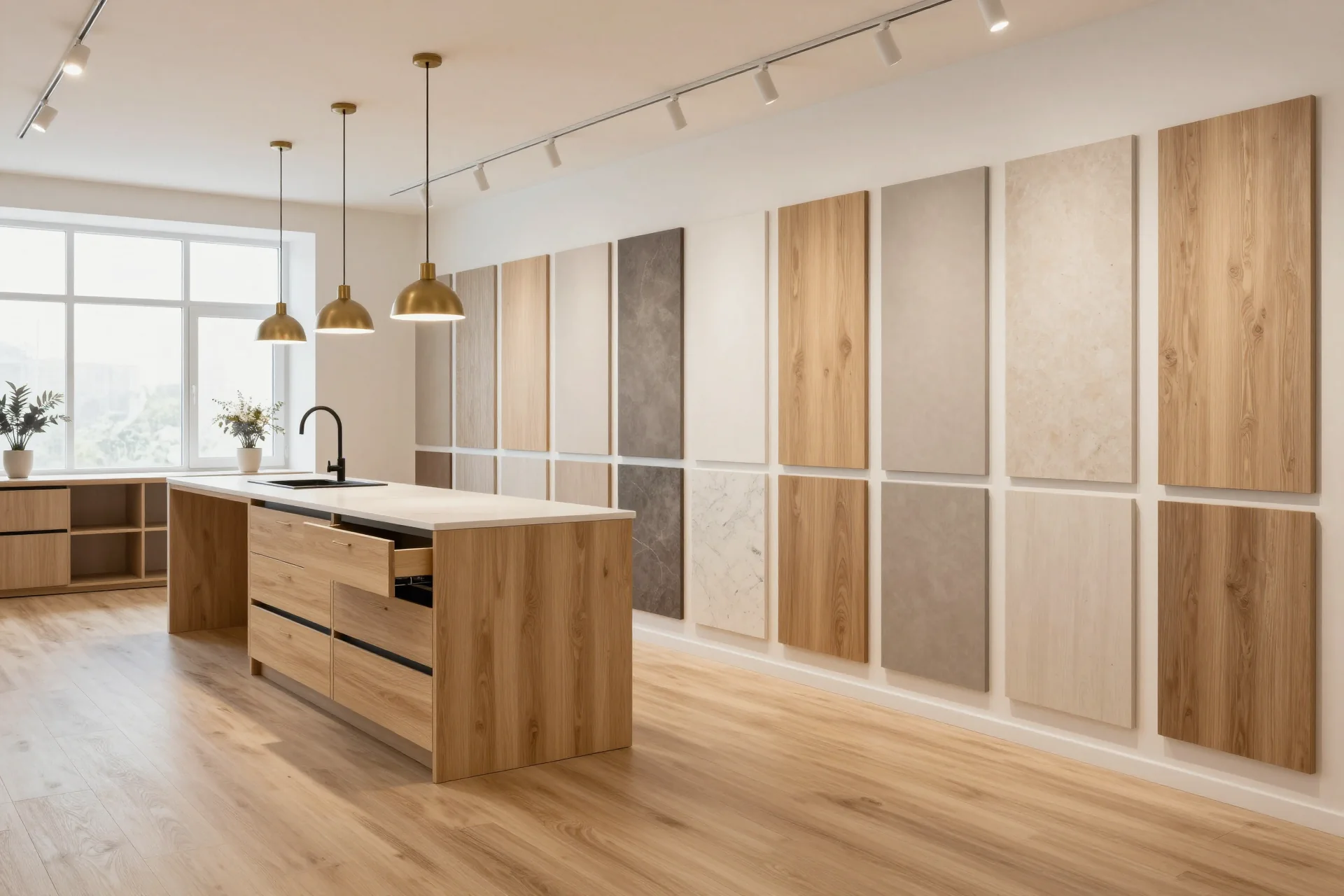
We are not a reseller and do not sell on ready-made furniture: measurement, design, production and installation all go through one workshop with one point of responsibility. Over 13 years we have completed more than 3 500 projects, over 800 of them wardrobes and cabinets. Carcasses, shelves and fronts are cut, edged and painted on our own site, then put through test assembly before dispatch. With a reseller, a complaint about a gap or a sagging shelf gets bounced between seller and workshop; with us, the people who made the parts answer for them. In our showroom you can see how the samples are assembled and which edging is used on the shelves.
The bottom line on bookcases
In short, these are the things that decide how an order turns out: shelf load calculation, choice of material, dealing with the wall geometry and the procedure for accepting the finished piece.
What to remember before ordering
- Shelves sized for the weight of books: thickness and support spacing are calculated from your actual library, not by eye, otherwise a row of heavy editions will bend the shelf.
- Material and lead time: laminated chipboard and foil-wrapped MDF are quicker, while enamel and solid wood need painting and drying, so the lead time for each option is in the price list on this page.
- Uneven walls: the measurement and 3D design compensate for the room's geometry, and a built-in version for an alcove removes gaps at the sides.
- Tall units: wall fixing is planned at the design stage, not sorted out after installation.
- The process: measurement, design, test assembly, installation and the acceptance certificate all follow the contract, and every stage can be checked.