
Temirzhan Nurpeisov
Furniture assembly carpenter11 years
★ 4.81 · 47 ratings
For business · Kindergartens
We make height-group, adjustable and stackable chairs by GOST groups from E1 laminated chipboard, birch plywood and solid wood, with rounded corners and colour coding. Measurement and design are free, the price is fixed in the contract, warranty 24 months.
Measurement and 3D design are free and carry no obligation · price fixed in the contract · Kaspi Instalments up to 24 months
01Types
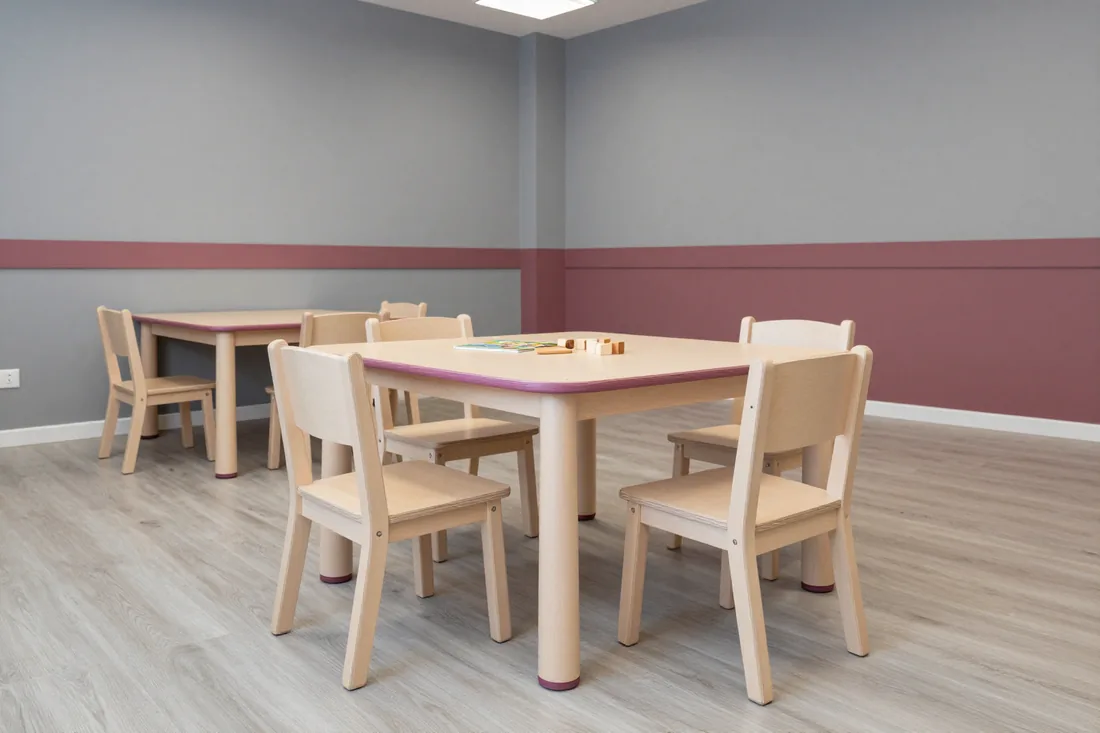 01
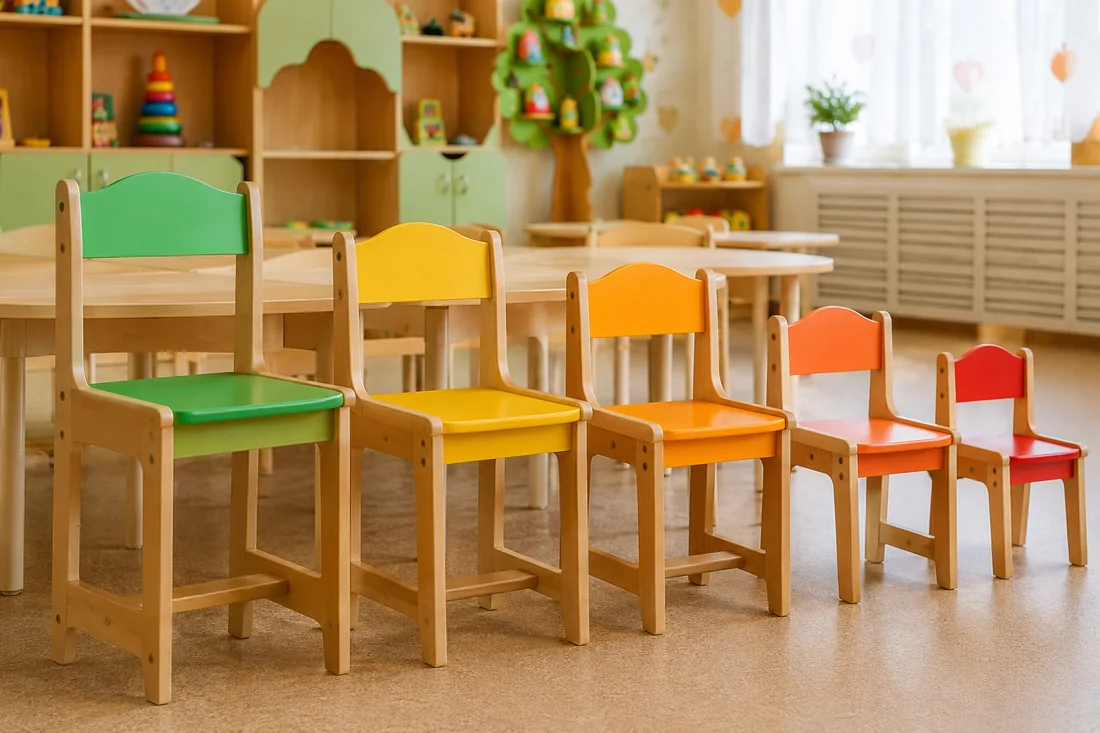
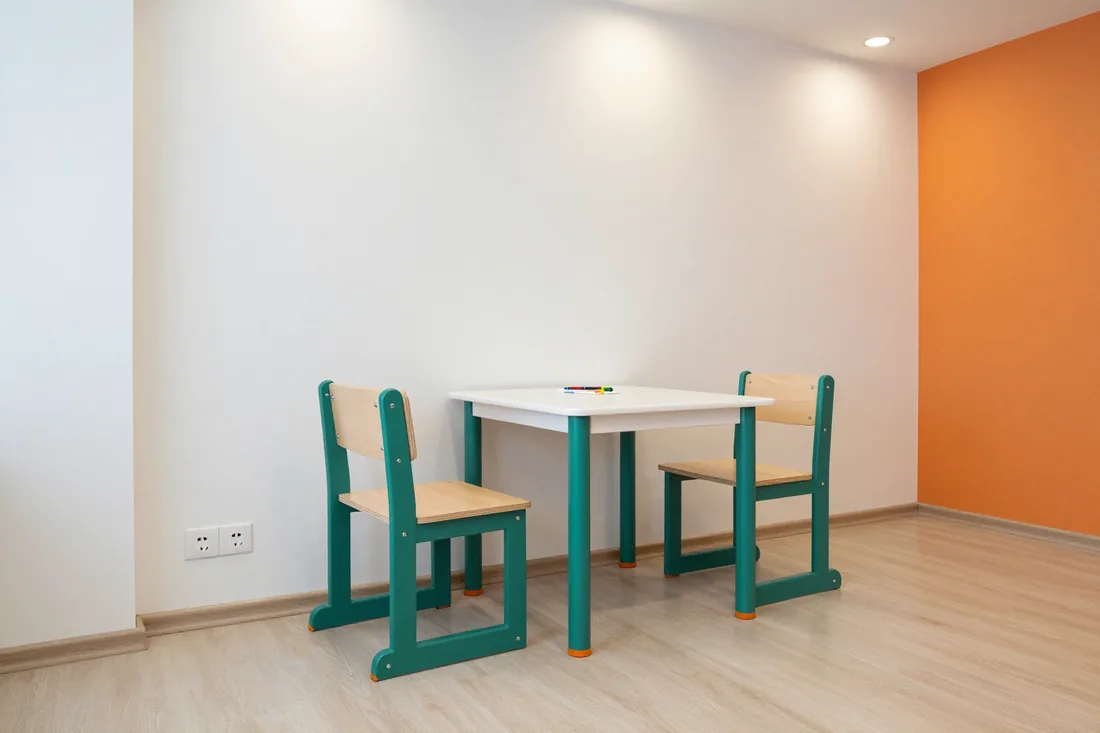
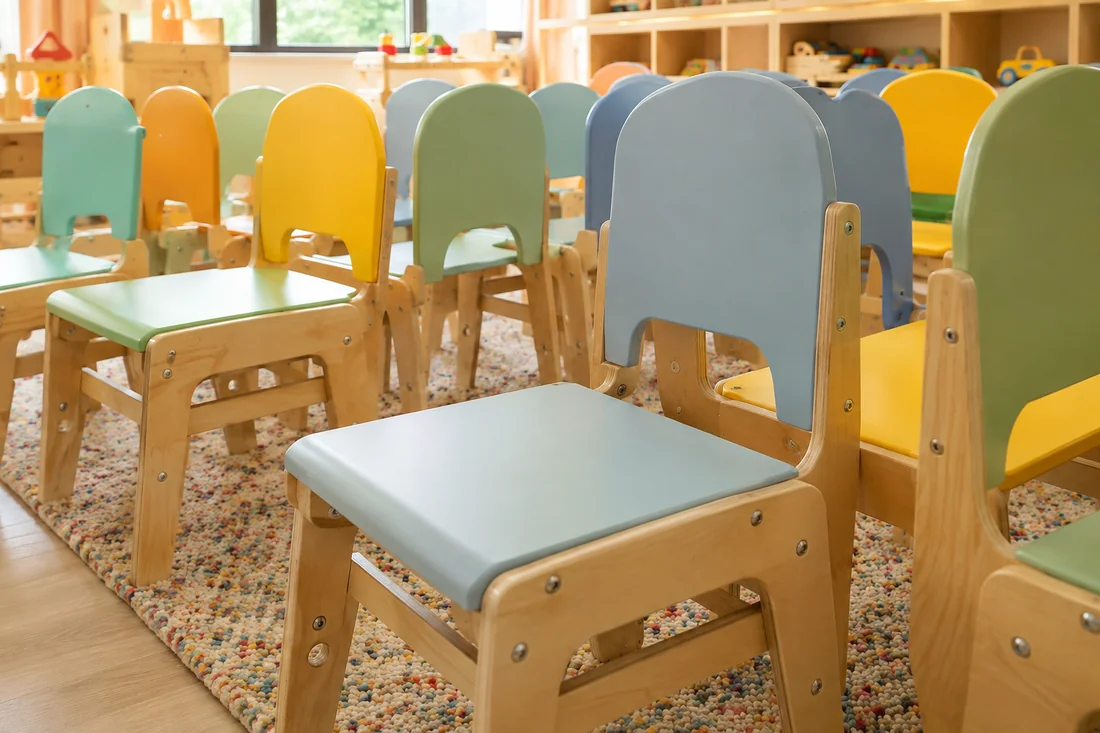
Closed back, rounded corners and PVC edge; we make it in several height groups in the same finish as the group's tables.
from 7 400 ₸
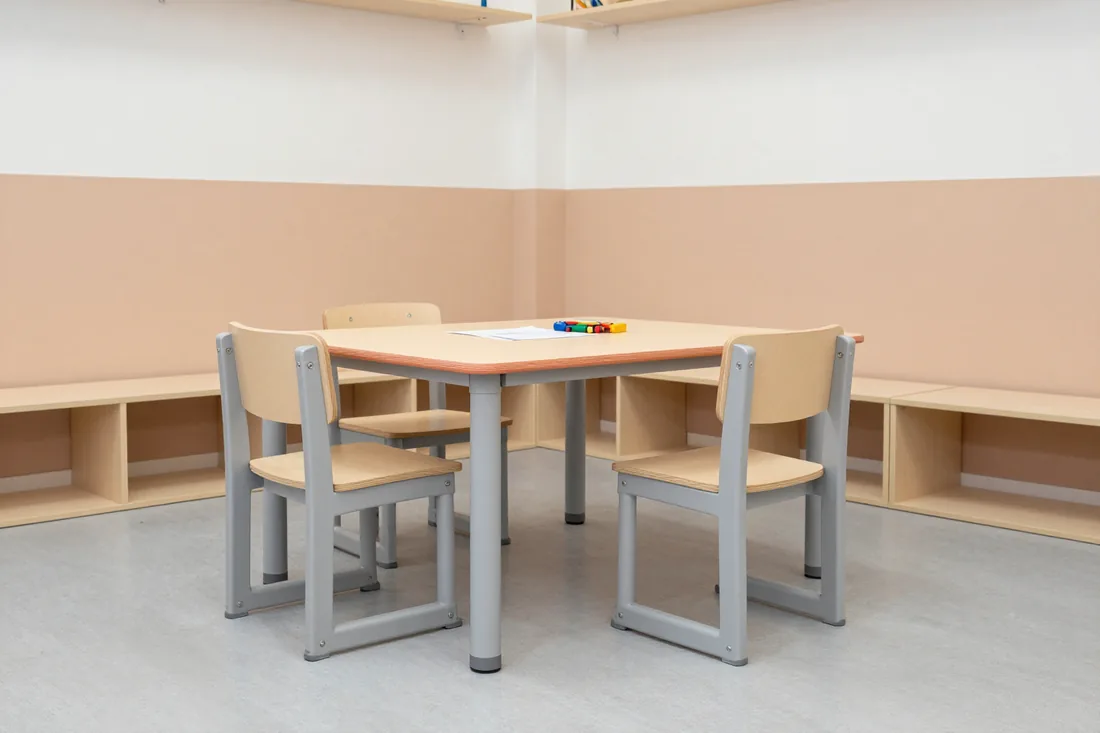 02
The seat on a metal frame can be moved to the next height group — for groups where the children change every year.
from 12 900 ₸
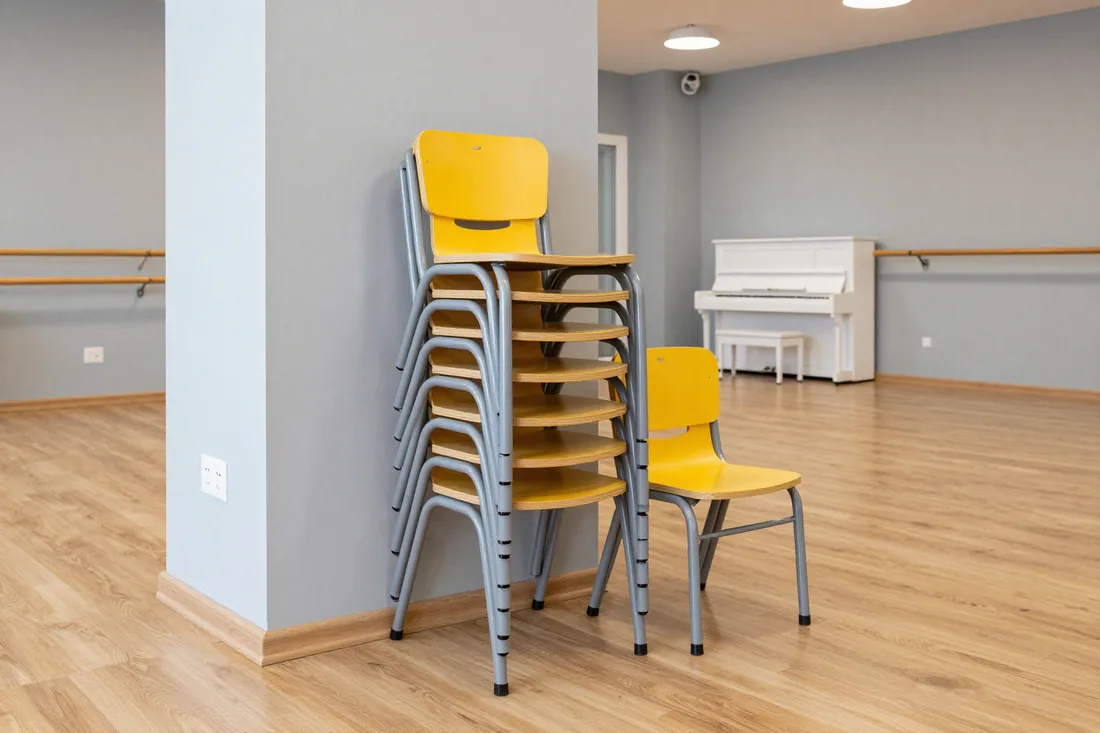 03
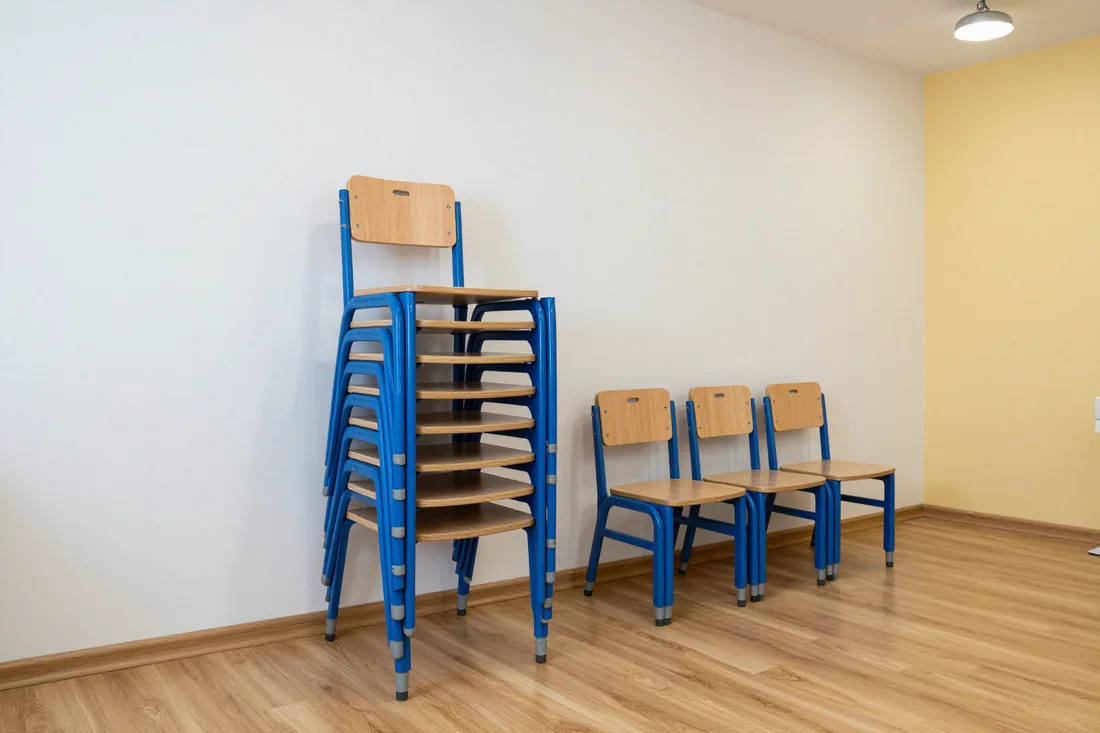
A lightweight chair on a metal frame stacks against the wall — the hall frees up for dancing, exercise and morning performances.
from 8 900 ₸
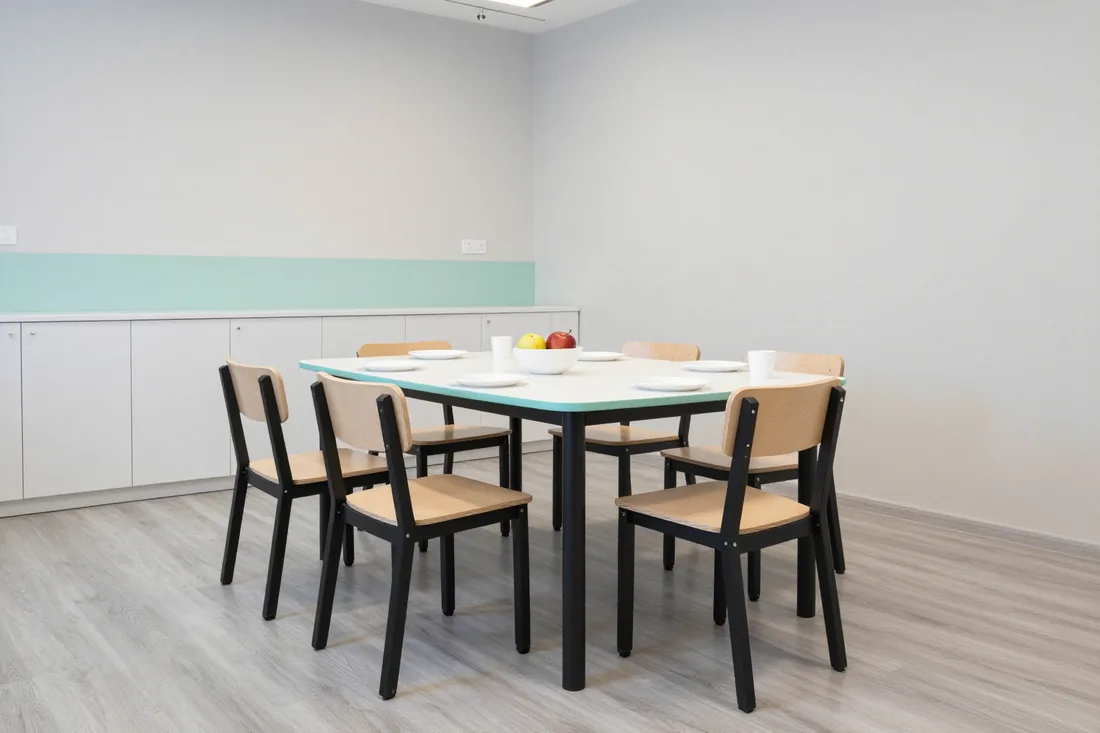 04
A plywood seat on a powder-coated steel frame withstands dragging and washing in the dining area.
from 9 400 ₸
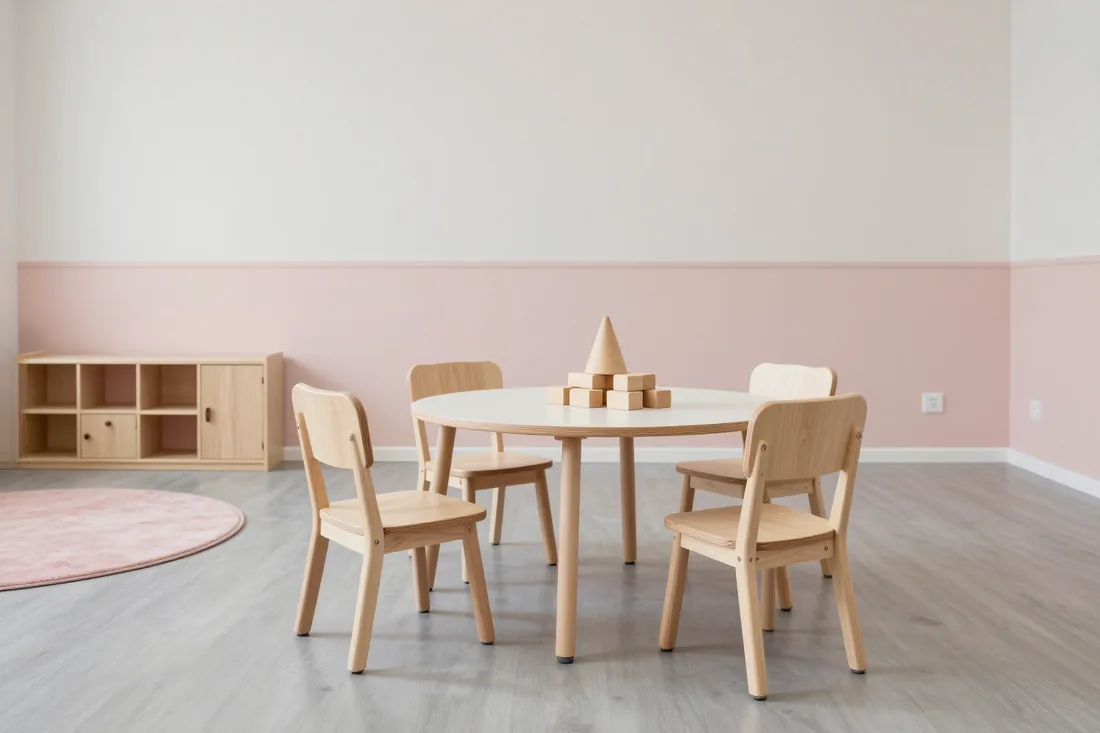 05
Birch plywood under water-based lacquer: a child can carry the chair themselves, and the curved back supports the lower back.
from 7 900 ₸
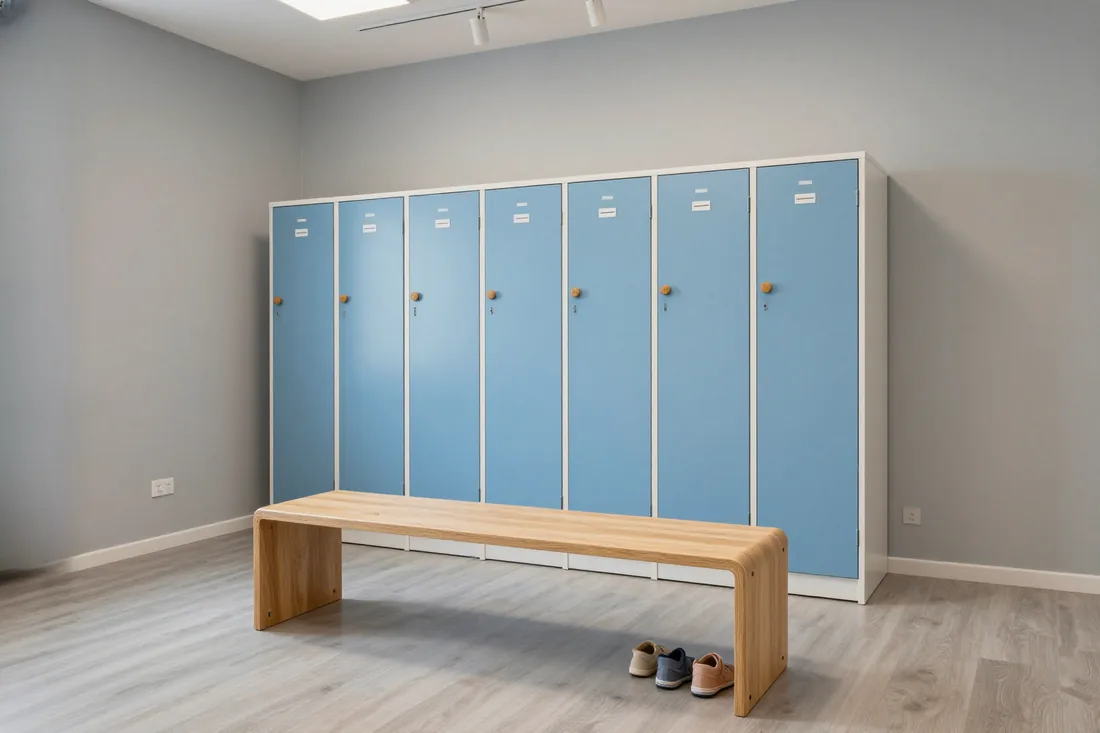 06
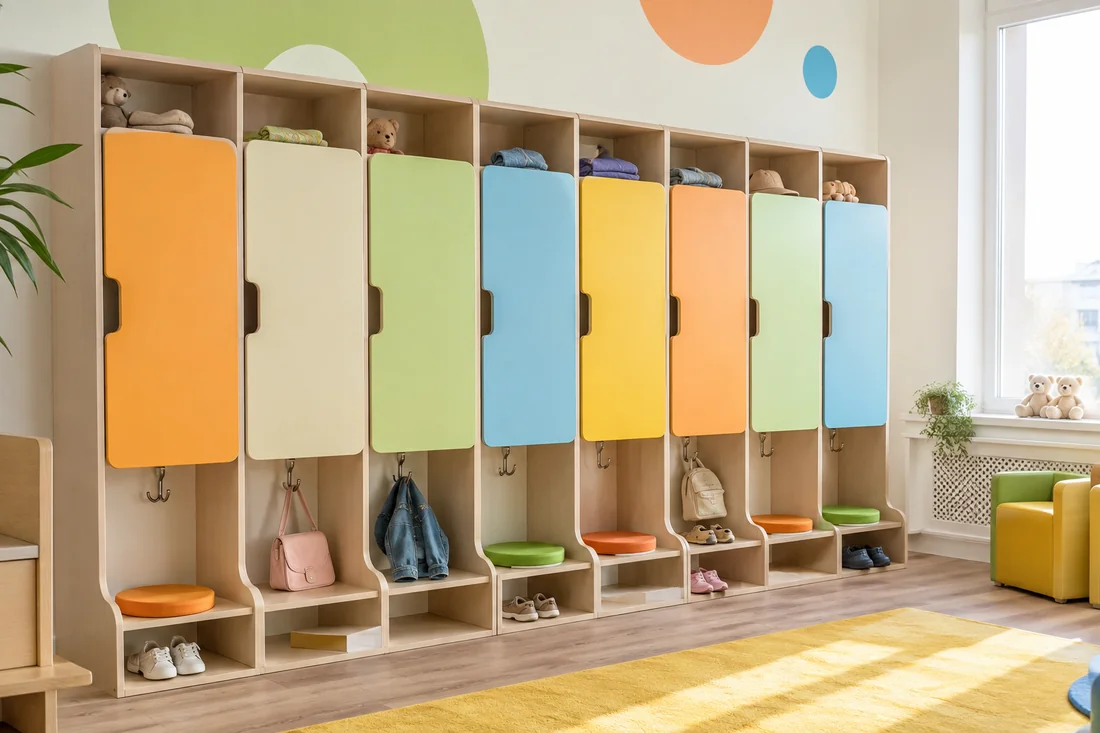
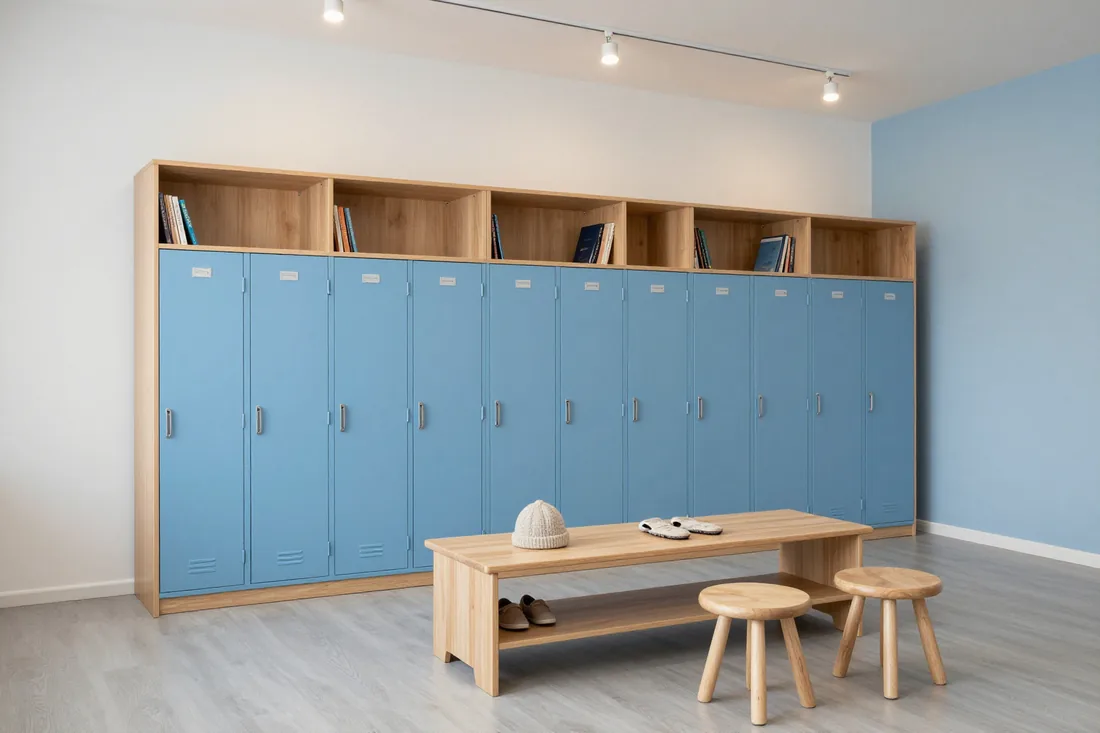
A low bench made of 25 mm board with rounded ends — children change their shoes sitting in front of their own lockers.
from 13 900 ₸
02Projects
Facility, quantity, materials and lead time — per project.
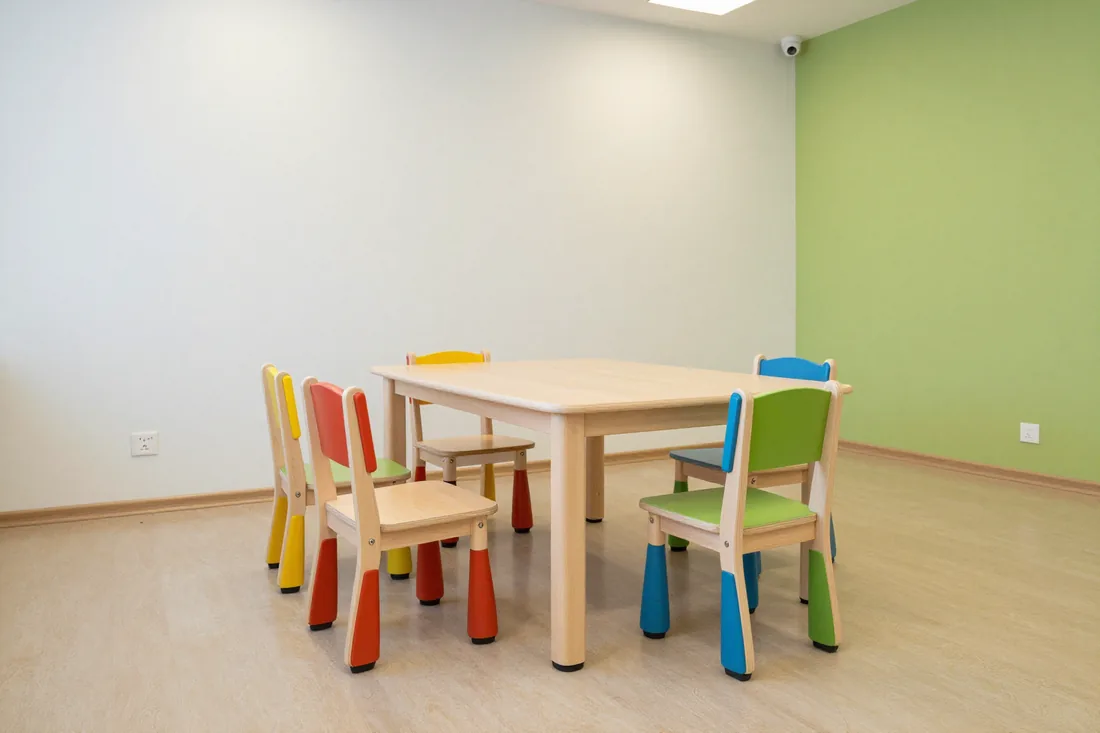 Kindergarten
Balbobek Kindergarten, Bostandyk district
Equipped the nursery group with low chairs of groups 0 and 1: seats 180 and 220 mm for the little ones' height. Marked the groups by colour, rounded all corners — children sit down and get up on their own.
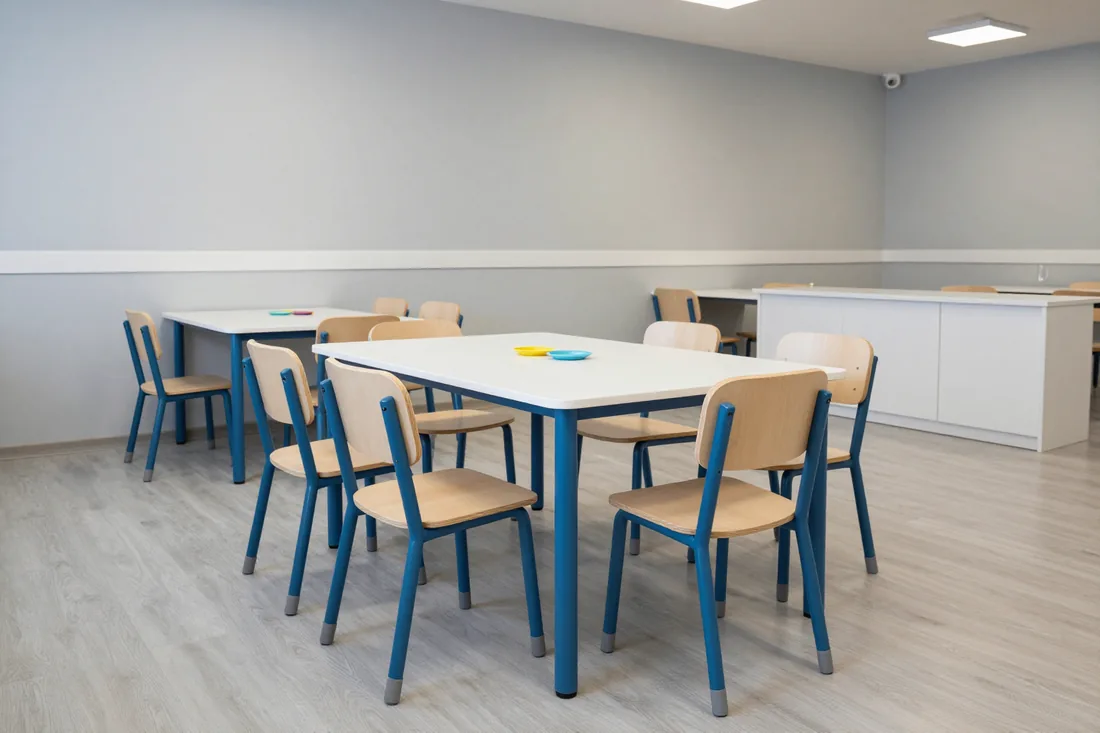 Kindergarten
Aigolek Kindergarten, Almaly district
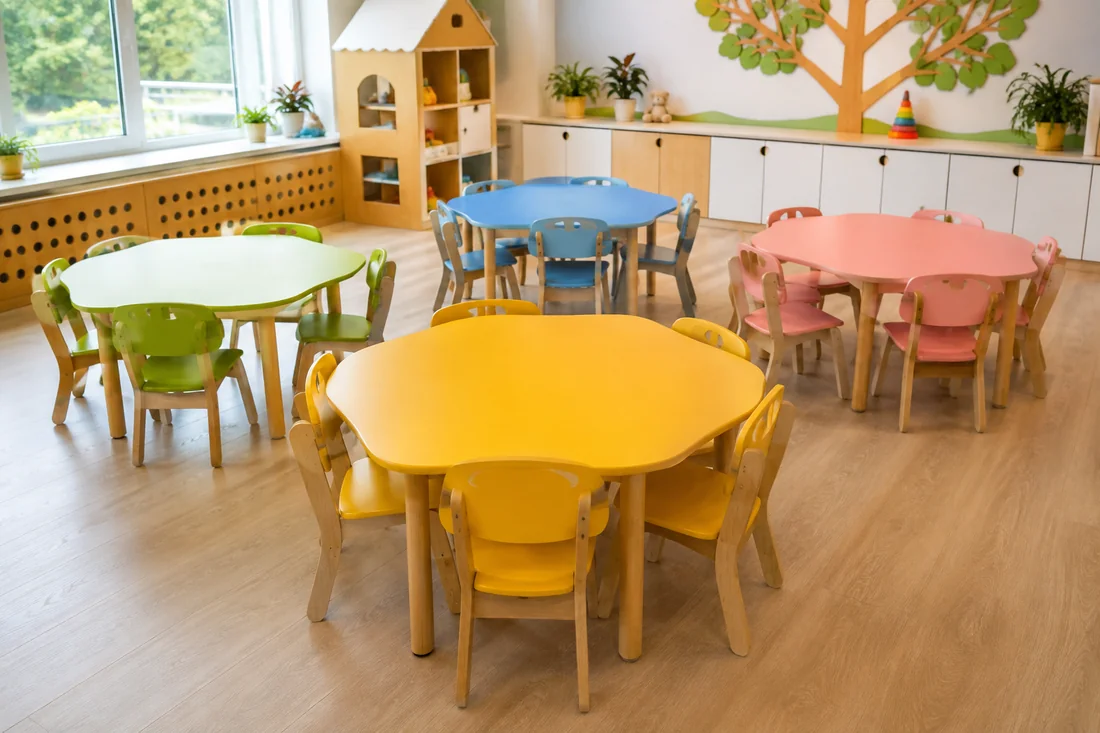
A batch of 60 chairs on a metal frame for the dining room tables. Uniform height by height group, soft pads on the legs are quiet and do not scratch the floor.
 Kindergarten
Umnichka Development Centre, Medeu district
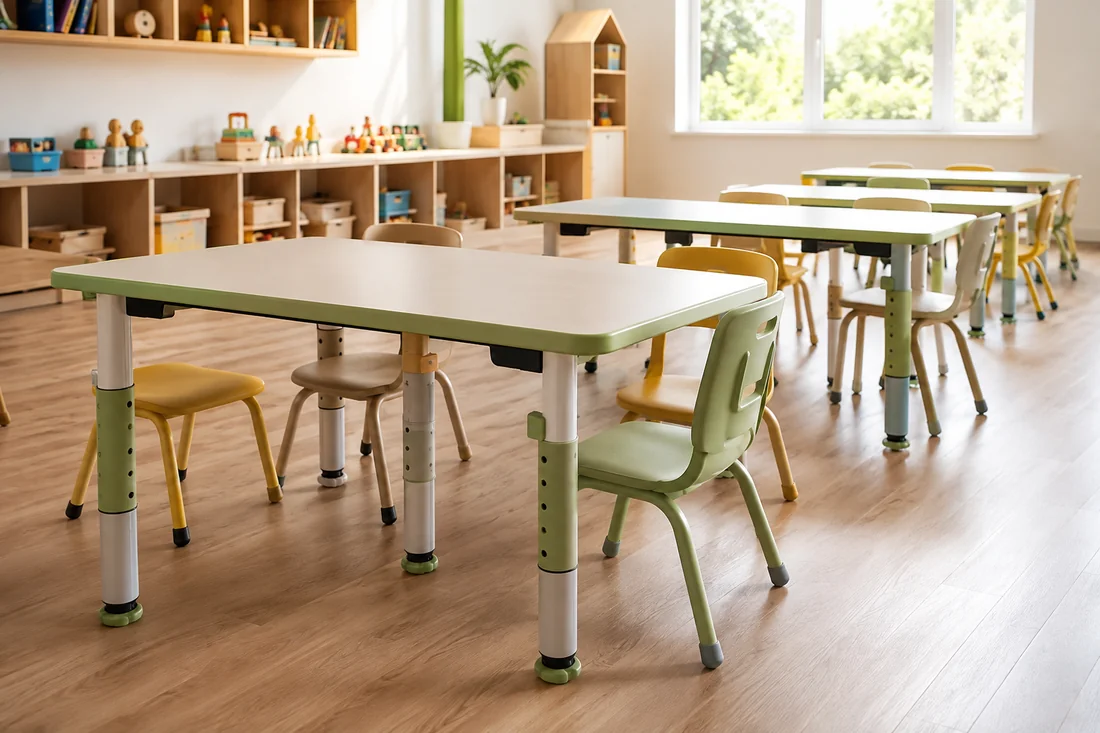
Installed Rastishka adjustable chairs for a mixed-age group: seat height adjusts from 220 to 300 mm. One set serves for several years as the children grow.
 Kindergarten
Berezka Kindergarten, Auezov district
40 stackable chairs for the music hall: they stack 6 high and free up the floor for classes and morning performances. The frame with soft pads protects the parquet.
 Kindergarten
Private kindergarten, Esentai City, Medeu district
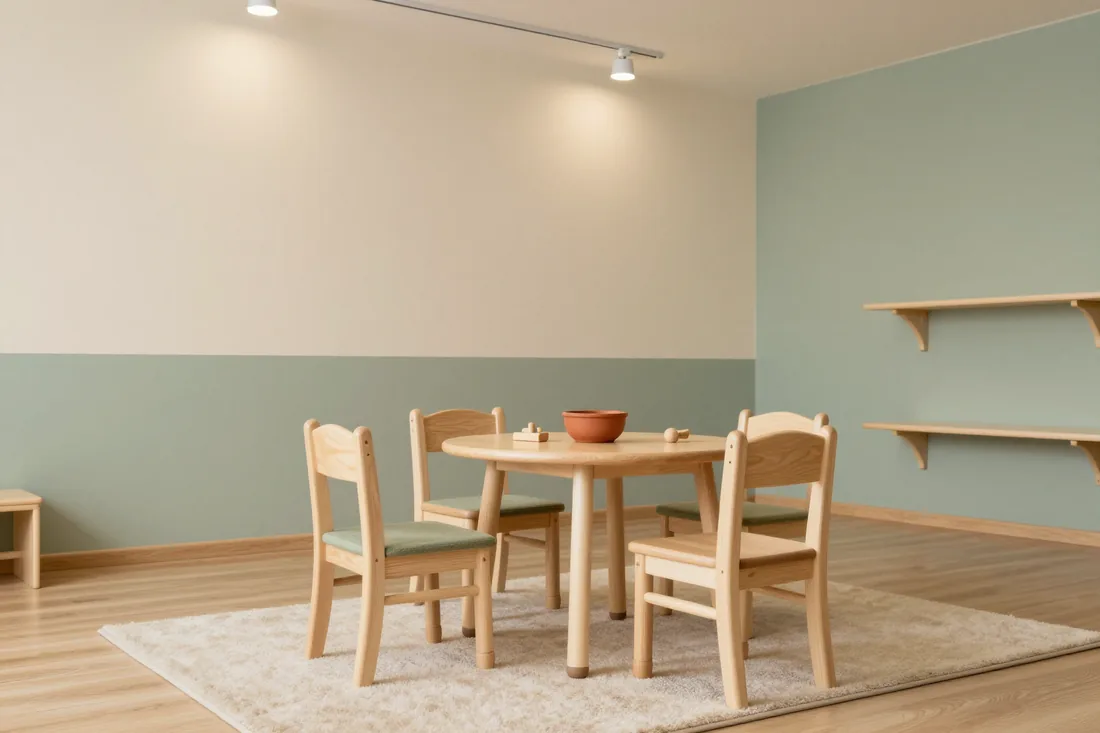
18 solid birch chairs under oil-wax for the eco group of a private kindergarten. A breathable odourless finish, a warm natural look, a full set of certificates for the licence.
 Kindergarten
Kunshuak Kindergarten, Nauryzbay district
Equipped the changing rooms with eight low benches for the lockers and stools for the play corners. Sturdy one-piece constructions with rounded corners for height groups 1–2.
03How we work with kindergartens
04Prices
The "from" price is for one chair in the basic configuration and height group. The total for a group or a whole kindergarten is fixed in the contract after a free measurement and matching to the tables.
05For legal entities and public-sector clients
We work with private and public kindergartens under a contract and by bank transfer. The items, height groups, decor and installation date are set in the contract before production starts.
Request a contract and invoice06Principles
01 / 06
07Production
Six steps in our 600 m² workshop. You can see each of them with your own eyes: the showroom and production are under one roof.
Egger · Kronospan · E1
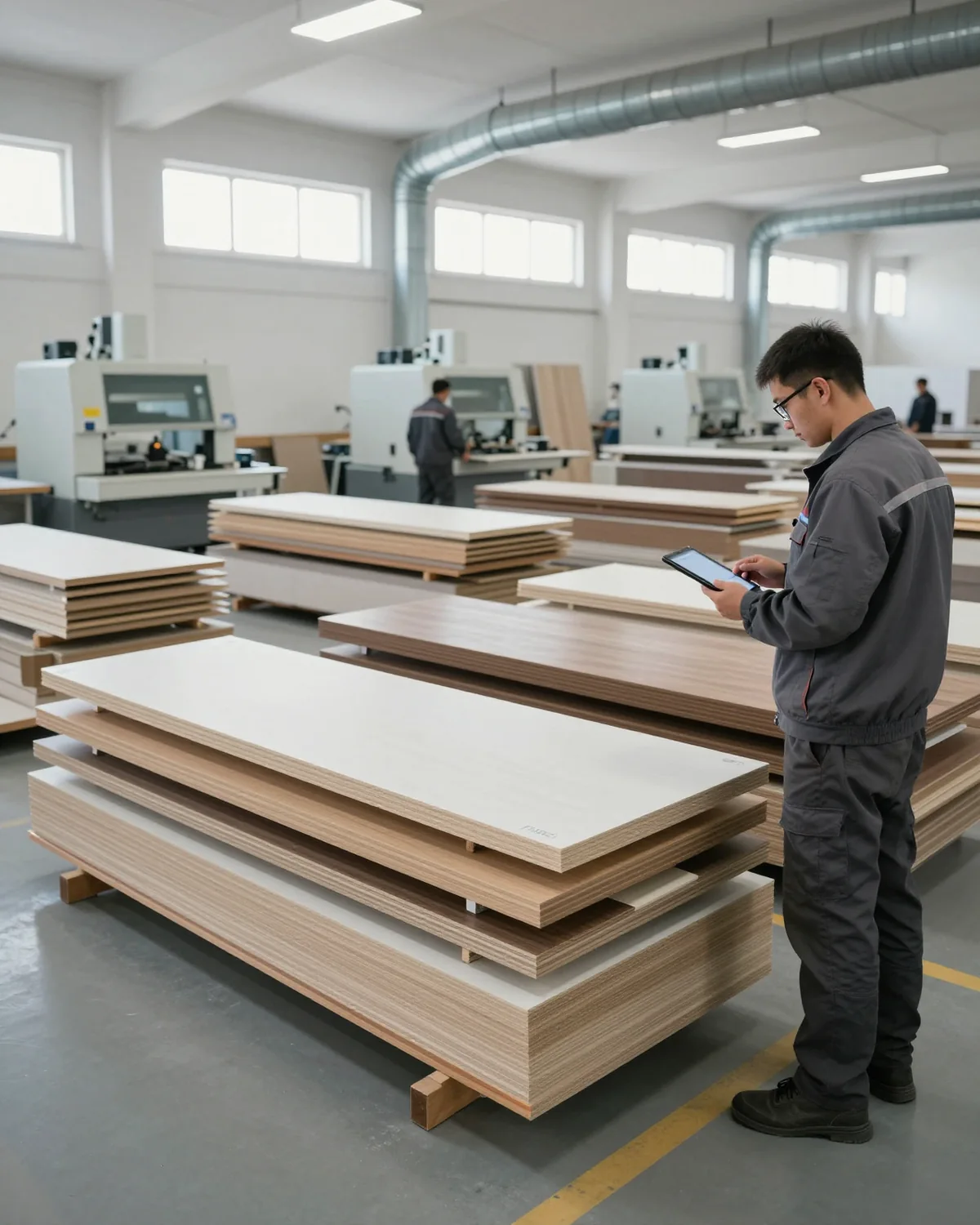
Egger and Kronospan boards of emission class E1 arrive at the workshop warehouse. There are 40+ laminated chipboard decors, 16–18 mm thick. Class E1 — for kindergarten classrooms and bedrooms.
Laser measuring to 1 mm
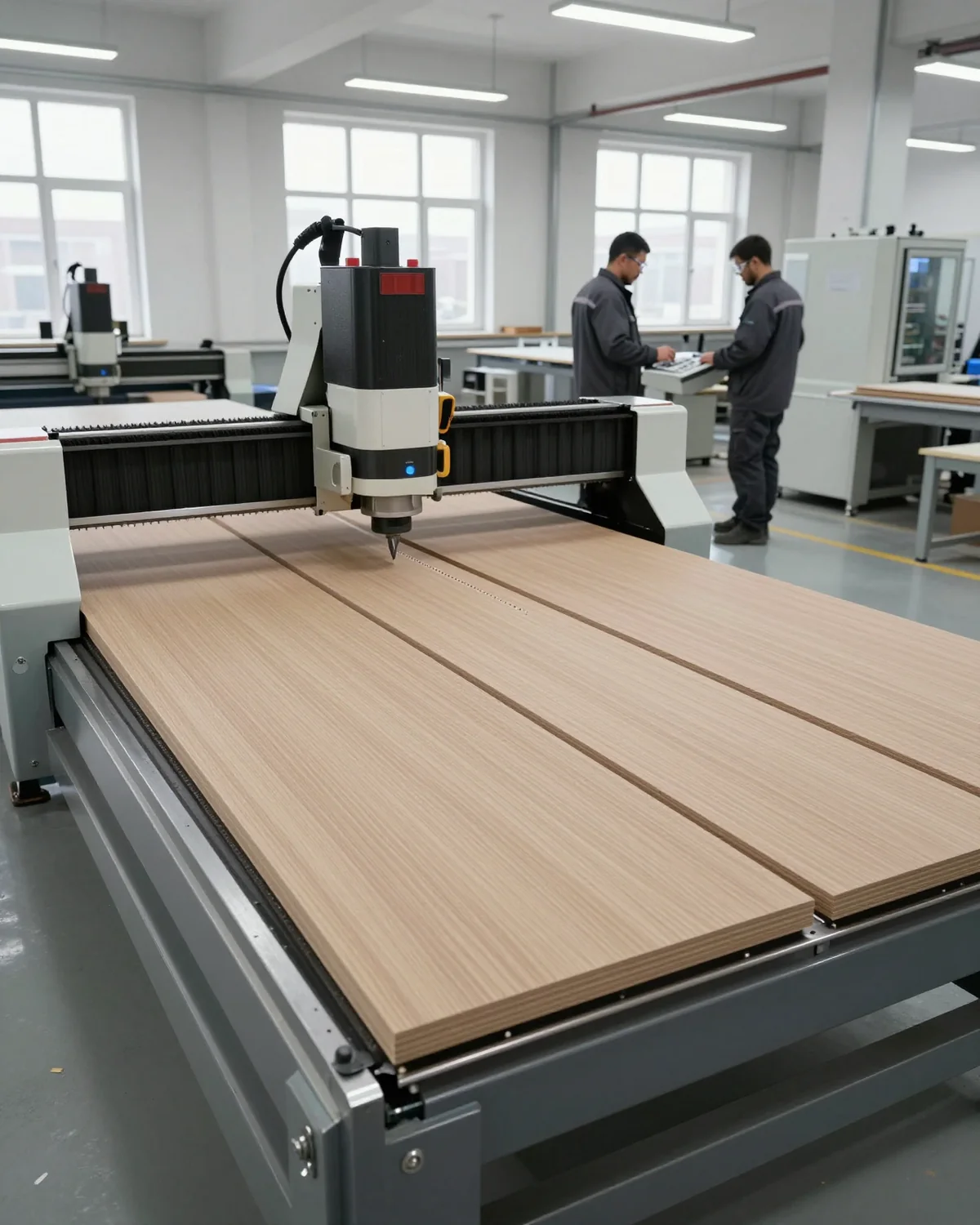
A design engineer prepares the drawings, and the machine cuts the board to them. Dimensions come from a laser measurement accurate to 1 mm.
Blum · Hettich · Boyard
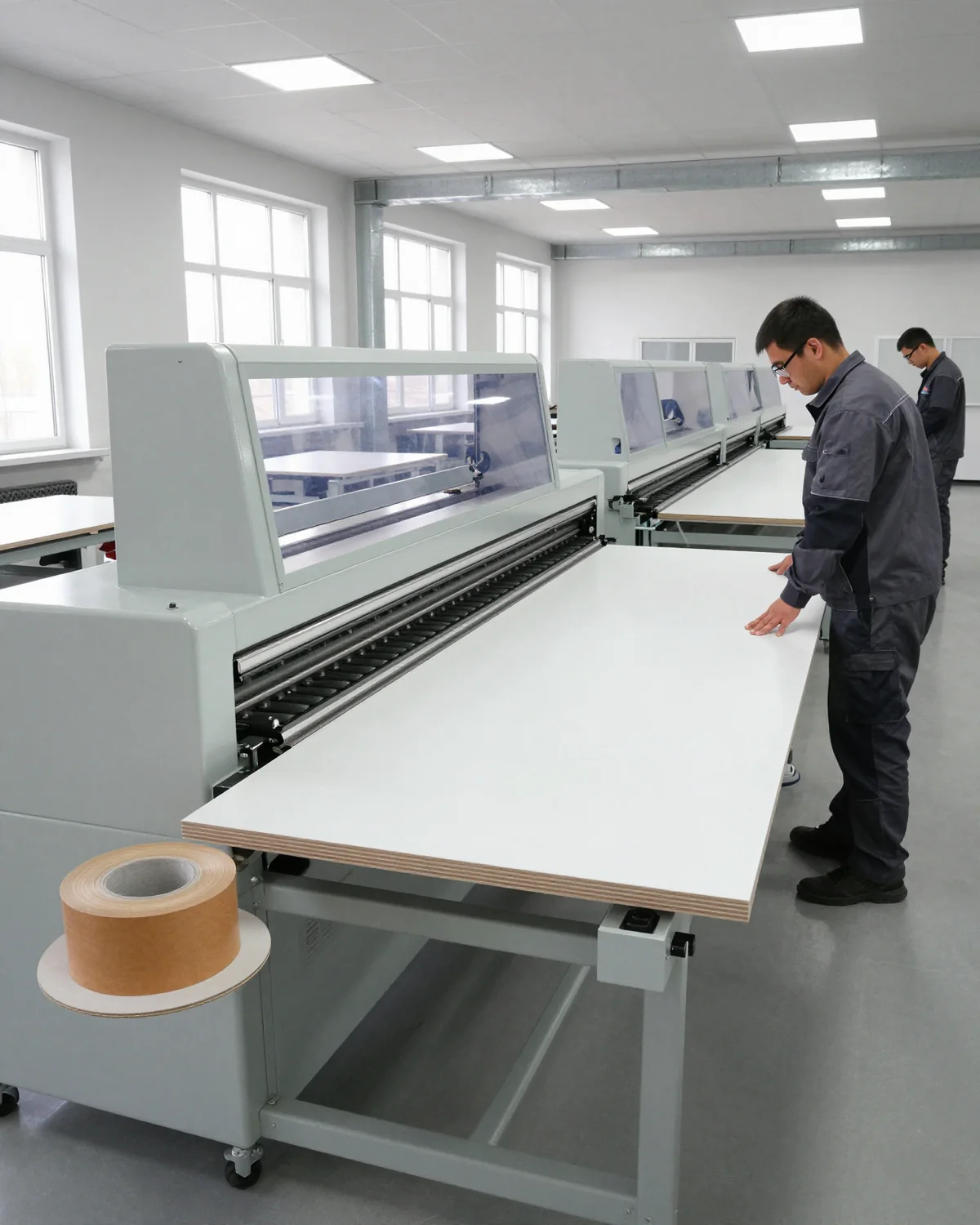
The edge-banding machine seals the edges, then we drill holes for Blum hinges and Hettich runners.
Any RAL colour
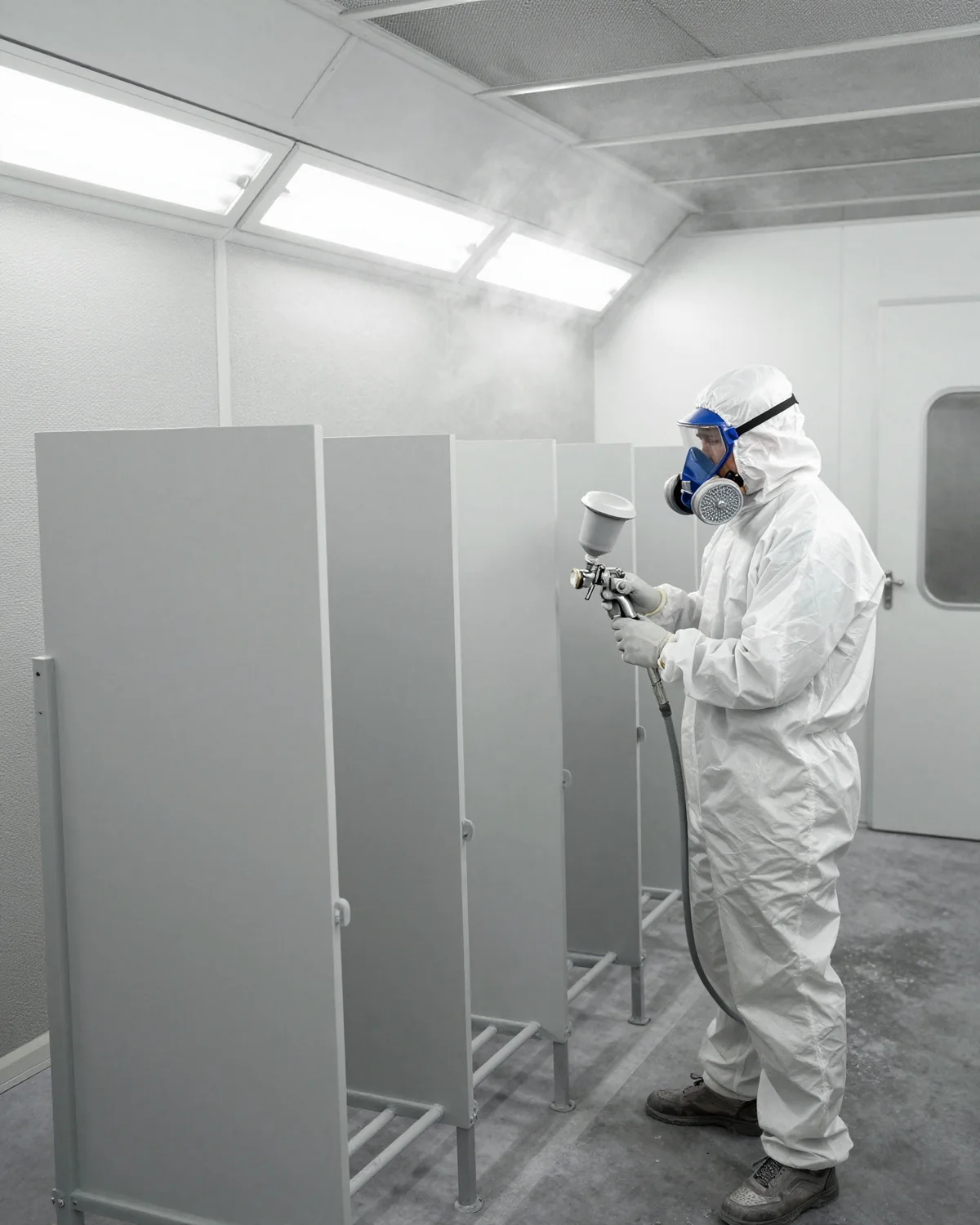
A finishing specialist paints the fronts according to RAL — matte and gloss. Before a batch, we make a sample of each height group and test its stability when rocking forward, backward and sideways.
Pre-assembly in the workshop
We assemble the modules in the workshop before dispatch, checking front gaps and drawer travel. The quality control department signs the item off for shipping.
Installation to suit the kindergarten schedule
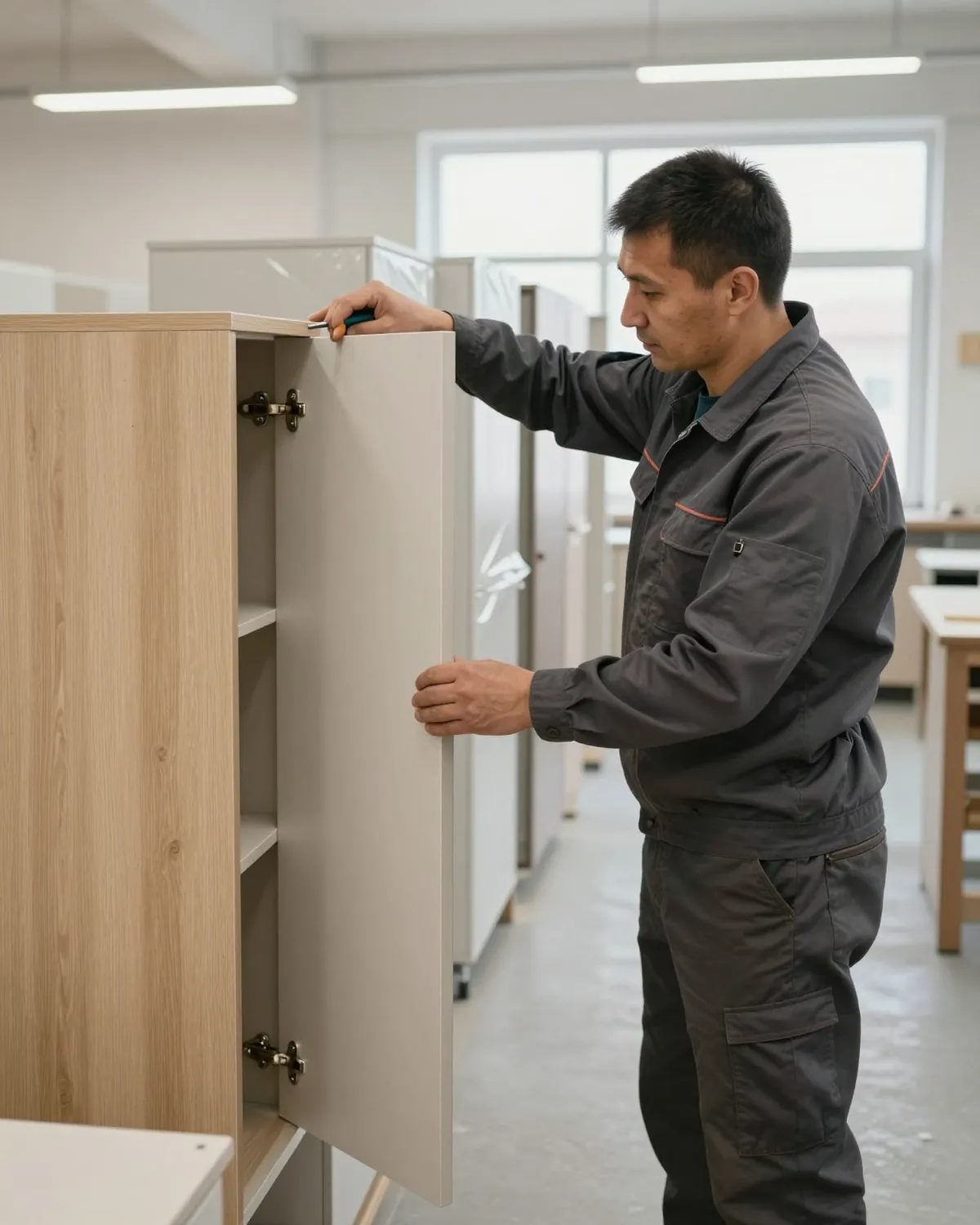
We deliver, bring in, assemble in 1 day, adjust the furniture and clean up after ourselves. The 24-month warranty starts from signing the acceptance certificate.
08Team
MEBLIX workshop craftsmen who make and assemble furniture to order.
01 / 07Furniture assembly carpenter11 years
★ 4.81 · 47 ratings

Cabinet furniture repair craftsman20 years
★ 4.99 · 73 ratings
Furniture and kitchen unit assembler23 years
★ 4.97 · 300 ratings

Made-to-order furniture maker7 years
★ 4.26 · 32 ratings

Furniture maker5 years
★ 4.23 · 30 ratings

Joiner and carpenter20 years
★ 5.0 · 113 ratings

Furniture front and hardware fitter17 years
★ 4.61 · 92 ratings
09FAQ
Didn’t find the answer? Message us — a manager replies, not a bot.
Ask on WhatsAppYou need to measure the children's height: we select the seat height by height group per GOST 19301, not by age. One group often needs chairs of two adjacent sizes.
Yes, during the measurement we measure the height of your tables and select chairs of the same height group. We agree on the decor and marking color so the set looks uniform.
Stackable on a metal frame: they are stacked against the wall, and the room is quickly cleared. The height is usually chosen for the average height group, or two batches are made.
Yes, plywood and stackable models are light, and an older-group child can lift and move them alone. The heaviest are birch solid wood chairs, which are more often placed in private kindergartens.
An adjustable chair can be reconfigured for the adjacent height group, so it serves several sets of children. If the group composition is stable, a classic height-group chair is simpler and more practical.
Better not: in the dining area the chair is washed after every meal. We place soft seats in vandal-resistant fabric in the speech therapist's office and the method room, and smooth ones in the dining room.
Each chair gets a colored label for its height group, the same as on the table of the same size. The teacher seats the children quickly, and each child finds their own chair.
Yes, the lead time for each model is in the price list on this page, and for a specific opening date an urgent order is possible. We agree on delivery and assembly to suit the kindergarten schedule.
Yes, we make repeat orders to the same specification and in the same decor. Keep the model name, decor and marking color — so the new chairs will not differ from the old ones.
For a group there is the children's chair "Nursery" and the height-group "Malysh", and their prices are in the price list above on this page. The total for a batch depends on the model and quantity. We fix it in the contract after the measurement.
10Reviews
4,9
average rating
on Google and Zoon
Everyone can see a review on the platform: this is how other people check whom to trust with an order. If something went wrong, write to us and we will reply within 1–2 business days.
Message us on WhatsApp11Article
We make kindergarten chairs in our own workshop in Almaty according to GOST 19301 height groups: seat height and depth are selected to match the height of the children in each group. The frame is E1-class laminated chipboard, birch plywood, solid birch or a steel frame, corners are rounded, and we attach certificates for SES acceptance to each batch.
Seat height determines how a child holds their back at the table: with feet supported or with legs dangling. A sizing mistake becomes obvious after the very first class.
We set seat height by GOST 19301 height group: for each height group the standard defines seat height, depth and width, as well as the position of the backrest. Children's chairs of one size for an entire room almost never work — in the younger group the difference in height is noticeable, and some little ones sit without their feet reaching the floor. That is why before ordering, teachers measure heights, and we split the batch across two or three height groups within one room. We choose seat depth so that the child leans against the backrest and the front edge does not press under the knees. We take seat width with room across the hips so that in winter a child in warm clothes can sit down without feeling cramped. If a child sits right on the edge and swings their legs, this is more often a sign of an overly high seat than of a restless character: it is worth moving them one size down and seeing whether their posture changes.
| Group | Who it suits | What matters in the chair |
|---|---|---|
| Nursery | little ones who have just started sitting at the table | low seat, wide base |
| Junior | first year in kindergarten | backrest with lower-back support |
| Middle | modelling, drawing, building blocks | seat depth matched to the thigh |
| Senior | long sessions at the table | stability when rocking |
| Preparatory | getting ready for school | posture as at a school desk |
| Mixed-age | children from two neighbouring groups | two heights in one design |
One model does not cover every task. Classes, lunch, clubs and the nursery group call for different chairs — by weight, backrest shape and adjustment method.
The core model in the range is a classic height-graded chair made of E1 laminated chipboard or birch plywood with a closed back and rounded corners. We make it in several height groups and in the same finish as the tables, so the room looks like one matching set. This chair takes the main load: lessons, lunch, board games, and it is moved across the floor dozens of times a day. If you want to understand what drives the price, kids' chairs for kindergartens differ first of all in the seat and frame material, not in the shape of the back. Prices for each option are in the price list above on this page, and we calculate a quote for a whole group after the measurement. The classic model is easy to reorder later in the same finish when new children join the group. A closed back without cut-outs is easier to wash and does not catch clothing, so for group rooms we usually recommend exactly that one.
We make the adjustable chair on a metal frame for groups where the children change every year: the seat is moved to the next height group without buying a new batch. The growing chameleon chair made of solid birch solves the same task without metal and suits private kindergartens with an eco interior. Such models are more complex than the classic one, but a single chair serves several sets of children and does not require a separate set for each height group. After adjustment, the fasteners are tightened and the chair is checked for wobble before a child sits on it. In a group where the children are the same age and the composition is stable, adjustment is not needed: the classic height-graded chair is easier to maintain. Adjustable models are most worthwhile in clubs and studios where different groups come on a schedule.
Children rock on the chair, kneel on the seat and pull themselves up to the table with a jerk. The shape of the frame and back determines whether the chair withstands this without tipping over.
We build stability into the frame geometry: the legs are slightly splayed beyond the seat outline, and the center of gravity stays low. Kids' chairs for kindergartens tip over backwards most often when a child rocks on the rear legs, so we move the rear supports beyond the back line. We check the stability of each model at a control assembly in the workshop before launching a batch. For the nursery group we make chairs with a wider base — the little one sits down unsteadily and leans on the seat with their whole weight from the side. The rounded corners of the seat and back leave no sharp edges at the face level of the neighbor at the table. On acceptance, it is enough to rock the chair by hand forward, backward and sideways: it should not spring, creak or rise onto two legs.
We make the backrest with lumbar support: the child rests the lower part of their back against it and does not slide toward the edge of the seat. A backrest that is too high and straight makes sitting tense, while one that is too low does not support the back at all, so we tie its height to the chair's height group. We round the front edge of the seat so it does not press under the knees during a long lesson. Shaped backrests — a house, a cloud, a hedgehog's ears — make the chair recognizable, and the child finds their place at the table faster. We choose the cutouts in the backrest so that fingers, shoelaces and sleeves do not get stuck in them. Shaped models are especially good for the nursery and younger group, where it matters for a child to see "their" chair among identical ones. For the older and preparatory groups we make the backrest stricter, closer to a school seating position.
The material determines the chair's weight, its resistance to knocks against table legs, and how it handles daily washing in the group after lessons and lunch.
We make the frame and seat from four materials, and the choice depends on where the chair will stand. Children's chairs for kindergarten made of E1 laminated chipboard 16 mm thick with vandal-resistant PVC edge are the most practical option for a group room: the decor matches the tables, and the surface is washed after paints and modeling clay. Birch plywood under water-based lacquer is lighter than board and allows curved and shaped backrests. Solid birch is the strongest and most durable; under lacquer or oil-wax it is warm and pleasant to the touch. A steel frame with powder coating withstands frequent moving and stacking, and the seat on it is made of plywood or laminated chipboard. For offices where a child sits longer, we offer models with a soft seat in vandal-resistant washable fabric. If a kindergarten is unsure about the choice, it is easier to take laminated chipboard for the group room to match the tables, and leave plywood and solid wood for the nursery group and offices.
| Material | Chair weight | Where it works best |
|---|---|---|
| E1 laminated chipboard | medium | group room, to match the tables |
| Birch plywood | light | nursery, shaped backrests |
| Solid birch | heavier than the rest | private kindergartens, eco interior |
| Metal frame with plywood | light | music hall, dining room |
| Soft seat | medium | speech therapist's office, method room |
| Plywood with laminated chipboard | light | nursery group, drawings on the backrest |
In shared spaces, chairs work differently than at a table in the group room: they are often moved around, pushed against the wall and lined up in rows for celebrations.
For the music and sports hall we make stackable chairs on a metal frame: they stack against the wall, and the hall is cleared for dancing or exercise in minutes. Children's chairs for the kindergarten in a shared hall must be light enough for the teacher to carry without effort and stable in a row when the audience sits on them at a matinee. The steel tube frame with powder coating withstands stacking, and the plywood or laminated chipboard seat does not scratch the neighbouring chair in the stack thanks to the supports on the legs. If the hall is shared by several groups, the height is chosen for the average height group or two batches of different sizes are made. The quantity is calculated for the largest group plus places for teachers and the music director. It is better to keep the stack low so the teacher can take the top chair without a step stool.
In the dining area, chairs are washed more often than anywhere else: after every meal the seat and back are wiped with disinfectant solution. That is why for the dining room they choose models with a smooth seat without grooves or gaps where crumbs get stuck, and soft seats are not placed here. A metal frame is convenient because the chairs can easily be lifted onto the table during floor washing. The chair height must match the dining table of the same height group — otherwise the child eats with elbows raised high and drops food. If the dining area is right in the group room, the same chairs are used as for activities. In a separate dining room, it is more convenient to have one model for all groups with height markings so the teacher's assistant can quickly set out the places.
A batch is easier to put together when you know in advance how many seats of which sizes are needed in each room. Below is the process we follow with head teachers and founders.
We formalise a batch of chairs with a contract and an invoice for a LLP, sole proprietor or public utility institution with cashless payment. For a private kindergarten — 50 % prepayment, the remaining 50 % after the acceptance act is signed, and the accounting department receives the closing documents — the act and the delivery note. For public procurement we prepare a commercial offer and a specification to match the technical requirements, and payment follows the terms of the procurement contract. In the technical requirements it is easier to state the height groups, seat material and quantity for each group right away — that makes suppliers' offers easier to compare. We attach conformity certificates and sanitary-hygienic reports to the batch for SES acceptance. The warranty on chairs is 24 months under the contract; its terms are included in the document package together with the act and delivery note. Delivery and assembly of the batch are handled by our own team, and we agree the delivery date with the kindergarten's schedule.
Individual chairs can be ordered later to the same specification: for a new child, to replace a broken one, or for a club that opened mid-year. To keep the new chairs matching the old ones, the kindergarten's records should keep the decor name, model and marking colour for each height group. Board collections from manufacturers change over time, and when reordering it is best to check the seat colour against a chair already in the group. If a group moves up to the next age, it is easier to pass its chairs down to the younger group and order a batch in the right size than to add cushions and footrests. Adjustable models in this situation are simply re-set to the neighbouring height group, and a reorder is only needed as the number of children grows.
A good chair in a group is almost invisible: the child sits upright, does not rock and does not fidget. To make it that way, check a few points before ordering.
12Calculation
Choose a model, quantity and material in the calculator — the calculation will go to the manager on WhatsApp, and we'll send an estimate broken down by height groups after the measurement.
13Furniture for kindergartens
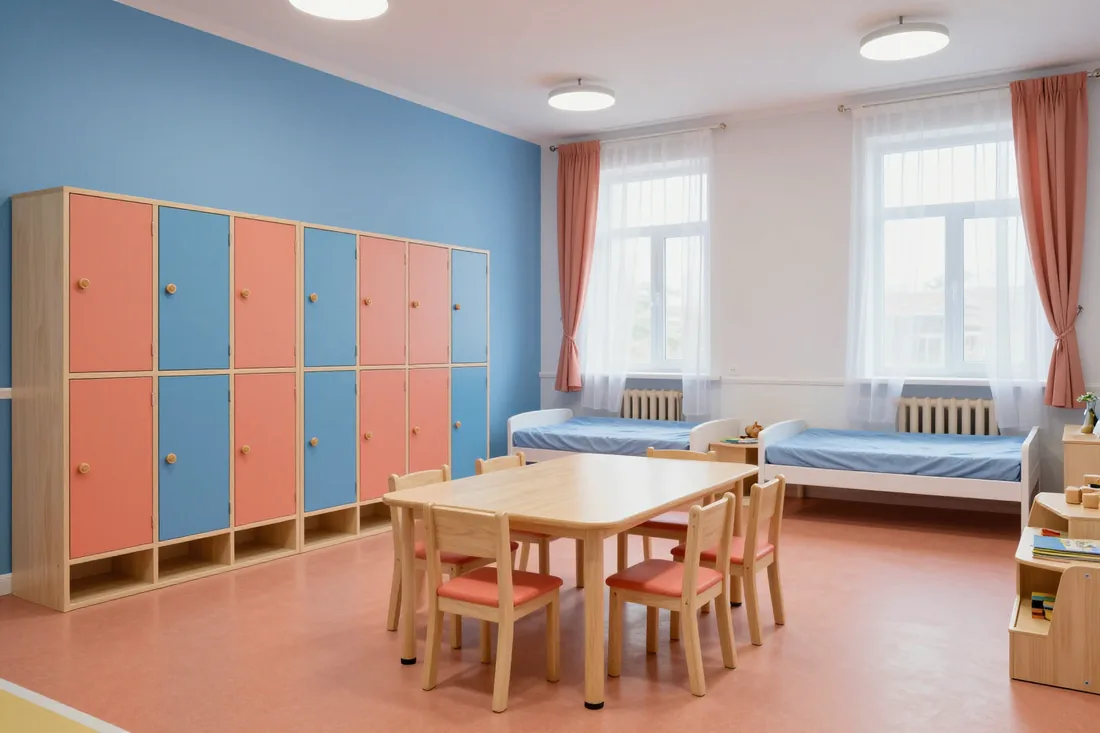
We equip group rooms, bedrooms and changing rooms with beds, cubbies, tables and chairs by GOST height groups, made of E1 laminated chipboard with rounded corners.
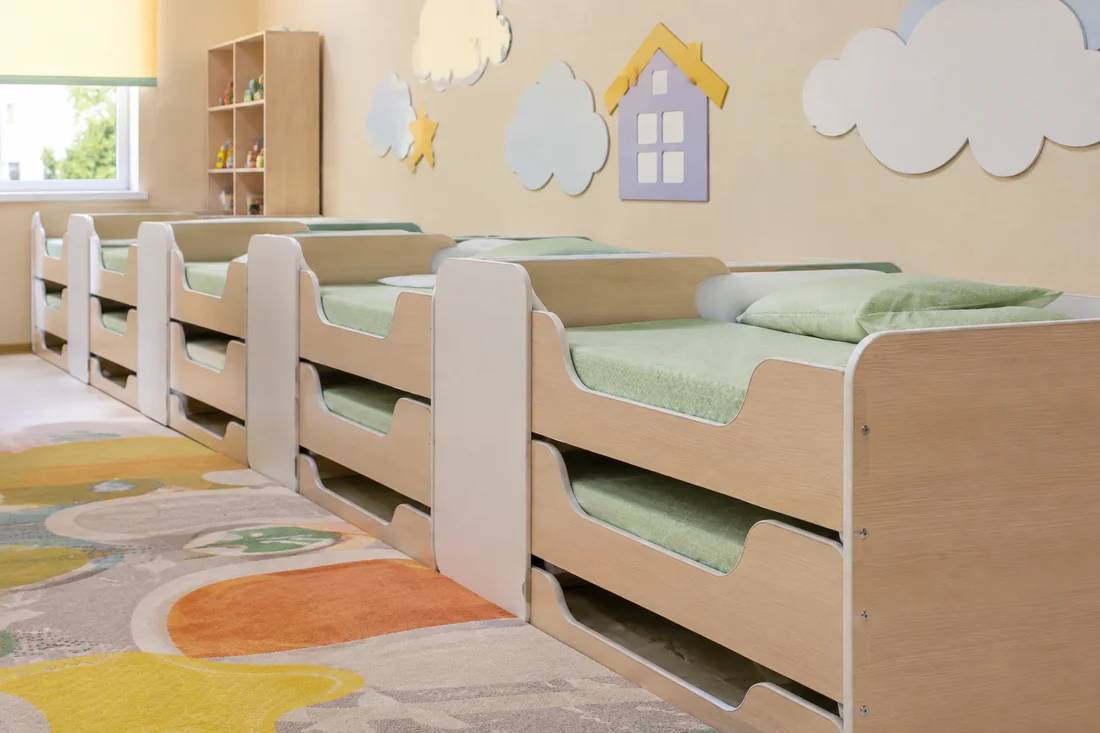
We make single-tier, stackable, nursery and pull-out beds to fit the bedroom area and the children's height group: E1 laminated chipboard or birch solid wood, rounded corners, mattress sized to the bed.
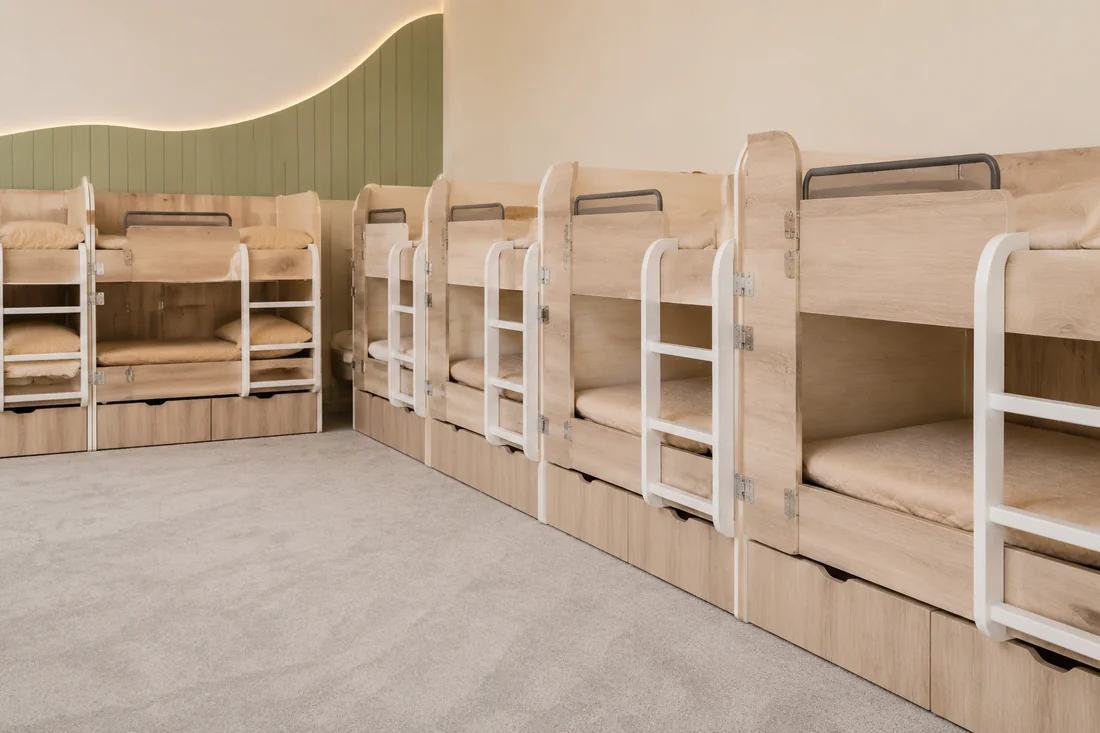
Beds for kindergarten group bedrooms, made to the number of children in the group: two- and three-tier, rails around the top tier, solid wood ladder, E1 laminated chipboard, wall fixing.
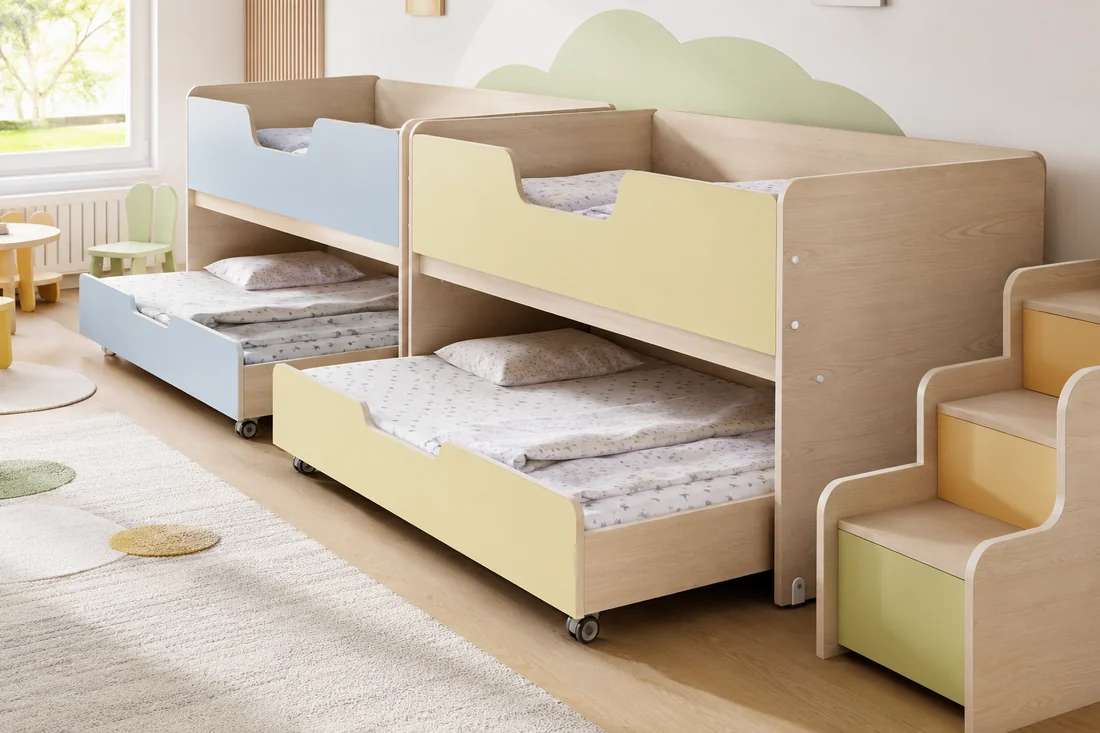
Two or three sleeping places slide under one another and free up the bedroom floor during the day for play and activities.
Cubbies with personal compartments, hooks at a child's hand height and a bench for the changing room, plus cabinets for supplies, toys and linen made of E1 laminated chipboard.
We make rectangular, trapezoidal, round and dining tables by GOST height groups from E1 laminated chipboard with rounded corners and a washable tabletop.
We make tables on screw supports and a steel frame that adjust to the next GOST height group — from E1 laminated chipboard with rounded corners.