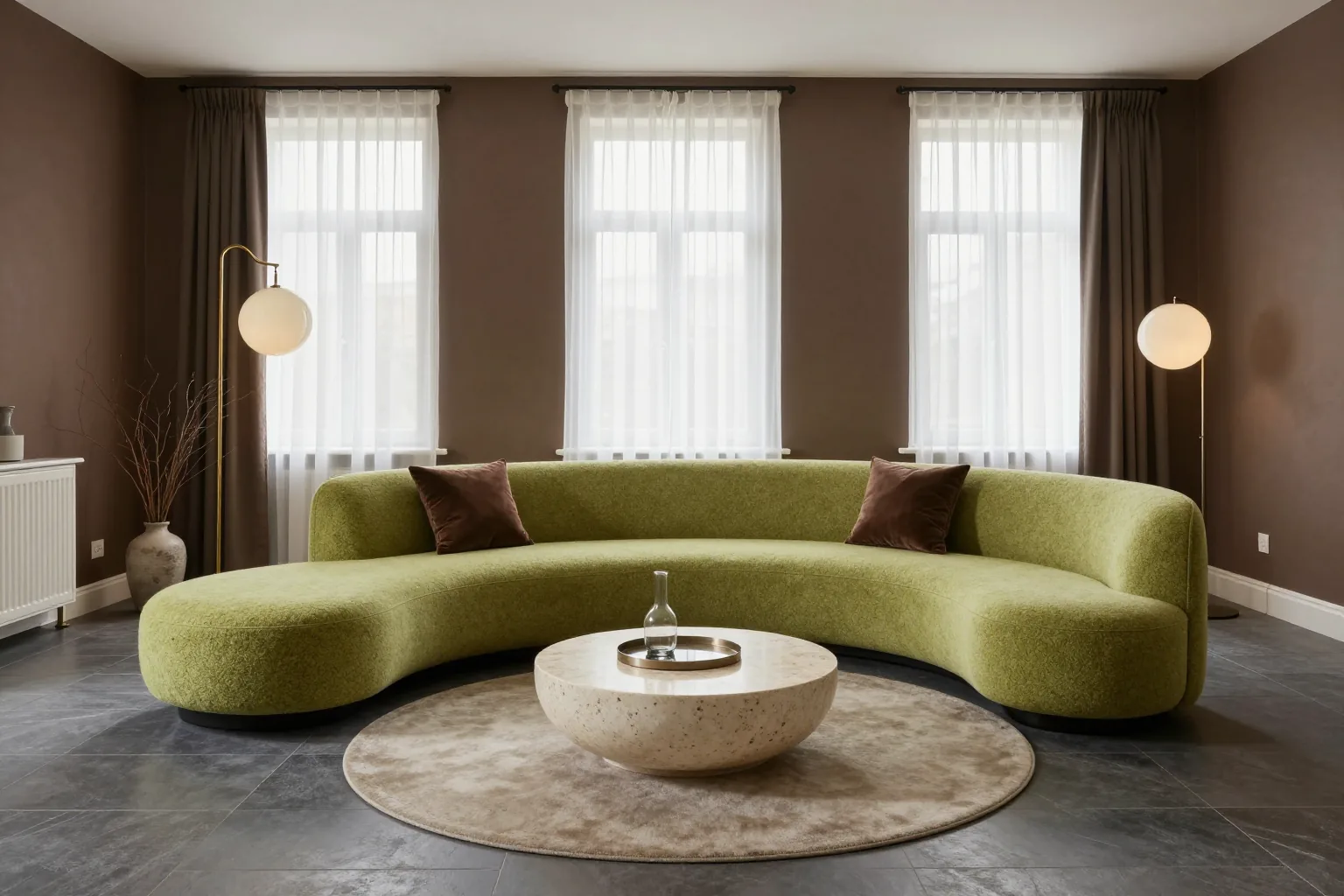
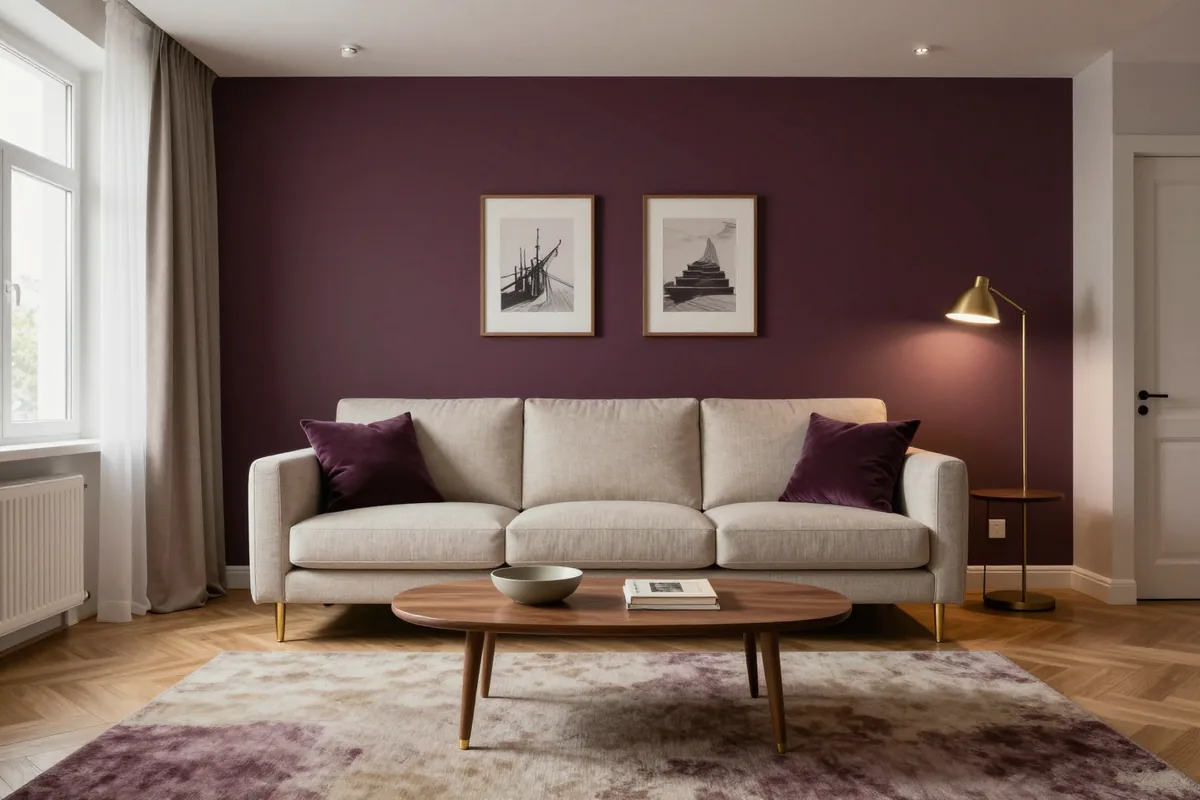
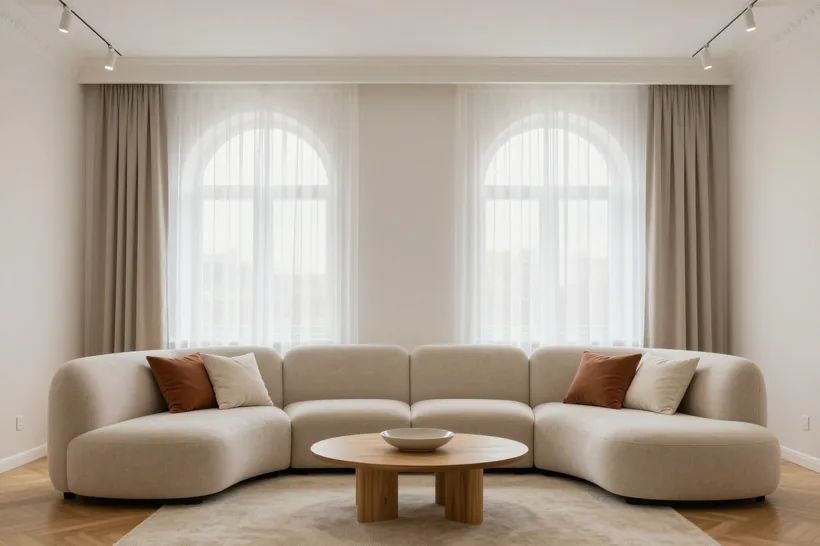
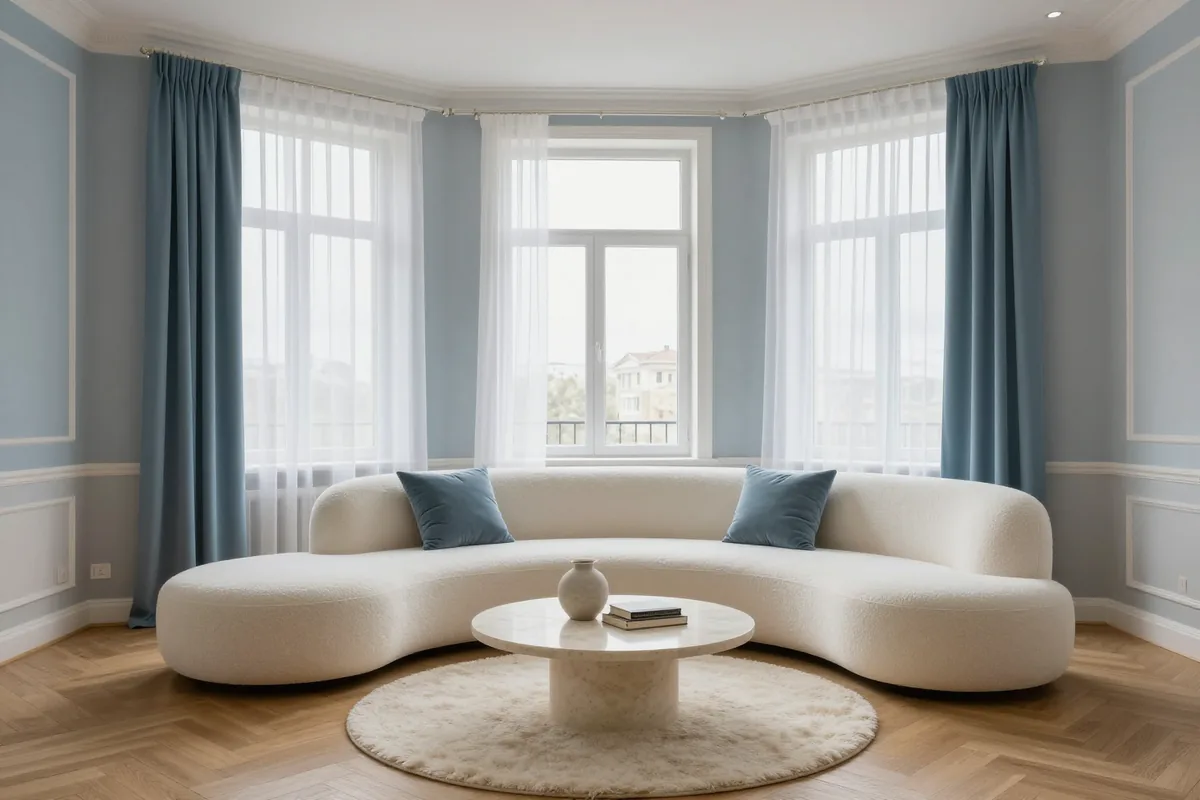
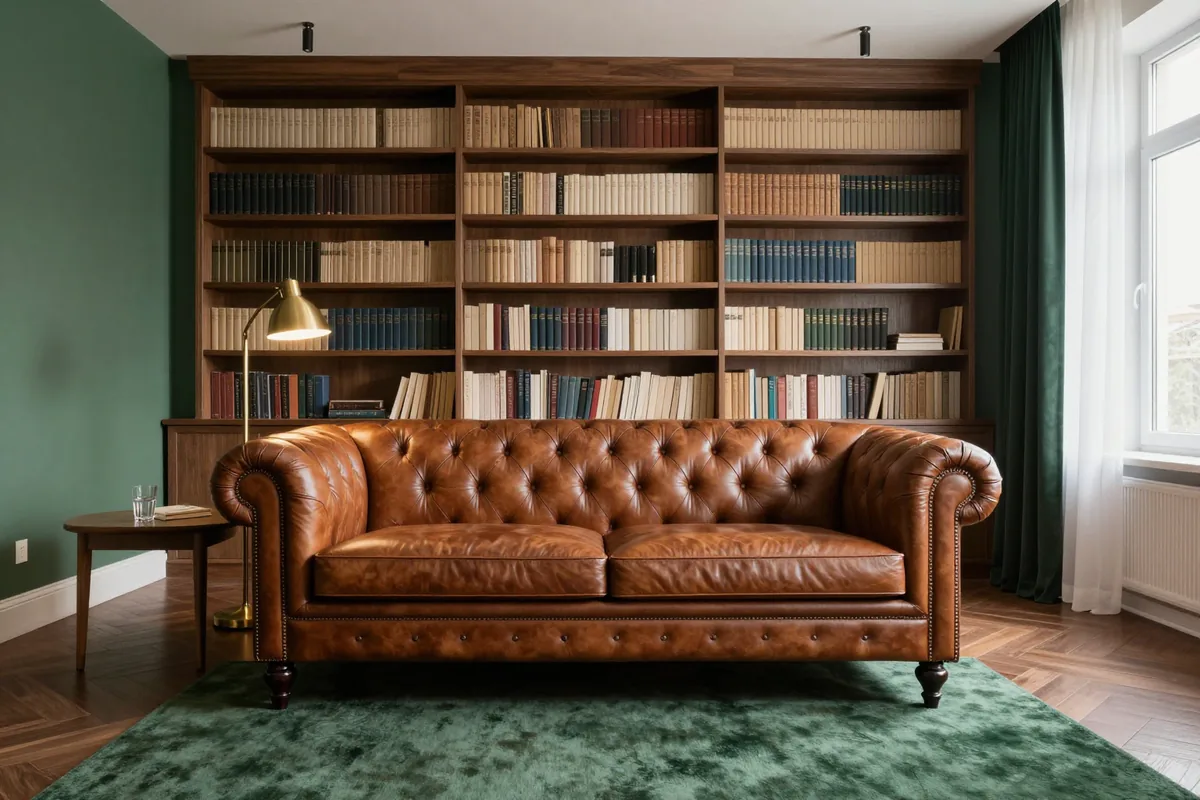
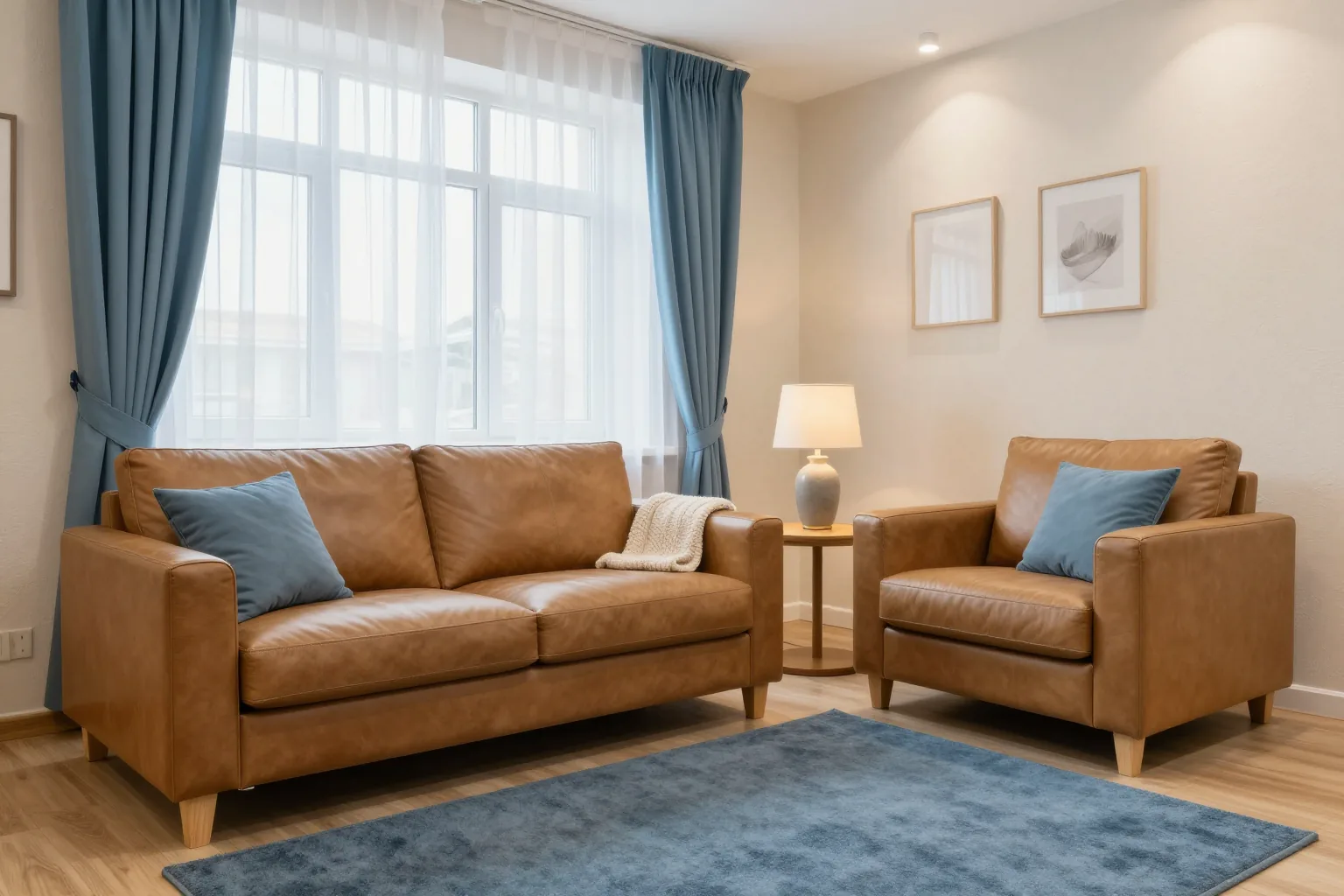
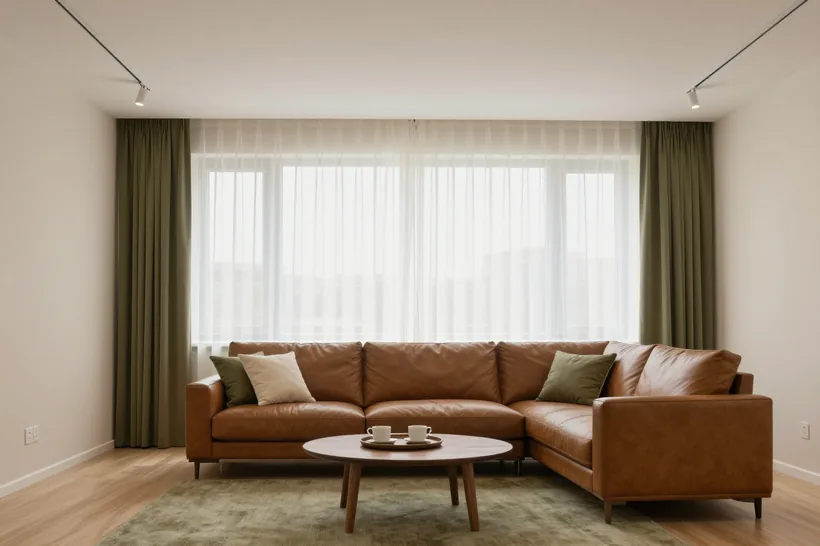
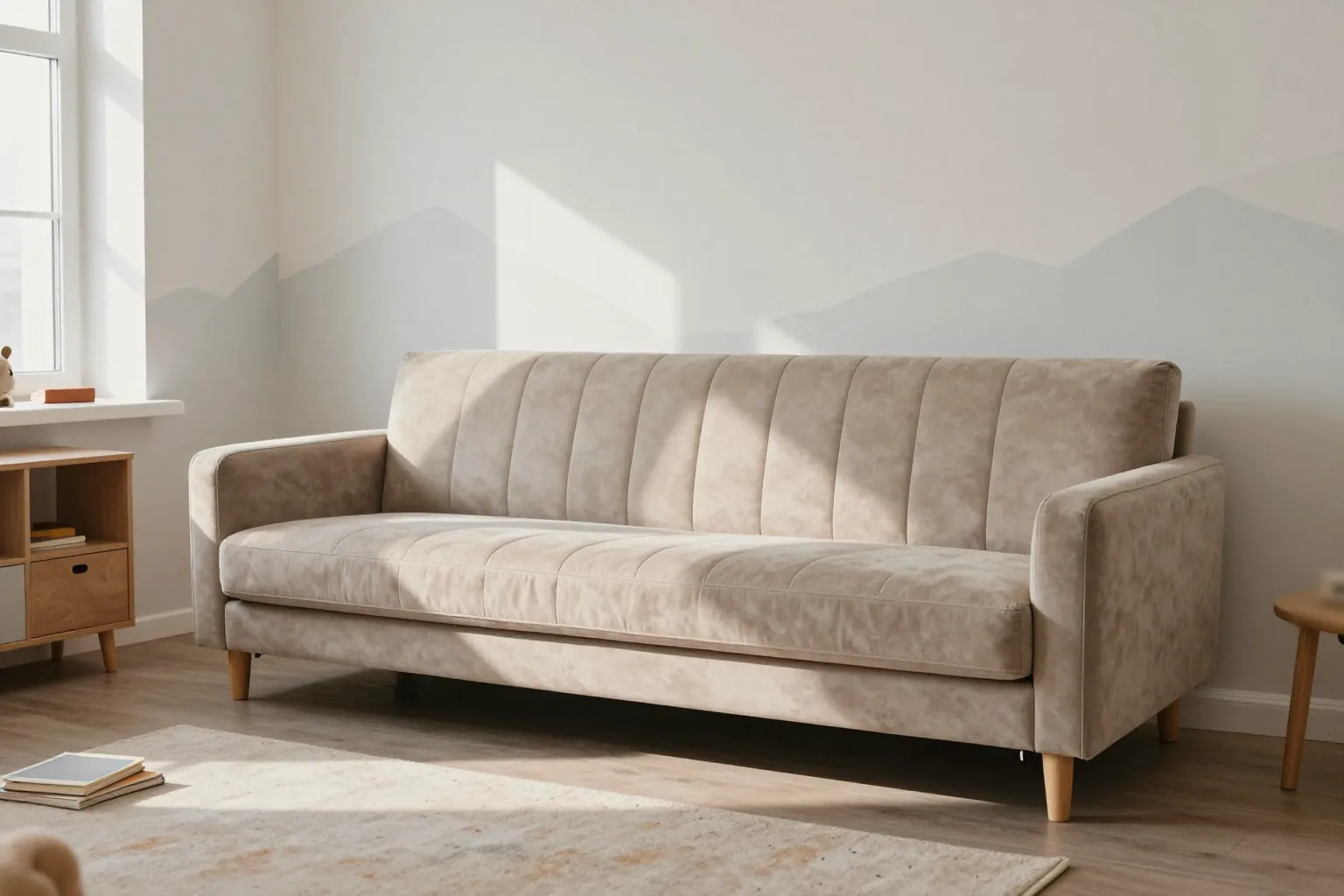
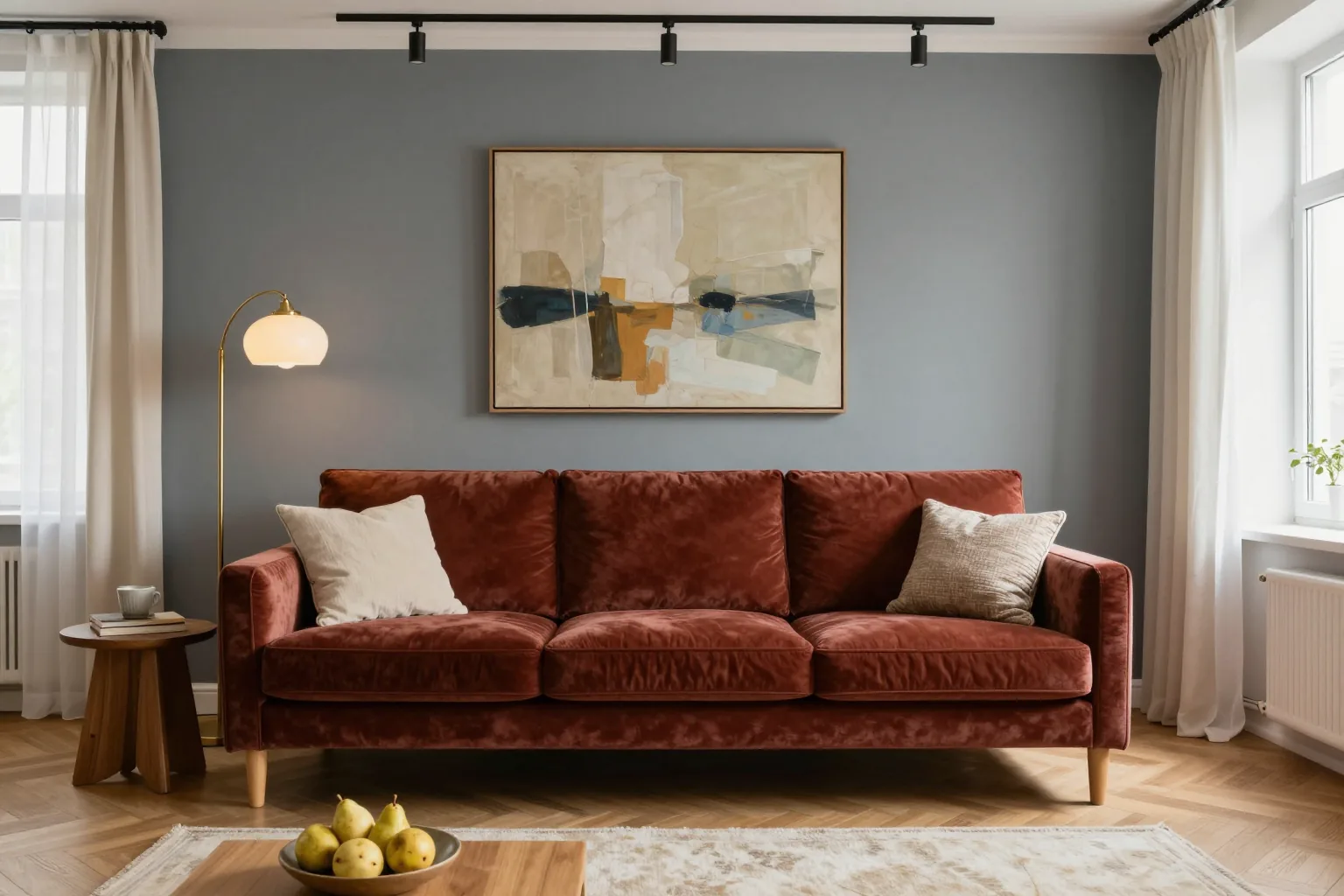
A bespoke designer sofa from MEBLIX is built to the size of your room: a free measuring visit with fabric samples, a 3D design in 1–2 days, production in our own 600 m² workshop and installation by our own crews. The frame is 18 mm birch plywood and kiln-dried timber, the filling is PU foam at 25–40 kg/m³, and the contract carries a 24-month warranty.
A designer sofa is a small project in its own right, and every stage is put in writing. Here is what happens between the first measuring visit and signing the acceptance certificate.
What happens at the free measuring visit
The measuring visit is free, and our specialist brings fabric samples so you can hold the upholstery against your own walls and in your own light. They record more than length and width: projections, alcoves, sloping walls and door openings all go into the notes. Those millimetres decide whether the sofa will fit through the doorway and whether it will sit flush against the wall. We also talk about how the sofa will be used — where it will stand, how many people sit on it every day, whether it needs a fold-out mechanism.
How the 3D design is agreed before work starts
We prepare the 3D design in 1–2 days, so before anything goes to the workshop you see the shape, proportions, seat and fabric on a model rather than in words. The design shows the overall dimensions, seat and back heights and how the mechanism unfolds, so you can check the future sofa against your floor plan and the furniture already in the room. Changes are made before the fabric is cut; once it is cut, the geometry can no longer change. Then we sign a contract with a 24-month warranty on the frame, the mechanism and the seams.
Who makes and installs the sofa
Your sofa is made by craftsmen in our 600 m² workshop in Almaty and assembled on site by our own installation crews. The acceptance certificate is signed after installation, so any comments on the seat, seams or mechanism are recorded while the crew is still with you.
Frame, filling and mechanism for unusual shapes
A curved shape loads the frame differently from a straight one: bends are pulled into torsion, and a deep seat is pushed towards breaking. Here is what we build the base from, what goes into the seat and which mechanisms suit these models.
What the frame is made of
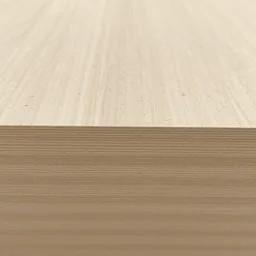
We build frames from 18 mm birch plywood and kiln-dried timber. The plywood holds complex geometry without delaminating on bends, and the timber reinforces the load-bearing joints. For curved parts the plywood is bent over a template, so a back or arm comes out as one continuous curve with no visible joins. Timber goes into the corners, the mechanism mounting points and the base under the spring unit — the places where the load is highest. The frame is checked while it is still open and every joint and fixing can be seen, because once it is upholstered a defect cannot be fixed without stripping it.
What fills the seat so it doesn't sink
We fill the seat with PU foam at 25–40 kg/m³ and an independent spring unit, choosing the density for the load and the shape rather than using one foam for every model. The spring unit spreads weight across the surface, and the foam on top smooths out pressure points. Deep models get a firmer filling and decorative parts a softer one, so bolsters don't look overstuffed. The more complex the shape, the more an even filling matters, because lower-density foam sags faster in the soft zones — so we plan the density layout from the design.
Mechanisms and legs
- Metal mechanisms: we fit book, eurobook, dolphin and accordion mechanisms and test how they run before packing.
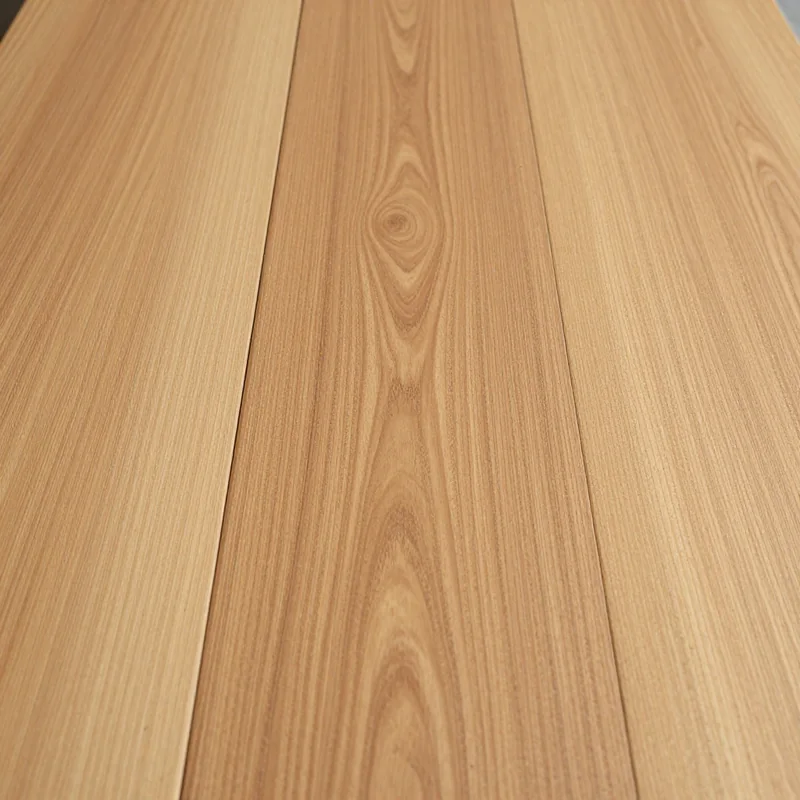
- Solid wood legs: beech and oak carry the weight of the sofa and stop it rocking on an uneven floor.
- How you unfold it: for nightly sleeping a smooth action matters most; for a guest bed, how compact it is when folded.
- Matched to the shape: some mechanisms won't fit a curved model, so the choice is fixed at the design stage.
How a designer sofa fits a real flat or an awkward room
Flats are rarely perfectly square, and the space between a wall and a window is seldom standard. This is how a design is adapted to alcoves, crooked walls and small living rooms.
A sofa from a sketch or a photo
We make designer sofas from your sketch or photo: the shape is turned into working dimensions, the proportions are checked, and only then does it go to the workshop. First our specialist measures the room and marks the sockets, radiator and door frames, then a designer builds a 3D model with the seat dimensions of every section. A photo gives you the style, not the geometry: wrong proportions have to show up on the model, not after the upholstery has been cut.
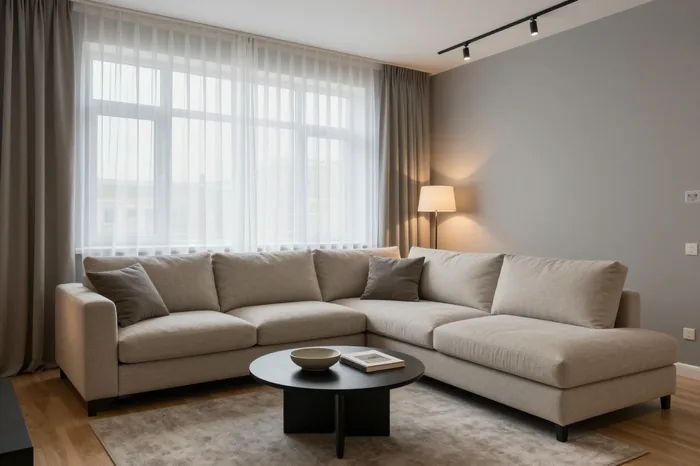
A corner or modular sofa for alcoves and crooked walls
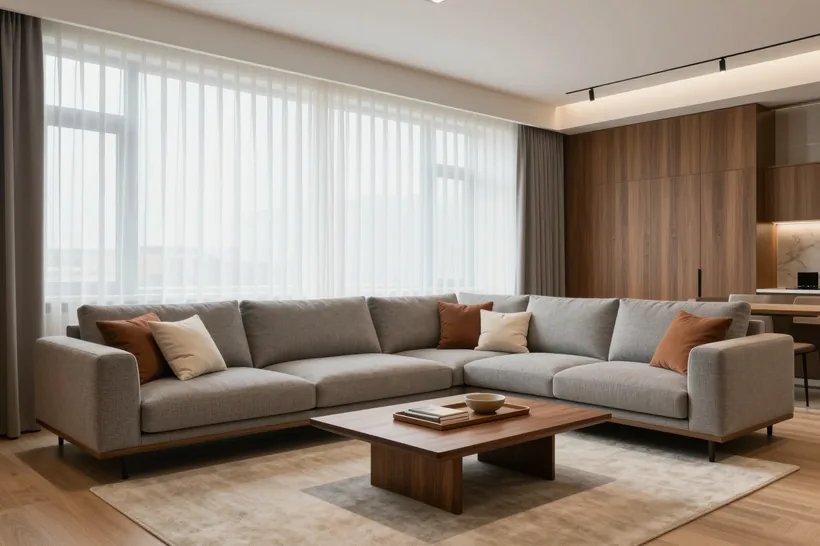
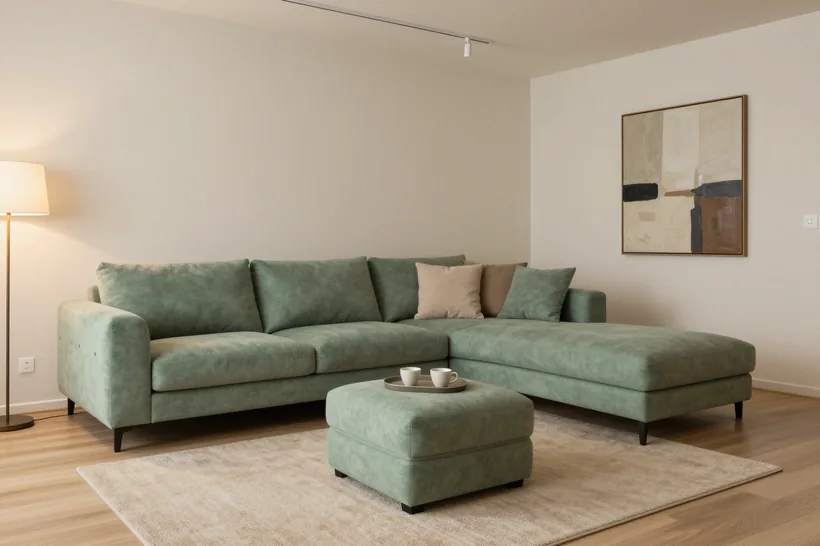
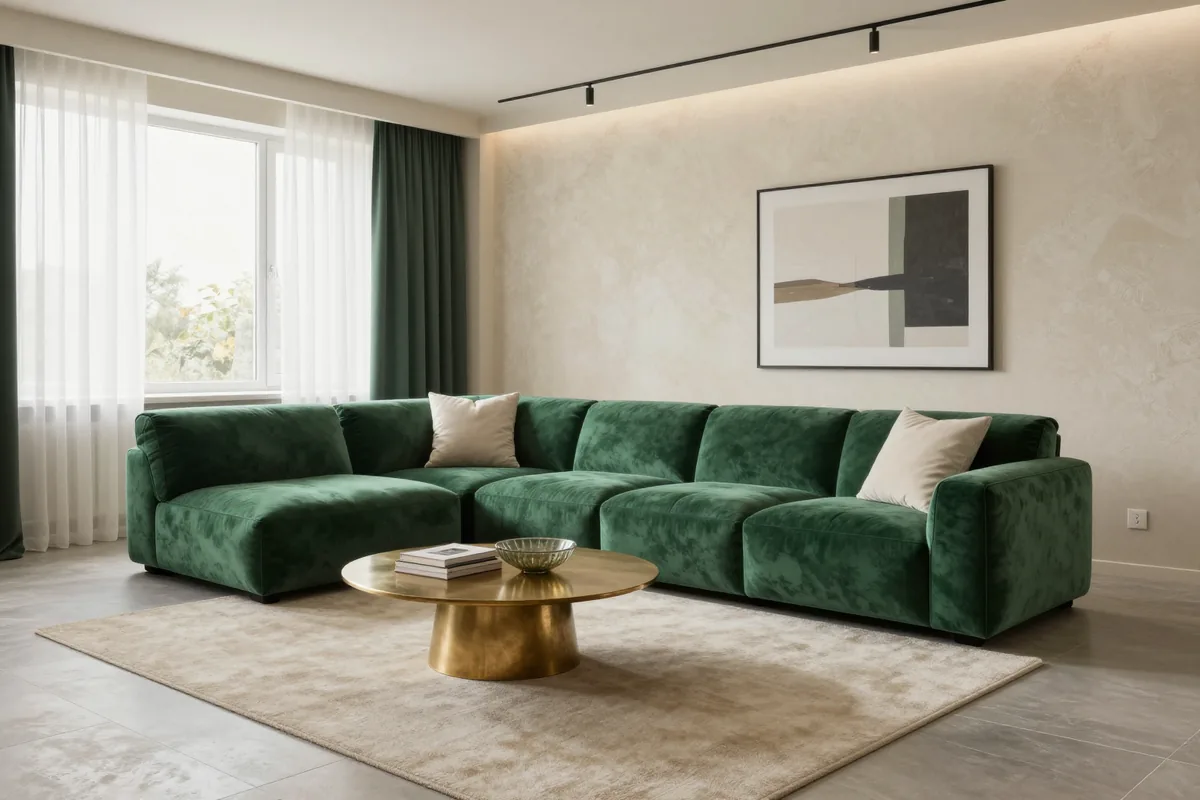
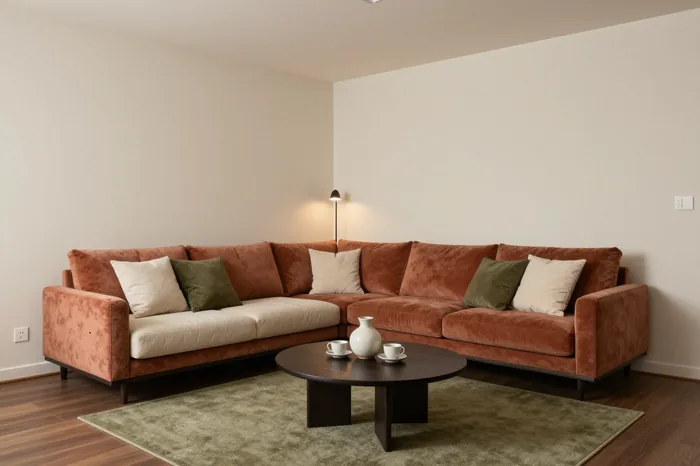
For alcoves and uneven walls we suggest a modular or corner configuration. The sections are built as blocks, and the way the sofa meets the wall is designed from the measurements. The measuring visit shows how far the wall really leans, so we build the back of the frame with a compensating gap and no line of daylight is left along the skirting. Corner models are made from a straight block and an ottoman, with the join hidden under a shared cover so the seat line is unbroken.
Fitting a sofa into a small living room
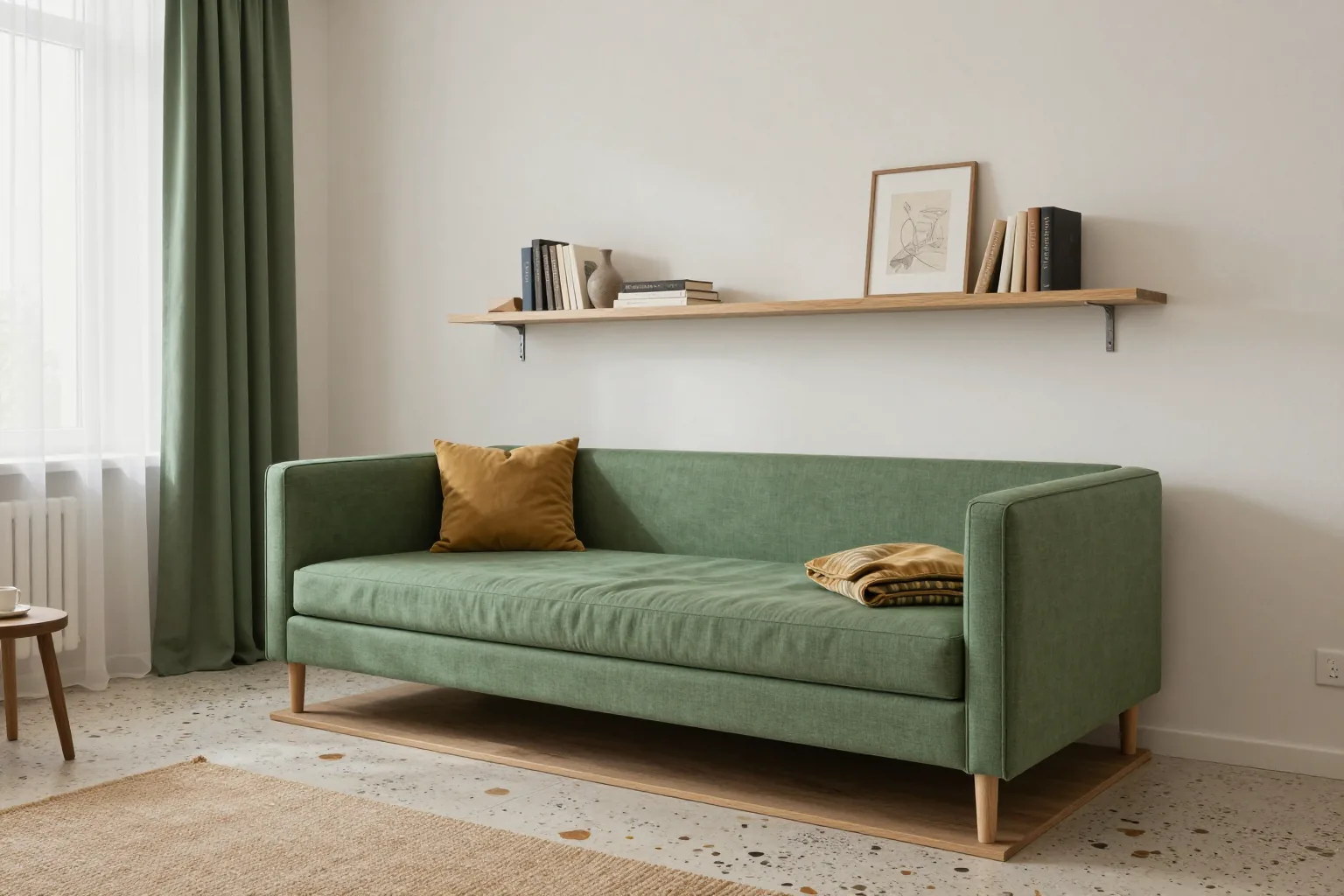
In a small living room what matters is not the sofa's length but its seat depth and back height: a compact model with a shallower seat frees up the walkway without cutting down on seating. Straight models up to 90 cm deep with a back lower than 80 cm don't block the window, and daybeds without arms save another 15–20 cm in width. Measuring is essential in rooms like this — not just the free wall, but the route in, including the diagonal of the doorway and the turn on the landing.
Sofa fabrics for real everyday use
Upholstery wears out faster than the frame, so it should be chosen for the way you live rather than for a picture. Here is what we offer in the showroom and how each material copes with cats, children and daily use.
Fabrics that stand up to cats and children
For homes with a cat and children we usually recommend anti-claw microfibre or dense matting fabric: both cope with claws and frequent cleaning better than loose textures. Anti-claw microfibre is a tight weave of fibres that a claw can't get into or pull a thread from. Matting gets its strength from a firm knotted weave.
Comparing fabrics in everyday use
| Fabric | Texture | Care | Resistance to claws and children |
|---|
| Matting | dense weave | easy to clean | high |
|---|
| Anti-claw microfibre | smooth, dense | damp cleaning | high |
|---|
| Chenille | soft, with pile | needs care | medium |
|---|
| Bouclé | textured | harder to clean | medium |
|---|
| Velour | velvety | delicate care | below medium |
|---|
| Faux leather | smooth | wipe clean | high |
|---|
| Genuine leather | smooth, dense | leather care | high |
|---|
Your own fabric or one from the showroom
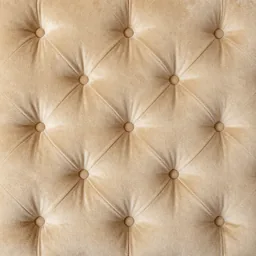
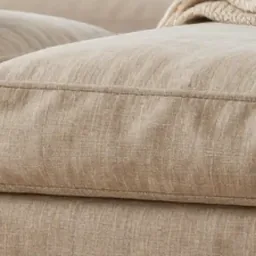
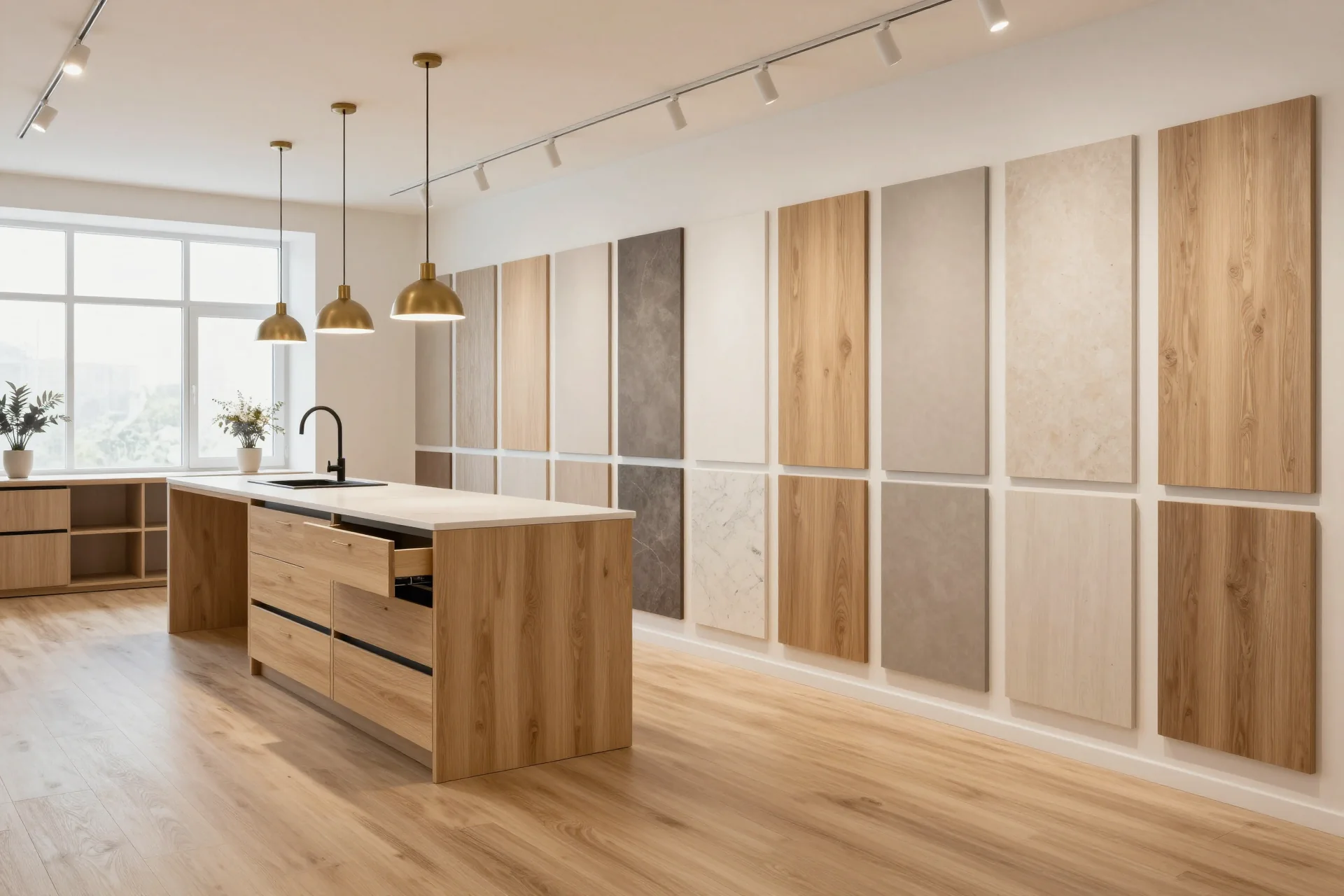
You can bring your own fabric or choose from more than 120 samples in the showroom, and our specialist brings samples to the measuring visit too. That way you compare the material against your walls and light rather than a catalogue photo: the shade of matting or velour looks different at home than in the showroom. We do accept customers' own fabric, but before cutting we check its density and how it behaves on curves — not every material will lie well on a complex shape or hold the seat on rounded parts.
Lead times, warranty and handover for a designer sofa
Lead times and guarantees are what people worry about most when ordering upholstered furniture. Here is how we fix the timing, what the workshop's warranty covers and how the finished sofa is handed over.
What the lead time depends on
The lead time for a designer sofa depends on the model and the material; the exact figure for each option is in the price list on this page, and urgent orders are possible. We make these sofas in our own 600 m² workshop, where frame building, cutting, sewing, upholstery and the final check run one after another with nothing outsourced. Complex shapes and unusual fabrics add time for cutting and fitting, which is why we discuss timing after the design rather than before the measuring visit.
What the 24-month warranty covers
The 24-month warranty in the contract covers the frame, the fold-out mechanism and the seams — the structure and the parts responsible for seating and unfolding. The warranty applies with proper use only: overloading the seat or taking the mechanism apart yourself voids it. Before signing, ask which actions count as misuse — that heads off most disagreements.
Handover and payment
- Certificate after installation: the acceptance certificate is signed once the sofa is assembled on site and ready to use.
- Fifty-fifty payment: 50 % up front and the remaining 50 % after the certificate is signed; bank transfer is accepted.
- A joint check: you go over the seams, seat and mechanism together with the crew before signing.
- Comments on the spot: anything you find is recorded before signing, not after the installers have left.
The bottom line on designer sofas
When you order a designer sofa, the result comes down to the order of work, the frame and upholstery materials, a layout that suits the room and clear handover terms.
- Measuring and design first: the room's geometry is fixed before the fabric is cut, so the sofa fits its alcove with no gaps or skew.
- A frame that holds its shape: 18 mm birch plywood, kiln-dried timber, PU foam at 25–40 kg/m³ and an independent spring unit don't sag, even in unusual shapes.
- A layout for the room: modular or corner configurations for alcoves and crooked walls are worked out from the measurements, not a standard drawing.
- Upholstery for the way you live: in a home with a cat and children, a dense weave outlasts soft textures such as velour or bouclé.
- Everything in the contract: lead times are in the price list, the 24-month warranty covers the frame, mechanism and seams, and the certificate is signed after installation.