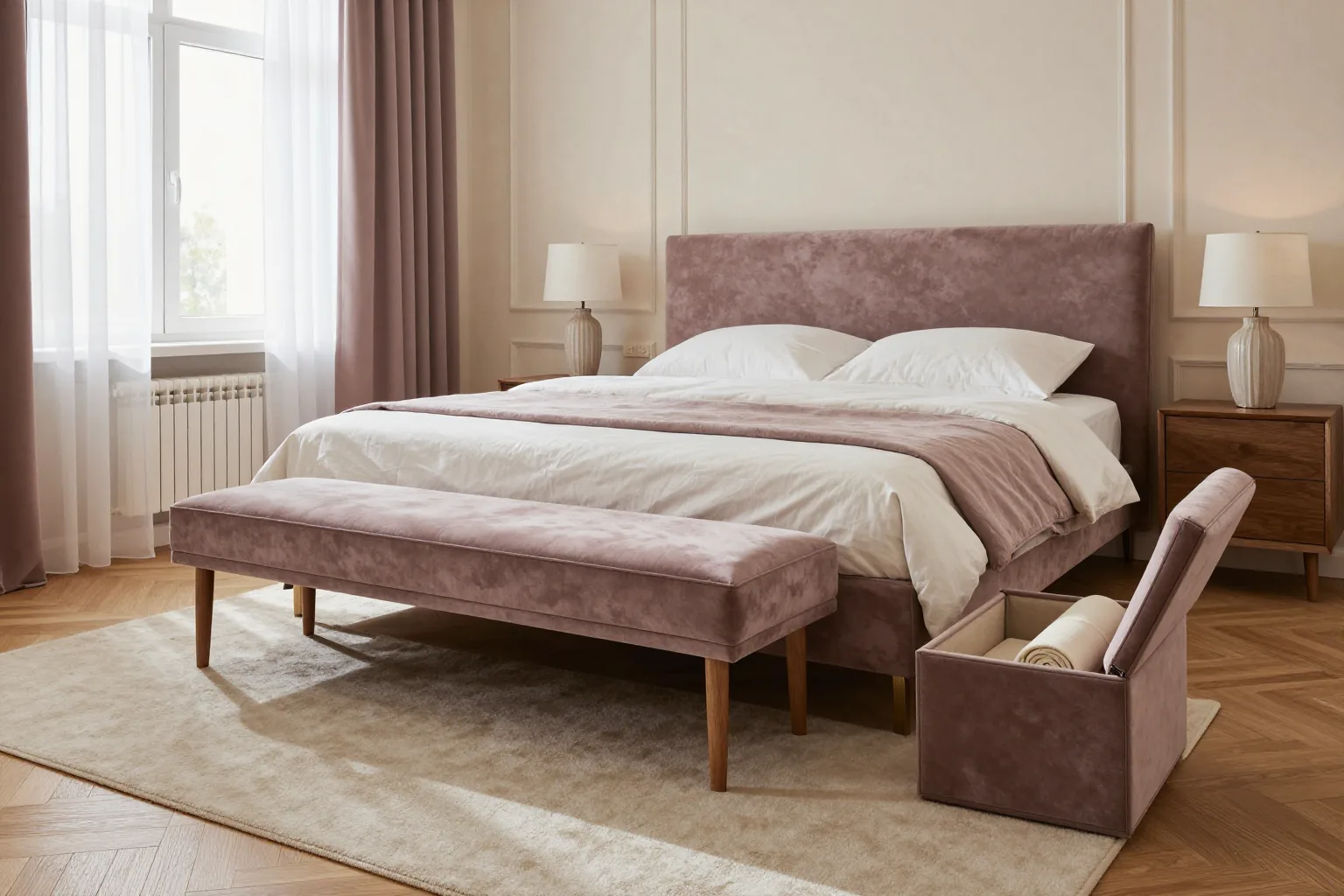
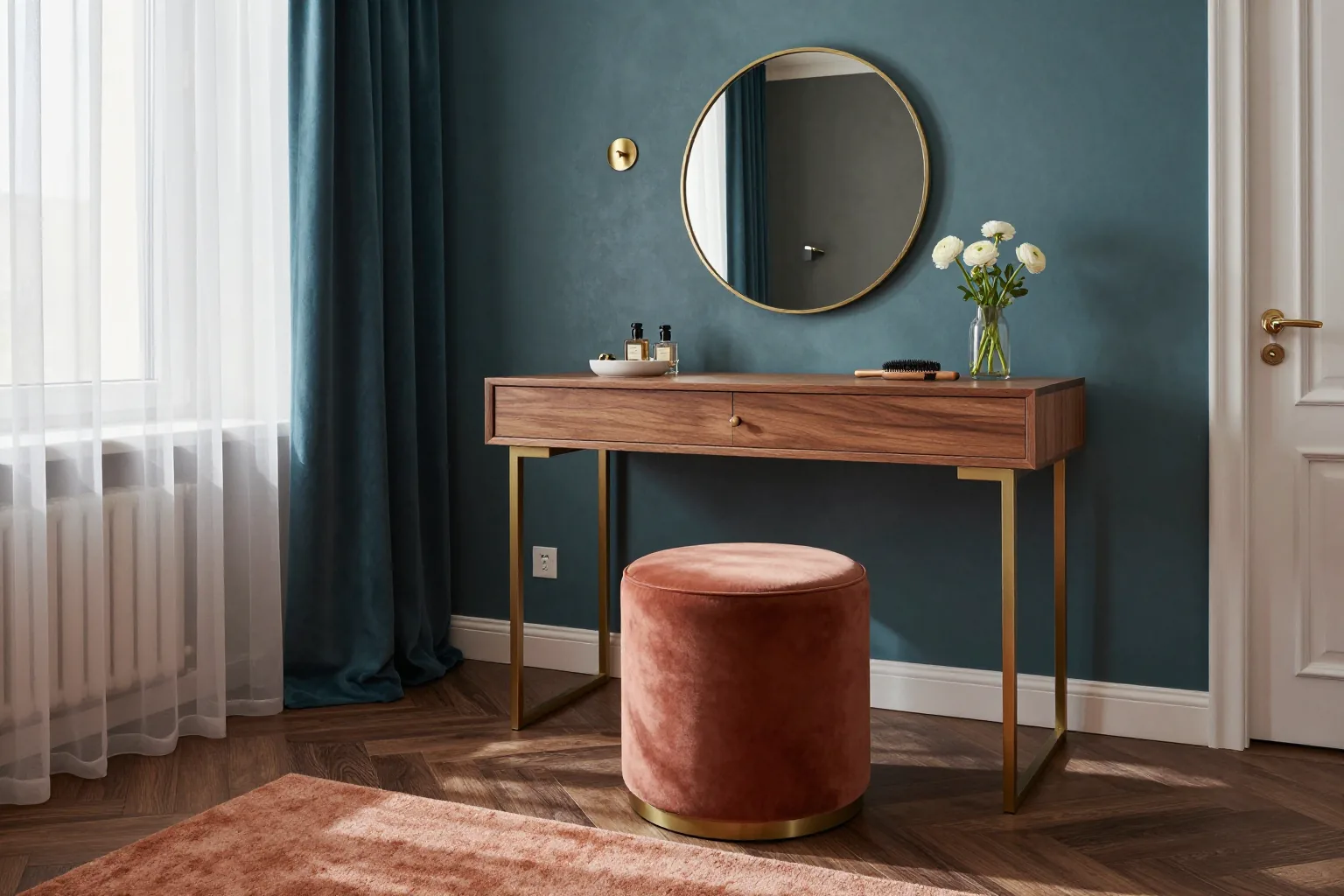
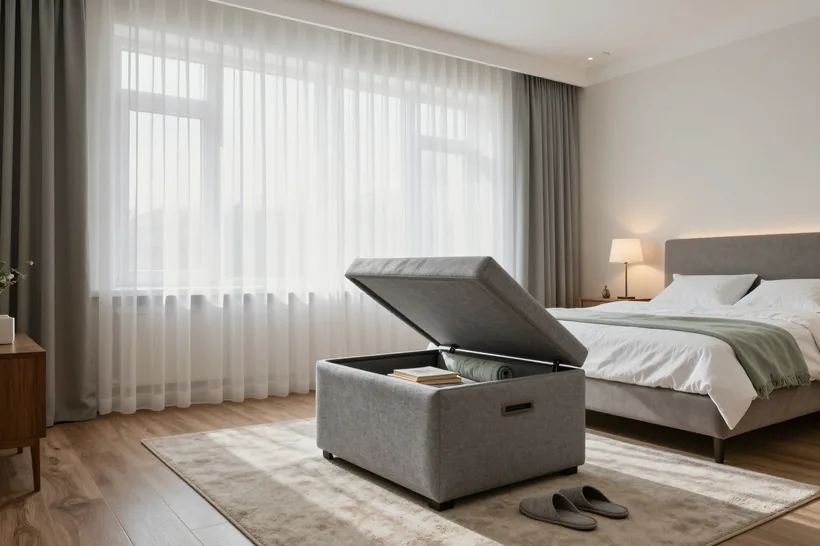
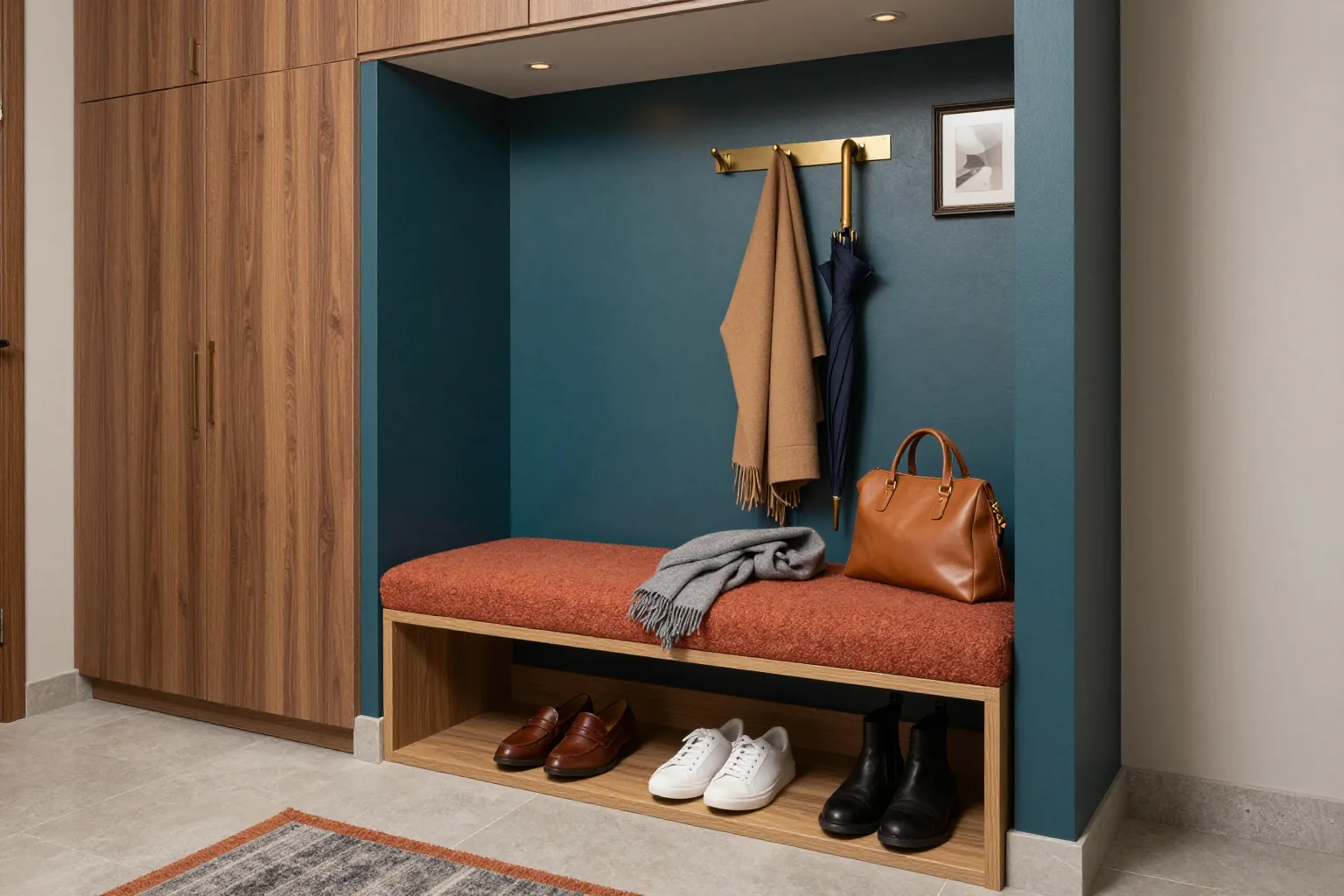
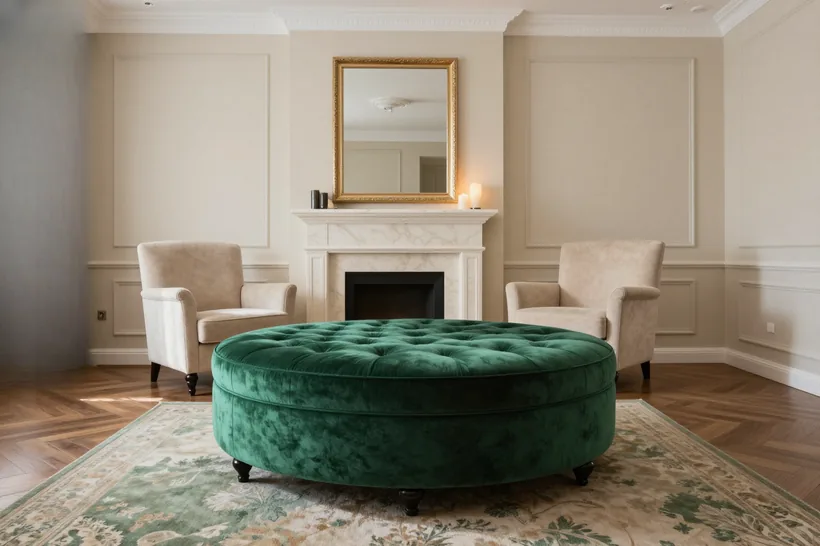
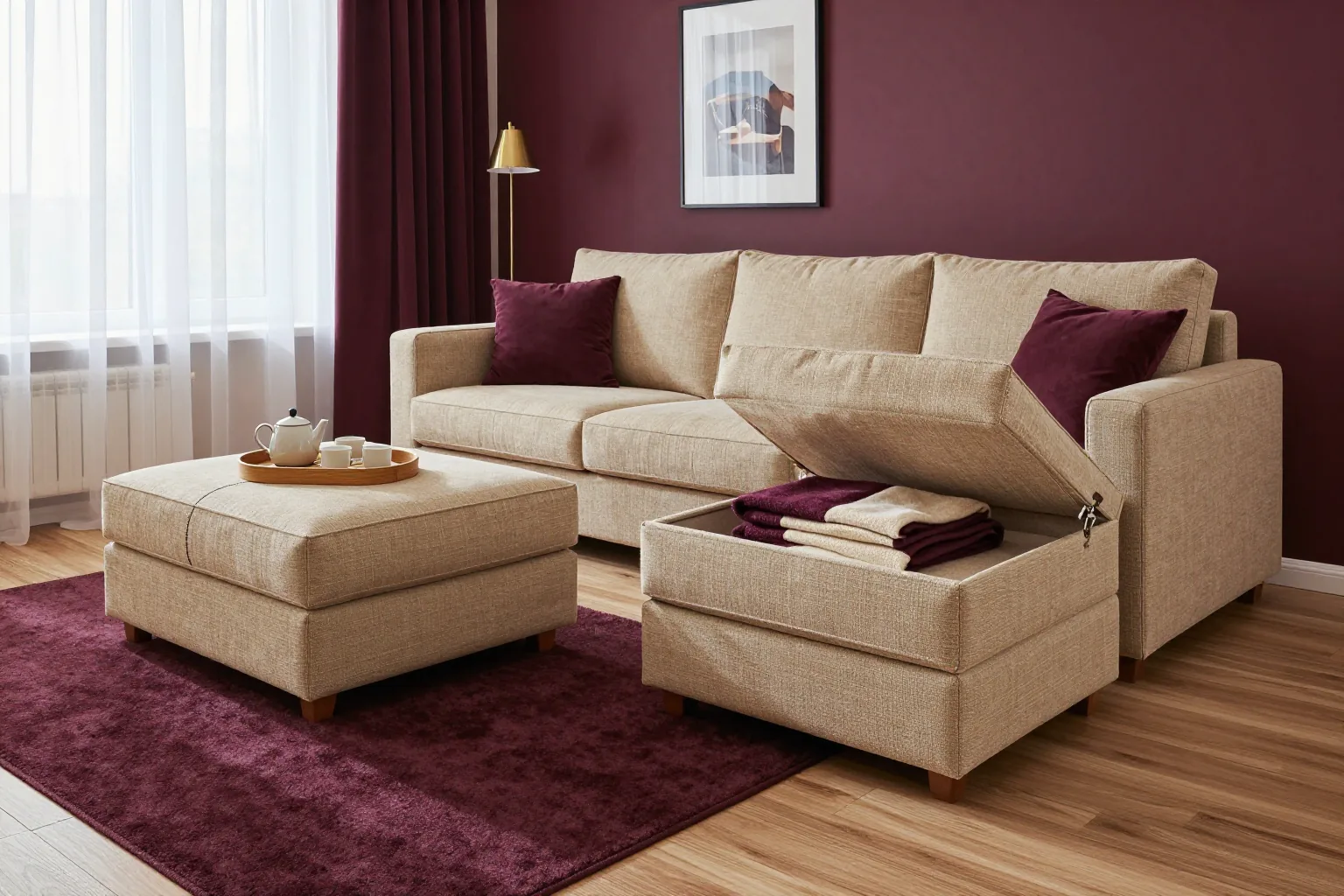
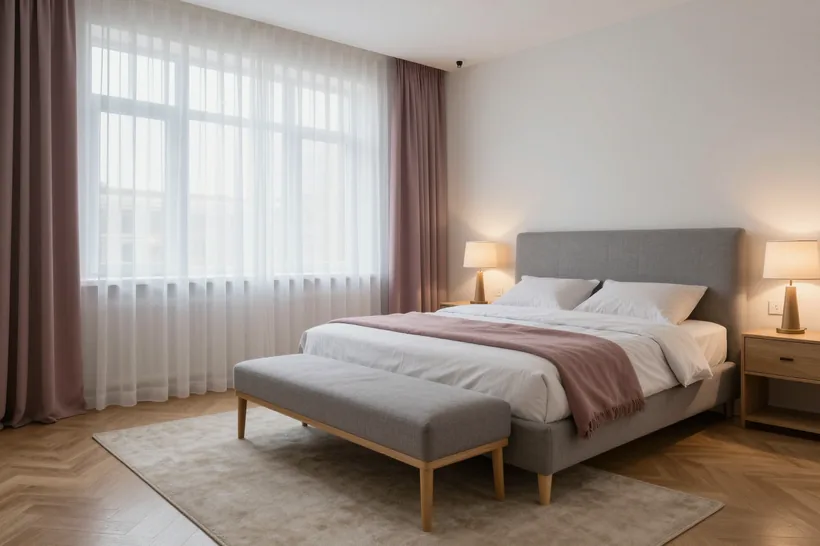
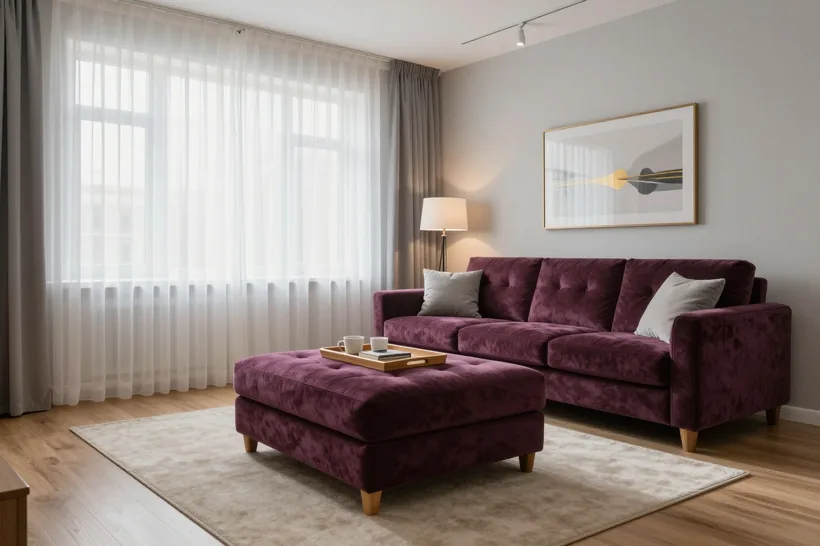
MEBLIX makes custom poufs in Almaty in its own 600 m² workshop: frames of 18 mm birch plywood and kiln-dried timber, filling of PU foam at 25–40 kg/m³ or an independent spring unit, and upholstery from 120+ fabrics in the showroom. The measuring visit and 3D design are free, and every piece comes with a 24-month warranty under the contract.
A pouf's strength comes not from how thick it looks but from its base and the density of its filling. Here is what actually makes it firm, why a cheap model sags within a season, and how to pick the right combination for the way you live.
A frame that won't work loose
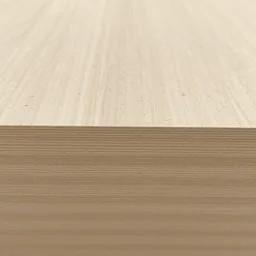
We build the base from 18 mm birch plywood and kiln-dried timber rather than chipboard or thin veneer. In the frame section of the workshop, parts are joined with glue and screws, not just fixings — it is the glued joint that holds a corner under constant load. In our experience, the weak point of cheap models isn't the thickness of the sides but the joint itself: a frame held together with screws alone starts to creak and wobble after a season. Before upholstering, we check every base for squareness and rigidity, because no fabric can hide a frame that is out of true.
PU foam or a spring unit for an adult's weight
There are two fillings to choose from — polyurethane foam of 25–40 kg/m³ and an independent spring unit — and both are designed for an adult. Density matters more than the thickness of the layer: foam below 25 kg/m³ sinks after a few months of daily use, while a layer of 35–40 kg/m³ keeps its shape for years. A spring unit wins where people sit often and for long periods, because the load is spread across individual springs instead of crushing a single slab.
Build options for different uses
| Use | Frame | Filling | Legs |
|---|
| Hallway, daily seating | 18 mm plywood, timber | PU foam 35–40 kg/m³ | Beech |
|---|
| Living room, in front of the TV | 18 mm plywood, timber | Spring unit | Oak |
|---|
| Bedroom, soft seat | 18 mm plywood, timber | PU foam 25–30 kg/m³ | Beech |
|---|
| Commercial premises | 18 mm plywood, timber | PU foam 40 kg/m³ | Oak |
|---|
| With storage inside | Reinforced base | PU foam 35 kg/m³ | Beech |
|---|
Measuring and making for an awkward space
A shop-bought piece rarely fits an alcove or a hallway exactly in depth. This is how the measuring visit works and why a pouf made for a specific spot sits without gaps.
How a custom pouf differs from an off-the-shelf one
We make a custom pouf to the size of a particular space instead of squeezing the space around a standard catalogue size. Our starting point is your opening, not a warehouse range: the measurer records the actual dimensions, the technologist builds them into the design, and the piece goes to the workshop with exact specifications. The difference shows in the details — a depth a couple of centimetres shallower, a rounded corner for an alcove, a height that clears the windowsill.
How we measure an alcove or a hallway
The measuring visit is free, and the measurer brings fabric samples so you can try the upholstery on the spot. We measure the width, depth and height of the opening at several points: walls in Almaty flats are seldom perfectly straight, and a one-centimetre difference already affects how the piece sits. We hold samples from the 120+ fabrics right up to the wall and the sofa next to it, because a shade reads differently in daylight and in the evening.
What the 3D design shows and how it is approved
We prepare the 3D design in 1–2 days, and it shows the shape, dimensions and how the fabric sits before production begins. The fabric can still be changed after approval until cutting starts, which is why it is better to try samples against the wall and the sofa in different light than to choose from a screen.
Fabrics for real life
Upholstery should be chosen not for how it looks in a photo but for who lives in the home. Here is what stands up to a cat, children and daily wear, and how to match the shade of your sofa or kitchen.
Fabric for a home with a cat and children
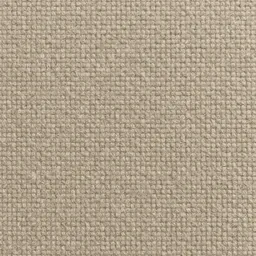
For homes with a cat and children we most often suggest anti-scratch microfibre: claws don't catch in it and it is easy to clean. Tightly woven matting fabric also holds up well: the threads are firmly twisted, so a claw has nothing to hook into, and a juice stain wipes off with a damp cloth. If you have a cat, run a fingernail across the sample: where the threads part, a snag will appear in the first week.
Fabrics compared by use
| Fabric | Best for | Care |
|---|
| Anti-scratch microfibre | Cats, children | Damp cloth |
|---|
| Matting fabric | Everyday seating | Vacuum, soft brush |
|---|
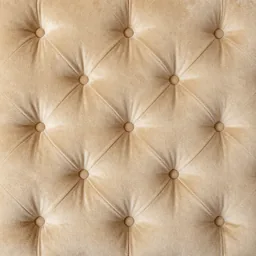
| Chenille | Living room, family | Dry cleaning |
|---|
| Velour | Bedroom, soft interiors | Soft brush |
|---|
| Bouclé | Accent pouf | Gentle cleaning |
|---|
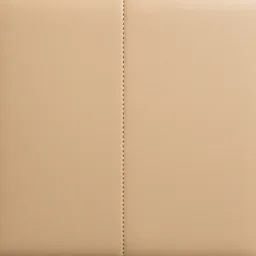
| Faux leather | Hallway, commercial use | Wipe clean |
|---|
| Genuine leather | Premium interiors | Specialist products |
|---|
Matching the fabric to your sofa or kitchen
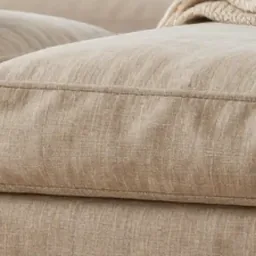
We match the shade to your sofa or kitchen using samples in the showroom, not catalogue photos. We have 120+ fabrics — matting fabric, velour, chenille, bouclé, anti-scratch microfibre, faux leather and genuine leather — and you can take samples home to hold against your sofa and cabinet fronts. The same shade looks different on different textures, so hold the sample against the sofa and kitchen fronts in daylight and the difference in tone will be obvious at once.
How ordering and handover work
Ordering a pouf is a chain of steps from the measuring visit to installation, and at each step you can see what is happening to your piece. Here are the stages and what we check before it leaves the workshop.
Stages from enquiry to installation
The order follows this path: measuring visit, 3D design in 1–2 days, production in the workshop and installation by our own crews. We agree the design before cutting: it shows the overall dimensions, how the piece fits the alcove and how the cover is laid out. The pouf then moves through the workshop sections — frames, fabric cutting, cover sewing, upholstery — and each has a craftsman responsible for that stage. Lead times for each option are in the price list on this page, and urgent orders are possible.
What we check in the workshop before packing
We check the frame before upholstering, and the seams, the fit of the cover and the mechanism before packing. In the frame section the geometry is inspected — diagonals, corners and how tight the joints in the 18 mm birch plywood and kiln-dried timber are; any skew is caught with a ruler at this stage, not by eye. The piece then goes through the inspection section, where we check that the stitching is straight, the fabric is taut at the corners, any pattern lines up at the joins and the cover sits without creases or bubbles. On a convertible pouf, the mechanism is run several times under load — it must move smoothly, without sticking or play.
Handover after installation and payment
We sign the acceptance certificate after installation, and payment is 50 % up front and 50 % when the certificate is signed. At handover you check the same things as our inspectors: straight seams, the fit of the cover, the mechanism and whether the pouf sits in the alcove or against the wall without gaps. Any comments on fit or fabric are written into the certificate before signing, so they are put right before the order is closed, not after the fact.
A direct workshop, warranty and terms
The Almaty market has plenty of resellers who pass off ready-made poufs as made to order. Here is what a direct workshop actually gives you, what warranty comes with the piece, and how delivery and the showroom work.
What a direct workshop gives you that a reseller can't
MEBLIX is a direct manufacturer: measuring, design, production in our own 600 m² workshop and installation by our own crews, with no resale of ready-made furniture. With a reseller there is one more link between you and the workshop, and every change to size or fabric has to go through it. With a direct workshop, you discuss changes with the people who sew the cover. That is why agreeing a non-standard depth for an alcove or swapping matting fabric for bouclé takes us one conversation, not a three-way email chain.
What the 24-month warranty covers
The piece comes with a 24-month warranty under the contract, covering the frame, the conversion mechanism and the seams. We test the mechanism before upholstering and again before packing, and we check the frame for strength before any fabric goes on it. The warranty on seams matters just as much as the one on the frame: a seam is the first thing to react to load, and if it splits, the pouf loses its looks long before its structure fails.
Delivery and the showroom in Almaty
Delivery within the city and up to 30 km is free for large orders; beyond 30 km there is a surcharge. The showroom is open daily from 10:00 to 20:00, and our office is there too: you can feel 120+ fabrics and compare them in daylight.
The bottom line on poufs and ottomans
We have pulled together what most often decides the result: what the frame is made of, what is inside the pouf, how the size is measured and what it is covered in. Here is a short summary worth coming back to before you order.
- The frame sets the lifespan: 18 mm birch plywood and kiln-dried timber hold their geometry for years, while chipboard and thin veneer start to wobble within a season.
- Density matters more than thickness: PU foam below 25 kg/m³ sags under an adult's weight, while a spring unit wins where people sit often and for long periods.
- The size is measured on site: measuring an alcove or hallway takes skirting boards and door trims into account, otherwise the pouf won't sit flush against the wall.
- The fabric is chosen for how you live: anti-scratch microfibre survives cats and children, matting fabric and faux leather are easy to care for, and velour and bouclé suit softer interiors.
- Handover happens after installation: the seams, the fit of the cover and the mechanism are checked on site, not in a warehouse, so you see the result in your real interior.