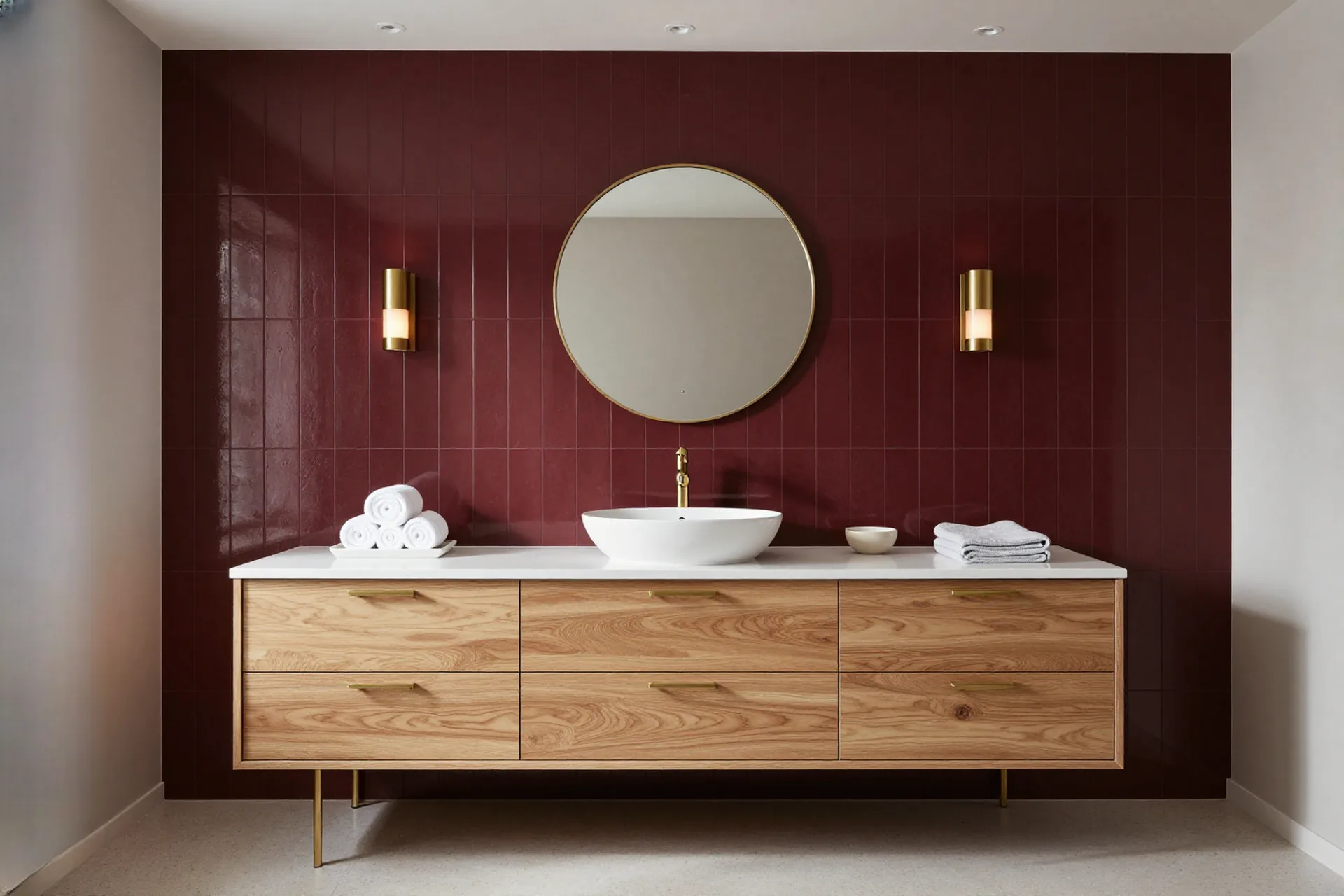
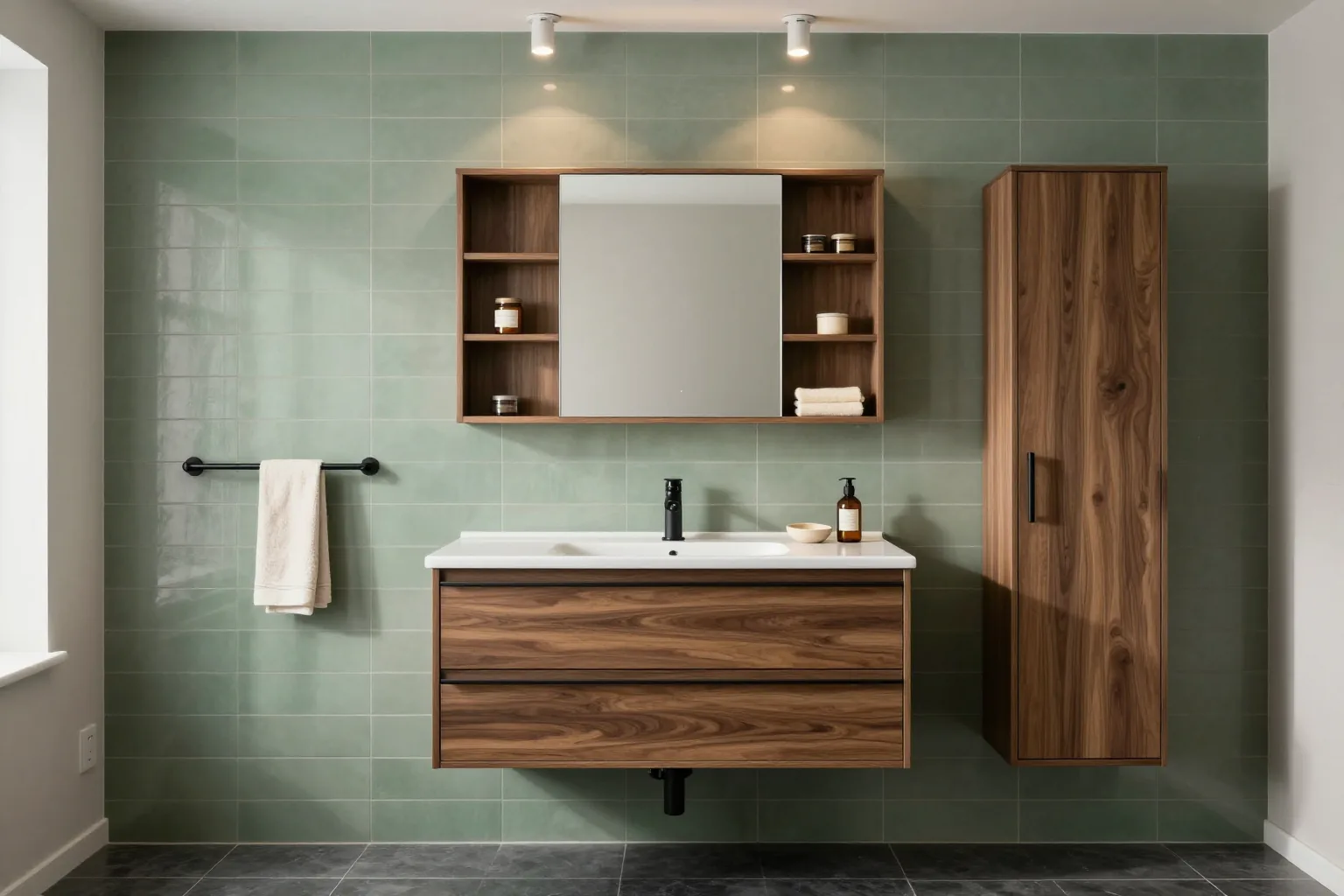
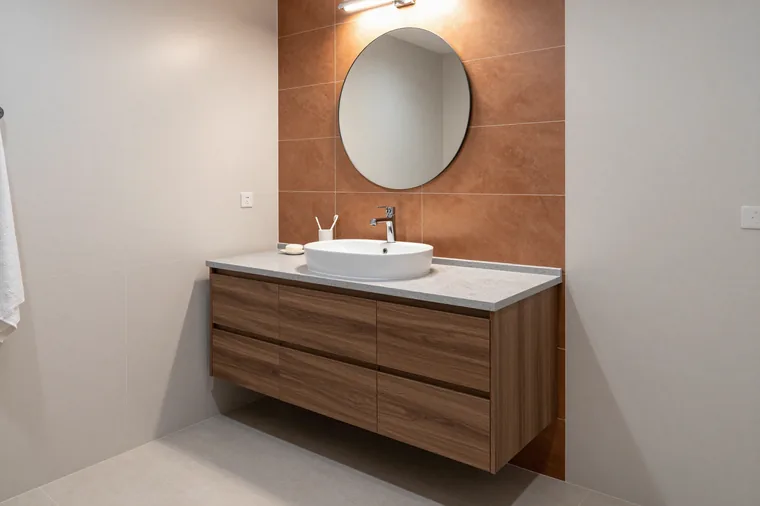
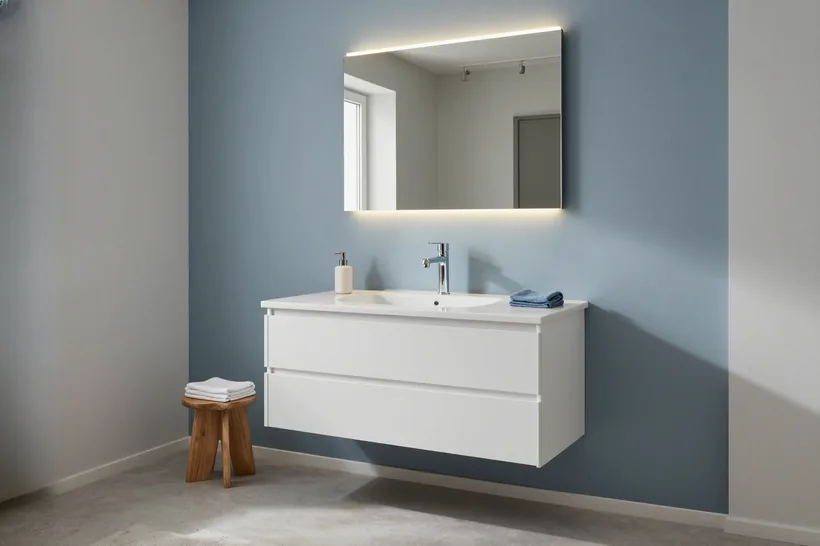
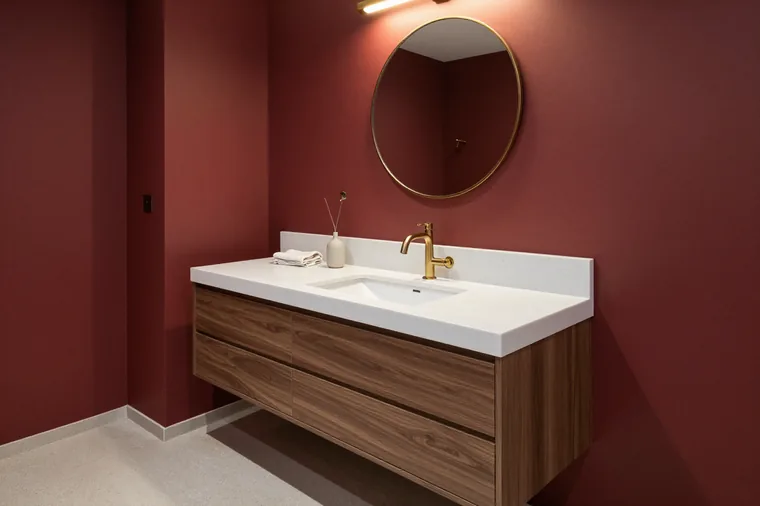
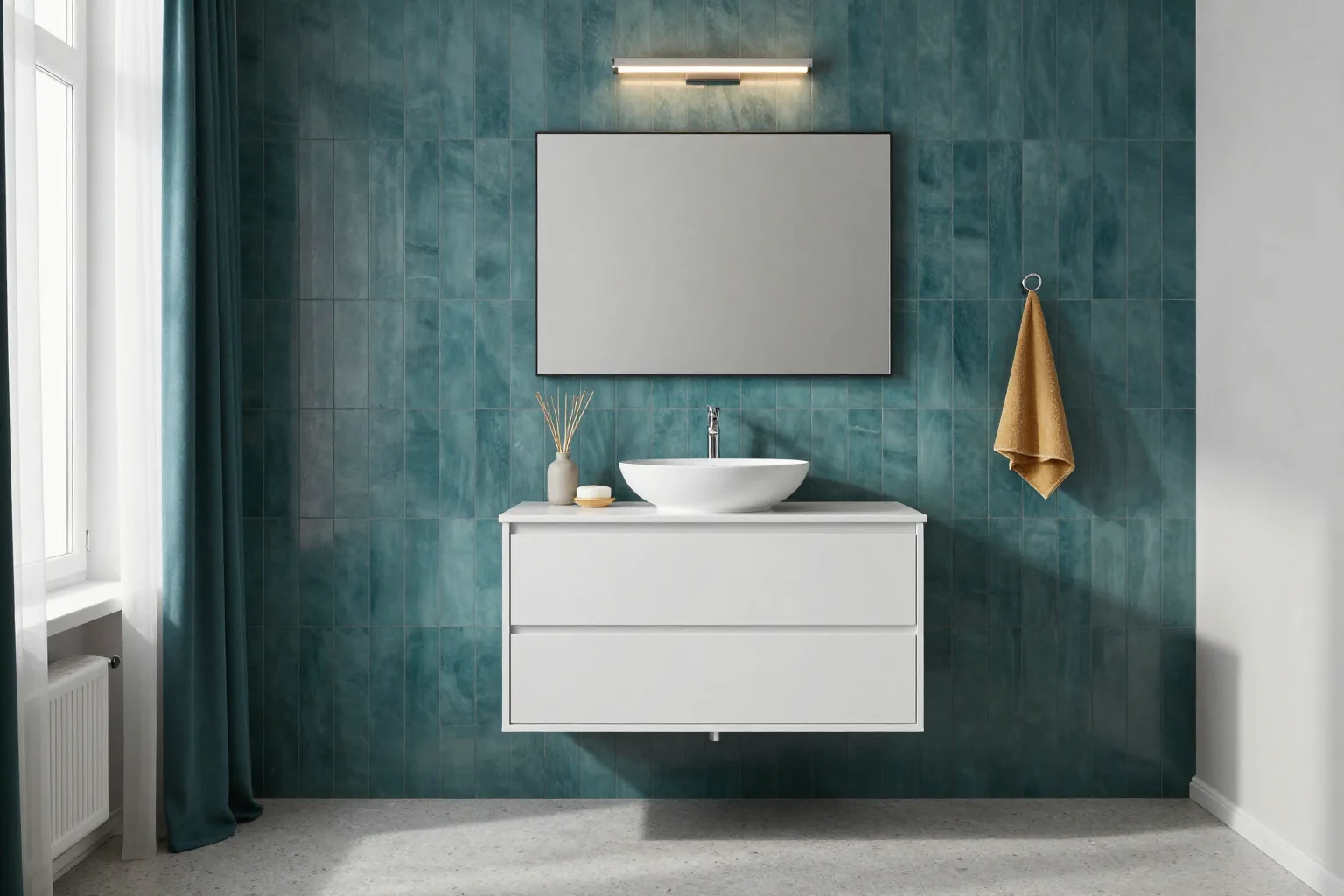
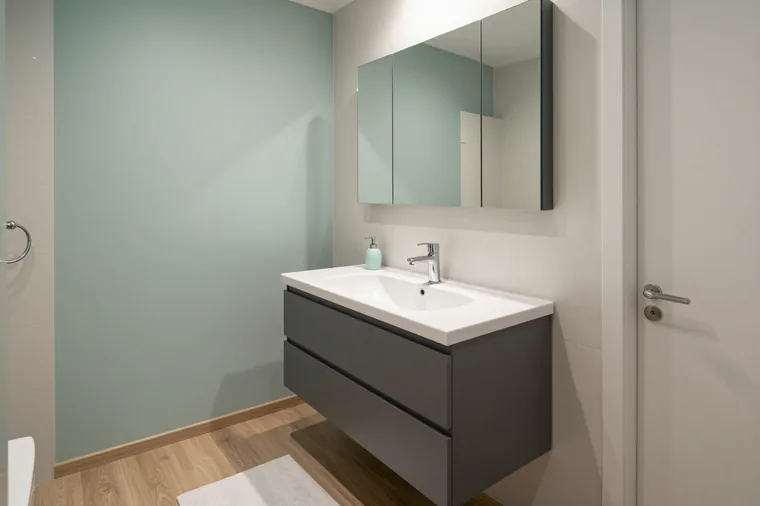
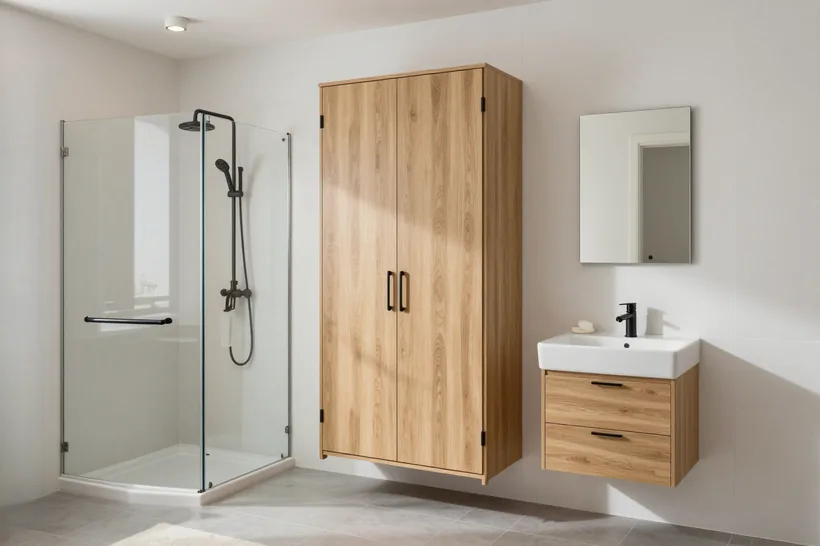
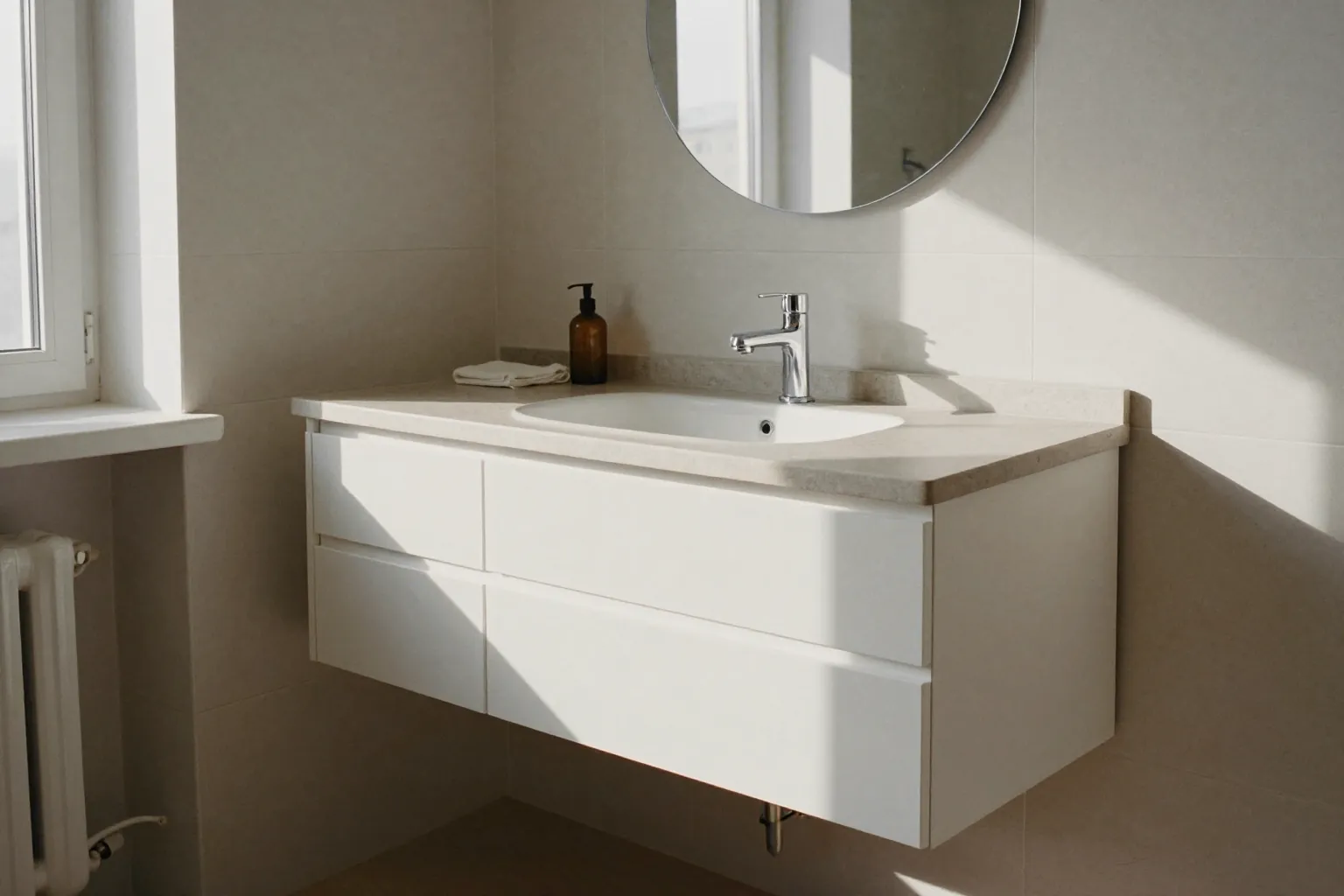
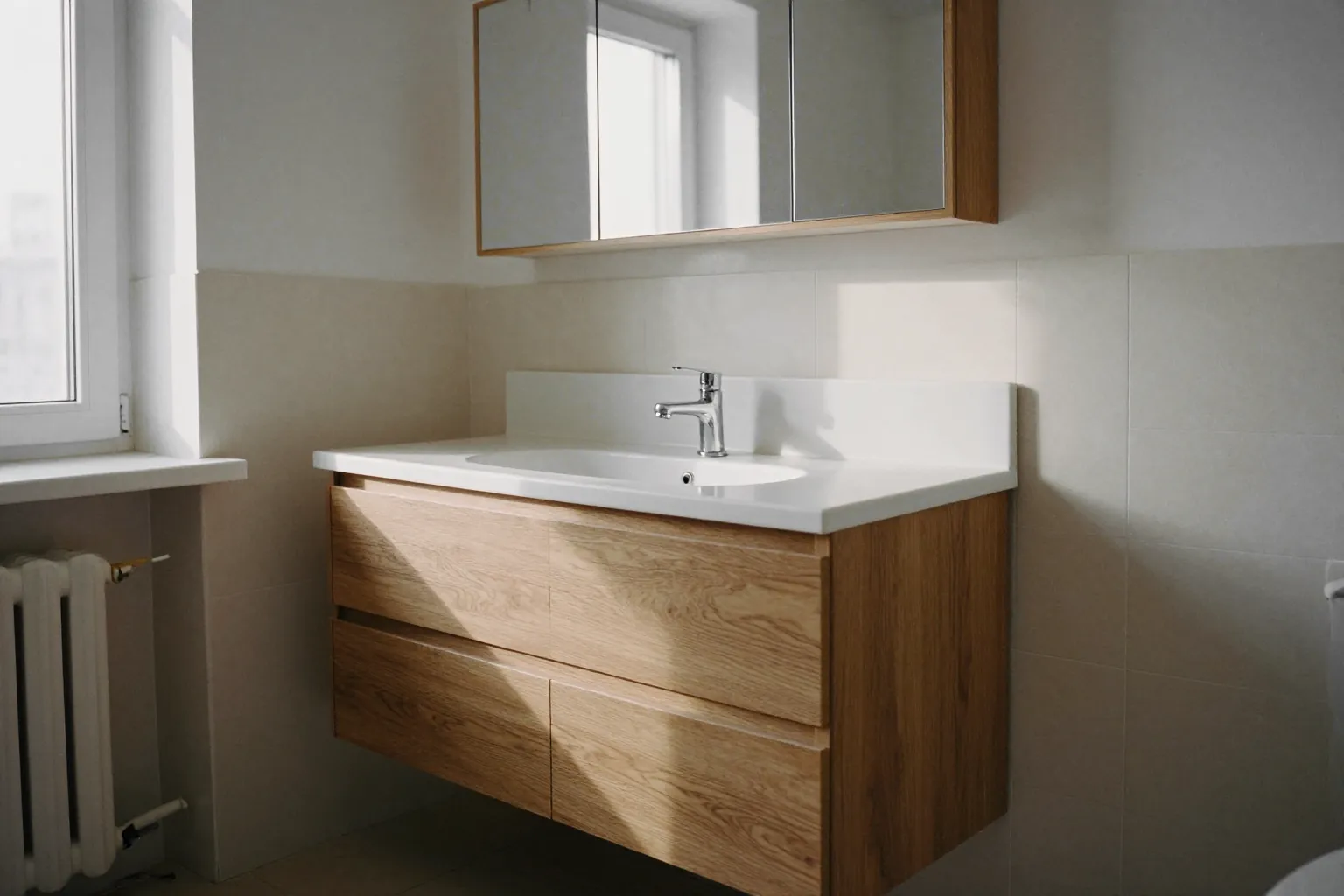
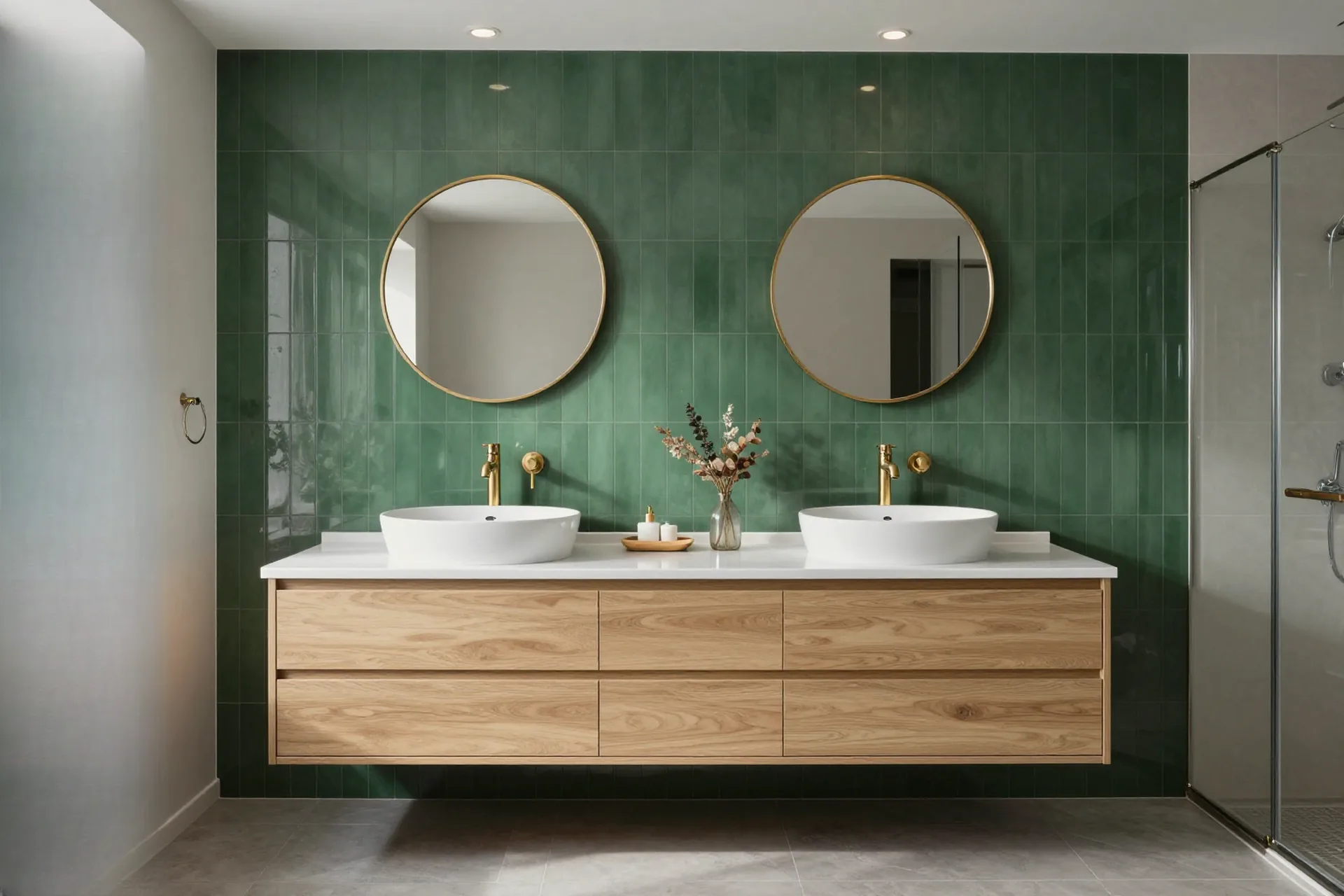
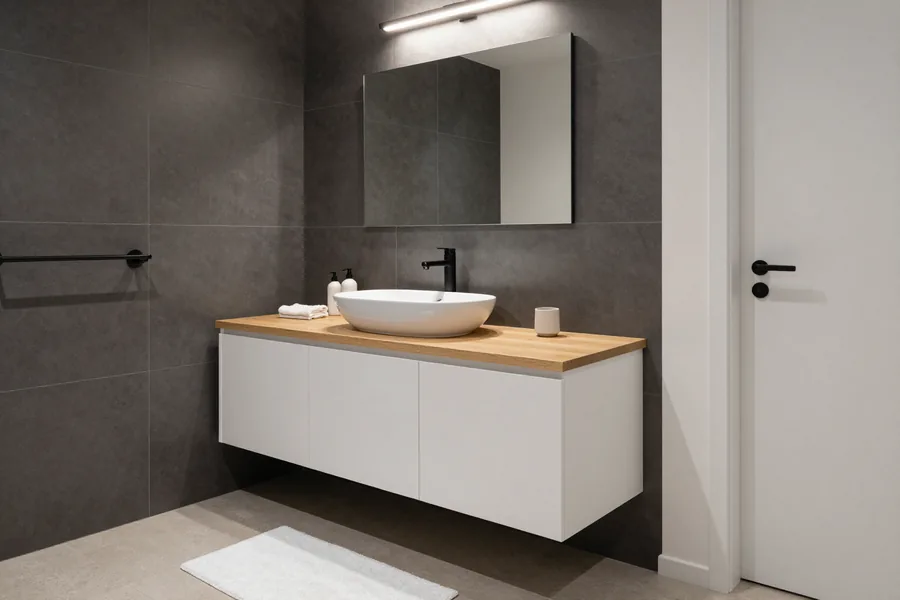
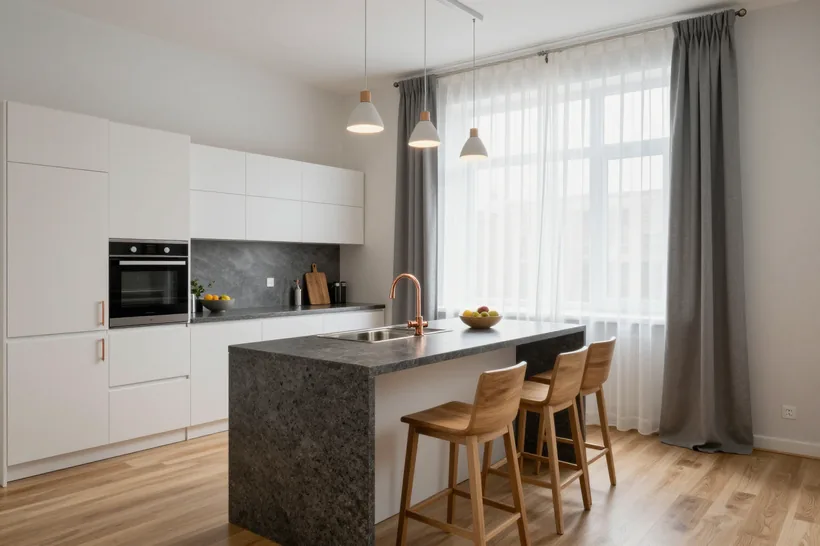
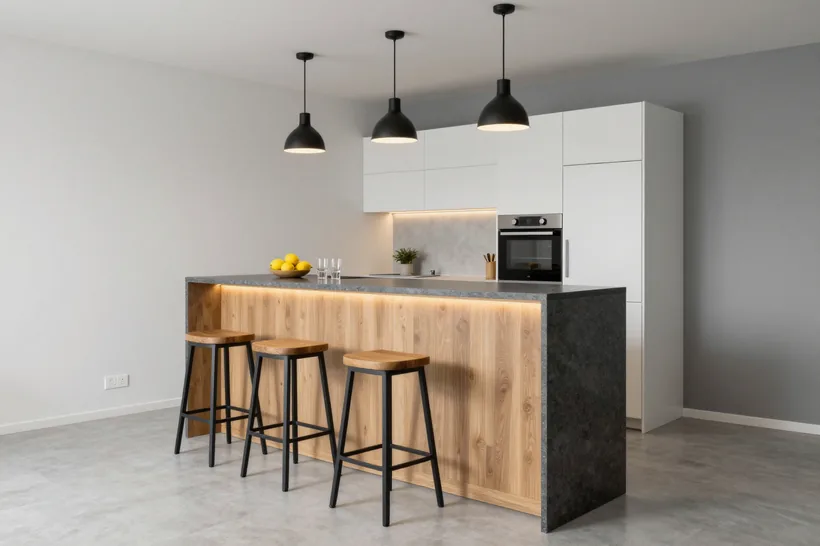
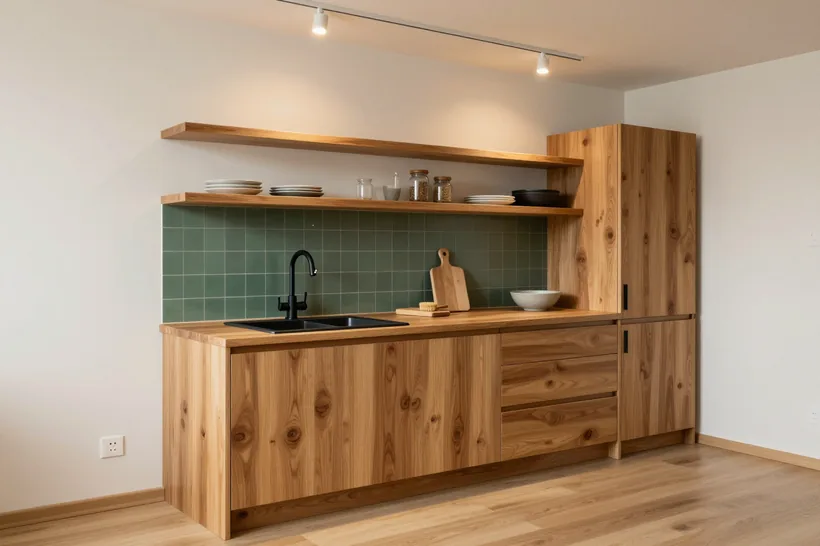
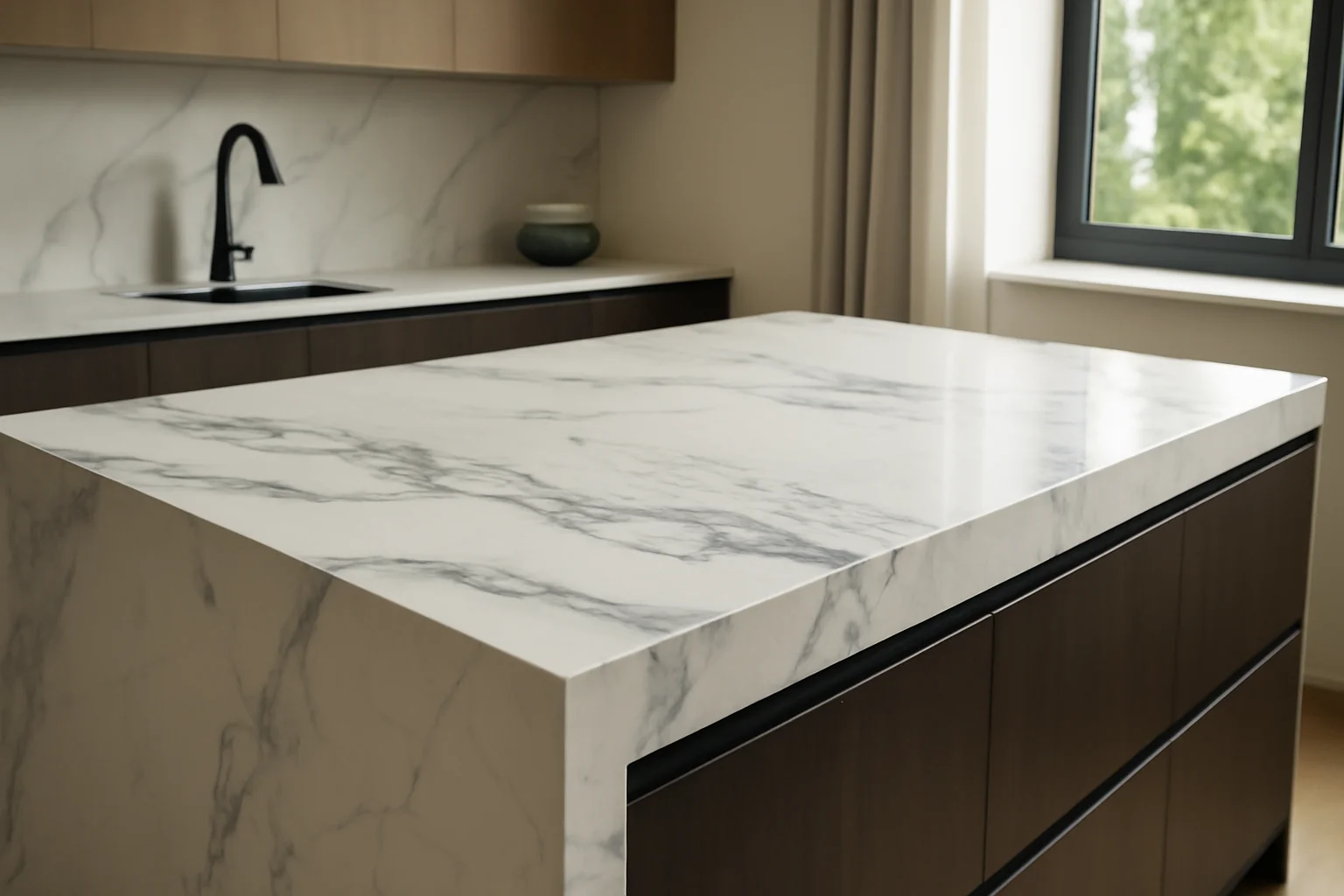
A custom bathroom worktop from MEBLIX is made to the exact size of your basin and walls: a free measuring visit, a 3D design in 1–2 days, production in our own 600 m² workshop and installation by our own fitters. We choose between moisture-resistant chipboard with HPL, acrylic stone, quartz, ceramic and protected solid wood to suit the basin and how the room is used. Every worktop comes with a 24-month warranty under the contract.
A bathroom is unforgiving: moisture, steam and cosmetic stains soon show where corners were cut. Choose the material for the specific basin and the daily wear it will face, not just for its looks.
Acrylic, quartz, ceramic or solid wood
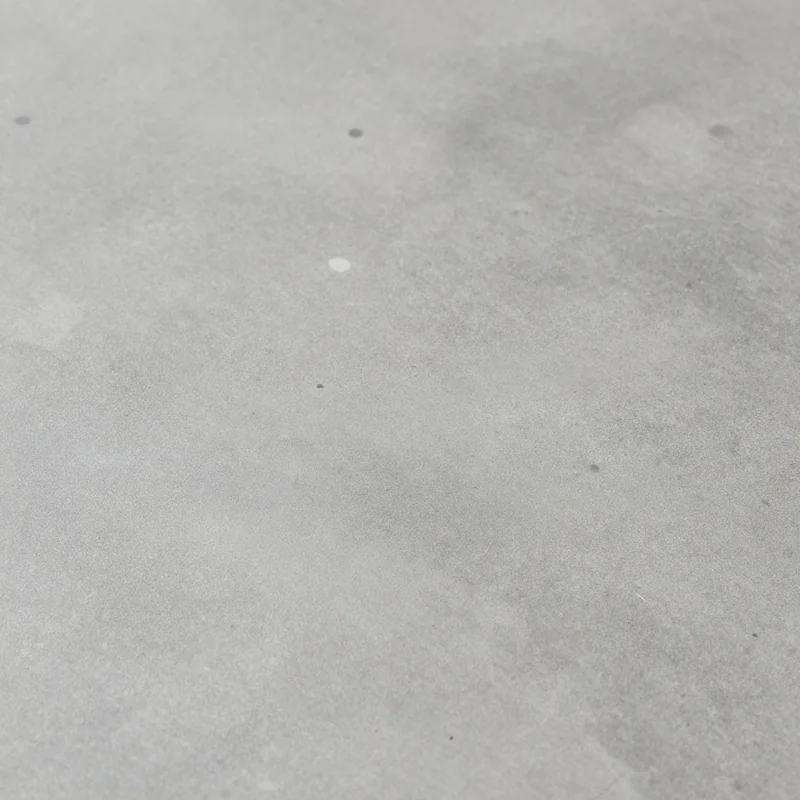
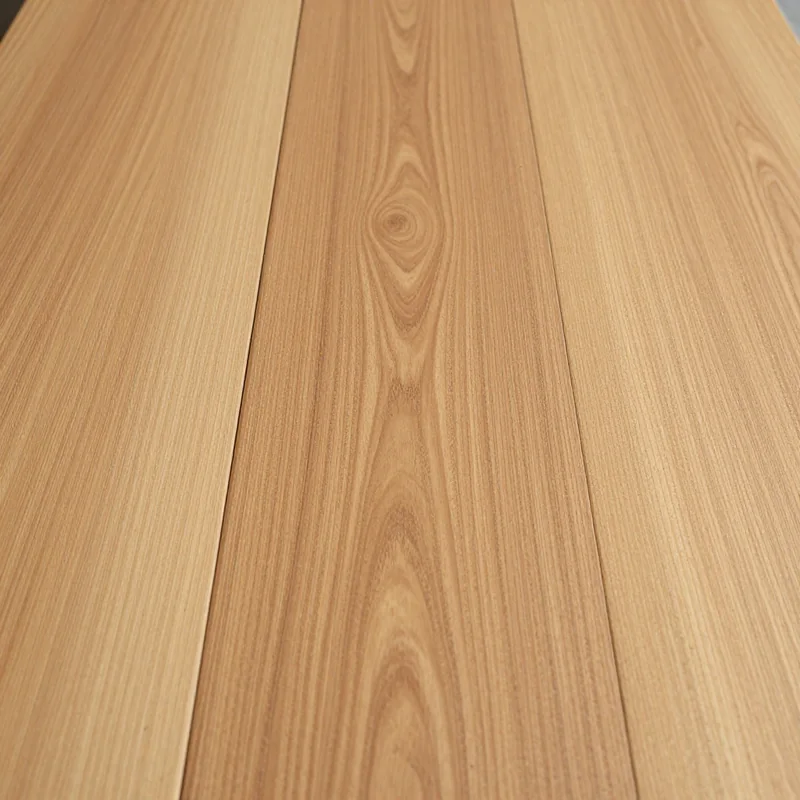
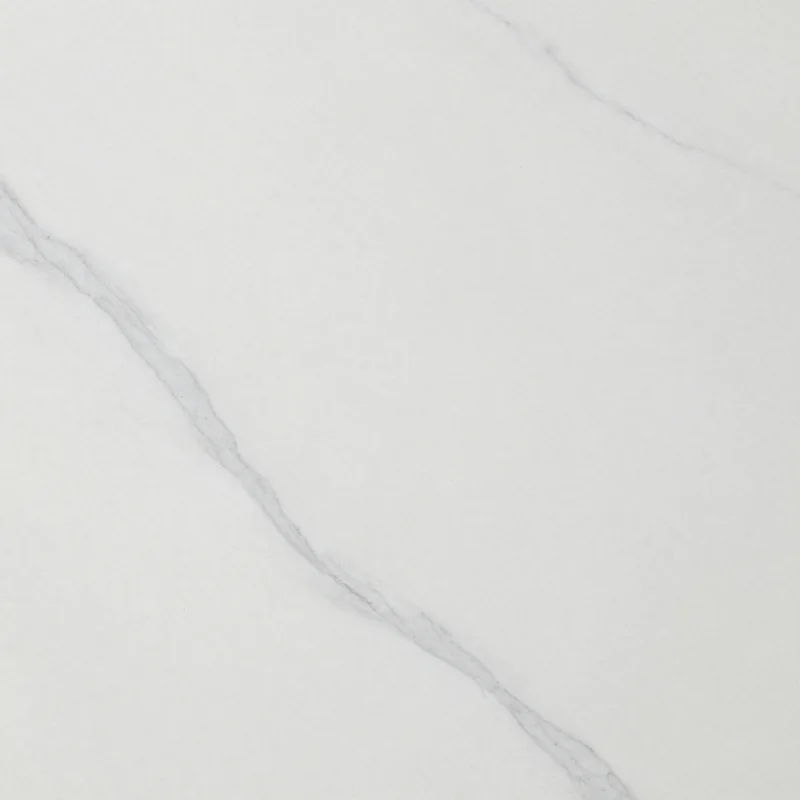
Acrylic stone gives a seamless surface and can be repaired: a scratch is sanded out and polished on site, and a properly bonded joint with the bowl stays invisible. Quartz copes better with scratches and with stains from cosmetics and cleaning products, but the joint around the basin still needs sealing, and a chip in it takes a craftsman's visit to fix. Ceramic is the most resistant to chemicals, yet it can crack under a heavy knock, and that cannot be repaired. Treated solid wood looks the warmest, but its finish needs renewing and it dislikes water standing by the upstand. For an integrated bowl with hidden joints, go for acrylic; for resistance to scratches and harsh cleaners, choose quartz and plan on sealed joints.
Will chipboard swell, and where HPL comes in
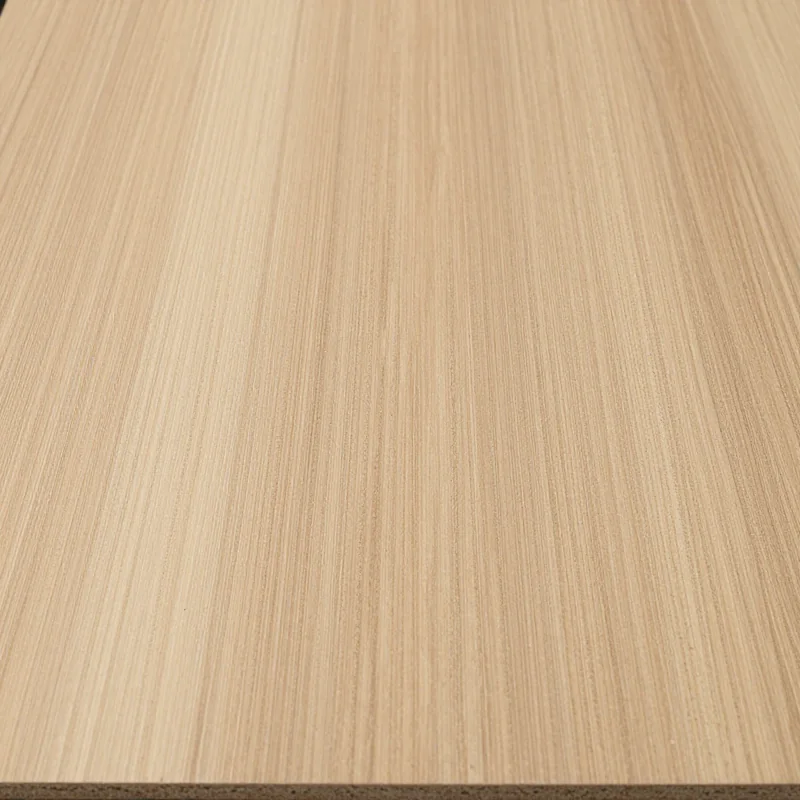
We use Egger and Kronospan boards and protect the face and cut edges of chipboard with HPL laminate and edging, so the board does not soak up moisture. HPL is a layered plastic bonded to the board that shields it from steam and splashes, while edging round the perimeter keeps water out of the ends. These are moisture-resistant ranges, but any exposed area will still absorb water. In our workshop cutting, edging and trial assembly follow one another, so the basin cut-out is protected before installation, not after. The weak point of chipboard is the open edge at the cut-out, which is why HPL and good edging matter more than board thickness.
Materials compared
| Material | Moisture resistance | Repairability | Care |
|---|
| Chipboard + HPL | medium, depends on edging | low | gentle cleaners |
|---|
| Acrylic stone | high | high, can be sanded | no abrasives |
|---|
| Quartz | high | medium | resists chemicals |
|---|
| Ceramic | high | low | simple |
|---|
| Treated solid wood | medium, needs care | medium | finish renewed |
|---|
Fitting the basin and cutting the bowl opening
How the basin is fitted decides whether the joint shows, how well the cut edge is protected and how easy the area round the bowl is to clean.
Sit-on, inset or integrated
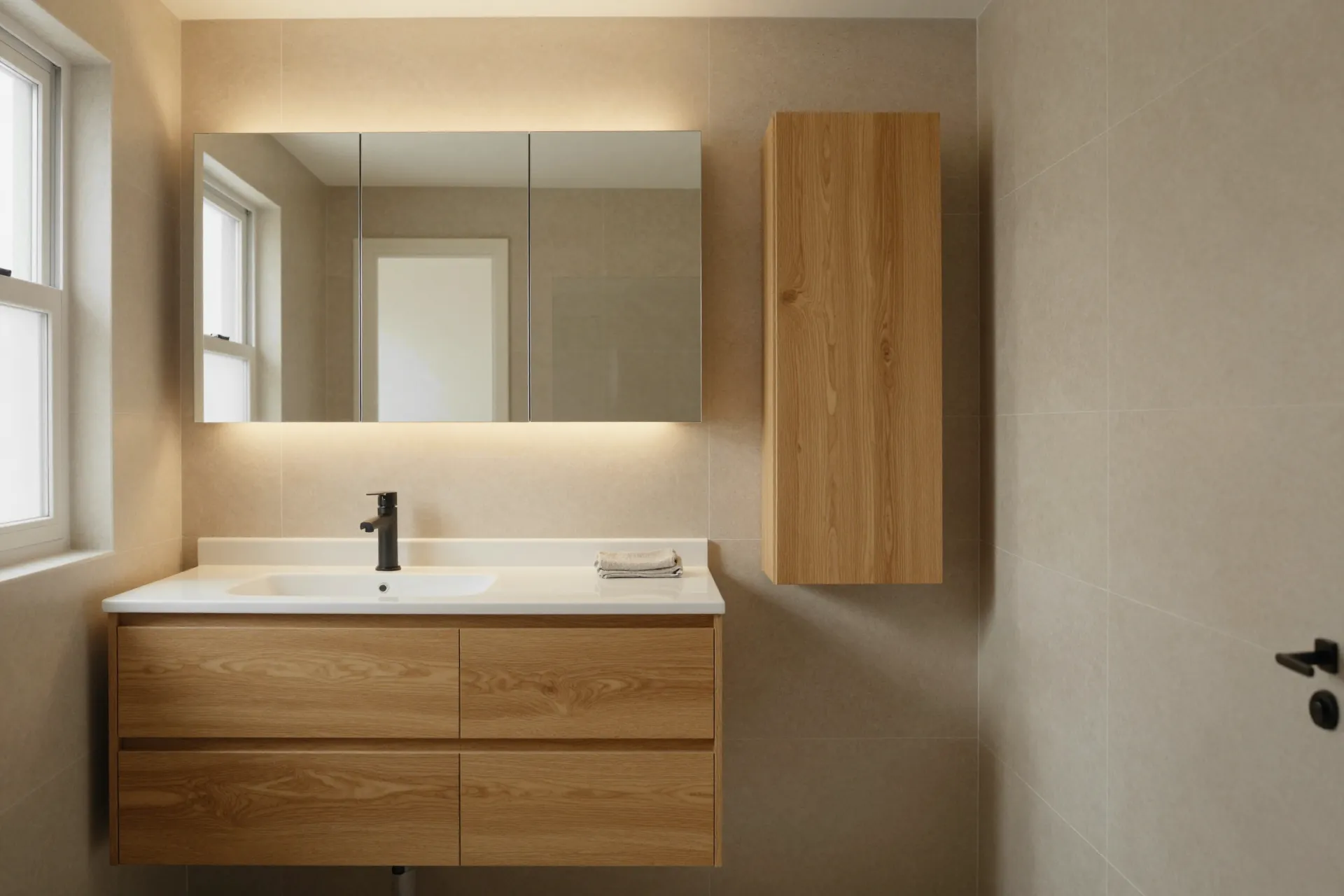
A sit-on basin rests on the finished surface on a bead of sealant. It needs no cut-out and can be replaced without touching the worktop, but its joint is always visible. An inset bowl drops into a precise cut-out, so the joint hides under its rim and the cut edge must be sealed all the way round. An integrated basin is made in the same material as the worktop, usually acrylic stone: the surface flows into the bowl with no lip for limescale to gather and no joint at all. It is the easiest to keep clean, but it cannot be replaced on its own: if it is damaged, the whole worktop goes.
How we cut the opening and keep the edge dry
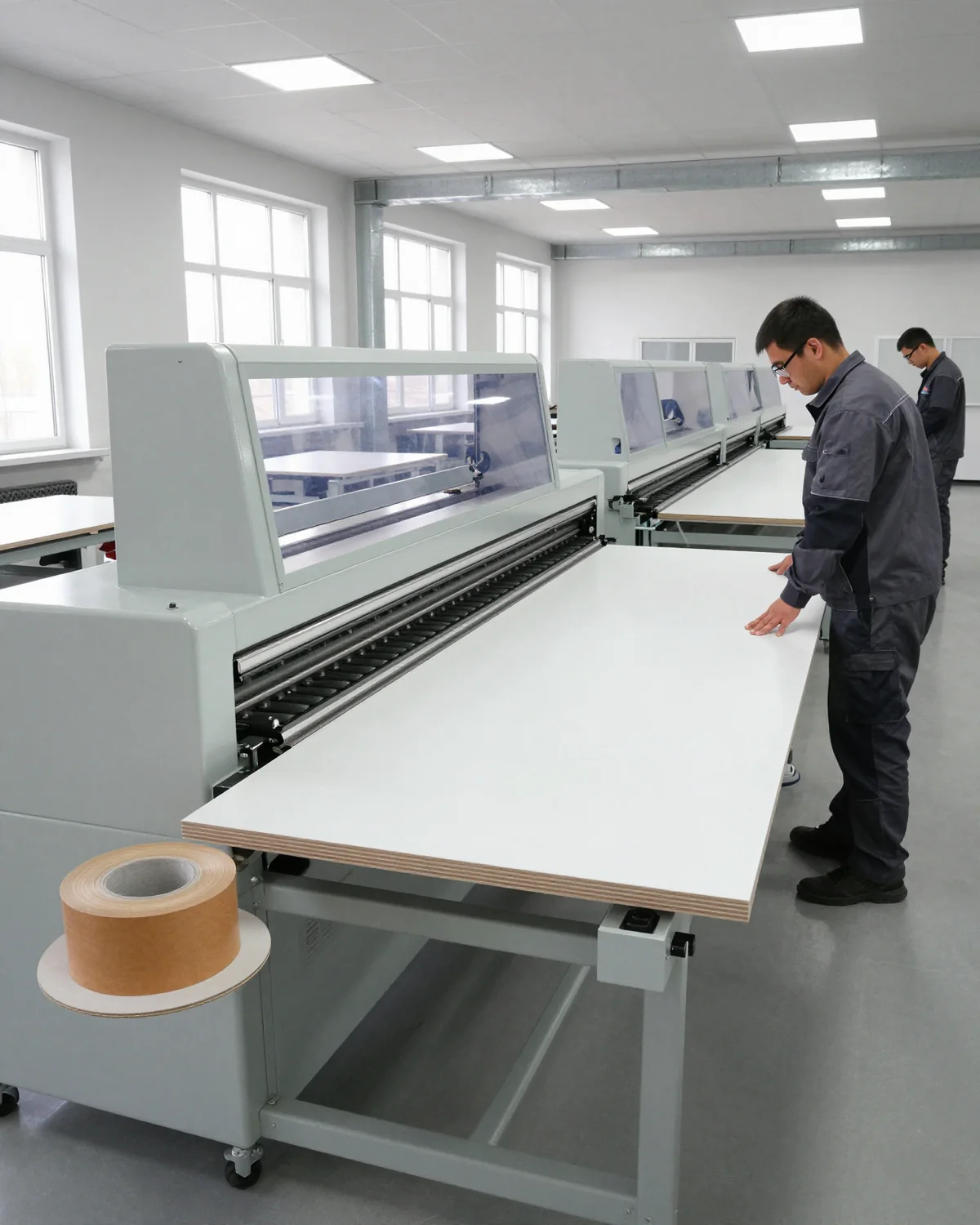
The opening is marked out from the bowl template, taken from the bowl itself or its data sheet, so the outline matches the rim with no gap and the sealant goes on evenly. The cut edge is covered with edging or HPL so the board never meets water. The tap hole is marked in the same setting-out as the cut-out: drilled later, the bit can break through the face and chip the visible surface. Edging goes on before the trial assembly in the workshop, where we check that the bowl sits tightly and the edge is covered all round.
Edging that resists chipping
- HPL edging: protects the chipboard edge at the cut-out from moisture and knocks.
- Moisture-resistant edging: used around the basin, where condensation and splashes linger.
- Polished stone: acrylic and quartz edges are polished flush, with no strip applied.
- Matching the surface: edging matches the board or contrasts with it, to suit the pattern and thickness.
- Thin over heavy: with a sit-on basin a flat surface matters, so a thin edge looks neater.
Structure and support for the weight of the basin
The usual worry is that the bowl will sag and a gap will open at the joint. Rigidity comes from the design, so we work out the support for your particular basin.
Will the worktop bend
Deflection depends on the span between supports and the weight of the bowl, not on thickness alone. A ceramic bowl full of water weighs far more than a thin glass one, and inset and integrated basins spread the load differently. So the design fixes the support points as well as the board size: the side panels of the vanity unit, an intermediate upright and a wall profile. On long spans we add a hidden upright that takes the load off the middle. Even a thick board will bend over time on a long unsupported span, so stiffness is designed in rather than added after fitting.
How thick should it be
A 38 mm Egger or Kronospan board carries a sit-on bowl without an intermediate upright on a span of up to a metre; on two metres the same board needs central support. Acrylic and quartz are stiffer, so a stone worktop that looks thin sits on a hidden profile. Solid wood is lovely up close but copes less well with constant humidity and needs supports more often. A slim board on a hidden support looks light, but it needs accurate calculation and is never done by eye.
Fixing to the wall and the unit
- To the unit: hidden brackets and connectors to the design, with no holes through the visible face.
- To the wall: expanding plugs for plasterboard, other anchors for brick and concrete.
- Uneven walls: the gap is closed with an upstand or the edge is scribed on site.
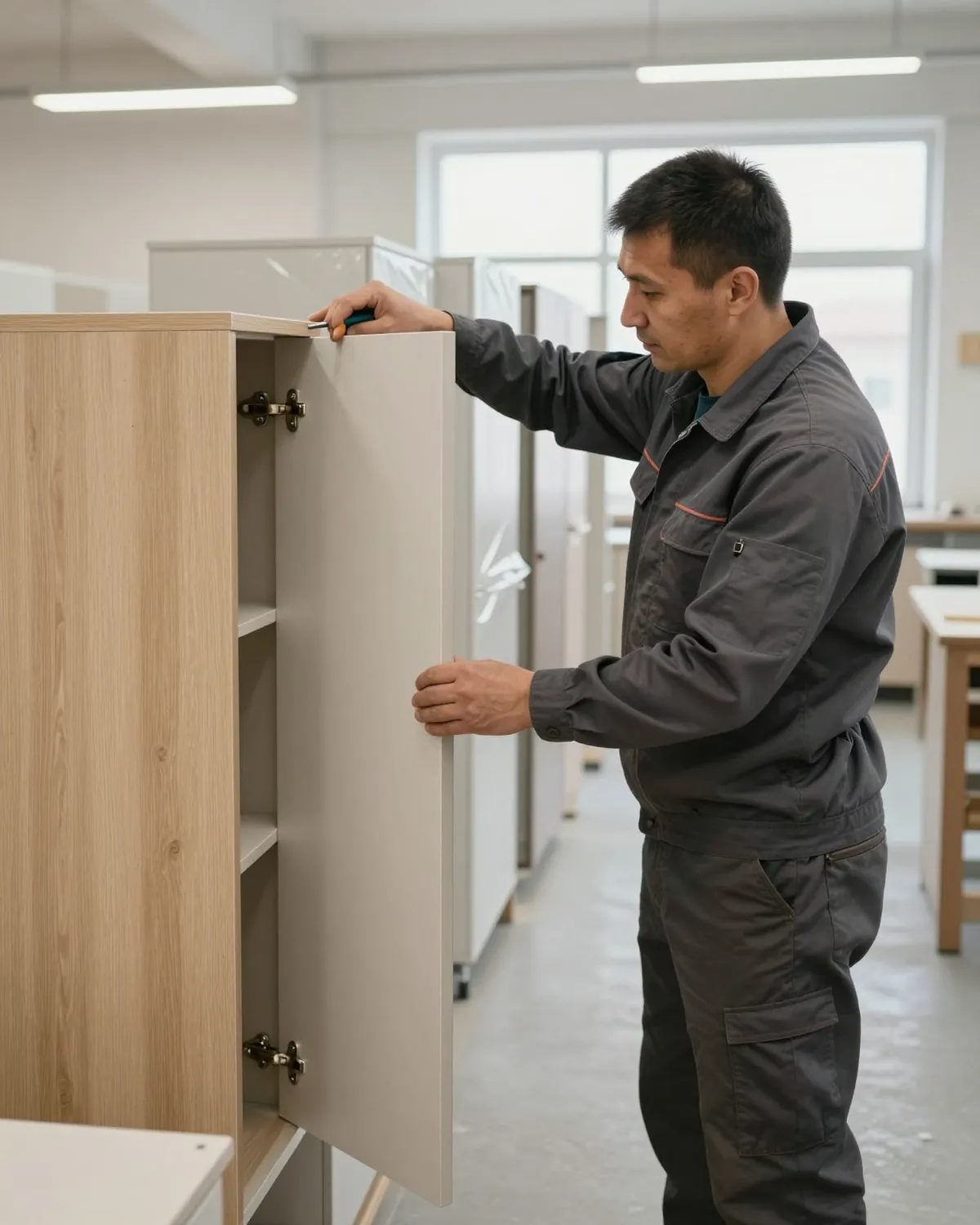
- Our own fitters: they install the worktop, level the bowl and check the joints.
- Final check: before the acceptance certificate is signed, we make sure nothing moves and water drains without pooling.
Uneven walls, gaps and upstands
Ready-made furniture rarely matches real walls. Measuring and on-site fitting are what get rid of gaps and stop water running over the edge.
What if the walls are not straight
We record how far the walls are out at the measuring visit and build it into the design. The measurer runs a level and plumb line along the whole junction, and our technologists transfer the deviations to the cutting plan: the front edge stays straight while the back edge follows the wall. The surface sits without finger-wide gaps or packing that falls out over time. A small gap at the wall is better closed with an upstand than by reshaping the whole surface, which is simpler and safer against moisture.
How upstands and skirting keep water out
The upstand is a low rise along the back edge in the same material as the surface, a few millimetres high, that turns splashes back into the basin. Skirting covers the vertical joint with the wall, and corners meet at 45 degrees so no edge is left exposed. In a damp room the seal matters even more: a line of silicone keeps water away from the vanity unit. An upstand also hides an uneven joint with the wall, which is often why it is fitted.
Measuring for a basin
At the free measuring visit we measure the vanity unit, the basin and the walls; the 3D design follows in 1–2 days and shows the worktop with your chosen bowl and tap. The craftsman also checks the supply pipes, the height of the bowl rim and where the tap comes out, so the cut-out does not land on an edge or a fixing. Measuring "to the unit" without the bowl and tap may not match how the basin actually sits.
Measuring, design and the full order cycle
Here is the path from enquiry to acceptance certificate, and how it differs from buying a ready-made vanity unit in a shop.
The 3D design and changing the material
The design shows the future cut-out, edging and wall junction to the millimetre before any board is cut. It states the Egger or Kronospan board, its thickness, the edging and how the bowl is fixed, so no questions are left on site. Until the order goes into production you can change the material as often as you like, acrylic for quartz or chipboard for HPL; after cutting, a change affects parts already made.
Production and trial assembly
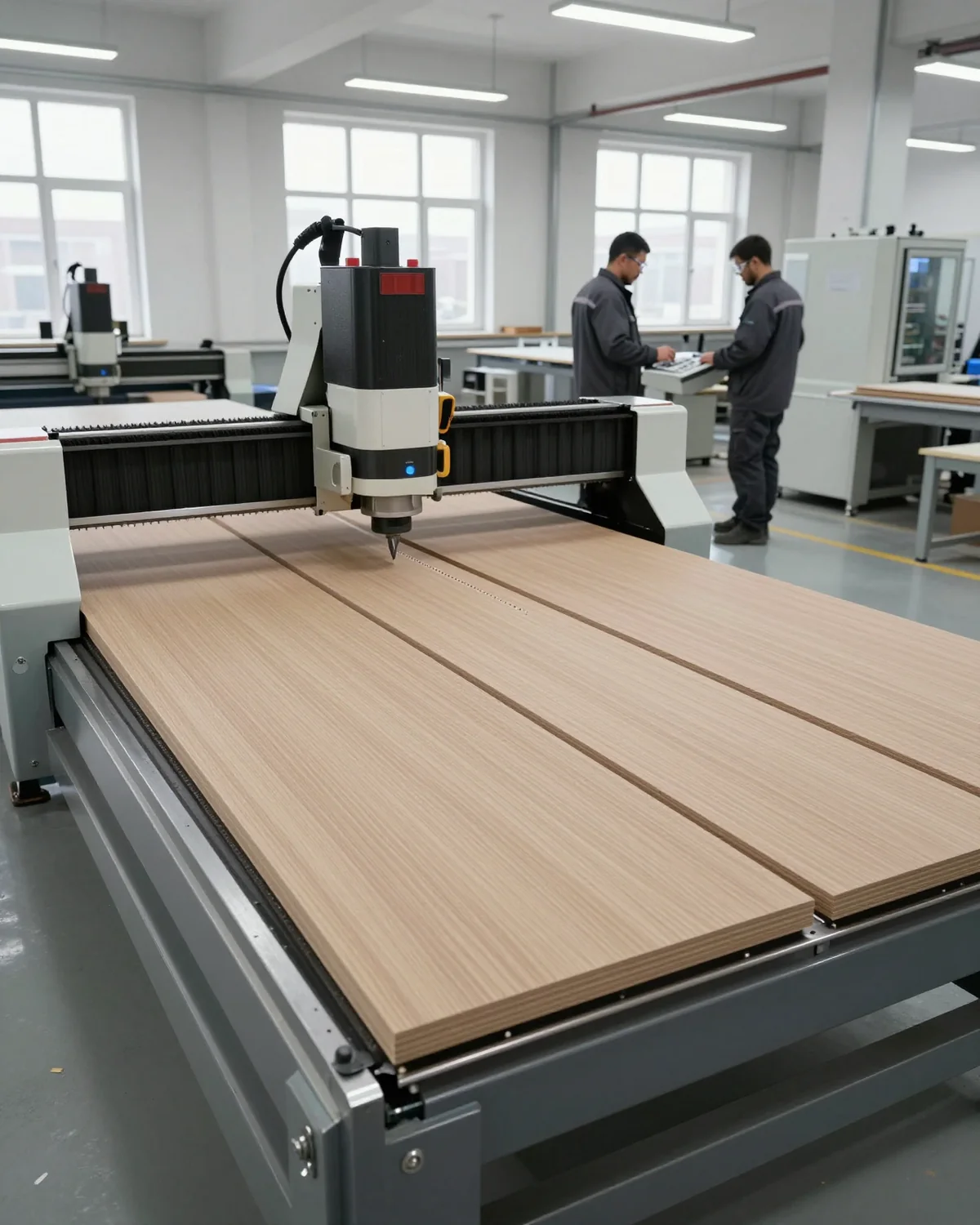
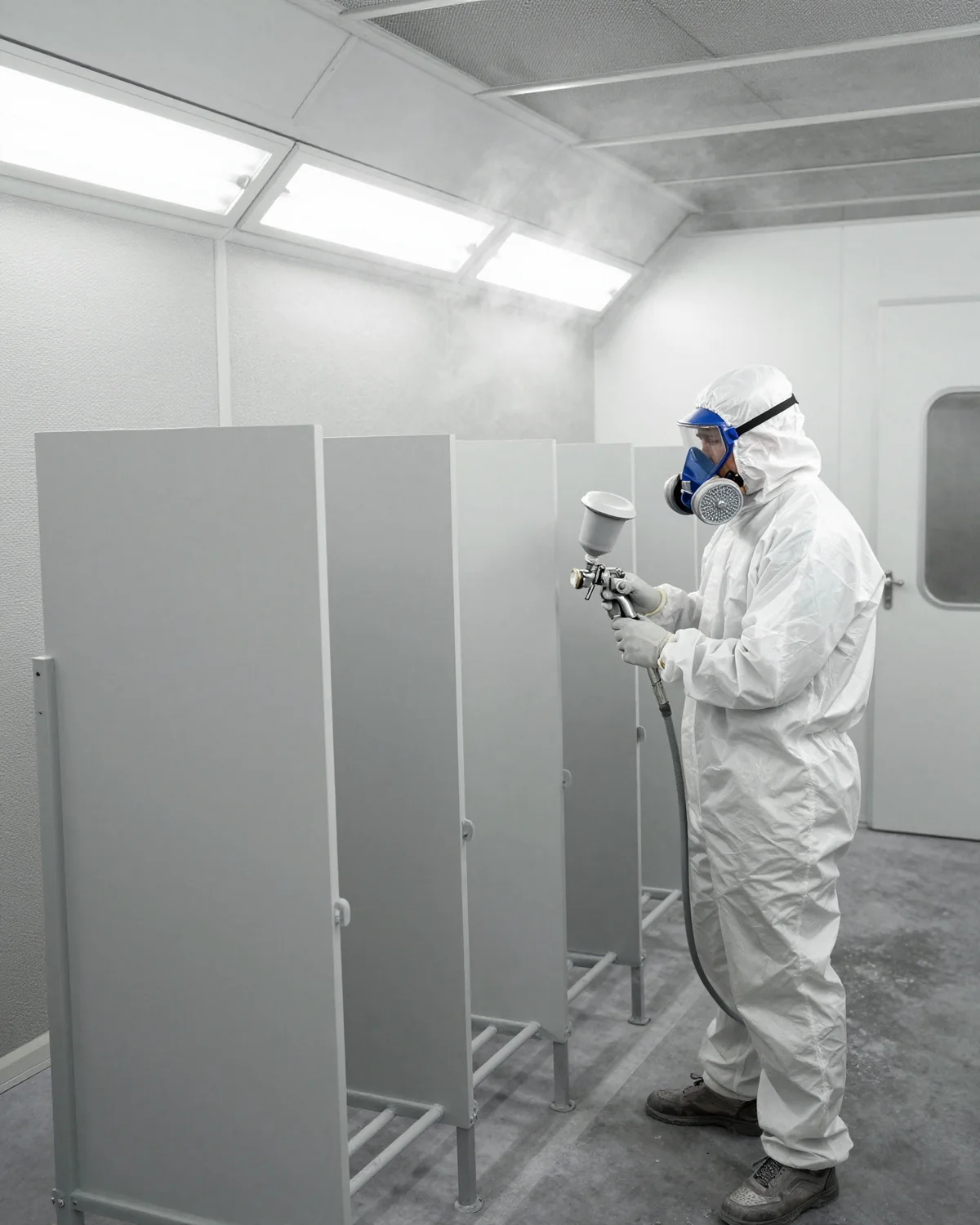
In our 600 m² workshop the worktop is cut on a CNC machine, edged on an automatic line, painted and given a trial assembly before dispatch. Cut edges are treated in the workshop rather than on site, where there is no extraction or stable temperature for the coating to cure. The piece is then trial-assembled with Blum, Hettich or Boyard hardware, and we check how the bowl sits and how the edge meets the wall at the measured points. Mismatches are caught before anyone goes on site, where rework is slower and harder.
Installation, certificate and warranty
- Installation: by our own teams, who are responsible for seating the bowl and sealing the joints.
- Acceptance certificate: signed once the worktop is in place and you have checked the cut-out, edging and wall junction.
- Warranty: 24 months on the worktop under the contract, plus the manufacturer's 25-year warranty on Blum hardware.
- Payment: 50 % in advance, the balance after the certificate is signed, by bank transfer.
- Lead times: listed for each option in the price list on this page; urgent orders are possible.
The bottom line on bathroom countertops
The things that most often decide how a bathroom worktop turns out, from choosing the board to signing off after installation.
- The right material: acrylic for a jointless integrated bowl, quartz for stain resistance, chipboard with HPL and protective edging for a modest budget.
- Basin fitting: an integrated bowl is easiest to clean, but if damaged it is replaced with the whole worktop.
- Support and thickness: deflection is decided by the span and intermediate support, not by board thickness.
- Uneven walls: accurate measuring and an upstand along the wall remove gaps and keep water from getting past the edge.
- The process: measuring, design, workshop, installation and sign-off give a predictable result with no surprises.