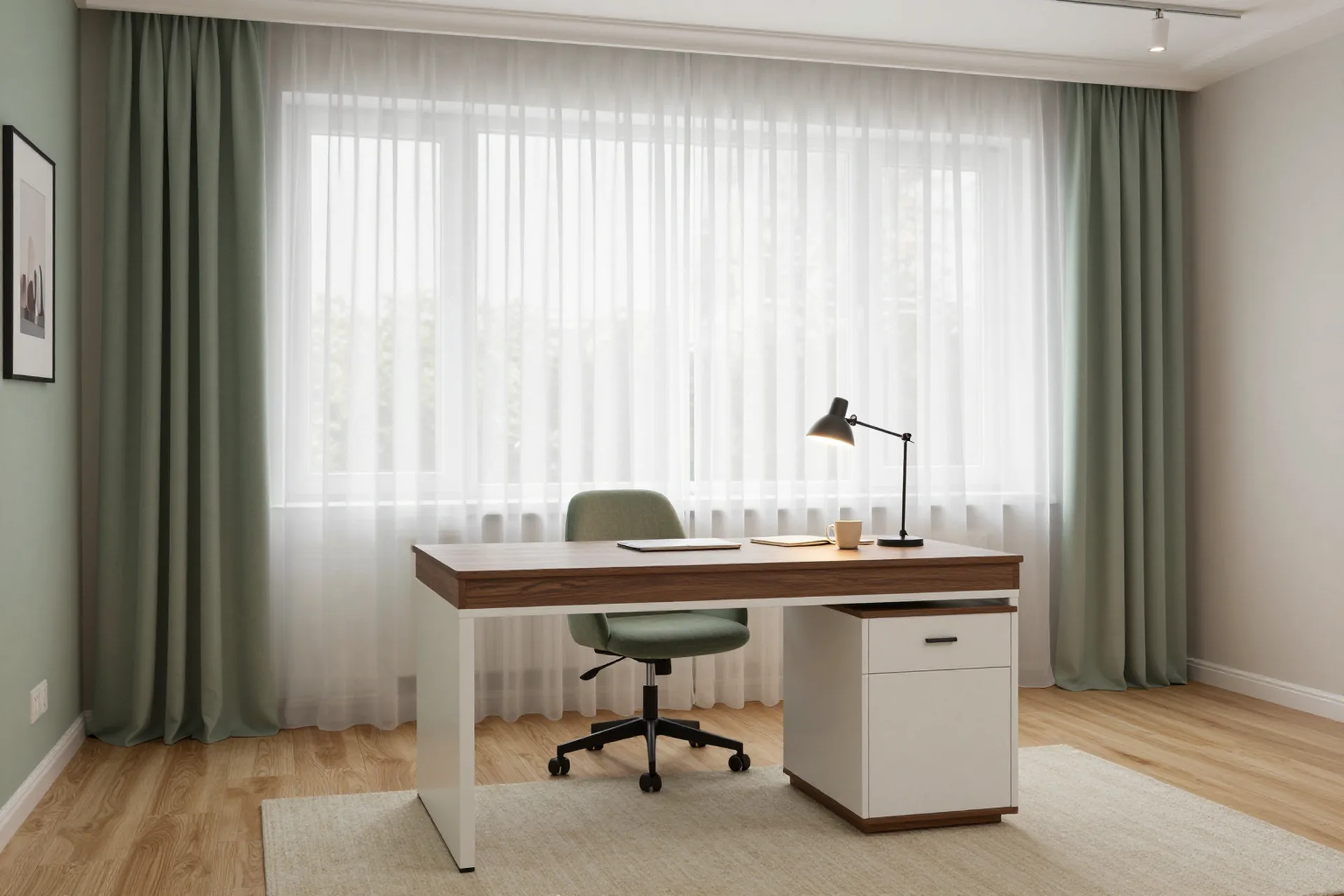
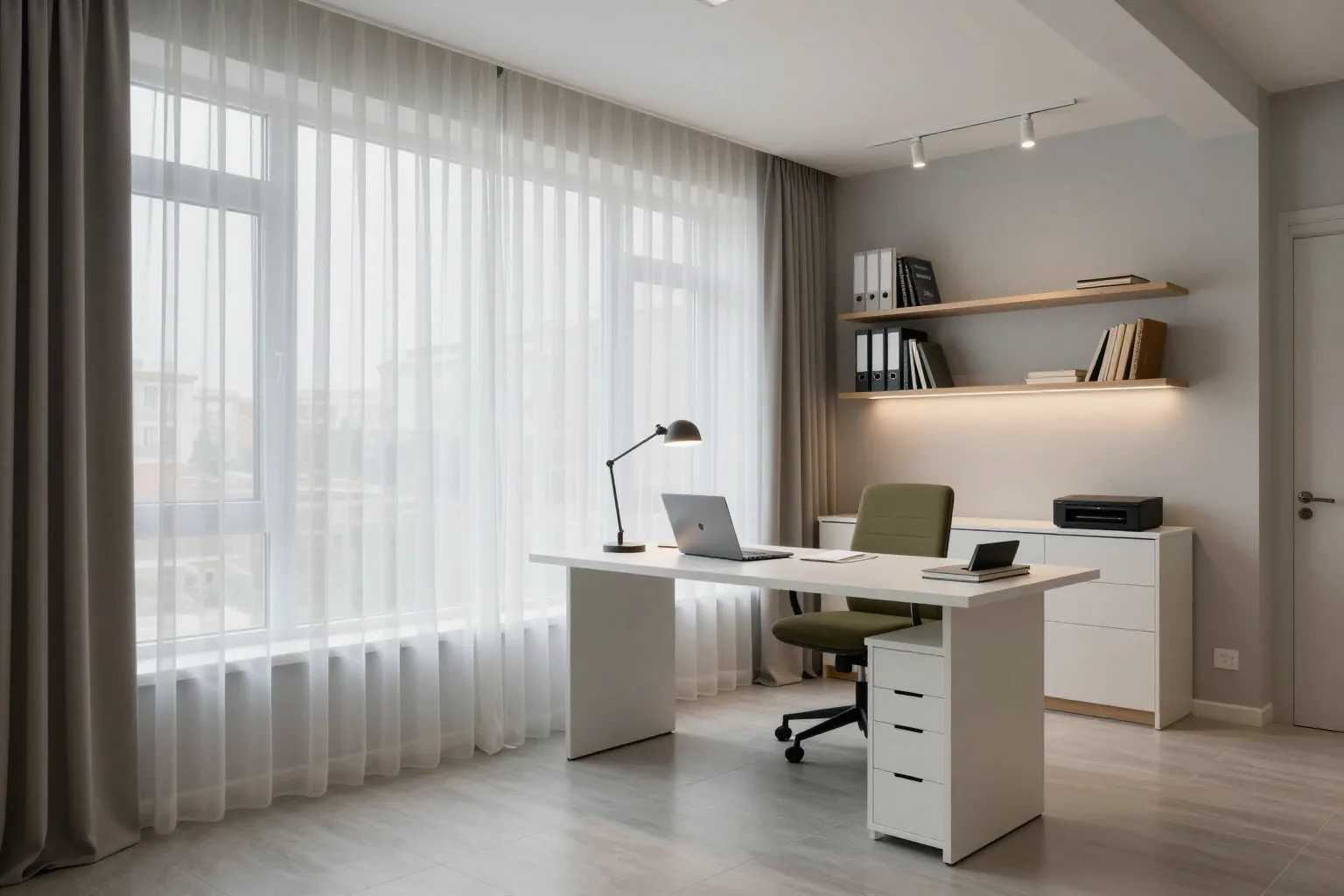
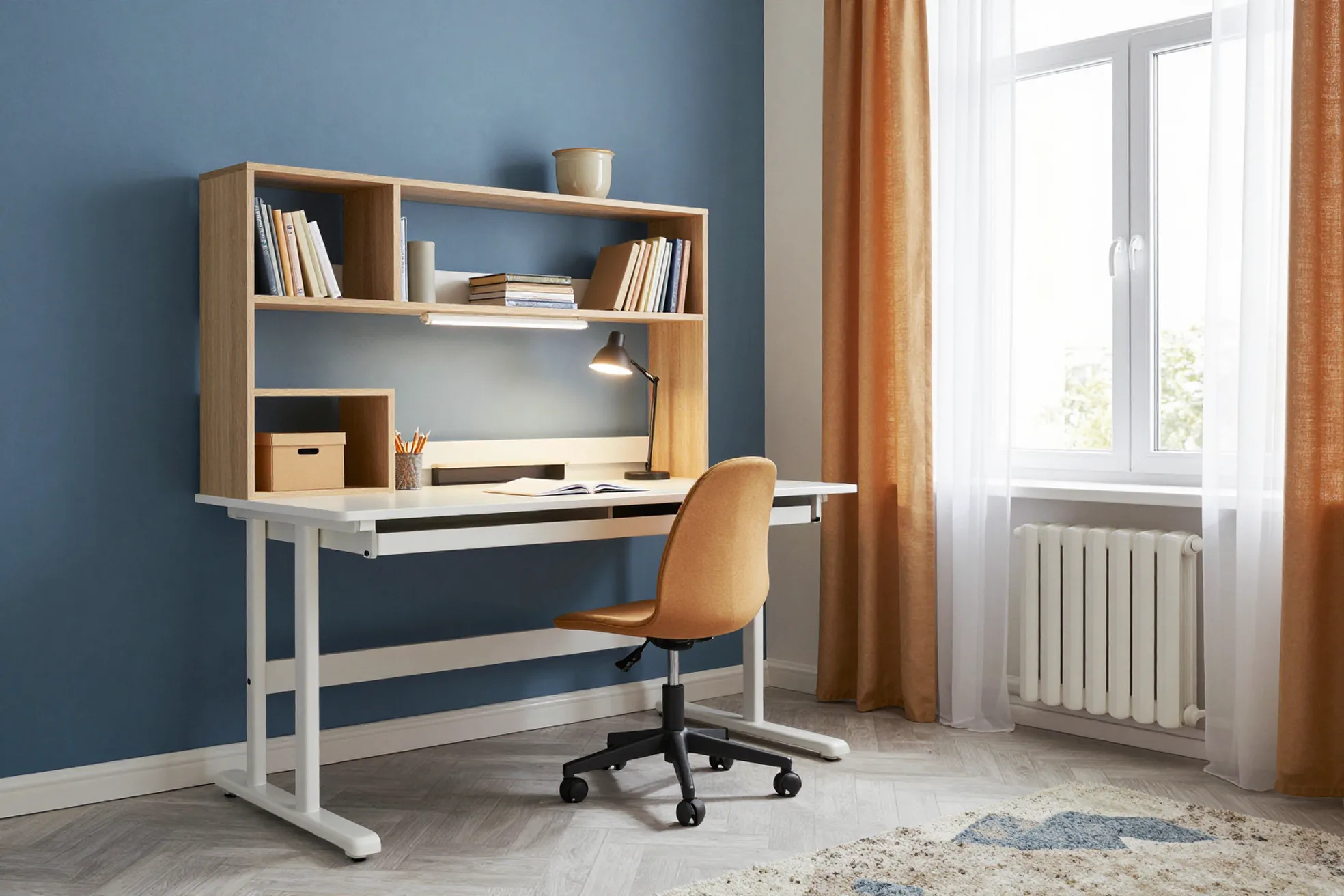
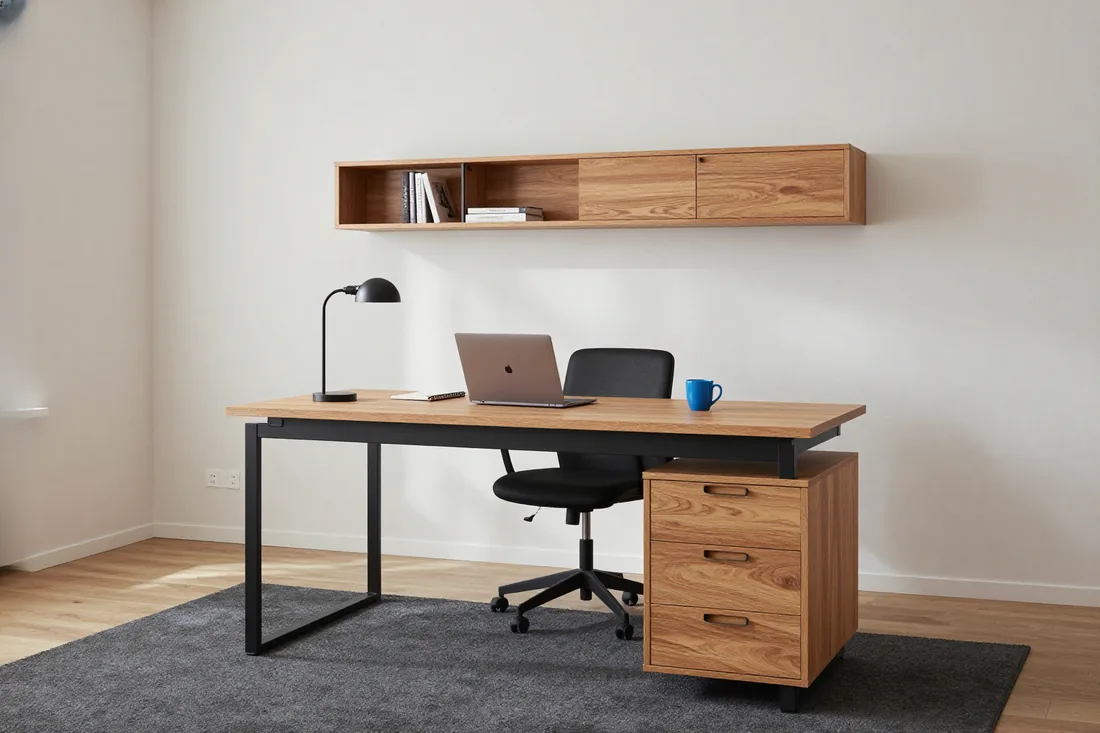
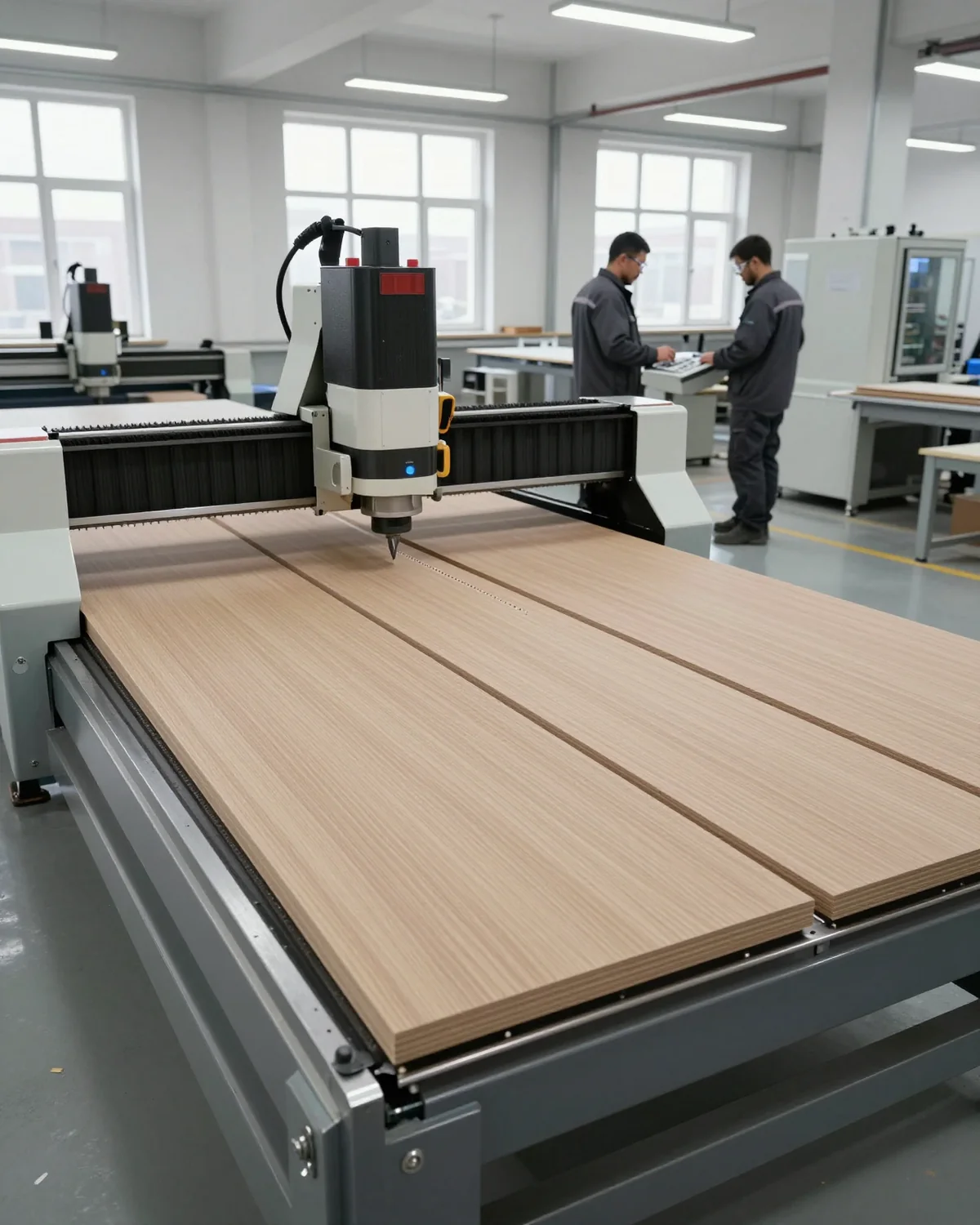
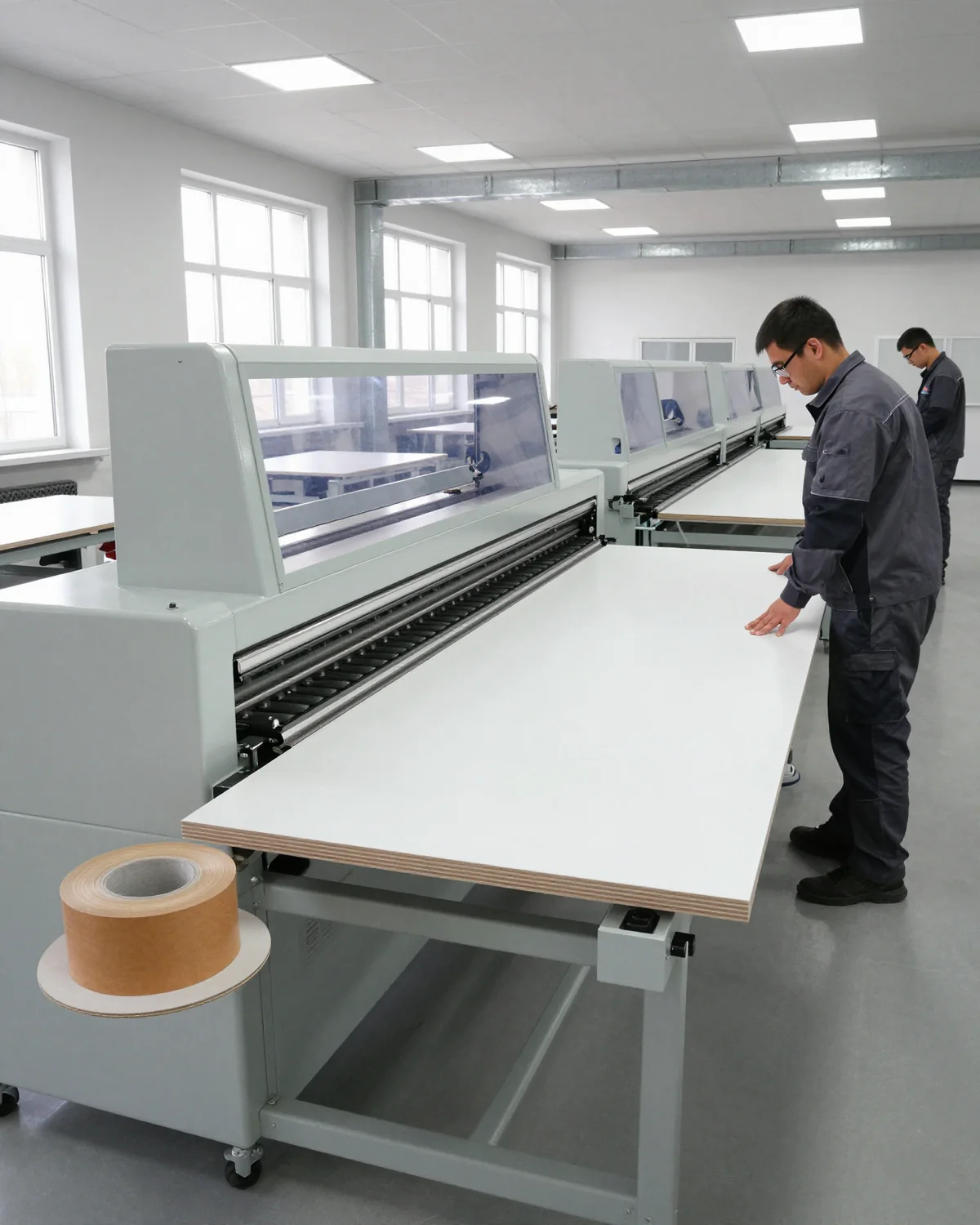
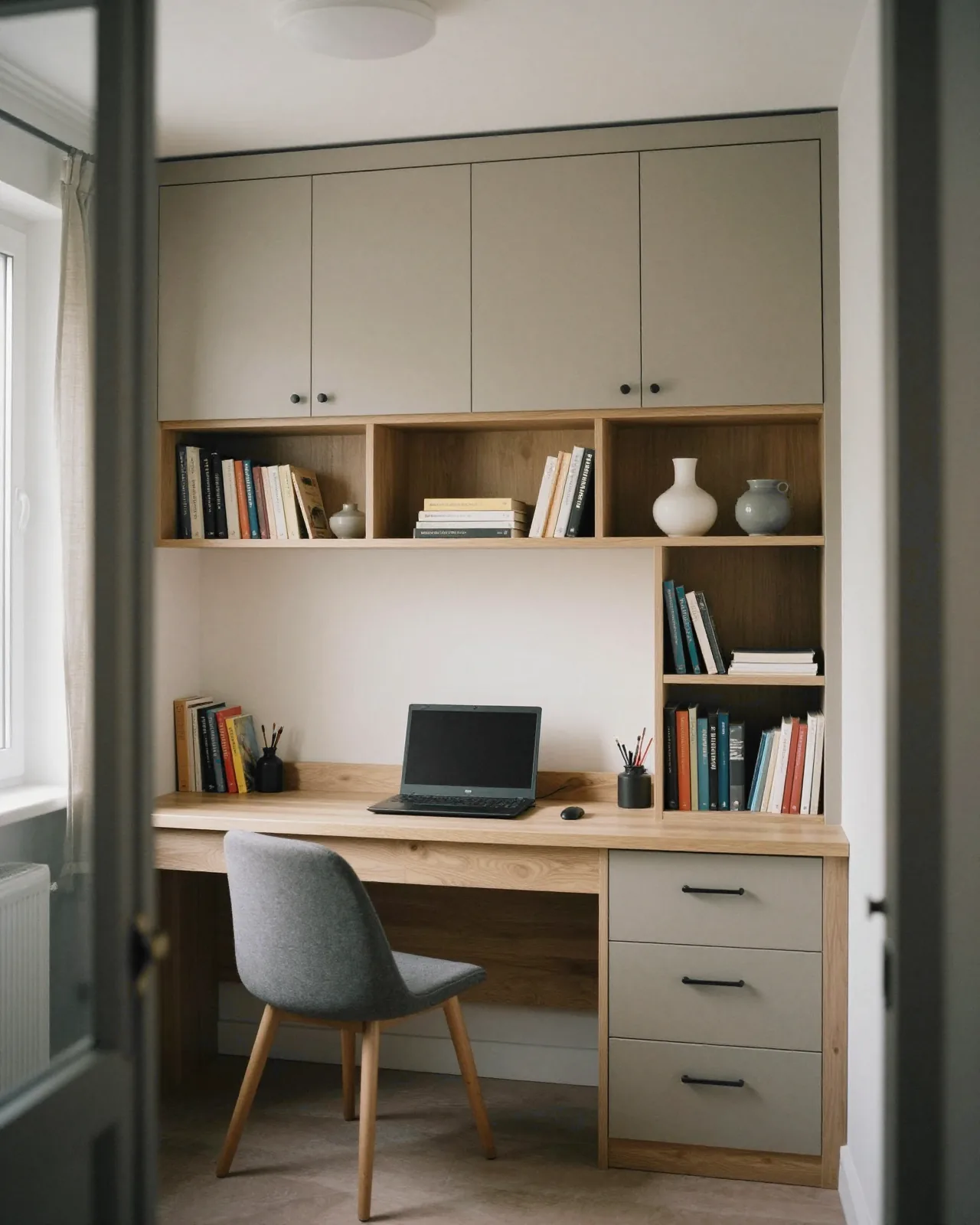
A custom desk from MEBLIX is made to fit your room: free measurement, 3D design in 1–2 days, production in our own 600 m² workshop and installation by our own crews. We have been working in Almaty for 13 years, with 3 500+ projects behind us, and a 24-month warranty on the item under the contract.
Sagging is the main fear of desk buyers. We break down what makes a countertop rigid and how we calculate the load from two monitors, a laptop and elbows.
What determines countertop rigidity under two monitors
We calculate rigidity by three parameters — board thickness, support spacing and stiffening ribs under the countertop — not by material alone. A custom desk in Almaty is most often made with a 1000–1400 mm span between side panels: over that length, a 16 mm board without support sags under the weight of two monitors within a few months. We work with Egger and Kronospan laminated chipboard in 16, 18 and 25 mm and select the section for the specific span. Two monitors and a laptop create a point load in the middle of the span, so when the span is over a metre we add an intermediate support or a rib — this is cheaper than switching to a thicker board.
How we attach the countertop to the frame and adjustable supports
We attach the countertop to the frame with concealed fasteners and set the adjustable supports to the floor level during installation — the desk does not wobble even on an uneven floor. We weld the metal frame to the size of the niche rather than adjusting a ready-made one: this way the support spacing matches the stiffening ribs, and the load goes into the joints rather than the free span. Adjustable supports compensate for floor unevenness in Almaty apartments — and it occurs more often than you might think, especially in older buildings. The countertop and frame work as a single beam only with a rigid connection: play in this joint causes squeaking and micro-cracks in the edge after a year of use, and fixing it means taking the whole desk apart.
Drawer hardware that does not work loose
- Blum runners: full extension, with soft-close, manufacturer's 25-year warranty on the mechanism.
- Blum, Hettich, Boyard hinges: selected for the facade weight and opening scenario — we use reinforced ones for heavy doors.
- Drawer fastening: concealed, with no visible heads on the facade, so there are no extra holes on the front.
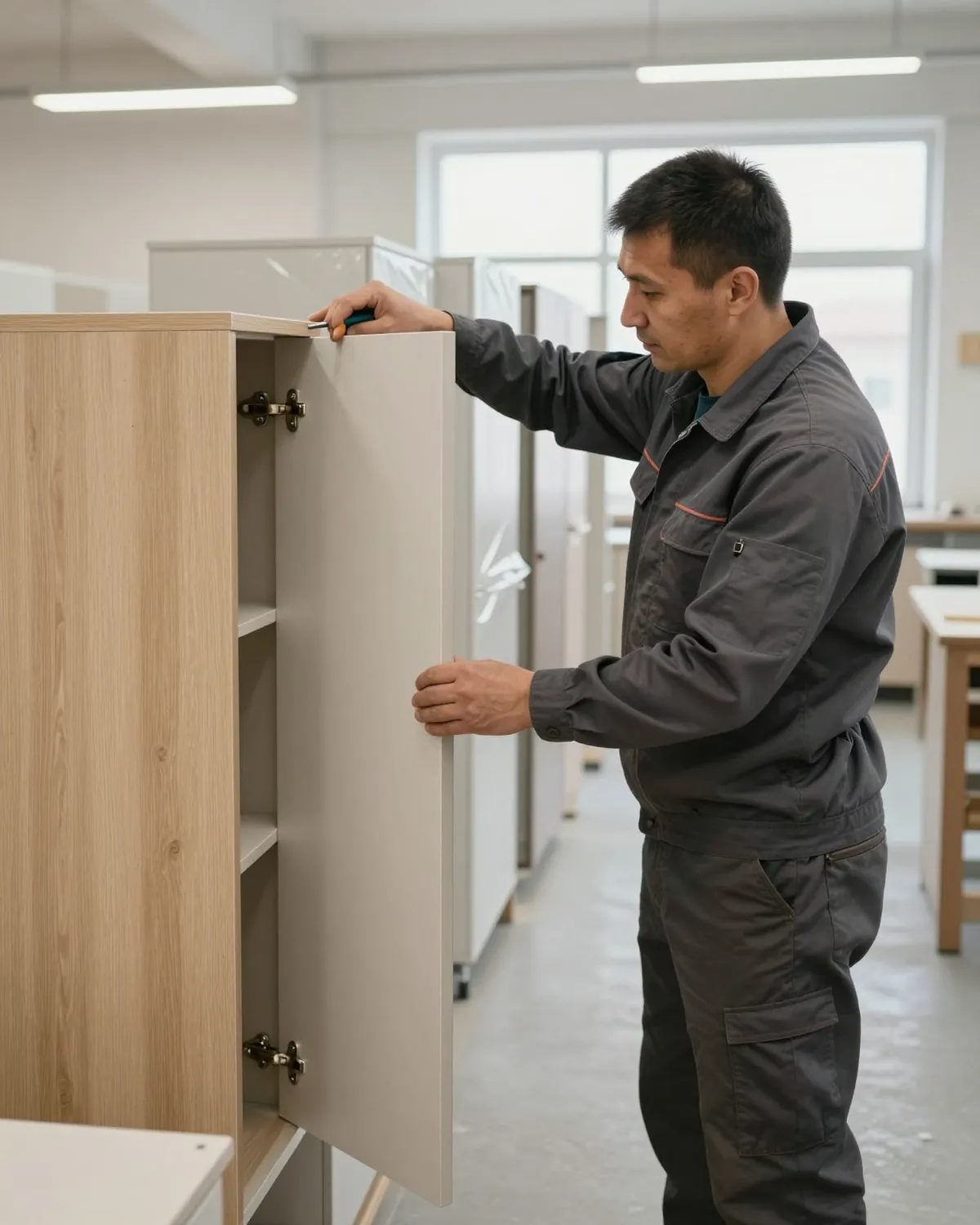
- Workshop check: every drawer goes through a test assembly before dispatch — we check the soft-close and smooth running in the assembled state.
- Soft-close as protection: runners with soft-close absorb the impact load when closing, so the mounting point in the carcass does not wear out over time.
How a desk fits into a niche and an irregular wall
A typical Almaty layout rarely has straight corners: niches vary in width and walls in verticality. We show how measurement and a sketch remove the fear of crooked walls and gaps before the board is cut.
What the craftsman measures during the measurement and why
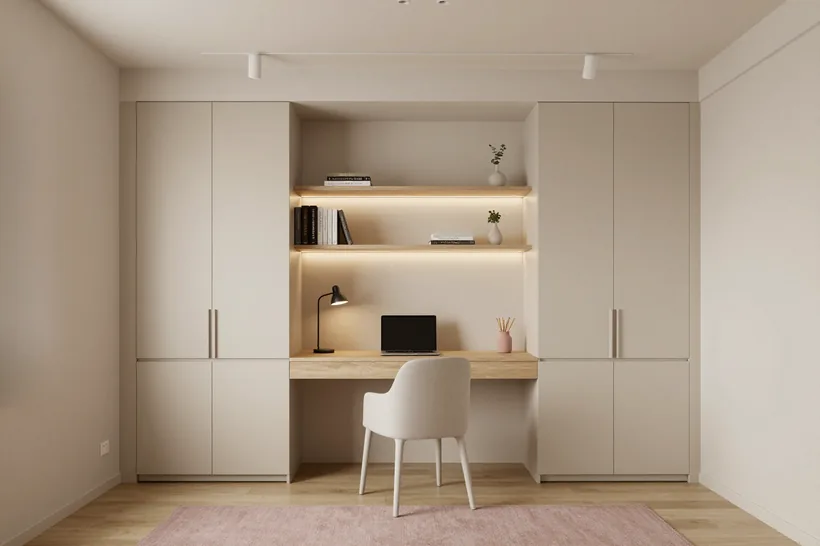
During the free measurement, the specialist records not only the length and width but also the geometry of the walls, the height of the windowsill, the position of sockets and skirting boards — these figures determine whether the workspace will fit without gaps. We check the vertical and horizontal at three points, measure the depth of the niche at the top and bottom, and note the radiator protrusion and the thickness of the windowsill board. A wall deviation of 1–2 cm is invisible to the eye, but it is exactly what creates a gap along the back edge. That is why in the sketch we allow for a junction with a compensation gap or a hidden strip, and we cut the countertop to the largest of the measurements. If you need a custom desk in Almaty, this measurement is precisely what sets all the dimensions of the future countertop. The measurement takes about an hour and commits you to nothing — during it we also clarify from which side it is more convenient to open the drawers.
What the 3D project shows and whether it can be adjusted
We prepare the 3D project in 1–2 days and show the desk at the real dimensions of the room — before production starts you see how it will fit into the niche and whether it will block the wardrobe. The model marks the countertop depth, the overhang above the knees, the drawer zone and the cable outlet point, with the wardrobe and windowsill shown alongside in the same proportions. We make changes at this stage without rework: we change the width, depth, side of the cabinet, and the position of the shelves. Once the board is cut and edged, any change means a new part and another cycle in the workshop. That is why we agree on the sketch in writing before launch: the signed sheet becomes an annex to the contract, and there is no arguing about dimensions after installation.
Layout scenarios in a typical room
desk placement options to suit the room layout| Scenario | Configuration | What we take into account |
|---|
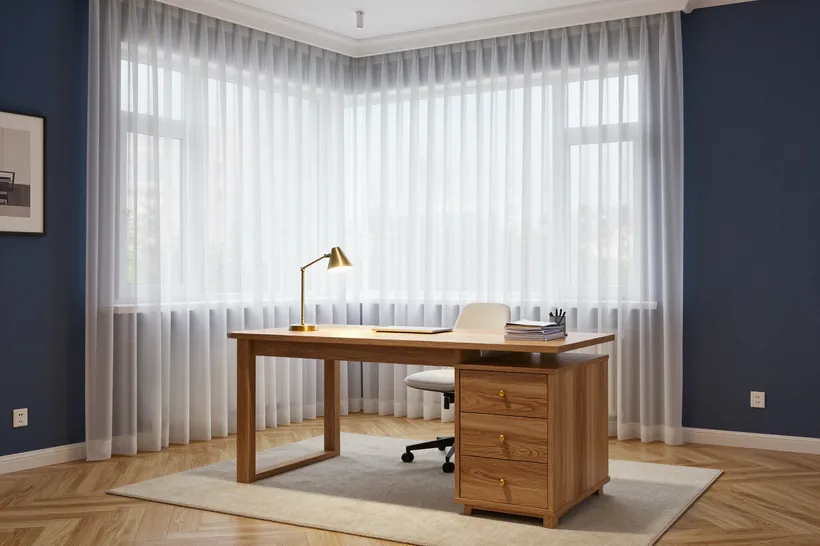
| Desk by the window | straight countertop under the windowsill | windowsill height, radiator |
|---|
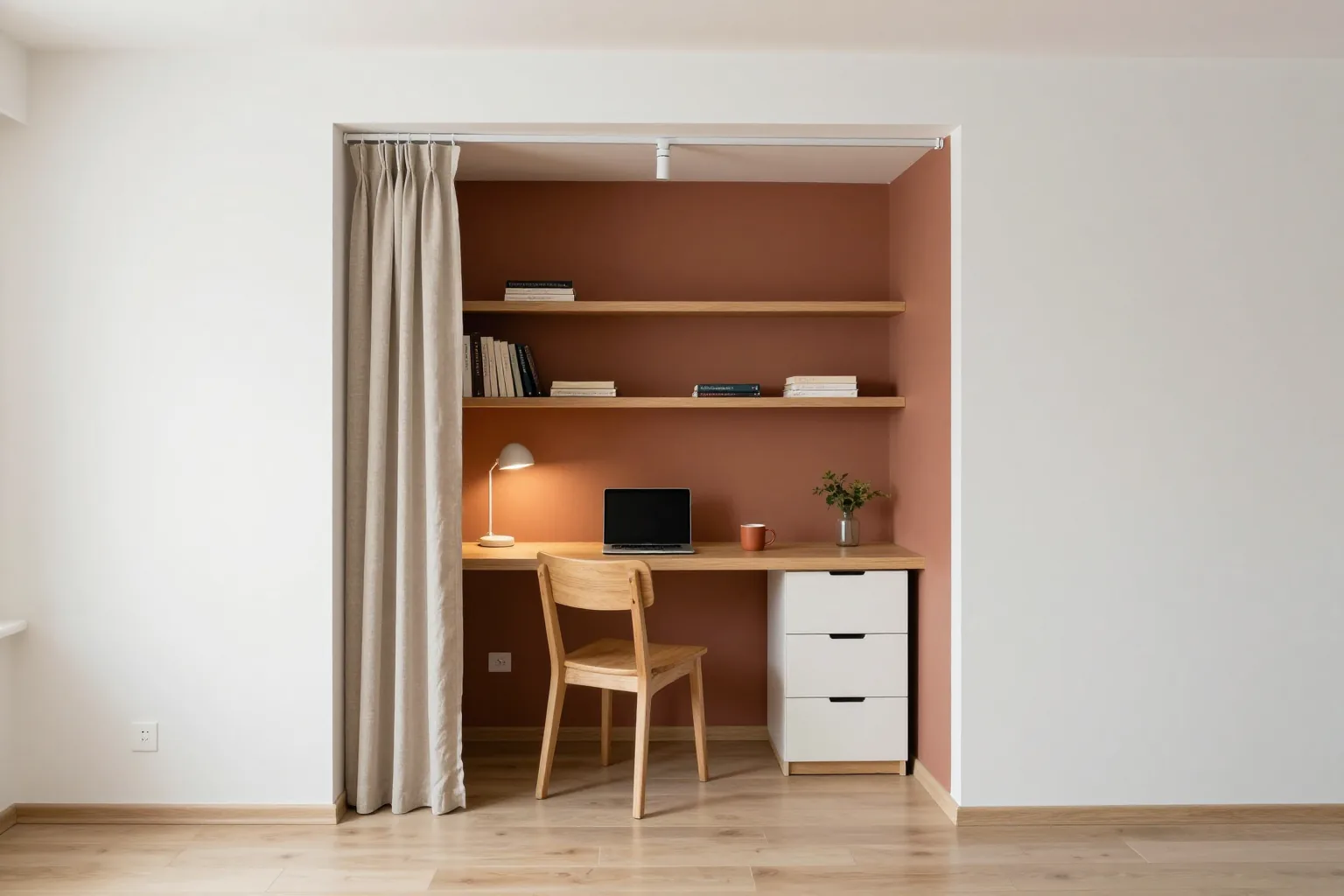
| Wall niche | built-in countertop across the niche width | wall deviation, depth |
|---|
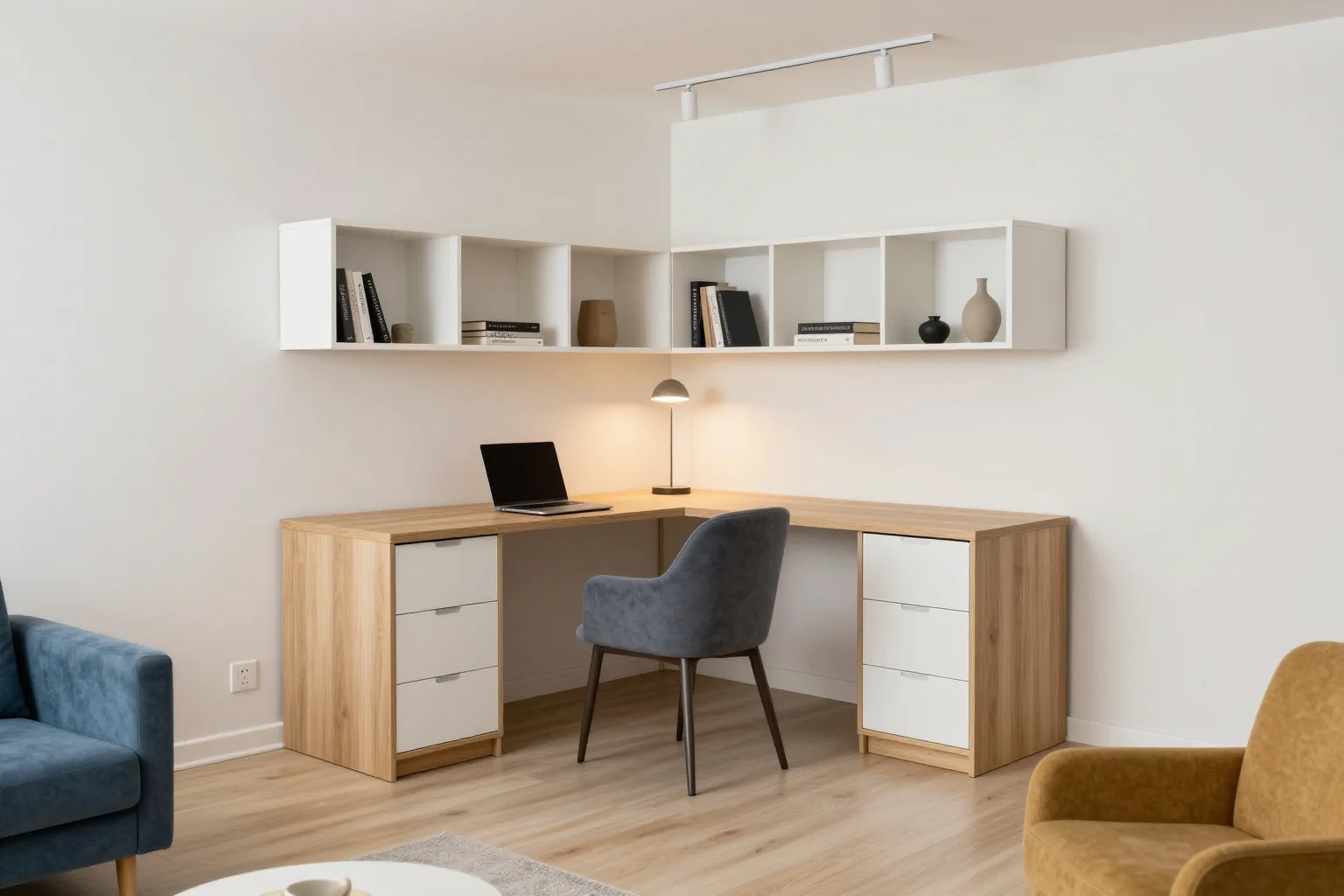
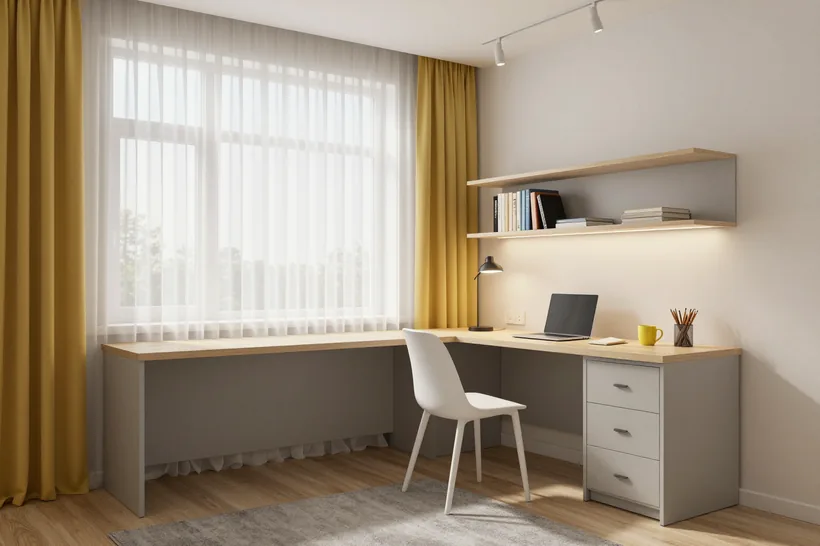
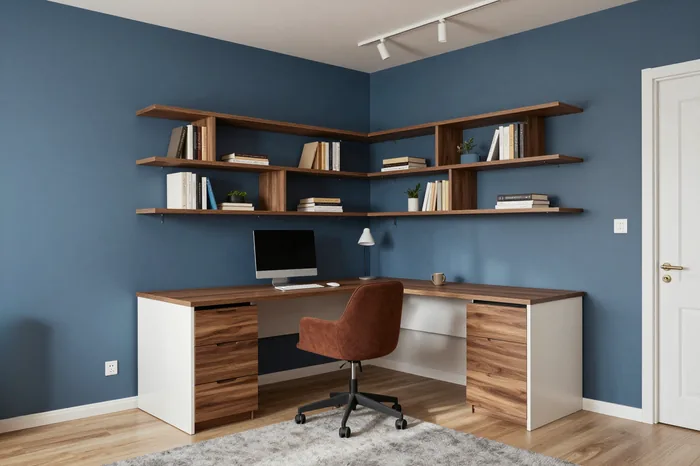
| Room corner | corner or L-shaped form | passage, door opening |
|---|
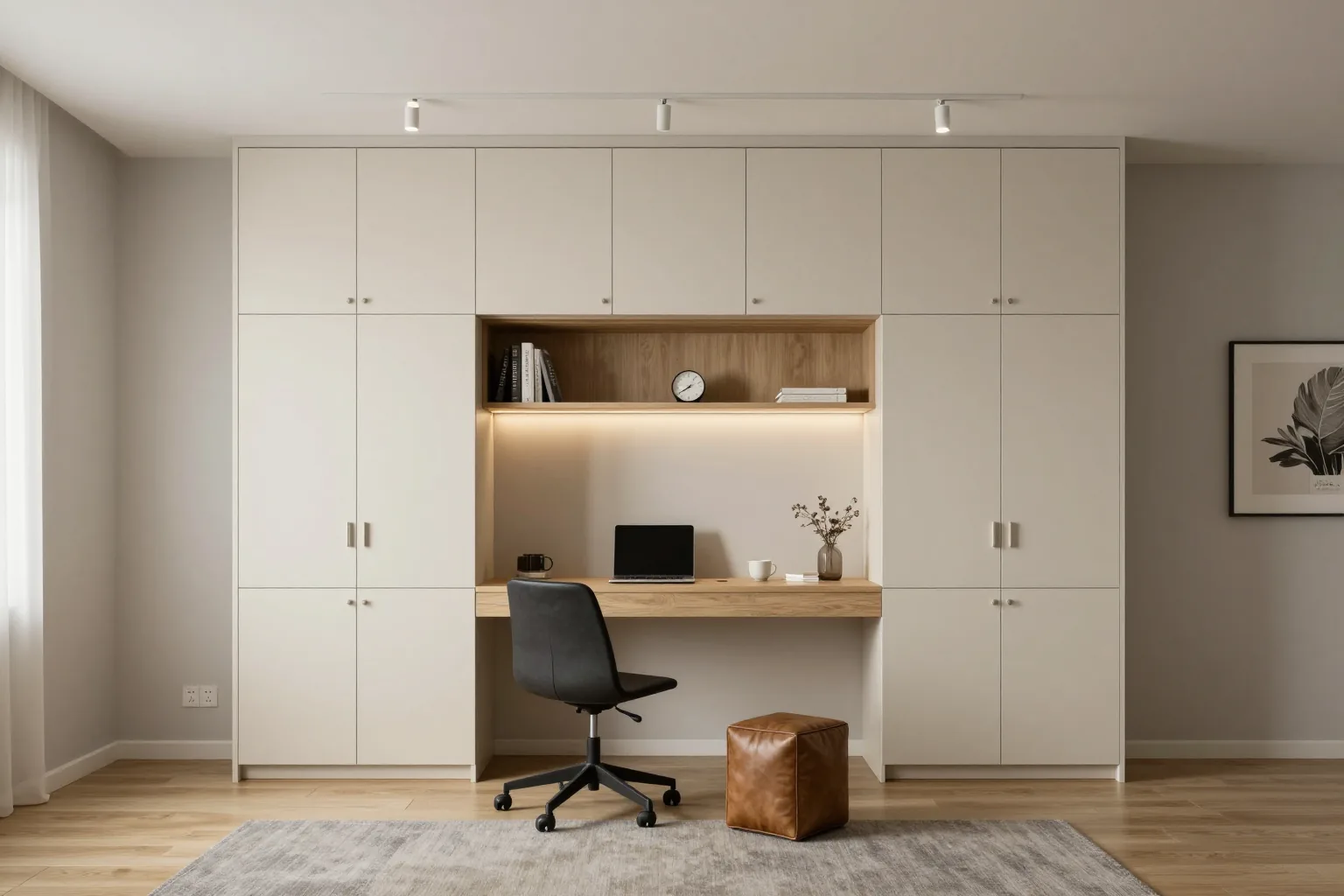
| Wall with a wardrobe | straight with reduced depth | gap for the wardrobe fronts |
|---|
Desk countertop materials for your task
The countertop material is chosen not from a picture in the catalog but for the scenario: working at a computer, a children's room with felt-tip pens, morning coffee by the laptop. Let us go through the options we work with every day.
Egger and Kronospan laminated chipboard versus solid wood
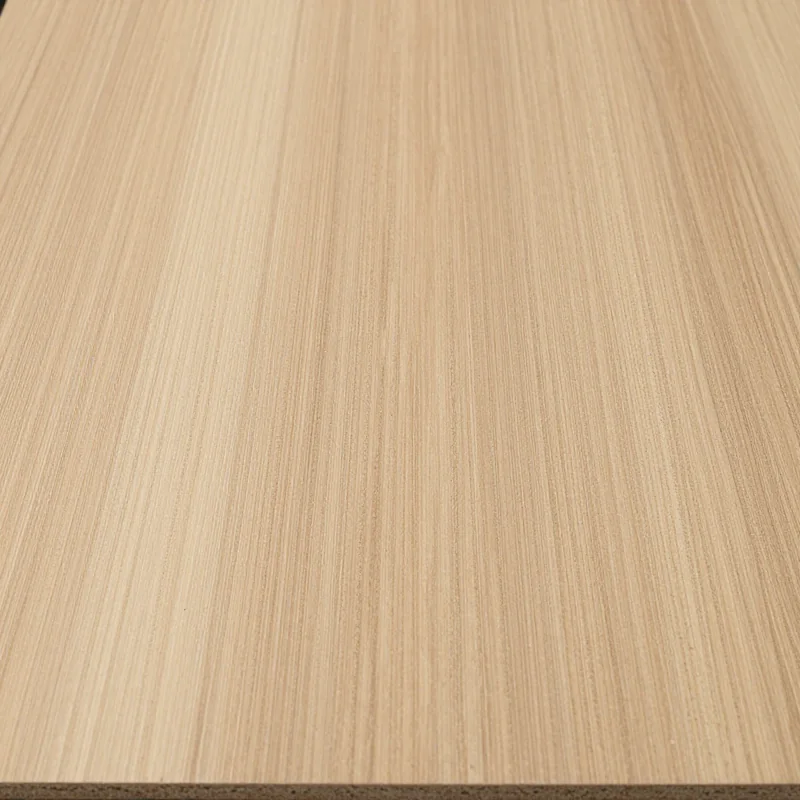
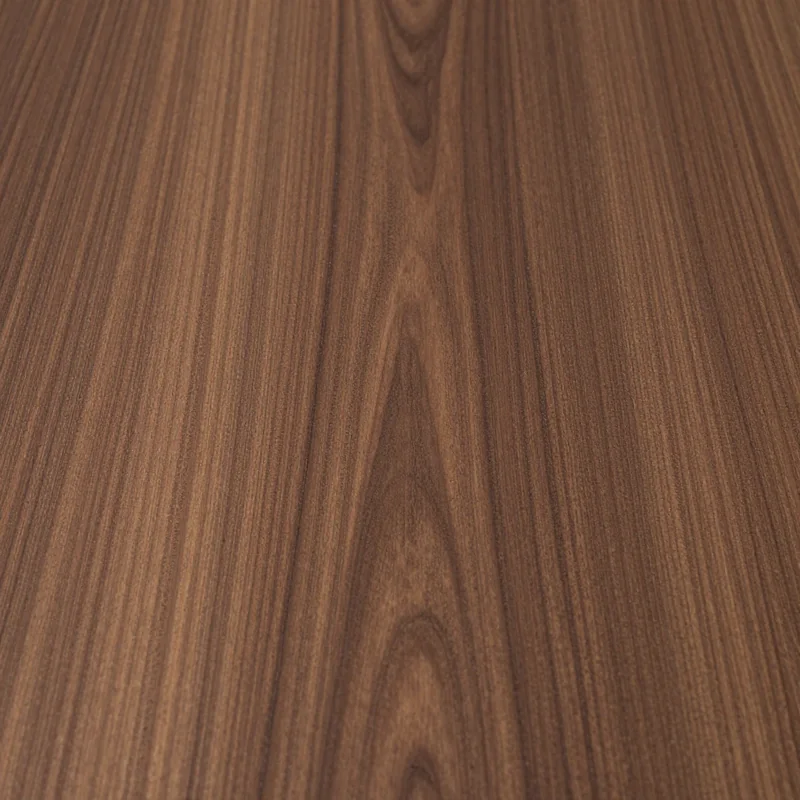
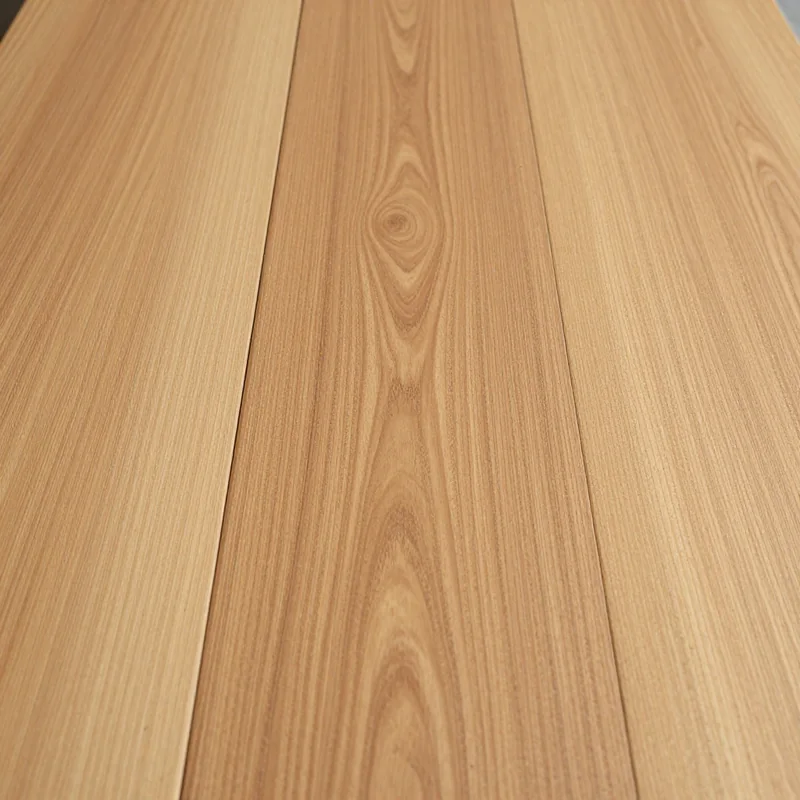
For a desk we most often use Egger and Kronospan boards: they hold their geometry and need no maintenance, while solid wood is chosen when the natural grain and the tactile feel of the surface matter. Egger and Kronospan boards come with a factory finish that withstands damp cleaning and needs no oil or wax. Solid wood is a living material: it reacts to the humidity in the room, and by the window there is added solar heat and dryness from the radiator. Oak or ash next to a radiator can warp, and the countertop will lose its flatness. That is why for solid wood we reinforce the frame and do not butt the countertop directly against the heat source — we leave a gap and set it back from the windowsill. If the desk stands by the window in a bedroom or study, we recommend an Egger board with a wood texture: the grain reads well, and the risk of warping is removed. If you have decided to have a custom desk made, we will help you choose the material for your scenario and the conditions in the room.
HPL, acrylic and ceramic for the countertop
HPL handles spilled coffee and mouse scratches better than an open slab, acrylic gives a seamless surface with no visible joints, and ceramic offers maximum resistance to heat and impact. HPL is a pressed laminated plastic: the top decorative layer doesn't wear off for years, and the edge is sealed so moisture can't get inside. Acrylic and the similar-in-logic quartz composite allow the joint to be made invisible, so they are chosen for long tables where you don't want to see a seam. Ceramic withstands a hot mug without a coaster and doesn't fear an accidental blow from a heavy object, but it feels colder to the touch. Repairability varies across these materials: a scratch on acrylic can be polished out on site, while a chip on ceramic cannot. For a child's room we more often recommend HPL: it forgives drawings and spilled juice.
How to care for a countertop and what to do with rattan
- Daily: wipe with a soft cloth and a neutral cleaner, no abrasives or stiff sponges.
- Stains: remove immediately, don't let coffee, juice or wine dry and soak into the surface.
- Hot items: always use a coaster, especially on acrylic and HPL, where heat can leave a mark.
- Rattan: keep away from direct sunlight, wipe with a slightly damp cloth and don't soak with water.
- Abrasives: aggressive household chemicals strip the protective layer faster than daily work at the table.
Ergonomics and workspace equipment
People spend 6–8 hours at a desk, so height, depth and cable routing affect well-being more than decor. Here's how we calculate these parameters in a project.
Desk height and depth for computer work
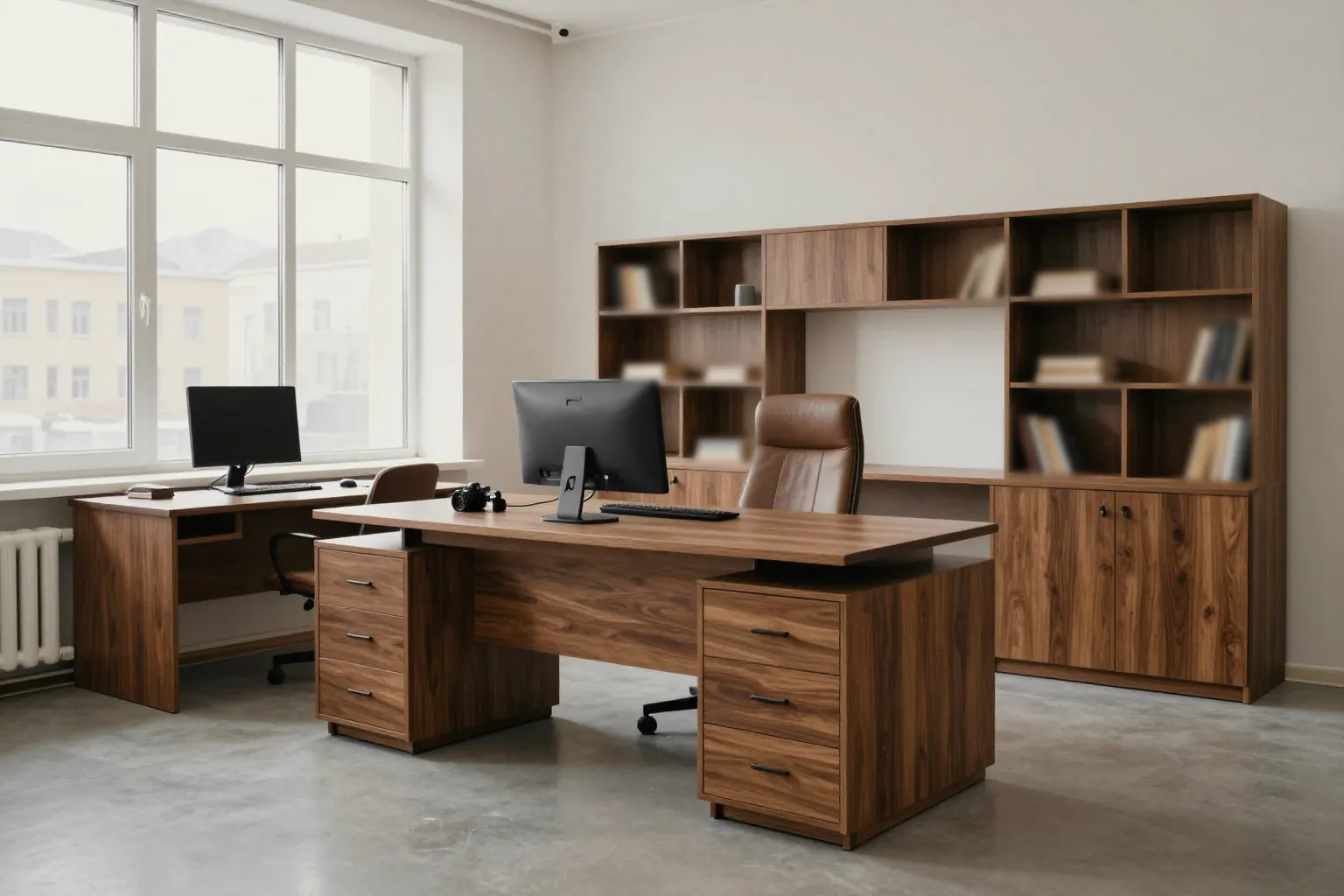
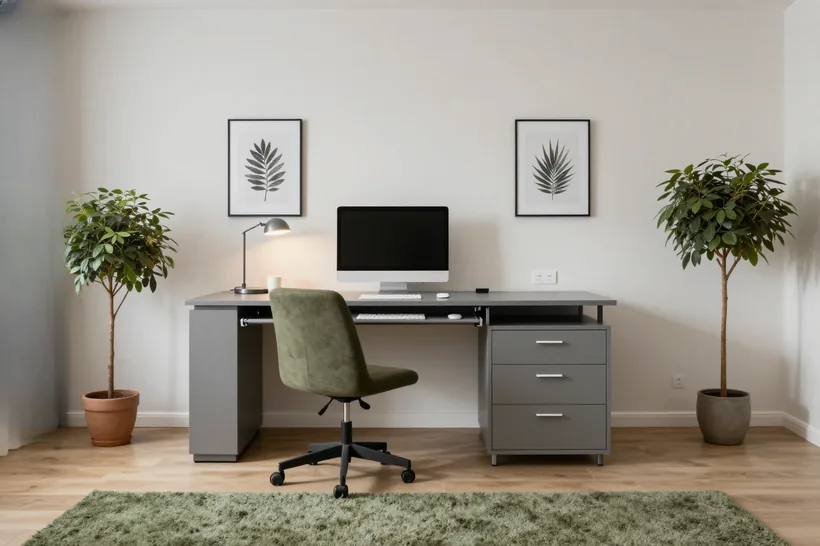
For computer work we start from the countertop depth that keeps the monitor at a comfortable distance from the eyes, and we select the height to match the user's height and the chair height. For a made-to-measure desk, in practice we take a depth of 60–70 cm: at 60 cm a 27-inch monitor sits about 50–60 cm from the eyes, at 70 cm there's room for a keyboard and a wrist rest. A countertop height of 74–76 cm suits most adults with a standard adjustable chair; for heights above 185 cm or below 165 cm we calculate the seating position separately and suggest a chair with height adjustment. A countertop that's too deep makes you reach for the monitor and slouch, so we agree on depth together with the chair's seating position, not "by eye".
Drawers and cable channel so wires don't dangle
We plan the cable channel and cable outlets into the desk project in advance — otherwise the cables from the monitor, laptop and chargers are left hanging behind the countertop. In our projects, drawers run on Blum slides with soft-close: they don't loosen with daily opening and handle the load of stationery. We place the cable channel along the back edge or in the cabinet, and route the cable hole in the area where the equipment actually stands — by the monitor, the PC tower and the charging station. It's more convenient to design the cable channel together with the wall sockets: if a socket ends up behind a drawer, access to it will be blocked — this comes up during the measurement, not after installation. We also think through ventilation around the PC tower separately: in a closed cabinet without a gap, equipment heats up more, so we leave vents or an open niche.
Loft with a metal frame and other style options
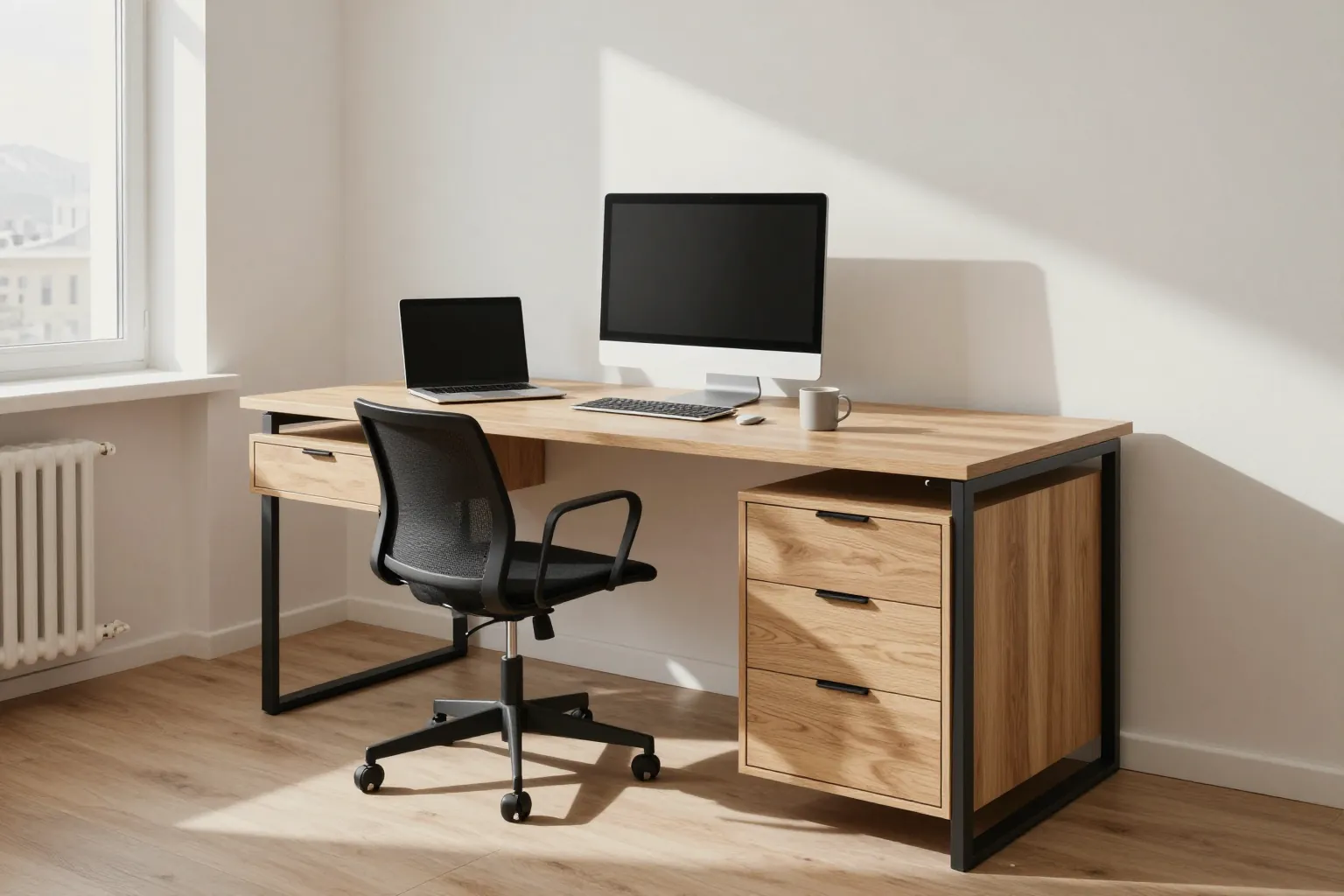
We assemble loft style tables on a metal frame with an open countertop — this is not only aesthetics but also predictable structural rigidity. The frame is made of powder-coated square tubing and holds the load of two monitors and a PC tower without sagging, while the countertop rests on the frame and stiffening ribs. Besides loft, we make tables with a concealed carcass for a bedroom or study interior, with a one- or two-section pedestal, and with a shelf superstructure for a printer. An open metal frame is easier to maintain: you can see the condition of the fasteners and tighten the joints without disassembling the carcass, which matters for a desk under load. We select the frame color from the powder coating catalog so the metal matches the hardware and blends into the interior.
How desks are made from measurement to acceptance certificate
We show the order journey step by step — from free measurement to signing the acceptance certificate, with a test assembly at the workshop before dispatch to the site.
Stages from request to installation
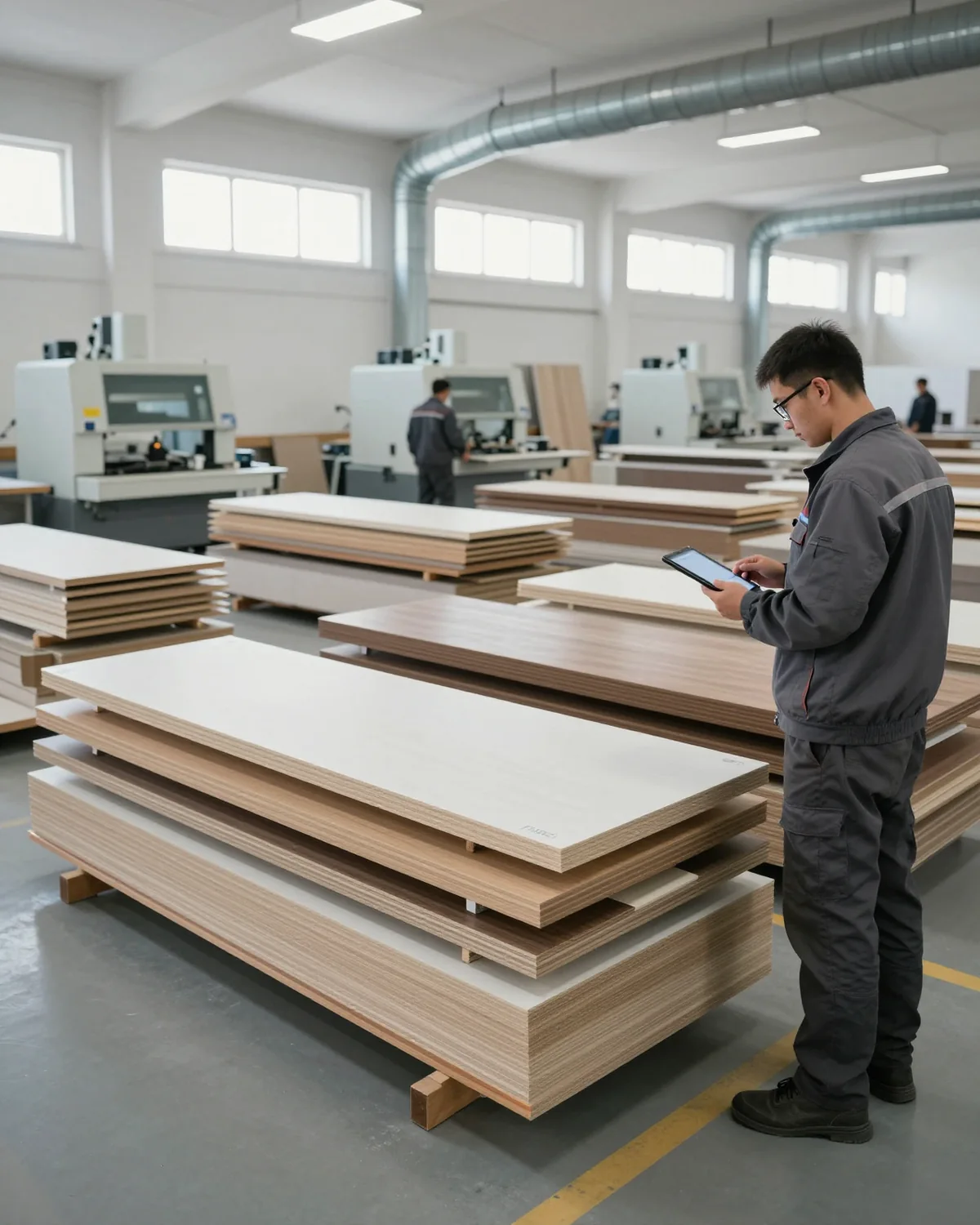
Desk production follows a chain: free measurement → 3D design in 1–2 days → production in our own 600 m² workshop → test assembly → installation by our own crews → signing of the acceptance document. During measurement, the technician takes the geometry of the wall and niche; in the design you see how the countertop sits, how the drawers extend and where the cable is routed, while the workshop handles cutting, edge banding and painting on its own equipment. Lead times for each option are in the price list on this page. Test assembly before dispatch is the point where mismatches between the design and the parts are caught: on site such errors cost more and lengthen installation, while at the production facility they are visible immediately and fixed before the crew leaves. The assembled item is disassembled, the parts are labeled and sent to the address.
Who installs and how the work is accepted
Installation is done by the same workshop crews, and we sign the acceptance document once installation is complete — you check the fit, the absence of gaps and skews before the final payment. The crew levels the frame, pulls the countertop to the supports, adjusts the gaps at the wall and connects the cable channel, while you watch how the drawers run on Blum hardware and whether the geometry matches the design. If a gap or skew is found, it is recorded before signing — so you keep leverage to have it fixed rather than exchanging messages after payment. Acceptance is done by you, not by a courier: the signature is made on site once the work is accepted. All remarks are listed in the certificate, and the crew fixes them on the spot.
Warranty, payment and delivery
contract, payment and delivery terms for the order| Parameter | Term |
|---|
| Item warranty | 24 months under the contract |
|---|
| Blum hardware warranty | 25 years from the manufacturer |
|---|
| Payment | 50 % prepayment, balance after the acceptance certificate |
|---|
| Delivery | free across Almaty and up to 30 km for a large order |
|---|
| Settlement | we work by bank transfer |
|---|
The bottom line on writing desks
Ordering a desk comes down to a few decisions made before the board is cut. Below is a short summary of what to look at when choosing and accepting the finished item.
- Rigidity matters more than thickness: sagging from two monitors is solved by the spacing of supports and stiffening ribs, not just the board material.
- Measurement and a 3D project remove the fear of gaps: wall geometry and junctions are recorded before cutting, not after installation.
- Material is chosen by scenario: HPL and acrylic withstand coffee and scratches, solid wood gives a natural pattern, ceramic offers maximum durability.
- Ergonomics are calculated in advance: depth for the monitor, height for the chair and a cable channel are built into the project.
- Acceptance after installation: the act is signed after checking the fit and the absence of skew, which is the final point of the order.