
Temirzhan Nurpeisov
Furniture assembly carpenter11 years
★ 4.81 · 47 ratings
For business · Retail
We make wooden shelving for retail spaces: solid pine, oak, and ash withstand display loads for years, and we calculate shelves for the weight of your goods. Measurement and 3D design are free, the price is in the contract, warranty 24 months.
Measurement and 3D design are free and carry no obligation · price fixed in the contract · Kaspi Instalments up to 24 months
01Types
 01
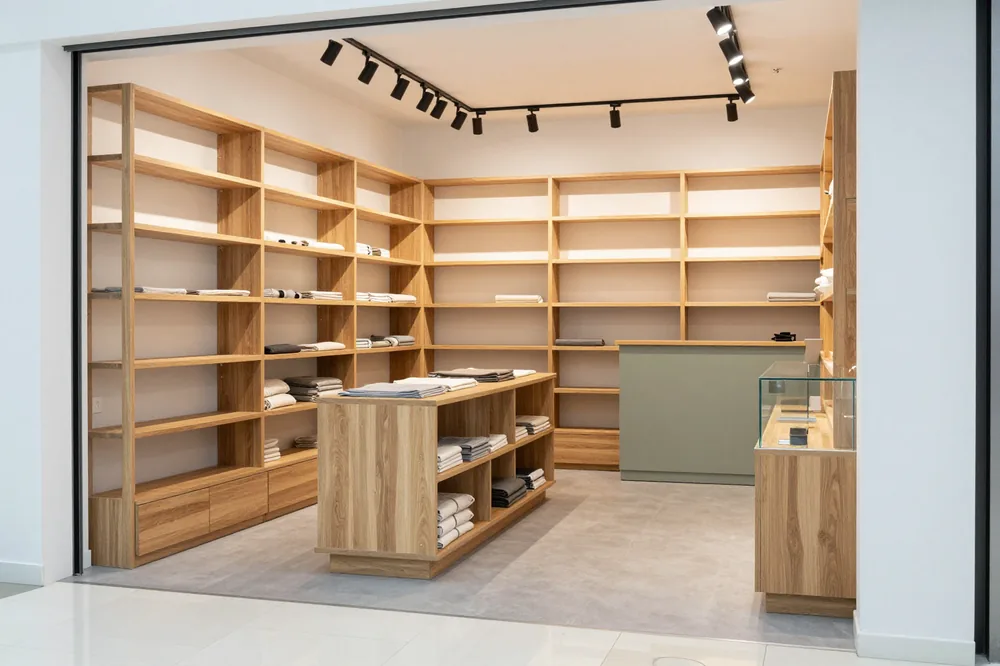
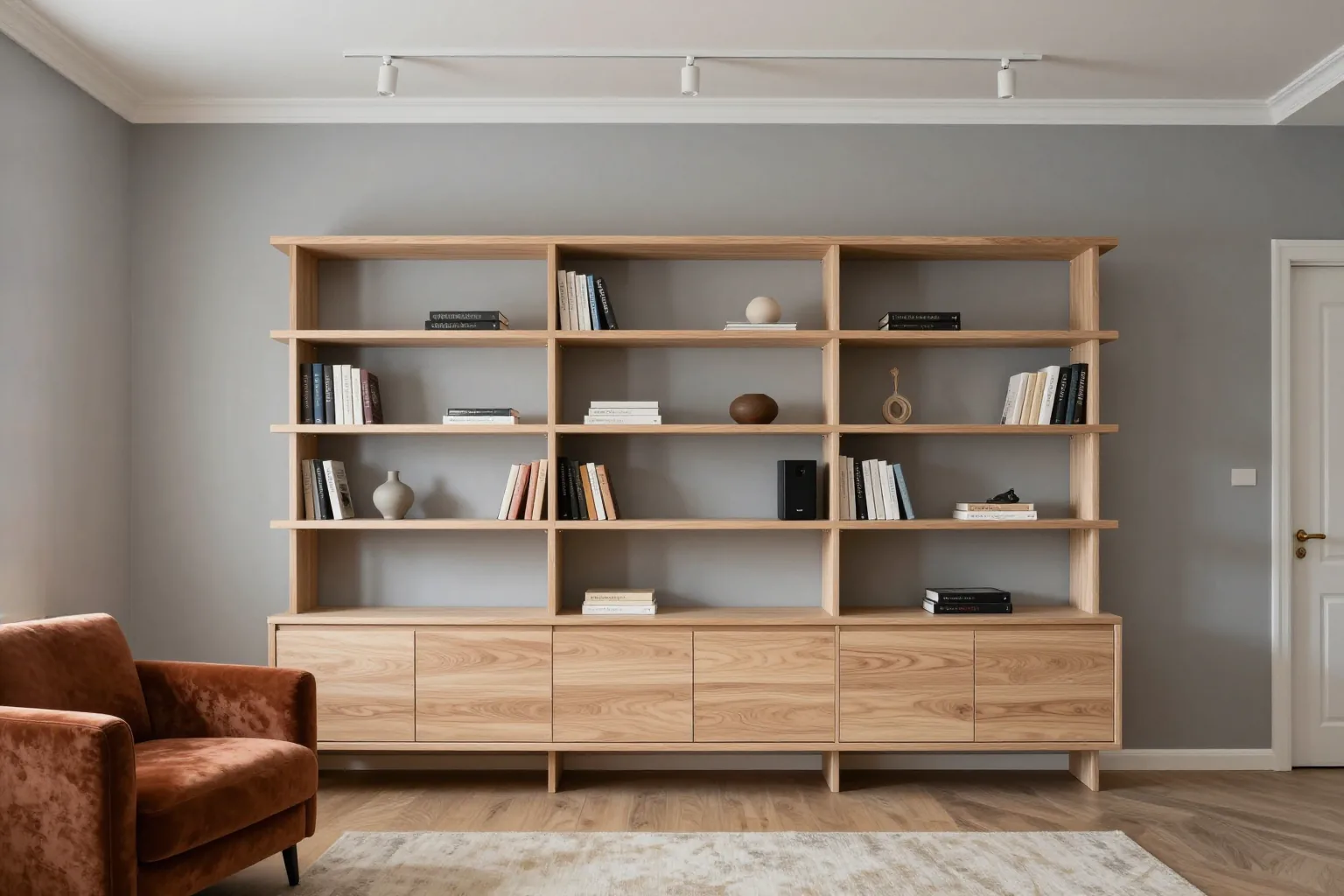
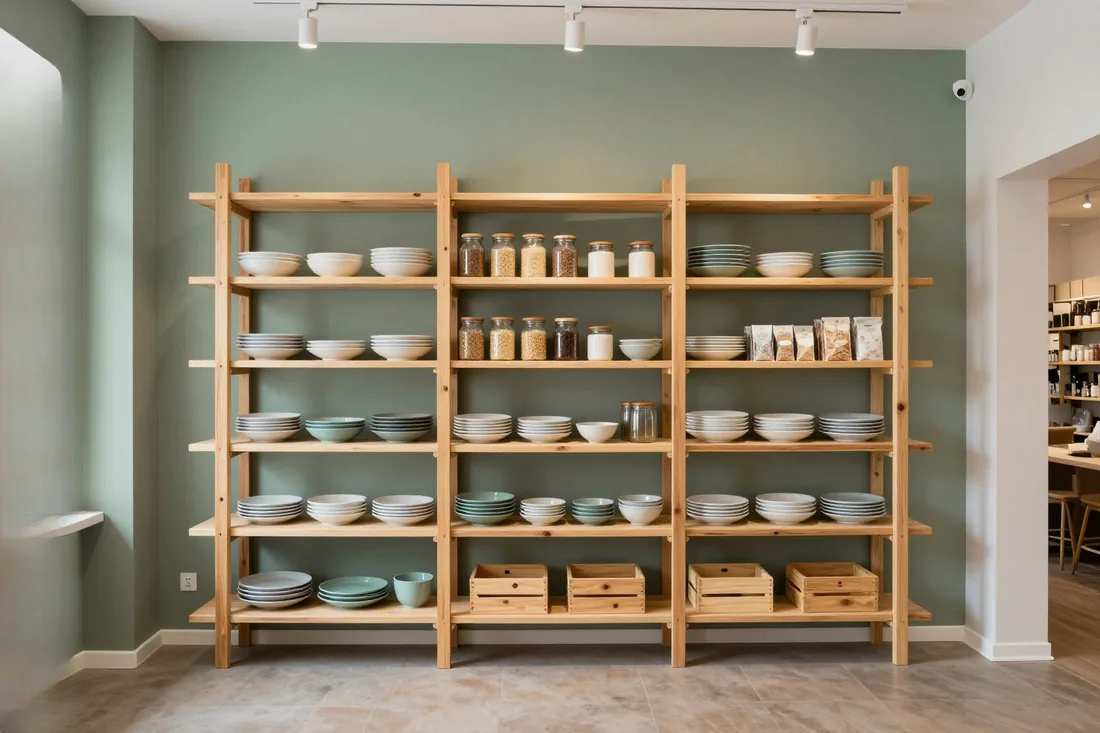
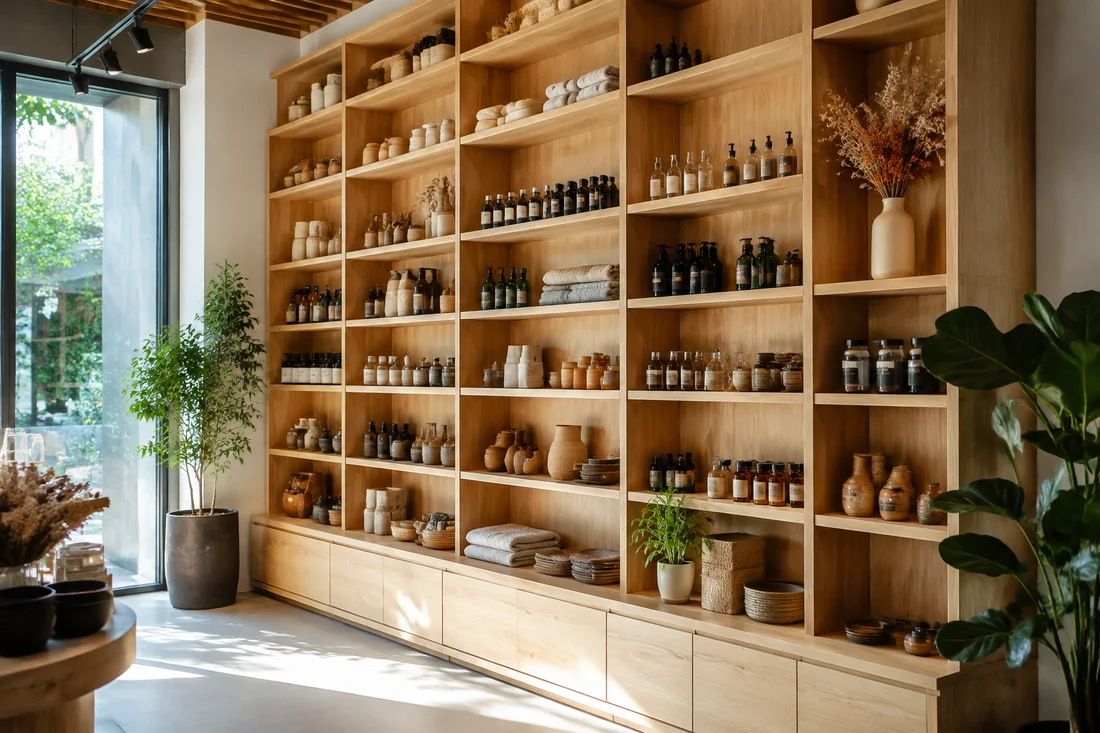
The backbone of the hall: a solid pine shelving unit along the wall with adjustable shelves for packaging, jars, and boxes of any size.
from 55 000 ₸
 02
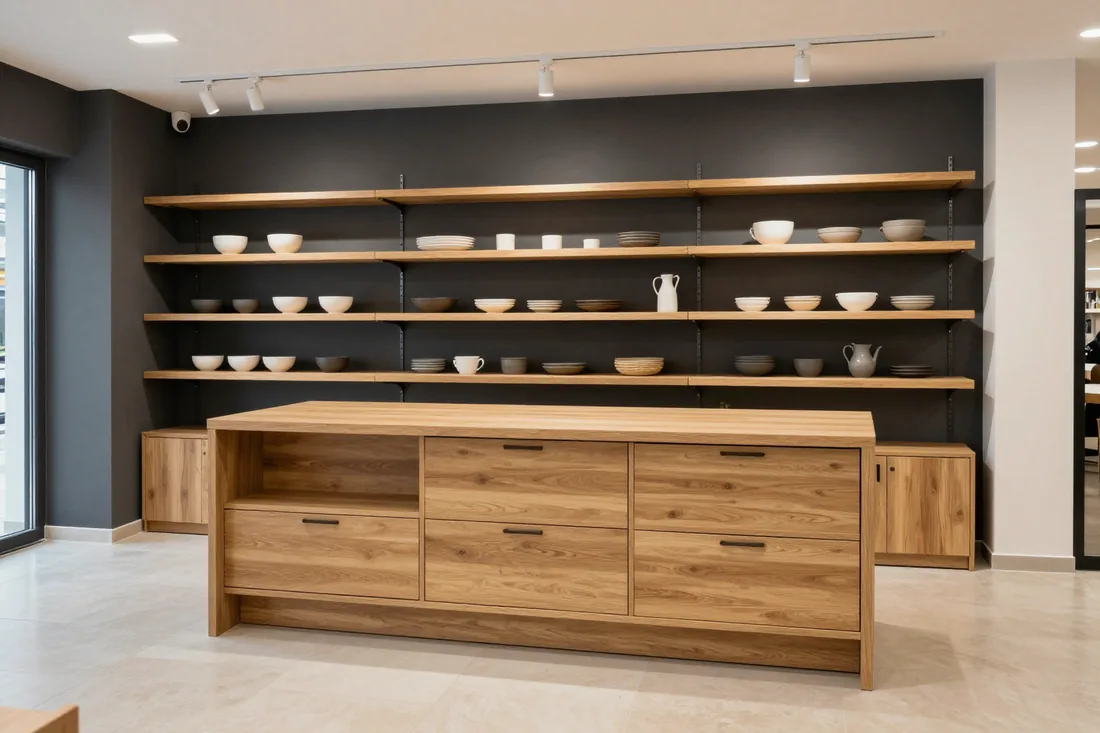
A double-sided oak island for the center of the hall: customers walk around it, while lower drawers hide stock.
from 95 000 ₸
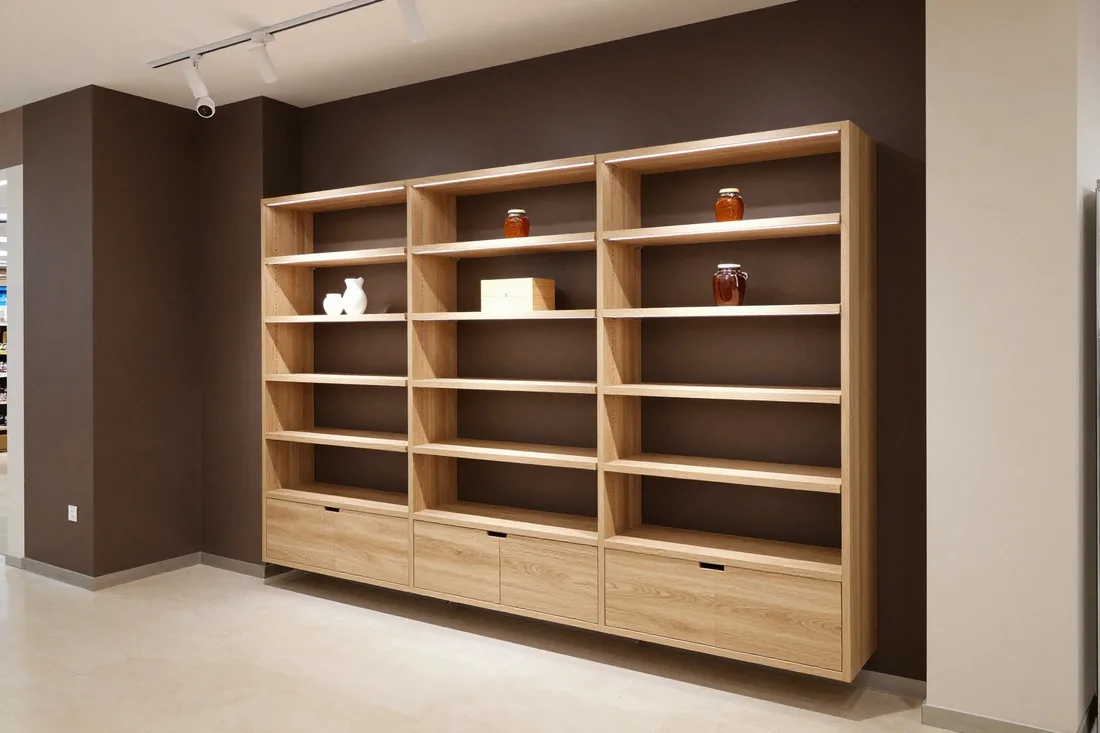 03
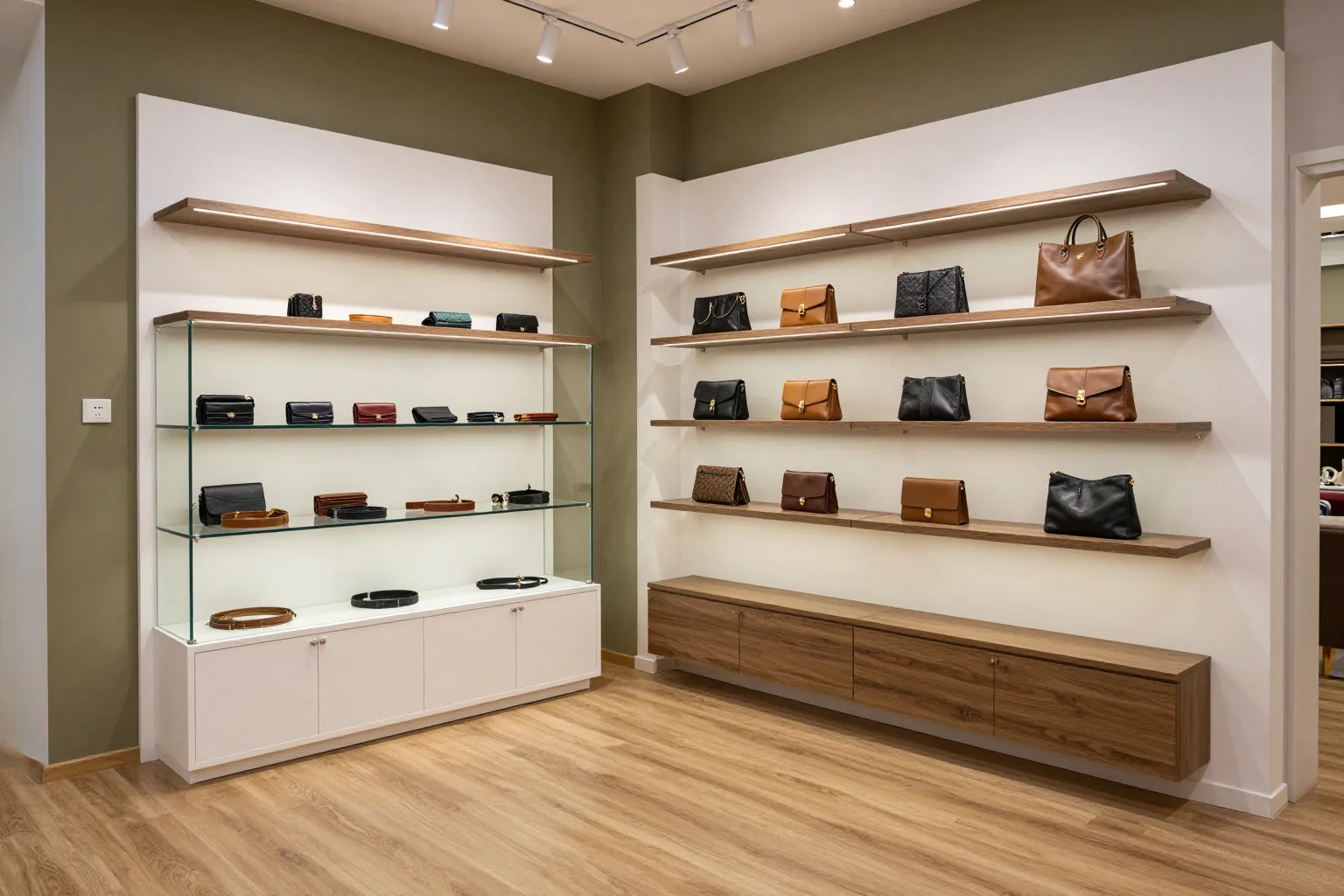
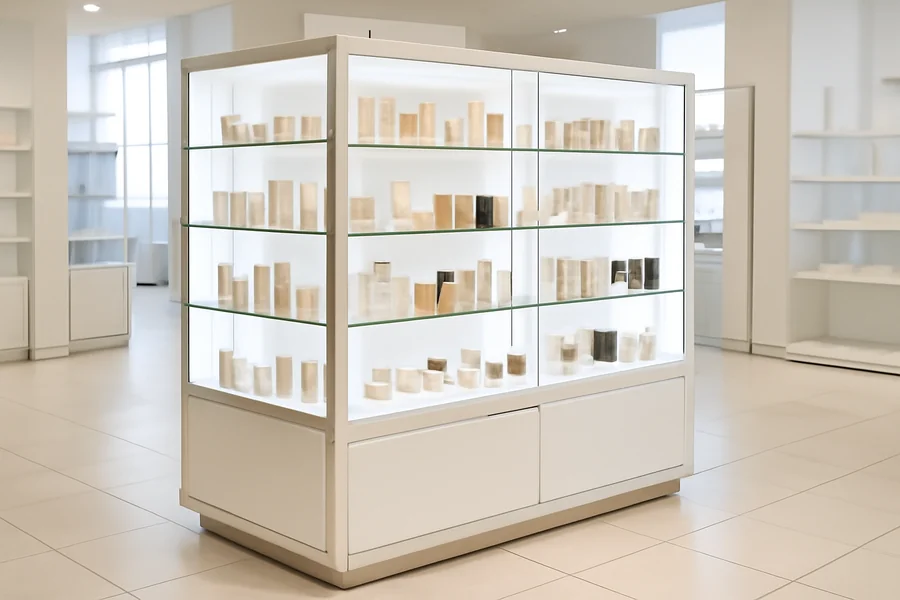
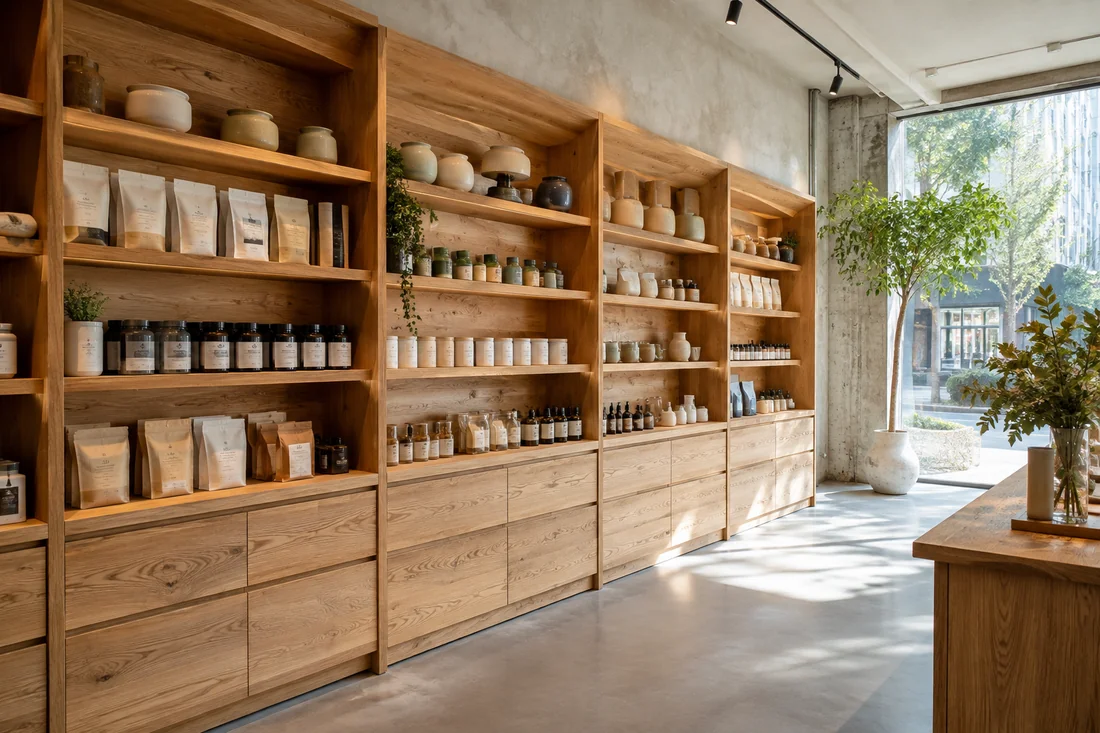
Ash and LED strip in a profile under each shelf: goods are visible from the back of the hall, suitable for cosmetics and deli items.
from 110 000 ₸
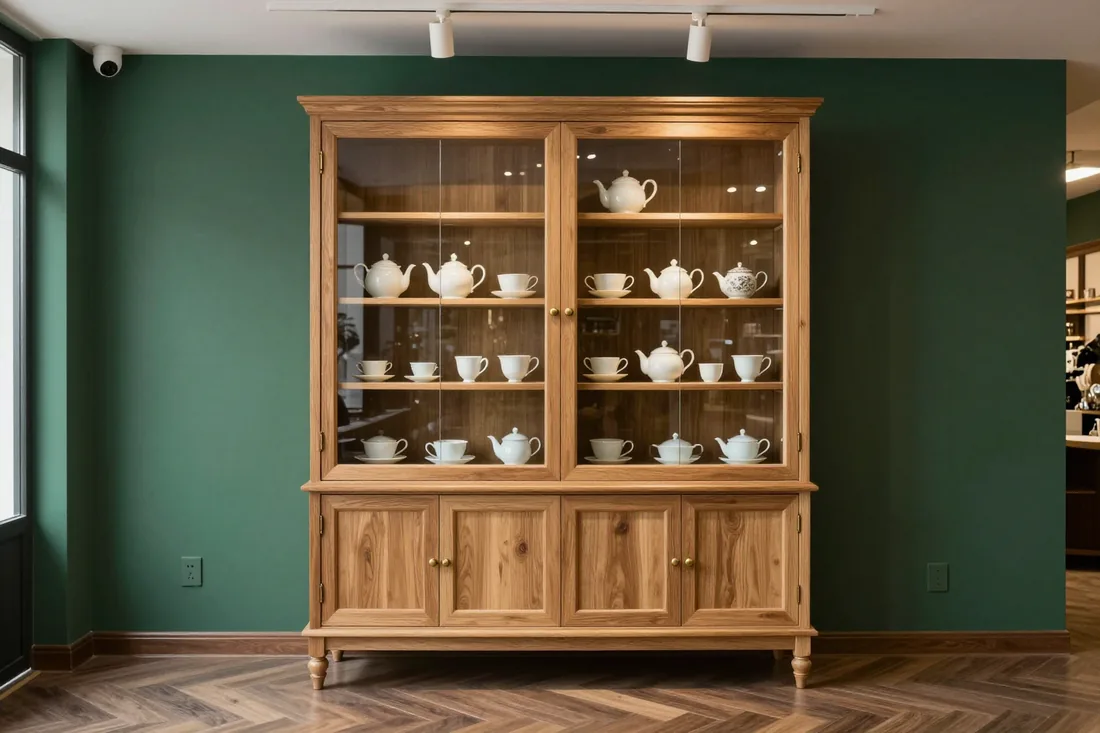 04
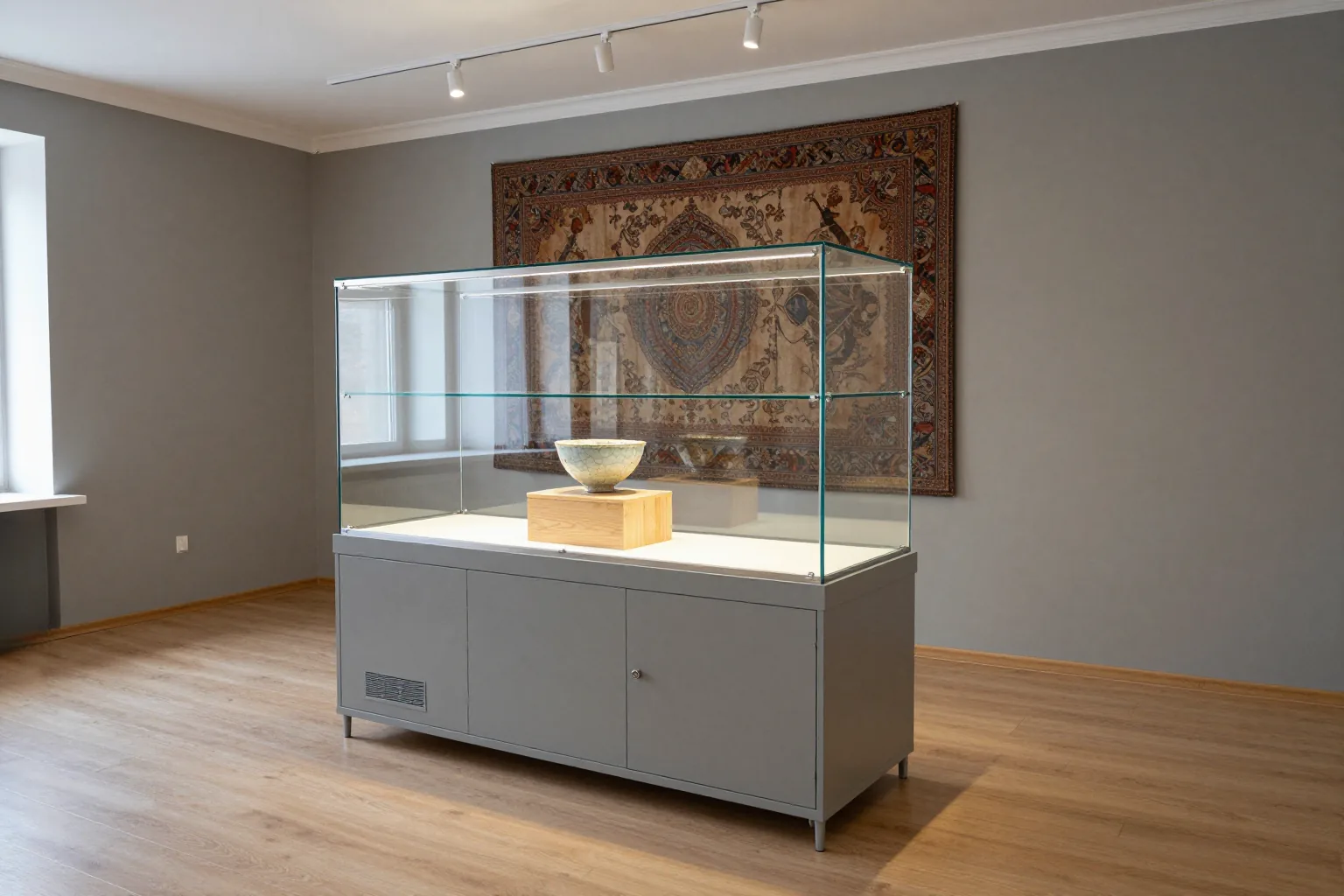
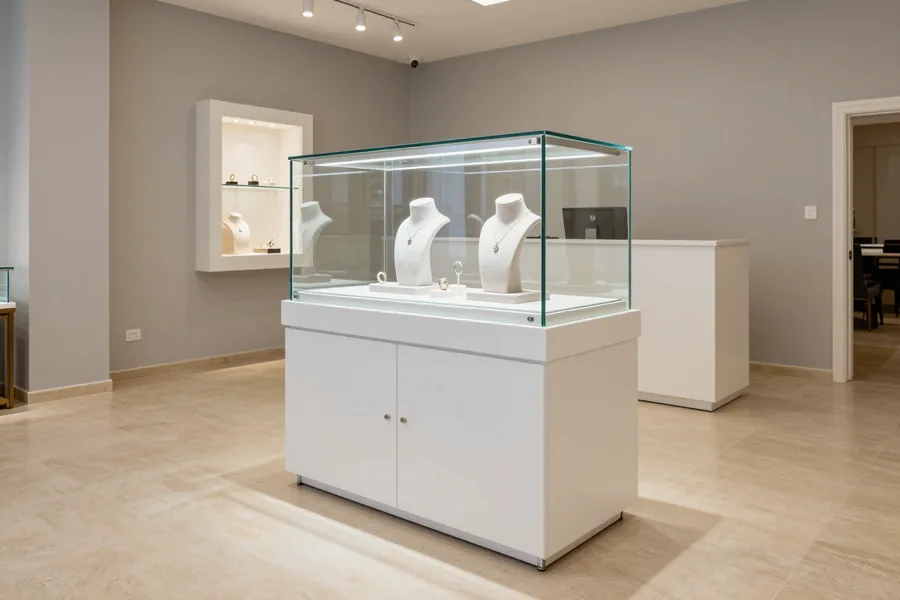
Oak carcass with tempered glass doors: expensive goods are protected from dust and hands but remain visible.
from 130 000 ₸
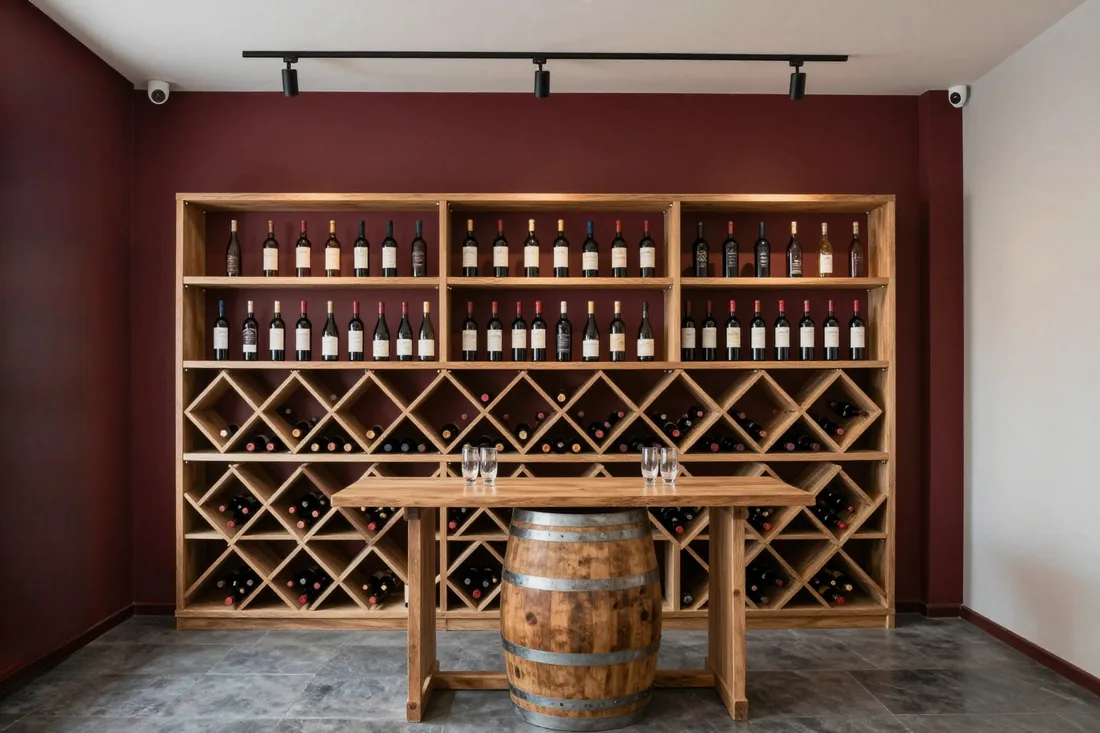 05
Diamond-shaped oak cells hold bottles lying down, upper shelves for display with labels facing the customer.
from 105 000 ₸
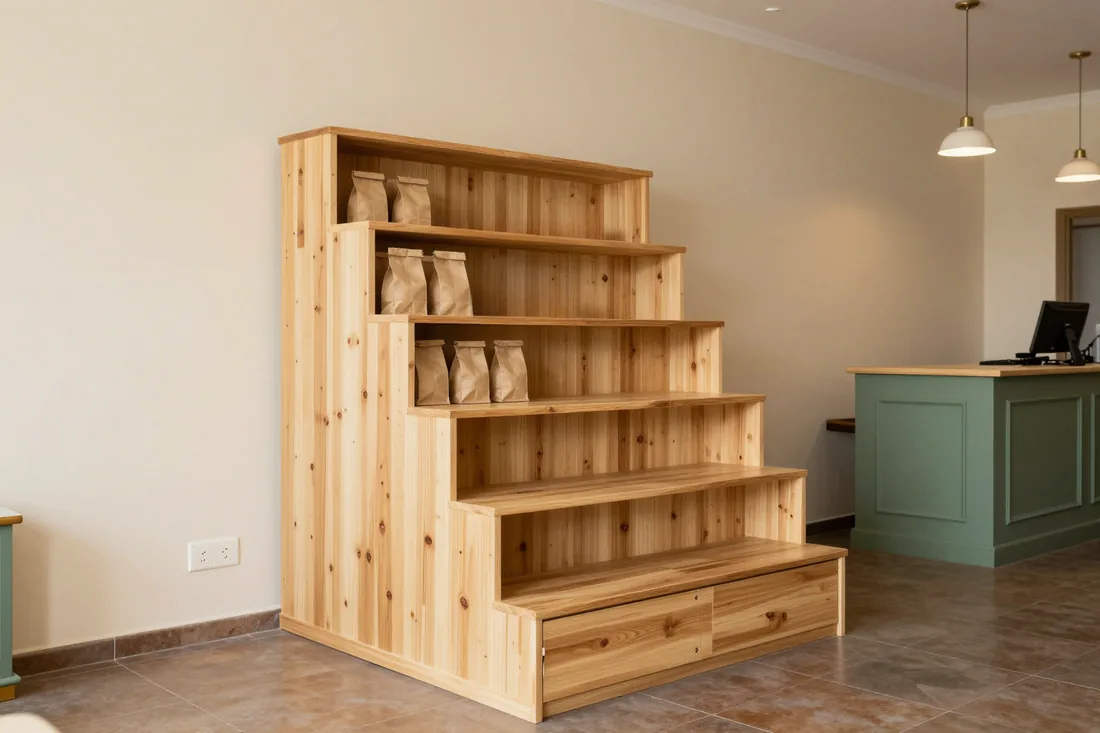 06
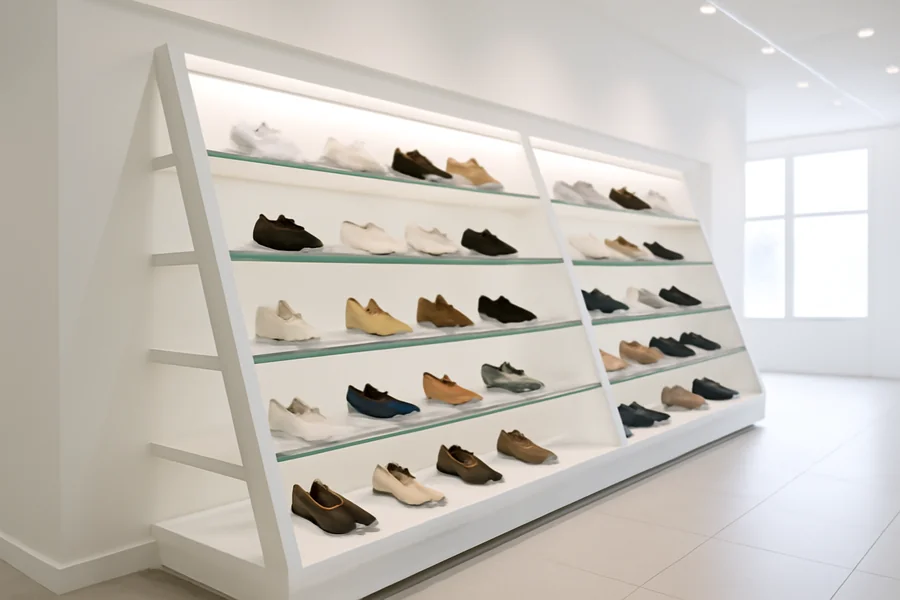
Stepped pine shelving unit with slanted shelves: suitable for packaged goods, tea, sweets and items by the checkout.
from 58 000 ₸
02Projects
Site, volume, materials and lead time — per project.
 Store
Esentai Mall, Bostandyk district
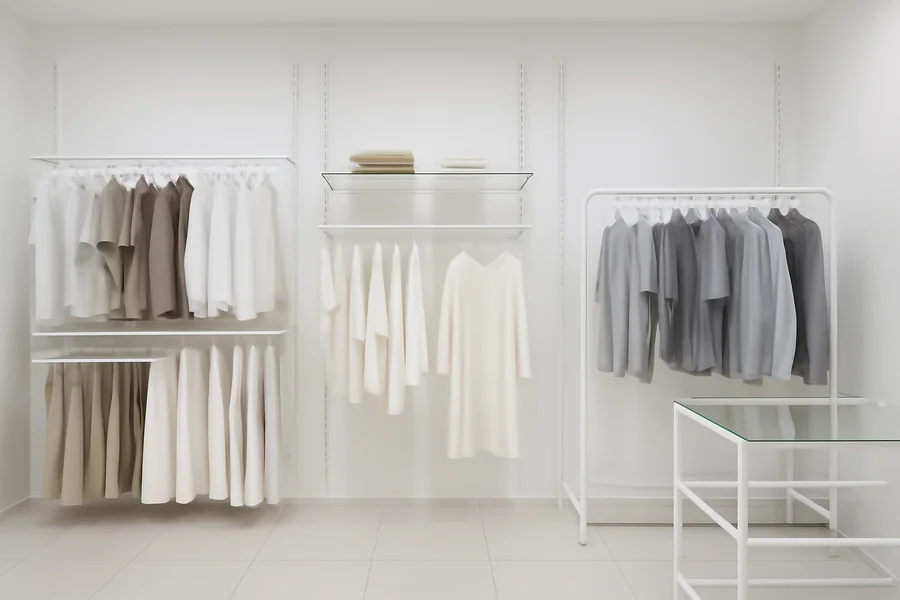
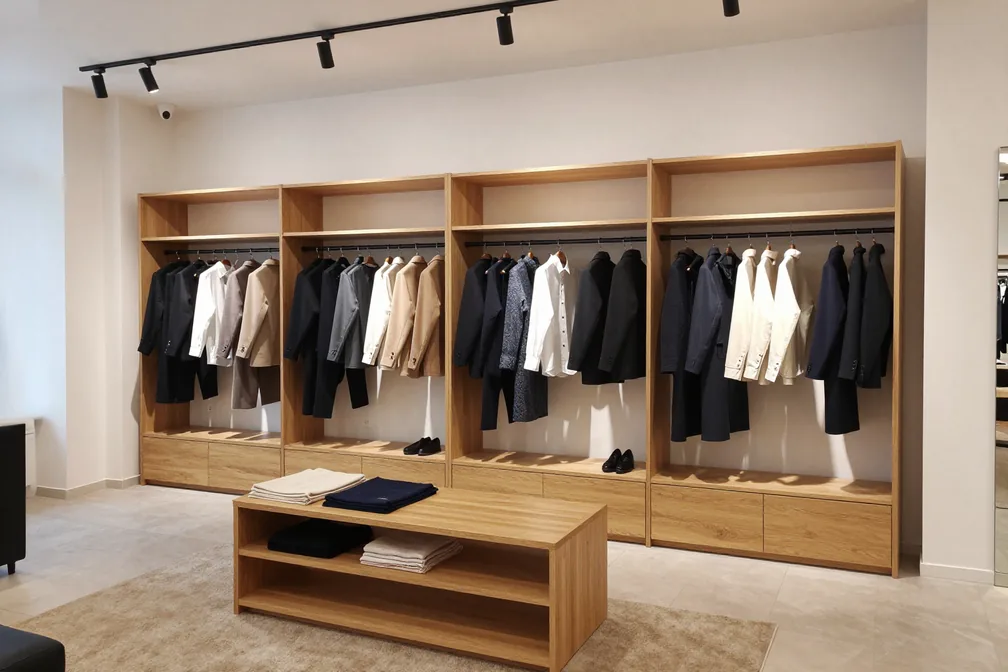
A line of wooden shelving along the boutique wall: rails for hangers on top, shelves for folded goods below. Natural oak maintains the brand's premium image; installation was completed before opening.
 Store
Esentai City, Medeu district
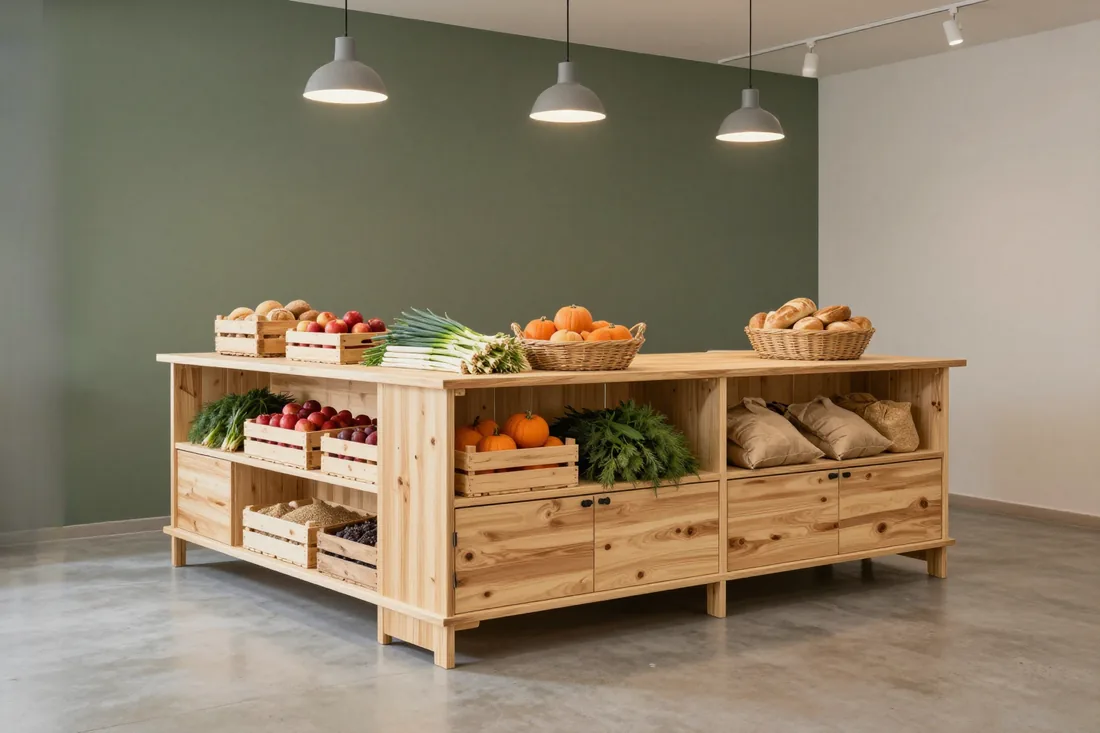
Three island shelving units in solid pine for bulk goods, jars and farm produce. Honest matte texture under oil and access from four sides — exactly the look expected in an eco-shop.
 Store
Nurly Tau BC, Bostandyk district
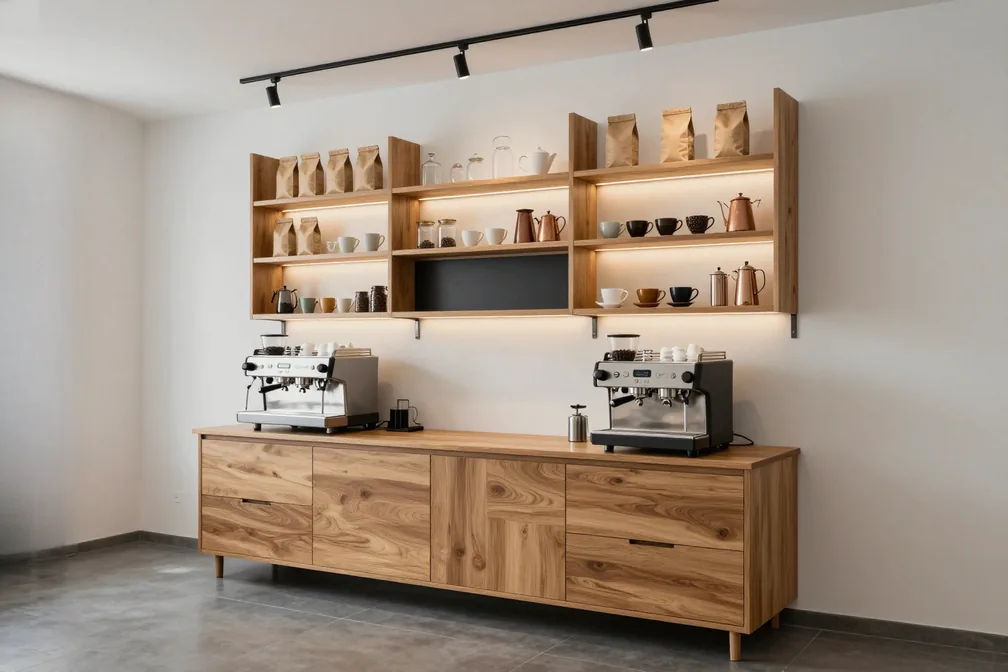
Oak solid wood shelving for a coffee shop: shelves for beans, cups and merch, a chalkboard insert for the menu and warm LED lighting. Moisture-resistant lacquer easily handles the area by the coffee machine.
 Store
Abu Dhabi Plaza, Medeu district
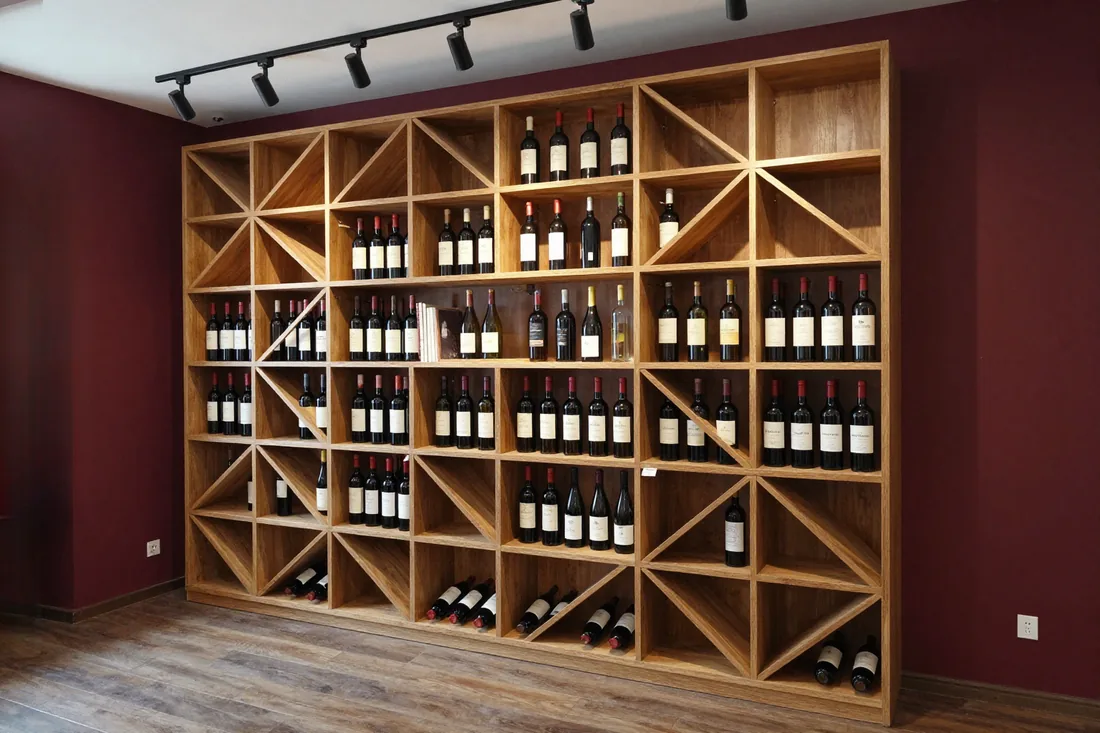
Solid oak wine rack: diagonal cells hold bottles horizontally, a display shelf turns the label toward the customer. Oak texture set the atmosphere of the wine shop.
 Store
Mega Mall, Bostandyk district
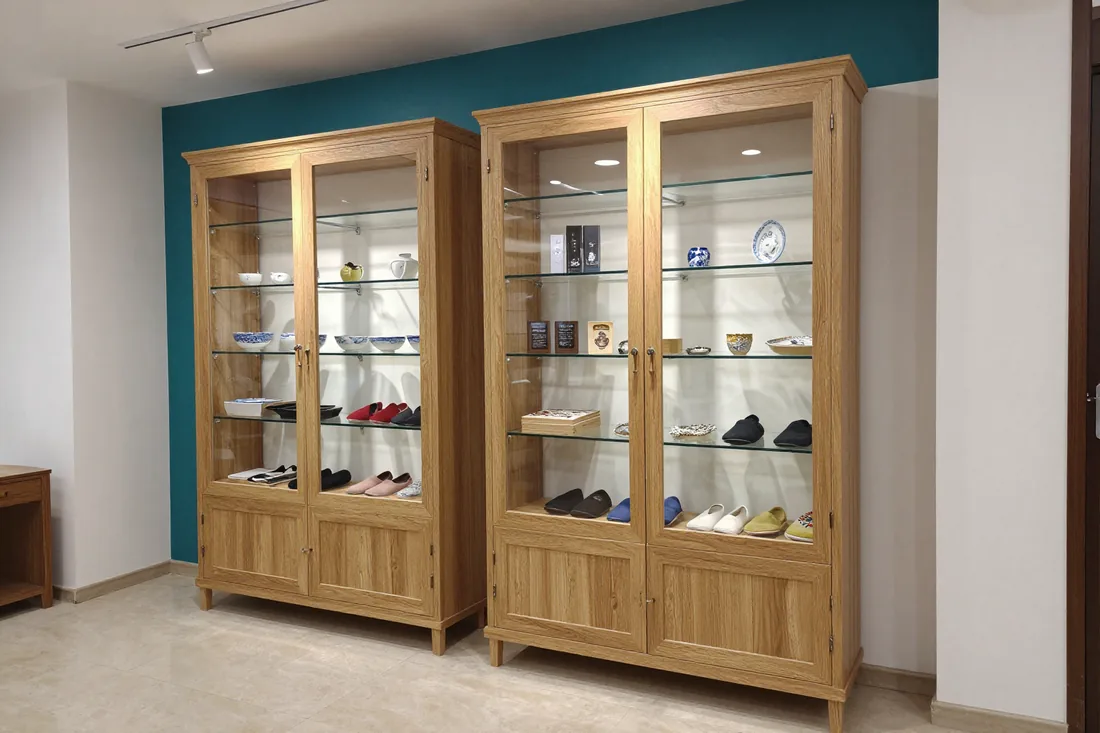
Solid oak display shelving with glass sections for fragile souvenirs: locks on the doors and shelf lighting. Wood brings warmth, glass provides visibility and protection for the goods.
 Store
Nova City, Bostandyk district
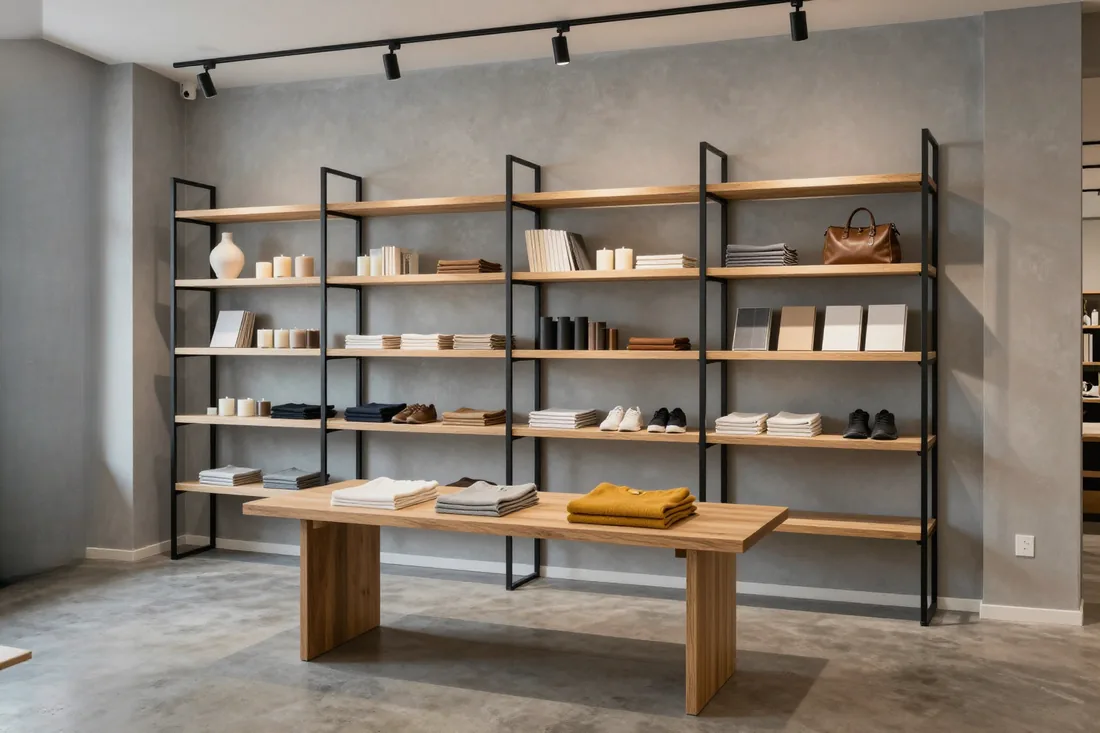
Combined loft shelving for a concept store: wooden shelves in solid oak on a welded black frame. Metal supports heavy displays, wood brings warmth to the loft interior of the hall.
03How we work with stores
04Prices
The "from" price is for a shelving unit of basic size; the final price depends on the wood species, height, number of shelves, lighting and glass. We fix the estimate in the contract after a free measurement of the hall, and it does not change during the work.
05For businesses
We work with LLPs and sole proprietors on bank transfer. Price, materials and lead times — in the contract before production starts.
Request contract and invoice06Principles

01 / 06
07Production
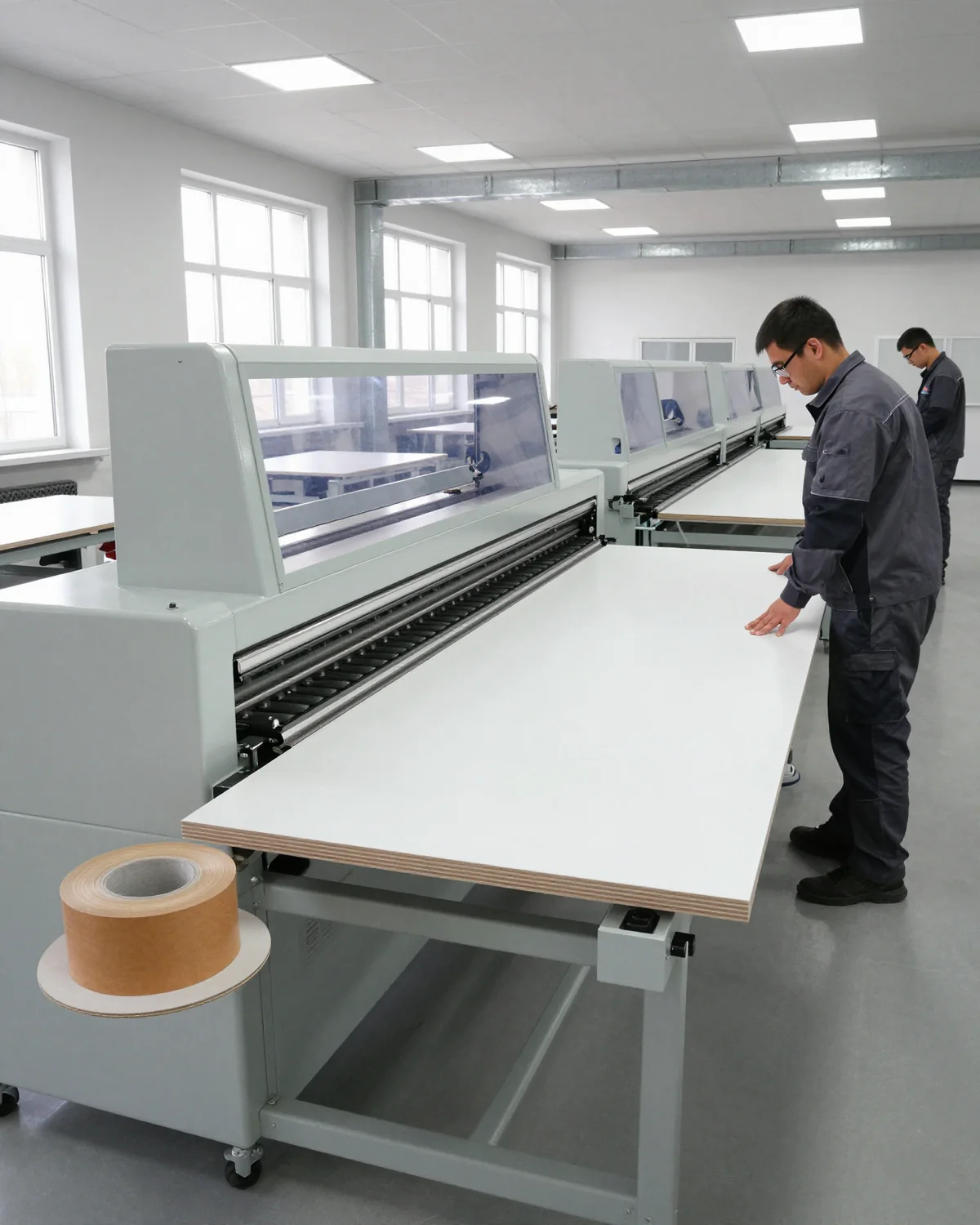
Six steps in our 600 m² workshop. You can see each of them with your own eyes: the showroom and production are under one roof.
Egger · Kronospan · E1
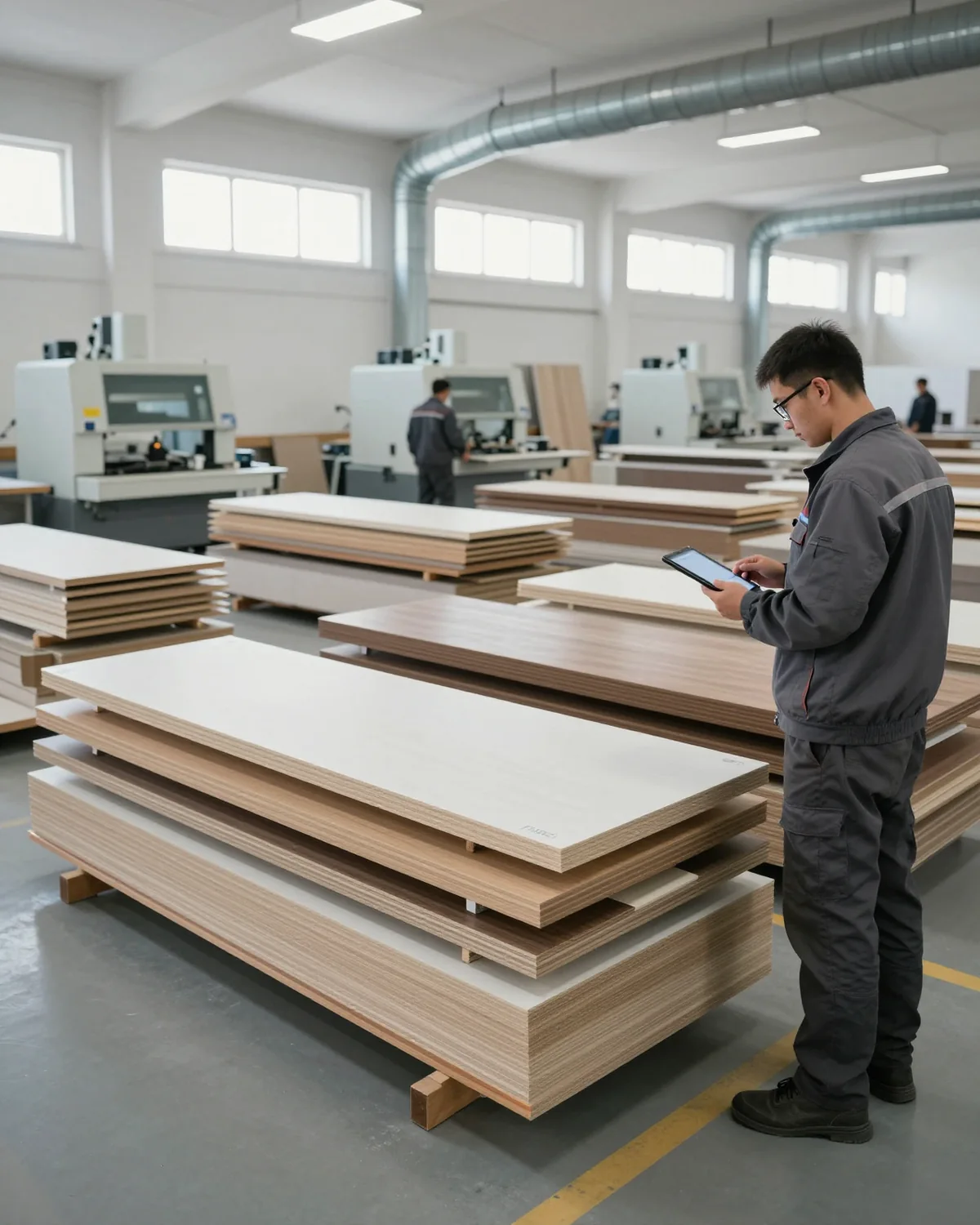
Egger and Kronospan boards, emission class E1, arrive at the workshop warehouse. Laminated chipboard decors — 40+, thickness 16–18 mm. Class E1 — for sales floors and display cases.
Laser measuring to 1 mm
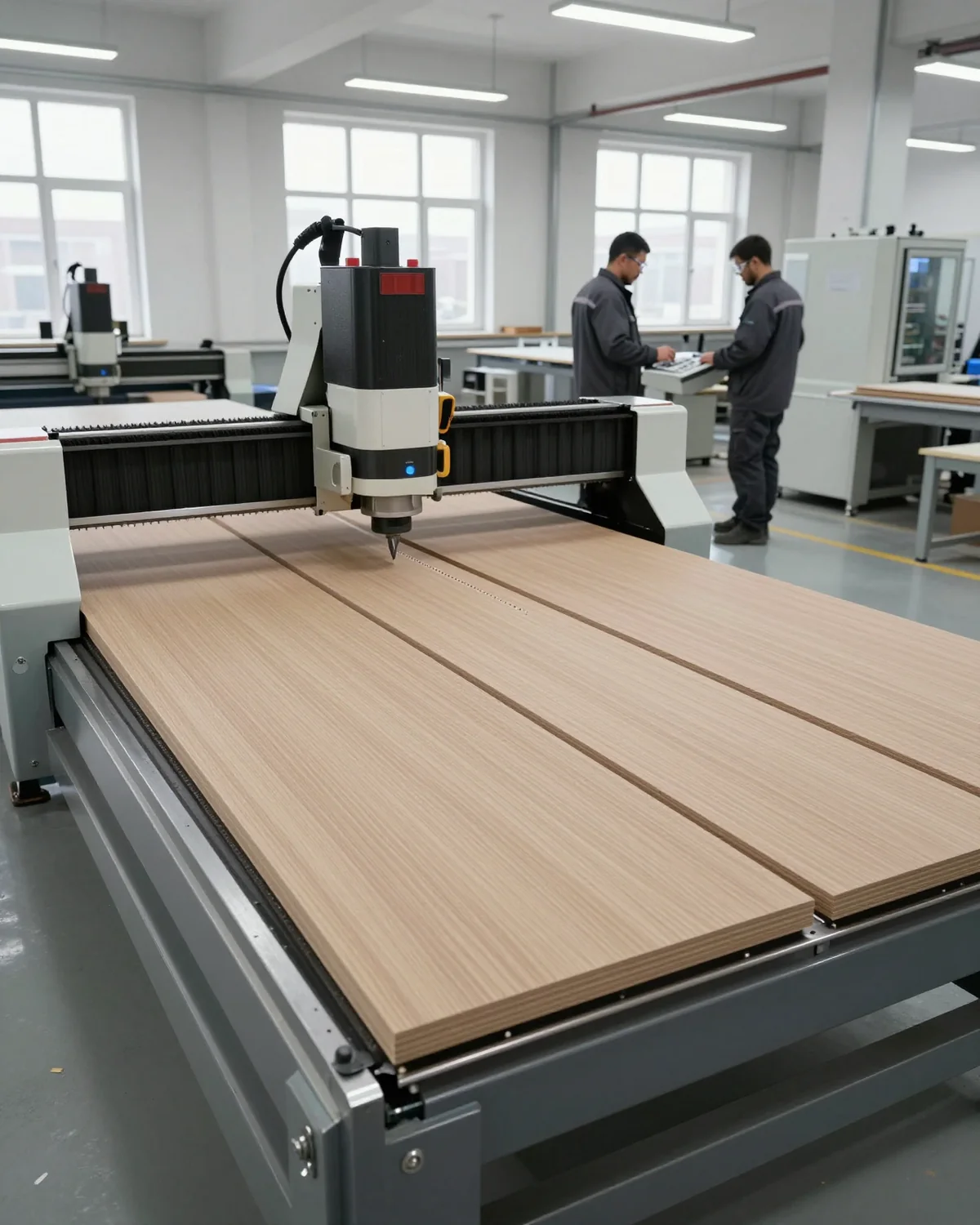
A design engineer prepares the drawings, and the machine cuts the board to them. Dimensions come from a laser measurement accurate to 1 mm.
Blum · Hettich · Boyard
The edge-banding machine seals the edges, then we drill holes for Blum hinges and Hettich runners.
Any RAL colour
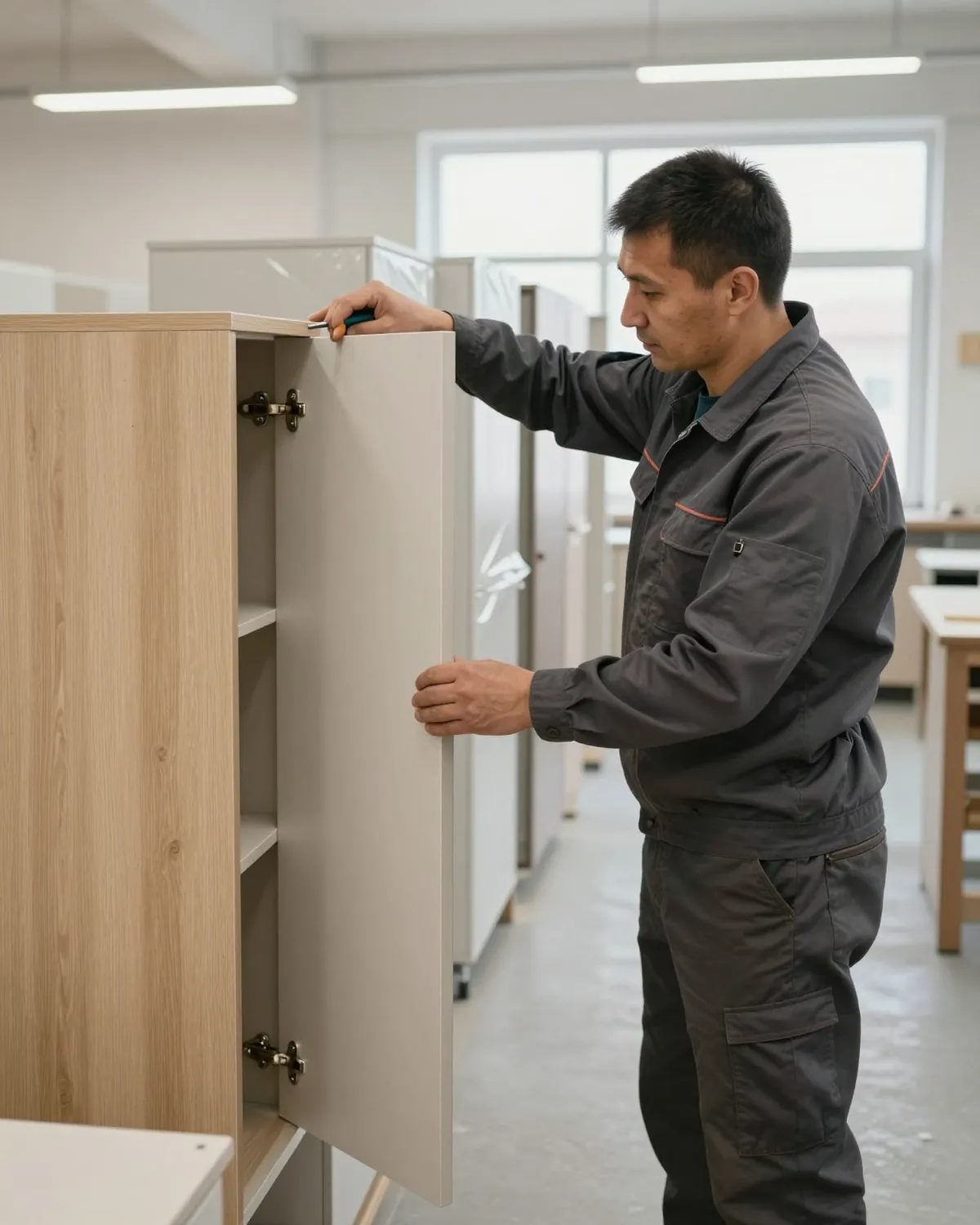
A finishing specialist paints the fronts to RAL — matte and gloss. Before shipping we assemble the shelving in the workshop and load the shelves to check deflection and lighting before installation on the sales floor.
Pre-assembly in the workshop
We assemble the modules in the workshop before dispatch, checking front gaps and drawer travel. The quality control department signs the item off for shipping.
Night installation per mall rules
We deliver, bring it in, assemble in 1 day, adjust the furniture and clean up after ourselves. Warranty of 24 months from signing the acceptance certificate.
08Team
MEBLIX workshop craftsmen who make and assemble furniture to order.
01 / 07Furniture assembly carpenter11 years
★ 4.81 · 47 ratings

Cabinet furniture repair craftsman20 years
★ 4.99 · 73 ratings

Furniture and kitchen unit assembler23 years
★ 4.97 · 300 ratings

Made-to-order furniture maker7 years
★ 4.26 · 32 ratings

Furniture maker5 years
★ 4.23 · 30 ratings

Joiner and carpenter20 years
★ 5.0 · 113 ratings

Furniture front and hardware fitter17 years
★ 4.61 · 92 ratings
09FAQ
Didn’t find the answer? Message us — a manager replies, not a bot.
Ask on WhatsAppYes, if the shelf is calculated for that weight: for glass and canned goods we make the shelf thicker and place the supports closer together. At the measurement we'll ask what goods will go on each shelf and factor that into the drawing.
They will, if the wood is coated with moisture-resistant lacquer and galvanized inserts for buckets and pots are placed on the shelves. This "Flora" shelving is in the price list, and we adjust the sizes to the sales floor after the measurement.
Yes, the shelves are removable and rest on adjustable supports, so they can be added or replaced without disassembling the section. We make new shelves from the same wood species and in the same tone as the first batch.
Yes, we take a photo or design project as a basis and adapt it to the sales floor dimensions and the weight of the goods. Before cutting we show a 3D layout project; it's free and ready in 1–2 days after the measurement.
The price list on the page includes the “Retail” wall shelving in pine and the “Island” freestanding unit in oak; the oak one is generally the pricier model. The price of each is listed there, and the final amount is fixed in the contract after the measurement.
The lead time depends on the model and wood species and is shown in the price list on this page for each option. If the location opens on a specific date, tell the manager — a rush order is possible.
Yes, in shopping malls we install at night or at weekends per the mall rules and the store's schedule, so the location doesn't have to close. Delivery and assembly are handled by our team.
Yes, we equip a chain with a single estimate and a single contract, repeating the modules in the same wood species and tone. For a new location the same shelving can be reordered later.
How we work: we sign a contract, issue an invoice, and payment is made by bank transfer. Half the amount — before work starts, the second half — after the acceptance certificate; the invoice is handed over together with the certificate.
24 months on the item under the contract, covering the frame, shelves and finish. Blum hardware in the drawers carries the manufacturer's 25-year warranty.
10Reviews
4,9
average rating
on Google and Zoon
Everyone can see a review on the platform: this is how other people check whom to trust with an order. If something went wrong, write to us and we will reply within 1–2 business days.
Message us on WhatsApp11Article
We make wooden retail shelving from kiln-dried pine, oak and ash solid wood and oak veneer in our own 600 m² workshop: shelves are calculated for the weight of the goods, and the finish is selected for the customer flow. Hall measurement and 3D design are prepared free of charge in 1–2 days, and the warranty on the item is 24 months under the contract.
The species determines how many years the shelves will withstand the display, what tone the hall will get, and how noticeable scratches from boxes, baskets and customers' hands will be.
| Species | Edge wear | Tone and grain | Where it fits |
|---|---|---|---|
| Pine | more noticeable, soft wood | light, with knots | eco bench, packaged goods, souvenirs |
| Oak | resistant to impacts | warm, large grain | wine store, islands, heavy goods |
| Ash | resistant, dense | light, even | boutique, cosmetics, ceramics |
| Oak veneer | depends on the edge | even oak grain | large panels, boutique walls |
We offer oak veneer where a large even surface with a uniform grain is needed: the back wall of a wall-mounted shelving unit, the sides of a tall wardrobe, the frieze above the display in a boutique. Natural oak veneer is glued to a stable base, so a wide panel does not warp and does not develop gaps at the joints, as happens with a glued board. We make the shelves, edges and front edges, which bear the main load and friction, from solid wood: veneer is thin, and a through chip on the edge can no longer be sanded out. This combination is often chosen by owners of clothing and footwear stores who value a solid wall look without knots. Wooden store shelving in this design looks like solid wood but weighs less, and mounting on a drywall wall is easier and faster.
We cut only kiln-dried solid wood with a moisture content of 8–10 %, because a retail hall is a dry space with air conditioning in summer and heating in winter. In such conditions, damp boards release moisture unevenly: the shelf warps into a "boat" shape, gaps appear at the joints, and the lacquer cracks along the grain. Boards with high moisture content are not used and are dried further in the kiln. After cutting, we sand the parts and immediately coat them with oil or lacquer so that the wood does not absorb moisture while waiting for assembly. Our own joinery section in the 600 m² workshop allows us to maintain this standard on every order, not just large ones. For the store owner, this means a simple thing: a shelving unit that stood straight on opening day remains straight after several seasons.
A sagging shelf catches the customer's eye before any crack, so its strength is calculated based on the actual goods at the drawing stage.
Sag depends most on the span between supports, then on board thickness, and only after that on the species. A long shelf under jars gradually bows over time, even if it sits perfectly level for the first few weeks: wood slowly yields to constant load. A short span almost eliminates the problem, which is why intermediate uprights are added more often for glass and preserves rather than simply choosing a thicker board. How the load sits also matters: heavy goods in the middle of a span are riskier than an even row along the full length, so the heaviest items are placed closer to the uprights. Grain direction plays a role too — the shelf is cut along the grain, otherwise it breaks under less weight. That is why a conversation about shelving starts with the question of what exactly will go on each tier, and only then is the section width chosen.
At the control assembly in the workshop we load the shelves and check sag, the fixing of the uprights and how the lighting works — this is a mandatory step before every shipment. We match the load to the goods the owner named at the measurement: heavier for a wine section, lighter for a shelving unit with textiles. If a board behaves worse than calculated, we swap it for a thicker one or add a support while the wooden retail shelving is still in the workshop. Fixing the structure on the bench is faster than unloading a section in a working sales floor. After the check we label the parts so the team assembles them on site in the same order. The warranty on the item is 24 months under the contract, so we never skip the load test, even on small orders.
The finish decides how the wood will look after a year of daily trading: hundreds of touches, boxes moved around, and damp cleaning before opening and after the shift ends.
| Finish | Wear | Cleaning | Repairing scuffs |
|---|---|---|---|
| Oil | goes matte on the edges | soft damp cloth | refreshed locally |
| Lacquer | withstands knocks and friction | any damp cleaning | sanding and refinishing the area |
| Oil with wax | medium | dry or damp | locally, without disassembly |
We recommend refreshing the oil coating on worn areas without dismantling the shelving unit: lightly sand the area with fine sandpaper and apply a thin layer of the same oil used on the entire unit. We specify the composition and shade when handing over the unit so the refresh matches in color. Lacquered surfaces are washed with a damp cloth without abrasives or solvents, and a deep scratch is covered by re-sanding and lacquering a small area. We often combine coatings on one piece: edges and plinth under lacquer, shelves and sides under oil. This way wooden shelving for a store keeps its natural texture where it is examined and withstands wear where it is rubbed. It is best to clean the sales floor with mild products without chlorine — they do not dry out the wood.
The set of sections depends on the area, assortment and customer route: from the entrance to the main shelves, then to the islands, fitting room or tasting area, and checkout.
Wall-mounted sections hold the main assortment, so we start the sales floor layout with them in the 3D design. We choose the height so the top tier remains accessible to the customer, and above it a frieze with lighting or stock in boxes can be placed. We attach wooden shelving for a store along the wall to it, and adjust the supports to the floor, so the section does not wobble even when a customer reaches up. A corner shelving unit fills the space that usually sits empty in a sales floor and connects two walls into one display without a gap. We make the shelf pitch adjustable: a new batch of a different size fits without rework. The bottom tier is often closed with doors — behind them is stock that does not need to be carried from the back room during working hours.
We place an island shelving unit and a retail display cabinet in the center of the sales floor when goods need to be shown from two sides and slow the customer down along the route. We make the island double-sided, with drawers at the bottom for stock, and the display cabinet stepped so rows of packages are visible at once. An oak island table is suitable for displaying textiles, books and ceramics: new items are laid out on the tabletop, stock on the lower shelf. Wooden retail shelving of this shape is easy to move when changing seasonal displays, so we select supports for this scenario. Between islands we leave an aisle where two customers with baskets can pass each other, and we check this in the 3D design before cutting. We keep the island height below eye level so the sales floor can be seen through.
Lighting and price tags are best planned in the drawing before cutting, rather than attached to a finished section with wires and tape after opening, when the sales floor is already running.
We place the LED strip in an aluminium profile under the front edge of the shelf so the light falls on the goods on the tier below, not into the customer's eyes. We mill the channel for the profile into the board in the workshop, so the strip is recessed in the wood and invisible when viewed from the side. The wires run into a groove in the rear upright and lead to a single connection point behind the shelving. A warm shade of light brings out the grain of oak and ash, while neutral light reproduces the colour of cosmetics and packaging better. Before shipping, we switch on the lighting during the test assembly and check every section. If the sales floor follows the mall's schedule, we fit one common switch for the whole line so staff don't have to walk around the shelving one by one.
We mill a narrow groove in the front edge of the shelf for the price tag holder, and the strip fits into it without visible screws. Price tags change, but the wood doesn't get covered in pin holes and glue marks that spoil its look within a month. For display stands and sloped shelves we make the groove with a stop so the strip doesn't fall out when goods are being arranged. We match the colour of the strip to the sales floor: a transparent one is almost invisible on light ash, while a dark one reads well on oak. If the range changes often, we fit holders on all tiers at once so we don't have to come back to the shelving with tools later. The same groove can be used for a lip that keeps jars and small items in place.
A metal frame with solid wood shelves is chosen for the loft format, coffee shops and heavy goods: a powder-coated steel upright spans a wide bay, while the wood stays visible to the customer. The combination with board is chosen when the budget is limited or the section stands in a back room. Chipboard shelving for a store is cheaper than solid wood, but the board's edge can't be refreshed the way wood can, and chips on it stay forever. That's why on the sales floor it makes sense to keep solid wood on front edges and visible shelves, and use board in closed lower sections. This approach lowers the cost of the equipment without changing the impression of the sales floor. Prices for each option are in the price list above on this page.
The journey from the first message to a working sales floor goes through several stages, and at each one the store owner knows what will happen and when.
For a chain, we repeat the same modules in the same wood species and tone according to saved drawings, so the sales floors in different shopping centers look identical. We handle the fit-out of several locations with a single estimate and a single contract, and sections for a new location can be ordered later without a new project. We fix the tone of the oil or lacquer in the contract, so a new batch will match the first in color. It is also convenient for the owner that a wooden shelving unit can be bought individually, for example a second rack for the checkout, rather than the whole set again. If the new location has different wall dimensions, we change only the width of the sections, while the shelf profile, lighting and price holders stay the same. This way the customer recognizes the chain's store from the doorway, and the staff works with familiar display.
In shopping malls we install at night or on weekends according to the center's rules and the store's schedule, so the location does not close for a working day. Delivery, lifting and assembly are handled by our team: the sections arrive labeled after a test assembly, so on site they are placed in a known order. After installation we adjust the supports, anchor tall shelving to the wall, switch on the lighting and sign the acceptance certificate. Wooden retail shelving made by us is covered by a 24-month warranty under the contract, and Blum hardware in the drawers carries a 25-year manufacturer's warranty. Over 13 years we have completed more than 3 500 projects, and the installation procedure in shopping centers is routine for our team: passes, the freight elevator and floor protection are agreed with the administration in advance.
Wooden fixtures serve a store for a long time if they are chosen for the goods, the sales floor and the customer flow, not from a catalog picture.
12Calculation
Choose a model, the number of identical sections, the wood species and the finish — the calculation will go to the manager on WhatsApp, who will check the dimensions of your sales floor and send you a quote.
13Retail furniture
We make shelving, display cases, counters and checkout areas for your goods and floor layout, and install them at night so the store never has to close.
We make shelving for your goods, stockroom or niche: shelf spacing, depth and frame are calculated from the weight and size of what will go on them.
We make wooden shelving to the dimensions of the wall, niche or opening: we select the wood species, shelf thickness and finish for what will go on them.
We make wall-mounted, island and tall display cases for your goods: tempered glass, locks and lighting that doesn't dazzle the customer.
We make rails, gondolas, knitwear shelving, fitting rooms and checkout for your assortment and boutique layout, and install them at night so the store never has to close.
We make slanted shelving, island displays and fitting benches for your footwear assortment and floor layout, and in malls we install at night.
We make wall-mounted shelving with lighting, gondolas, perfume display cases and tester tables for your assortment and floor layout, and install them at night according to mall rules.
We make counters, island and wall-mounted display cases for jewellery: tempered glass, a lock on every door and spot lighting that makes the stones sparkle.
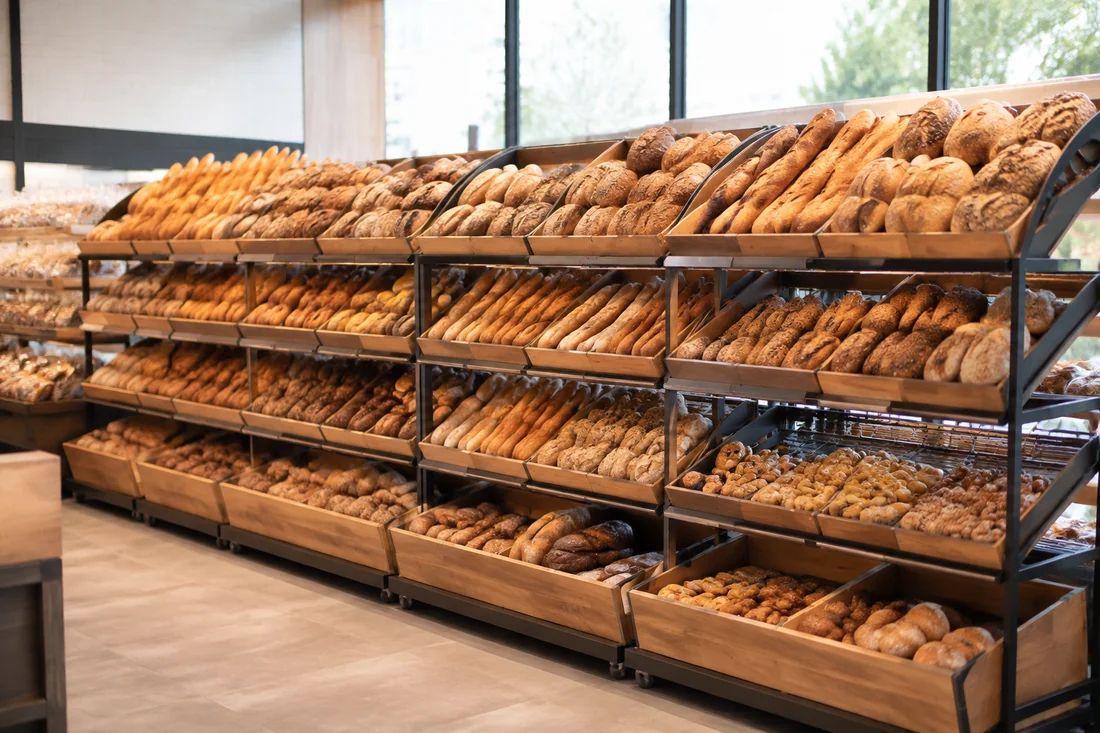
We make slanted shelving, shelves with trays and island display cabinets for a bakery or bread department assortment, with a finish suitable for contact with bread.