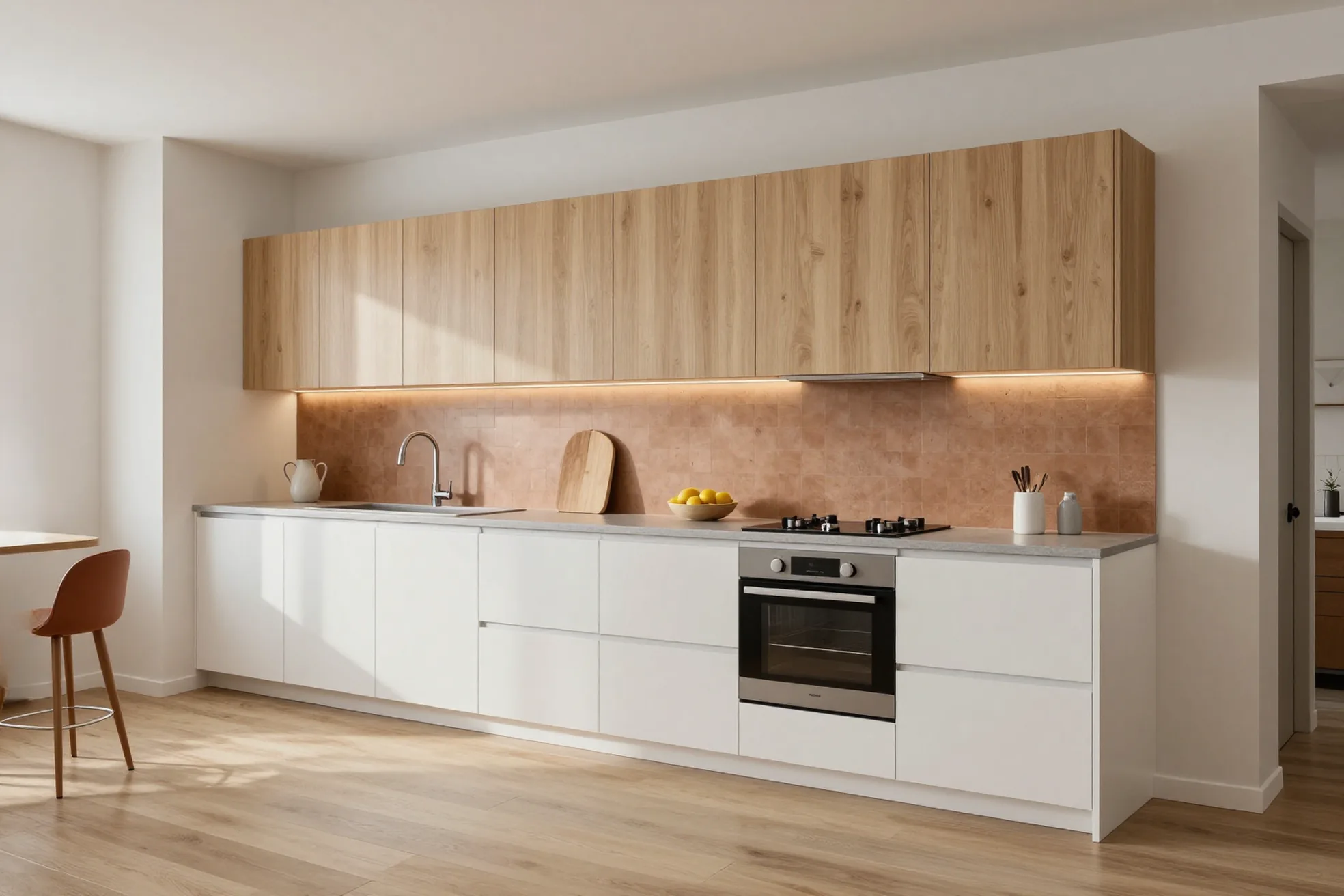
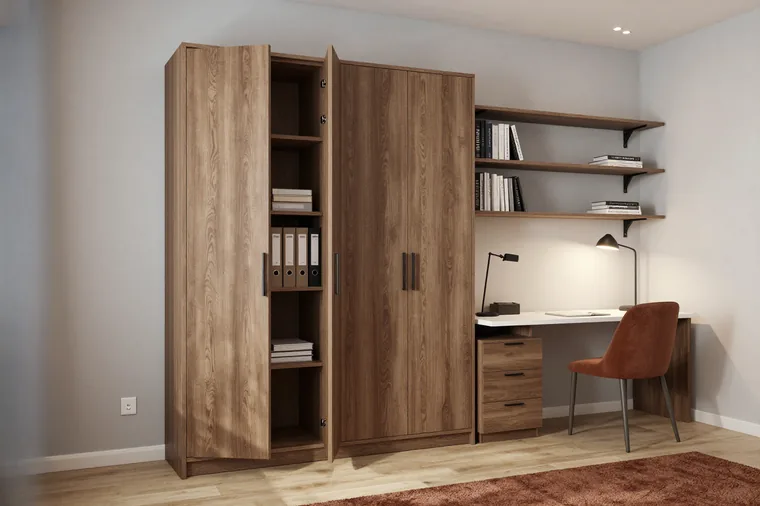
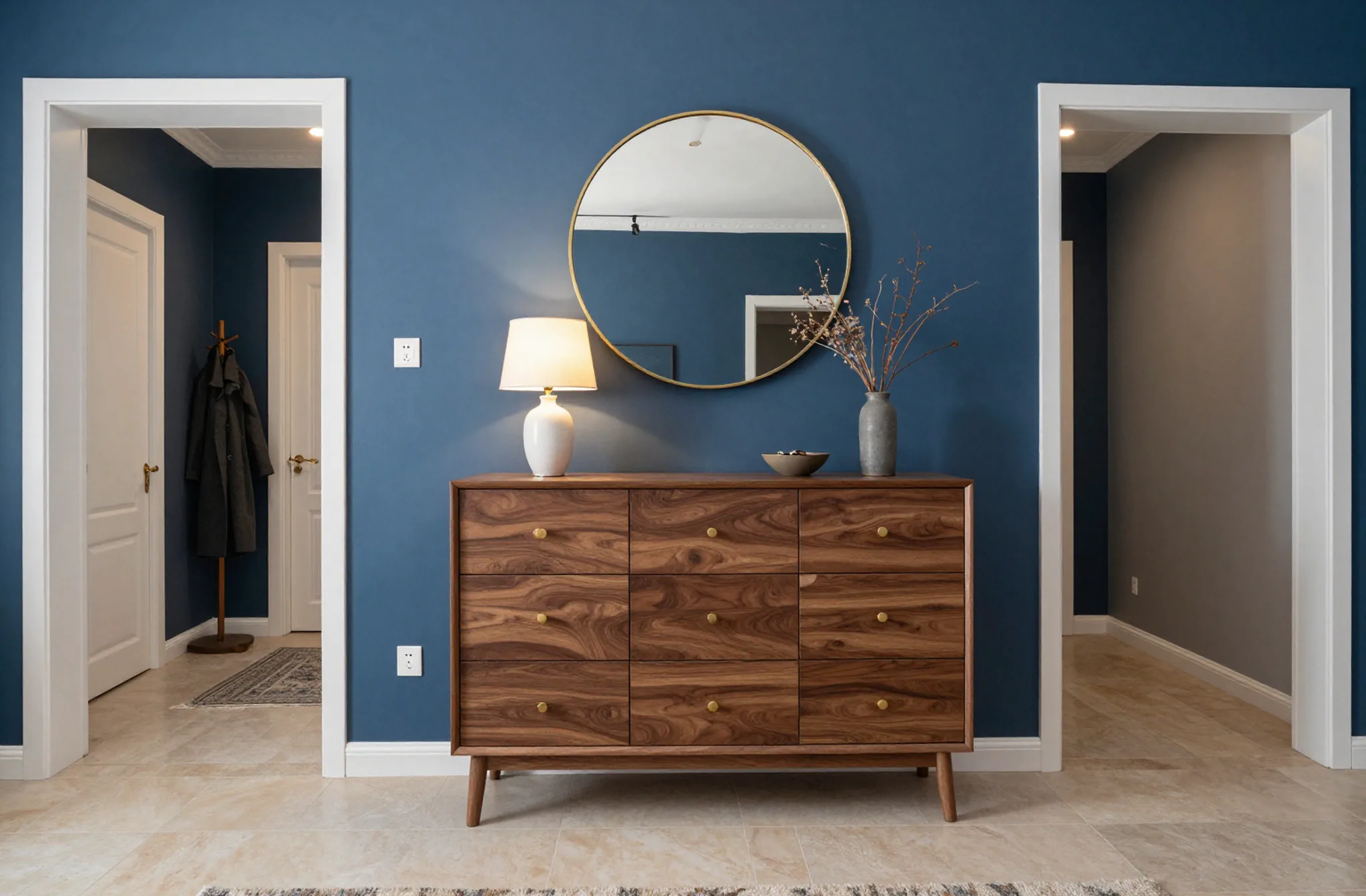
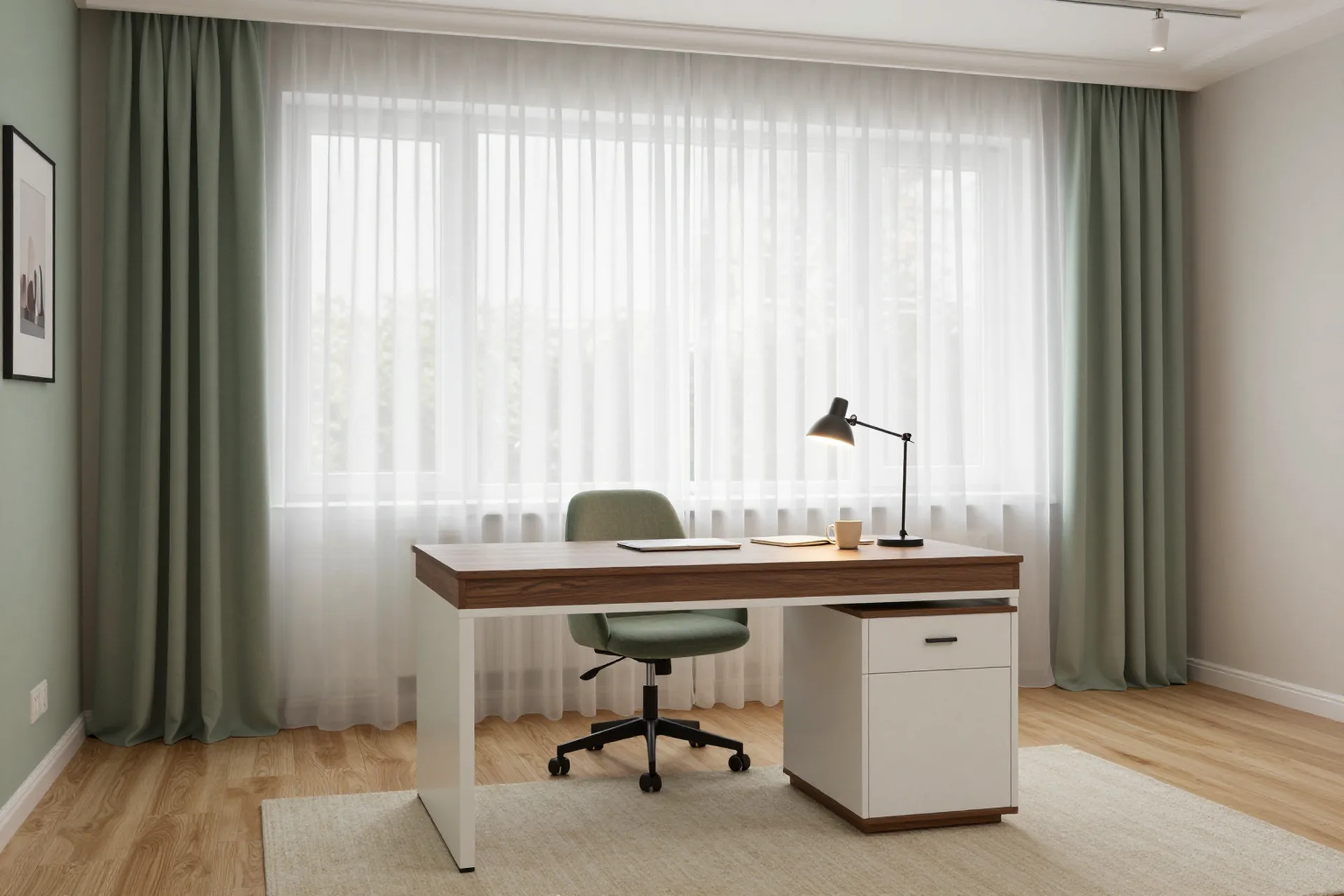
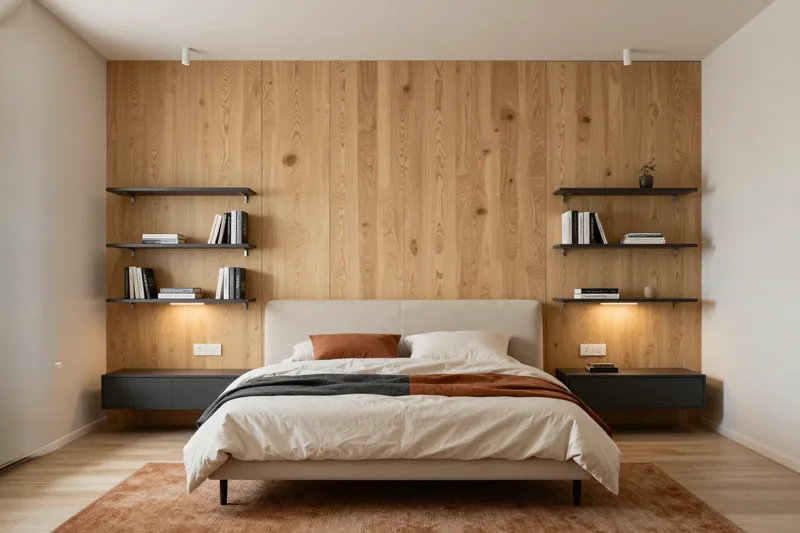
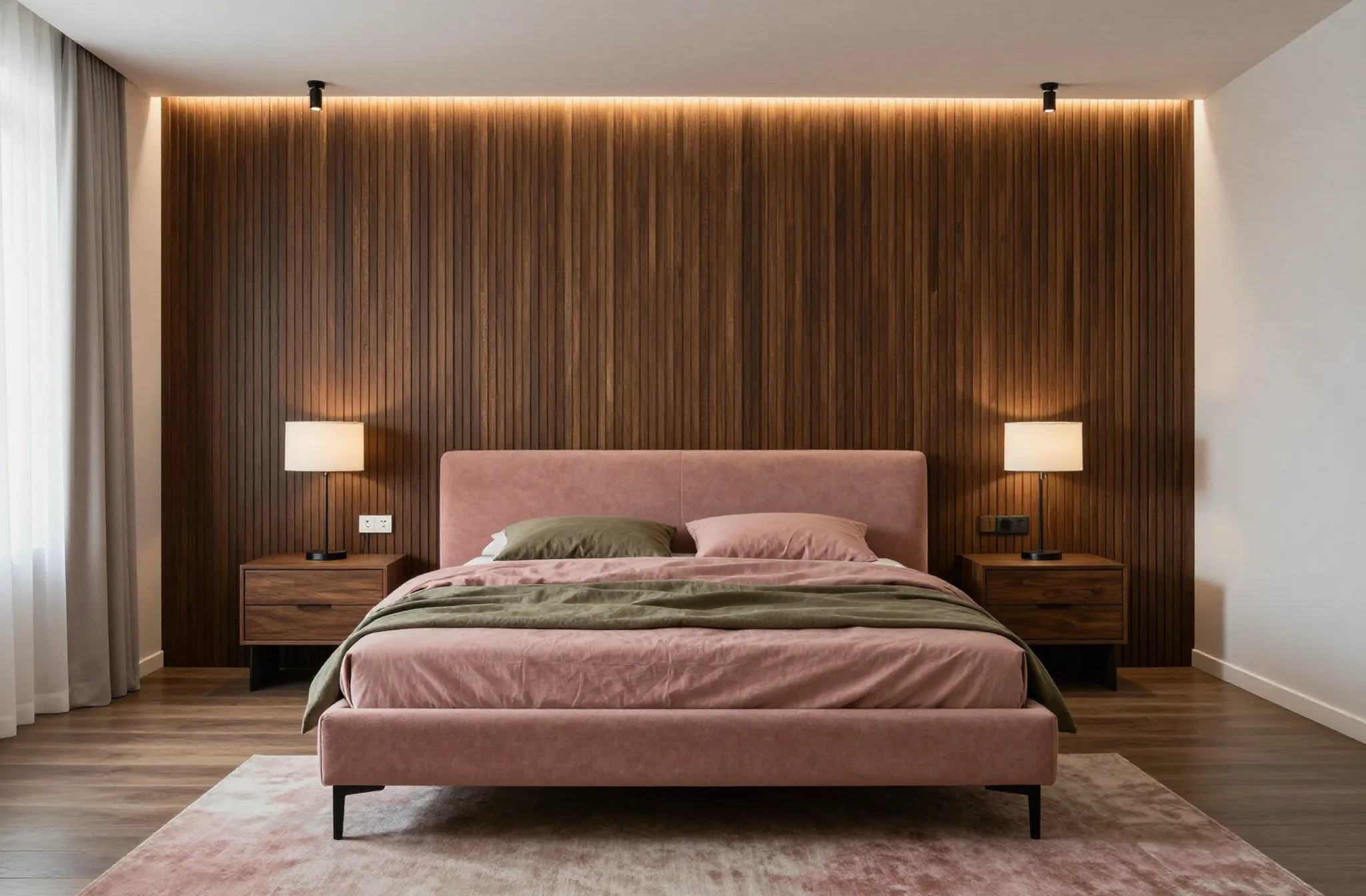
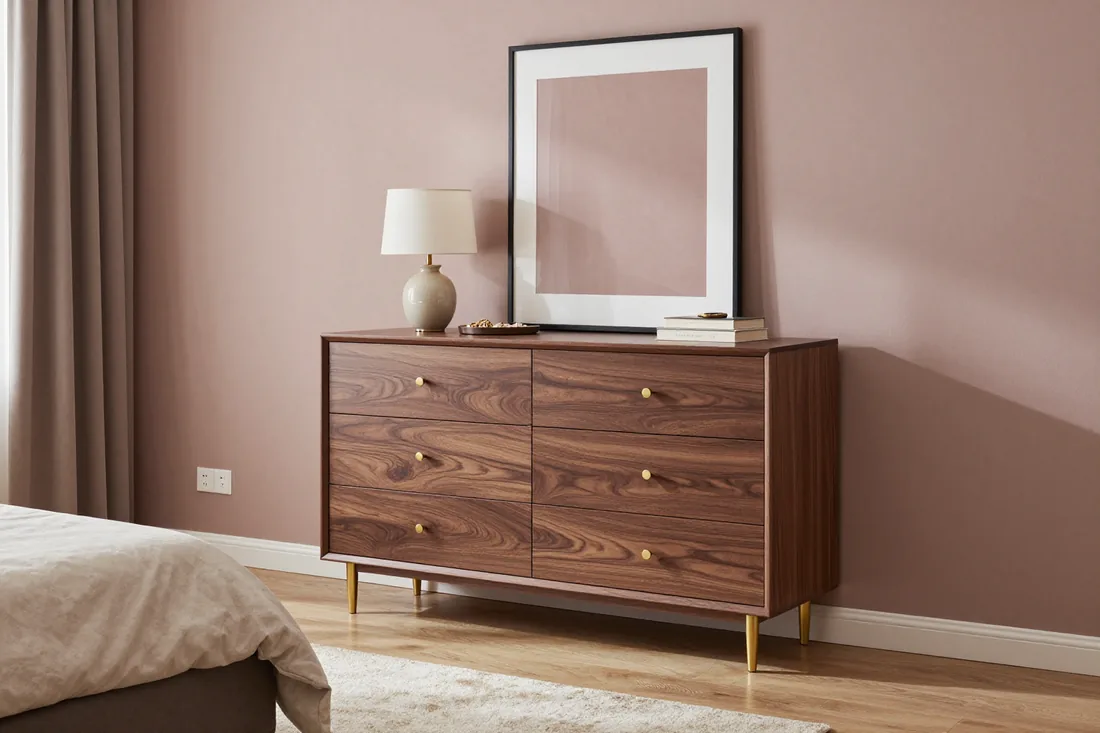
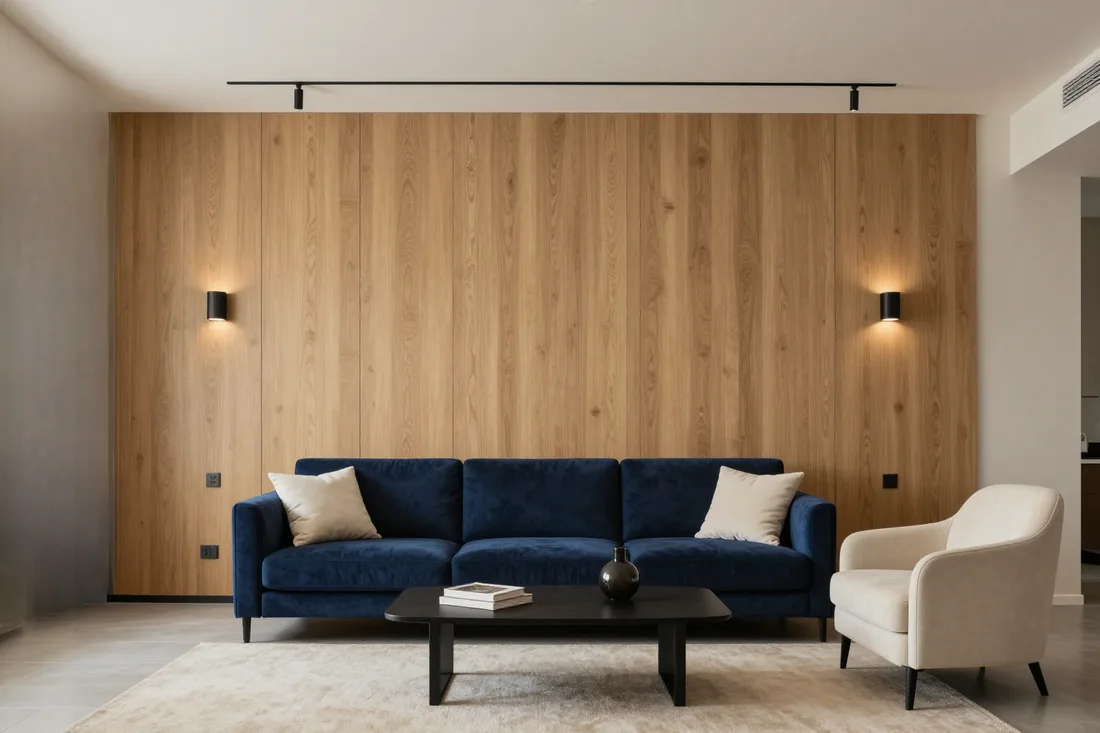
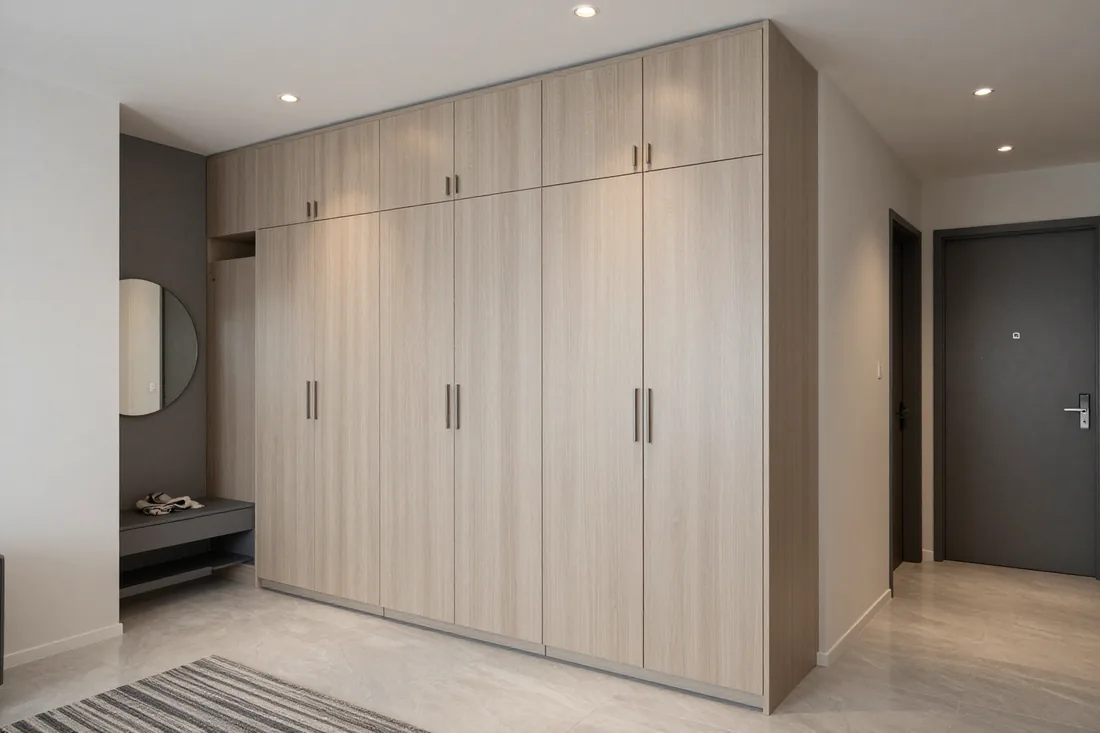
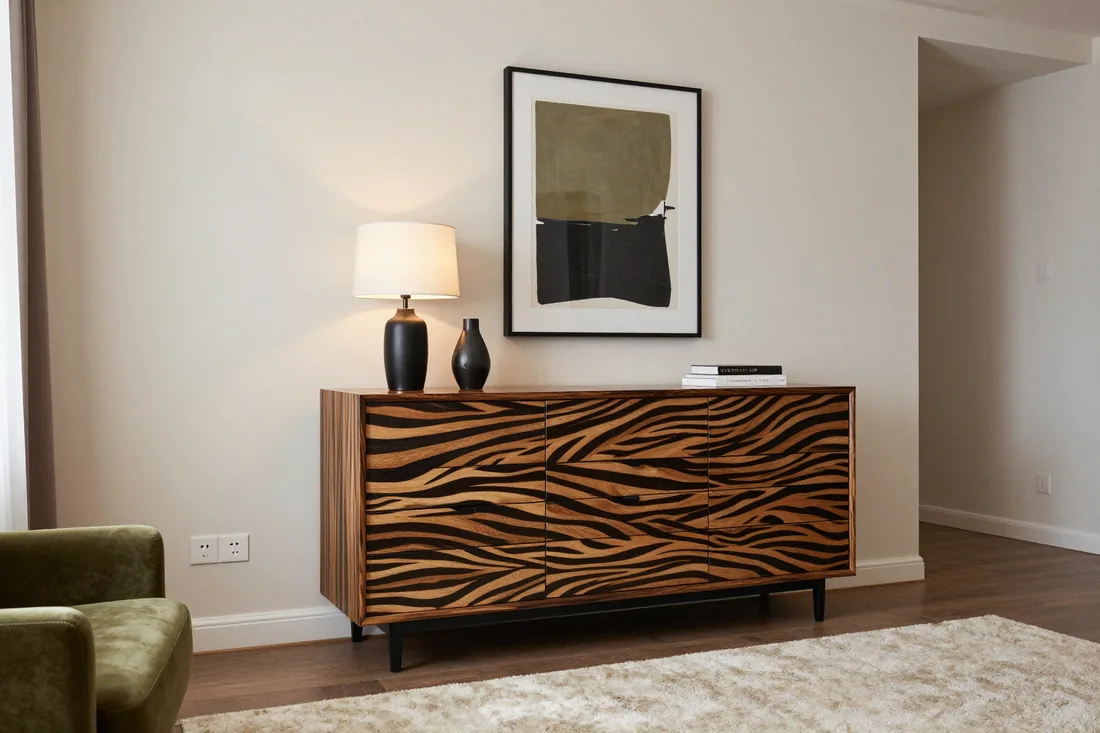
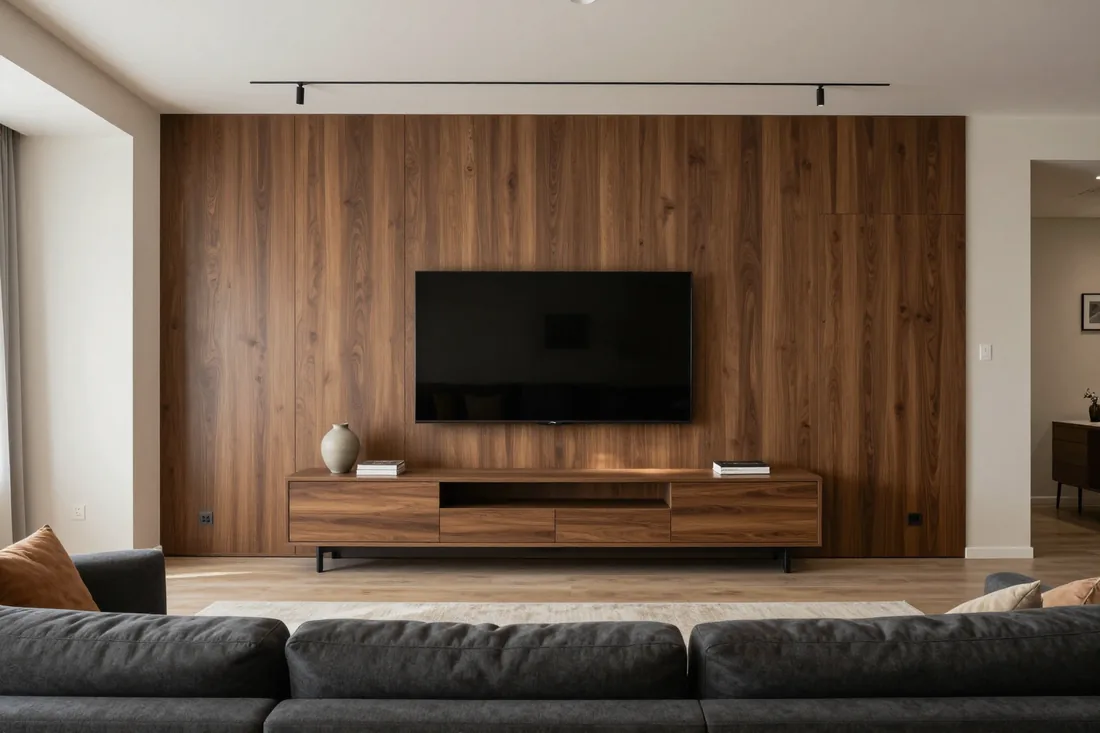
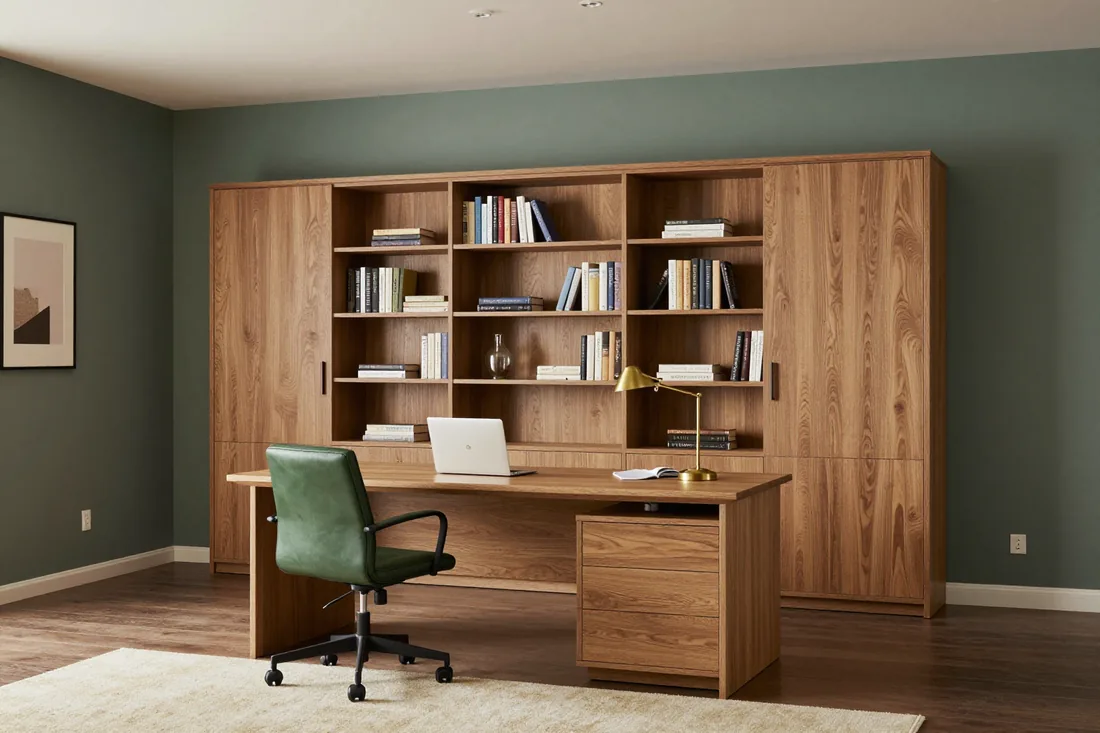
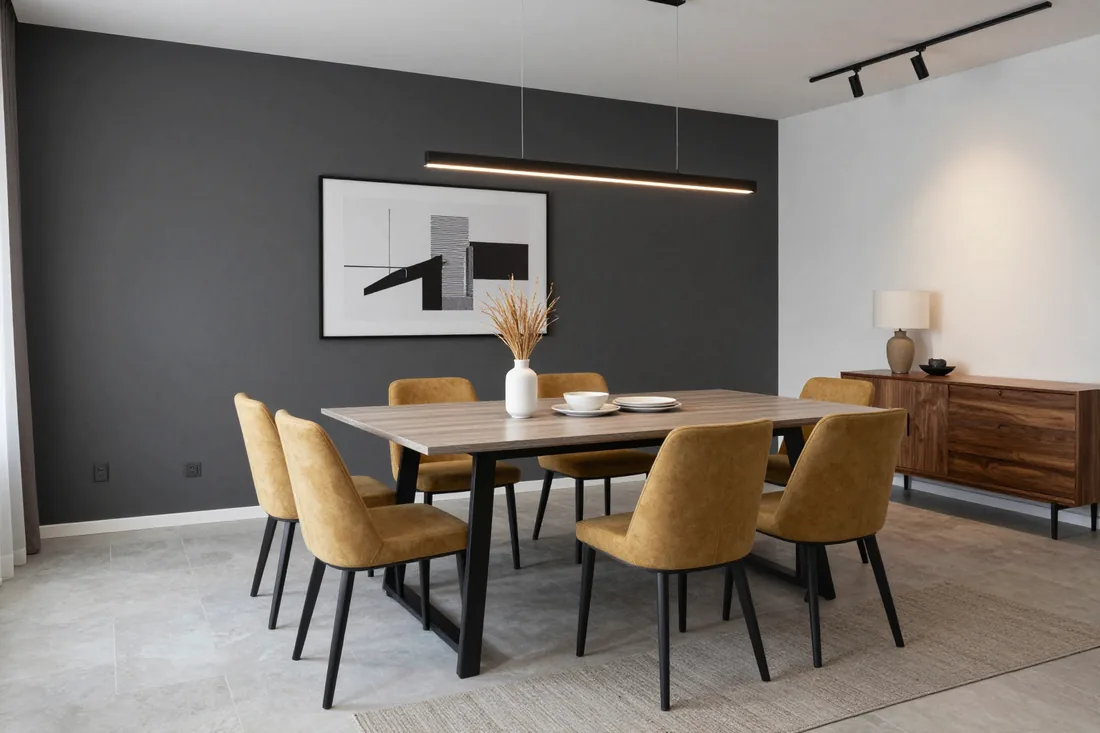
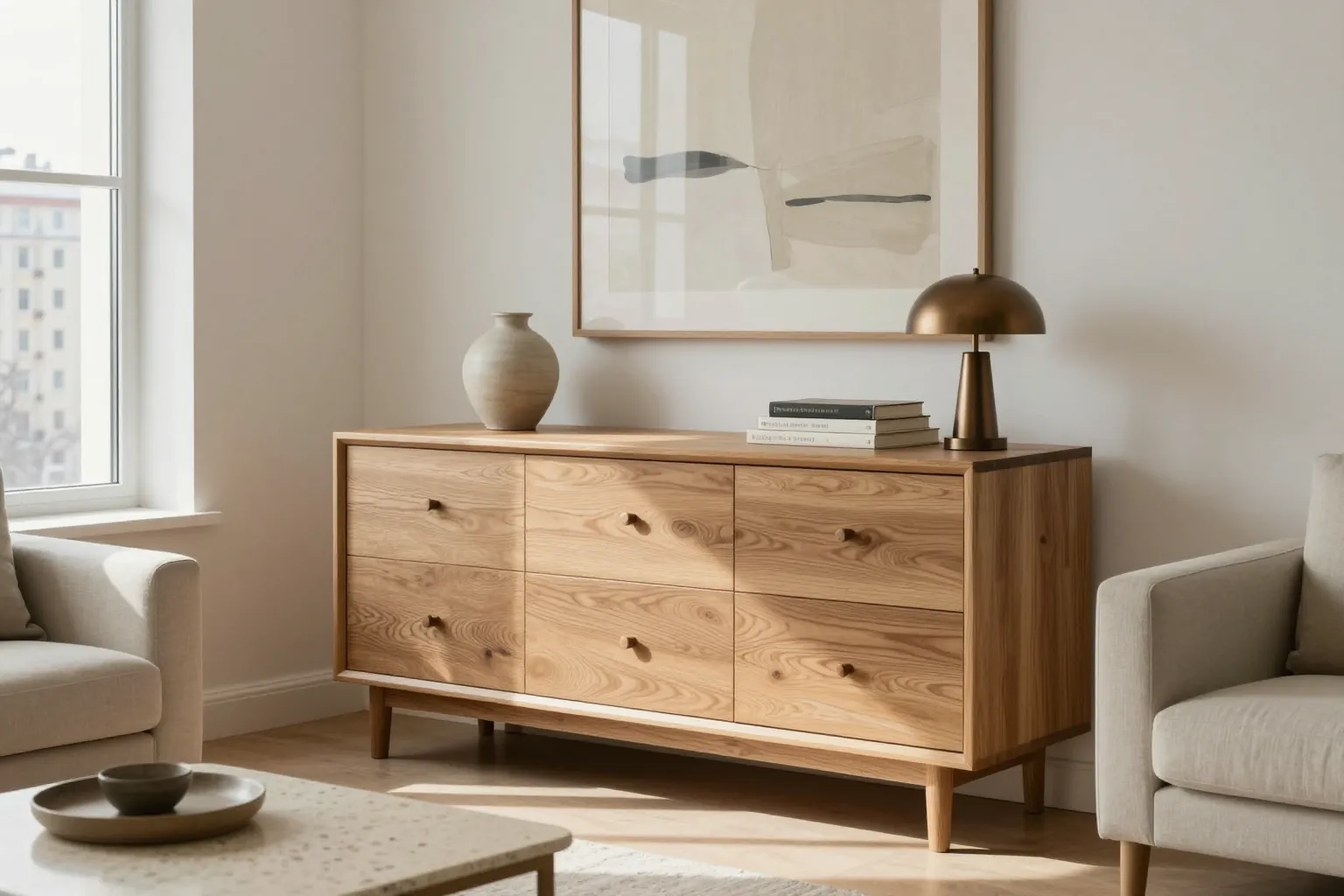
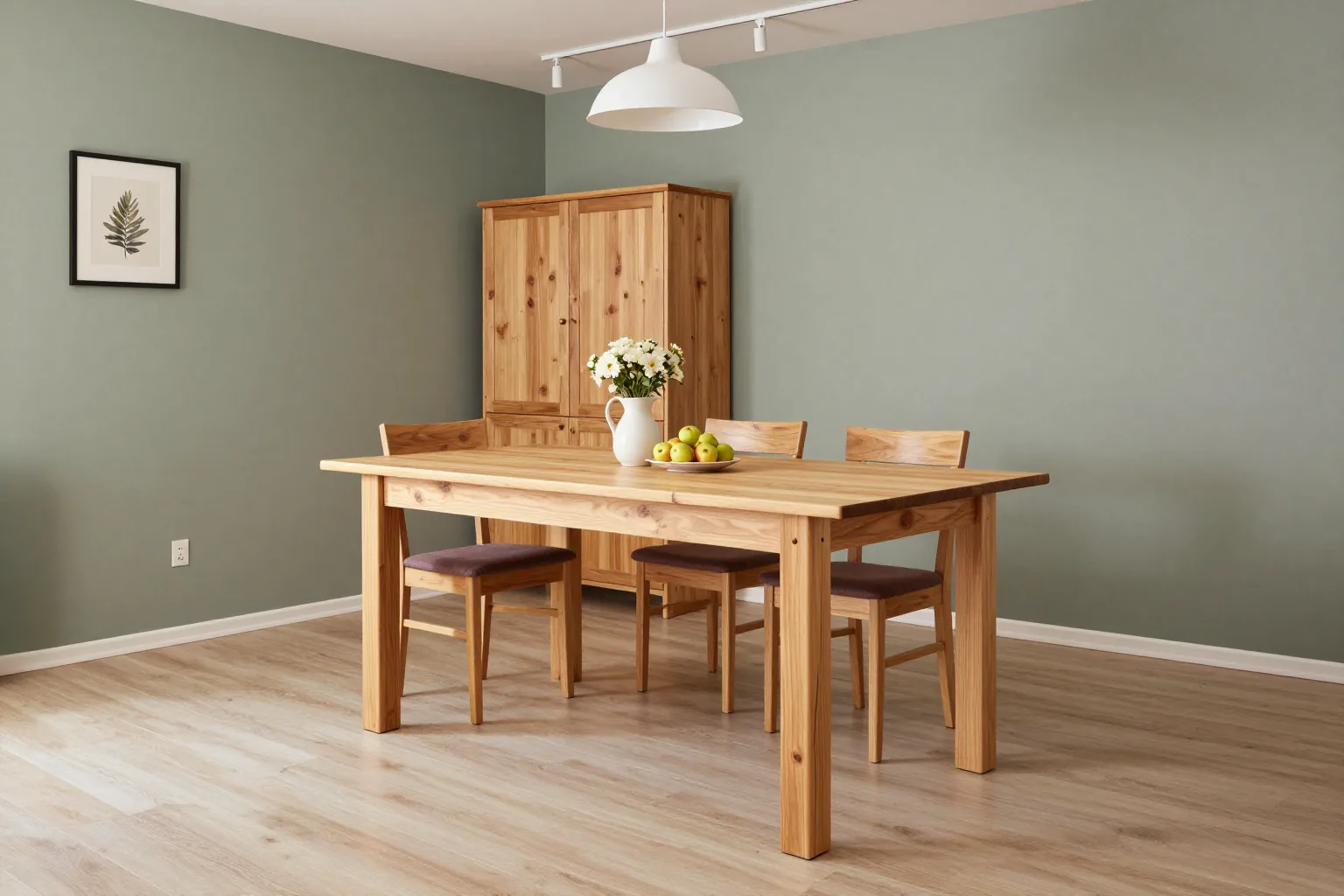
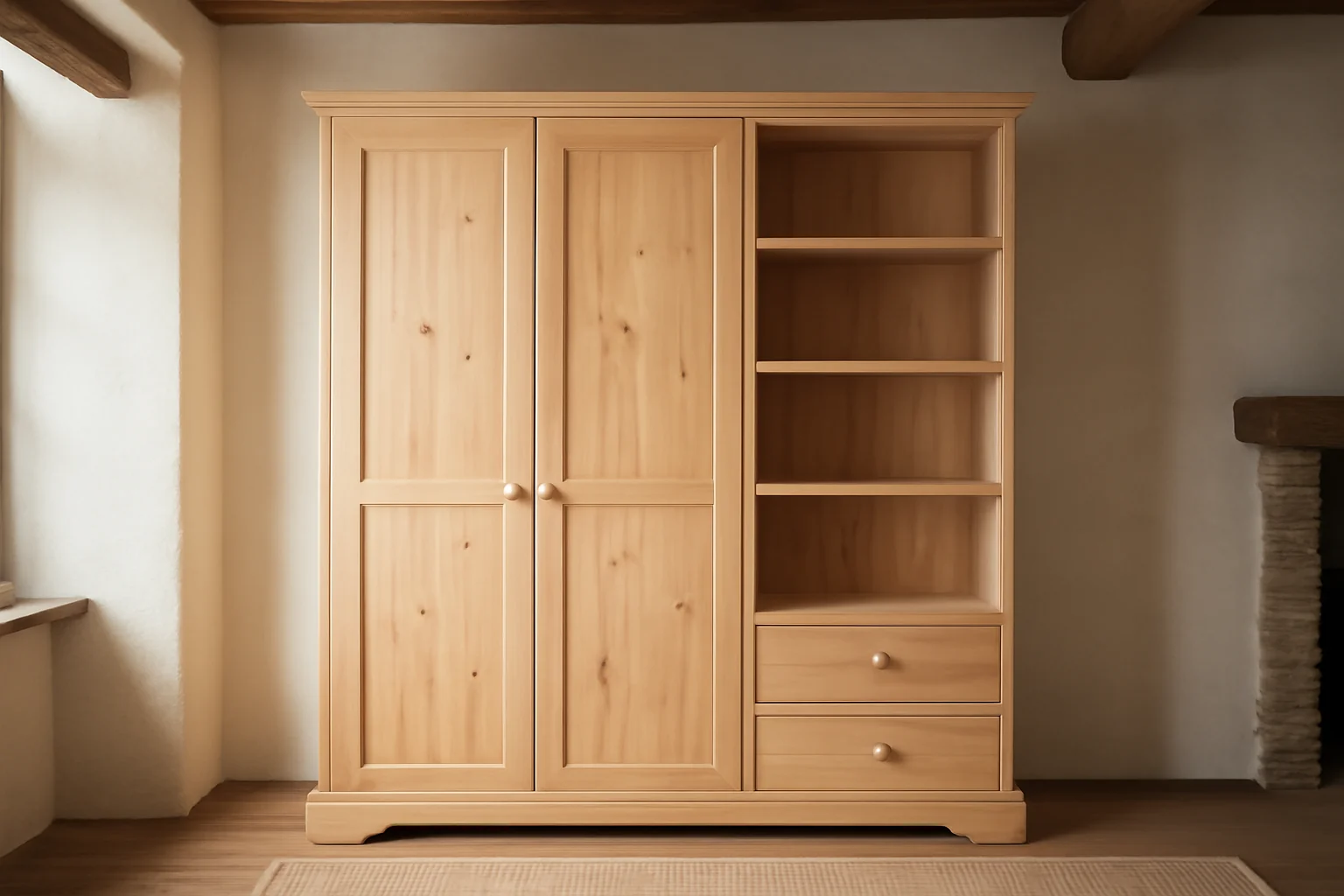
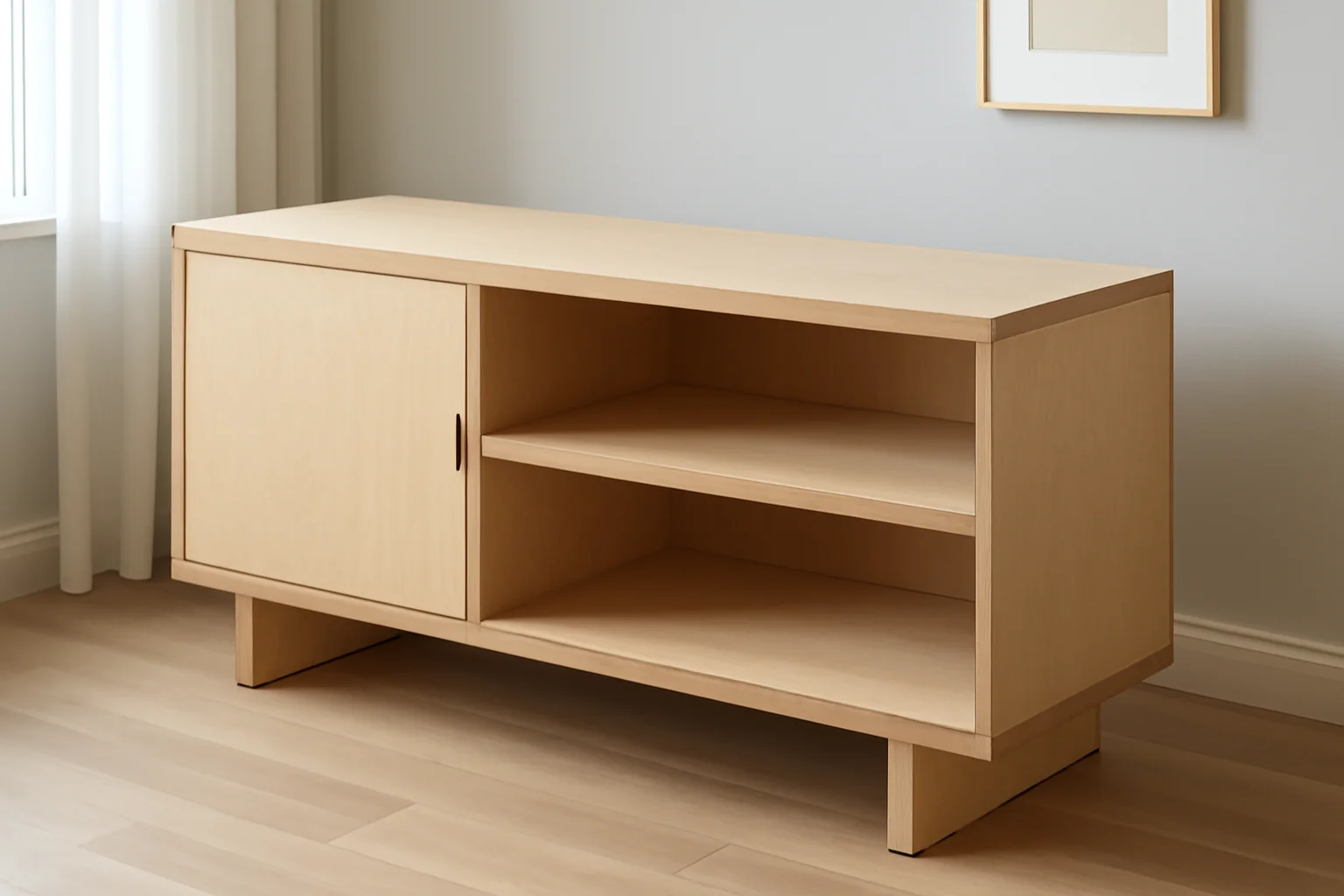
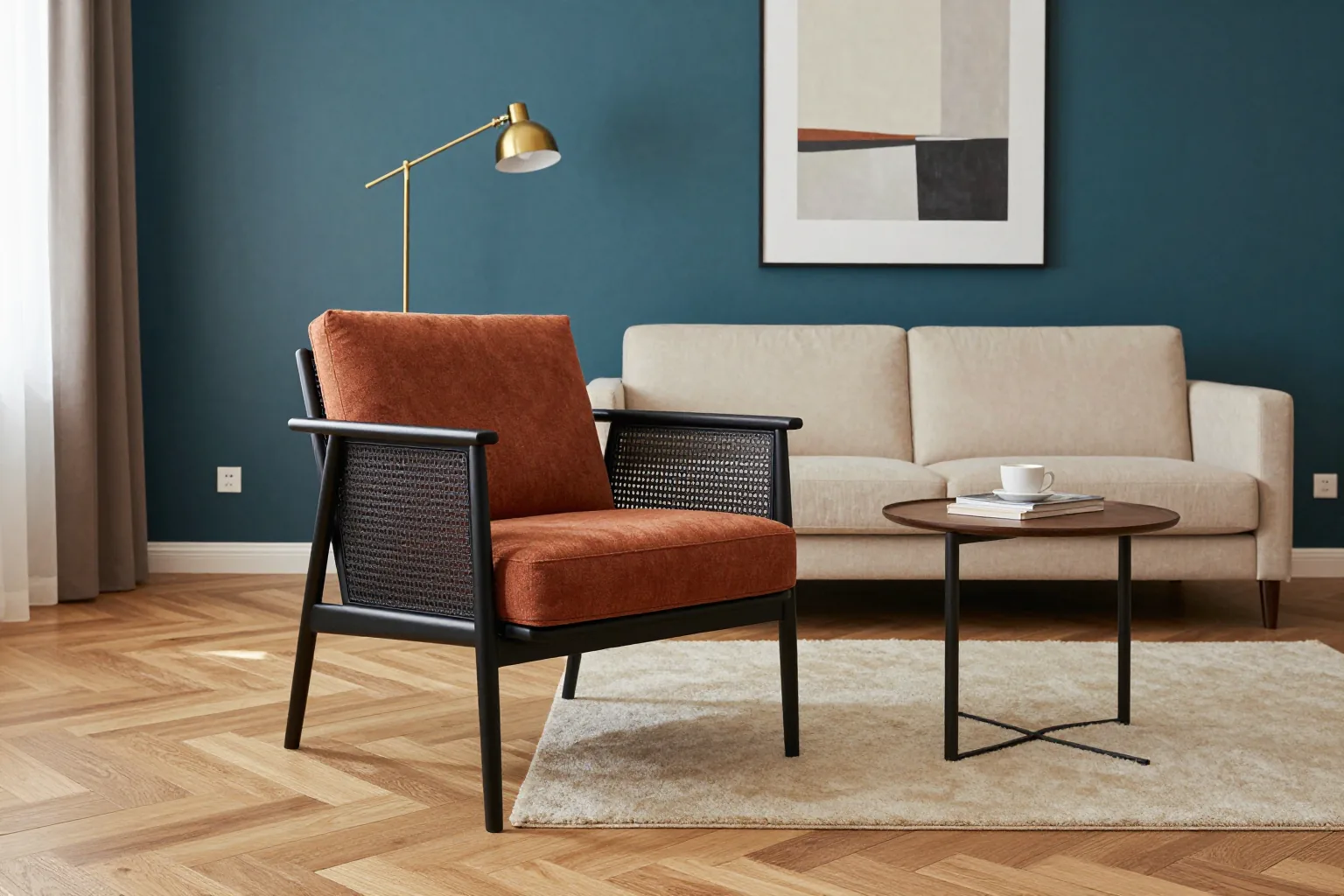
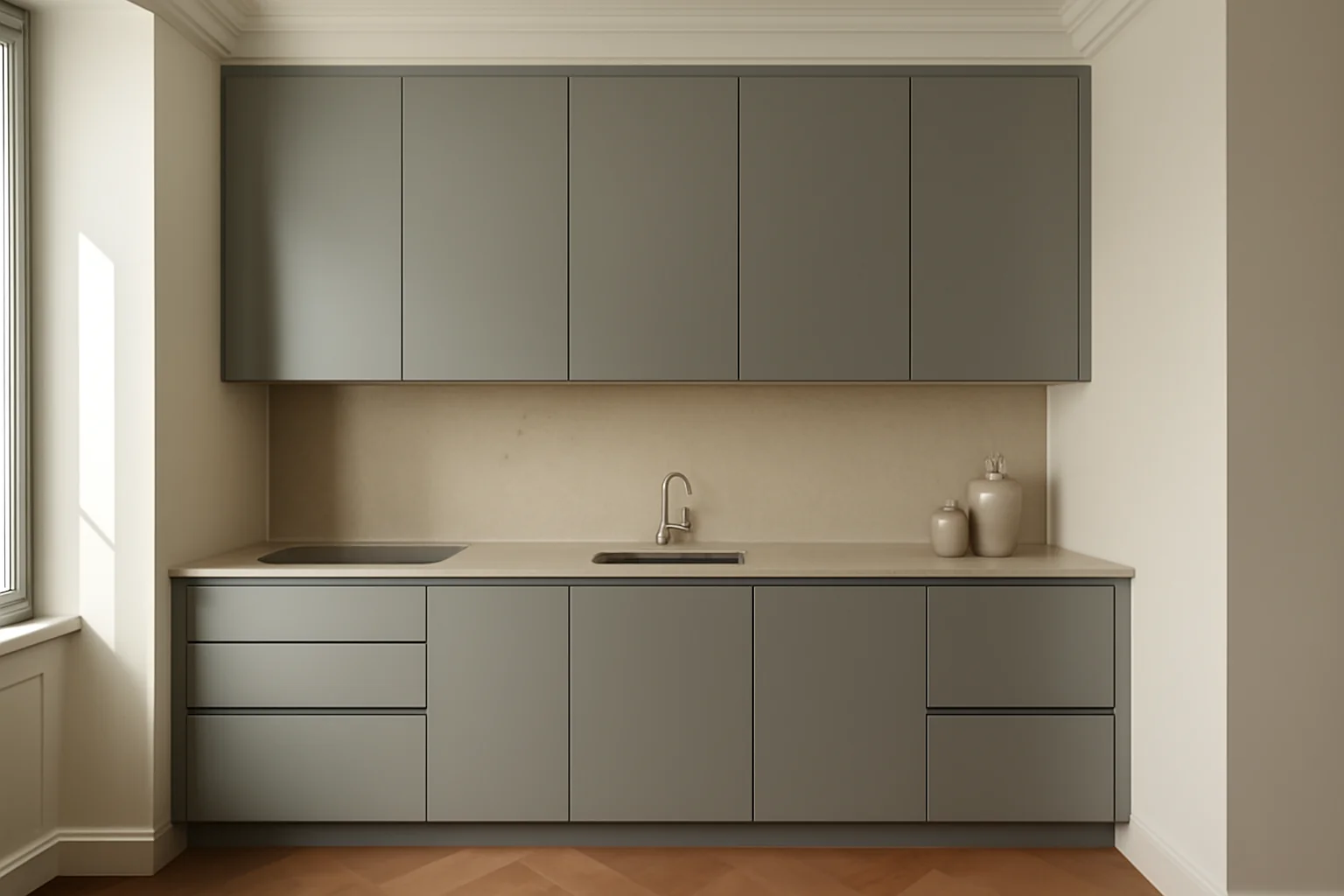
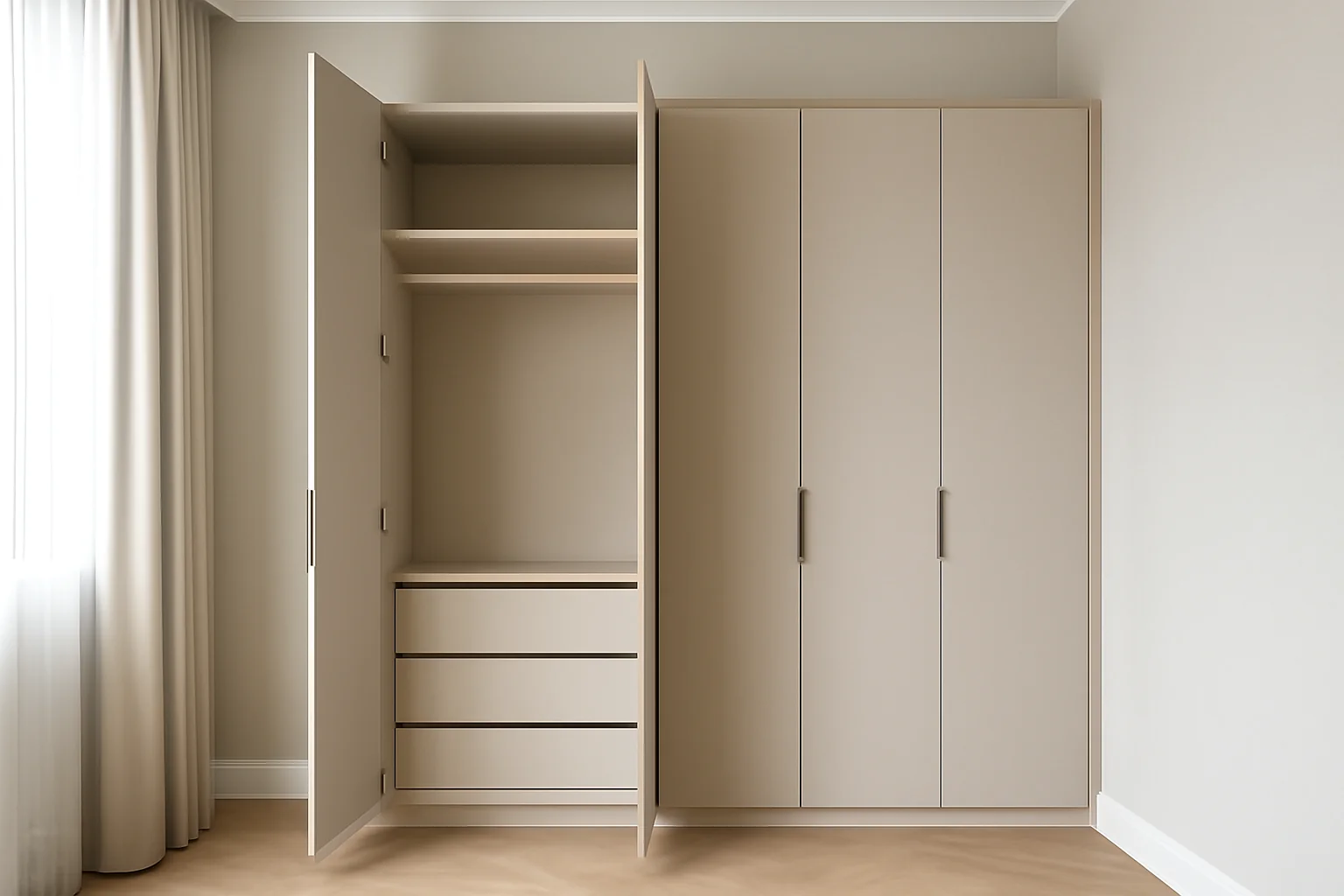
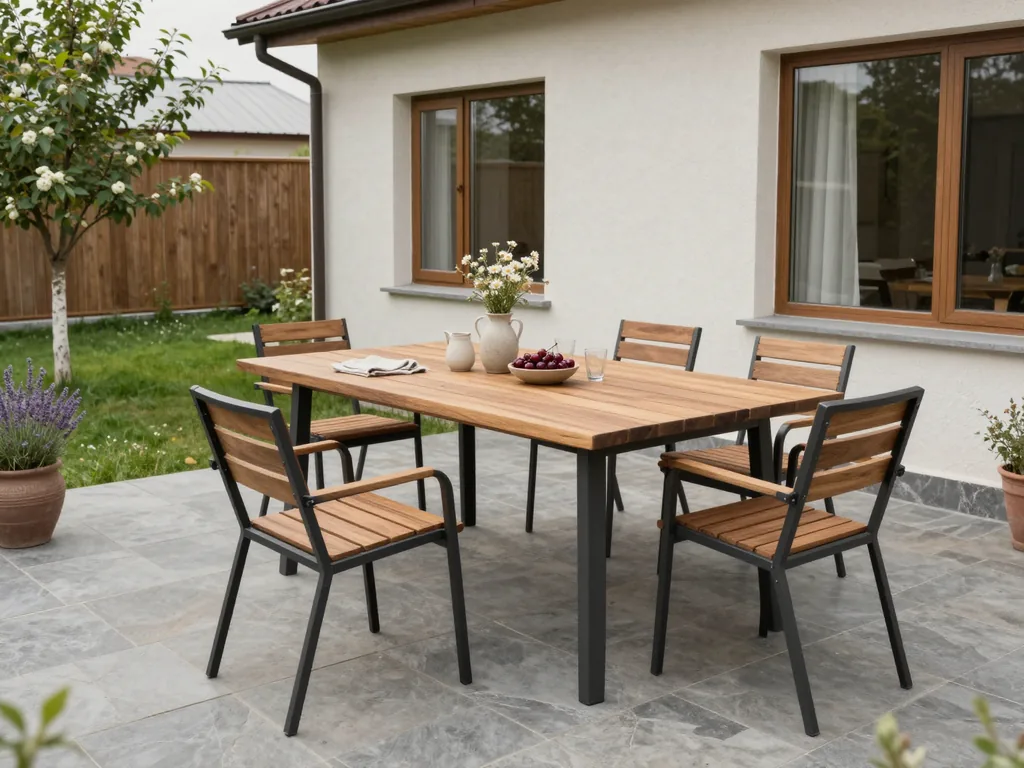
Custom veneer furniture in Almaty: MEBLIX veneers MDF with natural veneer in its own workshop and makes kitchens, wardrobes and walk-in closets to your dimensions. Measurement with wood species samples and a 3D design are free, installation is done by our teams, and the item carries a warranty under contract.
A thin slice of wood on a board is not the same as a solid beam, a laminated board or a polymer coating. Buyers confuse these solutions, even though their behavior, repairability and appearance are different. We break down the differences with facts.
What natural veneer is and how it is made
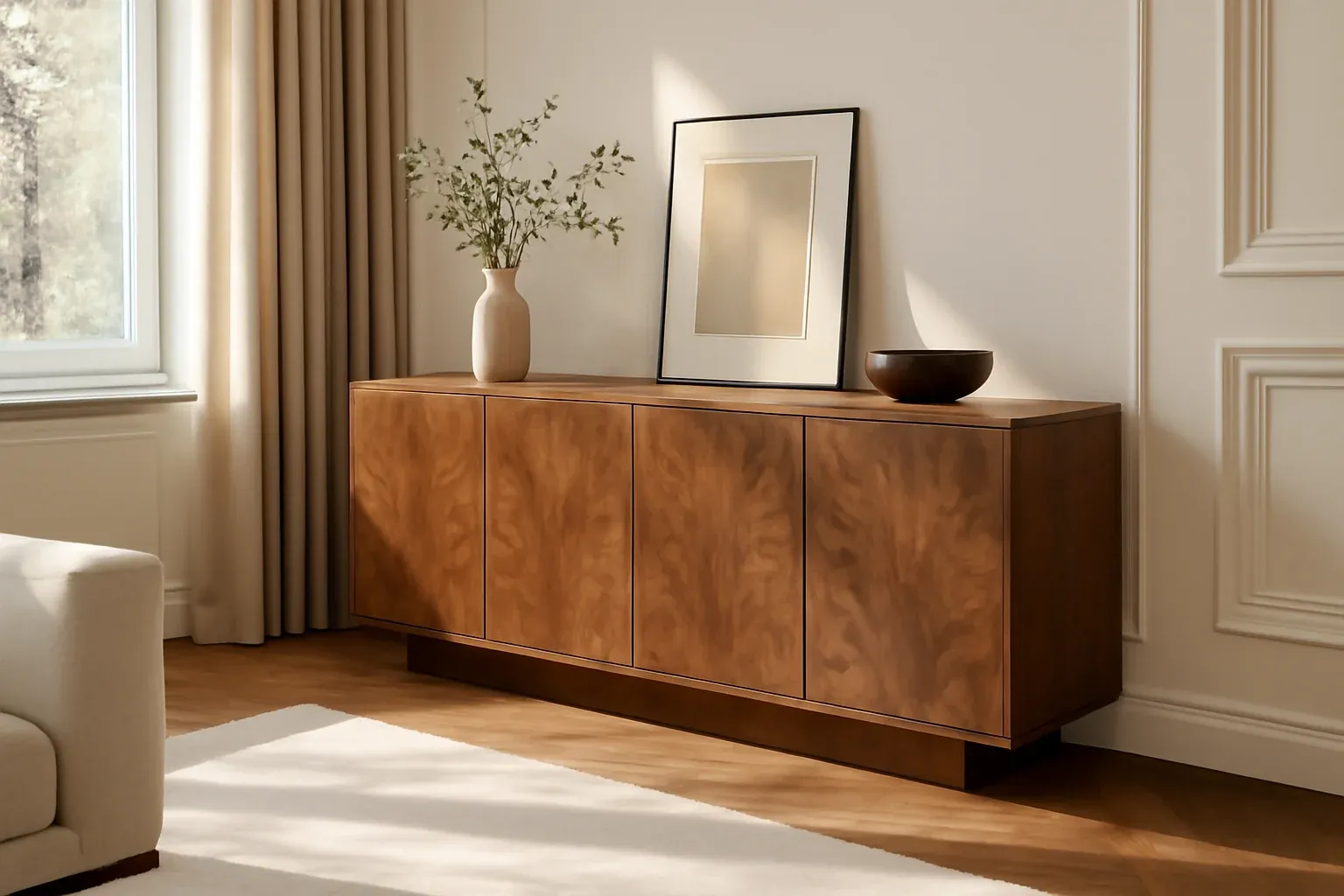
Natural veneer is a thin layer of wood, usually 0.5–1 mm thick, that is glued onto MDF to produce a front with the living texture of wood. The layer is taken from kiln-dried solid wood at 8–10 % moisture: sliced veneer gives a smooth surface, peeled veneer a more pronounced wave, and the thickness of the slice stays within tenths of a millimeter. The species vary — oak, ash, walnut, beech, alder, birch; the slice is taken from each one separately. The pattern does not repeat, so parts from the same trunk are matched into a set — this way the texture on adjacent fronts matches in wave and tone. Veneering on MDF gives a front where wood acts as cladding rather than a load-bearing layer: the board holds the geometry, the slice is responsible for the look. This is exactly how custom veneer furniture is made when you need a front with living wood but with stable geometry. When ordering, ask to see the layout on the sheet — it shows how the pattern will fall after cutting and whether the beautiful part of the wave will end up in the offcuts.
Veneer versus solid wood, laminated chipboard and film
comparison of front cladding by appearance and behavior| Material | Appearance | Behavior | Repairability |
|---|
| Natural veneer on MDF | Living wood texture | Geometry is stable | Re-sanding and oil refresh |
|---|
| Kiln-dried solid wood | End-grain cut, deep pattern | Reacts to moisture | Sanding and repainting |
|---|
| Laminated chipboard | Print, repeating decor | Stable, edge is vulnerable | Part replacement |
|---|
| Film on fronts | Even color, no pores | May peel along the edge | Partial replacement |
|---|
Is veneer on MDF reliable and will it come off
Our cladding holds thanks to industrial press bonding and edge preparation, not household glue — so the risk of peeling along the edge is minimal. The veneering surface almost never has defects: the press presses the layer evenly over the entire area, and no bubbles appear there even on large fronts. The weak point is not the surface but the edge: if it was processed poorly, peeling starts right there, and the ends of the fronts near the handles and along the bottom edge suffer first. We carry out a control assembly in the workshop before shipping to catch such defects before installation. When ordering, check the edge on the samples: it should be tight, without "bubbles" or gaps, and the end should be closed, because an open edge absorbs moisture fastest and behaves worse than the surface.
Which veneer species will suit your veneered furniture for your task
The species sets the tone, texture and behavior of the front. We break down which slice to choose for the kitchen, bedroom, living room and outdoors, and how it looks in the finished item.
Oak, ash, walnut and other species for interiors
comparison of veneer species by tone and purpose| Species | Tone and texture | Where it fits |
|---|
| Oak | Warm, large pattern | Kitchen, living room, tables |
|---|
| Ash | Light, contrasting grain | Fronts, shelving |
|---|
| Walnut | Deep dark, expressive | Living room, study |
|---|
| Beech | Even, calm | Bedroom, kids' room |
|---|
| Alder | Soft, almost matte | Bedroom, hallway |
|---|
| Birch and pine | Light, fine pattern | Budget fronts, shelves |
|---|
Veneer for the kitchen, bedroom and living room
For the kitchen we most often use oak and ash — they handle heat and steam more calmly; for the bedroom, alder and beech work well; for the living room, walnut and oak with pronounced texture. We finish veneered kitchen fronts with oil or lacquer for wet areas: the coating takes the steam and splashes, while the wood itself stays dry. In the bedroom a standard finish is enough — there is no grease or condensation there, so the same species behaves differently in different rooms. Alder and beech provide an even background where joints between fronts are invisible, while walnut in the living room reads as an accent against light walls. Before choosing a finish, show the technician exactly where the item will stand: near the sink and hob the protective coat is used up faster than by a dry wall.
Veneer for outdoors and the balcony
For outdoors and an open balcony we make items not from veneer on MDF but from larch, teak and thermowood with oil for exterior use — these species withstand moisture and temperature swings. MDF facing remains an interior solution: under direct sun and rain the edge and base suffer faster than solid wood, and after a couple of seasons the coating starts to peel at the ends. Larch and teak contain resins that repel water on their own, while thermowood is treated with heat and hardly absorbs moisture. Exterior oil is renewed once a season — cheaper than replacing fronts. If you need outdoor furniture with natural texture, choose solid wood for exterior use and keep veneer for rooms.
How ordering custom veneer furniture works from measurement to installation
An order starts with a measurement and ends with signing the acceptance report after installation. Here is what happens at each step and what you receive.
Free measurement with samples and a 3D design
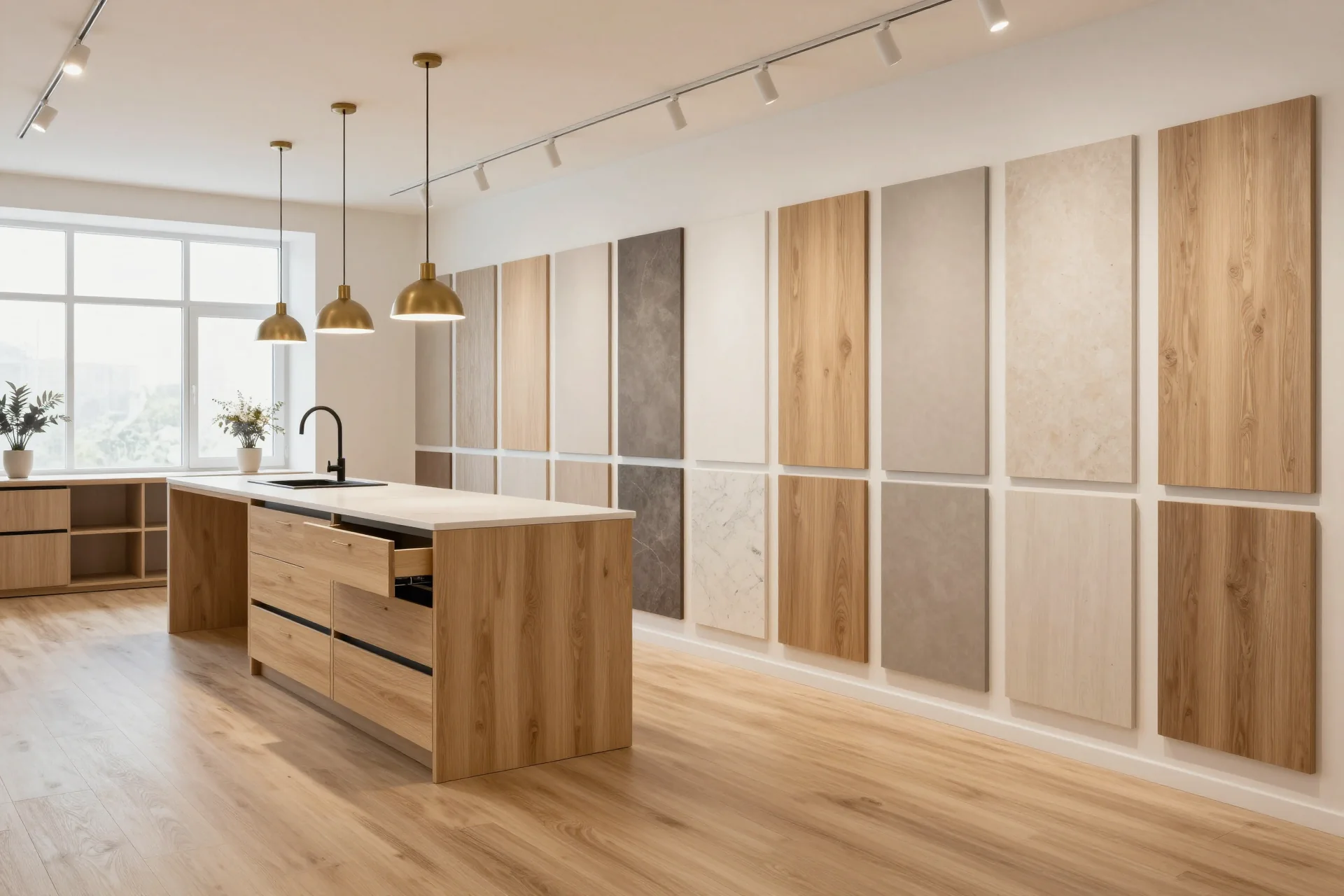
We come for a measurement free of charge and bring samples of species, veneer and weaving, and we prepare the 3D design in 1–2 days — so you see the item before production starts. The measurement specialist takes the room's geometry to your own dimensions: the length and depth of the niche, ceiling height, positions of sockets and pipes, and wall deviations from vertical. Samples let you place oak, ash or walnut veneer against the wall and floor under your lighting — the shade reads differently under a lamp and by the window. In the 3D design we agree the division of fronts, grain direction, door opening and the type of Blum or Hettich hardware. Measurements on curved walls and niches are taken with a margin for fitting — that is why a wardrobe fits into a niche without gaps, not "approximately".
Making veneer furniture in our own workshop
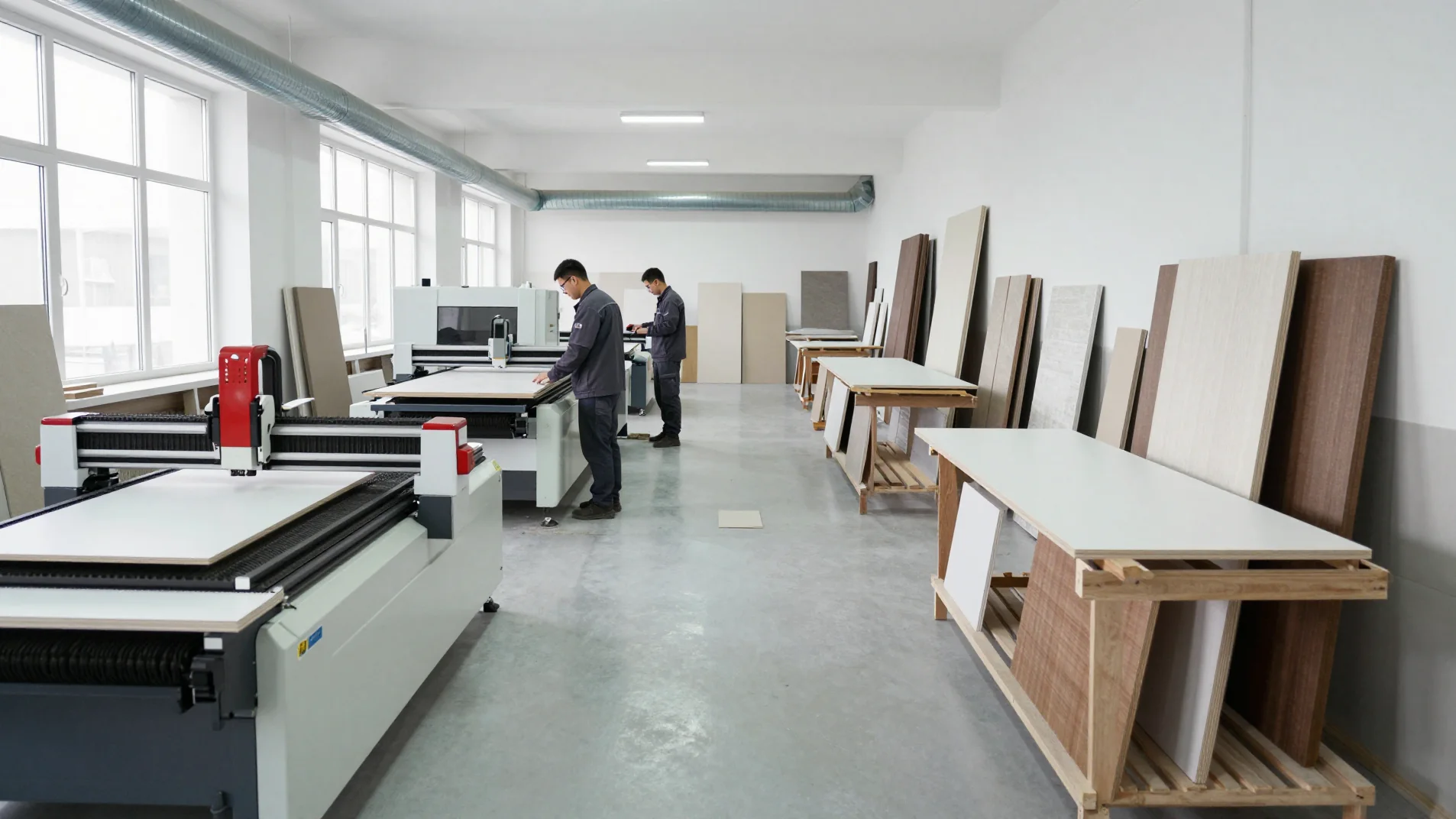
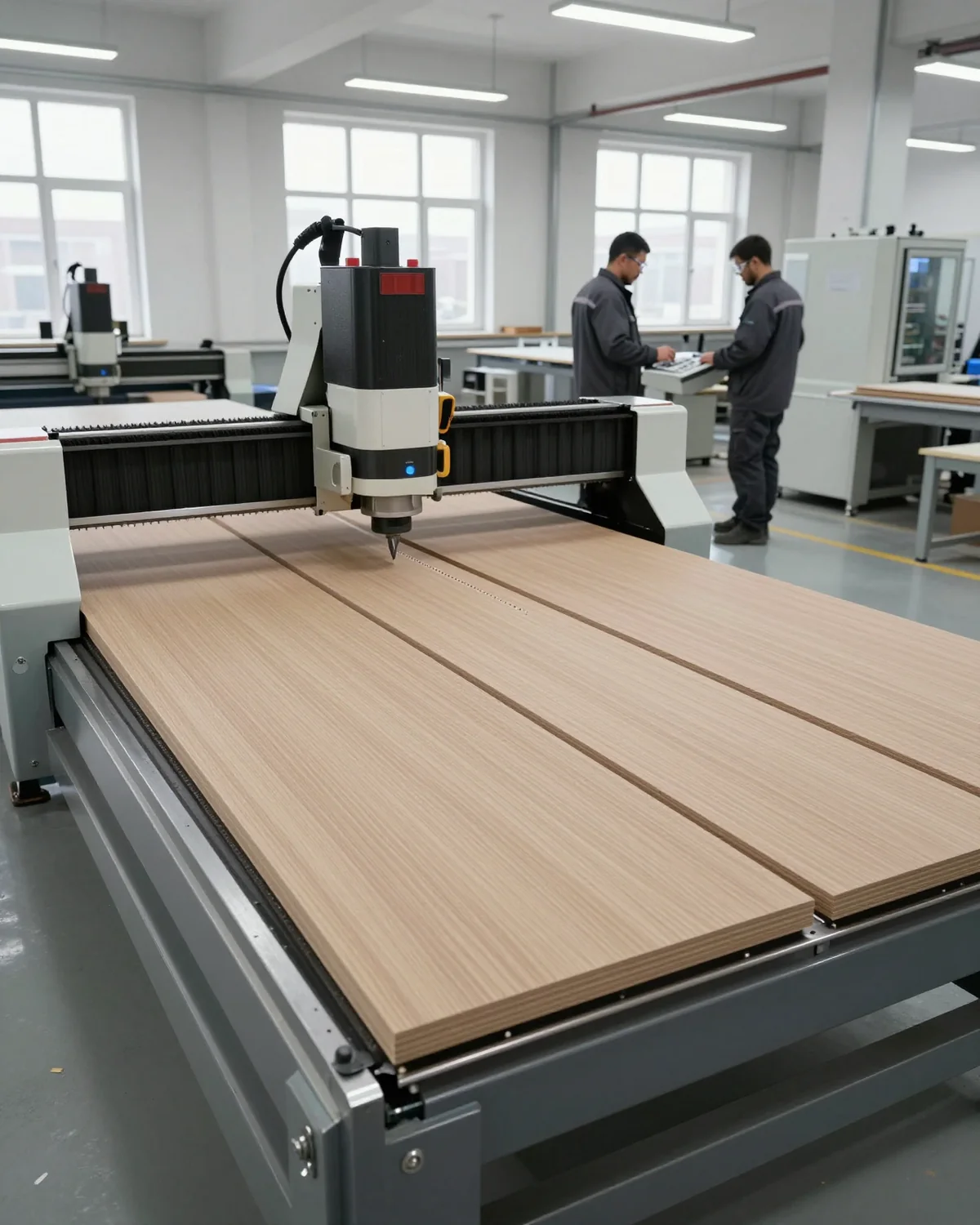
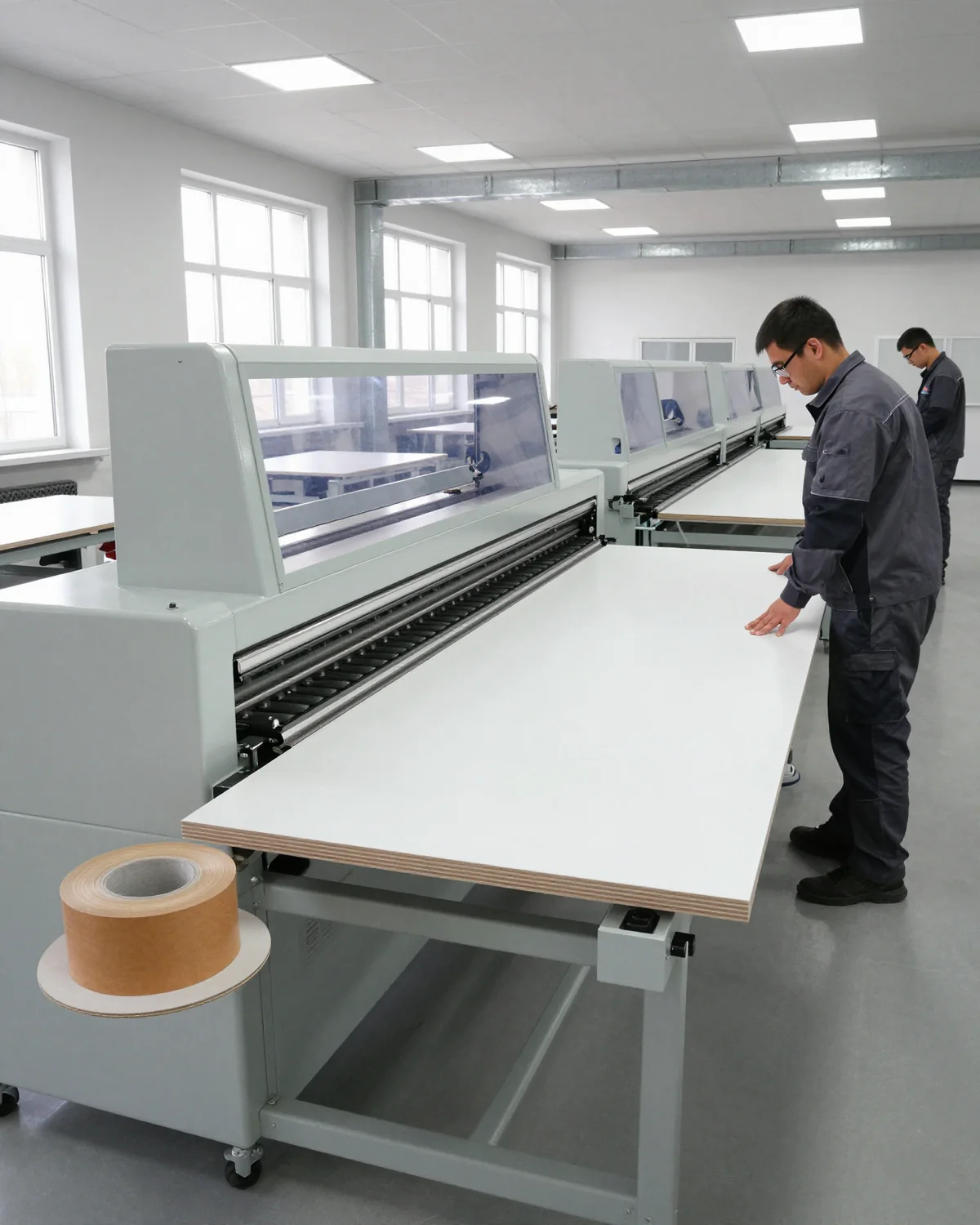
Production takes place in our 600 m² workshop: a joinery area, veneering and plywood area, painting, rattan weaving and final assembly — all on one site. The joinery area cuts and planes solid wood, mills edges and sands blanks; nearby, MDF is veneered and plywood carcasses are assembled, then the item goes to painting, oil or lacquer. We measure the moisture of kiln-dried solid wood before cutting, and before shipping we do a test assembly — so discrepancies at joints show up in the workshop, not on site. Lead times depend on the item and material, so we don't quote a single figure for everything — lead times for each option are listed in the price list on this page, and rush orders are possible.
Installation by our own crews and acceptance by act
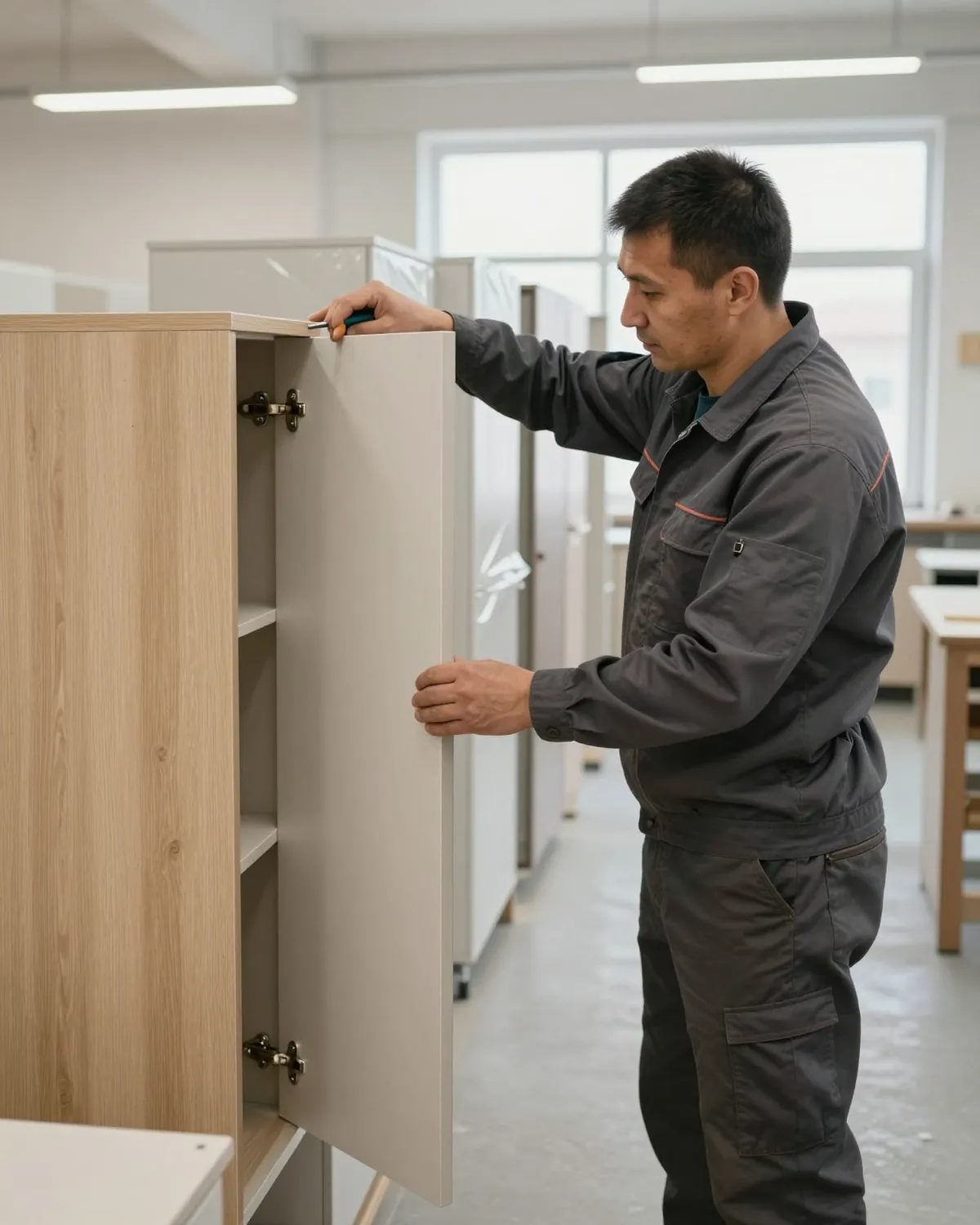
Installation is carried out by our crews, and we sign the acceptance act after installation — you accept the finished item on site, not in a warehouse. The crew levels the carcass, hangs the fronts on Blum or Hettich hardware, adjusts the gaps and checks that drawers and doors run under load. Delivery within the city and up to 30 km is free for a large order; the threshold and terms for longer trips are on the Delivery and payment page. Payment works the same way: 50 % prepayment, the balance after signing the acceptance act, by bank transfer. That means the second half is paid for furniture that is already installed, and the 24-month warranty on the item applies under the contract from the acceptance date.
How to check the quality of veneer and the workshop of veneered furniture before ordering
Veneer quality shows not in photos but on samples and in the workshop. Here's what to check before signing the contract and what questions to ask the manufacturer.
How to tell that a workshop veneers in-house rather than resells
Our veneering and plywood area are in our own 600 m² workshop — you can see this on site, not just hear about it. Craftsmen match the texture "shirt" from sheets of the same batch so that the grain on adjacent fronts matches in pattern and tone, and the plywood area is responsible for the base and edge. We glue natural veneer onto MDF, not onto cheap board with a wood-look film. You can see the production during a visit to the showroom at 115/60 Abylai Khan Ave — we'll show samples and explain how each layer is assembled. If a workshop resells ready-made fronts, it won't show a veneering area or explain how it matches the texture "shirt". Ask to see the production and edge samples.
Solid wood moisture and test assembly
We measure the moisture of solid wood before cutting and keep it in the 8–10 % range, and before shipping we carry out a test assembly in the workshop. Solid oak, ash, beech, alder, walnut, birch and pine arrive kiln-dried, and a moisture meter shows the condition of each batch before it goes to the joinery area. Test assembly means the item is fully assembled on site, gaps and the movement of doors and drawers are checked, and only then is it disassembled and brought to you. Solid wood with high moisture behaves unpredictably after installation — so moisture control at intake is cheaper than redoing a finished item. Ask the workshop how and when they measure moisture. If the moisture meter reads above 10 %, the batch is sent for further drying rather than to cutting — otherwise the finished front will warp after installation.
Checklist of questions for the manufacturer
- Veneering area: ask to show where veneer is glued onto MDF, and look at edge samples in person.
- Texture matching: ask how the craftsman matches the "jacket" — from a single batch of sheets or from leftovers of different deliveries.
- Moisture meter: ask whether the moisture of solid wood is measured before cutting and what range is considered working.
- Control assembly: find out whether the item is assembled in full in the workshop before shipping and what is checked at this stage.
- Edge and ends: ask to show how the end is treated so the veneer does not peel off along the edge after a season.
- Warranty under contract: clarify what exactly the 24-month warranty on the item covers and what is written in the acceptance report.
- Lead times and rush orders: ask what the lead times depend on and whether a rush option is possible for your project.
Are veneer fronts practical for the kitchen and veneered furniture
The kitchen is the most heavily used area in the home: heat, steam, grease, frequent touching. We look at how veneer fronts behave in these conditions and what protects them.
How veneer behaves in the kitchen
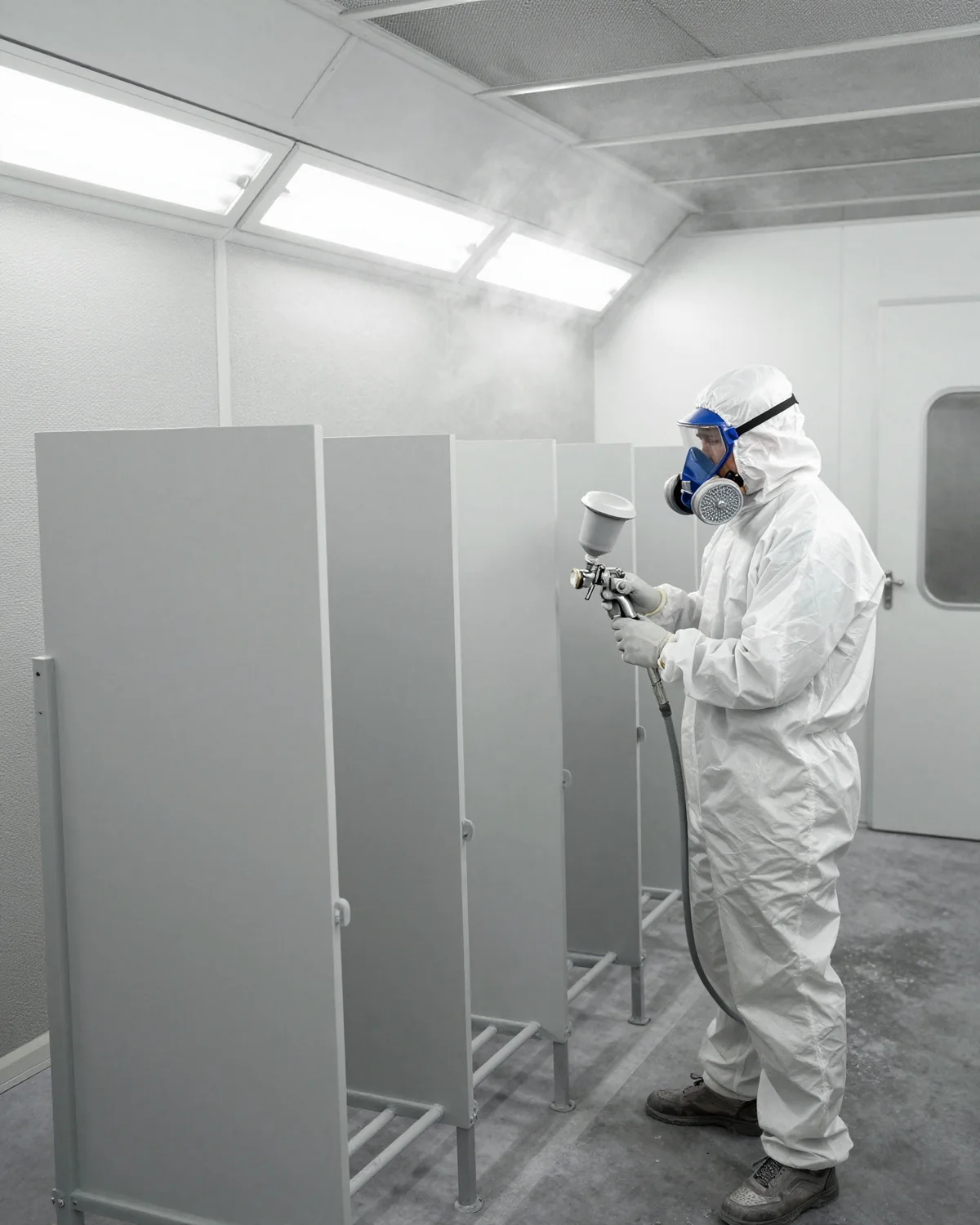
Veneer fronts in the kitchen are practical if they are sealed with oil or lacquer for wet areas — then the facing calmly withstands the heat and steam from cooking. In our workshop we finish items with oil and lacquer in the painting area rather than leaving the natural surface open: the finish film takes on the grease and splashes, while the wood layer itself stays dry. Such kitchen sets last a long time precisely thanks to this barrier — open wood without a coating absorbs moisture and darkens with spots within a few months of active cooking. The most vulnerable spot in the kitchen is the area around the sink and the stove: there the finish is renewed more often. Plan the fronts so that these areas are not made of bare untreated veneer.
How to start a veneer kitchen
We start with a measurement and samples: there you choose the species for a warm natural tone and see how the veneer combines with the hardware and the countertop. The measurement specialist brings samples of species, veneer and weave — so the species is seen in person, not from a catalog on a screen. A warm tone comes from oak and ash, while walnut takes the kitchen set into a dark palette — so it is better to look at samples under the light that will be in your kitchen, not in the showroom. Measurement and 3D design are free with us and take 1–2 days, so you make the decision on the species before work starts, not during it. Start with samples under your own windows — that removes half the doubts about tone.
Hardware and countertop in a veneer kitchen
In veneer kitchens we install Blum and Hettich hardware for fronts and drawers, and we select the countertop for the load — veneer on a countertop requires a protective finish. A veneer front is thin and sensitive to warping, so we choose hinges and runners with soft-close and a weight margin: cheap mechanics cause the door to sag already in the first year. Blum hardware carries a 25-year manufacturer's warranty — longer than the warranty on the item itself, so the mechanics are worth choosing deliberately. We seal a veneered MDF countertop with the same oil or lacquer as the fronts, otherwise the edge by the sink will swell from water. Distribute heavy drawers with dishes on the lower level — that way the runners move more evenly throughout their service life.
How to combine veneer with other materials and care for it
Facing rarely lives alone in an item: solid wood, plywood, rattan and hardware sit alongside it. We show how the materials combine with each other and how to care for finished furniture so the finish holds up.
Veneer plus solid wood, plywood and rattan in a single item
In a single item we combine veneer on MDF with kiln-dried solid wood, E1-class FK birch plywood and rattan weaving — each material is responsible for its own part. Solid oak, ash, beech, alder and walnut go where strength and tactile feel are needed: rails, handles, open shelves. Plywood holds the carcass and partitions, veneer on MDF covers the visible surfaces. We use rattan in light inserts: backs, doors, decorative panels. We weave both natural rattan and polyrattan on an aluminium frame — for outdoors and the balcony the latter is more resistant to moisture. Materials should be mixed by function, not by decor: first we decide what load a part carries, and only then choose the facing. Otherwise a beautiful rattan insert ends up where a rigid shelf is needed.
How long veneered furniture lasts
We give a 24-month warranty on the item under the contract, and the service life depends on the finish and the conditions in the room. The durability of the facing is determined not by the cut itself but by the base and the edge: if the MDF and the edge are protected from moisture, the item will not warp and the front will not come away. Our workshop applies veneer to MDF and finishes items with oil or lacquer — lacquer creates a dense film, oil soaks into the fibres and leaves them open to the touch. We fit Blum hardware with a manufacturer's warranty of 25 years. In practice the weak spot is not the cut itself but unsealed ends and water that stays on the edge after washing. So in care it matters less to polish more often than not to leave puddles at the joints.
Caring for veneered furniture
- Wet cleaning: wipe the fronts with a slightly damp cloth and dry them immediately — water on the edge does more harm than dirt.
- Non-abrasive products: avoid powders, stiff sponges and alcohol-based compounds — they strip the top layer of the finish.
- Oil finish: refresh the oil with a thin layer every few months — an absorbed coating dulls and needs feeding.
- Lacquered surface: a lacquered finish only needs wiping, no sanding — if scratches appear, it is better to contact the workshop.
- Veneer countertops: do not place hot items without a stand and do not cut directly on the surface — a thin cut is sensitive to heat.
- Indoor humidity: keep it steady, without sharp swings — swelling and shrinkage of the base destroy veneering fastest of all.
The bottom line on veneer furniture
To sum up: below is a short recap of what determines the result of an order, from the veneer species to checking the edge and protecting the finish from moisture.
- Veneer on MDF: gives the natural texture of wood with calm front geometry, without the movement of solid wood.
- Species to suit the task: oak and ash are appropriate in the kitchen, alder and beech in the bedroom, walnut in the living room.
- Measurement with samples: shows the species and weaving in real life, and the 3D design shows the item before production starts.
- Quality: visible in the edge, the moisture of the solid wood and the control assembly in the workshop before dispatch.
- Care: protecting the finish and edges from moisture extends the service life of veneered items.