
Temirzhan Nurpeisov
Furniture assembly carpenter11 years
★ 4.81 · 47 ratings
For business · Schools
We make height-adjustable desks, chairs, teacher desks and cabinets for classrooms and kindergartens with rounded corners and edge banding on every side. Free measurement and 3D classroom design, contracts with public organisations, 24-month warranty on the item.
Measurement and 3D design are free and carry no obligation · price fixed in the contract · Kaspi Instalments up to 24 months
01Types
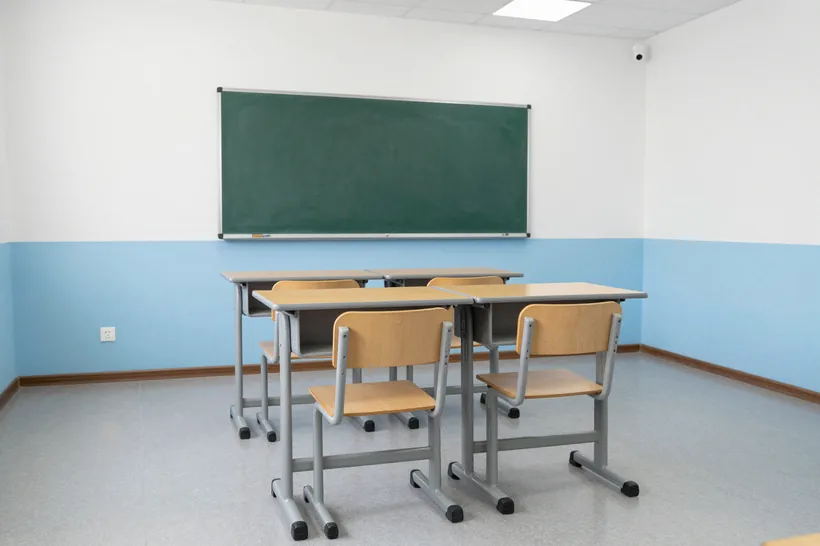 01
The main classroom desk: the supports change height to suit students' growth, so one set serves different year groups.
from 34 000 ₸
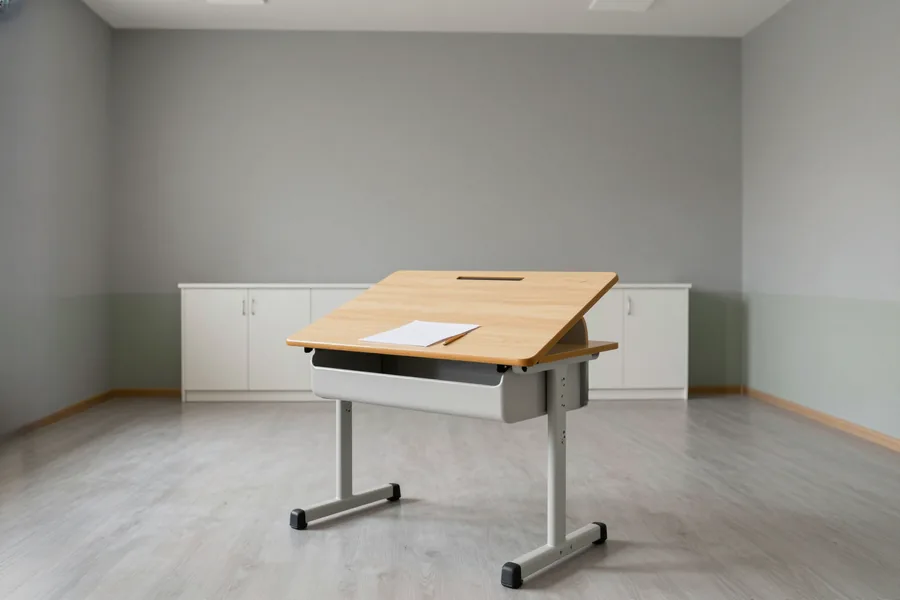 02
Changes height and tabletop tilt: handy in primary school and in drafting and drawing lessons.
from 88 000 ₸
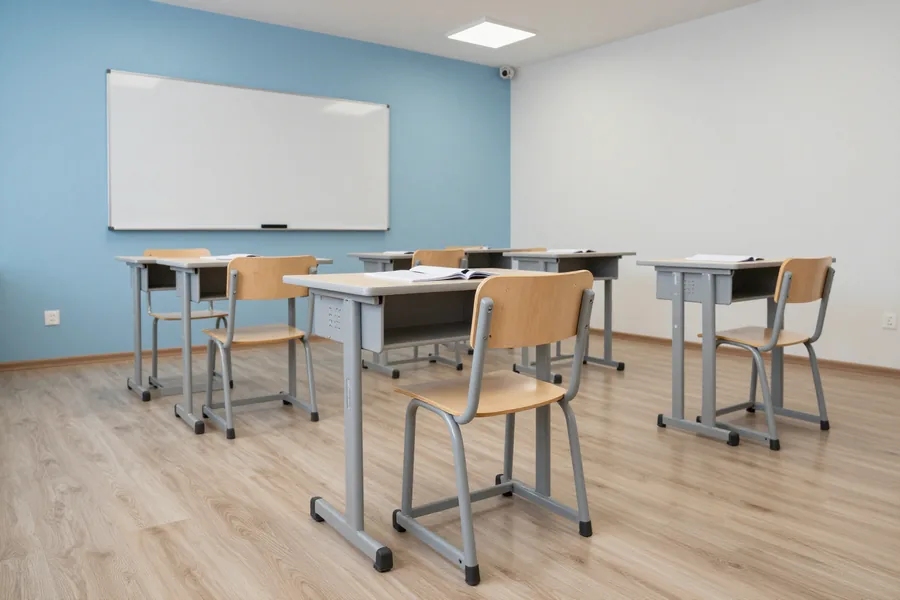 03
Bent-plywood seat and back on a metal frame, matched to the desk by the same height group.
from 14 000 ₸
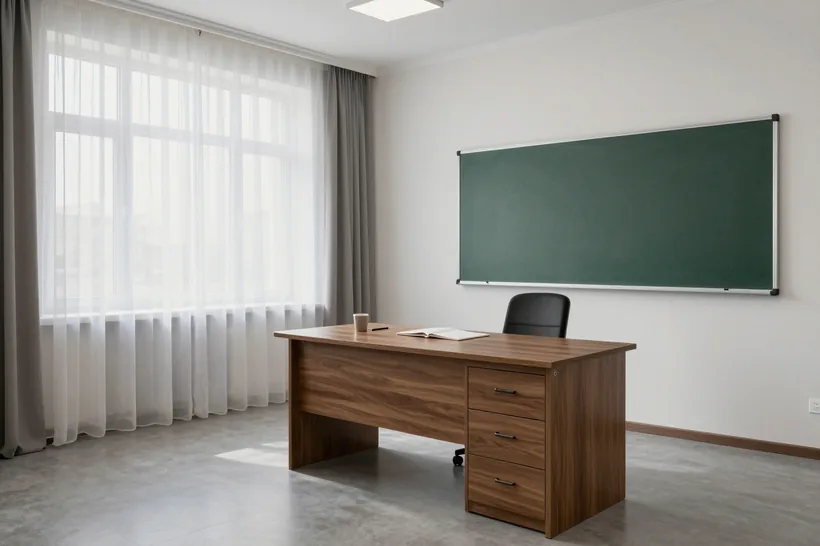 04
The teacher's workspace with a drawer unit and lock: register, teaching materials and personal items kept under lock and key.
from 38 000 ₸
 05
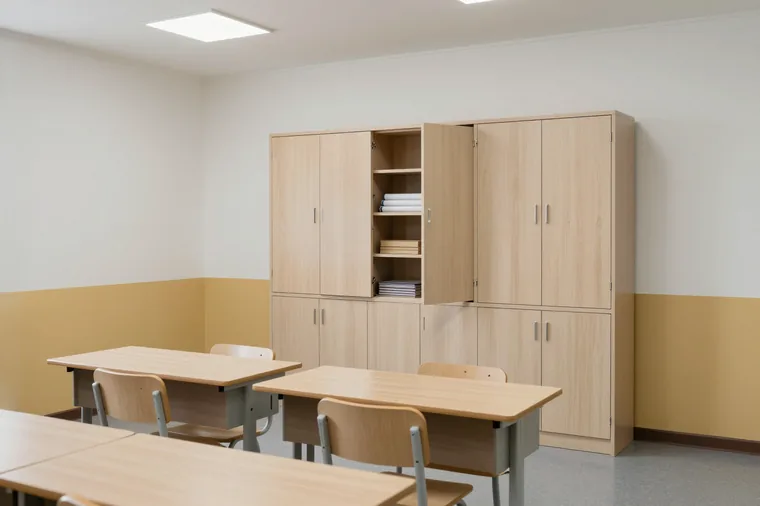
A closed cabinet for visual aids, posters and classroom documents, in the same finish as the desks.
from 95 000 ₸
 06
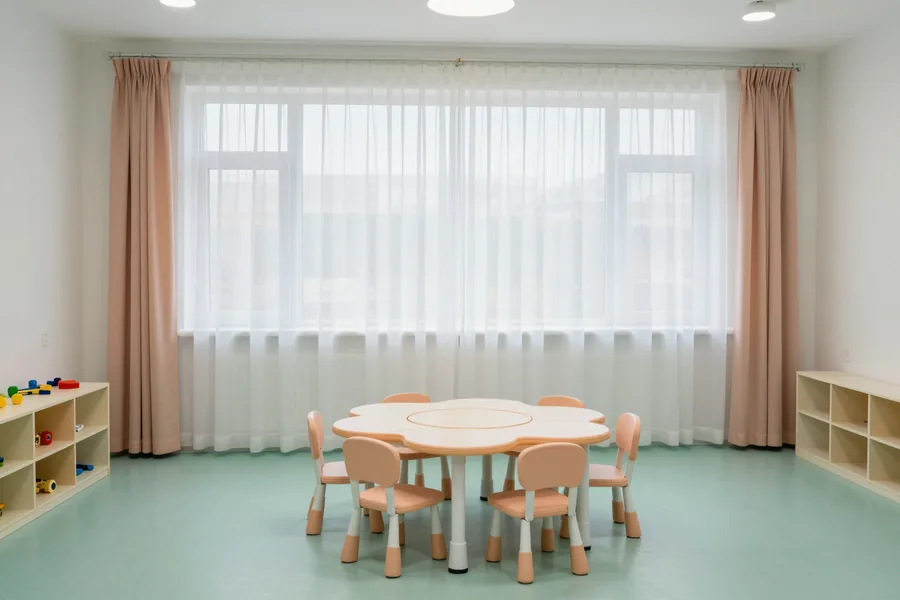
A group table for kindergartens with a shaped tabletop and height adjustment: every child has their own place.
from 35 000 ₸
02Projects
Item, scope, materials and lead time — per project.
 School
gymnasium, Orbita microdistrict, Bostandyk district
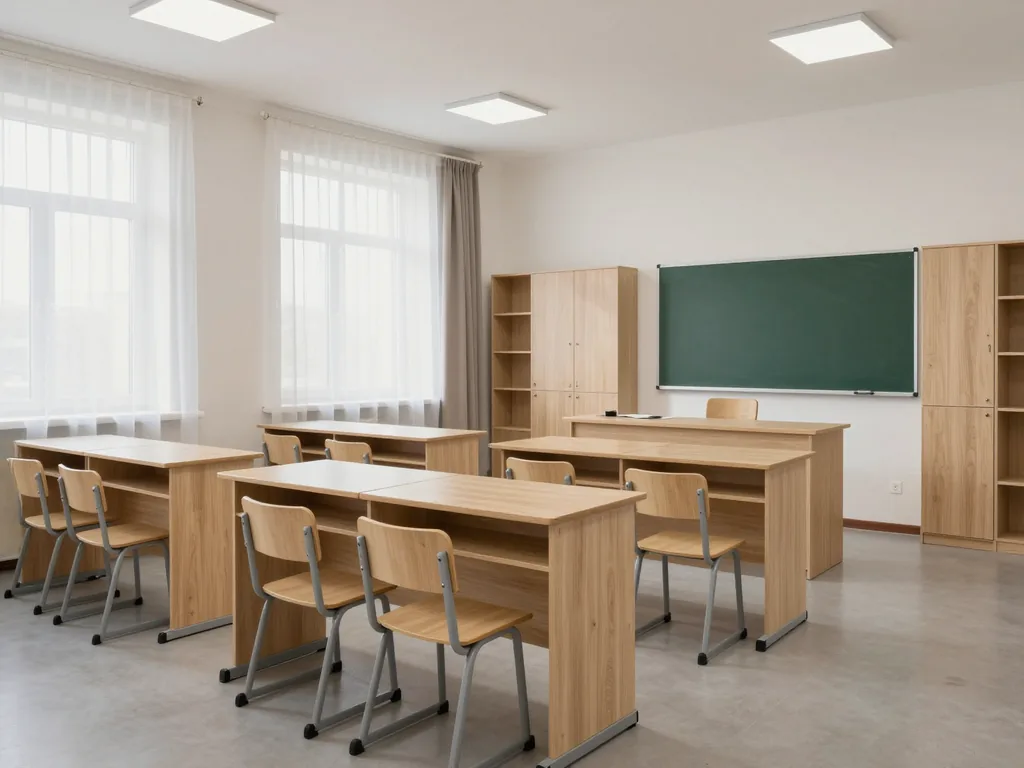
Full fit-out of a 15-seat classroom: two-seat adjustable desks, student chairs, a teacher's desk and wardrobes in a single light style. Height groups were planned around the actual class composition.
 School
school, Aksai microdistrict, Auezov district
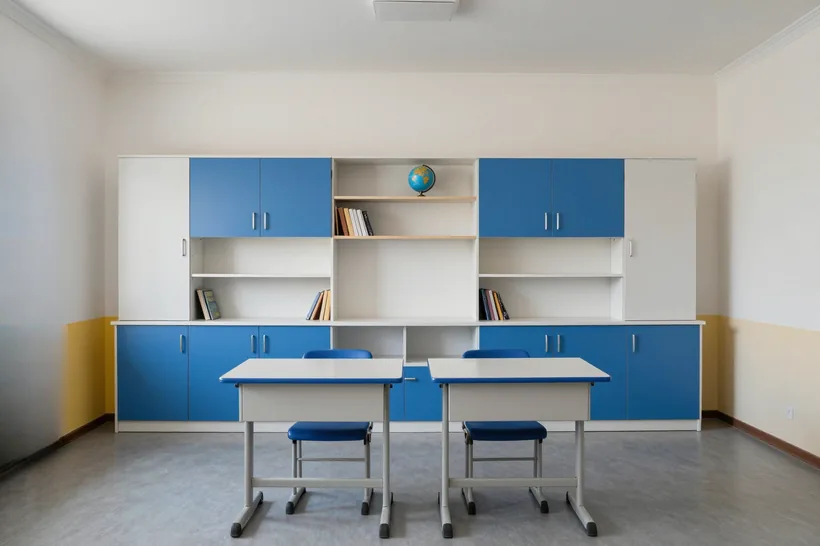
A wall of wardrobes for the classroom: closed sections for teaching aids, open shelves and cubbies for visual materials. Built in under the windows along the solid wall without eating up the walkways.
 School
kindergarten, Asyl Arman residential complex, Auezov district
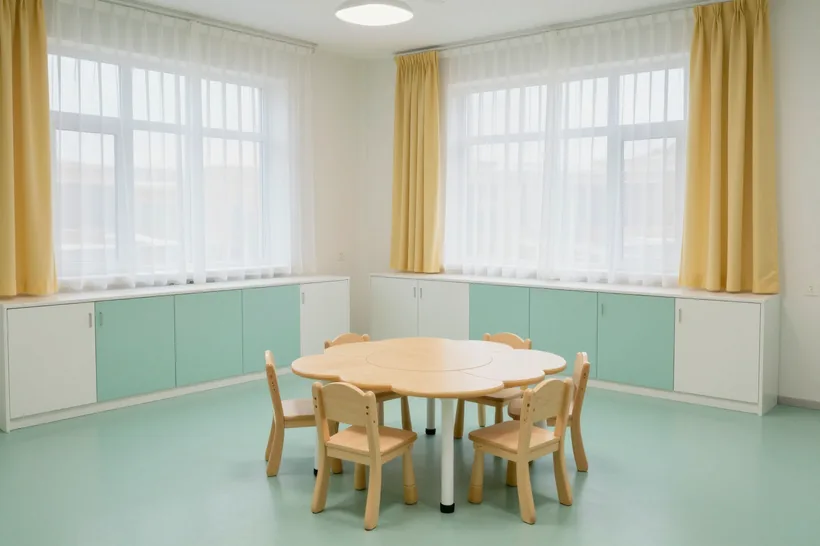
Fit-out of a kindergarten group: flower-shaped tables, children's chairs for low height groups and cabinets for clothes and toys. Sturdy, lightweight, with rounded corners on all furniture.
 School
training center, Mamyr microdistrict, Auezov district
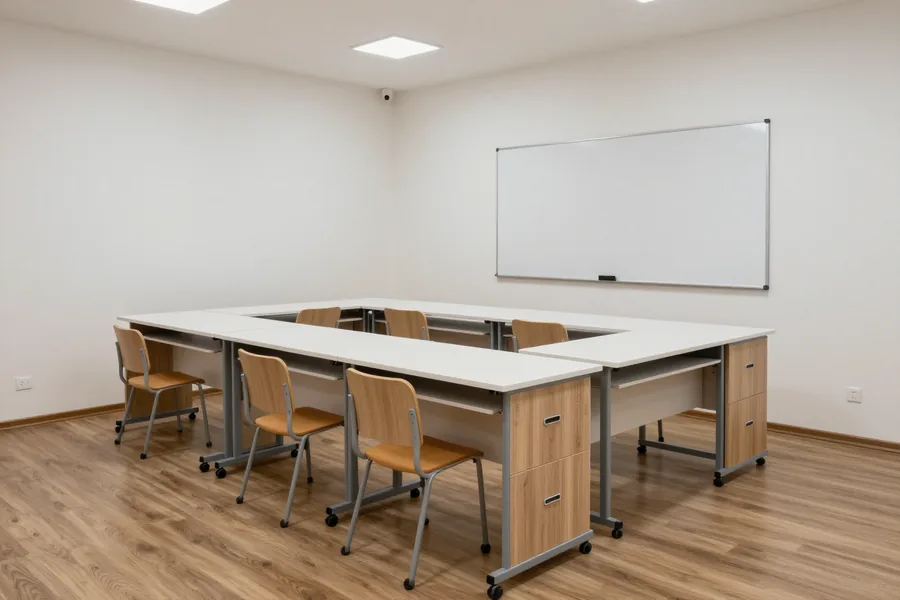
Transformable desks and mobile cabinets on casters for the training center — the hall easily reconfigures for a group and lesson format in minutes.
 School
lyceum, Taugul microdistrict, Auezov district
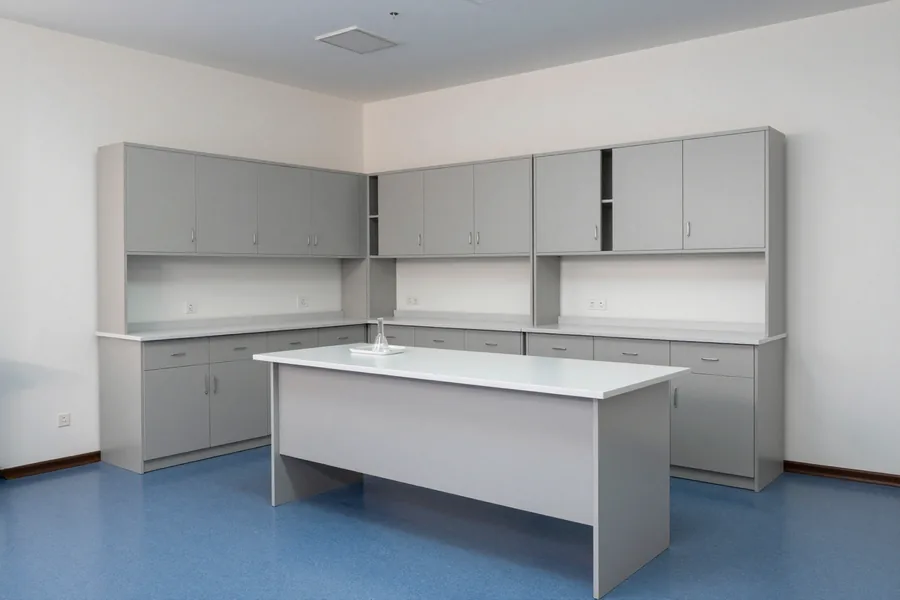
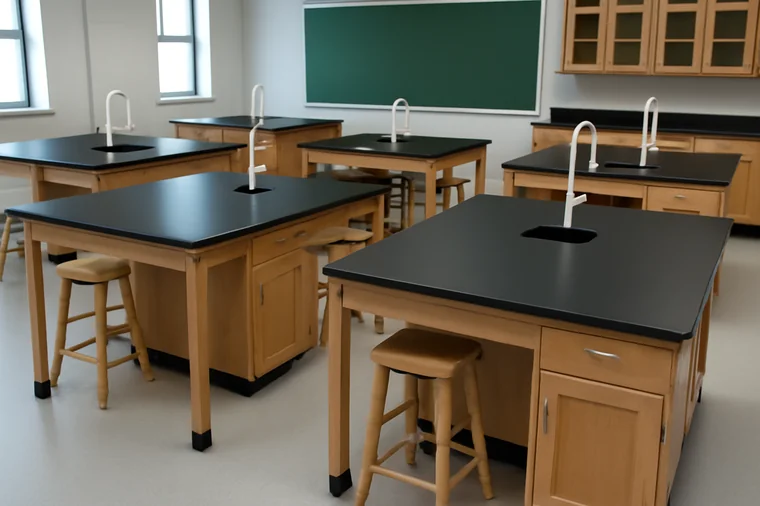
Prep room cabinets for reagents and teaching aids plus a demonstration table for the chemistry classroom. Moisture-resistant board, closed sections with locks, all matched to the classroom format.
03How we work with schools
04Prices
The "from" price is for one item in the basic configuration; for a classroom set it is for the whole set. The final price depends on sizes, height group and decor; we fix the cost in the contract after a free classroom measurement.
05For businesses
We work with LLPs, sole proprietors and public organizations on bank transfer. Price, materials and lead times are in the contract before production starts.
Request a contract and invoice06Principles
01 / 06
07Production
Six steps in our 600 m² workshop. You can see each of them with your own eyes: the showroom and production are under one roof.
Egger · Kronospan · E1
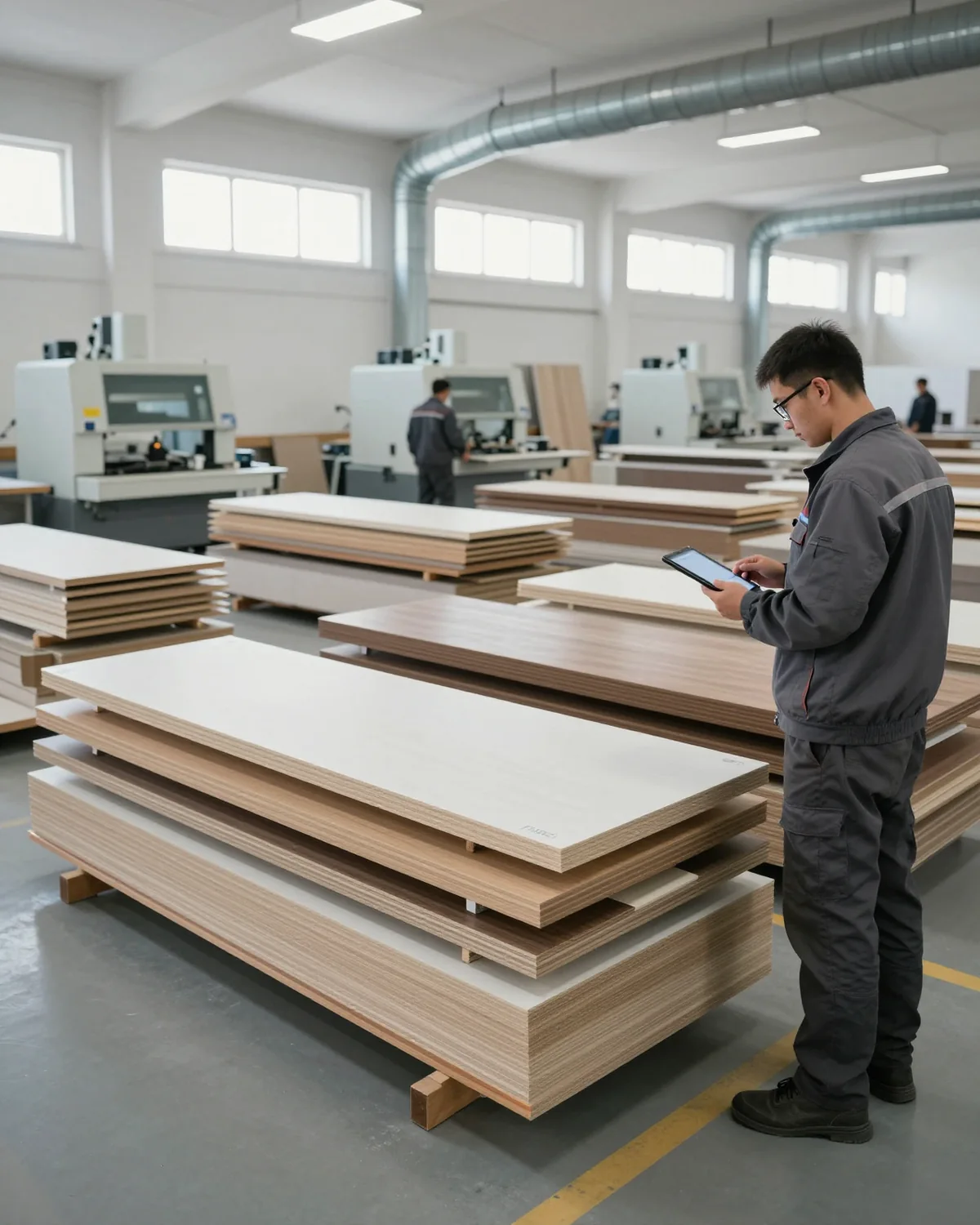
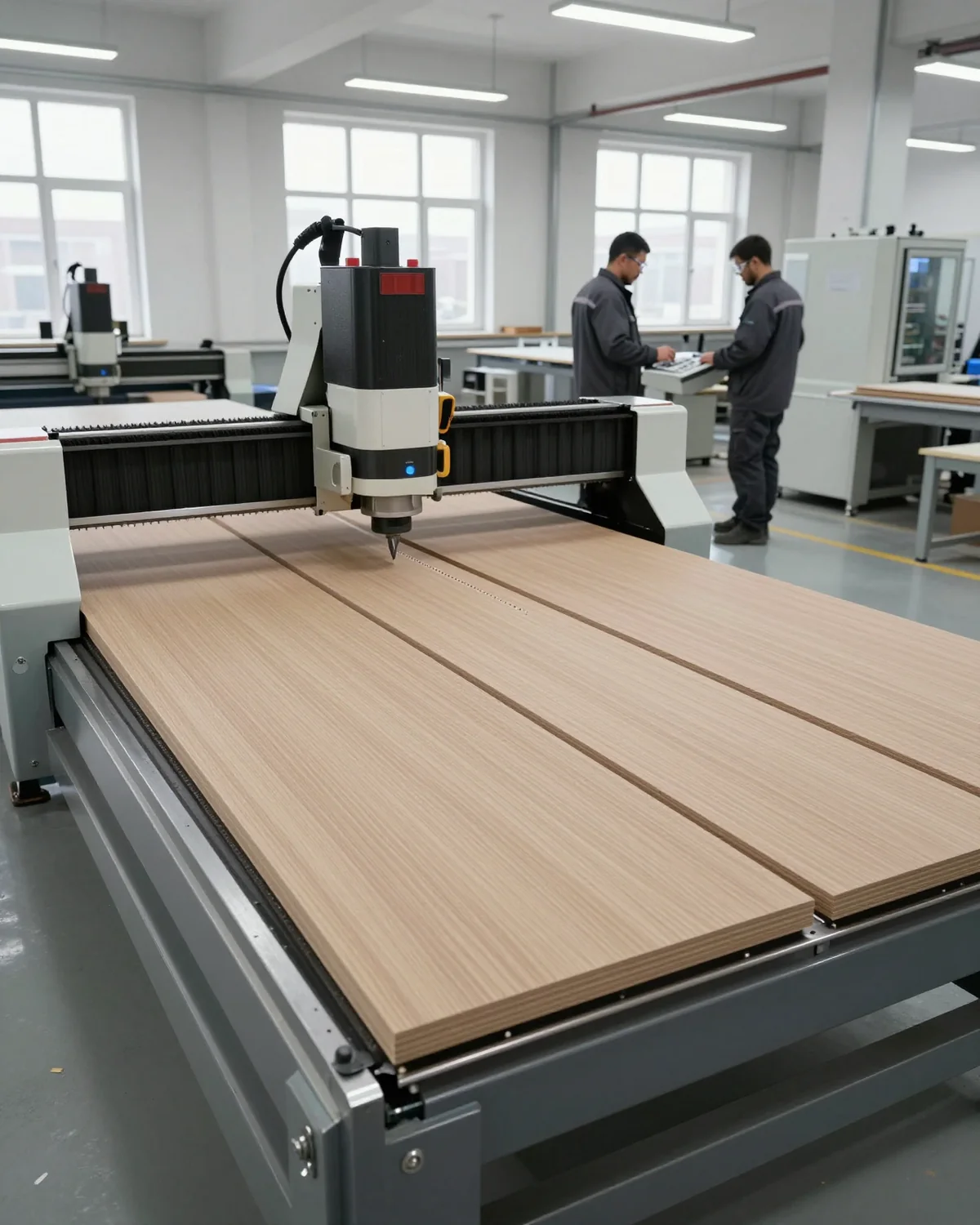
Egger and Kronospan boards of emission class E1 arrive at the workshop warehouse. 40+ laminated chipboard decors, thickness 16–18 mm. Class E1 — for classrooms and kindergartens.
Laser measuring to 1 mm
A design engineer prepares the drawings, and the machine cuts the board to them. Dimensions come from a laser measurement accurate to 1 mm.
Blum · Hettich · Boyard
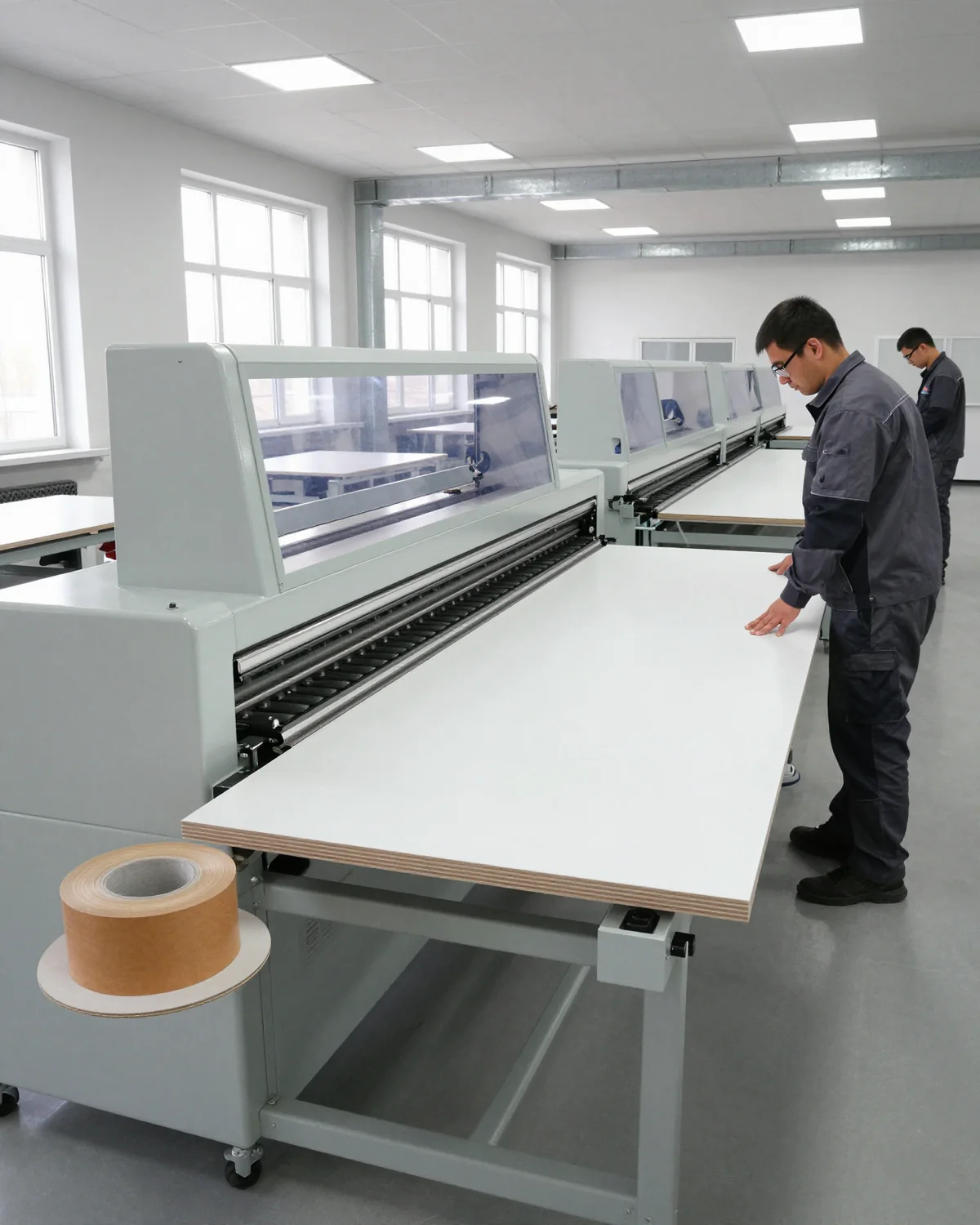
The edge-banding machine seals the edges, then we drill holes for Blum hinges and Hettich runners.
Any RAL colour
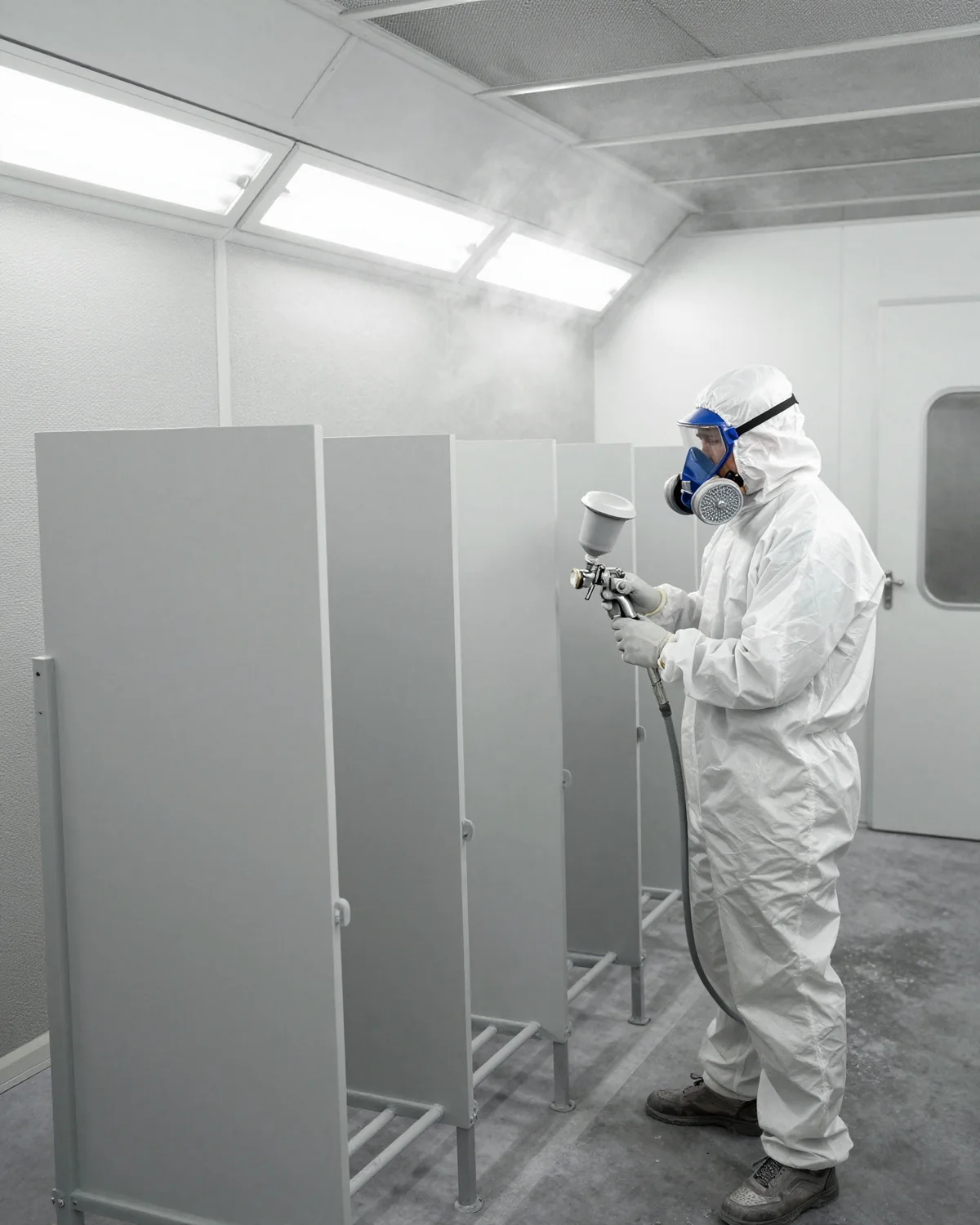
A finishing specialist paints fronts to RAL — matte and gloss. We weld, grind and paint the desk frame ourselves, so we check the weld seam before the item goes into the classroom.
Pre-assembly in the workshop
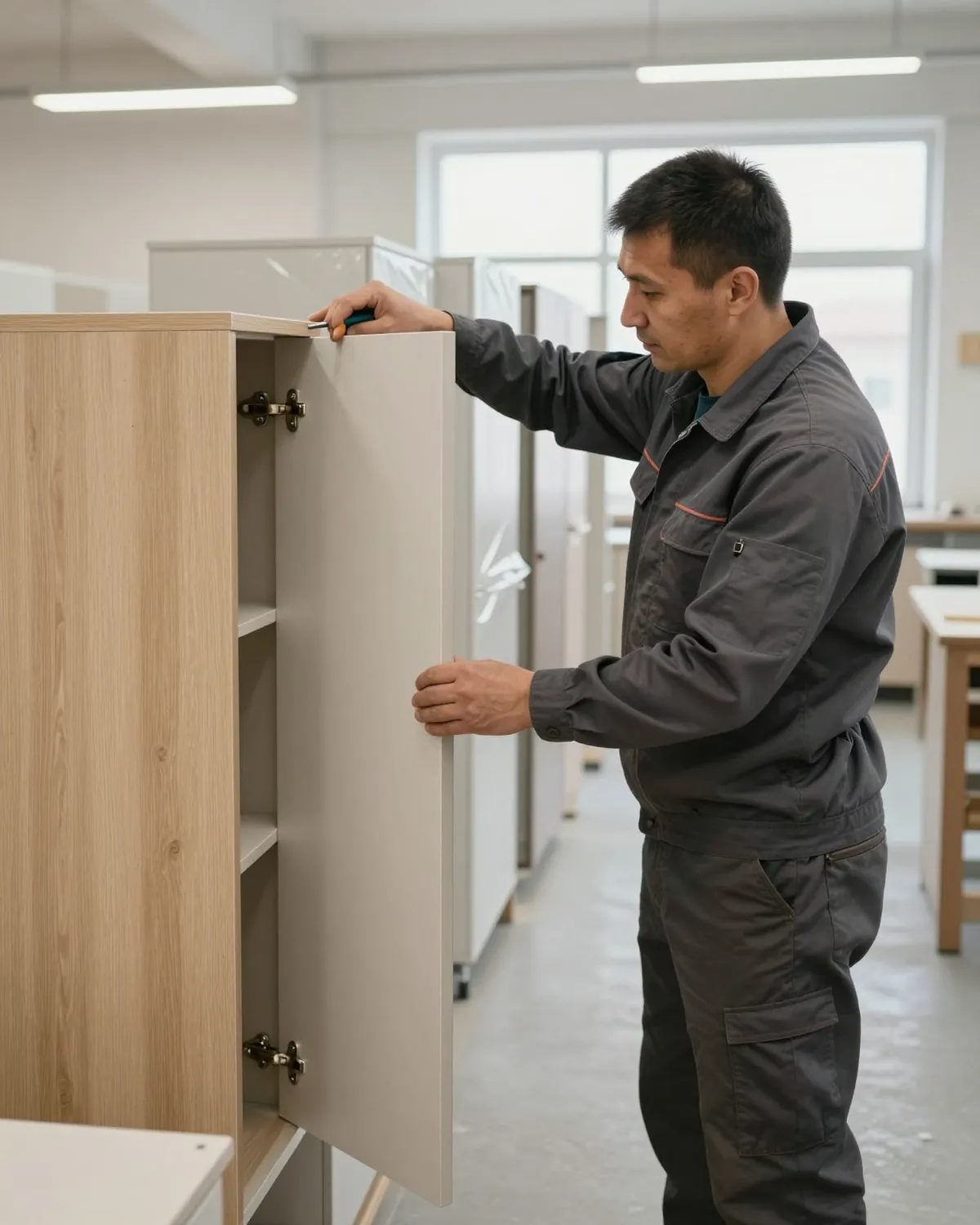
We assemble the modules in the workshop before dispatch, checking front gaps and drawer travel. The quality control department signs the item off for shipping.
Installation to the facility's schedule
We deliver, bring in, assemble in 1 day, adjust the furniture and clean up after ourselves. Warranty of 24 months from signing the acceptance certificate.
08Team
MEBLIX workshop craftsmen who make and assemble furniture to order.
01 / 07Furniture assembly carpenter11 years
★ 4.81 · 47 ratings

Cabinet furniture repair craftsman20 years
★ 4.99 · 73 ratings

Furniture and kitchen unit assembler23 years
★ 4.97 · 300 ratings

Made-to-order furniture maker7 years
★ 4.26 · 32 ratings

Furniture maker5 years
★ 4.23 · 30 ratings

Joiner and carpenter20 years
★ 5.0 · 113 ratings

Furniture front and hardware fitter17 years
★ 4.61 · 92 ratings
09FAQ
Didn’t find the answer? Message us — a manager replies, not a bot.
Ask on WhatsAppYes, we make furniture for private schools, learning centres, clubs and kindergartens. We work with LLPs and sole proprietors under a contract with an invoice and cashless payment. A set can range from a single classroom to the whole building.
Yes, we match the metal frame colour, countertop decor and edge banding to the interior or the school's brand colours. Laminated chipboard decor samples can be seen in the showroom or during the measurement. The choice of colour does not affect the desk's strength.
The student chair on a metal frame with a bent plywood seat is in the price list on this page. The final price depends on the height group and quantity. Prices for the other items are there too.
The cost of a 15-seat classroom set with desks, chairs, a wardrobe and a teacher's table depends on the desk models you pick and the size of the room. Guide prices for the individual items are in the price list on this page. We calculate the exact amount after measuring the classroom and fix it in the contract.
The measurement specialist comes to the school at a convenient time, measures the classroom and notes windows, radiators, sockets and the board. Based on the measurement, we prepare a 3D layout of the desks in 1–2 days. Measurement and design are free.
Yes, we agree the installation time to suit the school's schedule: during holidays, at weekends or after lessons. Installation is carried out by our team, and after assembly we sign the acceptance certificate.
The item comes with a 24-month warranty under the contract. Blum hinges and runners in wardrobes and cabinets carry a 25-year manufacturer's warranty. Before dispatch, every item undergoes a test assembly in the workshop.
Yes, schools and kindergartens within 30 km of the city receive desks and wardrobes free of charge if the order is large — see the threshold in the "Delivery and payment" section. Villages beyond this zone are served for an additional fee. The same team that installs the furniture in the city delivers it and assembles it in the classroom.
Yes, we make repeat orders in the same laminated chipboard decor and frame colour as the first batch. Keep the contract number or specification — we will use them to find an exact match. That way new places don't stand out in the classroom.
Lead times for each option are in the price list on this page; they depend on the item and quantity. A classroom set takes longer than a single desk. Rush orders are possible — discuss the date with the manager.
10Reviews
4,9
average rating
on Google and Zoon
Everyone can see a review on the platform: this is how other people check whom to trust with an order. If something went wrong, write to us and we will reply within 1–2 business days.
Message us on WhatsApp11Article
MEBLIX school furniture is made in our own workshop in Almaty to fit the classroom dimensions and the height of the students: height-adjustable desks, chairs, teacher desks, wardrobes and classroom sets. Measurement and a 3D layout design are free, we work under contract with public organizations, and the warranty on the item is 24 months.
Children of different heights sit in the same classroom, and the height of the workspace affects posture and eyesight. We explain how to take this into account at the ordering and layout stage, so you don't have to reseat children throughout the first month of school.
An adjustable desk adapts to the height of a particular student, so one set serves several classes in a row. Our adjustable school furniture is built on a metal frame: the supports extend in steps and lock in place, while the laminated chipboard top stays the same. We recommend the two-seat adjustable model for classrooms that host fifth-graders and school leavers during the day, and the single-seat one where students are seated one per desk. What changes for the teacher? Before the term starts, they set the height to match the seating plan instead of hunting around the school for a "bigger desk" for the tallest child. In primary school the adjustment is especially noticeable: children grow over the year, and the supports are raised a step without replacing the furniture. In subject classrooms that different year groups use, adjustment is also justified because the school doesn't need to keep separate sets for each age group.
| Desk option | Adjustment | Where it fits | What to look at |
|---|---|---|---|
| Single-seat | no adjustment | exam and computer classrooms | space for the system unit |
| Two-seat adjustable | support height | classrooms with different year groups | adjustment step and lock |
| Three-seat | no adjustment | spacious classrooms and assembly halls | rigidity of the long top |
| Transformer desk | height and top tilt | primary school, drafting, drawing | lip for the textbook |
Children bump into corners, rock on chairs and hang heavy backpacks on hooks. Safety is built into the design in the workshop, not looked for after delivery, when children are already sitting at the desks.
We round the corners of countertops and seal every edge with PVC or ABS edging so that a school desk has no sharp edge and no exposed board cut. An unedged laminated chipboard cut crumbles quickly, absorbs moisture after washing and snags clothing, while the edging withstands blows from backpacks and daily cleaning. In primary school and kindergarten the corner radius can be ordered larger than on a teacher's desk. We apply the edging on a machine in our own workshop, so the seam comes out even around the entire perimeter, with no gaps or peeling at the corners. We also look separately at the edges of the shelves in the wardrobe and shelving unit — children take textbooks from them and catch them more often than adults think. The advice is simple: ask for an edging sample during the measurement and run your palm along the corner — that is the quickest way to tell whether it will catch a sleeve.
The screw heads on the desk and chair must be countersunk or covered with caps, and the welded seams of the frame must be ground down before painting. It is protruding bolts and weak welding that most often turn new furniture into a reason for parents' complaints. Our school furniture production runs a full cycle: we weld the frame, grind it and coat it with powder paint, cut and edge the countertop, then assemble the item completely. A test assembly in the workshop before shipping reveals any skew, extra gap or protruding fastener before the desk reaches the classroom. We mount the backpack hooks on a sturdy part of the frame, not on the edge of the countertop where they are quickly torn out. Before acceptance, look under the seat and under the countertop — that is exactly where protruding screw ends hide.
A classroom is in use every day, often in two shifts. That is why the material for desks, chairs and wardrobes is chosen for resistance to scratches, impacts and wet cleaning, not just for color and looks in the catalog.
We make desk countertops and wardrobe carcasses from Egger and Kronospan laminated chipboard: the laminated surface withstands pens, compasses, glue and daily wiping with a damp cloth. We cut the board to the ordered sizes in our own workshop and seal the edges with PVC or ABS edging, so moisture from washing does not get inside and the board does not swell. We make the teacher's desk and the cabinet with teaching aids in the same decor as the desks — the classroom looks cohesive, and later it is easy to reorder items to match. Why is laminated chipboard more convenient than painted wood? Laminate does not get dents from pen pressure, and pen and marker marks are removed with a mild non-abrasive product. In primary grades, choose a light matte decor: marks are less noticeable on it and there is no glare from windows on the work surface.
We weld the frames of desks and chairs from steel profile and coat them with powder paint, which adheres to metal more firmly than ordinary enamel and does not wear off from footwear. We handle the production of school furniture with a metal base ourselves: profile cutting, welding, seam grinding and painting all take place in a single workshop, without passing parts to subcontractors. The metal frame withstands wet cleaning, does not dry out like wood, and tolerates the habit of rocking back on a chair. Adjustable foot pads eliminate wobbling on the uneven floors of old classrooms, and we check the height adjustment increment and locks during a control assembly. The frame color — gray, black or bright for elementary school — is chosen to match the interior and does not affect strength, so it is selected together with the countertop decor.
| Item | Base | Work surface | What to check |
|---|---|---|---|
| Student desk | metal frame | laminated chipboard with PVC edge | bag hook |
| Student chair | metal frame | bent plywood | caps on the legs |
| Teacher's desk | laminated chipboard carcass | laminated chipboard, PVC edge | cabinet lock |
| Cabinet for teaching aids | laminated chipboard carcass | closed doors | hinges and shelf supports |
| Open shelving unit | laminated chipboard | open shelves | wall mounting |
| Teacher's chair | metal frame | faux leather, armrests | stability of the base |
A classroom is equipped as a whole: student places, the teacher's workplace and storage. Below is what the set consists of and how to plan the rows, aisles and cabinets so that the teacher can see every student.
Before production, we measure the classroom free of charge and within 1–2 days prepare a 3D layout design that shows every student place. In the design we immediately check the distance from the first row to the board, the width of the aisles between rows and the position of the teacher's desk by the window or door. If the classroom is narrow, single desks are sometimes more convenient than three rows of double desks — the aisles become wider and the teacher can reach every student. In classrooms with a projector and interactive whiteboard, we mark where the cables will run so they are not lying underfoot. The school approves the finished design with the vice-principal before signing the contract, and changes at this stage cost nothing. During the measurement, note the sockets, radiators and window sashes: these are what most often break up an even arrangement of rows.
Teaching aids, class registers and documents are kept in a closed cabinet with a mortise lock, while everyday textbooks go on an open shelving unit that the children take them from themselves. The closed cabinet protects visual materials from dust and stray hands, and the lock settles the question of responsibility for the classroom's property. The open shelving unit is placed closer to the desks so that students don't crowd around the teacher's table during a lesson. Shelf depth is calculated to match the format of the teaching aids: folders, rolled-up posters and boxes of handouts each require a different depth. A teacher's desk with a hutch partly replaces a cabinet: its shelves hold the register, method guides and exercise books awaiting marking. Cabinets along the back wall don't block the view of the board and leave a stretch of wall above them for displaying children's work. Calculate the height of the top shelves for the teacher's height, and give the lower ones over to what students take themselves.
In a kindergarten group the furniture is even lower, and the safety requirements are stricter than in a classroom: little ones spend the whole day in the group. Here's what items we make for kindergartens and how they differ from school ones.
The "Romashka" table is a group table with a flower-shaped top where several children draw, model and build with construction sets at the same time. Each child sits in their own "petal", so they have a separate place, and the teacher can see all of them at once. We make "Romashka" on a metal frame with height adjustment and a laminated chipboard top with edge banding along the entire shaped edge, with no sharp transitions between petals. Adjustment is needed because the same group grows noticeably over a year, and mixed-age groups have children of different heights. We cut and edge the shaped edge in the workshop using a template, so all the tables in a group come out identical. Set the height for the tallest children in the group, and pick lower chairs for the younger ones.
A 5-section cubby gives each child their own compartment for clothes and shoes, and the cloakroom doesn't turn into a shared pile of jackets. We make the carcass from laminated chipboard, and the parts children touch most often from plastic that wipes clean easily after a walk outside. Each section has a hook for outerwear, a shelf for a hat and a shoe compartment at the bottom where dirt doesn't get onto clean things. We join the sections in a row along the length of the cloakroom wall, and calculate the number of cubbies from the group list with a small margin. Doors are fitted on hinges that won't pinch fingers when slammed shut. It's best to order labels or pictures on the doors right away: little ones find their own cubby faster and mix up their things less.
Schools and kindergartens order furniture as an organisation: with a contract, documents for the accounting department and a hard deadline — the start of the school year. Here is how to go through this process without surprises.
We sign contracts with LLPs, sole traders and public-sector organisations, issue invoices and work on a cashless basis. The payment scheme is simple: a 50 % deposit after the contract is signed, and the remaining 50 % after installation and signing of the acceptance certificate. Once the work is complete, we hand over the closing documents — the certificate and the delivery note, which the school's accounting department books in. We produce school furniture ourselves, so under the contract a single party is responsible for both manufacturing and installation, with no intermediaries between the workshop and the customer. If a school is fitting out several classrooms at once, we put the whole scope into one estimate and one contract. We draw up the specification from the 3D design: it lists every item, its size, material and finish. Agree the company details and the wording of the specification with the accounting department before signing, so the documents are accepted first time.
The lead time for each item is shown in the price list on this page, and you should add time for measurement, design and agreeing the contract within the school. A full classroom set takes longer than a single desk, because all the items go through a trial assembly together and in the same finish. Rush orders are possible, but it is better not to test the workshop's tight summer schedule: schools and kindergartens are all preparing for the school year at the same time. We schedule installation around the institution's timetable — during holidays, at weekends or in the evening when there are no children in the classrooms. A follow-up order in the same finish is also possible later, so the fit-out can be split into stages and start with the busiest classrooms. Book your measurement in advance, before the summer holidays, so that installation takes place while there are no pupils in the building.
| Acceptance stage | What we check | Who takes part |
|---|---|---|
| Installation in the classroom | layout according to the 3D design | our team and the facilities manager |
| Inspection of desks and chairs | wobble, corners, fasteners | facilities manager or school commission |
| Adjustment | leg height by height group | team and teacher |
| Wardrobes and cabinets | locks, hinges, shelves | facilities manager |
| Signing the certificate | quantity and completeness according to the specification | school representative |
| Warranty | 24 months on the item under the contract | both parties to the contract |
We have gathered the essentials that a school or kindergarten should check before ordering, during production, and when accepting furniture by class and group.
12Calculation
Select the items in the calculator, their quantity and material — the calculation will go to the manager on WhatsApp. We quote per item or per classroom set, taking into account the number of seats and height groups.
13For business
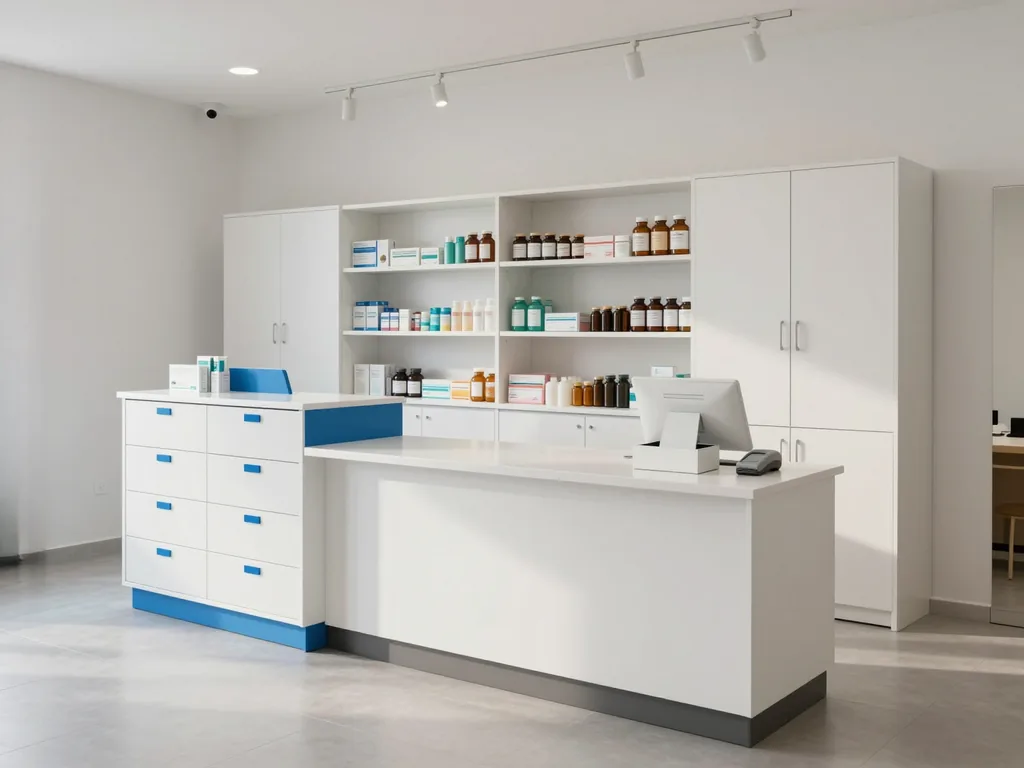
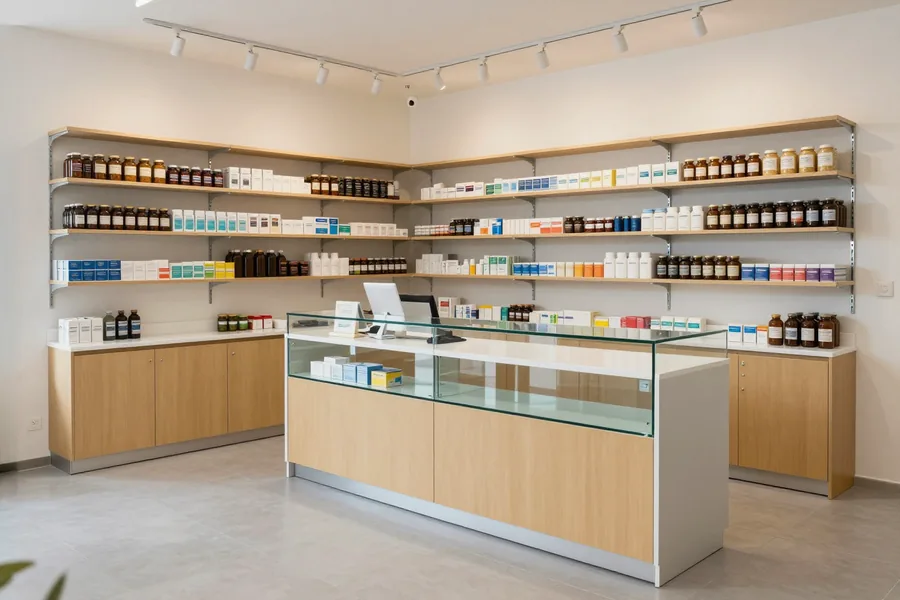
We equip a pharmacy end to end — from the pharmacist's counter and prescription shelving to cabinets for medicines, flammable liquids and stock.
We make display cases to the dimensions of the sales floor: wall-mounted up to the ceiling, island, corner with radius glass, and counter display cases with lighting and locks.
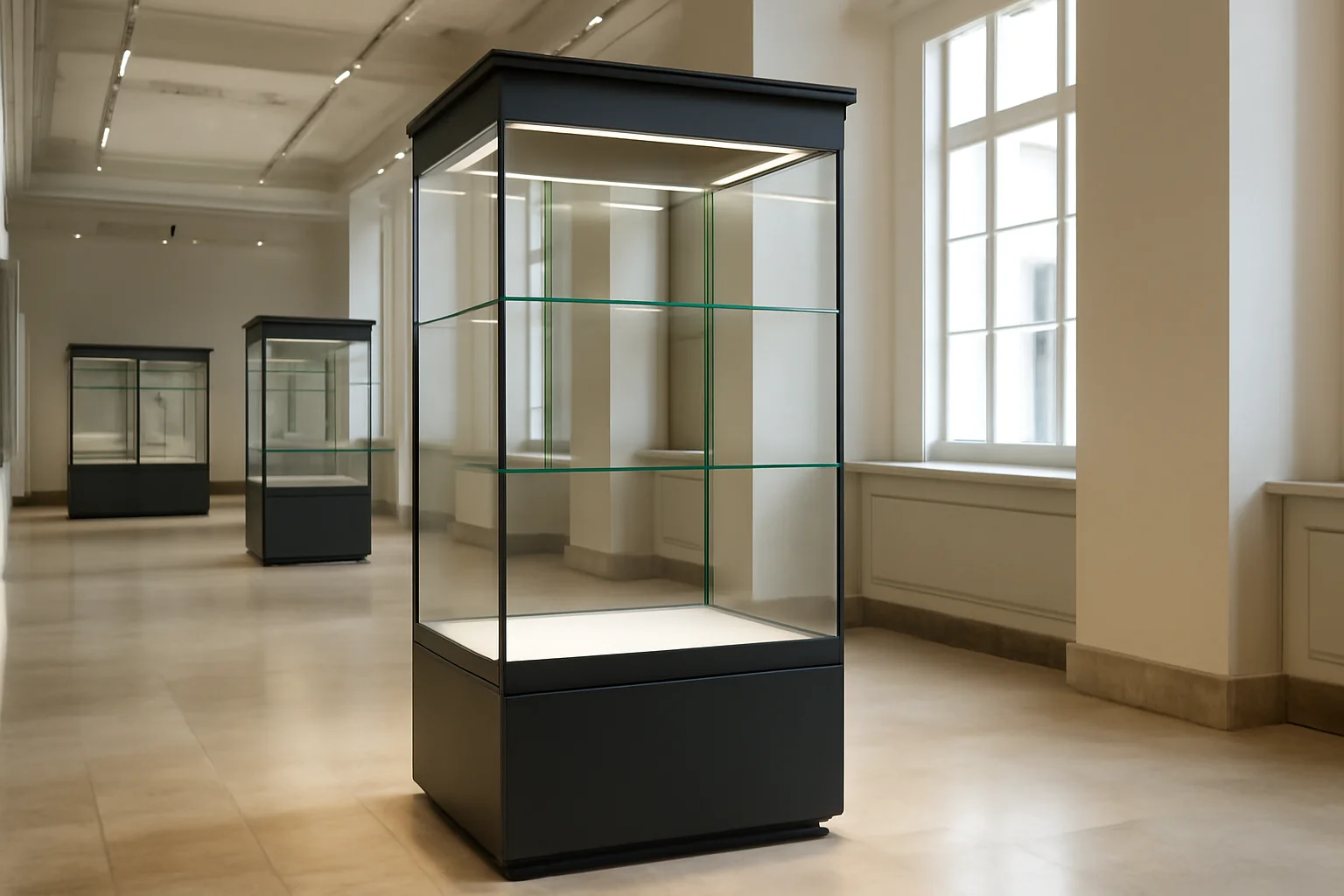
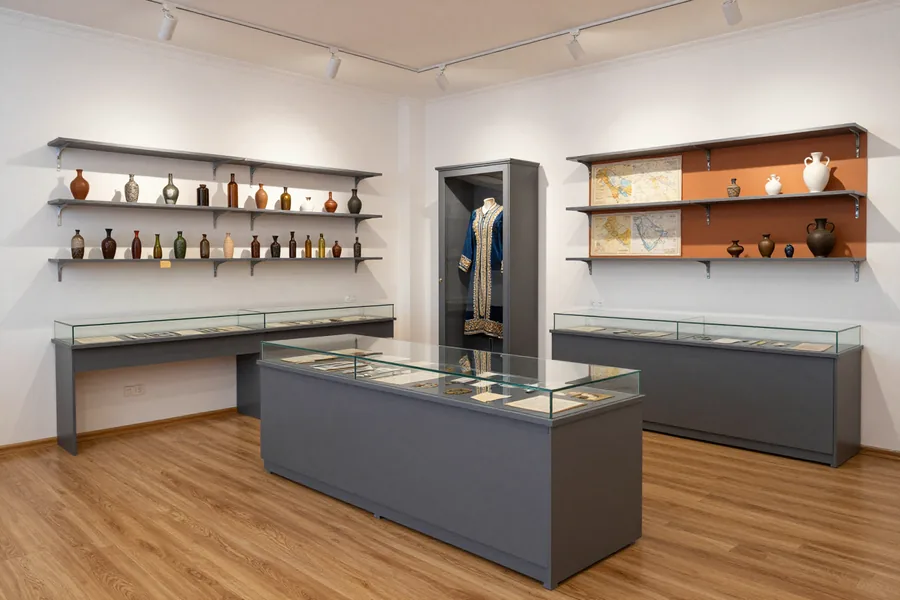
We equip the museum hall and storage room with a set in a single decor: display cases for exhibits, table display cases, open and sliding shelving for collections.
We make display cases to fit the shape and size of the exhibit: horizontal, vertical, wall-mounted boxes and island ones, with anti-reflective glass, hidden lighting and a lock.
We equip the salon end to end: reception, stylist workstations, mirror stations, manicure area, shelving and waiting area in a single decor made from materials that withstand water and daily cleaning.
We make stylist workstations to match the stylist's height and the size of the room: simple, with lighting, with a built-in extractor, folding for home use, double and with stone.
We design and make cabinet furniture for offices with precise fit into the space and a single decor per floor.