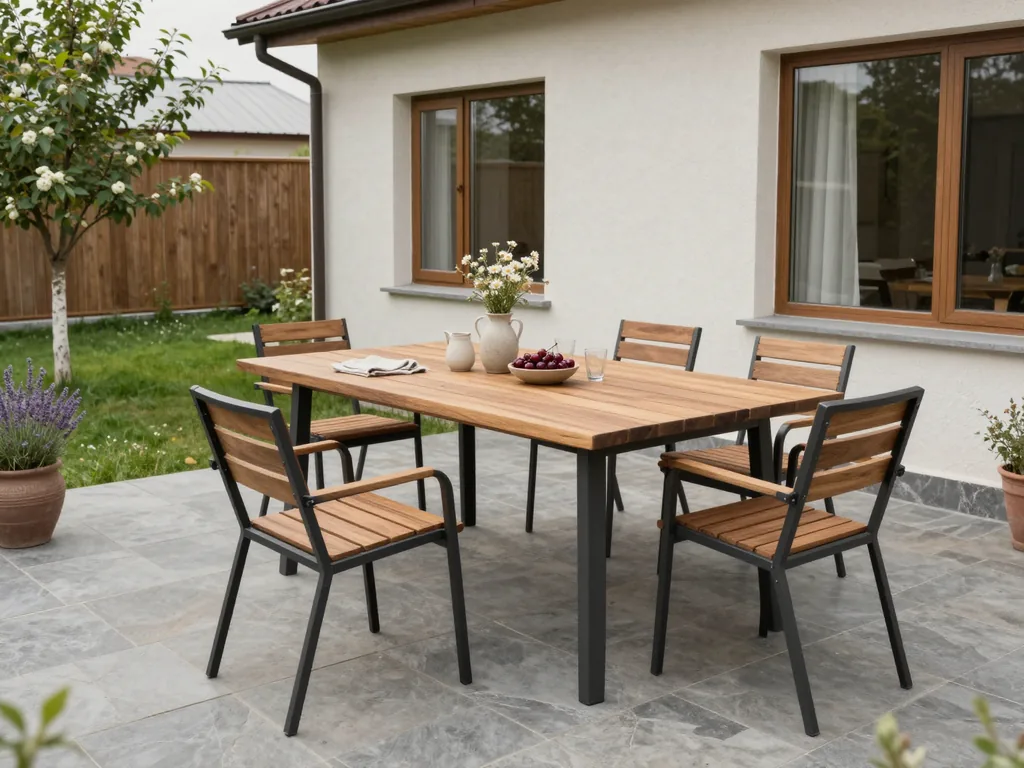
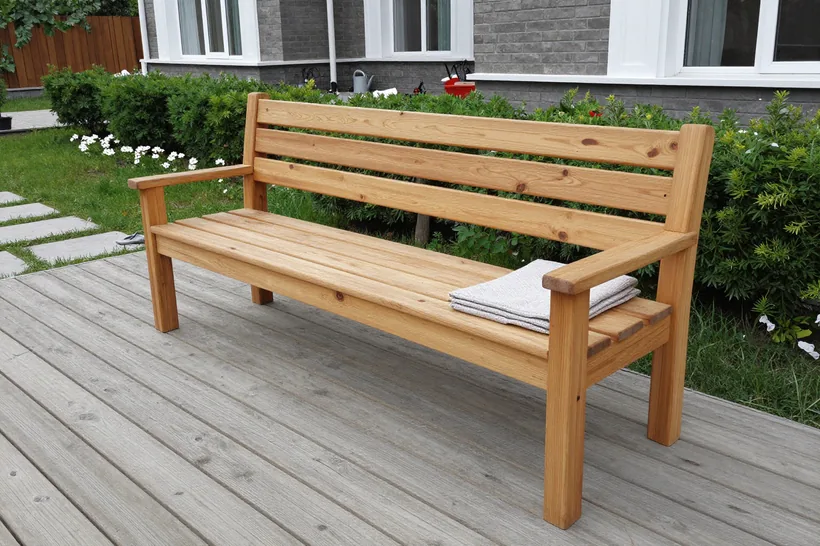
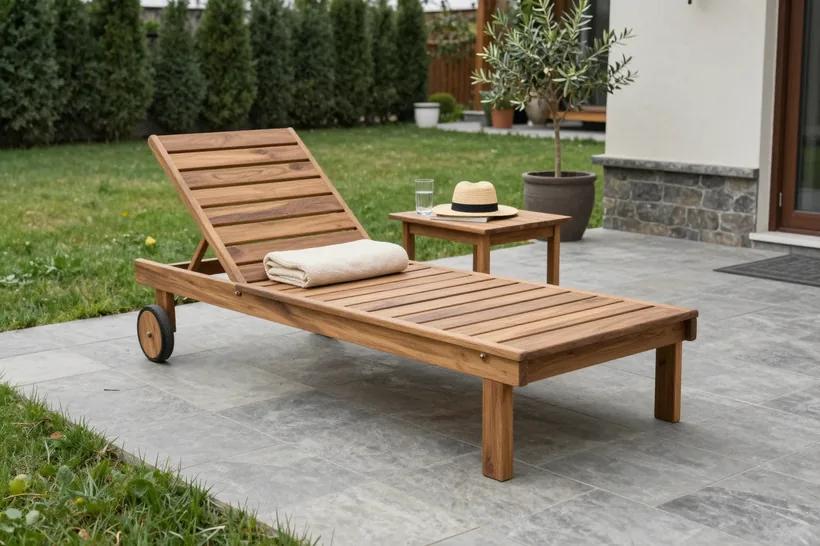
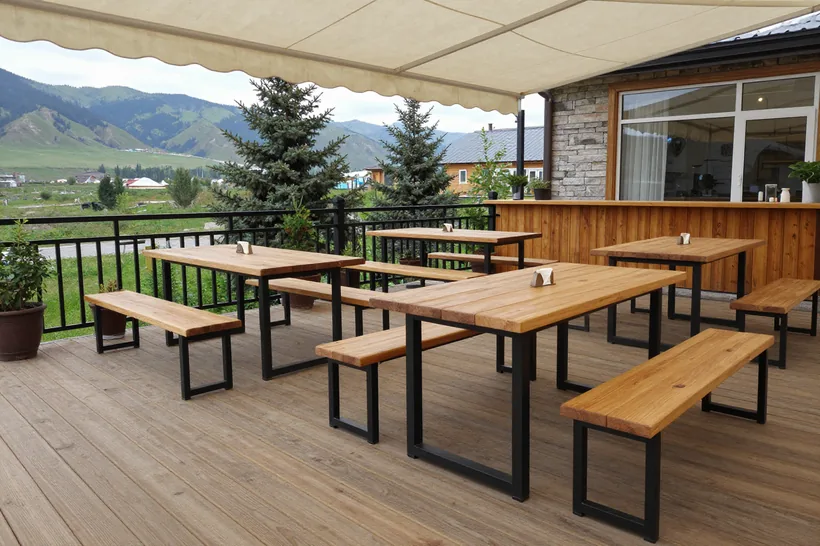
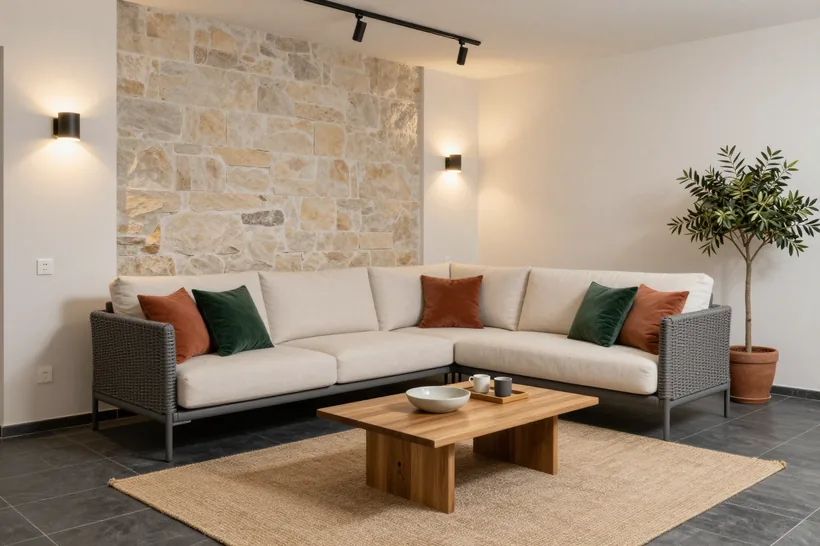
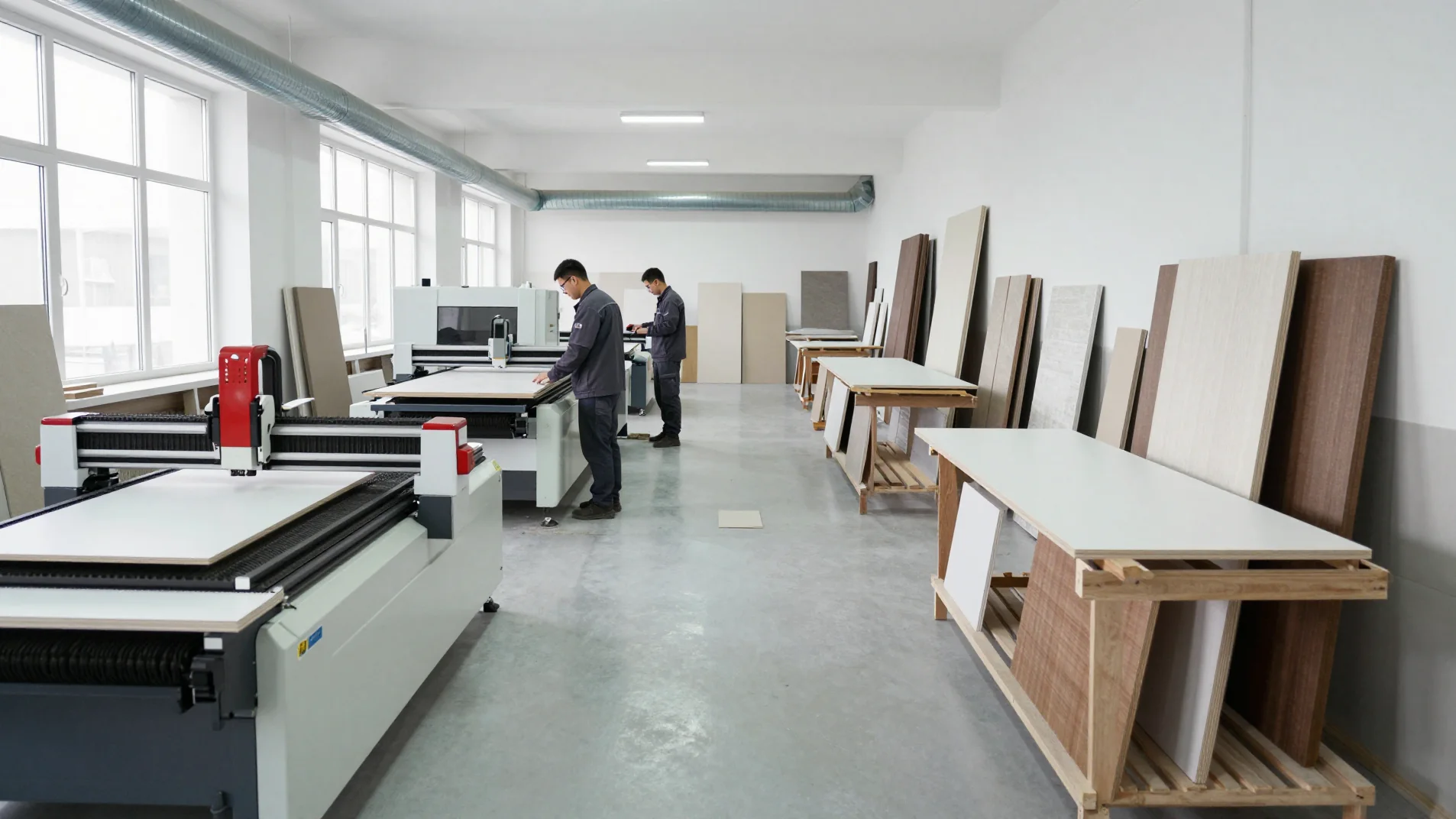
MEBLIX makes custom garden furniture in Almaty in its own 600 m² workshop. We produce dining sets, tables and chairs from larch, teak, thermowood and rattan to your dimensions. Measurement with material samples and a 3D design are free, installation is handled by our own crews, and the item comes with a 24-month warranty under the contract.
Ordering makes sense where a ready-made set does not fit the dimensions, does not match the terrace layout and quickly loses its looks outdoors. Let us break down who really needs this format.
When ready-made furniture does not suit a garden or terrace
Ready-made furniture is designed for average dimensions, so on a narrow terrace or a plot with a complex layout it leaves unused meters and does not fit the dimensions. A typical store-bought set is designed for an average area: a table for six people takes about two meters in length, and at least 80 cm must be left between the chair back and the railing for passage. On a balcony 1.2 meters wide or a terrace with a column in the middle, such a set runs into the railing and blocks the exit. Custom dimensions solve this differently: we start from your space rather than fitting your space to a catalog. Before choosing an item, measure the free area taking door swings and walkways into account — these measurements will become the basis of the project.
Which items are ordered for a garden and terrace
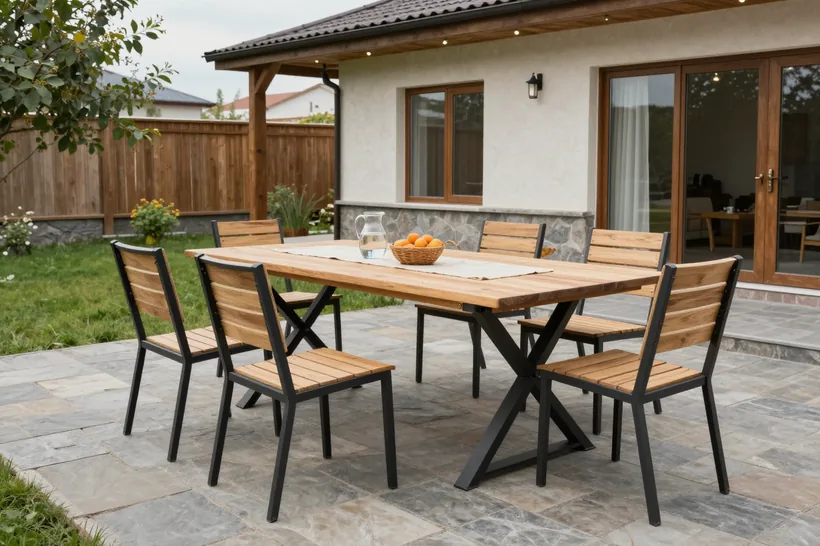
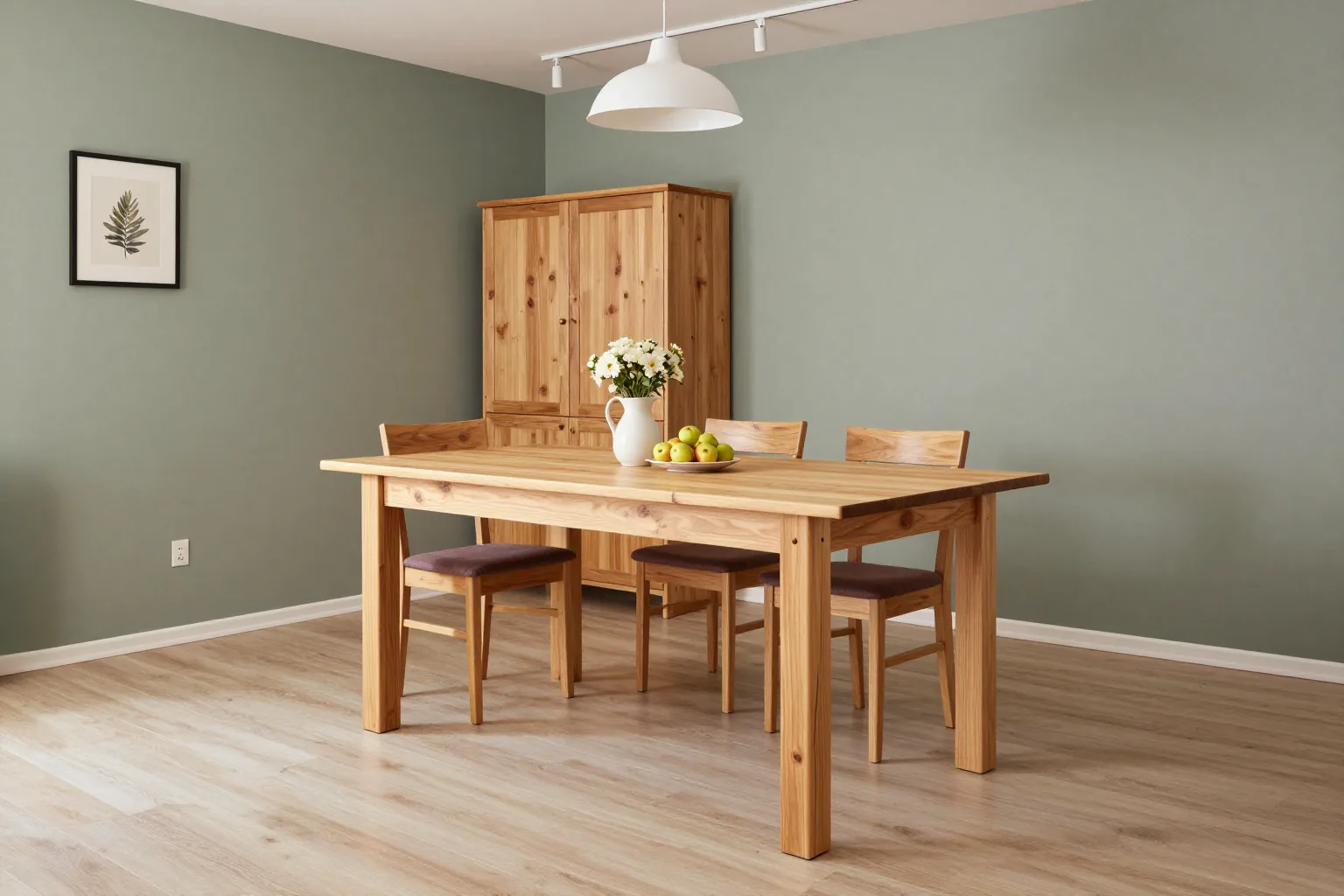
- Dining set: a table and chairs as a single set for the seating places of your terrace or dining area on the plot.
- Tables: individual models for a specific area — from compact two-person ones to long dining tables.
- Chairs and armchairs: with different seat heights and depths so that seating matches the table height.
- Terrace furniture: sets that account for railings, columns and walkway widths on your site.
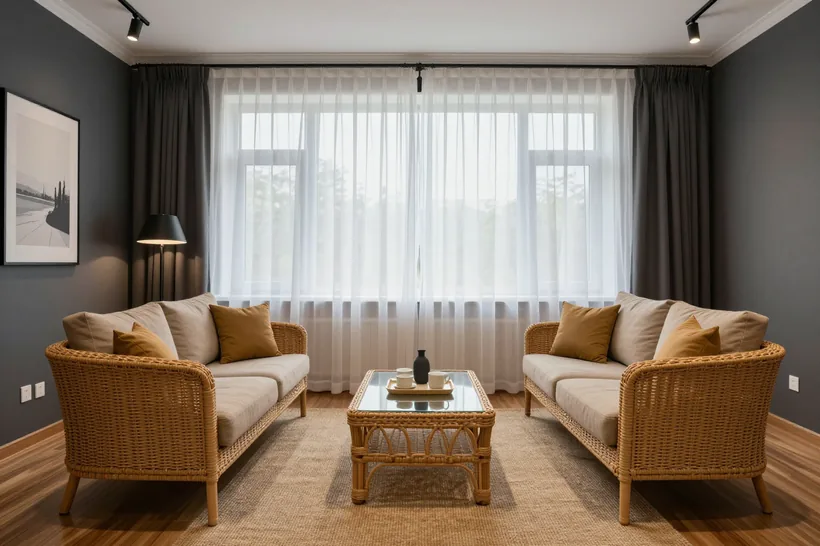
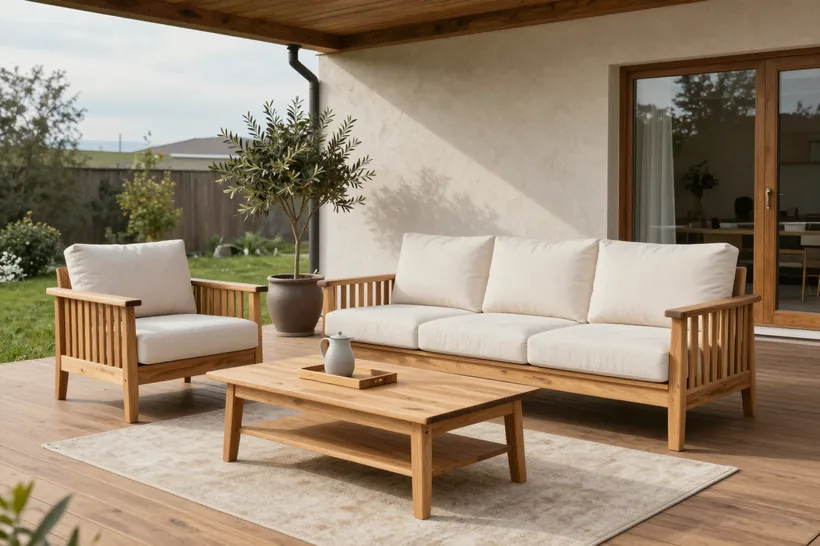
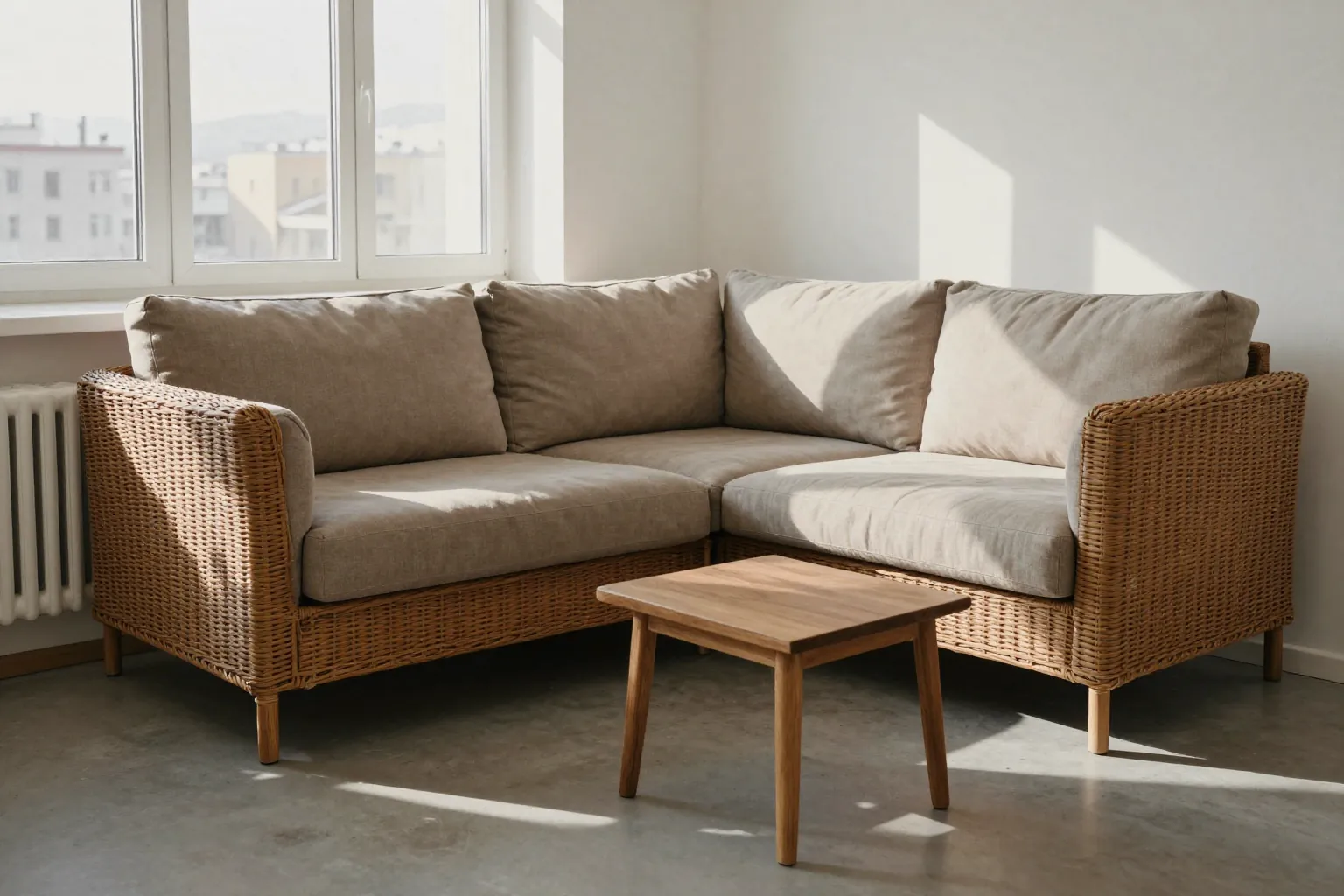
- Rattan furniture: woven armchairs, sofas and tables on an aluminum frame for open areas.
- Single set: we design the dining set as a whole so that the proportions of the table and seating places match rather than being assembled from random pieces.
Urgent orders for the season and work with legal entities
We can take urgent orders for the season, and we work by bank transfer, so orders suit both private gardens and organizations. Payment is in two steps: a 50 % deposit, and the remaining 50 % after signing the acceptance certificate, which we issue once installation is complete. For cafes, holiday resorts and offices with a summer veranda, cashless payment keeps accounting simple with no extra approvals. Urgency affects the choice of material: thermowood and larch need time for preparation and oil treatment, and for the lead time of each option refer to the price list on this page. If the season opening date is already close, tell us at the measurement — we will pick a wood species and finish that can realistically make the day, and we will not promise what the workshop cannot deliver.
Materials for garden furniture suited to the Almaty climate
The Almaty climate means hot dry summers and cold winters with temperature swings. That is why we choose the material for outdoor furniture based on operating conditions, not by analogy with interior cabinet furniture.
Larch, teak and thermowood for outdoors
comparison of wood species for outdoor use| Material | What we make | How it performs outdoors |
|---|
| Larch | tables, chairs, benches | dense, holds moisture well |
|---|
| Teak | premium sets | stable in shape |
|---|
| Thermowood with oil | terraces, open areas | treated for outdoor conditions |
|---|
Kiln-dried solid wood for tables and chairs
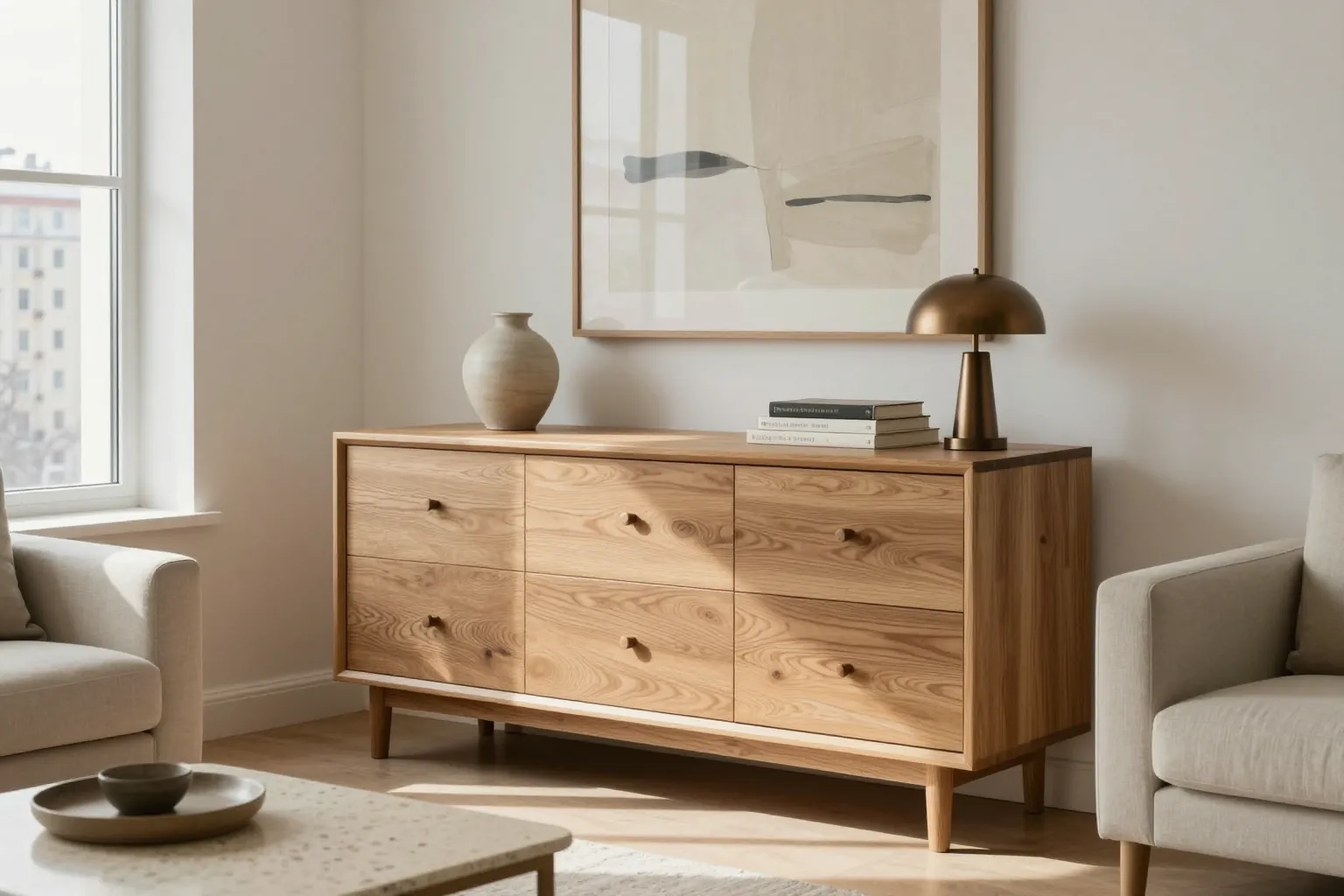
For tables and chairs we use kiln-dried solid oak, ash, beech, alder, walnut, birch and pine with a moisture content of 8–10%. To larch and thermowood we add E1-class birch plywood — for tabletop panels and internal elements where a stable flat surface is needed. We measure the moisture content of every batch before cutting: under-dried solid wood behaves unpredictably outdoors — it warps, cracks along the grain and opens glue seams already in the first season. That is why moisture control matters more to us than the species: even expensive wood with disrupted drying will not withstand the garden. The production of wooden garden furniture in our workshop begins with this check. When ordering, ask to see a moisture meter reading for your batch — it is the only way to make sure the furniture will last until next summer.
Natural rattan and polyrattan on an aluminum frame
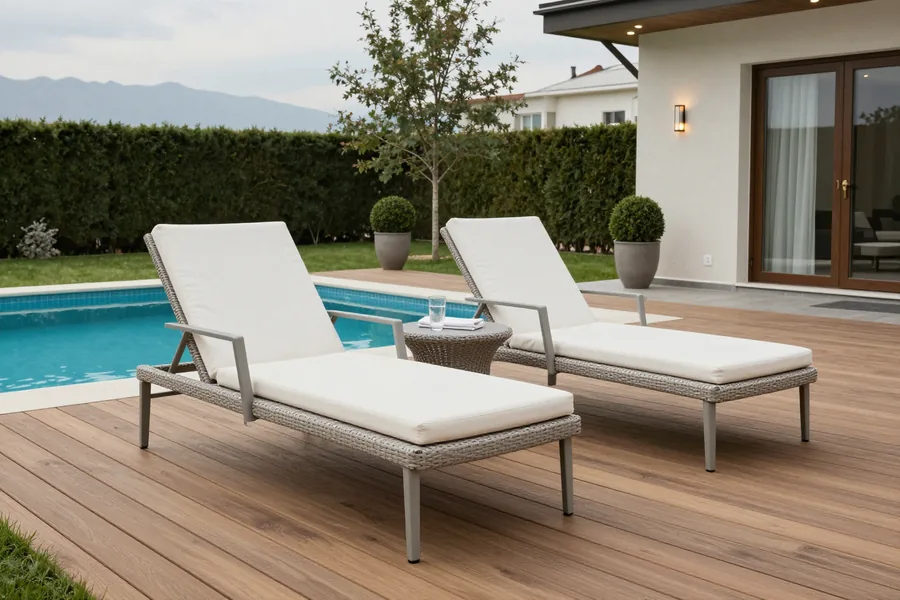
We weave furniture from natural rattan and from artificial polyrattan on an aluminum frame — both options are made in our own workshop, in a separate weaving area. Natural rattan gives a warm texture and breathes, but in the off-season it requires careful maintenance: it should not be left under wet snow, and the protective coating needs to be renewed periodically. Polyrattan on aluminum handles the outdoors more calmly — the frame does not rust, the weave does not absorb moisture, so this option is more often chosen for open terraces without a canopy. Choose by operating conditions: under a canopy natural rattan lasts long and looks more refined, on an open area polyrattan is more practical. For sets with soft cushions, choose removable covers — they are easier to wash after the season.
Custom-size wooden garden furniture manufacturing
An order starts not with choosing from a catalog, but with a measurement and a project for a specific terrace or plot. We show what this path consists of for us — from the first visit to assembling the item.
How the measurement with material samples works
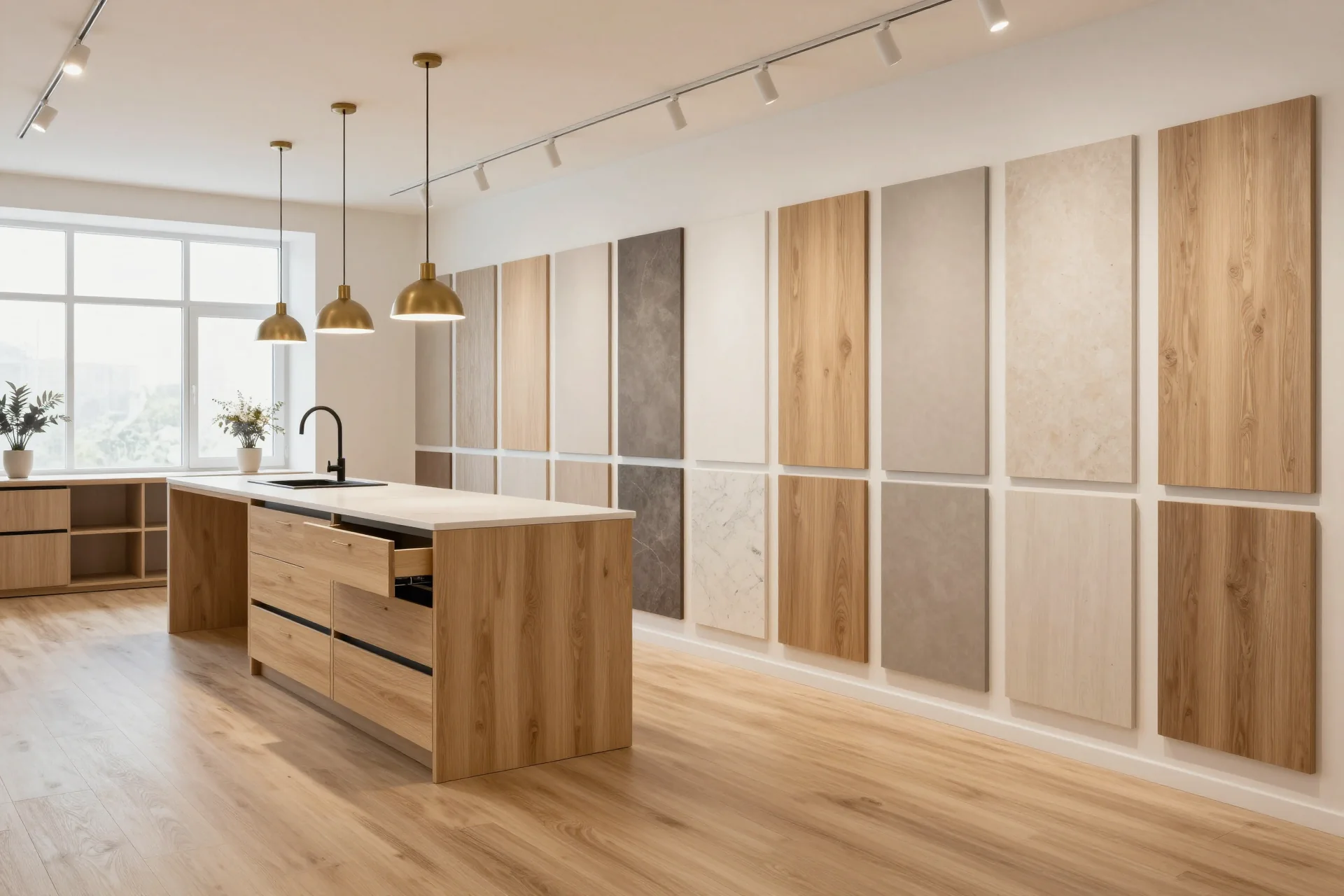
For the measurement we bring samples of species, veneer and weave so that the material is chosen on site, not from a picture. Measurement specialists take the dimensions of the terrace or garden area, mark the alignment to walls, railings and steps, check slopes and height differences across the entire area. Together with samples of oak, ash, larch and rattan, on site you can see how wood and weave read in local light, not in the showroom. The visit with samples is free for us, and production starts only after all dimensions and mounting points are approved. We carry out the manufacturing of garden furniture in our own workshop, so the measurement is immediately tied to the real production capabilities. It is worth clearing the area in advance and showing where the sun falls and where water drains after rain — this affects the placement of the set and the choice of coating for outdoor work.
What the 3D project shows and whether it can be edited
We prepare the 3D design in 1–2 days, and it can be revised before production — we agree on sizes, proportions and fit before work starts. Designers show the item within the volume of the area: you can see the height of the countertop relative to the chairs, the seating depth, the recline of the backrest and how the set sits relative to the house and the fence. At this stage we also check that the furniture does not block the walkway and does not hit an opening door. Revisions at the design stage are free in terms of time, but once the cutting is done the dimensions can no longer be changed — that is why the design exists. If the seating dimensions raise doubts, agree on the control points in the design before signing — moving them later will cost more than fixing them on screen.
How furniture is made in the workshop
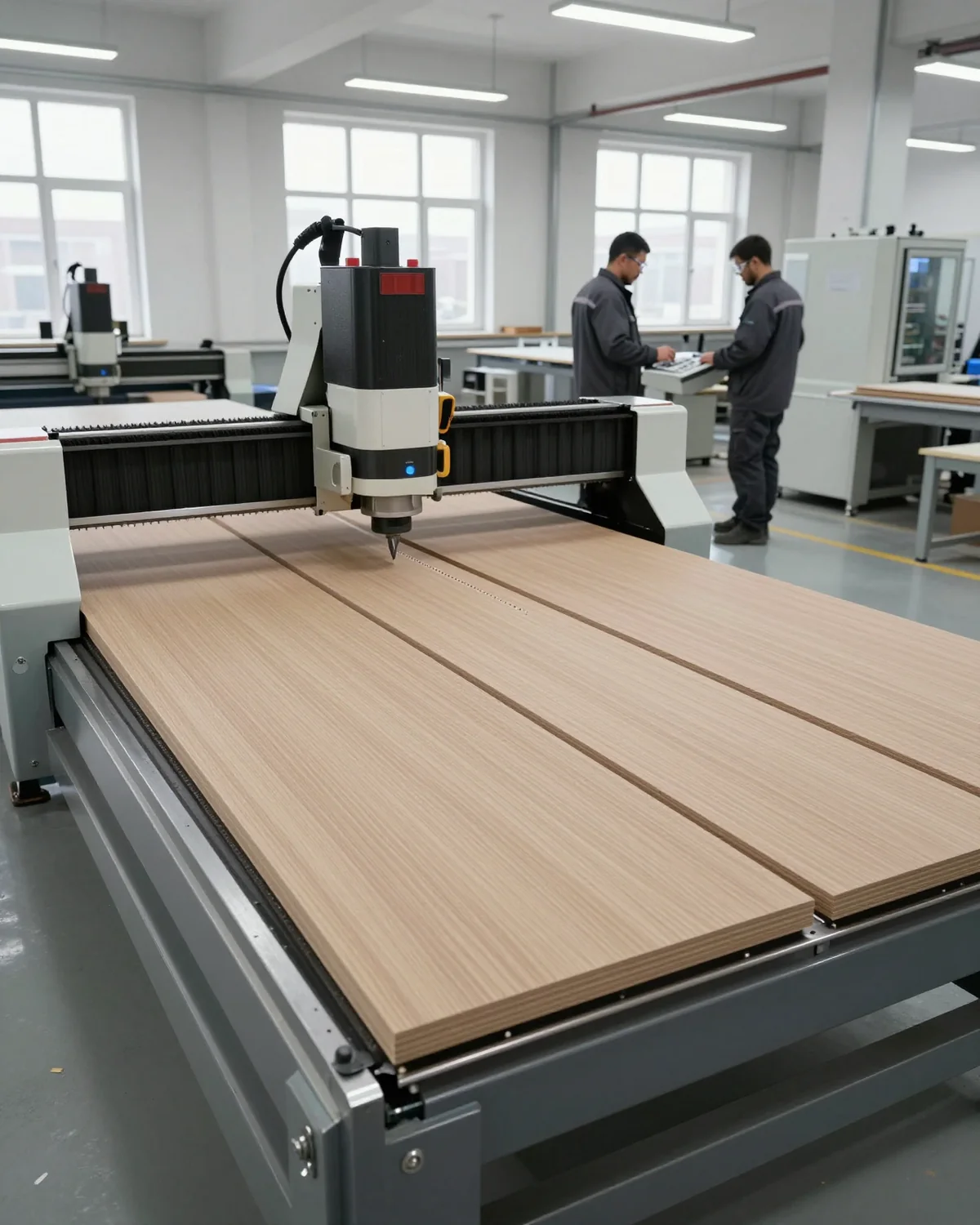
- Carpentry area: we cut and plane kiln-dried solid wood, mill the edges and sand the parts for assembly.
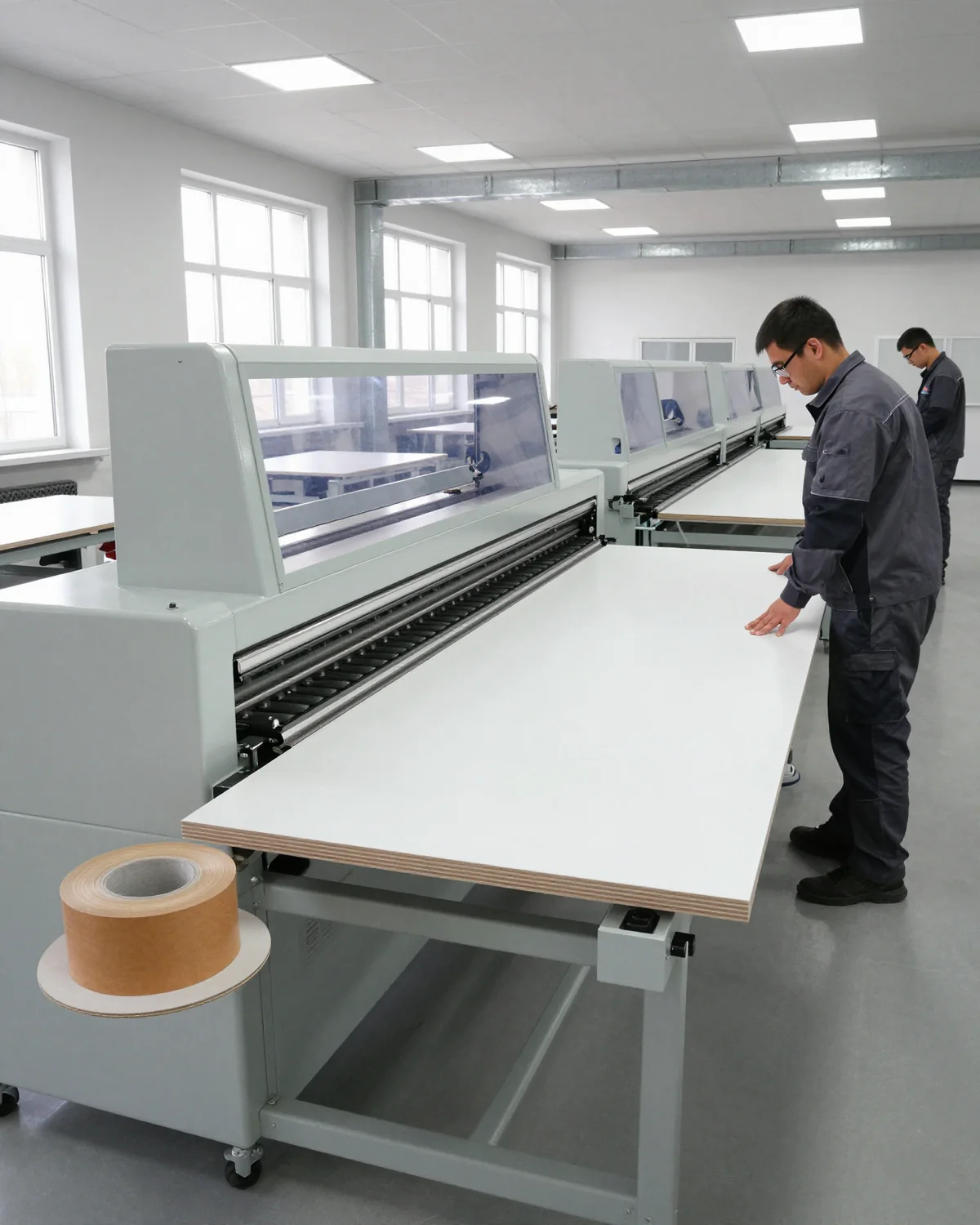
- Plywood area: we apply natural veneer to MDF and make lightweight elements from E1-class FK birch plywood.
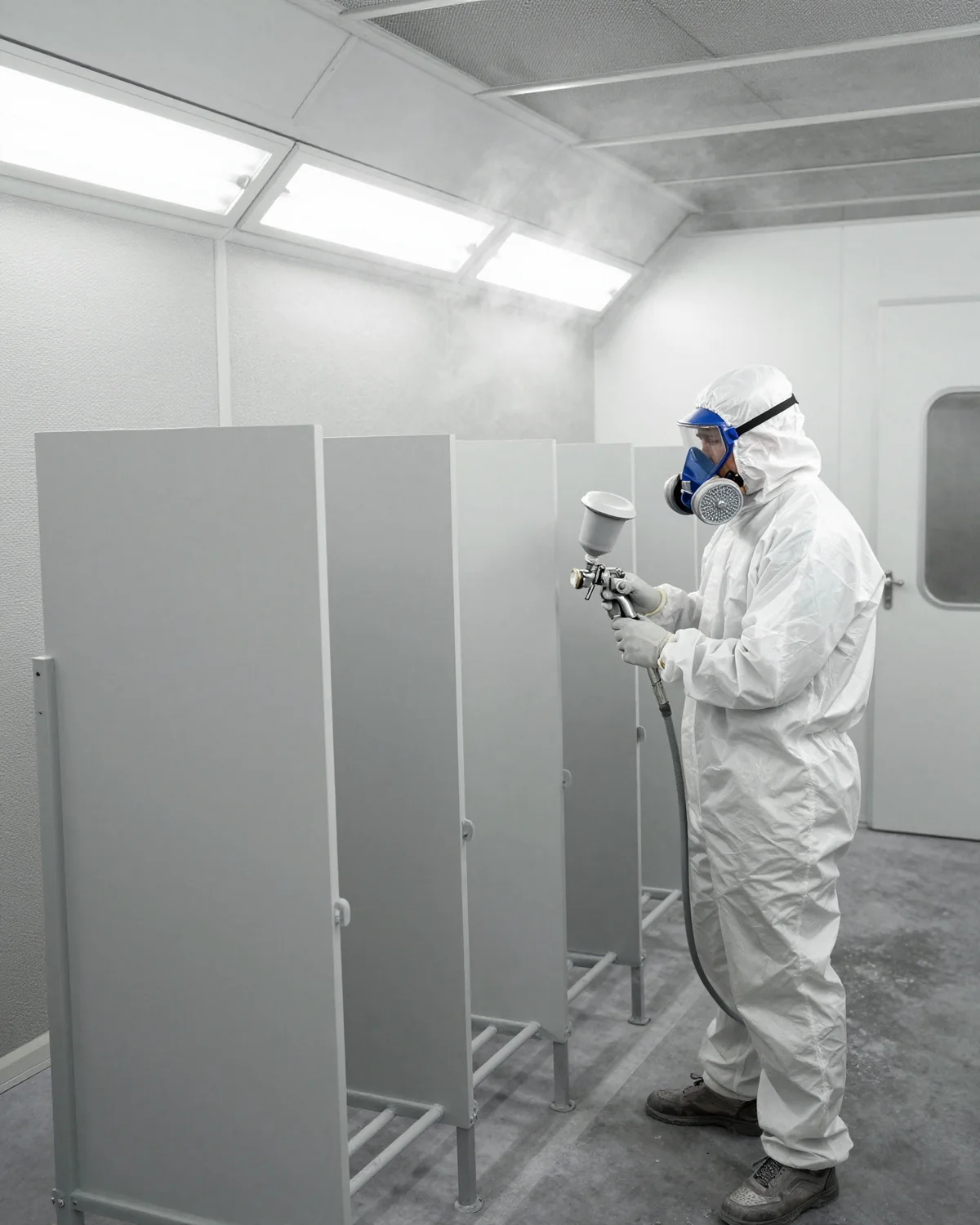
- Painting: we apply oil or lacquer for exterior use suited to the specific species — from larch to teak.
- Weaving: a dedicated area weaves natural and polyrattan on an aluminium frame for chairs and tables.
- Moisture control: we measure the moisture of the solid wood before cutting, so the finished parts do not warp after outdoor installation.
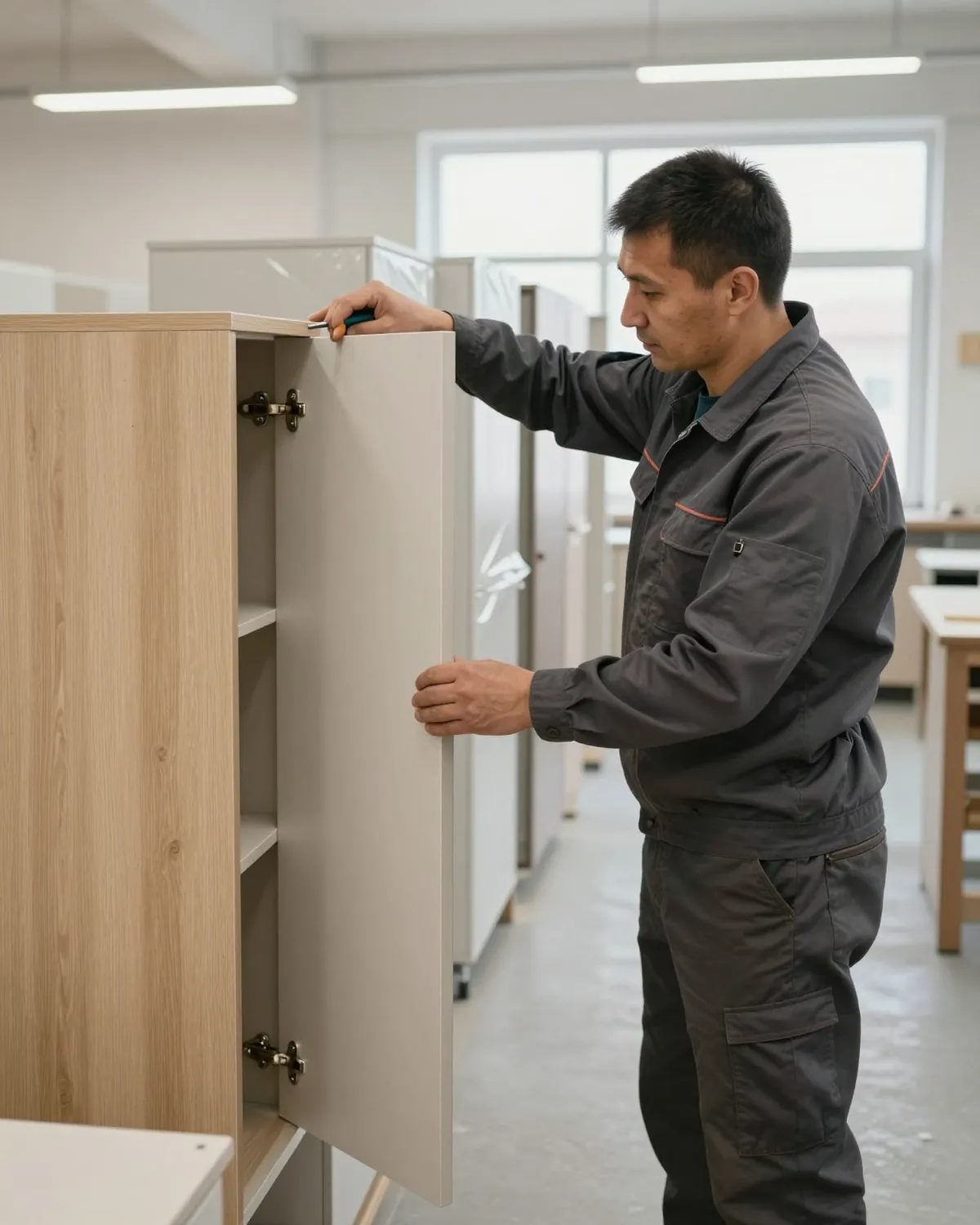
- Test assembly: before shipping we assemble the item in the workshop — so joint errors show up before we go to site, not during installation.
How to order custom garden furniture from measurement to installation
The ordering path is transparent — from the first site visit to signing the acceptance certificate. We show the stages and what happens at each, so you understand where you make decisions and where we do the work.
Order stages and payment procedure
- Measurement: technicians visit the site free of charge, bring samples of species, veneer and weaving, and take the dimensions of the terrace or garden.
- 3D design: we prepare it in 1–2 days, show the placement of the set and the materials, and make revisions before the deposit.
- 50 % deposit: locks in the chosen materials and sizes; after it the order goes into production.
- Manufacturing in the workshop: carpentry area, veneering, painting, rattan weaving and test assembly before shipping.
- Installation and acceptance certificate: the crew assembles the furniture on site, you check the result and sign the certificate.
- Remaining 50 %: paid after signing the acceptance certificate; we work by bank transfer.
How installation on a terrace or in a garden works
Installation is carried out by our crews — they also assemble the furniture on site and sign the acceptance certificate after installation. The crew arrives with fasteners and tools, positions the set in place, checks stability on uneven terrace surfaces and adjusts the supports for the slope. We assemble large sets partly in the workshop and join the sections on site — this reduces the risk of damaging the solid wood when carrying it. Custom outdoor furniture is assembled taking into account the surface and the slope of the area, so we adjust the supports right on site. We sign the acceptance certificate after installation, once you have inspected the item and checked that the hardware and drawers move properly. On a terrace and in a garden, agree on access and the unloading spot in advance: a large set is brought in assembled or partly disassembled, and the width of the passage determines whether disassembly will be needed. It is best to discuss these details during the measurement, when the real geometry of the area is visible — then the crew arrives with a ready assembly plan instead of solving issues on site.
Delivery in Almaty and outside the city
Delivery within the city and up to 30 km is free for a large order; beyond 30 km there is a surcharge, and the threshold is stated on the Delivery and payment page. We plan logistics together with installation: the vehicle brings the furniture set at the agreed time, and the team unloads and assembles it right away, so you don't have to wait for transport separately. For a country plot, check the driveway to the terrace and the gate width in advance — this determines whether the furniture set will need to be disassembled for delivery. If the plot is in a gardening association with an unpaved road, let us know during the measurement: we'll choose transport suited to the condition of the access road and allow time for unloading. The exact threshold for a large order and the terms of the per-kilometer surcharge are kept on a separate page so the figures match the contract.
Warranty, acceptance and what to do if the furniture doesn't fit the size
Warranty and acceptance remove the customer's main fear — what to do if the item turns out not to be as expected. We explain what terms the contract covers, how the inspection after installation works and where to go if the dimensions don't match.
What warranty applies to the item and the hardware
We give a 24-month warranty on the item under the contract, and Blum hardware carries the manufacturer's 25-year warranty. For fronts and drawers we install Blum and Hettich mechanisms — series rated for tens of thousands of opening cycles. We set out the warranty terms in a separate clause: it states which situation counts as a manufacturing defect and which is natural wear or mechanical damage during use. We measure the moisture of solid wood before cutting, and before shipping we do a test assembly in the workshop, so the furniture that goes to the site has already been assembled and checked. Our production of garden furniture is set up so that every unit is checked before it is shipped to the customer. For outdoor models this is especially important: humidity changes during transport show up precisely at the joints, and a checked unit behaves more predictably. The coverage period is fixed in the document — keep it until it expires, otherwise a defect dispute will have to be proven all over again.
What we check at acceptance after installation
- Fit in place: we check how the furniture sits on the terrace or in the garden, and whether there is any skew or wobble on an uneven surface.
- Joints and gaps: we inspect the connections of the countertop, rails and legs — they must be even and without play.
- Hardware operation: we open and close the drawers and doors, and check the smoothness of movement and the soft-close.
- Finish: we check that the oil or lacquer is even, with no drips or missed spots on visible surfaces.
- Completeness: we check against the contract the number of items, sizes and materials — everything agreed in the 3D design.
- Small gaps in daylight: inspect the furniture at the installation site — the shade and joints are visible there, not in the workshop.
What to do if the dimensions don't match expectations
If the dimensions don't match expectations, the issue is resolved under the contract — that's why all sizes and changes are fixed at the 3D design stage before work begins. In the design we specify length, width, height and the reference to the wall or railing, and you confirm them with your signature. From there the workshop works strictly to these numbers, and the finished item is checked against them during the control assembly. Most discrepancies arise from measuring "by eye" — an accurate measurement that accounts for walkways and door swing removes this risk in advance. We separately discuss the junctions to railings, steps and the wall: that's exactly where expectations most often diverge from reality. If a discrepancy is discovered after installation, we pull up the contract and the design and resolve the situation according to the document, not from memory.
Caring for wooden and rattan garden furniture in the off-season
Proper care extends the service life of an item outdoors: the coating, weave and fastenings wear gradually, and a change spotted in time costs less than replacing a part.
How to protect wood from moisture and sun
Outdoors, wood is protected by oil for exterior use — it seals the pores against moisture and slows fading in the sun. Varnish gives a denser film and suits tables and chairs under a canopy, while oil soaks deeper into solid larch, teak and thermowood and doesn't peel with temperature swings. Apply the product in a thin layer on a dry surface, at temperatures above plus ten and out of direct sun — otherwise the coating cures unevenly and leaves sticky patches. The ends of legs and countertops are treated separately in two passes: there the fibers are open and absorb moisture fastest. It's best to renew the coating before the rainy season, not after: that way moisture doesn't have time to penetrate the solid wood. Outdoor furniture made in our workshop takes these operating conditions into account from the start, so the coating goes on evenly and lasts longer.
Caring for rattan in winter
Natural rattan is best moved under a canopy or indoors for the winter, while polyrattan on an aluminum frame handles the cold more calmly. Natural weave is a plant material: from damp and frost the fiber darkens, delaminates and loses its resilience, so armchairs and planters made from it are moved to a dry, ventilated corner. Synthetic rattan isn't afraid of moisture, but it shouldn't be left under a layer of snow either: ice presses on the weave and deforms it. The aluminum frame doesn't rust, but the edges of the cells are exposed to wind, and small debris gets stuck between the rods — wash it out once a month with warm water and no abrasives. The weave doesn't like standing water — position the furniture so moisture drains away rather than collecting in the weave.
Seasonal treatment of solid wood and hardware
- Inspecting the solid wood: before the season, check countertops, legs and backs for cracks, chips in the coating and darkened areas near the ends.
- Renewing the coating: a thin layer of oil or varnish on a dry, cleaned surface once a season restores protection from moisture and sun.
- Blum and Hettich hardware: check that drawers run smoothly and tighten the fastenings so the mechanisms don't wobble outdoors.
- Frame fasteners: tighten the bolts and check the mounting points — vibration and temperature swings loosen the joints.
- Storing with a cover: a breathable cover protects from dust and snow but lets condensation out, unlike thick plastic film.
- Small chips in the coating: touch them up right away — over a season moisture starts to seep through them, and the repair costs more.
The bottom line on garden and outdoor furniture
We've gathered the essentials that determine the outcome when ordering furniture for the garden and terrace — from choosing the wood species to signing the acceptance certificate after installation.
- Material suited to outdoor conditions: larch, teak, thermowood with oil for exterior use, and rattan on an aluminum frame withstand moisture, sun, and temperature swings better than interior wood species.
- Measurement and 3D design before cutting: changes at the design stage are free, but once the parts are cut, the dimensions can't be changed.
- Installation and acceptance together: the certificate is signed once the fit on site, the joints, and the hardware operation have been checked.
- Warranty under contract: 24 months on the item, 25 years on Blum hardware from the manufacturer.
- Maintenance once a season: oiling and cleaning the weave noticeably extend the service life of wood and rattan outdoors.