
Temirzhan Nurpeisov
Furniture assembly carpenter11 years
★ 4.81 · 47 ratings
For business · Retail
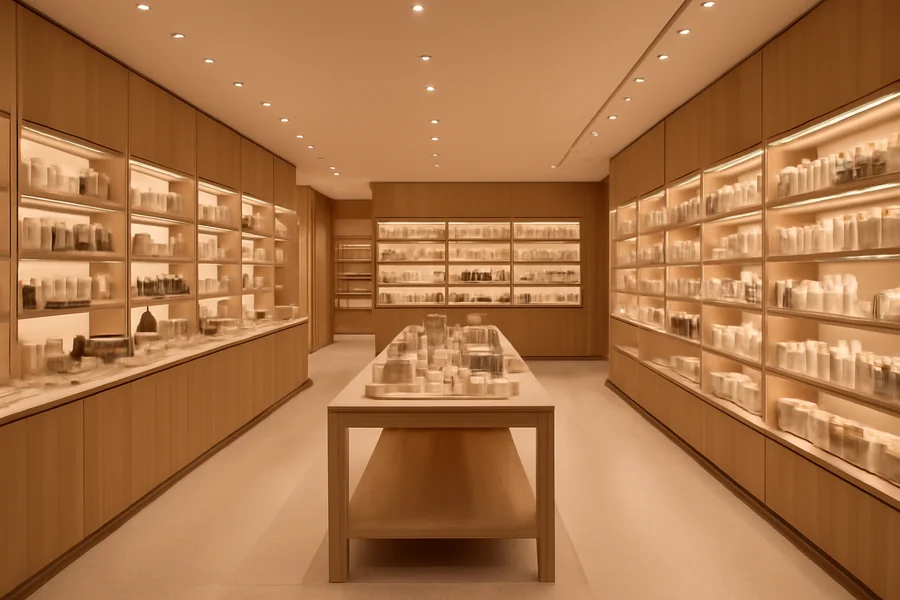
We make wall-mounted shelving with lighting, gondolas, perfume display cases and tester tables to match your product range and floor layout, and install them at night according to the mall's rules. Measurement and 3D design are free, the price is fixed in the contract, warranty 24 months.
Measurement and 3D design are free and carry no obligation · price fixed in the contract · Kaspi Instalments up to 24 months
01Types
 01
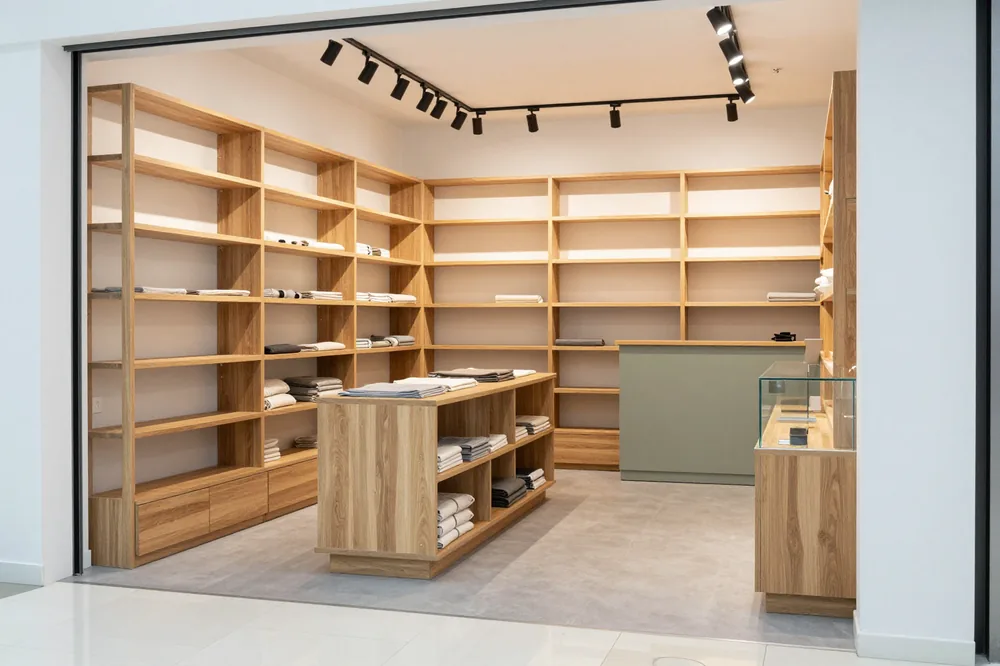
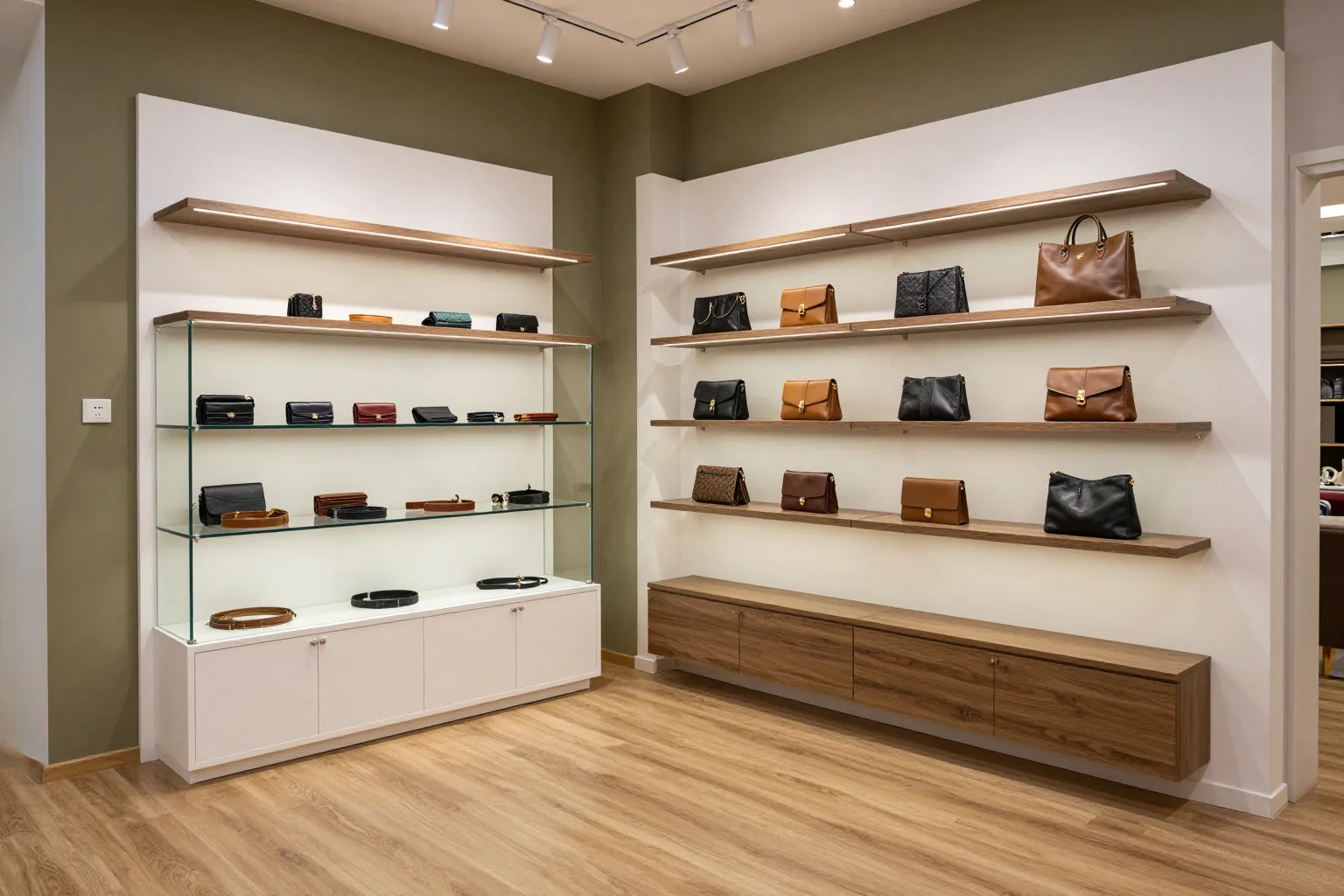
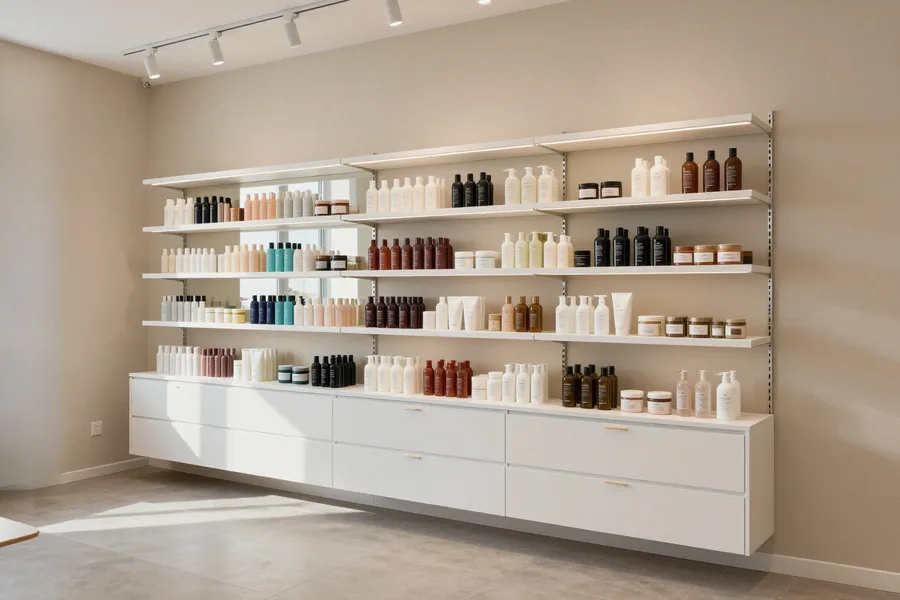
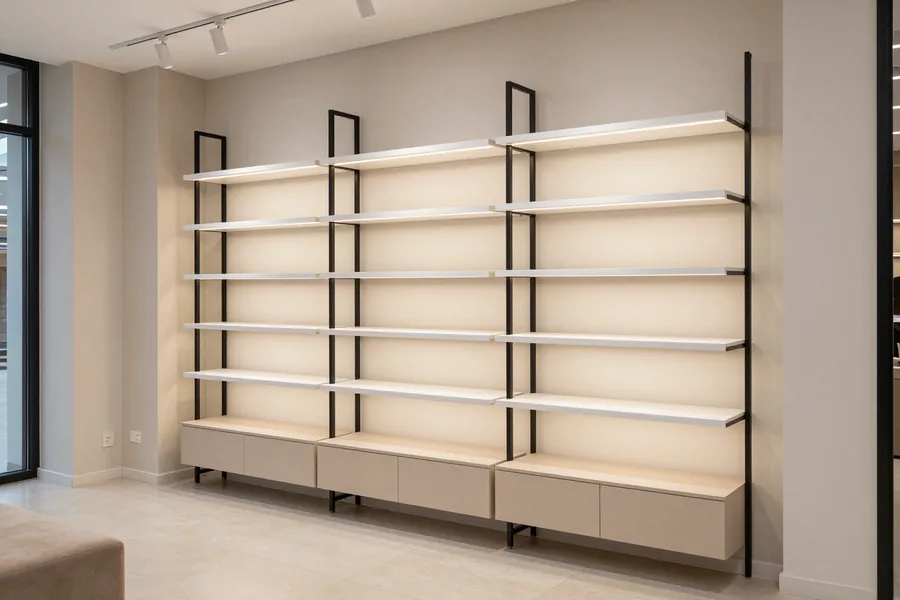
A wall section with lighting on every shelf and a mirrored back panel: bottles are visible from the entrance, and shelves can be repositioned to fit packaging height.
from 70 000 ₸
 02
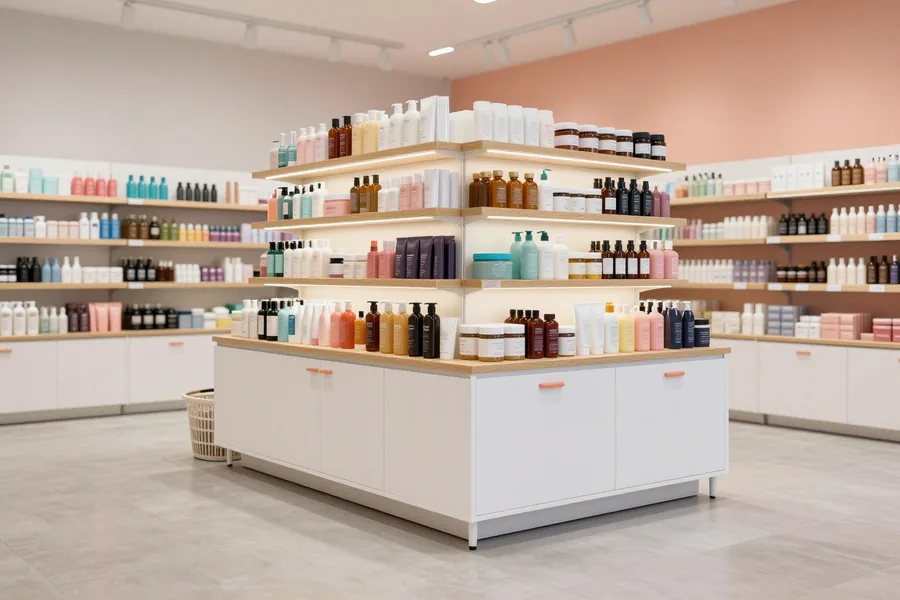
A double-sided island in the center of the hall: display on both sides, light in every shelf, and a cabinet below stores stock.
from 120 000 ₸
 03
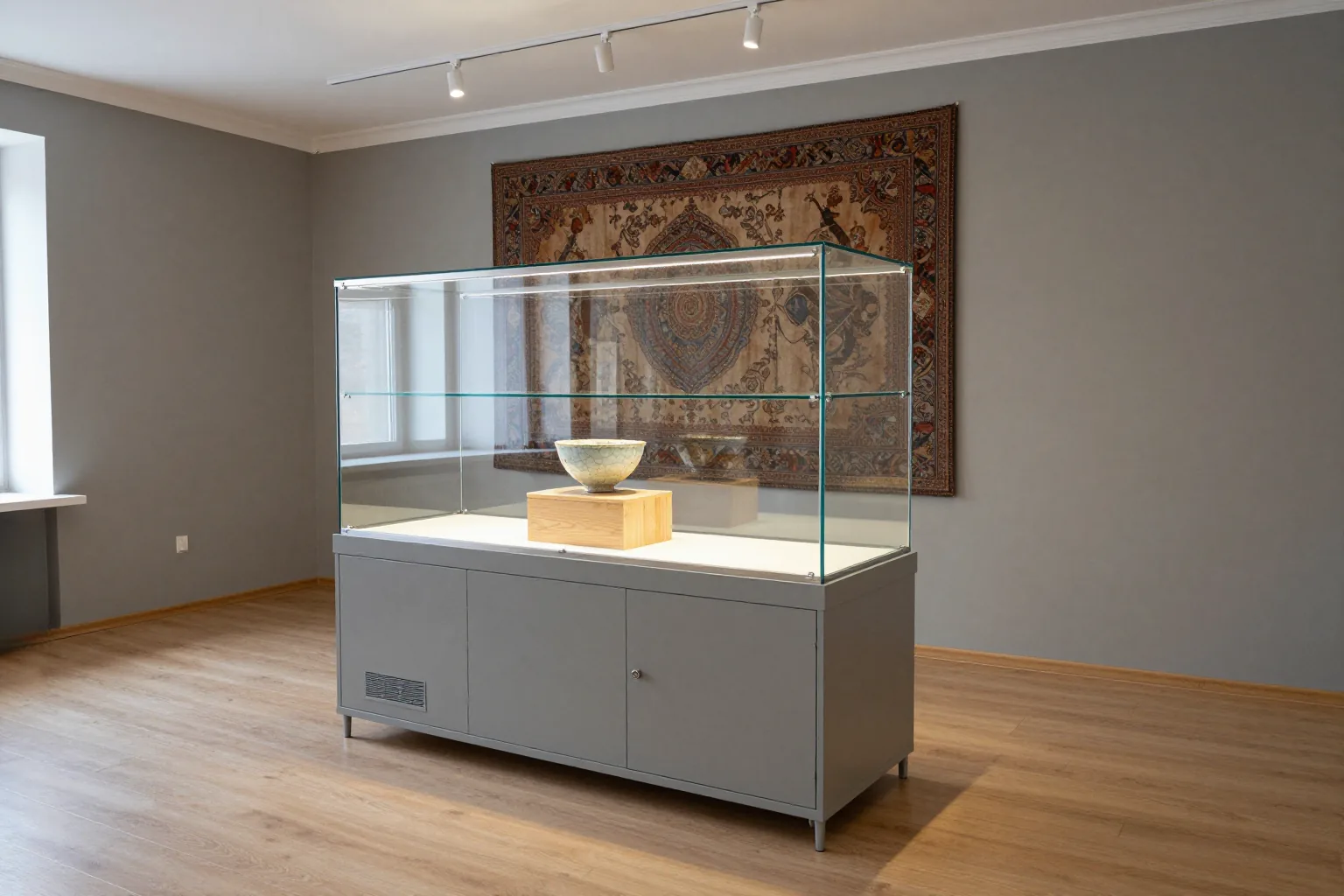
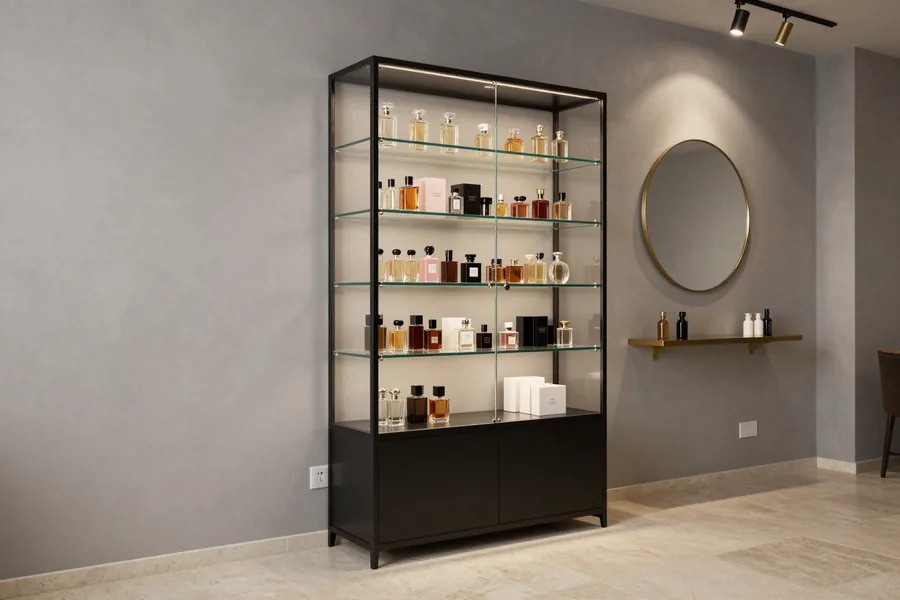
A locked tempered-glass display case with lighting — for expensive fragrances and sets that aren't put on open display.
from 110 000 ₸
 04
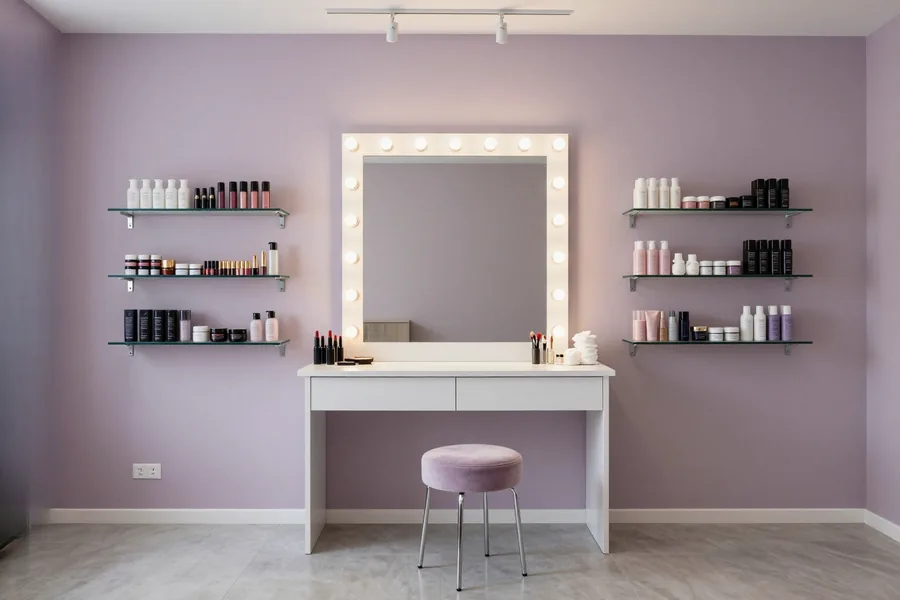
A table with a mirror and light for testers: customers try a shade right at the shelf, while drawers under the countertop hold tissues and spare testers.
from 95 000 ₸
 05
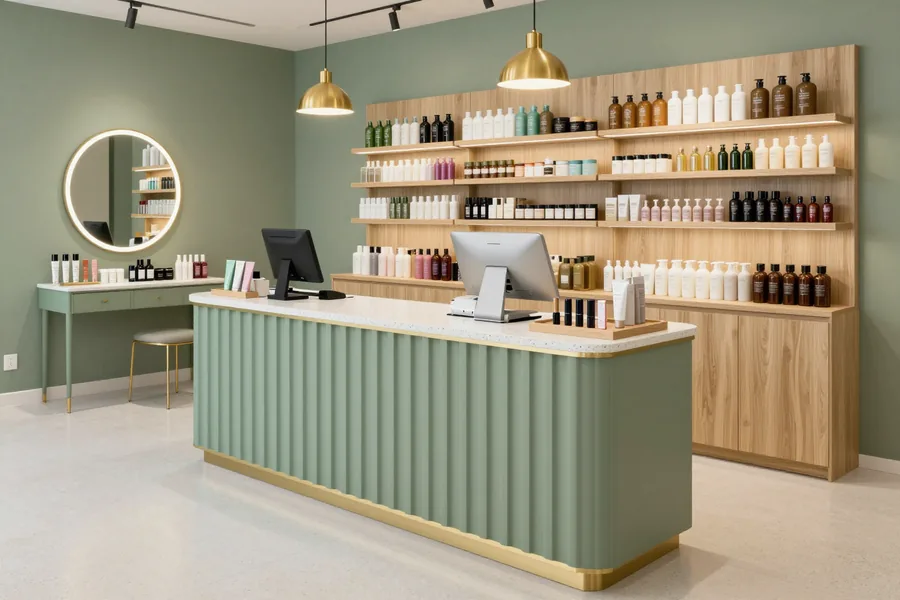
A checkout with space for a terminal and printer, lit front panel and a shelf for small items by the receipt — testers and balms are picked up right in the queue.
from 130 000 ₸
 06
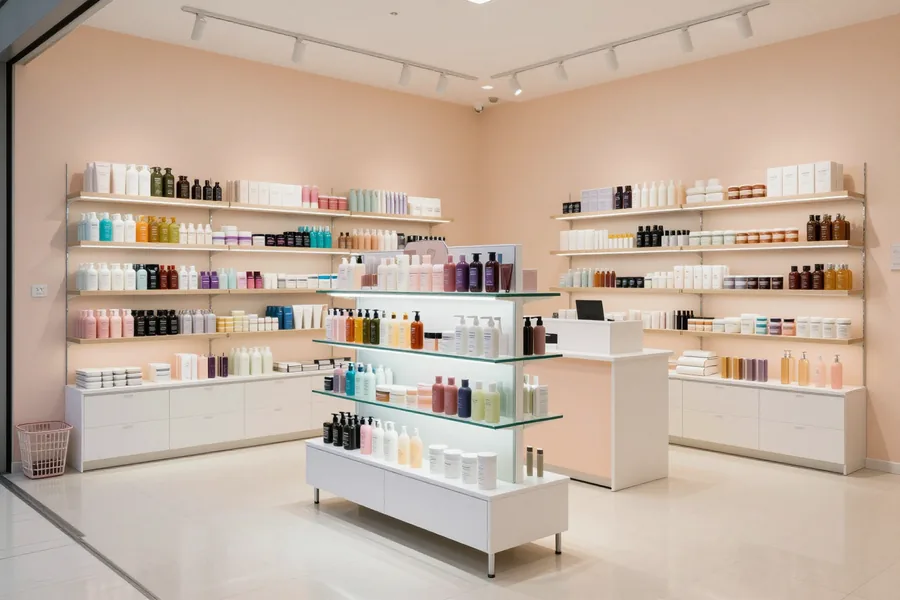
Shelving, gondolas, display cases and a checkout in one decor and one lighting scheme on a single estimate — for a new store or the next location in a chain.
from 450 000 ₸
02Projects
Site, scope, materials and lead time — per project.
 Store
Almaty
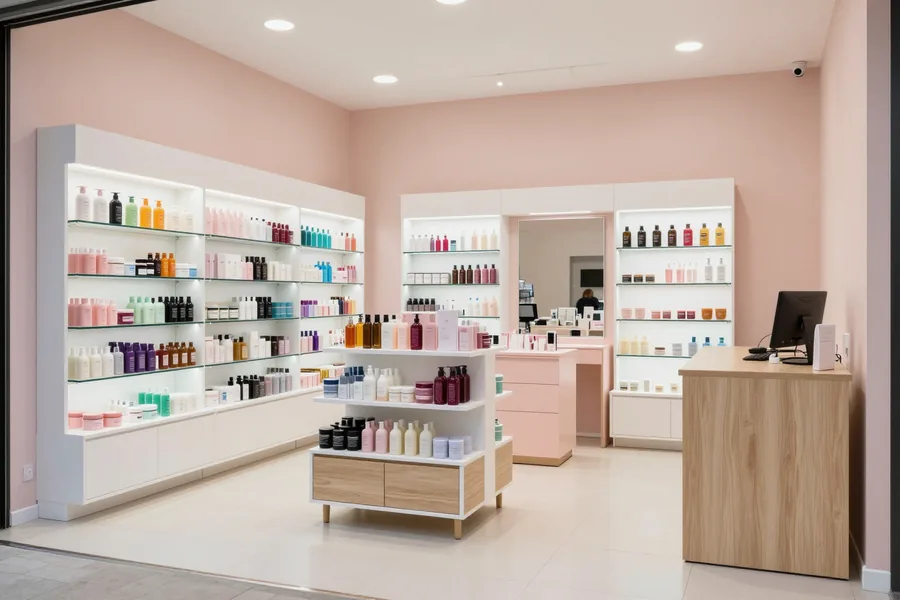
Cosmetics store: produced a full set of retail equipment — gondolas, wall-mounted shelving, a tester area, display cases and a checkout. All in the store's unified style and color, suited to the display and customer flow.
 Store
Almaty
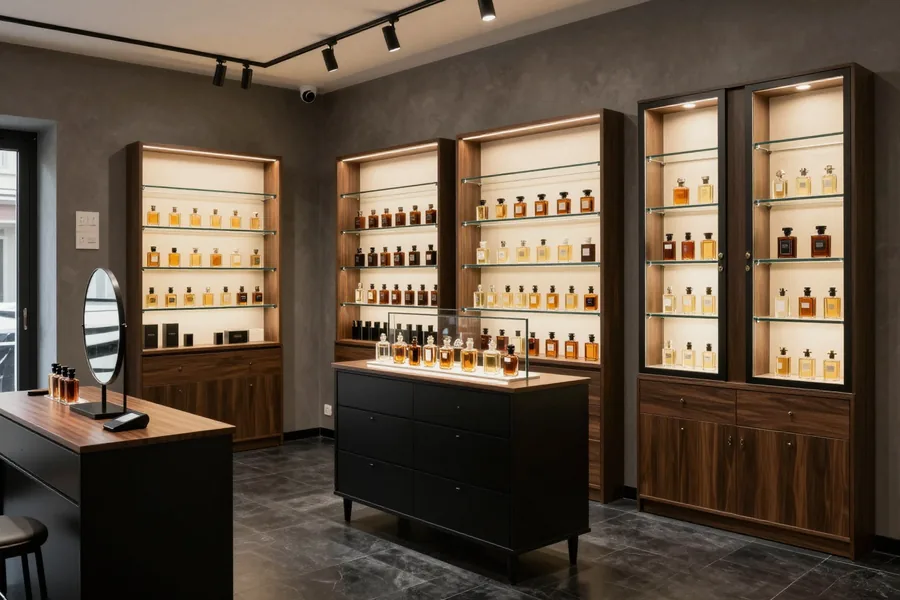
Perfume boutique: produced a full set of retail equipment — gondolas, wall-mounted shelving, a tester area, display cases and a checkout. All in the store's unified style and color, suited to the display and customer flow.
 Store
Almaty
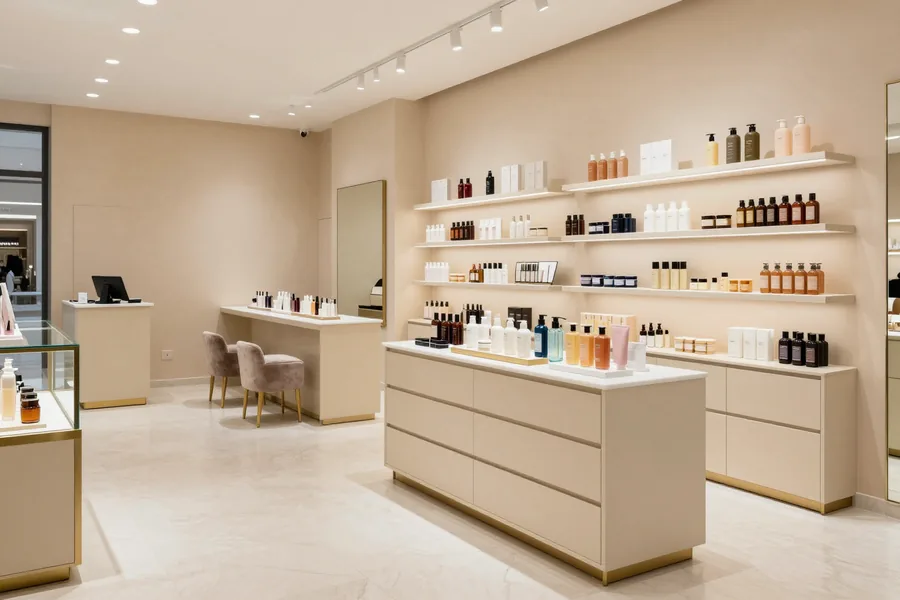
Luxury cosmetics store: produced a full set of retail equipment — gondolas, wall-mounted shelving, a tester area, display cases and a checkout. All in the store's unified style and color, suited to the display and customer flow.
 Store
Almaty
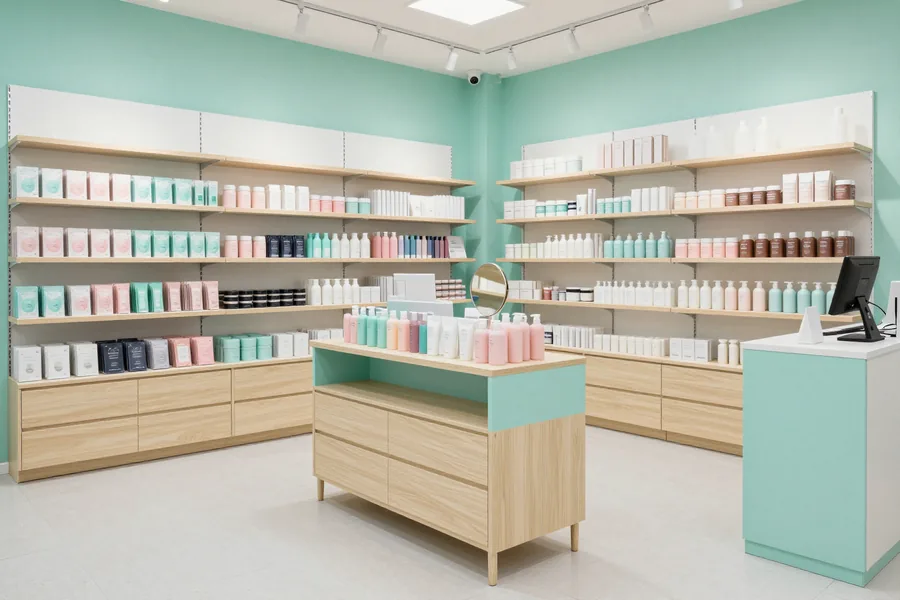
Korean cosmetics store: produced a full set of retail equipment — gondolas, wall-mounted shelving, a tester area, display cases and a checkout. All in the store's unified style and color, suited to the display and customer flow.
 Store
Almaty
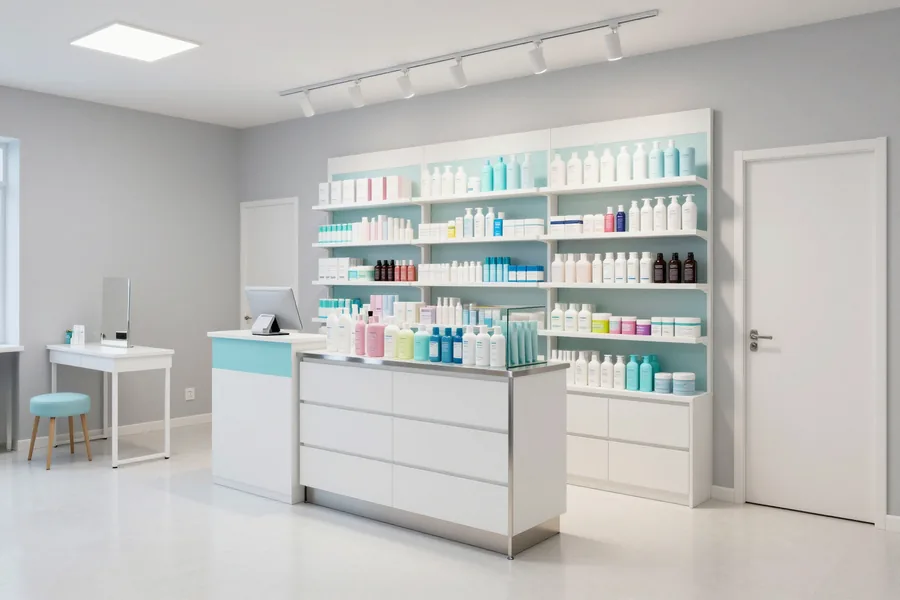
Pharmacy cosmetics store: produced a full set of retail equipment — gondolas, wall-mounted shelving, a tester area, display cases and a checkout. All in the store's unified style and color, suited to the display and customer flow.
03How we work with stores
04Prices
The "from" price is for the item in its basic configuration. Lighting, glass, mirrors and locks are confirmed at a free measurement of the hall, and the final amount is fixed in the contract before production starts.
05For legal entities
We work with LLPs and sole traders on bank transfer. Price, materials and lead times are in the contract before production begins.
Request the contract and invoice06Principles
01 / 06
07Production
Six steps in our 600 m² workshop. You can see each of them with your own eyes: the showroom and production are under one roof.
Egger · Kronospan · E1
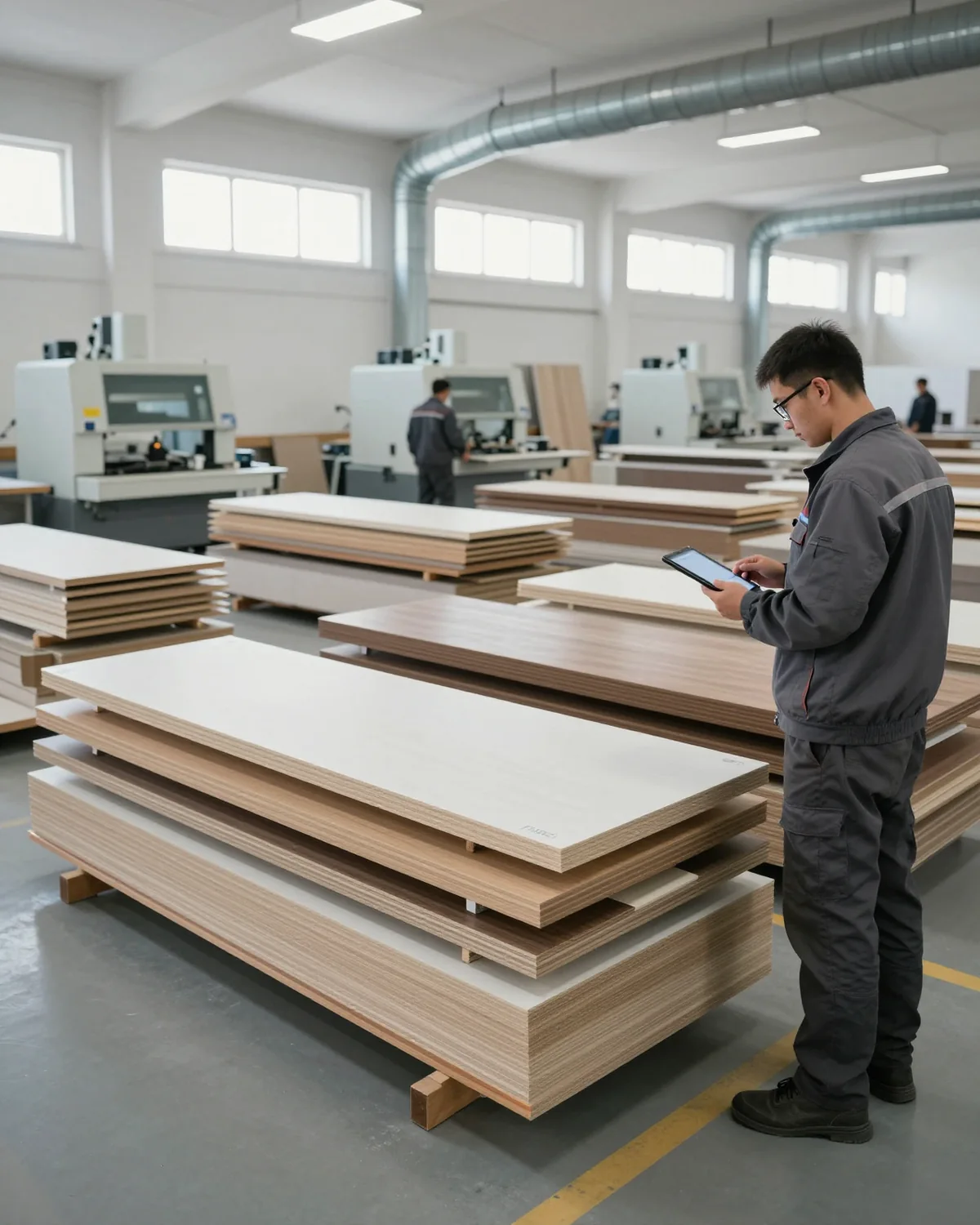
Egger and Kronospan boards of emission class E1 arrive at the workshop's warehouse. There are 40+ laminated chipboard décors, 16–18 mm thick. Class E1 — for sales floors and display cases.
Laser measuring to 1 mm
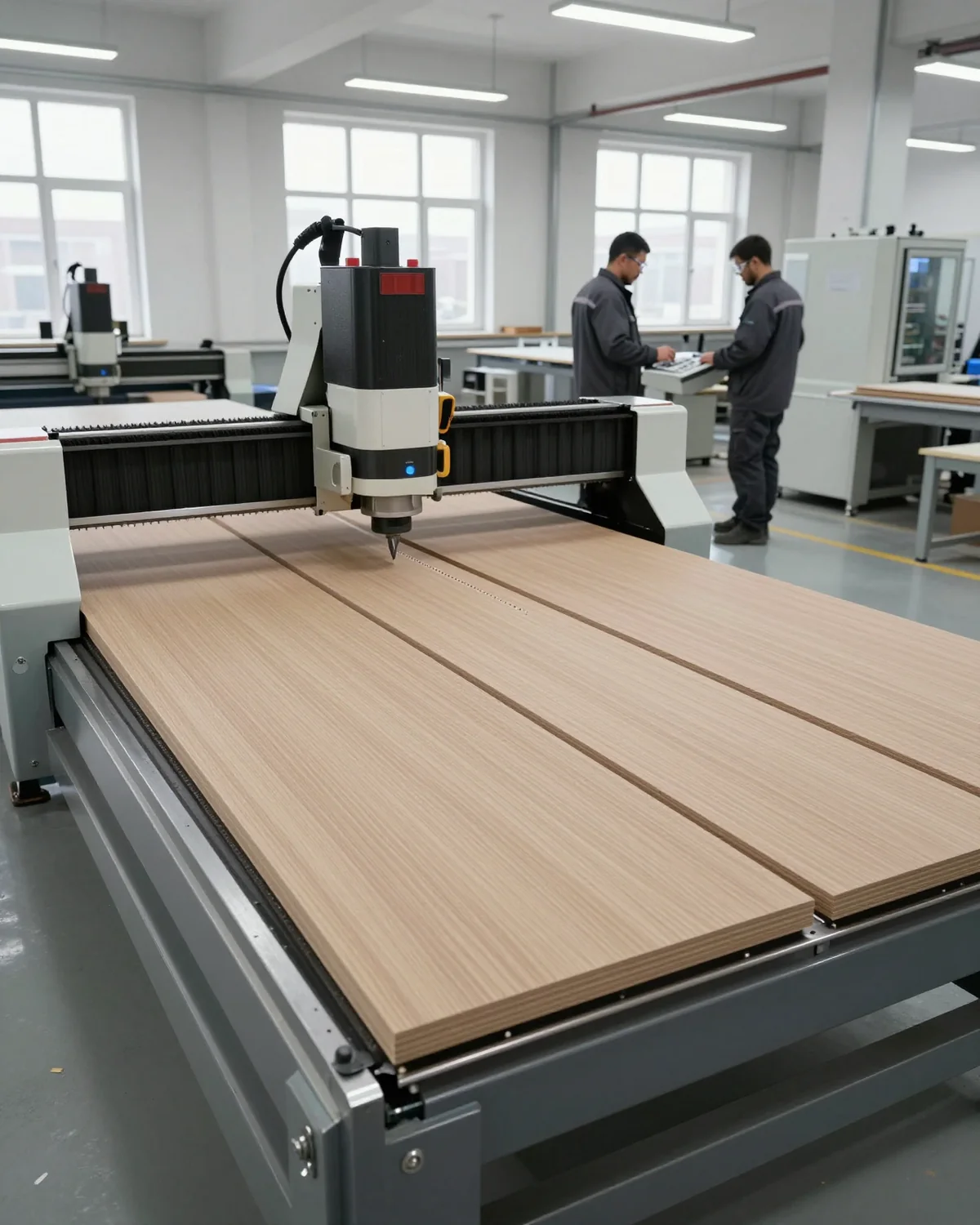
A design engineer prepares the drawings, and the machine cuts the board to them. Dimensions come from a laser measurement accurate to 1 mm.
Blum · Hettich · Boyard
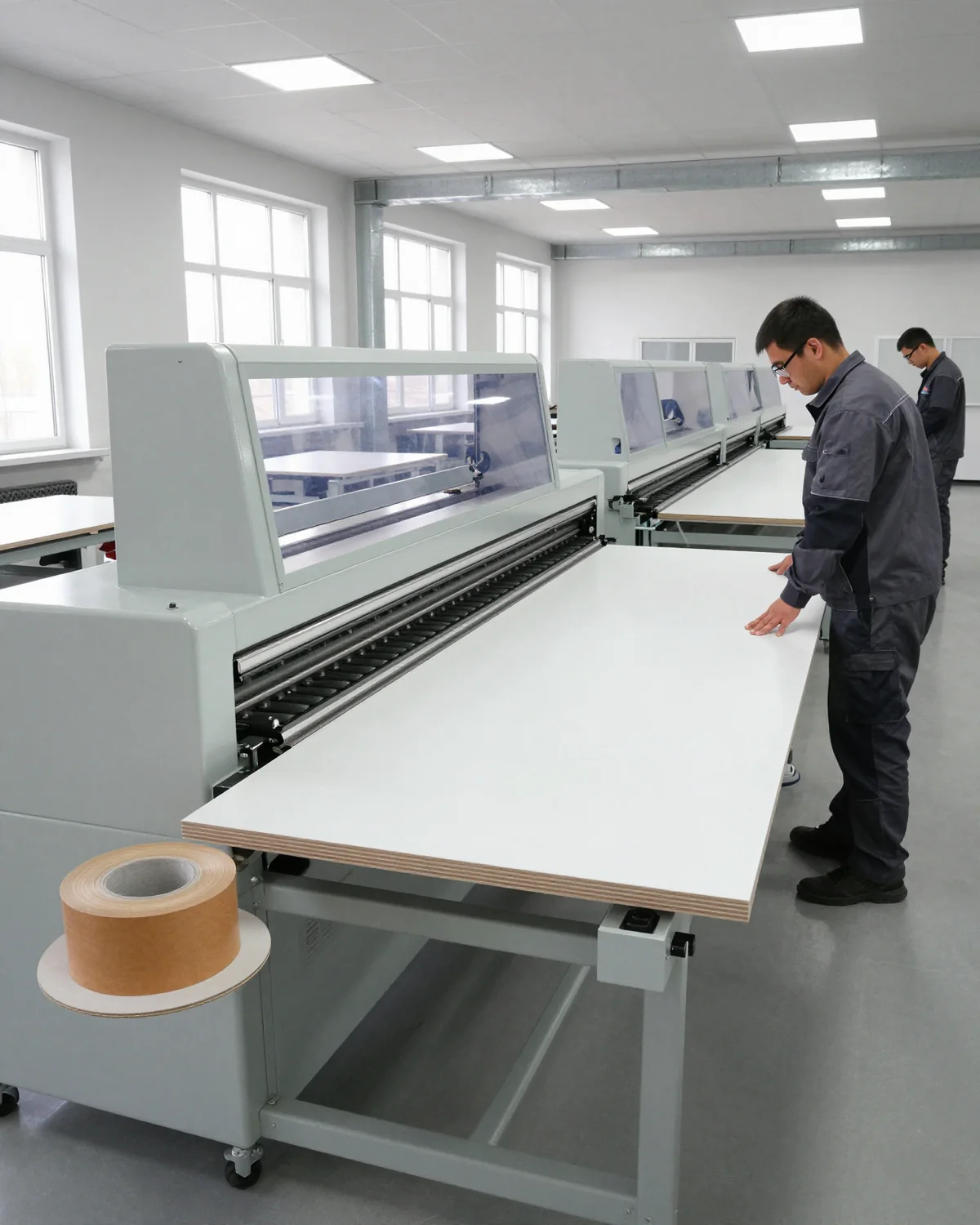
The edge-banding machine seals the edges, then we drill holes for Blum hinges and Hettich runners.
Any RAL colour
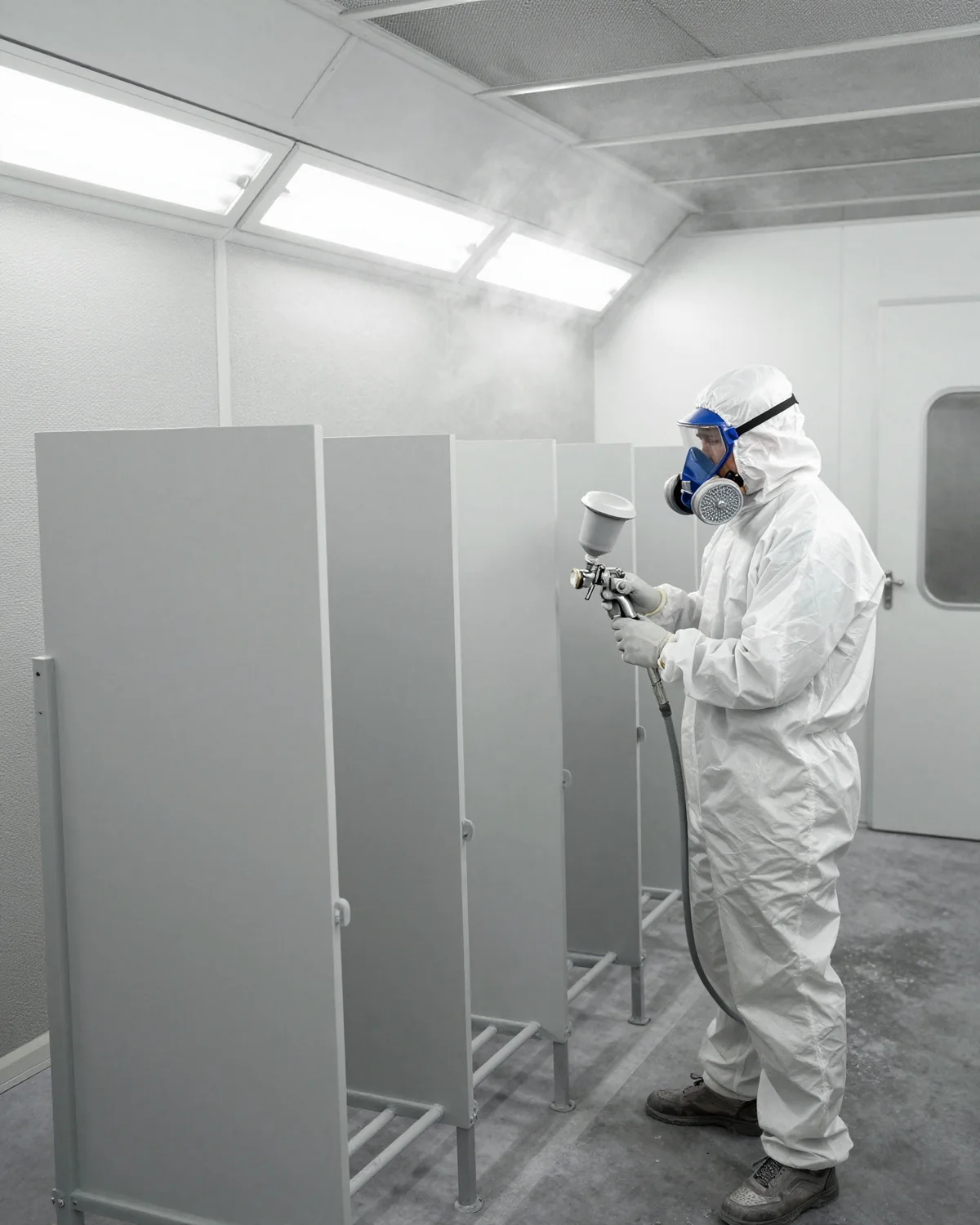
A finishing specialist paints the fronts to RAL — matt and gloss. We switch on the lighting of every shelf at the control assembly so the light runs evenly, without dark spots or a different shade in neighbouring sections.
Pre-assembly in the workshop
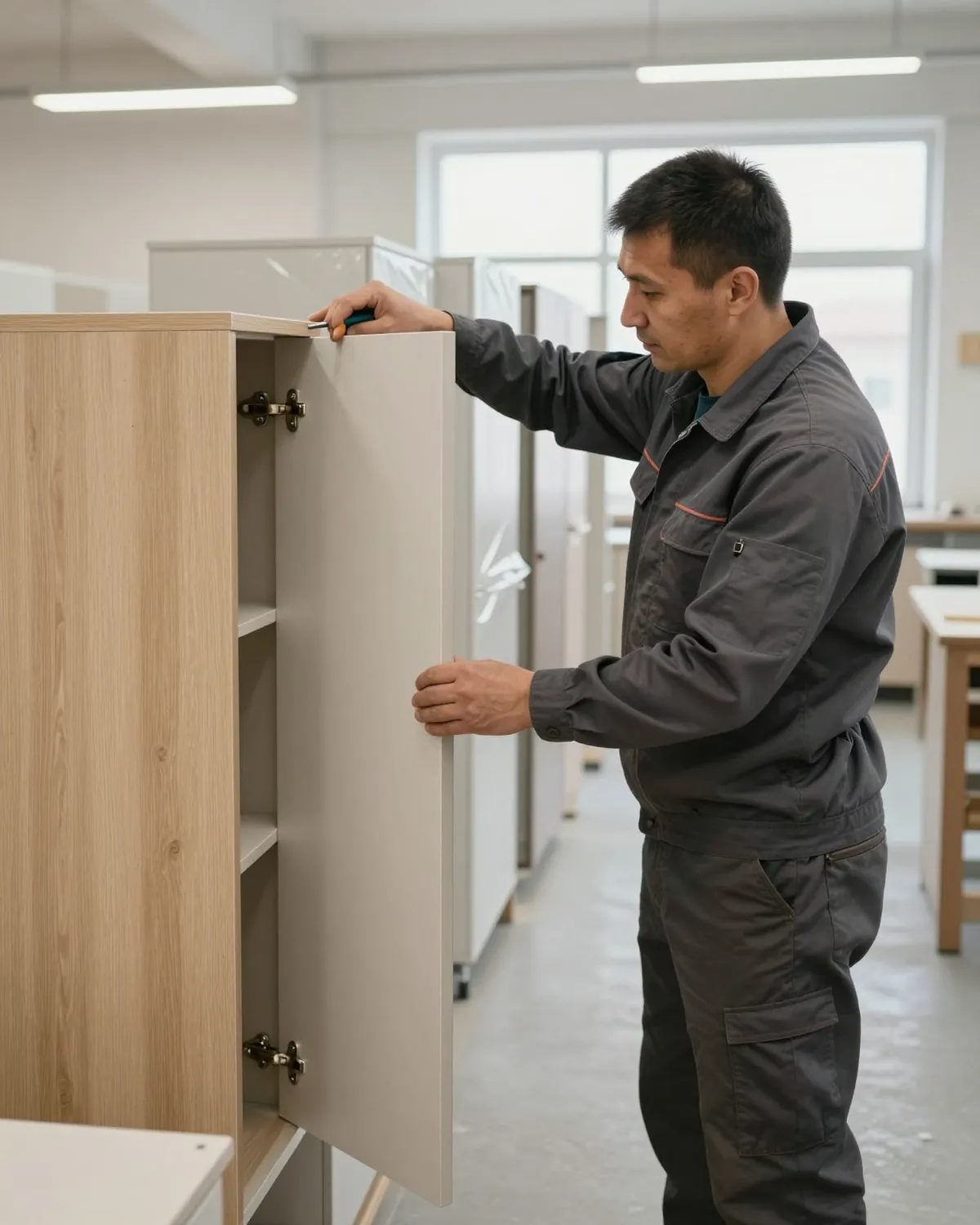
We assemble the modules in the workshop before dispatch, checking front gaps and drawer travel. The quality control department signs the item off for shipping.
Night installation according to the shopping centre's rules
We deliver, bring in, assemble in 1 day, adjust the furniture and clean up after ourselves. Warranty of 24 months from signing the certificate.
08Team
MEBLIX workshop craftsmen who make and assemble furniture to order.
01 / 07Furniture assembly carpenter11 years
★ 4.81 · 47 ratings

Cabinet furniture repair craftsman20 years
★ 4.99 · 73 ratings

Furniture and kitchen unit assembler23 years
★ 4.97 · 300 ratings

Made-to-order furniture maker7 years
★ 4.26 · 32 ratings

Furniture maker5 years
★ 4.23 · 30 ratings

Joiner and carpenter20 years
★ 5.0 · 113 ratings

Furniture front and hardware fitter17 years
★ 4.61 · 92 ratings
09FAQ
Didn’t find the answer? Message us — a manager replies, not a bot.
Ask on WhatsAppFor cosmetics we install a high colour-rendering LED strip in an aluminium profile under every shelf. This way the shades of foundations and lipsticks look as they do in daylight, and the strip doesn't heat the bottles.
Yes, we paint MDF fronts with enamel in the required shade, and choose the carcasses from Egger and Kronospan laminated chipboard décors. We agree the colour sample before production starts so that the new outlet matches the others.
We place expensive fragrances in a tempered glass display case with a lock and lighting. The bottles stay visible, but they can only be taken out together with a consultant.
Gondolas, racks and display cases are made at different times, so the lead time for each item is shown in the price list on this page. We adjust the workshop schedule to your store opening day: rush orders are possible, discuss the date with the manager during the measurement.
Yes, we equip cosmetics outlets in shopping malls without stopping sales: the crew works after the mall closes or on weekends, as the administration requires. In the morning, all that's left is to arrange the goods on the lit shelves.
A wall rack for cosmetics with lighting and a mirrored back panel is in the price list above on this page. The final cost depends on the height and the number of shelves and drawers, and is fixed in the contract after measuring.
Yes, for small items we make closely spaced shelves, raised edges and slanted trays. Rows of bottles and tubes stand straight and don't fall, even when customers take them off the shelf.
Sure: we make both a single item and a whole hall — from one rack to outfitting a chain of outlets. Modules in the same finish are easy to reorder later, and we keep the drawings.
Yes, companies and sole proprietors sign a contract and pay by invoice via bank transfer: half before production, the other half after signing the acceptance certificate. We hand over the certificate and the delivery note together with the finished hall.
The 24-month warranty under the contract covers carcasses, fronts, coatings and assembly, counted from the acceptance certificate. Blum hinges and runners also carry the manufacturer's 25-year warranty.
10Reviews
4,9
average rating
on Google and Zoon
Everyone can see a review on the platform: this is how other people check whom to trust with an order. If something went wrong, write to us and we will reply within 1–2 business days.
Message us on WhatsApp11Article
We make furniture for a cosmetics store to match the assortment and the layout of the sales floor: wall shelving with lighting, illuminated gondolas, locked display cases for perfume, tester tables with mirrors, and checkout counters. Measurement and 3D design are free and take 1–2 days, we install in shopping centers at night, and the warranty is 24 months under the contract.
Skincare products, decorative cosmetics, and fragrances sell differently: some need an open shelf, others a mirror and a tester, and still others locked glass. This is what determines the set of items on the sales floor.
A cosmetics sales floor sells small items that the customer wants to examine, compare by shade, and try, so the equipment here is brighter and more granular than in a grocery or shoe store. A palm-sized bottle gets lost on a deep shelf, and an eyeshadow palette looks gray without light. That is why we design furniture for a cosmetics store with shallow shelves, lighting on every tier, and mirrors where the customer tries the product. At the same time, stock does not go off to the warehouse: the lower drawers of shelving and the cabinets of gondolas keep boxes next to the display. Over 13 years of work, we see one pattern: it is more convenient to start the list of items not from the catalog but from the list of product groups and the number of SKUs in each of them.
| Product group | Main item | What matters |
|---|---|---|
| Face and body care | wall shelving | adjustable shelves, stock in drawers |
| Decorative cosmetics | illuminated gondola | light in every shelf, cells |
| Samples and testers | tester table with mirrors | mirror lighting, drawers |
| Perfumery | display case with glass and lock | tempered glass, spot lighting |
| Small items by the checkout | checkout counter with display case | goods within arm's reach |
We calculate the number of sections from the number of SKUs and the package size, not from the floor area. The owner sends a list of product groups, the approximate number of SKUs, and the height of the largest bottles, and the technologist lays them out by tiers and gets the display length. From this it is clear how many wall sections are needed and how much product will go to the islands. We place shelving for a cosmetics store along the walls up to a comfortable arm's height, and above that we put stock or an illuminated brand sign. For a chain, we calculate one sales floor and repeat the same modules for the next locations: one estimate and one contract for the entire scope. A list of goods with dimensions speeds up the calculation: without it, the project has to be redone after the first display, and that means extra weeks before opening.
Light decides whether the shade of a foundation or lipstick on the shelf matches what the customer sees on her skin at home. A mistake with light leads to returns and a loss of trust in the product.
General hall lighting falls from above and leaves shadows between tiers, while lighting under each shelf illuminates the product itself. Upper shelves under ceiling fixtures look brighter, lower ones fall into semi-darkness, and products there sell worse, even if the customer needs them more. Cold light makes foundation look greyish, too warm light makes it yellow, so for cosmetics a neutral temperature and a high-CRI strip are chosen. A mirrored or light-colored back panel of the section reflects light and makes the shelf visually deeper. Lighting above the tester zone deserves separate thought: there the customer looks at her own face, and shadows under the eyes from an overhead fixture spoil the impression of any product. Good lighting evens out the shelves, and the hall looks equally bright from the entrance to the checkout.
We place the LED strip in an aluminum profile on the front edge of the shelf or in a groove of the back panel. The profile acts as a heatsink and draws heat away, so creams and perfumes on the shelf don't heat up and the strip lasts longer. The profile's diffuser hides the individual LED dots, and glossy packaging shows no chain-of-lights glare. We design cosmetics shelving with concealed wiring from the start: the cable runs into the upright, the power supply sits in the plinth, and it can be replaced without disassembling the section. We make switching common for the hall or by zones, so in the evening only the display by the entrance stays lit. We check the lighting of each section at a control assembly in the workshop, before it ships to the site.
Nail polishes, lipsticks and minis fall off wide shelves, and expensive bottles attract more than just customers. This calls for different solutions for open and closed display.
We set the shelf spacing based on the tallest packaging in the row plus clearance for the hand, so the customer can take a bottle without touching the shelf above. For nail polishes and lipsticks we make frequent tiers with a low front lip, for creams in jars — sparser shelves, for shampoos and body products — lower tiers with reinforced support. We mount shelves for a cosmetics store on adjustable brackets: the assortment changes by season, and the salesperson, not the craftsman, should be able to move a tier. Inclined trays with a lip bring small items face-on to the customer and keep them from rolling off. We keep shelf depth shallow: goods in the third row are no longer visible and sit unsold. Neat rows on a shallow shelf stay tidy longer, even at peak hours.
| Solution | Which products | Pros | Cons |
|---|---|---|---|
| Open shelf | skincare, mass decor | customer takes it themselves | rows need supervision |
| Inclined tray | nail polishes, lipsticks, minis | products face the customer | holds less |
| Locked glass display case | expensive perfume, sets | products are protected | needs a consultant |
| Display case at the checkout | small items for impulse buys | visible in the queue | limited volume |
We place expensive fragrances in tempered glass display cases with a lock and lighting, so the bottle is visible but only reaches the customer's hands through a consultant. Tempered glass is stronger than ordinary glass and, when struck, shatters into small blunt pieces, making such cases safer in a busy hall. We fit the lock to the door or sliding panels, and the key stays with the salesperson. Spot lighting in the case highlights the facets of the bottle, and a mirrored back panel shows the packaging from all sides. We put testers of the same fragrances on an open shelf nearby, so the customer tries the scent themselves and asks to open the case once they have made a choice. Corner glass display cases at the end of a shelving unit use space that is usually wasted and add another lit point on the customer's route.
The tester area and checkout set the customer's route through the hall. Their location determines whether a person reaches the far wall and how much they pick up before paying.
A tester table gathers samples in one place with a mirror and good lighting, so the display on the shelves stays clean and complete. A customer applies foundation or lipstick, sees the result in the illuminated mirror, and immediately finds the right shade on the neighboring shelf. We make such tables from MDF in enamel with mirrors and drawers under the countertop: the drawers hold tissues, sponges, and spare testers, not boxes on the floor. A tester island with drawers is placed in the center of the hall if several people will be trying products at once; the wall-mounted version is for narrow spaces. We cover the countertop with a finish that washes off mascara and powder with ordinary damp cleaning. It is more convenient to place the tester table closer to the color cosmetics rather than at the entrance, where there is always a draft and people crowd.
A checkout counter with a small display case adds purchases while the customer waits for the receipt: a lip balm, a miniature fragrance, or a nail file lands in the basket at the last moment. We design the counter with space for a terminal, receipt printer, and cash drawer, and route the wires into a cable channel inside the carcass. The front part of the counter serves as display shelves for stores with small goods: clear acrylic or glass, lighting, and a lip so nothing slides off. We calculate the countertop height for the salesperson's height and the convenience of the customer who sets down a bag. For a chain, we make identical counters so salespeople at any location find everything in the usual place. Small items at the checkout should be within the customer's outstretched arm, otherwise they simply go unnoticed.
Surfaces in a cosmetics hall are washed every day, and traces of foundation, oils, and lacquer appear on them constantly. The material must withstand this for years and not lose its color.
We make the carcasses from E1-class Egger and Kronospan laminated chipboard 16–18 mm thick, and the fronts, gondolas and checkout counters from enamel-painted MDF. Laminated chipboard holds its shape under the weight of bottles and does not sag on a shelf of reasonable length, while the 2 mm PVC edge protects the ends from moisture and knocks from boxes. Enamel on MDF gives an even colour with no pattern, can be matched to a brand shade and touched up if needed. We make shelves and display cases from tempered glass in an aluminium profile, and we fit mirrors on tester tables and in the backs of sections. Cosmetics furniture made from these materials wipes clean easily and keeps its look for a long time. We assemble stock drawers on Blum, Hettich or Boyard runners: with a full drawer, a sales assistant opens them dozens of times per shift.
We lock in the brand colour with an enamel sample and a laminated chipboard decor number before production starts, and we agree the sample with the owner in daylight. Signature pink or milky shades look different on a monitor screen and on a painted front, so we treat the physical paint sample as decisive. For carcasses we choose decors from the permanent Egger and Kronospan collections so they can be ordered again a year later. We keep the drawings, decor numbers and enamel recipe, so the second and third locations in the chain get the same shelving and gondolas. Each new location is fitted out under one estimate and one contract, and identical modules can be reordered later. That way a customer recognises the chain's store in any shopping centre.
The path from floor plan to first sale consists of measurement, design, production and installation. Each stage can be handled so that the store does not lose working days.
In our 600 m² workshop we cut laminated chipboard and MDF, seal the edges with PVC banding, finish the fronts with enamel, and install lighting and mirrors. Measurement and a 3D layout project are free and take 1–2 days, so production starts from a clear plan where every gondola and aisle is visible. Every item goes through a test assembly: we switch on the lighting on all shelves, check the locks on the display cases and load the shelves before disassembling the item for shipping. Lead times depend on the item and the material, and for each option they are stated in the price list on this page. For legal entities we work under a contract and invoice: companies and sole traders pay by bank transfer, half before production and the rest after the acceptance certificate. The estimate and the contract fix the price before the start, so the amount does not change during the process.
In shopping centres we install at night or at weekends according to the mall's rules and the store's schedule, so the shop never closes during working hours. We agree the access time, passes and unloading area with the management in advance, and we bring the items disassembled so they can be carried through the service corridors. Installation is done by our own team, who know the construction from the test assembly, so the sections go into place without on-site adjustments. After installation we switch on the lighting zone by zone and show the sales staff how to rearrange the shelves. We sign the acceptance certificate after installation, hand over the delivery note with it, and the 24-month warranty under the contract counts from that date. The team removes the waste and packaging themselves and leaves the floor around the islands clean. In the morning the staff only have to arrange the goods on the lit shelves and open the floor on time.
A successful cosmetics floor rests on three things: honest light on every shelf, display tailored to the size of the packaging, and protection for expensive goods. The rest adapts to the assortment.
12Calculation
Select the item type, quantity, carcass and fronts in the calculator — the calculation will go to the manager on WhatsApp, who will check it against the floor plan and send you an estimate.
13Retail furniture
We make shelving, display cases, counters and cash desk areas for your goods and floor layout, and install at night so your store never has to close.
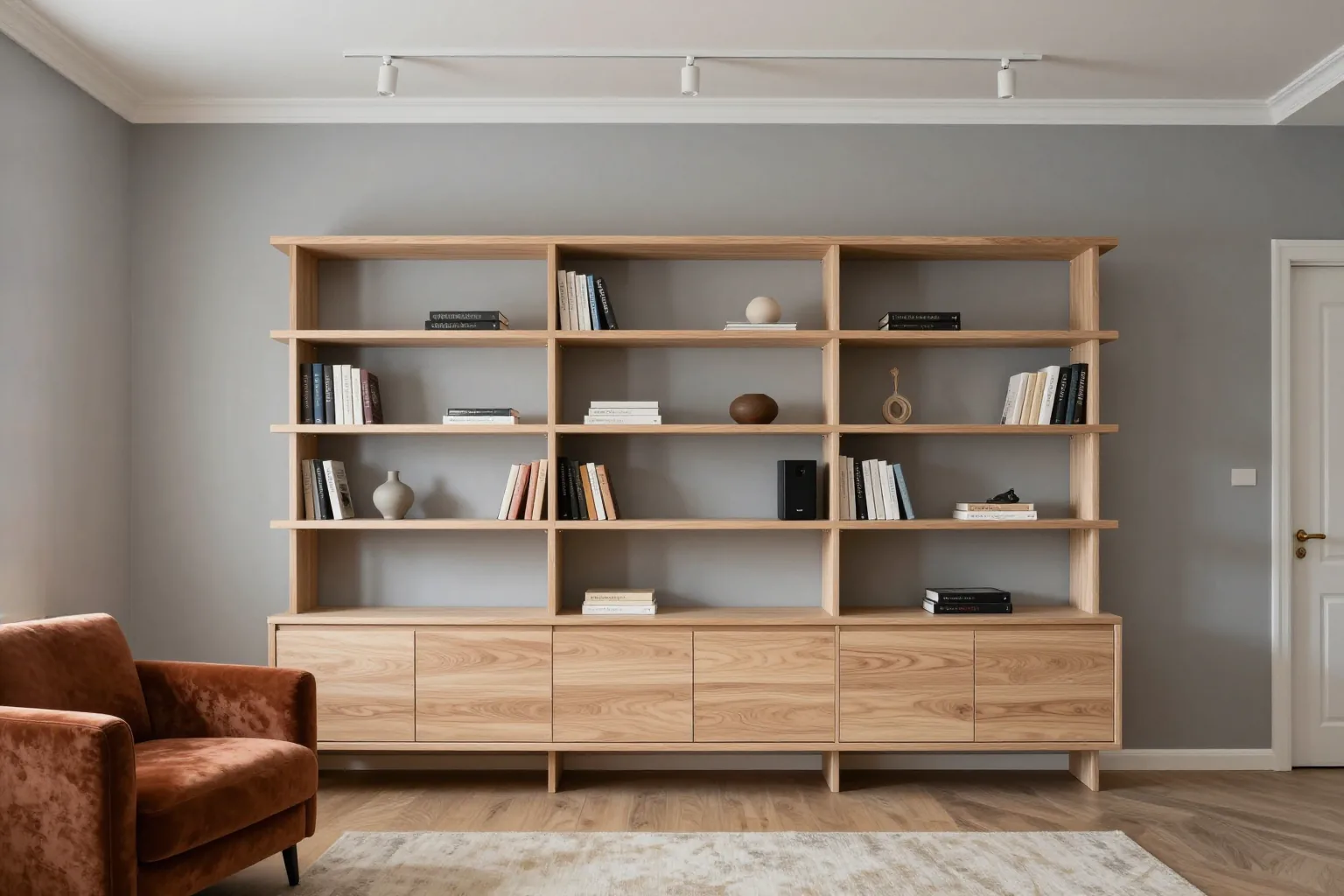
We make shelving for your goods, stockroom or niche: shelf spacing, depth and frame are calculated from the weight and size of what goes on them.
We make wooden shelving to the size of your wall, niche or opening: we select the wood species, shelf thickness and finish for what goes on them.
We make wall-mounted, island and tall display cases for your goods: tempered glass, locks and lighting that doesn't dazzle the customer.
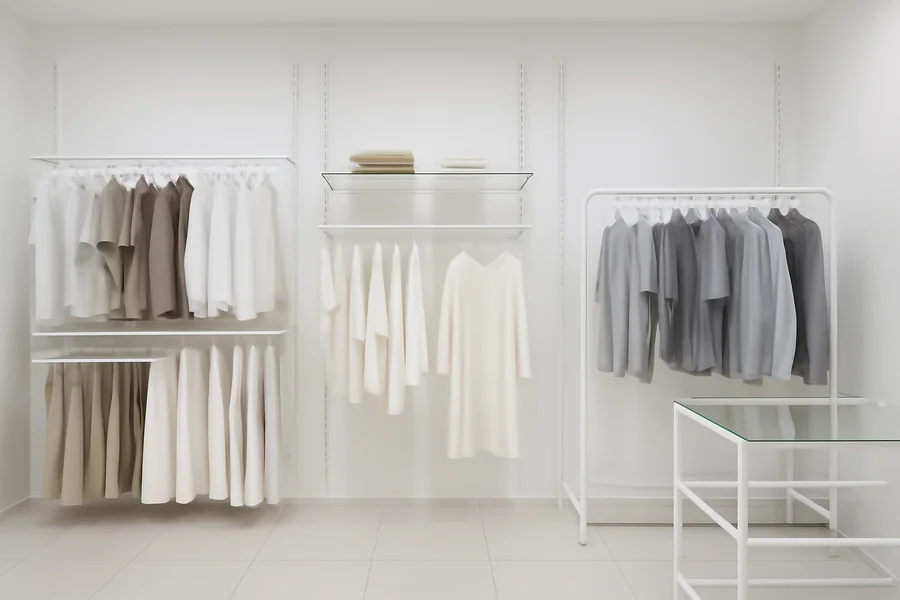
We make rails, gondolas, knitwear shelving, fitting rooms and cash desks for your assortment and boutique layout, and install at night so your store never has to close.
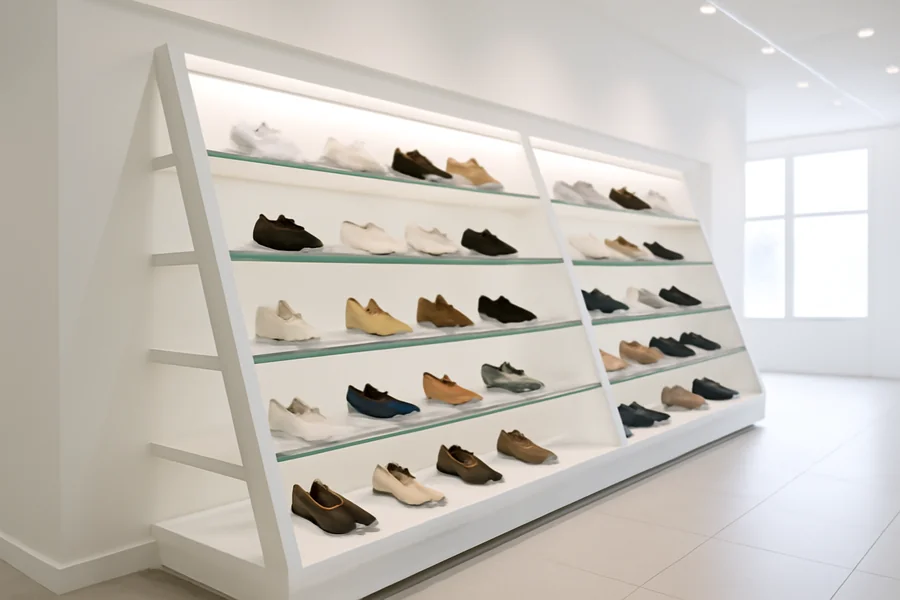
We make slanted shelving, island displays and fitting benches for your footwear assortment and floor layout, and install at night in shopping malls.
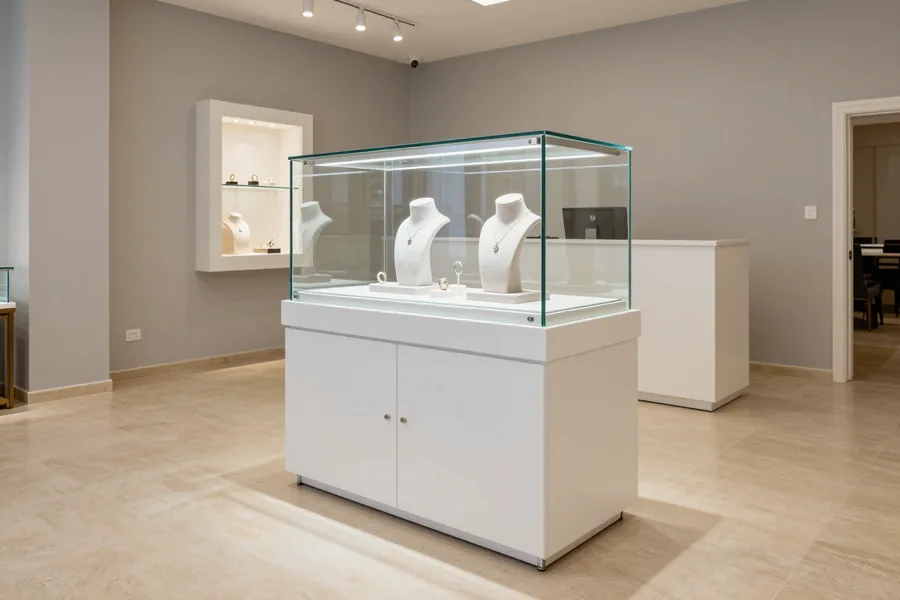
We make counters, island and wall display cases for jewellery: tempered glass, a lock on every door and spot lighting that makes the stones sparkle.
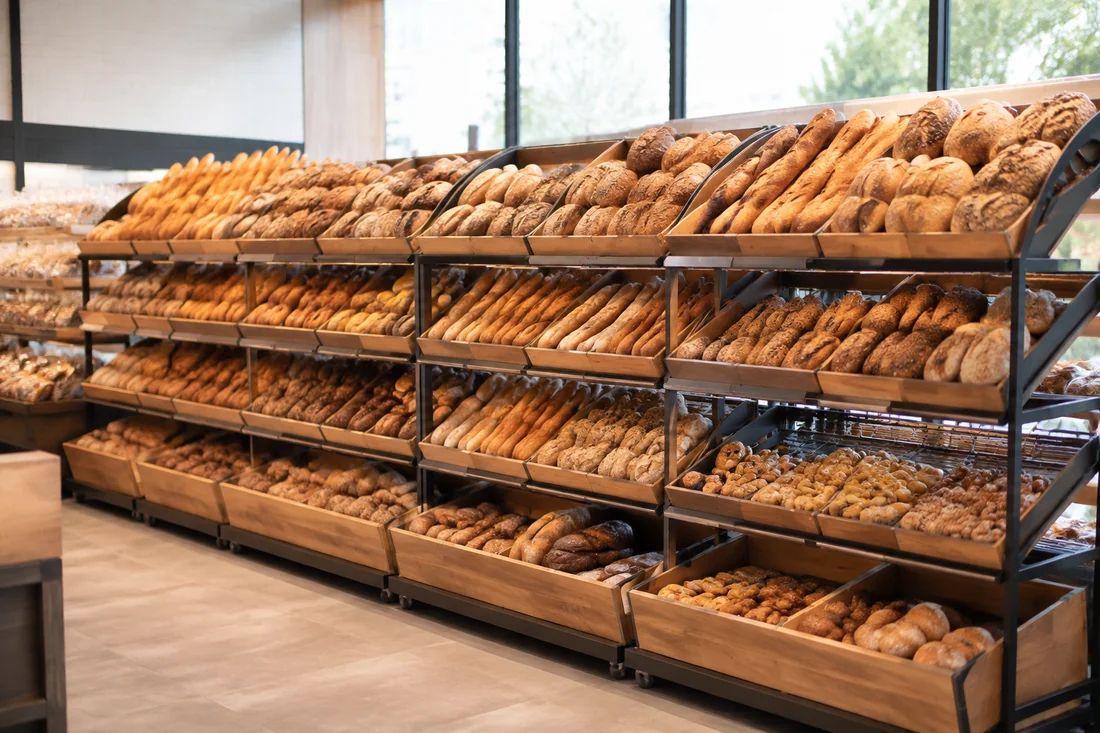
We make slanted shelving, shelves with trays and island display cabinets for a bakery or bread department assortment, with a finish suitable for contact with bread.
We make wooden shelving for the sales floor: solid pine, oak and ash hold displays for years, and we calculate the shelves for the weight of your goods.