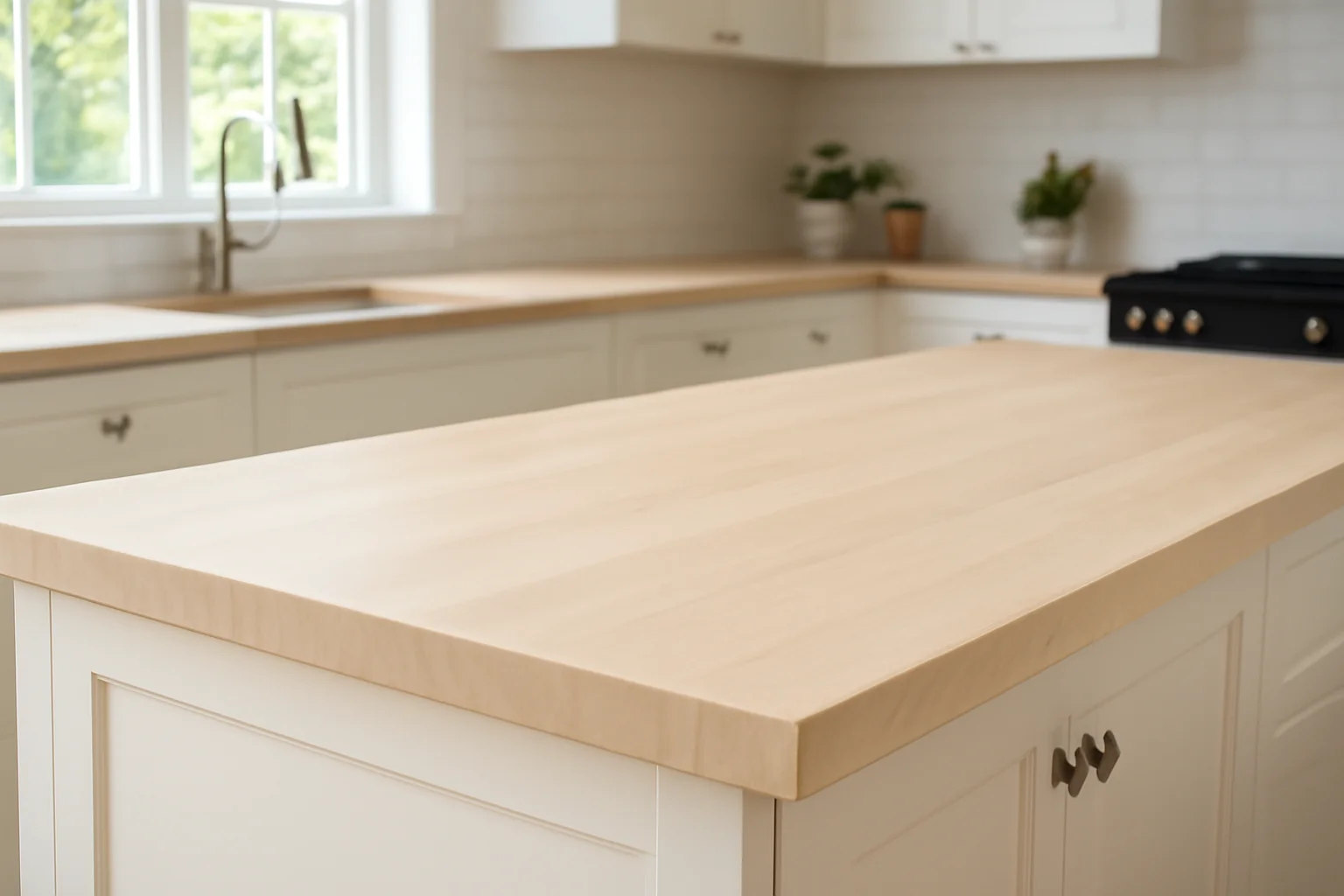
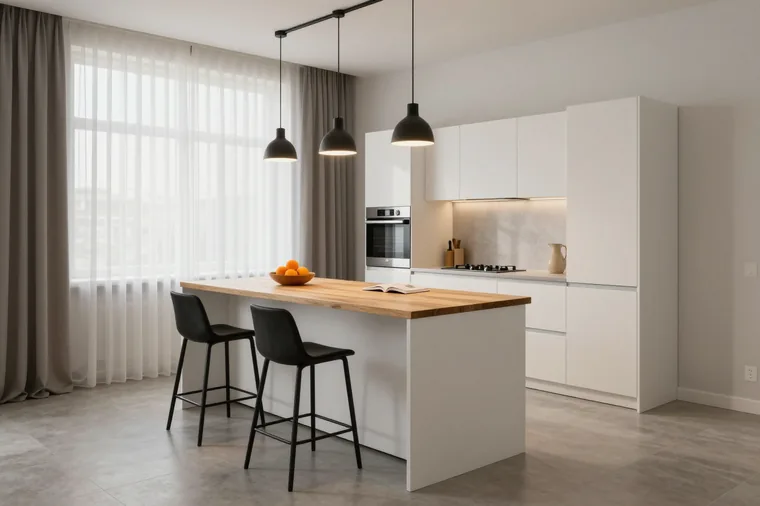
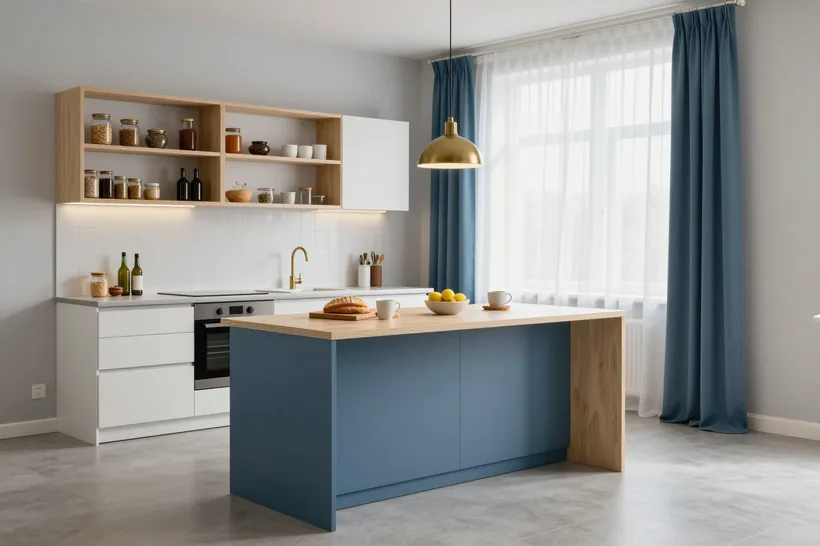
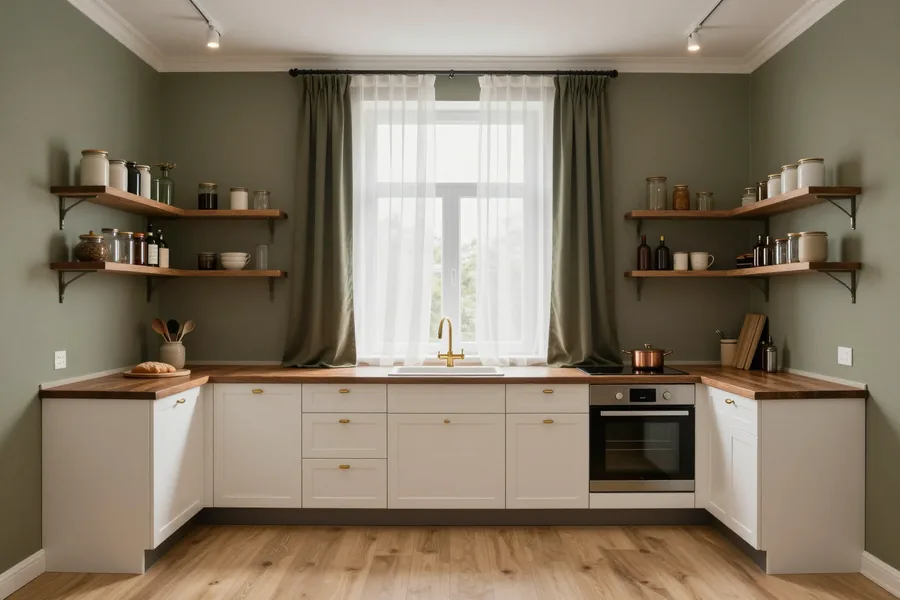
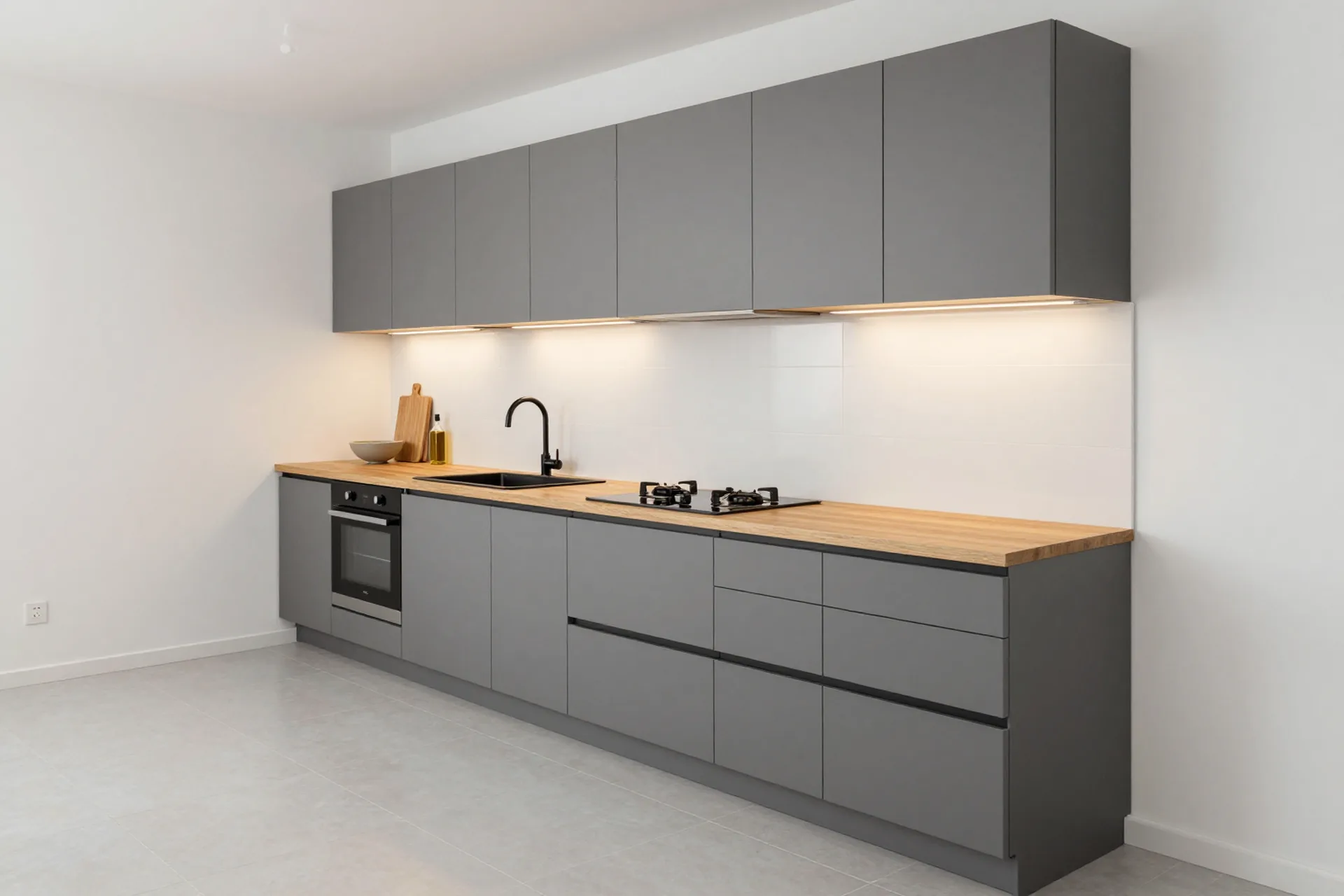
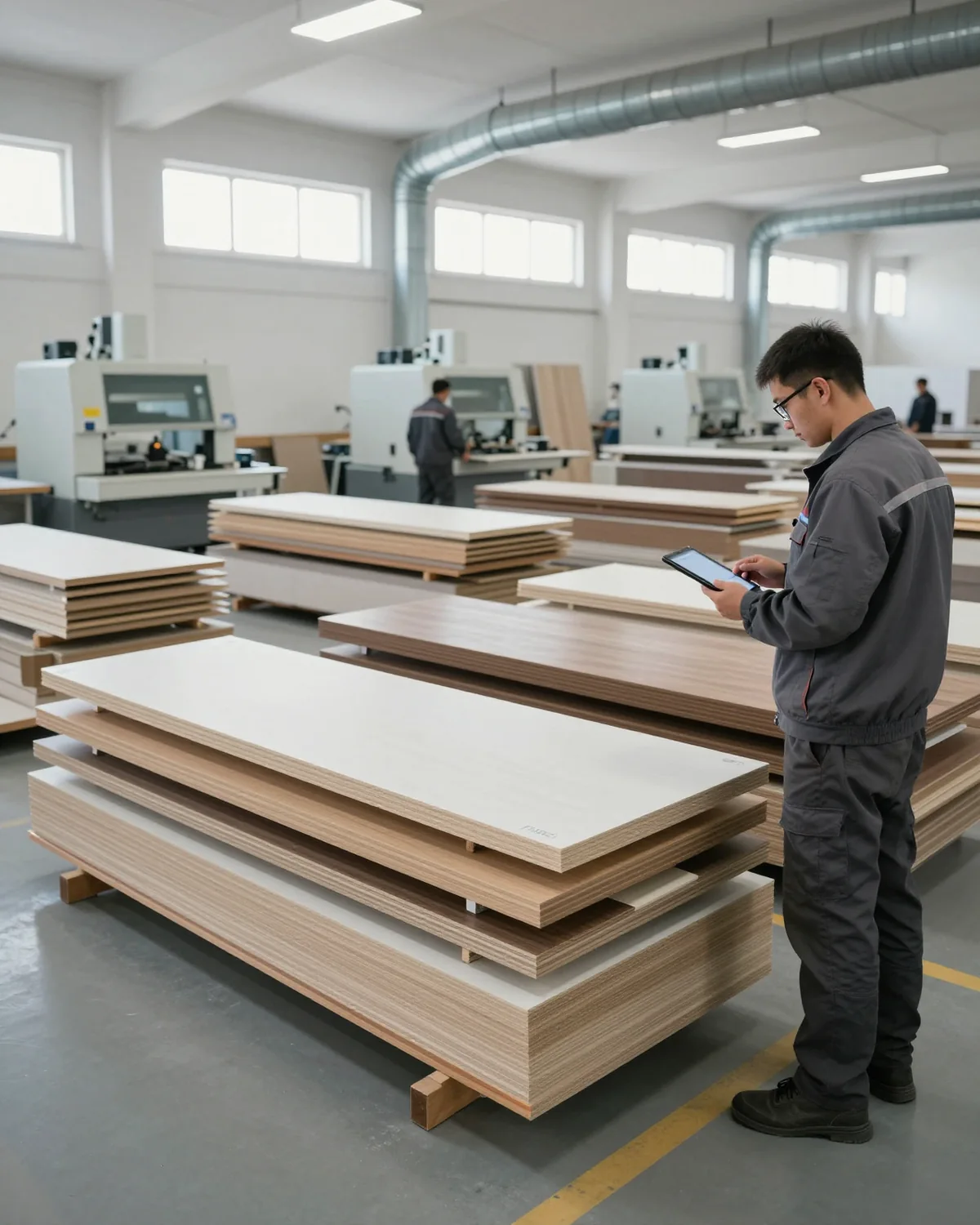
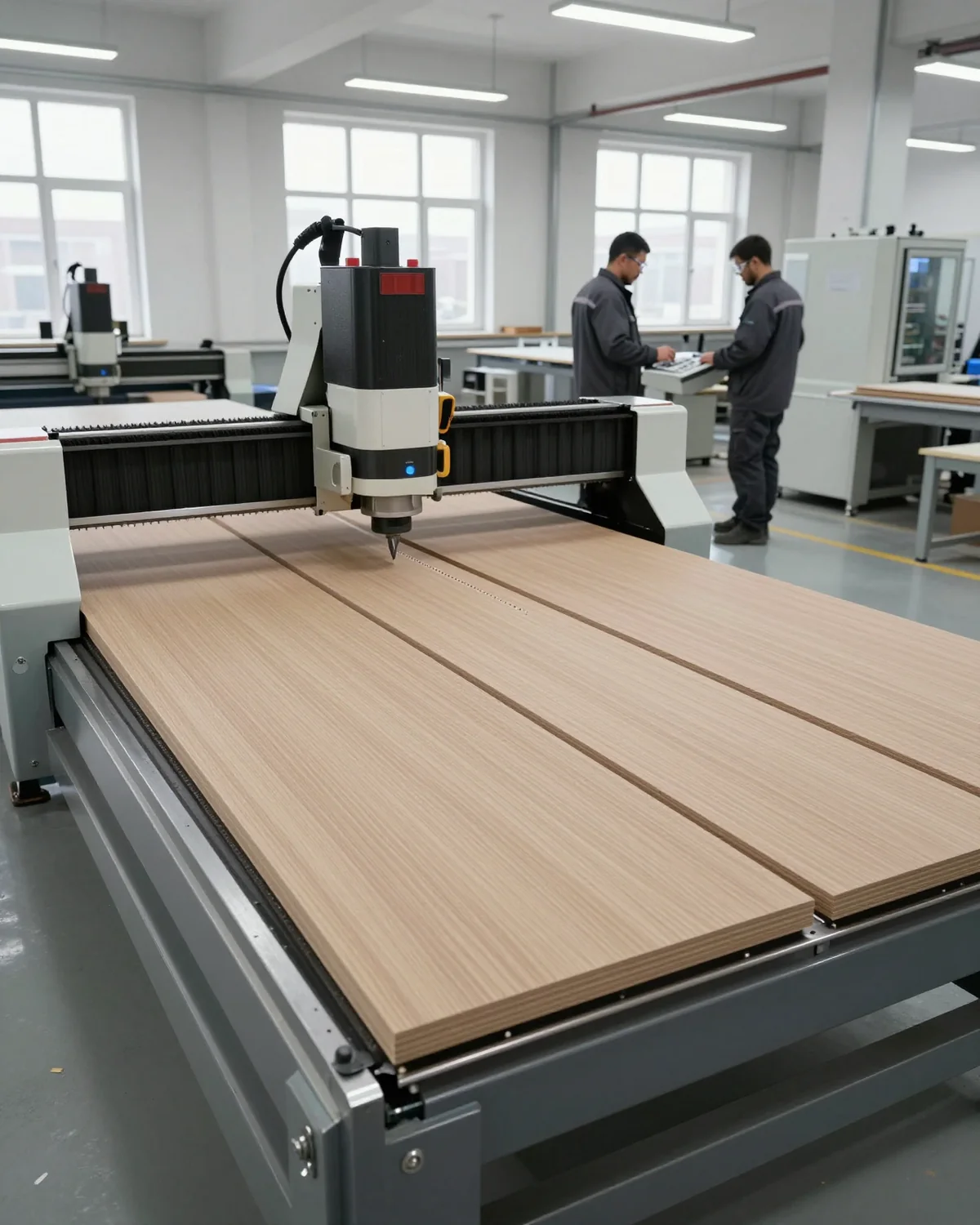
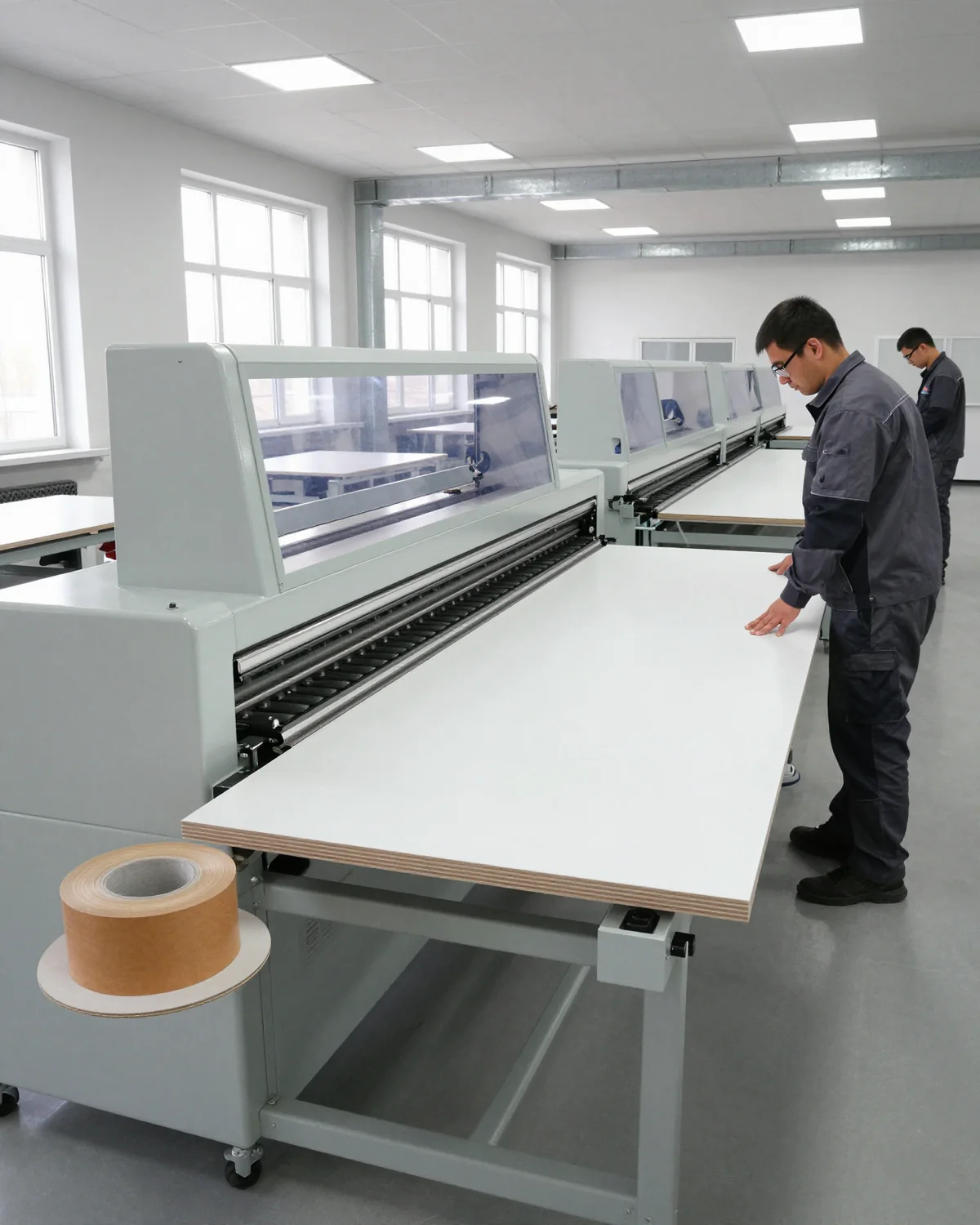
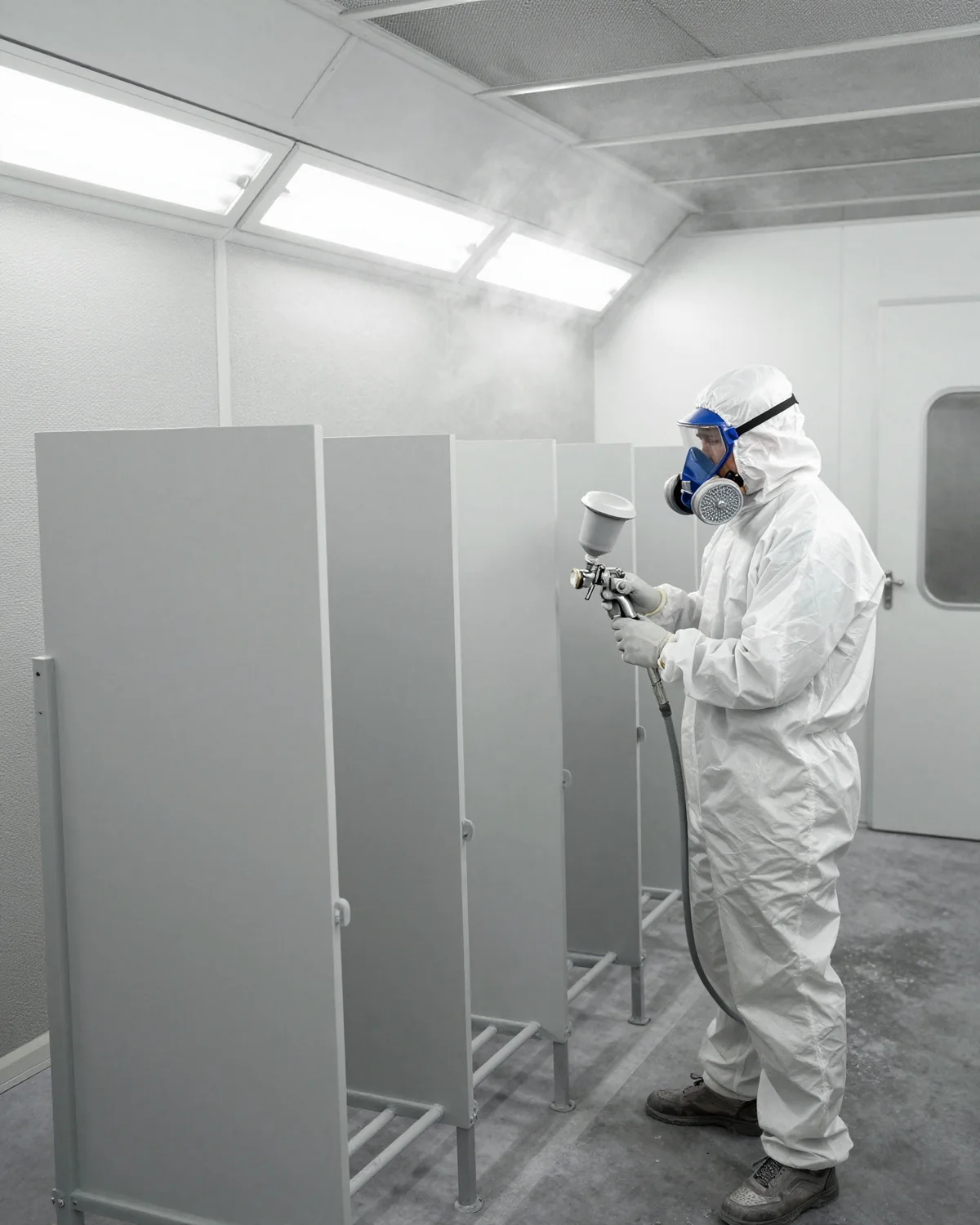
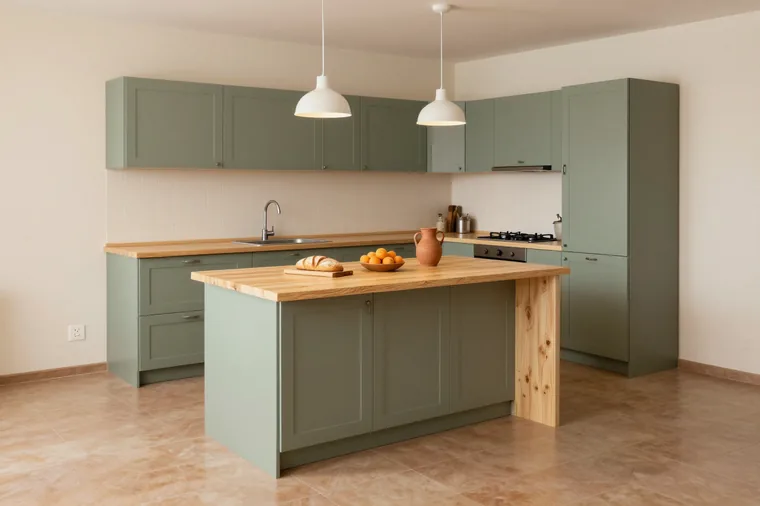
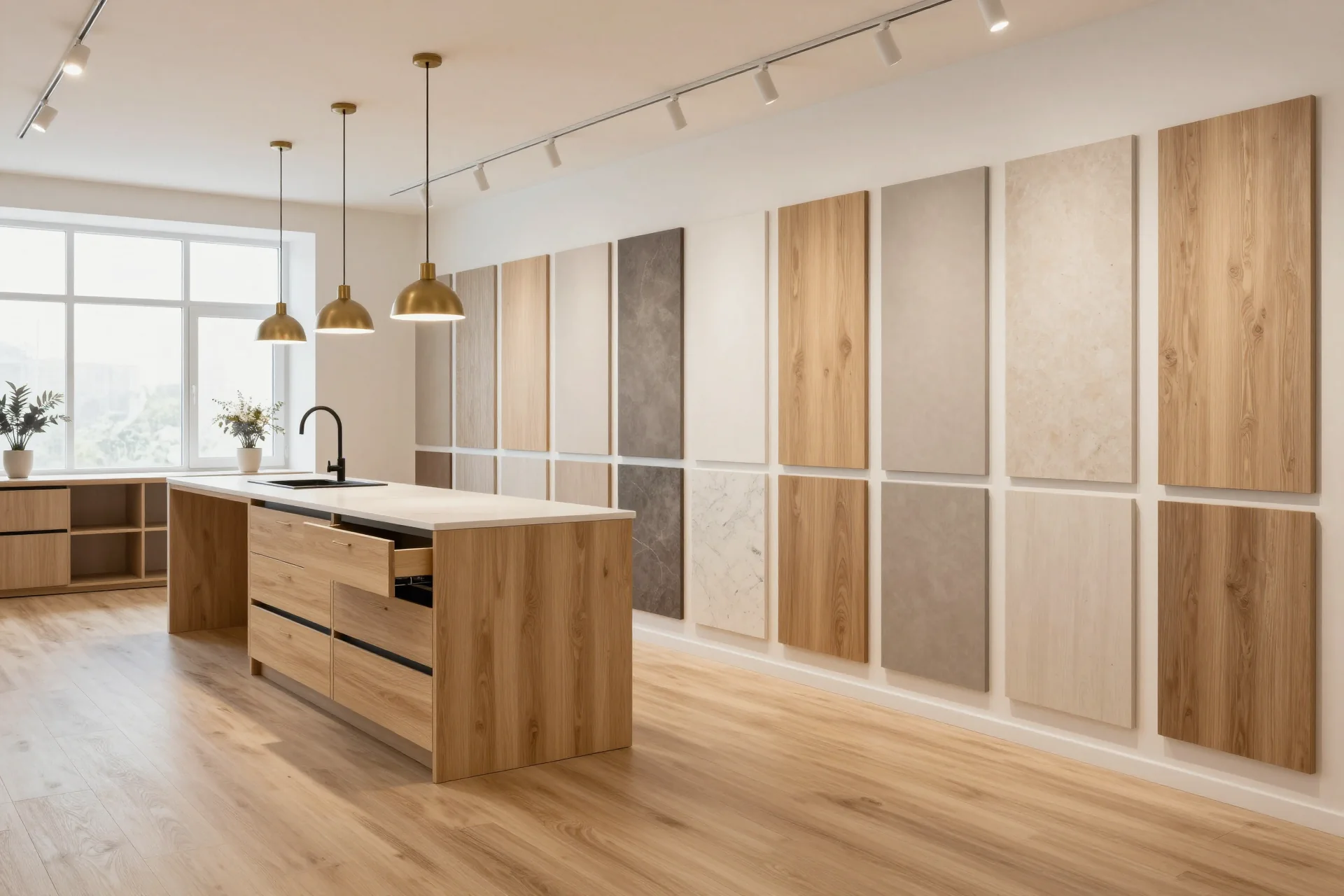
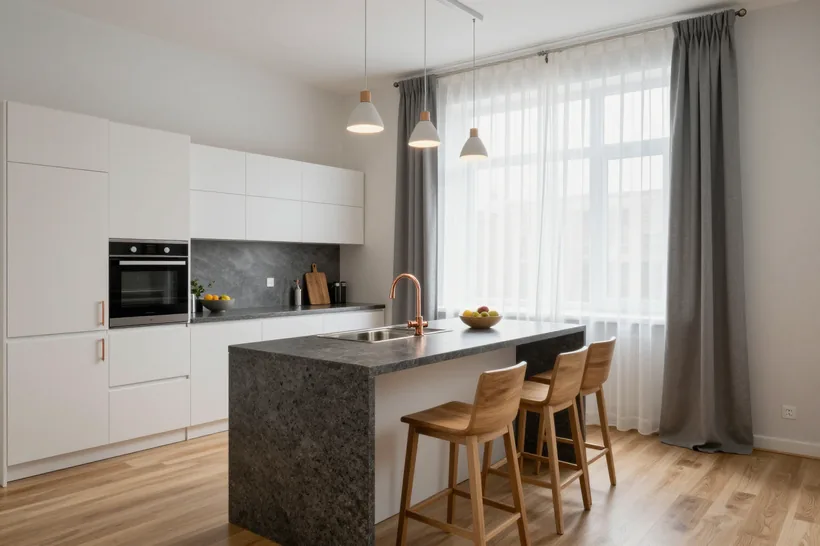
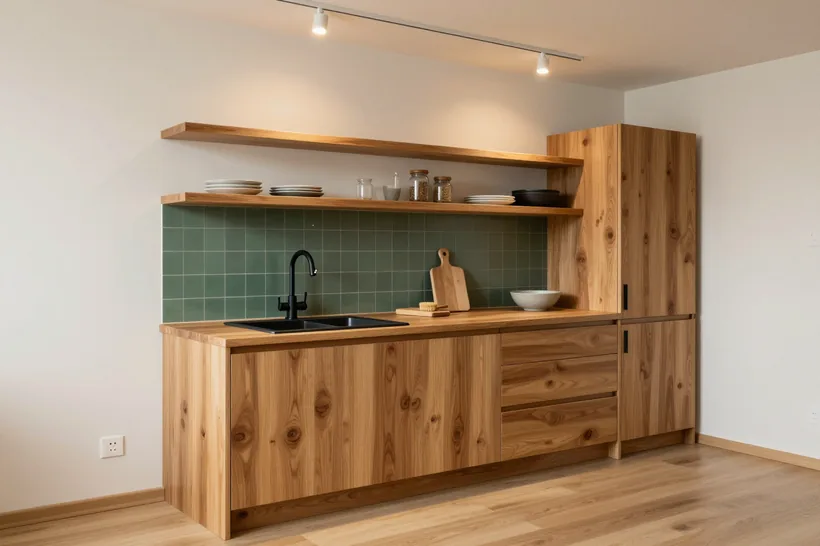
MEBLIX makes birch worktops to the exact size of your kitchen, island or breakfast bar. We are the manufacturer: the measuring visit and 3D design are free and ready in 1–2 days, everything is made in our own 600 m² workshop in Almaty, and our own crews do the fitting. Every piece comes with a 24-month warranty under the contract.
Whether the surface stays flat a year from now and the joint by the sink holds depends on the panel thickness, the way the staves are joined and how well the ends are protected.
What thickness keeps the worktop from sagging
We choose the thickness for the span between supports and the load, not by eye: the wider the span over the cabinets, the deeper the section needs to be. Short runs of up to 900 mm work with one section; dining tables and islands with an overhang need a very different one, and we calculate it in the 3D design before cutting. Just as important is how evenly the panel rests on the cabinets — a continuous sub-base spreads the load better than a few cross rails. Sagging is more often caused by a missing intermediate support or stiffening rib than by thickness, so on long spans we design them in from the start.
Glued panel or single boards: joining staves without gaps
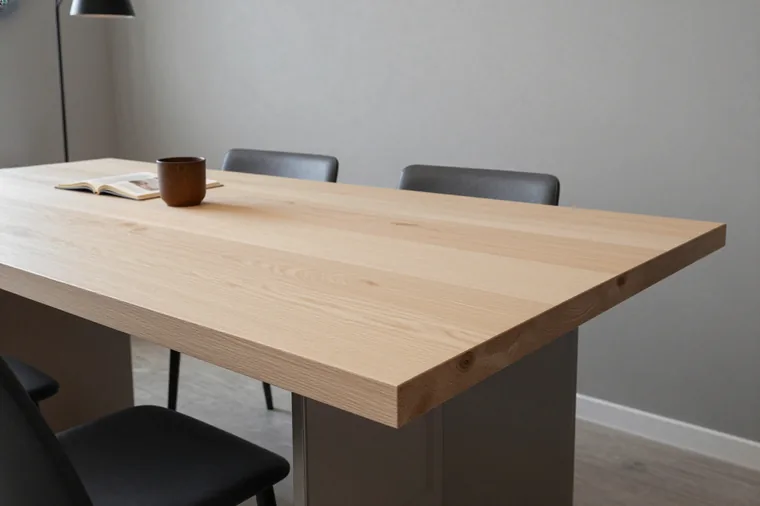
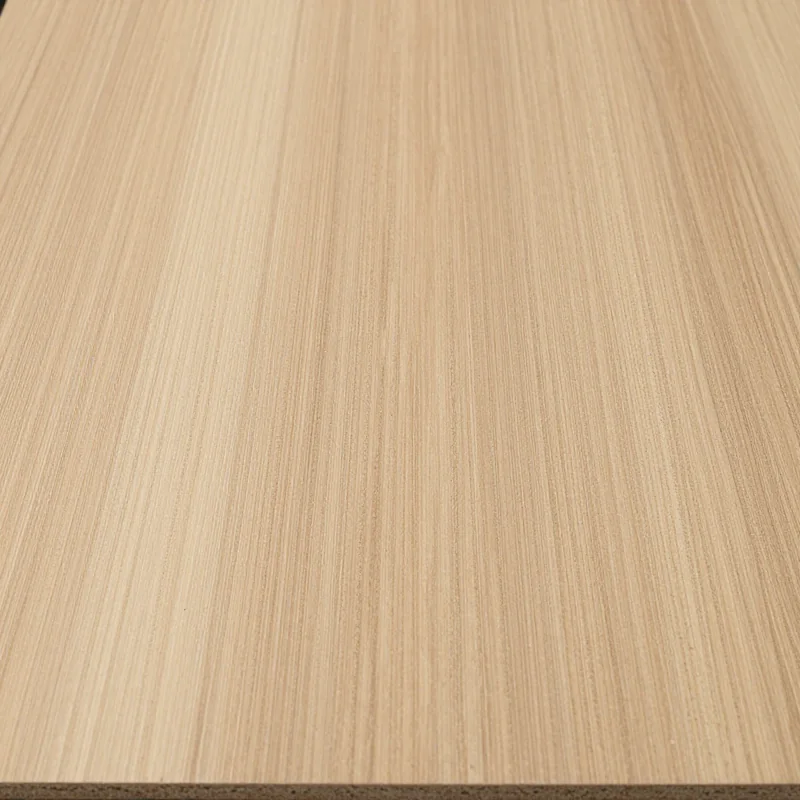
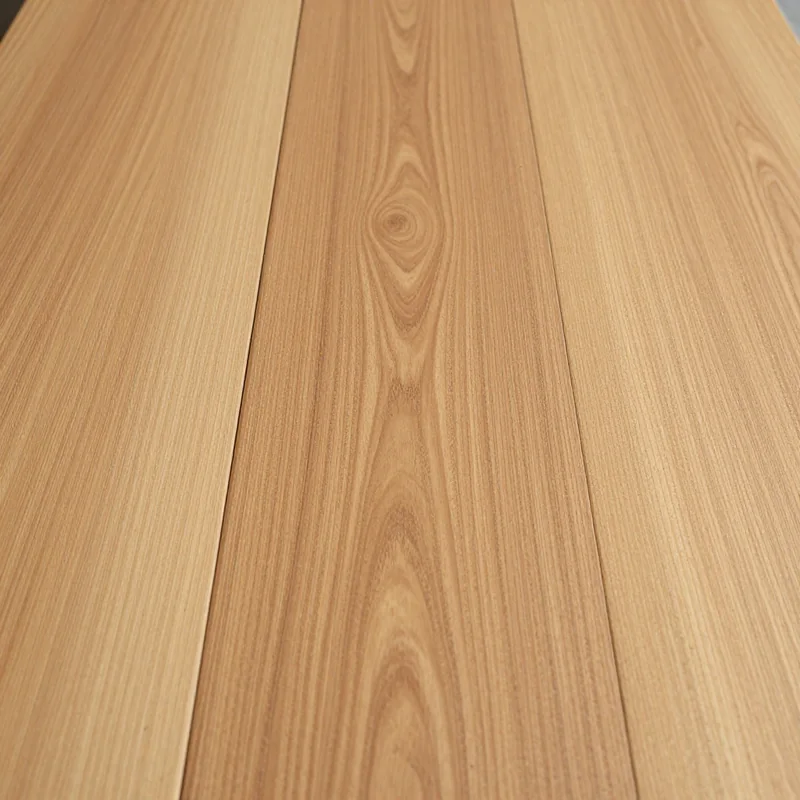
For worktops we use glued birch panel. The staves are matched by grade and moisture content and glued so the joints disappear and the panel stays flat. A single wide board reacts more strongly to humidity and can warp, so gluing up isn't a way to cut costs — it keeps the shape stable. Every stave must have the same moisture content before gluing: a difference of a few percent builds in stress, and the joint opens after fitting. On the visible face we keep even timber without large knots, so the grain reads evenly under the finish.
Edges, sink cut-outs and keeping water out of the cut
We seal the ends and the cut-outs for the sink and hob, because an exposed cut in solid wood is the first place to take on water and darken. The sink cut-out is the weakest point: moisture sits around the bowl, and an unprotected cut darkens in a halo from the inside. We treat the edge all the way round, apply sealant during fitting and check how the hob meets the panel. When you order, ask how the cut-out will be sealed — it decides how long the surface keeps its looks.
How a birch worktop behaves in everyday use
Birch is a soft timber, and we're upfront about what water, heat, knives and sunlight do to it, so your expectations match the finished piece.
Water, heat and a dishwasher next door
Solid birch doesn't mind a single drop; it dislikes prolonged contact with water and steam. Puddles by the sink and steam from a dishwasher will, without a protective finish, swell the fibres and leave dark patches, mostly through exposed ends and unsealed cut-outs. Swollen fibres never fully shrink back, leaving a faint ripple you can see in reflected light. Put hot pans on a trivet: a sudden temperature change adds to the swing in humidity, and that is what distorts the fibres. Keep the sink area dry and don't leave a wet cloth on the worktop.
Why the surface darkens and yellows
Darkening and yellowing are birch's response to moisture, UV light and hands. We choose a finish that slows this down, and renewing the top coat brings back an even tone. In direct sun by a window the colour turns warm yellow unevenly, and the working edge by the hob darkens most, where steam, grease and heat meet. Wine and oil stains on an untreated patch soak into the fibre, so renewing the finish in good time costs less than trying to lift a stain later.
Will knives and pans leave dents
Birch is softer than oak and ash — roughly a third softer than oak — so knife marks and dents from pans are possible. That's the nature of the timber, not a manufacturing fault. Chips on the edge are rarer than dents, because we finish the edge separately. Marks are barely visible on a matt oiled finish and blend in when the oil is renewed, unlike gloss lacquer. Use a chopping board, and if dents appear, sanding and fresh oil restore an even surface without replacement.
Finishing and caring for a birch worktop
The finish decides how the worktop copes with water, stains and daily cleaning. Here's how oil and lacquer compare and what you can do yourself.
Oil or lacquer: what to choose for birch
| Finish | Look and feel | Repairs | How often to renew |
|---|
| Oil | matt, natural texture, warm to the touch | spot repairs without stripping the whole coat | regularly, as needed |
|---|
| Lacquer | smooth film, slightly glossier | by section, harder to spot-repair | less often, but repairs take more work |
|---|
| Hardwax oil | deep matt, the wax repels water | spot repairs with light sanding | as needed, more often by the sink |
|---|
| Water-based lacquer | clear, keeps birch's pale tone | by section, with sanding between coats | less often, but a full cycle takes longer |
|---|
Daily care that won't damage the surface
- Soft cloth: wipe down straight after cooking and washing up, before water soaks in.
- No abrasives: scouring pads, metal scrapers and powders strip the protective coat in a few cleans.
- No standing water: mop up puddles by the sink and along the edge at once.
- Trivets: put hot pans and wet food on a trivet or board.
- Check the finish: once a season, look over the areas by the sink and hob.
- Blot, don't rub: soak up spilled wine, juice or grease first, then wipe with a mild cleaner.
How often to re-oil, and can you do it yourself
Renew the coat when the surface needs it, not by the calendar: once water stops beading and soaks in, it's time — and you can do it yourself. Degrease the area and sand lightly with fine paper, apply thinly along the grain and wipe off the excess after about a quarter of an hour. Refreshing the worn areas by the sink and hob is usually enough; the whole surface only needs doing once it is evenly dull. If you're unsure of the old finish, test on a hidden spot near the edge.
Made-to-measure ordering and fitting in Almaty
A ready-made board rarely matches the real shape of a kitchen. Here's how measuring, design and fitting deal with uneven walls and tricky deliveries.
How measuring for uneven walls gets rid of gaps
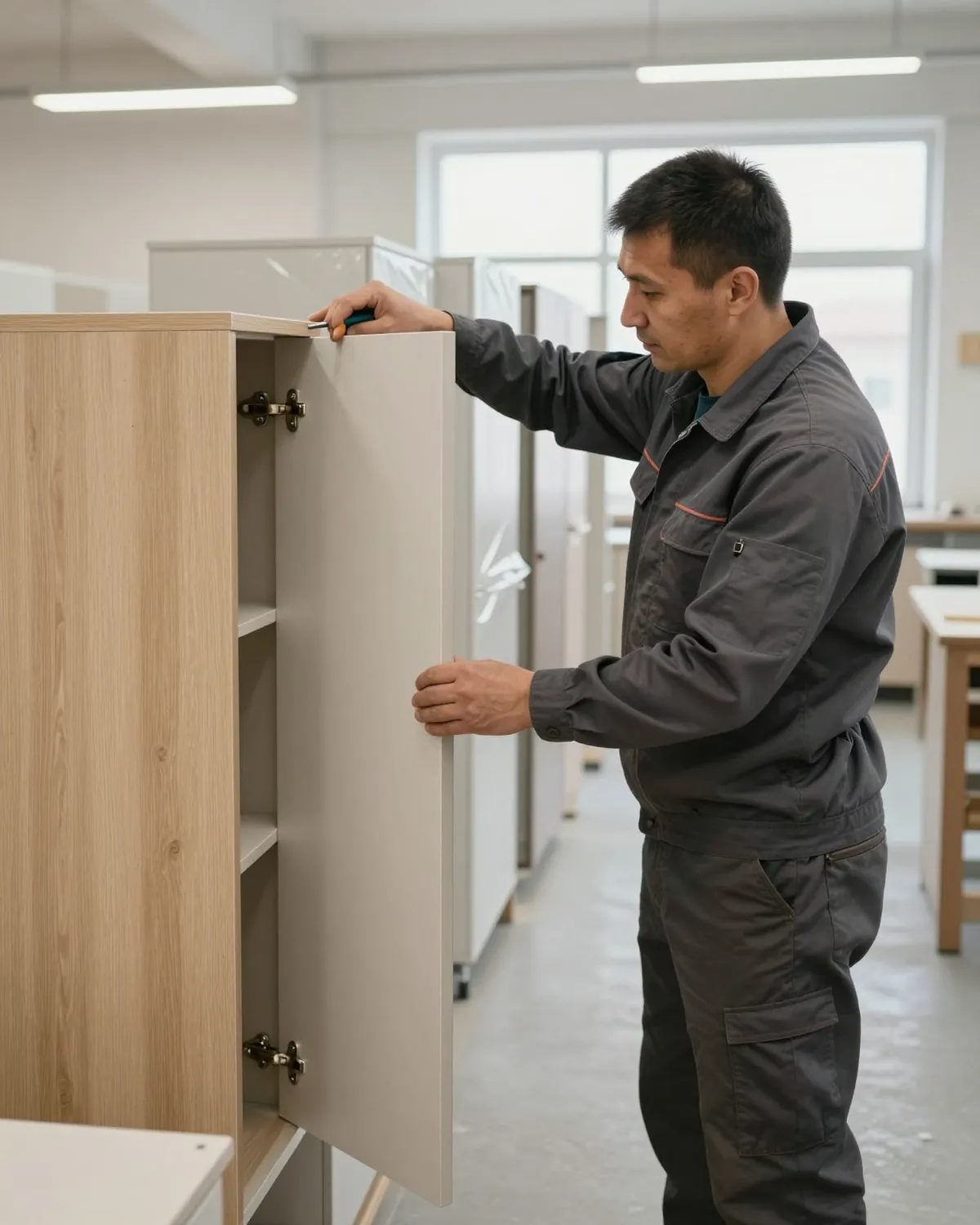
Our measurers record the actual shape of the wall, not the ideal one on the plan, and check it along the full length of the future worktop: a deviation of 5–10 mm per linear metre over 3 metres leaves a finger-wide gap. From the measurements we build a 3D design with the real angles and the sink and hob positions — in 1–2 days, free of charge. Allowing for unevenness in the drawing means the birch sits against the wall along its whole length. We also note projecting window sills and ventilation shafts.
From measuring visit to acceptance certificate
- Measuring visit: free, on site, recording the real shape of the walls and corners.
- 3D design: in 1–2 days, showing the sink, hob and wall junctions.
- Manufacturing: in our own 600 m² workshop — cutting, edging and finishing.
- Trial assembly: in the workshop before dispatch, to catch mismatches early.
- Fitting: by our own crews, with the junctions adjusted on site.
- Acceptance certificate: signed after installation, with the balance paid on completion.
A long worktop with no lift, and birch in the bathroom
A single board over 2.5 metres long won't fit through a narrow doorway or an old building's lift, so we design a sealed, bolted joint from the start. Properly designed, a joint costs nothing in strength, and we place it outside the sink area so water doesn't reach it. For bathrooms we treat birch with caution: it doesn't suit direct contact with water, so for the basin area we suggest moisture-resistant options and keep solid wood for dry zones.
How birch compares with other materials
To make an informed choice, we set birch beside oak, ash, chipboard, acrylic and quartz and compare hardness, feel and repairability.
Birch, oak and ash: where birch wins
Birch is softer than oak and ash, but warmer in its grain and easier to work. Its Brinell hardness is about 3, compared with 3.7–3.9 for oak and up to 4.5 for ash. On the other hand, birch is even in colour with no pronounced pores, so details such as a sink cut-out or a rounded edge come out cleaner. Its calm grain doesn't compete with the fronts in a light kitchen. Oak takes knocks better but costs more, and where the surface is cared for, the finish matters more than hardness.
Solid birch vs chipboard, acrylic and quartz
| Material | Surface | Water and stains | Repair |
|---|
| Solid birch | lively texture, warm | needs a finish and care | spot repair by renewing the coat |
|---|
| Chipboard and HPL | flat, decorative | resistant | replace the section |
|---|
| Acrylic | non-porous, smooth | resistant | polishing, more difficult |
|---|
| Quartz and ceramic | hard, cold | resistant | practically unrepairable |
|---|
The bottom line on birch countertops
What shapes the result when you order a birch worktop, from panel thickness and sealed cut-outs to how birch behaves around water and the choice of finish:
- Construction comes first: panel thickness, the way the staves are joined and sealed cut-outs keep the shape and prevent gaps.
- Honest about the timber: birch is softer than oak and darkens with moisture and light — plan for that before you order.
- The finish is key: oil or lacquer decides how the worktop copes with water, heat and stains, and how easy it is to renew.
- Measured to real walls: unevenness is allowed for in the design, not hidden behind a trim strip.
- An informed comparison: solid wood is natural and repairable, non-porous surfaces are "fit and forget".